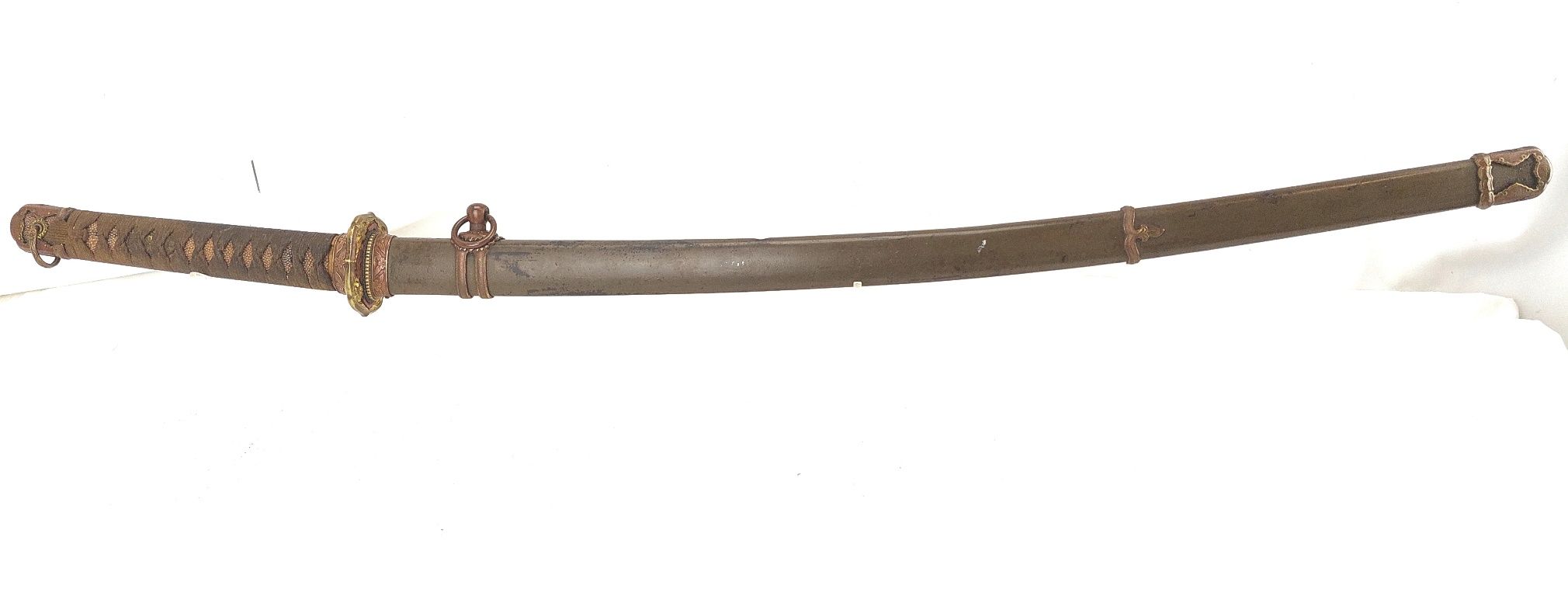
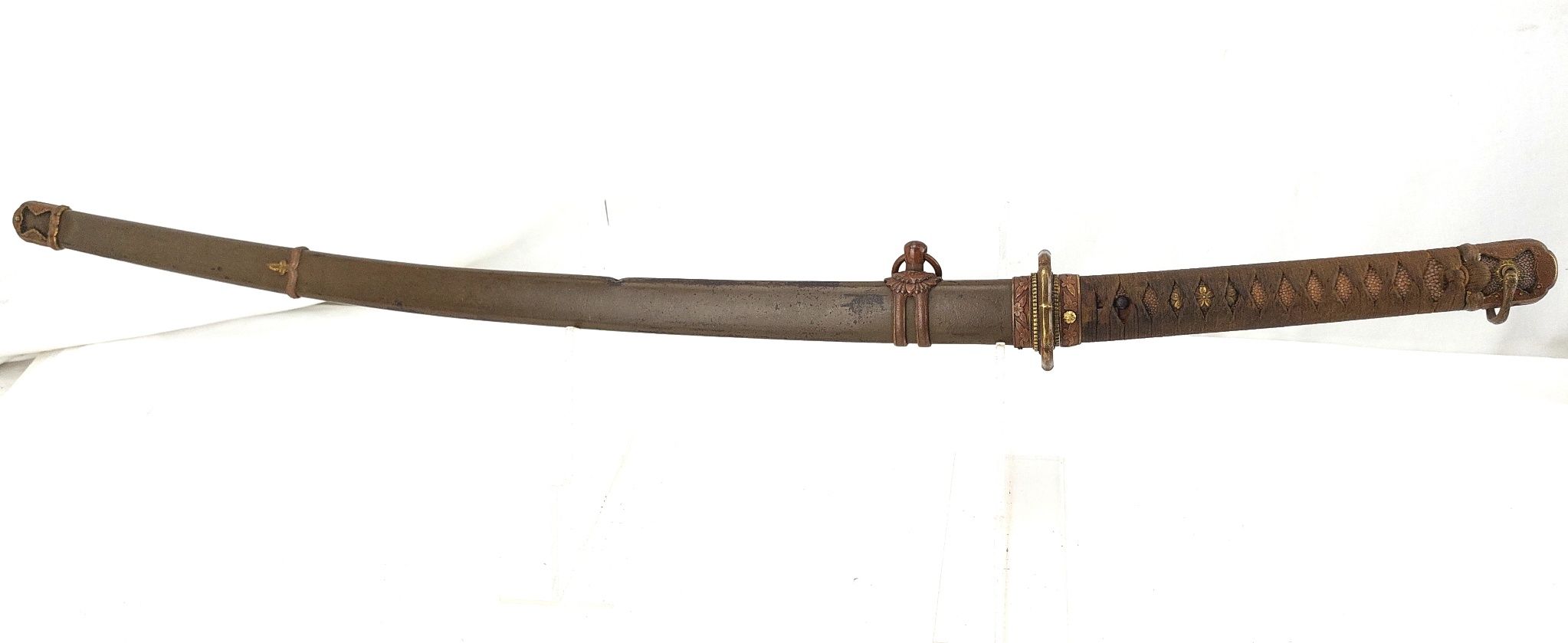
*Japanese, WW2-1943, Type 98 Shin Guntō “One Looker” with Gendaitō Blade by Yūshu Hōjōji Hiromasa, Signed, Dated, Combat Carried*
One looker — this November 1943 Shin Guntō is among the finest we have seen: a gendaitō by Yūshu Hōjōji Hiromasa, signed and dated, with what is believed to be a rare polisher’s inscription, carried in combat and scarred by a bullet strike.
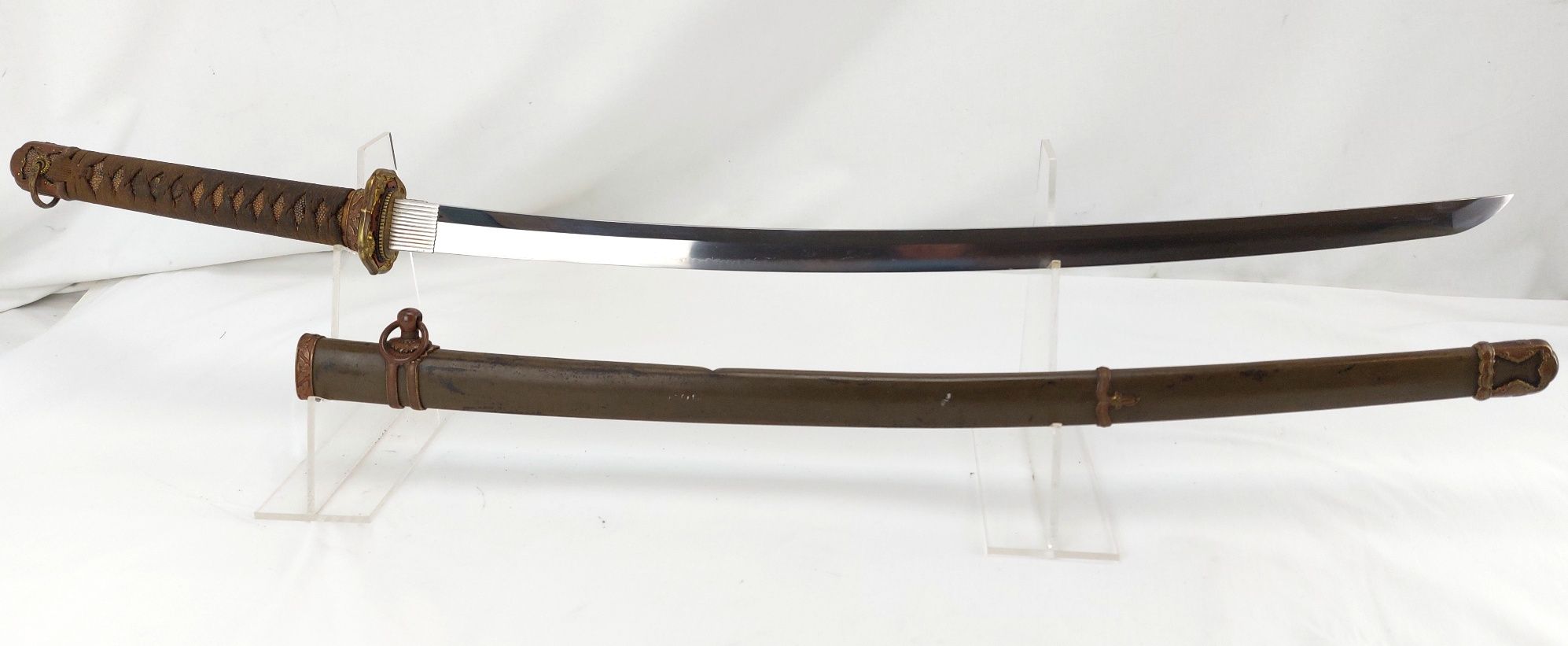
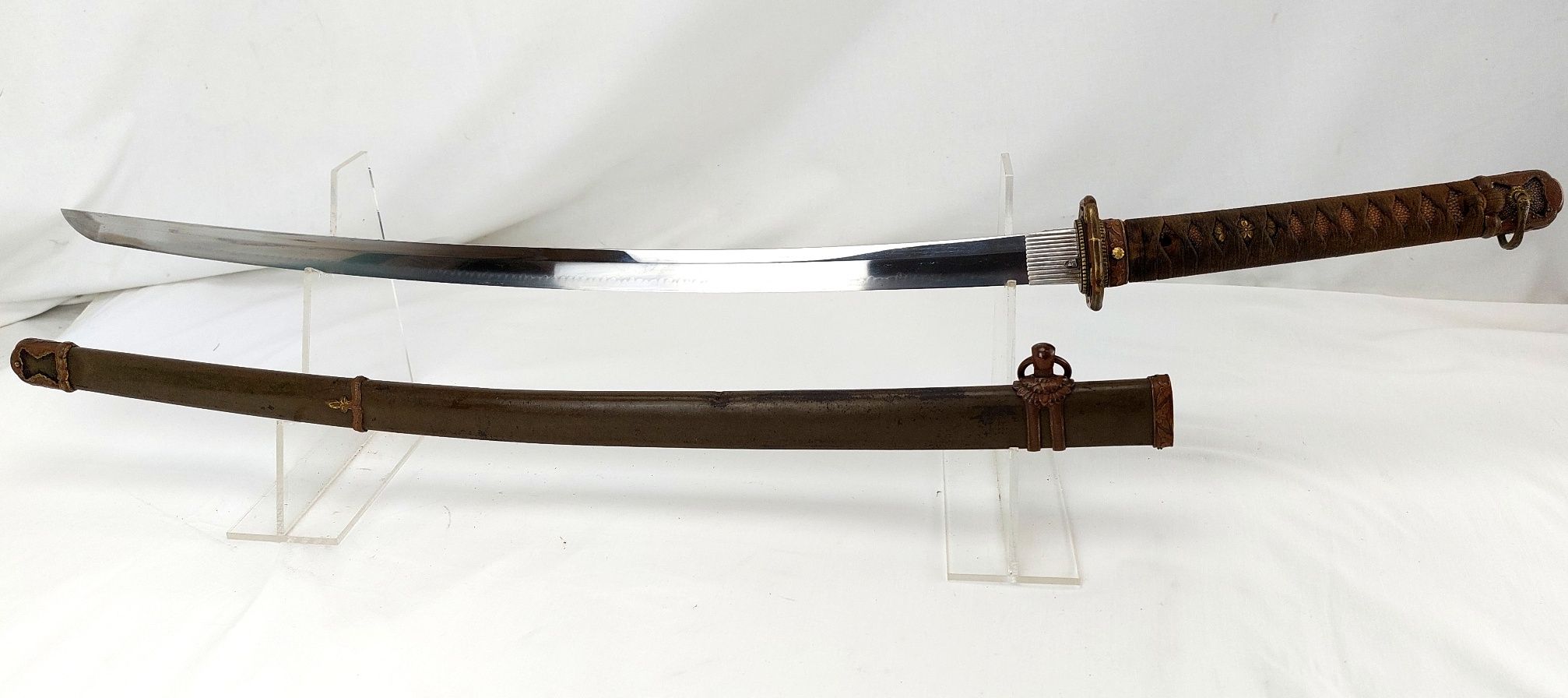
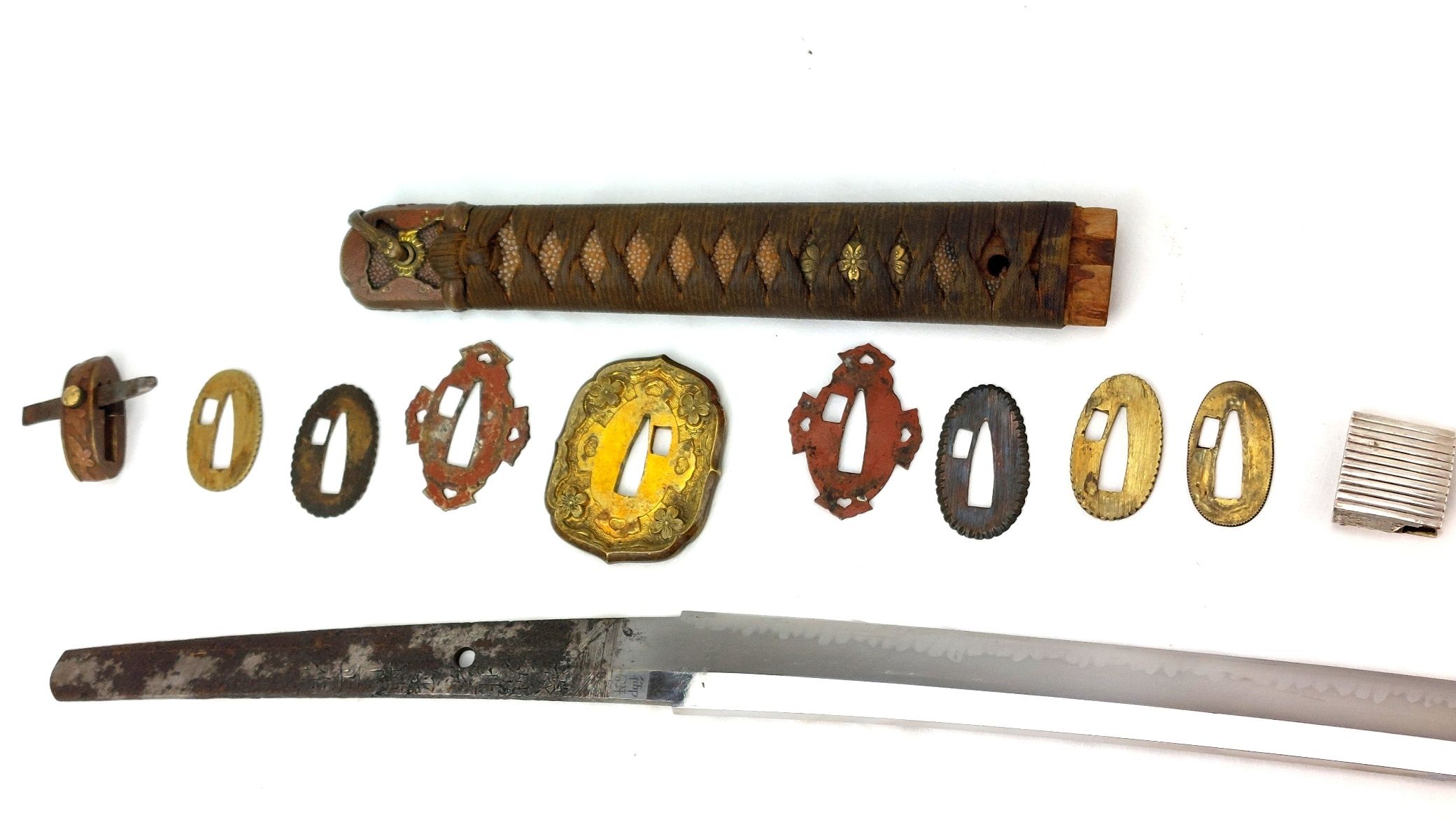
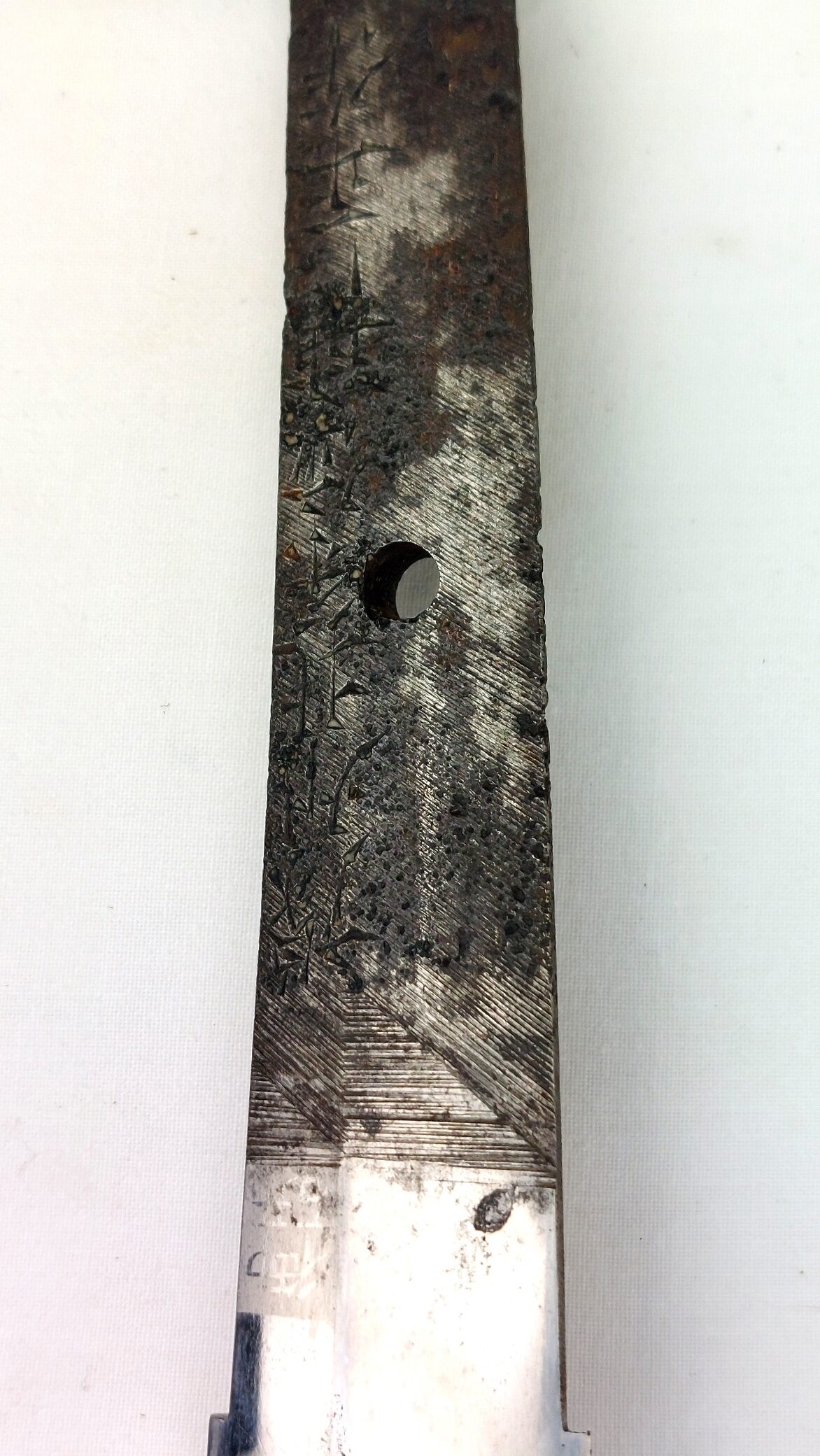
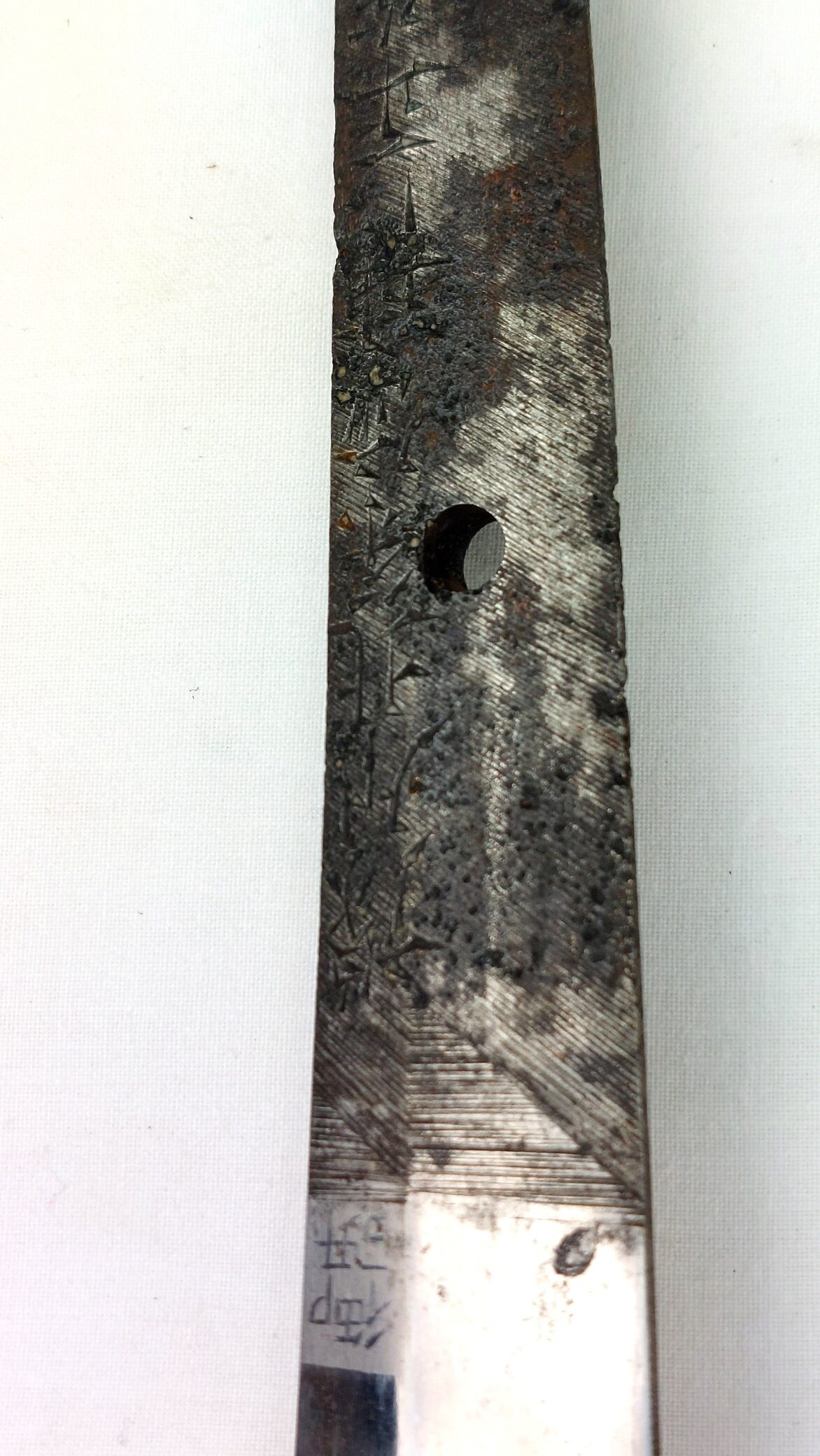
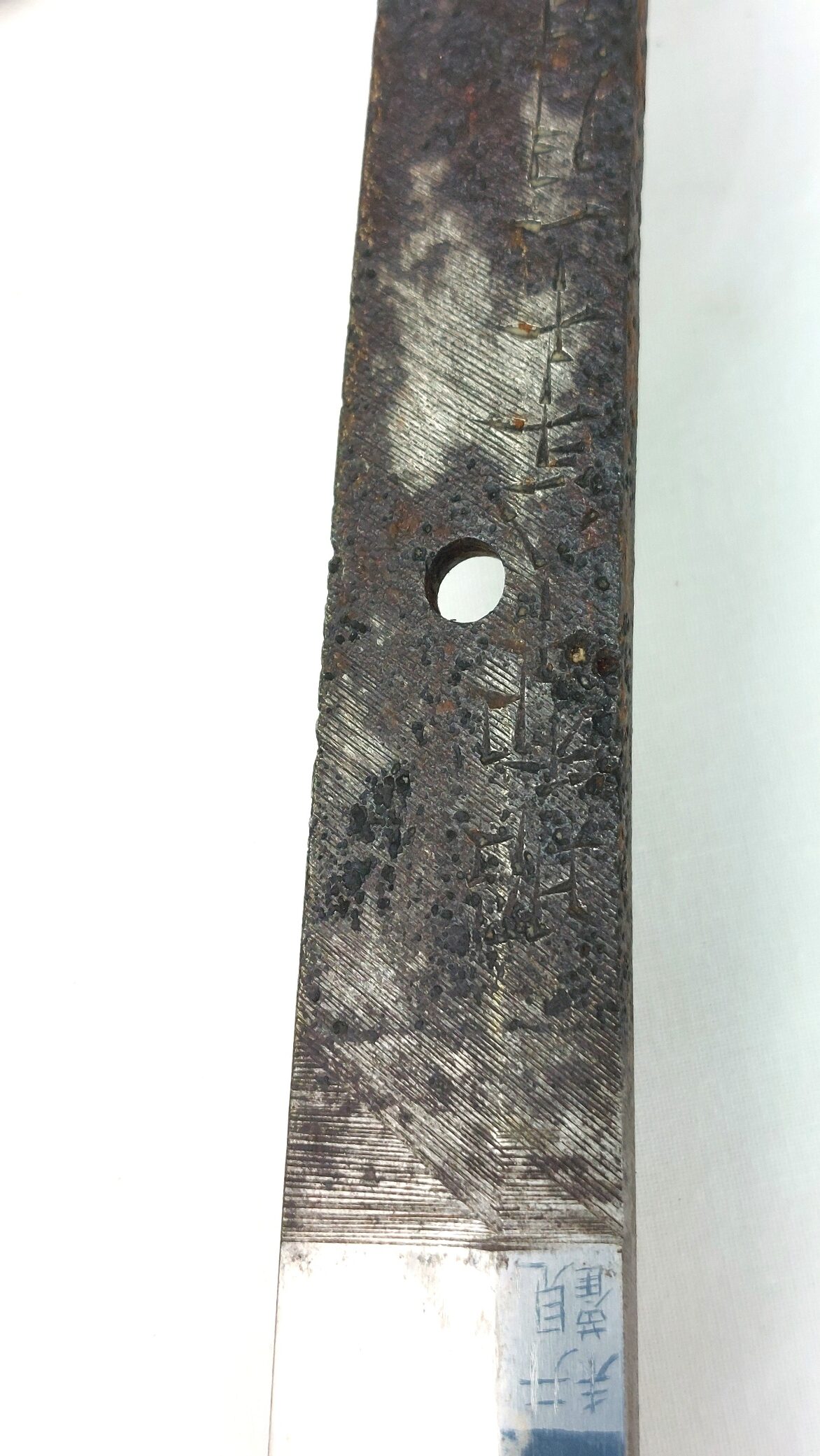
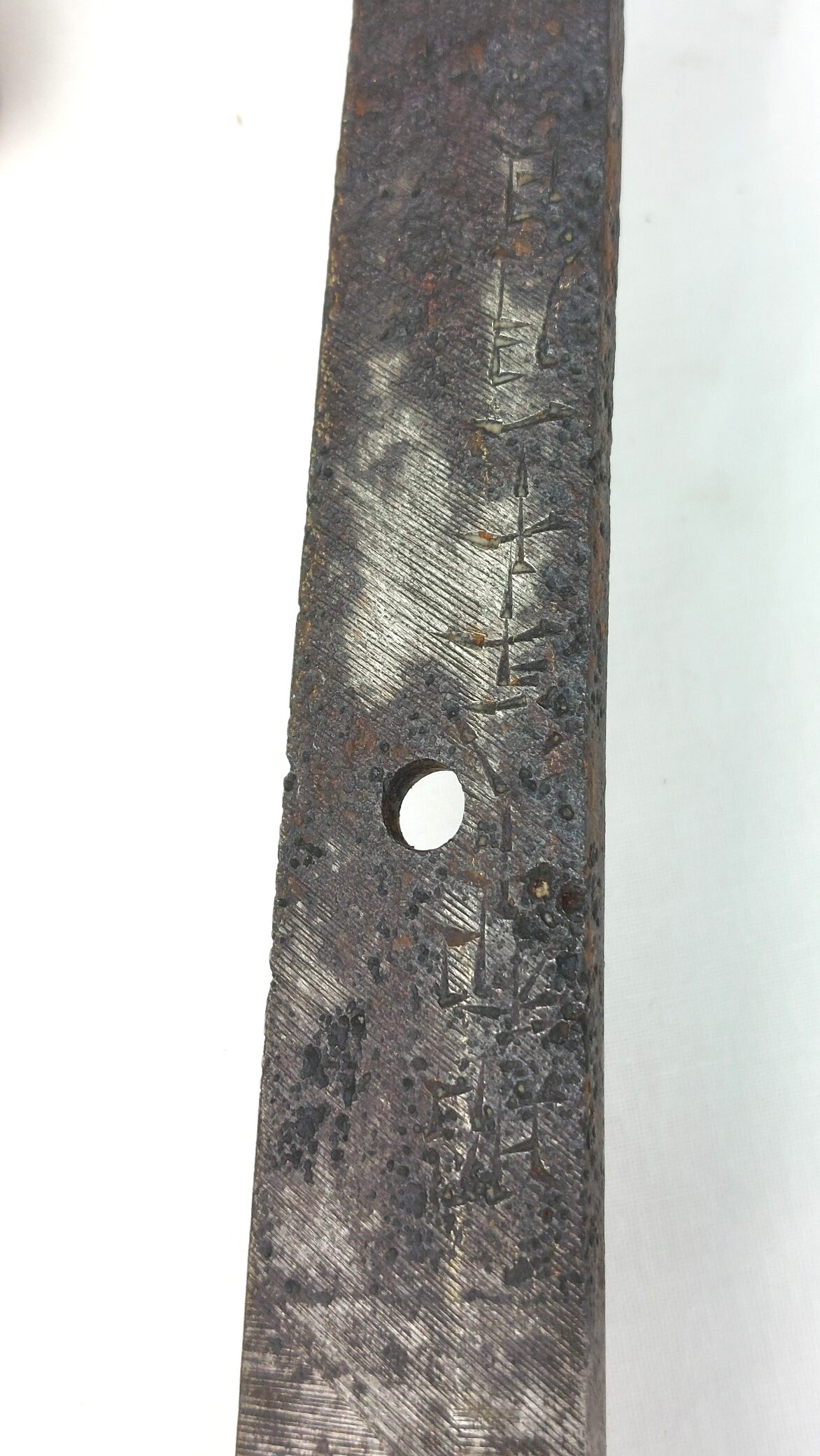
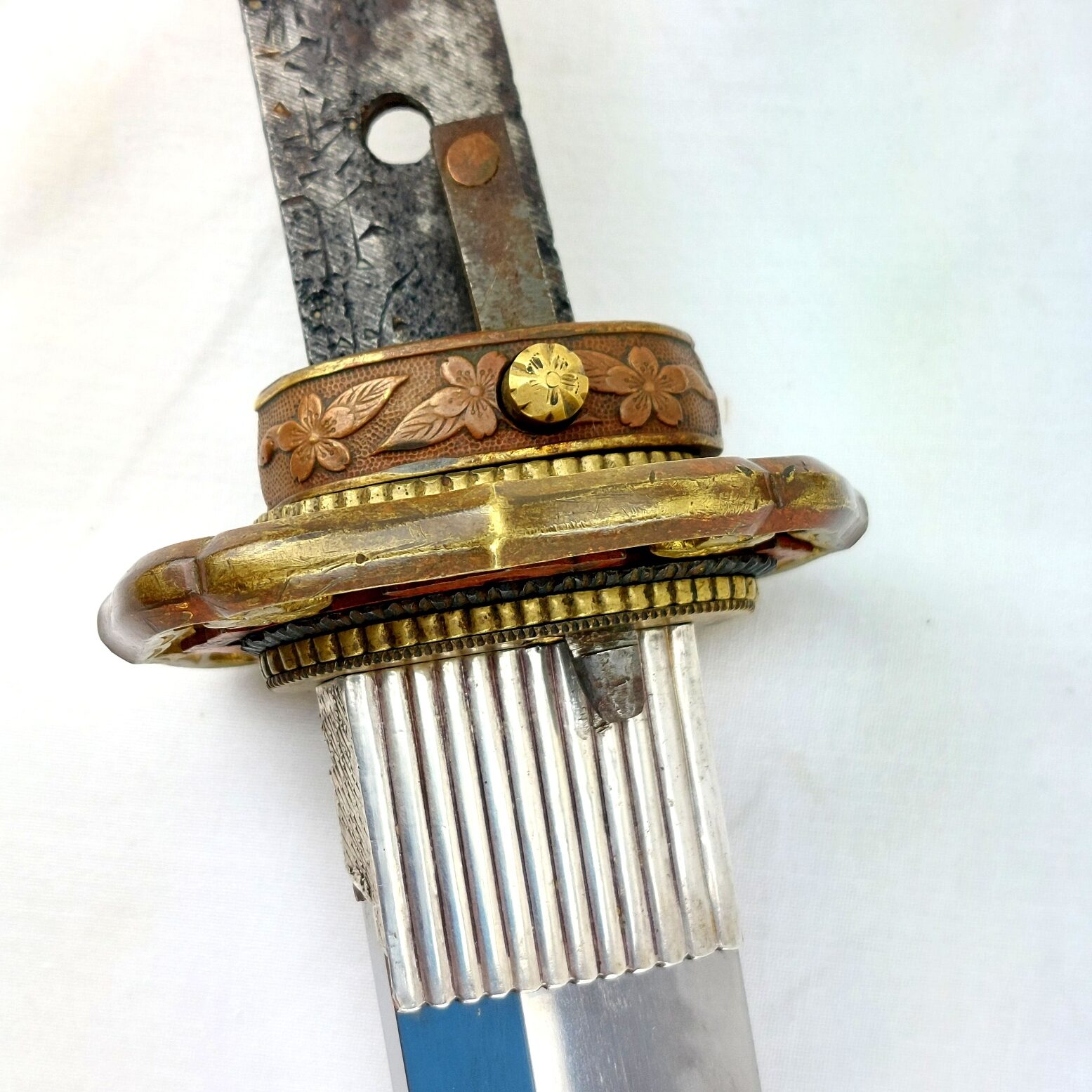
An outstanding World War II Japanese Type 98 Shin Guntō officer’s sword, mounted with a traditionally forged gendaitō blade by the smith Yūshu Hōjōji Hiromasa. The tang is signed 祐寿法城寺弘正作 (Yūshu Hōjōji Hiromasa saku – “Made by Yūshu Hōjōji Hiromasa”) and dated 昭和十八年十一月日 (Shōwa jū-hachi nen jū-ichi gatsu hi – “A day in November, 1943”). Measuring 67 cm in blade length and 97 cm overall, this sword represents the very highest wartime officer grade.
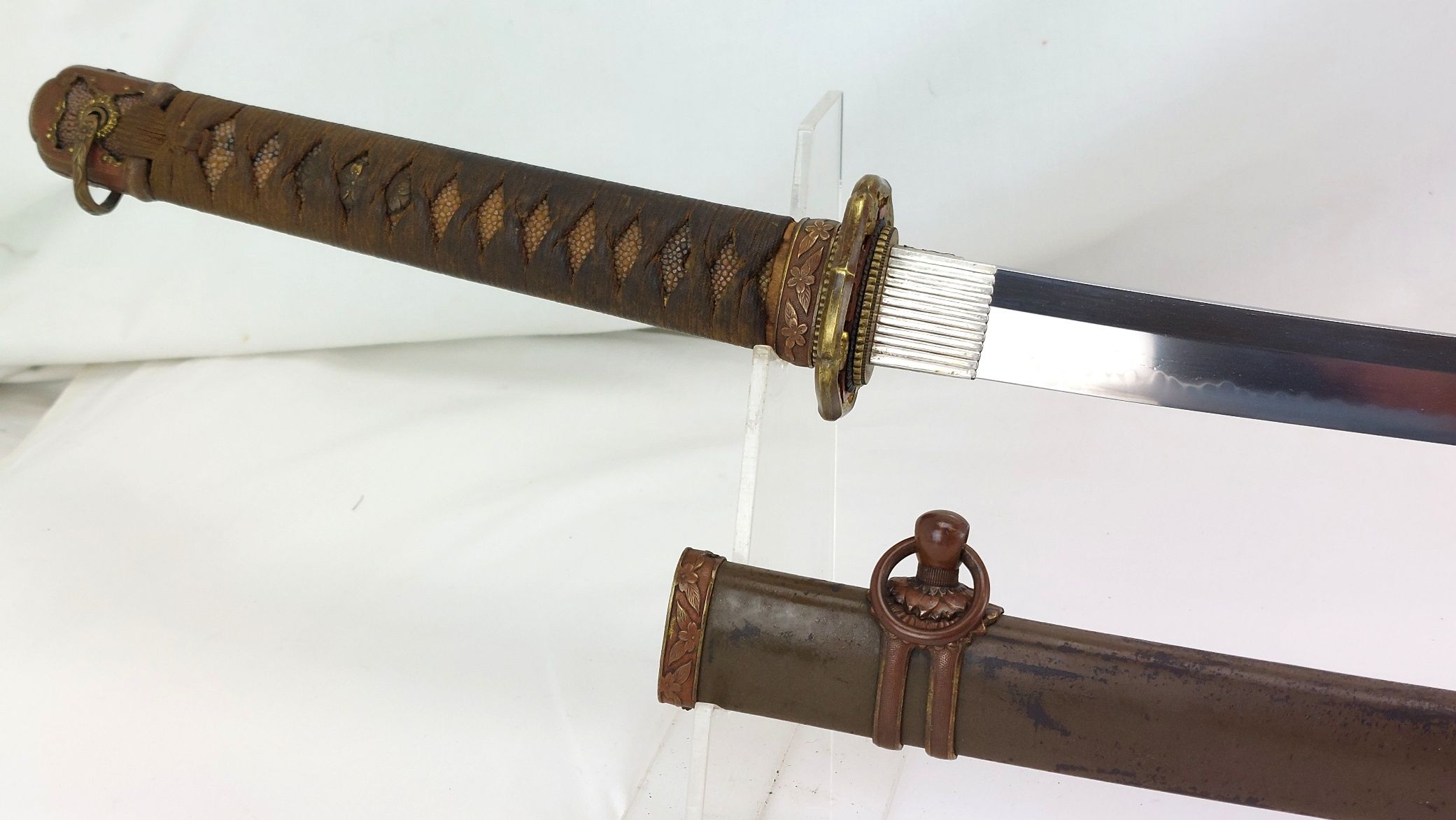
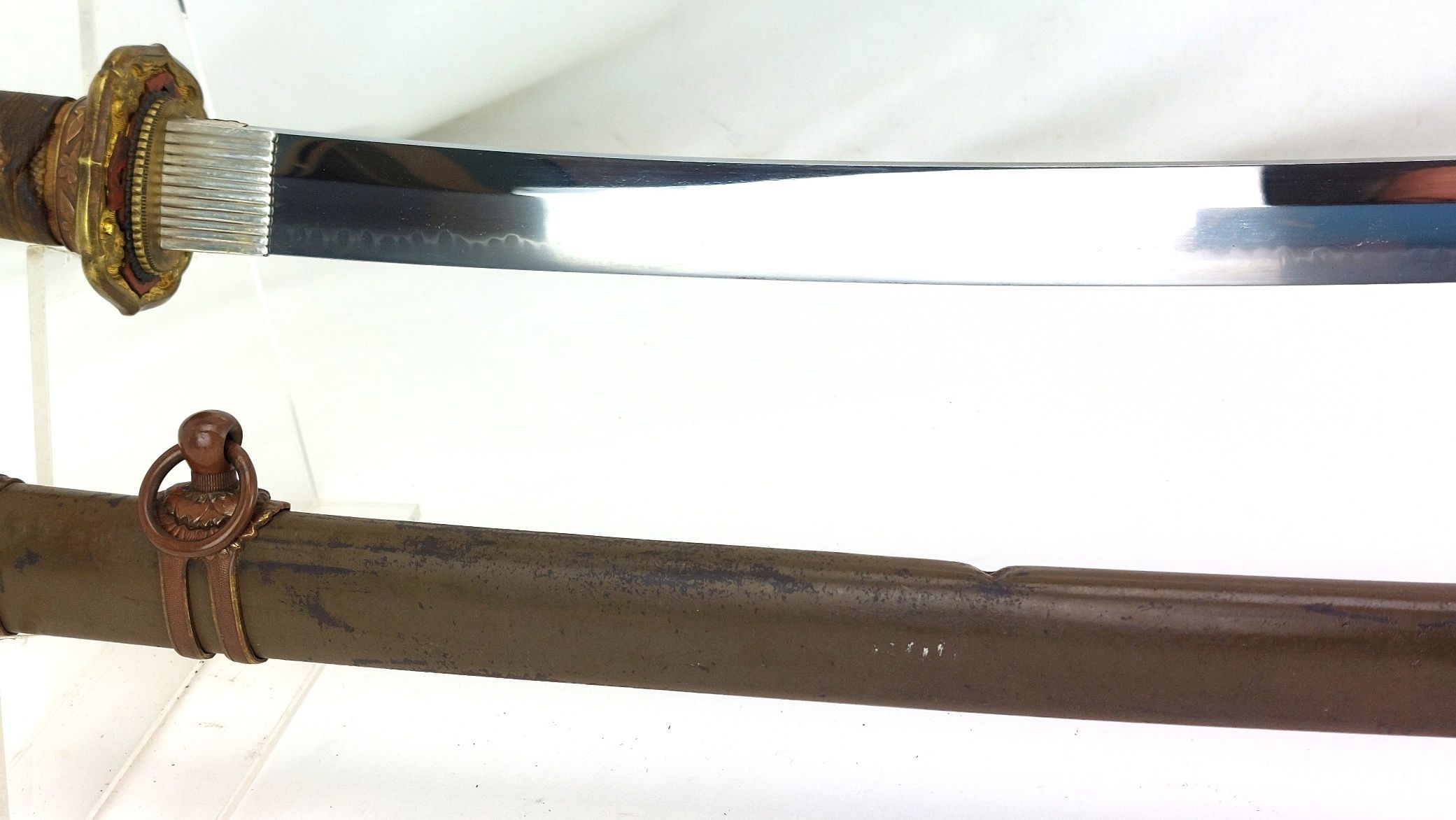
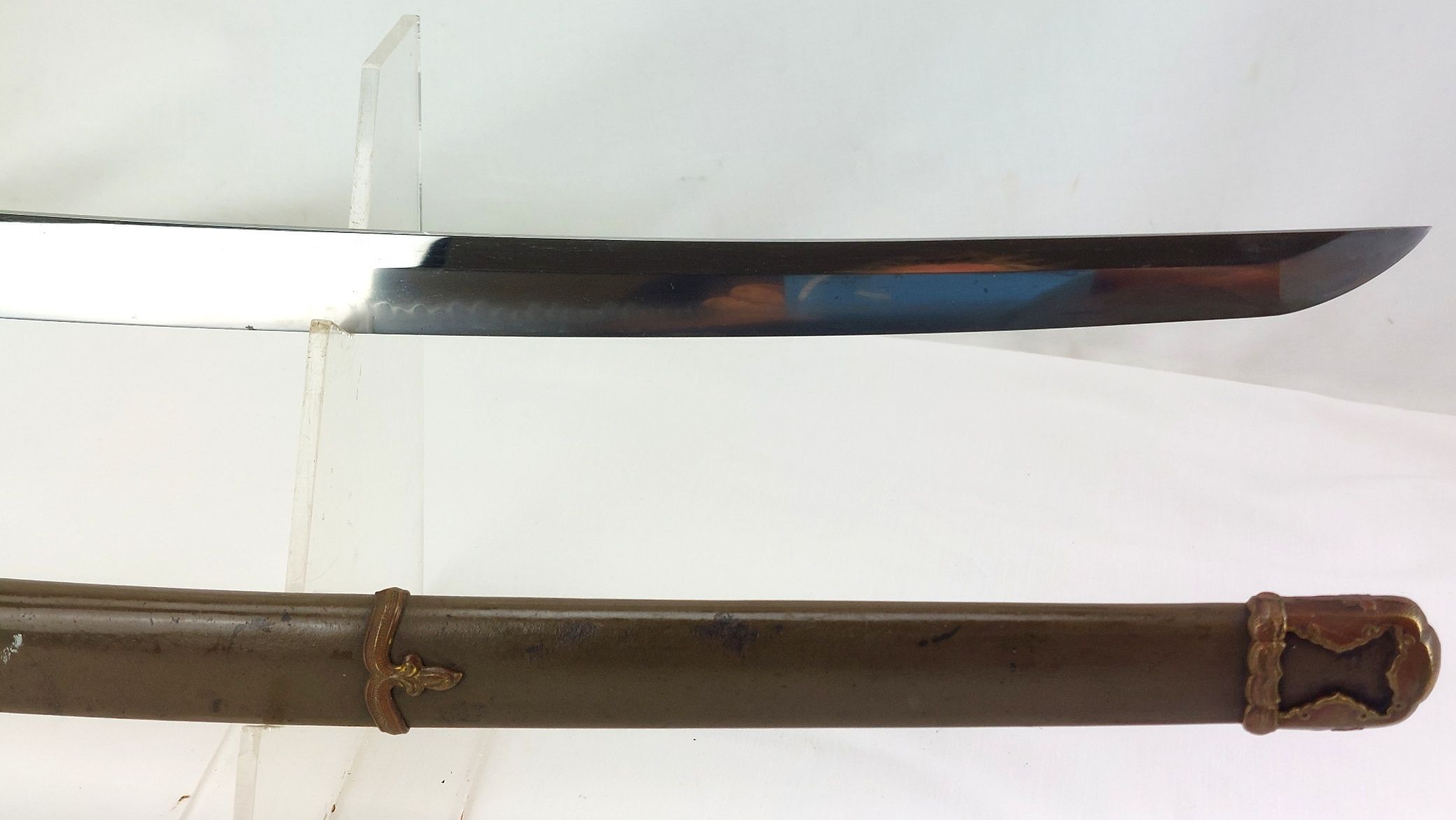
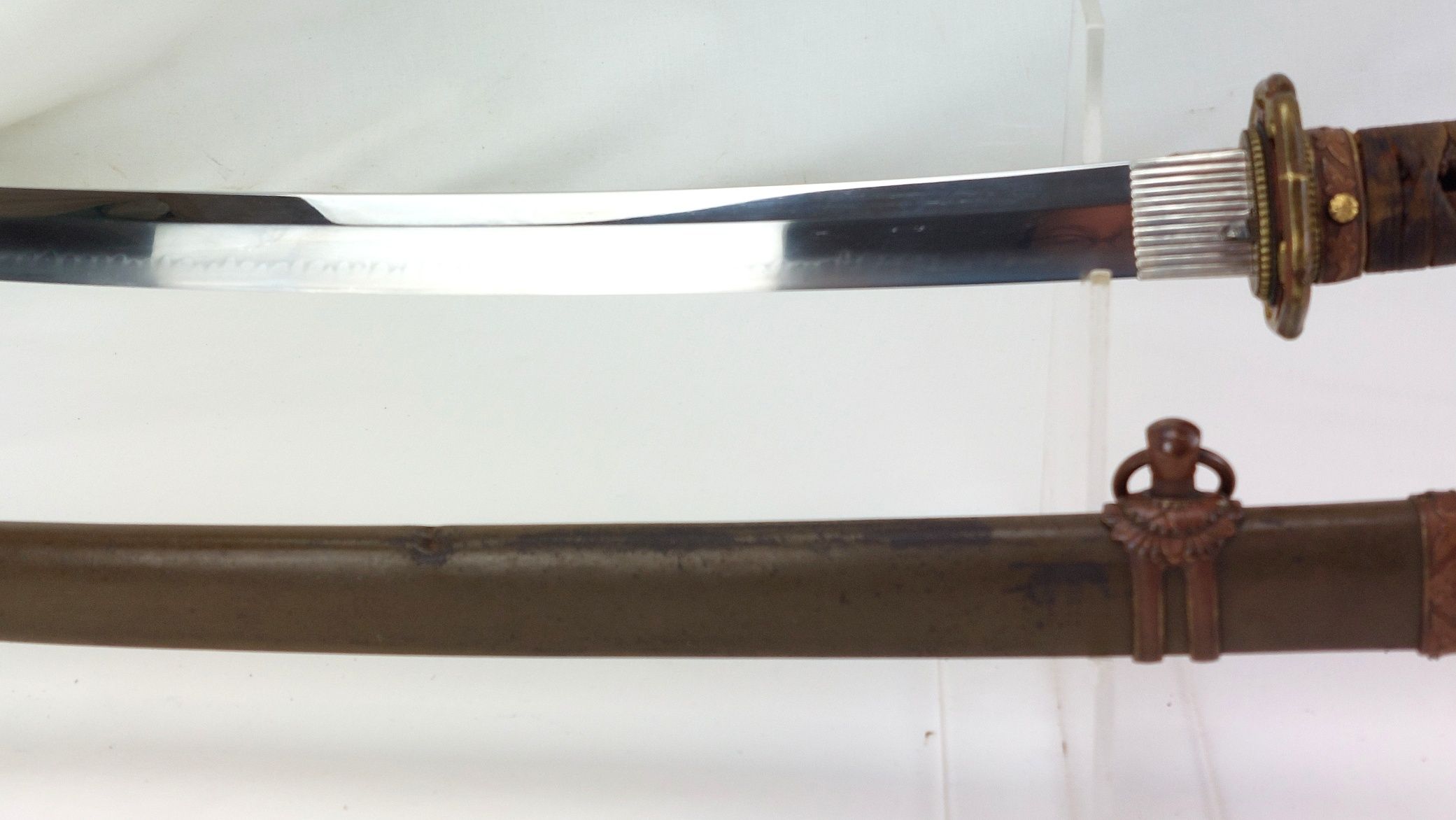
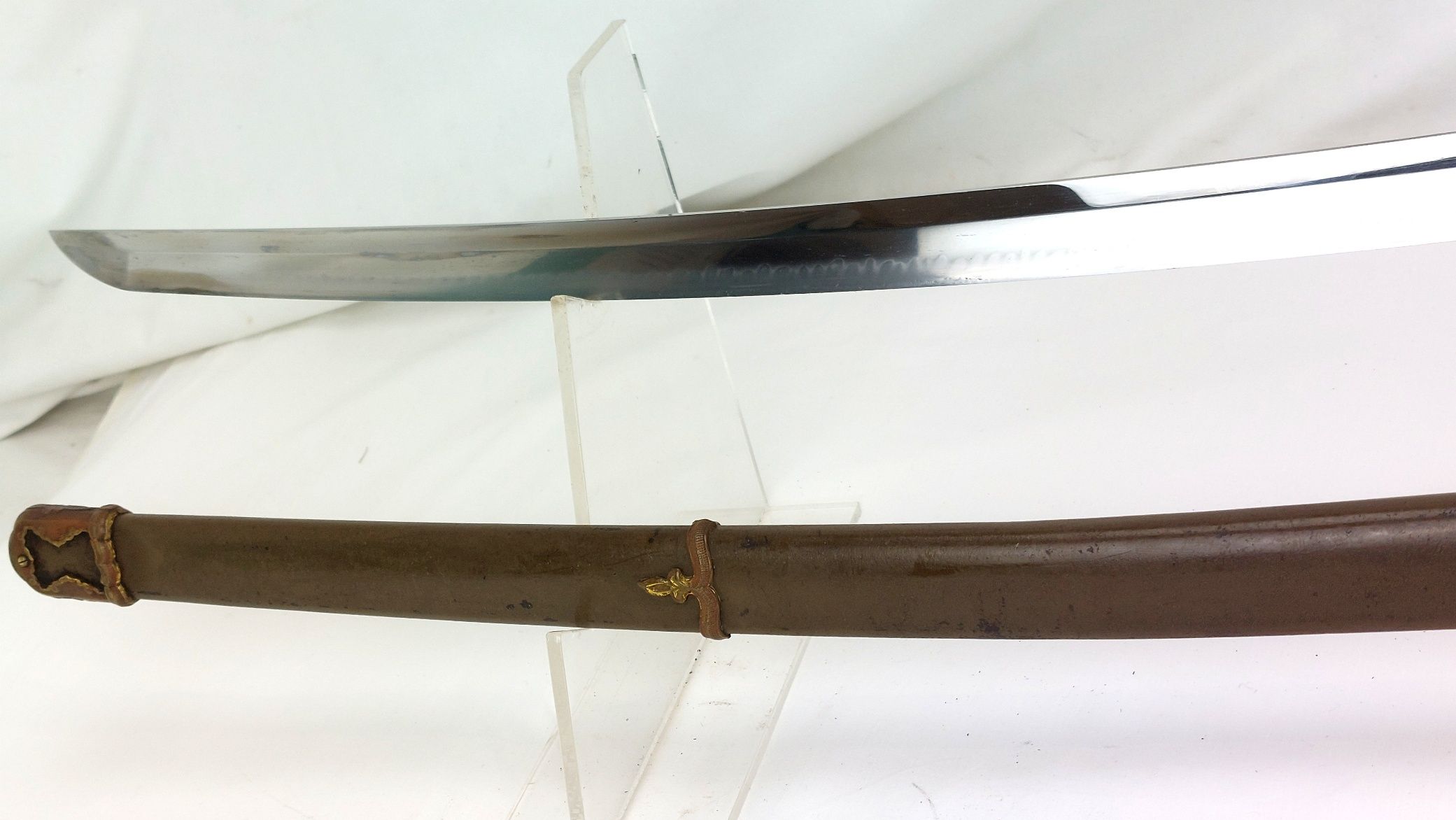
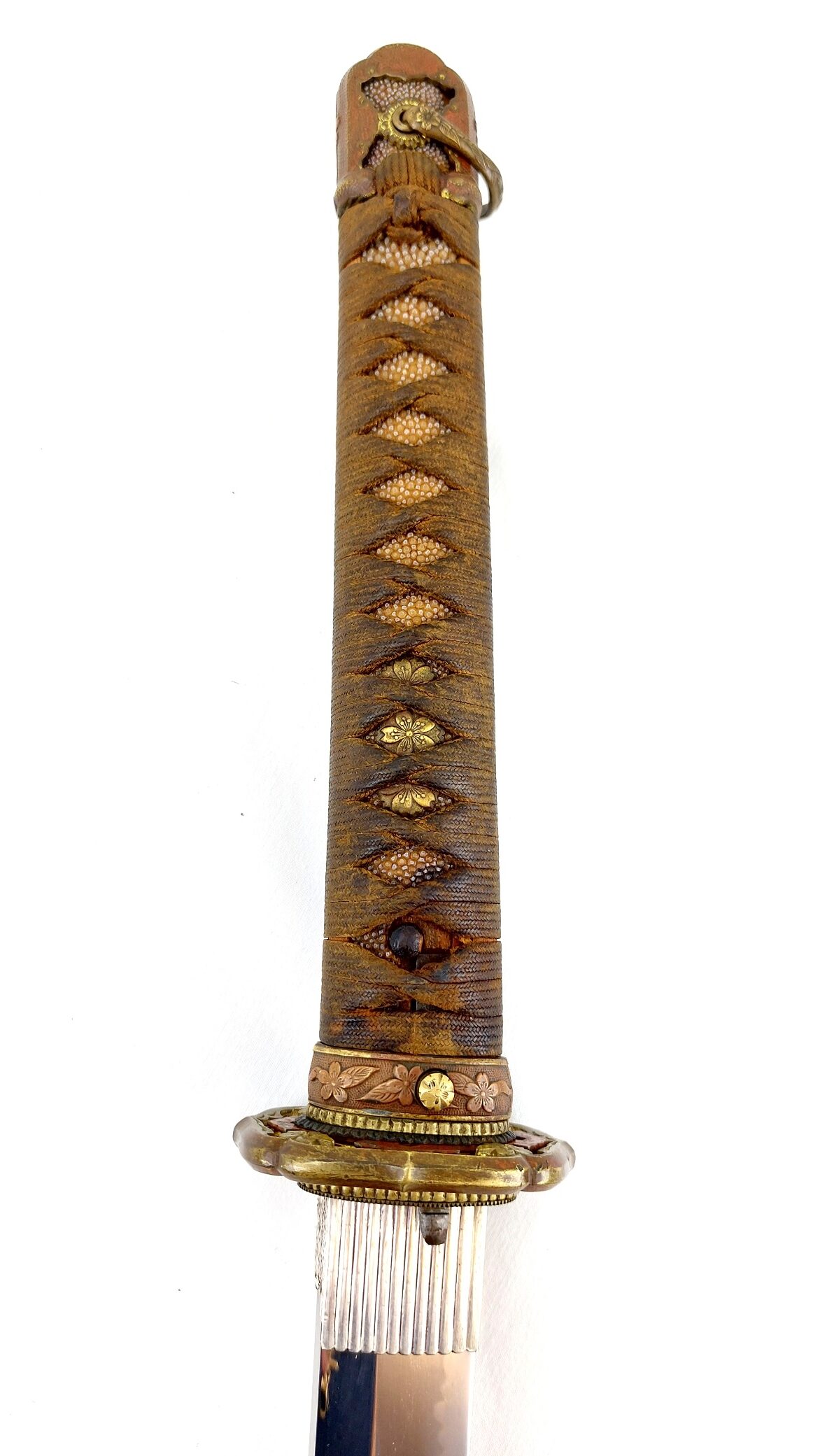
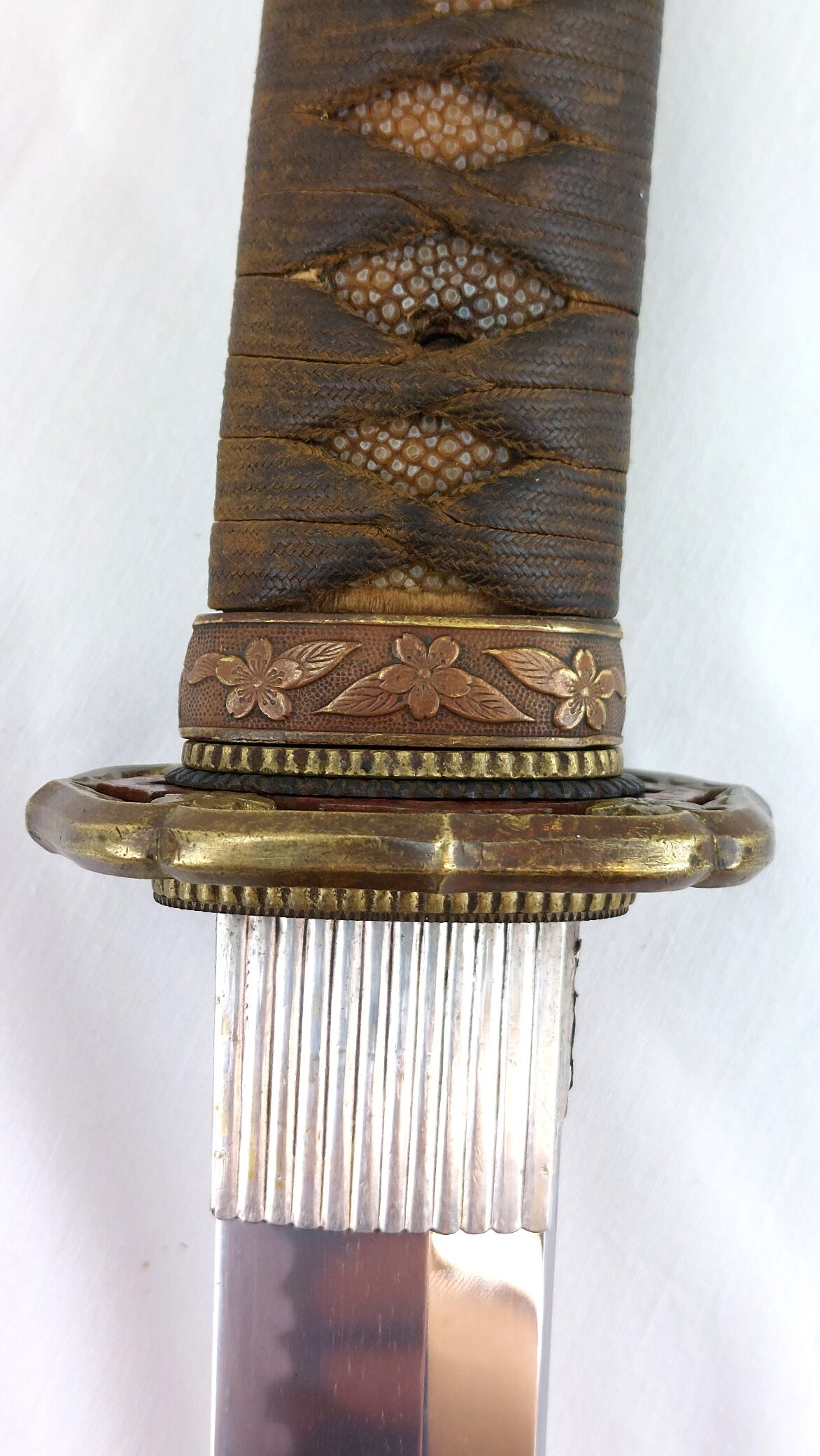
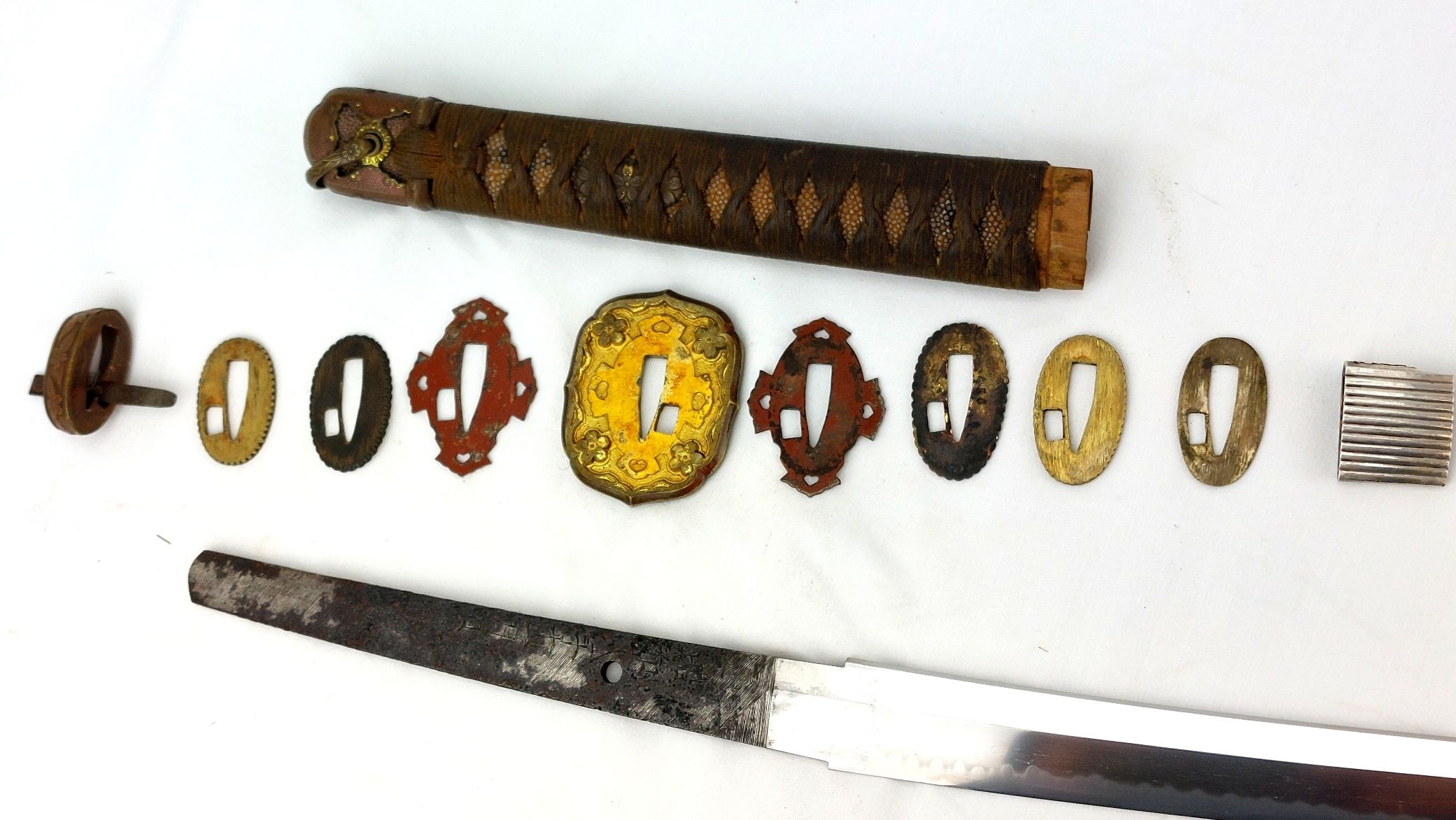
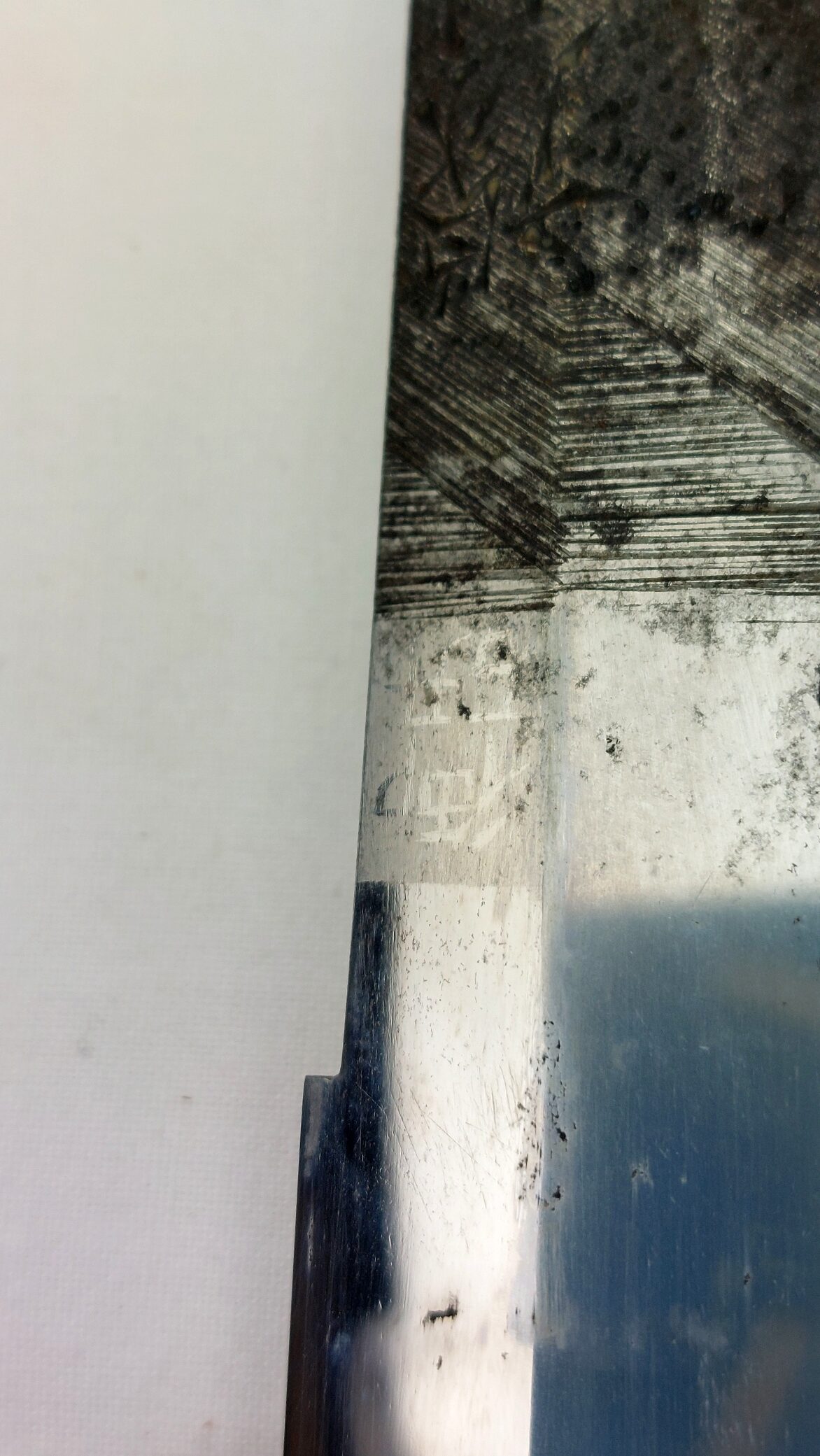
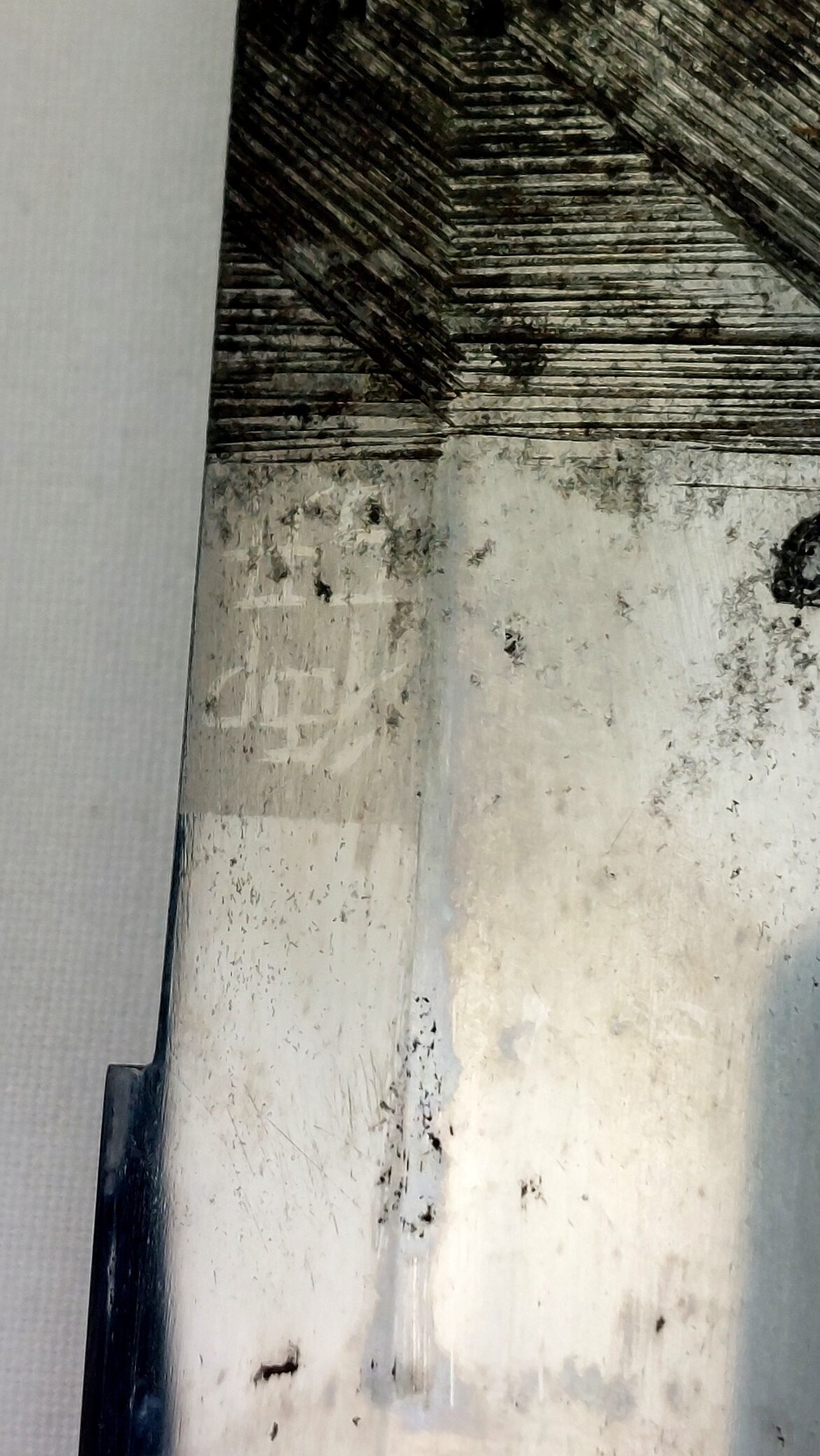
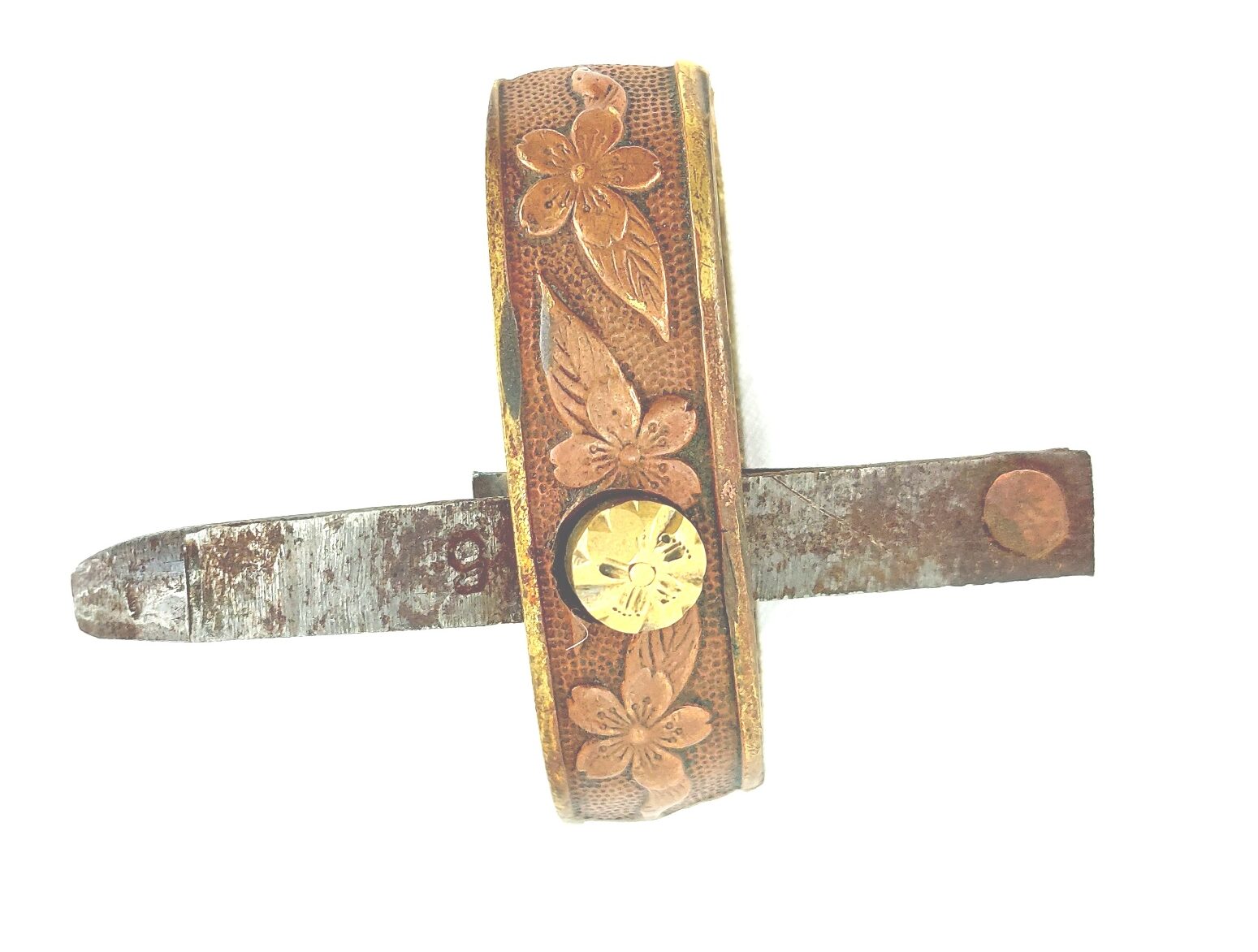
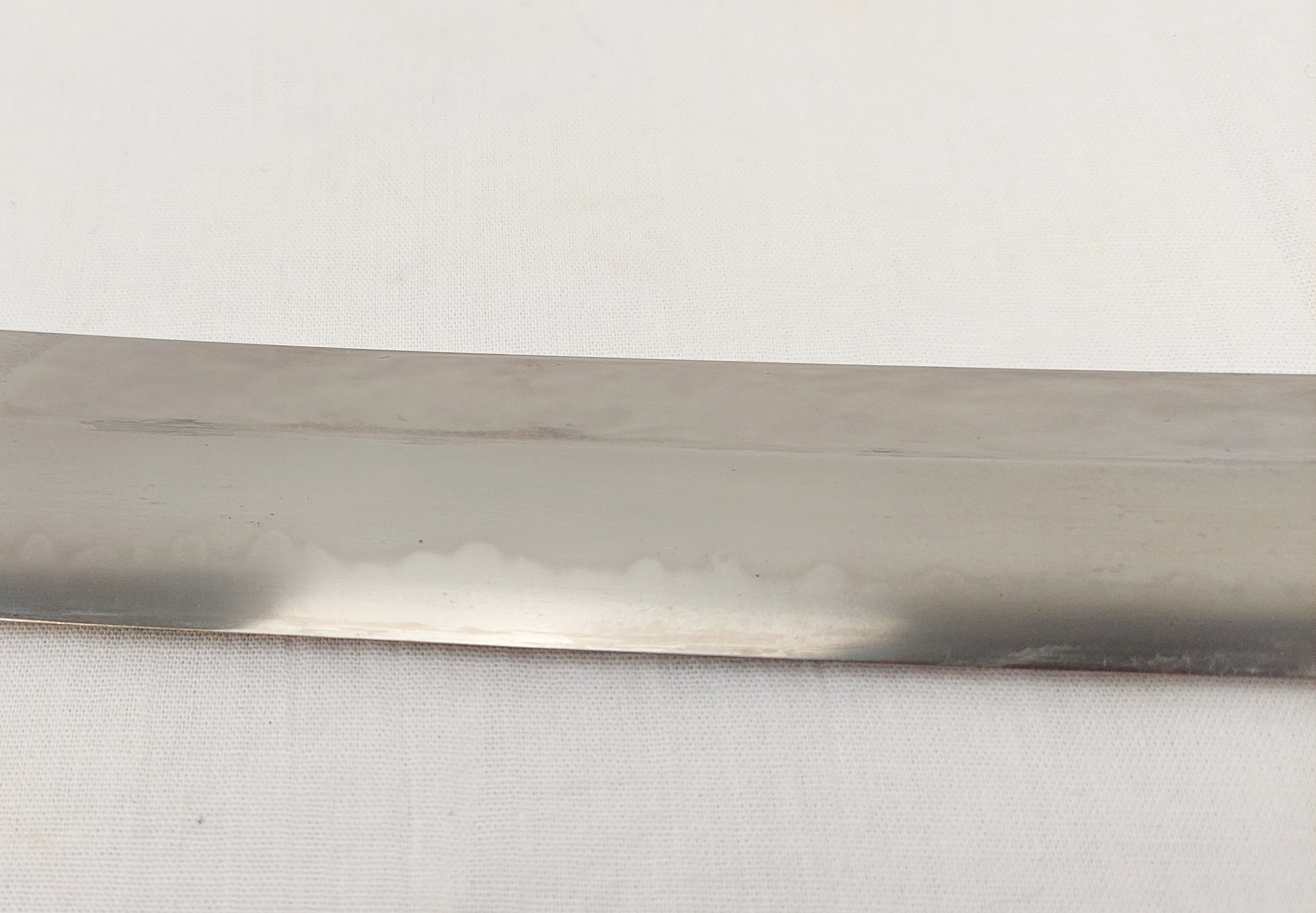
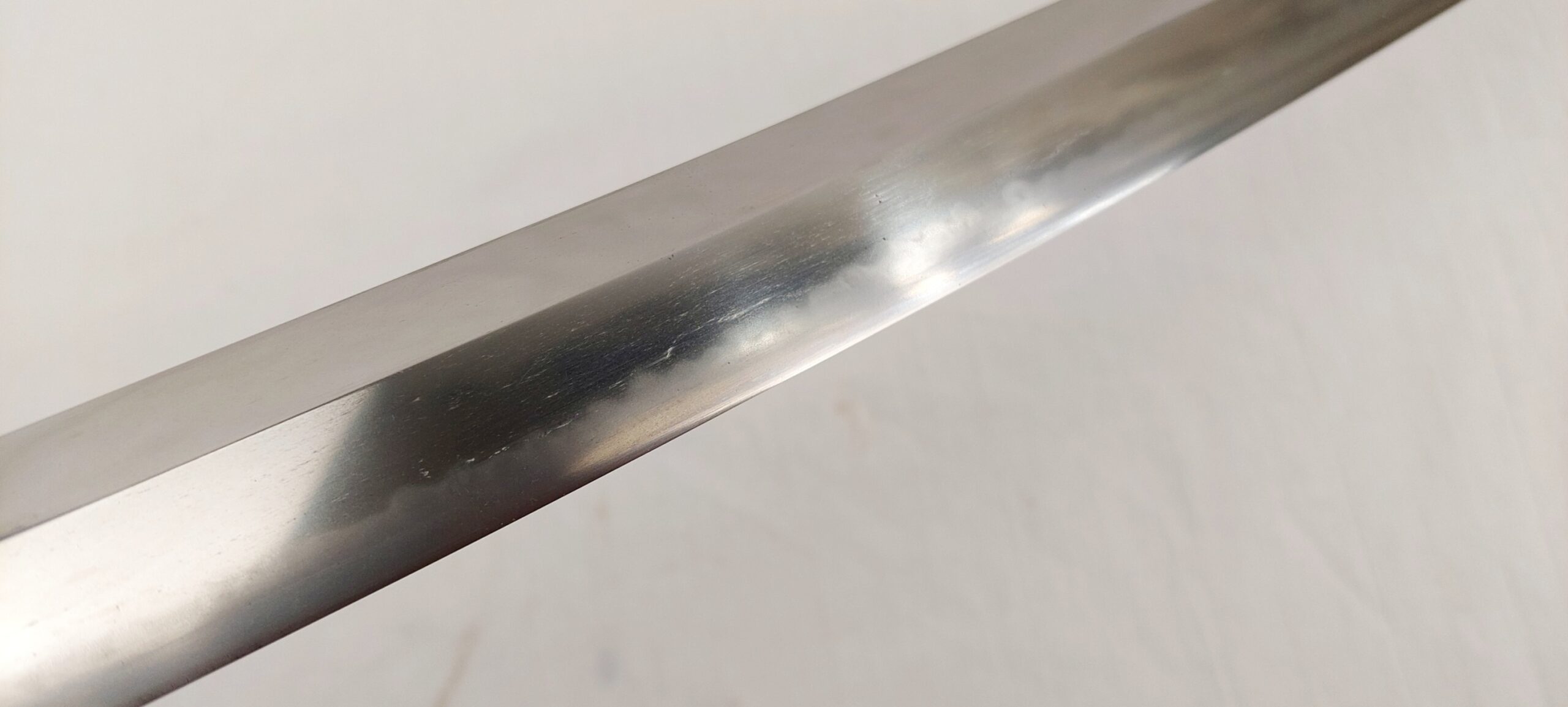
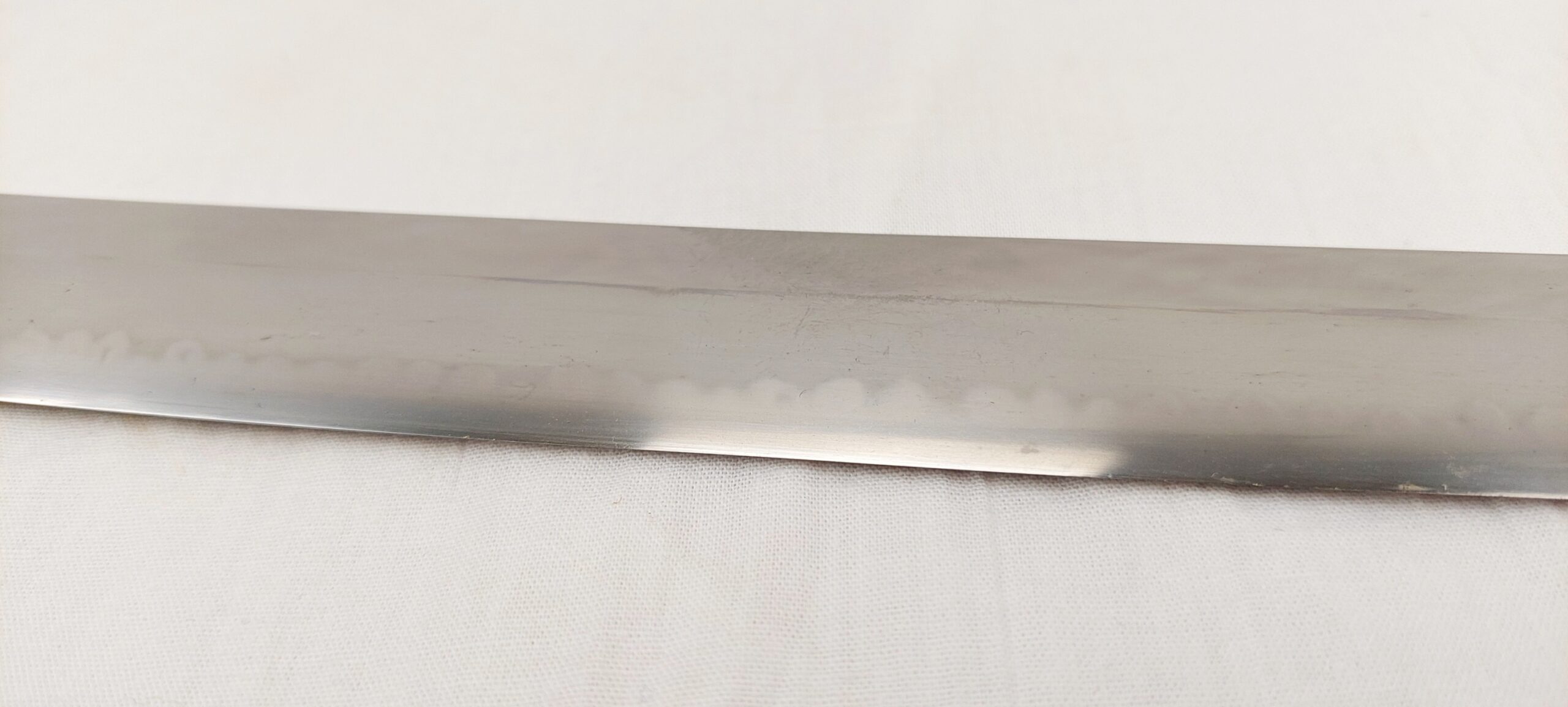
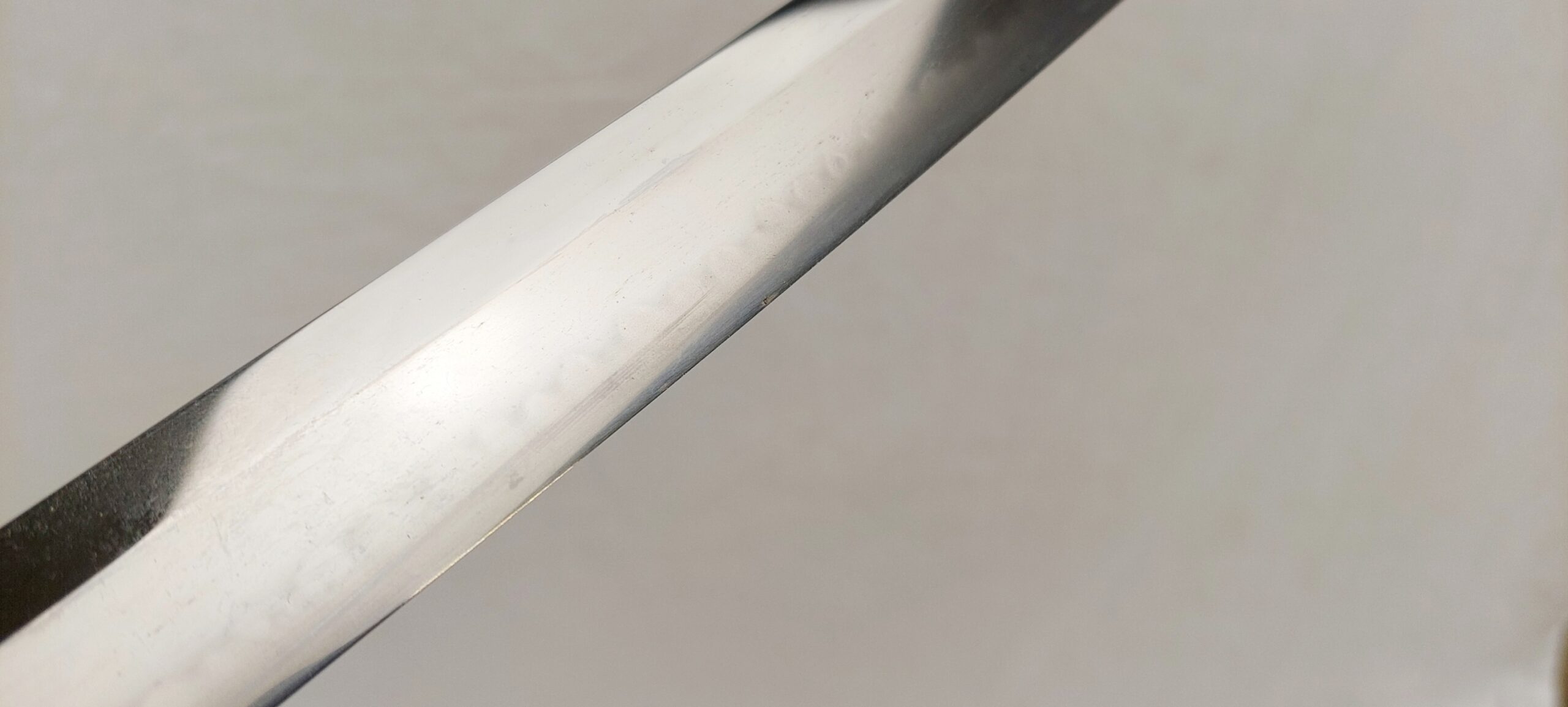
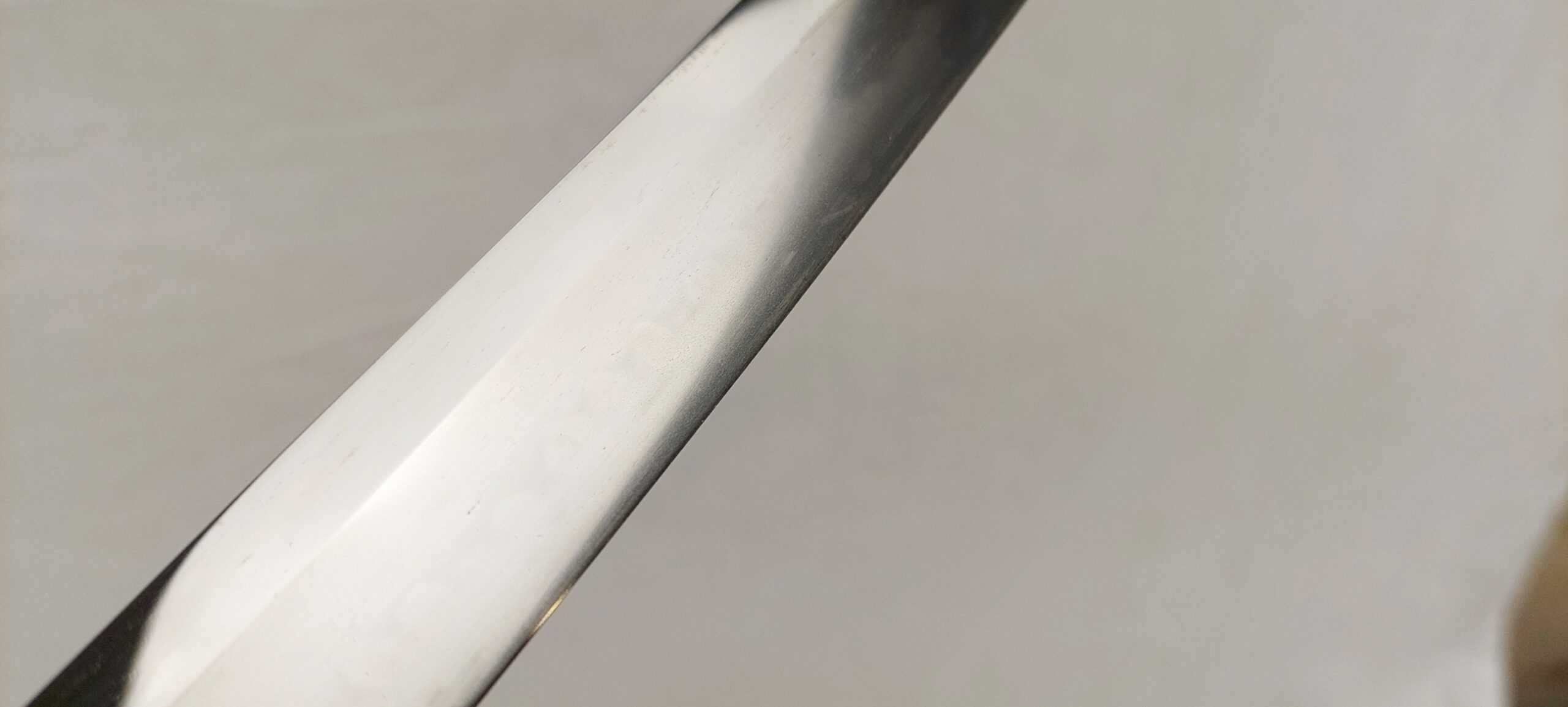
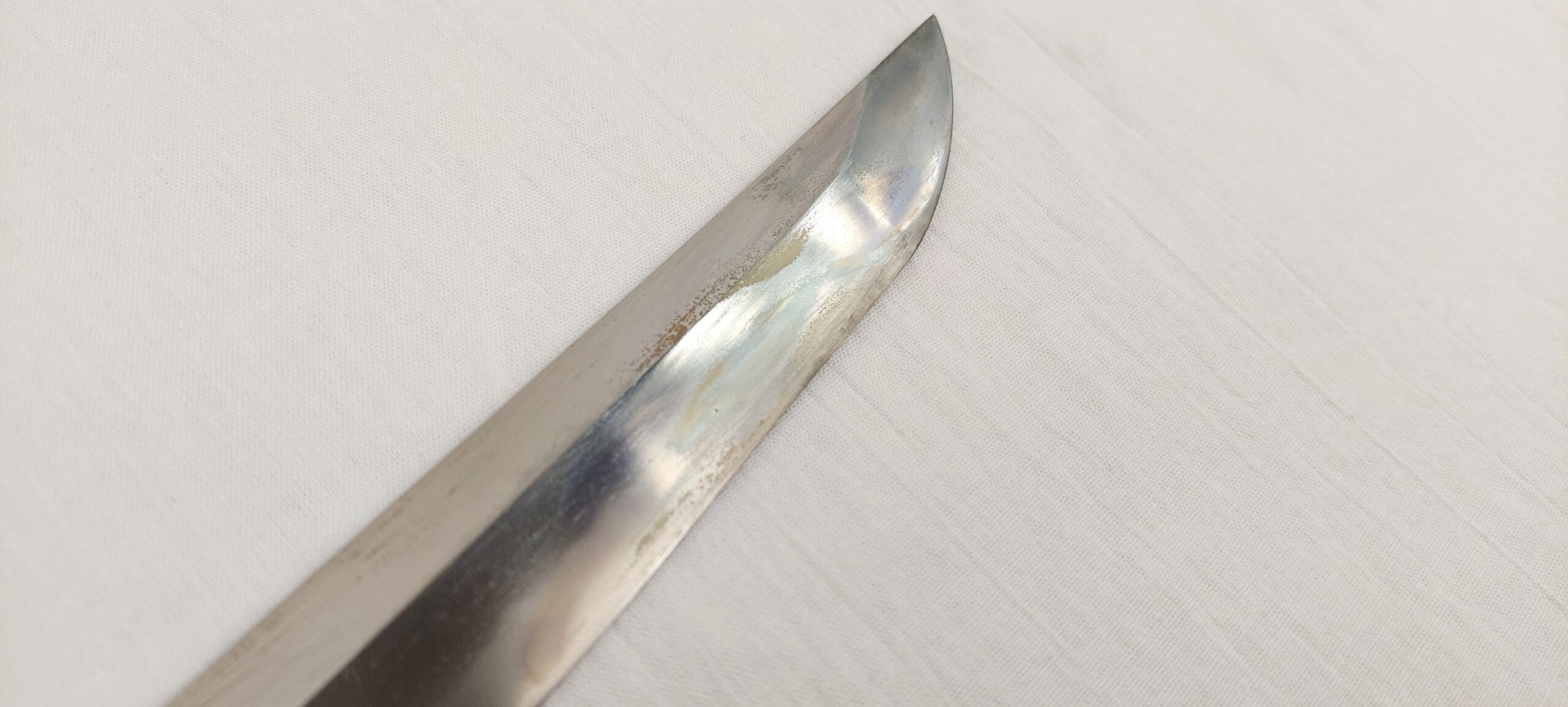
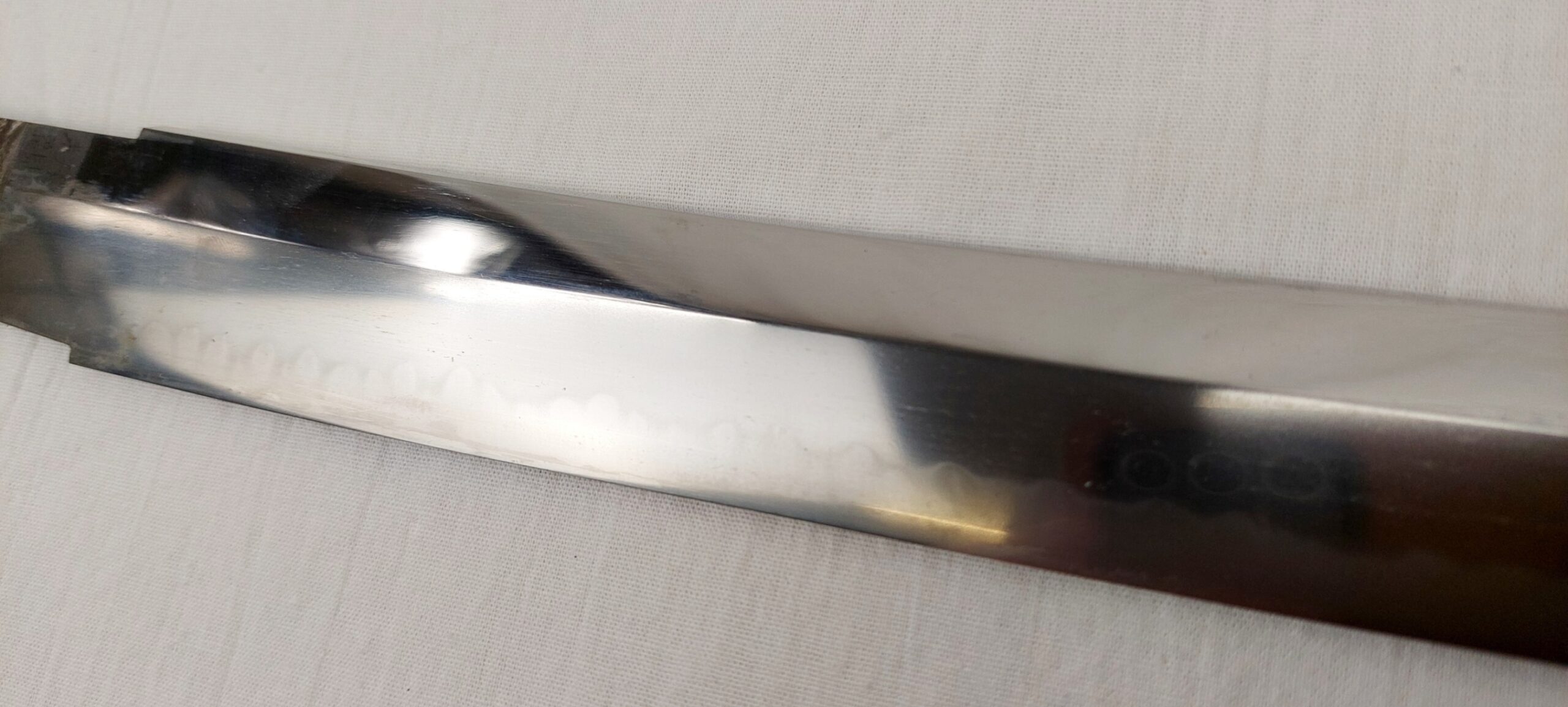
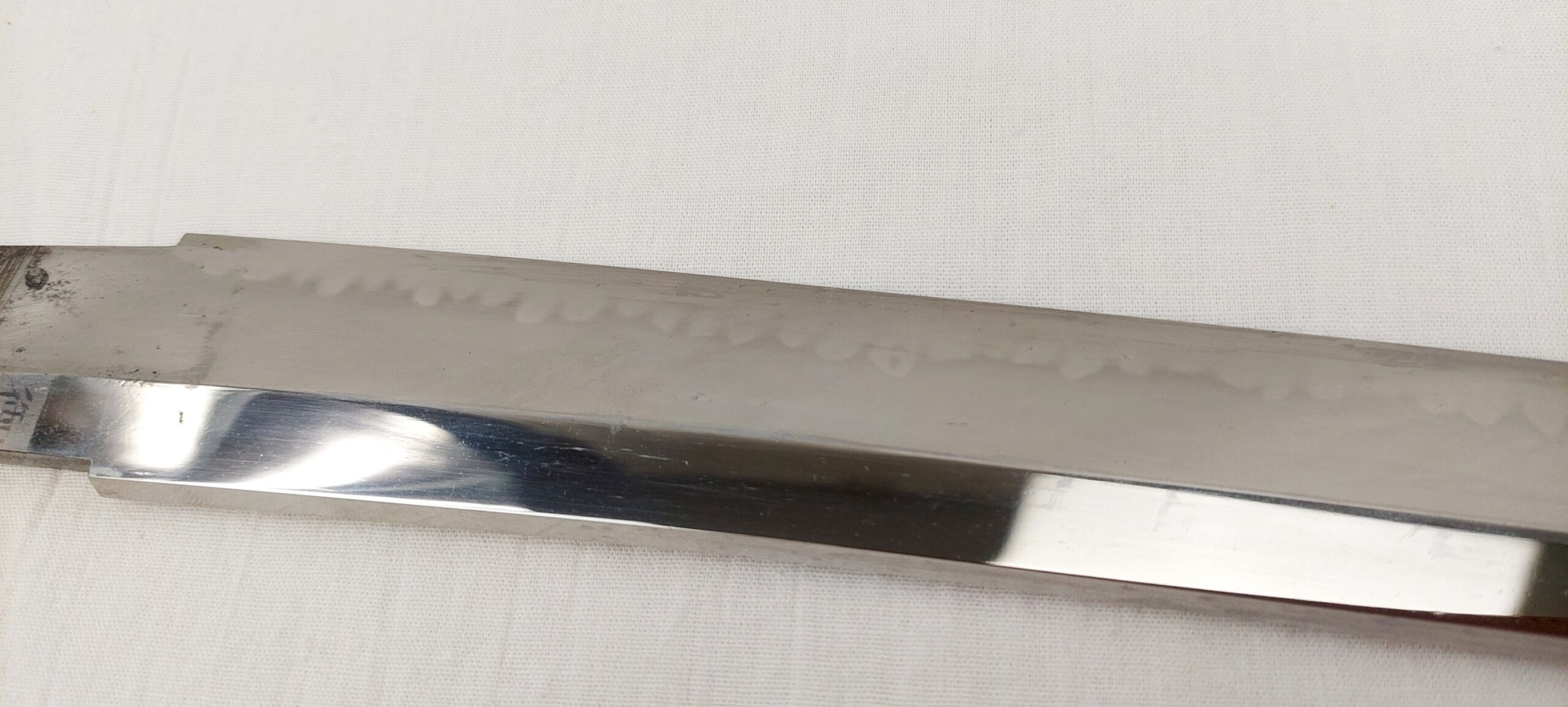
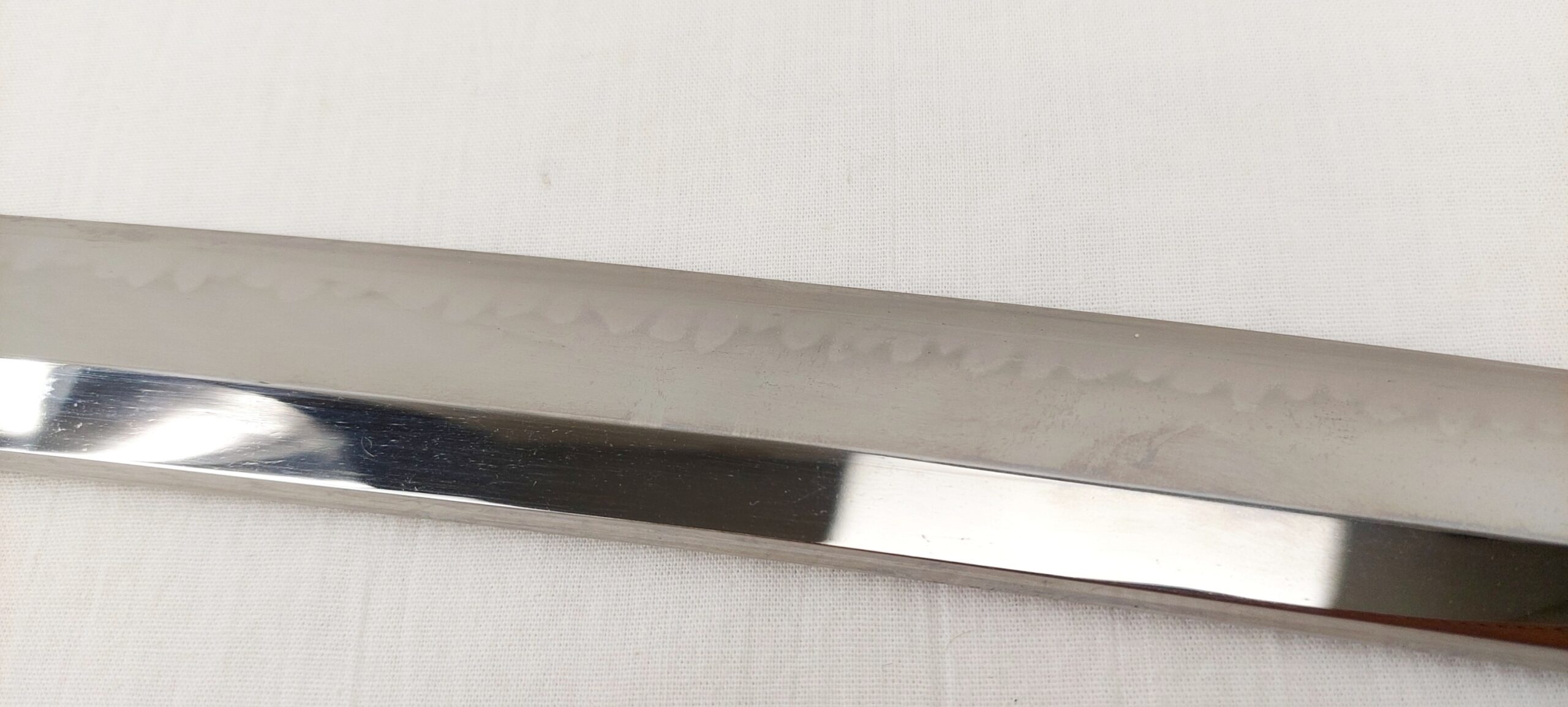
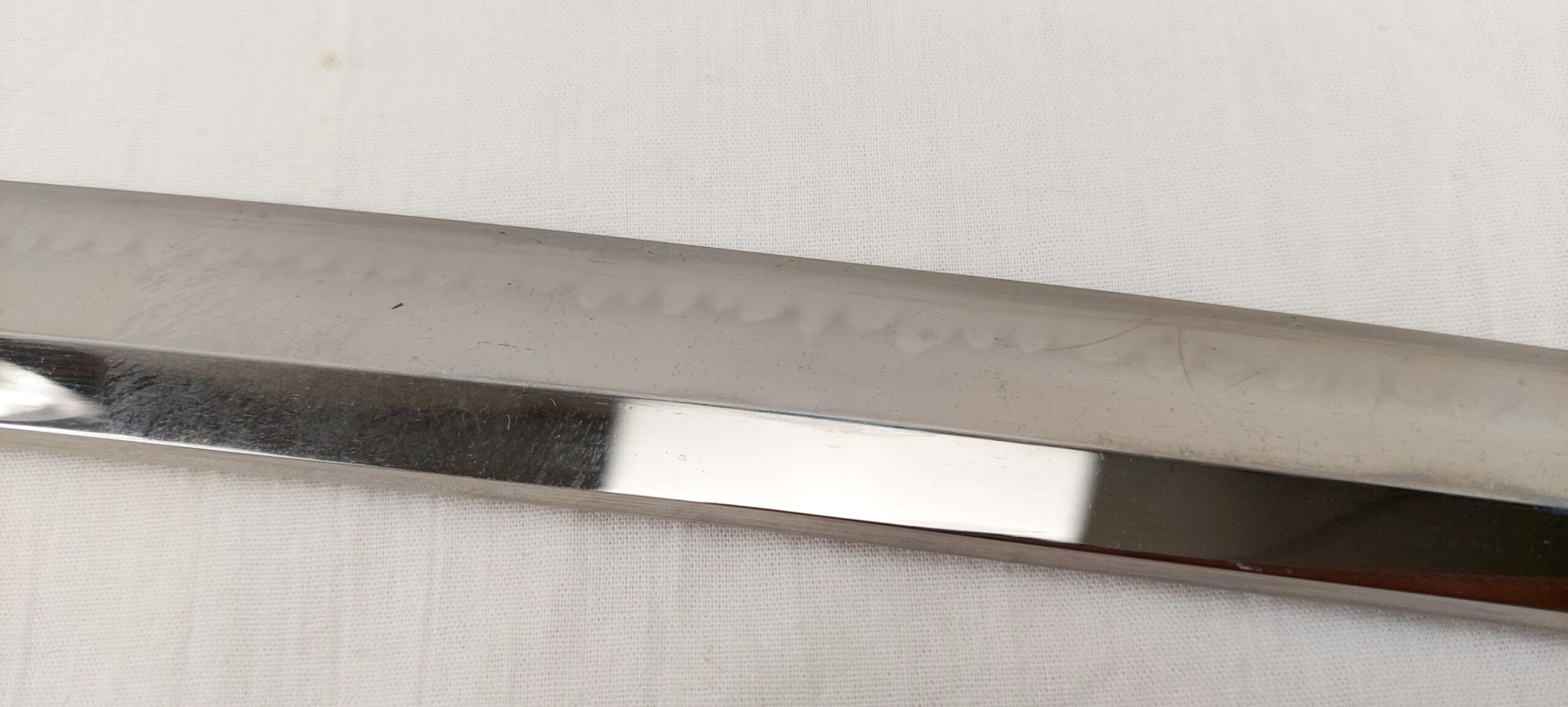
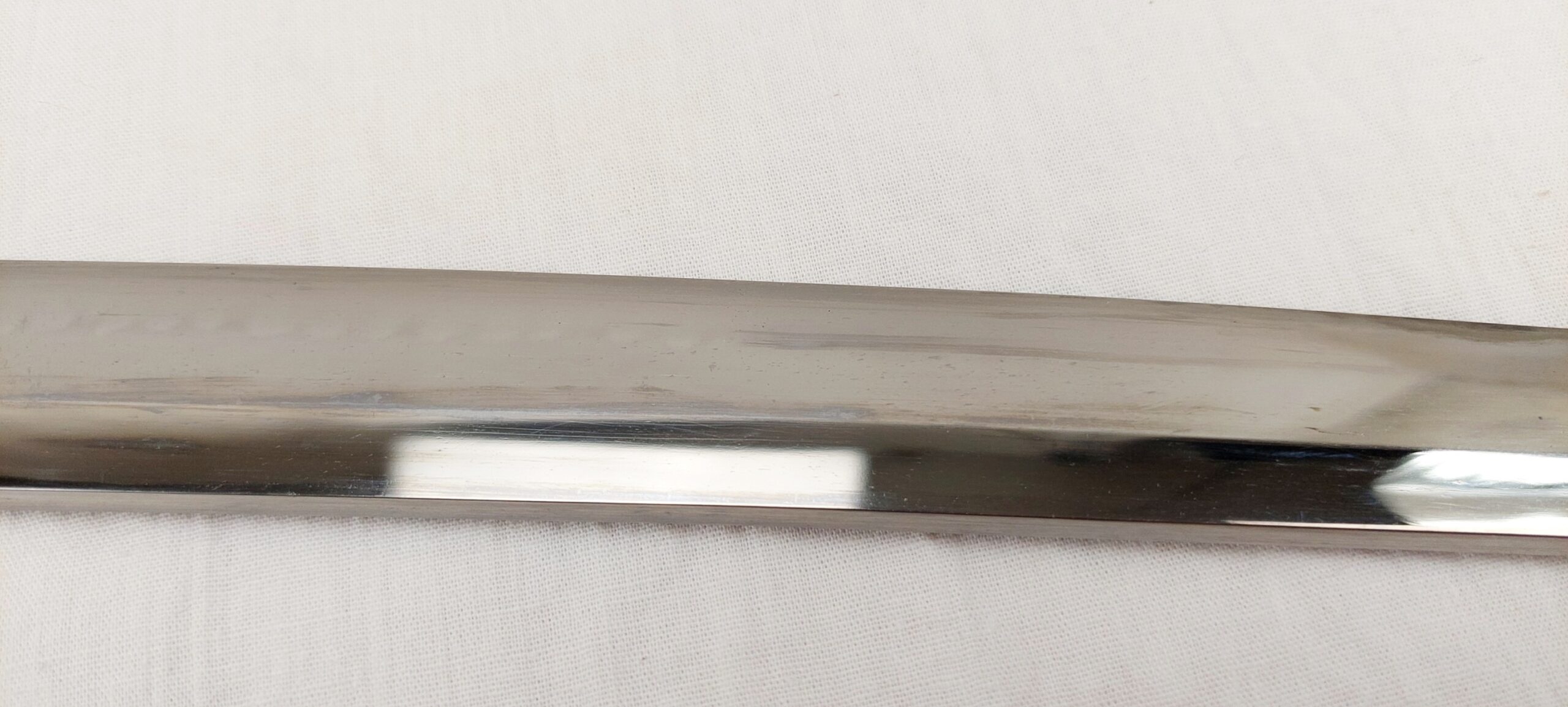
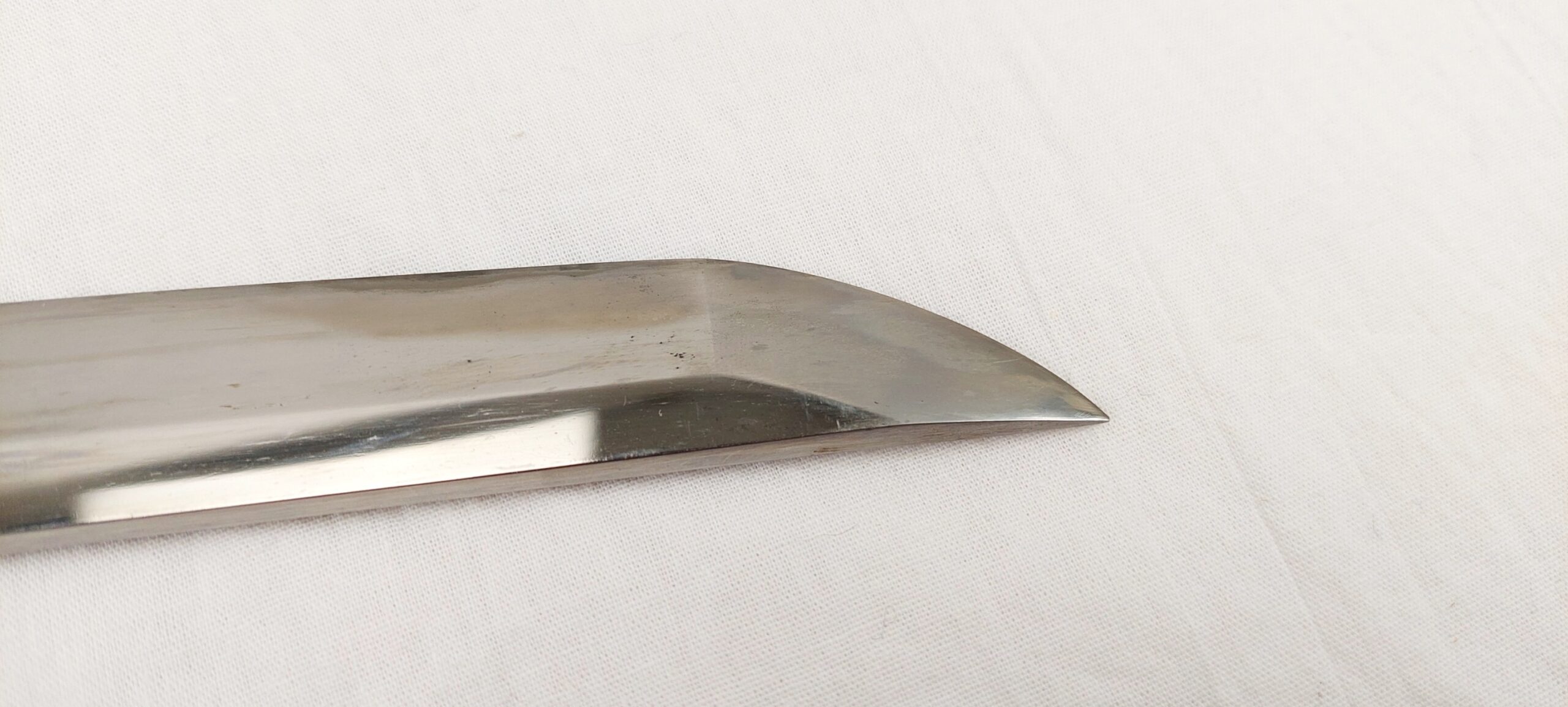
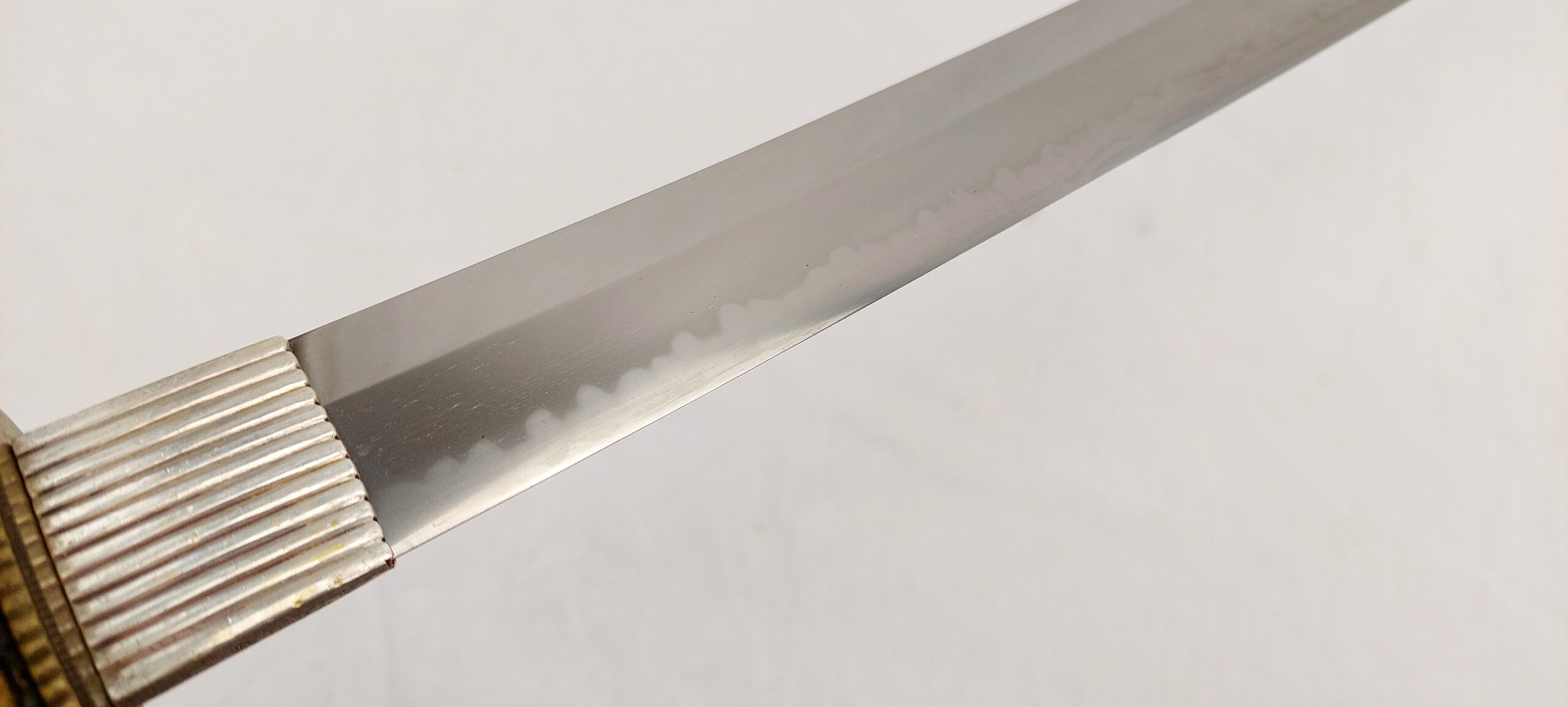
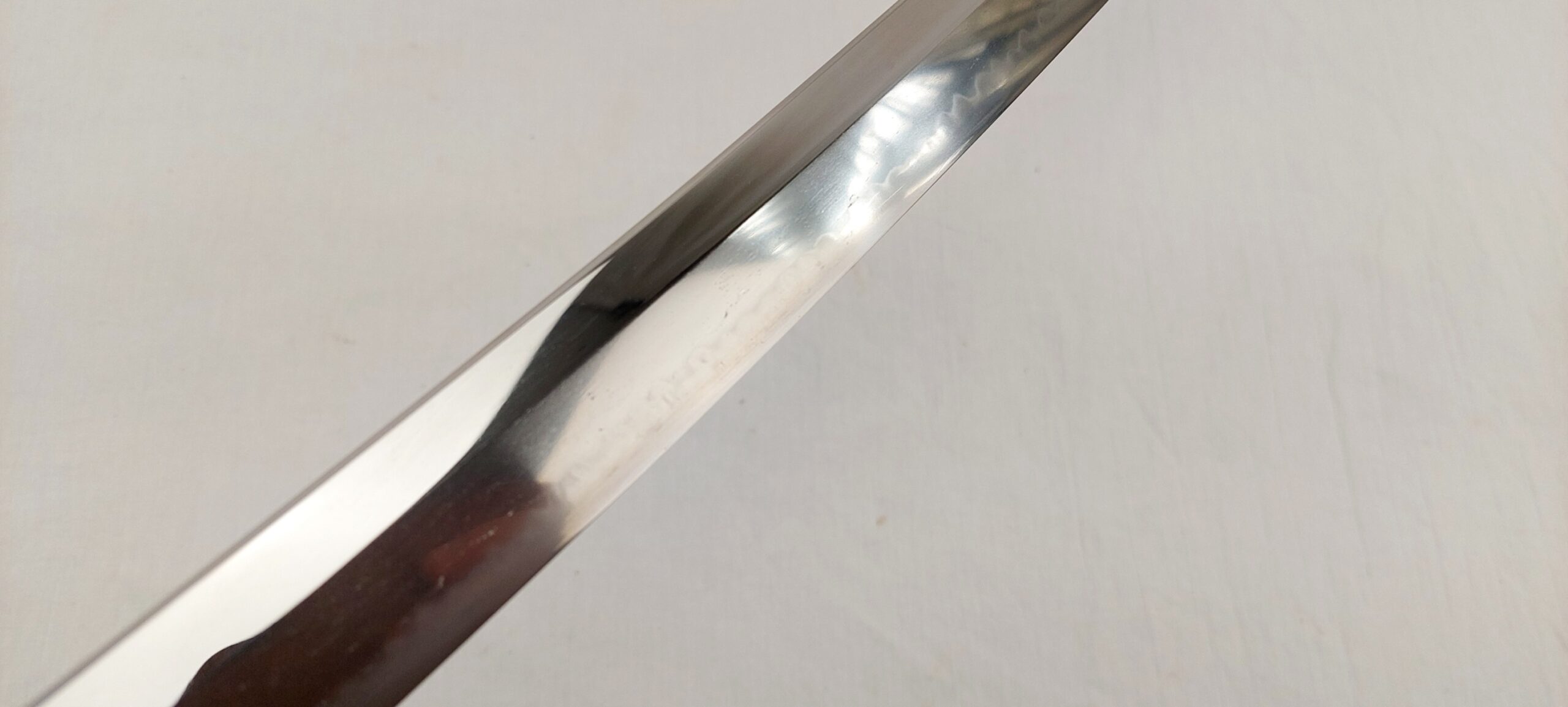
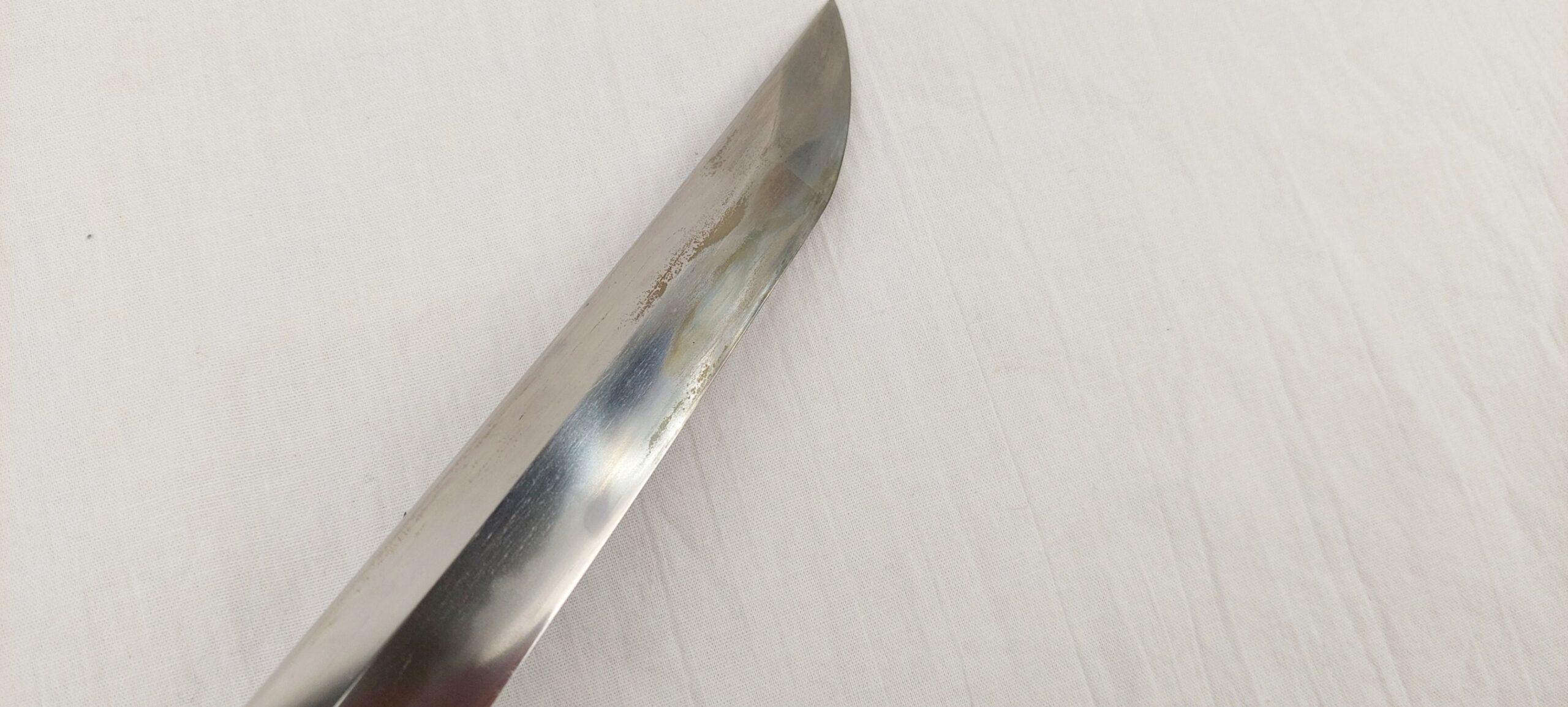
Hiromasa’s work was highly regarded during the Shōwa period and is recorded as having been ranked Kihin no Retsu (Made Precious Works) at the 1941 Shinsaku Meitō Tenran Kai (Newly Made Swords Exhibition). This places him among the more accomplished smiths of the era. The blade shows a gunome-midare hamon with ashi, running into a well-defined boshi, with a 40 mm kissaki and an 18 mm sori. The nakago retains strong sujikai yasurime file marks. An additional scratched inscription is visible, believed to be a polisher’s mark, and is around 80–90% legible. It is suggested that this may read Kokan (Nagayama), who later became a Mukansa-level polisher in post-war Japan. A high-quality silver-covered habaki completes the blade.
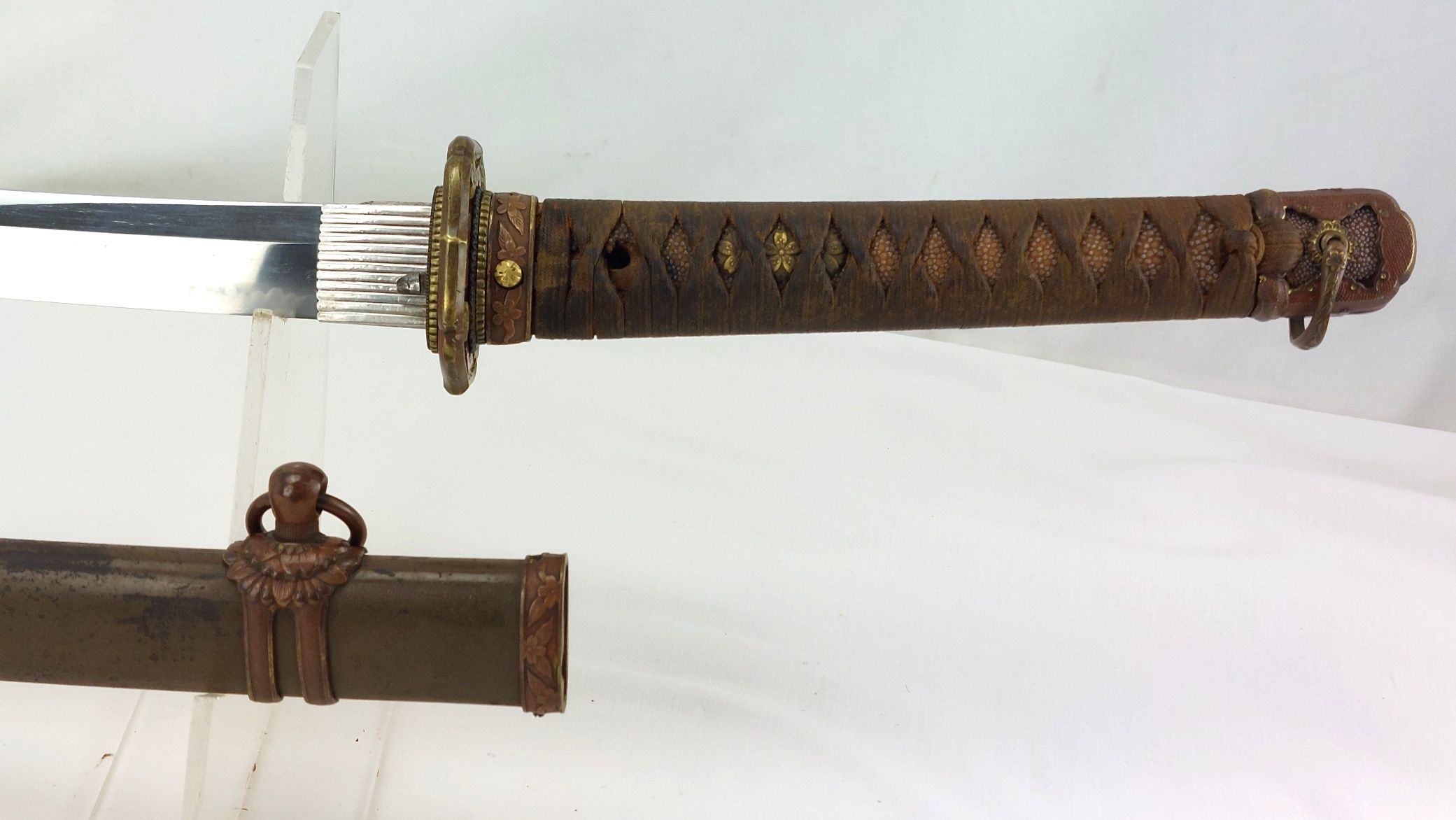
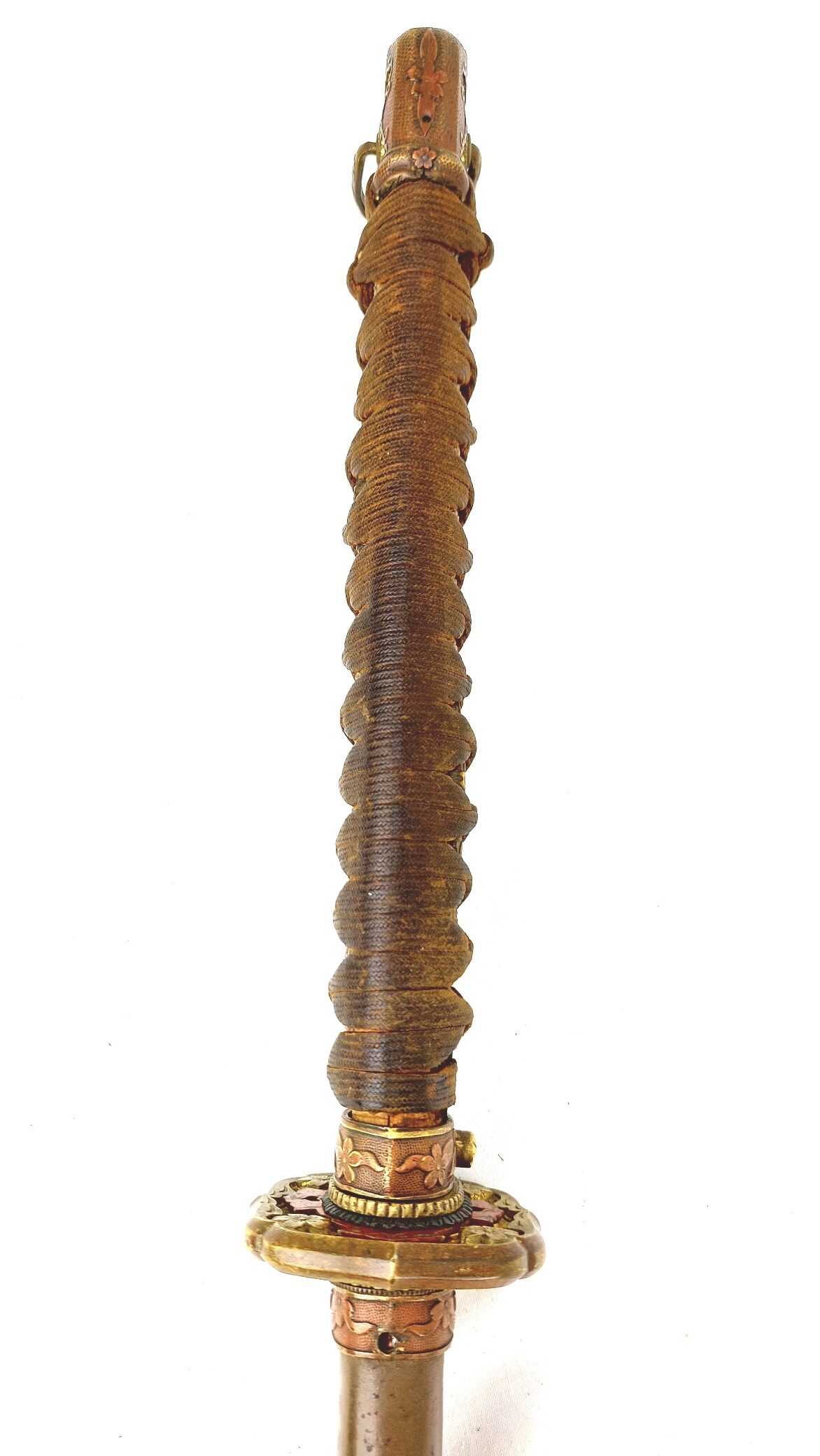
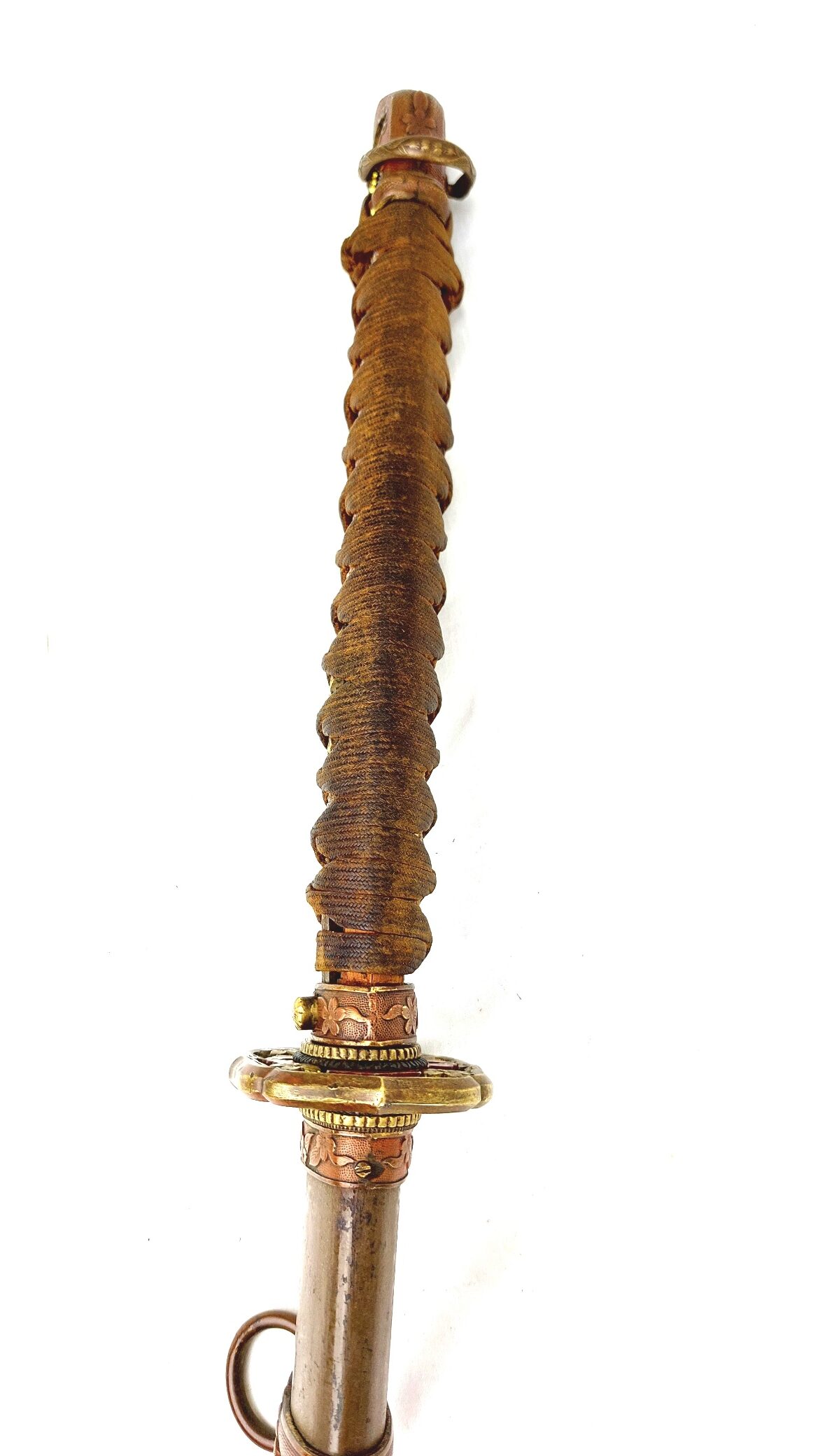
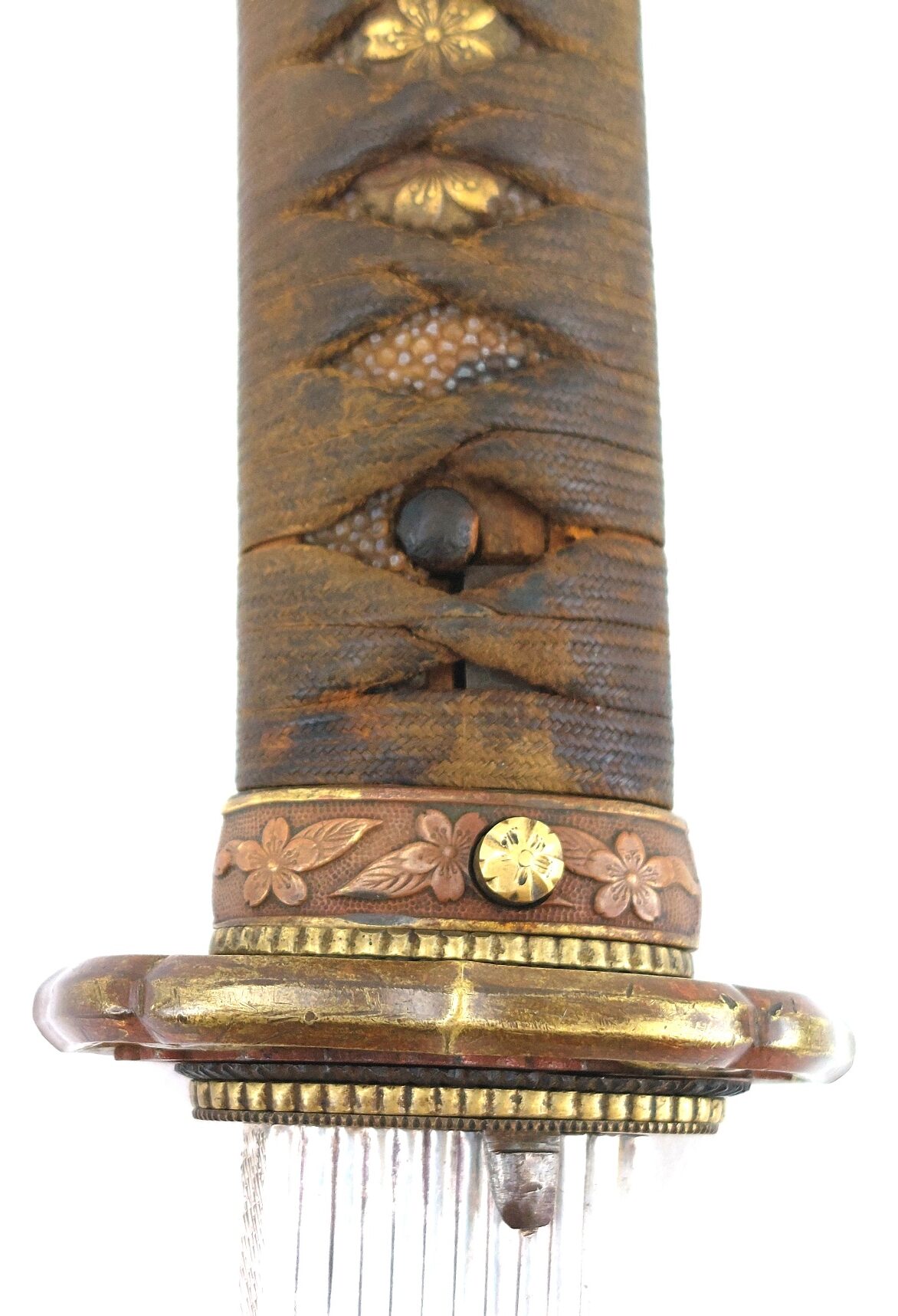
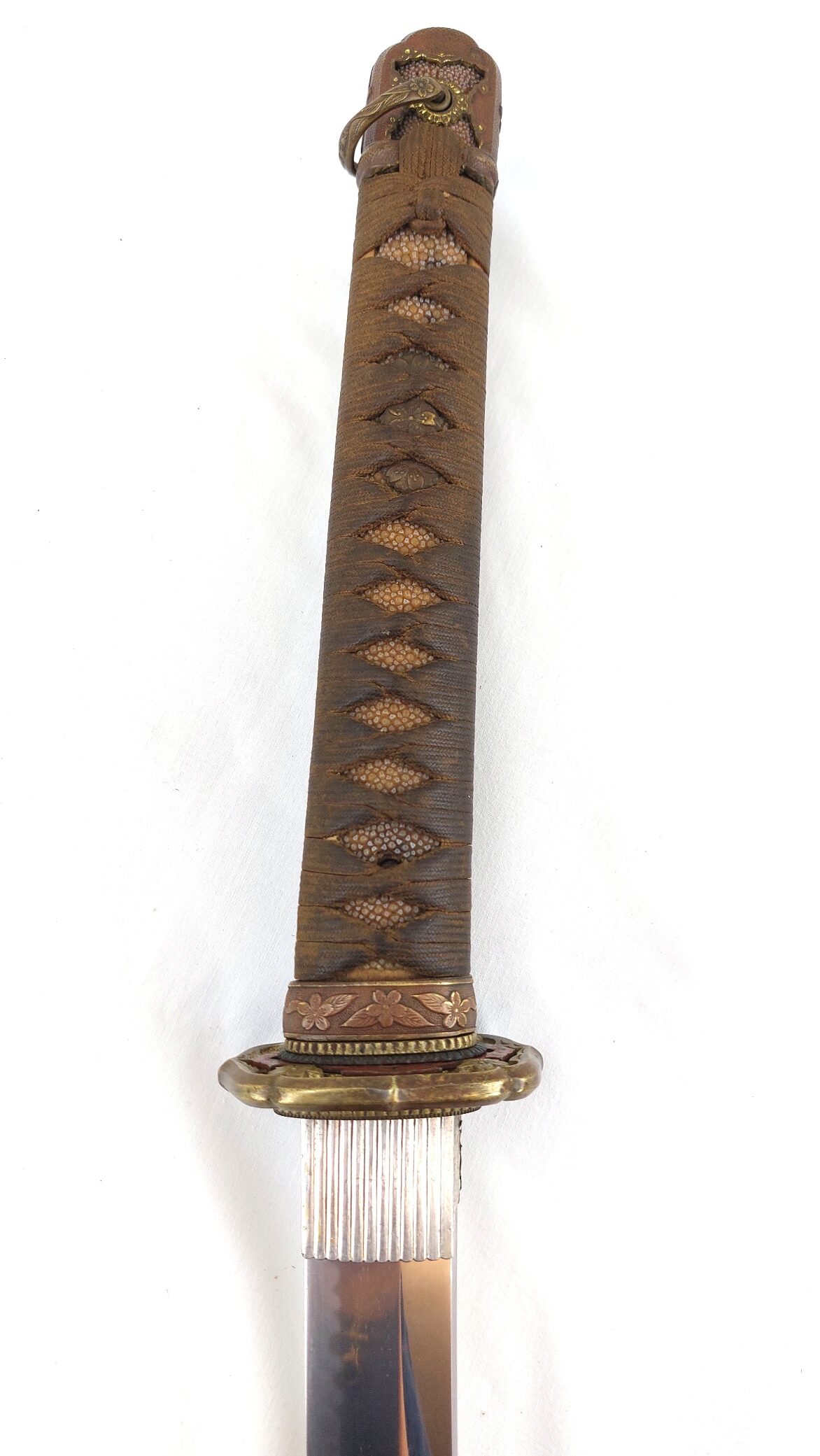
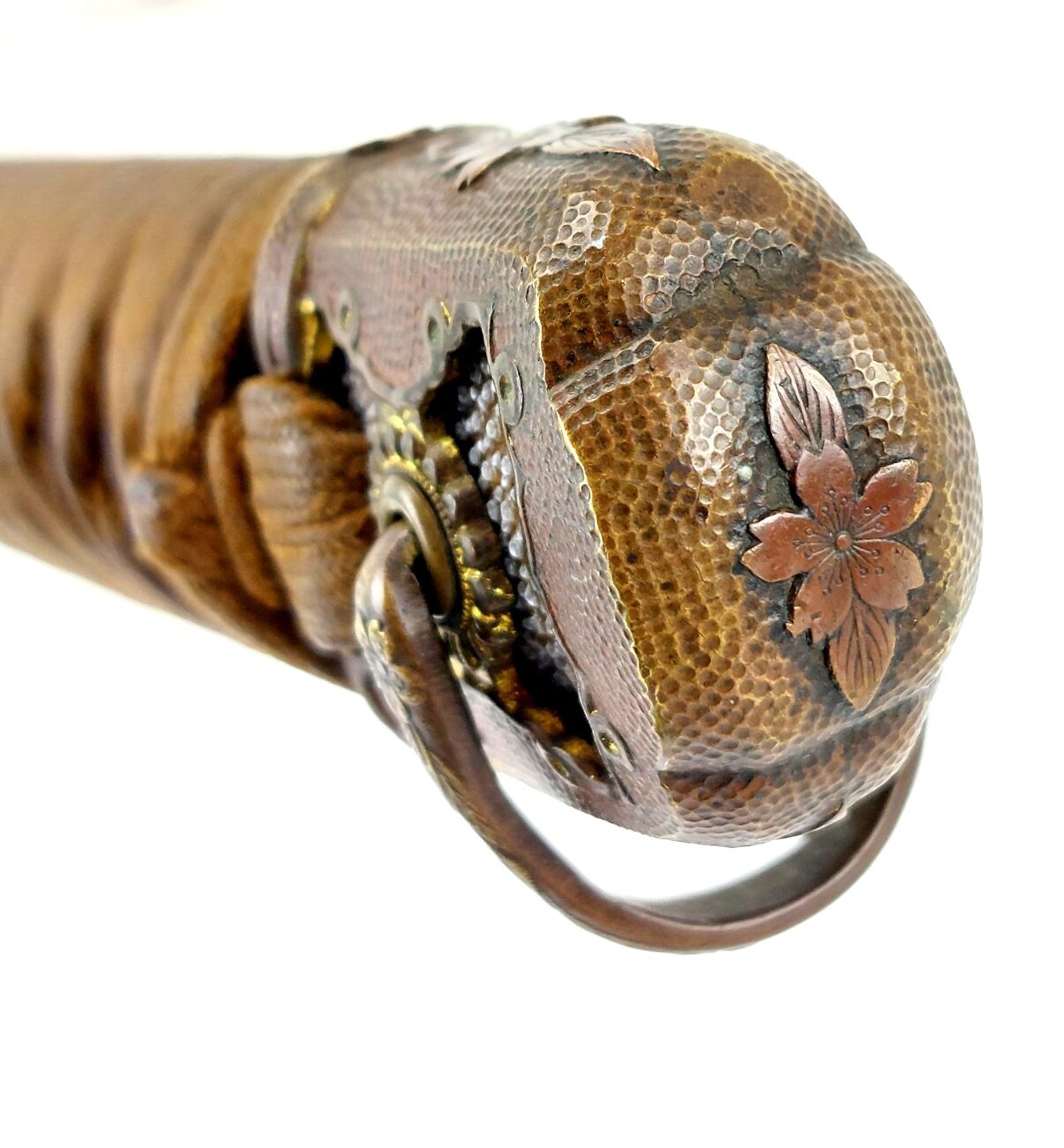
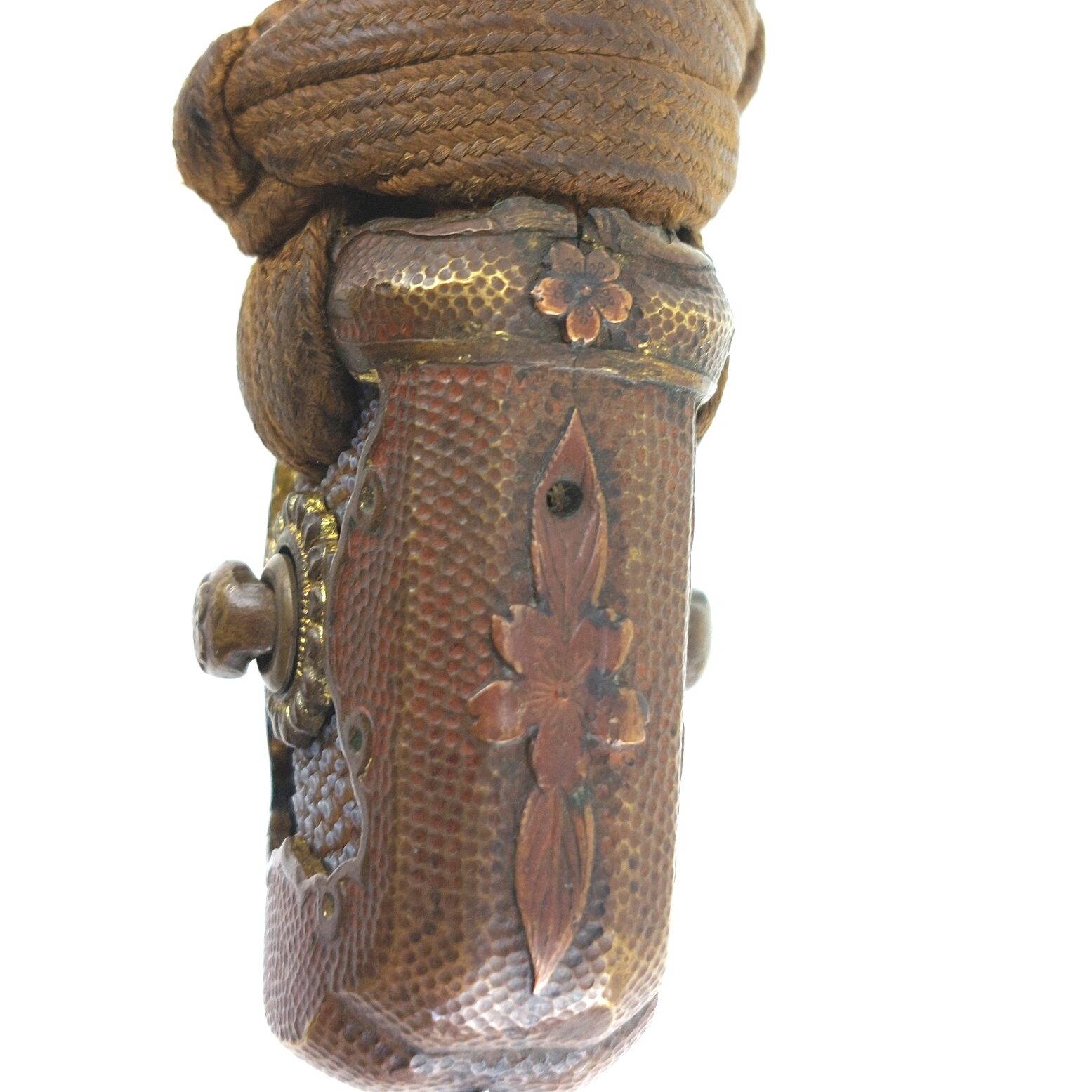
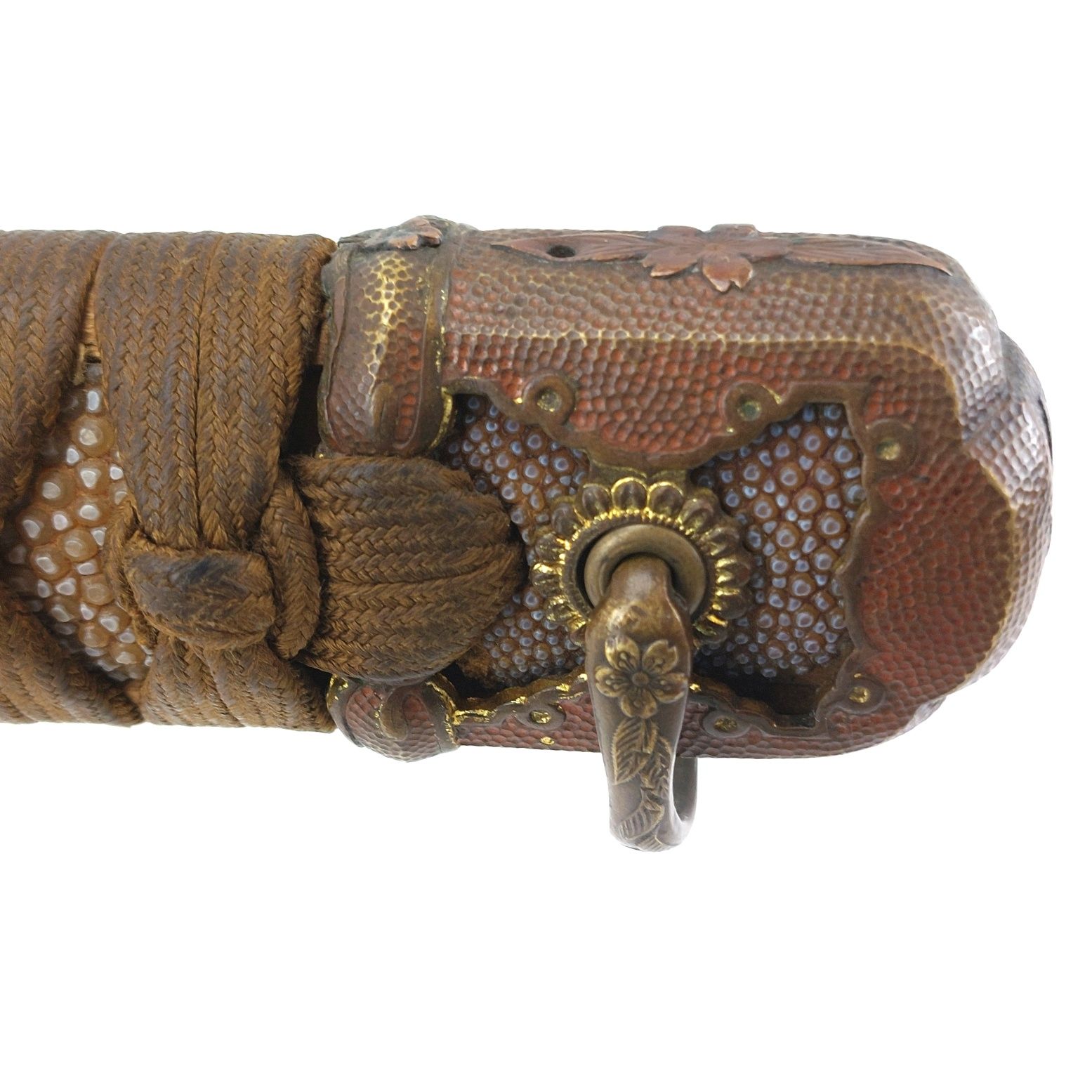
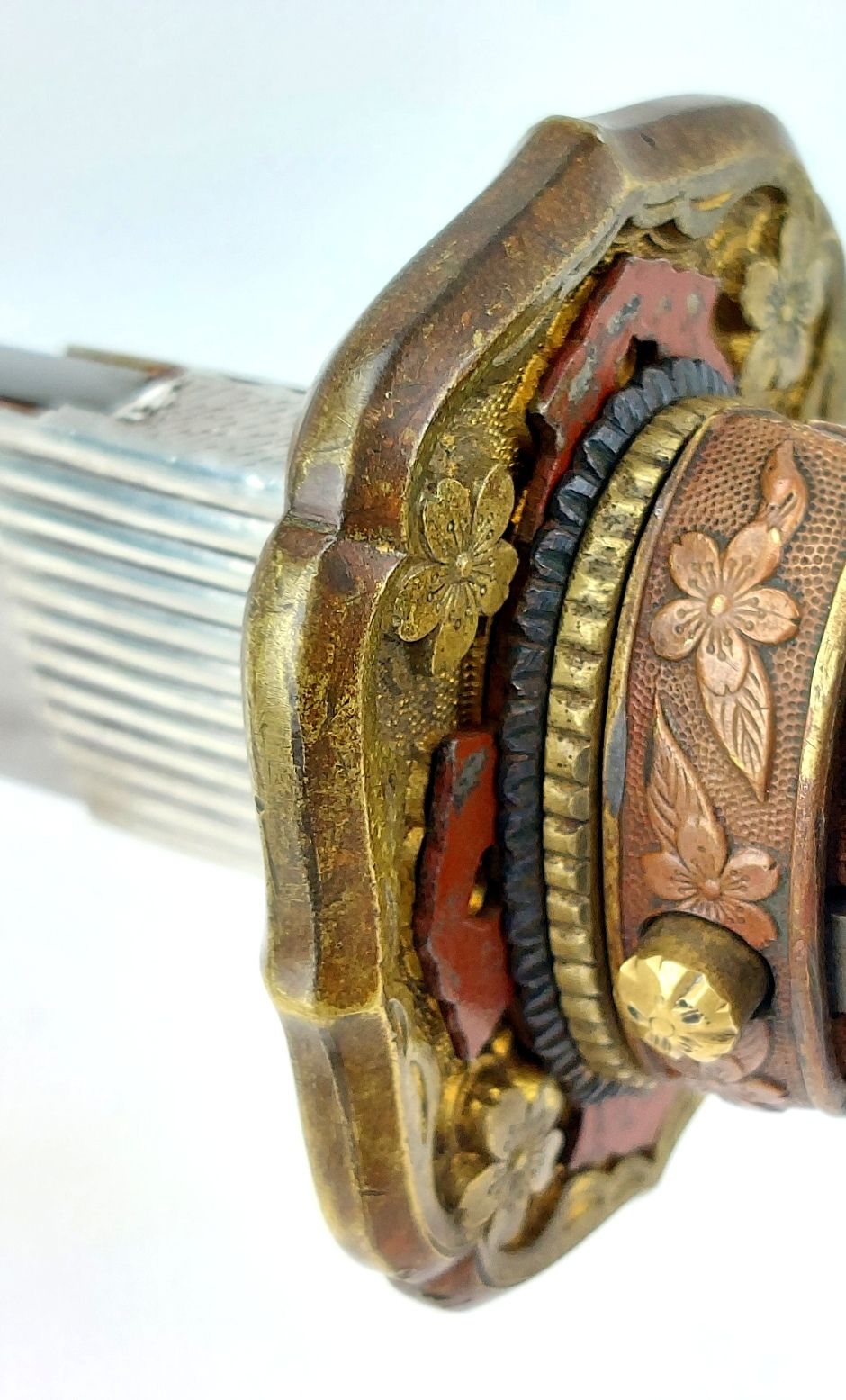
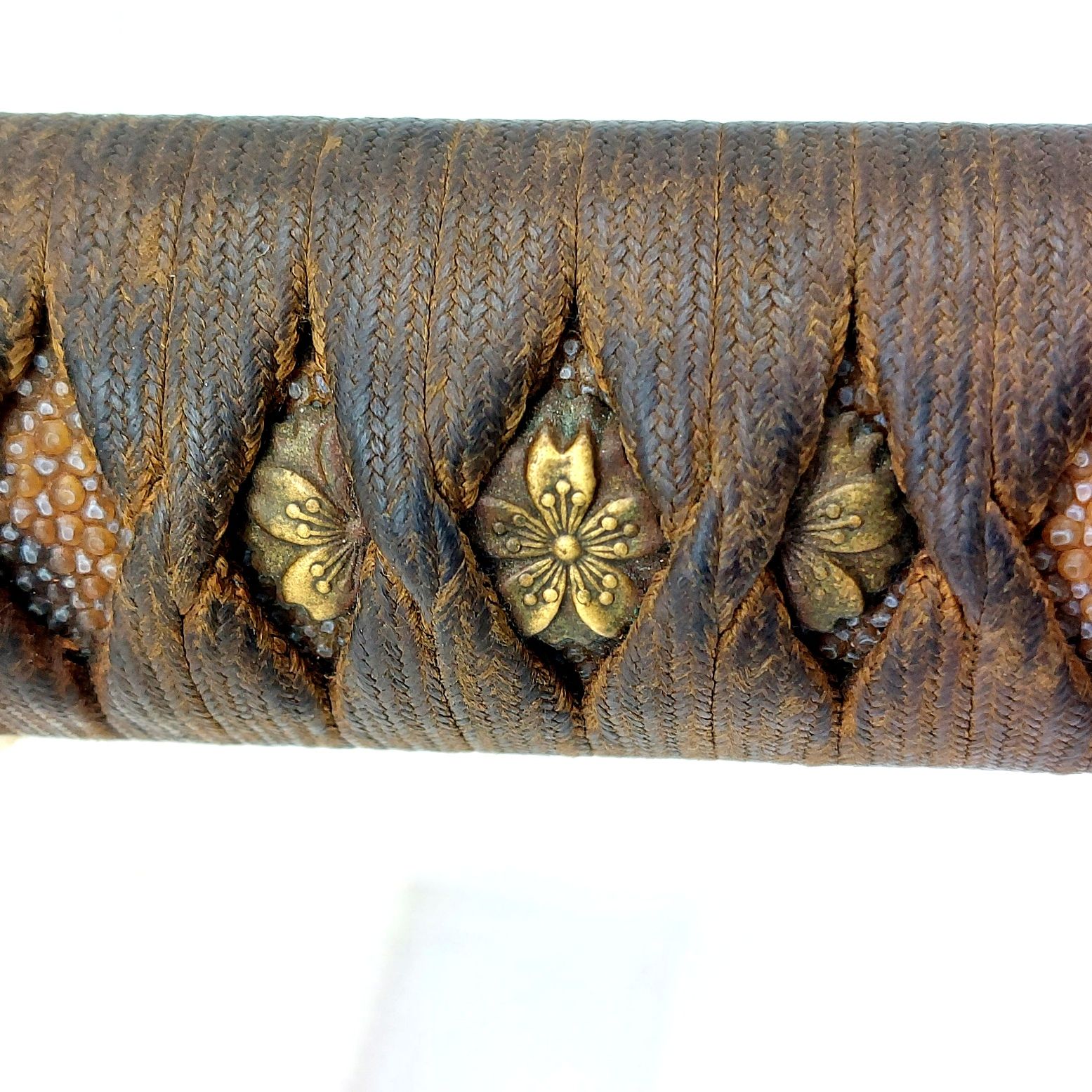
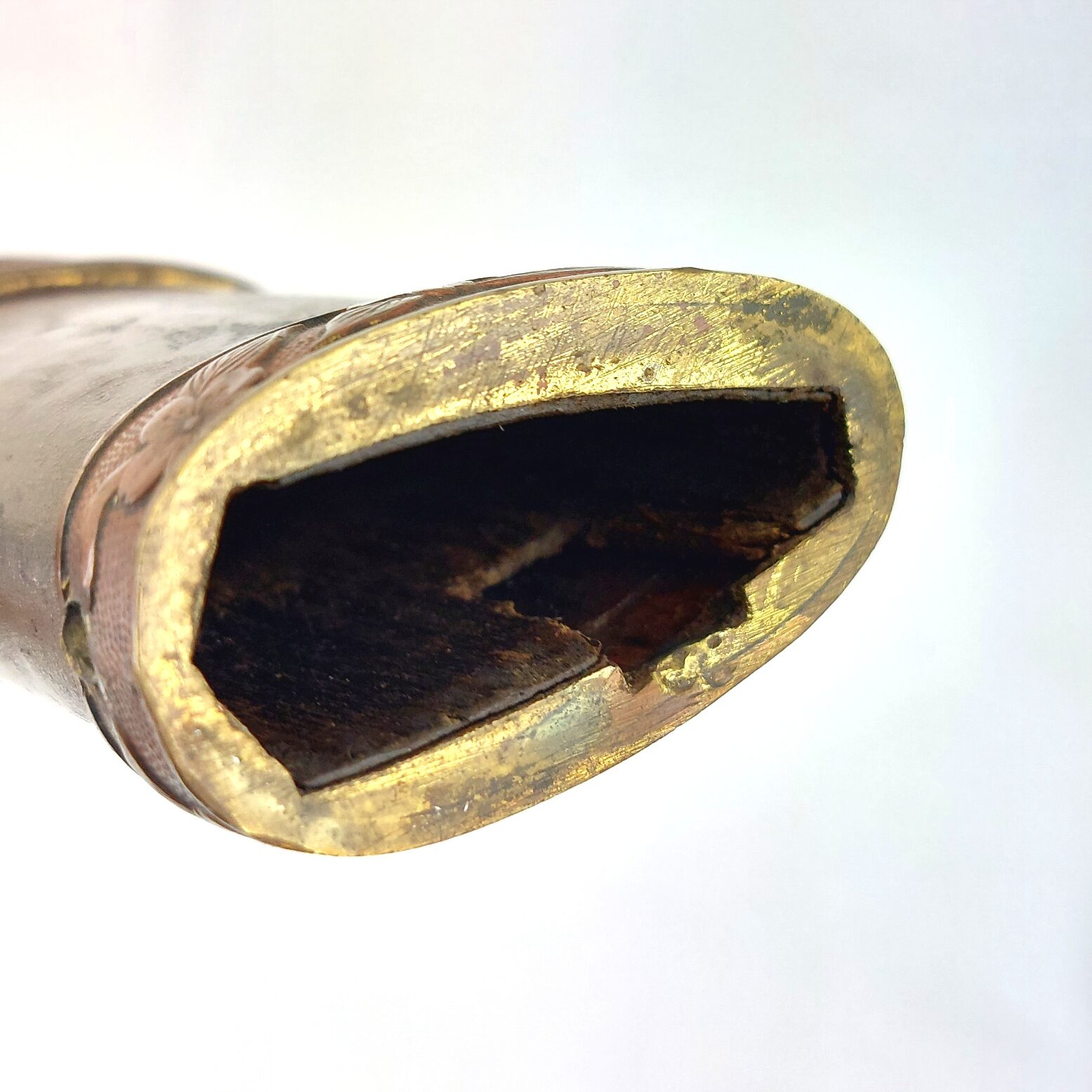
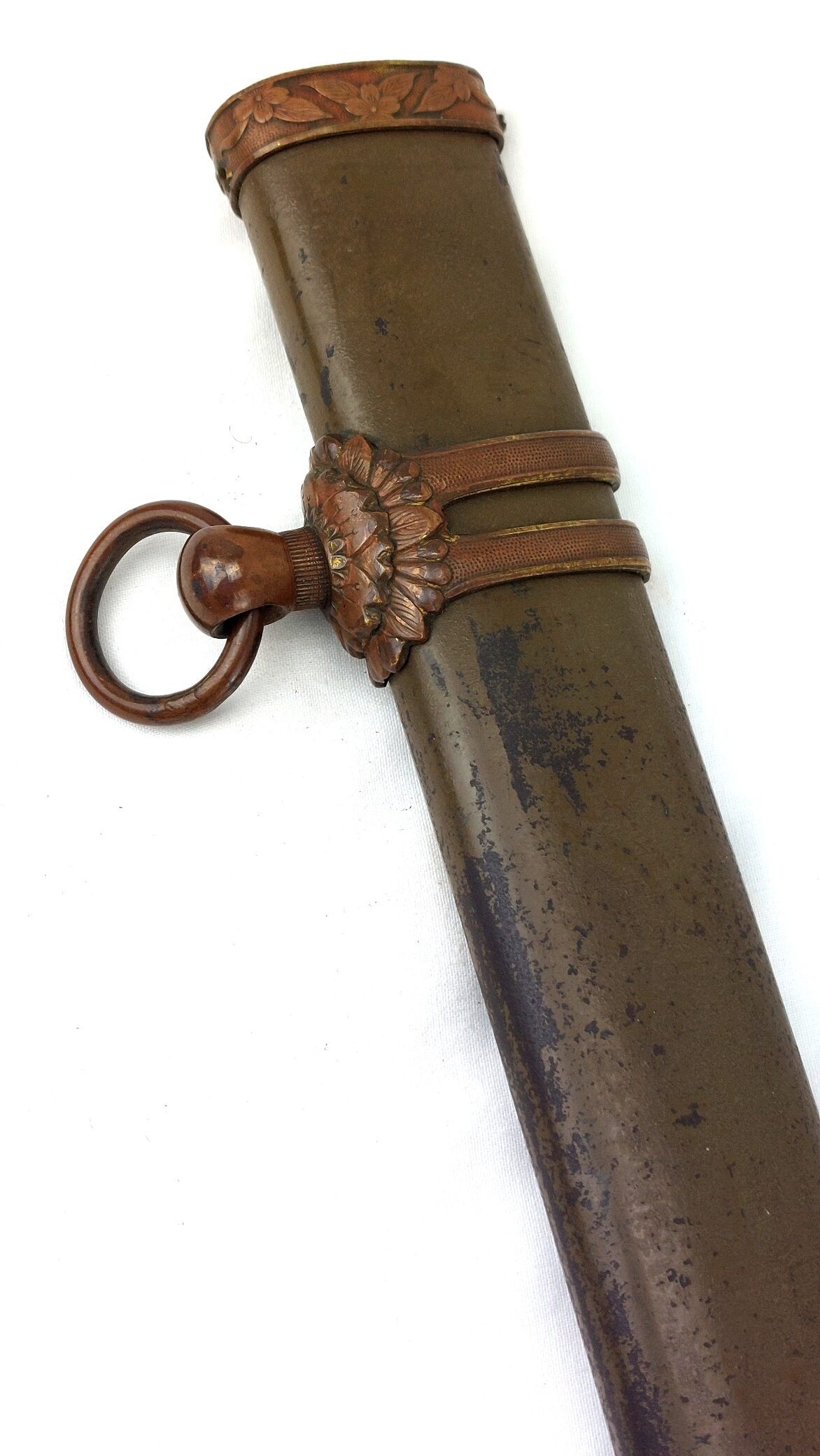
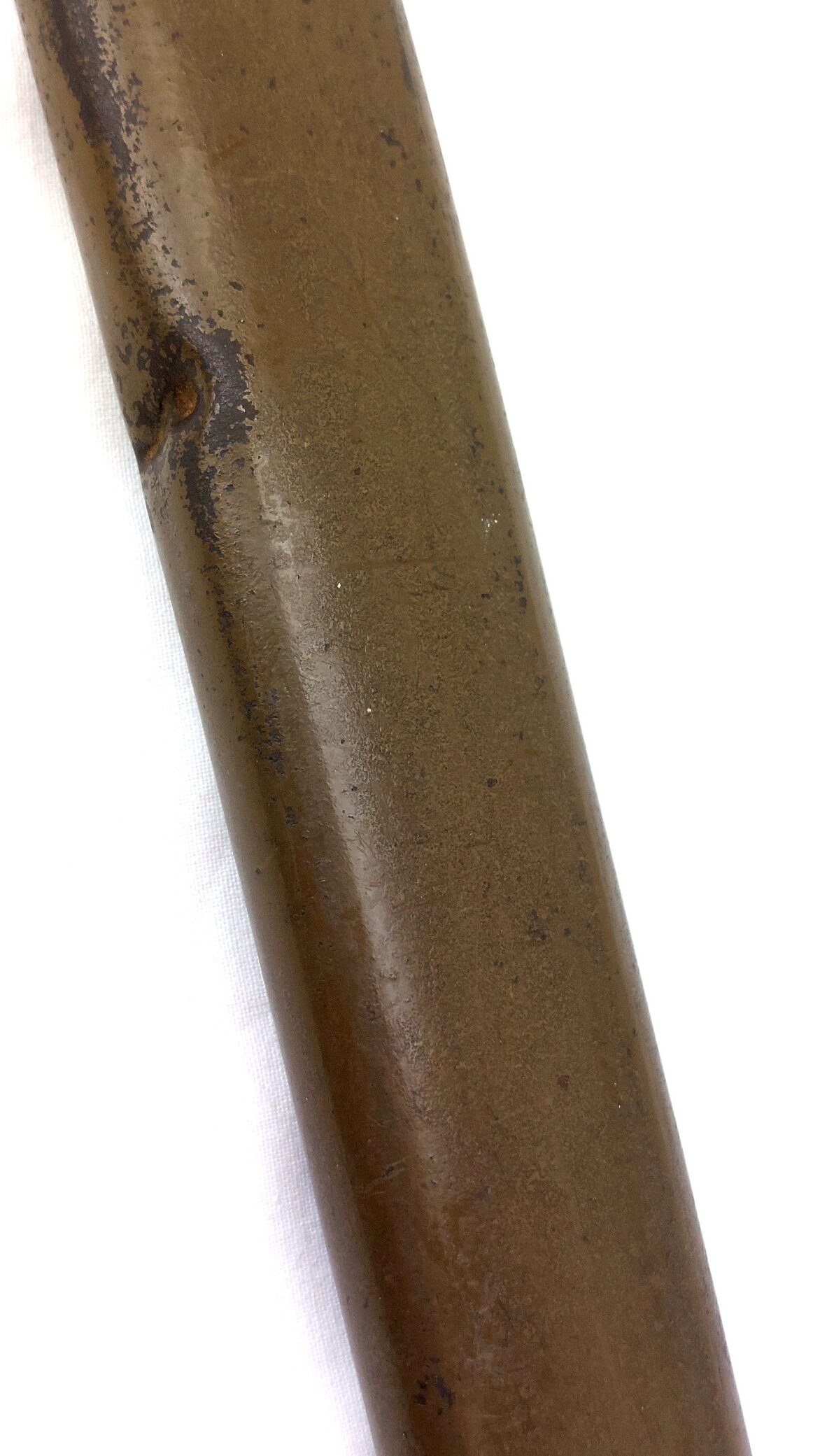
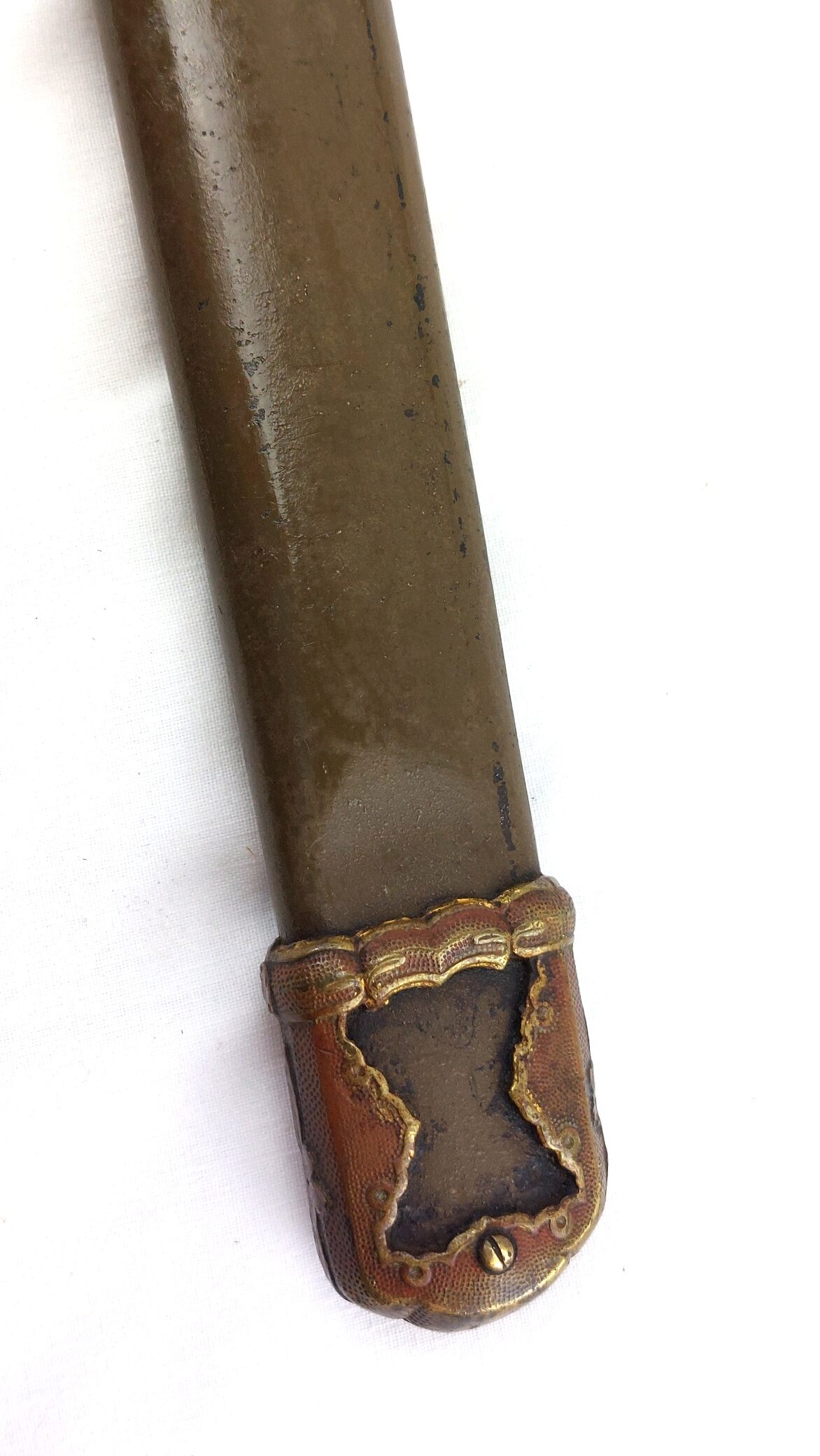
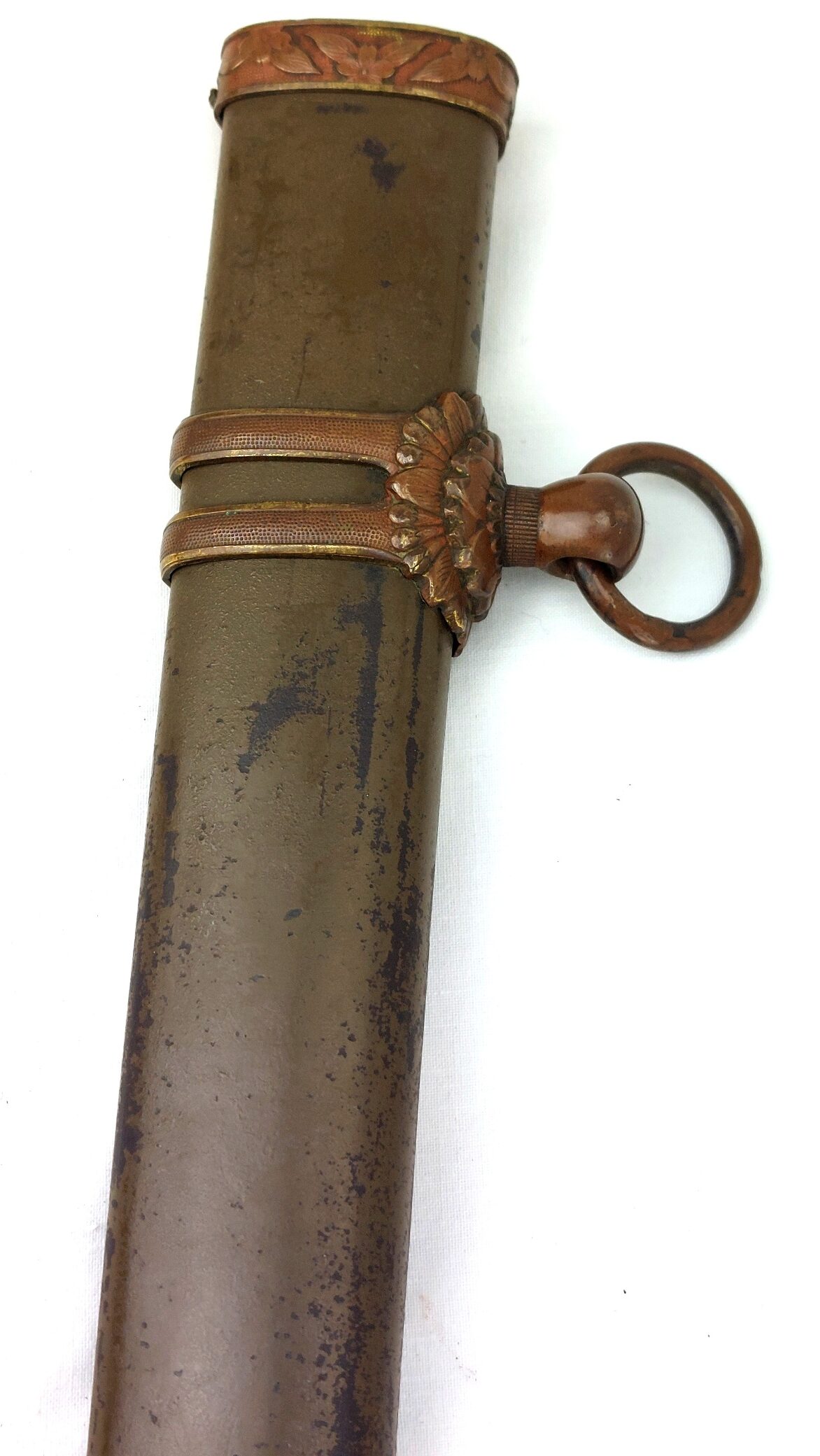
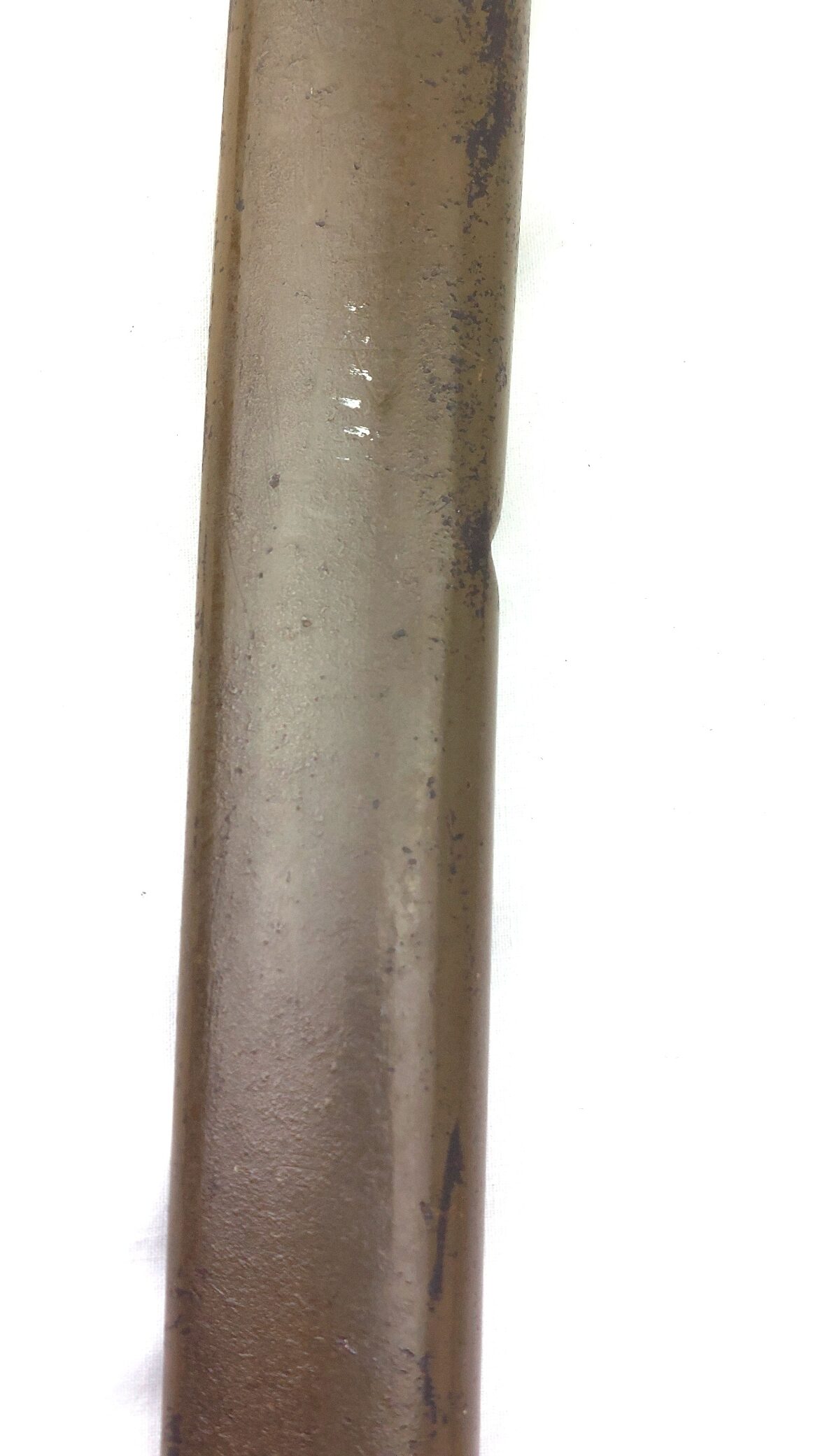
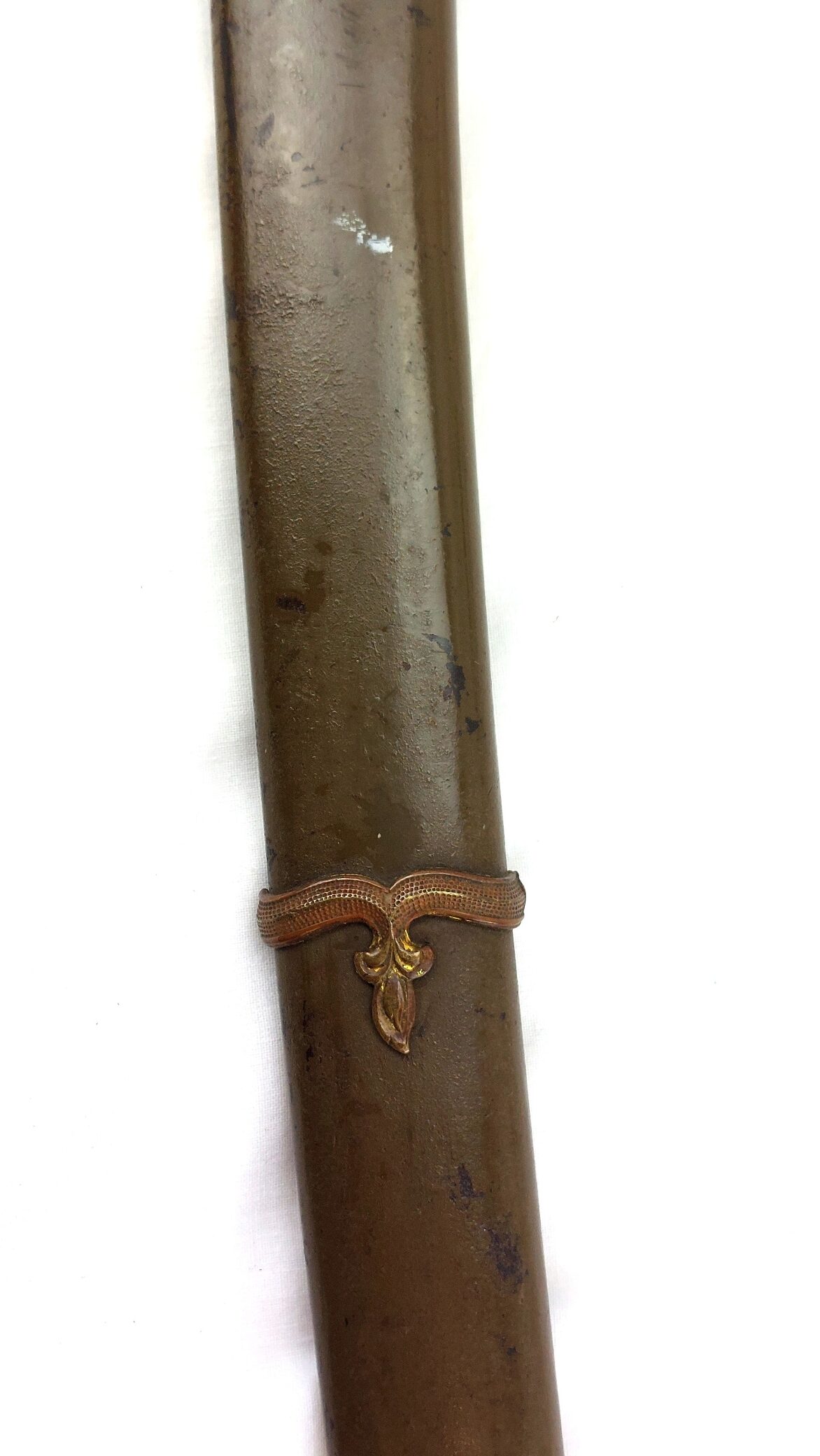
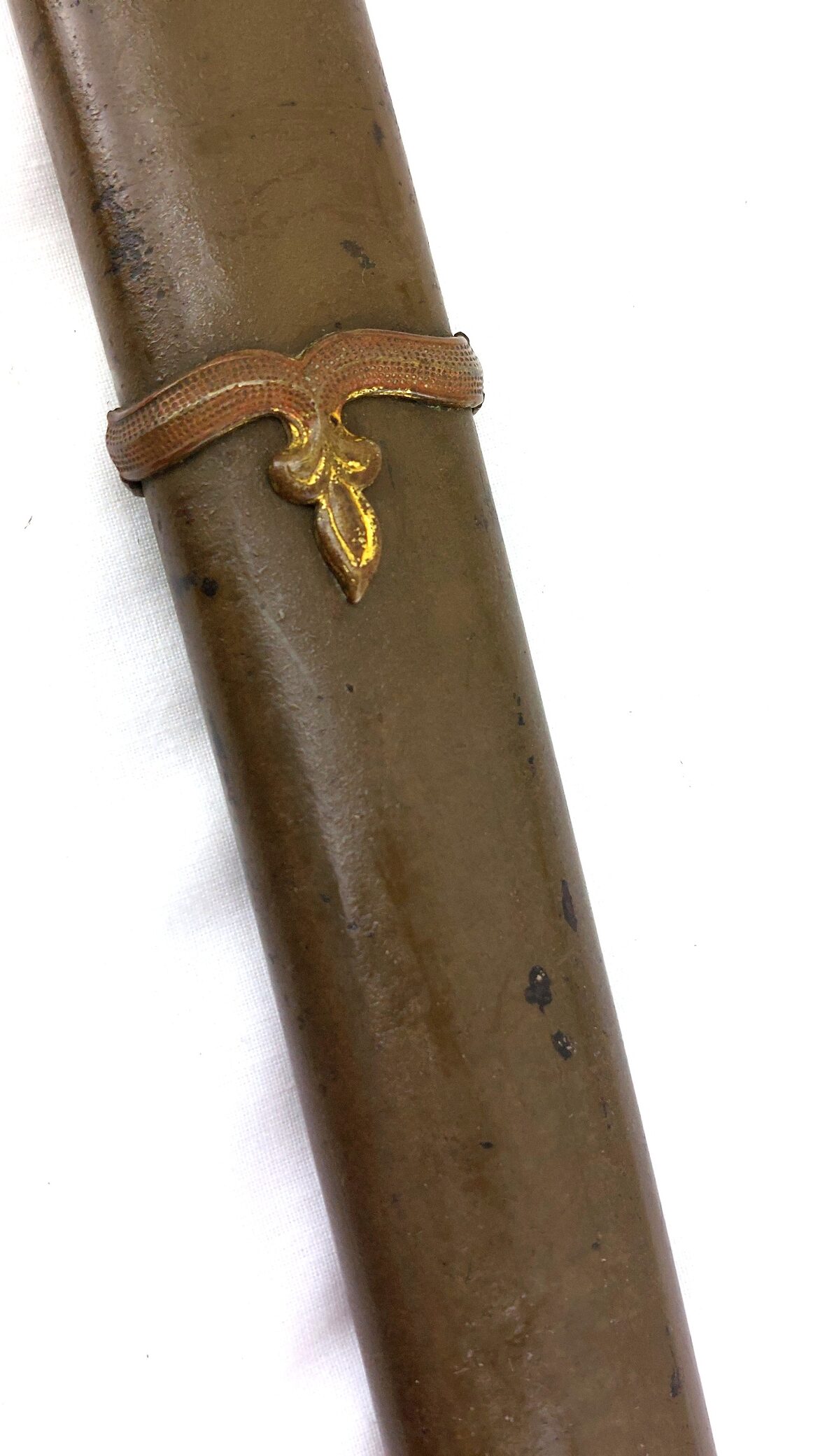
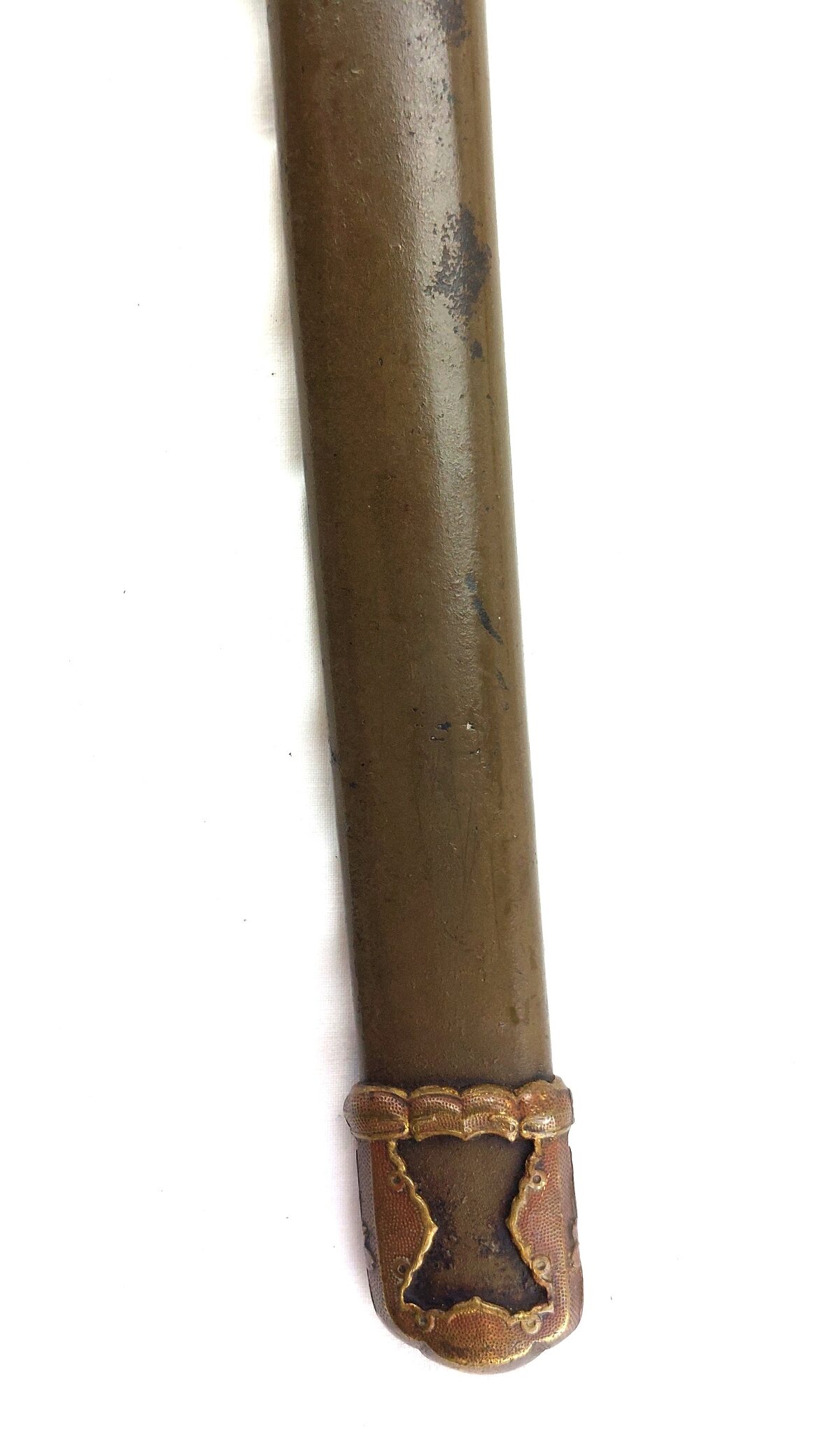
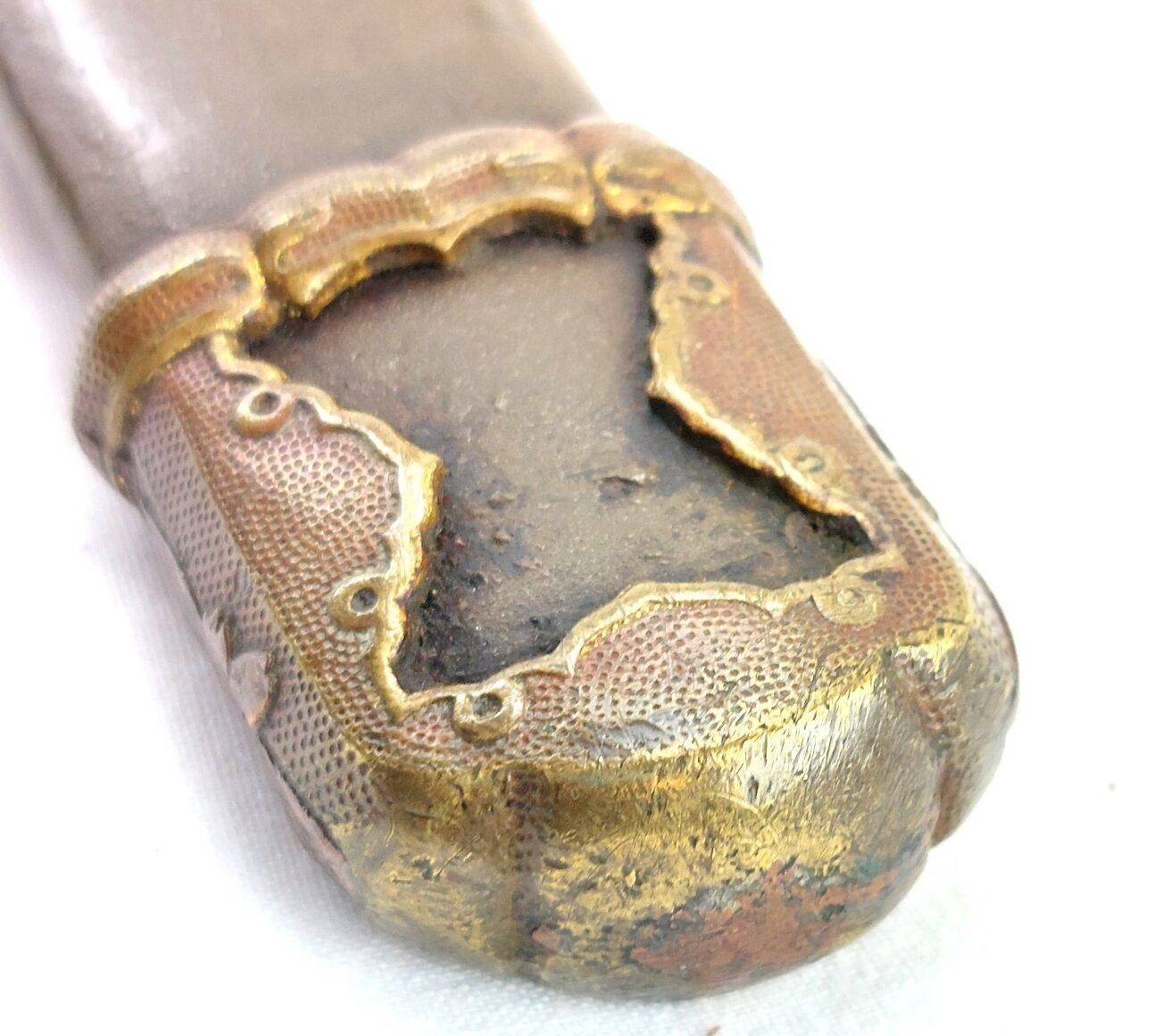
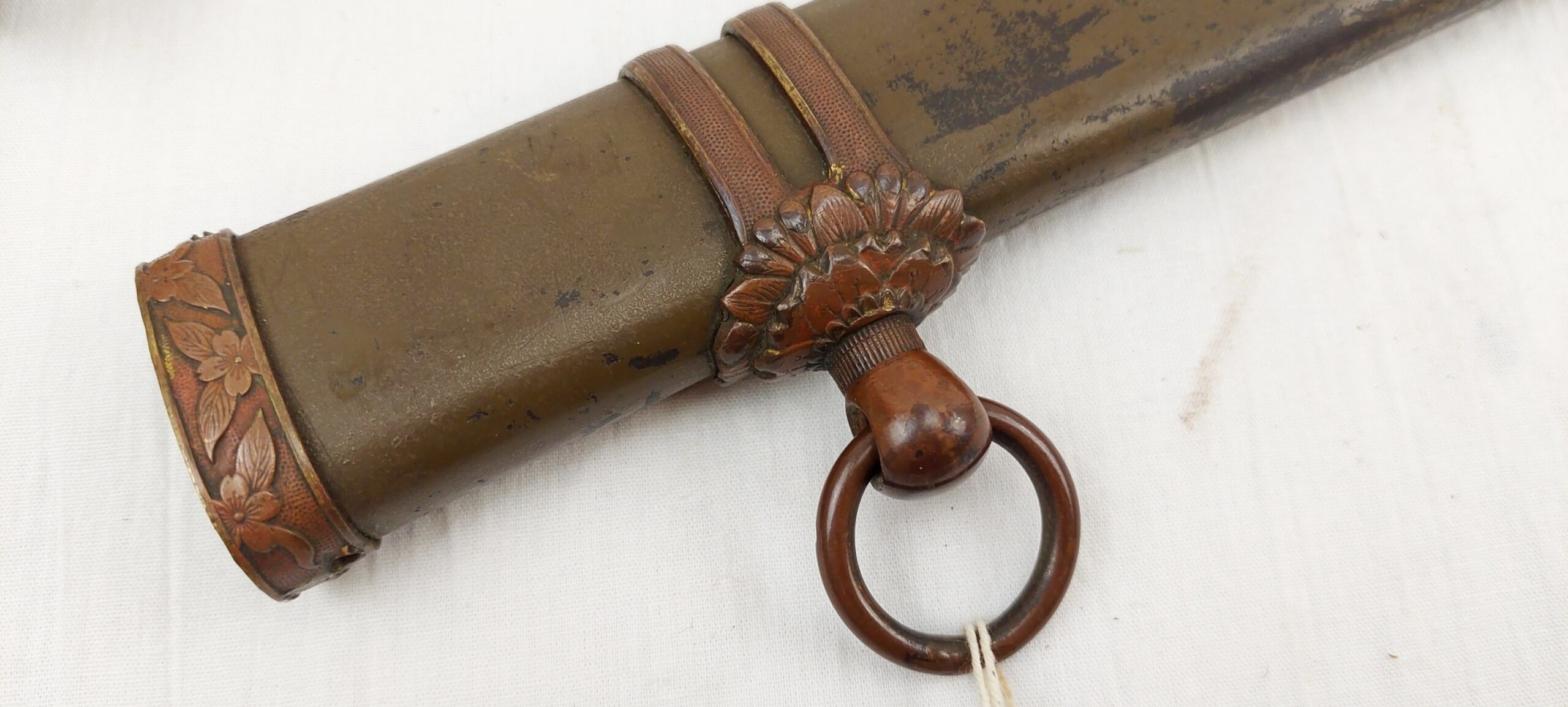
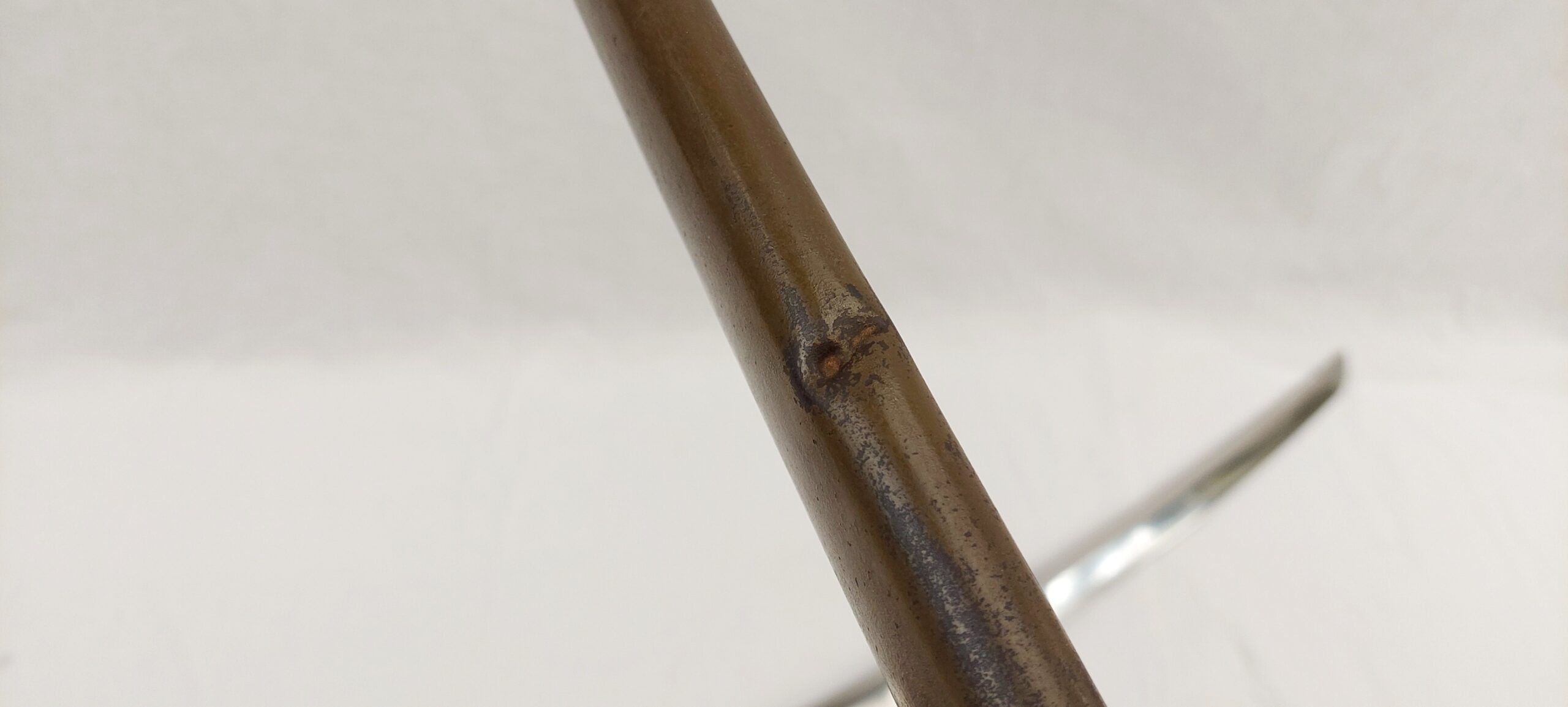
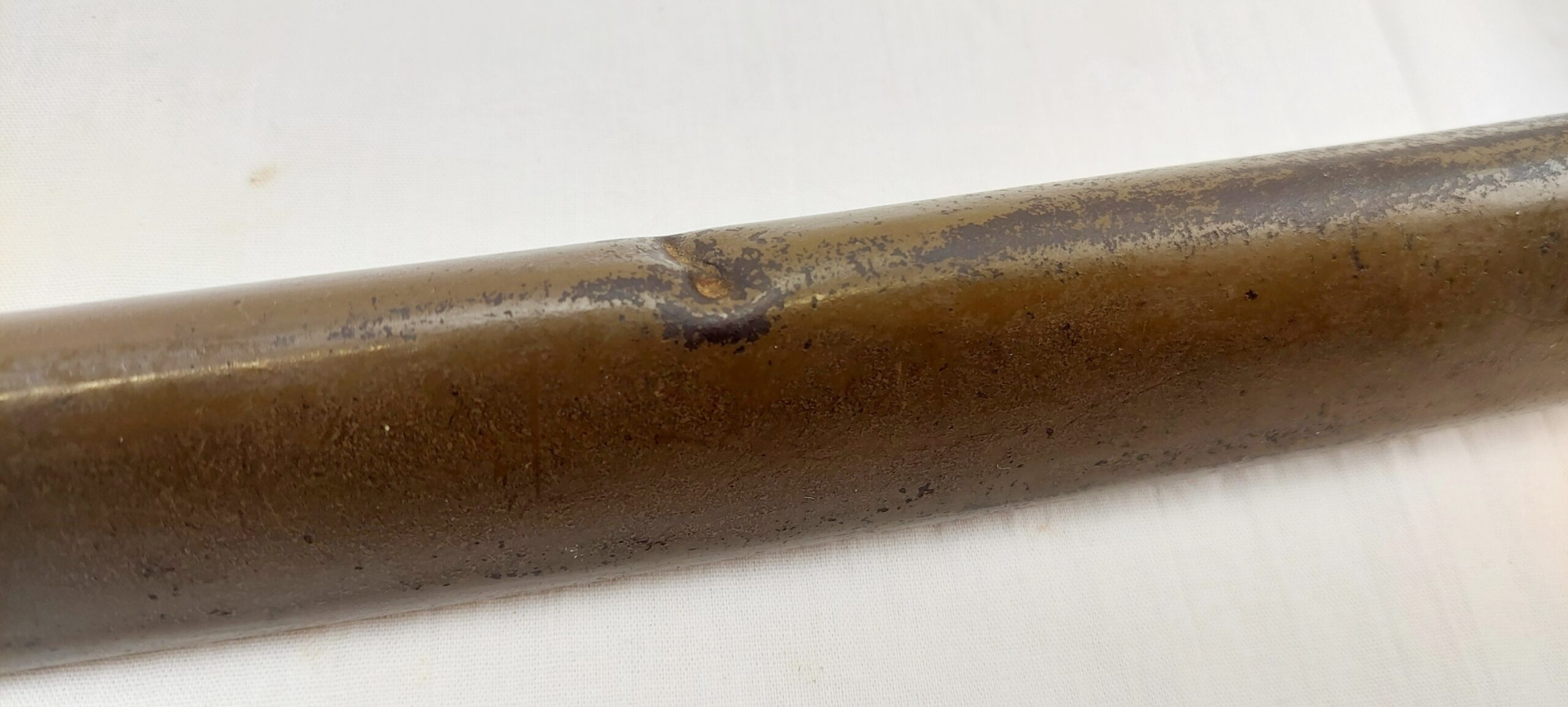
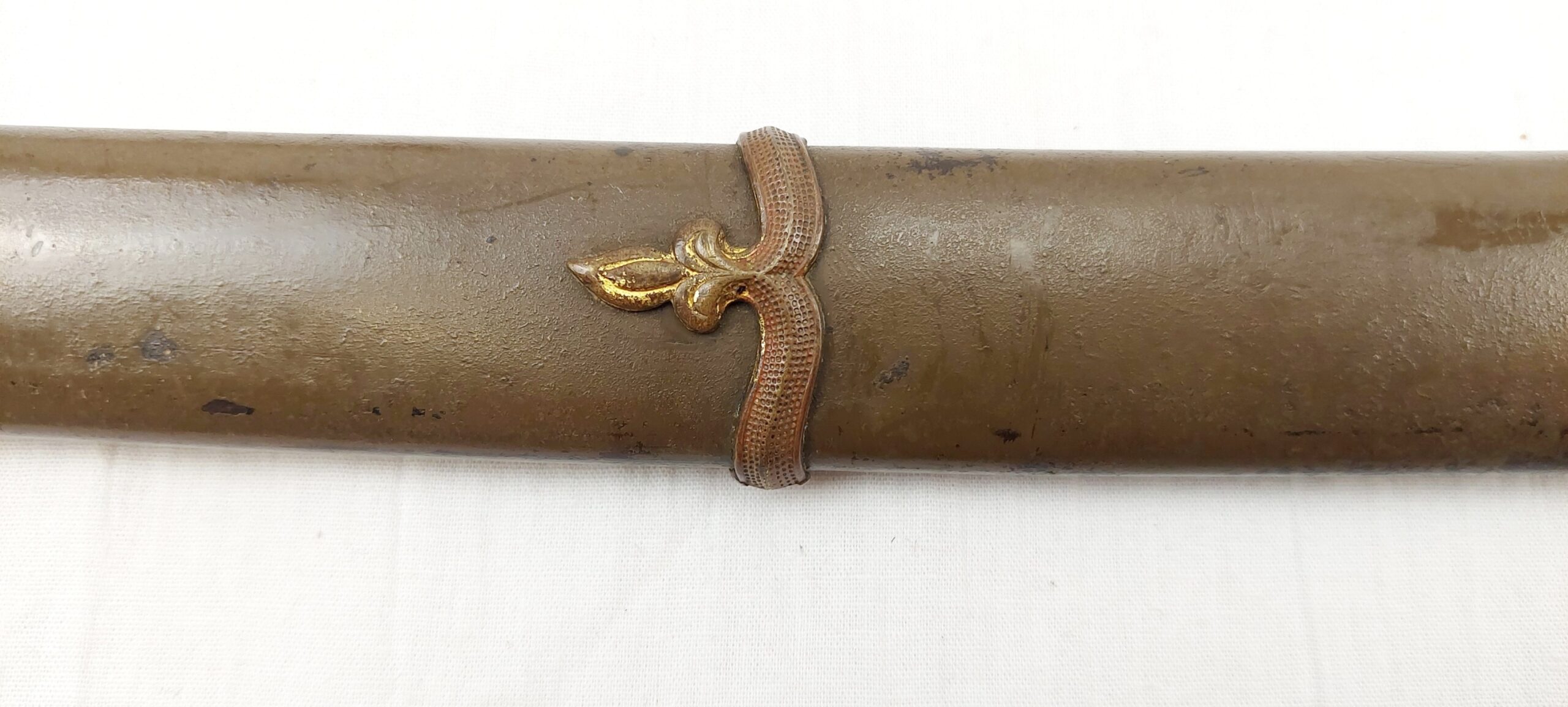
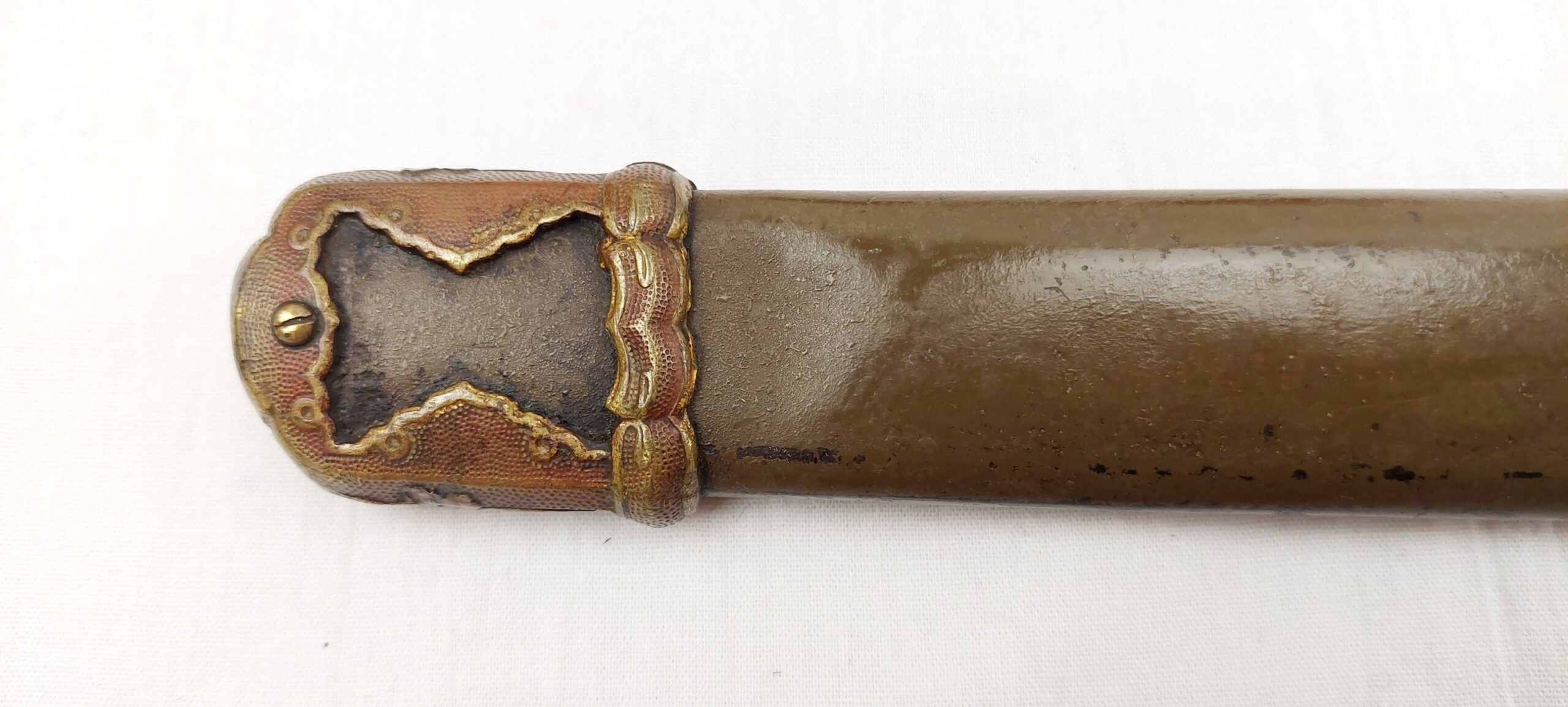
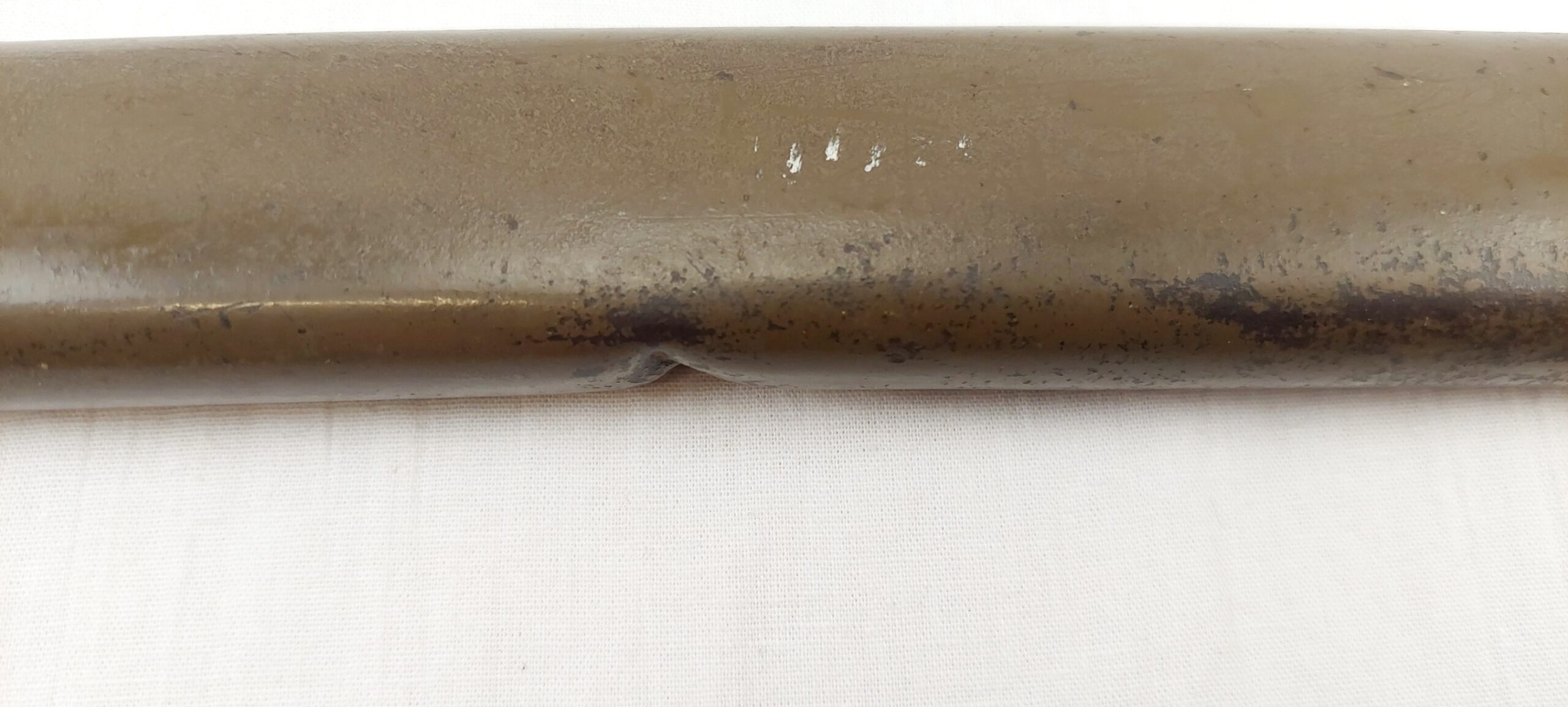
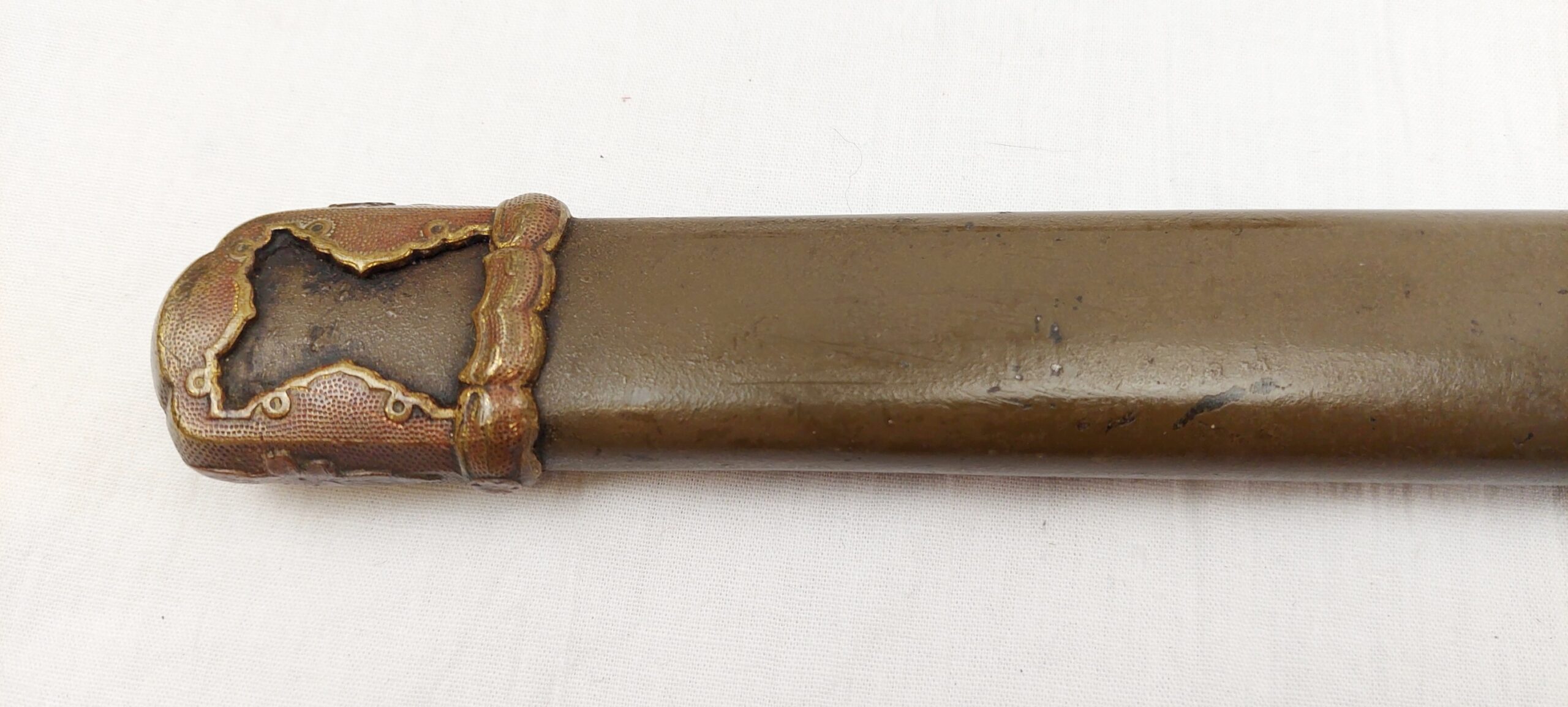
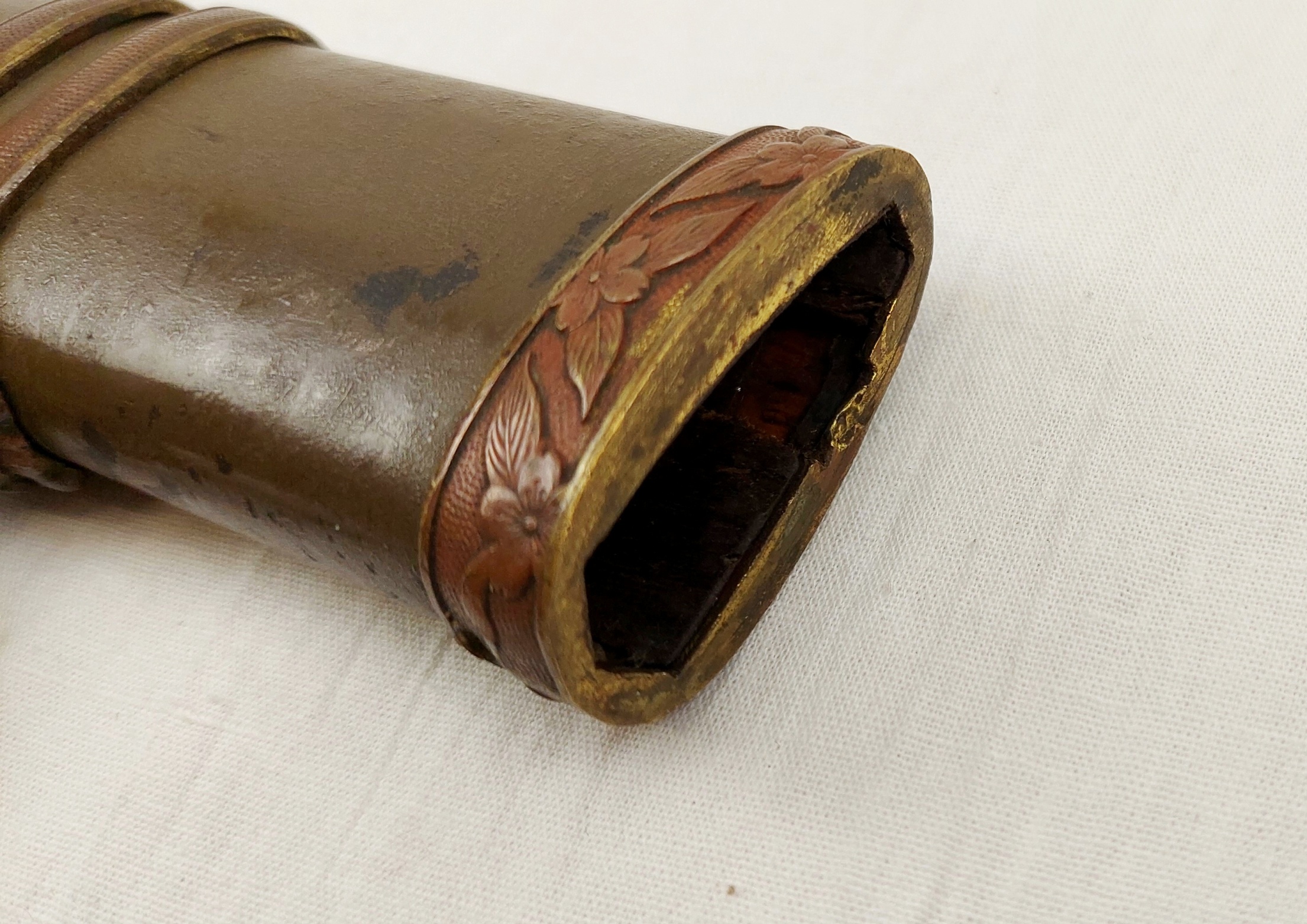
The sword retains its full Type 98 Shin Guntō koshirae. The saya is of wartime olive-green painted steel, typical of mid-war production, showing service wear consistent with use in the field. Most notably, it bears what appears to be a bullet strike scar, which strongly suggests it was carried in combat. The gilt copper fittings to the saya, including koiguchi, semegane, and kojiri, retain traces of original finish. The tsuba is the standard Guntō pattern with much of its gilt remaining, and the full set of seppa are present. The tsuka has intact silk binding over ray skin, with a copper sarute loop and working locking catch. A family mon badge is absent, though it is possible one was originally present and removed before surrender, as was common among officers of samurai descent.
Dated to November 1943, this sword was produced at a time when Japan still commissioned high-quality gendaitō blades for its officers despite increasing wartime pressures. While many mass-produced showatō were being issued by this date, this example stands out as a true traditionally made sword, forged by a smith of proven exhibition standing. The possible presence of a polisher’s inscription adds another layer of rarity, while the saya’s scar almost certainly indicates battlefield carry.
*Condition*
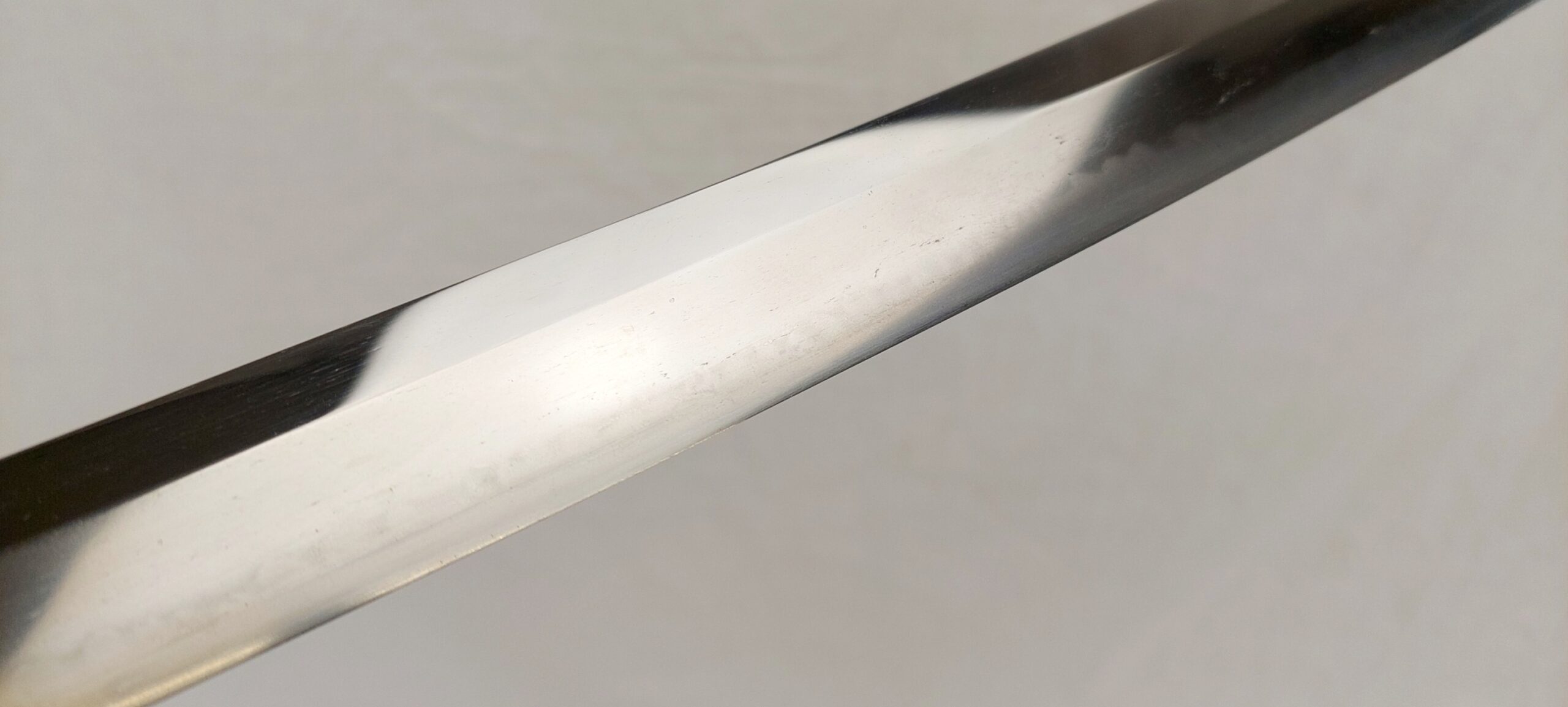
The blade remains in an old polish, with the hamon and boshi visible and only light staining present. The nakago has a deep, stable patina, with inscriptions sharply cut. The koshirae show honest wear, gilt remains on the fittings, and the saya retains most of its original finish despite wartime use. The silver habaki remains intact and of high workmanship. Please see photographs as part of the condition report.
RQMBBOOXBFEO_3944210313