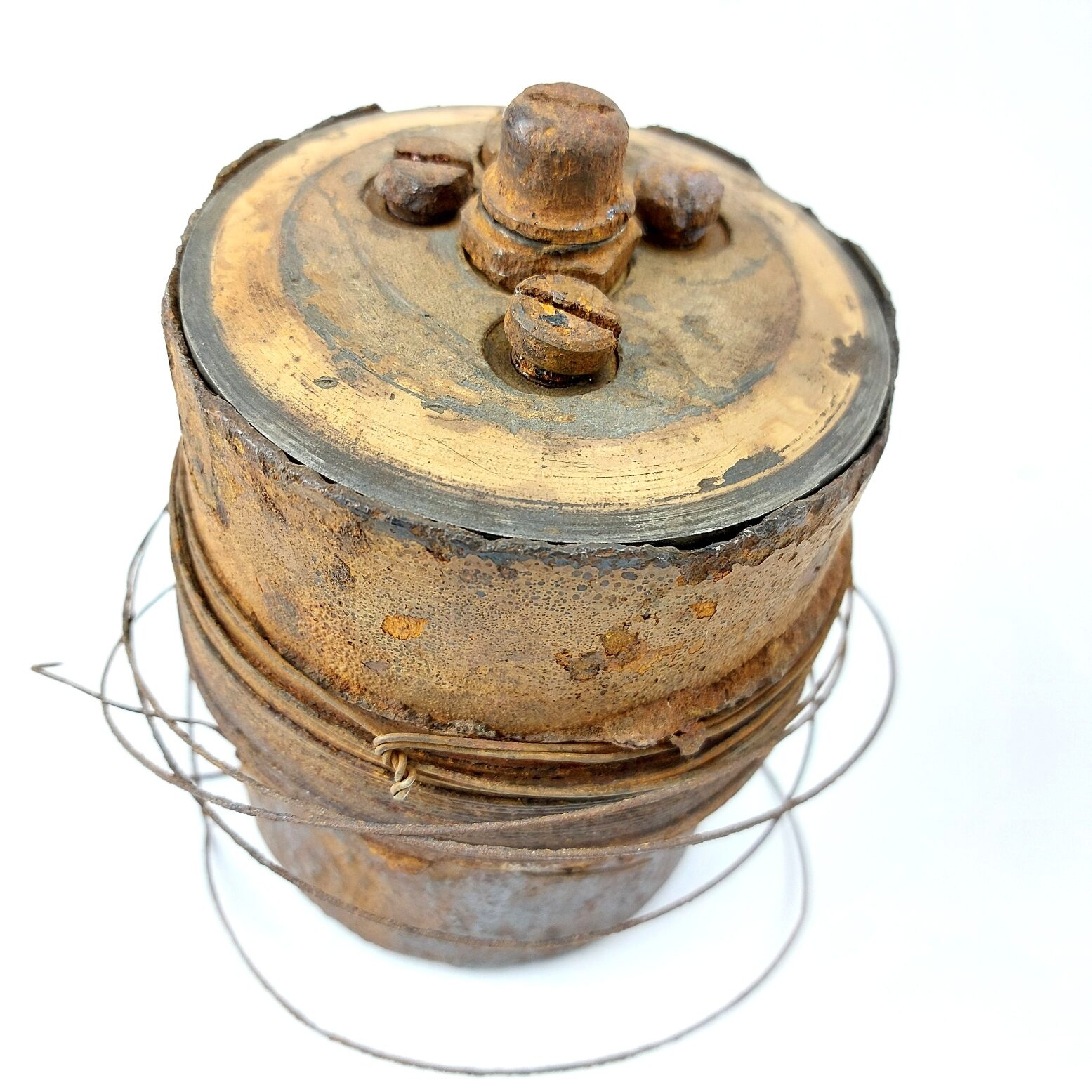
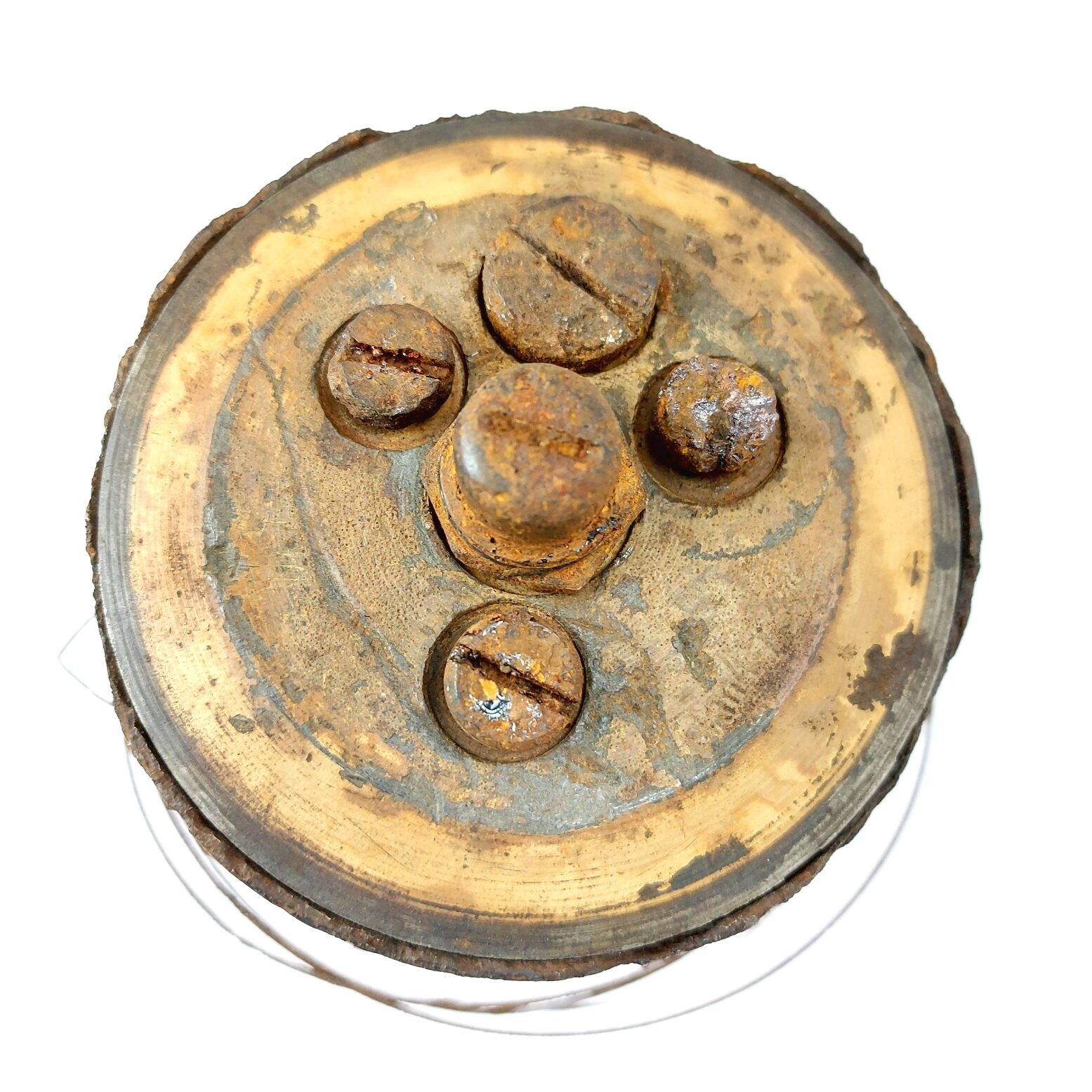
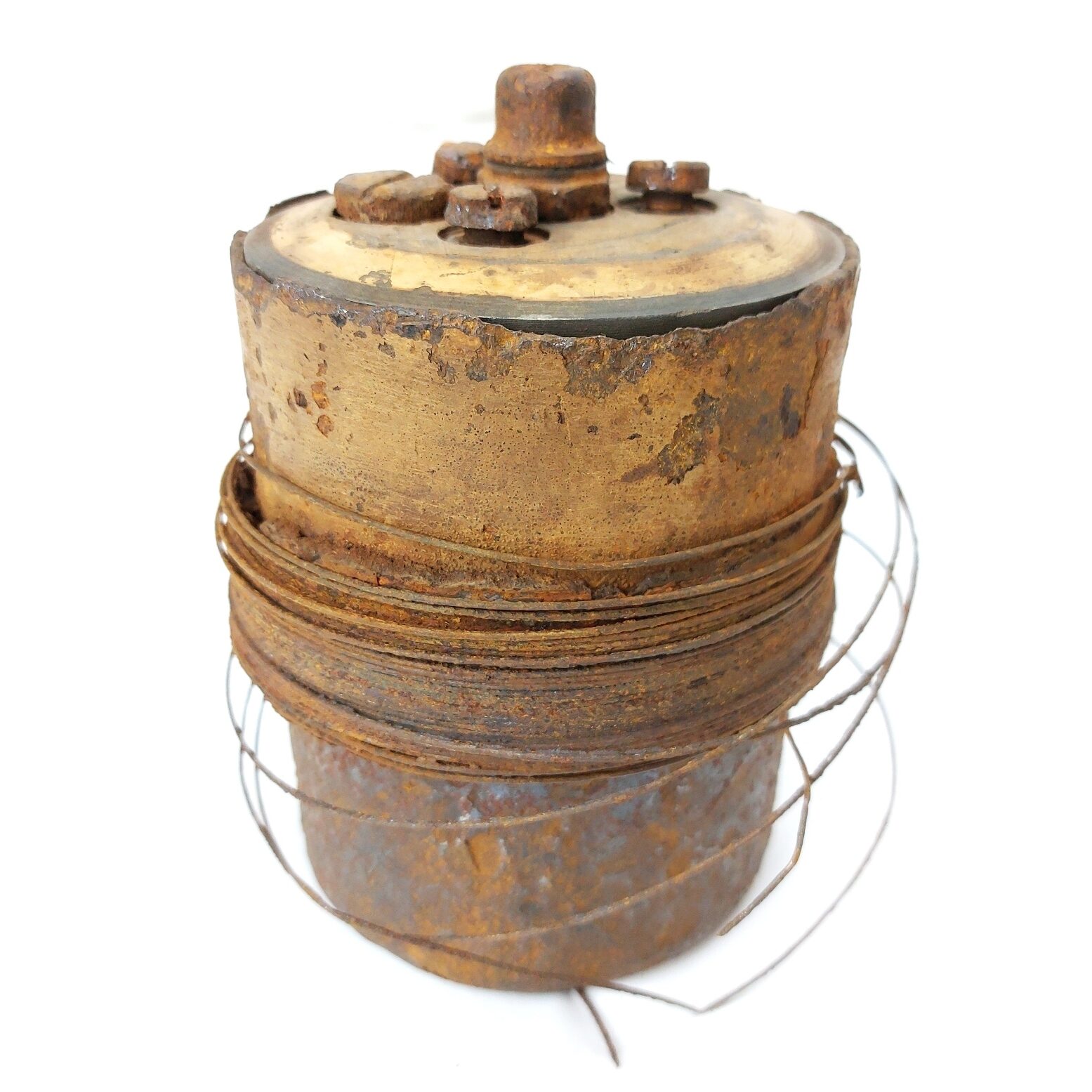
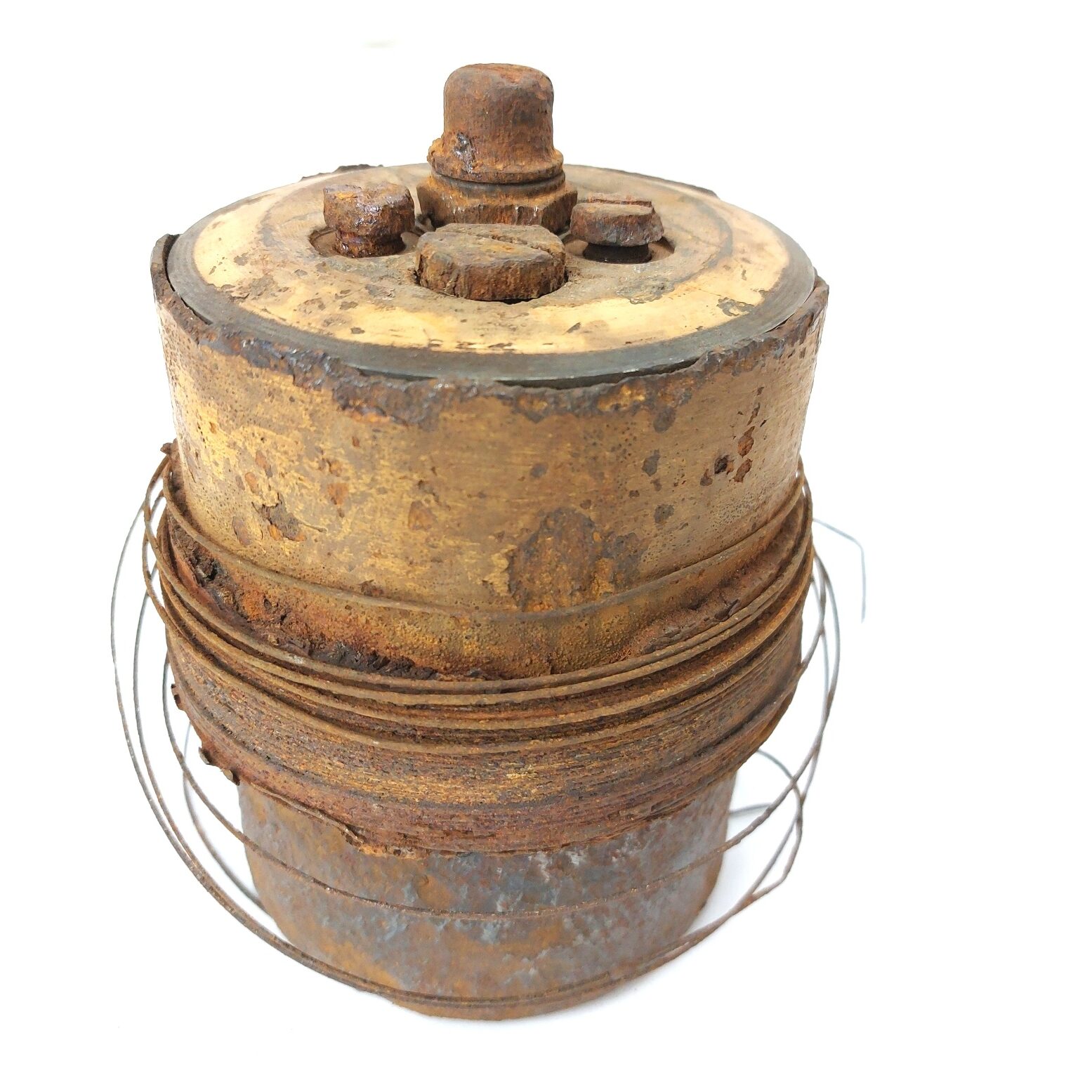
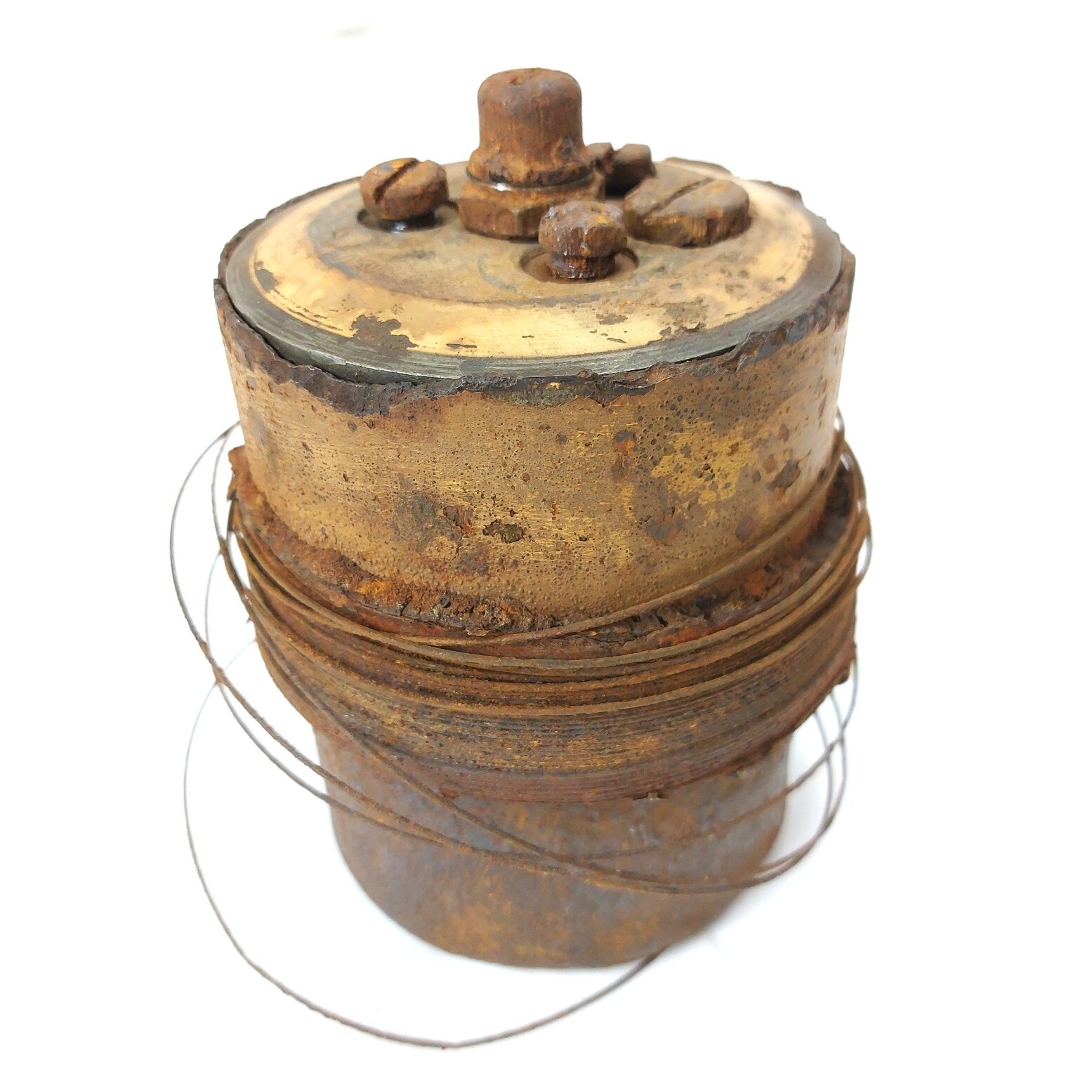
An original German Second World War S-Mine 35 (Sprengmine 35) anti-personnel landmine, commonly known to Allied troops as the “Bouncing Betty.” This example survives as an inert display piece retaining the distinctive cylindrical steel body, threaded mid-section and the characteristic three-prong pressure fuse assembly on the top plate.
The mine is of typical S-Mine construction with a heavy steel outer body and a threaded central section allowing the upper fragmentation sleeve and lower base assembly to be joined together. The top retains the central fuse housing with three pressure prongs, which formed part of the S.Mi.Z.35 (Sprengminezünder 35) fuse system. In service these prongs acted as the pressure trigger, designed to initiate the mine when stepped on or when sufficient downward pressure was applied. The central threaded boss also allowed for the attachment of a tripwire adaptor, enabling the mine to be triggered by tripwires as well as pressure.
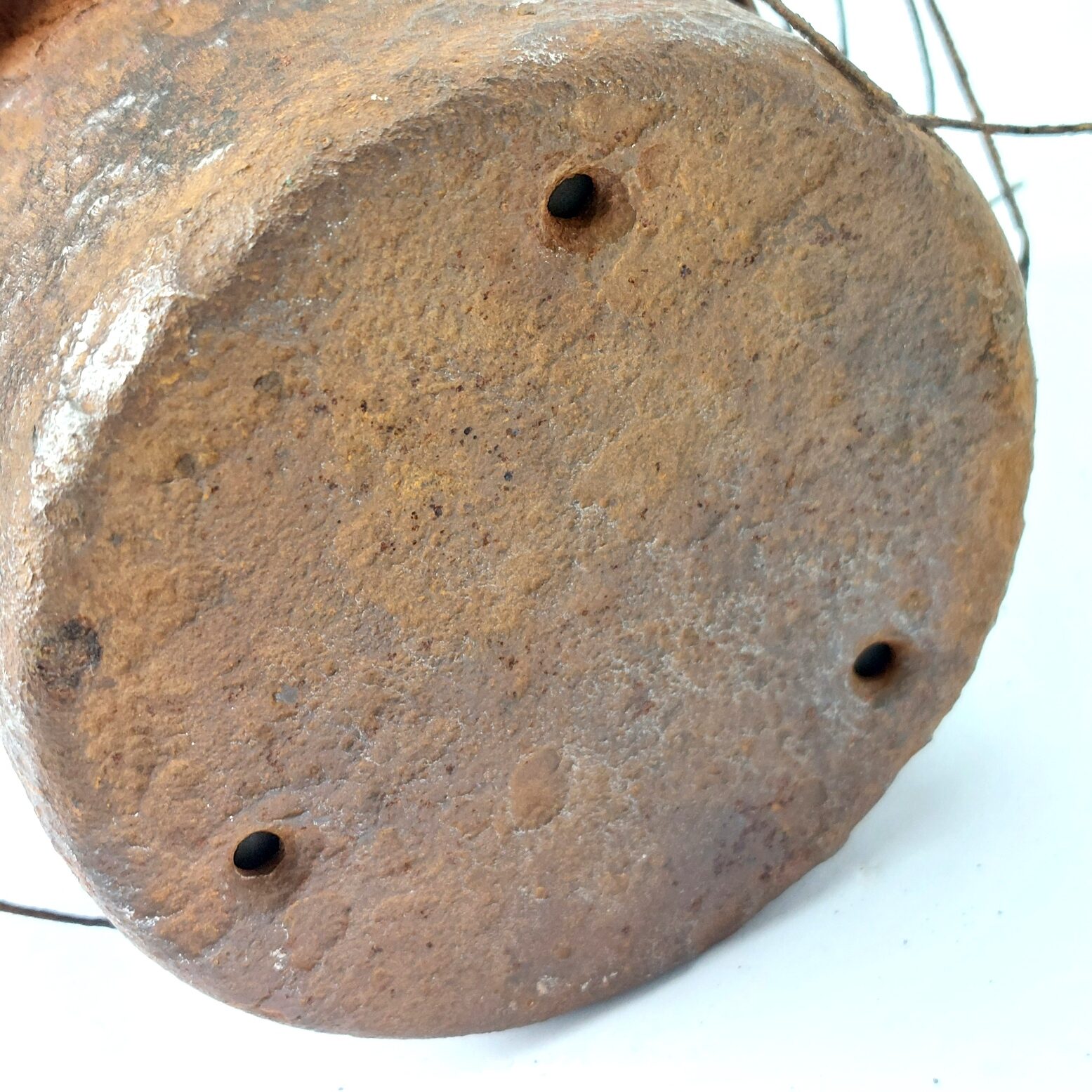
The underside retains the correct base plate with three vent holes, a standard feature of the S-Mine 35 design. These allowed gases from the propellant charge to vent as the mine was launched from the ground prior to detonation.
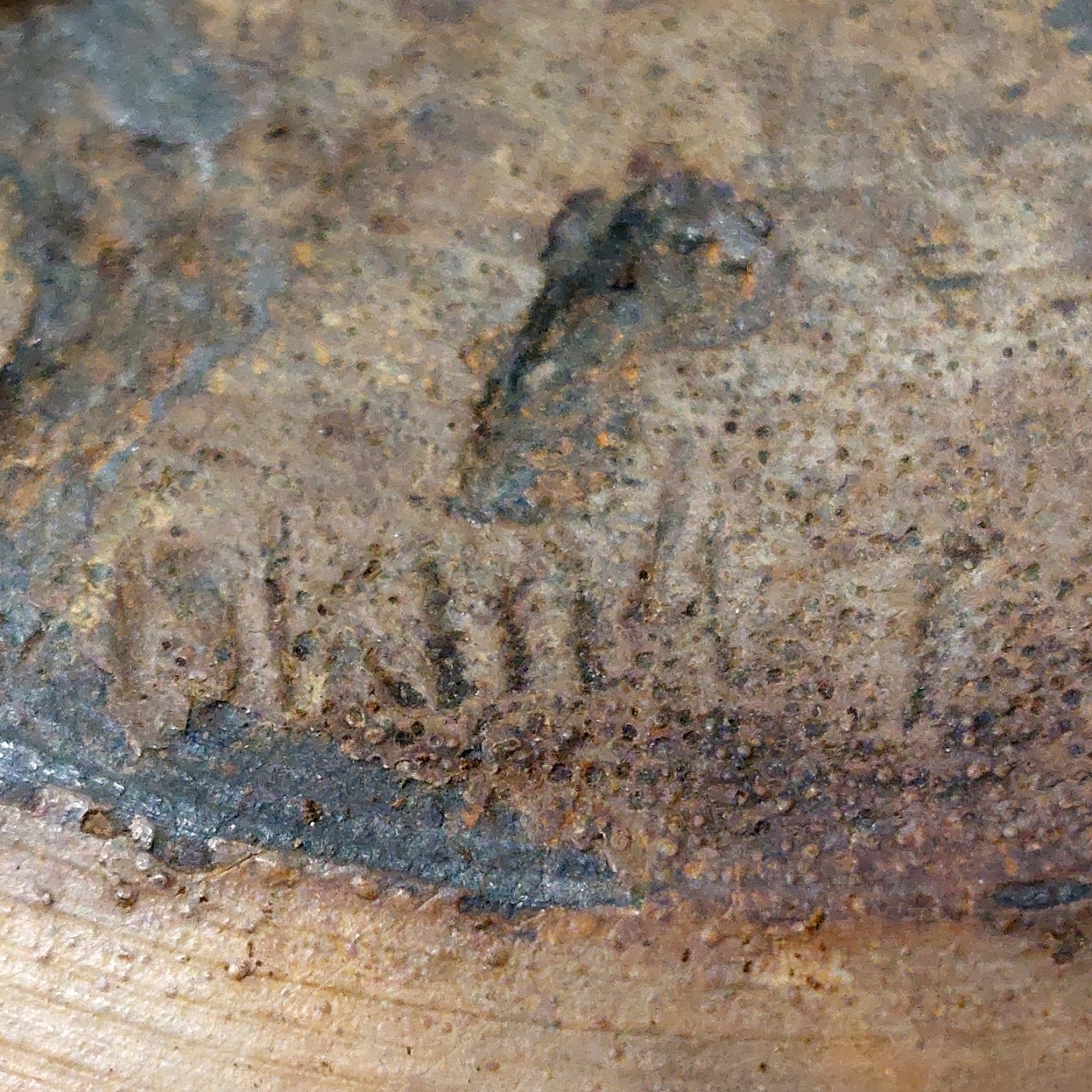
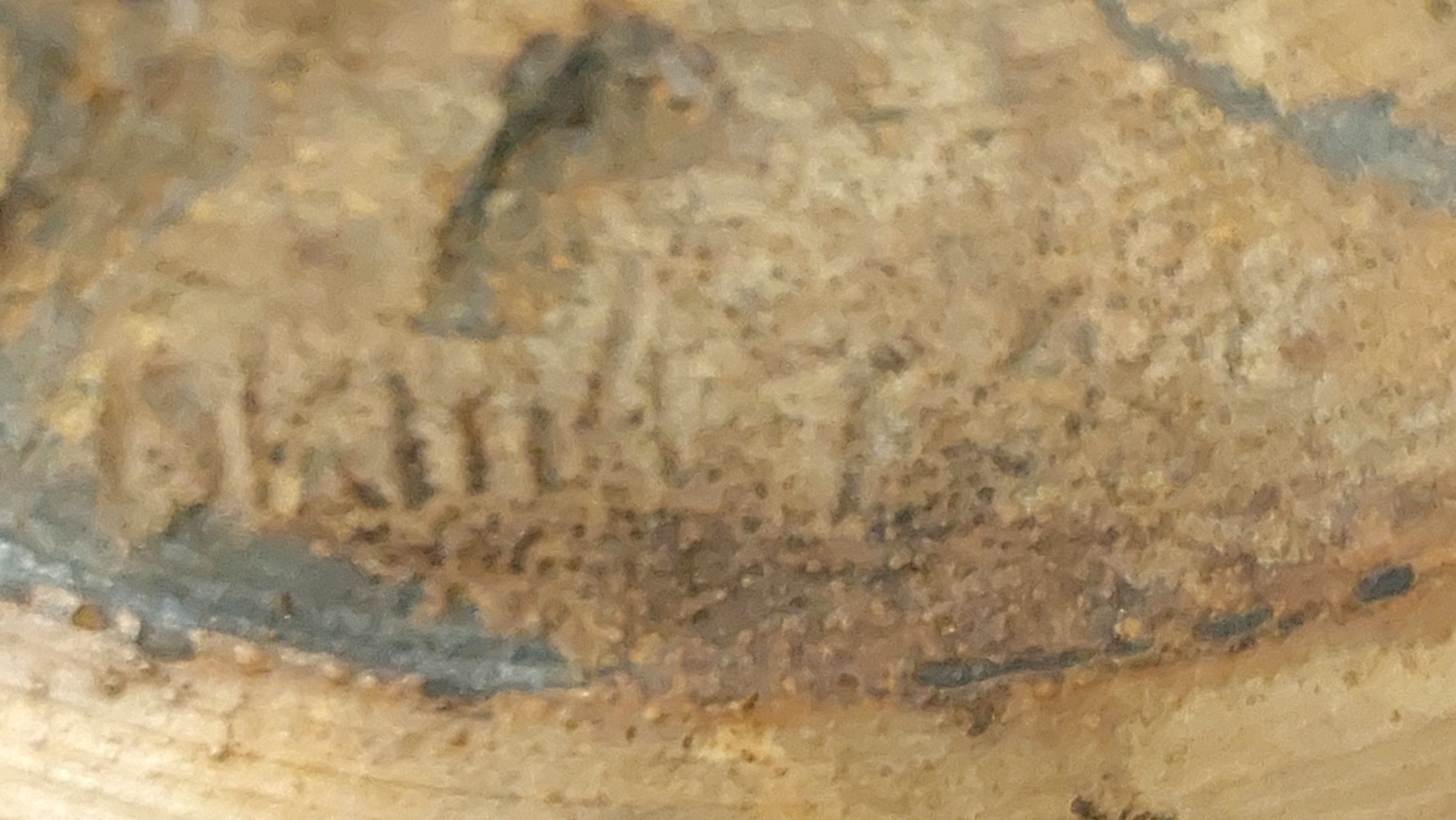
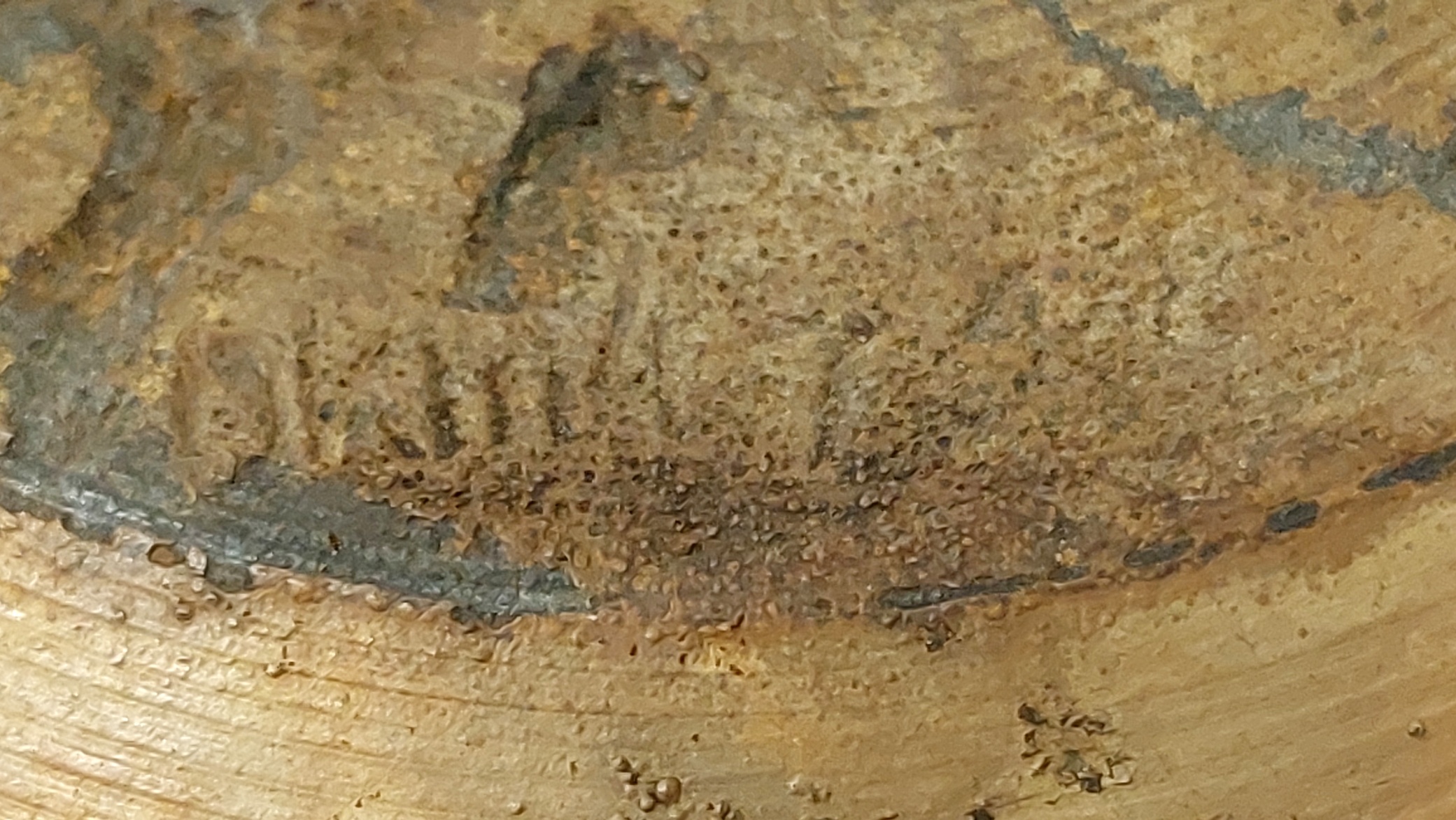
A very faint and partially distorted manufacturer and date stamp is visible on the body and appears to read “bkm 41.” This likely indicates 1941 wartime production, with the three-letter manufacturer code used by German industry during the war to conceal factory identity.
The present example is an inert display piece and no longer retains its original internal explosive components. In live mines the internal cavity would have contained a central explosive charge surrounded by approximately 350 steel balls embedded within a stabilising compound known as Betonia. When triggered, a small propellant charge would first launch the mine into the air before the main charge detonated at waist height, spreading fragmentation horizontally in all directions.
The heavy threaded body construction and machined top plate are consistent with the early S-Mine 35 pattern, introduced into German service in 1935 and widely deployed throughout the Second World War in defensive minefields across Europe including the Atlantic Wall, Normandy and the Eastern Front.
Approx. Measurements – Base diameter: 10 cm. Cylinder height: 13 cm. Overall height including pressure prongs: 15 cm.
History Note:
The Sprengmine 35, or S-Mine, was one of the most feared anti-personnel weapons used by German forces during the Second World War. Unlike conventional buried mines, the S-Mine utilised a “bounding” mechanism. When triggered by pressure or tripwire, a propellant charge launched the inner mine body into the air before detonation, ensuring the fragmentation burst occurred at approximately waist height where it was most lethal.
Because of this distinctive action Allied soldiers quickly nicknamed the weapon the “Bouncing Betty.” The mine proved extremely effective in defensive minefields and remained in widespread use throughout the war. Its design was so successful that similar bounding mine concepts continued to influence anti-personnel mine development in several countries after 1945.
*Condition*
Inert display example. The steel body shows heavy surface corrosion and oxidation consistent with age and ground recovery. The pressure prongs and top plate remain present but display rusting and wear. A faint manufacturer/date stamp is visible but partially obscured by corrosion. The internal explosive components and original Betonia filler are no longer present. Some wire has been wrapped around the body, likely for display purposes. Structurally stable as a display artefact. Please see photographs as part of the condition report.
RQMAEOXBBE_9996234688