~ Pair of 19th Century German Thuringian Porcelain Figural Spill Vases, Rococo Revival Pastoral Couple, circa 1860–1885 ~
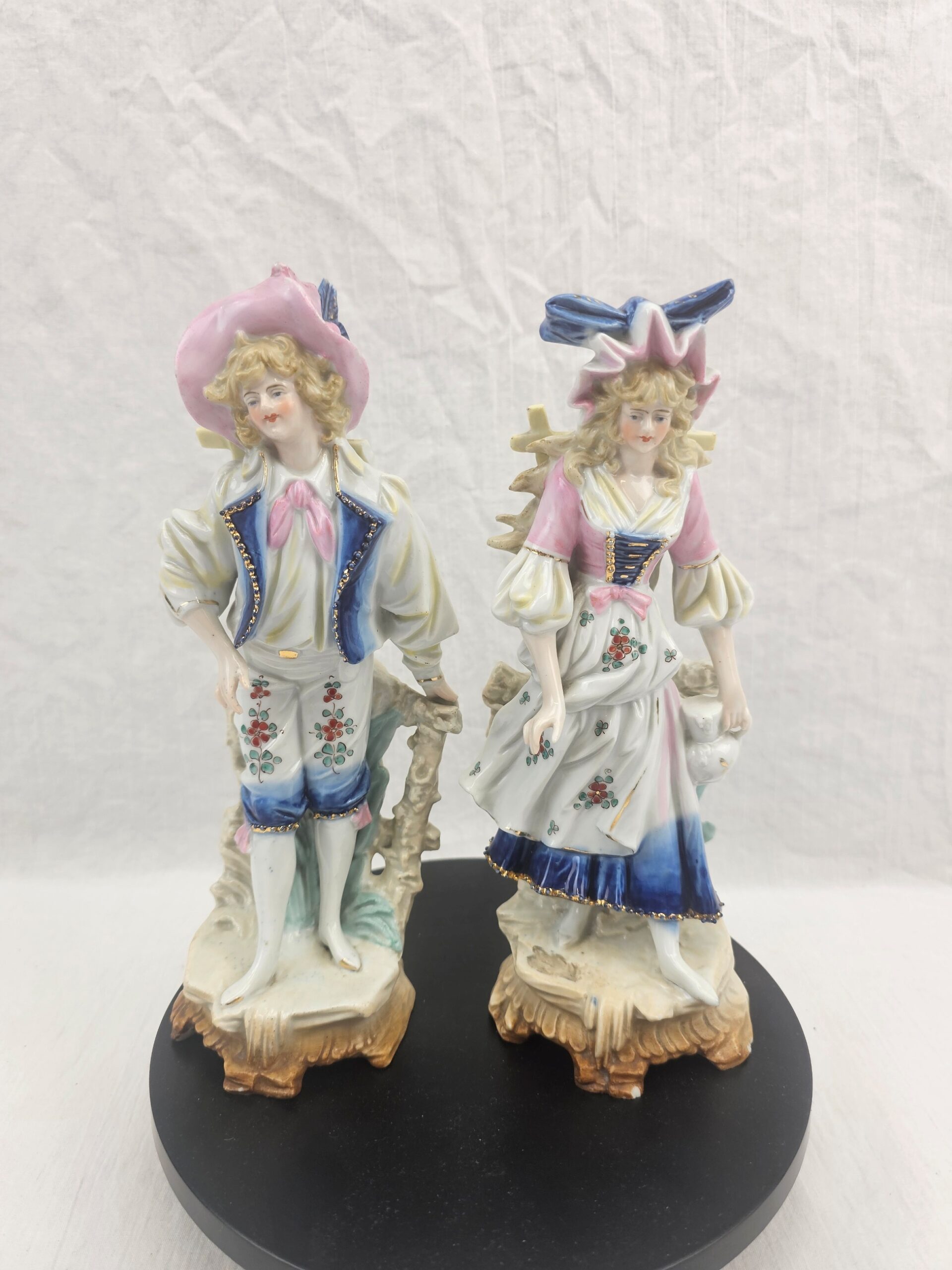
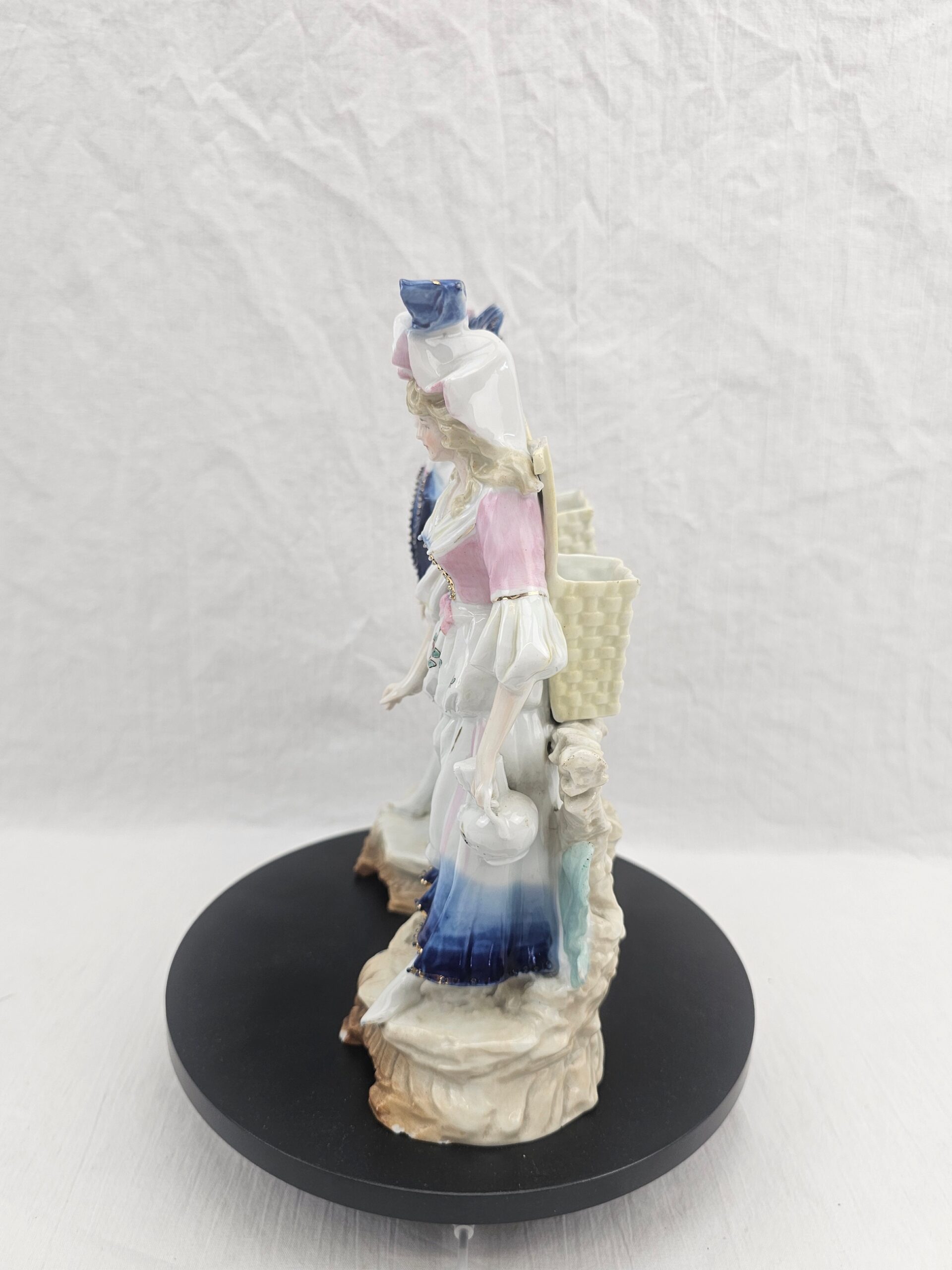
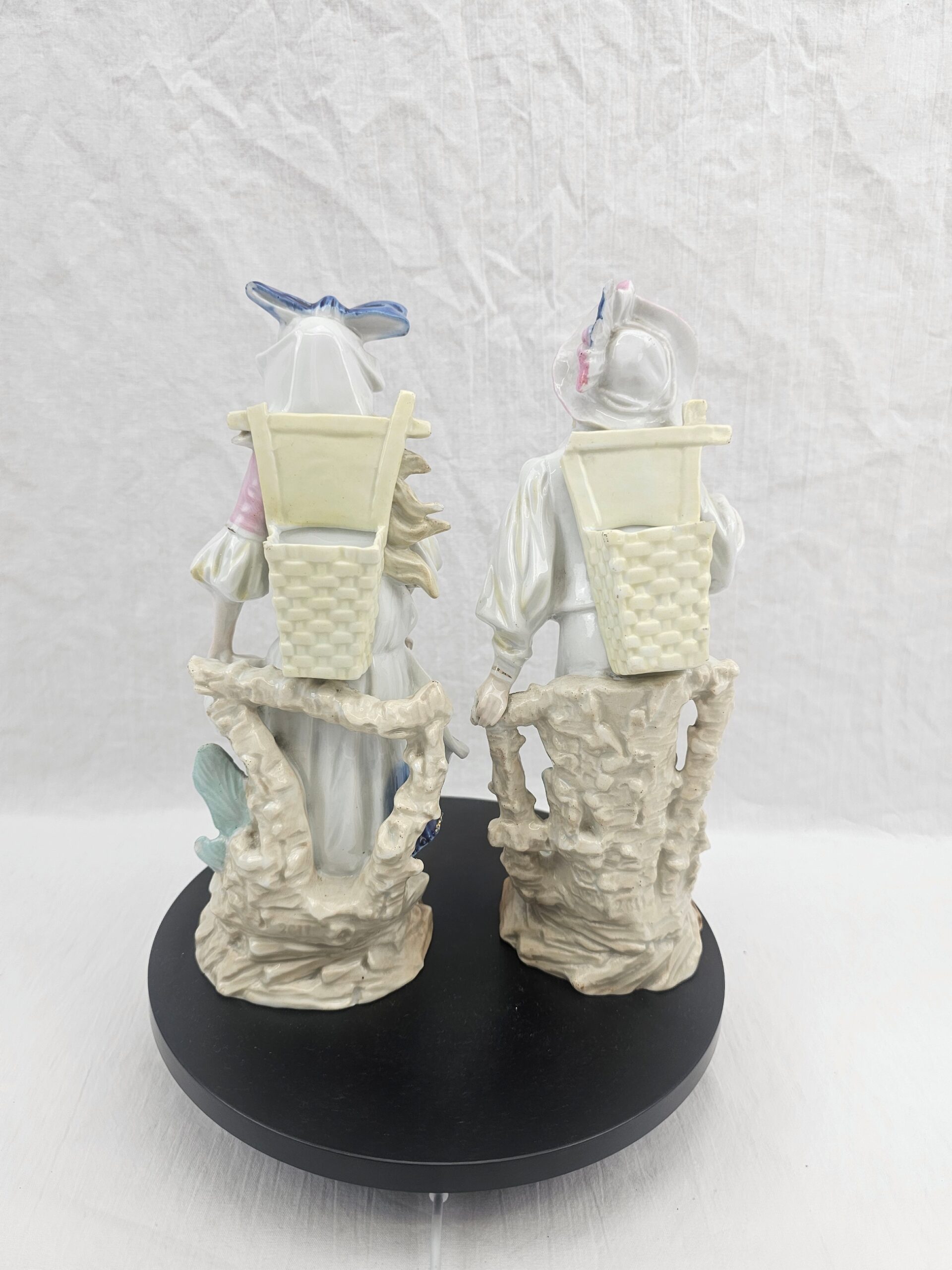
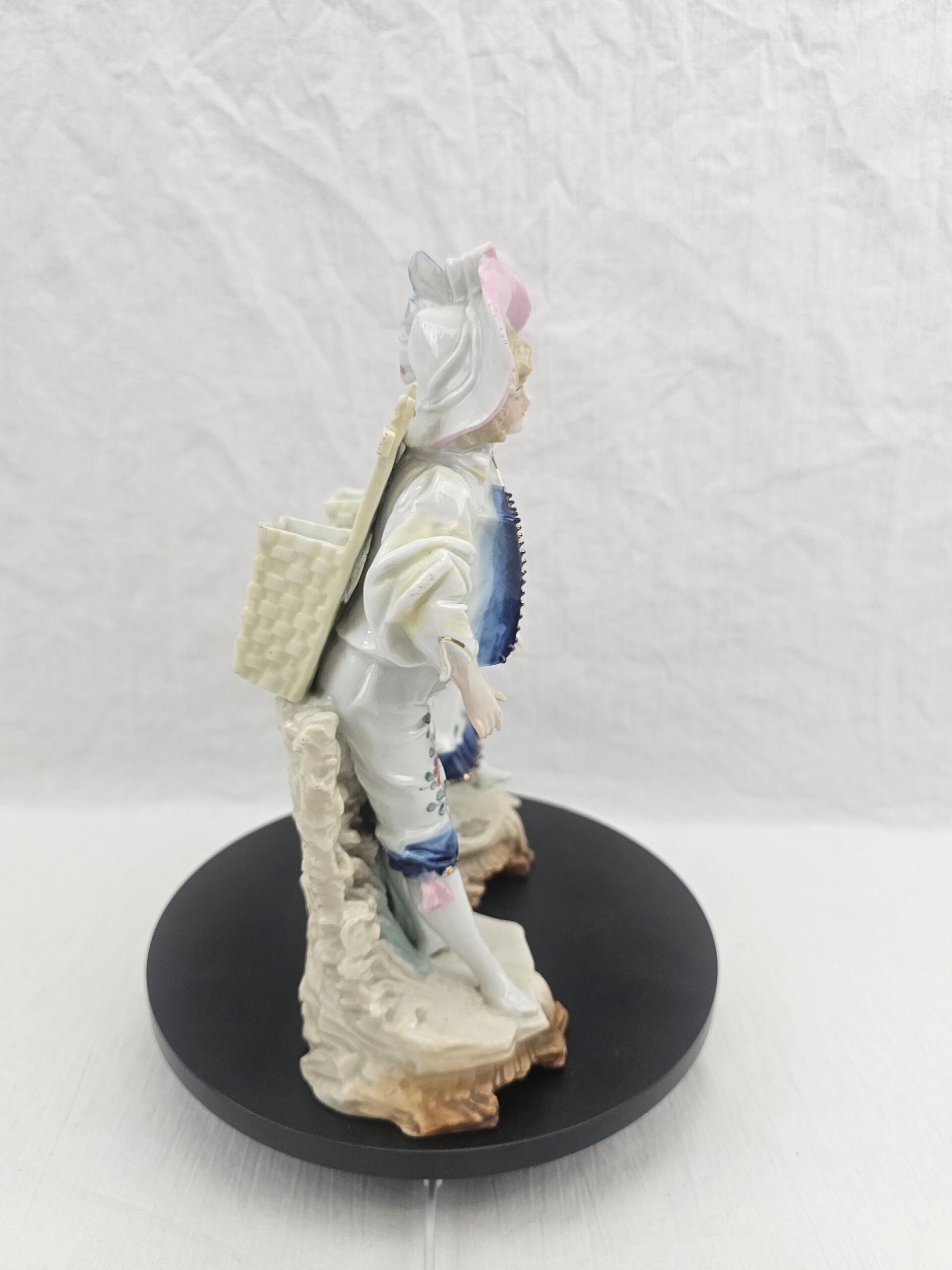
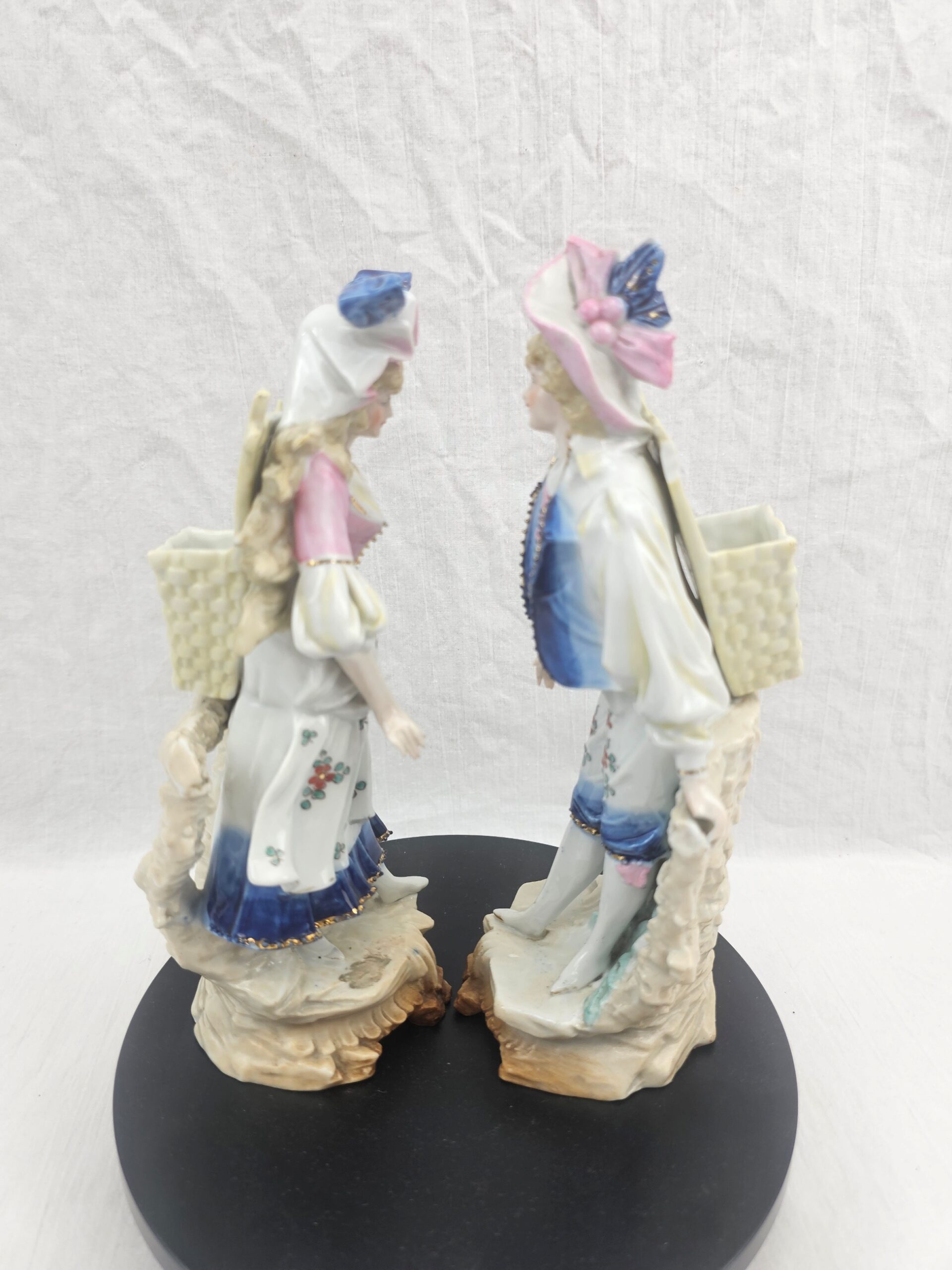
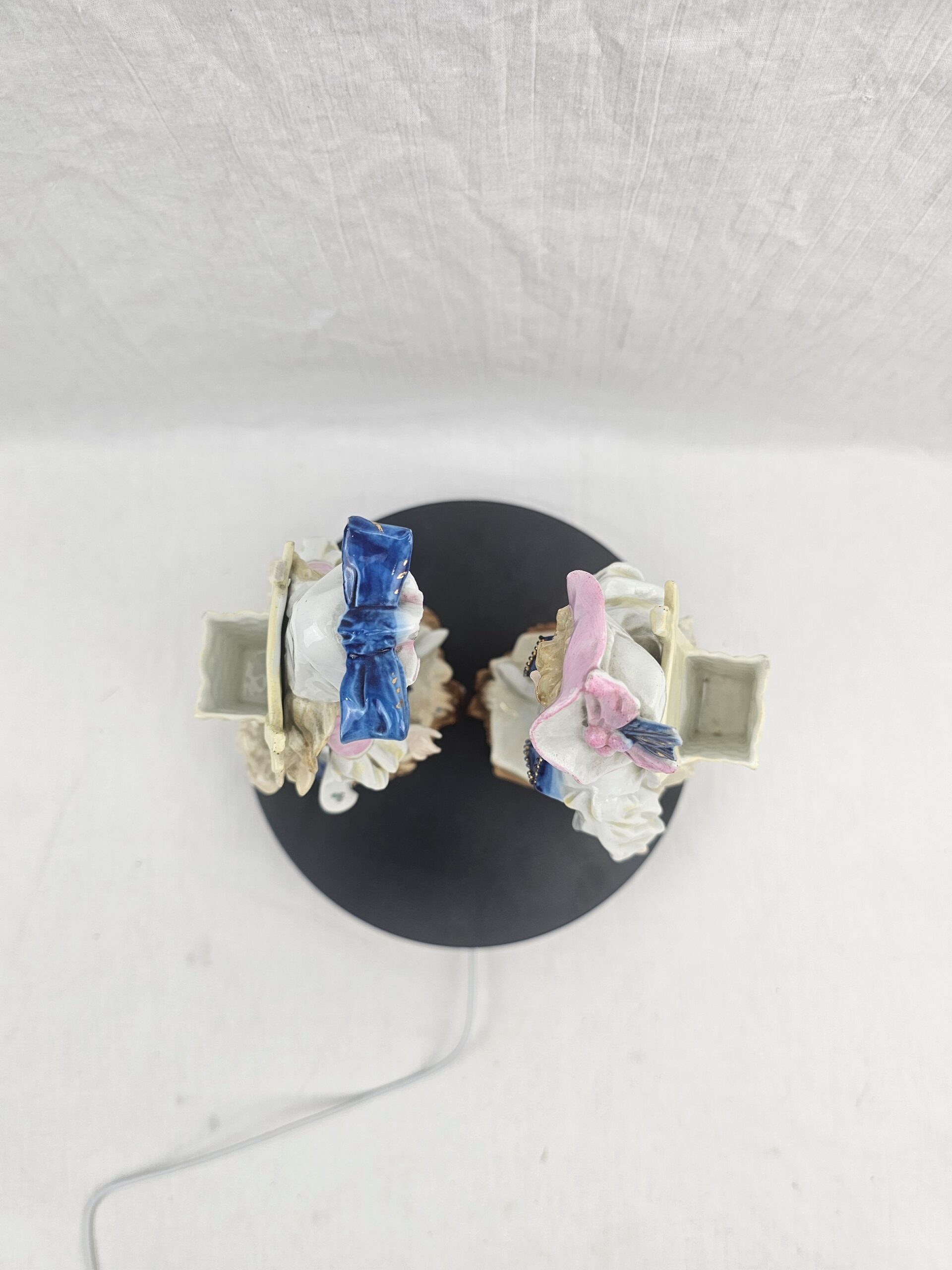
A handsome and well-matched pair of hand-painted Continental hard-paste porcelain figural spill vases in the Rococo Revival taste, depicting a young gallant and his companion in idealised 18th-century pastoral dress. The figures are modelled fully in the round and of equal height, clearly conceived as a unified pair.
The male figure stands to the left, leaning slightly against a naturalistic tree-stump support. He wears a large-brimmed pink hat with a blue plume, curly golden hair, a white shirt with a pink neck bow, a cobalt blue waistcoat with gilt-line trim, and white knee breeches hand-painted throughout with scattered red roses and green shamrock-like sprigs. Blue stockings complete his costume. To his back is fitted a rectangular wicker-weave basket, the spill vase aperture, modelled in raised relief with a trellis honeycomb pattern.
The female figure mirrors him to the right in comparable scale and palette. She wears a large hat with a prominent blue bow and pink trim, a pink bodice with blue lacing and gilt highlights, a white overskirt and apron with matching floral sprigs, and a deep cobalt blue skirt hem edged in gilt. She holds a small white pitcher in one hand; a blue fan is at her side; and a small white dog accompanies her at her feet. Her back likewise carries the matching wicker-weave spill vase basket.
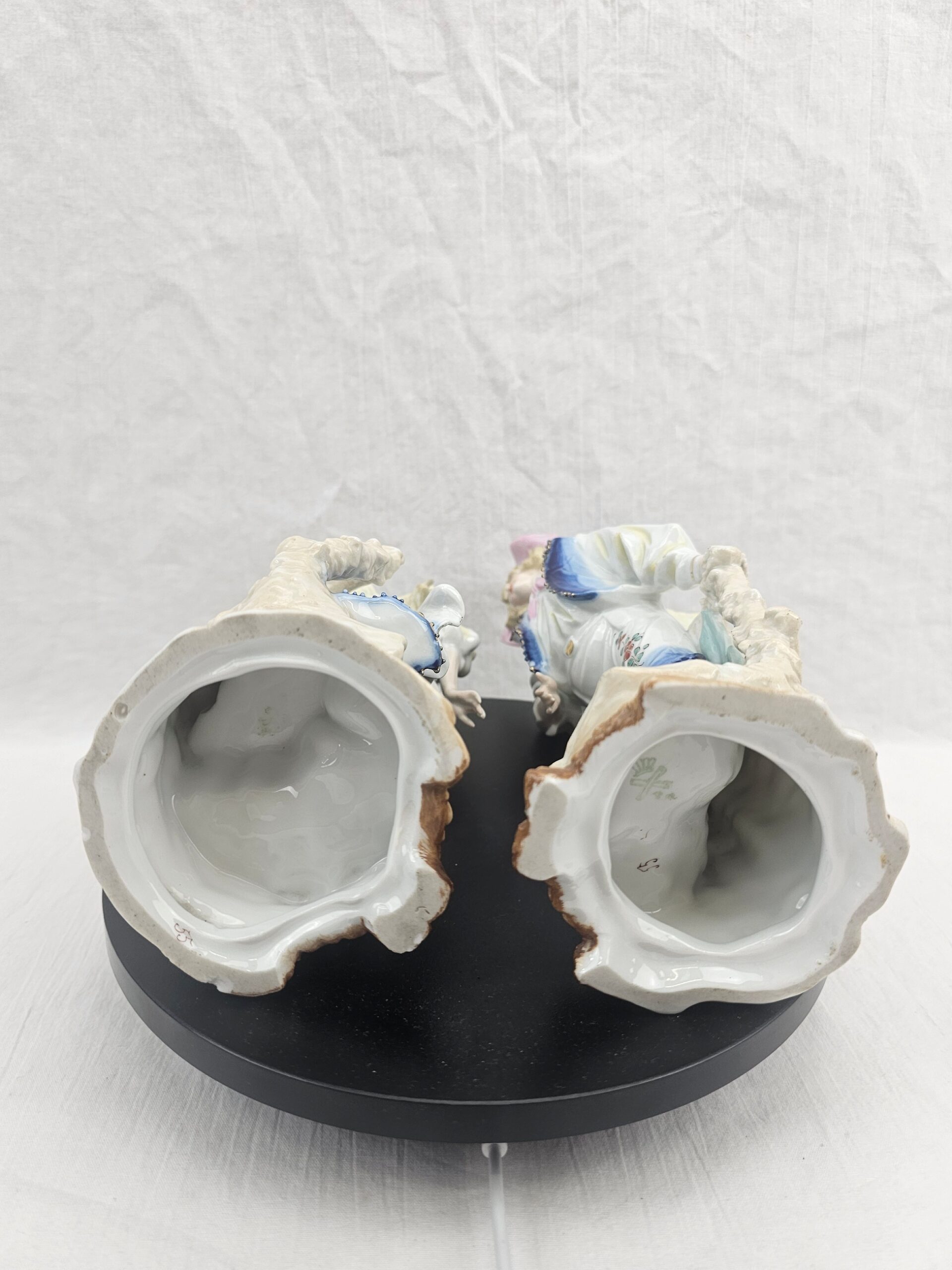
Both figures stand on elaborate Rococo-revival scrollwork bases, moulded with acanthus leaves and C-scrolls and highlighted in gilt and amber. The bases are hollow and open underneath, consistent with Continental press-moulded porcelain construction.
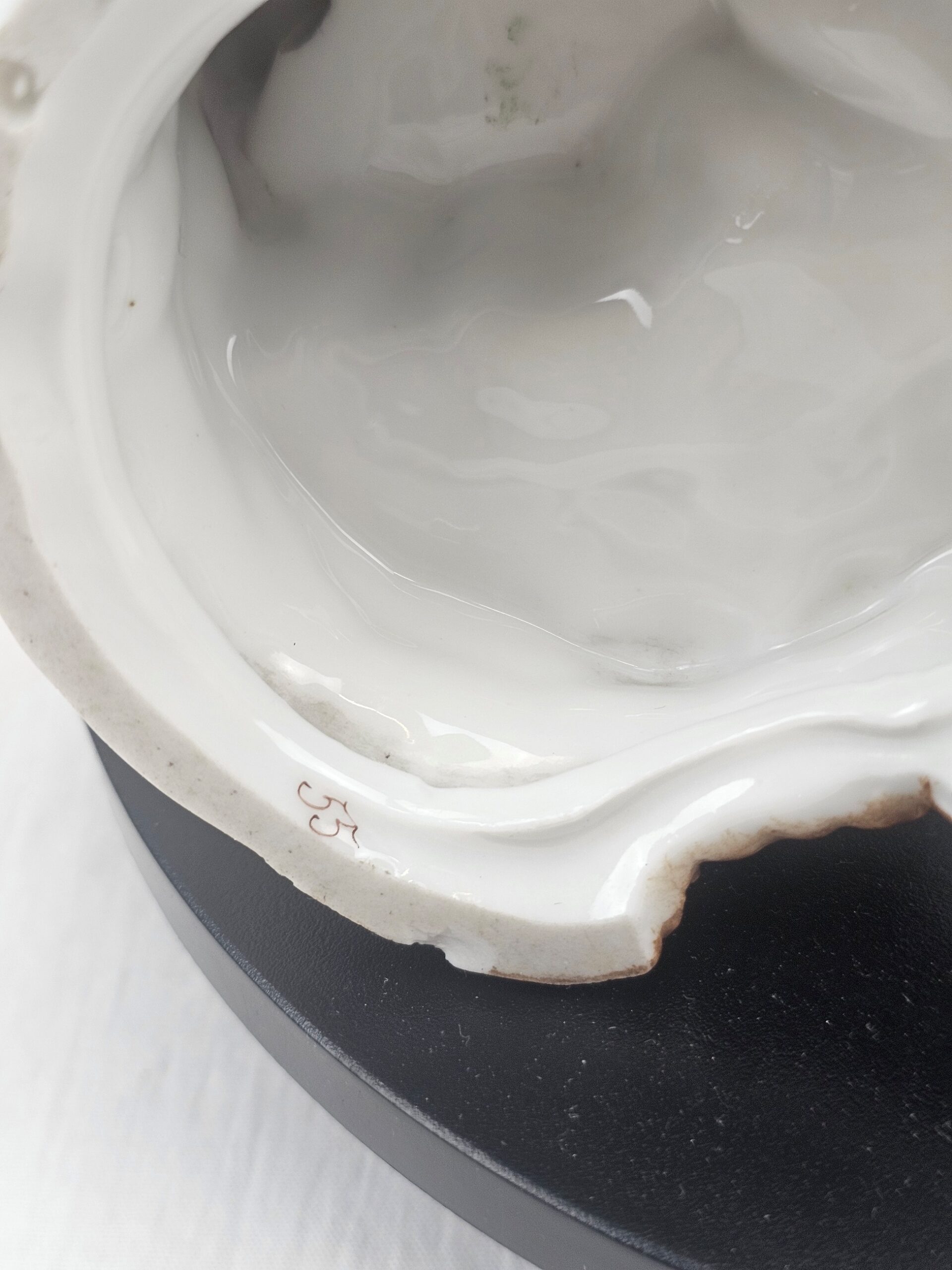
In German Thuringian porcelain, the red overglaze number 55 painted on the interior base is almost certainly a model or mould number, used by the factory to identify the specific figure design in their pattern books for reordering and production purposes. This is entirely standard practice across factories including Volkstedt, Sitzendorf, and their regional neighbours throughout the second half of the 19th century.
Historical Context
The Volkstedt Porcelain Manufactory was established in 1760 by Georg Heinrich Macheleid in Volkstedt-Rudolstadt, Thuringia, a region renowned as Germany's porcelain heartland. The venture received the patronage of Prince Johann Friedrich von Schwarzburg-Rudolstadt, and the manufactory drew inspiration from Meissen's success while developing its own aesthetic identity particularly in the production of figurines depicting romantic couples, pastoral scenes, and courtly subjects rendered in the Rococo style.
Throughout the 19th century, Volkstedt evolved its production to include elaborate lace figurines and ornate courting couples. The Rococo Revival of the mid-to-late 19th century, driven by a wave of nostalgia for 18th-century elegance across Europe, prompted Thuringian factories including Volkstedt and its regional neighbours to produce pastoral figures directly modelled on the French and German Rococo originals. The figurines, plates and vases produced during the 19th century via this process remain appealing to this day, their bright hues and pastoral imagery typical of the Rococo revival, which brought 18th-century elegance to middle-class Victorian interiors. Figural spill vases — in which a decorative vase aperture is incorporated into the back of a standing figure — were a popular and practical format, combining the fashionable pastoral figure with a functional flower or spill holder for the mantelpiece.
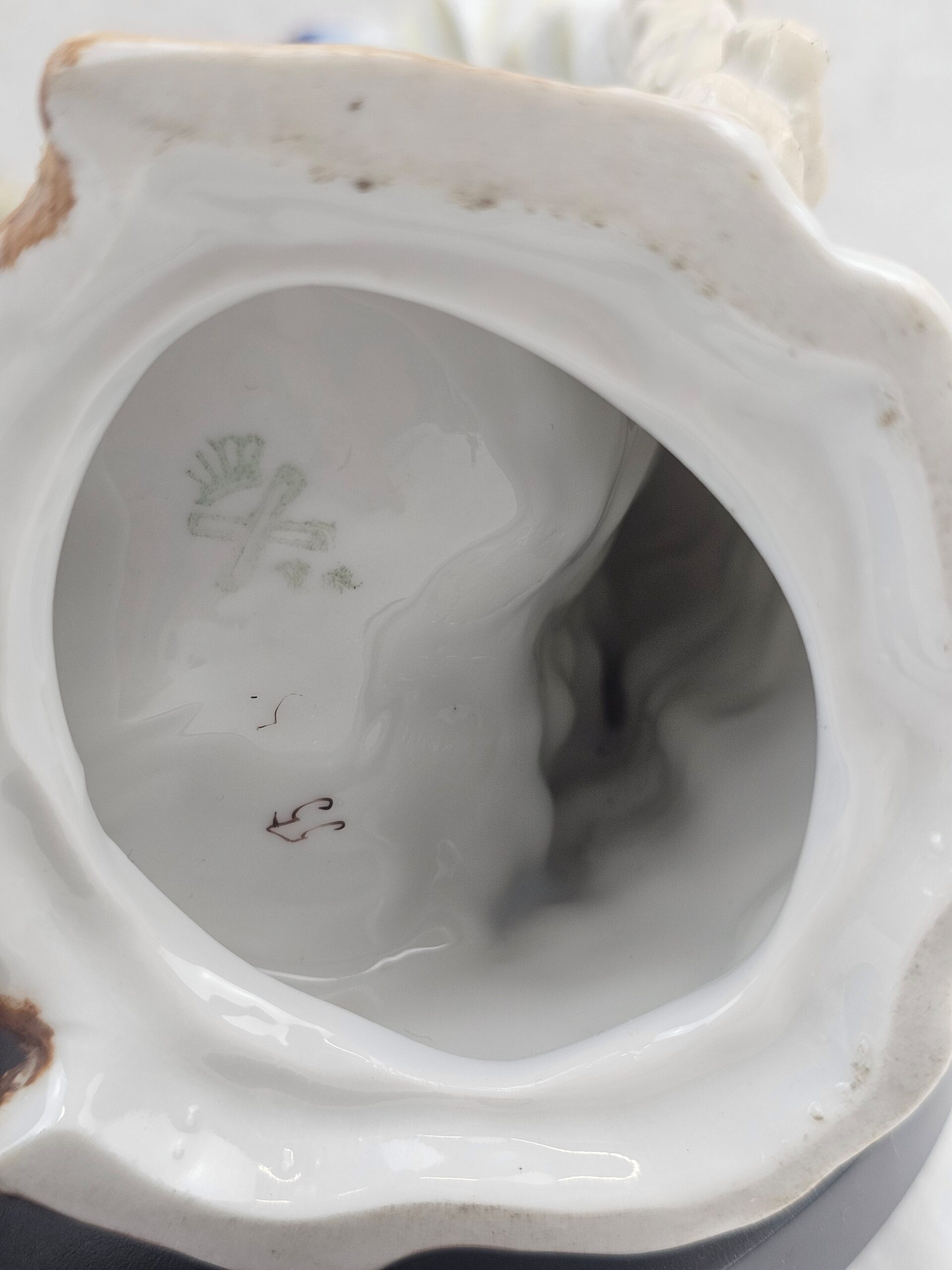
Later in the 19th century, the Volkstedt mark included a single pitchfork with a sun — a printed green factory mark consistent with that visible in the base of one figure in this pair, alongside painted model numbers.
~ Dimensions ~
The figures each stand at 23cm (9 inches).
Together they weigh 930g.
~ Condition ~
Overall: Good antique condition for their age; the pair is structurally sound and displays well together.
Figures: Modelling intact on both; faces, hands, hats, and costume details are all present with no observed chips or losses to the principal front-facing surfaces.
Enamel and gilt: Well-preserved palette with the cobalt blue, pink, and white retaining good strength; gilt highlights show expected light wear and rubbing, particularly to the base scroll edges and skirt trims — commensurate with age and handling.
Spill vase baskets: Both intact with no observed chips to the rim apertures.
Bases: Both bases show the typical unglazed/biscuit tan body on the outer foot rims; some minor surface grime and age-related marks consistent with mantelpiece use; gilt highlights to the scroll bases show light rubbing.
Undersides: Open hollow bases; one carries a red painted model number "5"; the other carries a green printed factory mark (consistent with Thuringian/Volkstedt manufacture) and a red painted numeral — no chips or damage observed to the base rims.
Pair matching: The two figures are clearly conceived as a matched pair and are well-matched in height, palette, and quality.