
~ Chinese Steatite Seal Stone, Year of the Rooster Zodiac Theme with Cockerel Finial, Qing Dynasty, 19th–Early 20th Century ~
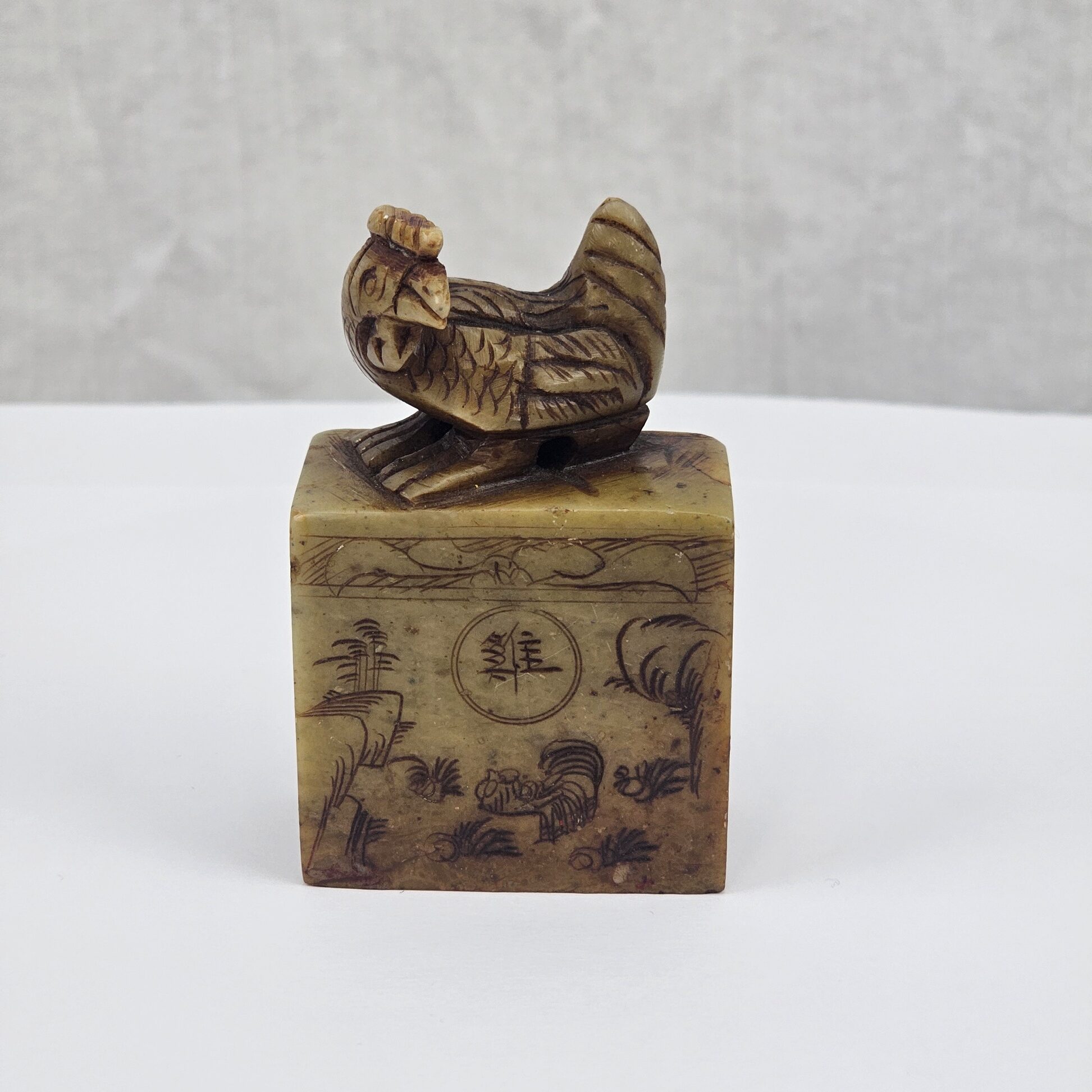
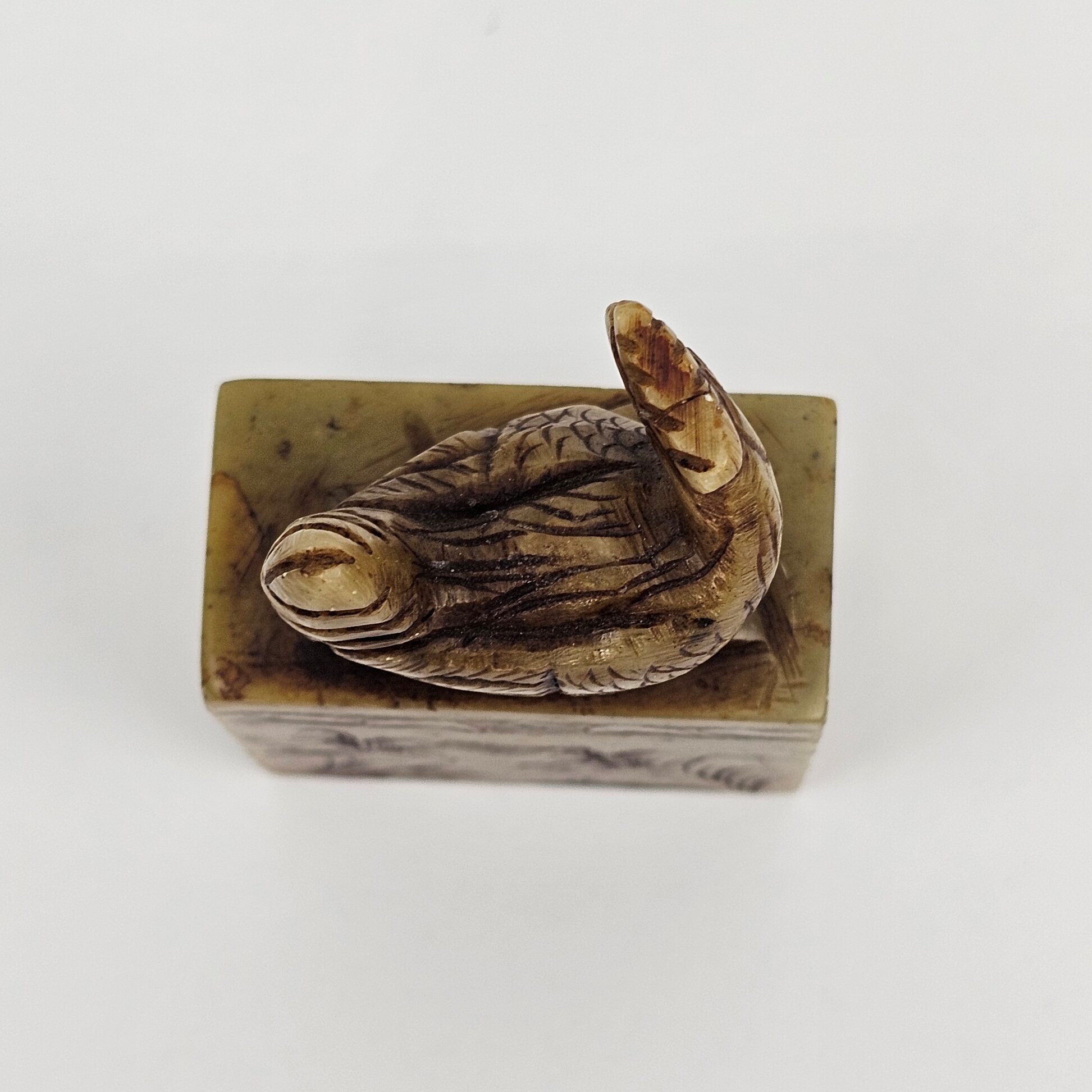
A richly decorated Chinese seal stone (yìnzhāng 印章) of square section, surmounted by a finely carved recumbent cockerel finial, the entirety executed with a scholarly programme of incised decoration relating to the tenth zodiac animal, the Rooster (jī 雞). The material is a warm olive-khaki steatite or related soft seal stone showing natural brown veining and tonal variation across the body, with the finial exhibiting a slightly paler cream-brown tone enhanced by the incised grooves.
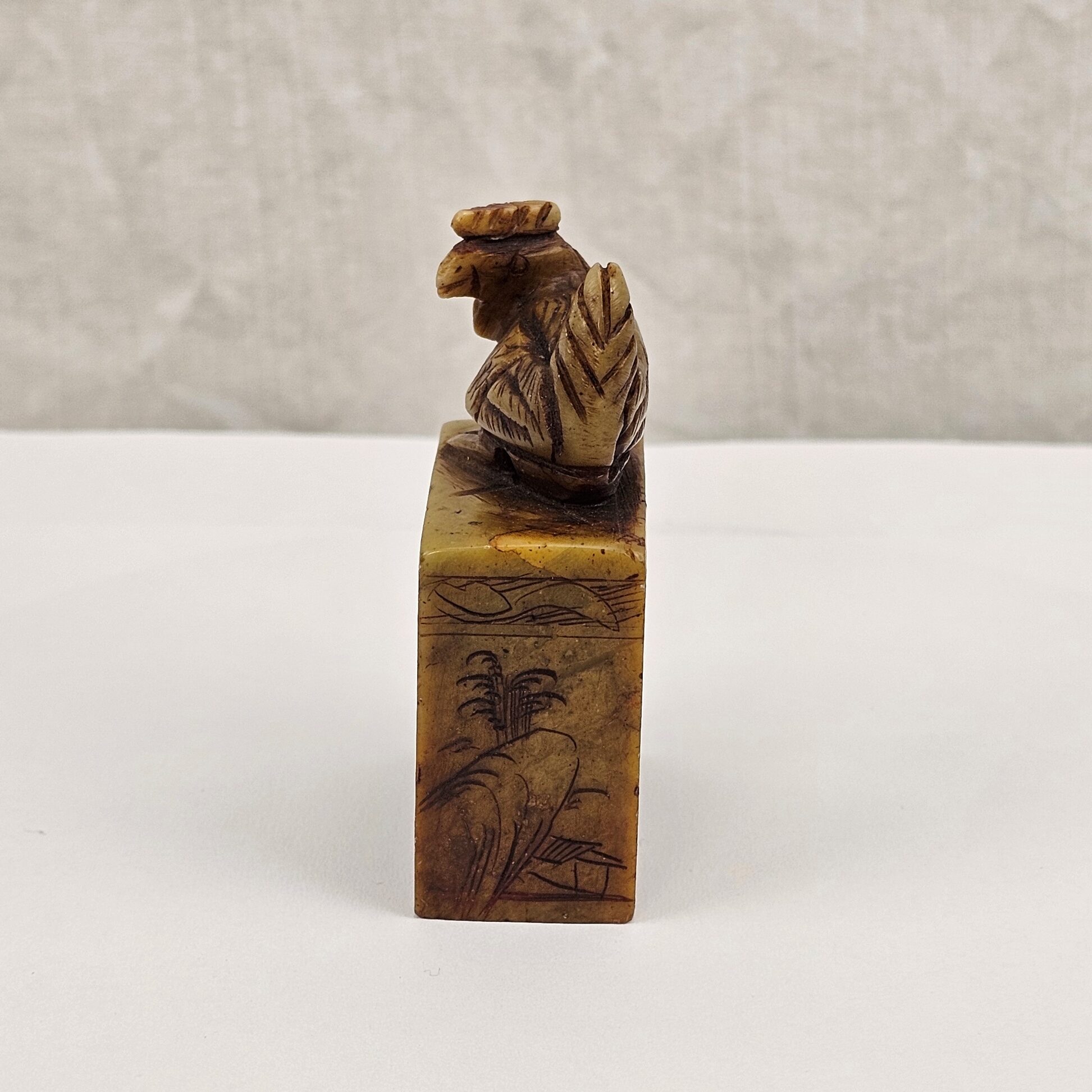
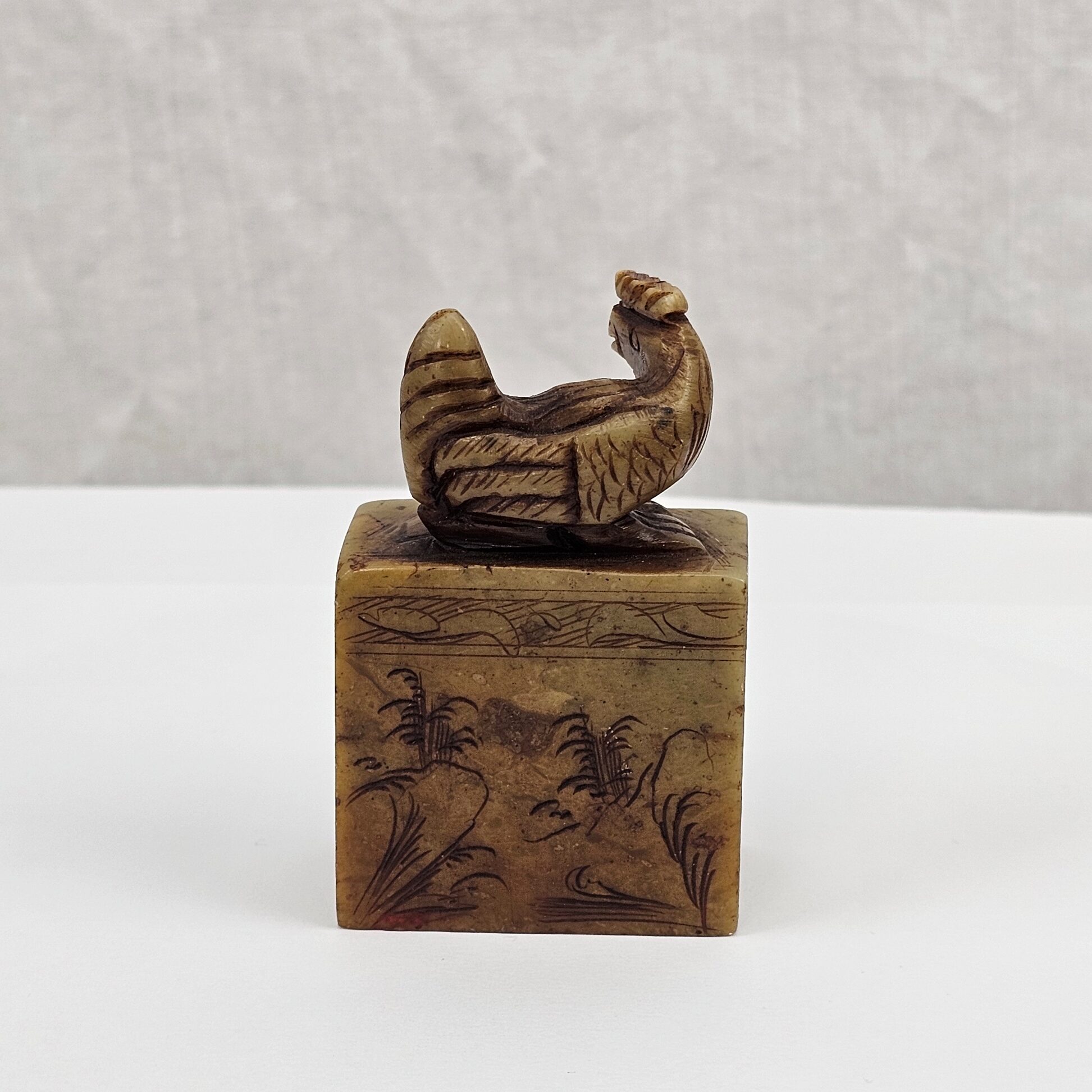
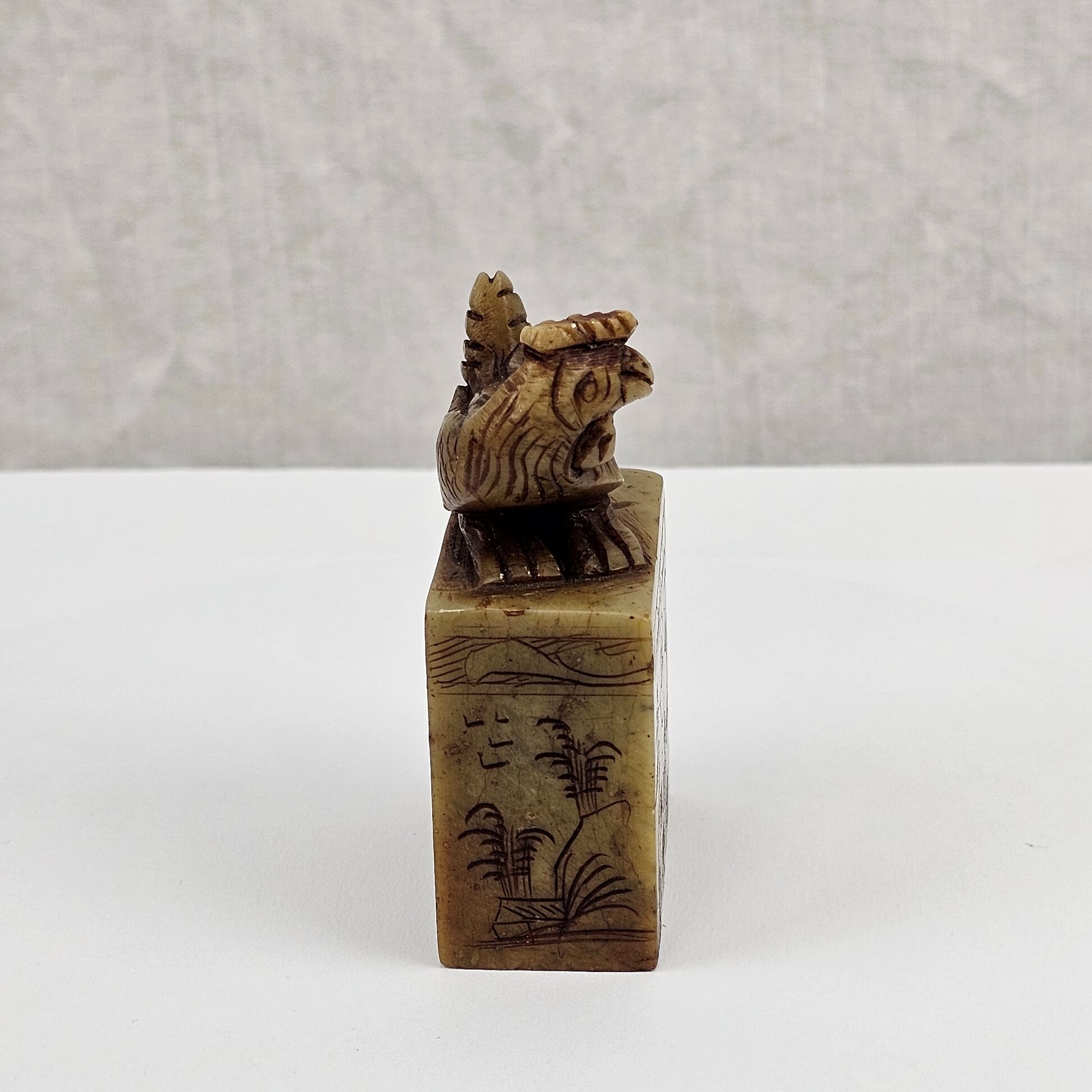
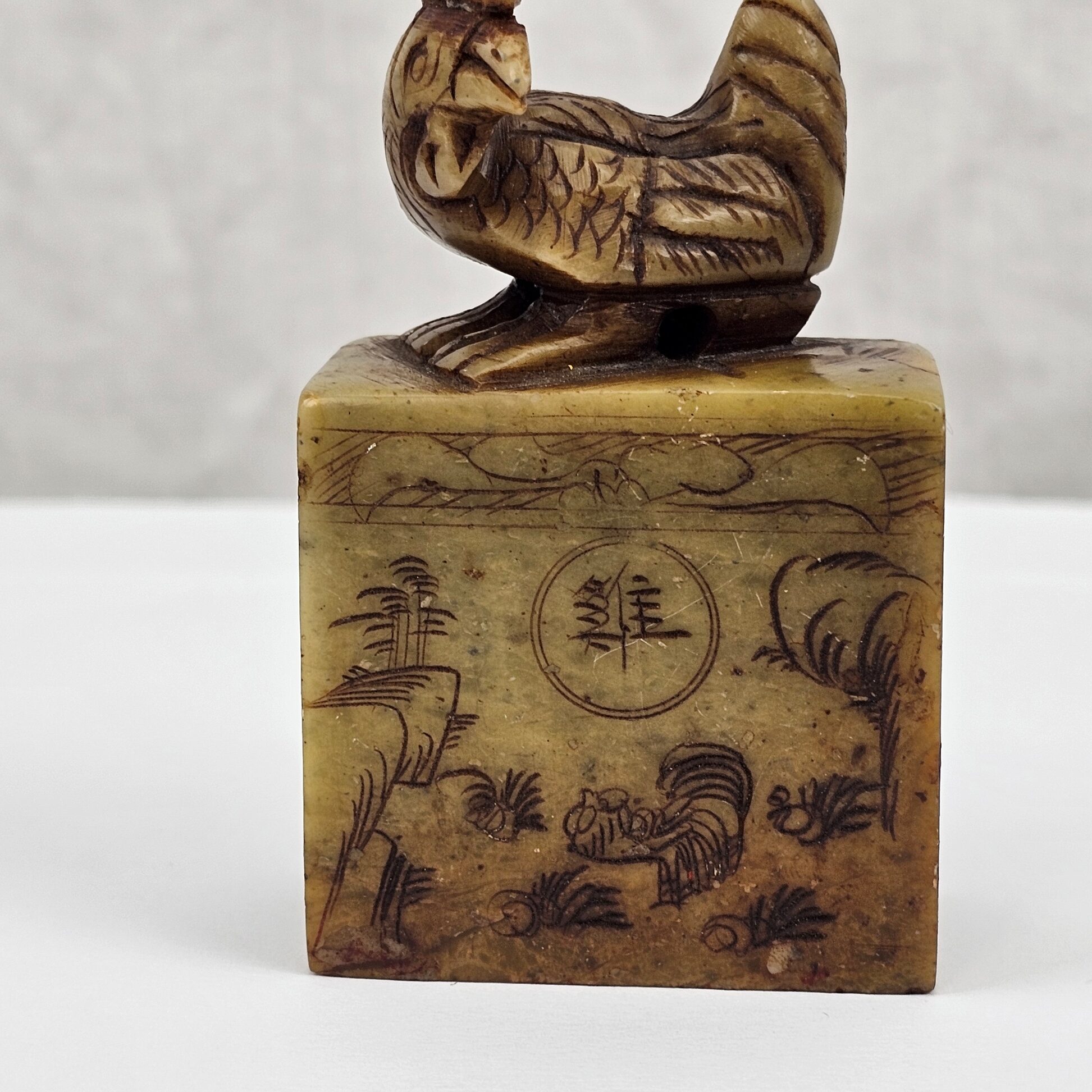
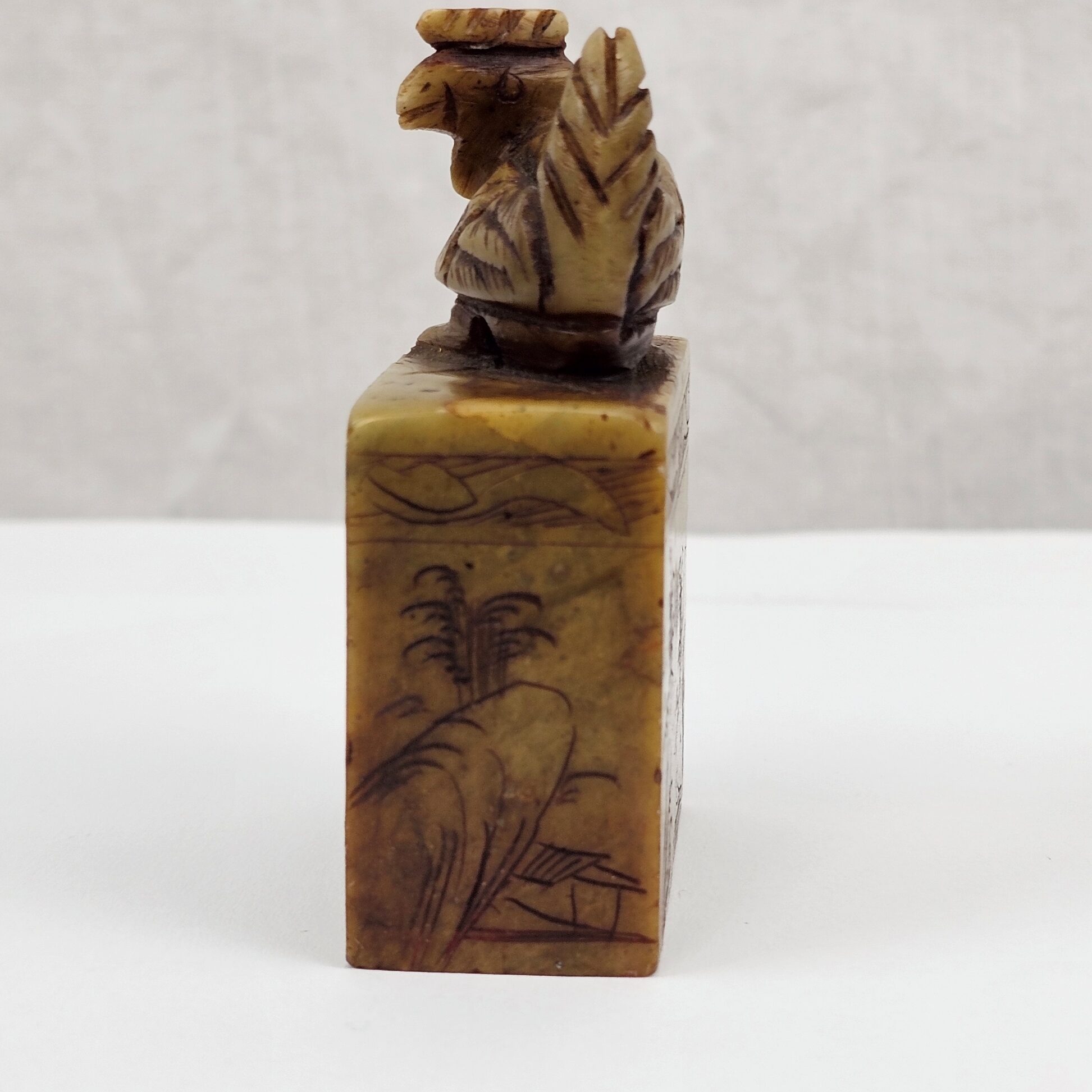
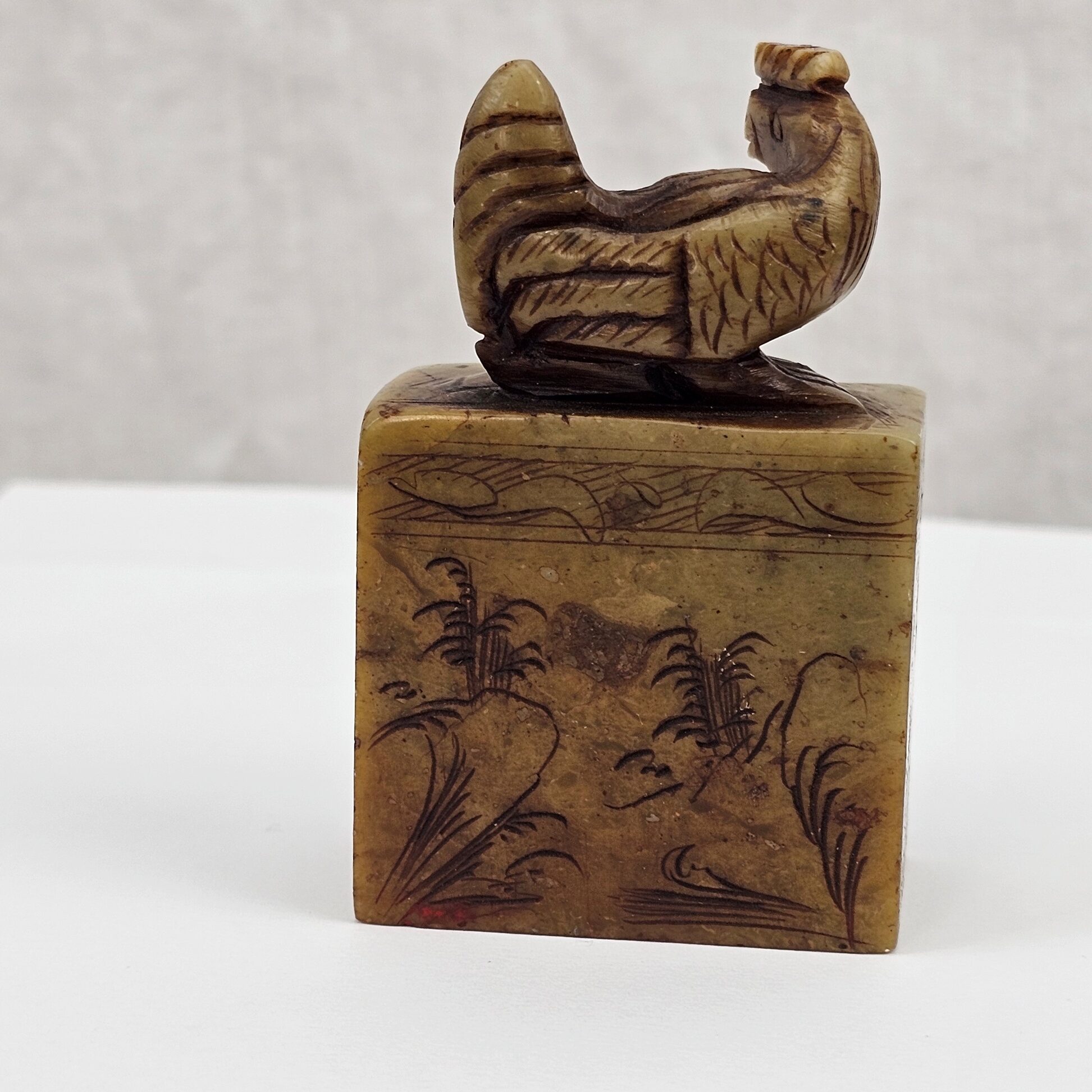
The cockerel finial is carved in confident, naturalistic style, depicting the bird at rest with its head turned alertly. Feather texture is incised across the breast, wing coverts, and tail, with the comb, wattle, and beak clearly defined. The tail sweeps back dramatically in a bold, stylised arc. The finial sits on a shallow plinth that transitions into the flat top of the seal body.
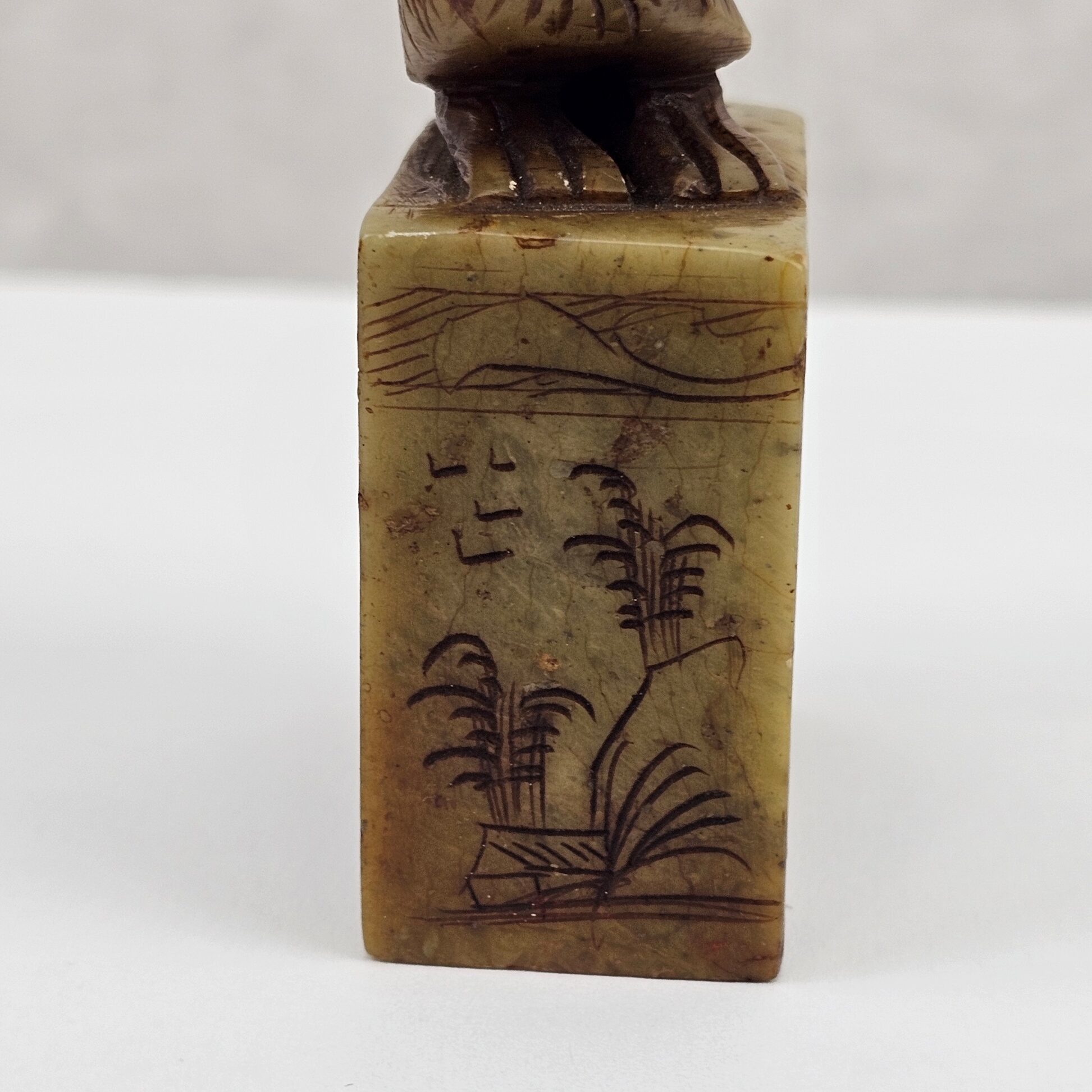
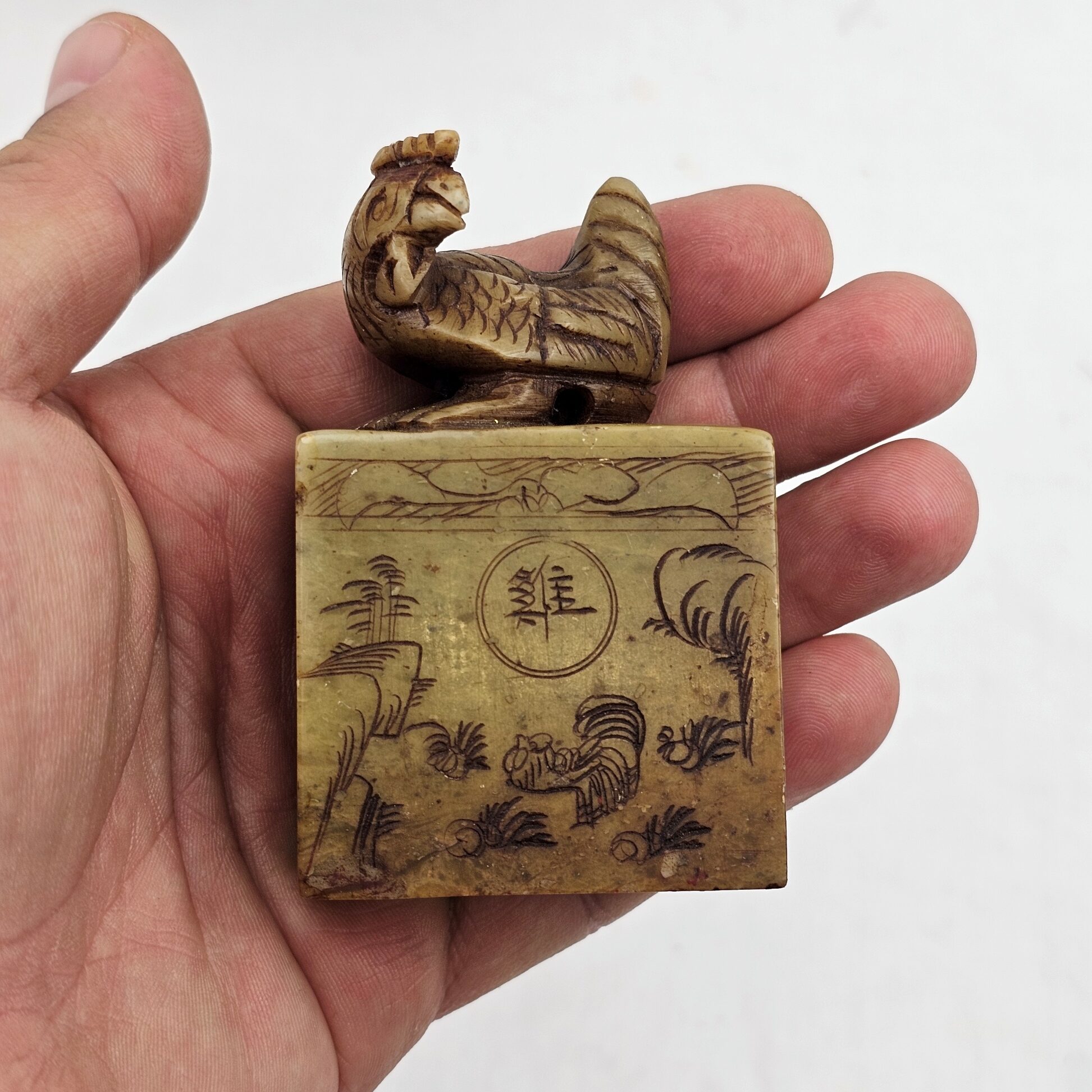
The four faces of the seal body are each decorated with a different incised qiankè (線刻 — incised line engraving) composition in the style of Chinese literati painting, all executed with a confident, brushwork-like line quality:
Front face: A principal decorative face bearing a circular medallion enclosing the character 雞 (rooster/chicken), flanked by a landscape scene with pine or bamboo on the left and foliage to the right, with a naturalistically drawn cockerel striding through the grasses below — the thematic focus of the entire piece.
Remaining three faces: Each carries an independent incised composition of scholar's rocks, bamboo, orchid, reeds and grasses in the four-gentleman (sìjūnzǐ 四君子) or related literati idiom, separated at the shoulder by a frieze of incised cloud and mountain forms.
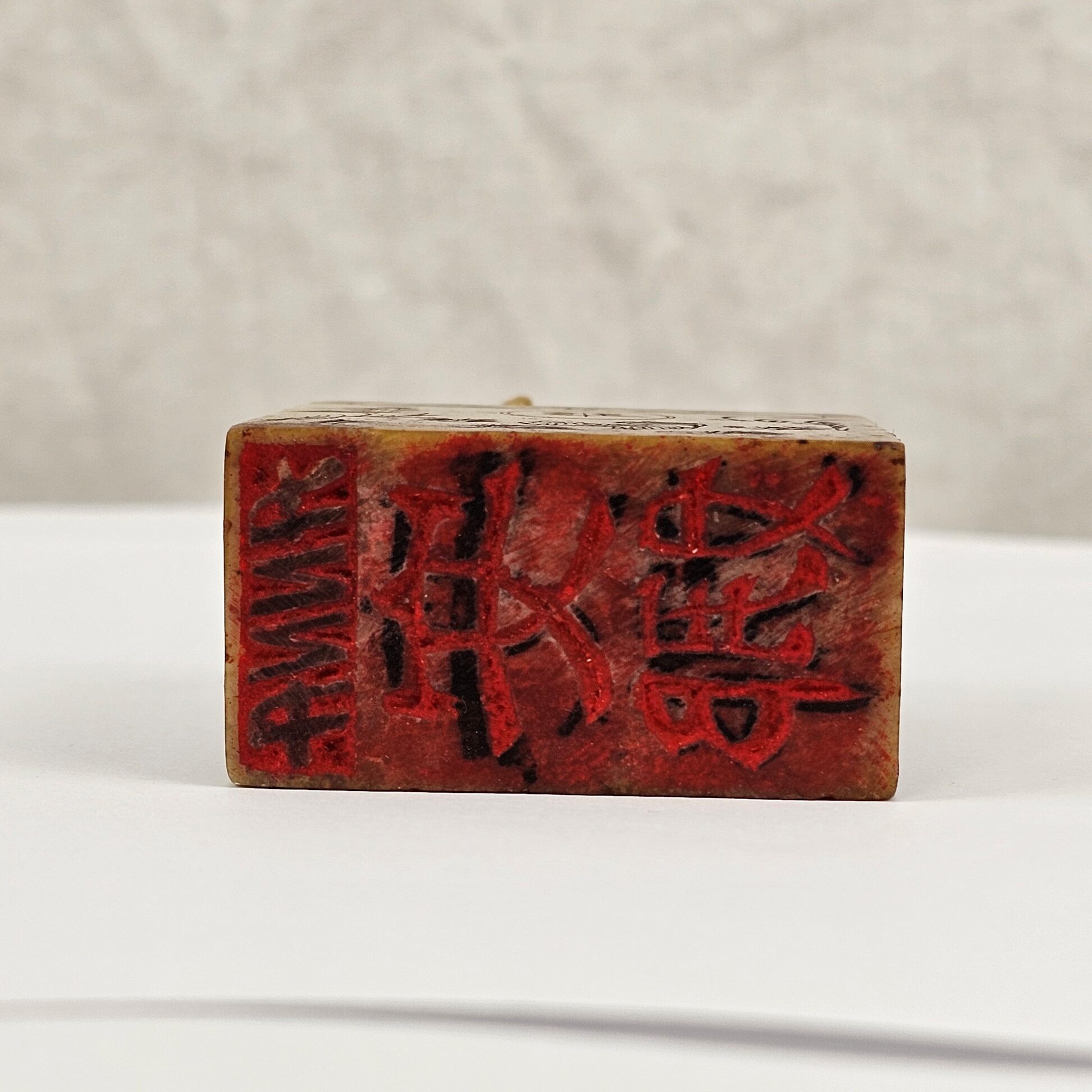
The seal face (base, image 10) bears the carved matrix of Chinese characters in zhuànshū (篆書 — seal script), stained throughout with red cinnabar seal paste (zhūshā 朱砂), confirming this seal was actively used. A column of smaller inscription text appears to one side of the main matrix, possibly a date or carver's attribution in standard script — expert reading is recommended. A small aperture hole is present in the body of the cockerel near the base of the finial, possibly for a cord or toggle attachment.
The seal is held in the hand in image 11, confirming a substantial size of approximately 4.5cm square and approximately 7–8cm in total height including the finial.
Historical Context
The seal (yìn 印 or zhāng 章) has been one of the most culturally significant objects in Chinese civilisation for over two thousand years, functioning simultaneously as a legal instrument of personal or official identity and as an object of scholarly aesthetic appreciation. By the Qing dynasty, there were elaborate conventions governing seals, and the carving of seal stones became one of the most esteemed of the scholarly arts, with connoisseurs prizing both the quality of the stone and the skill of the carver in both the finial sculpture and the matrix script. Bonhams
The rooster (jī 雞) is the tenth of the twelve animals of the Chinese zodiac and carries multiple auspicious associations. Representing fidelity and punctuality, the Rooster is the tenth in the 12-year cycle of Chinese zodiac signs. In Chinese culture, the rooster carries auspicious connotations — its crowing was seen as a notable sign that awakens people and ends darkness, and therefore chickens and roosters are among the most frequently seen animals in art, conveying the wish for good fortune and a brand new start. A seal of this kind — with every element of its decoration unified around the rooster theme, from the finial to the zodiac character medallion to the landscape vignette — was almost certainly made as a commission for someone born in the Year of the Rooster, or as a New Year gift in such a year. The Qing rooster years falling within this seal's likely production window include 1849, 1861, 1873, 1885, 1897, and 1909. 1stdibs
The incised side decoration — bamboo, orchid, rocks, and reeds — draws directly on the literati painting tradition and the sìjūnzǐ (Four Gentlemen) iconography of scholarly virtue, situating this seal firmly within the culture of educated scholar-gentry taste that dominated Qing decorative arts.
~ Dimensions ~
The piece measures 8 cm (3 ¼ inches) tall, 5 cm (2 inches) wide and 2.5 cm (1 inch) deep.
It weighs 170 g.
~ Condition ~
There are a couple of tiny nicks to the edges but there is no significant damage to the piece.
The red colouring to the base is from ink.
ref no. 129396360
Reviews
There are no reviews yet.