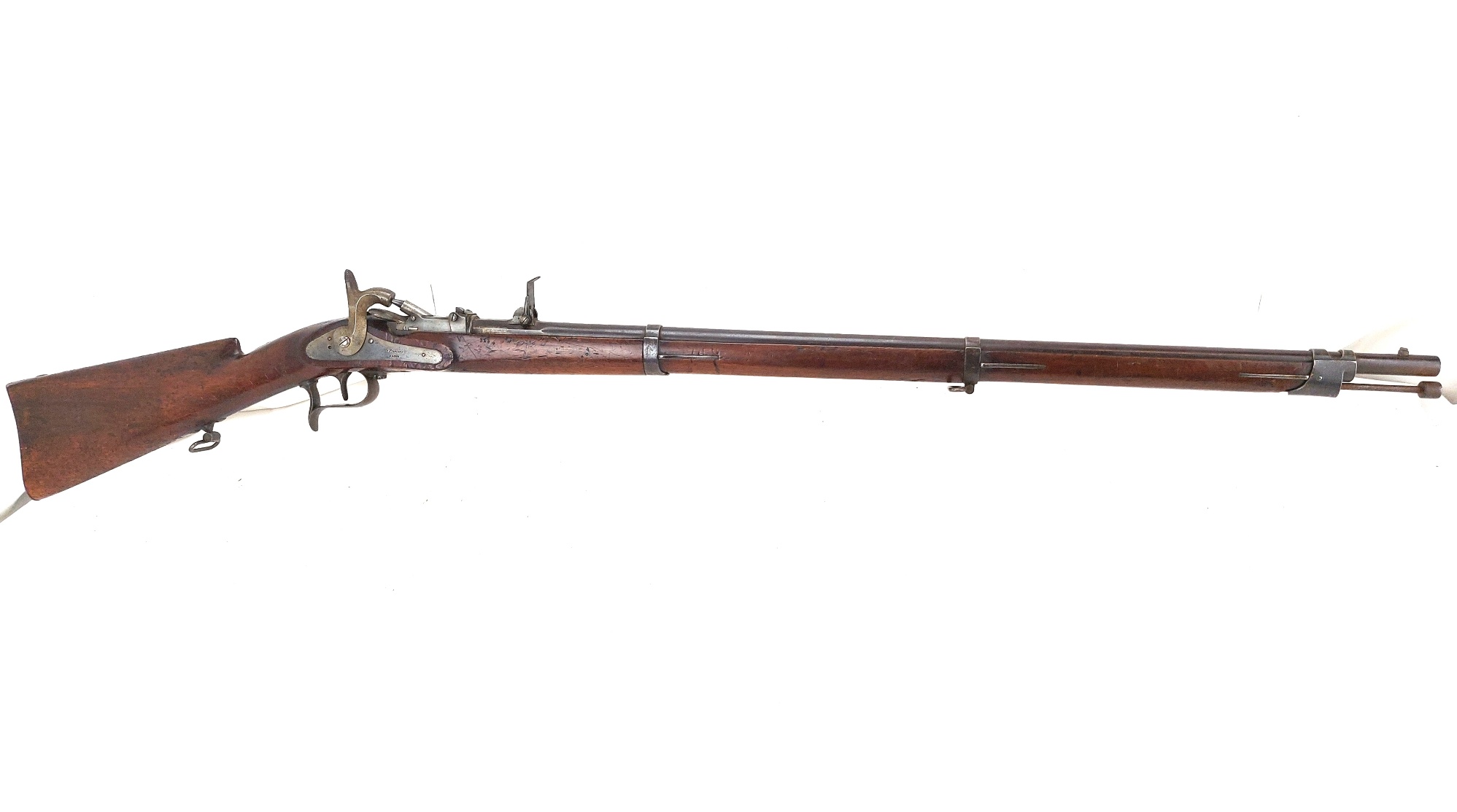
*Swiss, c.1867, Amsler-Milbank Conversion Rifle, Model 1856/67 Jägergewehr, A. Francotte (Liège), Canton Valais, Obsolete Calibre*
Calibre: 10.4 mm (.41) Swiss Rimfire (obsolete) Approx. Measurements – Barrel length: 84.5 cm. Overall length: 130.6 cm.
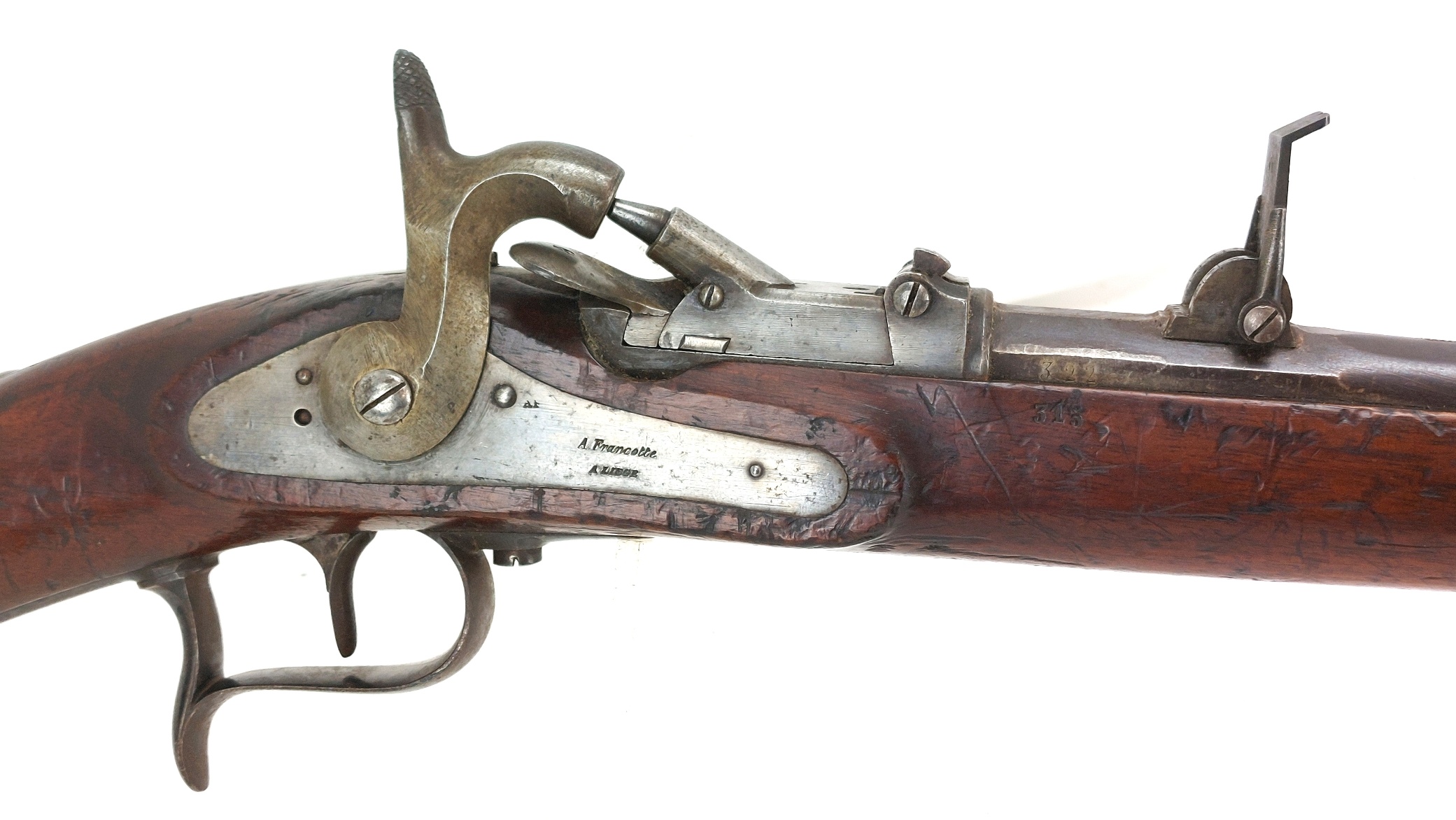
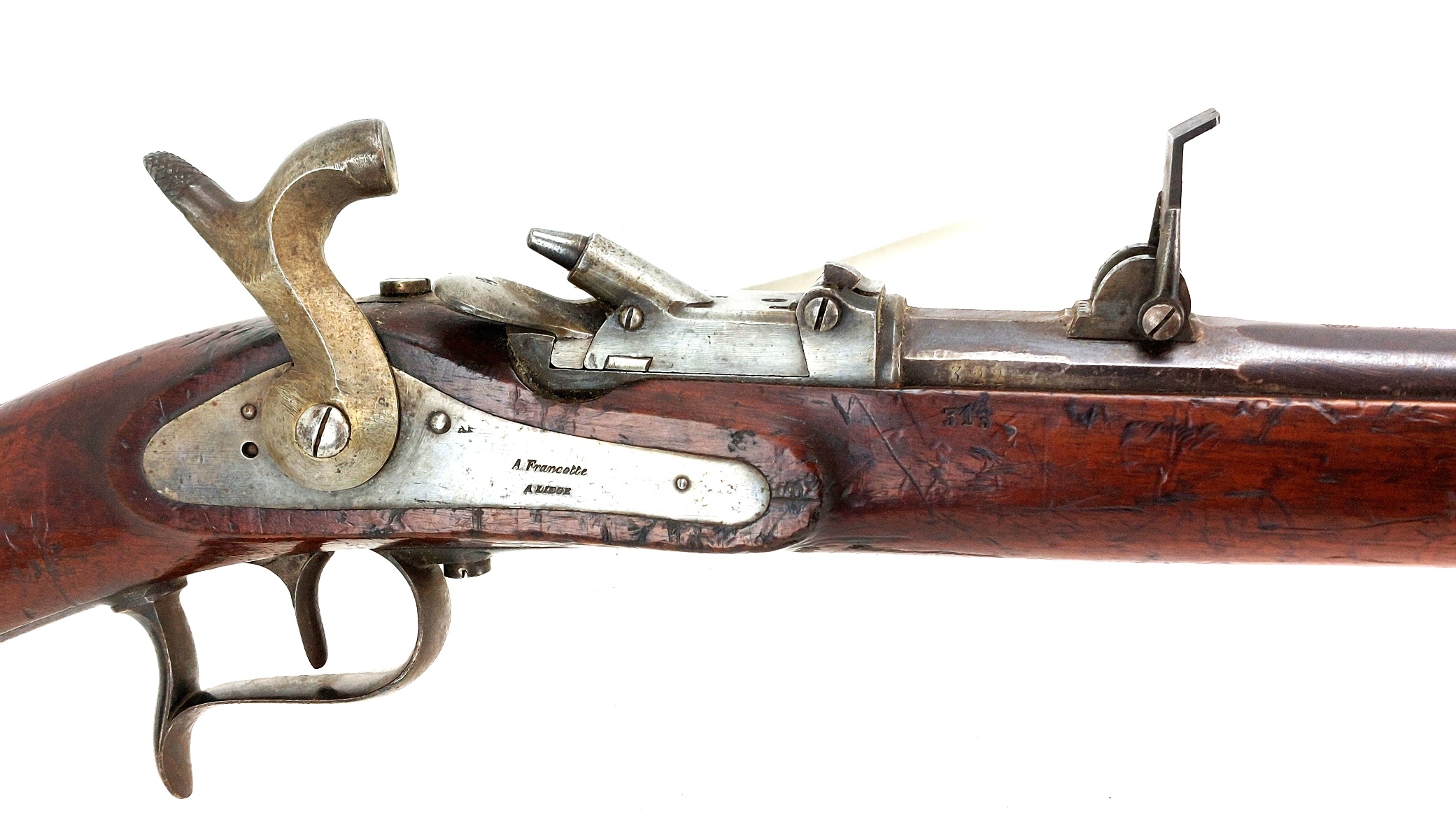
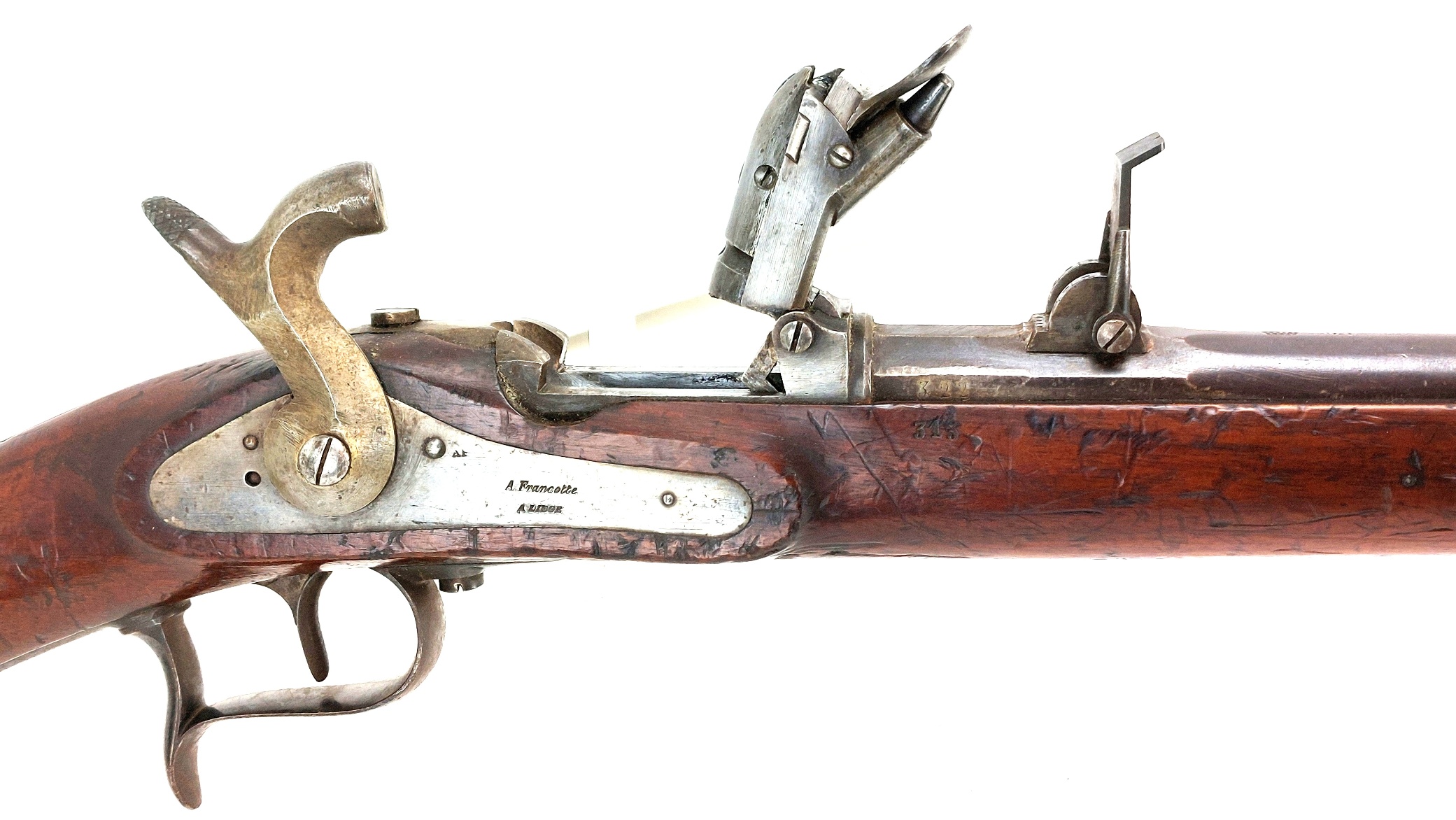
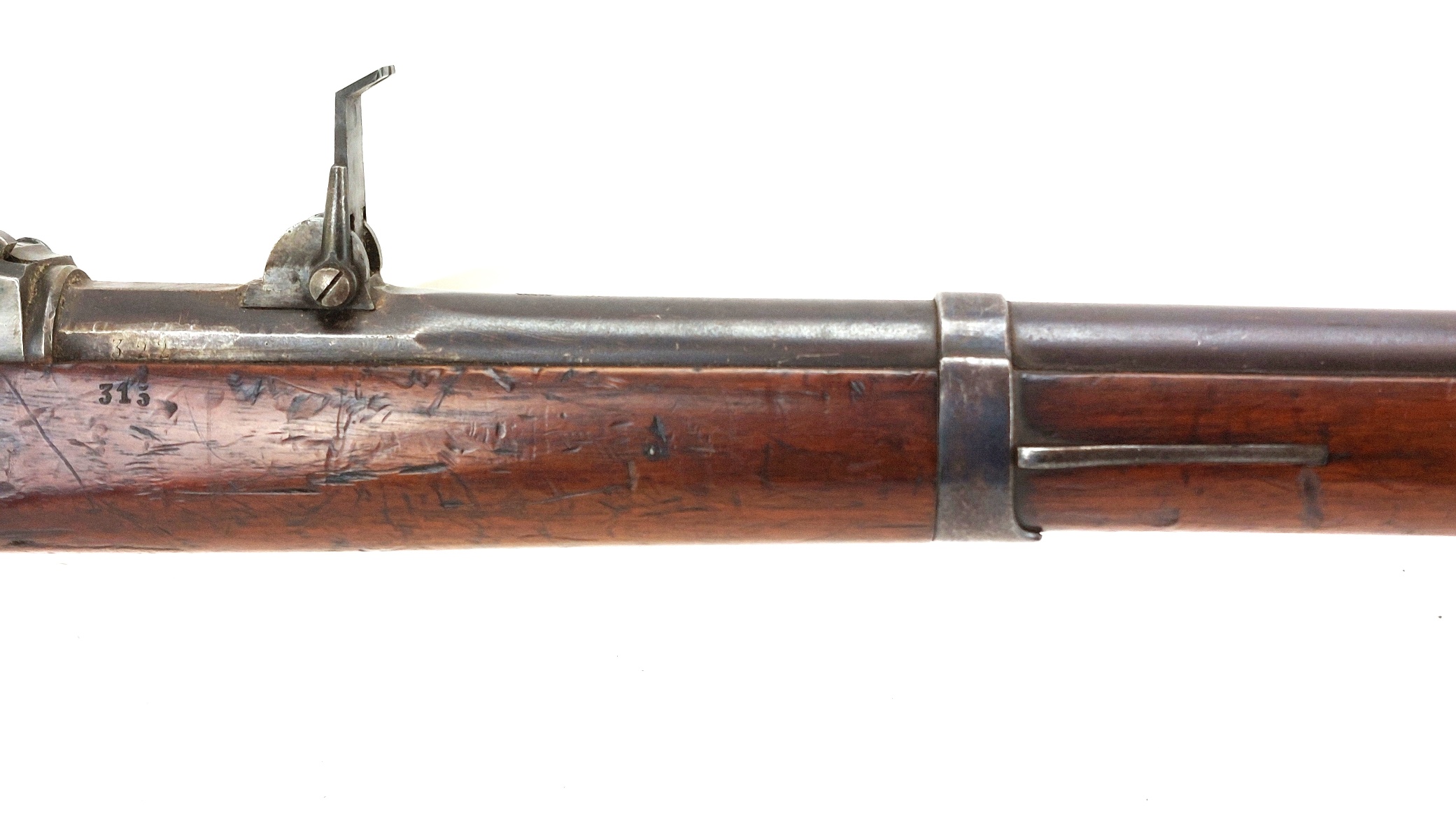
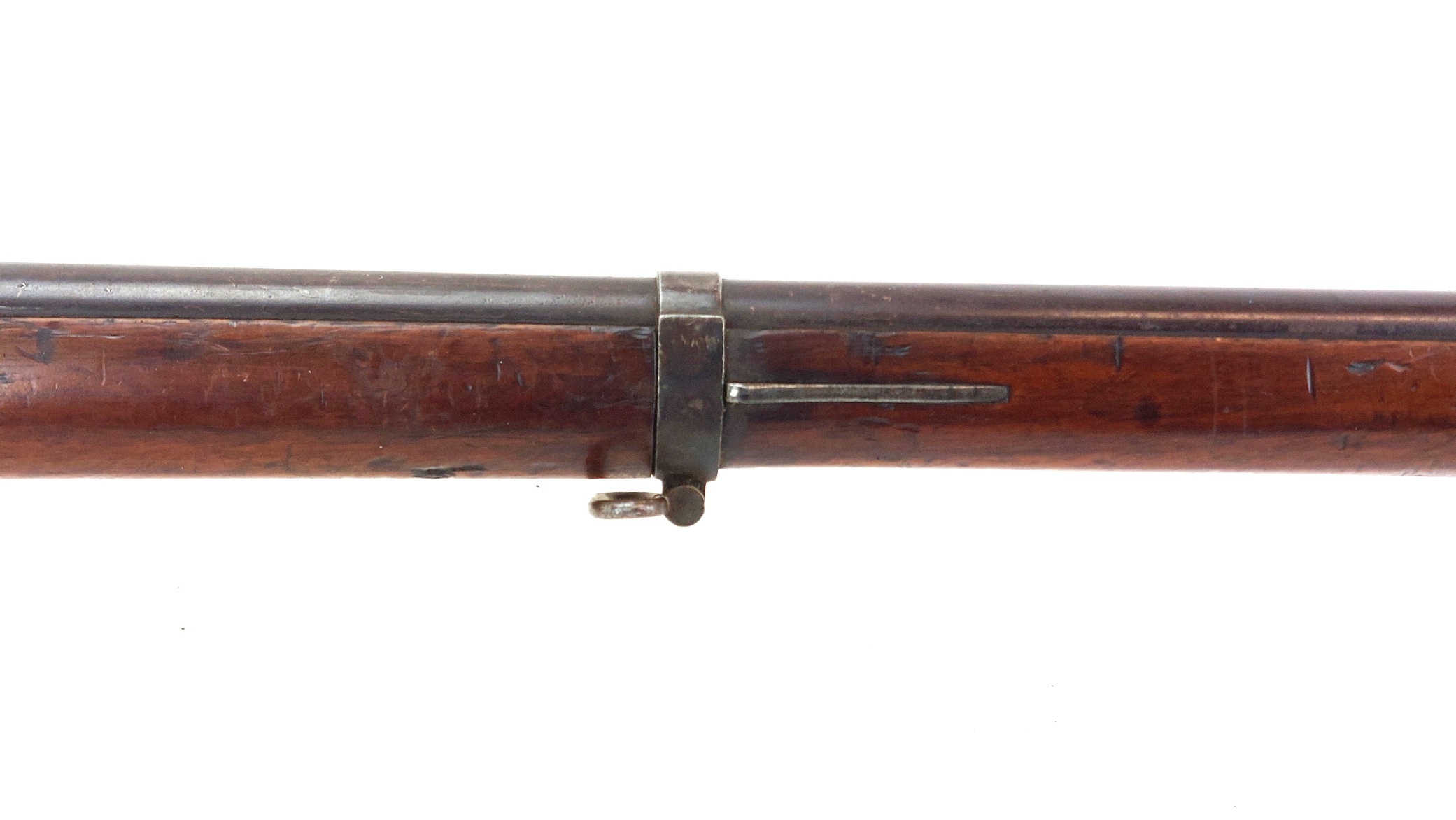
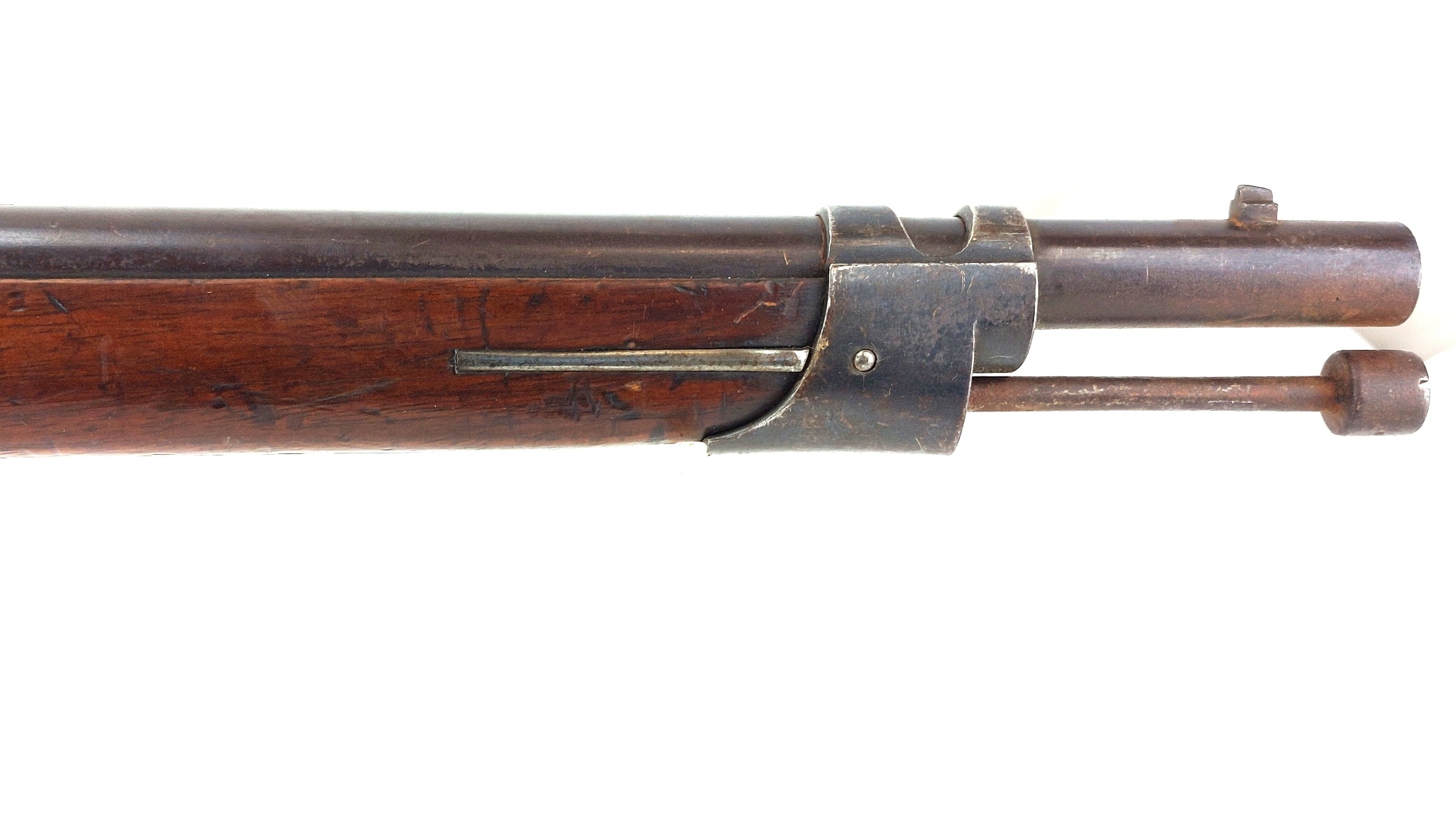
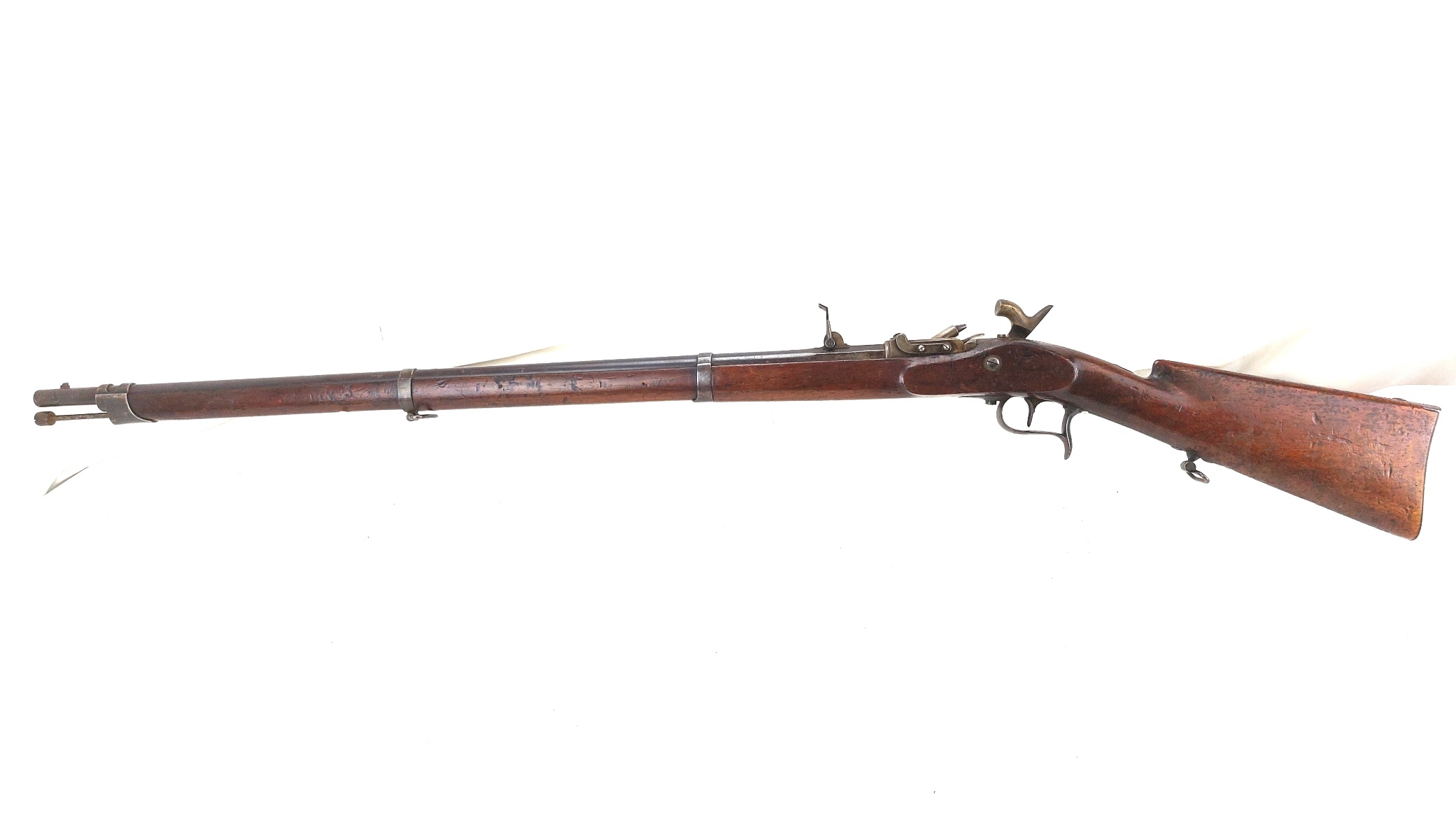
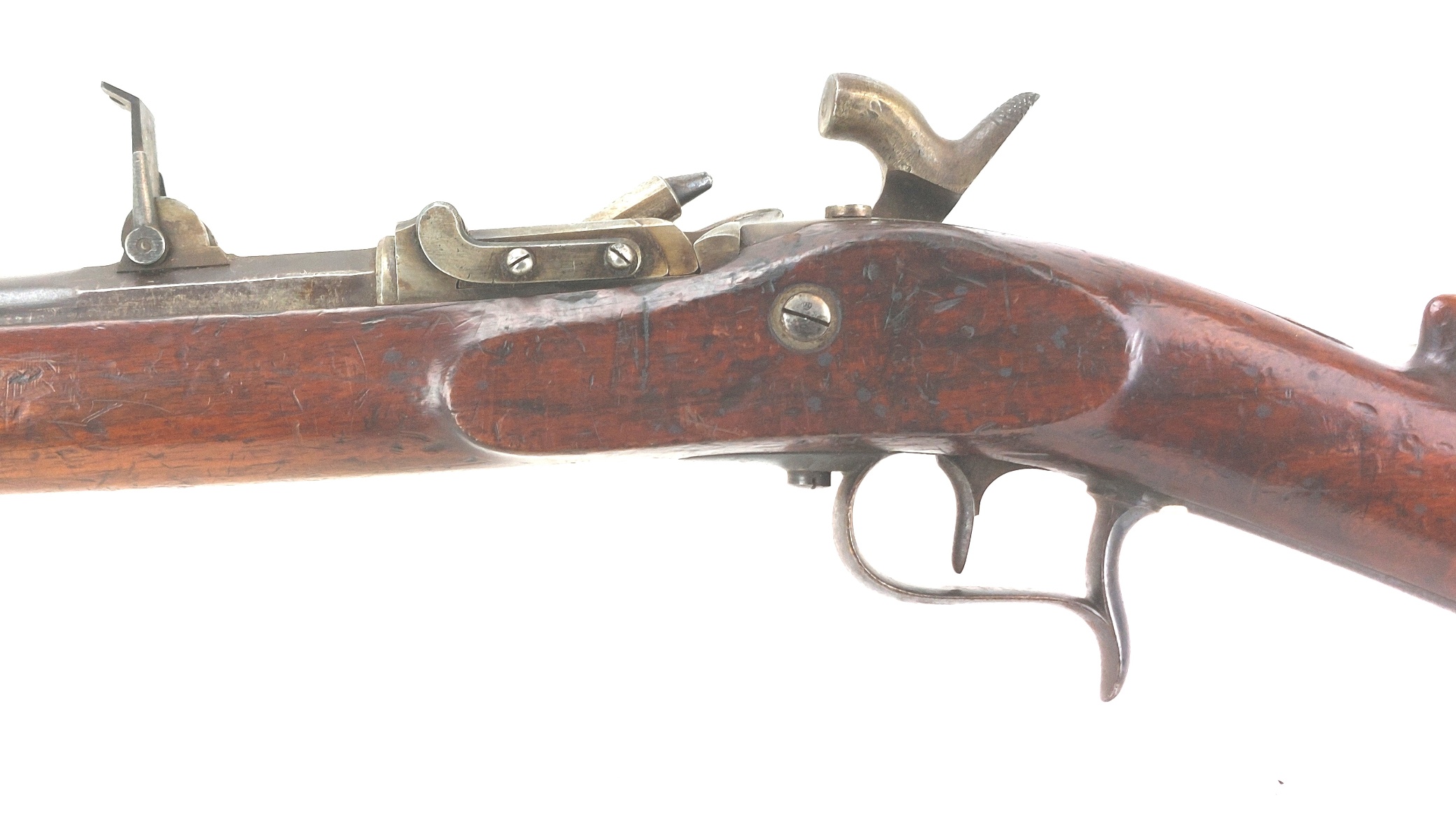
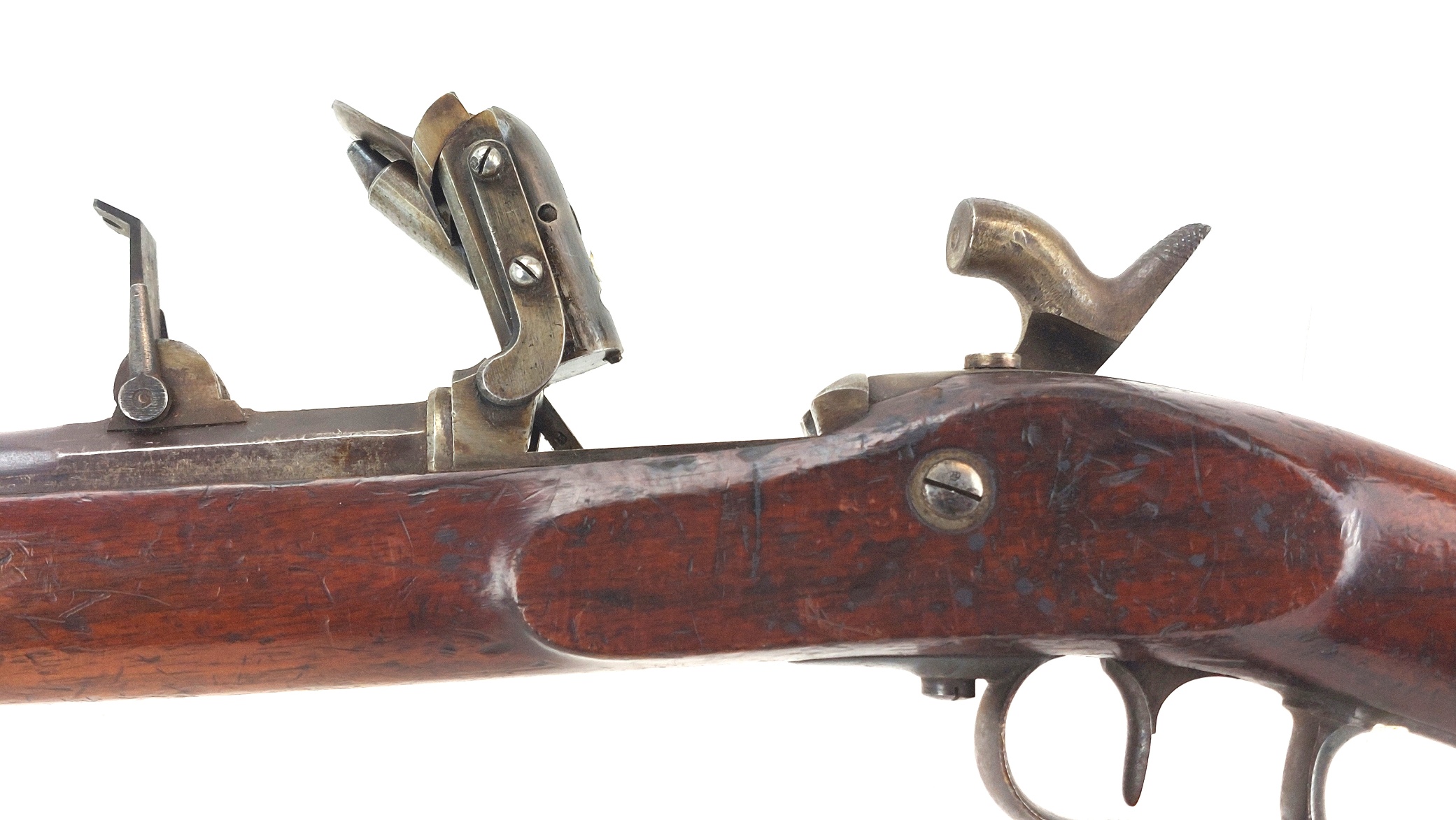
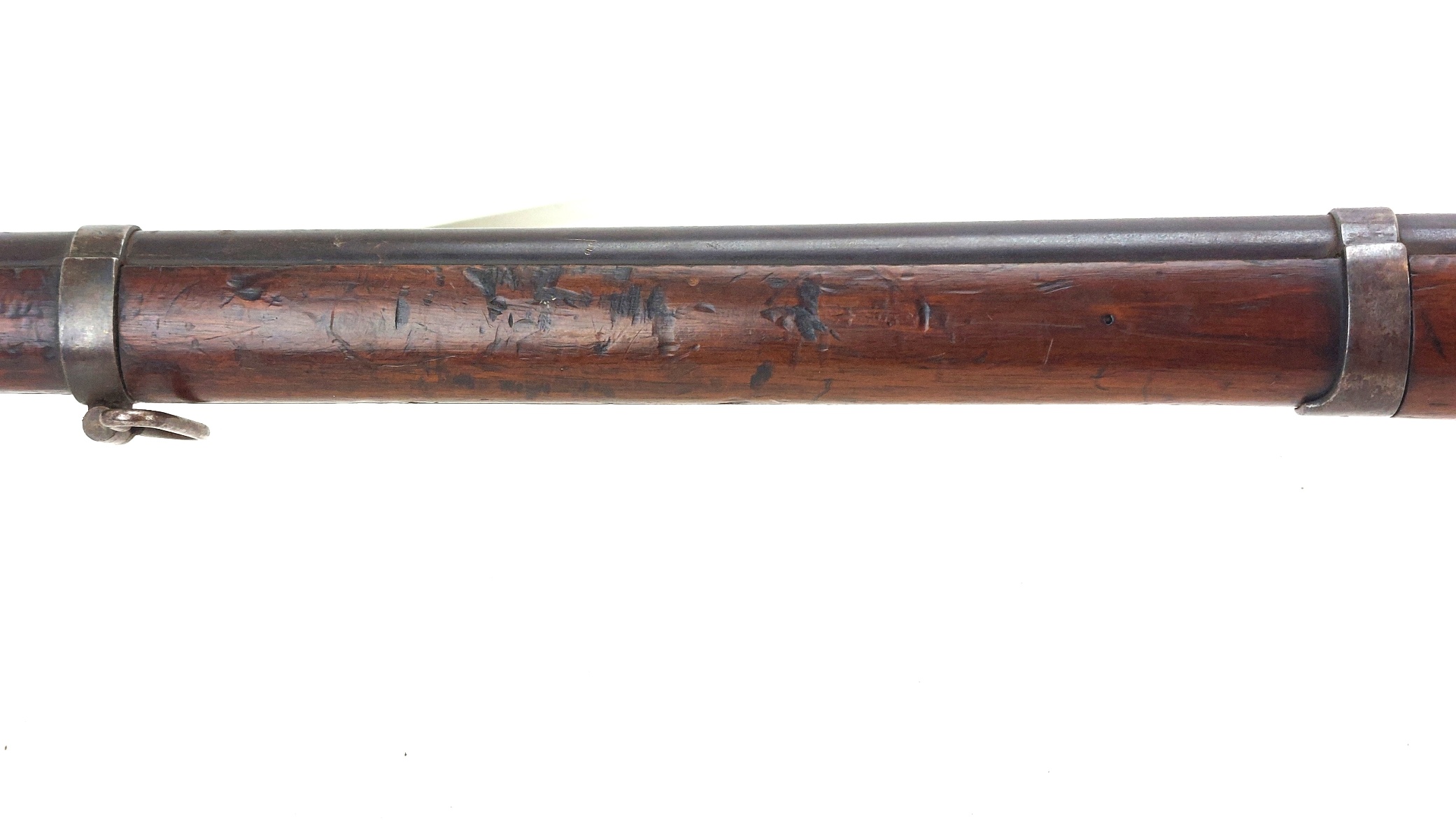
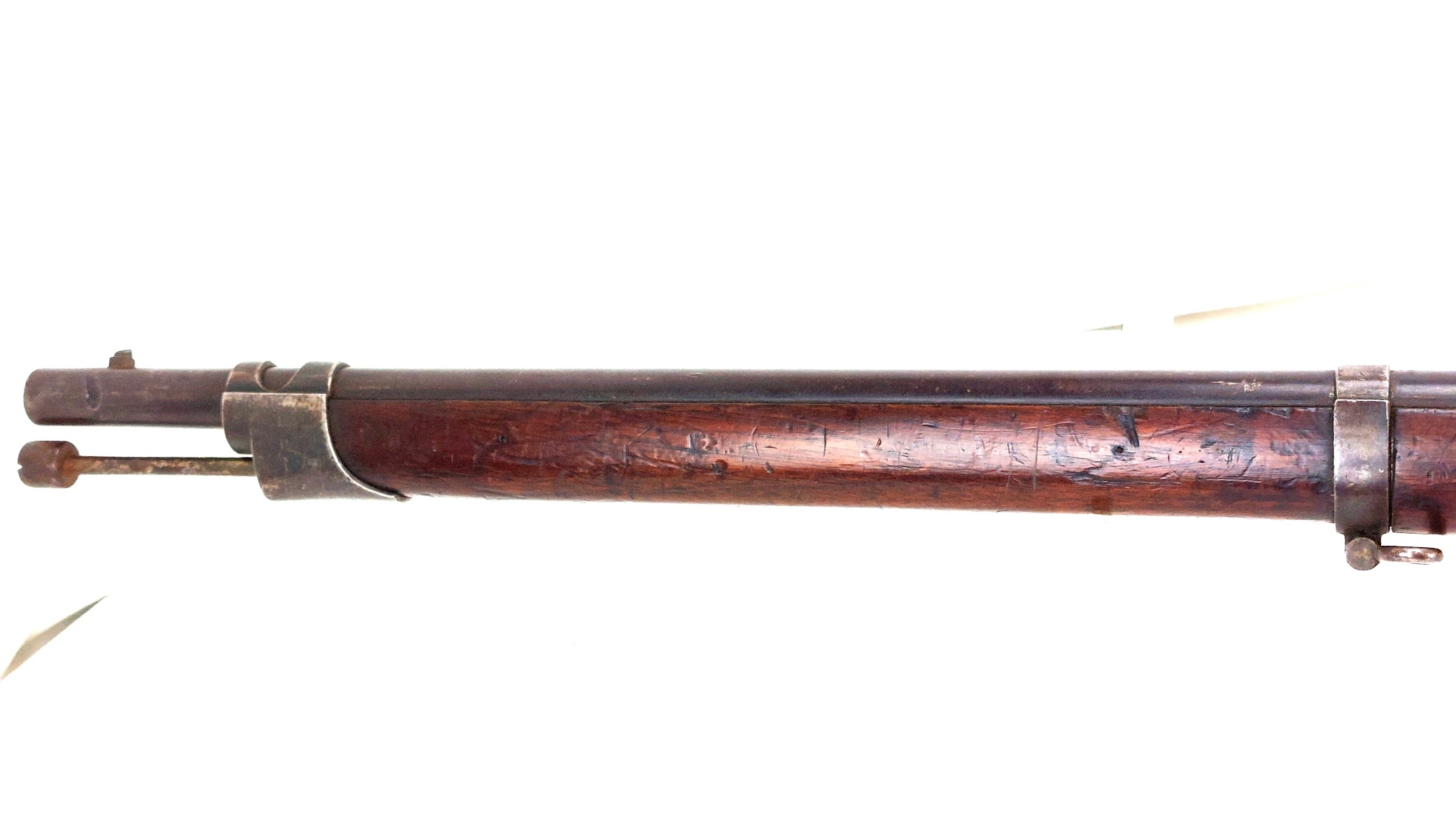
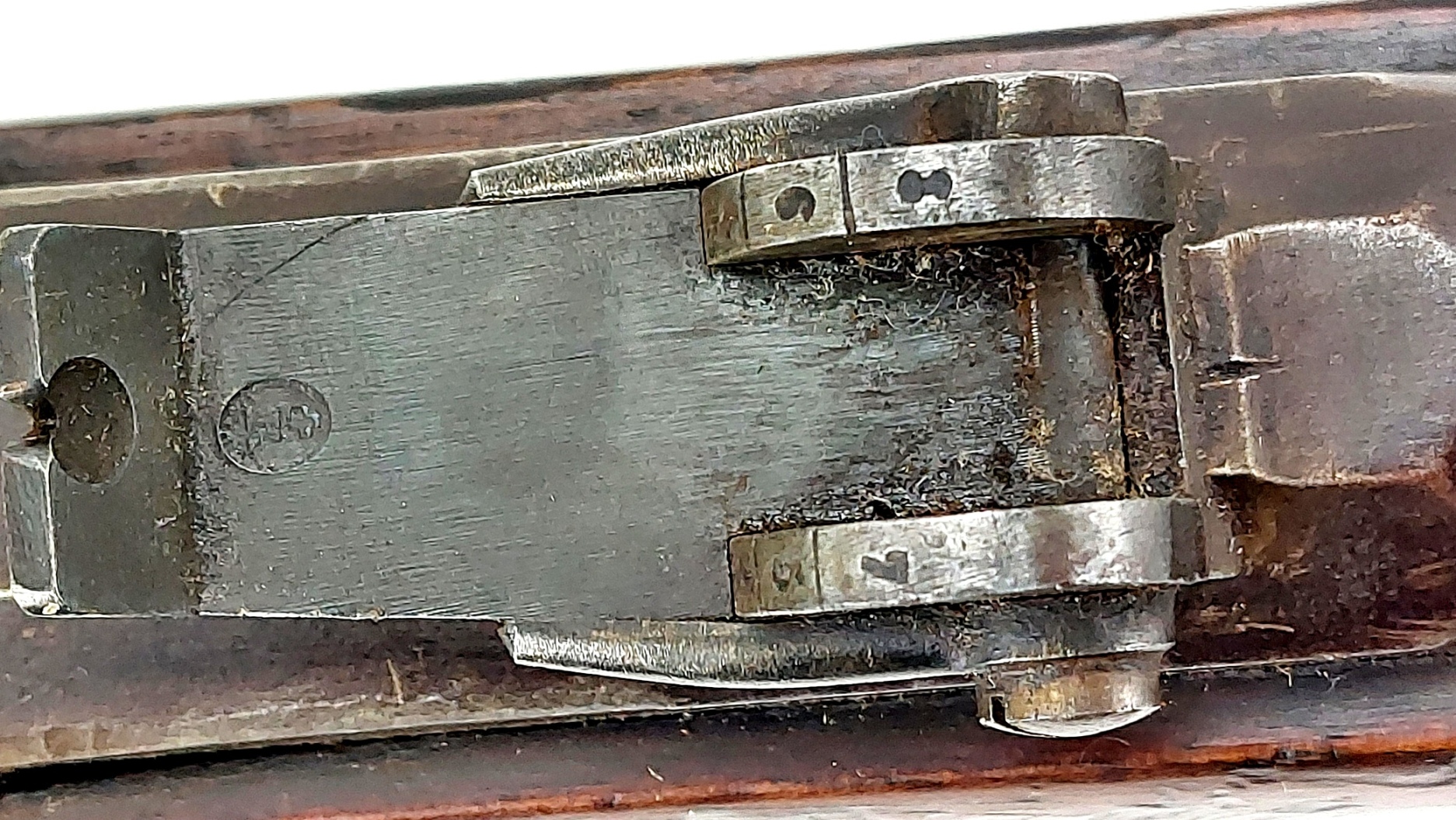
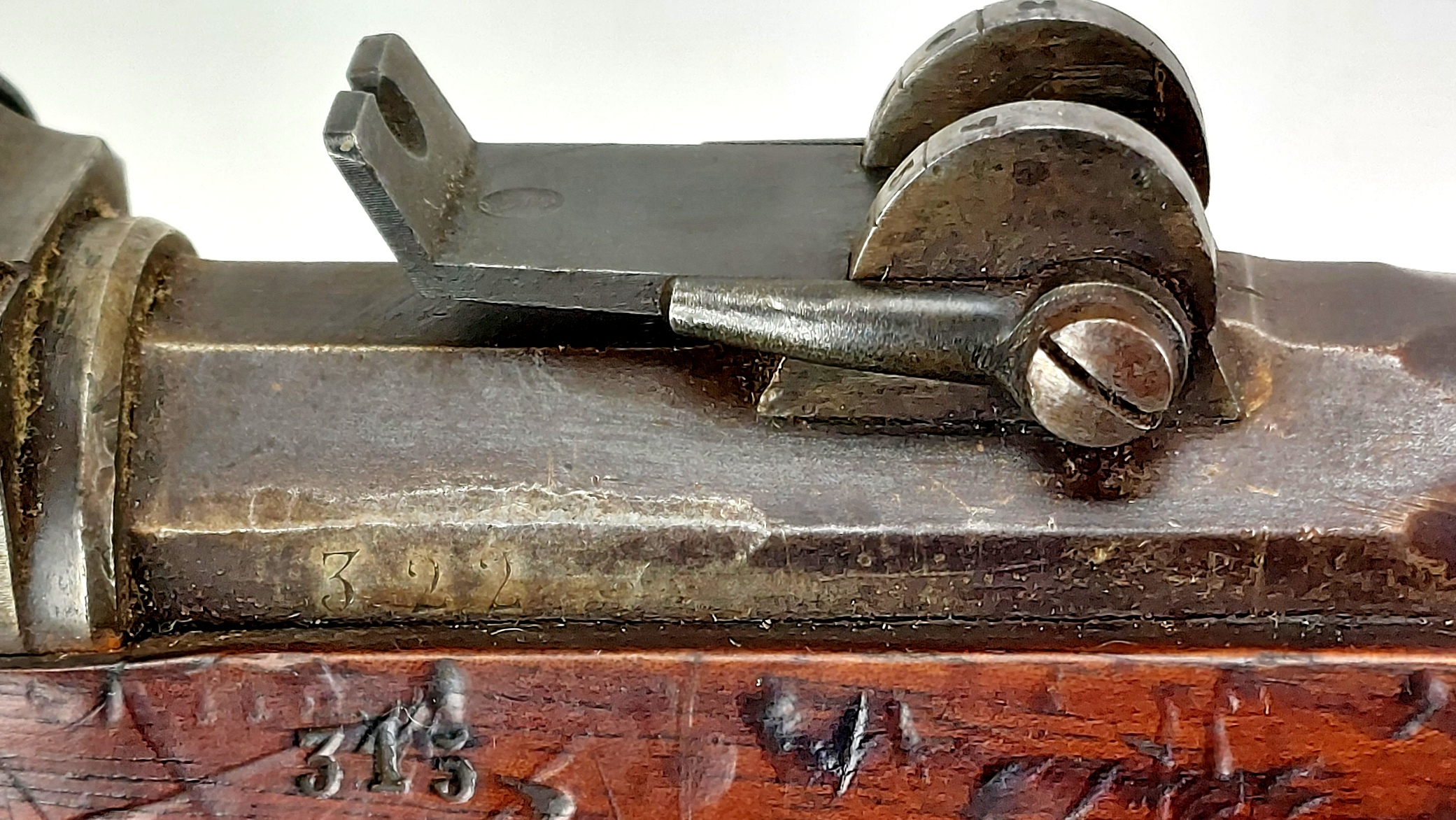
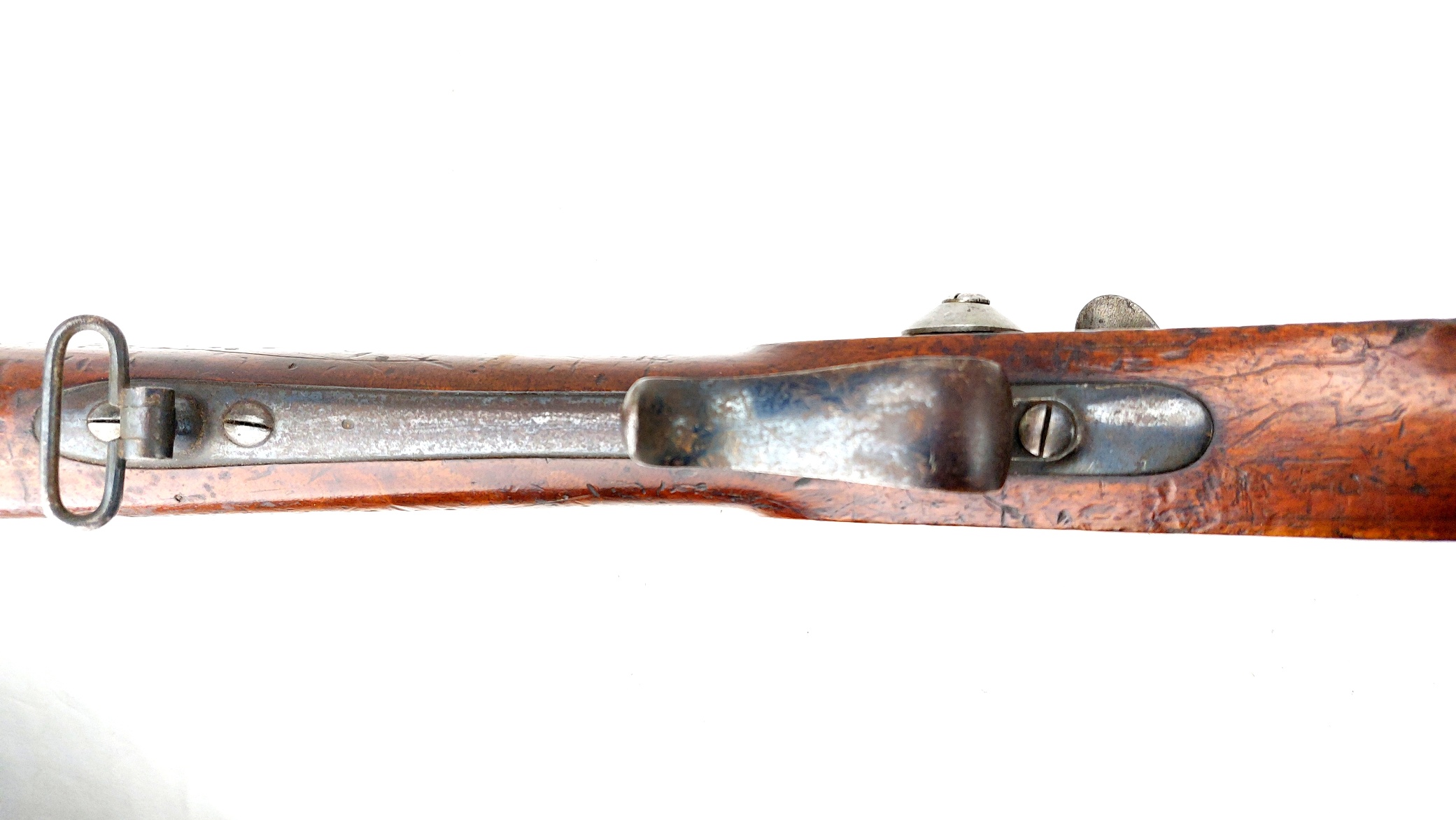
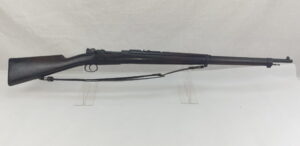
Swiss issue Amsler-Milbank Model 1856/67 Jägergewehr, a classic transitional breech-loading rifle converted from a percussion muzzle-loader for use with the .41 Swiss rimfire cartridge. The rifle retains the correct two-part hinged Milbank-Amsler breech block, actuated by the distinctive round, flat “beaver-tail” paddle, together with tangent rear sight, two barrel bands, and nose cap.
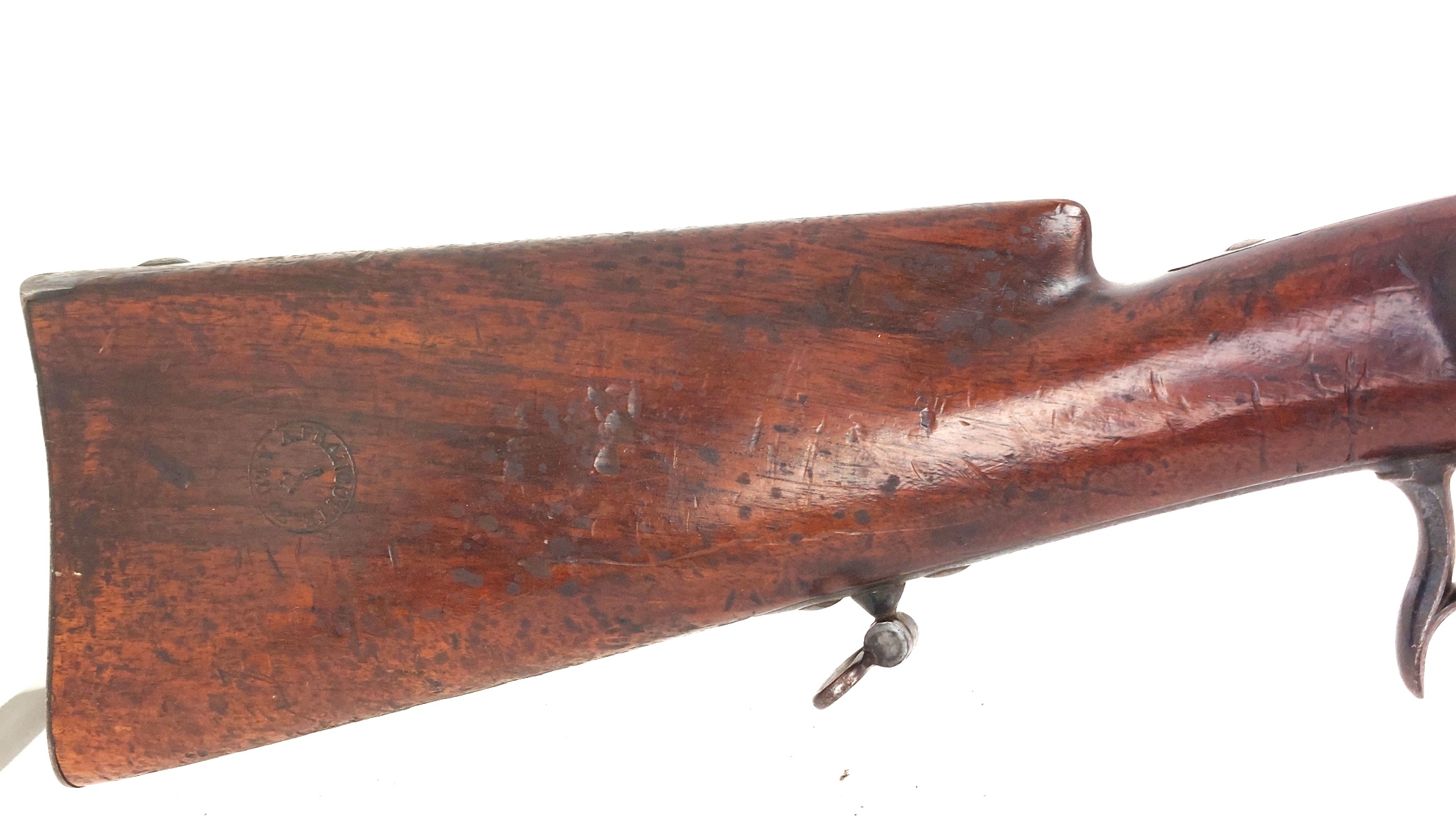
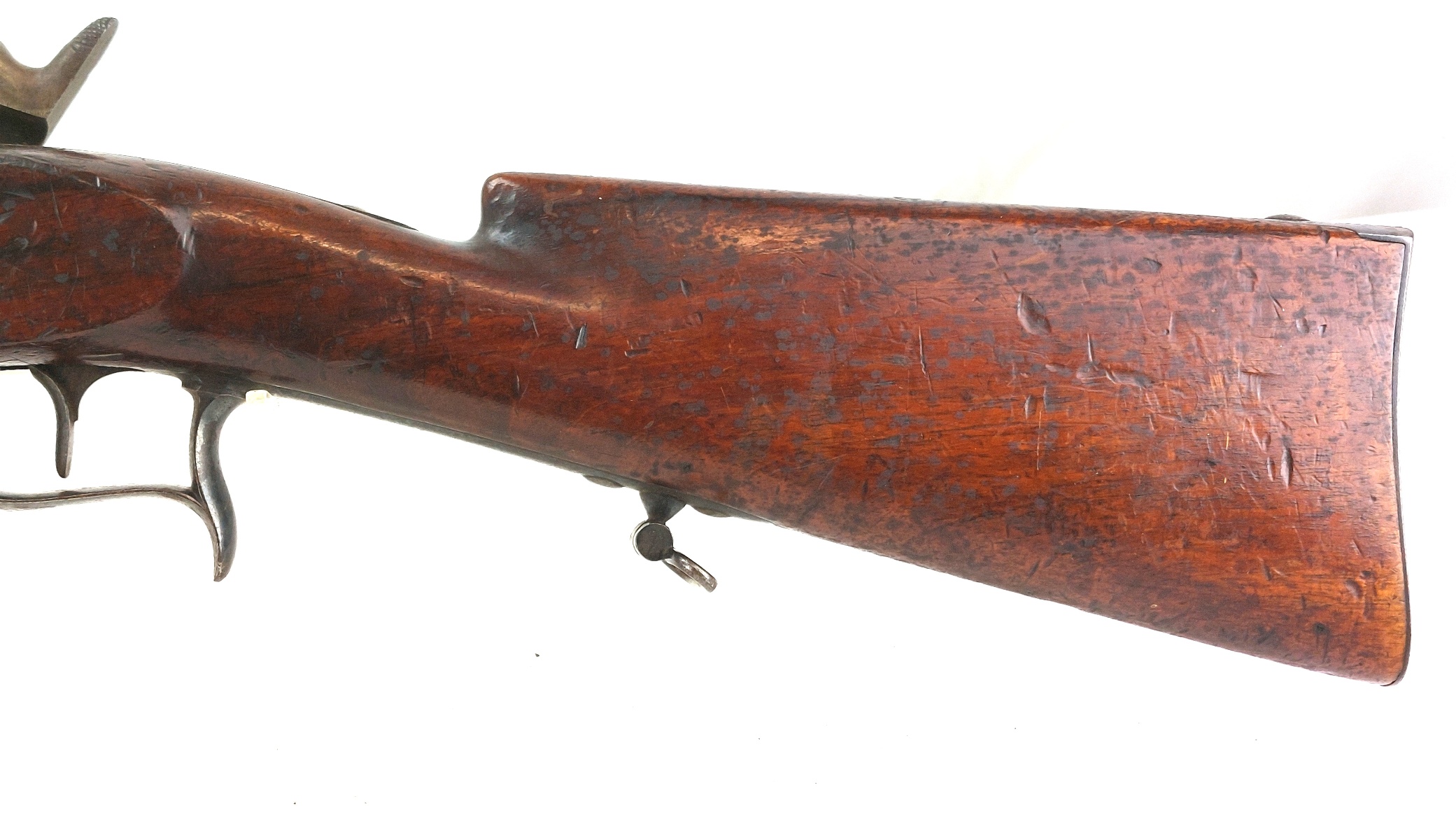
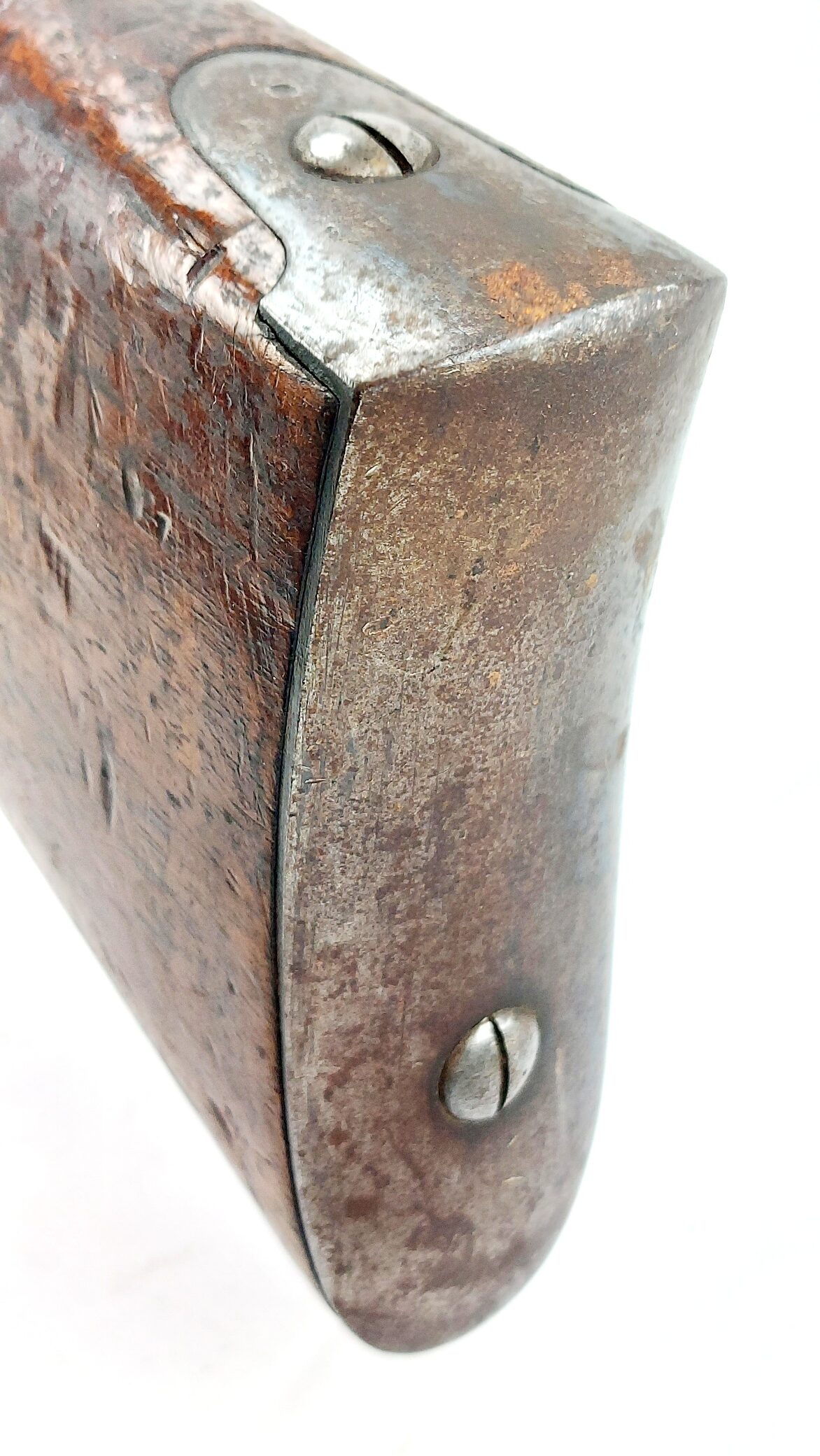
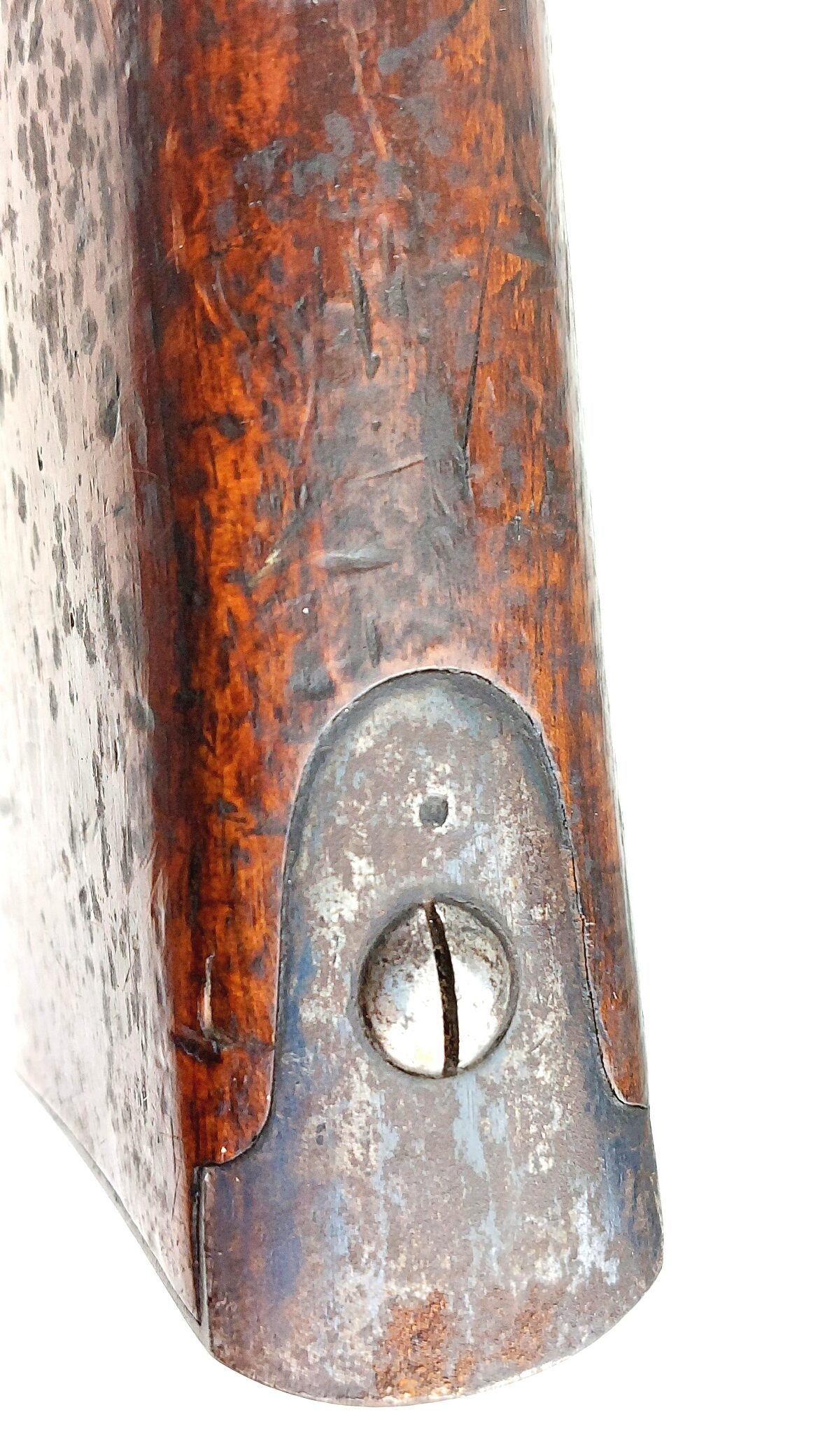
The stock architecture exhibits the pronounced downward butt drop characteristic of the Model 1856 family, a deliberate ergonomic feature intended to optimise standing and off-hand firing, reflecting mid-19th-century Swiss marksmanship doctrine. The overall form is robust and unmistakably Swiss in character, illustrating the transitional nature of this system between muzzle-loading arms and purpose-built cartridge rifles.
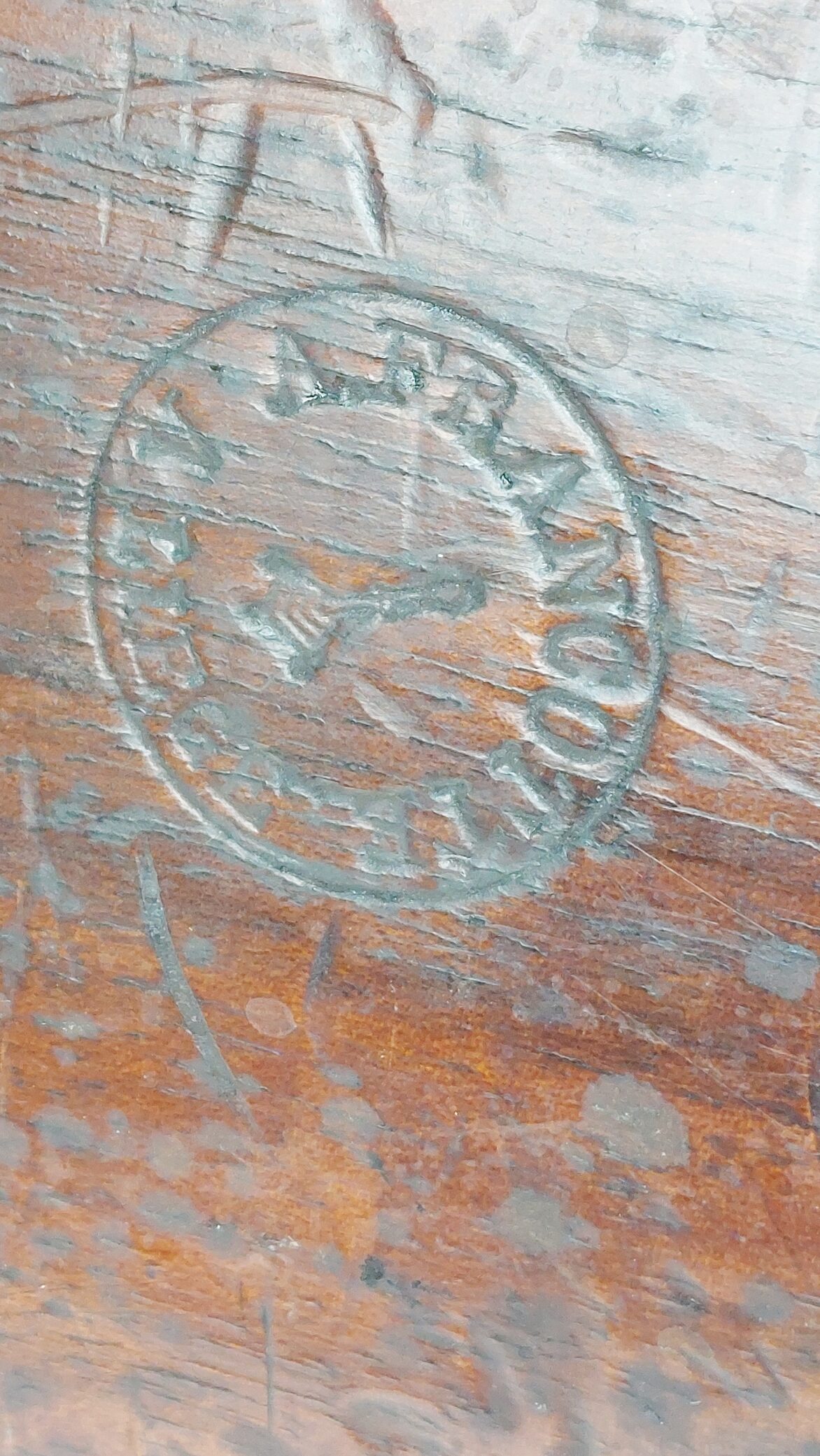
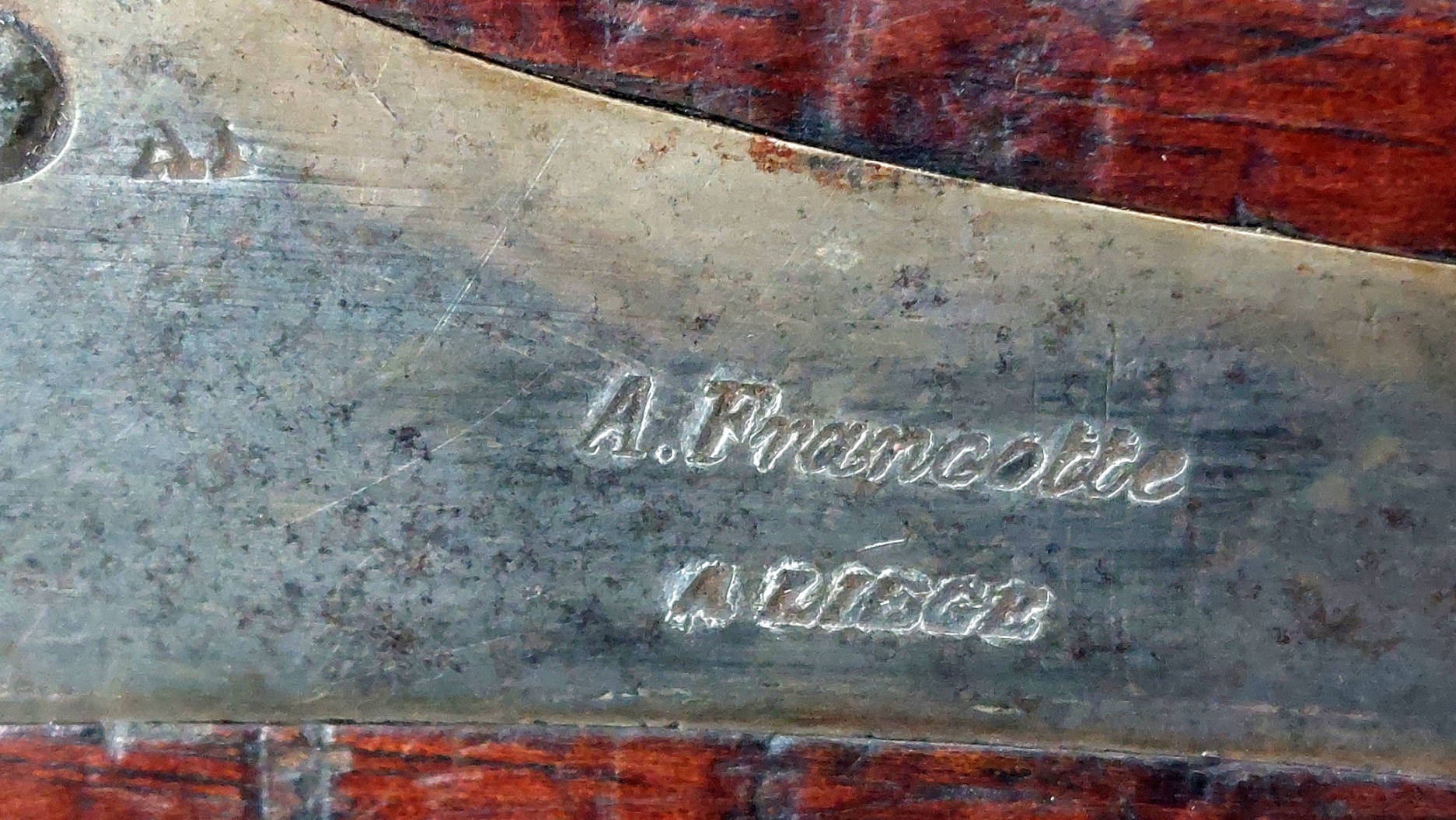
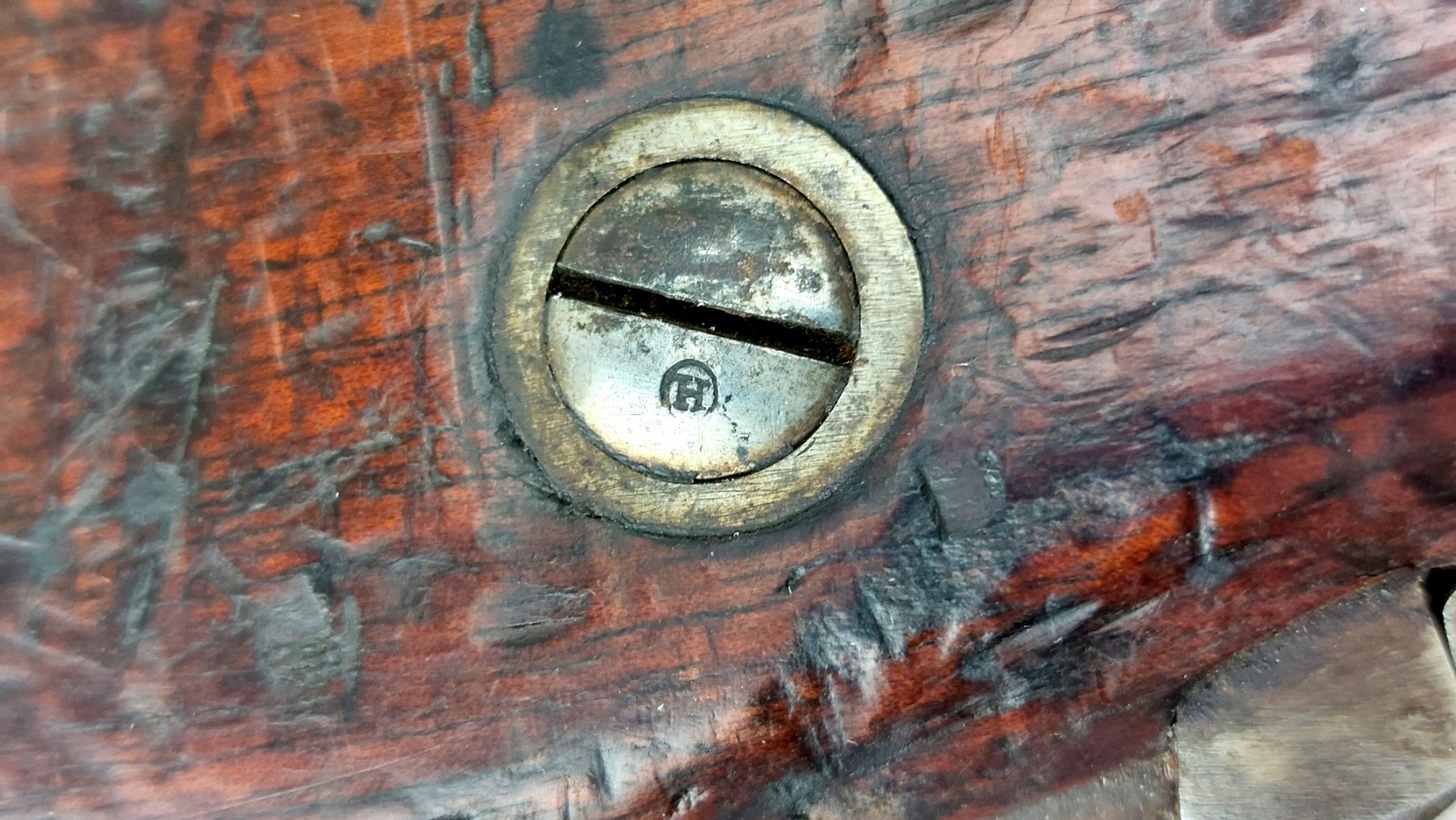
The lock plate is crisply marked “A. Francotte, A. Liège” and bears the A.F. maker’s proof, confirming manufacture by the well-regarded Belgian contractor operating under Swiss military contract. The butt is further stamped with a Francotte maker’s roundel, also marked “A. Francotte, A. Liège”, incorporating the Perron (Le Perron) device of the City of Liège at its centre.
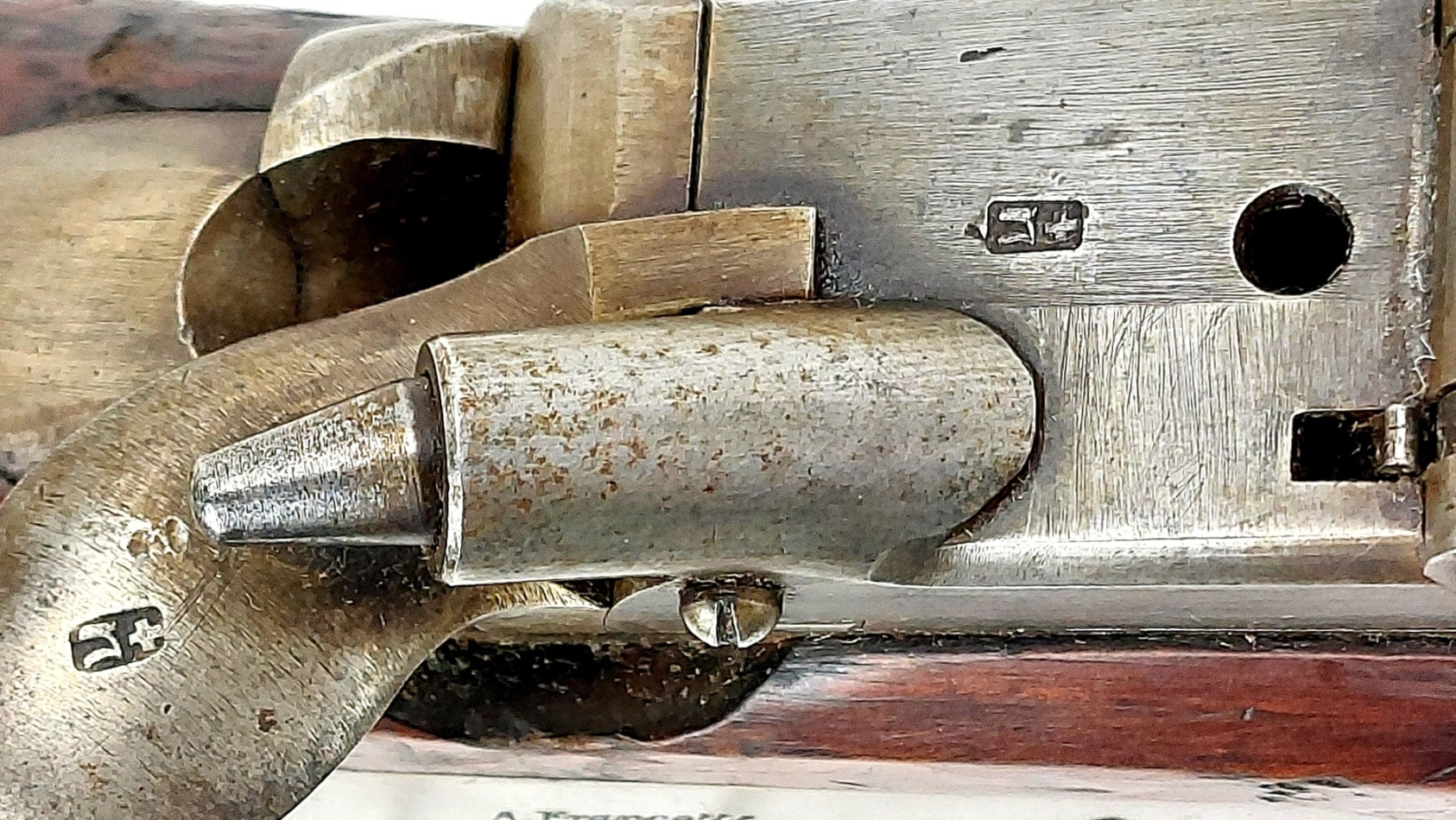
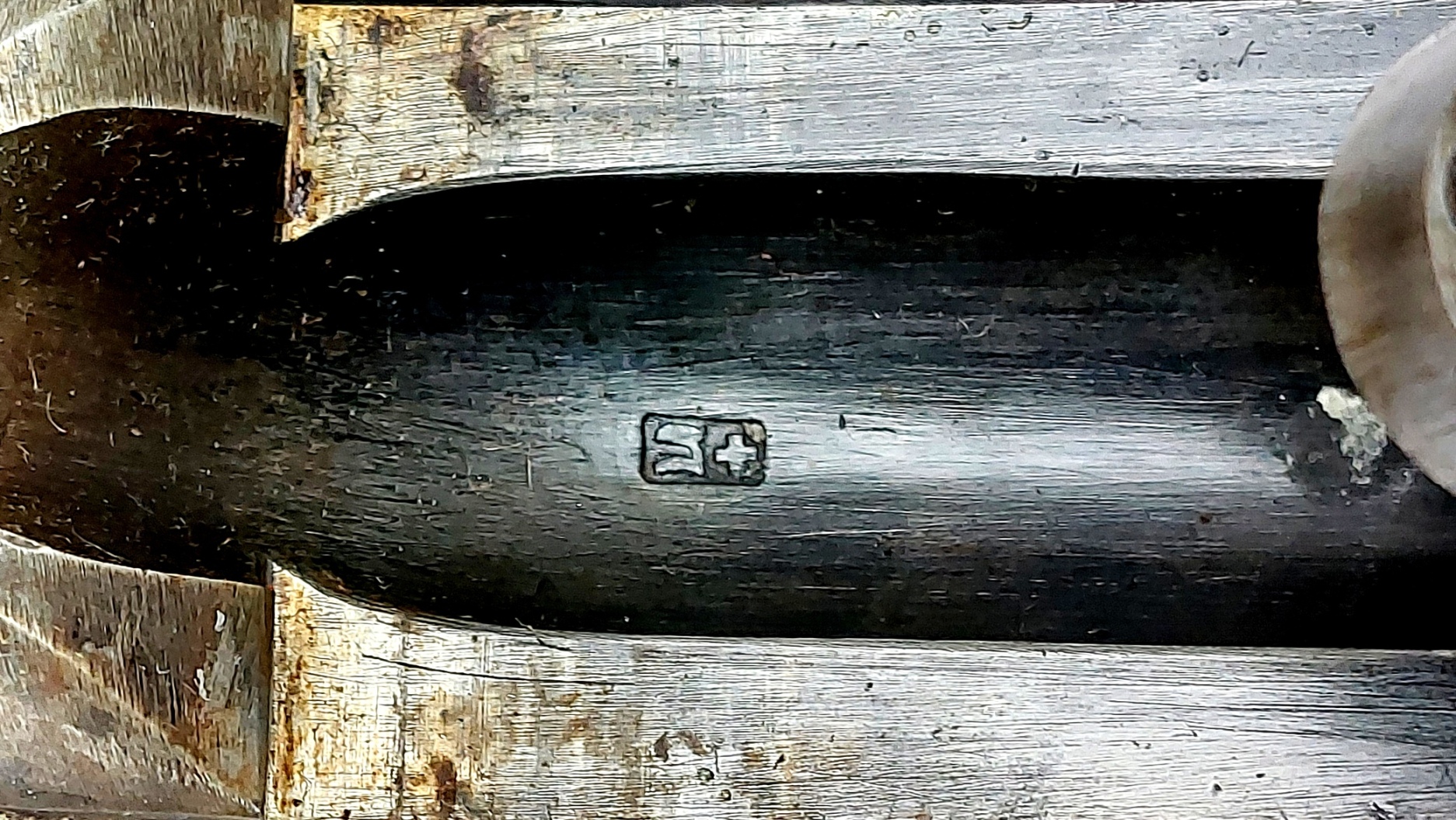
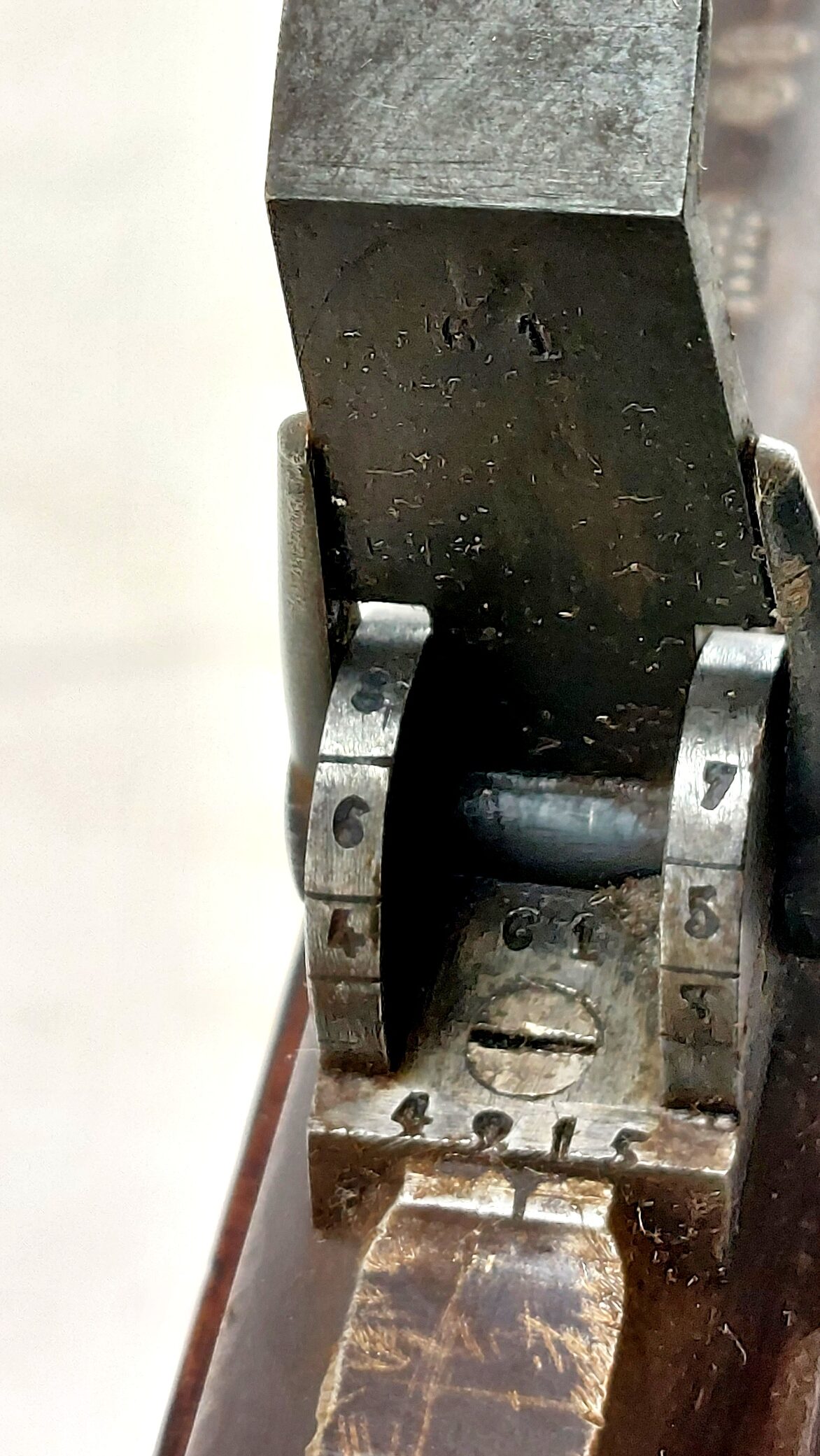
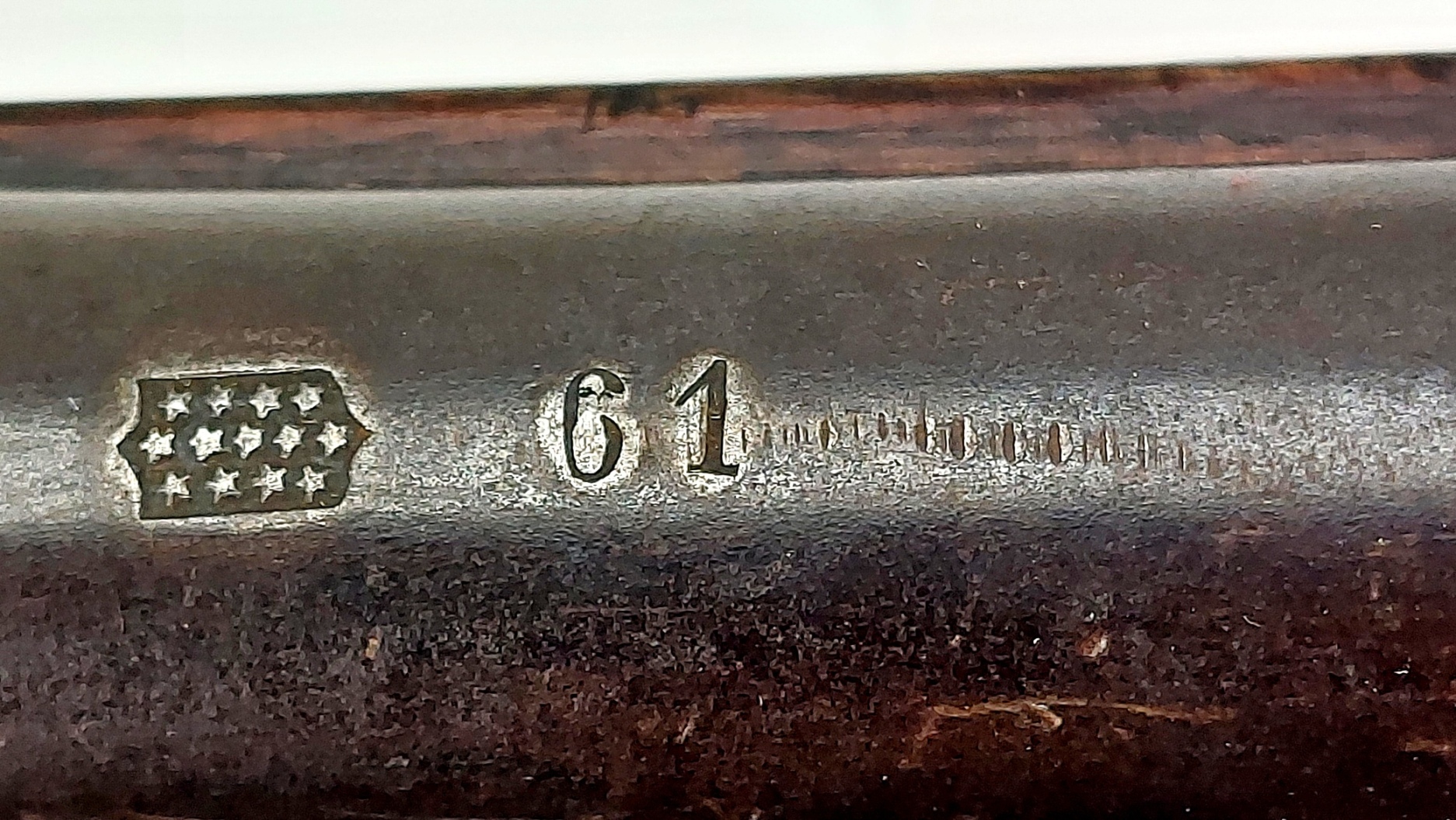
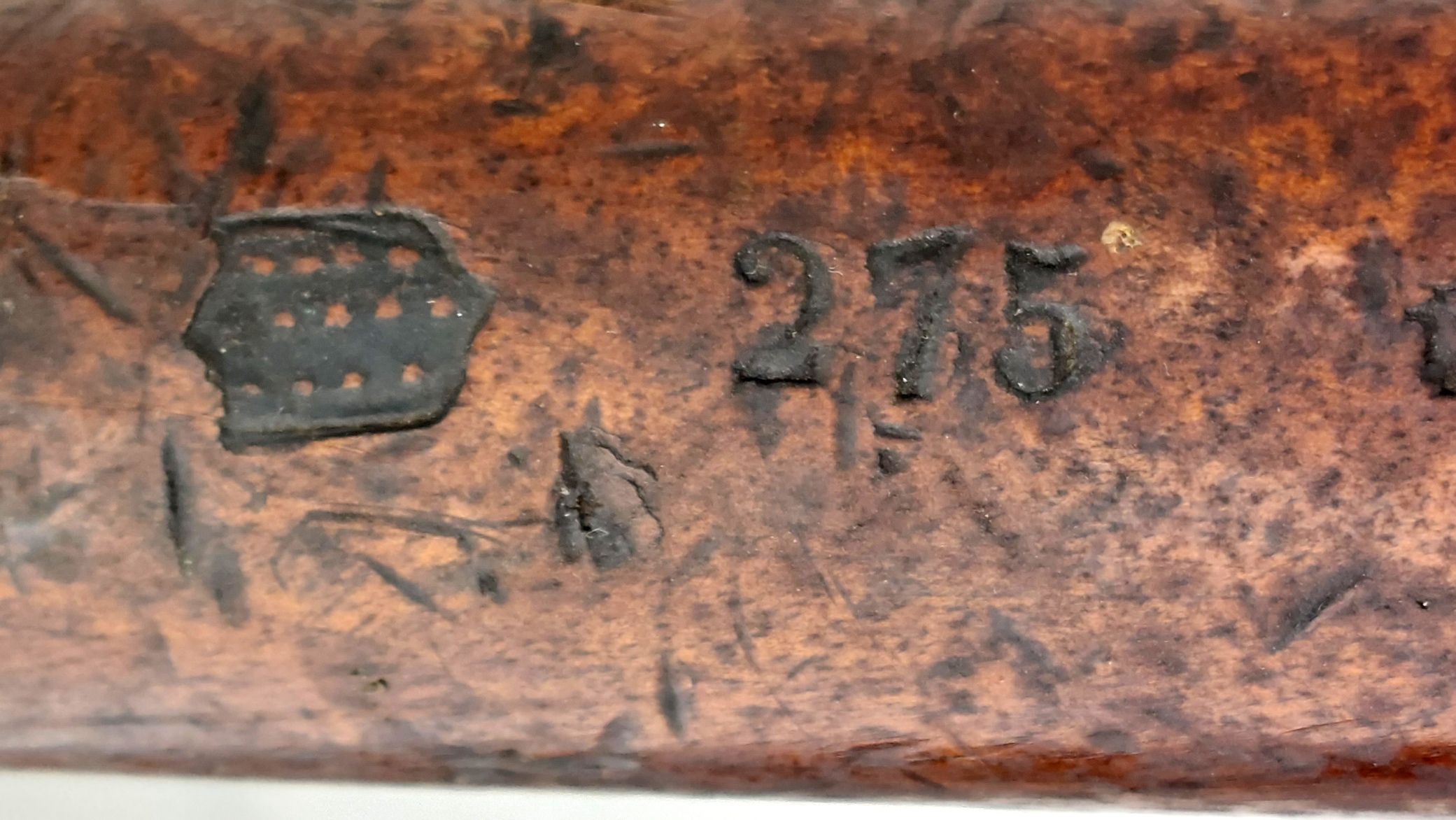
The rifle is clearly identifiable as Valais cantonal issue. The 13-starred Valais shield, the heraldic emblem of the Canton of Valais, is stamped to the top flat of the barrel and repeated to the wood beneath the barrel, indicating cantonal ownership and acceptance into Swiss service. In addition, the breech components and rear sight bear a “+ N” mark within a rectangular cartouche, generally accepted as an inspection mark. This combination of Swiss cantonal acceptance marks and workshop controls is entirely typical of Milbank-Amsler rifles converted by foreign contractors for Swiss service.
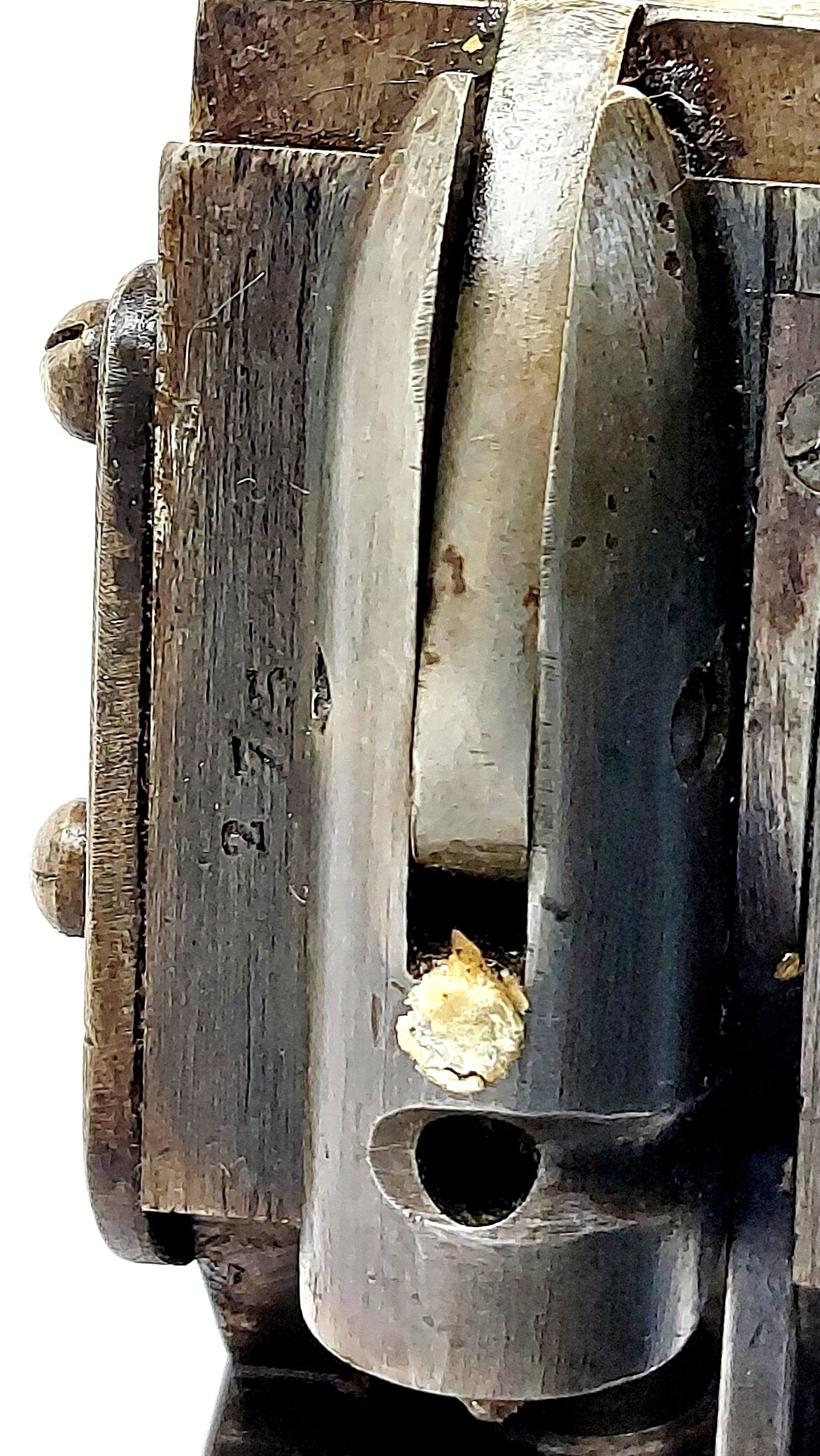
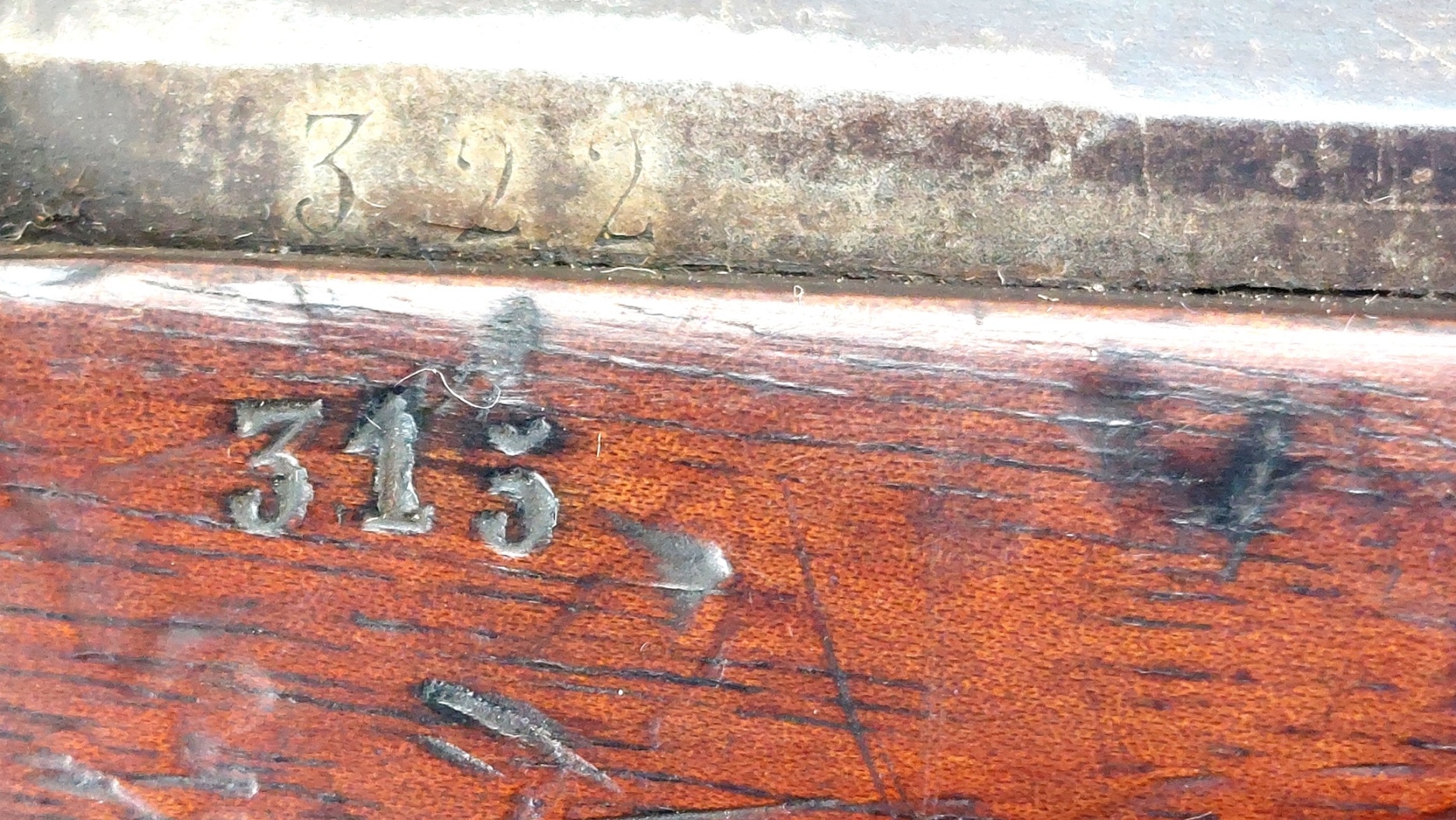
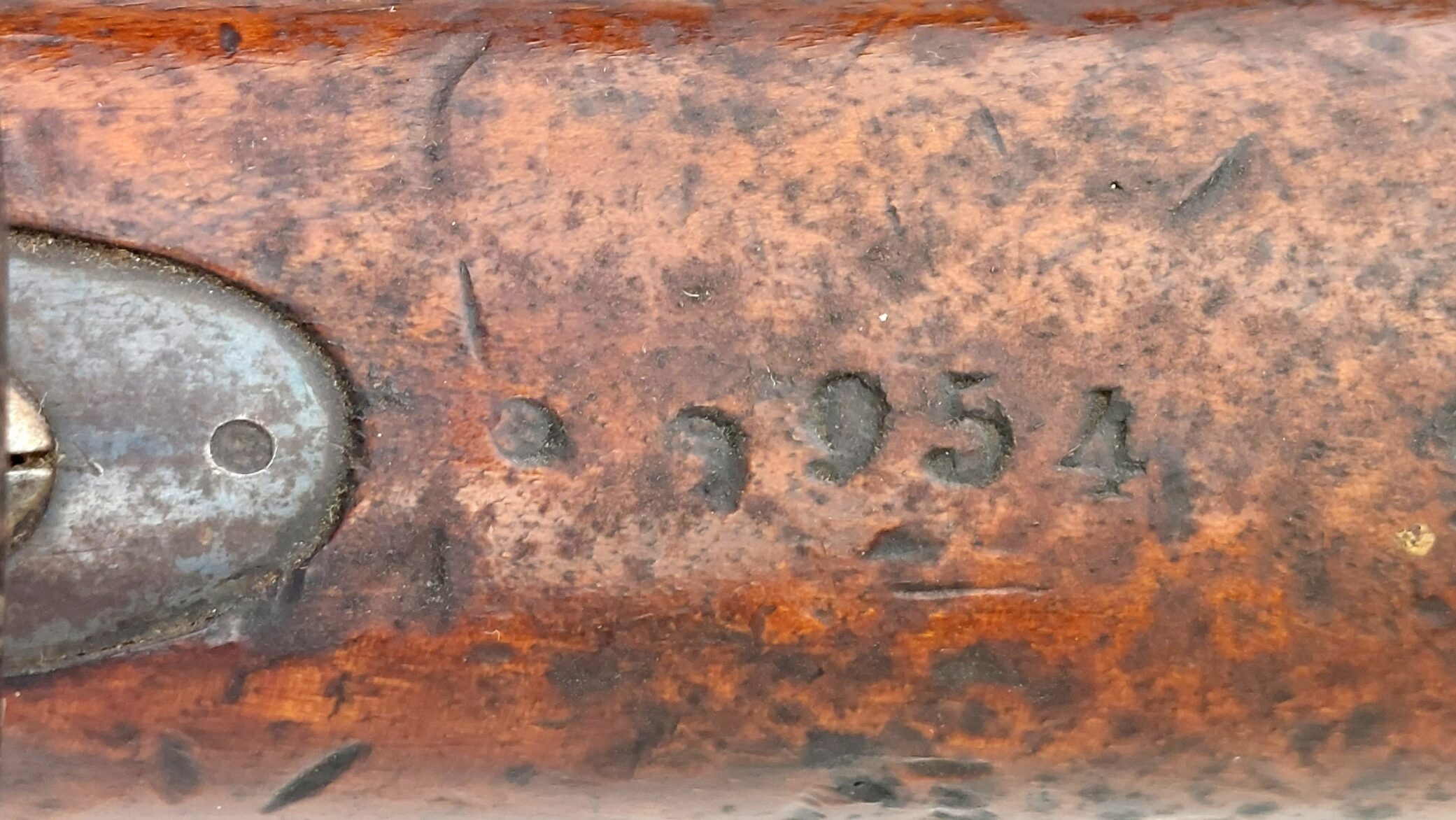
Markings: - Serial number: 315 to the wooden section beneath the barrel, with 322 stamped above the barrel - Valais cantonal shields, each bearing 13 stars, stamped to the top of the barrel (adjacent to the number 61) and beneath the stock (adjacent to the number 275) - Francotte maker’s roundel to the stock, stamped “A. Francotte, A. Liège”, incorporating the Perron (Le Perron) device of Liège at the centre
- Lock plate stamped “A. Francotte, A. Liège” together with the A.F. (Auguste Francotte) maker’s mark - “+N” within a rectangular cartouche applied to the breech components and sight - inspection mark
- Inside rear sight marked 61 / 4215
Historical Note:
The Milbank-Amsler rifles represent Switzerland’s first systematic conversion of percussion muzzle-loading arms to metallic-cartridge breech-loaders. The system employed a swinging, hinged lift-block based on a design developed by the American inventor Isaac Milbank, subsequently refined and perfected by the Swiss engineer Rudolf Amsler of Schaffhausen. The conversion system was formally approved for Swiss Army service in May 1867.
All rifles converted under this programme were designated “abgeändert 1867” (“modified 1867”). Accordingly, the adaptation of the Model 1856 Jägergewehr became the Model 1856/67, while the Model 1863 Infanteriegewehr was redesignated Model 1863/67. Earlier specialist rifles were likewise converted, including the Model 1851/67 and Model 1864/67 Stutzer rifles. In total, no fewer than twenty separate gunmakers participated in the Swiss Army conversion programme, reflecting Switzerland’s decentralised but highly organised approach to arms procurement.
These Milbank-Amsler conversions were the first Swiss military rifles chambered for the .41 (10.4 mm) Swiss rimfire cartridge, which became the Swiss standard service calibre until around 1890. The cartridge was retained for the Model 1867 Peabody rifle and subsequently adopted for the entire Vetterli series, marking the Milbank-Amsler system as a critical transitional step in the evolution of Swiss military small arms.
Identification of the Milbank-Amsler system is straightforward, as the flat, square, blocky two-part breech block is highly distinctive and seldom mistaken for any other contemporary mechanism.
*Condition*
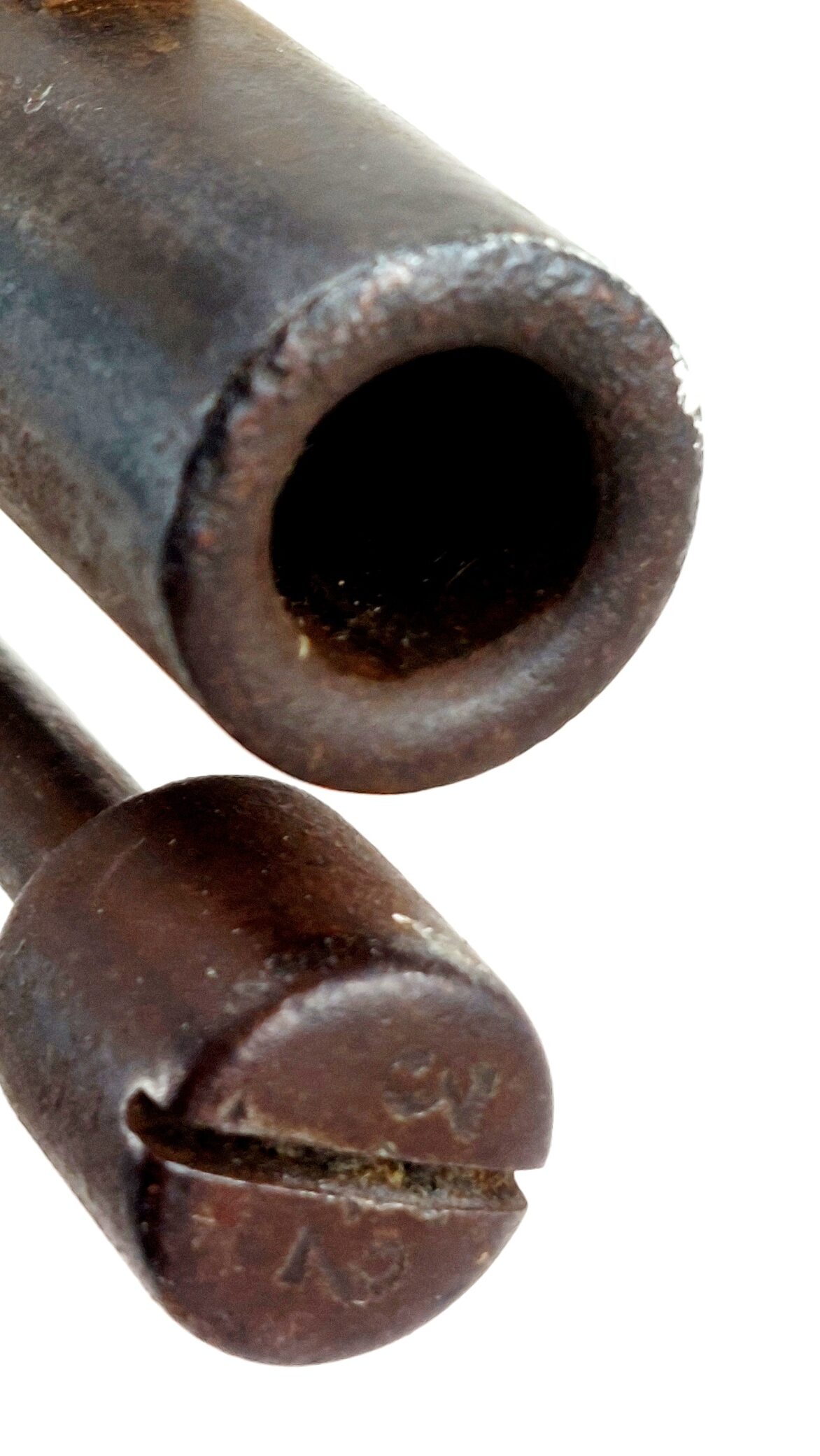
Cocks and dry-fires. Metal surfaces display age-appropriate patina with areas of oxidation; markings remain clear and legible throughout. The bore appears dark with visible corrosion toward the muzzle. The breech components are complete and original, showing no evidence of modern interference. The stock exhibits service wear, dents, and handling marks consistent with military use. Please see photographs as part of the condition report.
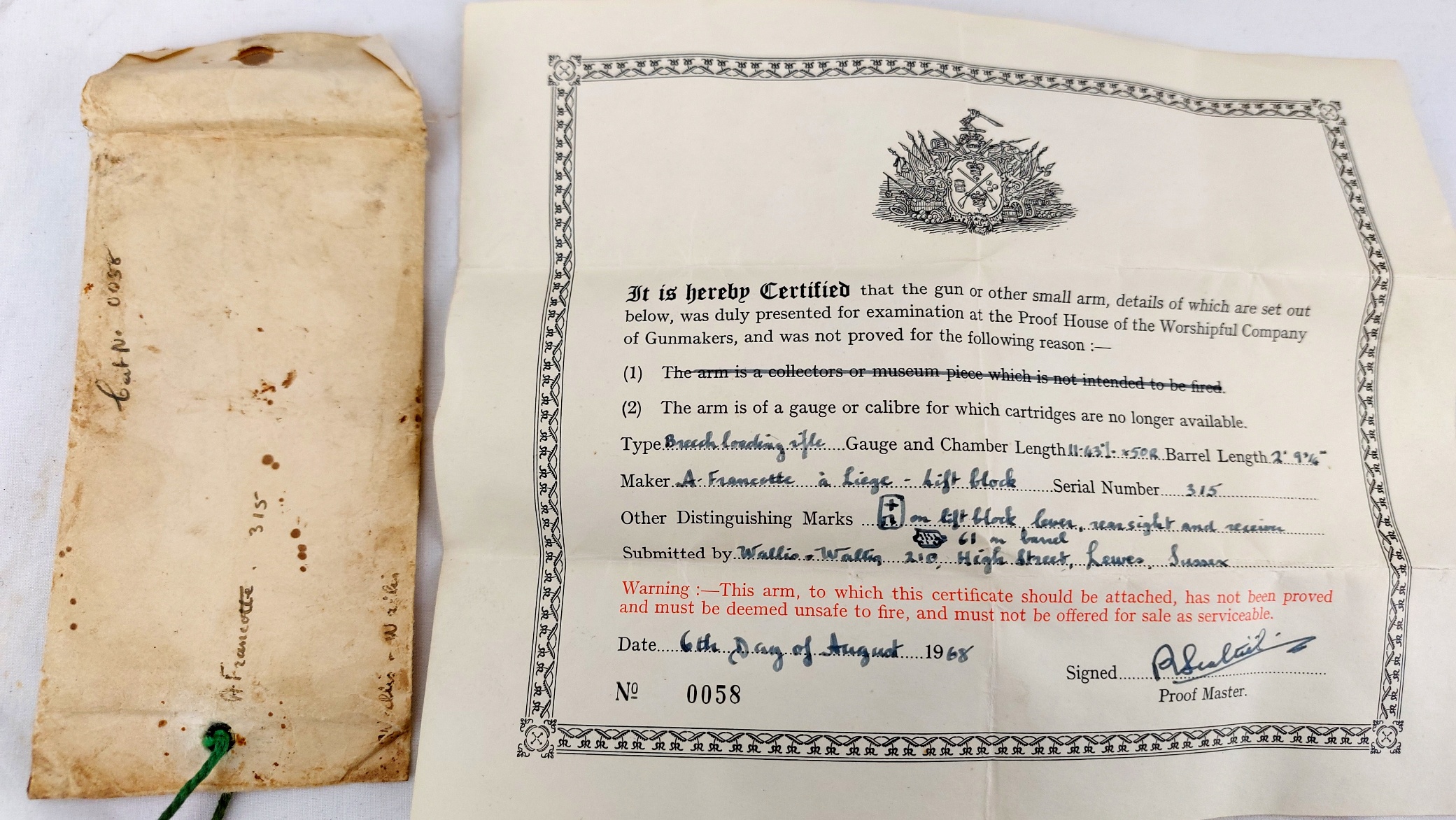
Accompanied by an original Birmingham Proof House / Worshipful Company of Gunmakers certificate, dated 6 August 1968, confirming the arm was not proved due to obsolete calibre and collector status. UK Section 58(2) antique firearm; obsolete calibre. May be owned without a licence by persons aged 18 or over.
*In order to complete the online purchase we will require a picture/scan of a photo ID (Driving Licence, Passport or an official document with a recent picture). If you don't posses any such document please call to buy. If we consider that the proof of ID is incorect or insuficient, we reserve the right to cancel the transaction.
*We also reserve the right to cancel the transaction with a full refund if there is any suspicion that the provided item will be used in any way contrary to the laws and legislation of UK.