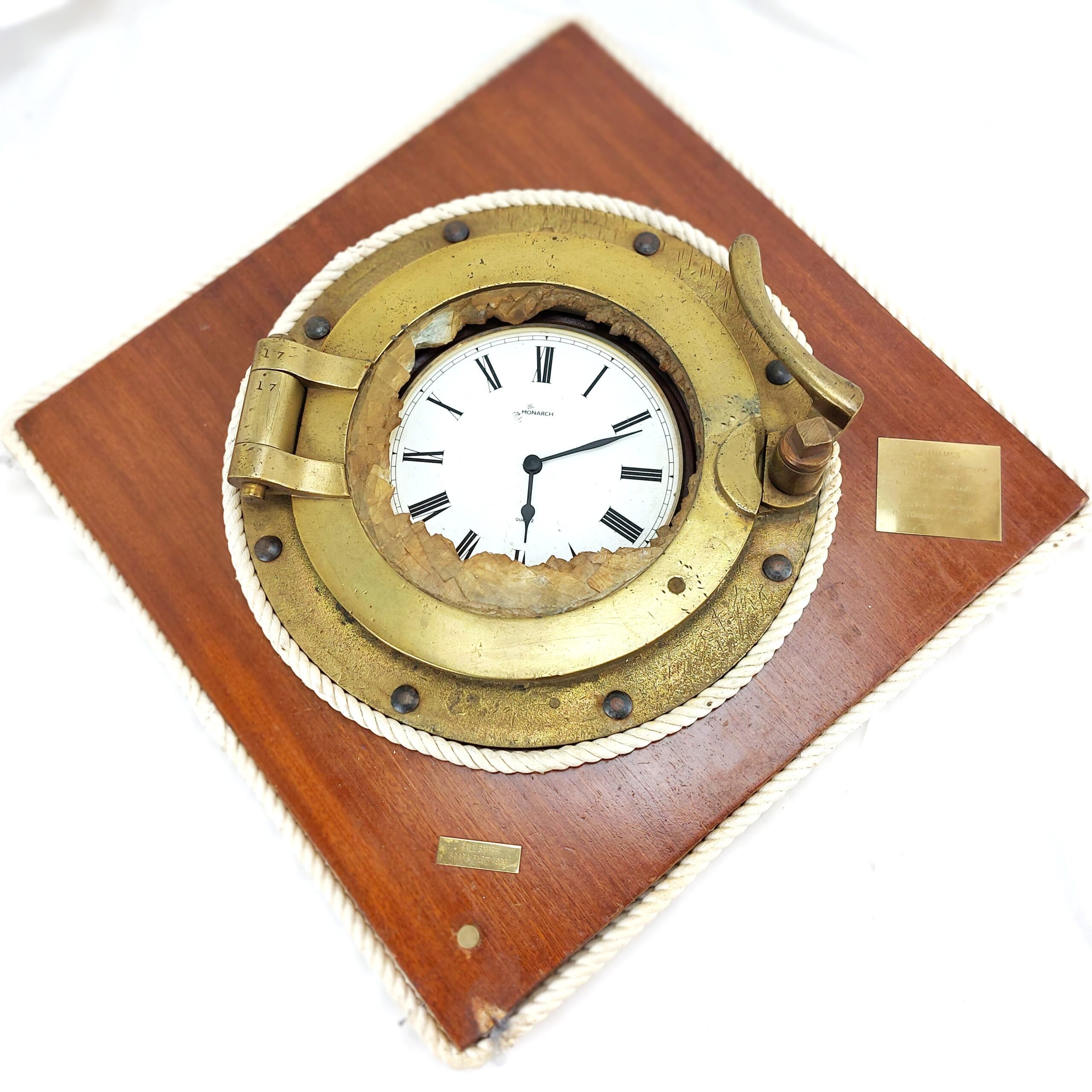
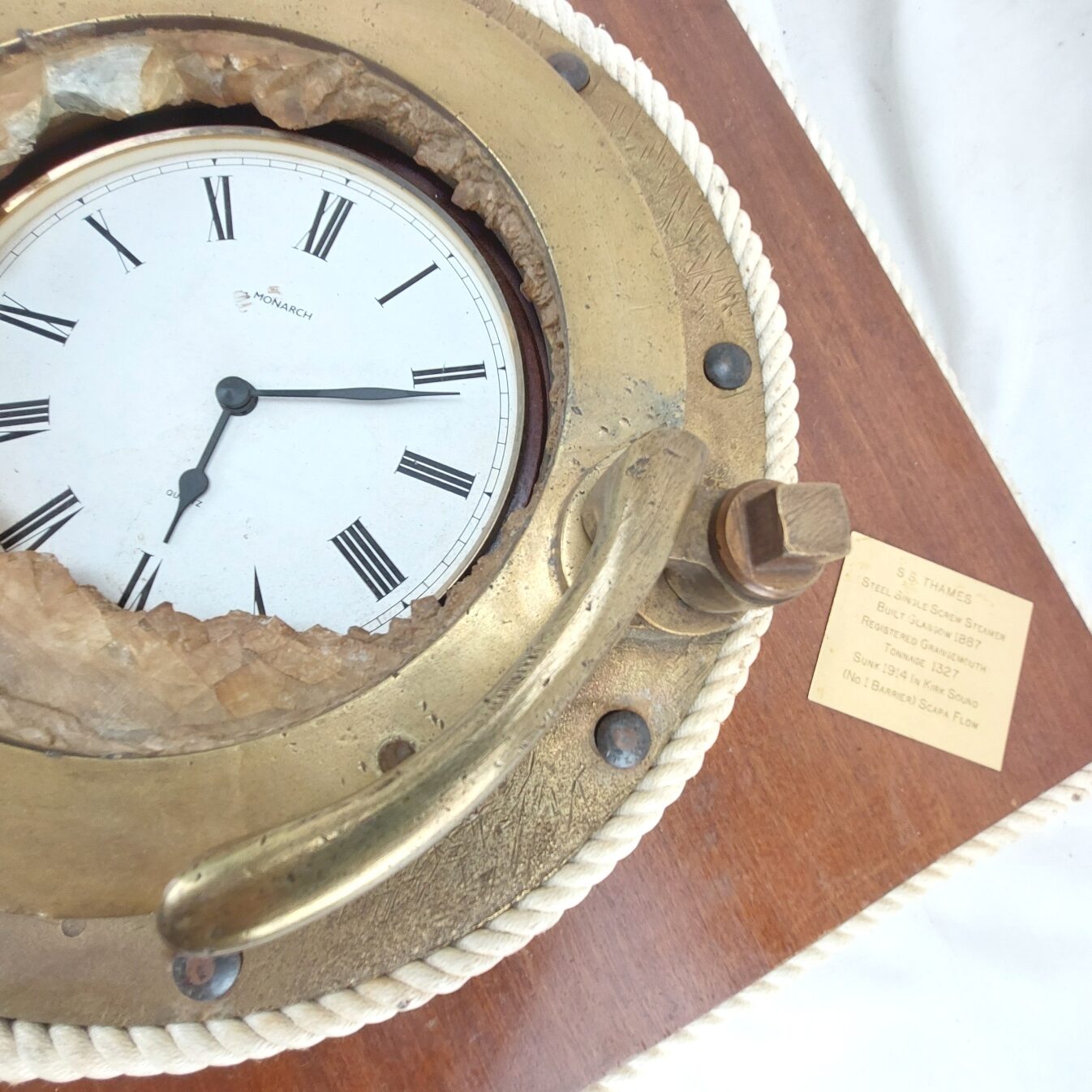
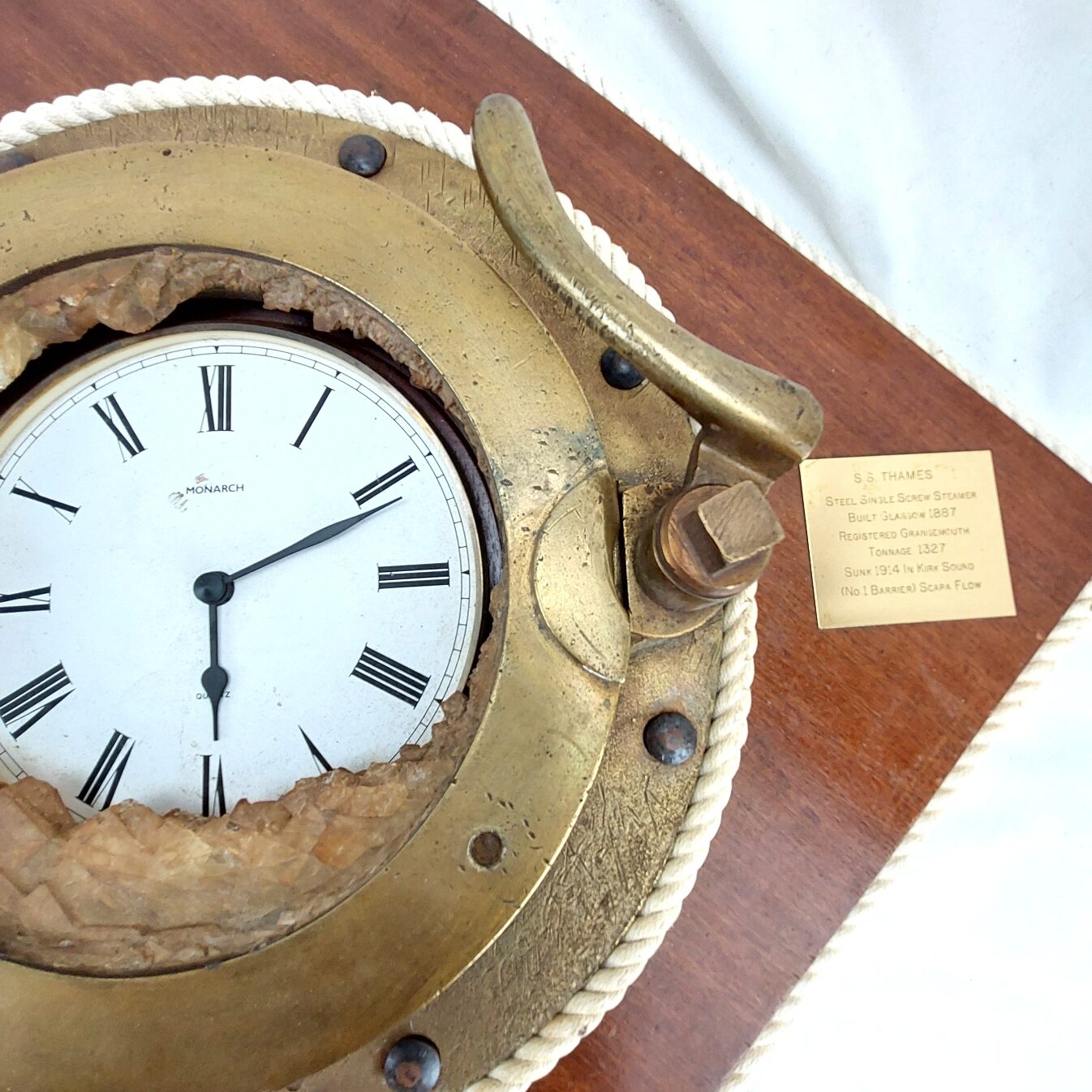
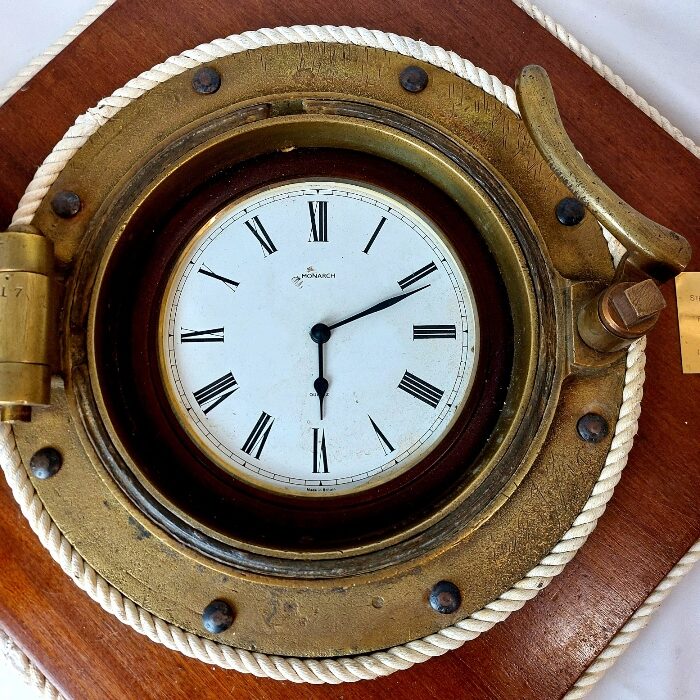
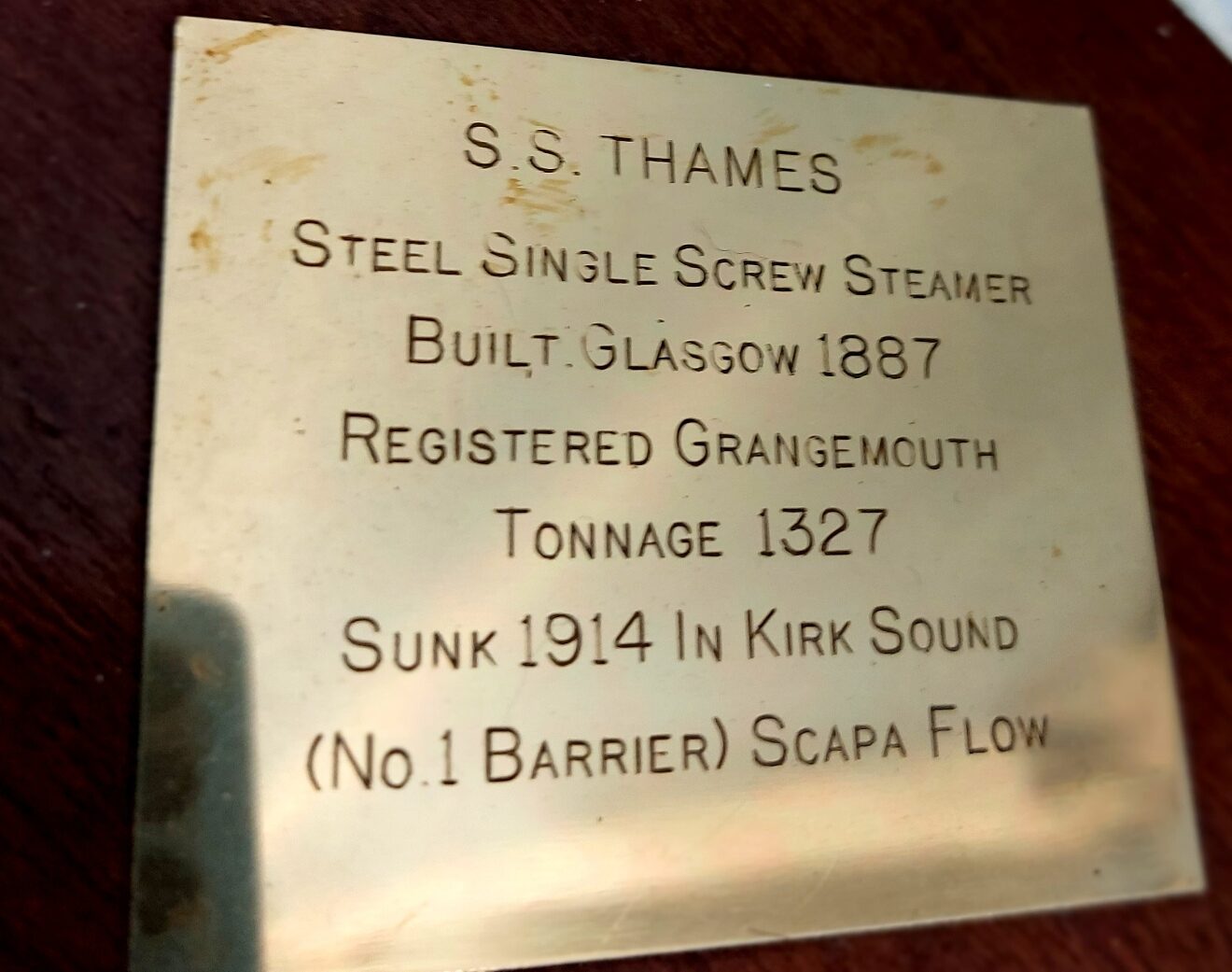
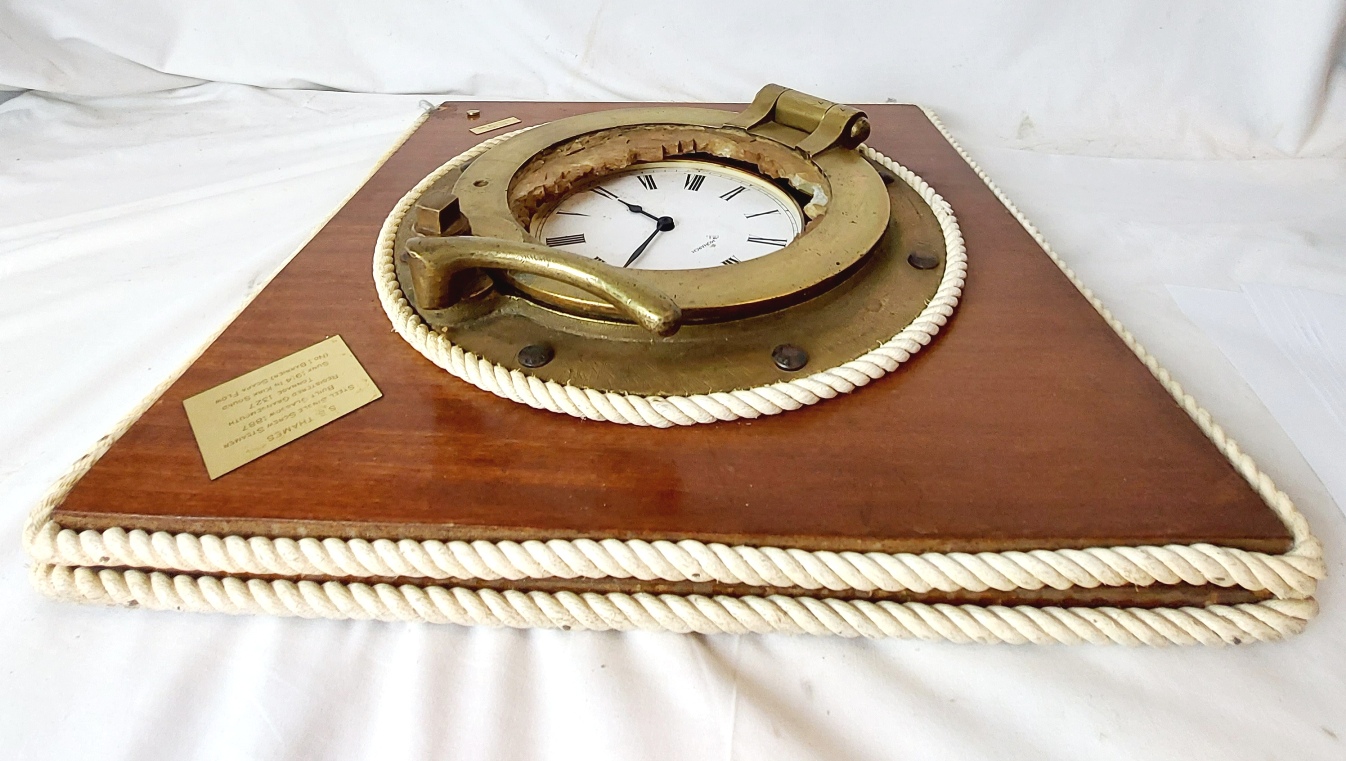
An important and evocative piece of British maritime history, this substantial brass ship’s porthole originates from the SS Thames, a steel single-screw steamer built in Glasgow in the mid-1880s and sunk in 1914 as part of the No. 1 Blockship Barrier at Kirk Sound, Scapa Flow. The deliberate sinking of Thames formed part of the Royal Navy’s early First World War defences, making surviving material from the vessel both historically significant and increasingly scarce.
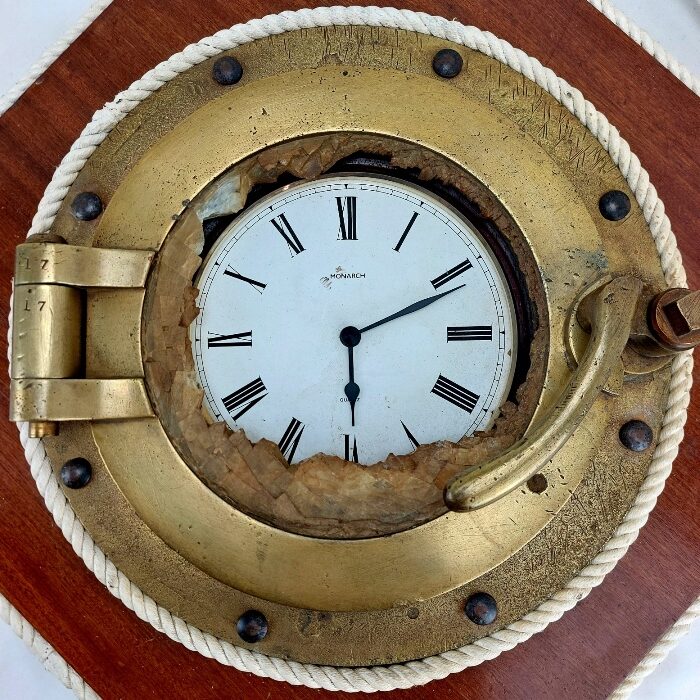
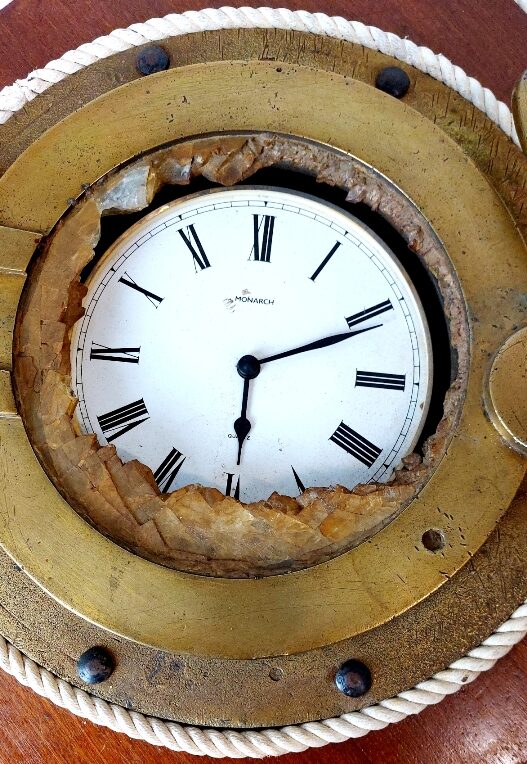
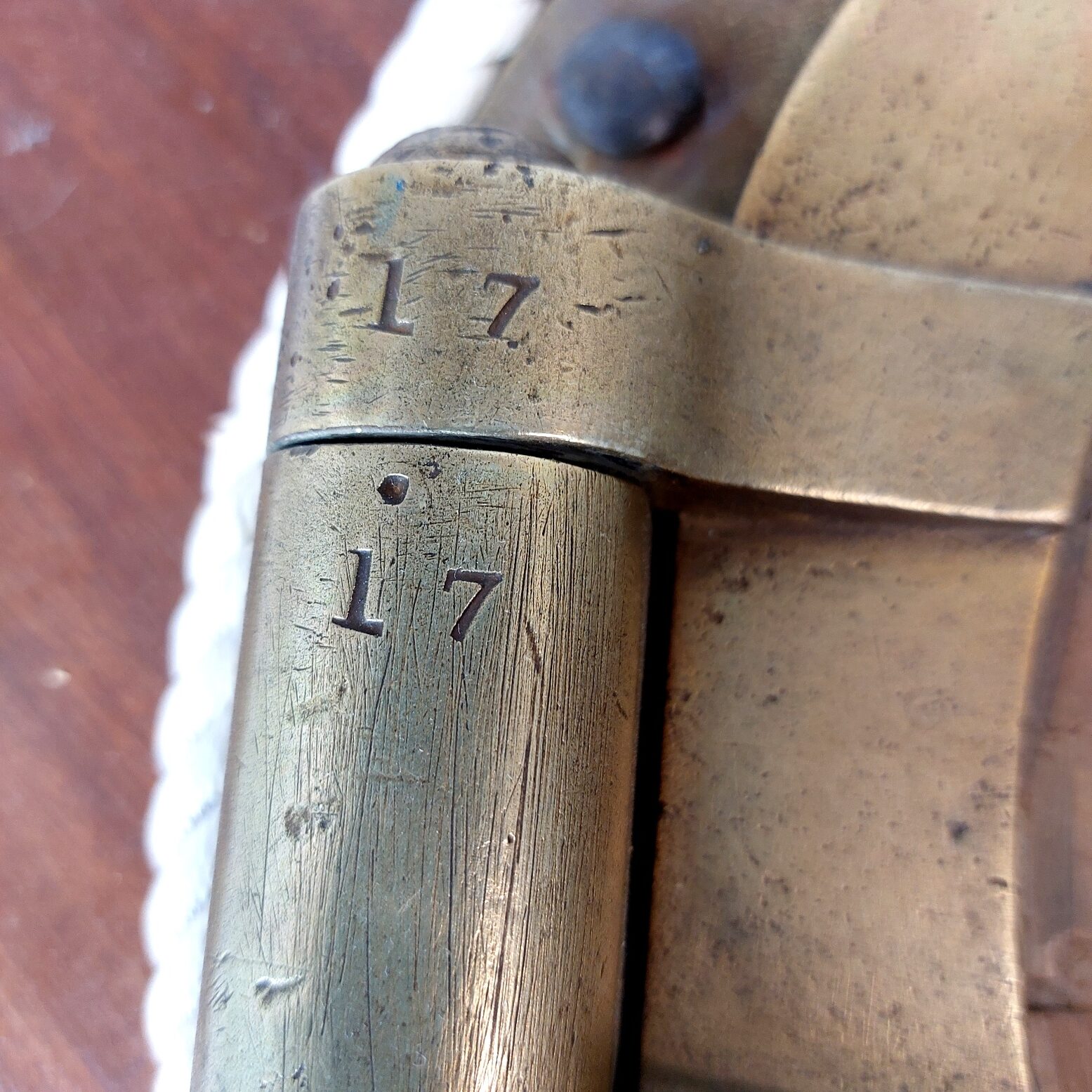
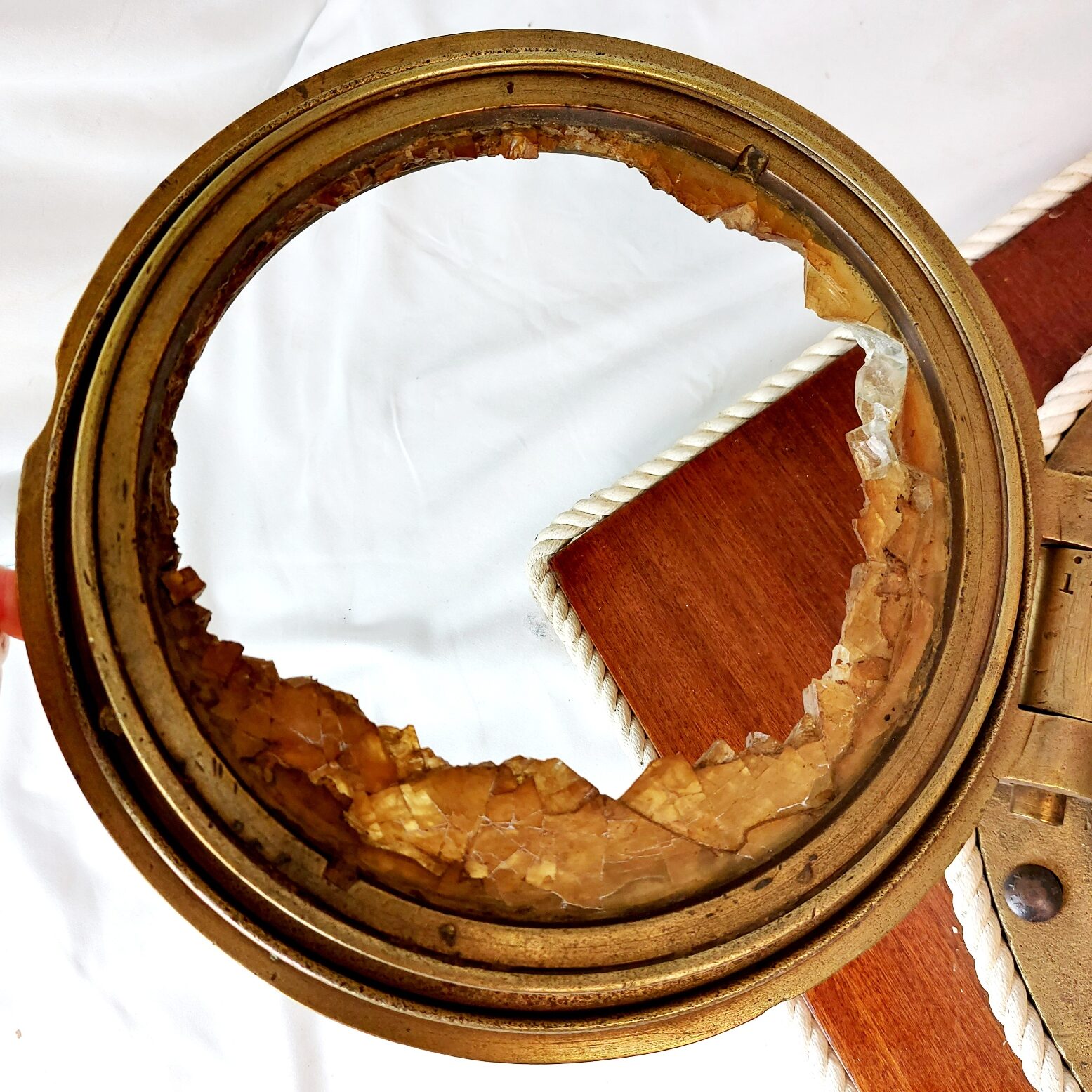
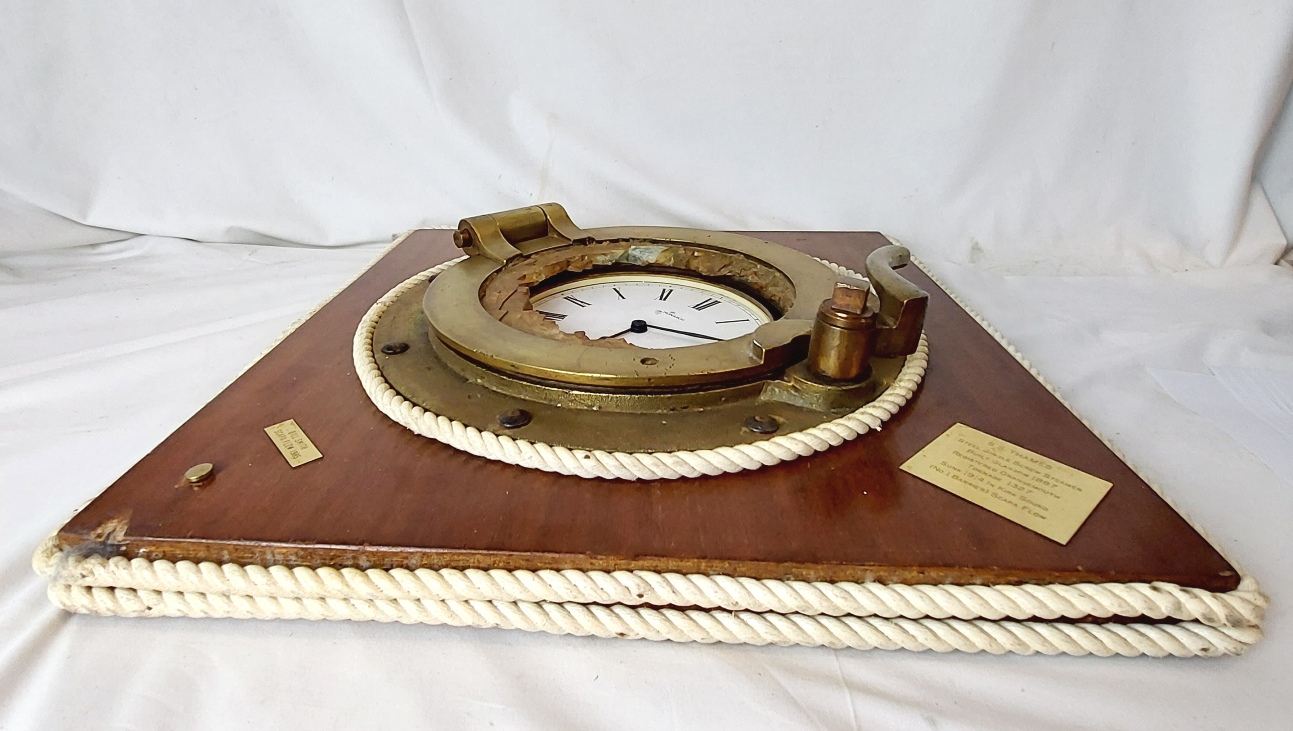
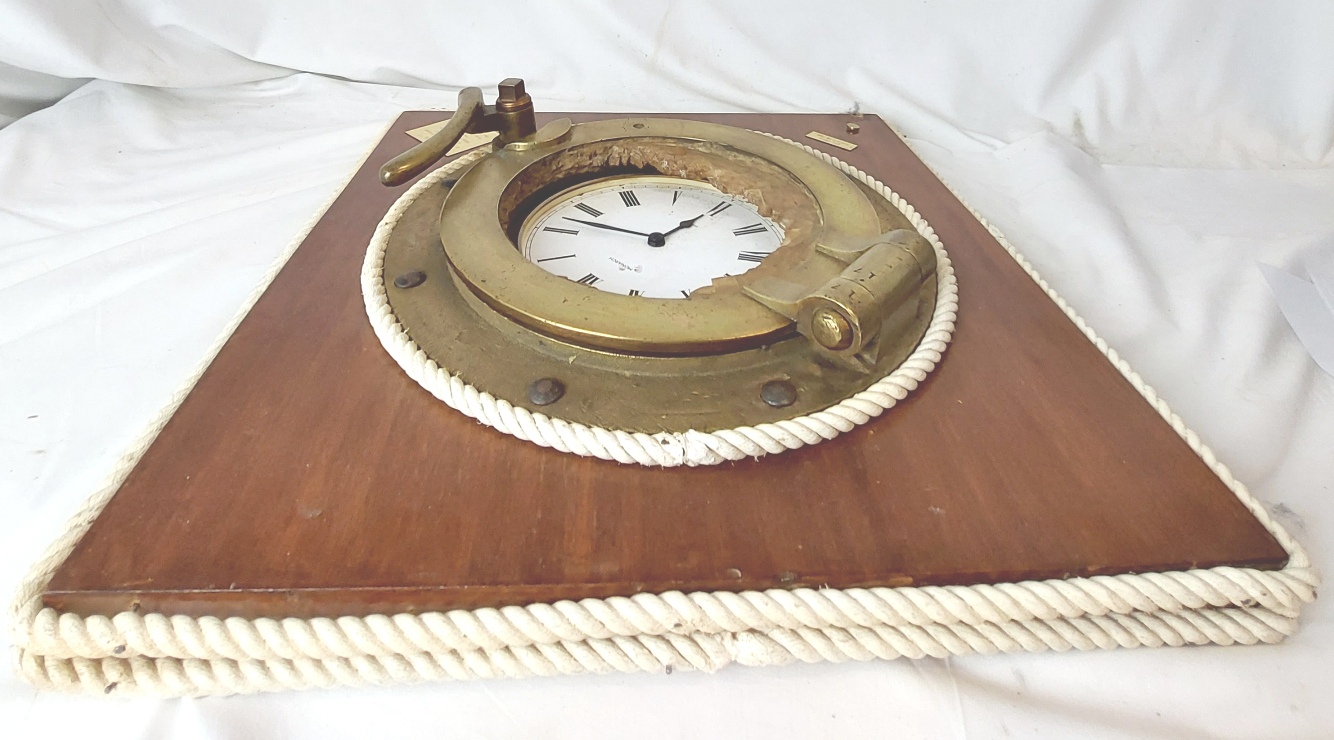
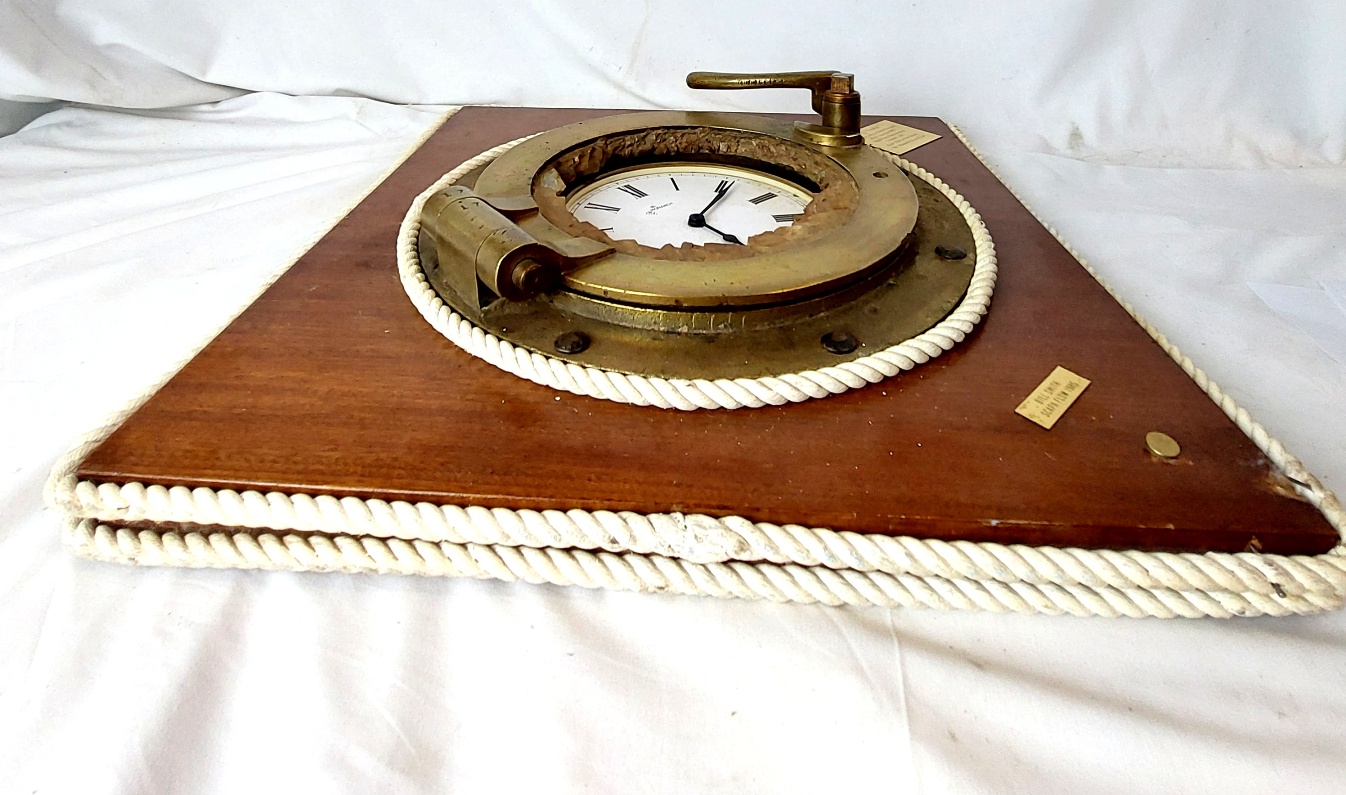
The heavy cast brass porthole retains its original hinge, dogs, and securing bolts, with pronounced surface wear, deep patination, and tool marks consistent with prolonged service and subsequent recovery from the seabed. The bezel hinge is stamped “17”, repeated on the corresponding frame, suggesting original paired components. The thick original glass is extensively fractured but largely retained in situ, contributing significantly to the authentic salvaged character of the piece.
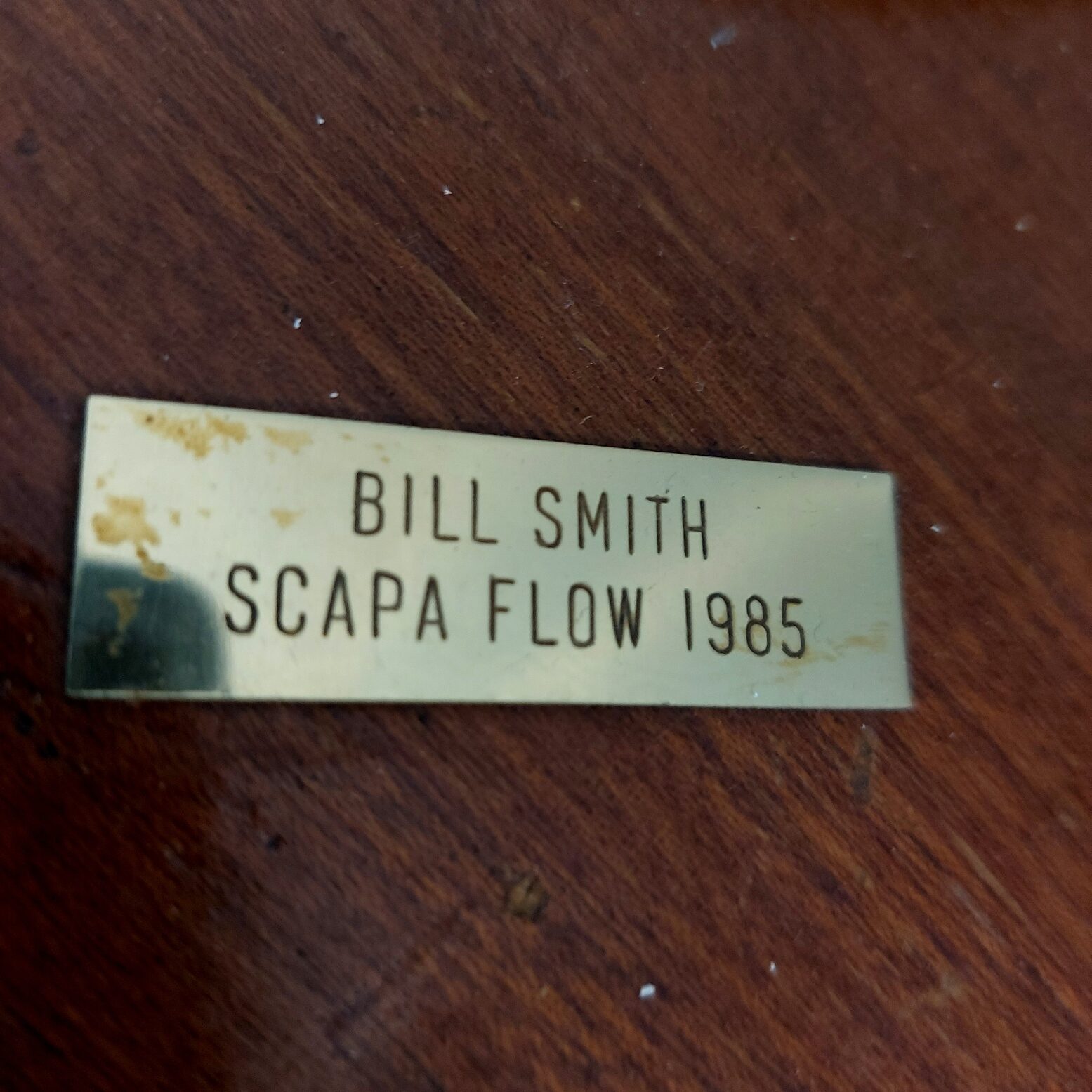
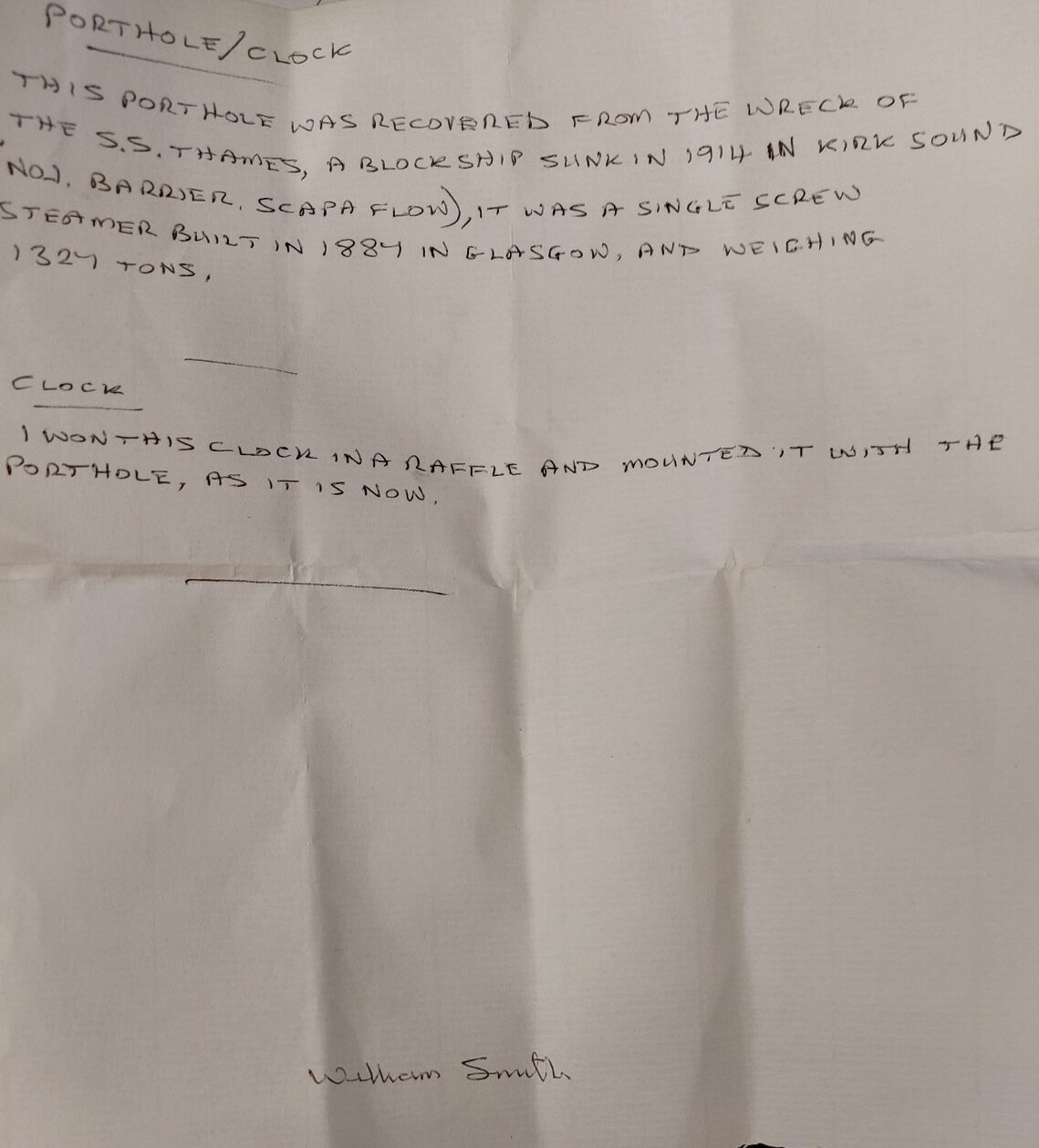
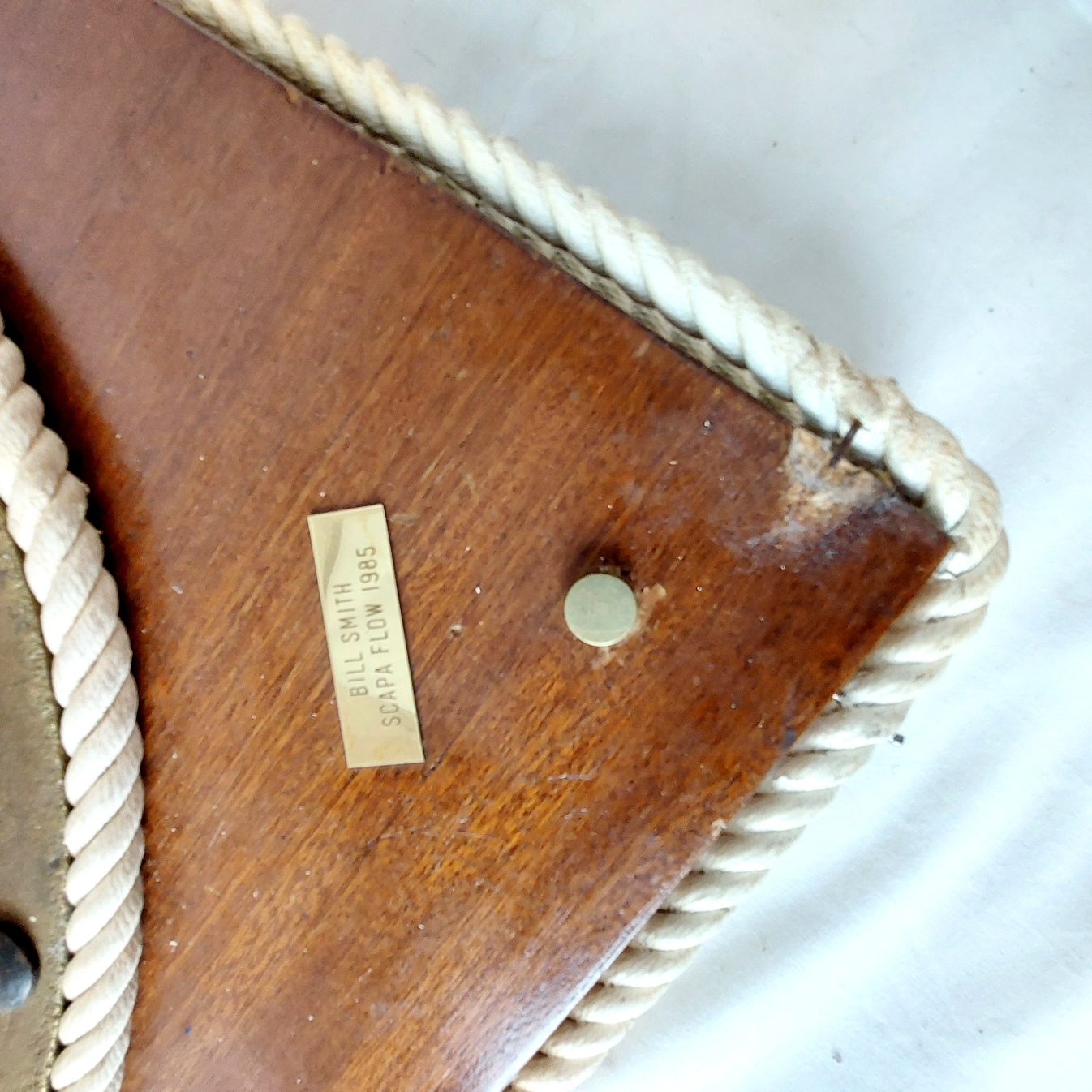
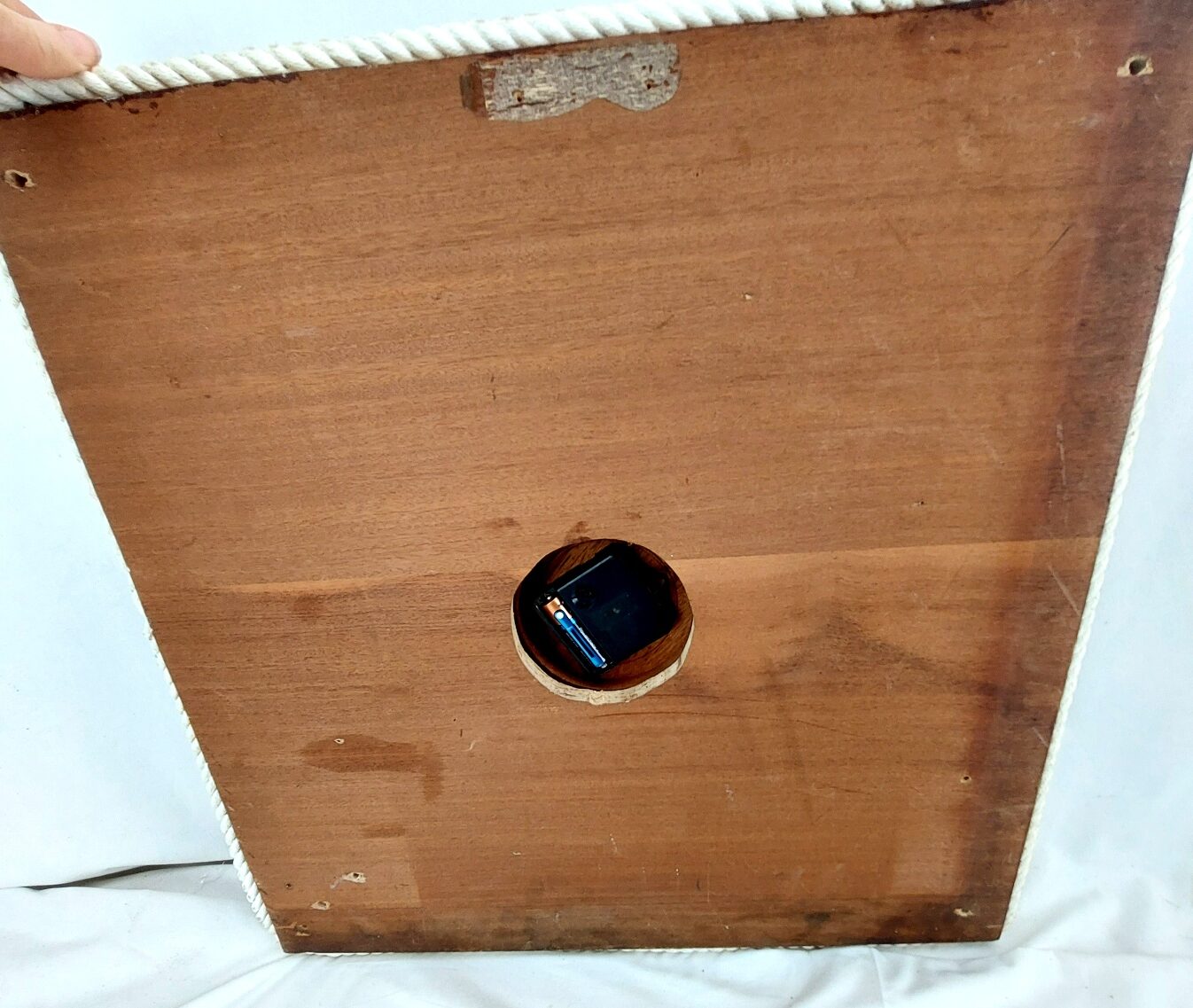
Recovered from the wreck in the late 20th century, the porthole bears all the physical hallmarks of long service and marine exposure, including heavy patination and fractured original glass. In 1985, the salvaged porthole was mounted as a wall clock by Bill Smith, as recorded on the attached brass plaque and supported by an accompanying handwritten note describing its recovery and subsequent mounting. A later British-made quartz clock movement is fitted behind the original hinged bezel, with the clock face marked “Monarch – Quartz – Made in Britain”. The entire assembly is mounted on a substantial hardwood board, finished with a traditional twisted rope border and fitted for wall hanging. Two brass plaques are affixed: one detailing the ship’s identity and loss, and the other recording the recovery and mounting of the piece at Scapa Flow in 1985.
Spanning approximately one hundred years of history, from Victorian merchant shipping through the First World War and into modern-era recovery and display, the piece represents a tangible link between the industrial age of steam, the naval defences of Scapa Flow, and the preservation of maritime heritage.
Historical Note: The RMS Thames was a British steel steamship built in 1890 by Robert Napier & Sons of Glasgow for the Royal Mail Steam Packet Company. She was a single-screw steamer, driven by steam engines turning a single propeller, a common and reliable arrangement for late Victorian passenger and mail vessels, and was originally employed in commercial passenger and postal service.
With the outbreak of the First World War, Thames was sold for breaking to Forth Shipbreaking Co. Ltd. in 1914, but before dismantling could take place she was instead acquired by the Admiralty for wartime use. On 7 January 1915, she was deliberately scuttled in Holm Sound, Scapa Flow, forming part of the blockship barriers intended to deny enemy submarines access to the Royal Navy’s principal anchorage.
Like many of the Scapa Flow blockships, the wreck remained largely undisturbed for decades, later becoming a source of recovered fittings during the mid- to late-20th-century period of licensed and recreational salvage. Scapa Flow blockships occupy a unique place in British naval history as some of the earliest improvised defensive measures of the war, and artefacts recovered from them are now increasingly scarce.
An accompanying handwritten note states that the porthole was recovered from the wreck and later mounted as a clock after being won in a raffle. A small brass plaque reads “Bill Smith – Scapa Flow 1985”.
*Condition* The brass porthole is structurally sound, with deep patination, surface wear, scratches, and corrosion consistent with age and marine exposure. The glass is broken and fragmented, but retained, contributing significantly to the salvaged aesthetic. The hinge and dogs operate, though stiffness should be expected. The clock movement is a later quartz replacement and appears to function at the time of inspection (battery fitted to rear). The wooden mounting board shows general wear, edge marks, and age-related surface wear. Please see photographs as part of the condition report.
Approx. Measurements: Overall mounting board: 49.5 × 49.0 cm (excluding rope border). Brass porthole outer diameter: 36.5 cm. Porthole clear opening: 30.0 cm. Inner glass diameter: 22.3 cm (glass broken)
RQMCOOXFOO_3763223003
Please contact the shop prior to purchase if you'd prefer to arrange collection.