*British, WW1, Battye Hand Grenade, Inert*
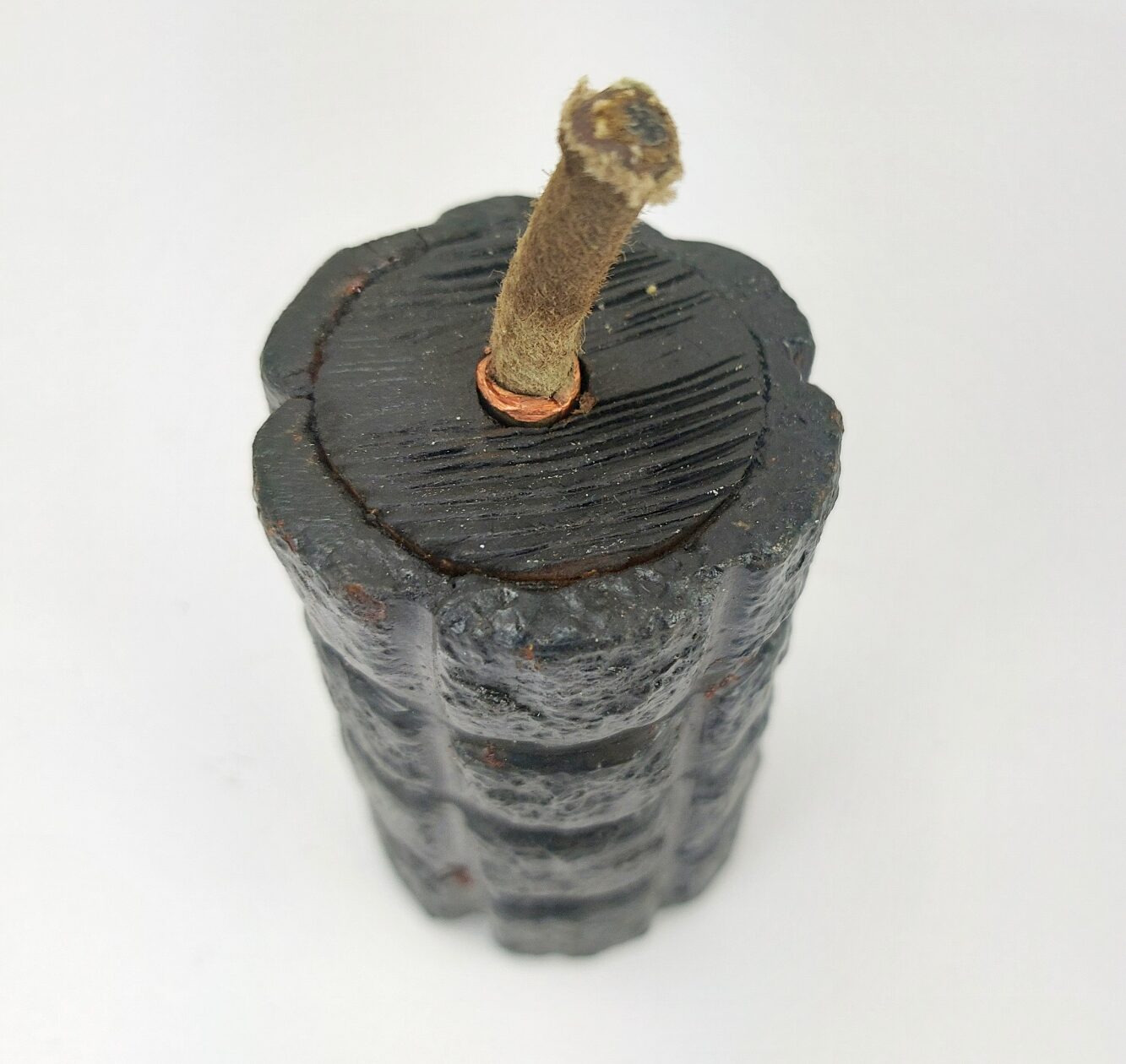
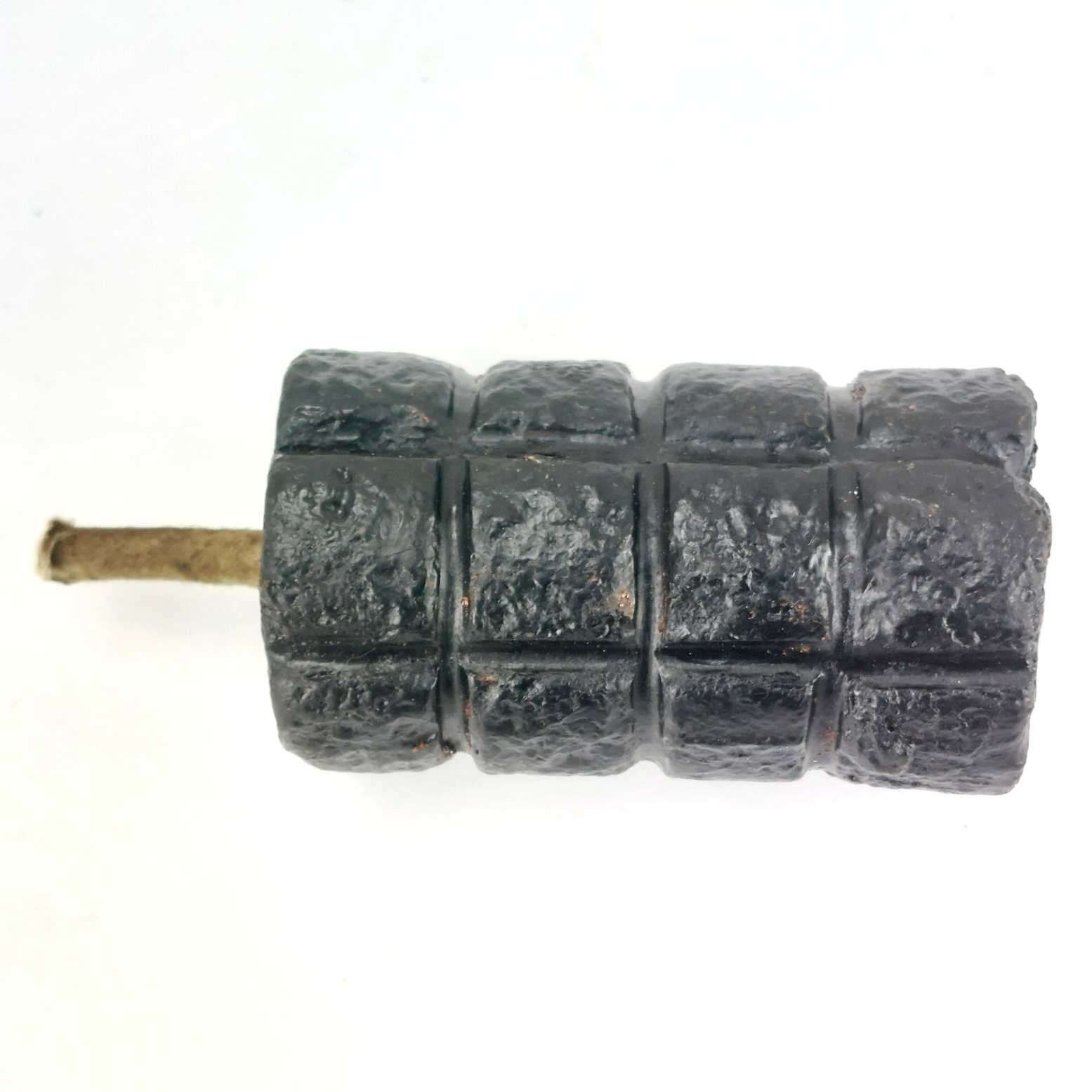
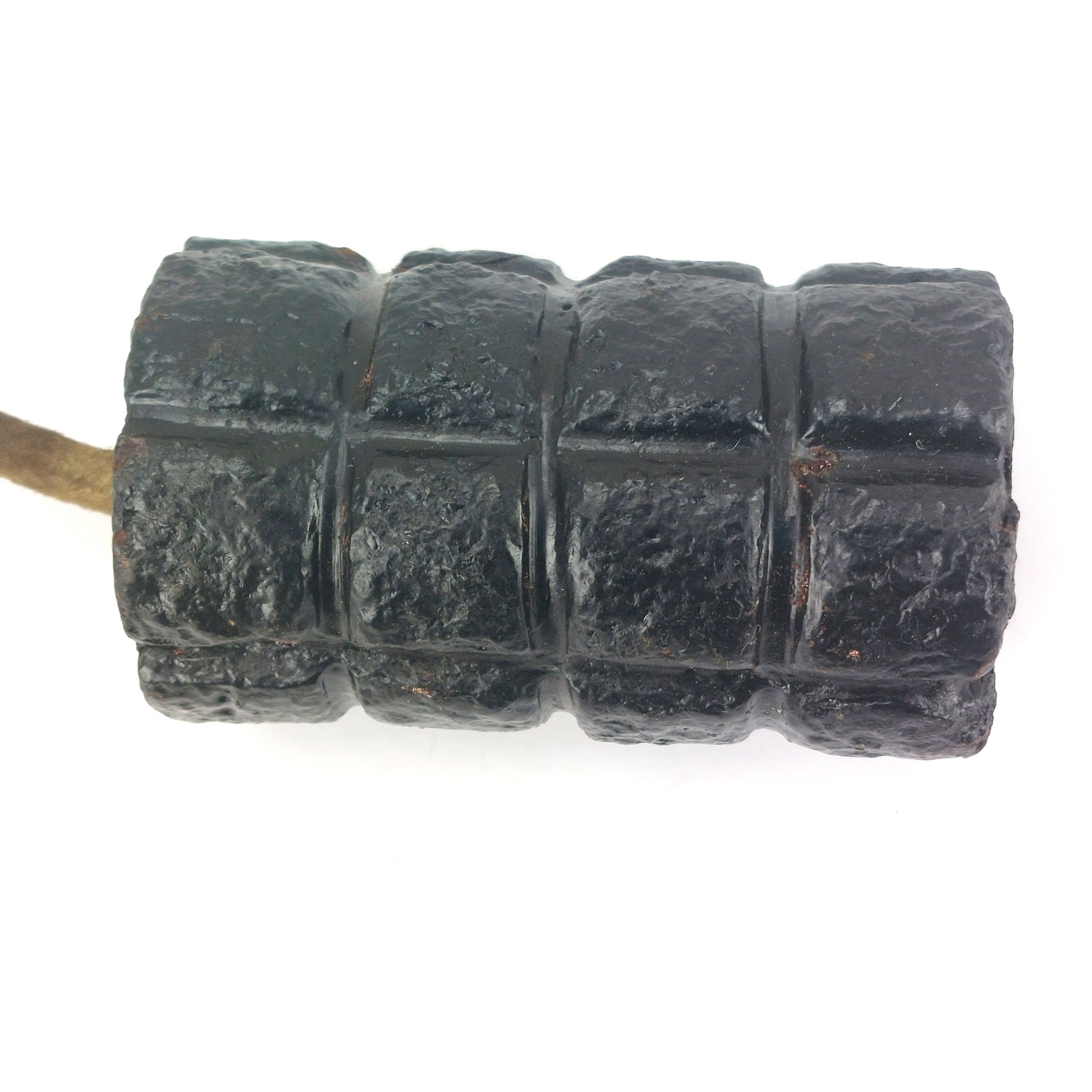
The Battye grenade consists of a pre-fragmented cast-iron cylindrical body, divided into rectangular segments to aid fragmentation upon detonation. The body was originally filled with ammonal explosive, a common British high explosive of the period.
Ignition was achieved via a time fuse housed within a wooden plug, which was fitted into the top of the grenade. A friction igniter initiated the fuse, allowing a short delay before detonation. The remains of the fuse assembly are visible on this inert example.
Approximate measurements: Height: 8 cm, Diameter: 4.5 cm
Historical note:
Designed at the end of 1914 by Major B. C. Battye of the Indian Corps, the Battye grenade was one of several early British emergency grenade patterns developed in response to severe shortages at the outbreak of trench warfare.
Production took place in Béthune, France, during 1915, with thousands manufactured for front-line use. Despite its innovative pre-fragmented design, the Battye grenade proved cumbersome and inconsistent, particularly in wet conditions, and was soon rendered obsolete by the adoption of more reliable designs such as the Mills bomb.
*Condition*
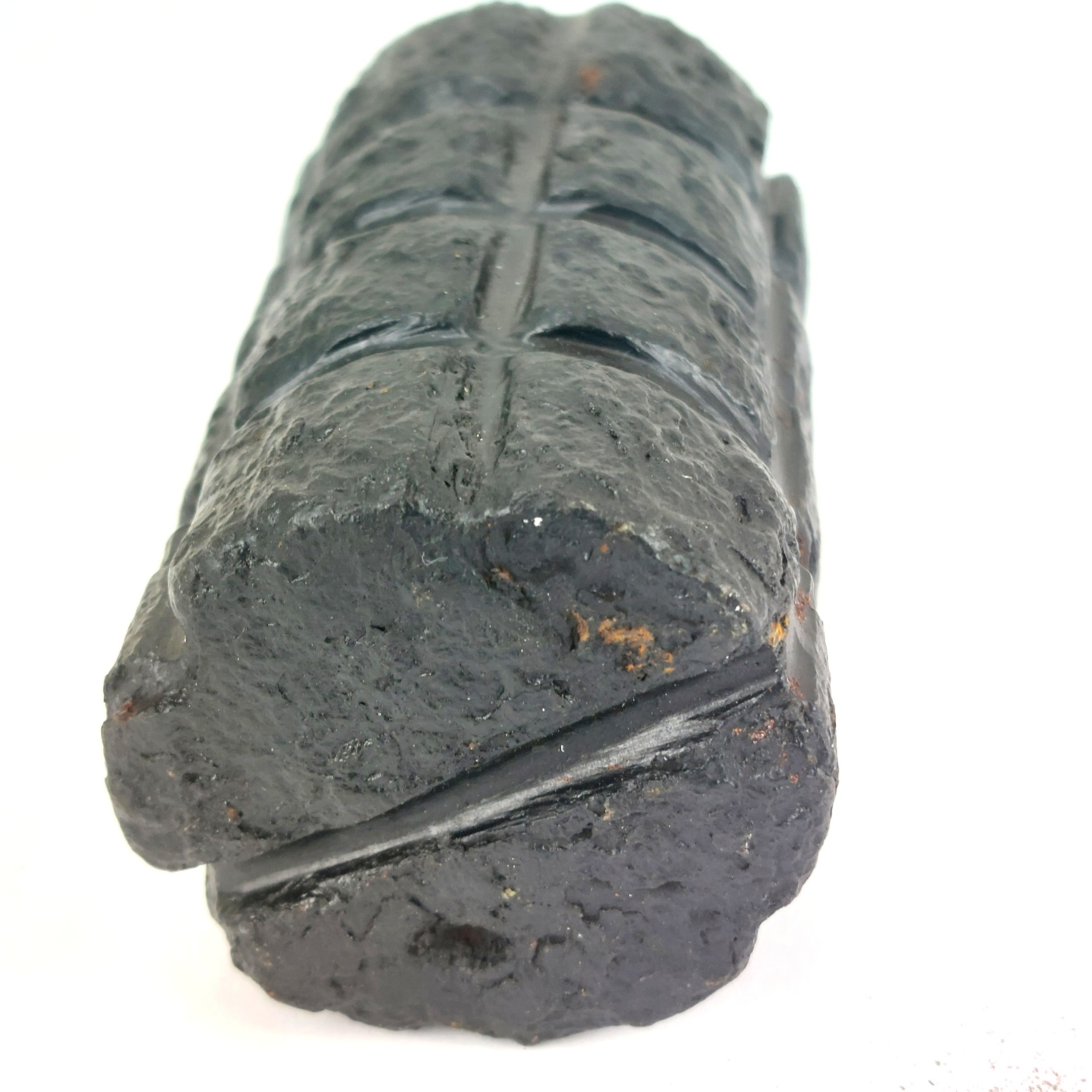
Inert example retaining strong body definition and visible segmentation, with expected surface wear and oxidation consistent with age and manufacture. Please see photographs as part of the condition report.
JAQDOXGE_278608052025