British, Pattern 1888 Mk I Type 2 "Lee-Metford" Naval Service Bayonet & Scabbard, Dated 1896, RSAF Enfield, Matching Numbers (91)
£295.00
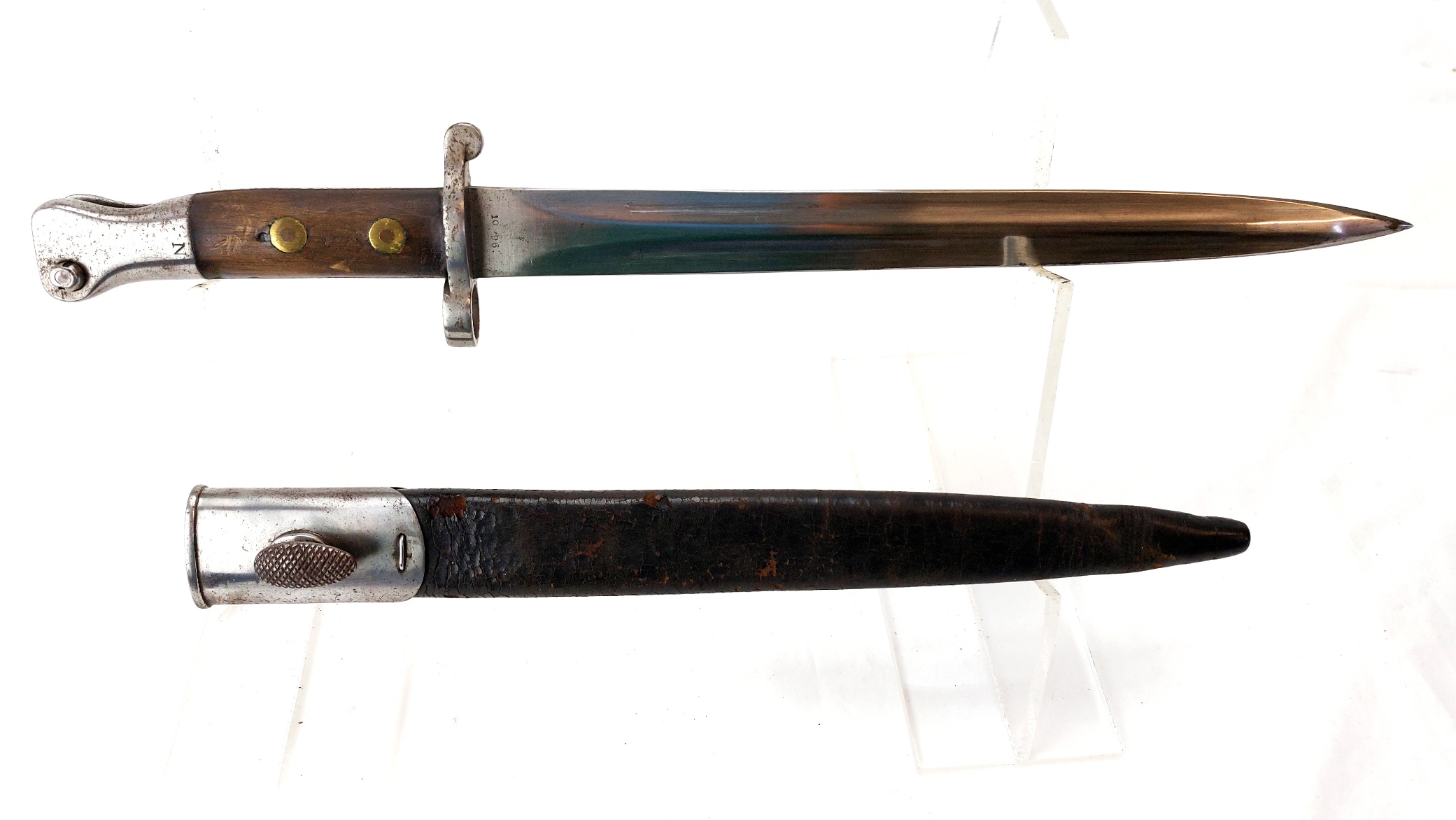
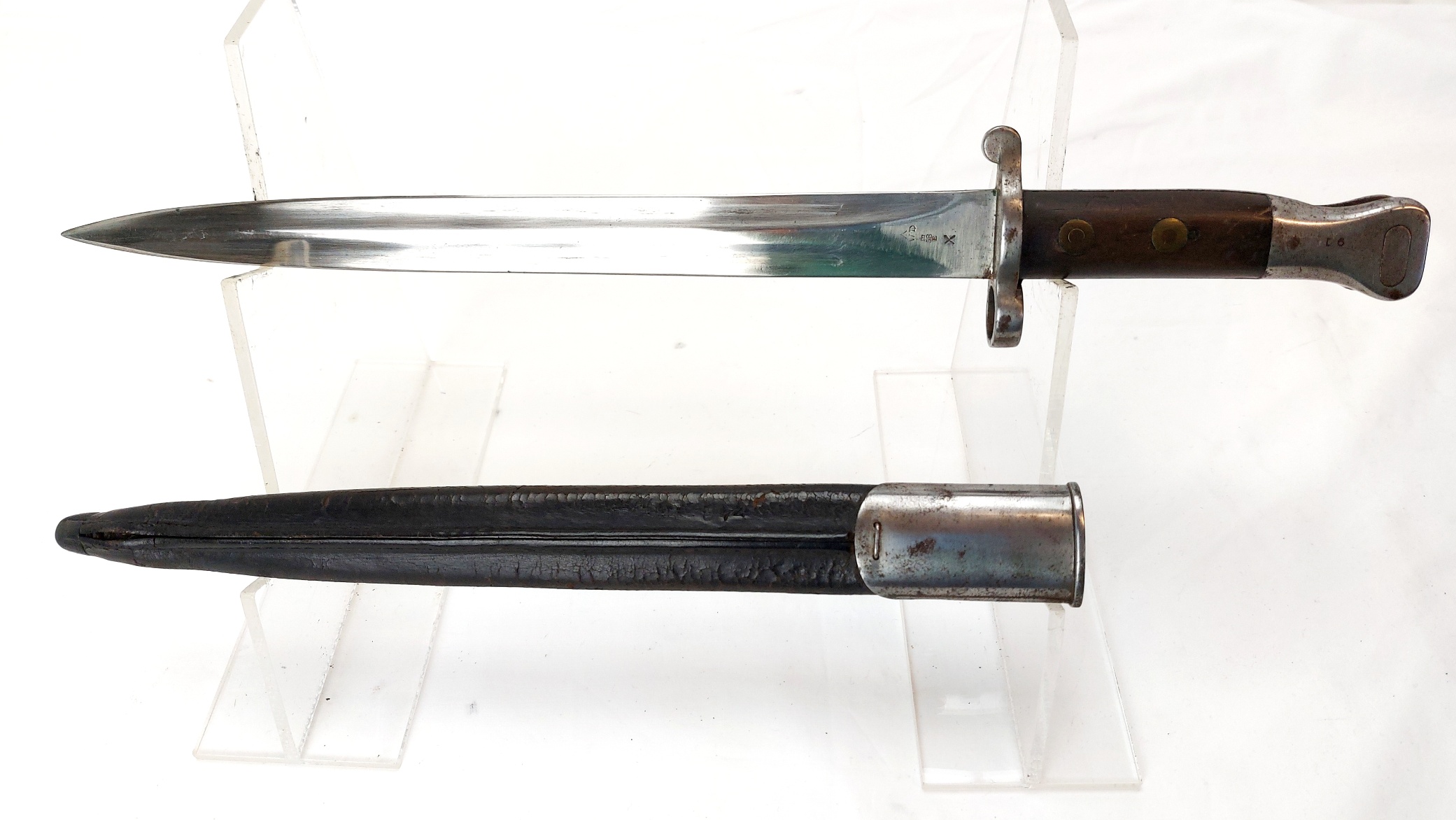
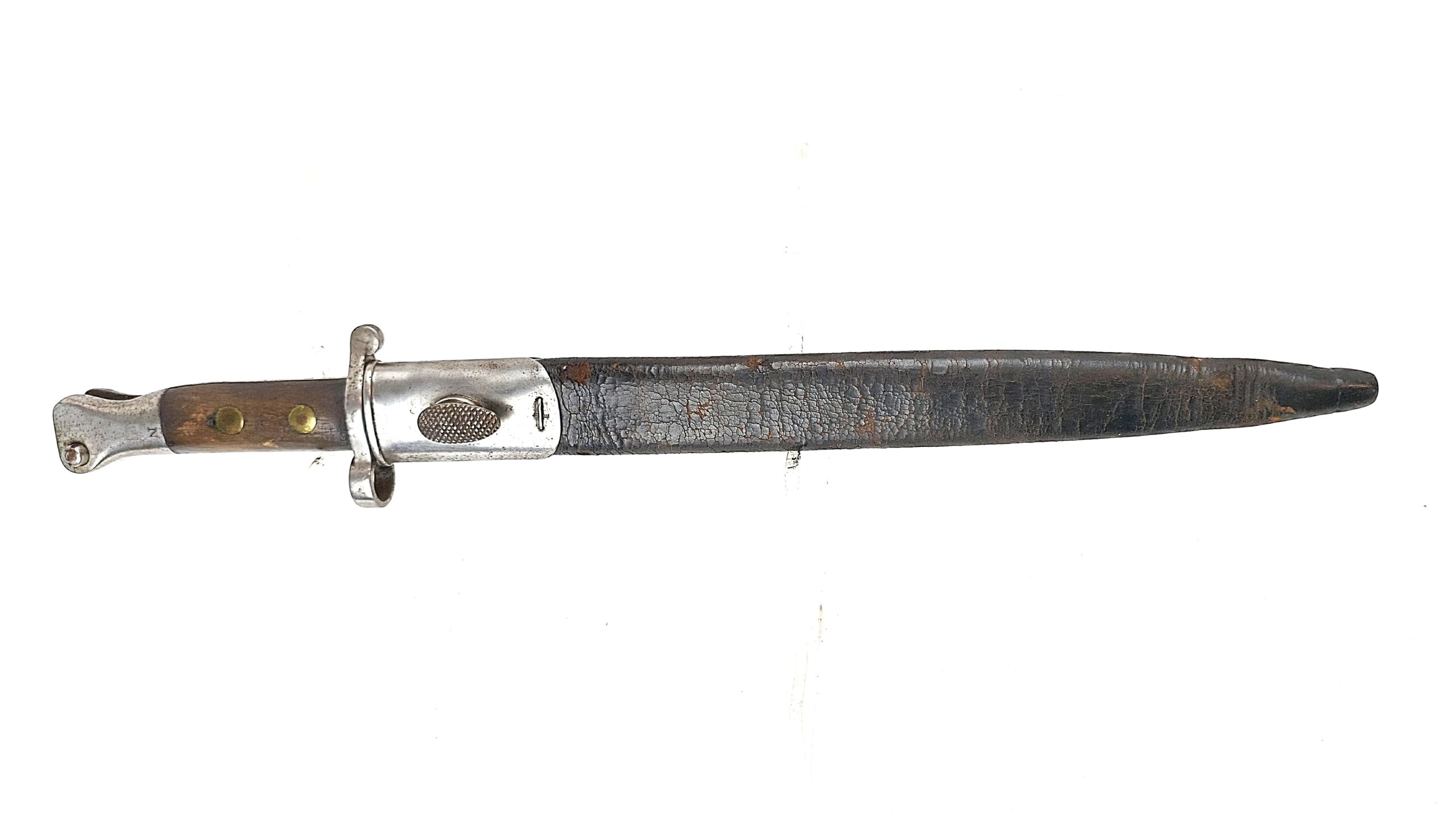
Scarce Royal Navy-issued Pattern 1888 Mk I Lee-Metford bayonet dated October 1896 by RSAF Enfield, retaining its original naval-marked Mk I leather scabbard with matching rack numbers.
*British, Pattern 1888 Mk I Type 2 "Lee-Metford" Naval Service Bayonet & Scabbard, Dated 1896, RSAF Enfield, Matching Numbers (91)*
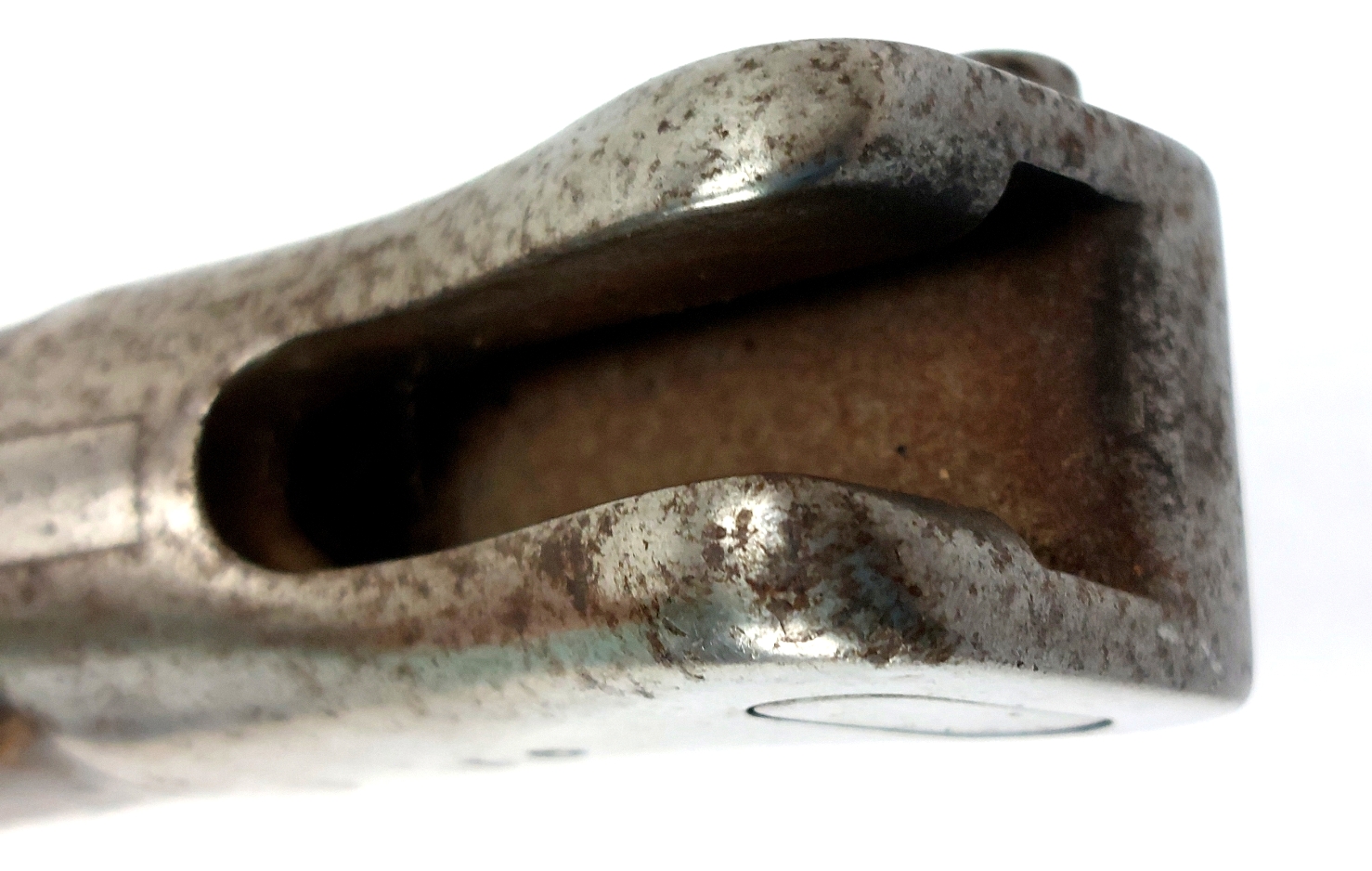
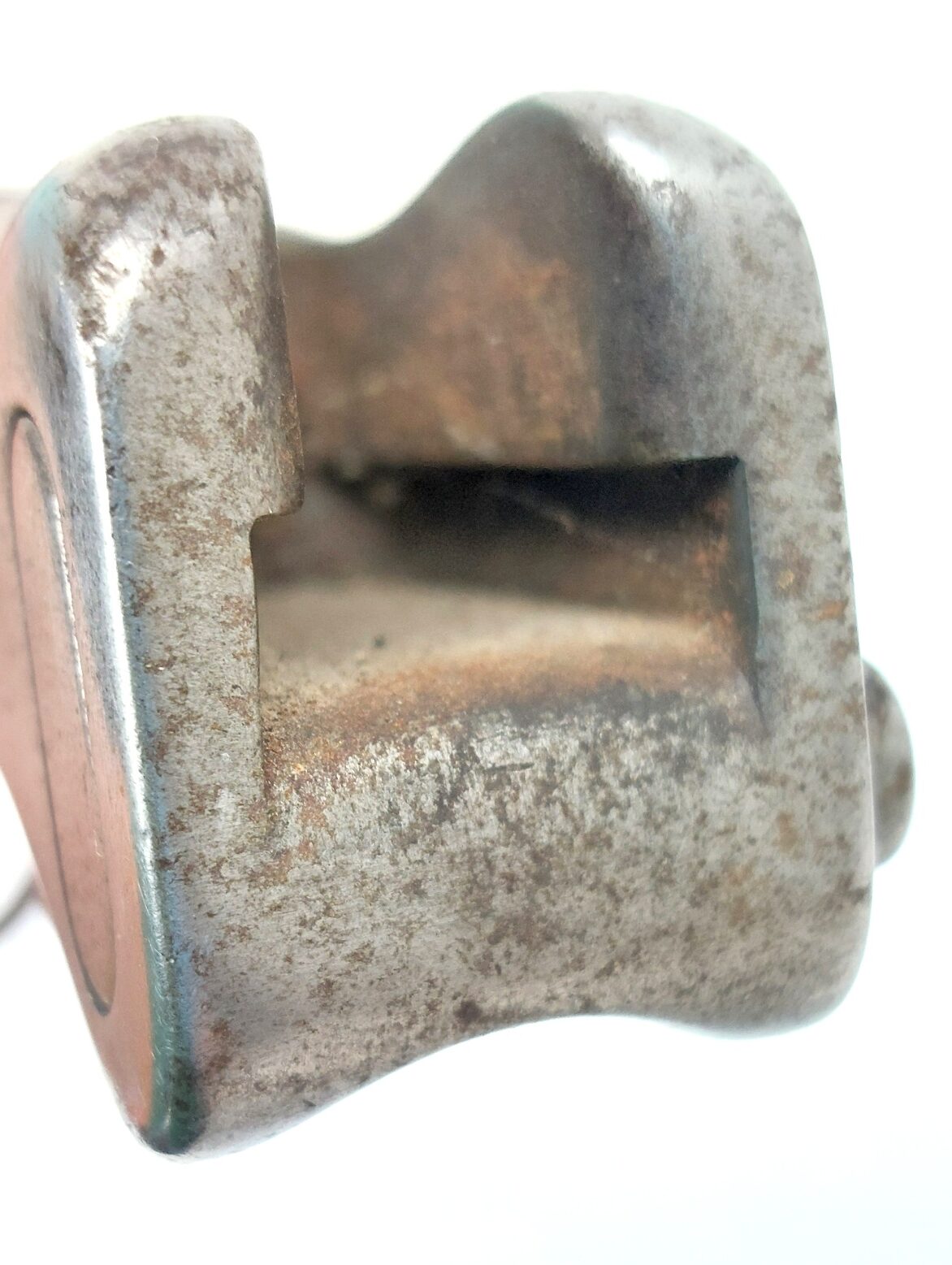
An original British Pattern 1888 Mk I, 2nd Type knife bayonet manufactured at the Royal Small Arms Factory, Enfield and dated October 1896, retaining its Naval issue markings and matching numbered early Mk I leather scabbard. The bayonet was designed for use with the .303 calibre Lee-Metford and early Long Lee-Enfield rifles and represents the first true knife-pattern bayonet adopted for British service.
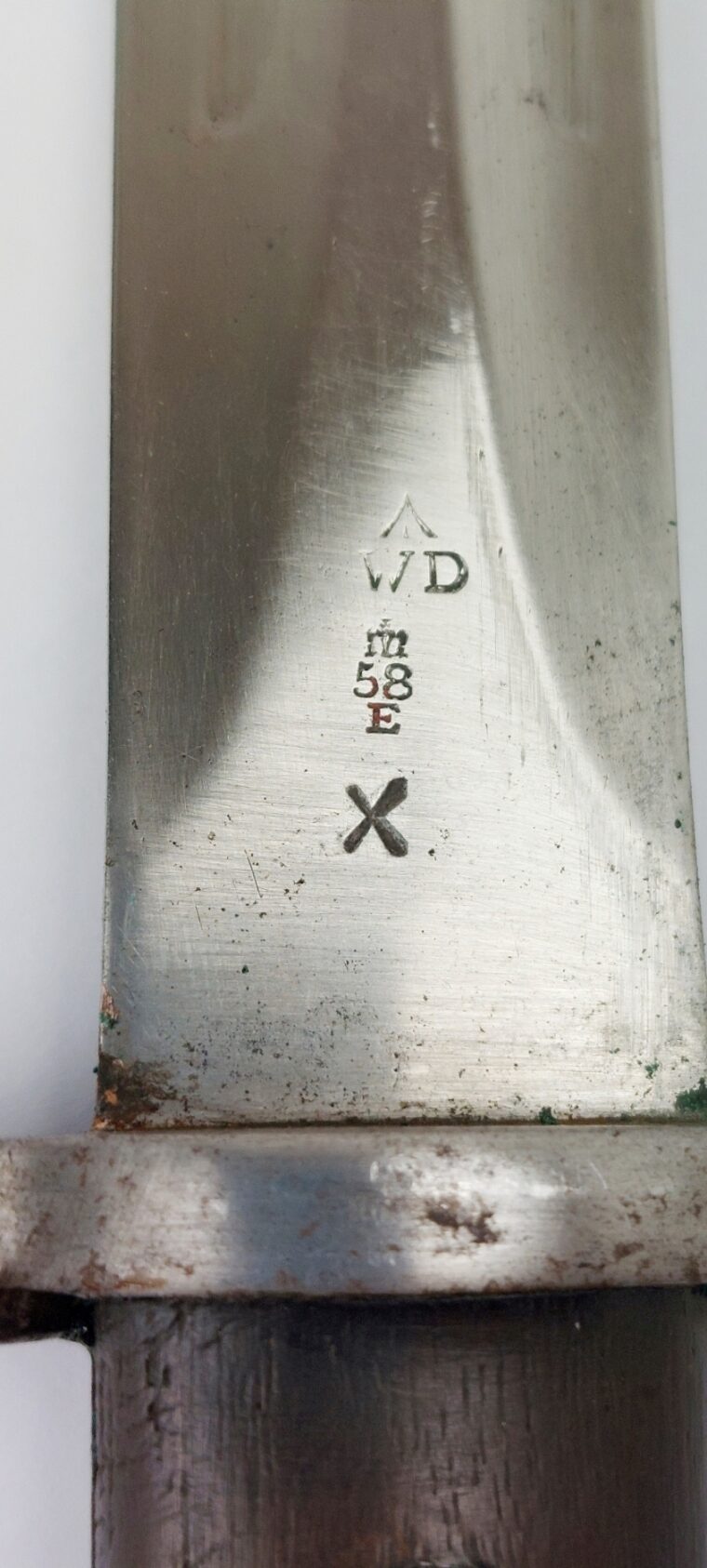
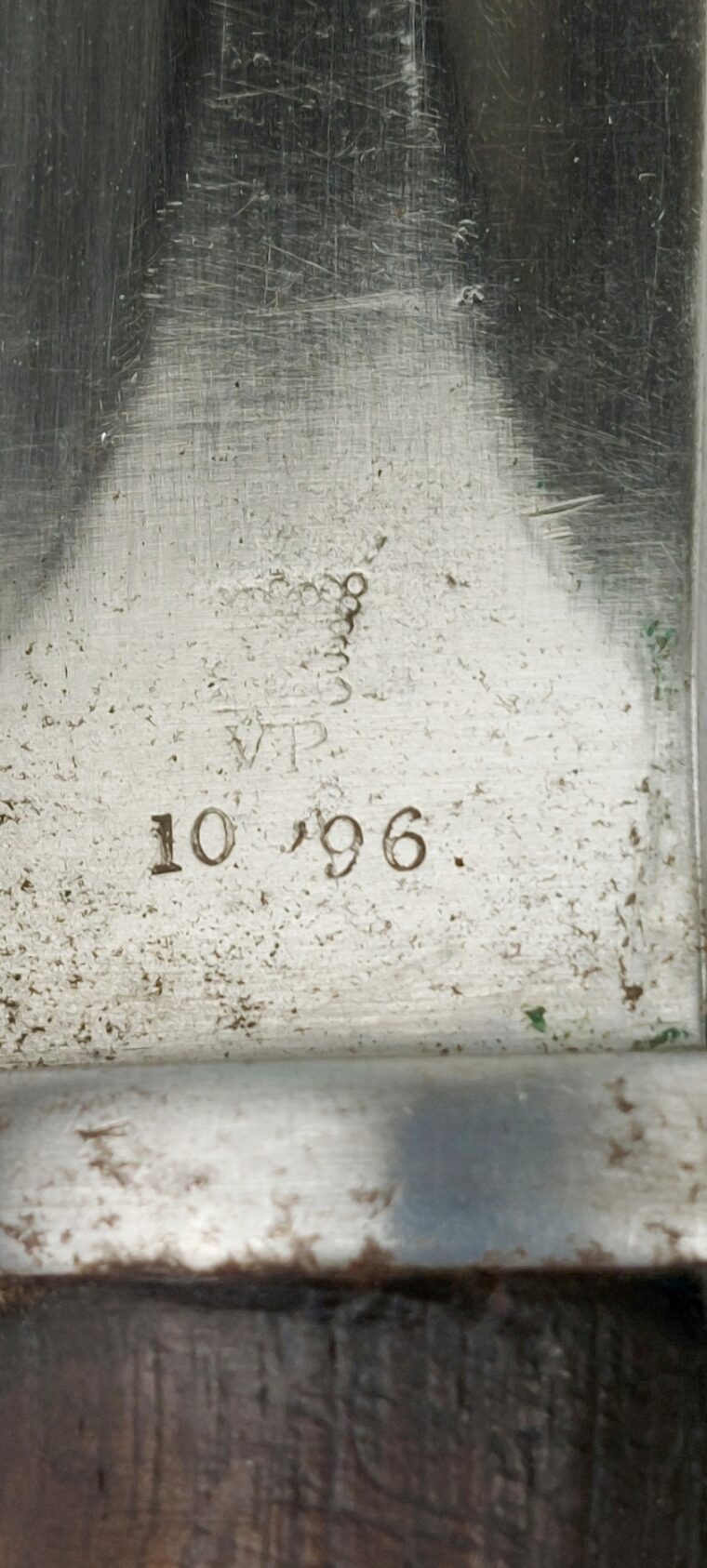
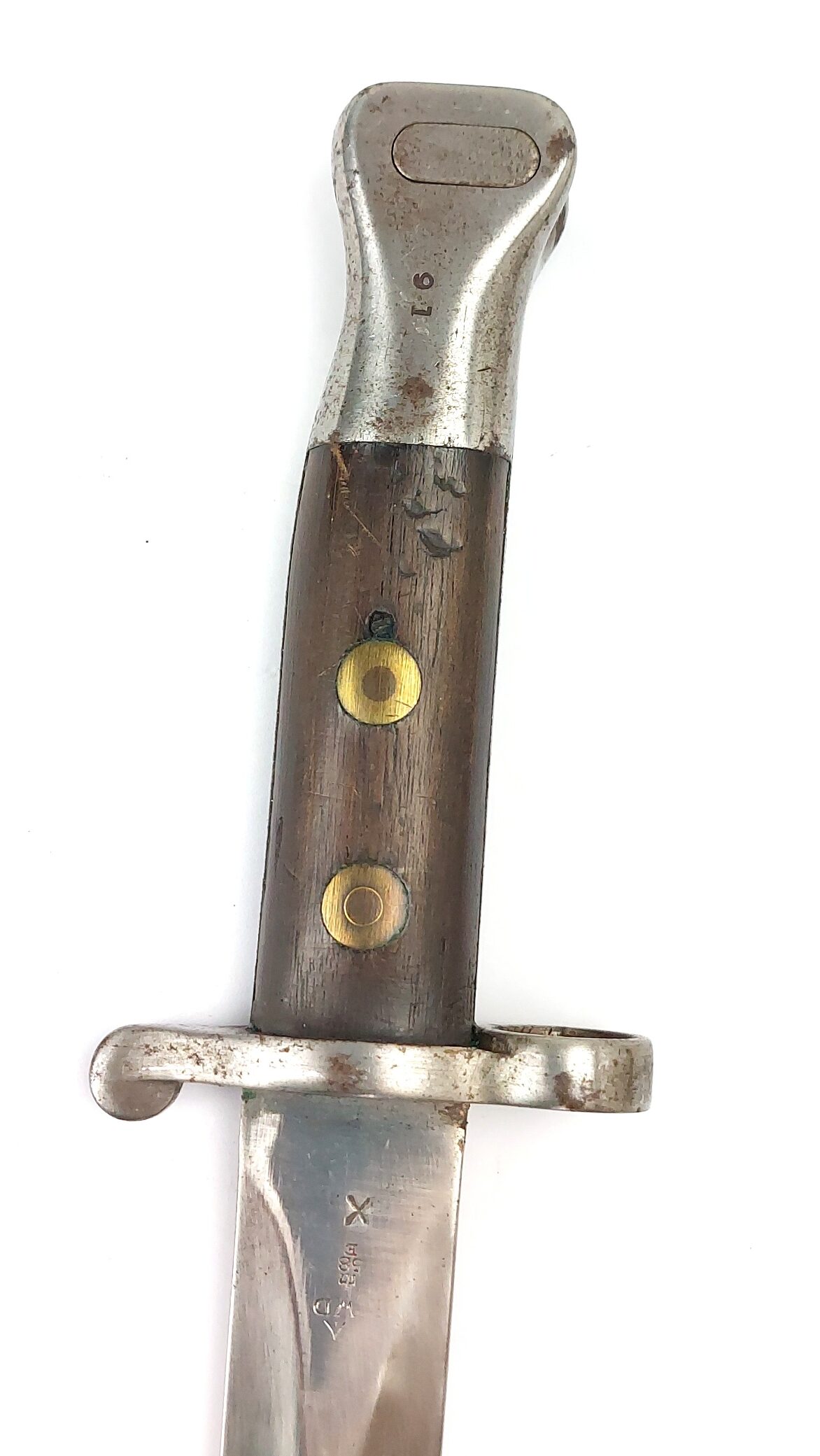
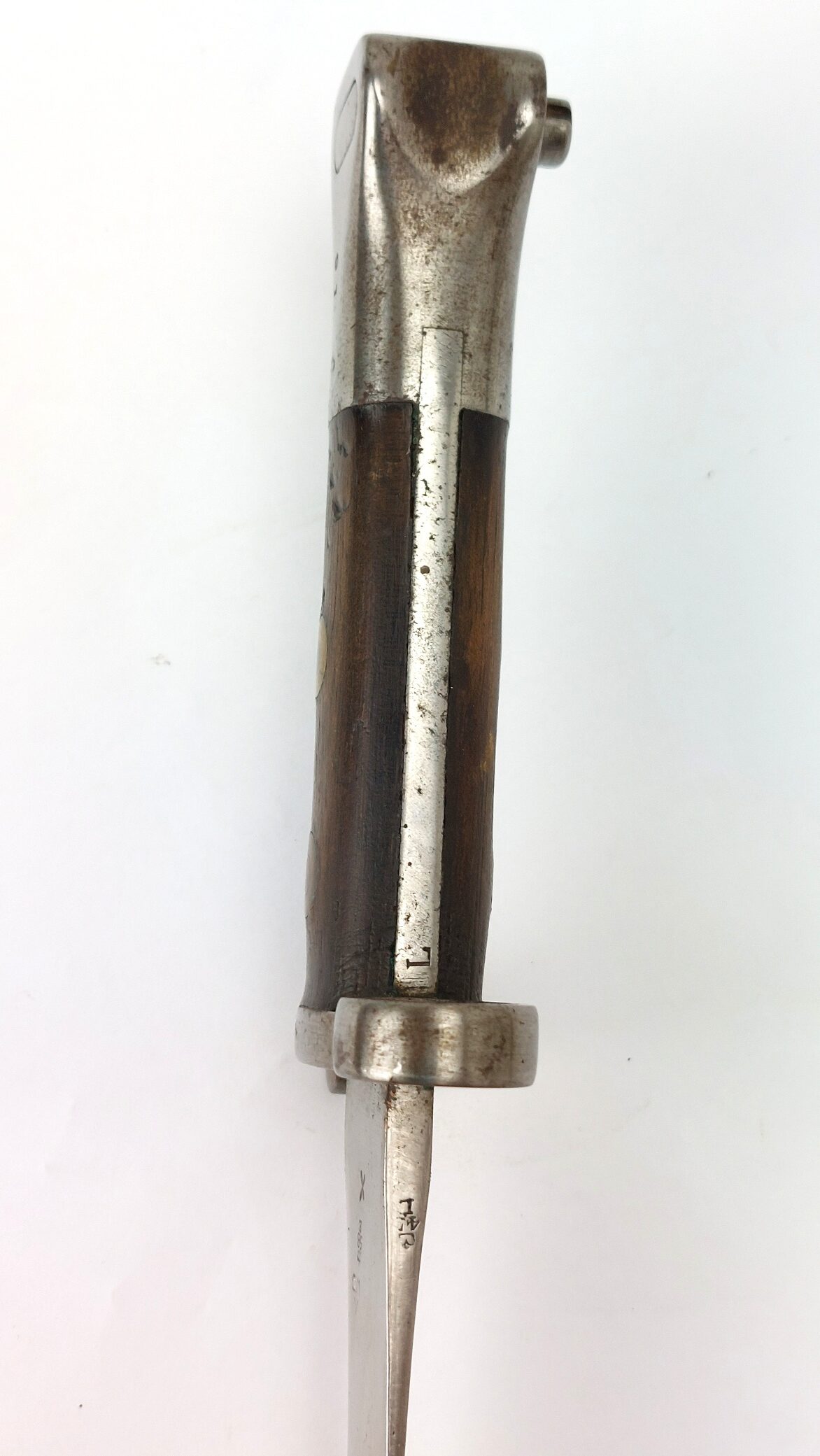
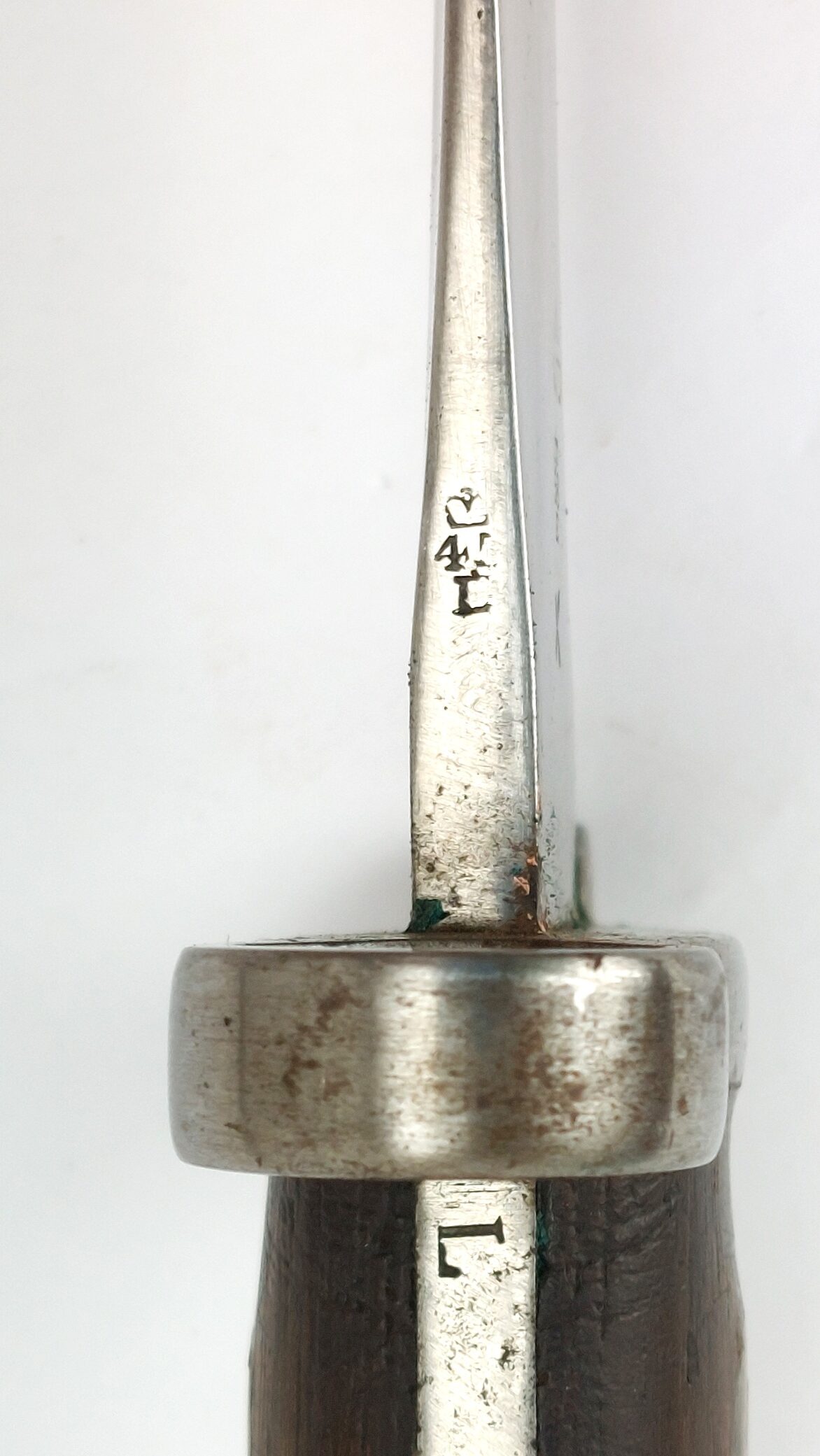
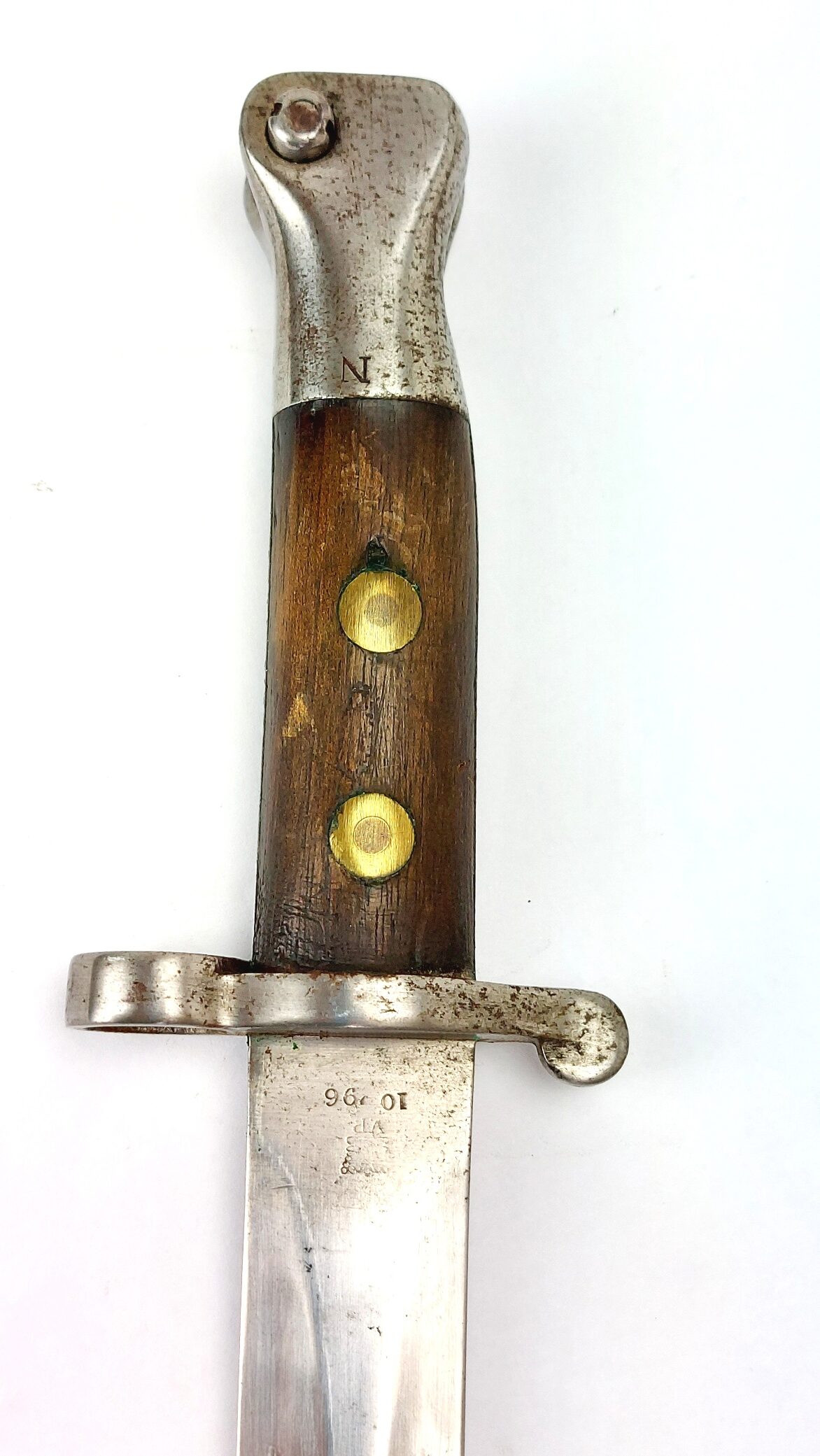
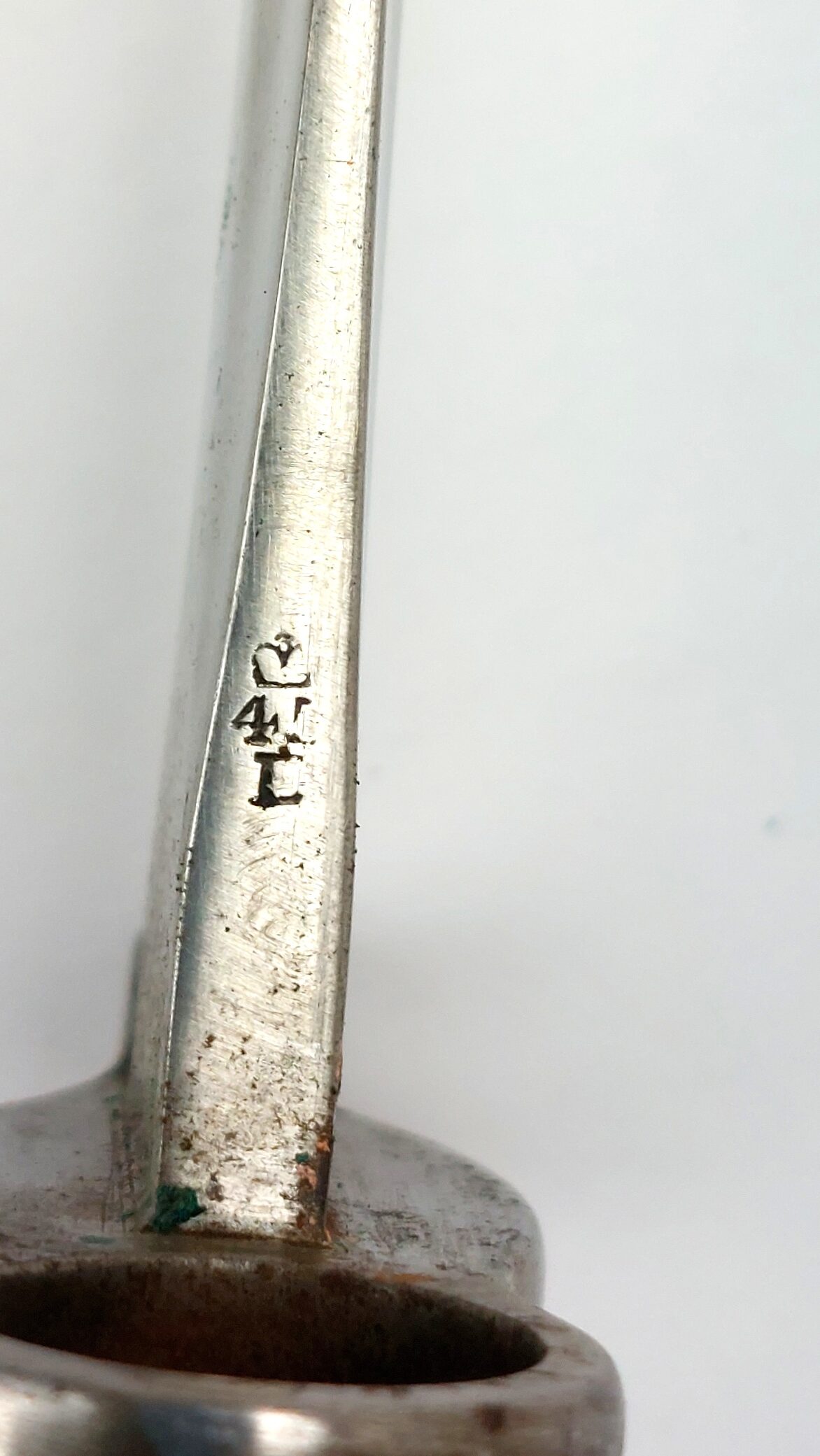
The blade is of double-edged spear-point form with twin narrow fullers and measures approximately 30.2 cm in length (42.2 cm overall). The ricasso is stamped with the War Department broad arrow over WD, together with Enfield inspection marks and the bend-test mark “X”. The reverse bears the Crown over “VR” cypher with the date 10 ’96, indicating acceptance into service in October 1896 during the reign of Queen Victoria. Additional inspection stamps appear on the blade spine in the form of Crown over 41 over E, confirming manufacture and inspection at the Royal Small Arms Factory, Enfield.
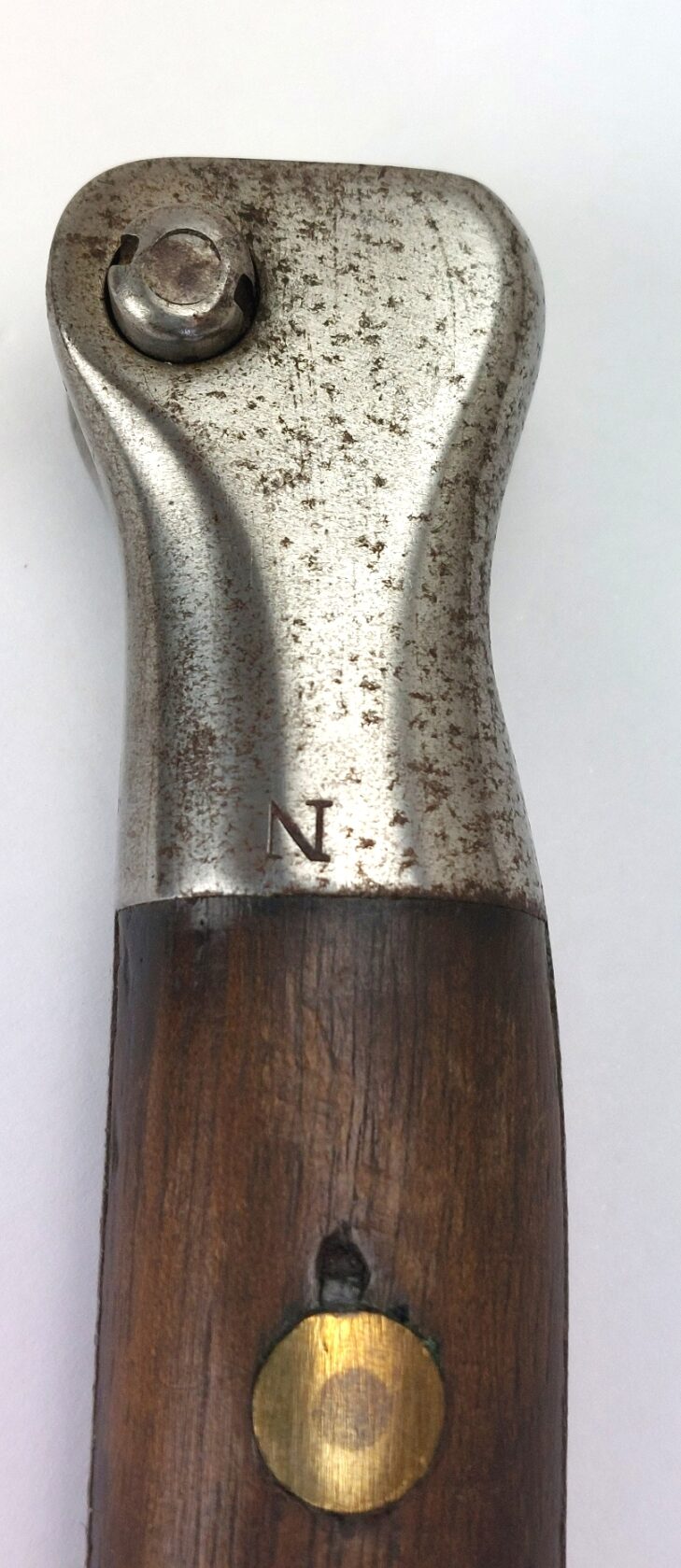
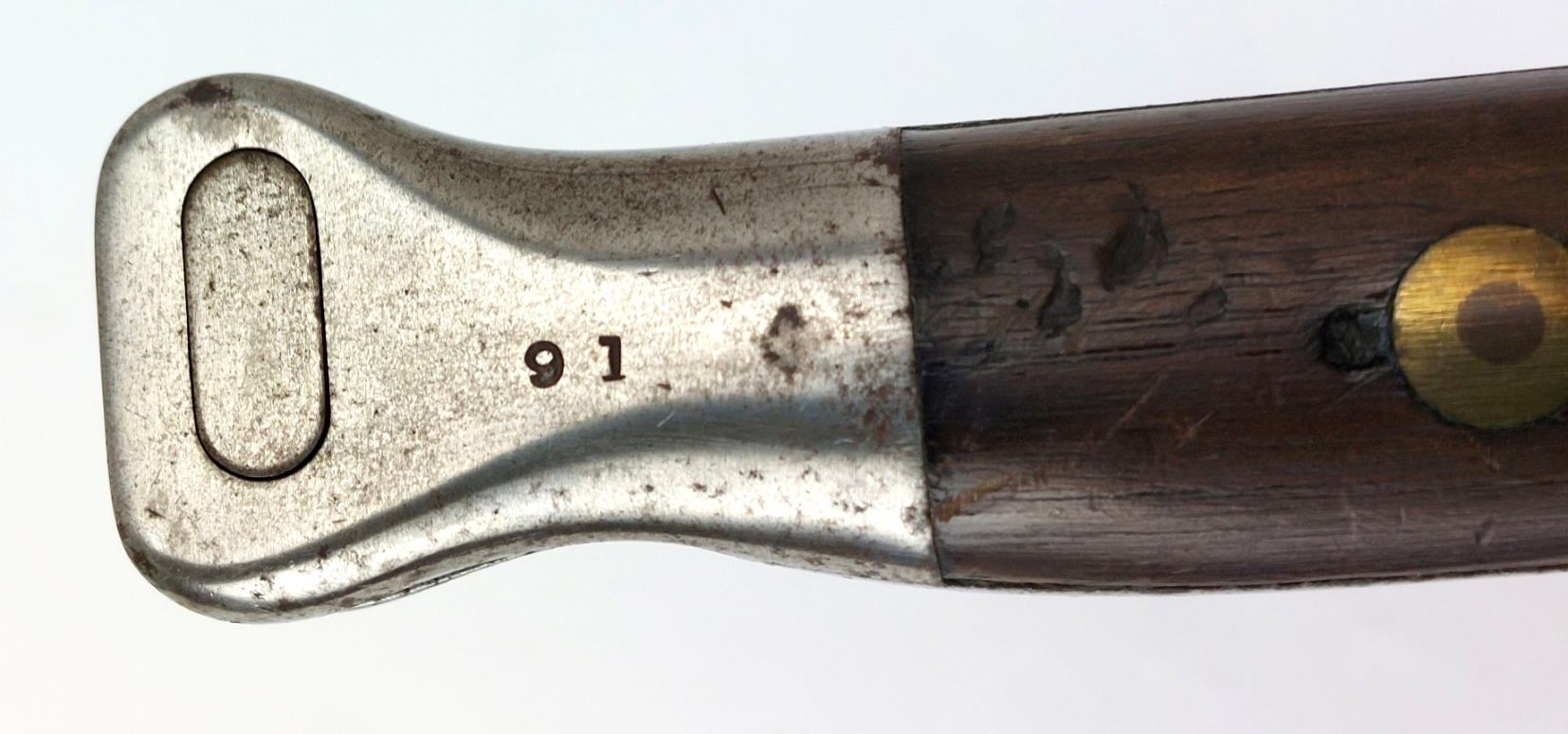
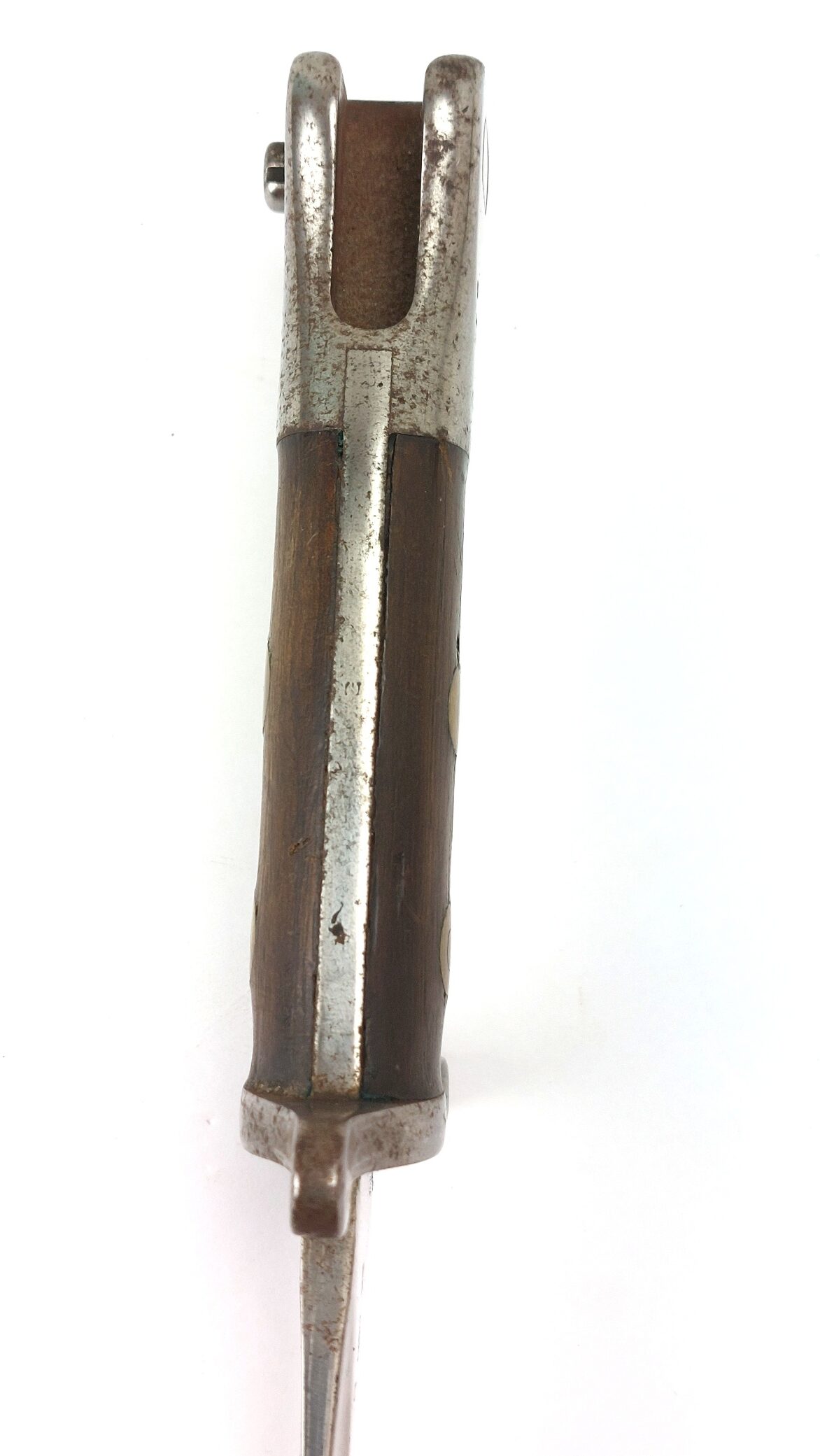
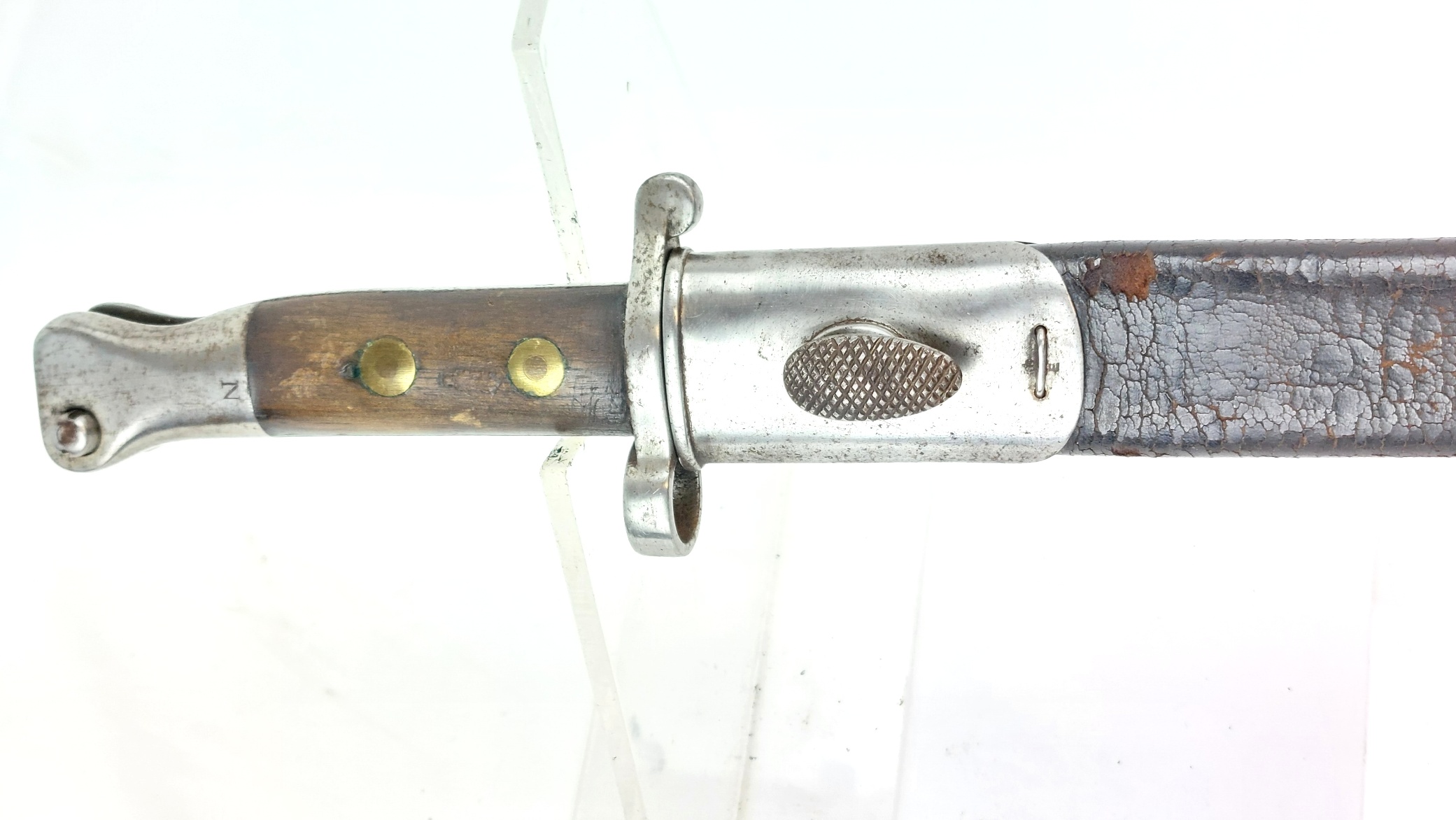
The hilt is fitted with the correct two-piece wooden grips secured by two large brass rivets with steel washers, identifying the bayonet as the Pattern 1888 Mk I, 2nd Type variant. The grip retains the original oil hole, now filled with hardened grease as commonly encountered on surviving examples.
The pommel carries the rack number “91” and is stamped with the letter “N”, indicating Royal Navy issue rather than standard Army service. Naval-marked Pattern 1888 bayonets are notably scarcer than Army-issued examples.
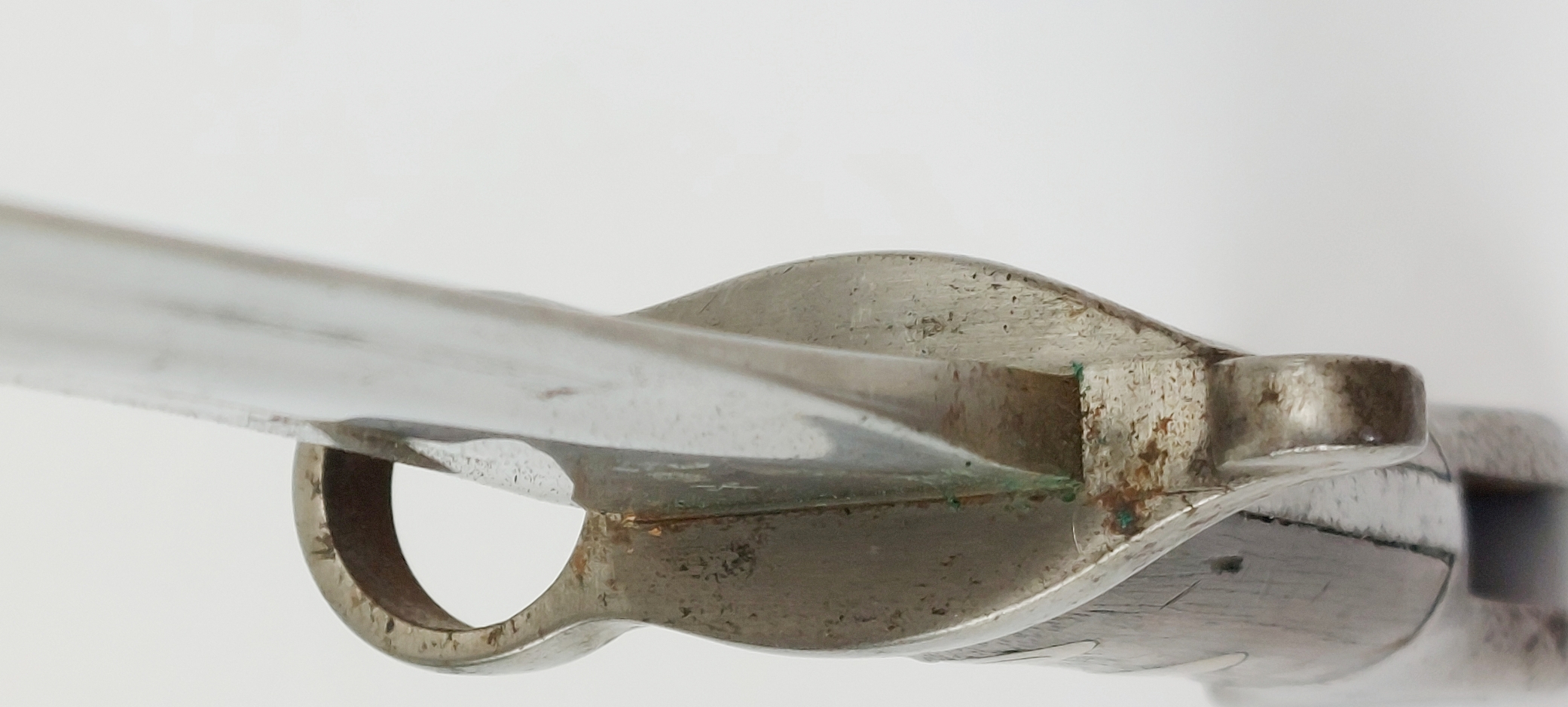
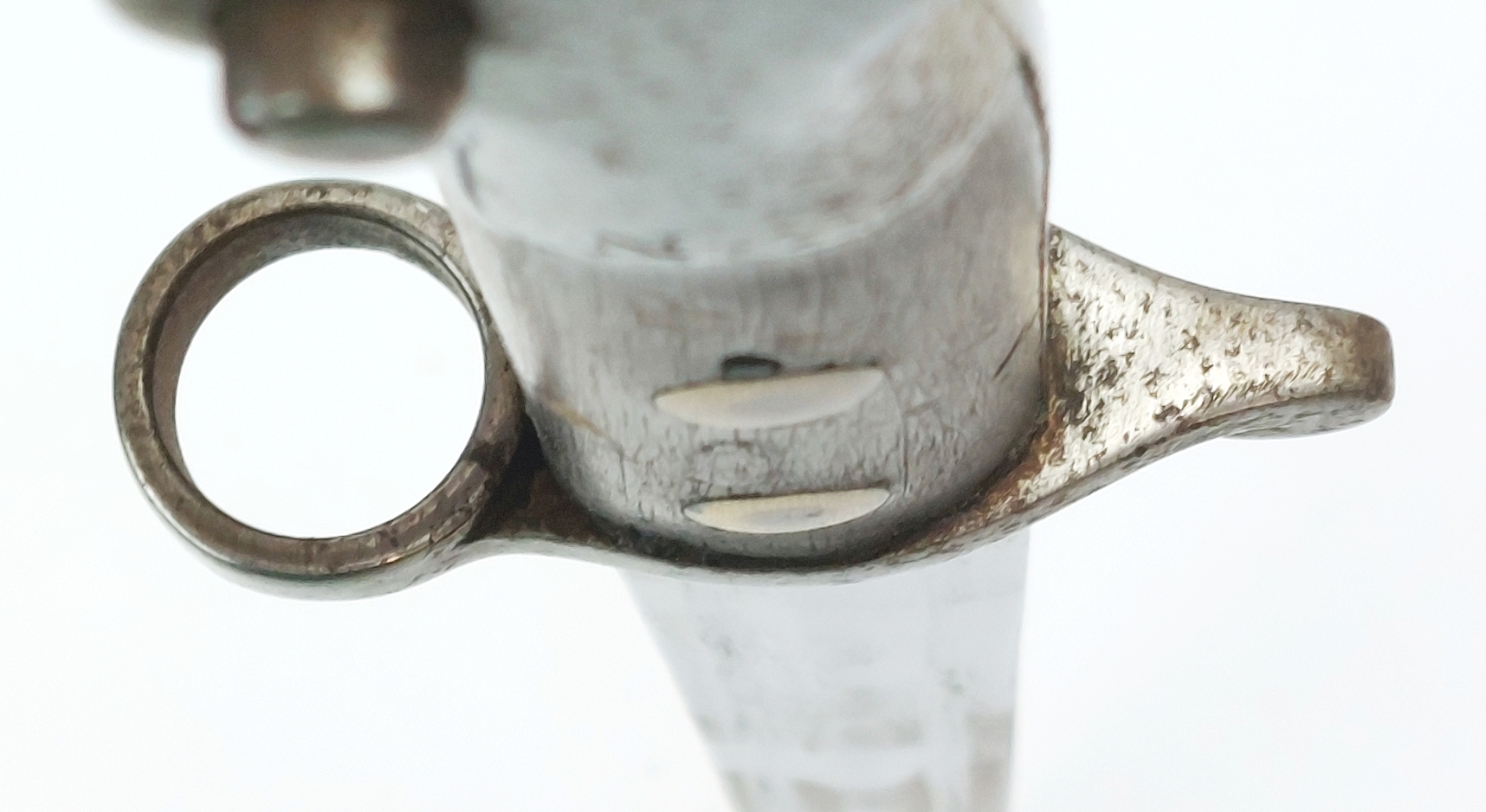
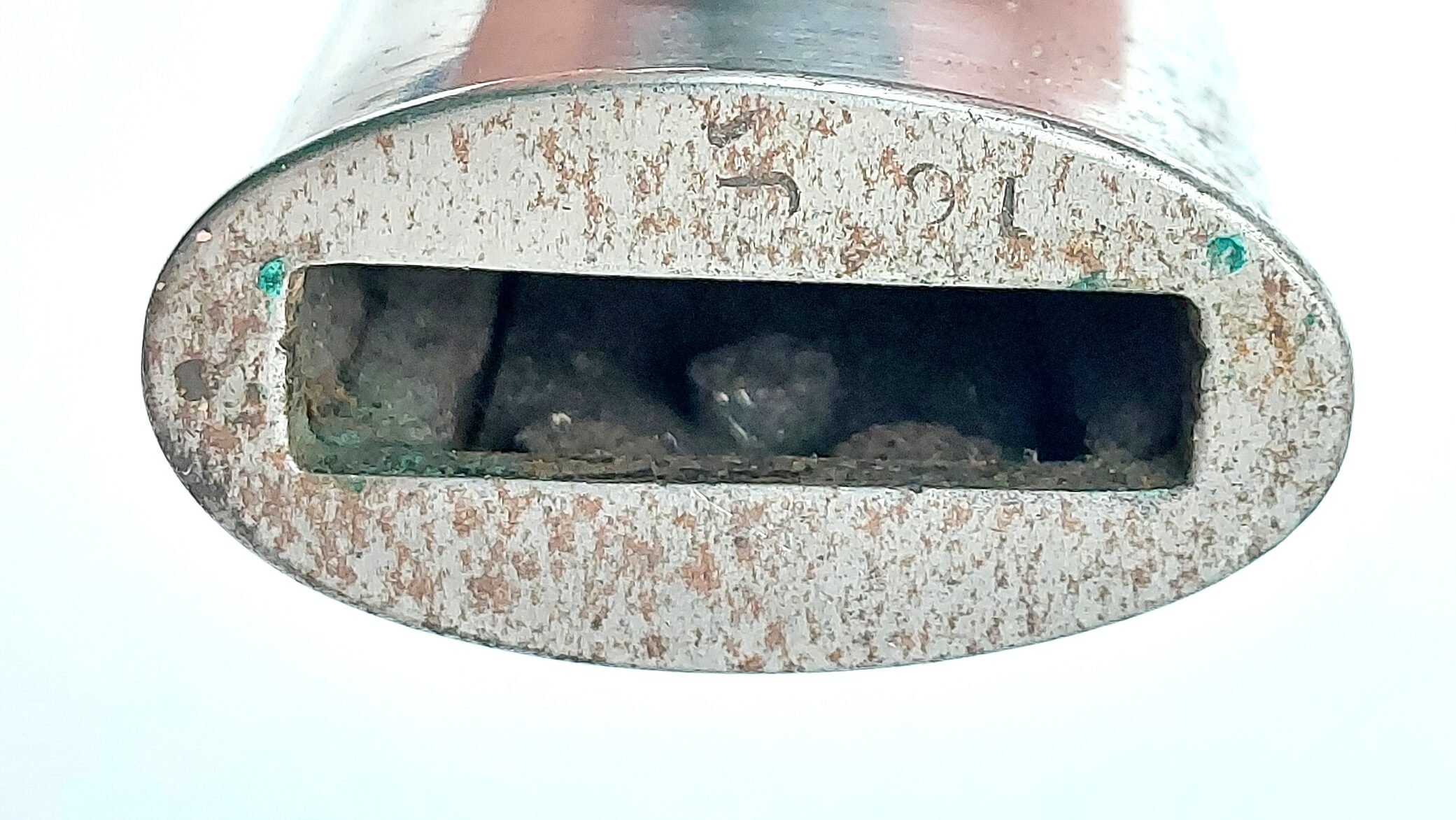
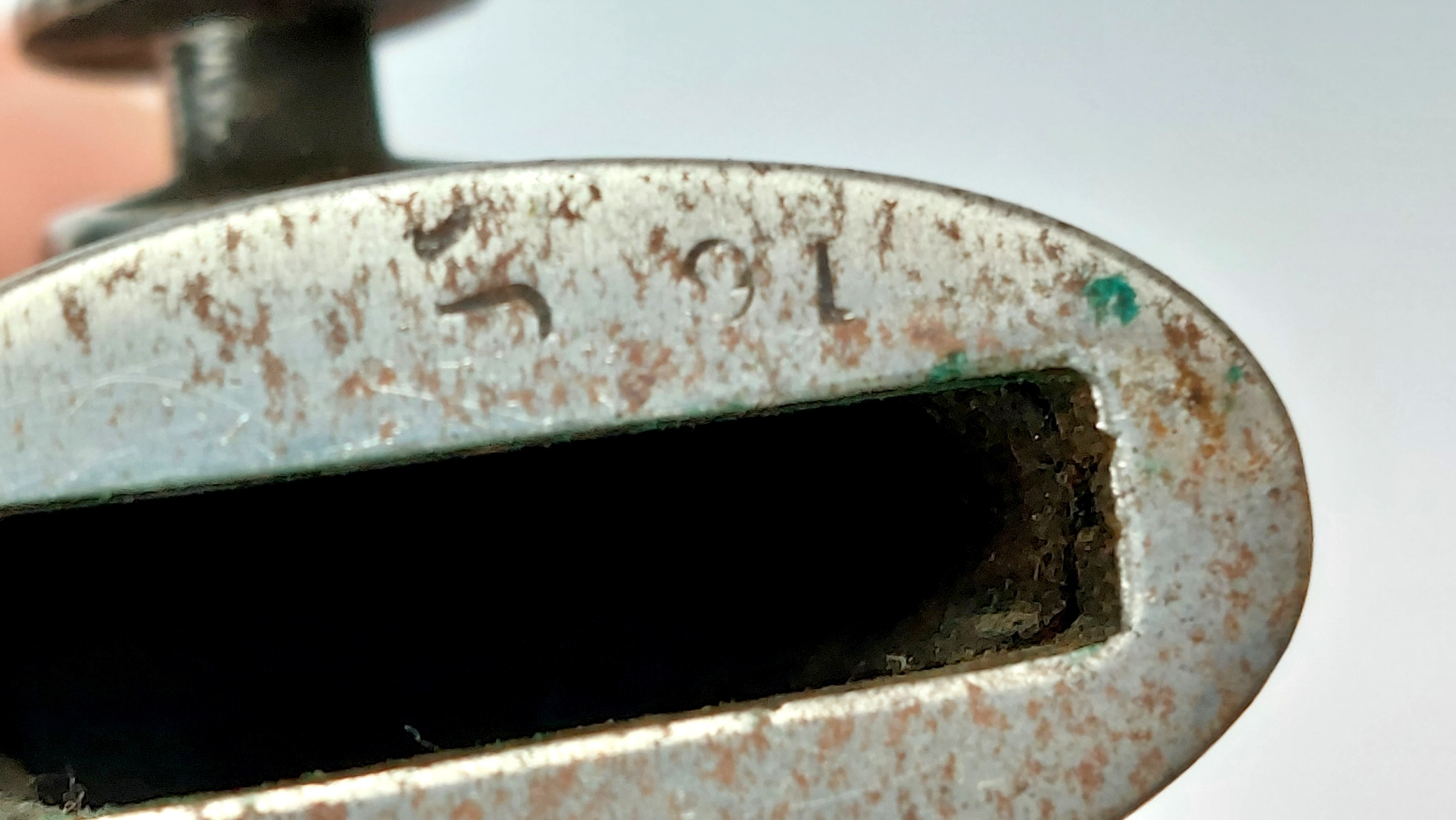
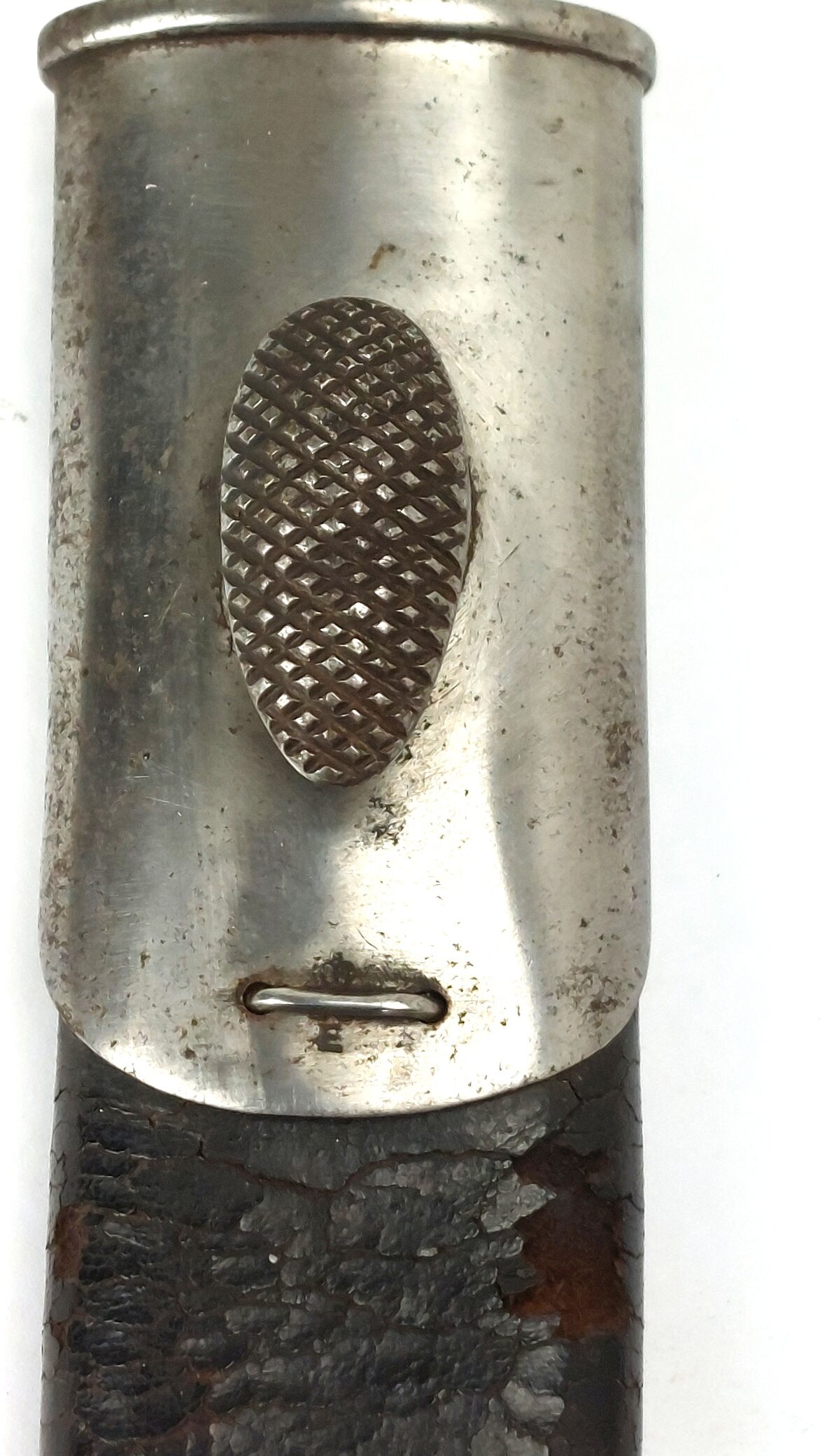
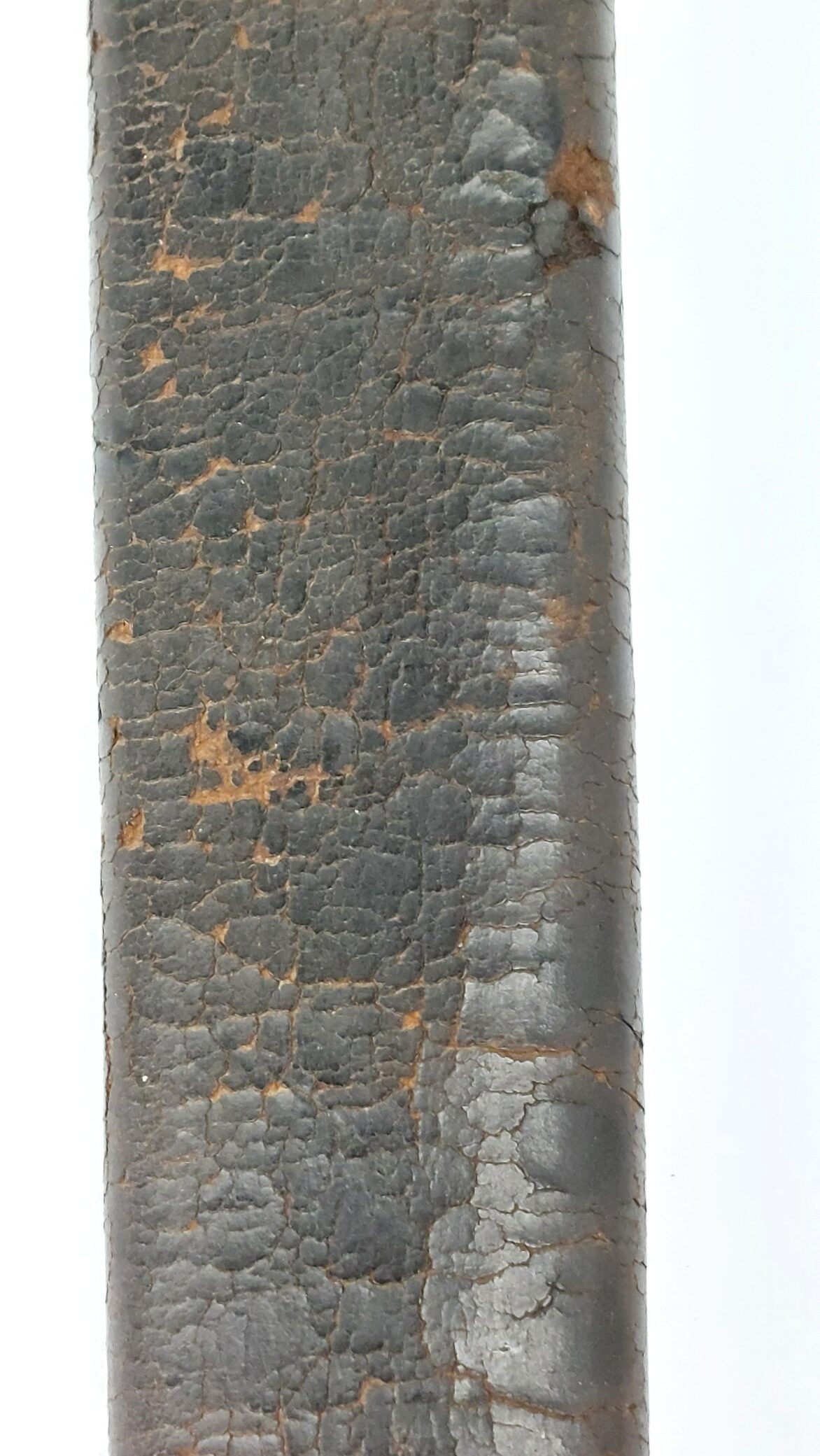
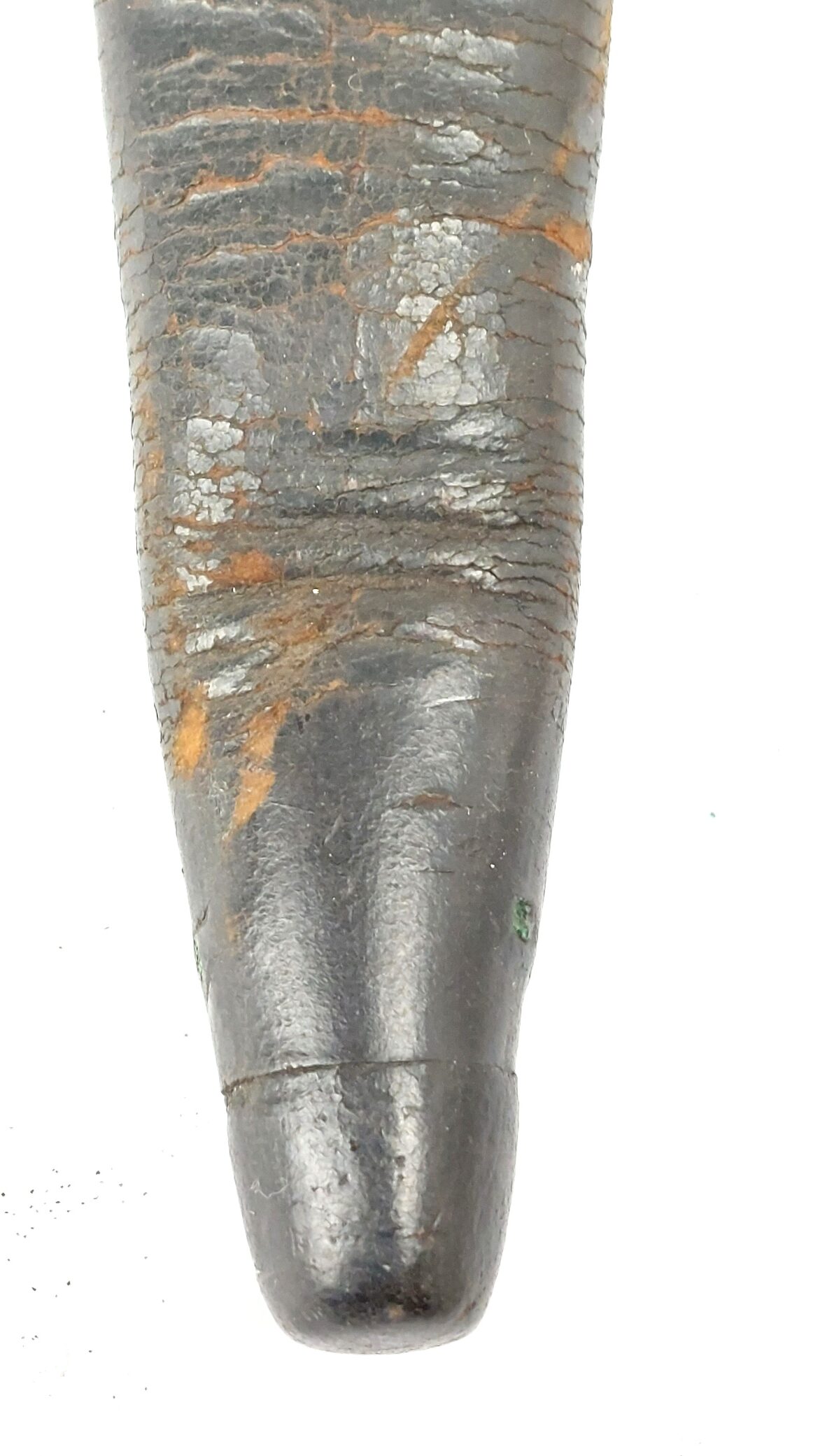
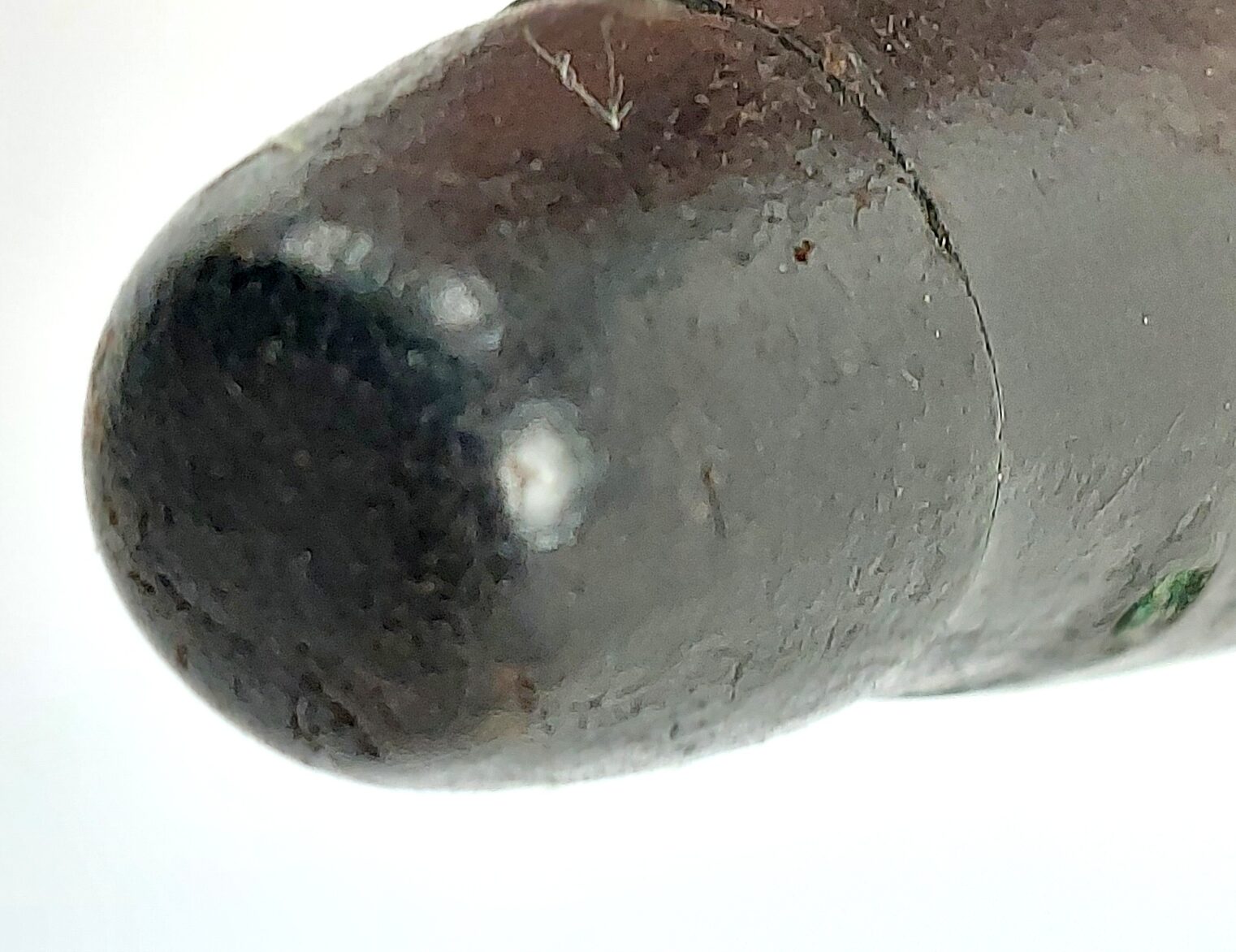
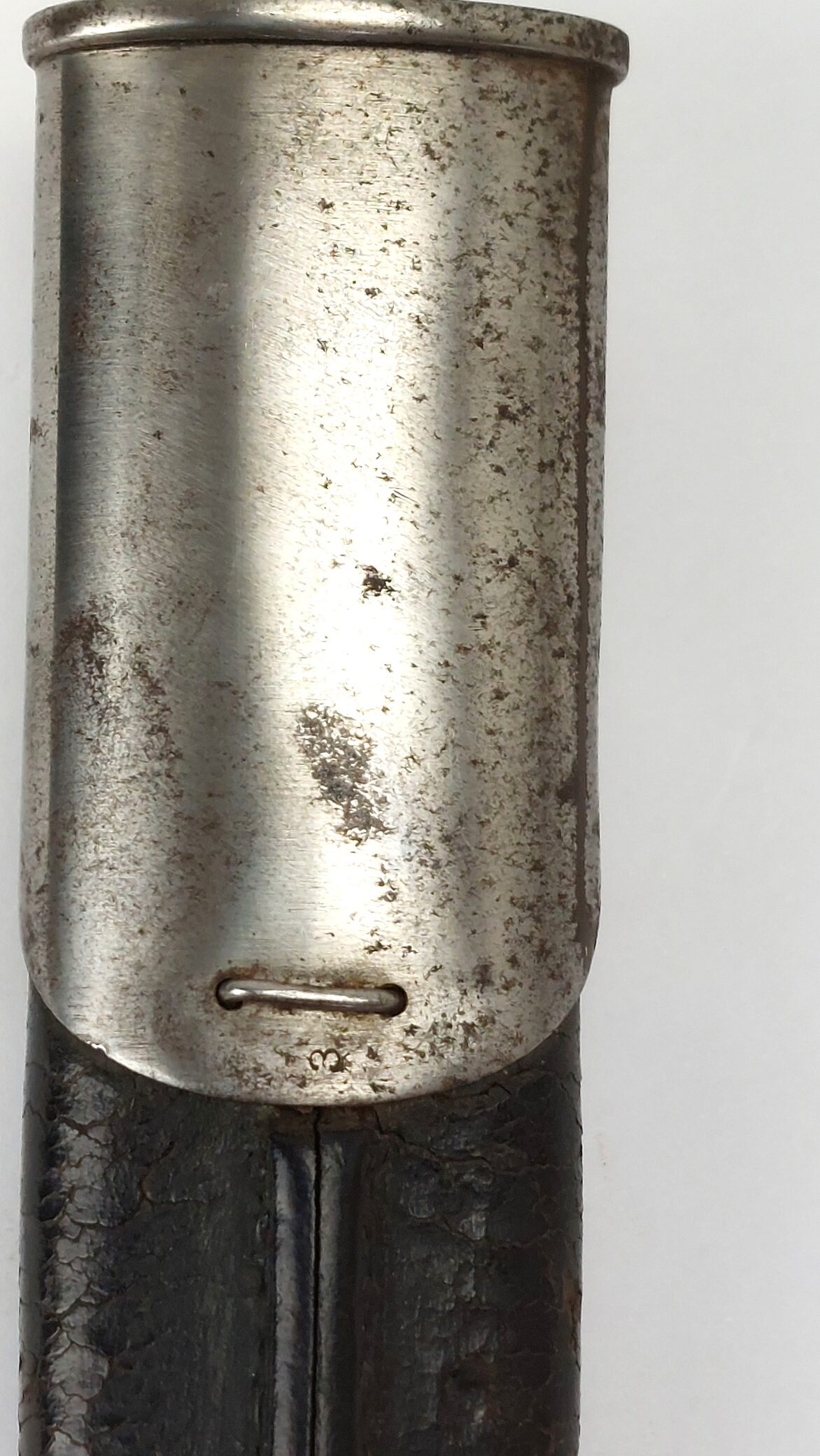
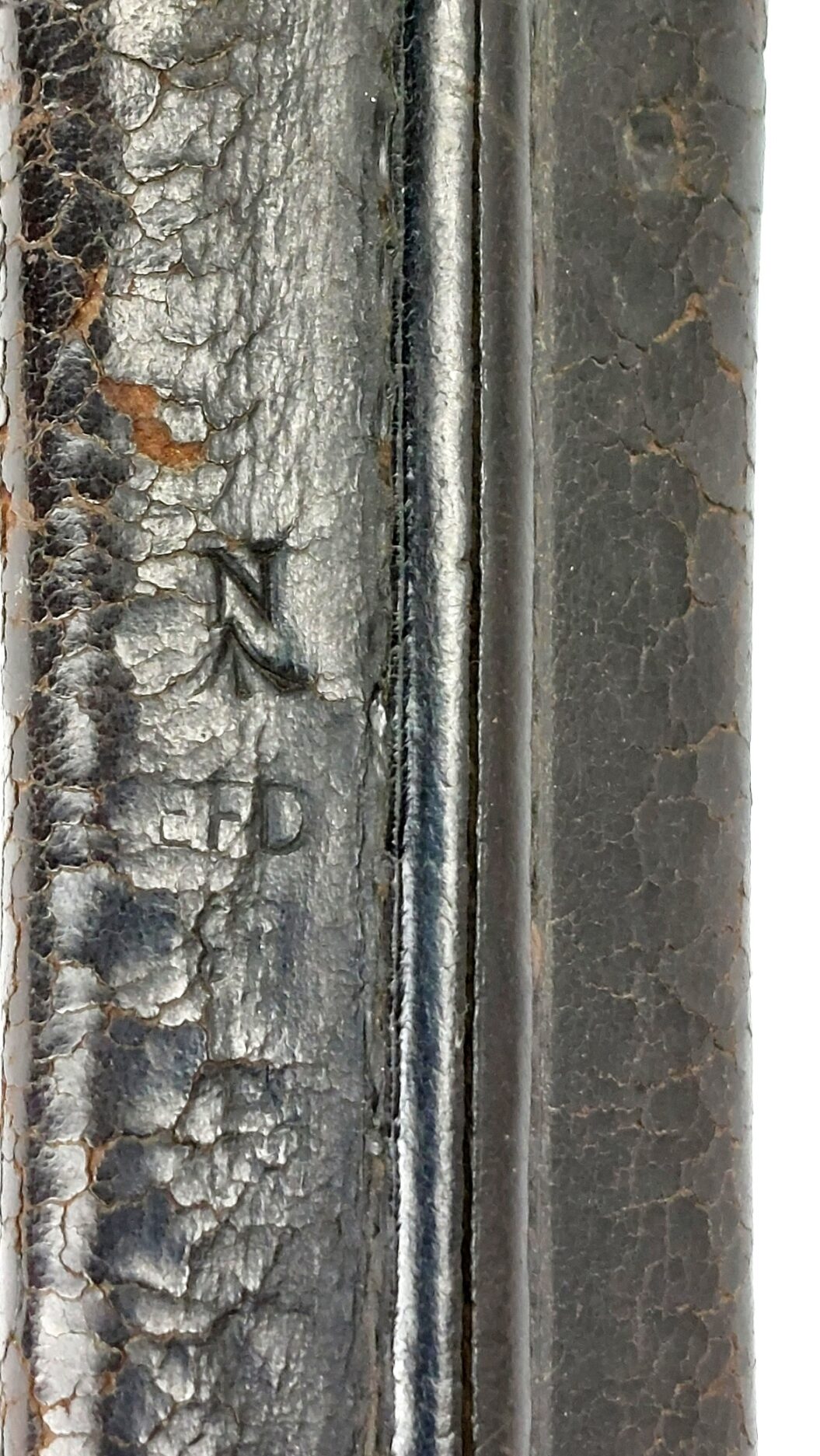
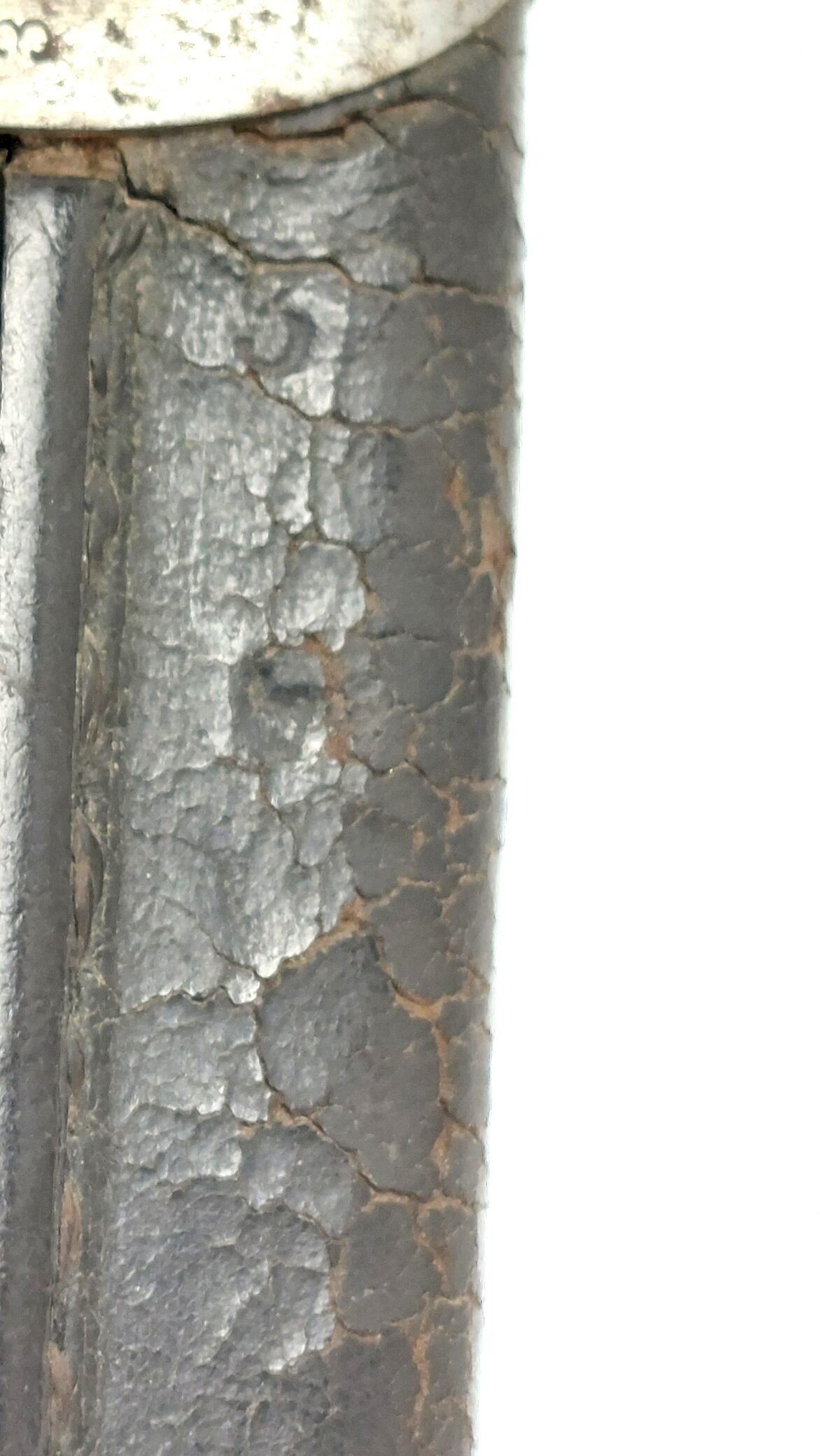
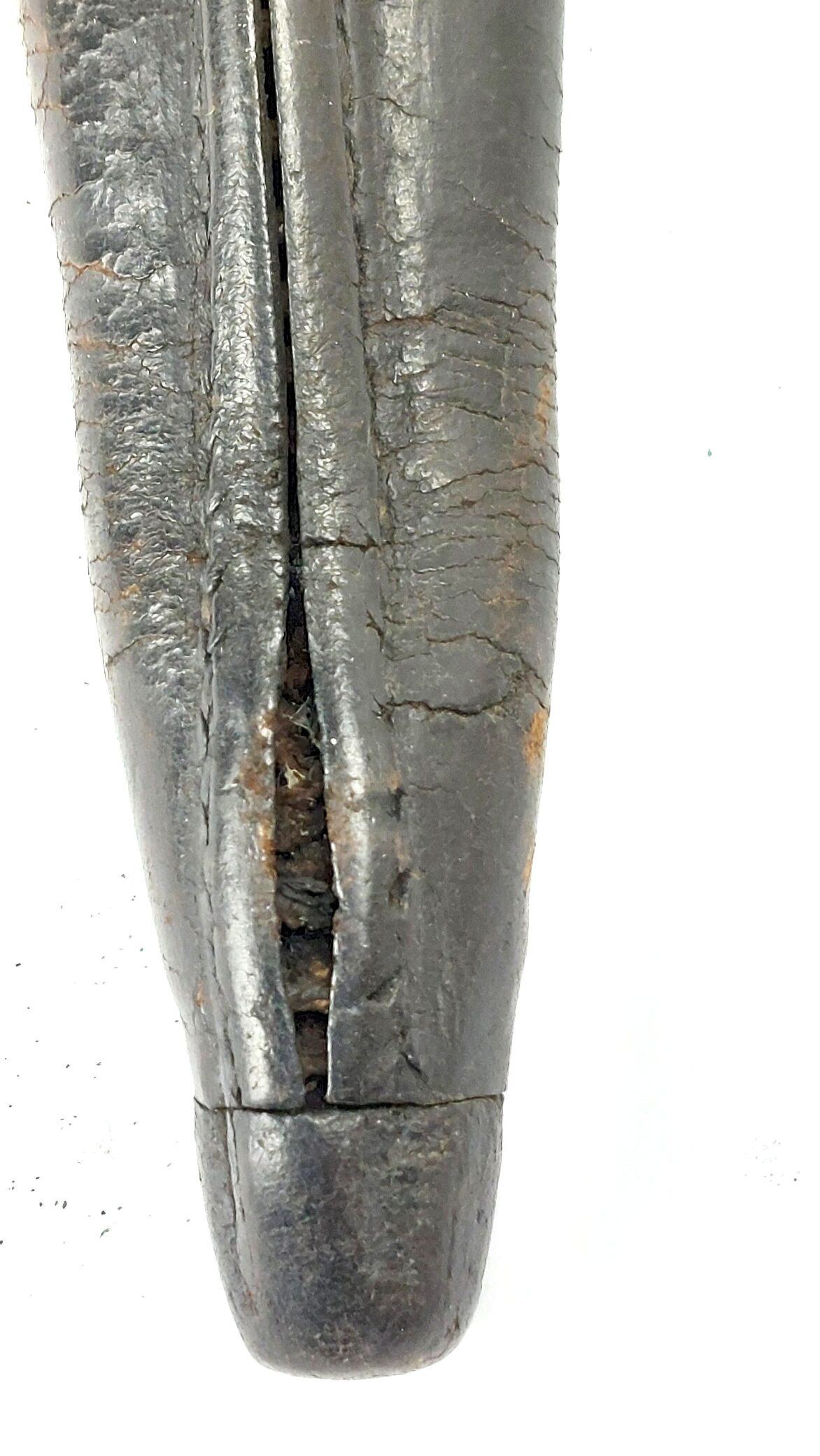
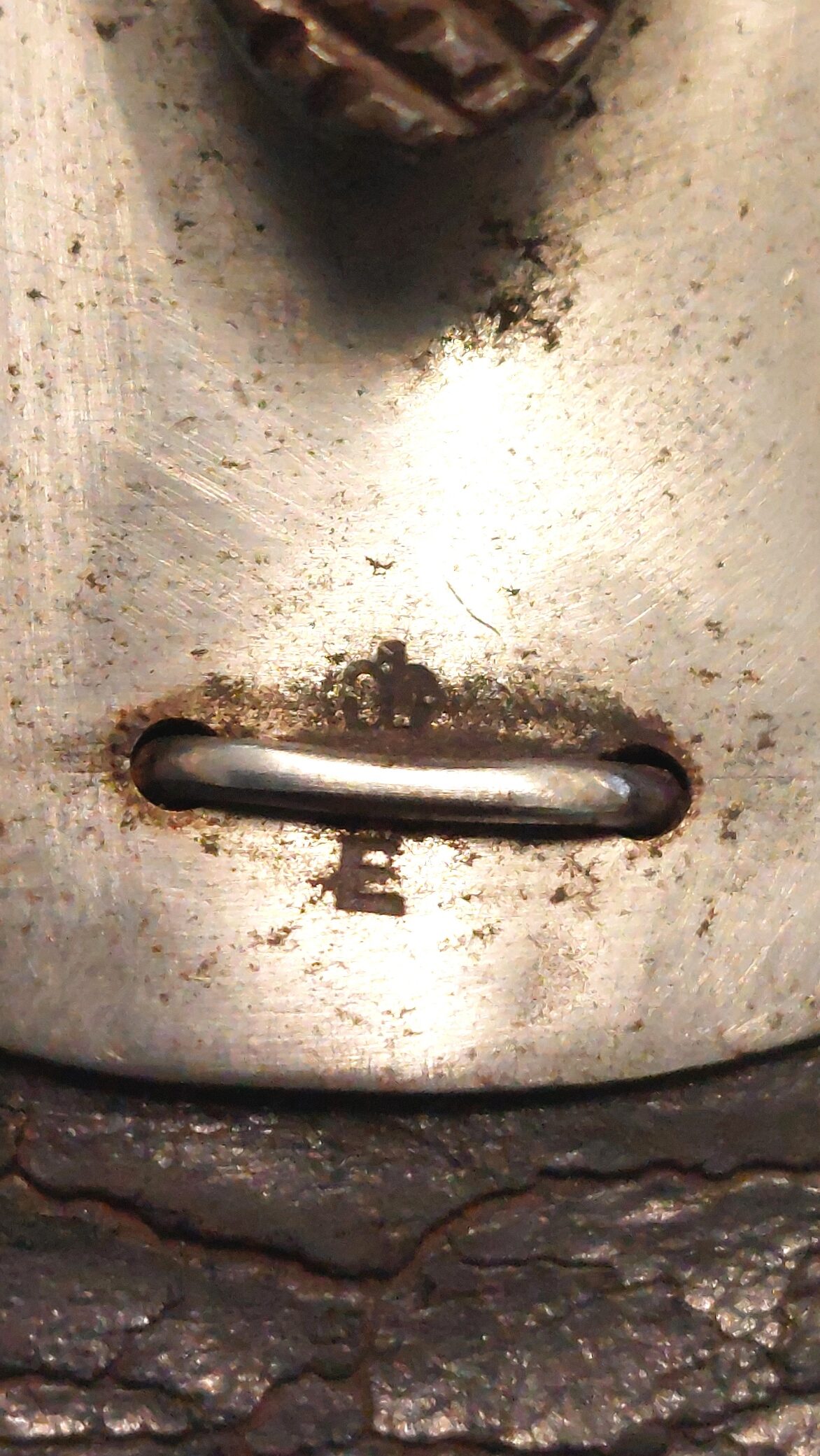
The bayonet is complete with its original Pattern 1888 Mk I leather scabbard. This early pattern features the correct steel locket fitted with the characteristic knurled oval frog stud, designed to grip securely within the leather equipment frog when worn on the soldier’s belt. The locket is stamped Crown over “E”, indicating manufacture and inspection at the Royal Small Arms Factory, Enfield, while the throat bears the matching rack number “91”, confirming the scabbard has remained paired with the bayonet since service. The leather body is stamped “N” over the Broad Arrow and “EFD”, signifying Royal Navy issue and manufacture by the Enfield Factory Department. The scabbard itself represents the early Pattern 1888 Mk I form, constructed from a single folded leather body sewn along the rear seam and terminating in a leather chape rather than the later steel-tipped pattern introduced on subsequent scabbards. Because the spear-point blade frequently wore through the leather tip during service, surviving examples with intact leather chapes are increasingly difficult to find today.
Approx. Measurements – Blade length: 30.2 cm. Overall length: 42.2 cm.
Historical Note:
The Pattern 1888 bayonet marked a significant change in British infantry equipment. Adopted alongside the new .303 calibre Lee-Metford rifle in 1888, it replaced the long sword bayonets previously used with Martini-Henry rifles. Experience during the late Victorian period demonstrated that the older sword bayonets were unnecessarily long and cumbersome when used with modern magazine rifles. The Pattern 1888 introduced a shorter, practical knife-pattern blade capable of serving both as a fighting weapon and a field utility tool.
Manufacture was centred at the Royal Small Arms Factory (RSAF), Enfield, the British government’s principal arms factory, although additional contracts were issued to private makers including Wilkinson Sword Company, Robert Mole & Sons of Birmingham, and Sanderson Brothers & Newbould of Sheffield. Several developmental variants were produced as the design evolved, with the present example representing the Mk I, 2nd Type, identifiable by its two-rivet grip construction.
Bayonets of this pattern accompanied British forces during the final decades of Victorian imperial expansion. Examples dated to the mid-1890s, such as this October 1896 Enfield production example, would have been in service during the period immediately preceding the Second Anglo-Boer War (1899–1902). Throughout that conflict British infantry and colonial units carried the Long Lee-Enfield rifle fitted with the Pattern 1888 bayonet.
The presence of the “N” naval service mark indicates issue to the Royal Navy rather than the Army. During major colonial conflicts the Royal Navy frequently formed Naval Brigades, landing sailors and marines ashore to support army operations. These detachments operated as infantry and artillery units, often bringing heavy naval guns mounted on improvised field carriages. Sailors of these brigades were equipped with the same small arms as the Army, including the Lee-Metford rifle and Pattern 1888 bayonet. Naval brigades from ships such as HMS Powerful, HMS Terrible, HMS Doris and HMS Monarch played a notable role during the Boer War, including the defence and relief operations around Ladysmith.
The survival of a matching numbered scabbard is particularly noteworthy. Victorian bayonet scabbards were frequently replaced during service, making matched examples increasingly uncommon today. The combination of Enfield manufacture, precise October 1896 date, Royal Navy issue marking, and matching scabbard makes this a well-documented example from the closing years of Queen Victoria’s reign.
*Condition*
The blade remains bright with light age staining and surface marks consistent with service and storage. All inspection and acceptance markings remain clear and legible. The wooden grips are intact with service wear and minor surface marks. The oil hole remains present but is partially obstructed with old grease. The steel hilt retains an even aged patina. The scabbard leather remains structurally sound with age-related cracking and surface wear typical of late Victorian leather equipment. The rear seam retains its original heavy stitched construction typical of early Pattern 1888 Mk I leather scabbards, with some opening of the seam and leather cracking near the tip. The steel locket retains its frog stud and markings. Please see photographs as part of the condition report.
£240.00Original price was: £240.00.£195.00Current price is: £195.00.
Important!
*In order to complete the online purchase we will require a picture/scan of a photo ID (Driving Licence, Passport or an official document with a recent picture). If you don't posses any such document please call to buy. If we consider that the proof of ID is incorect or insuficient, we reserve the right to cancel the transaction.
*We also reserve the right to cancel the transaction with a full refund if there is any suspicion that the provided item will be used in any way contrary to the laws and legislation of UK.