~ Victorian Staffordshire Pottery Cottage Money-Box with Flanking Figures, c.1860–1875 ~
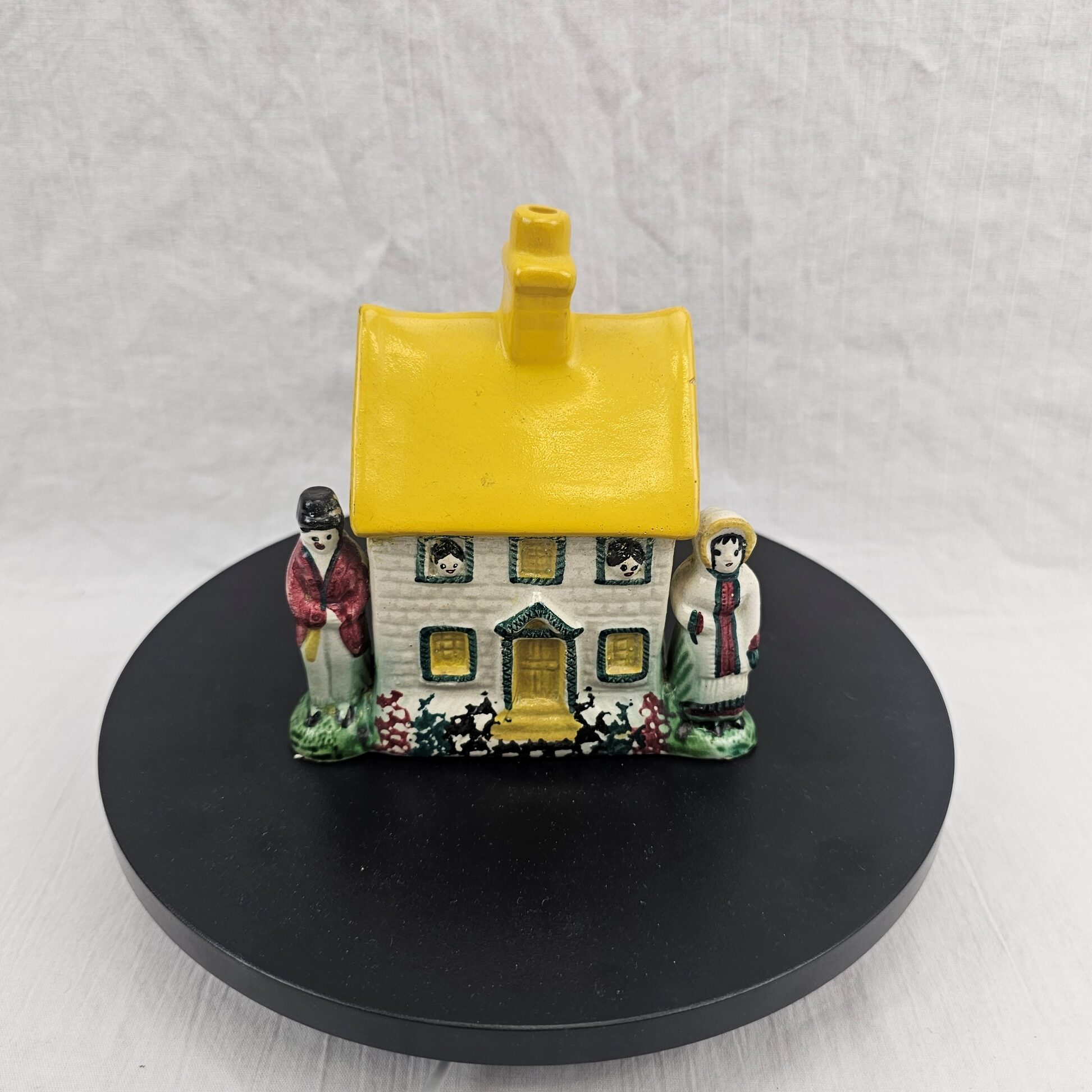
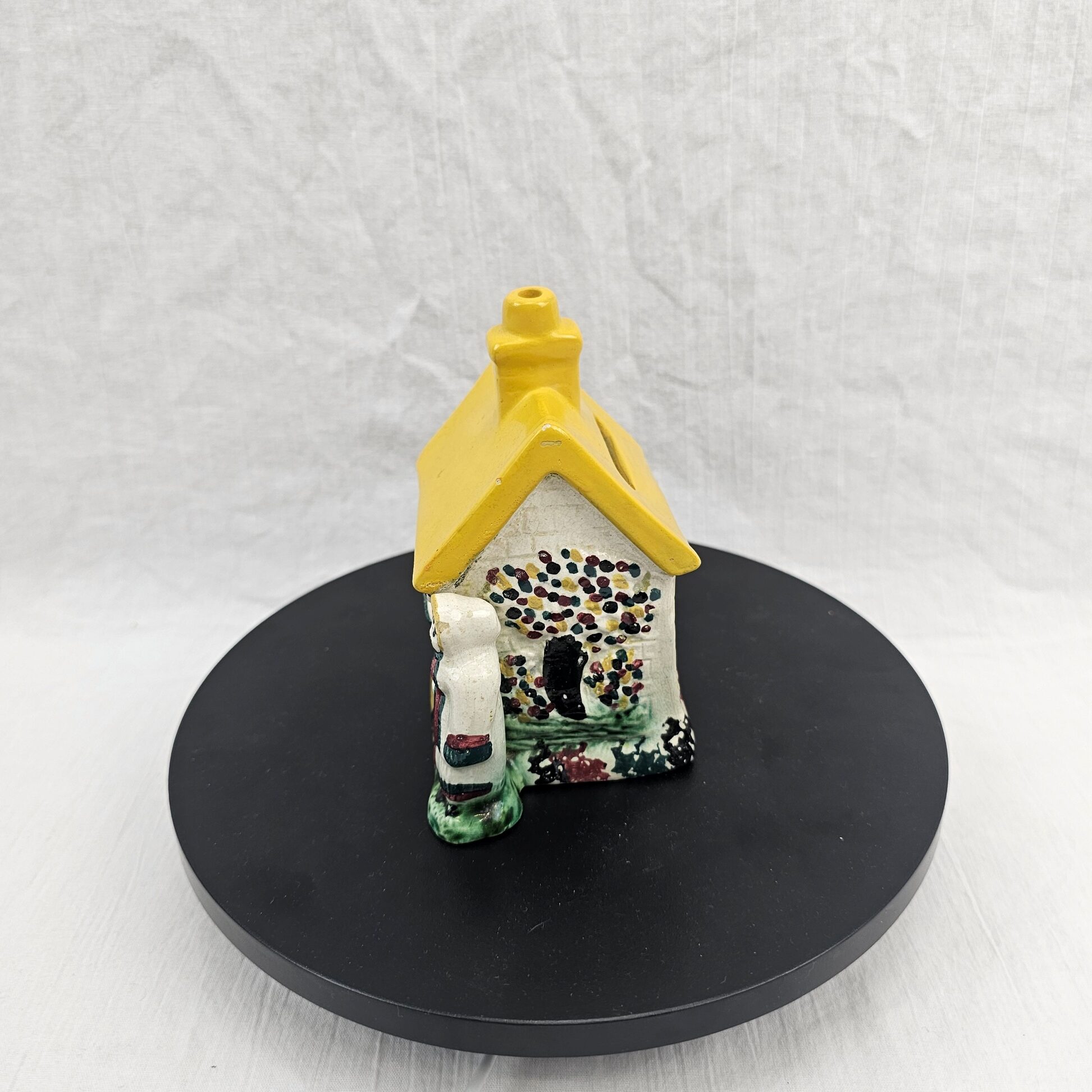
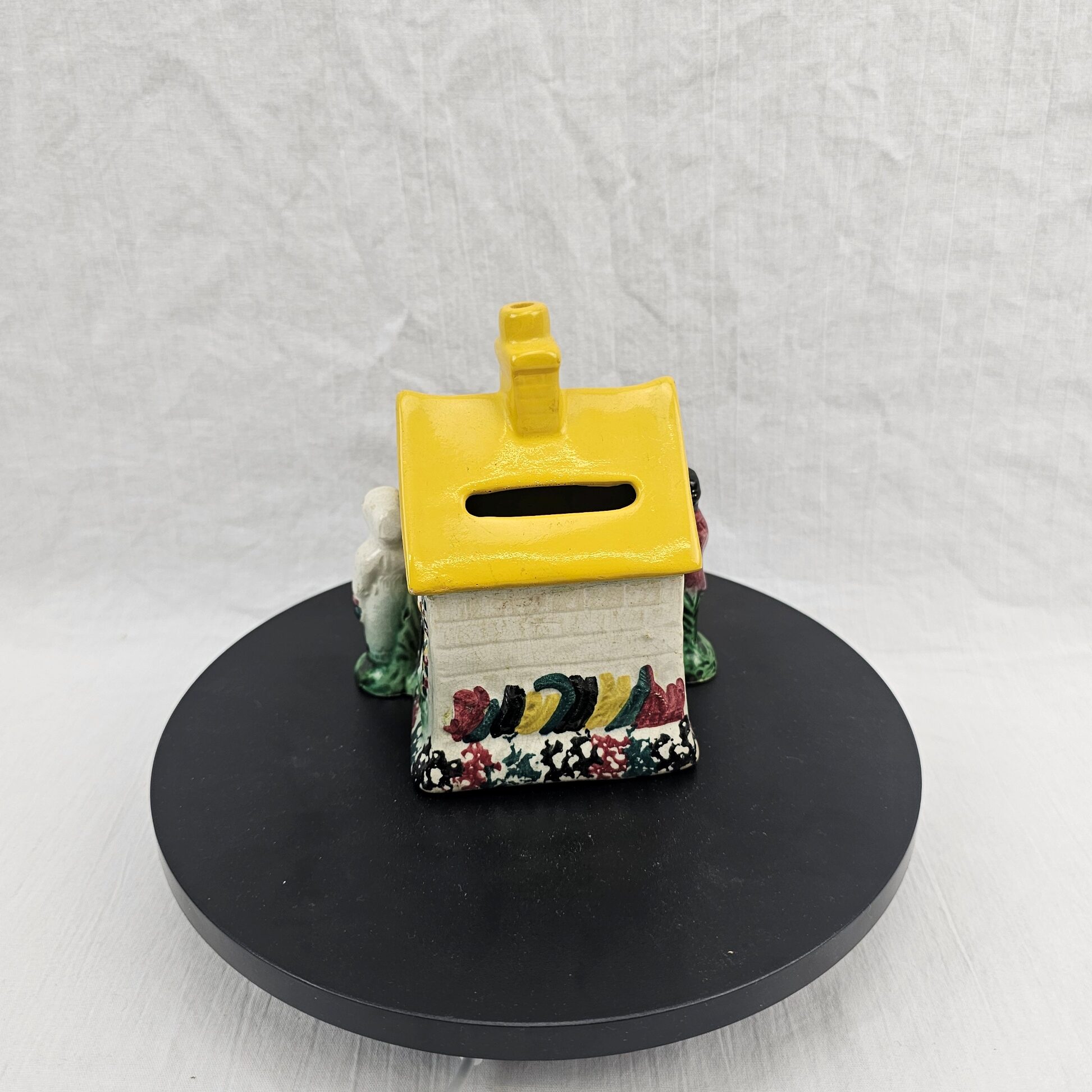
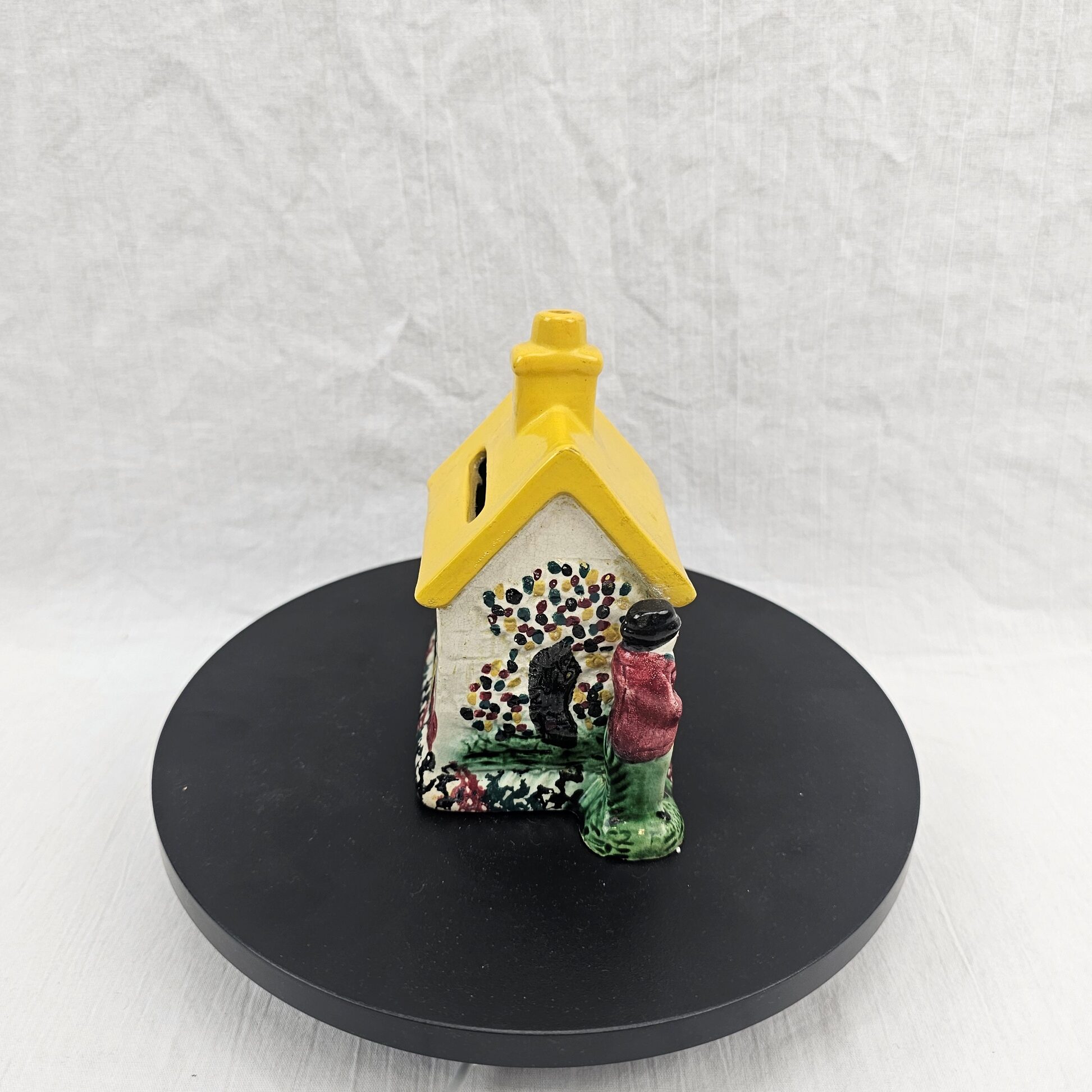
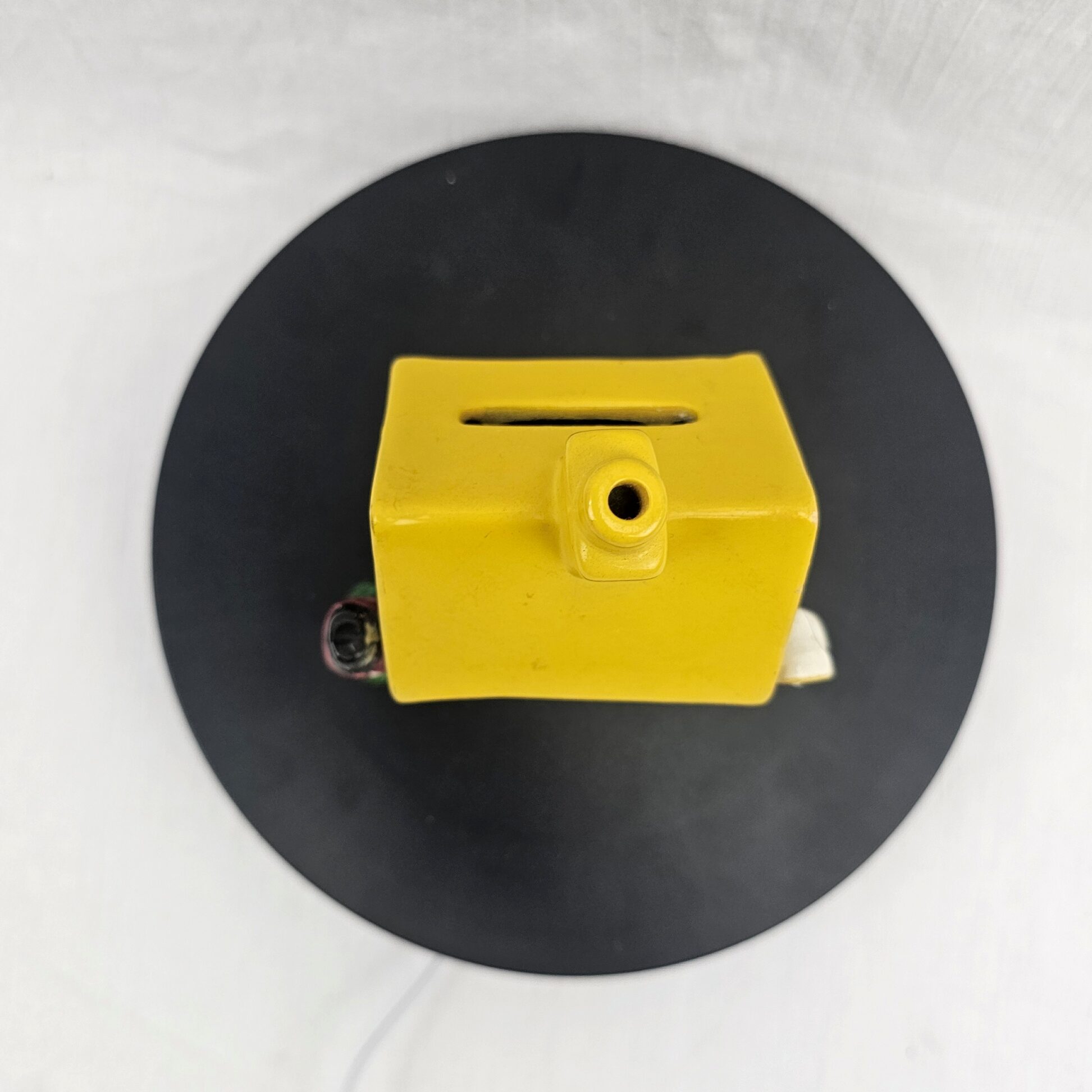
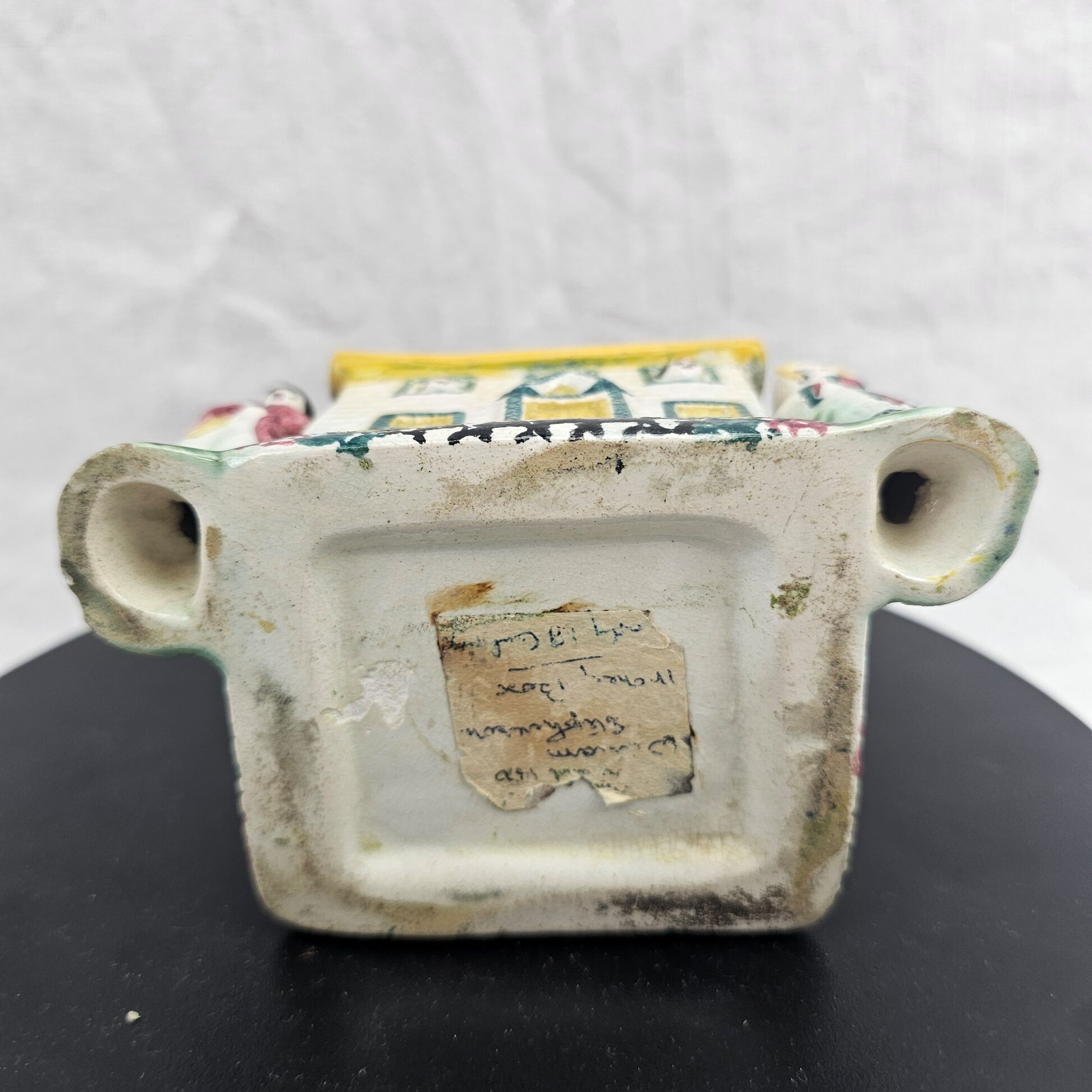
A charming and vividly hand-painted Victorian Staffordshire pottery money-box in the form of a two-storey country cottage, with a male and female figure standing in the garden on either side. The cottage body is glazed in white, with moulded and painted windows picked out in yellow with green surrounds, and the upper windows feature small moulded faces peering outward — a delightful and whimsical touch. The central door is yellow with a green canopied porch. The roof is glazed in a bold, bright yellow, with a hollow yellow chimney stack rising from the centre; the coin slot is a rectangular aperture cut into the rear of the roof, giving access to the hollow interior. The garden base features black-spotted foliage and red flower clusters. Flanking the cottage on the left stands a gentleman in a red coat and black hat; on the right, a lady in a white dress and yellow bonnet with red and teal highlights. Both figures stand in green garden plots. The base is rectangular with an inset recessed panel below and two circular access holes at each end — standard features of the cottage money-box form. Approximate height 10–11 cm; width approximately 12 cm.
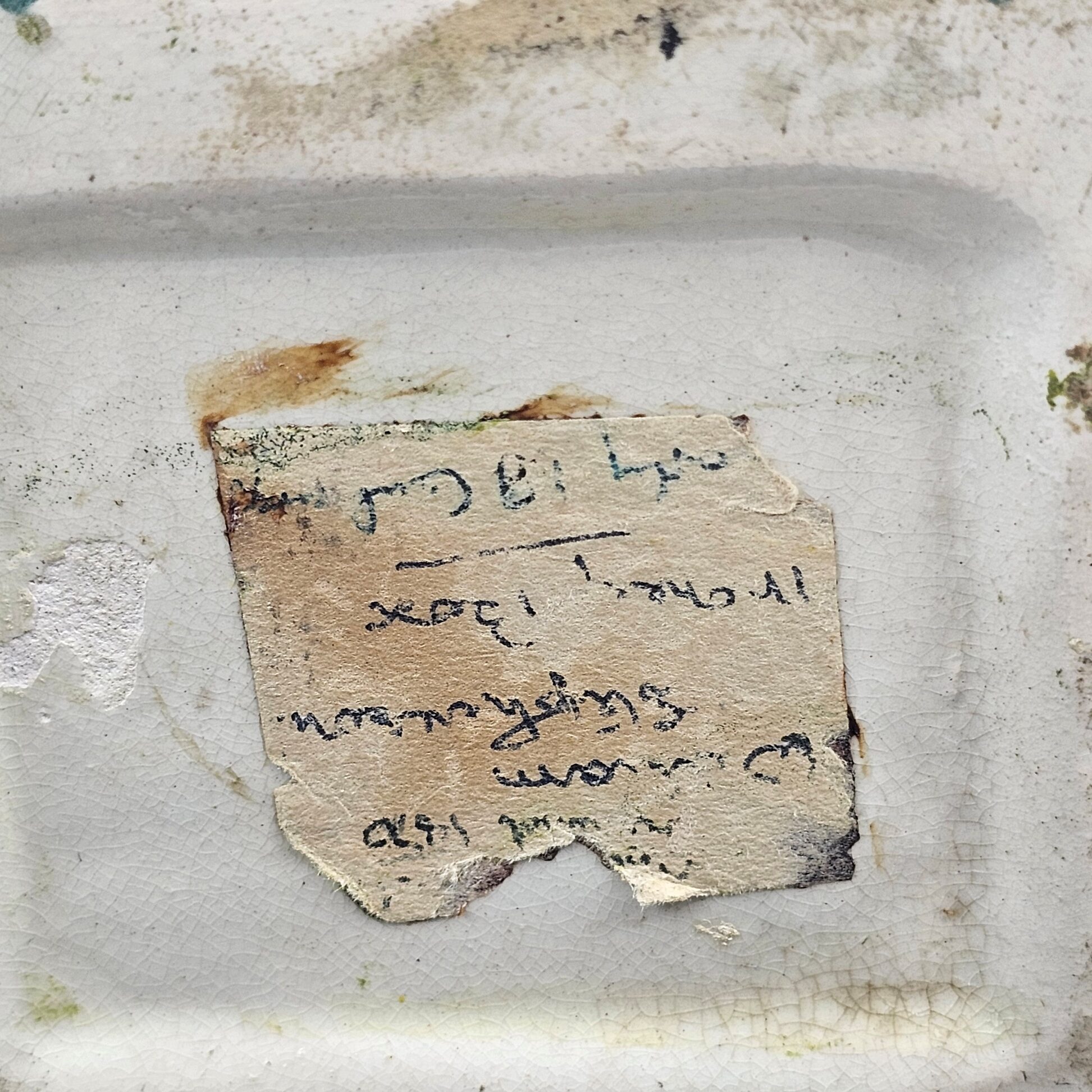
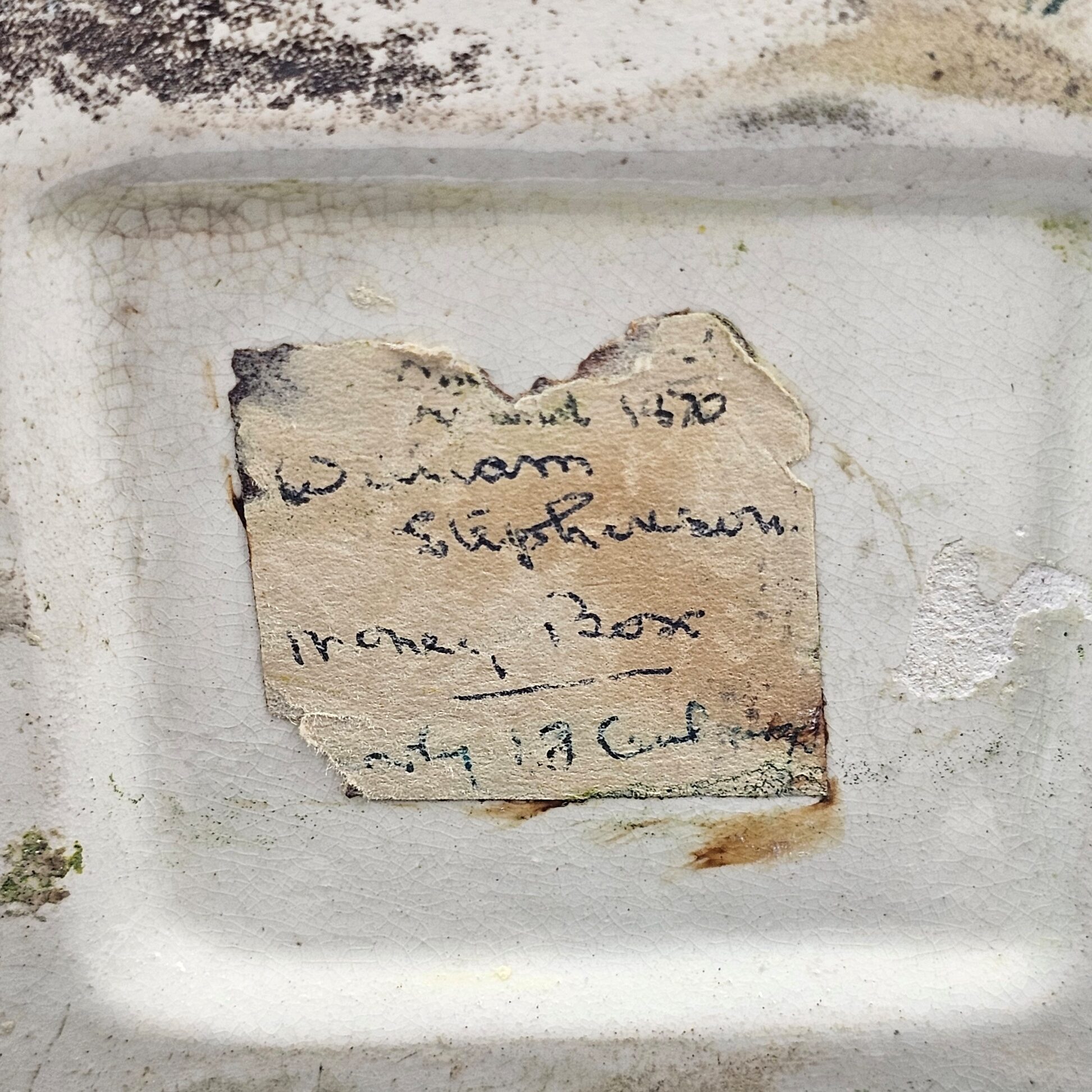
The base retains a handwritten paper label reading: "William / Stephenson / Money Box / [c.1870?]" along with further partially illegible text — an appealing indication of early collection and documentation history.
~ Historical Context ~
Pottery cottage money-boxes were one of the most prolific and collectible subcategories of Victorian Staffordshire cottage-ware, produced in enormous variety and quantity from the 1840s through to the end of the century. Forming part of a broader tradition that included pastille burners, spill vases, and night-light holders modelled as English cottages, manor houses and churches, these money-boxes appealed to the Victorian taste for domestic imagery and practical ornament in one. The coin slot — almost invariably concealed on the rear of the roof — allowed coins to be deposited into the hollow interior, while the two circular holes in the base enabled retrieval by shaking, giving the piece genuine utility beyond its decorative function.
The presence of flanking figures — here a country gentleman and a bonneted lady in their garden — elevates this example above the plainer single-cottage money-box type and reflects the more ambitious output of the Staffordshire pottery cottage-ware tradition. The vivid yellow roof, characteristic red-coated gentleman figure, and moulded faces at the upper windows are all hallmarks of a well-made mid-to-late Victorian example, consistent with a dating of approximately 1860–1875.
The handwritten paper label on the base recording "William Stephenson / Money Box" with what appears to be a date reference to circa 1870 is an appealing provenance detail, suggesting early collection or auction documentation — adding to the character and story of the piece.
~ Condition ~
The piece presents in very good condition for its age.
Roof and chimney: The vivid yellow glaze is intact throughout. The chimney is complete. No chips or losses to the roof.
Coin slot (Image 3/5): The rectangular aperture is clean and intact.
Figures: Both the male and female flanking figures appear intact with good colour retention to the red coat, bonnet and dress details.
Cottage front and sides (Images 1, 2 & 4): Good colour to the windows, door, and garden decoration. The moulded faces at the upper windows are present and intact.
Base (Image 6): The unglazed recessed base shows age grime and green algae/mould deposits to the foot rim and inner panel — consistent with age. The paper label is old and partially torn; the ink remains legible. The two circular access holes are clean and intact.
No chips, cracks, or evidence of restoration are apparent from examination of the photographs.
Buyers are encouraged to review all images carefully before purchasing.