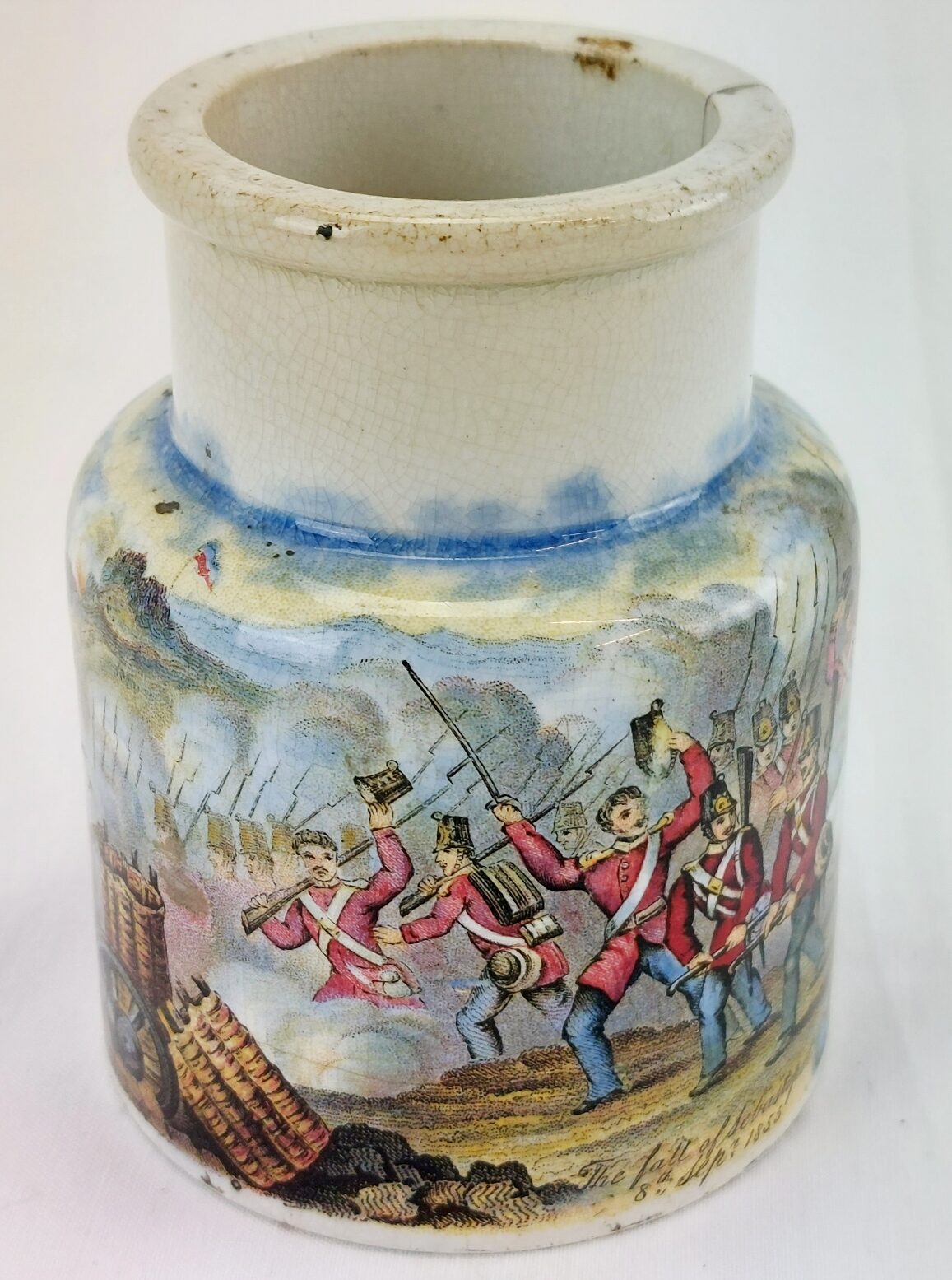
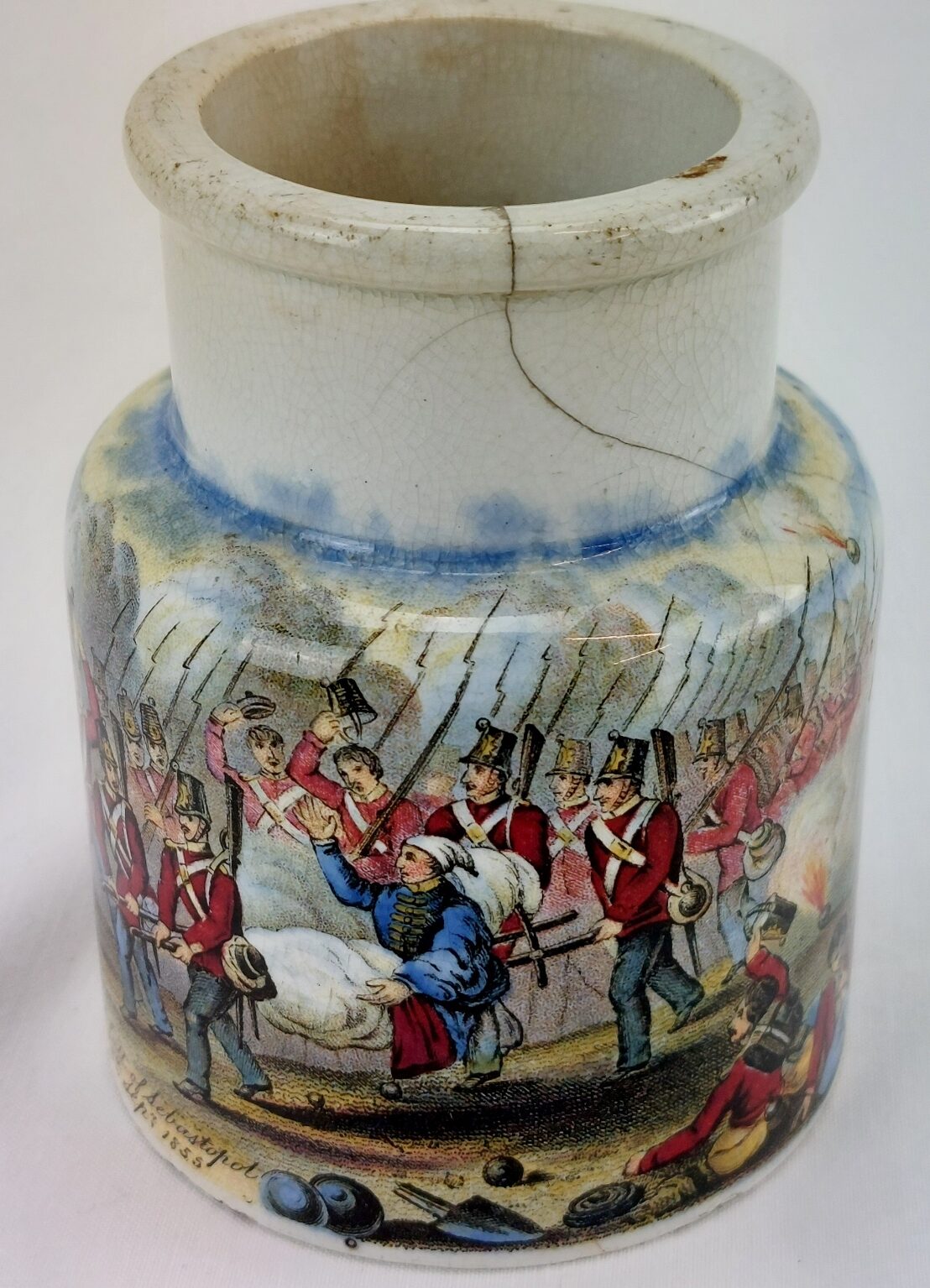
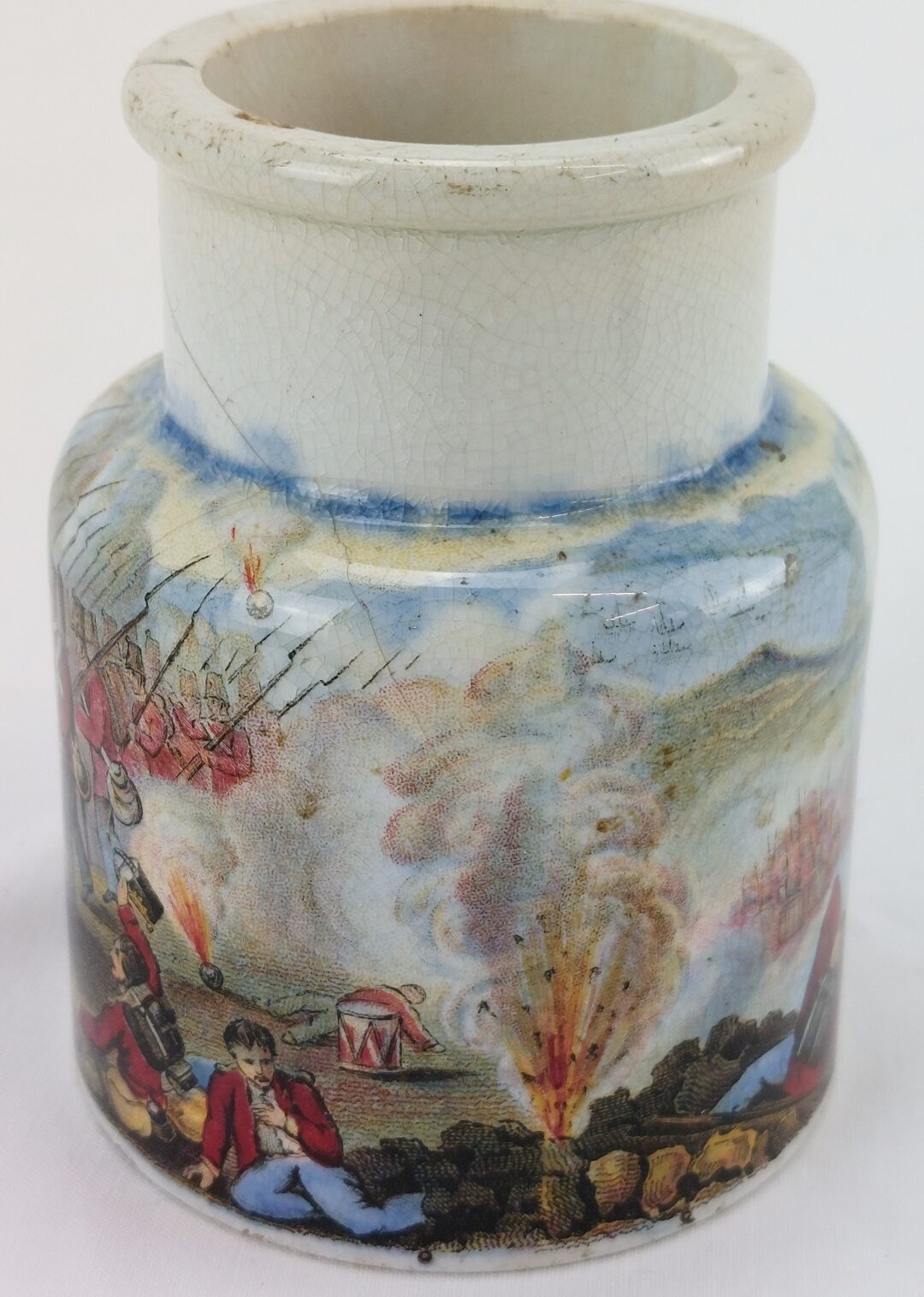
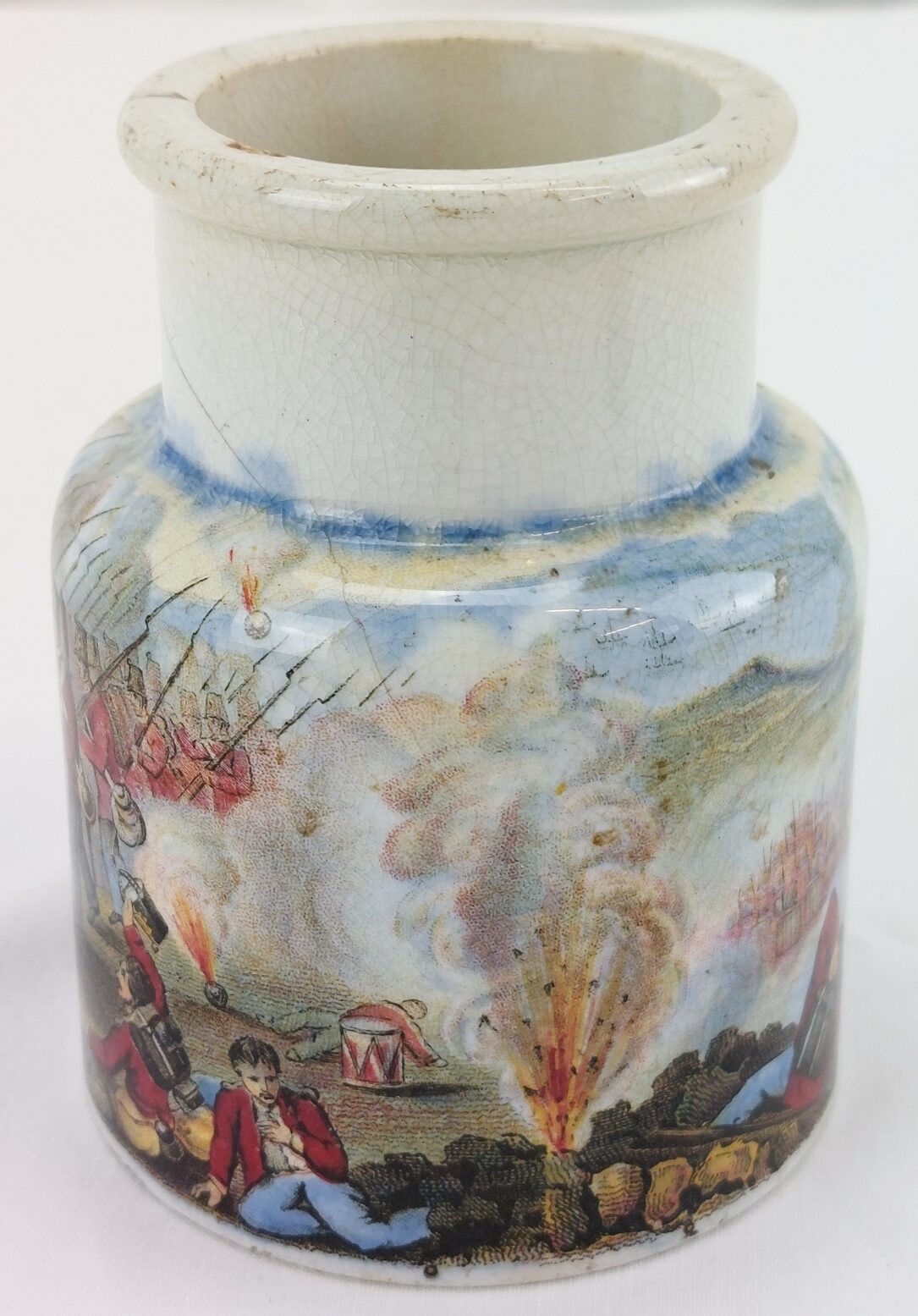
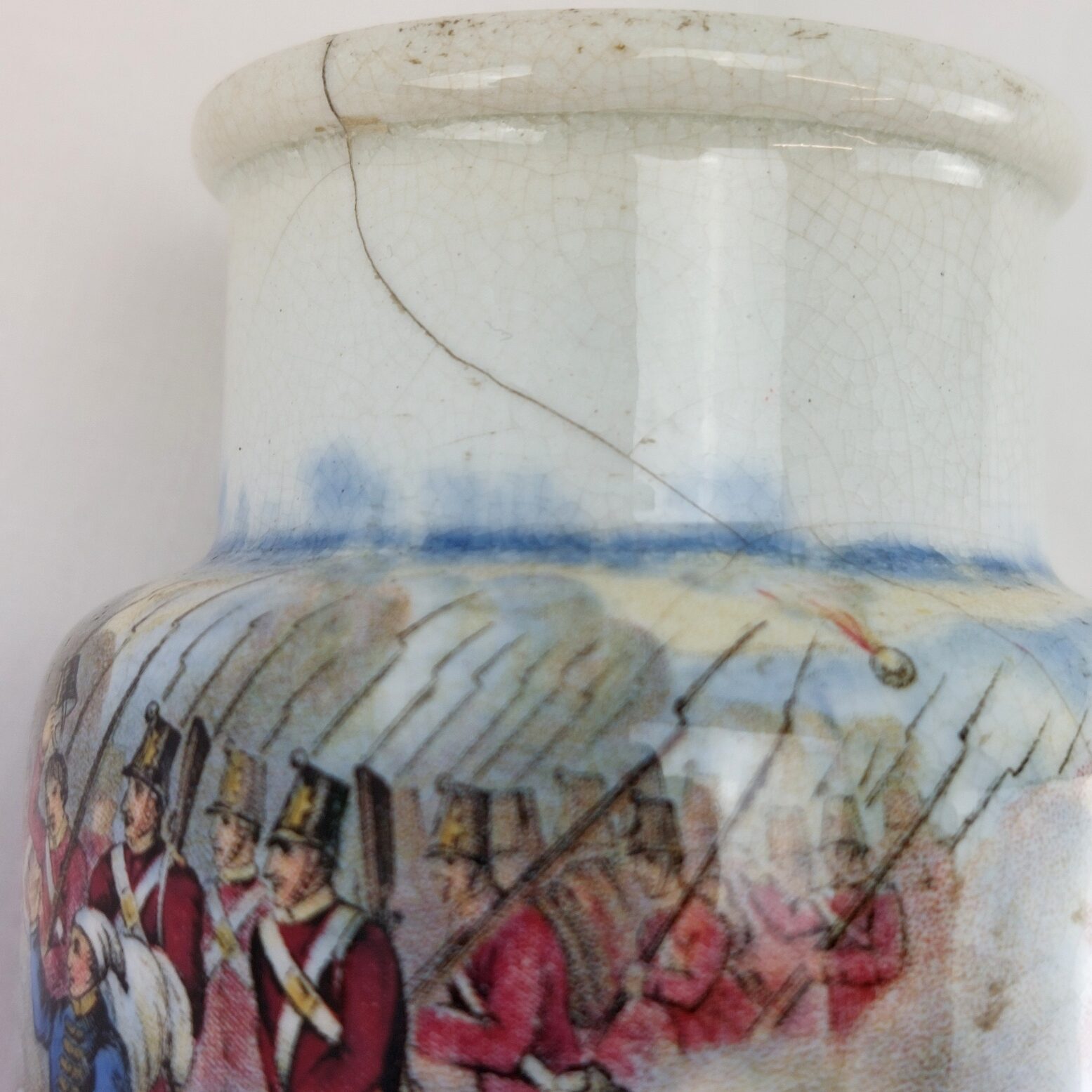
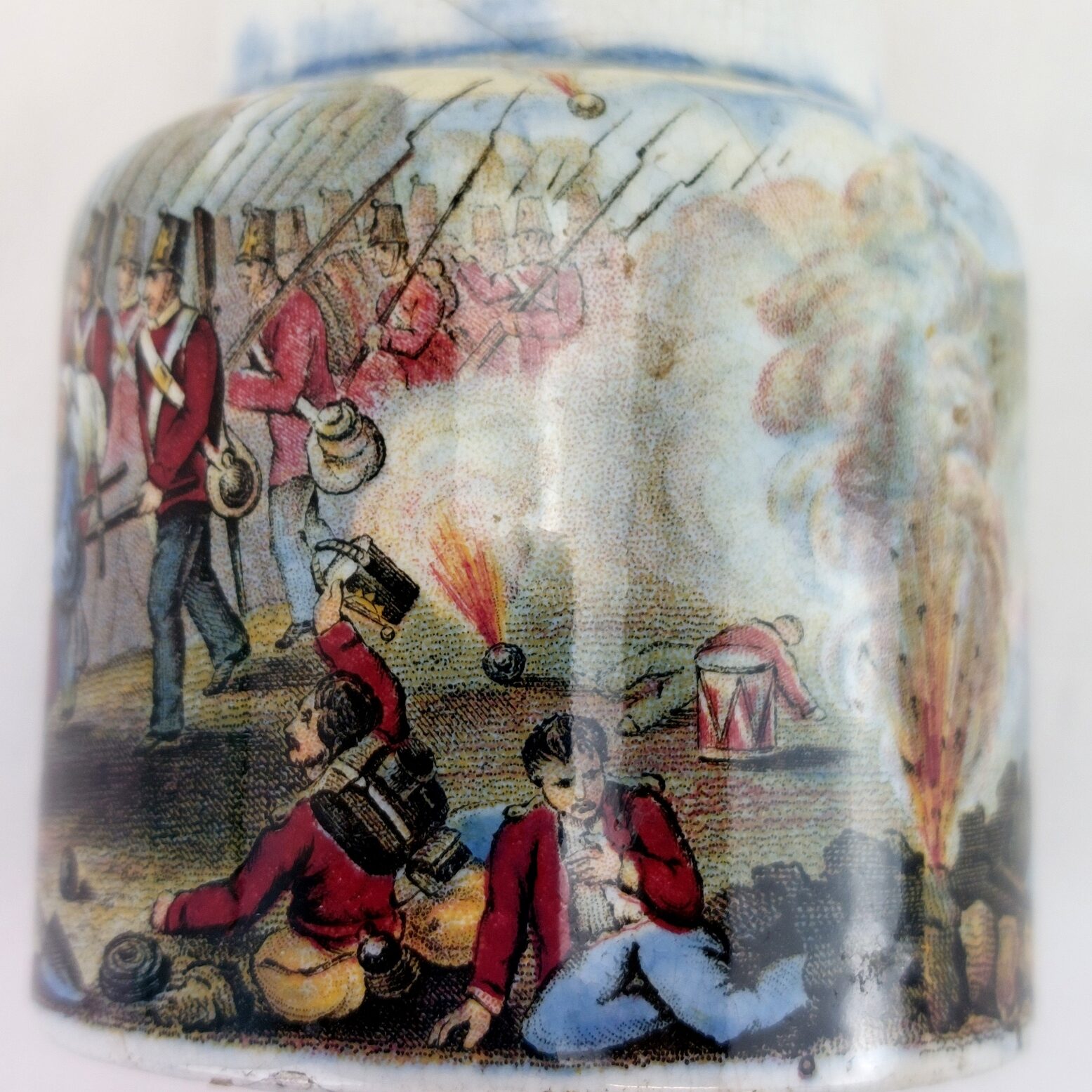
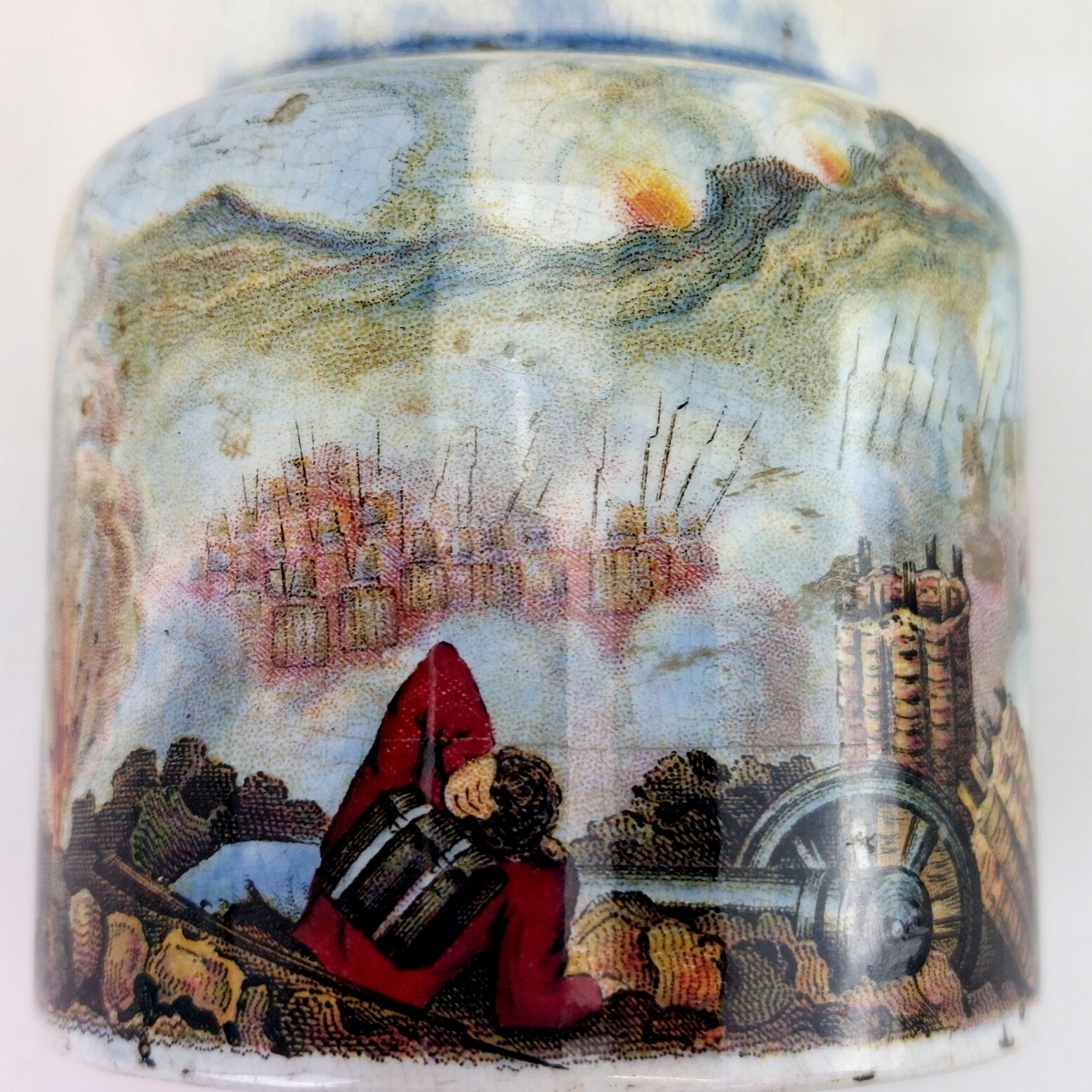
*British, c.1855-57, Prattware Pot “The Fall of Sebastopol” — by Pratt & Co., Fenton*
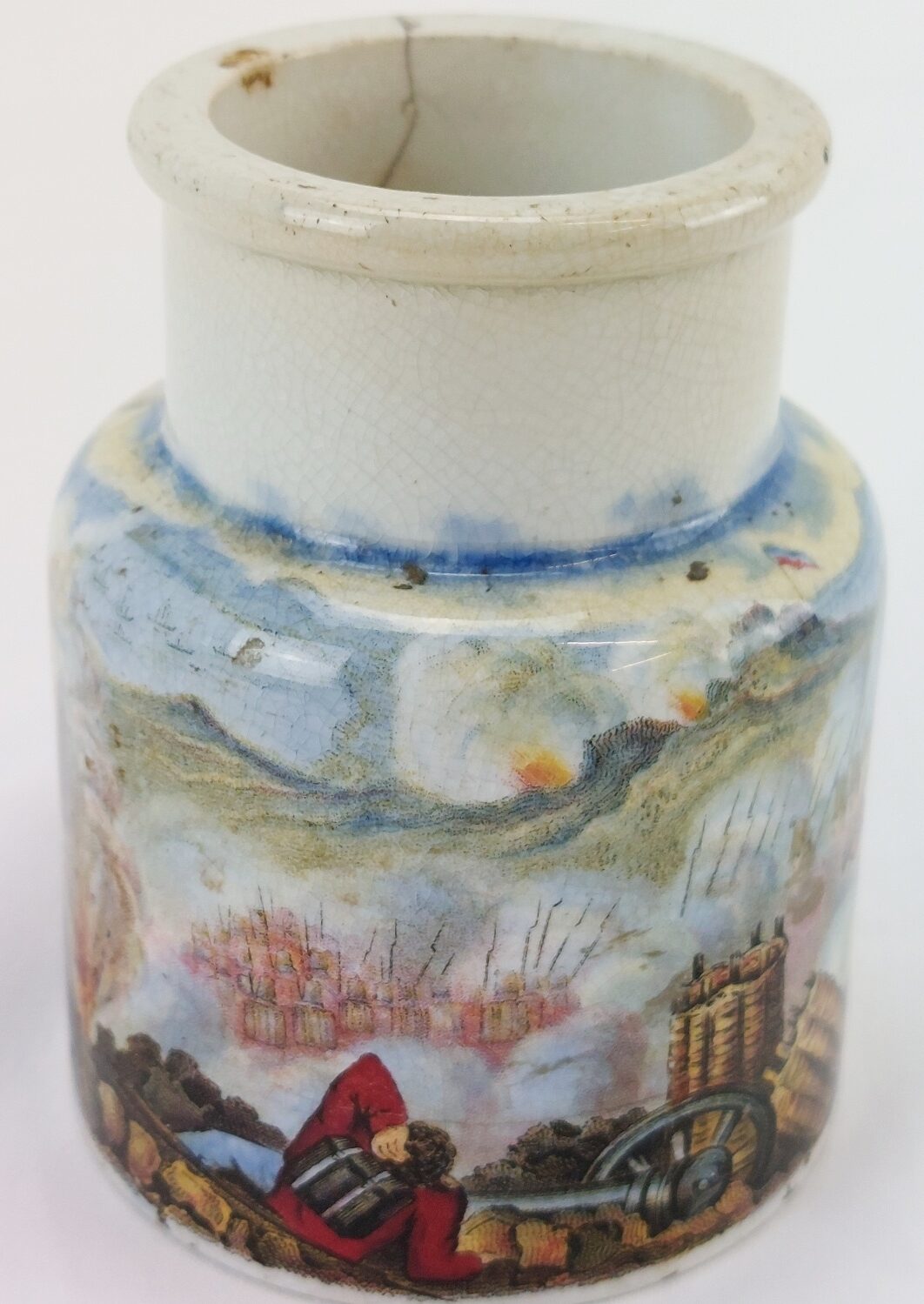
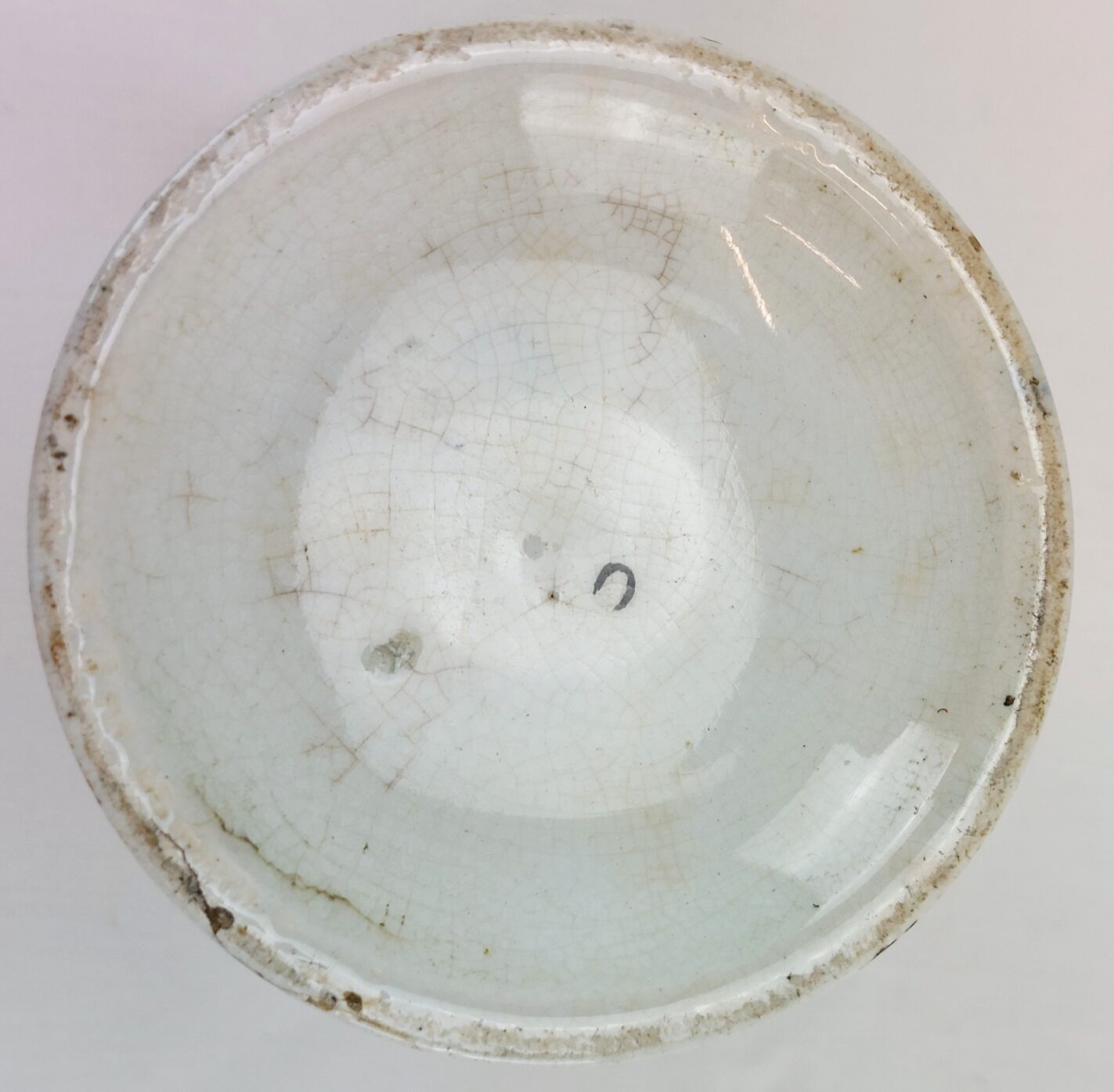
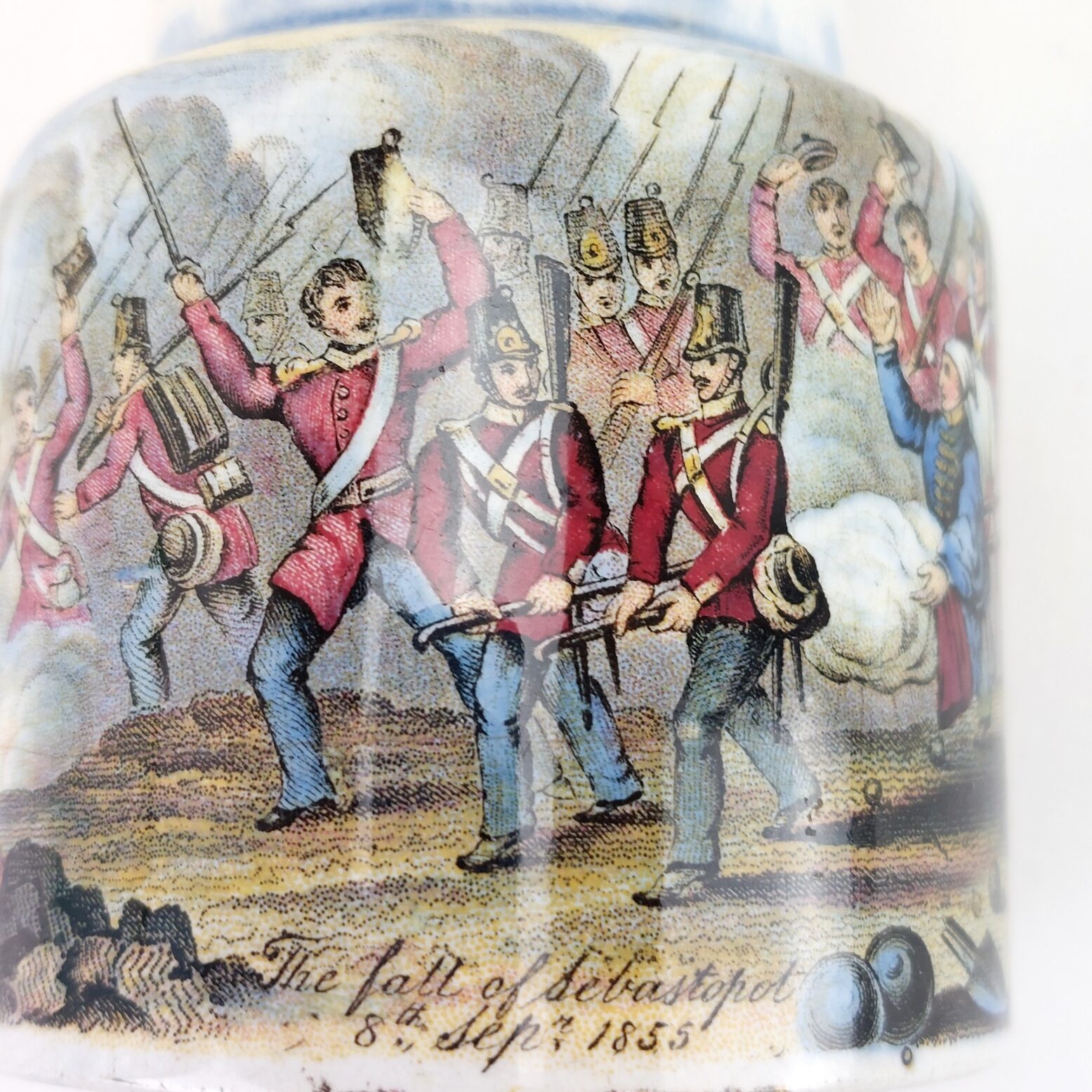
A mid-Victorian Prattware pot, transfer-printed and hand-coloured with a vivid Crimean War scene titled “The Fall of Sebastopol, 8th Sept 1855.” Produced by Felix Pratt & Co., Fenton, Staffordshire, circa 1855–1857, the cylindrical form displays British infantry in red tunics storming the Russian defences amid smoke and cannon fire. Executed in the distinctive multi-colour Pratt palette of blue, ochre, iron-red and sepia, framed by a pale blue border at the shoulder. There is a hand-painted workman’s mark “C” to the base, thought to be a workman’s or decorator’s tally mark, typical of Pratt’s Fenton production period. Though no documentary records survive - the A–F series letters are known on both Pratt & Copeland pieces of the 1840s–1860s; the “C” mark in particular is common to Pratt & Co.’s Fenton period (c.1850–1857), appearing on small ointment pots, lids, and patriotic jugs of the same type.
Measurements: Height: 9.5 cm (3¾ in). Base diameter: 7.3 cm (2⅞ in). Top diameter: 5.5 cm (2 in)
Historical Note: The Fall of Sebastopol on 8 September 1855 marked the climactic assault of the year-long siege, a decisive Allied victory that ignited patriotic celebration across Britain. Produced by Felix Pratt & Co. of Fenton during the Crimean War, this pot belongs to Pratt’s renowned Crimean War series of multi-colour transfer-printed wares (c.1854–1857), created in collaboration with engraver Jesse Austin.
Pratt and Austin’s process built upon George Baxter’s 1835 polychrome printing method, refining it for ceramics by dividing each design into three or four colour-specific copper plates. The coloured impressions were transferred by tissue onto the biscuit-fired pottery, then fired and often re-fired for gilt or enamel details. Though labour-intensive and costly, this pioneering technique produced some of the earliest and finest multi-colour printed ceramics in Britain, bridging fine art and industrial production.
The vividly rendered scene of The Fall of Sebastopol commemorates the Allied victory that ended the siege and reflects the patriotic fervour that swept mid-Victorian Britain. Likely produced as a small meat paste or ointment jar, this piece exemplifies how even humble domestic items became canvases for national pride. Pratt’s richly coloured designs, adapted from contemporary engravings, remain among the first British ceramics to depict modern warfare in full colour and are today prized as outstanding examples of 19th-century commemorative art.
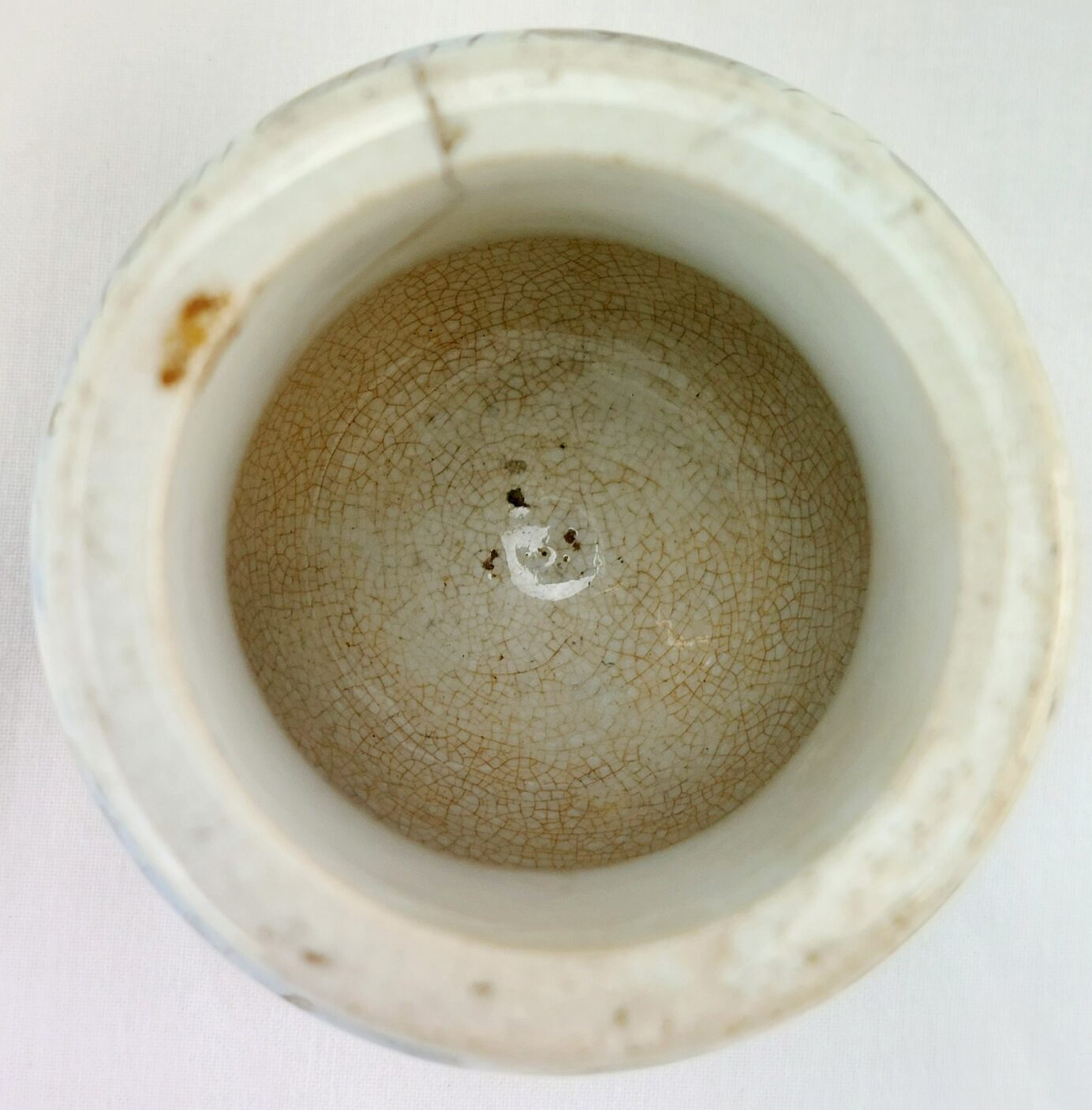
*Condition* Stable rim crack extending into shoulder, glaze crazing and age-related discoloration, minor rim nick. Colours remain vibrant and the scene well-preserved. Please see photographs as part of the condition report.