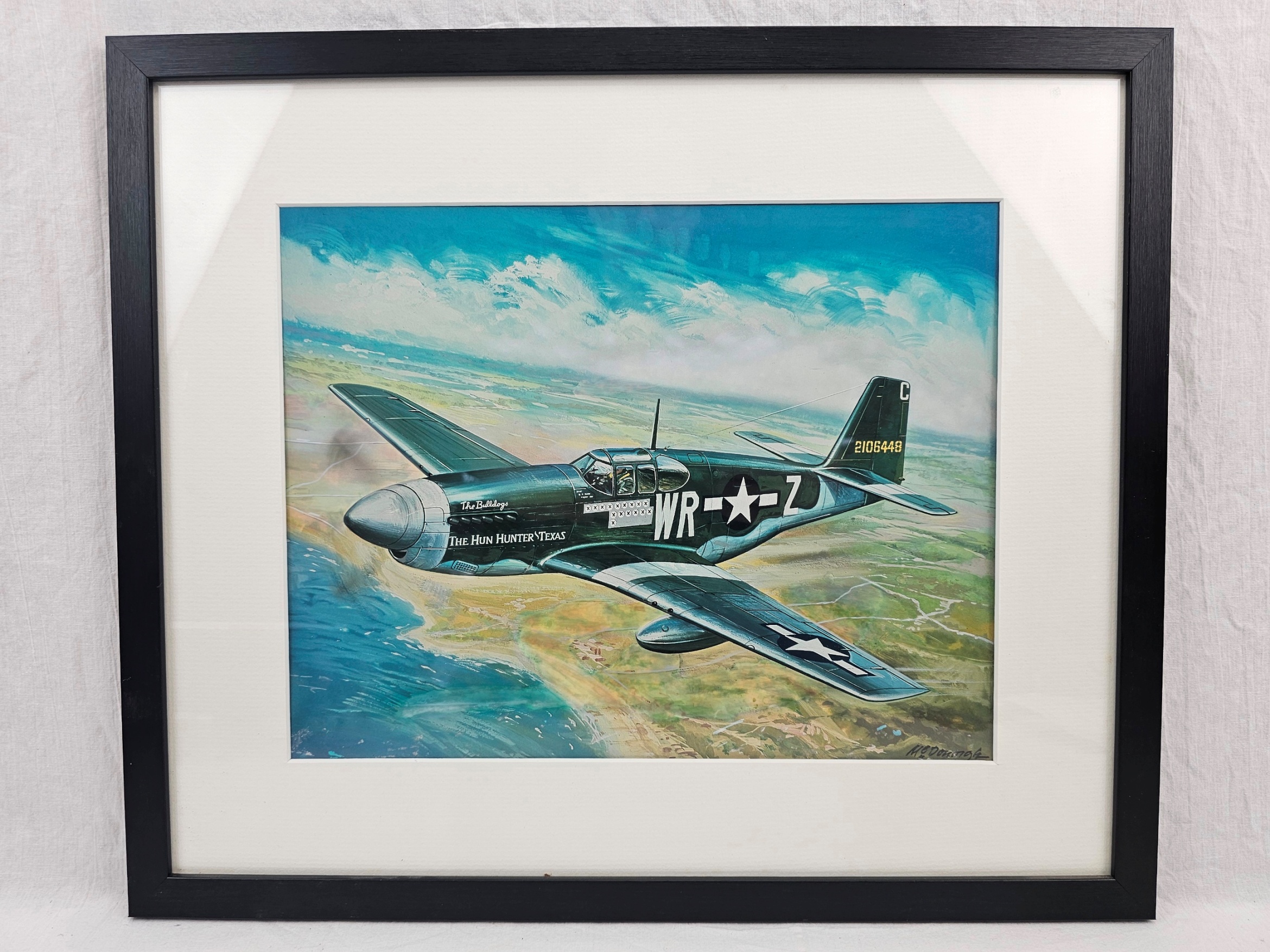
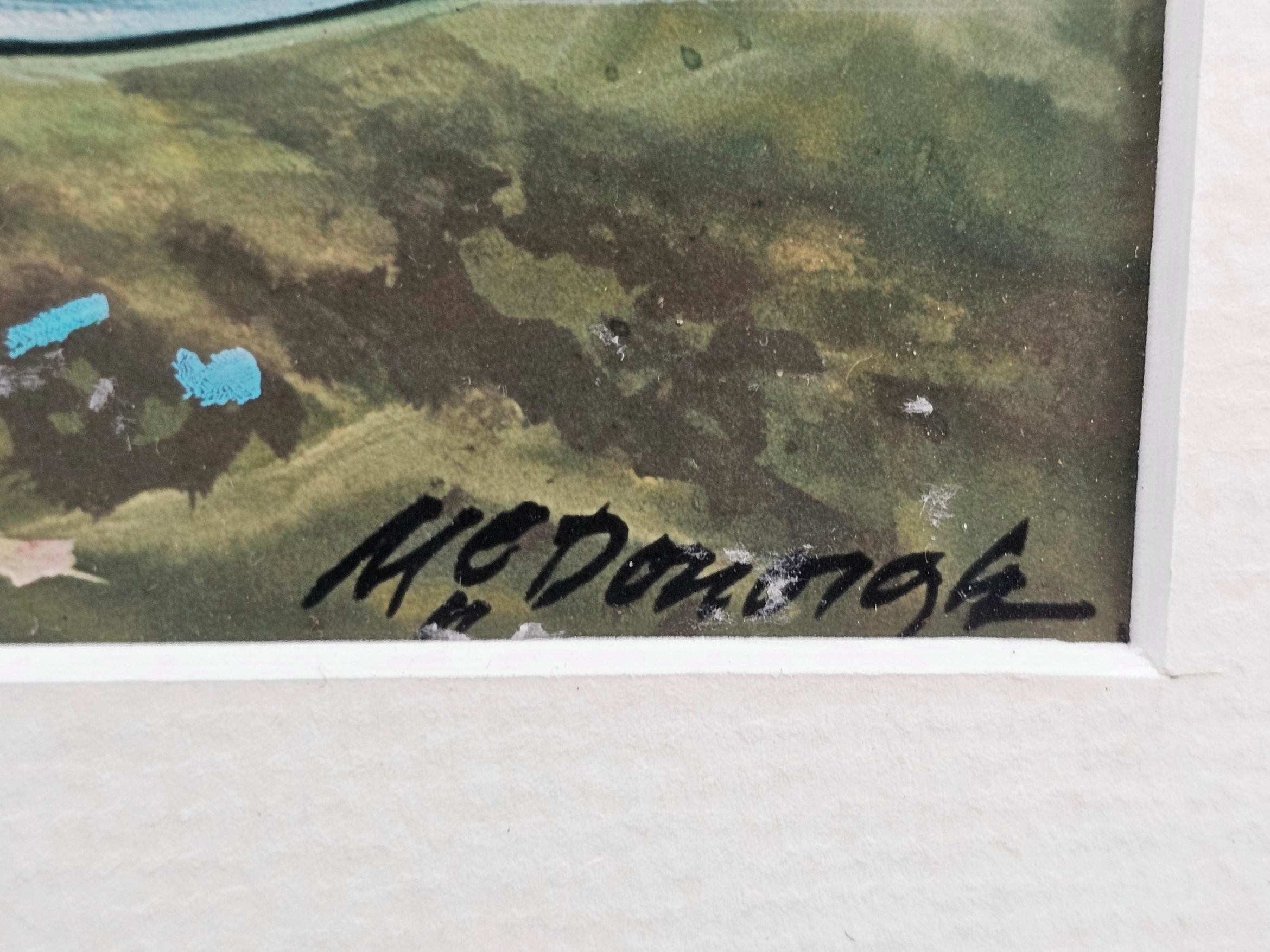
~ Unique Airfix NA P51 B Mustang Cibachrome Print For Original Artwork By Ken McDonaugh ~
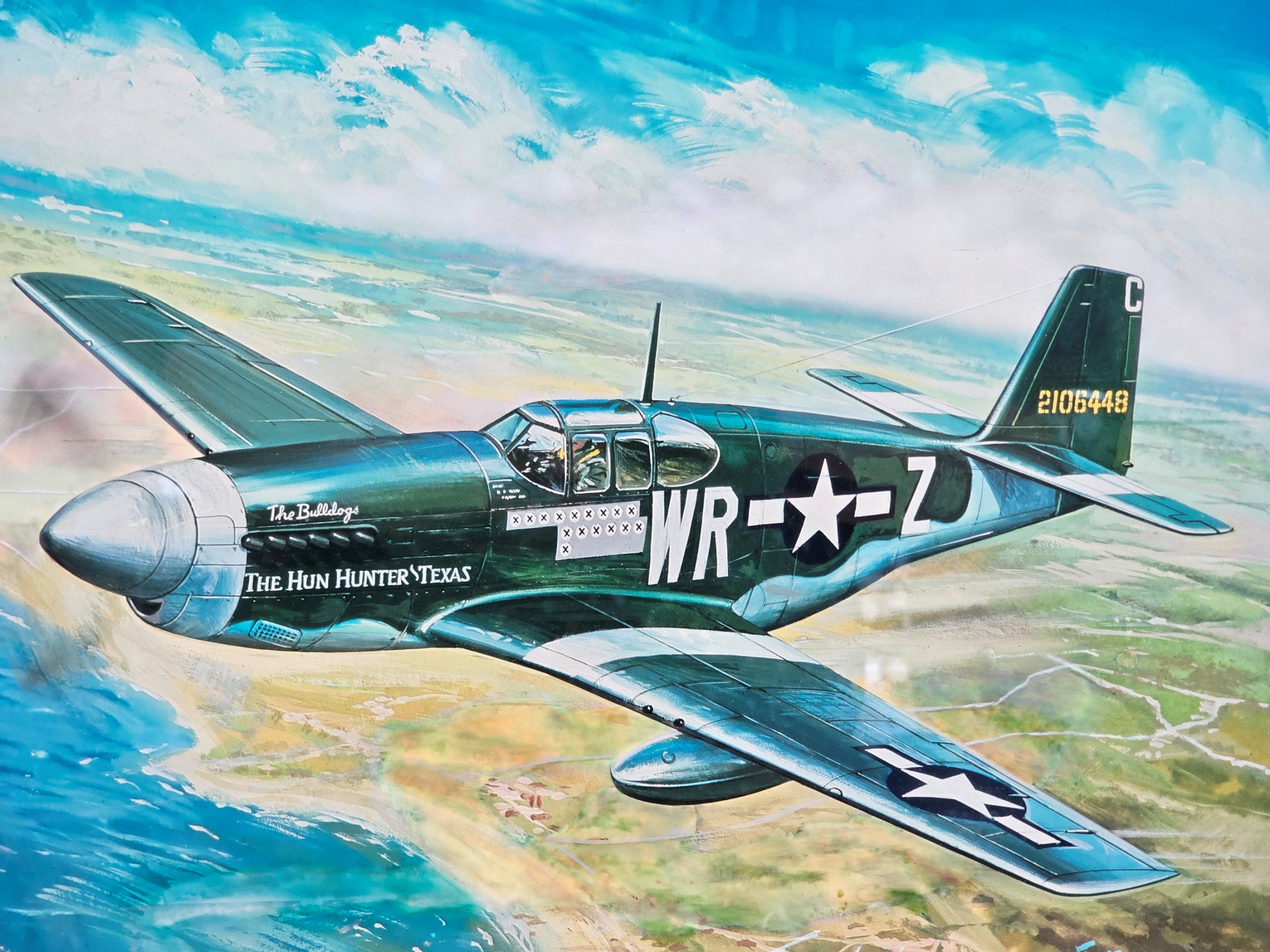
It depicts the famous WW2 North American fighter over a coastline.
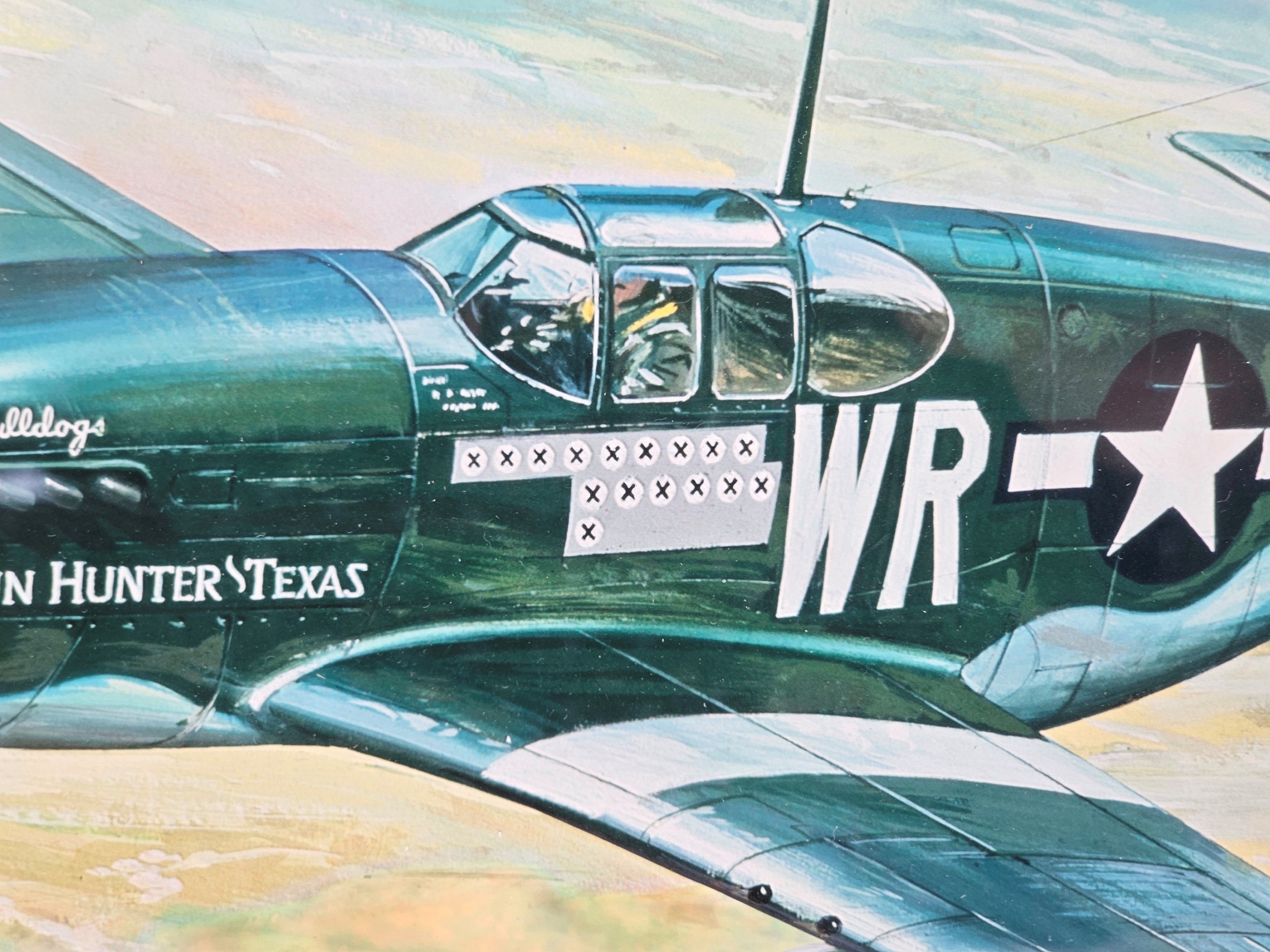
The specific aircraft depicts "The Hun Hunter" was manufactured in 1944 and is powered by a Rolls Royce Merlin. It is in the paint scheme of the 354th Fighter Squadron, 355th Fighter Group. This aircraft now resides in the United Kingdom Imperial War Museum Duxford and is still airworthy.
The artwork is presented in a wooden glazed frame with a single card mount.
~ P51 B Mustang ~
The North American Aviation P-51 Mustang is an American long-range, single-seat fighter and fighter-bomber used during World War II and the Korean War, among other conflicts. The Mustang was designed in 1940 by a team headed by James H. Kindelberger of North American Aviation (NAA) in response to a request from the British Purchasing Commission. The commission approached NAA to build Curtiss P-40 fighters under license for the Royal Air Force (RAF). Rather than build an old design from another company, NAA proposed the design and production of a more modern fighter. The prototype NA-73X airframe was completed on 9 September 1940, 102 days after contract signing, achieving its first flight on 26 October.
The Mustang was designed to use the Allison V-1710 engine without an export-sensitive turbosupercharger or a multi-stage supercharger, resulting in limited high-altitude performance. The aircraft was first flown operationally by the RAF as a tactical-reconnaissance aircraft and fighter-bomber (Mustang Mk I). In mid 1942, a development project known as the Rolls-Royce Mustang X, replaced the Allison engine with a Rolls-Royce Merlin 65 two-stage inter-cooled supercharged engine. During testing at Rolls-Royce's airfield at Hucknall in England, it was clear the engine dramatically improved the aircraft's performance at altitudes above 15,000 ft (4,600 m) without sacrificing range. Following receipt of the test results and after further flights by USAAF pilots, the results were so positive that North American began work on converting several aircraft developing into the P-51B/C (Mustang Mk III) model, which became the first long-range fighter to be able to compete with the Luftwaffe's fighters. The definitive version, the P-51D, was powered by the Packard V-1650-7, a license-built version of the two-speed, two-stage-supercharged Merlin 66, introduced the "bubble" canopy, and was armed with six .50 caliber (12.7 mm) AN/M2 Browning machine guns.
From late 1943 into 1945, P-51Bs and P-51Cs (supplemented by P-51Ds from mid-1944) were used by the USAAF's Eighth Air Force to escort bombers in raids over Germany, while the RAF's Second Tactical Air Force and the USAAF's Ninth Air Force used the Merlin-powered Mustangs as fighter-bombers, roles in which the Mustang helped ensure Allied air superiority in 1944.. The P-51 was also used by Allied air forces in the North African, Mediterranean, Italian, and Pacific theaters. During World War II, Mustang pilots claimed to have destroyed 4,950 enemy aircraft.
At the start of the Korean War, the Mustang, by then redesignated F-51, was the main fighter of the United States until jet fighters, including North American's F-86 Sabre, took over this role; the Mustang then became a specialized fighter-bomber. Despite the advent of jet fighters, the Mustang remained in service with some air forces until the early 1980s. After the Korean War, Mustangs became popular civilian warbirds and air racing aircraft.
~ Cibachrome Print ~
A Cibachrome (later rebranded as Ilfochrome) is a discontinued photographic printing process used to make direct, positive-to-positive color prints from transparencies (slides). Known for its unmatched sharpness, vibrant colors, and archival permanence, the process is celebrated by fine-art photographers and institutions worldwide.
They were used as part of the printing process to transfer the original artwork to the box artwork.
~ Condition ~
Please refer to the images for the condition.
~ Dimensions ~
The frame is 52cm (20.5 inches) wide and 42cm (16.25 inches) tall.