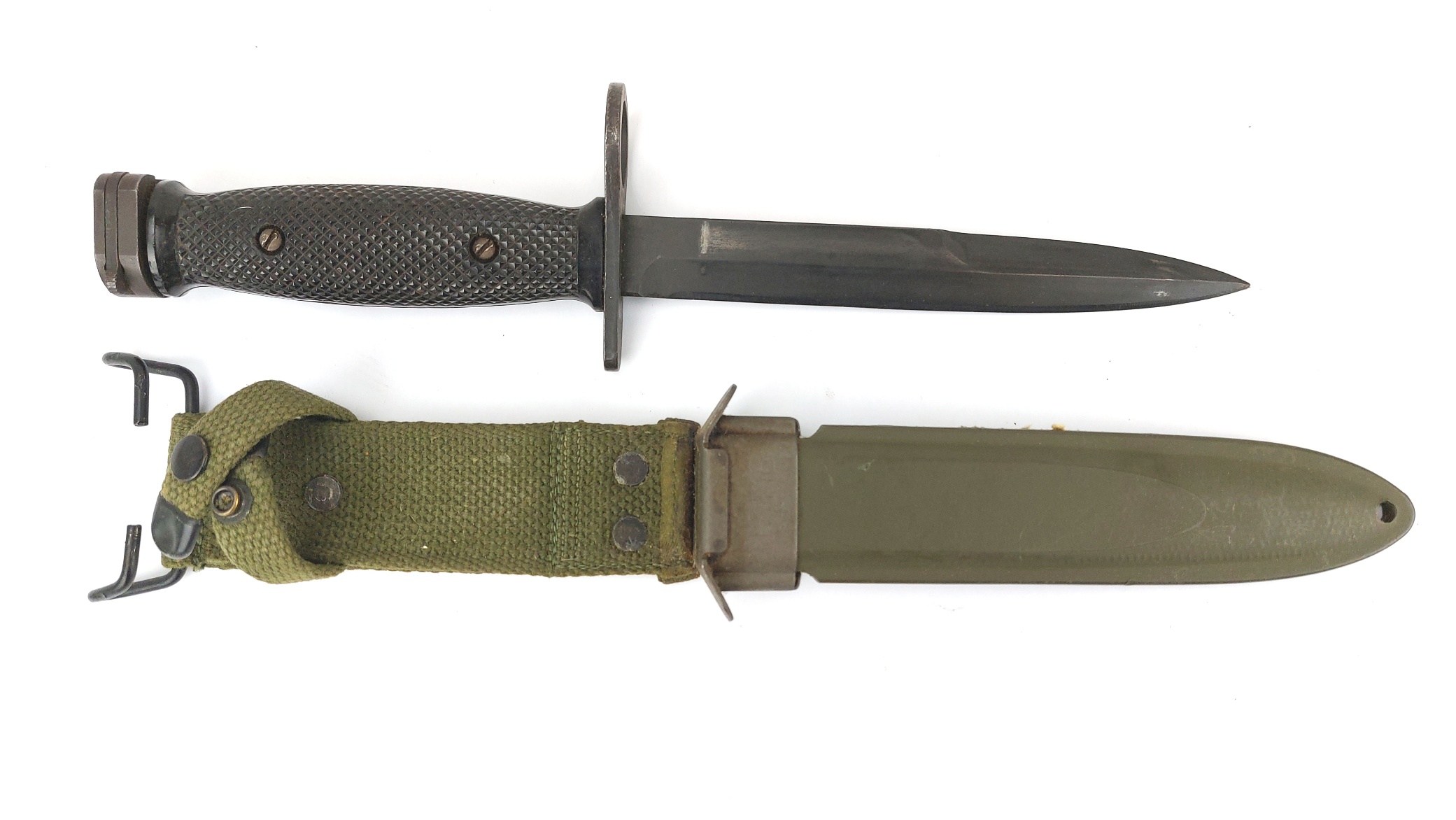
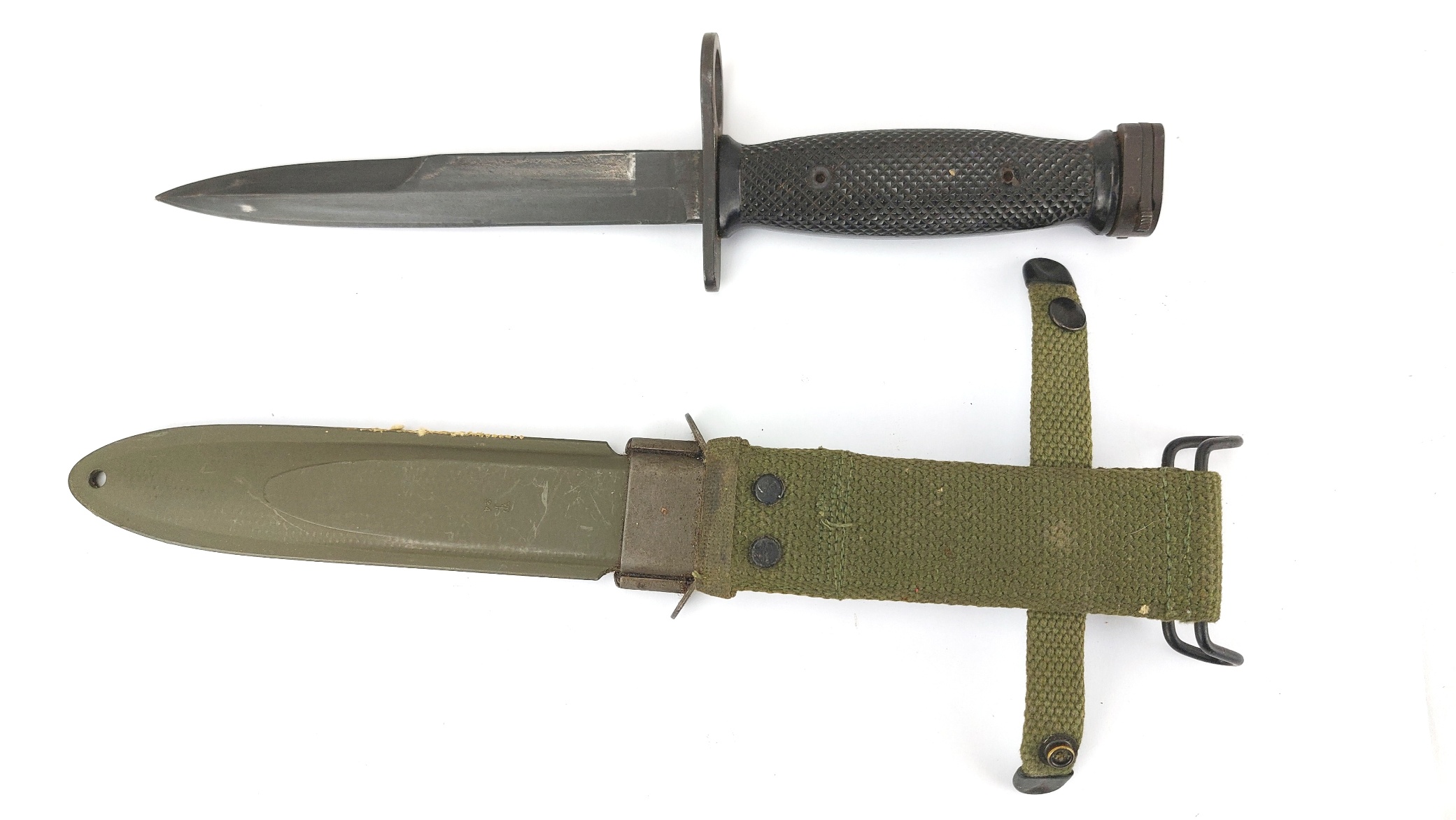
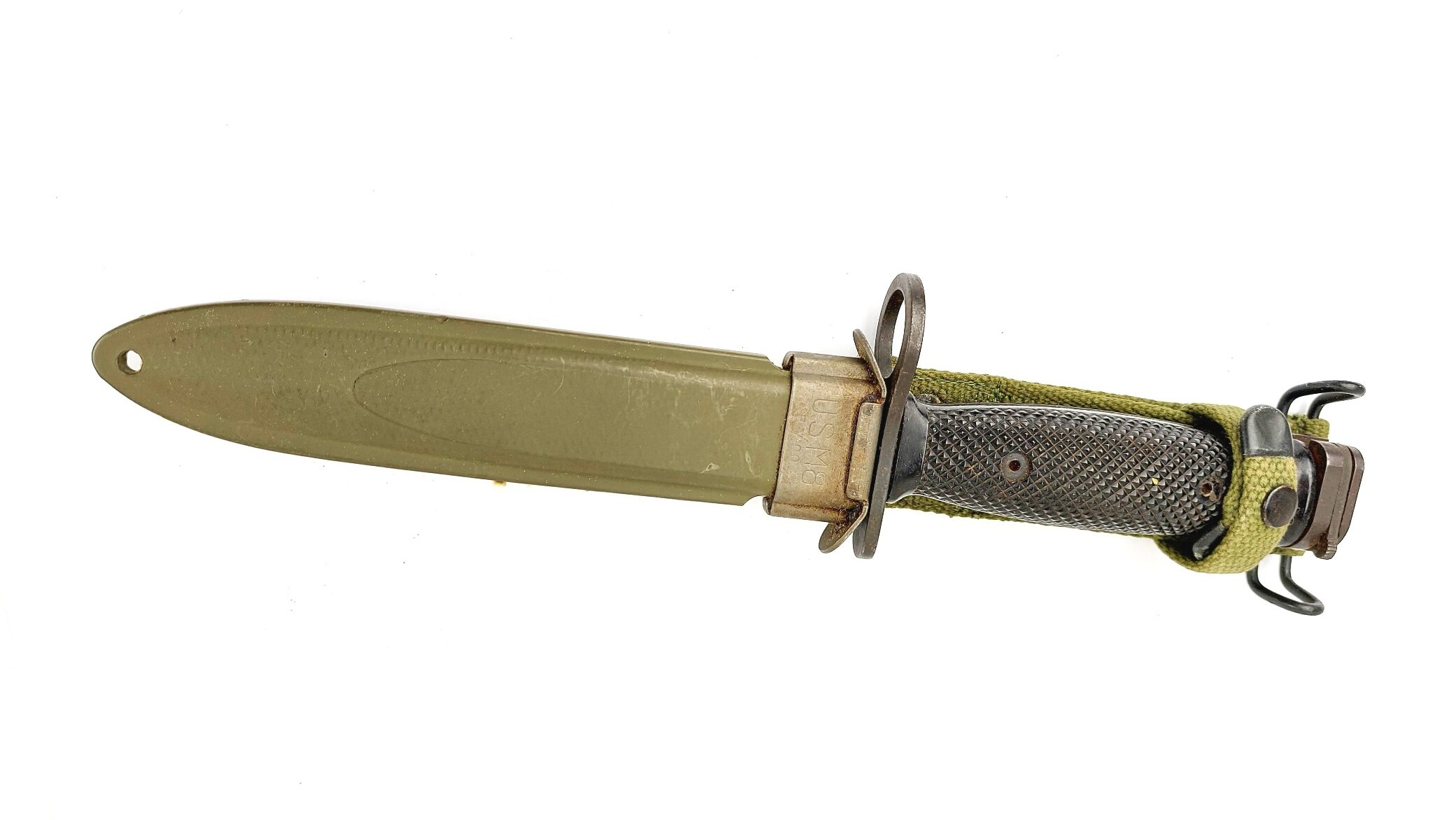
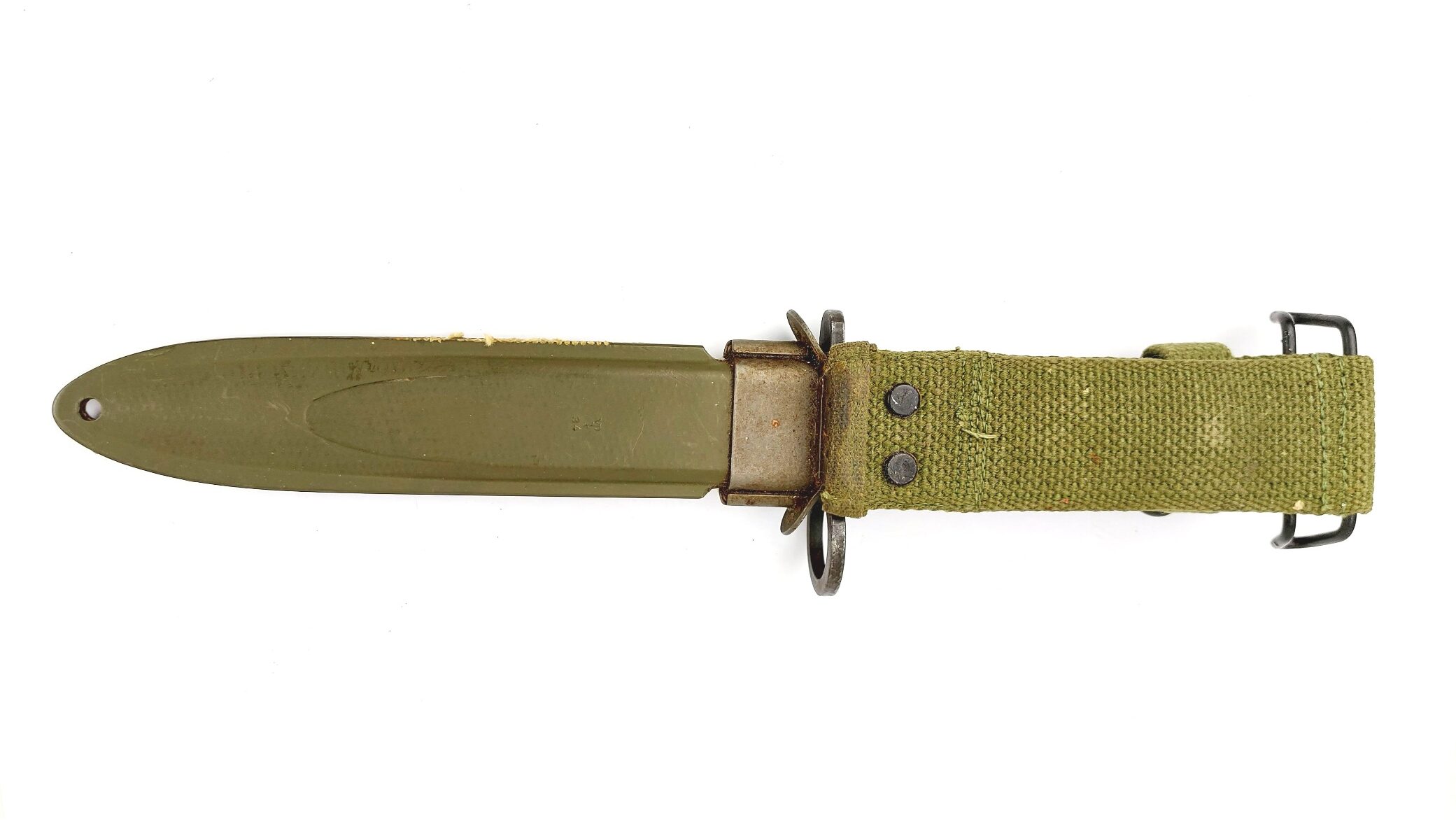
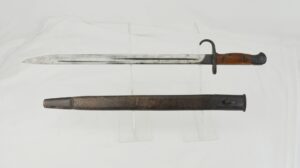
*U.S., Early Vietnam War Era, M7 Bayonet by MILPAR, with WWII M8 Scabbard by B.M. Co.*
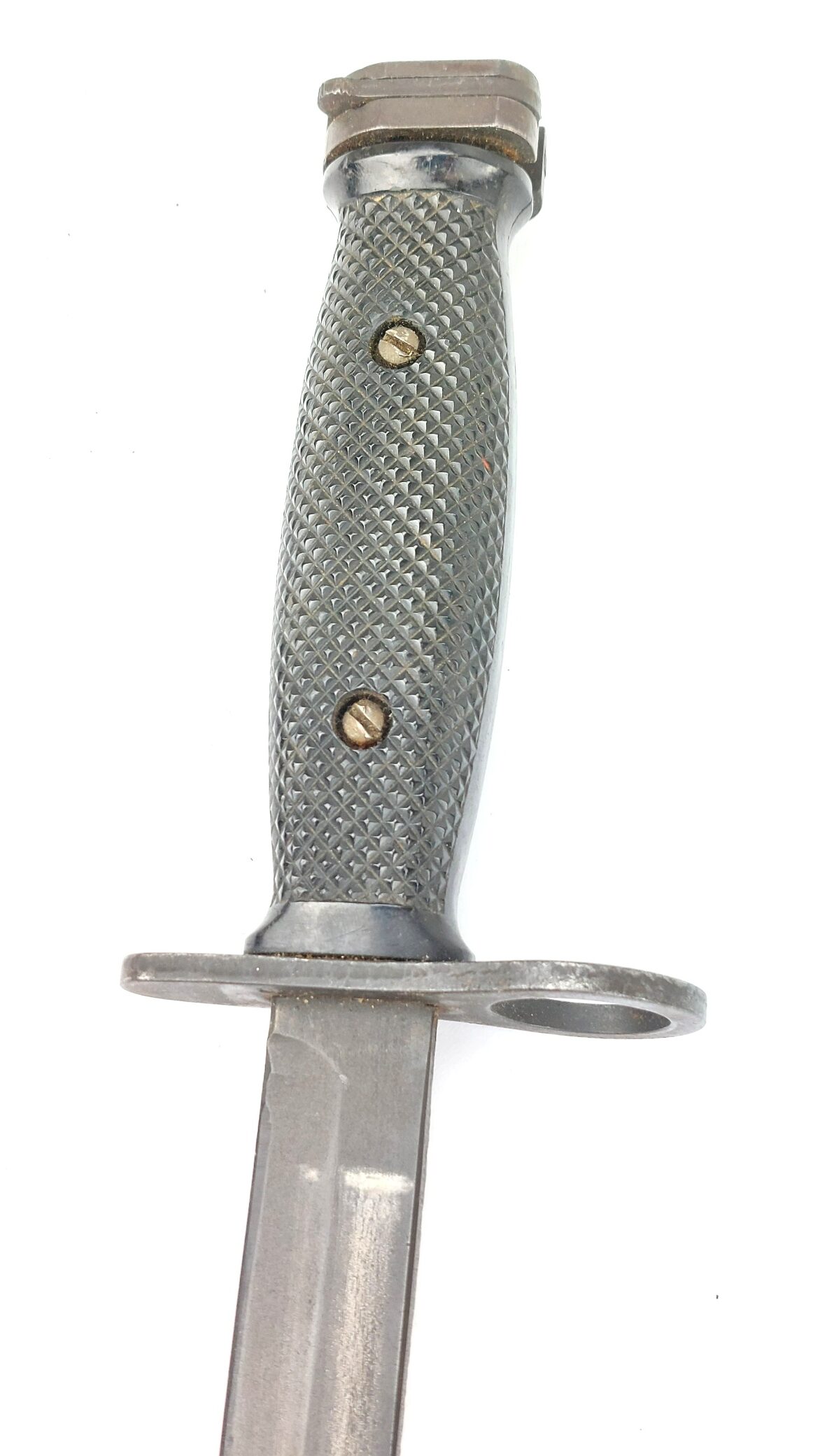
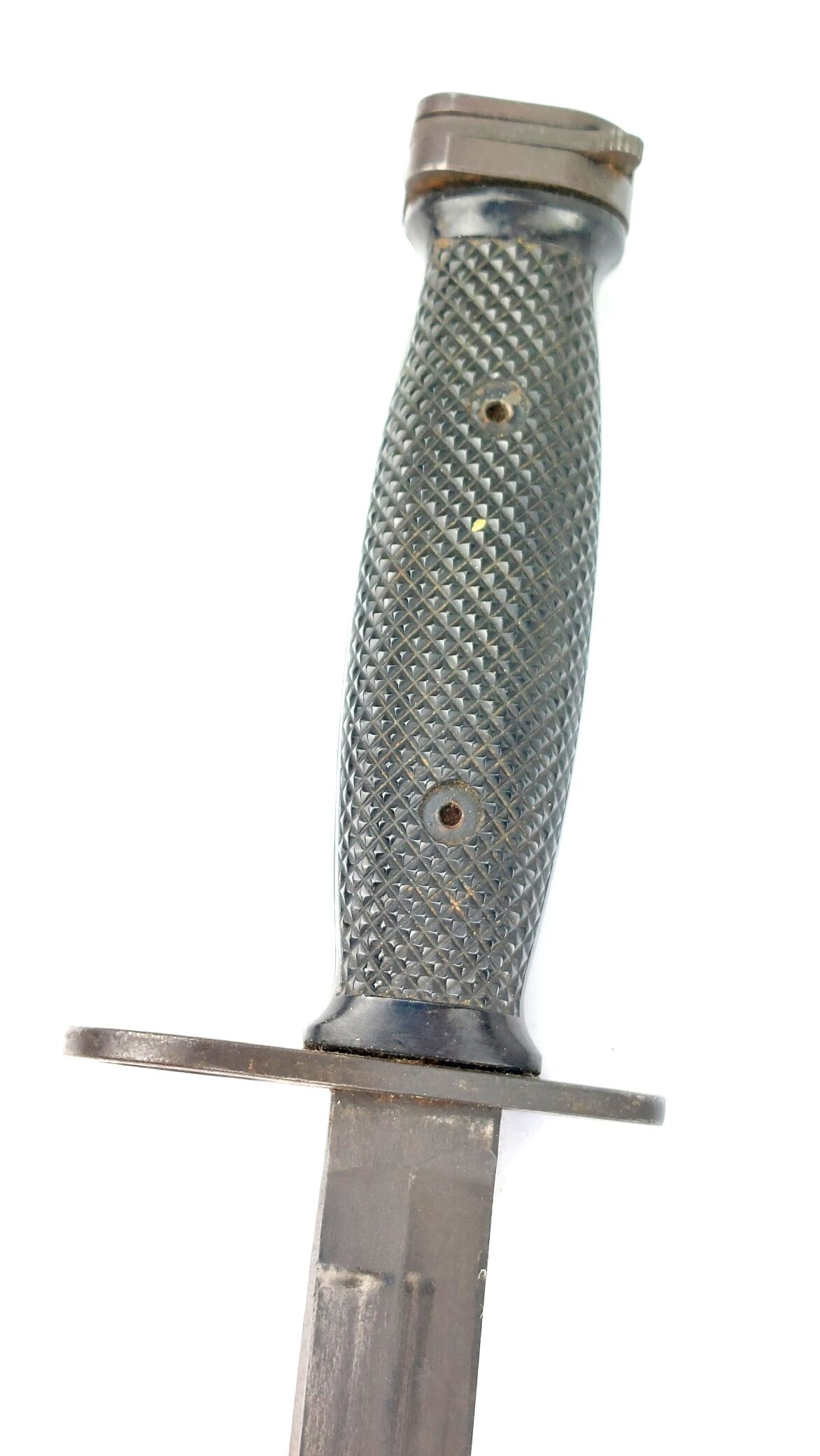
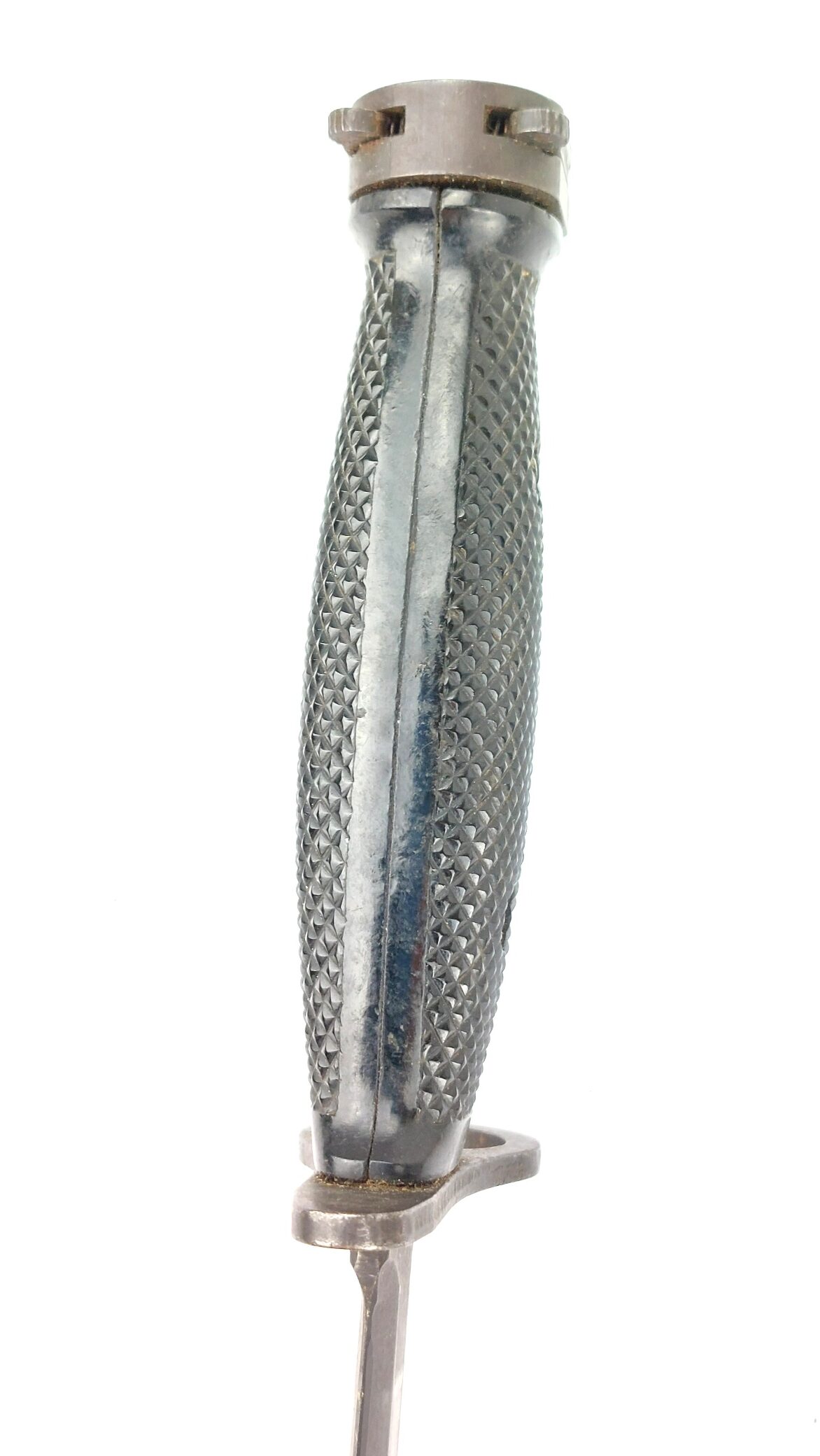
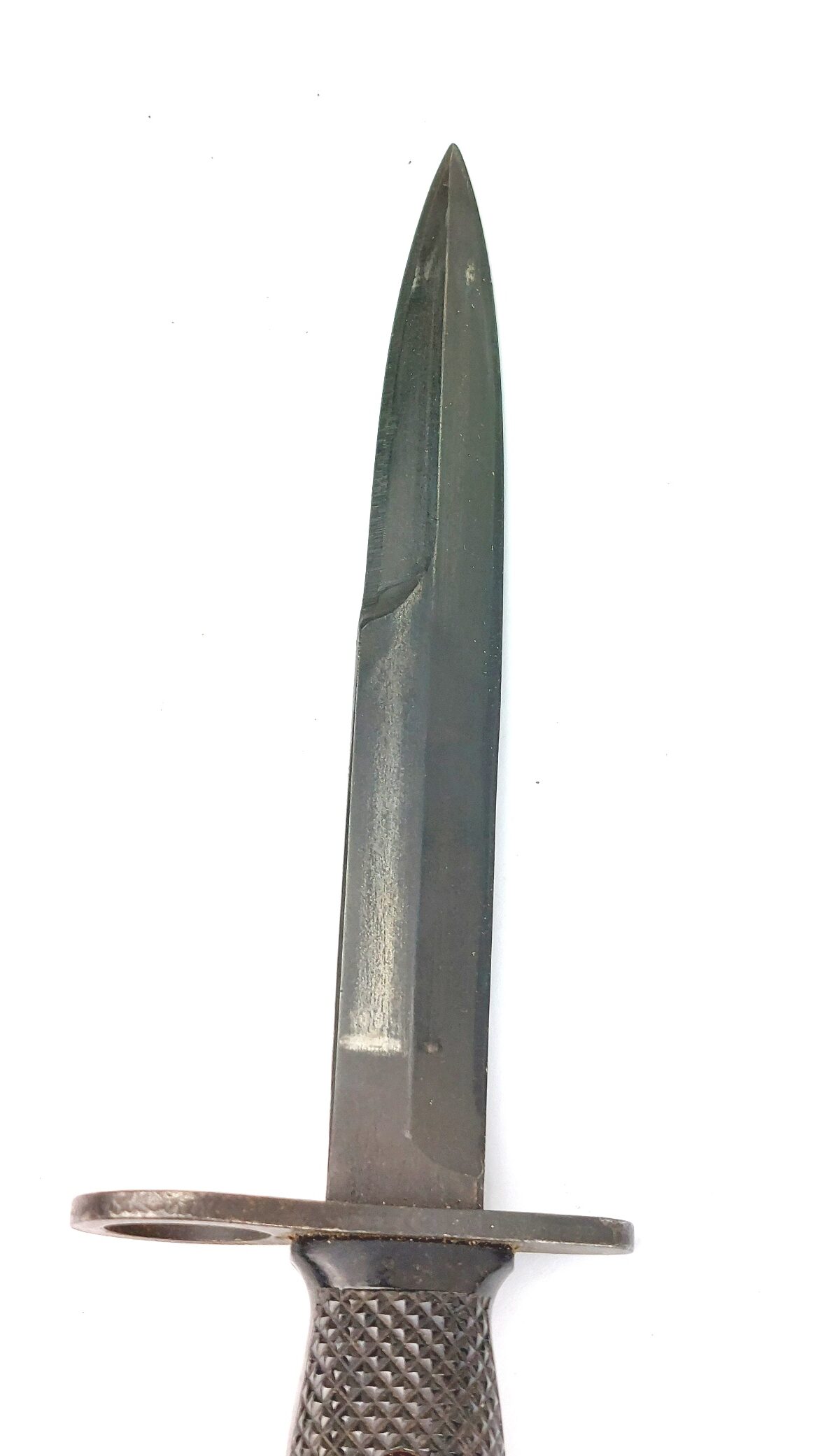
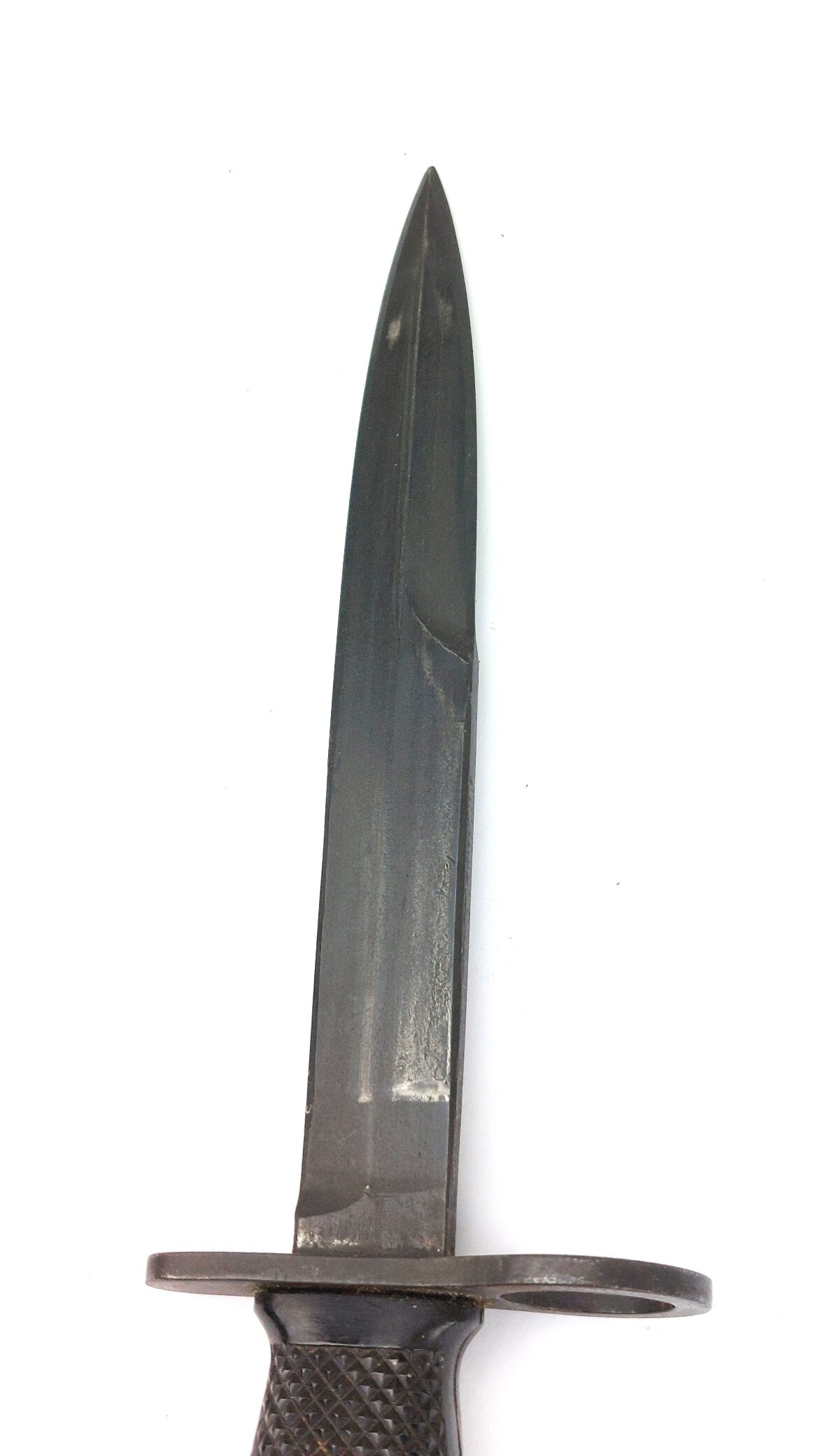
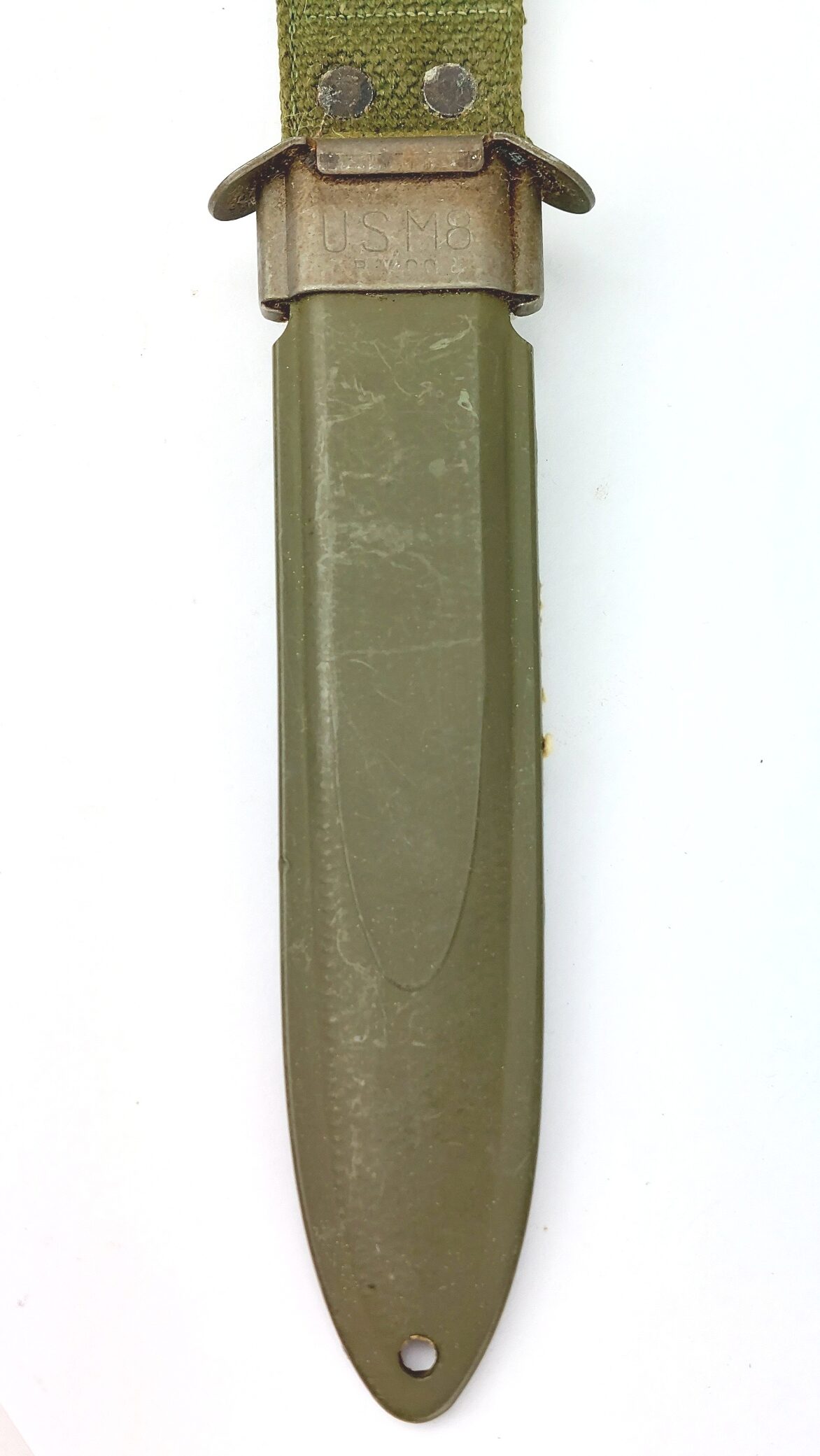
Original U.S. M7 bayonet-knife manufactured by Columbus Milpar & Manufacturing Company, accompanied by an earlier U.S. M8 plastic scabbard of World War II production. The bayonet is the correct pattern for the 5.56mm M16 rifle, featuring the longer hilt and revised latch system that distinguish the M7 from the earlier M4 bayonet intended for the M1 Carbine.
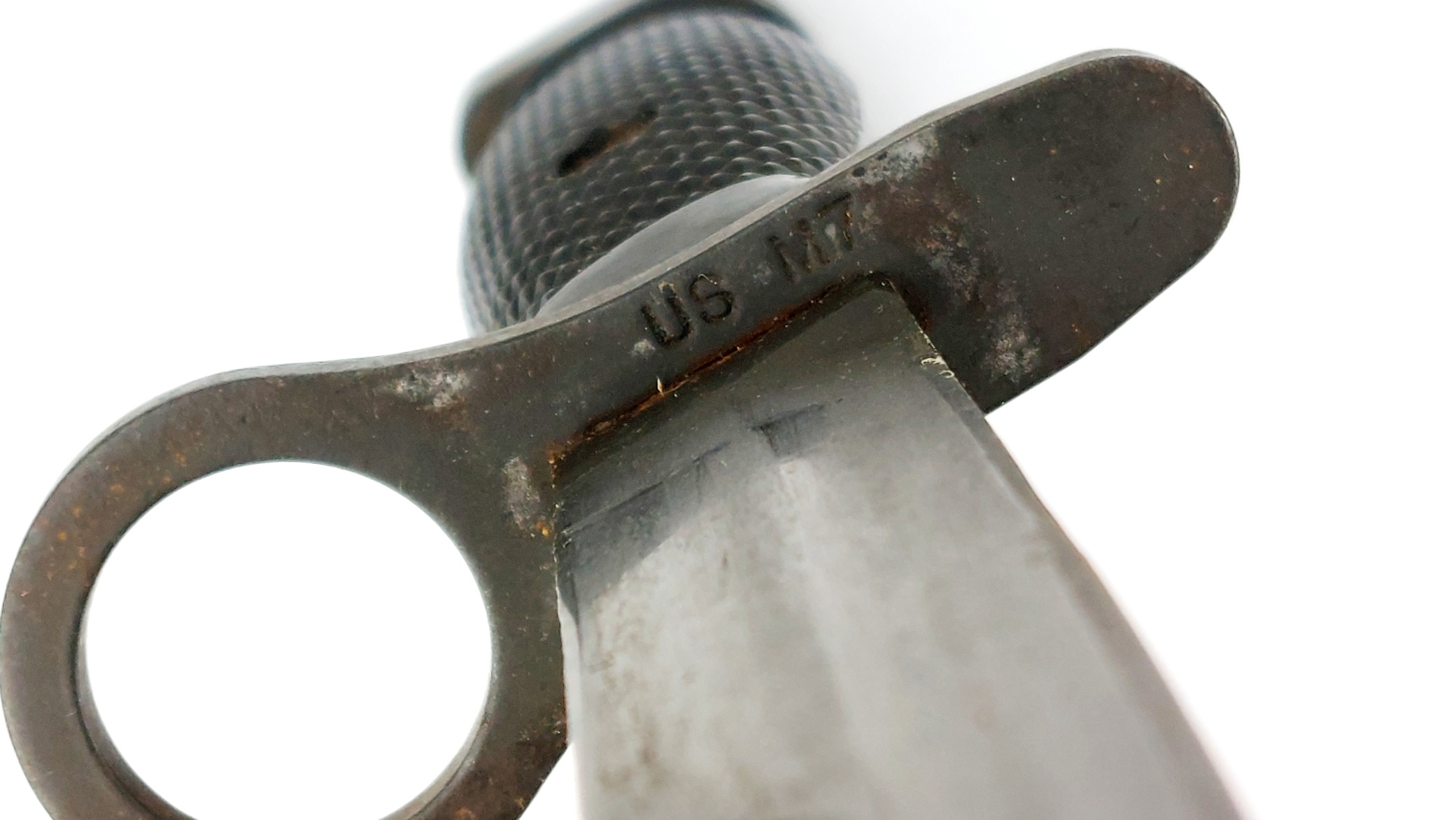
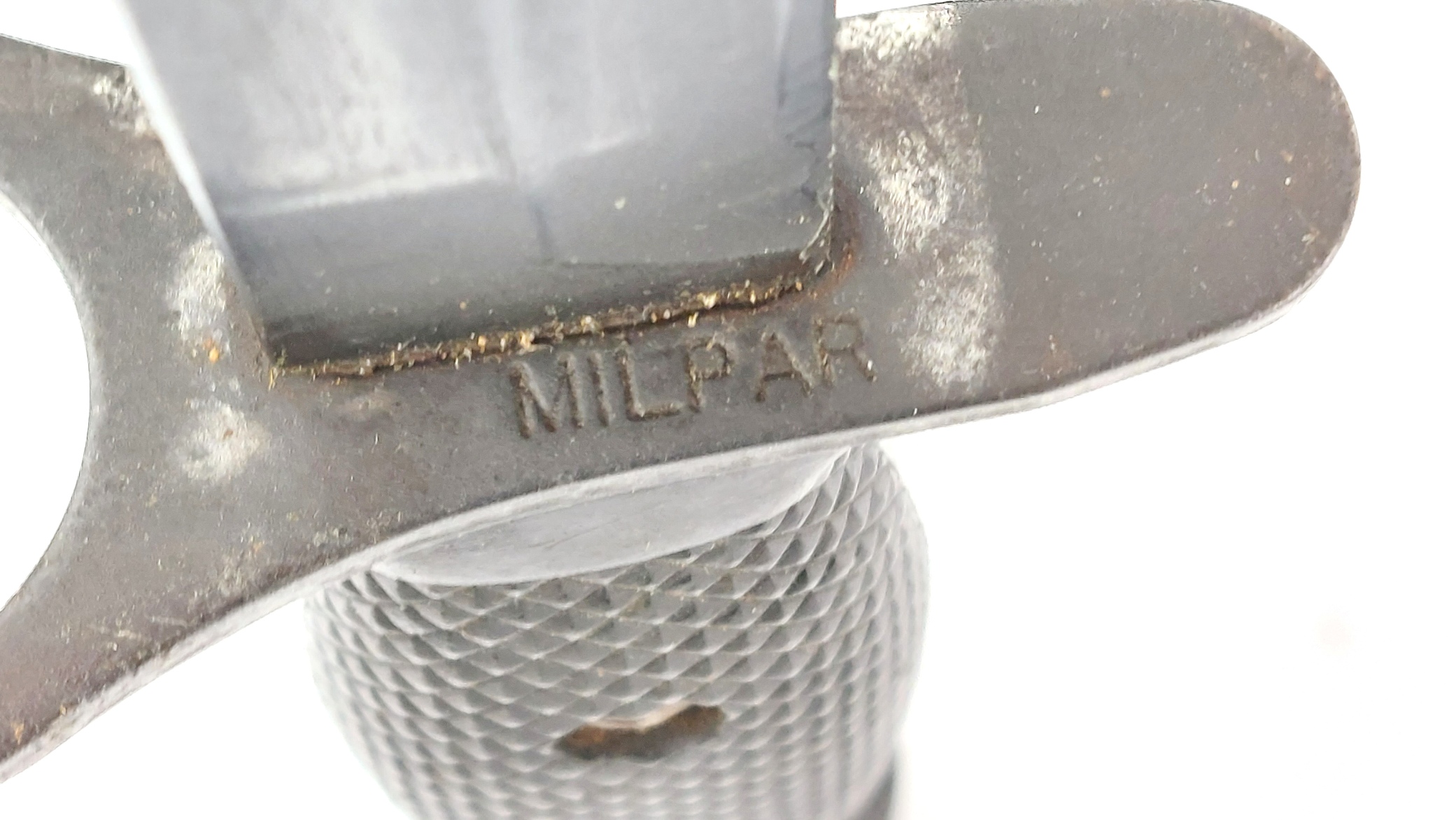
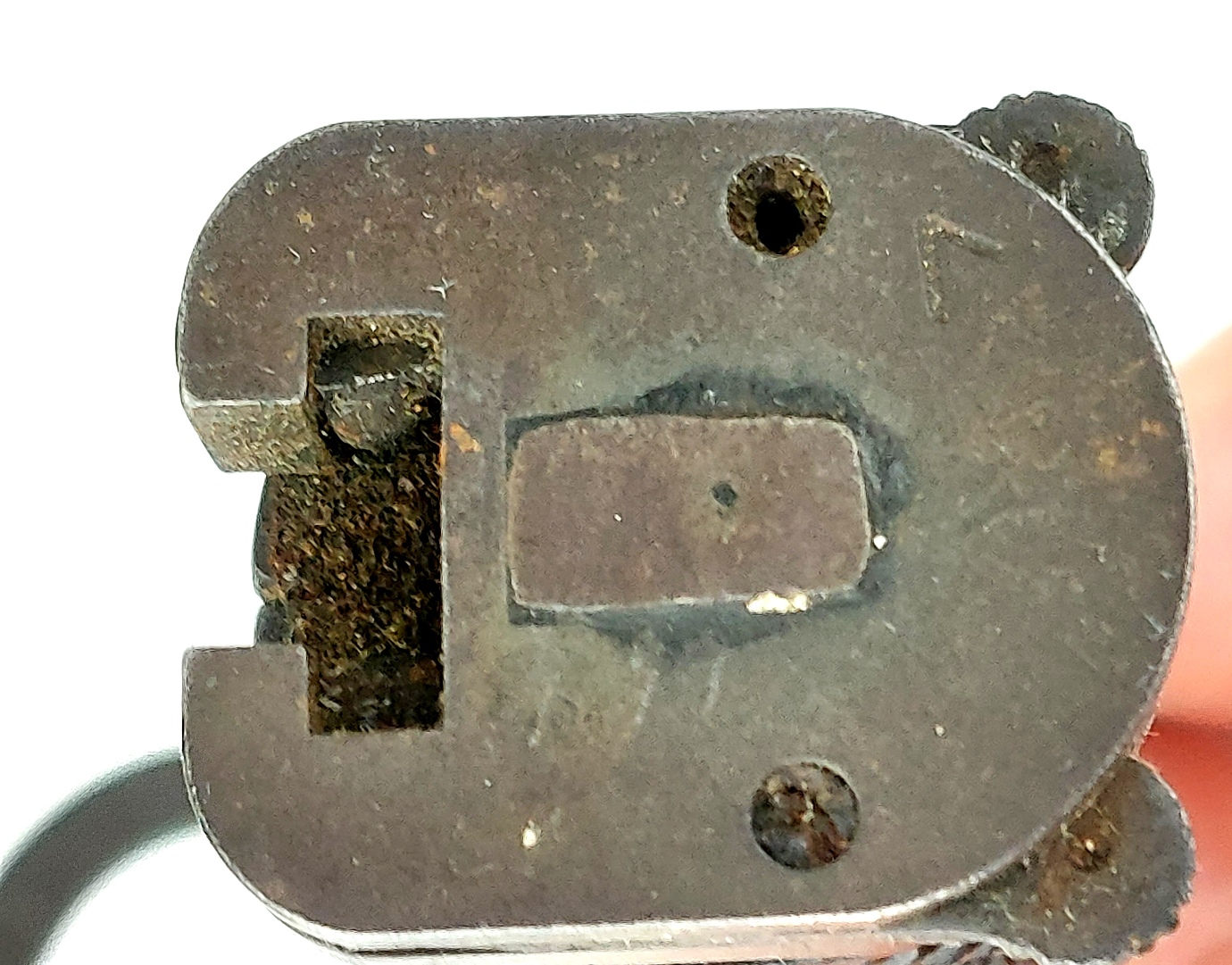
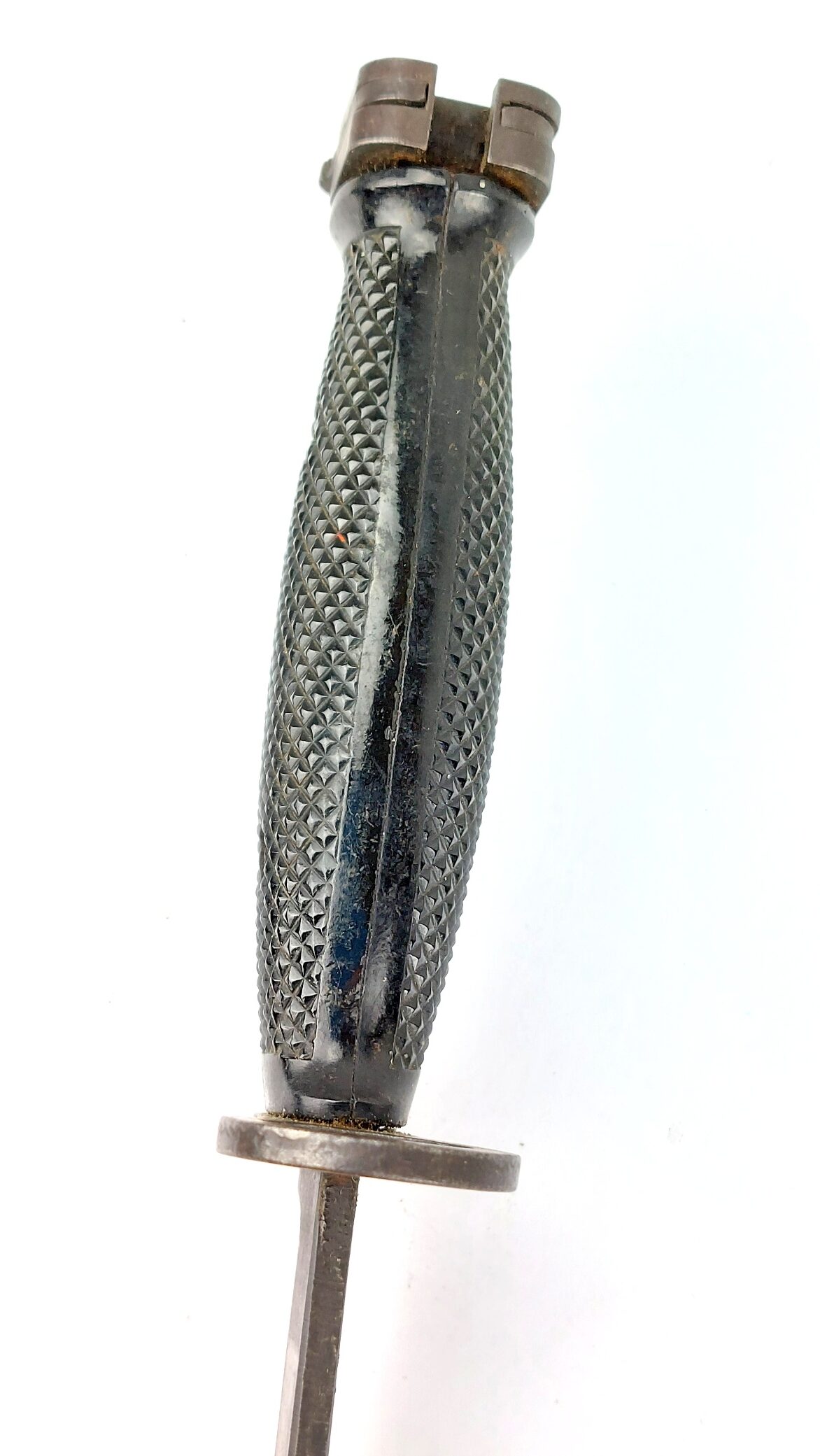
The parkerised blade measures approximately 16.9 cm, with an overall length of 29.9 cm. The crossguard is crisply stamped “US M7” on one side and “MILPAR” on the reverse. The pommel latch plate bears the characteristic chevron (∧) mark, a recognised feature of early Milpar production. Black chequered grip panels are secured with two steel screws, all correct to specification.
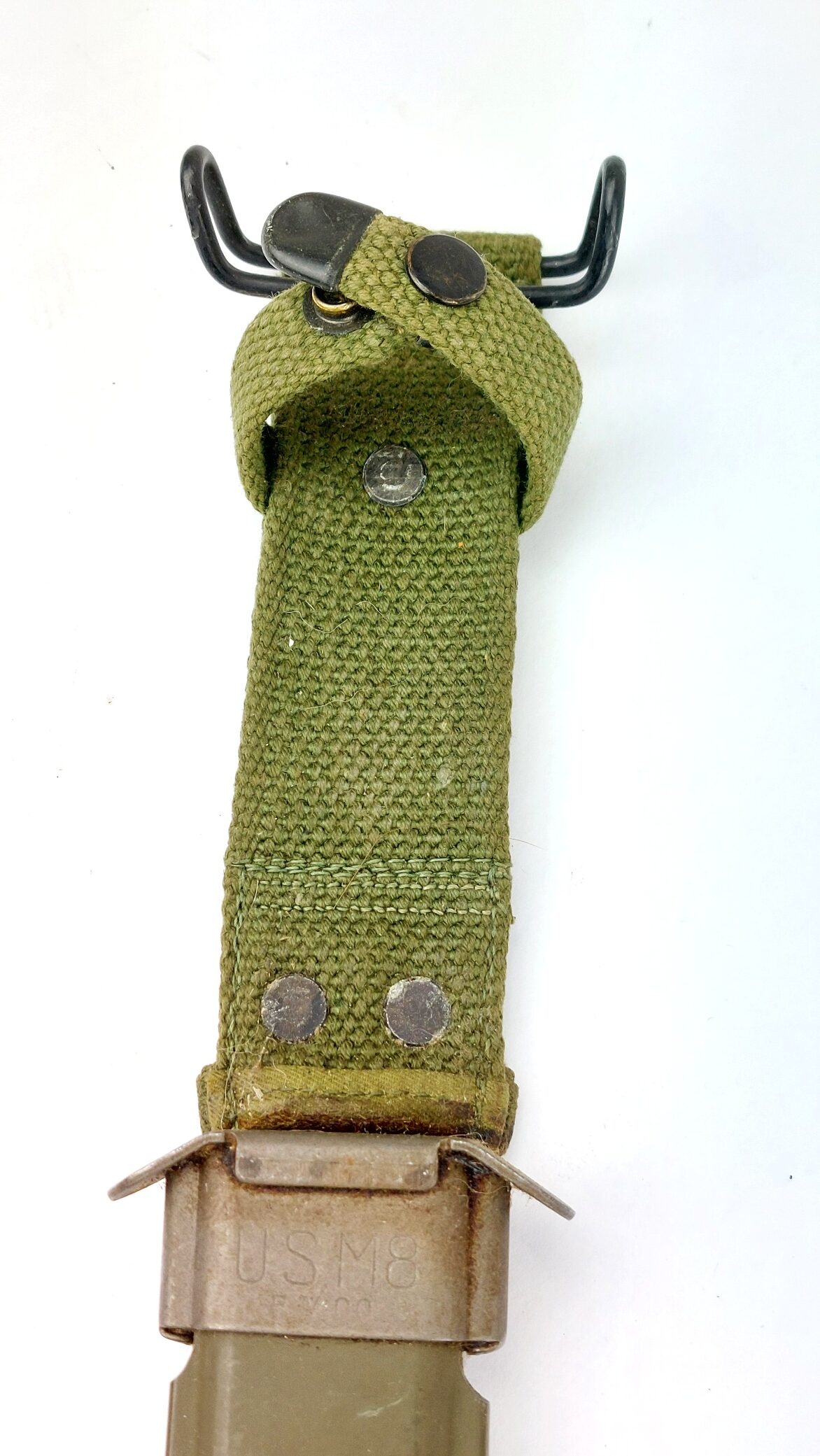
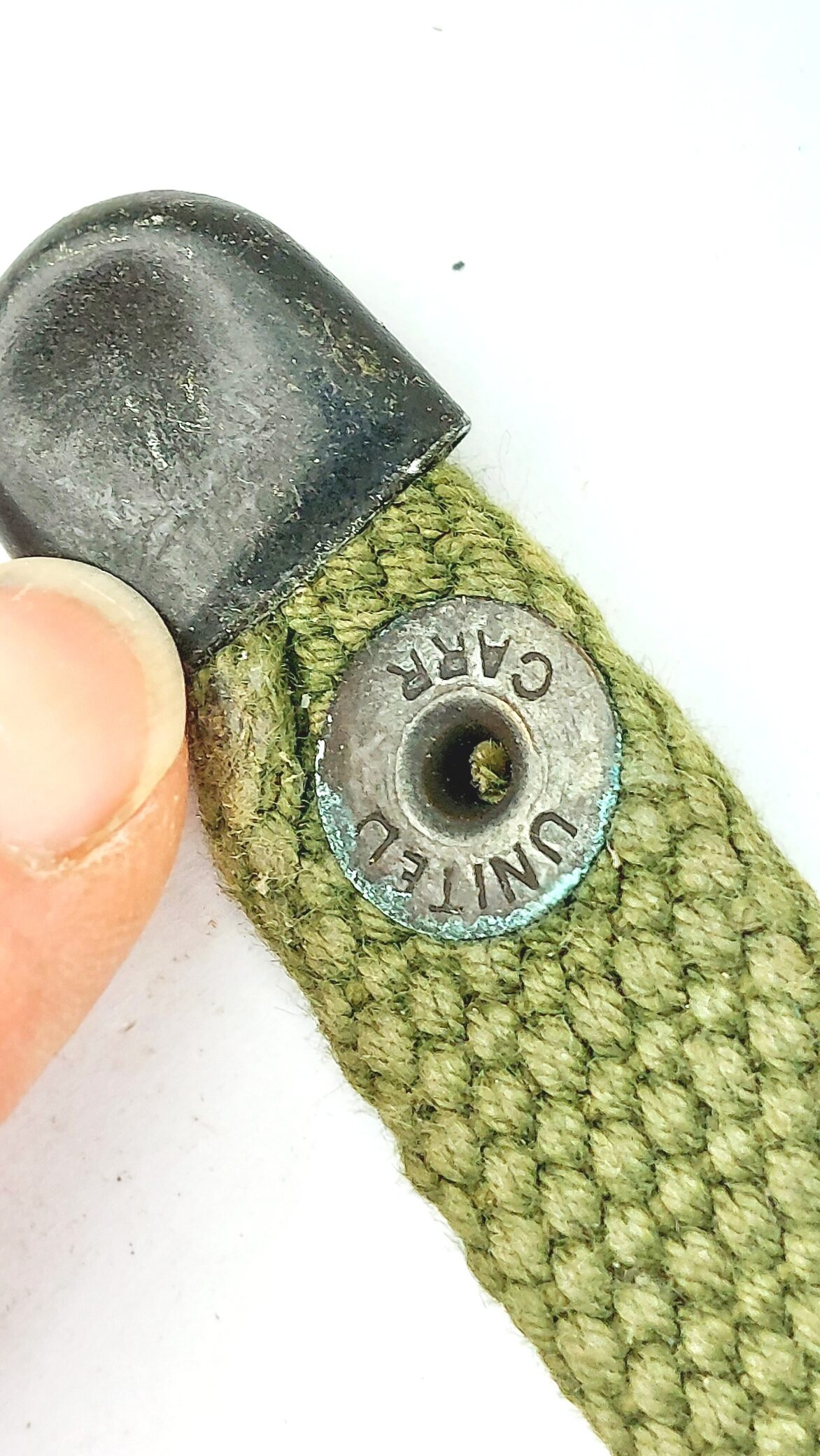
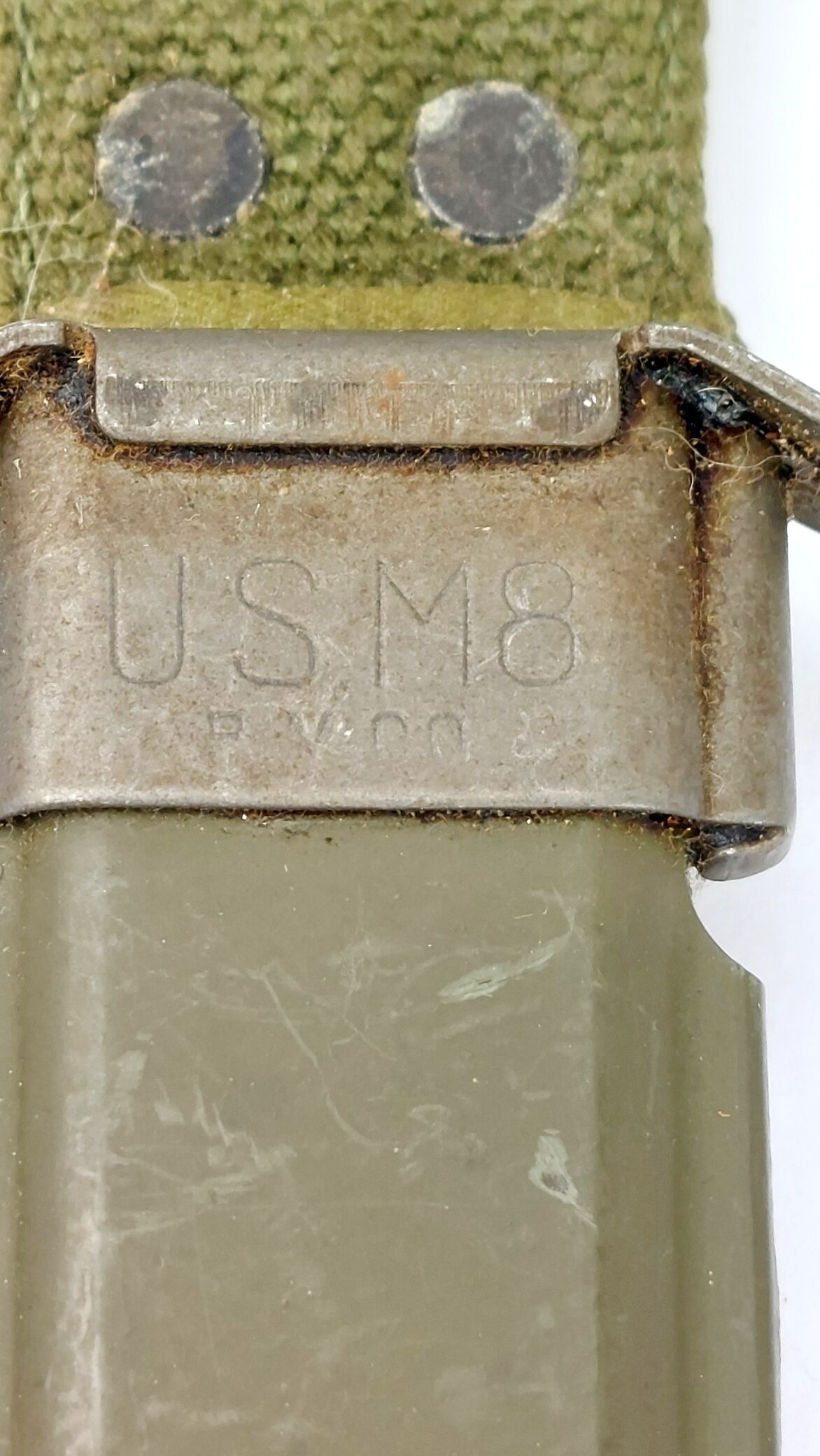
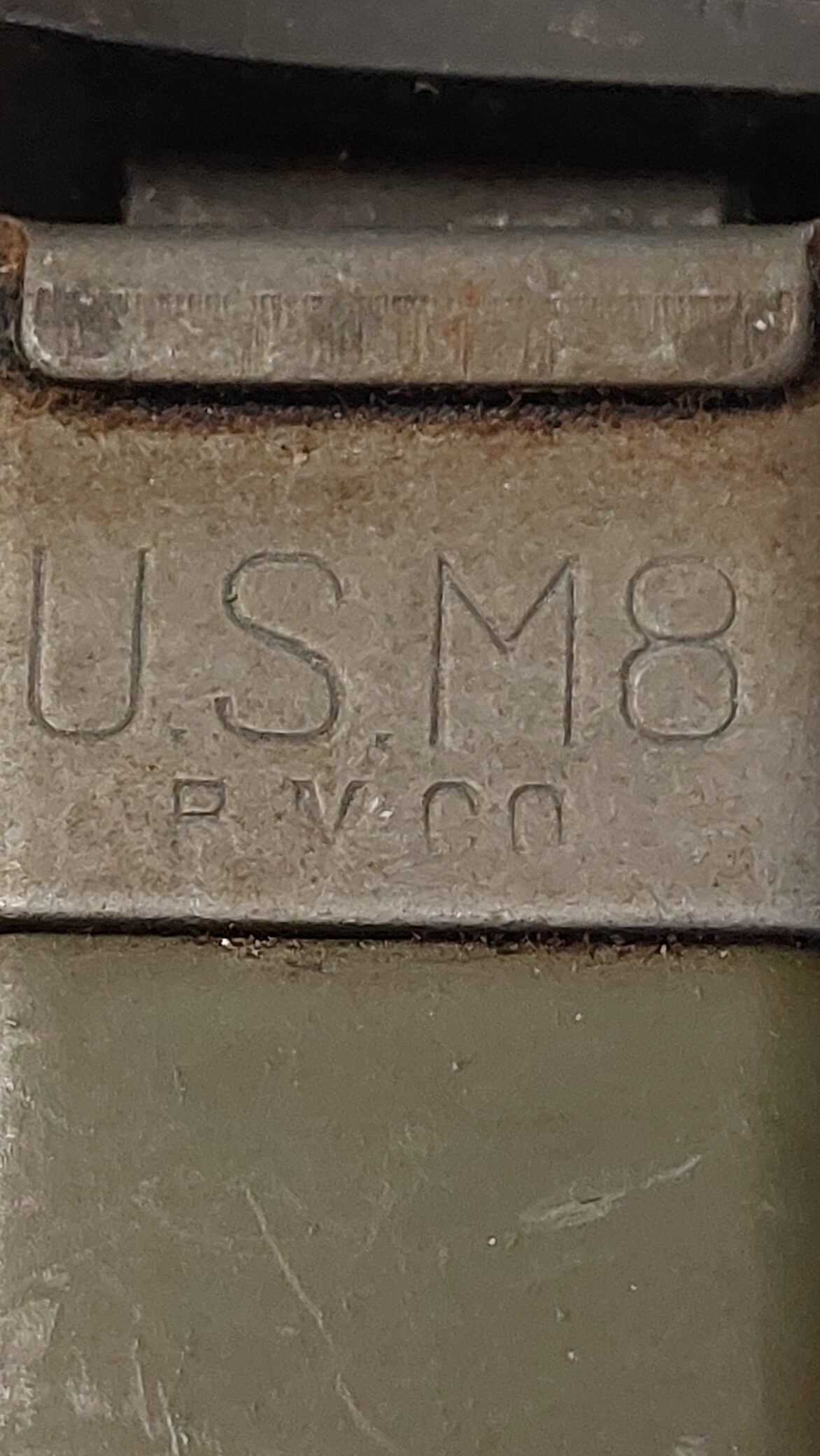
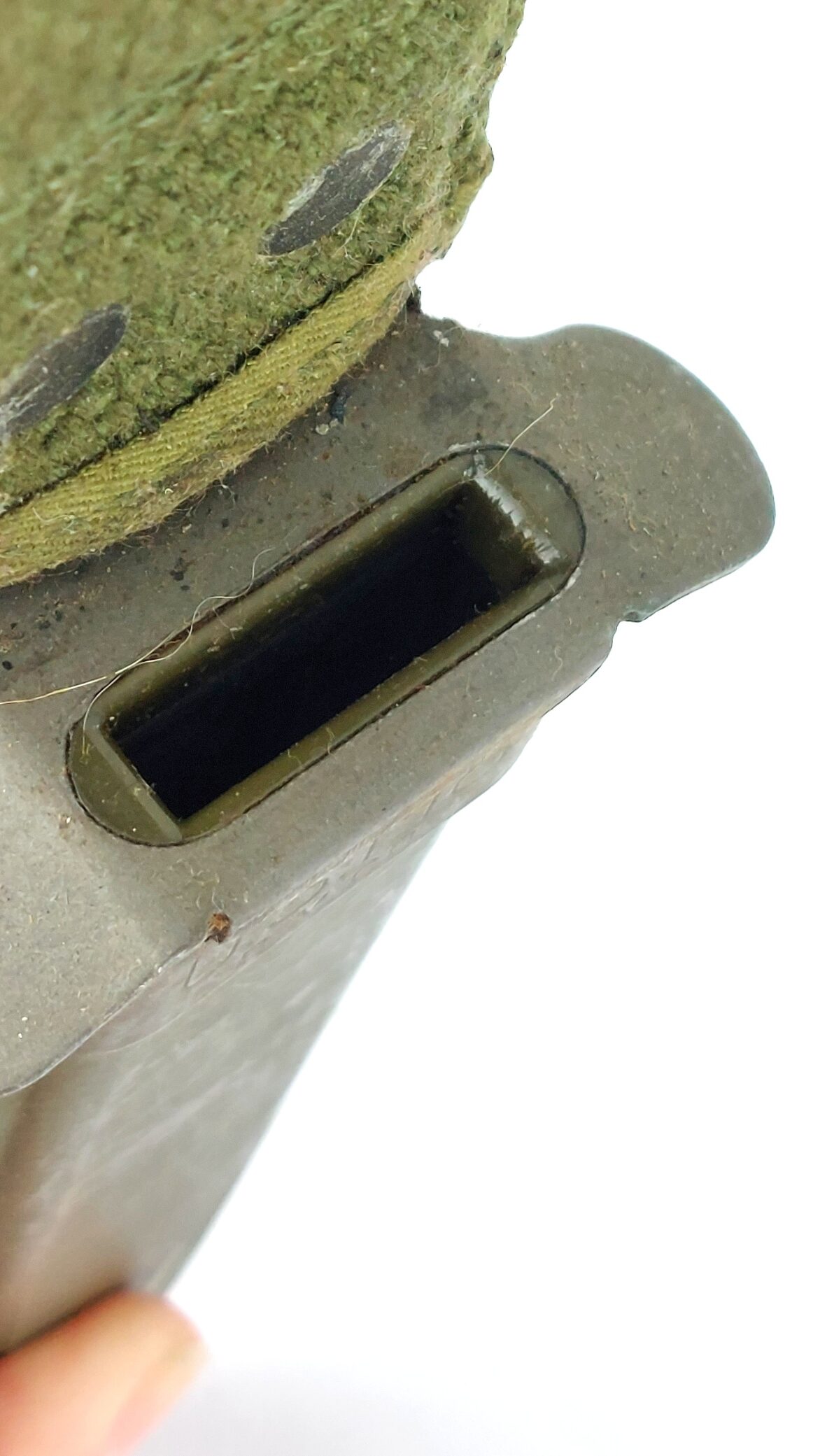
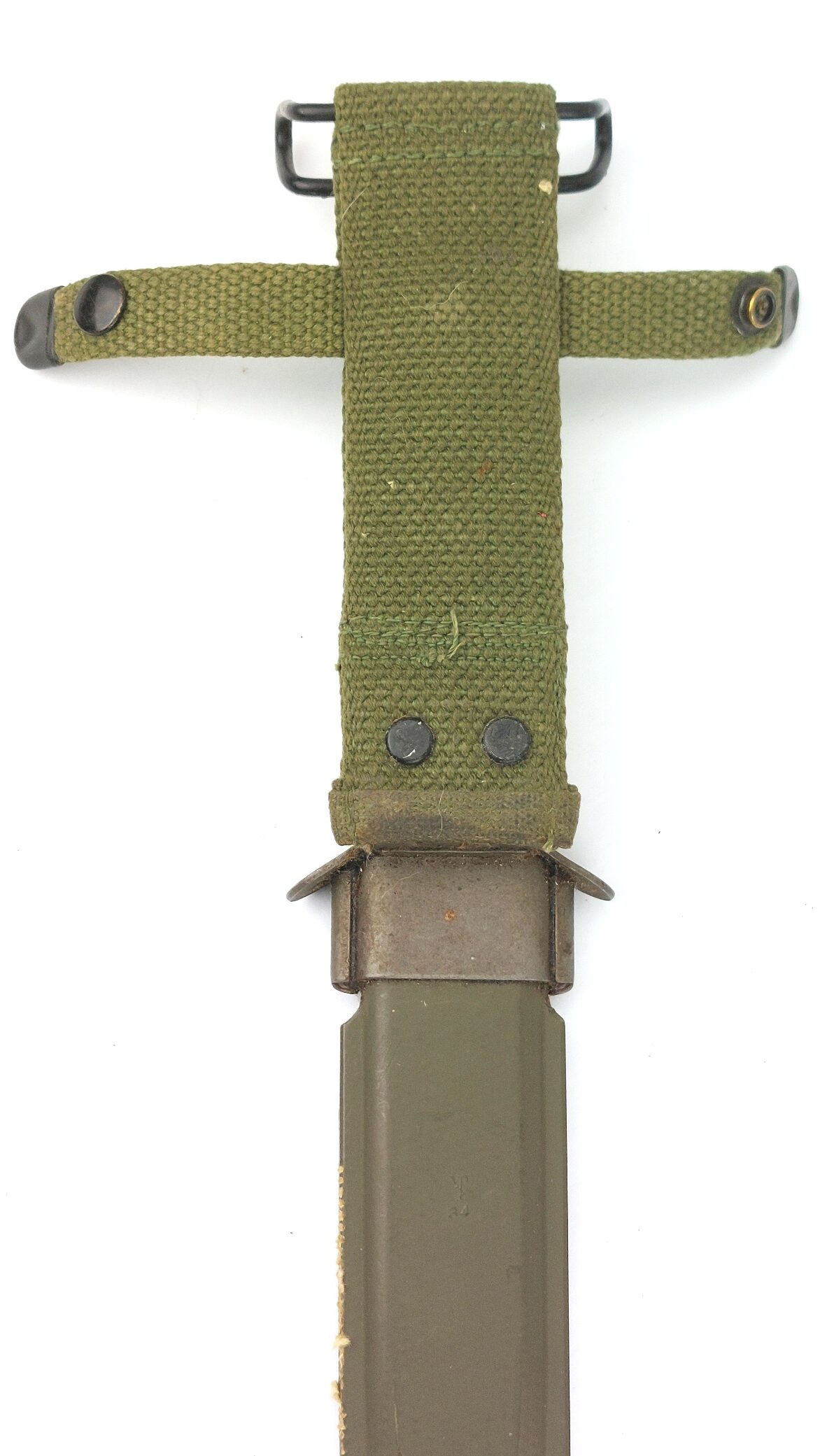
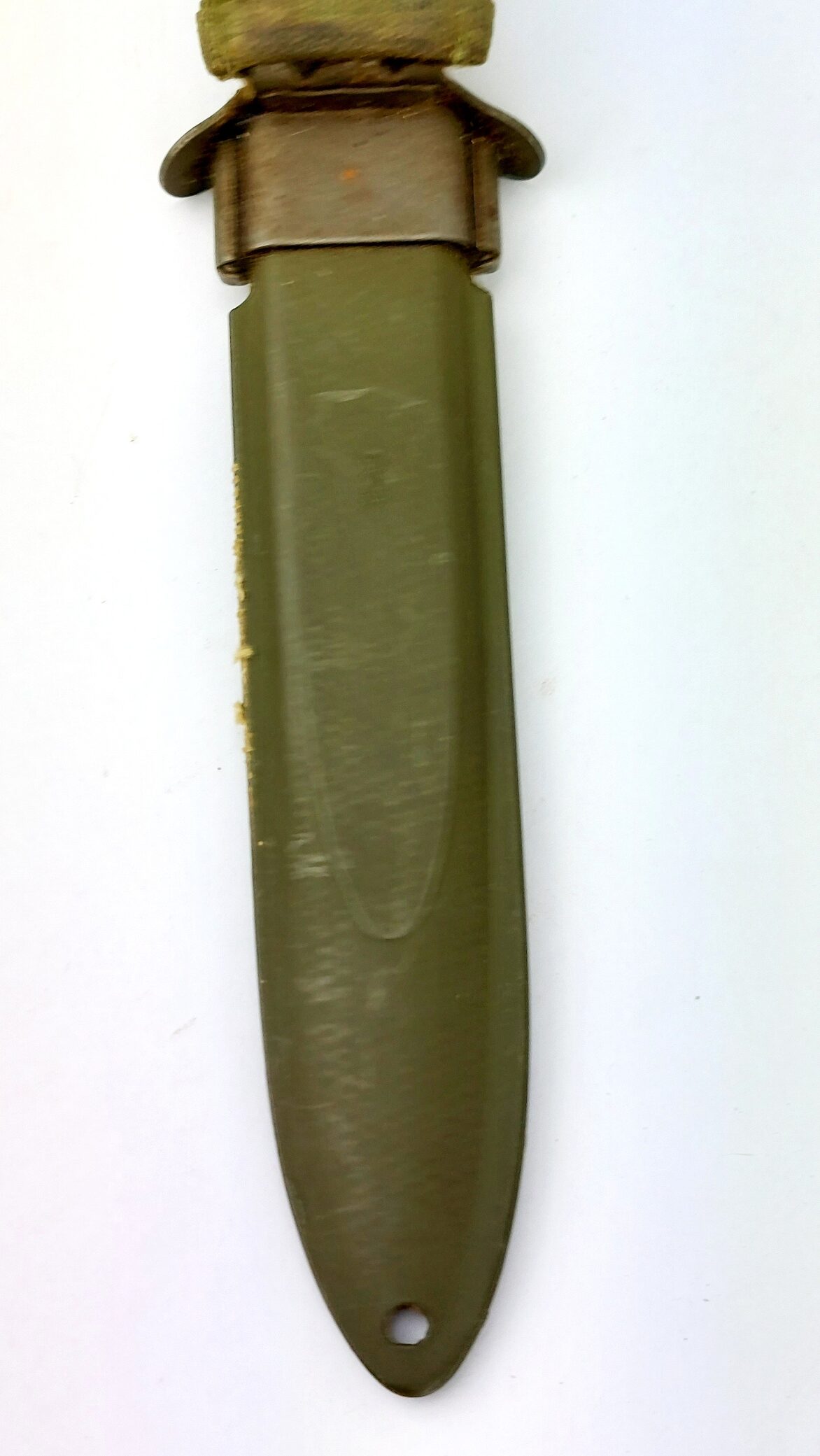
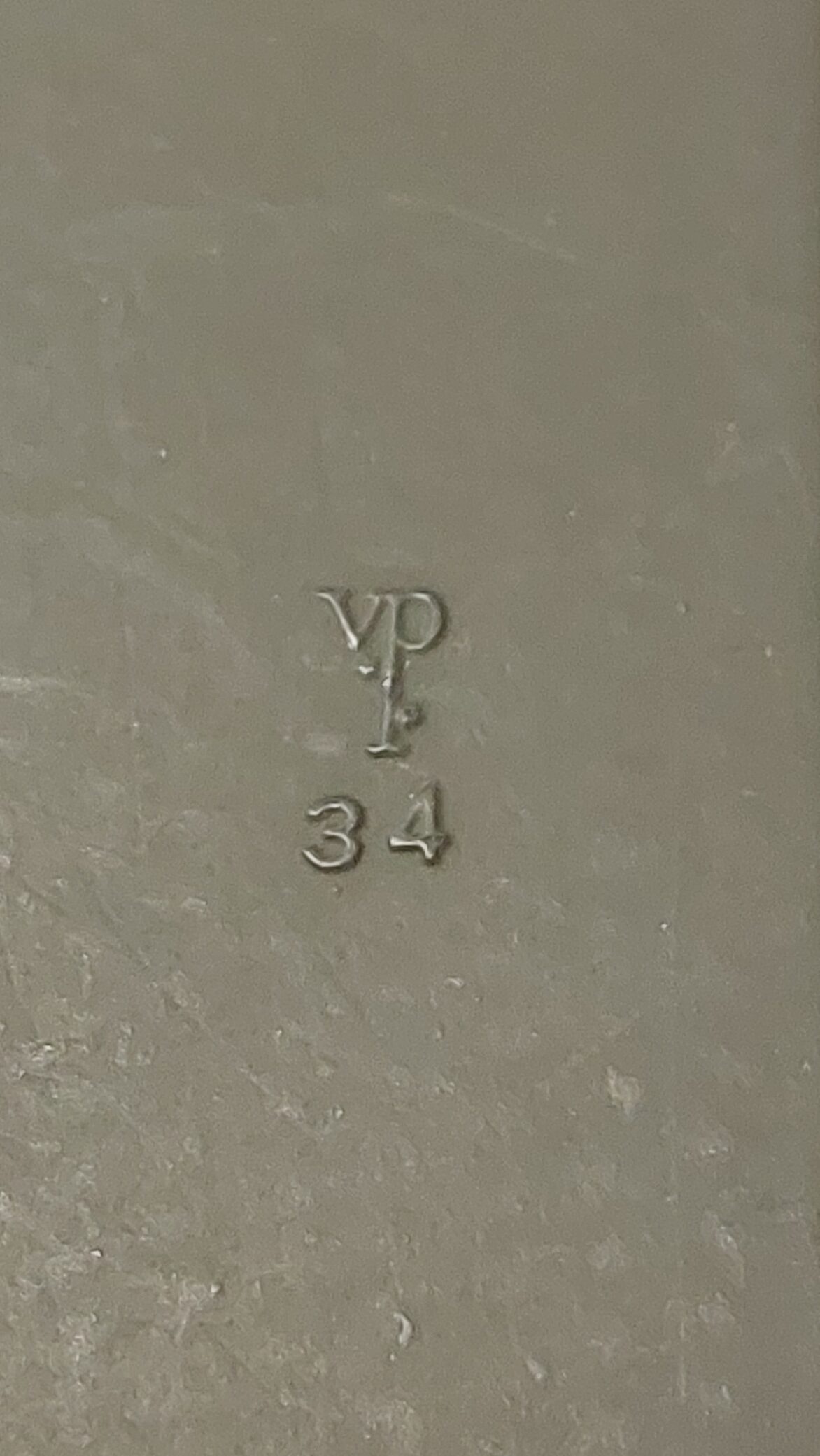
The bayonet is housed in an early U.S. M8 scabbard, manufactured during the Second World War by Beckwith Manufacturing Company (B.M. Co.) at the Victory Plastics facility in Hudson, Massachusetts. The metal throat is stamped “U.S. M8” and “B.M. Co.” The plastic scabbard body is moulded on the reverse with the Victory Plastics “VP” logo (long P) over “34”, denoting the mould number. As correct for this early pattern, the scabbard retains a non-reinforced plastic tip with drainage hole, original webbing, and a period UNITED CARR press stud.
Historical Note:
The M7 bayonet was standardised in 1964 for use with the newly adopted M16 rifle, as U.S. ground forces expanded rapidly during the Vietnam War. Although visually similar to the M4 bayonet, the M7 is a distinct design, incorporating a longer grip and modified latch geometry to accommodate the wider M16 bayonet lug.
Columbus Milpar & Manufacturing Company received the first U.S. government M7 bayonet contract in May 1964 (Contract DA-11-199-AMC-625). After initial production delays, deliveries commenced in early 1965, aligning directly with early Vietnam deployments. Milpar continued production until March 1969, supplying an estimated 650,000+ M7 bayonets during the conflict. The chevron-marked latch plate seen on this example is consistently associated with early Milpar Vietnam-era manufacture, later replaced by a dimpled latch on subsequent production.
The accompanying U.S. M8 scabbard represents WWII-era manufacture (c.1943–1945) by Beckwith Manufacturing Company. Victory Plastics was established as a Beckwith subsidiary specifically to meet wartime plastics contracts, accounting for the VP mould marking found in the body. Although later replaced in regulation by the M8A1, original M8 scabbards remained in U.S. inventory for decades and are well documented in continued service alongside later bayonets, including the M7, throughout the Cold War and into the Vietnam War period.
This combination therefore represents a historically plausible service pairing, reflecting the realities of U.S. military logistics rather than a strictly factory-matched issue set.
*Condition*
The bayonet retains an even, honest service patina, with light wear consistent with military use. The blade shows minor handling marks but no abuse or edge damage. Grips remain solid and secure. The scabbard is structurally sound, with intact webbing, original UNITED CARR snap fastener, and no cracks to the plastic body. Please see photographs as part of the condition report.
*In order to complete the online purchase we will require a picture/scan of a photo ID (Driving Licence, Passport or an official document with a recent picture). If you don't posses any such document please call to buy. If we consider that the proof of ID is incorect or insuficient, we reserve the right to cancel the transaction.
*We also reserve the right to cancel the transaction with a full refund if there is any suspicion that the provided item will be used in any way contrary to the laws and legislation of UK.