*Portsmouth, c.1935–1955, Double-Sided Wooden Bus Destination Sign, White House Milton & Furze Lane*
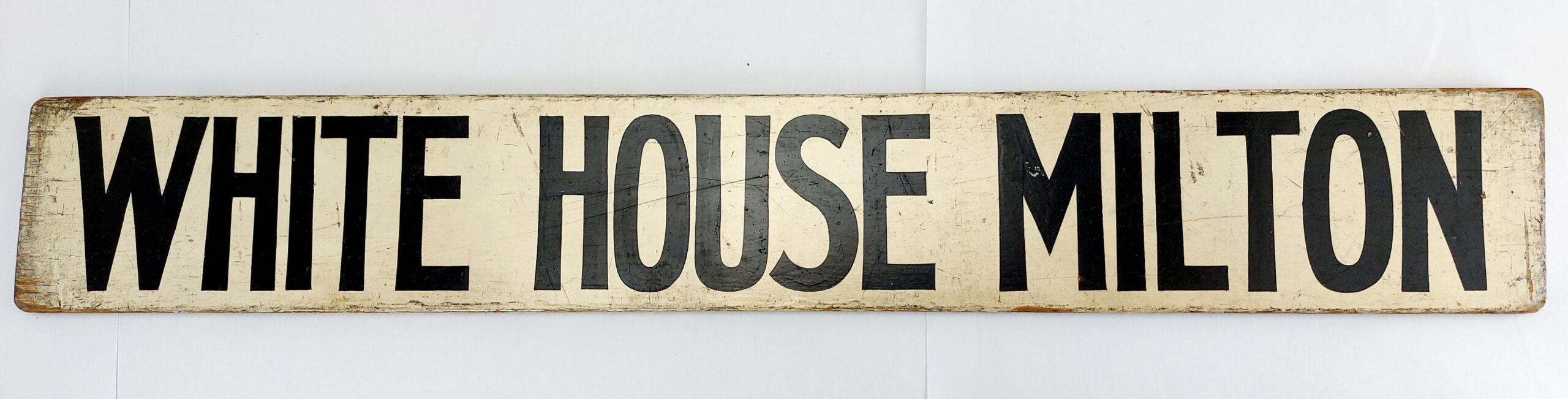
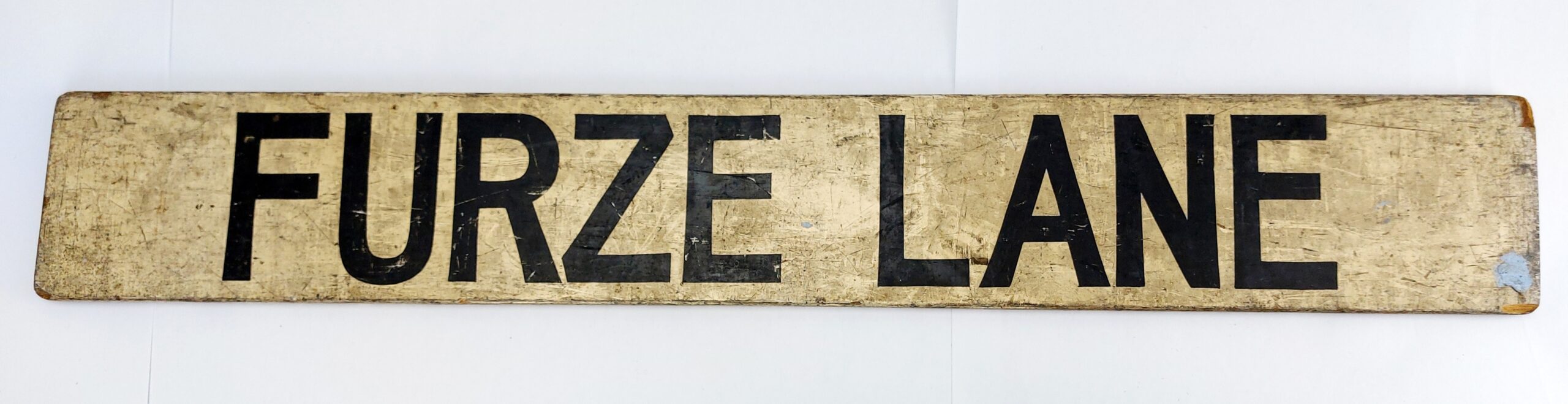
An original double-sided British bus destination sign, produced in painted wood and dating to the mid-20th century, before the widespread introduction of roller-blind destination systems. One face is painted “WHITE HOUSE MILTON”, the reverse “FURZE LANE”, both referring to established local destinations on historic bus routes serving the Portsmouth and Milton area.
The sign is of classic rectangular format, with bold black lettering hand-painted onto a light ground, designed for maximum legibility when mounted externally on the front or side of a service bus. The proportions, typography, and construction are entirely consistent with working municipal transport signage of the period, intended to be changed manually at route termini or depots.
A scarce and increasingly collectible example of British transport ephemera, equally suited to display in a transport, railwayana, or local-history collection, or as a striking decorative piece with strong industrial character.
Dimensions: 69 cm × 10 cm × 0.8 cm
Historical Note:
Prior to the universal adoption of roller-blind destination displays from the late 1950s onward, British buses commonly used individual wooden destination boards such as this example. These boards were stored at depots and physically fitted to vehicles depending on the route being operated, allowing operators to update destinations as services changed throughout the day.
Destinations such as White House, Milton and Furze Lane reflect the highly localised nature of post-war bus networks, which were designed to serve specific residential districts, public houses, road junctions, and community landmarks rather than broader termini alone. Many such place-names never appeared on later blind systems and are now absent from modern route branding, making surviving boards particularly evocative records of mid-20th-century urban transport history.
As fleets modernised and destination blinds became standard, wooden boards were rapidly rendered obsolete and were often discarded or repurposed, resulting in relatively few surviving examples today. Those that do remain, especially double-sided boards with clear legible lettering and genuine working wear, are now actively sought after by collectors of transport memorabilia and regional history.
*Condition*
Original painted wooden board showing expected surface wear, scuffs, small marks, and patina consistent with age and prolonged service use. The lettering remains bold and legible on both sides, and the board is structurally sound with no significant damage noted. Please see photographs as part of the condition report.