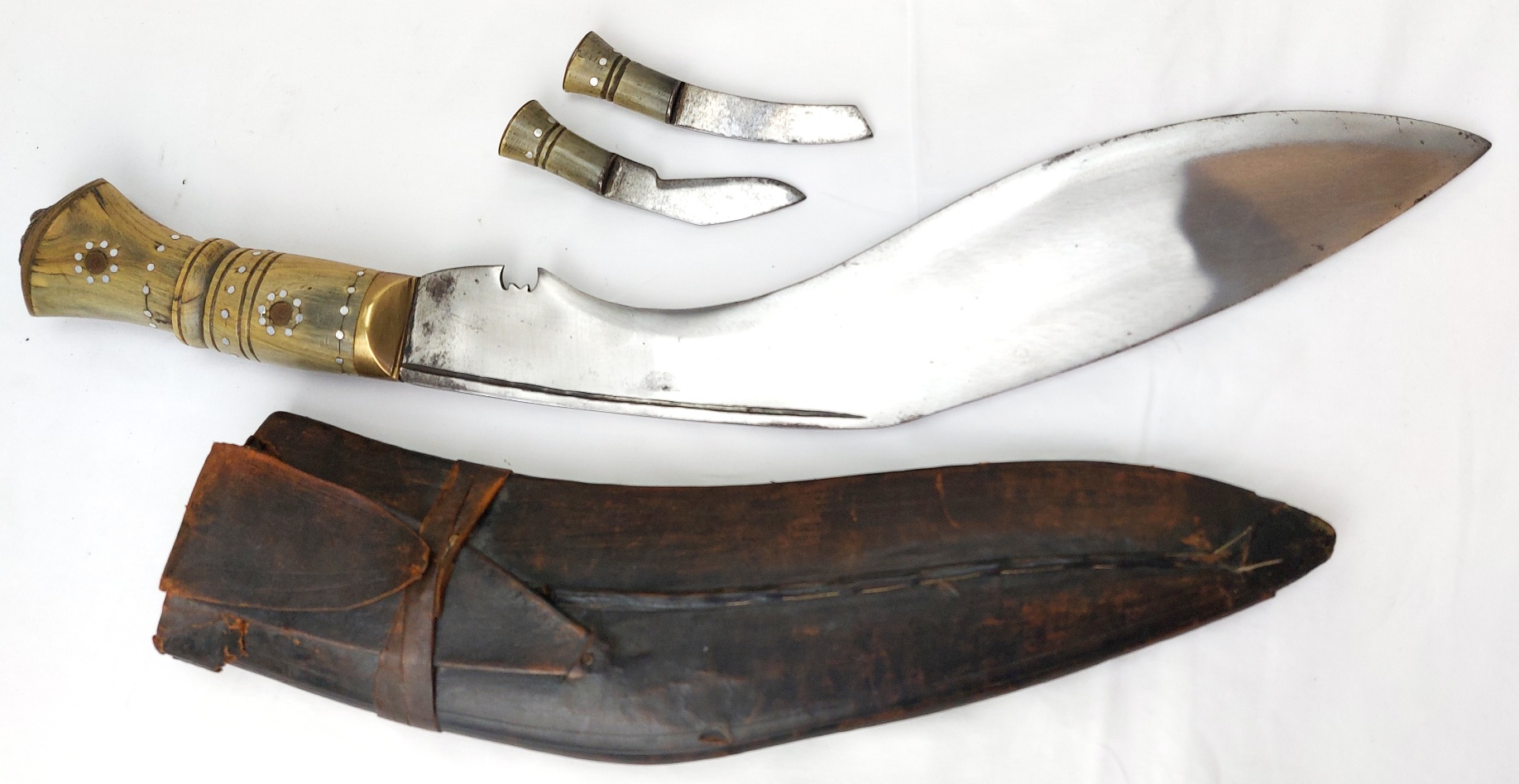
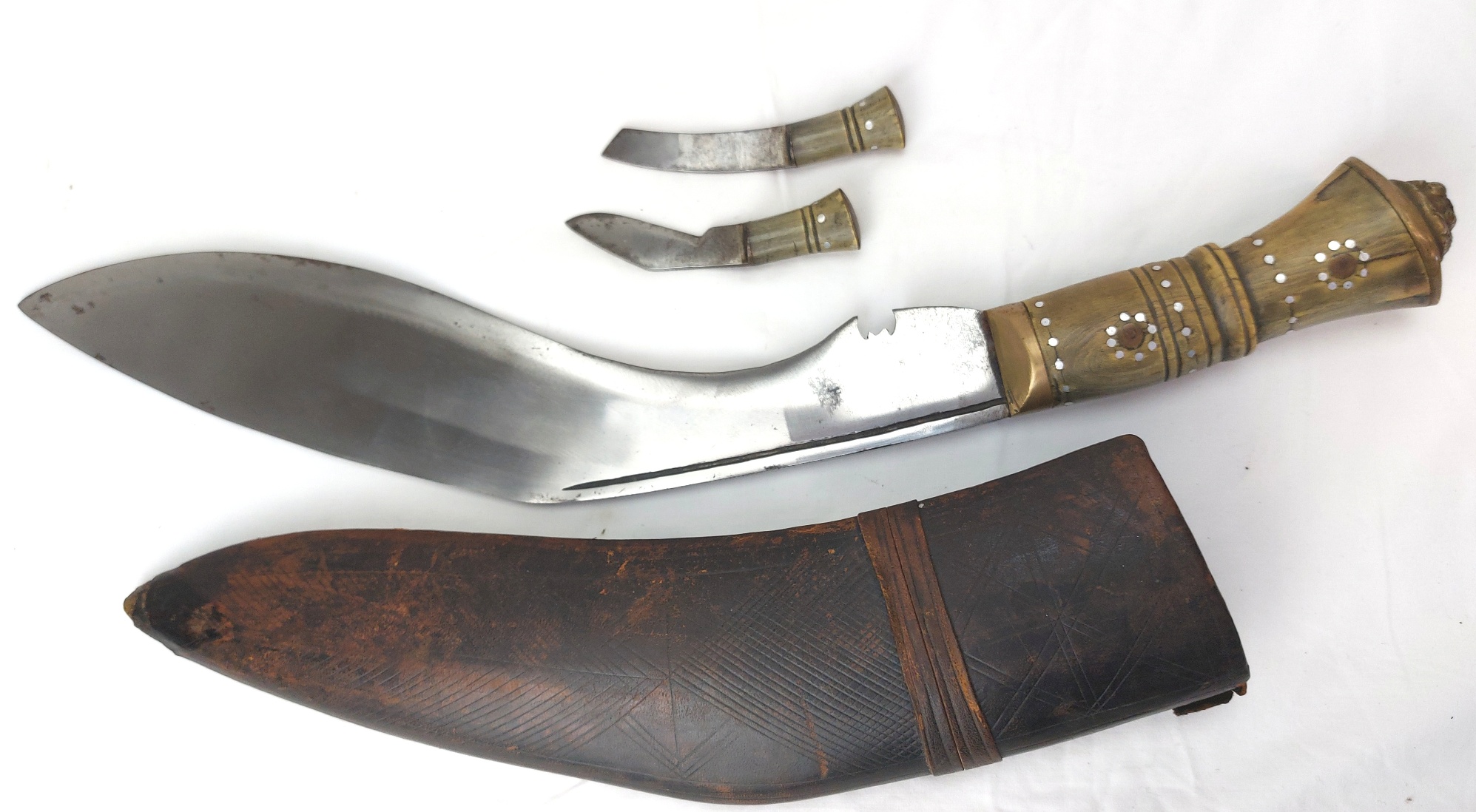
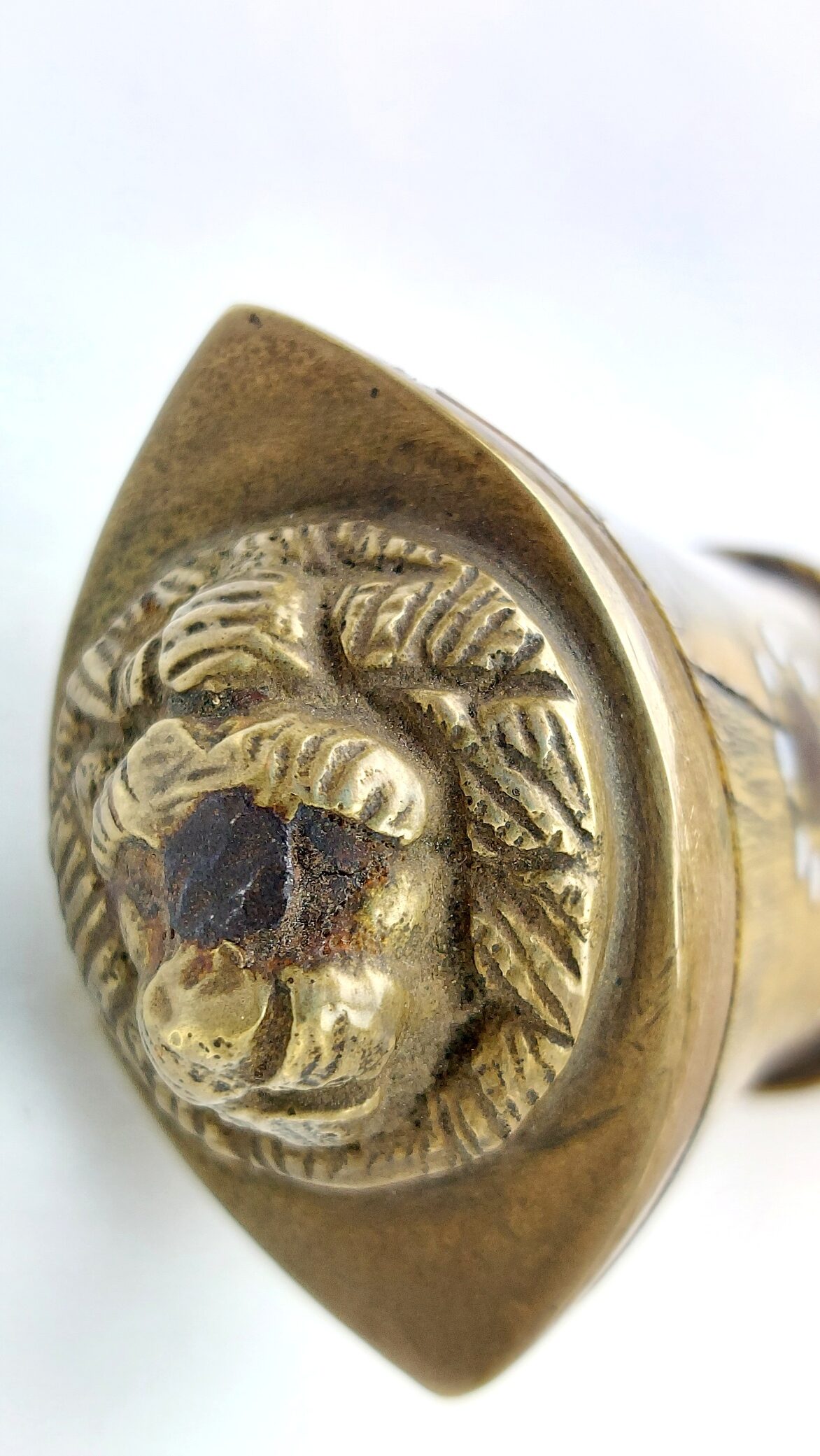
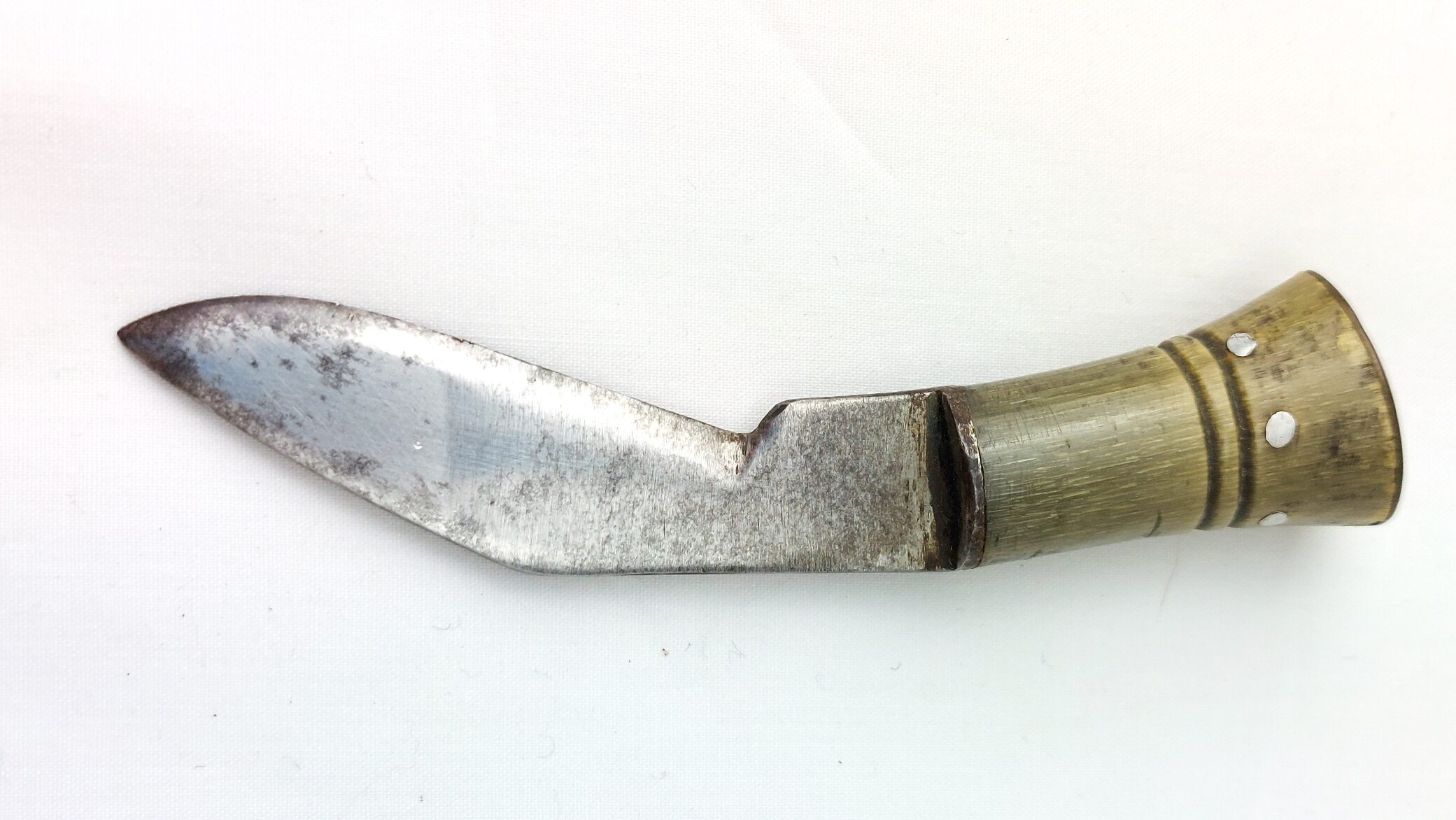
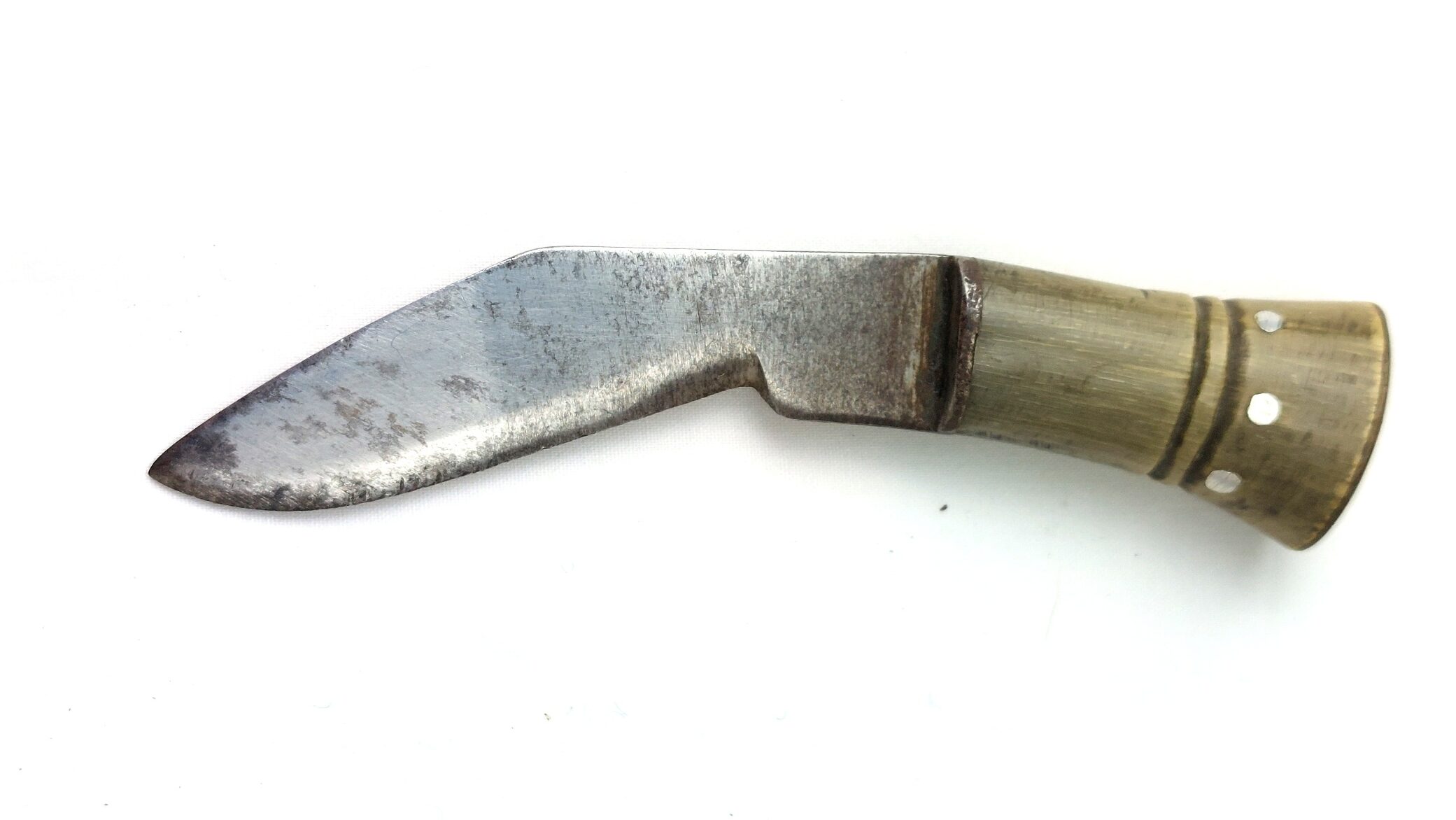
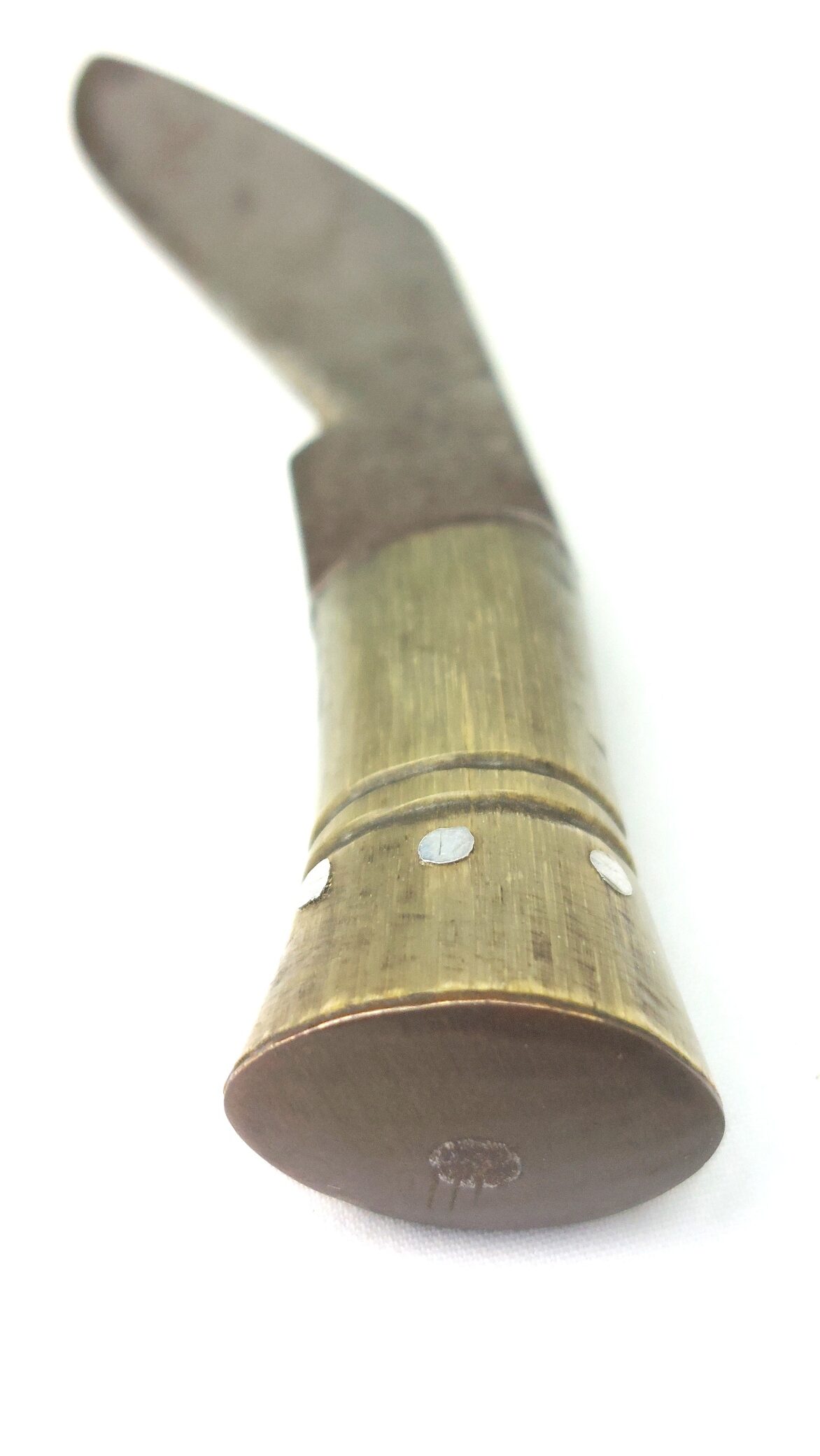
*Nepalese, Late Victorian / Early 20th Century Kukri Knife Set, Lion’s Head Pommel, Studded Horn Hilt, with Karda, Chakmak and Leather Covered Scabbard*
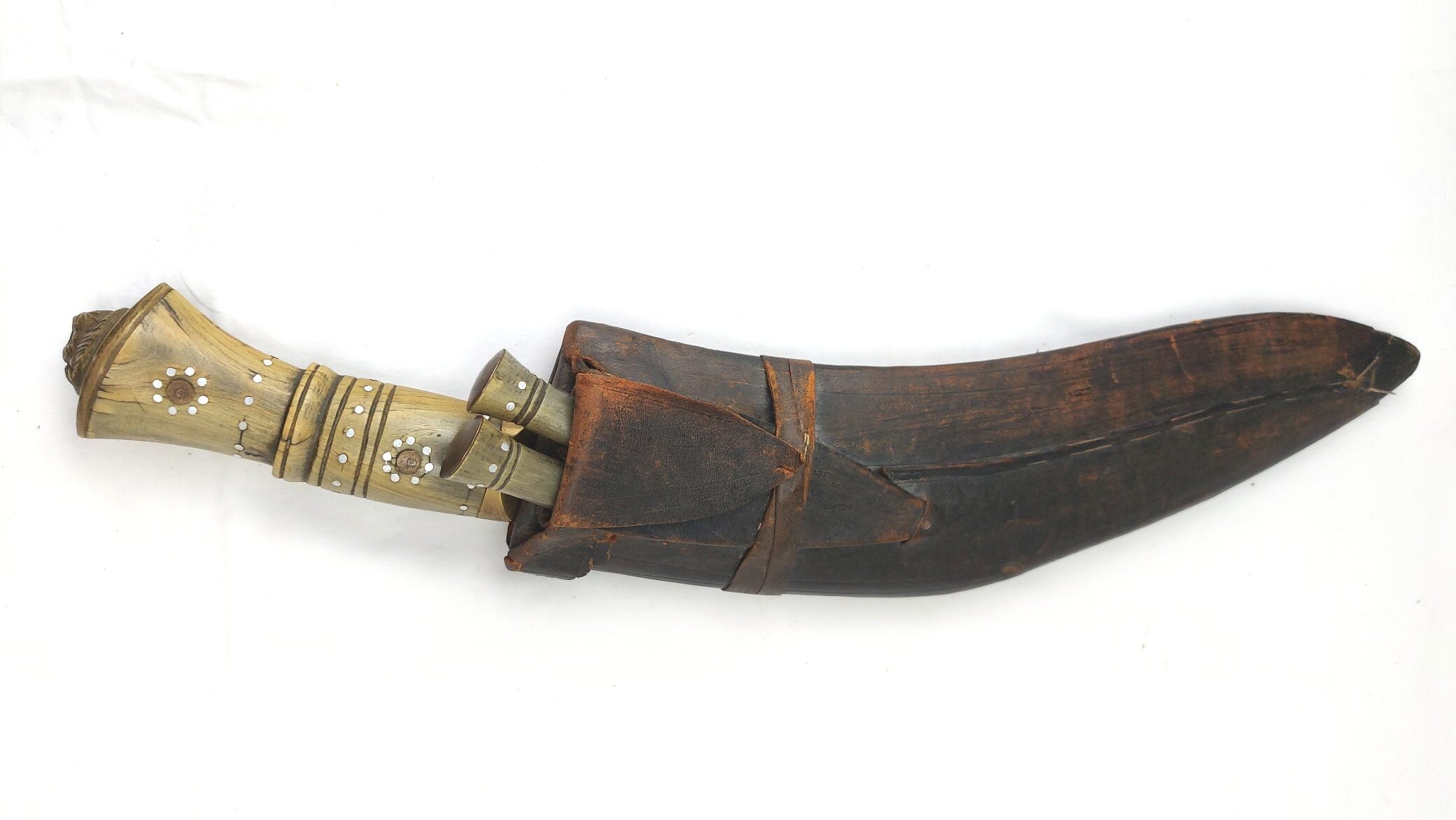
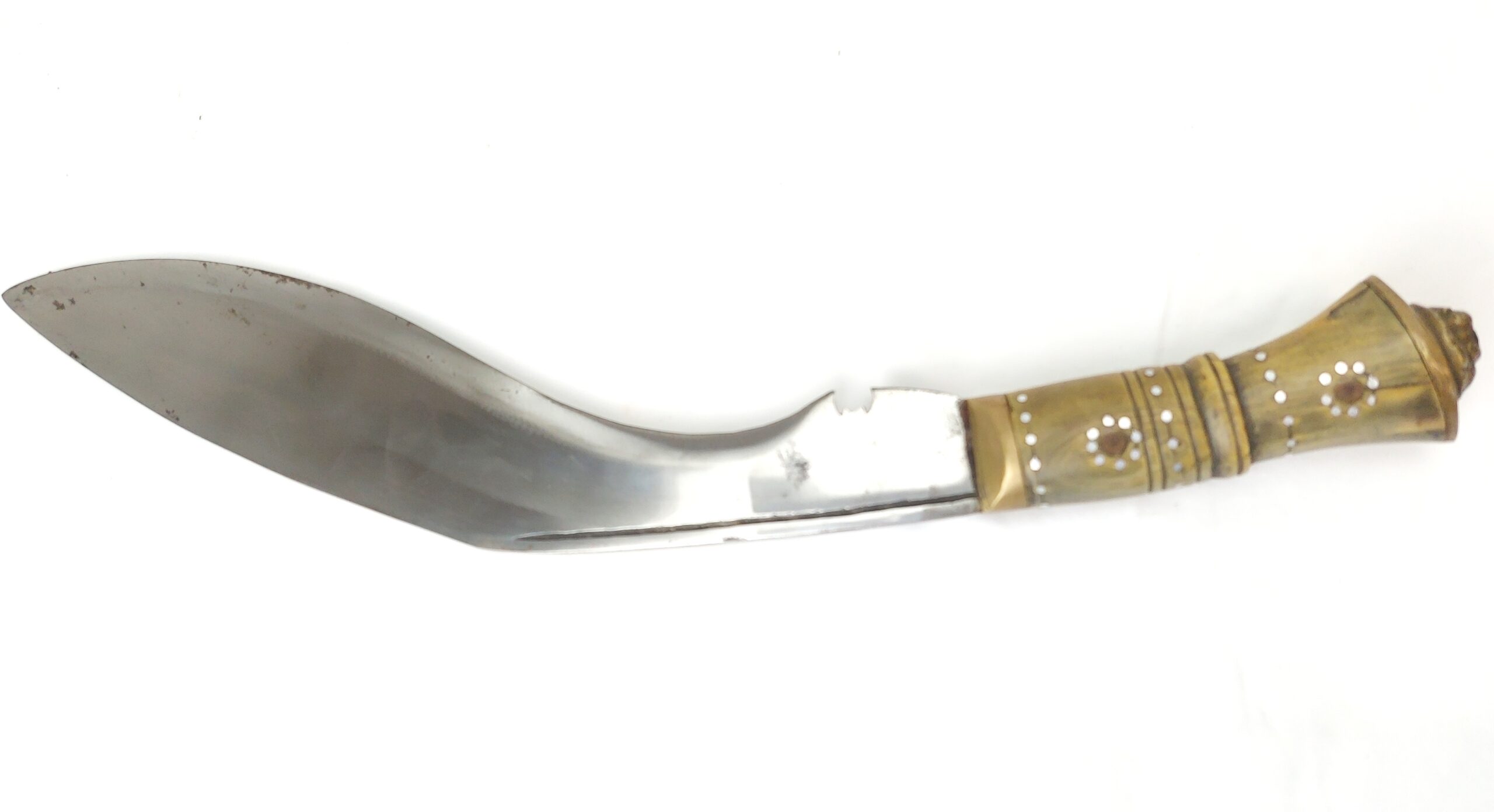
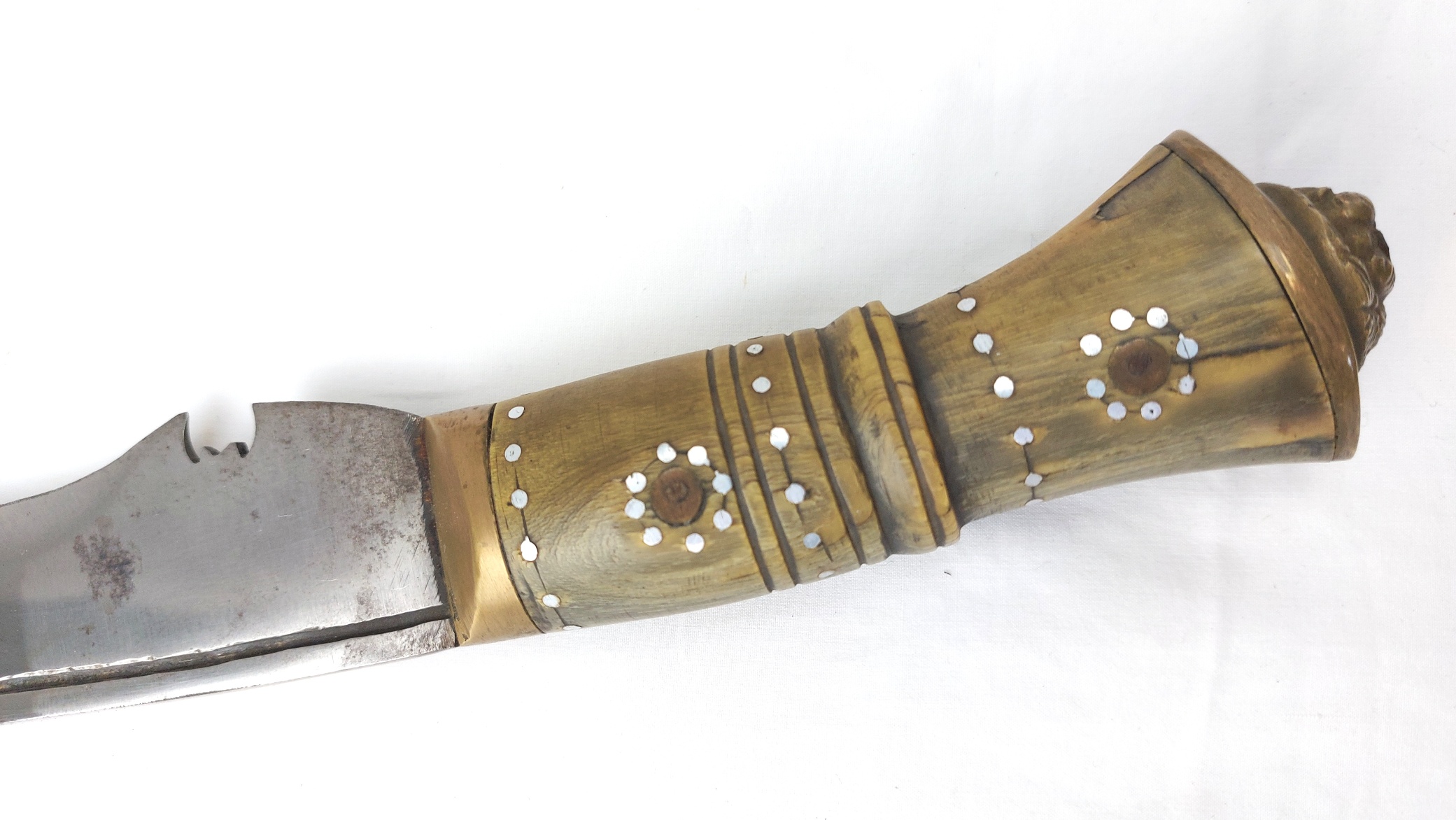
A very attractive Nepalese kukri knife set dating to the late Victorian or early 20th century, featuring a distinctive lion’s head pommel and decorative studded horn grip, complete with its traditional leather-covered wooden scabbard and accompanying karda and chakmak knives.
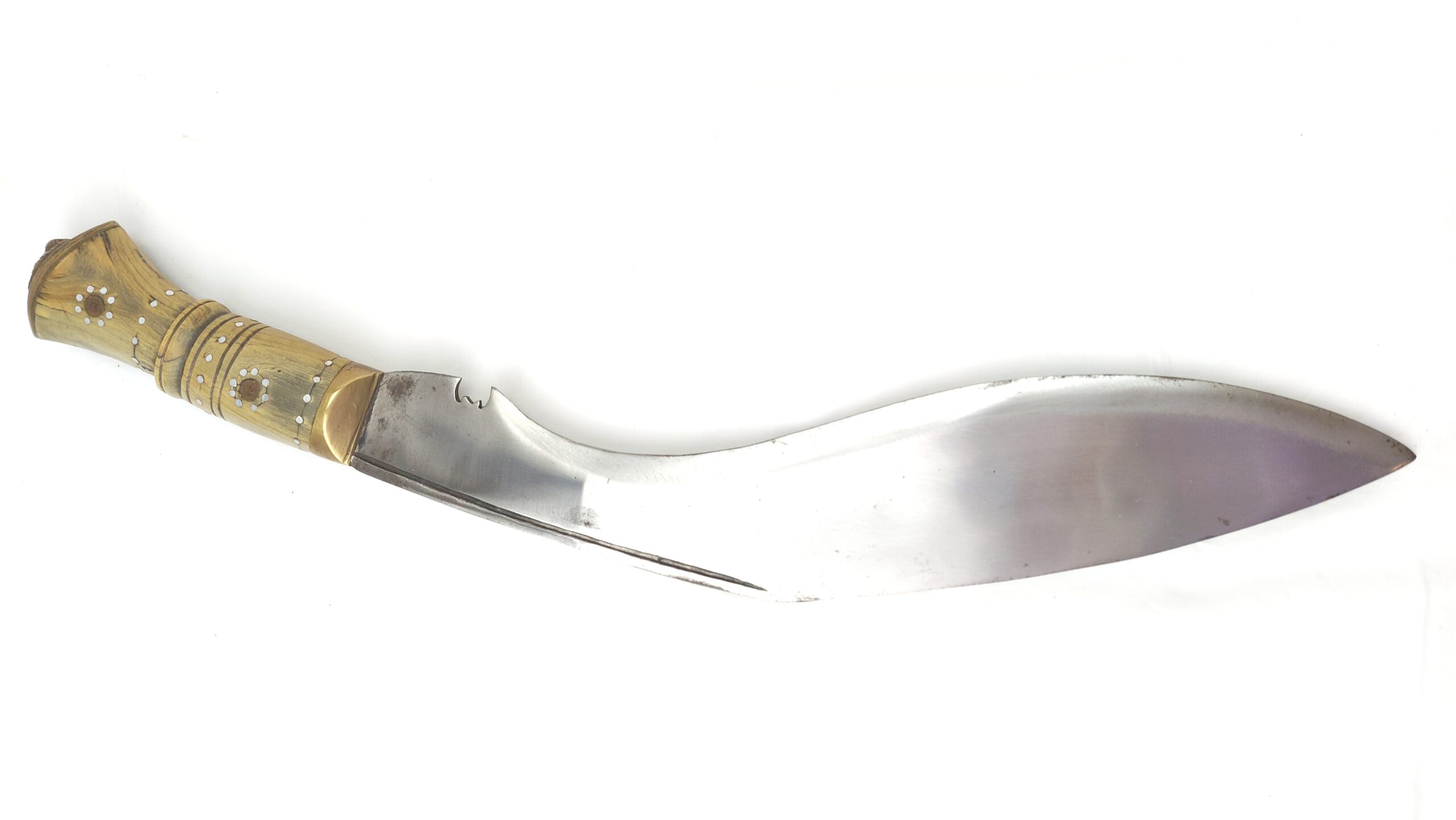
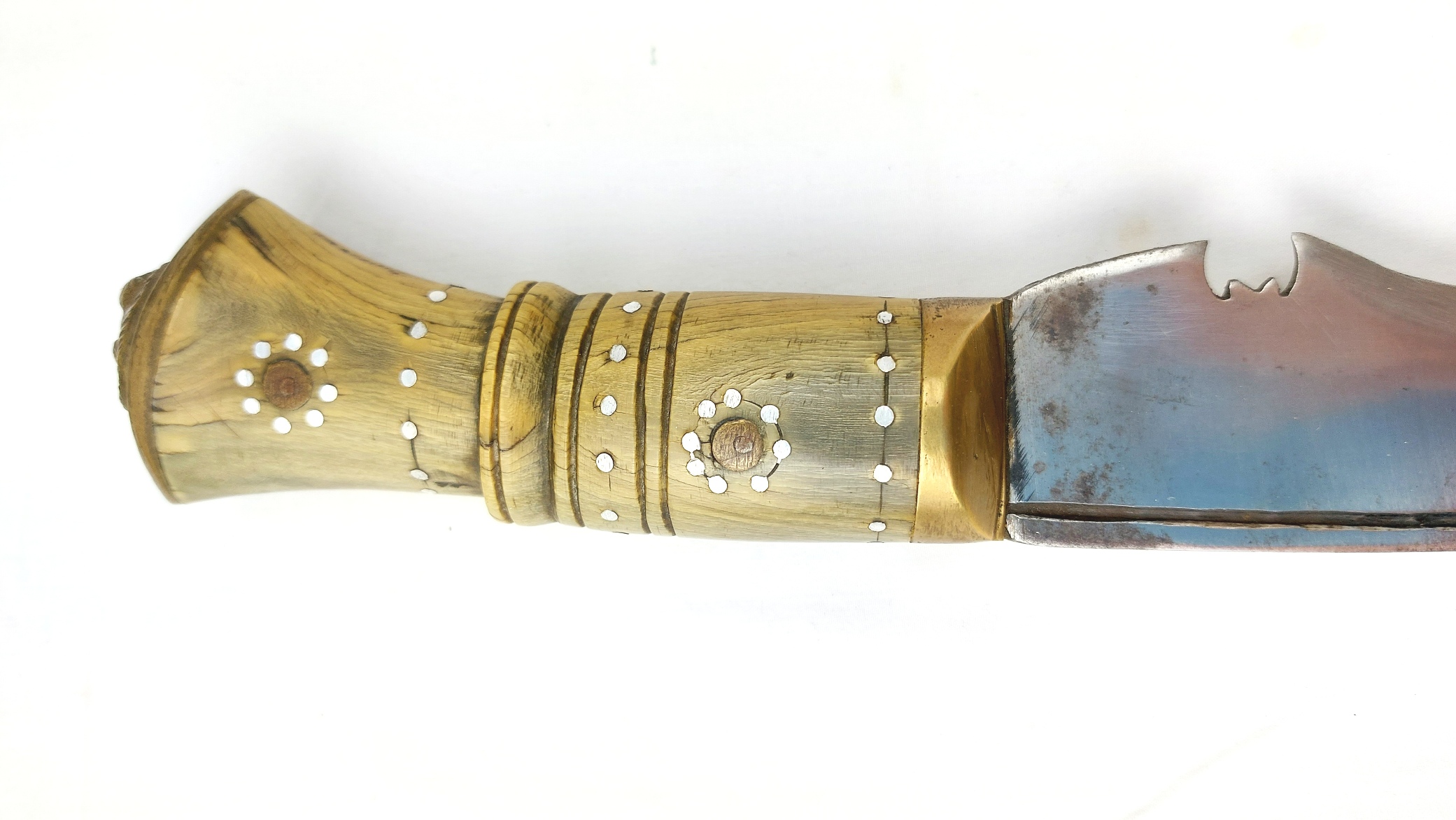
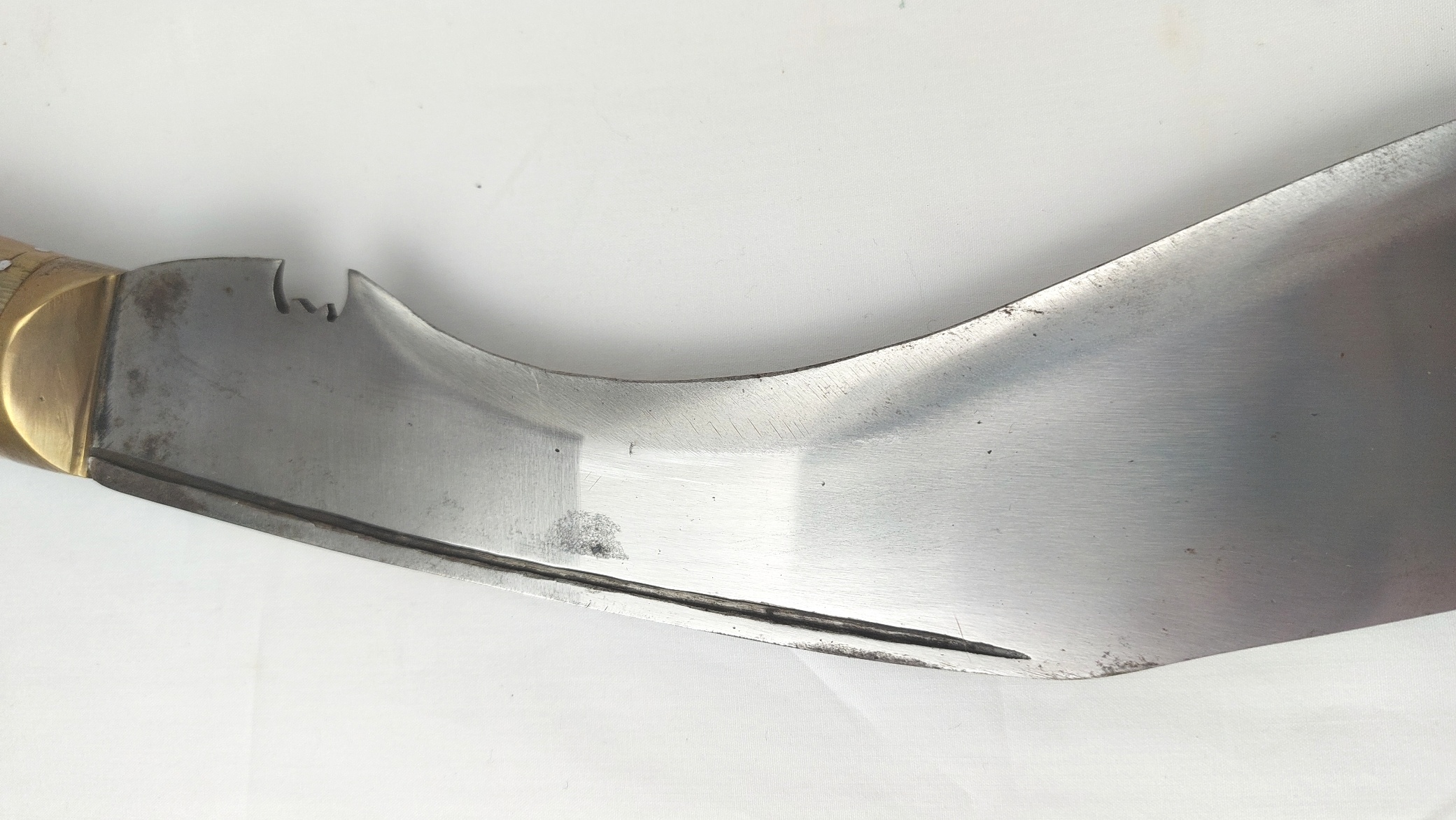
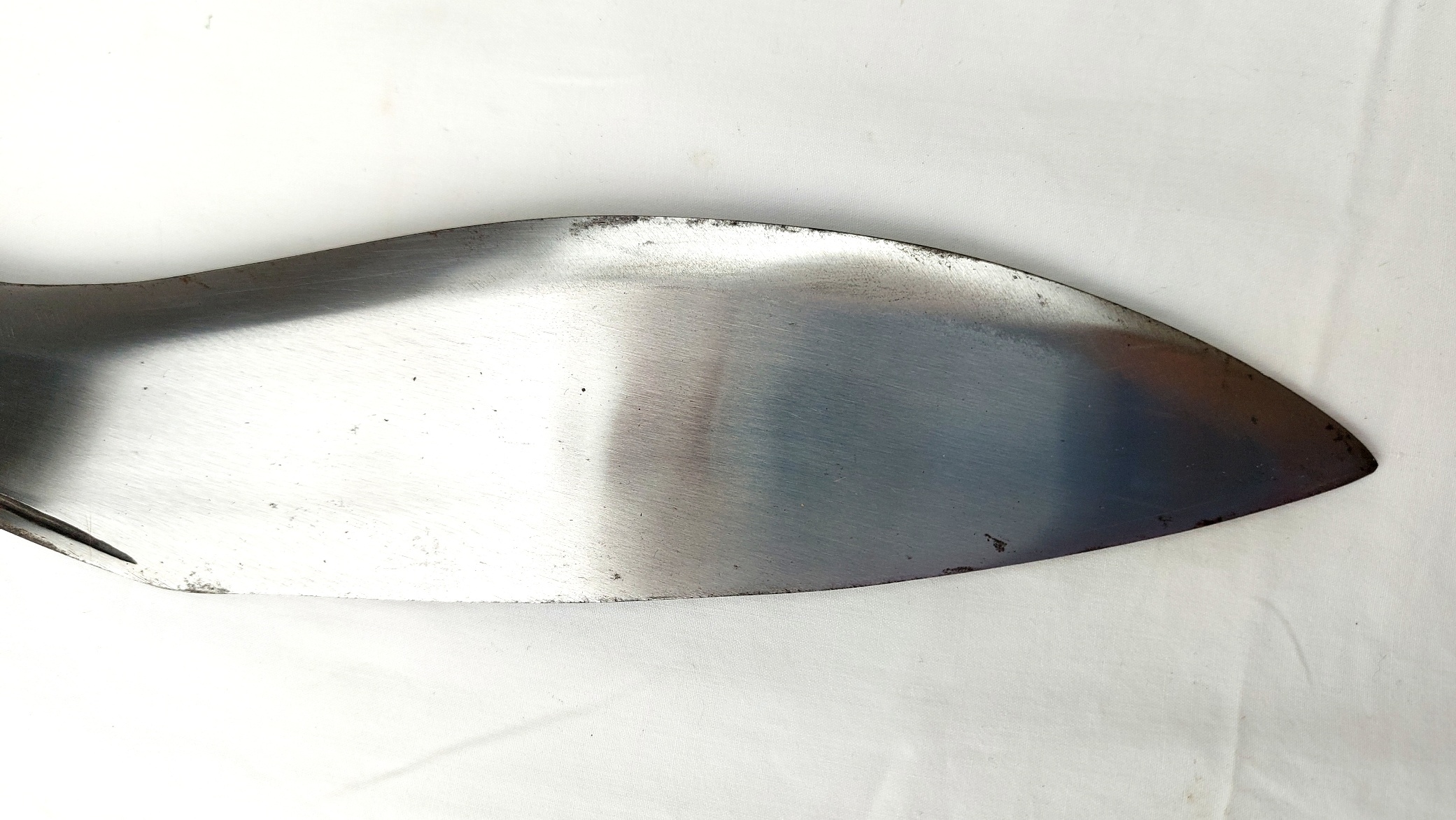
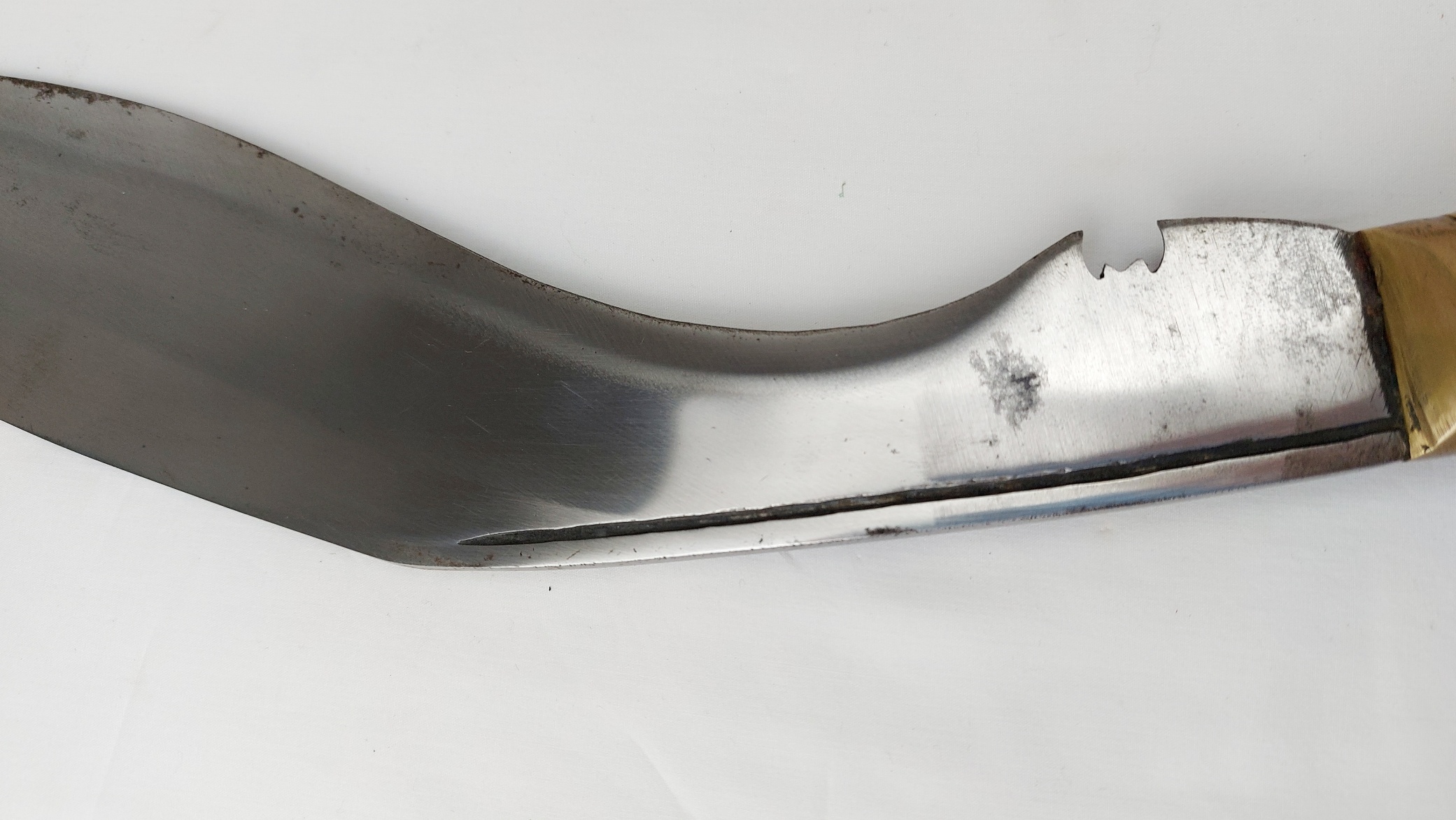
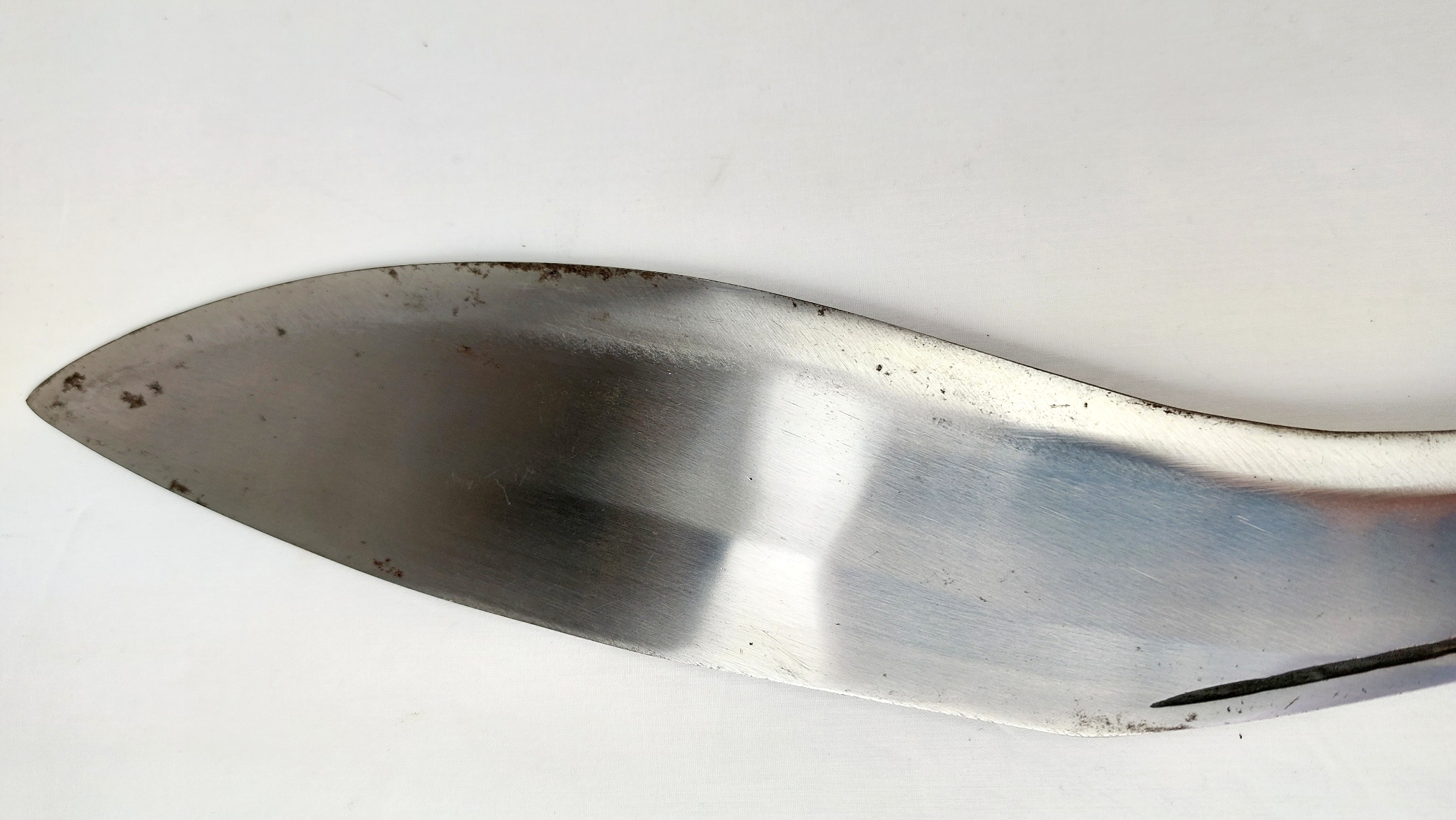
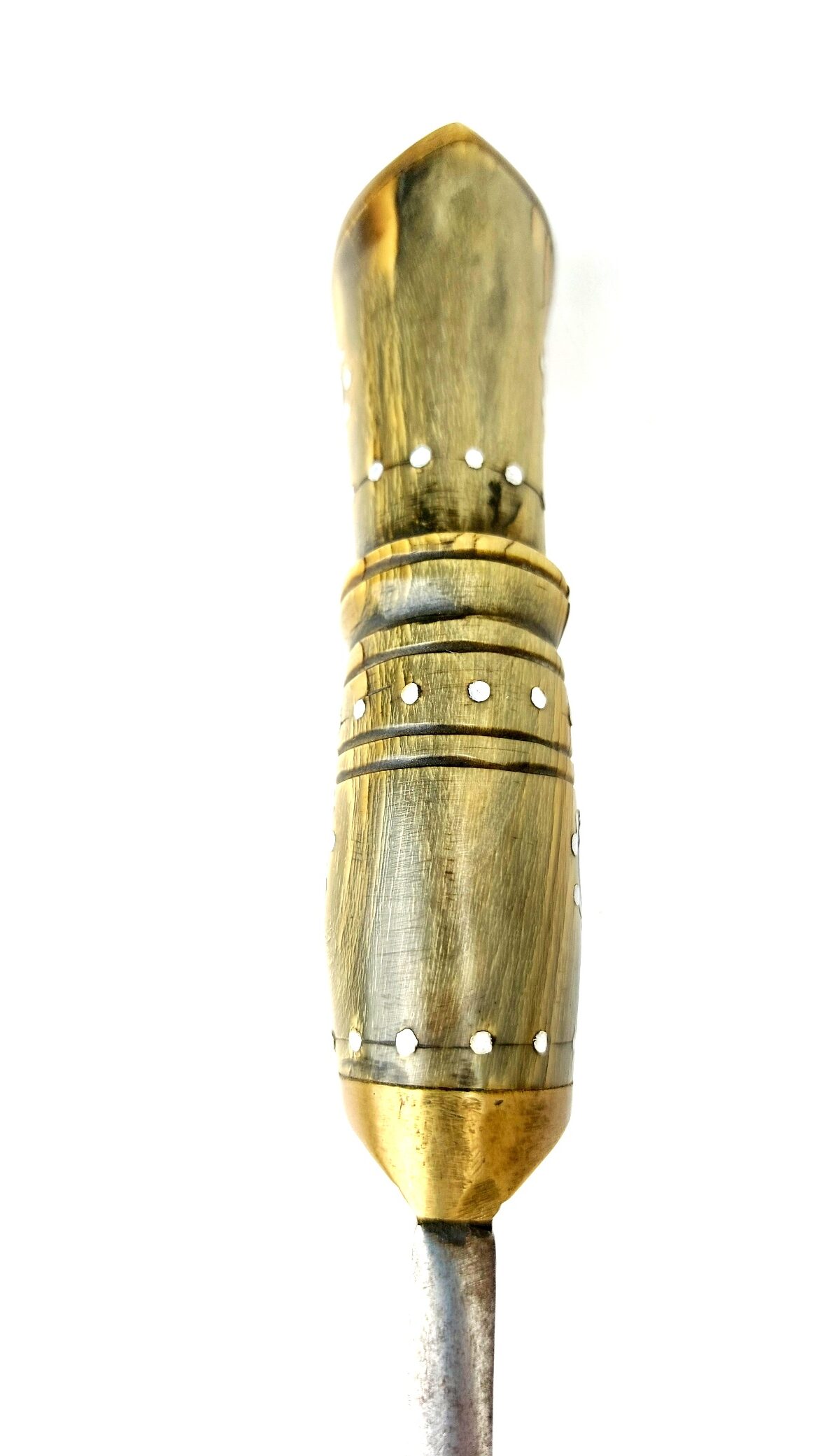
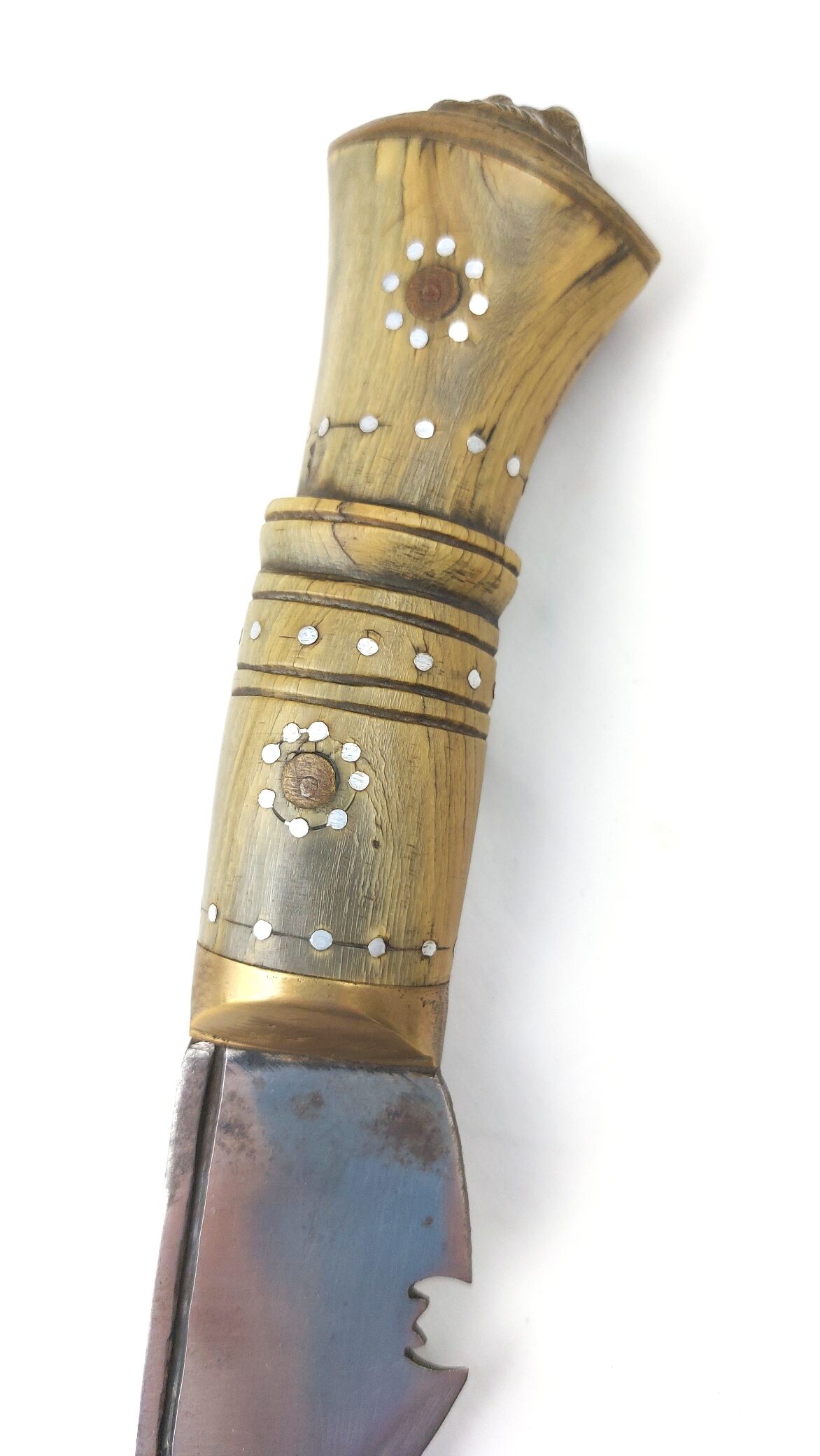
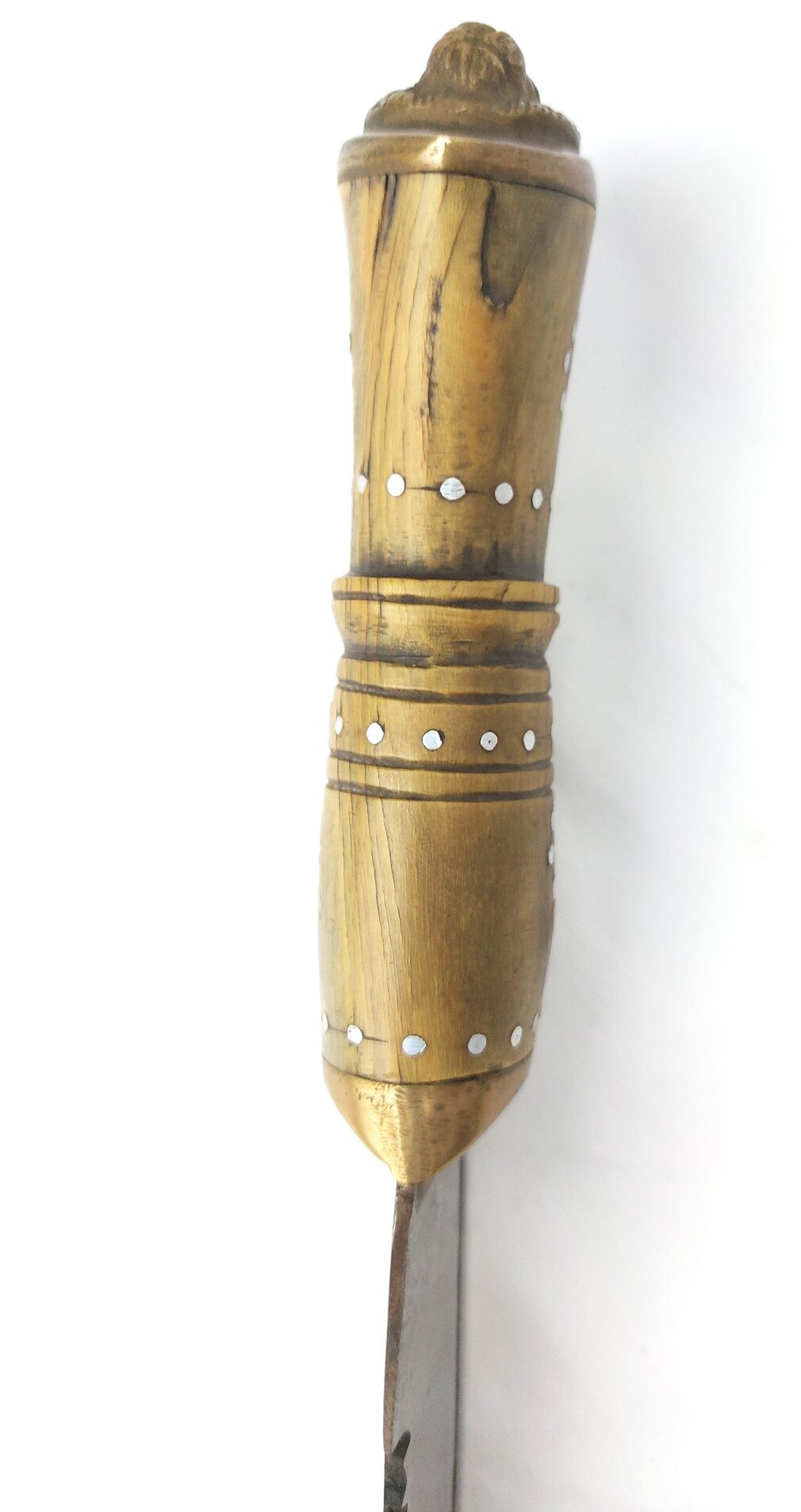
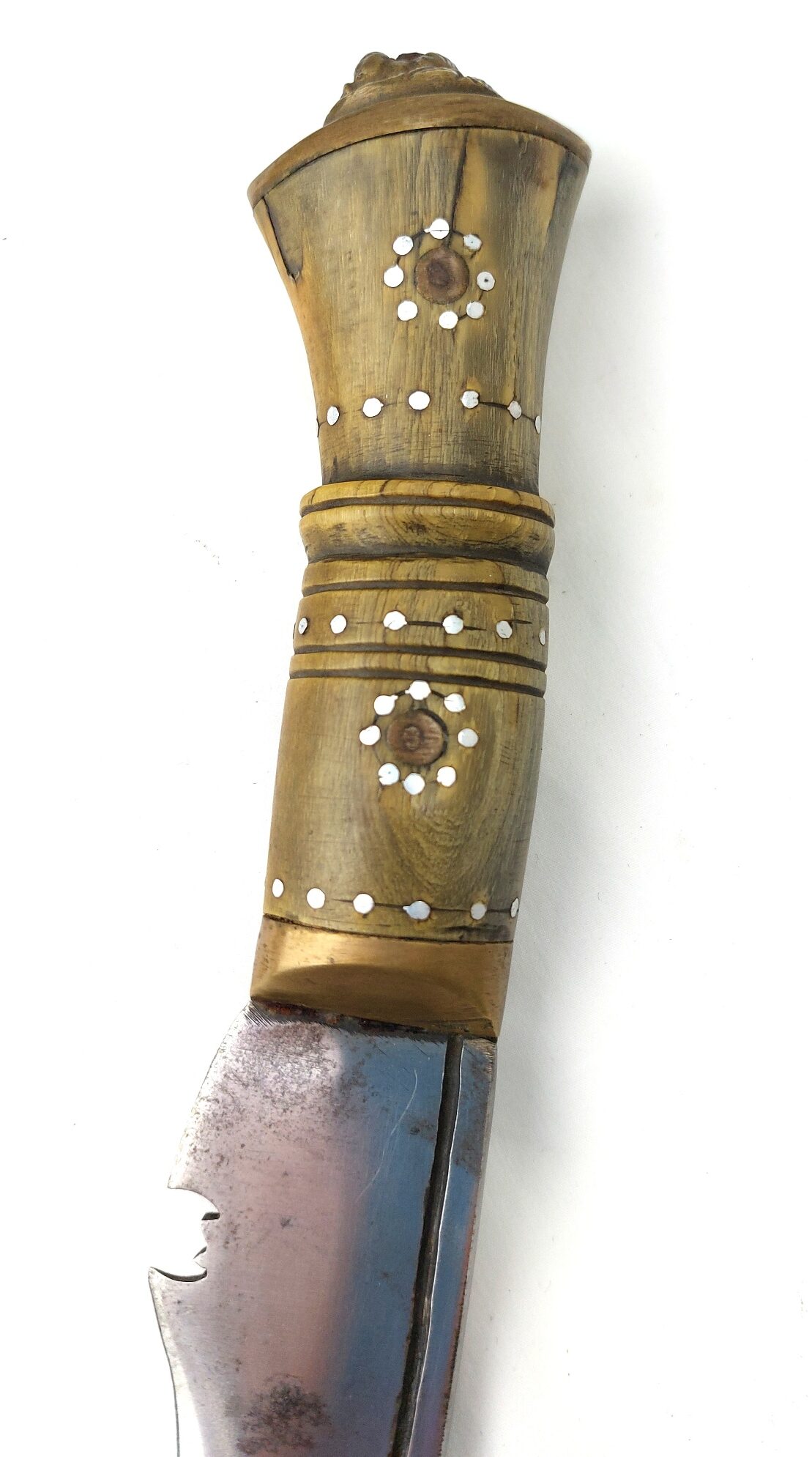
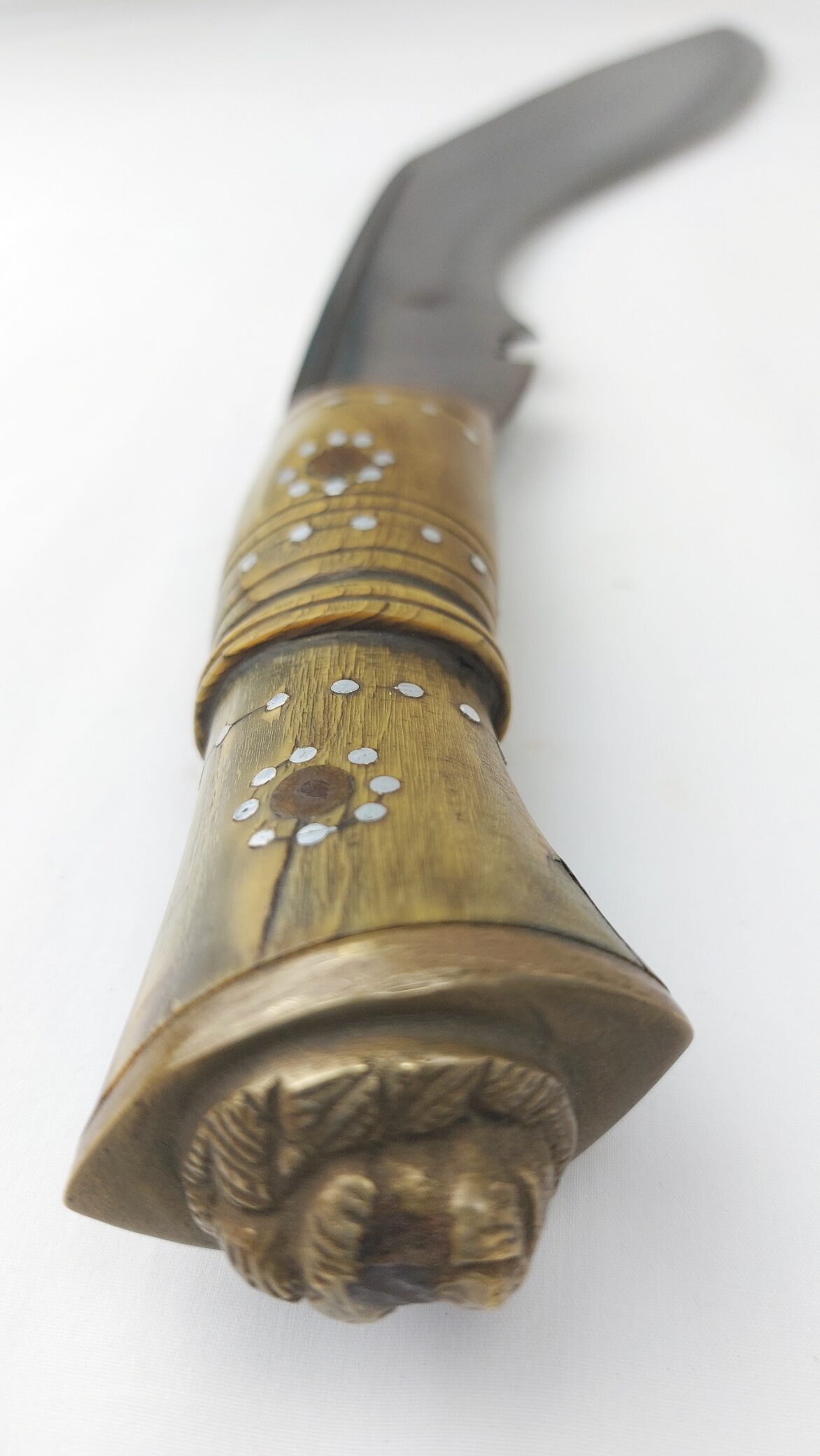
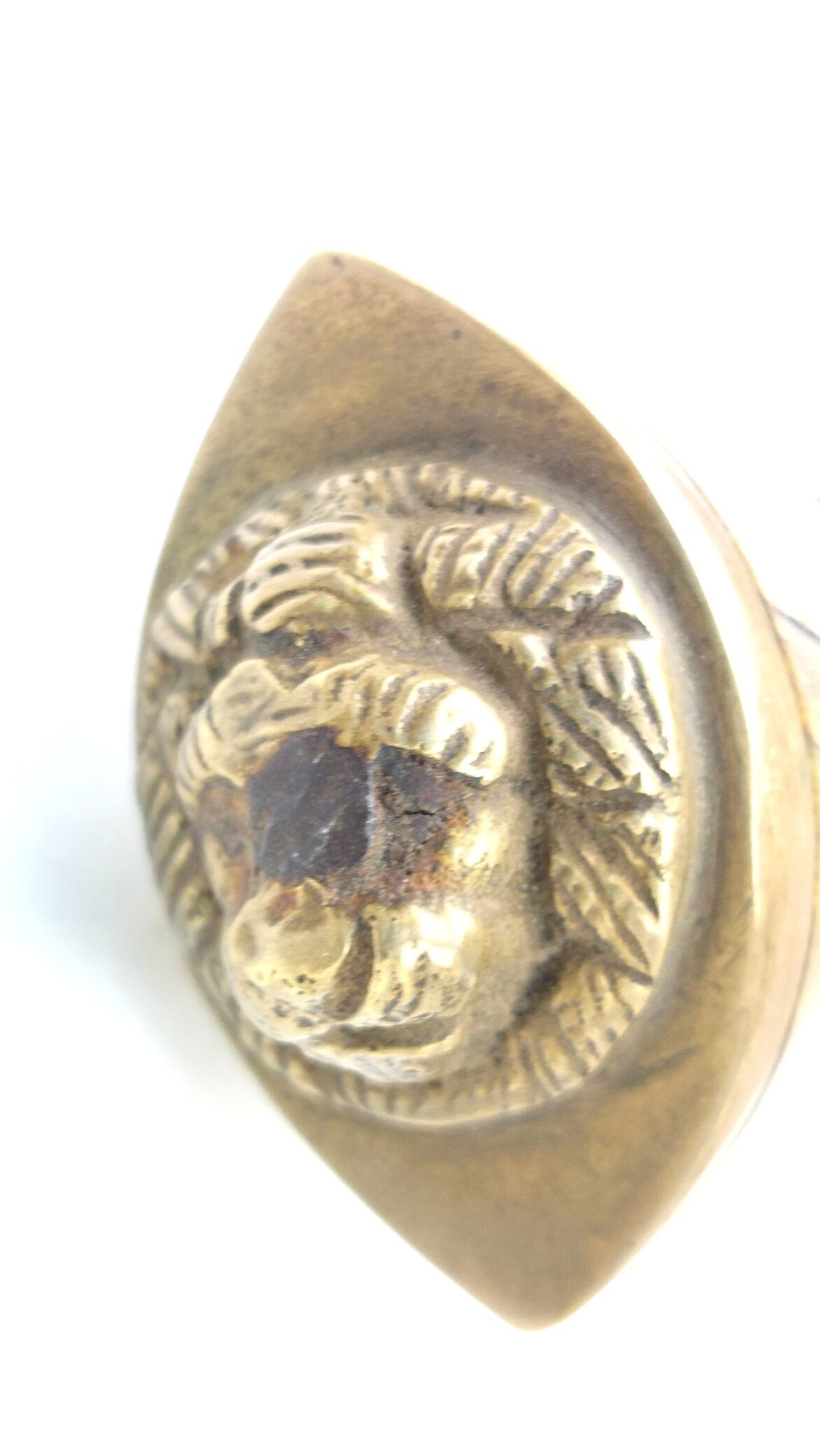
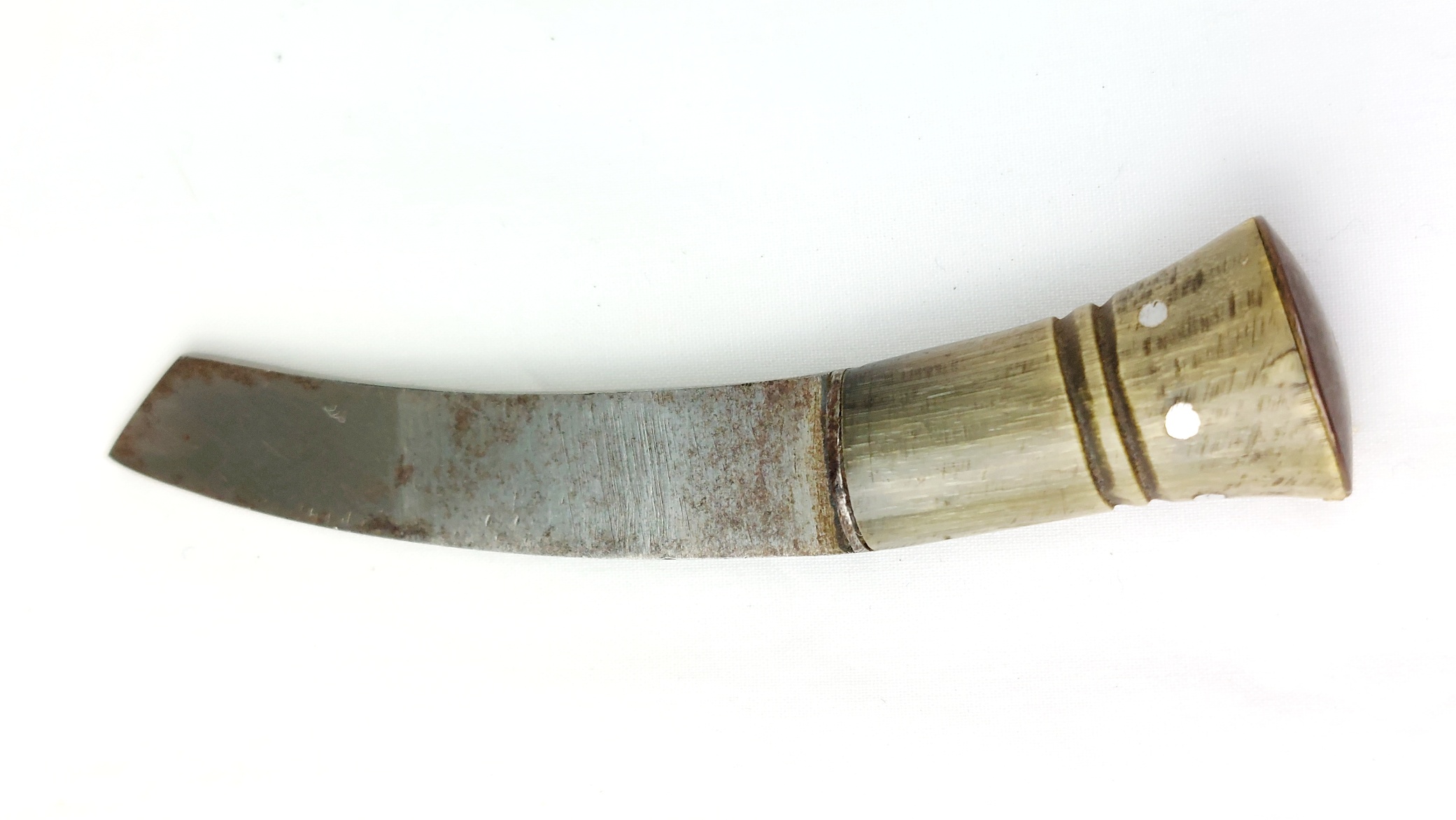
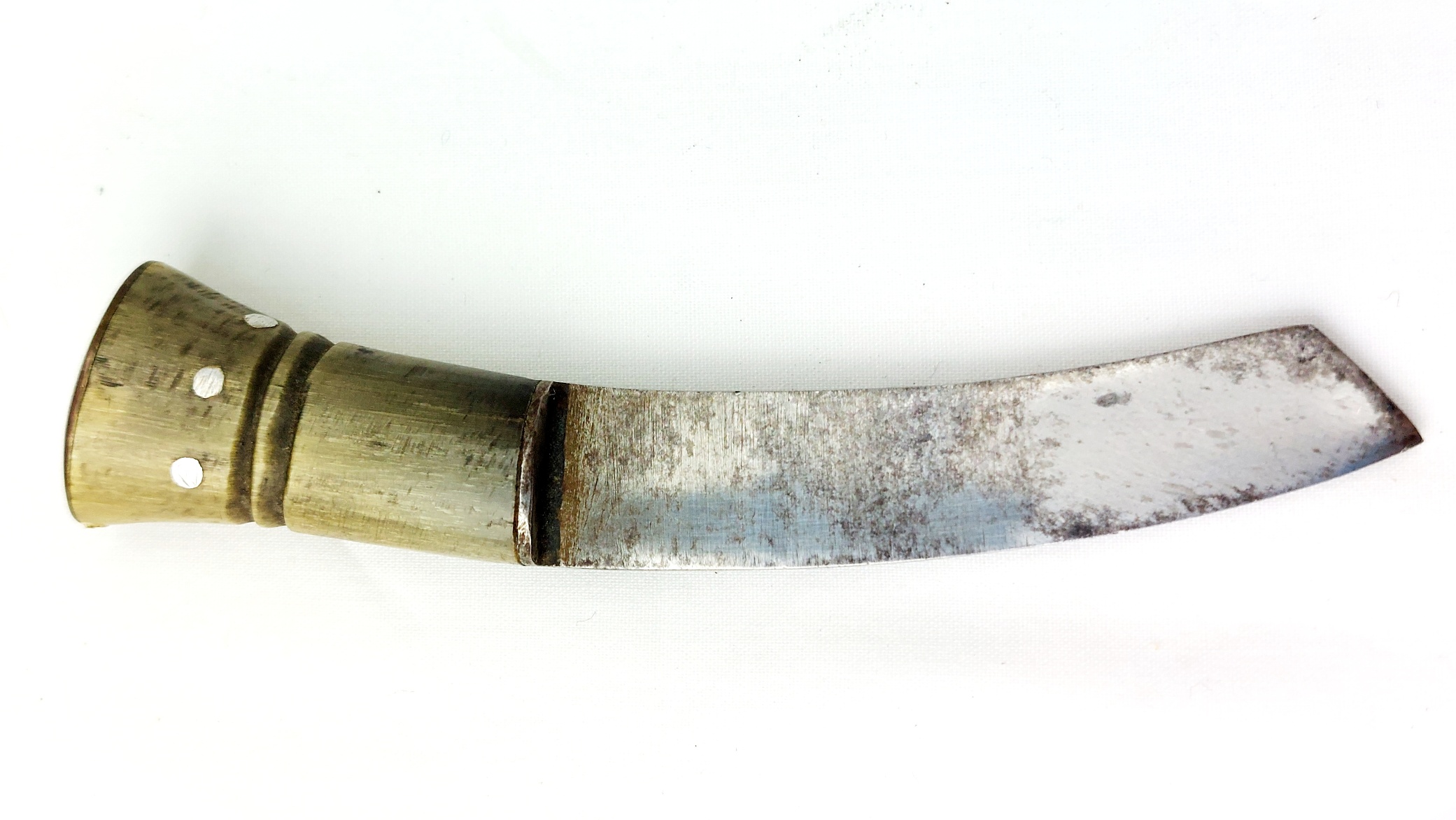
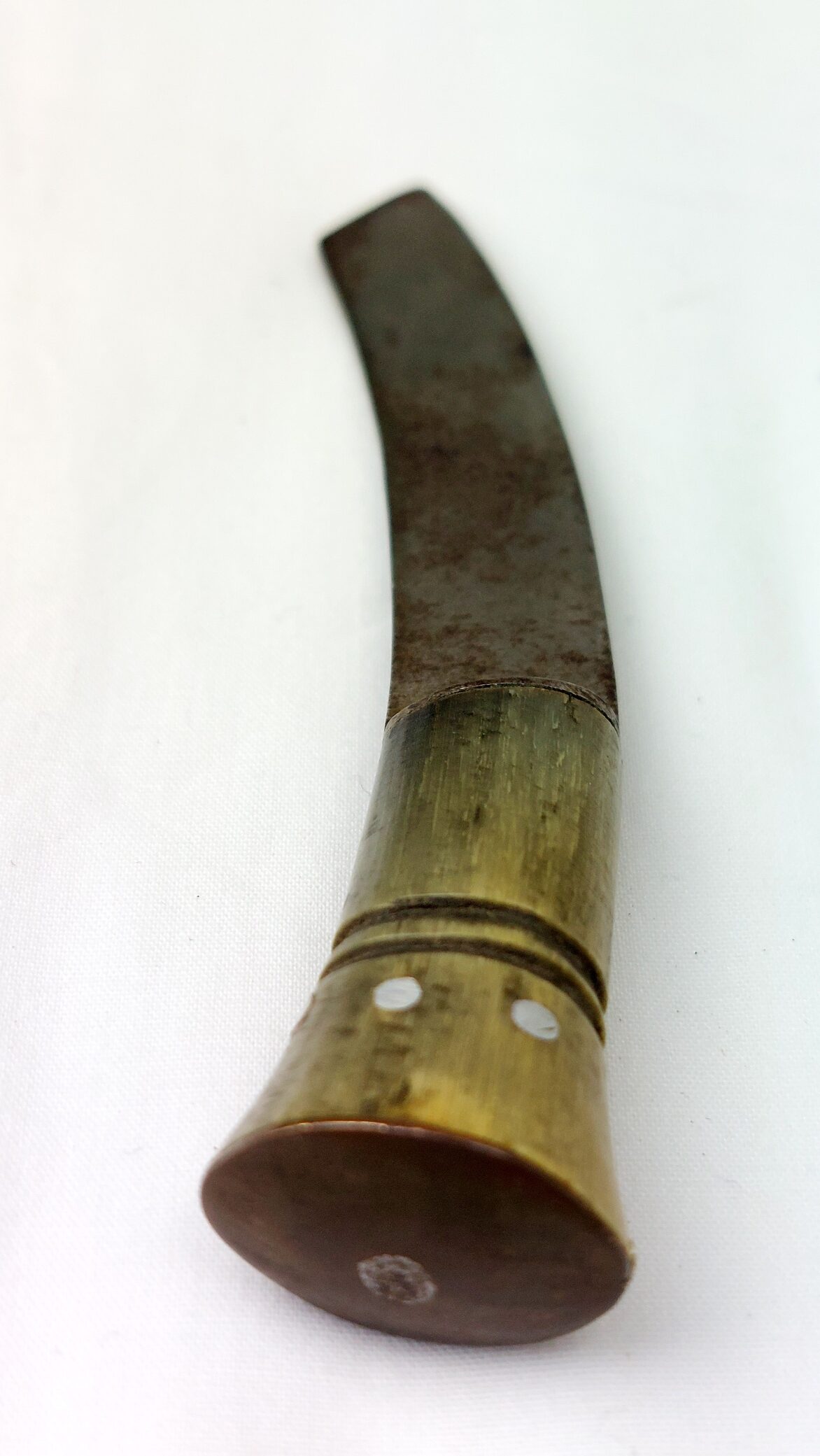
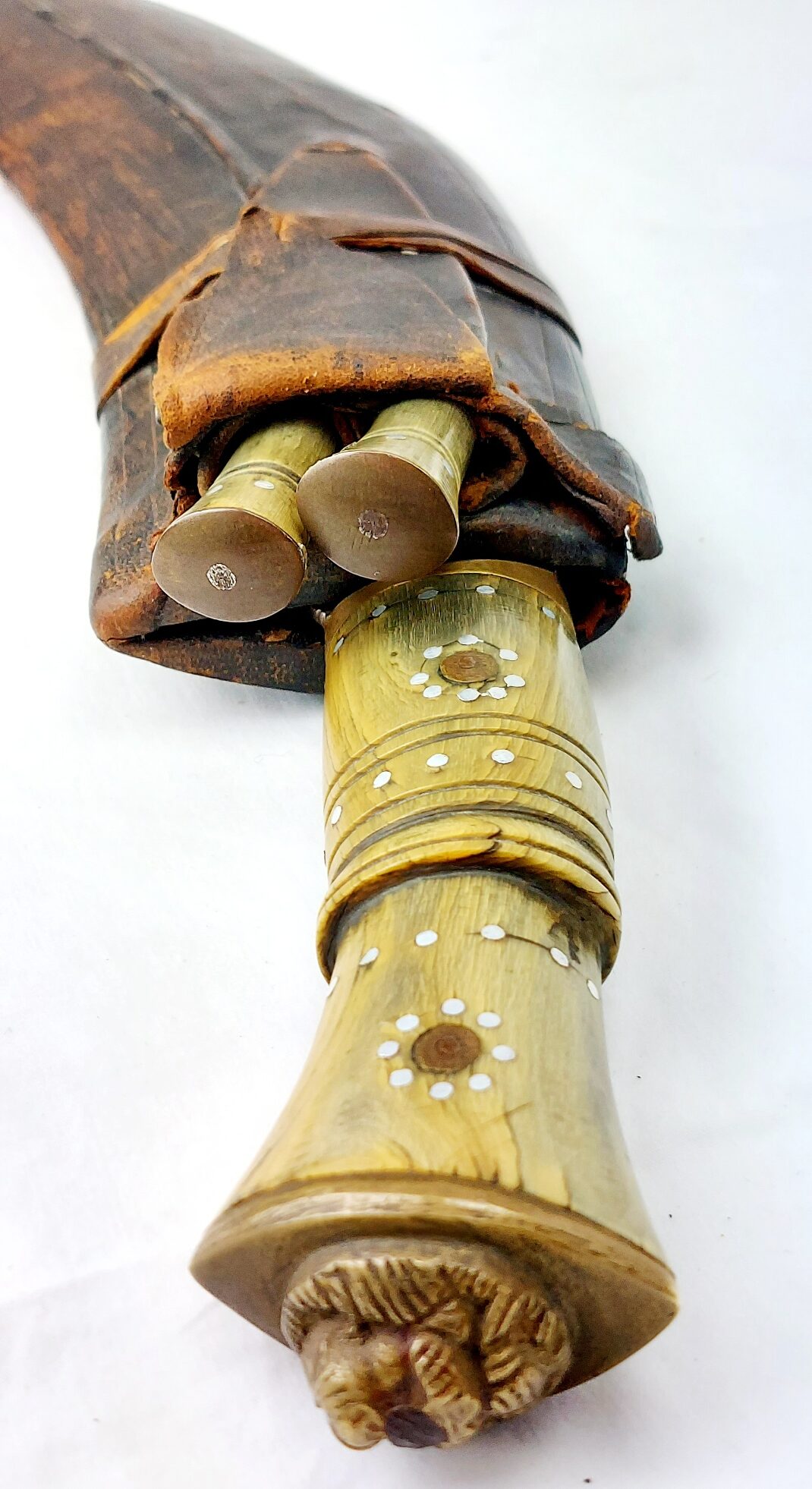
The kukri has a broad forward-curving blade of classic form with the traditional cho notch at the base of the blade. The hilt is crafted from polished water buffalo horn and decorated with circular white metal or bone stud inlays arranged in rosette and band patterns, giving the piece a particularly striking and decorative appearance. The pommel terminates in a cast brass lion’s head, a style frequently encountered on decorative or presentation kukris produced during the late Victorian and early 20th century period.
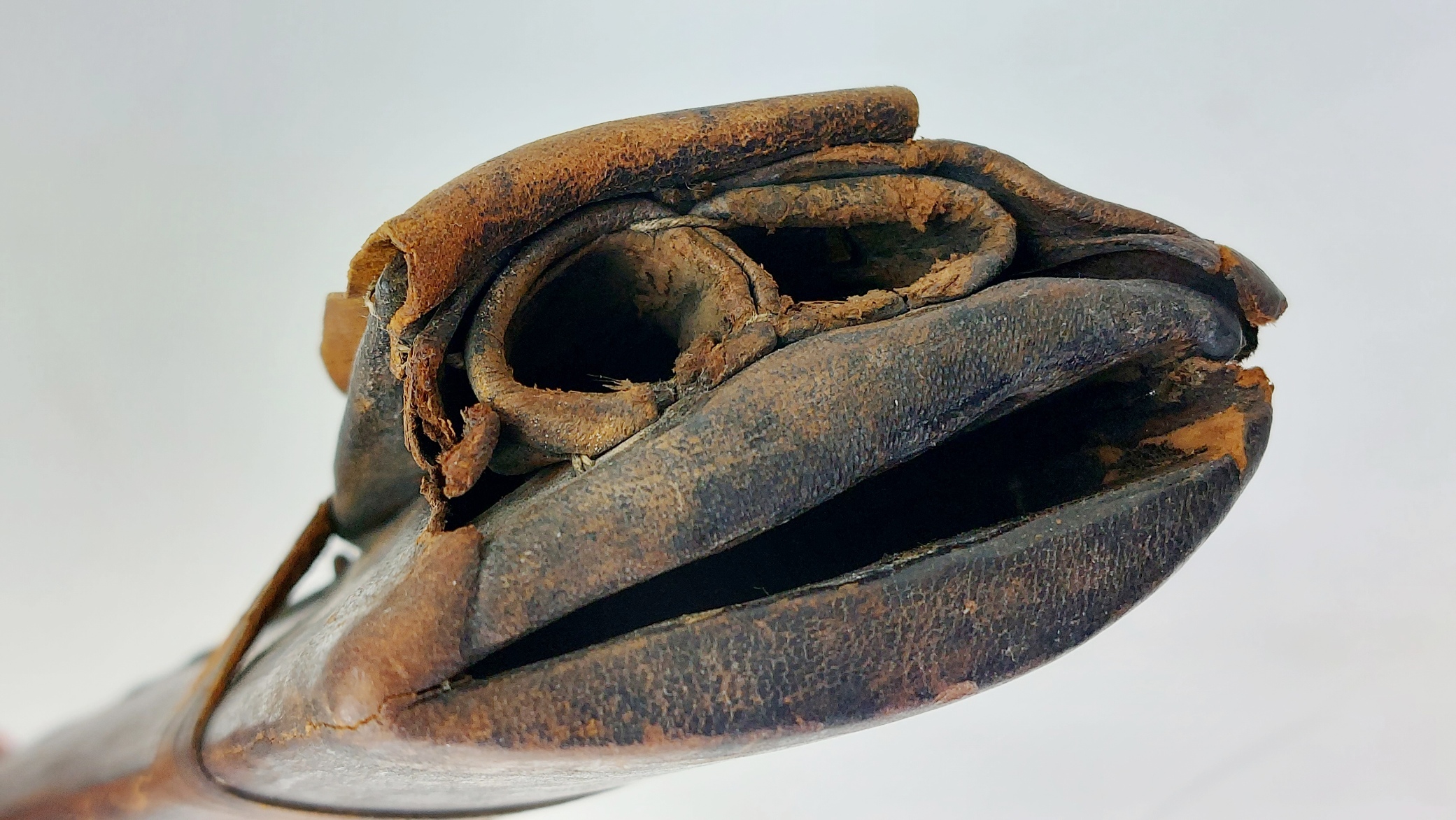
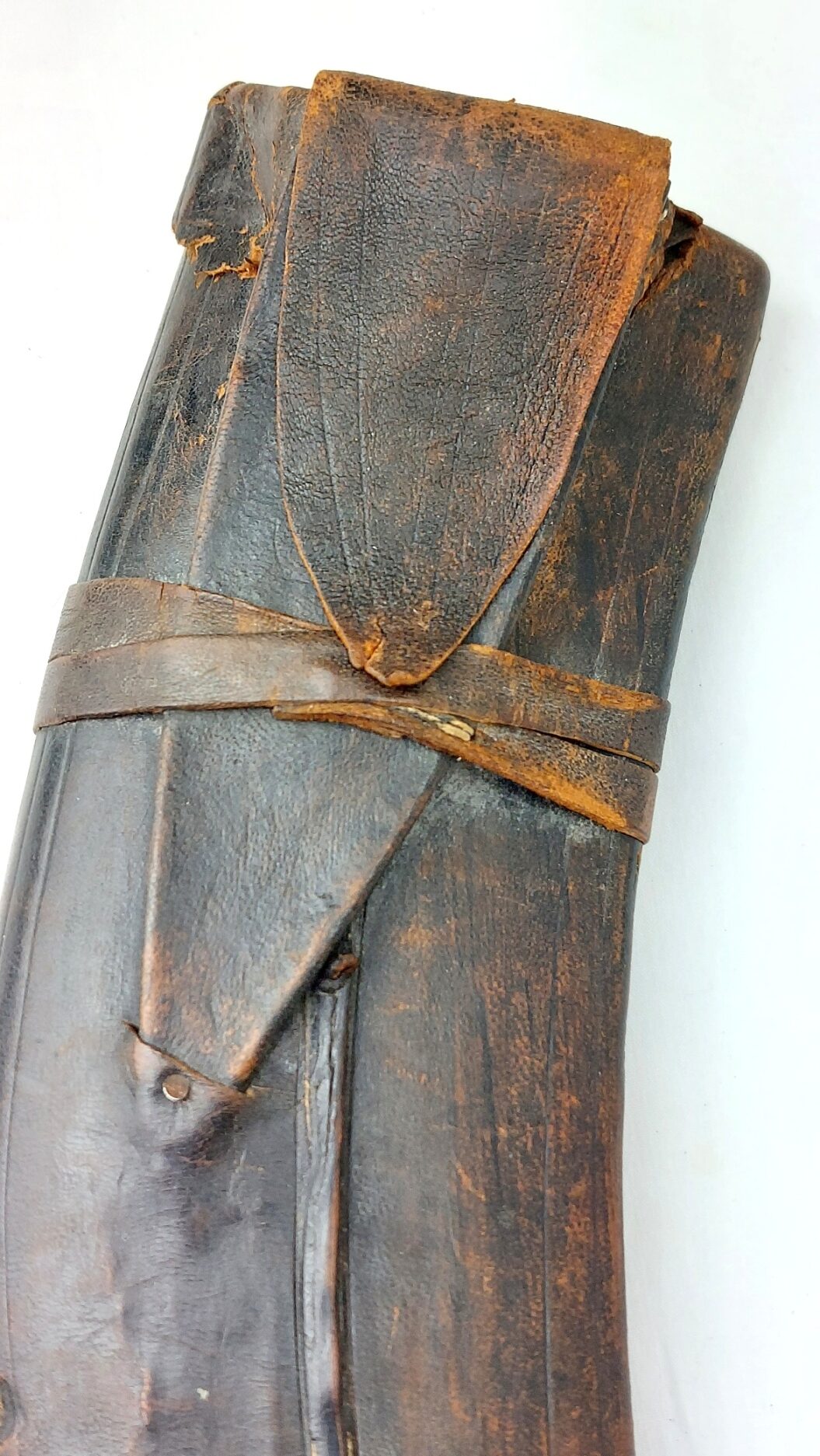
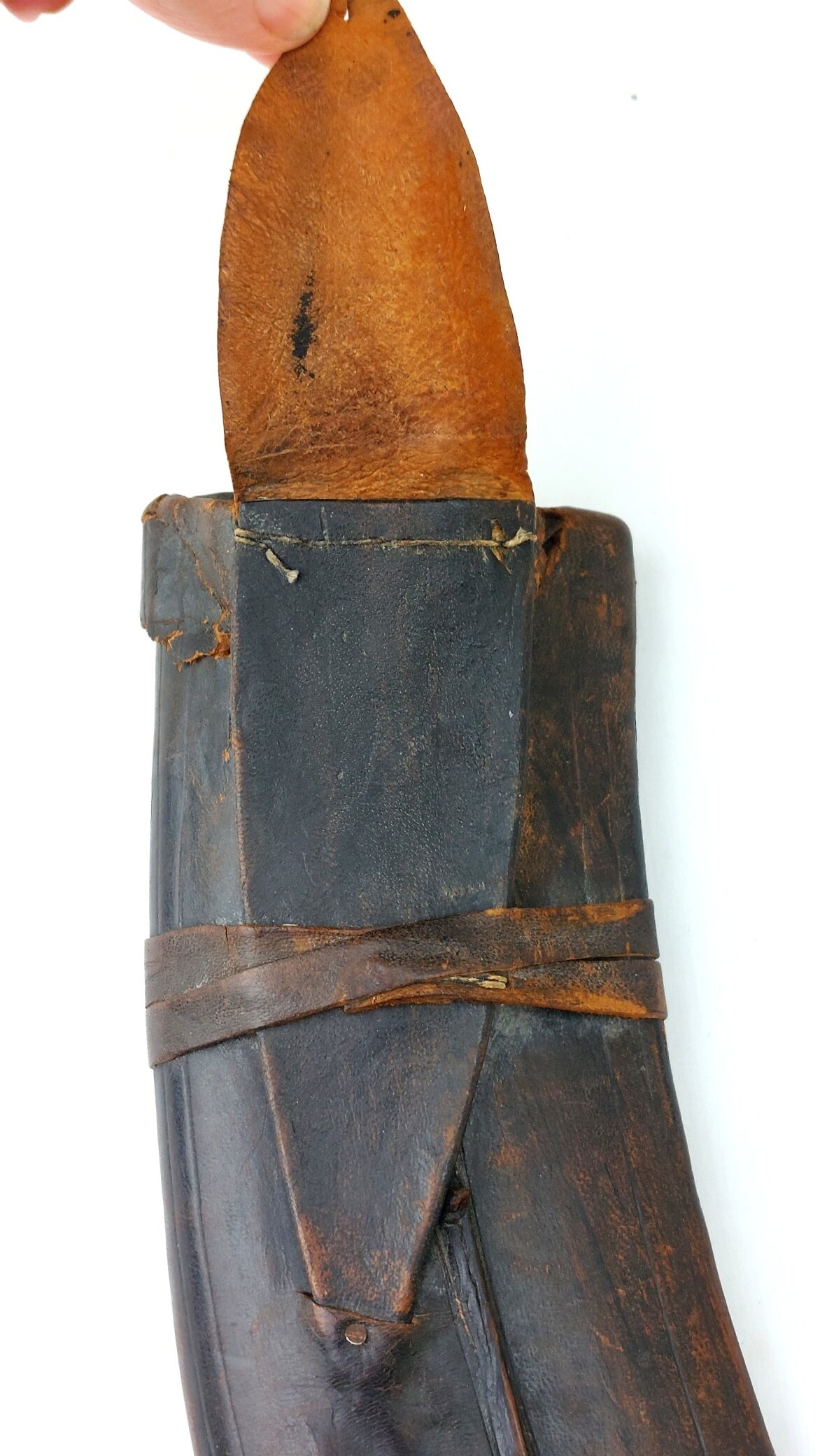
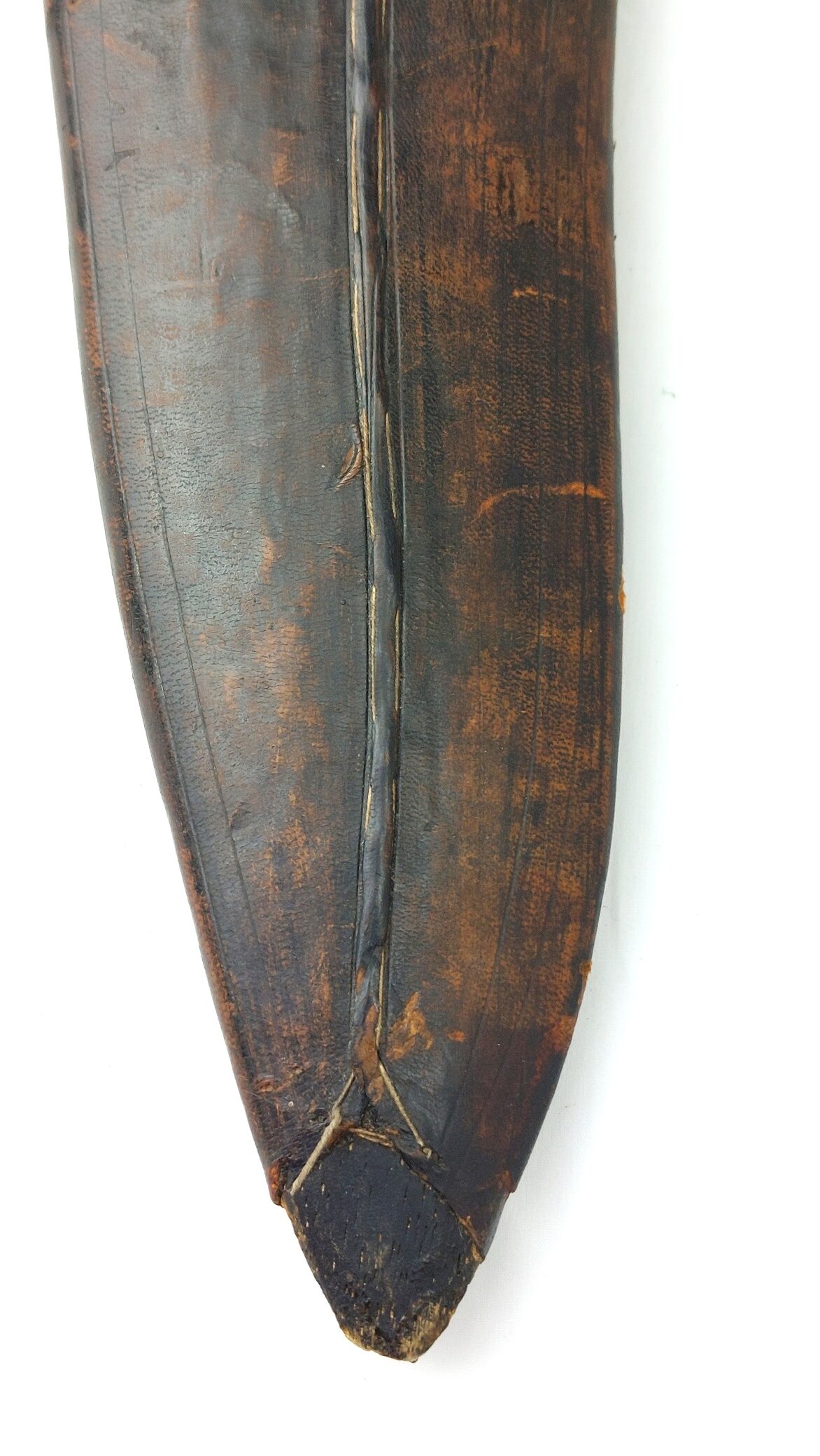
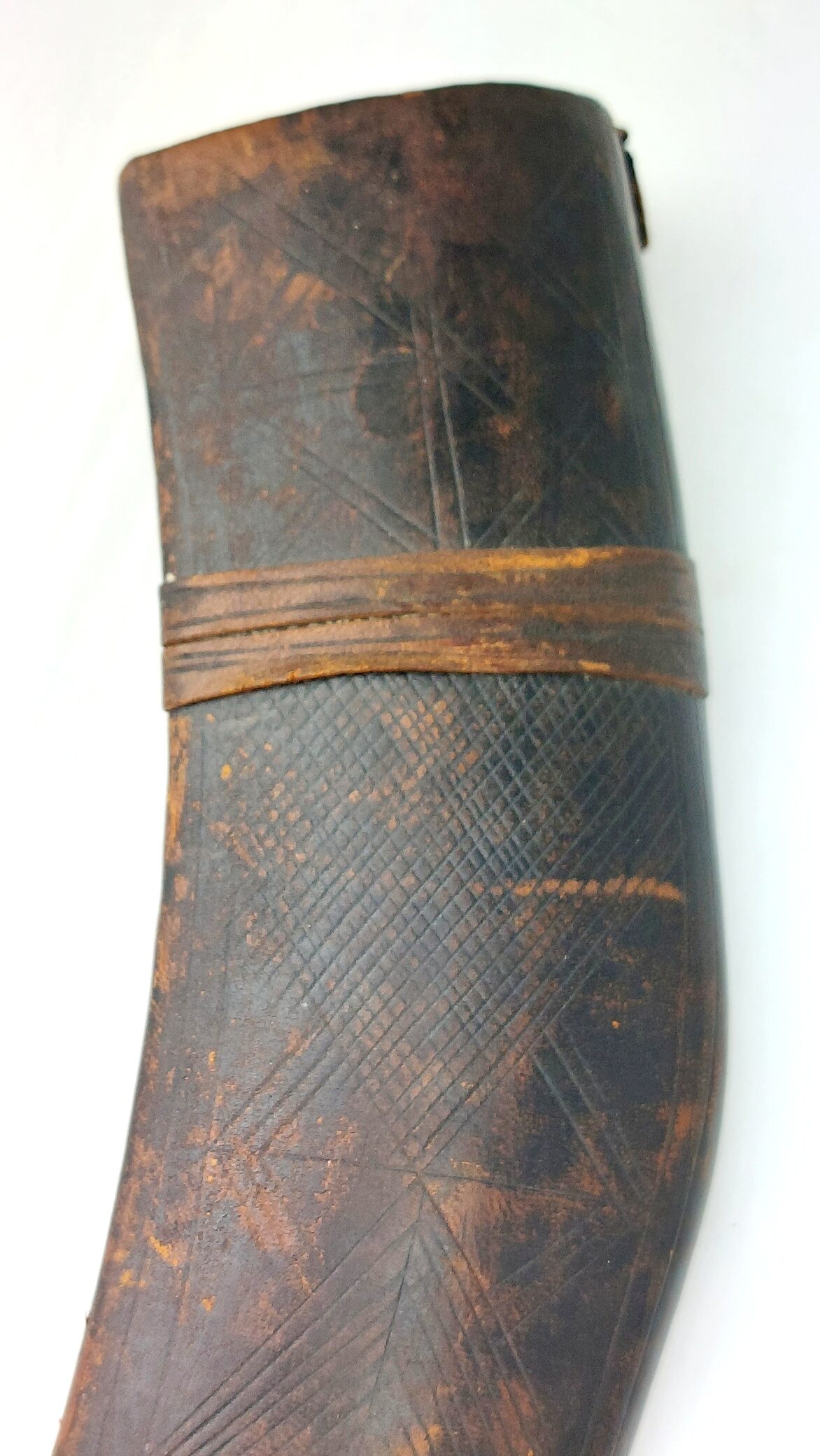
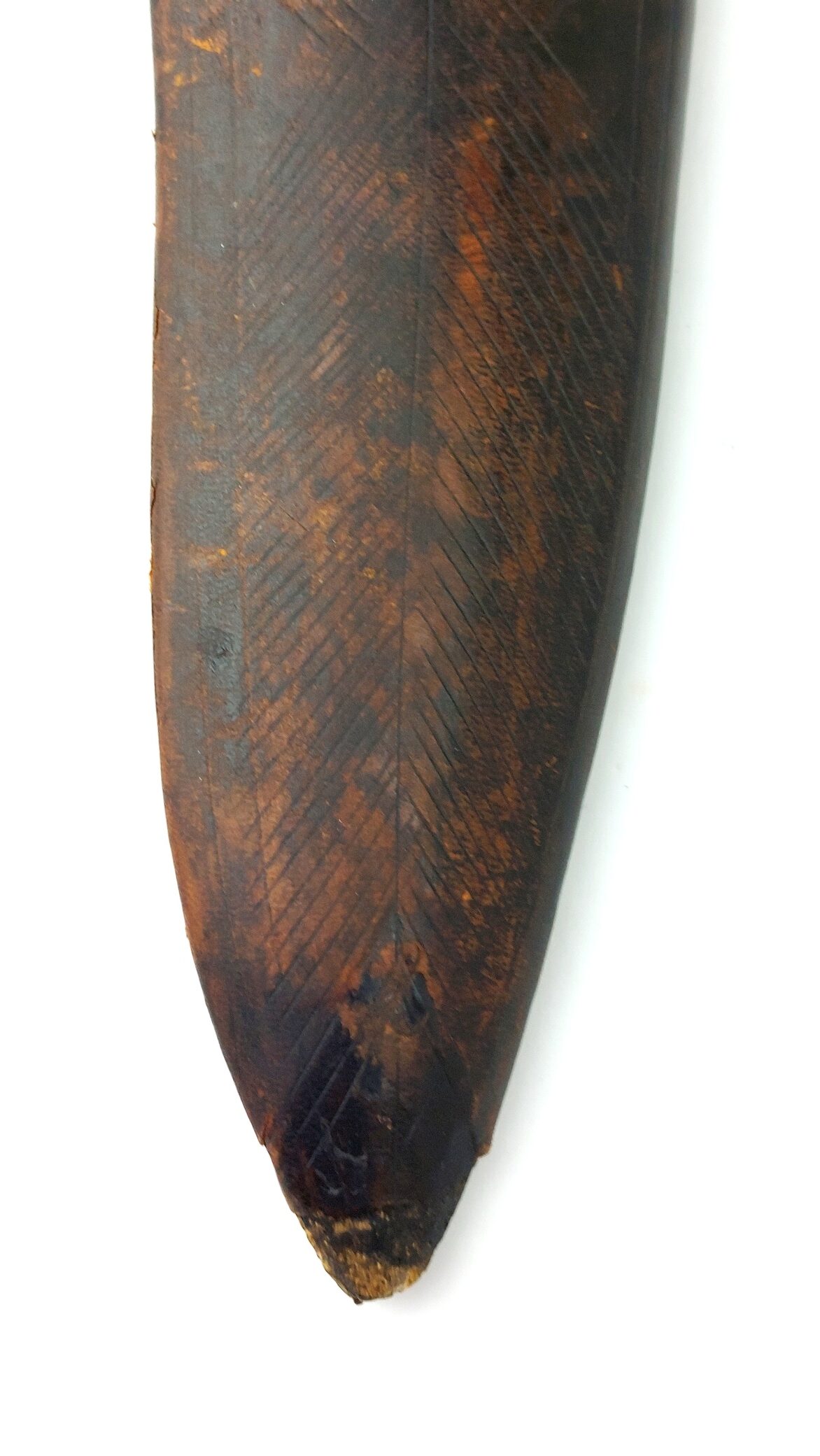
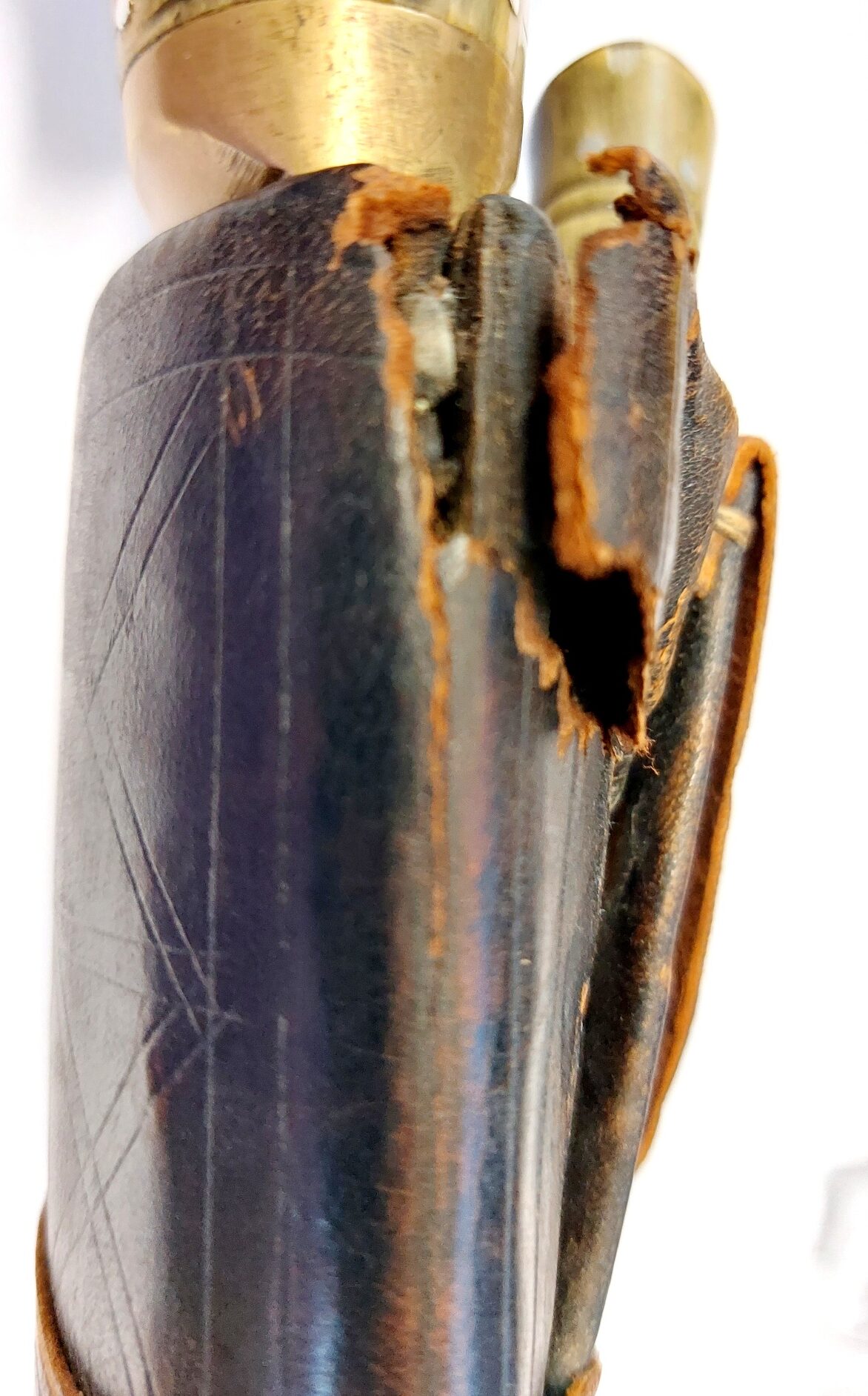
The blade measures approximately 30.5 cm and retains the classic proportions associated with traditional Nepalese kukris. The kukri is housed in its original leather-covered wooden scabbard which retains the accompanying karda (small utility knife) and chakmak (sharpening steel/fire striker), completing the traditional kukri set.
Examples such as this were often produced in Nepal and northern India during the late 19th and early 20th centuries for both practical use and private purchase, and were popular with British officers, travellers and collectors during the late colonial period. The decorative lion head pommel and studded horn grip give the piece an especially distinctive appearance while retaining the traditional form of the famous Gurkha knife.
Approx. Measurements – Blade length: 30.5 cm. Overall length: 41 cm.
History Note:
The kukri is the traditional knife of Nepal and the iconic weapon associated with the Gurkha soldier. Used both as a practical tool and as a formidable close-combat weapon, kukris were carried by Nepalese warriors for centuries. During the late Victorian and Edwardian periods, increasing contact between Britain and Nepal through the service of Gurkha regiments led to the production of kukris not only for military use but also as presentation pieces and private purchase items for British officers and travellers. Decorative examples such as this became popular souvenirs of service in India and Nepal during the late 19th and early 20th centuries.
*Condition*
Overall good condition for its age. The blade shows age-related patina and light surface wear consistent with use. The horn grip has minor natural cracking typical of horn but remains solid. The brass lion head pommel retains good detail. The leather-covered wooden scabbard shows wear and areas where the leather covering has lifted slightly from the wooden core. The accompanying karda and chakmak remain present. Please see photographs as part of the condition report.
RQMAEOXBBO_6647236371