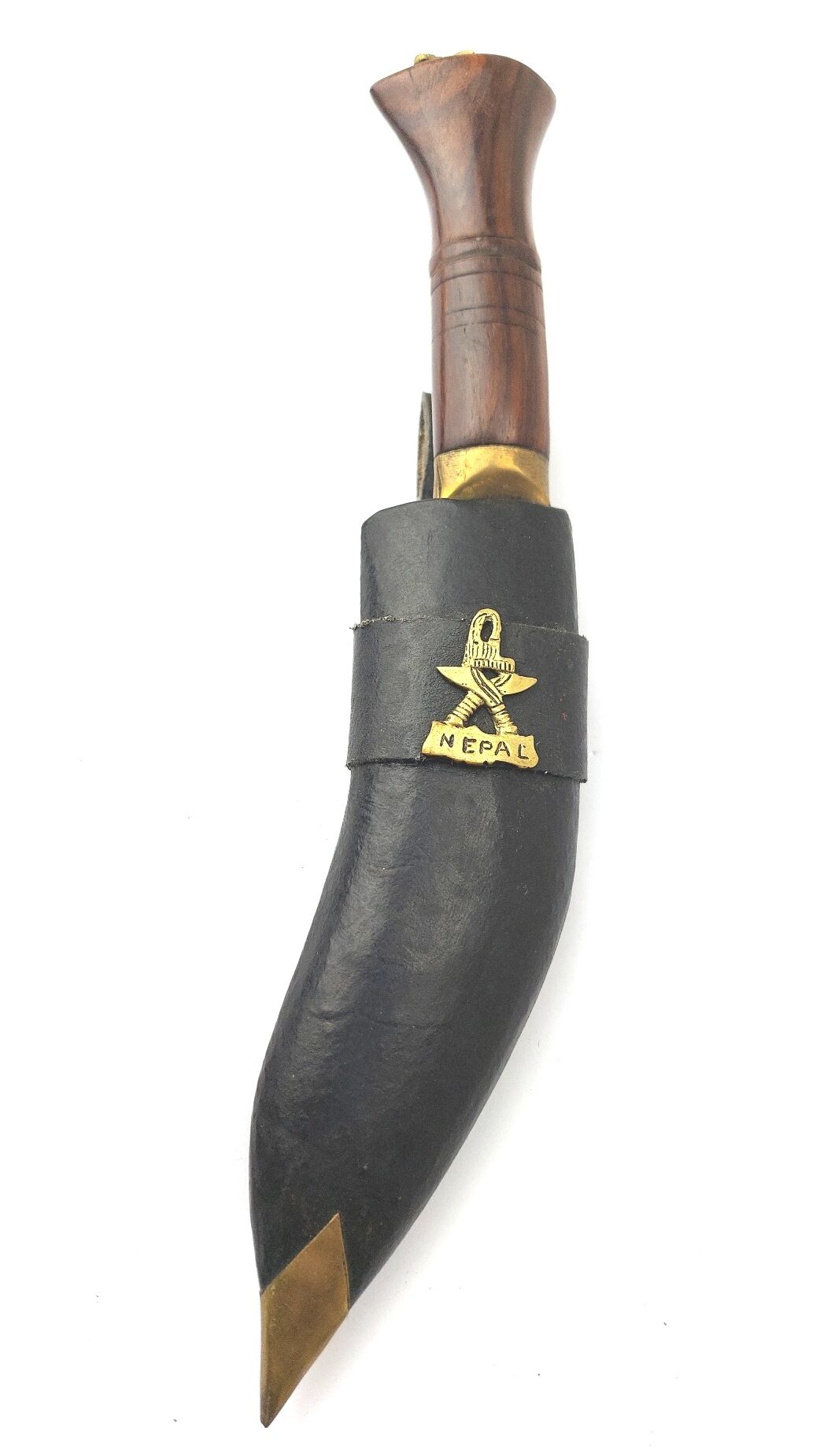
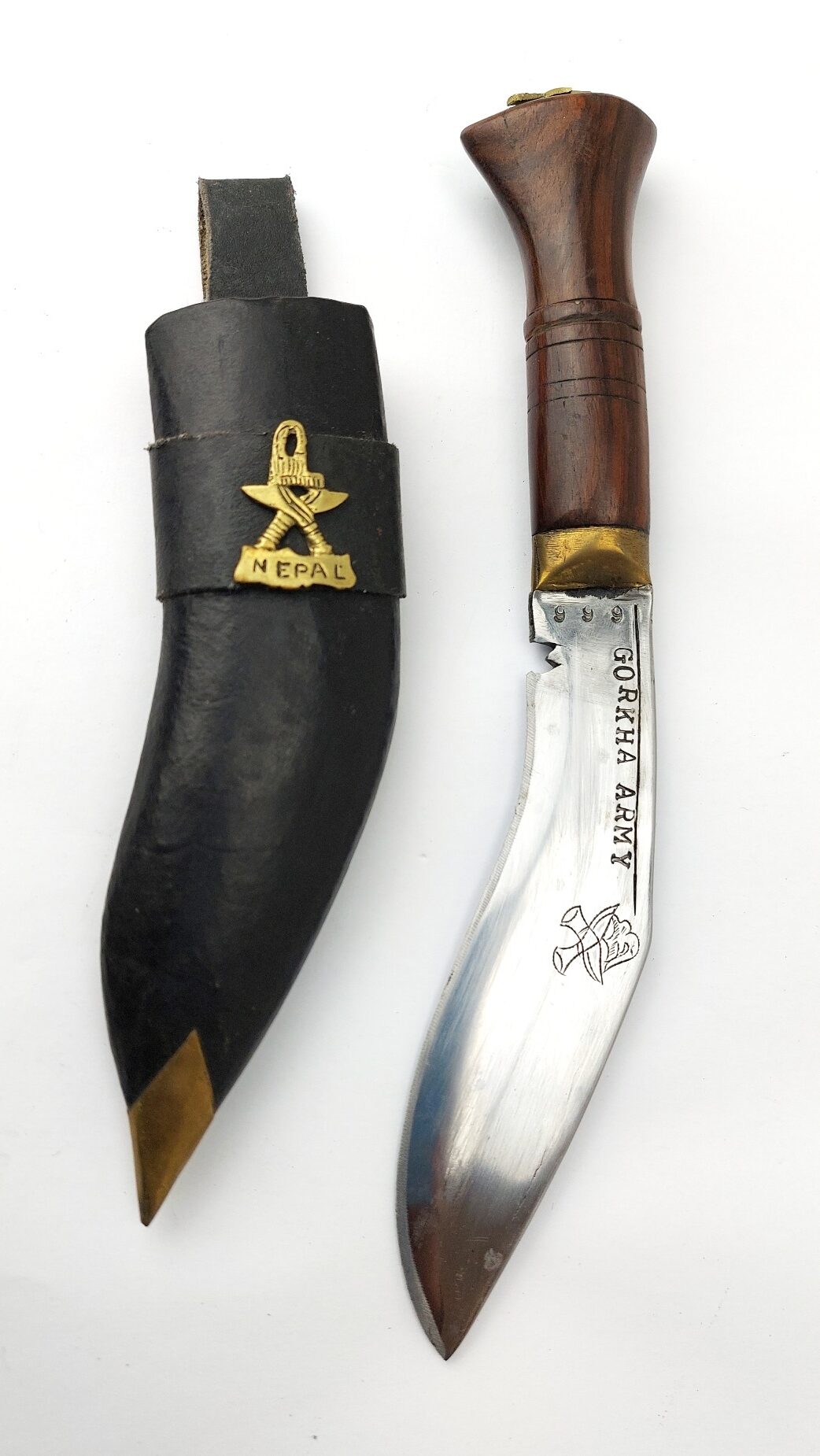
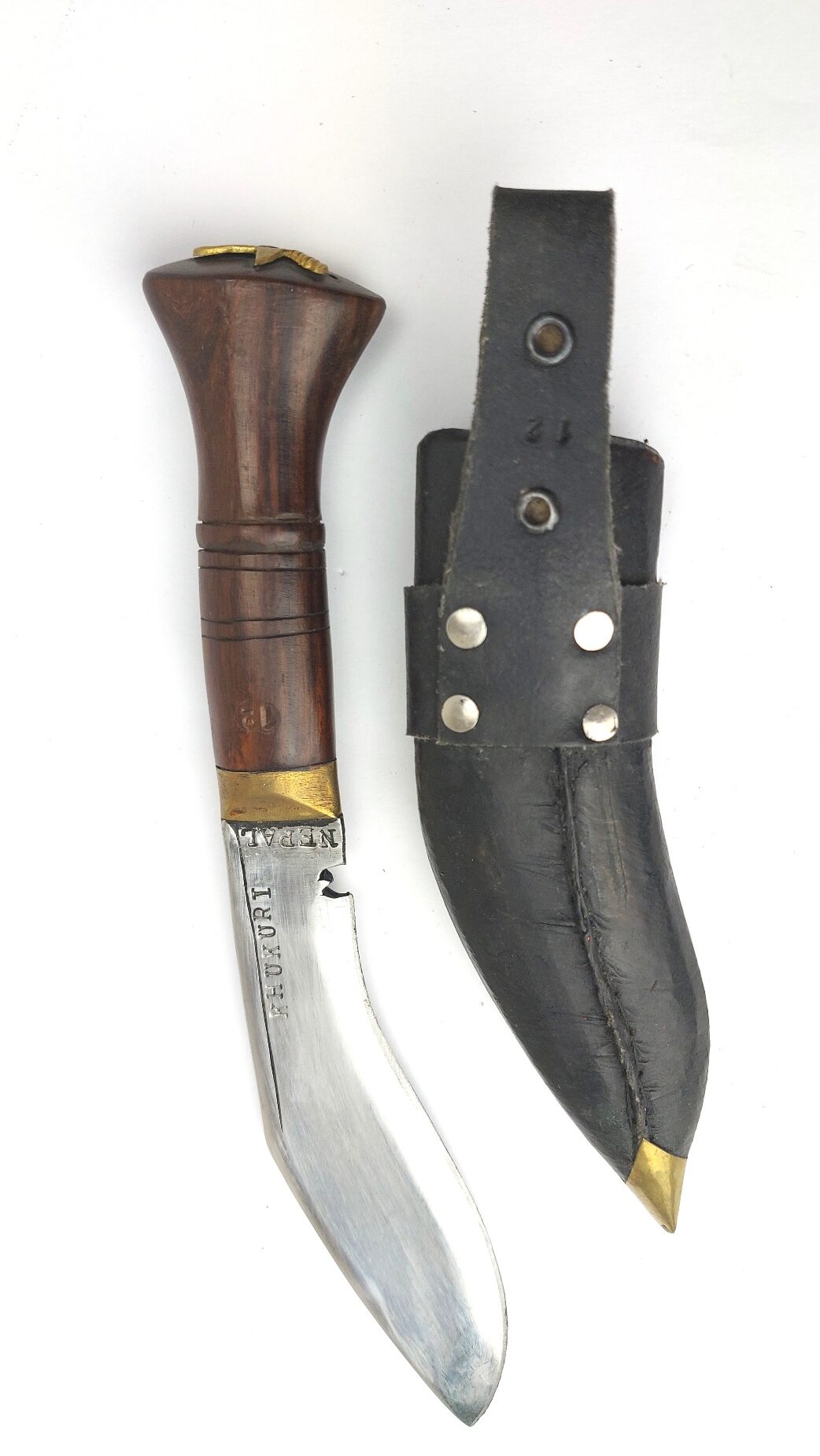
A small Nepalese kukri dagger with wooden hilt and leather-covered scabbard, bearing decorative Gurkha markings and emblem mounts associated with the famous Gurkha regiments. The knife follows the traditional kukri form with forward-curving blade and characteristic notch (cho) at the base of the edge.
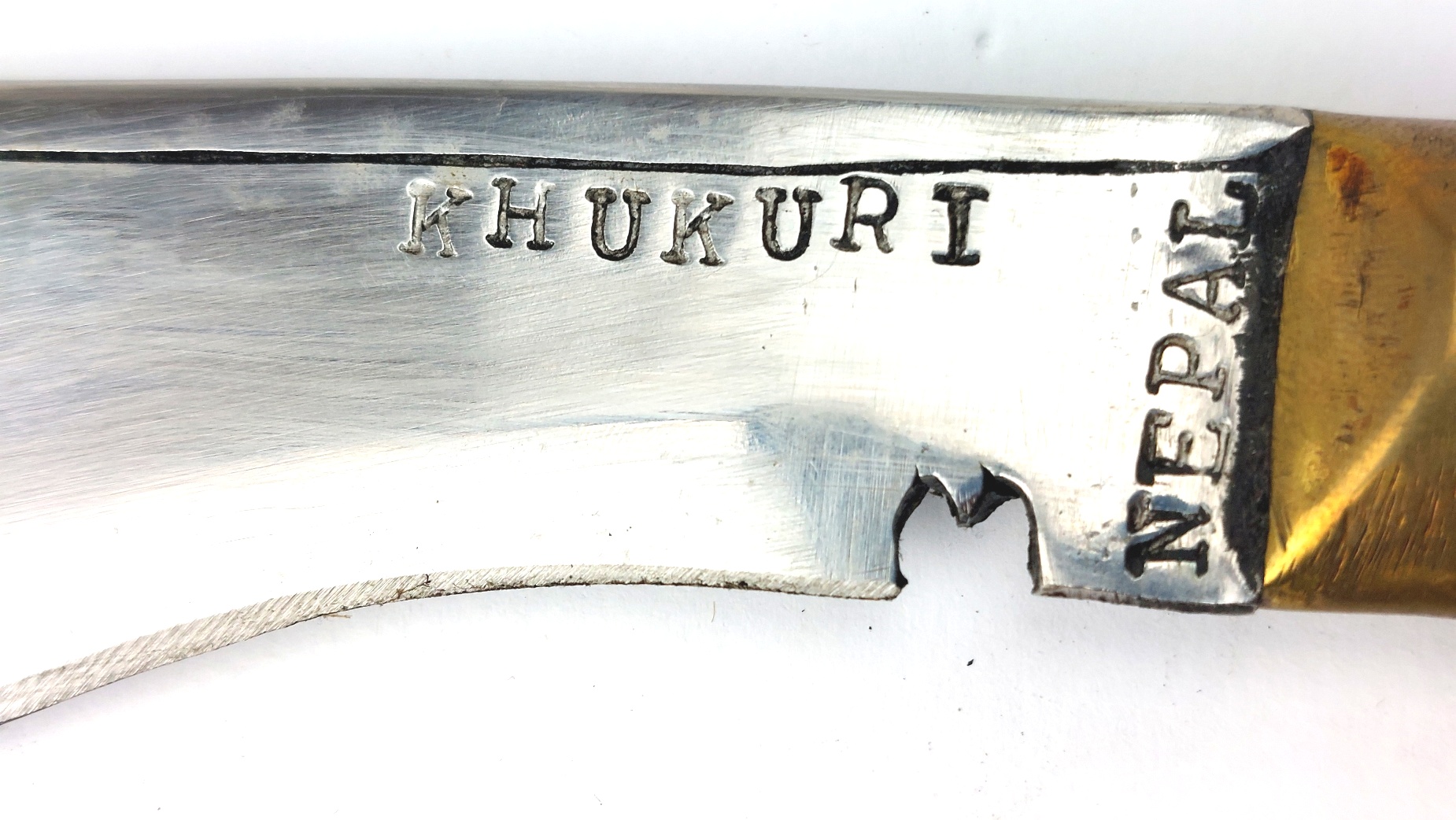
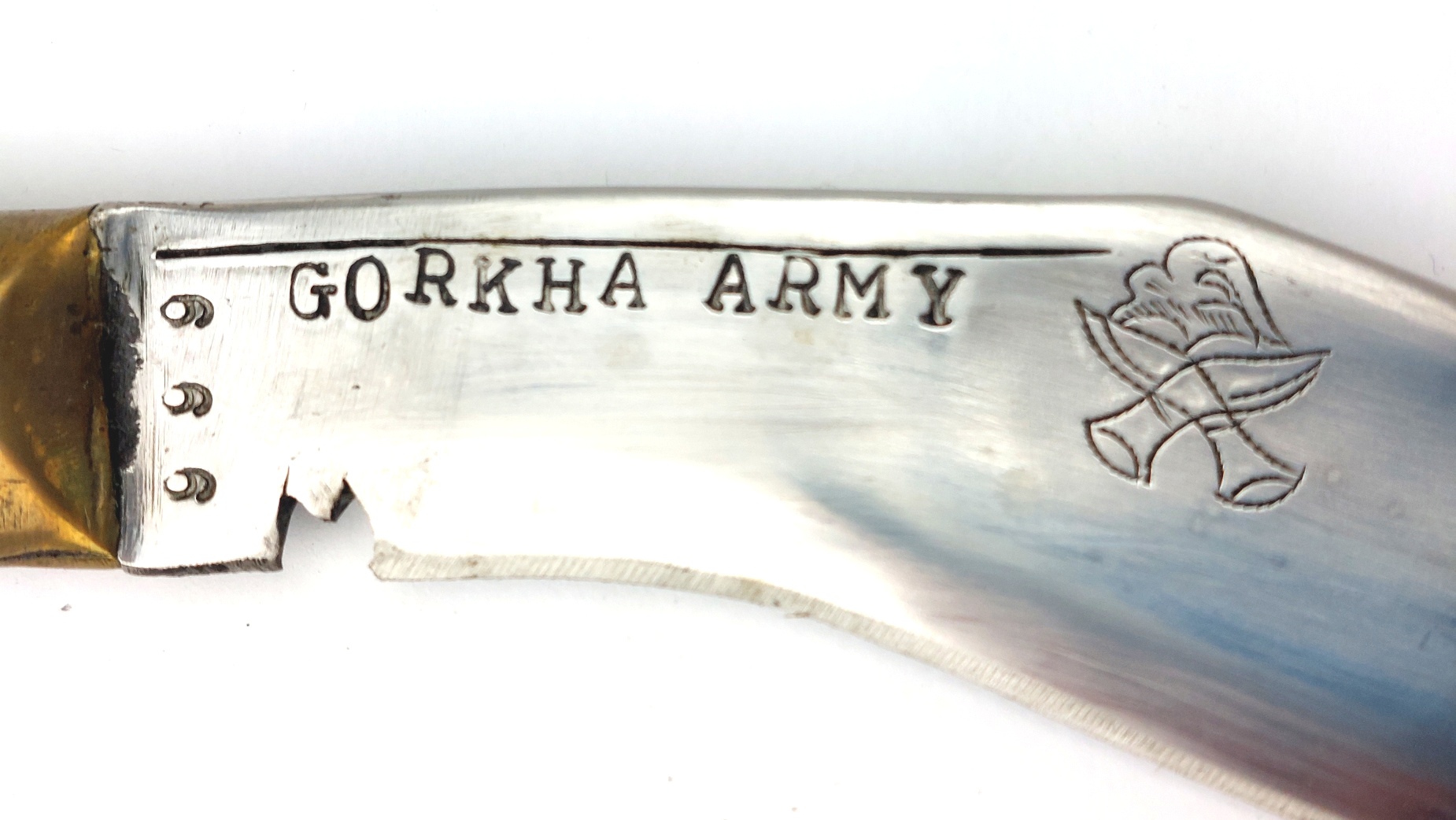
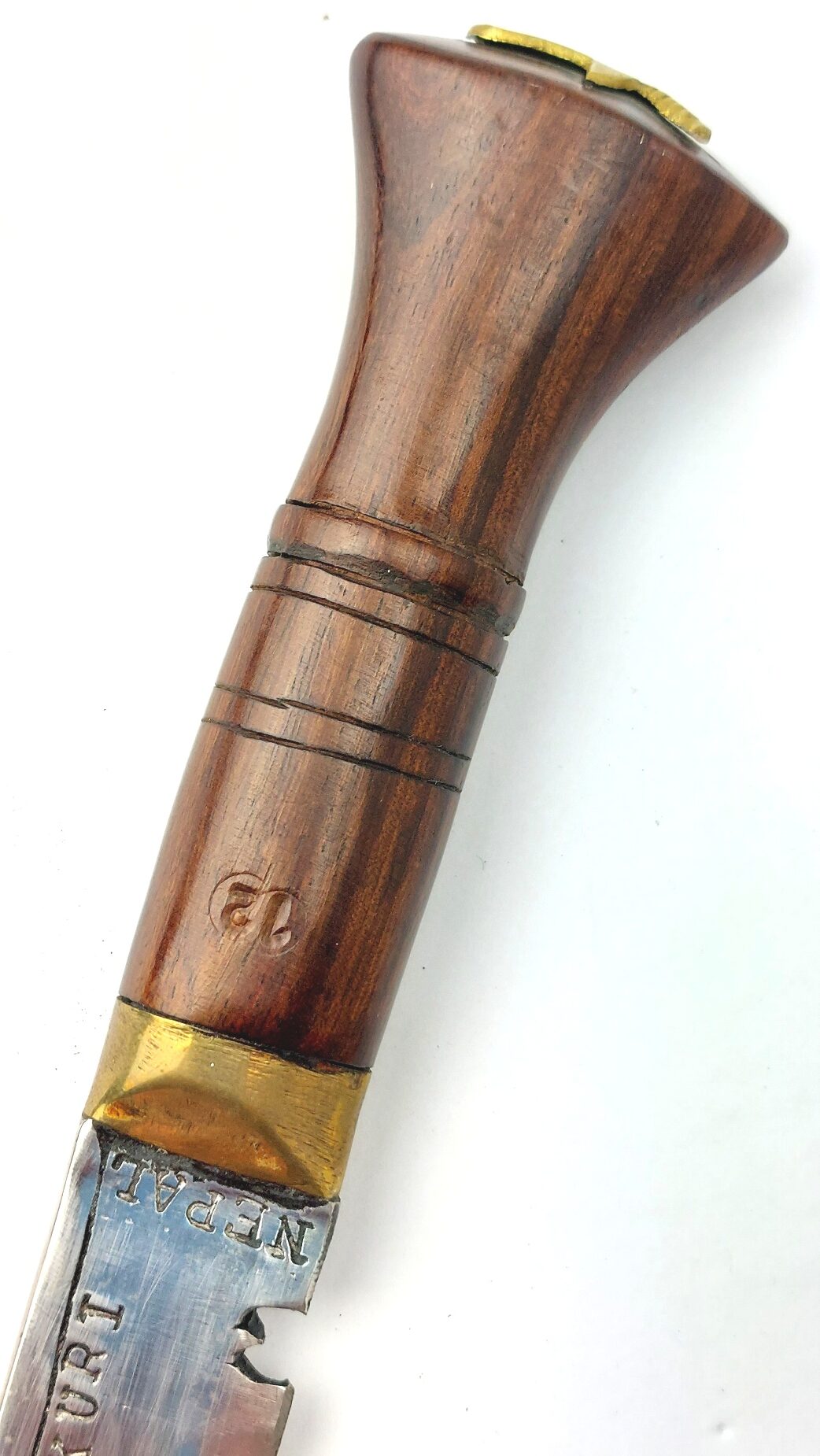
The polished blade is stamped “KHUKURI” along the spine and “NEPAL”, with the opposing side marked “GORKHA ARMY” together with a series of stamped numbers that appear to read 999 or 666. The blade also carries a small engraving of the crossed kukri knives — the well-known emblem of the Gurkha soldiers.
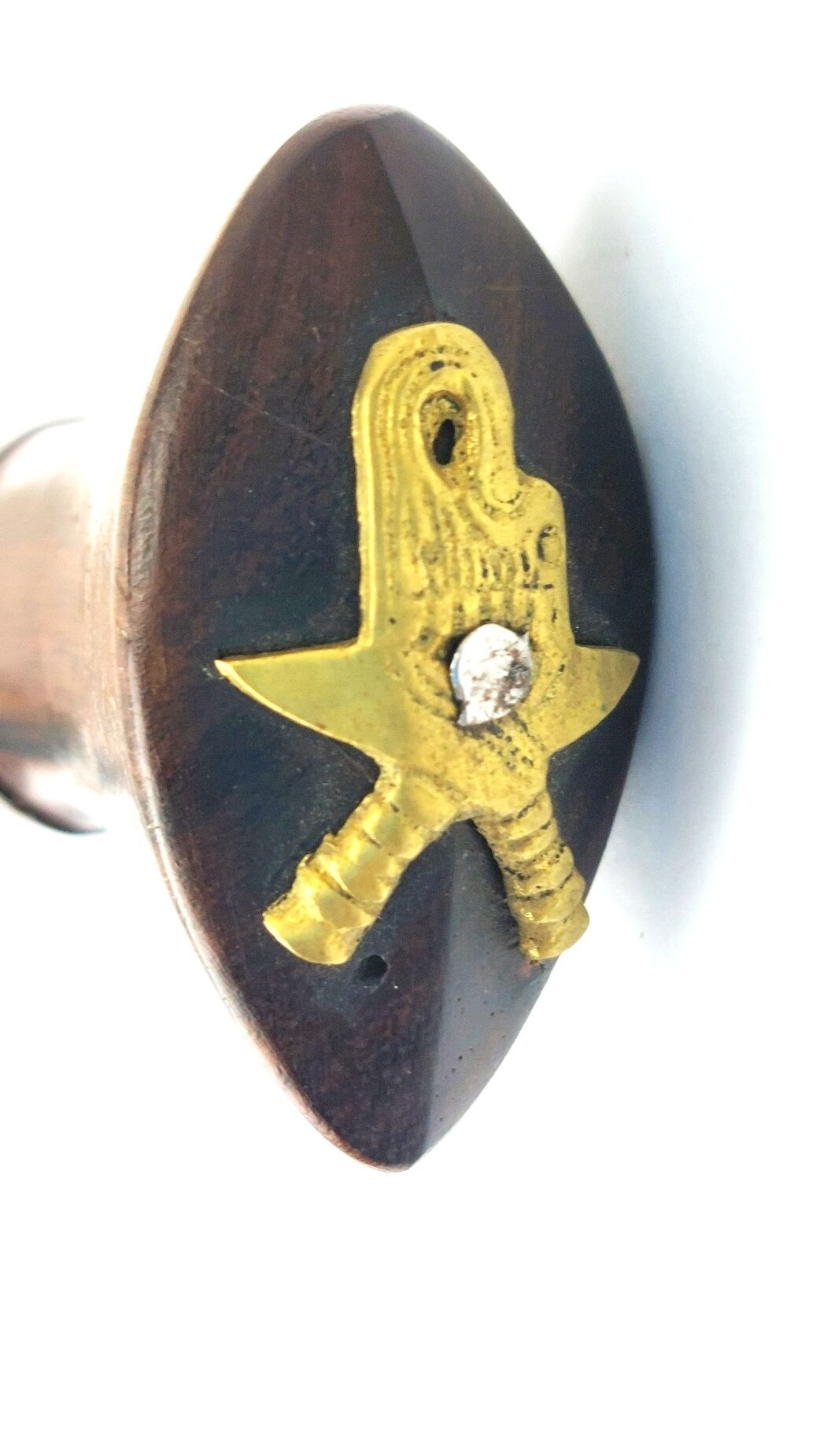
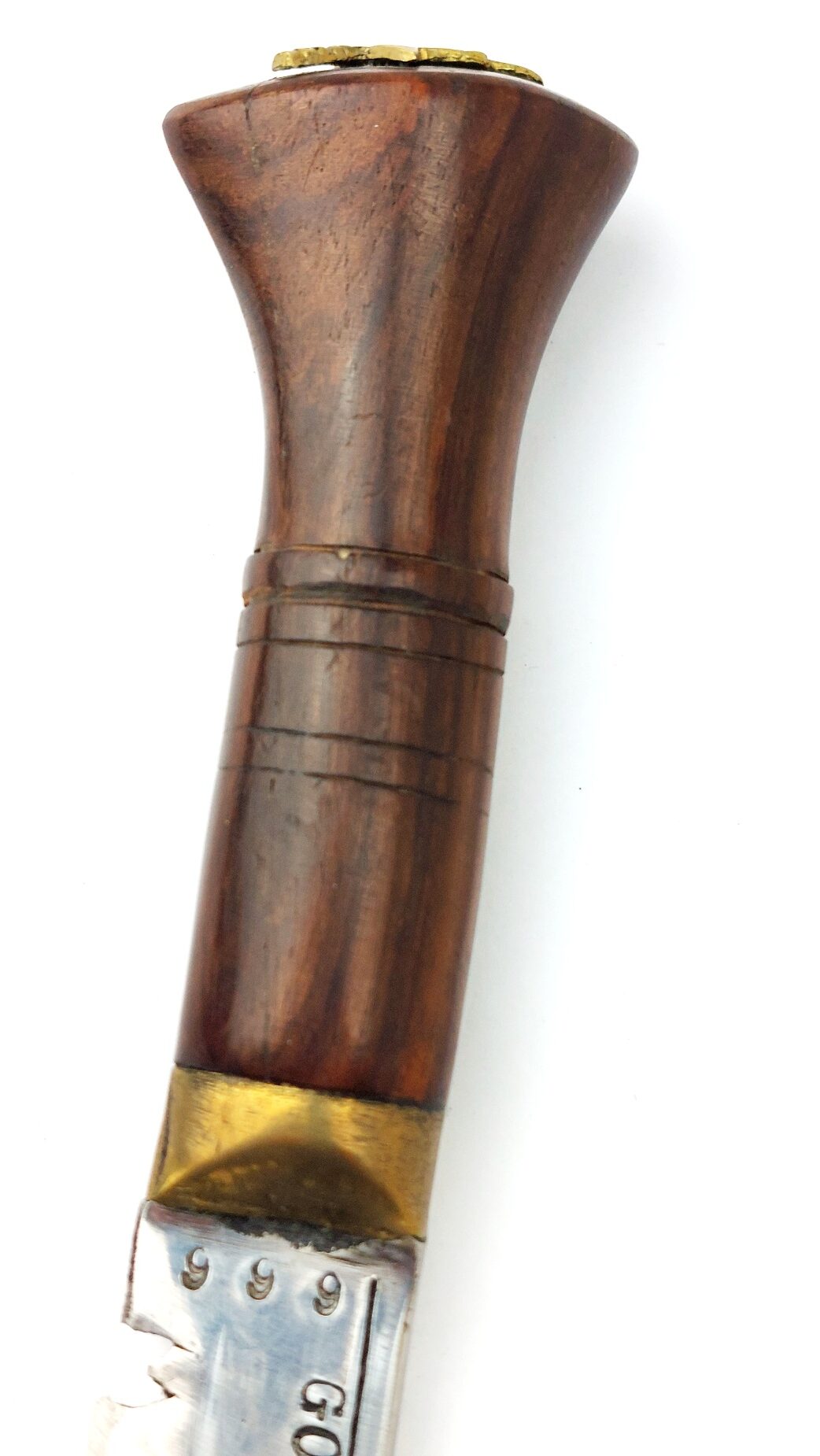
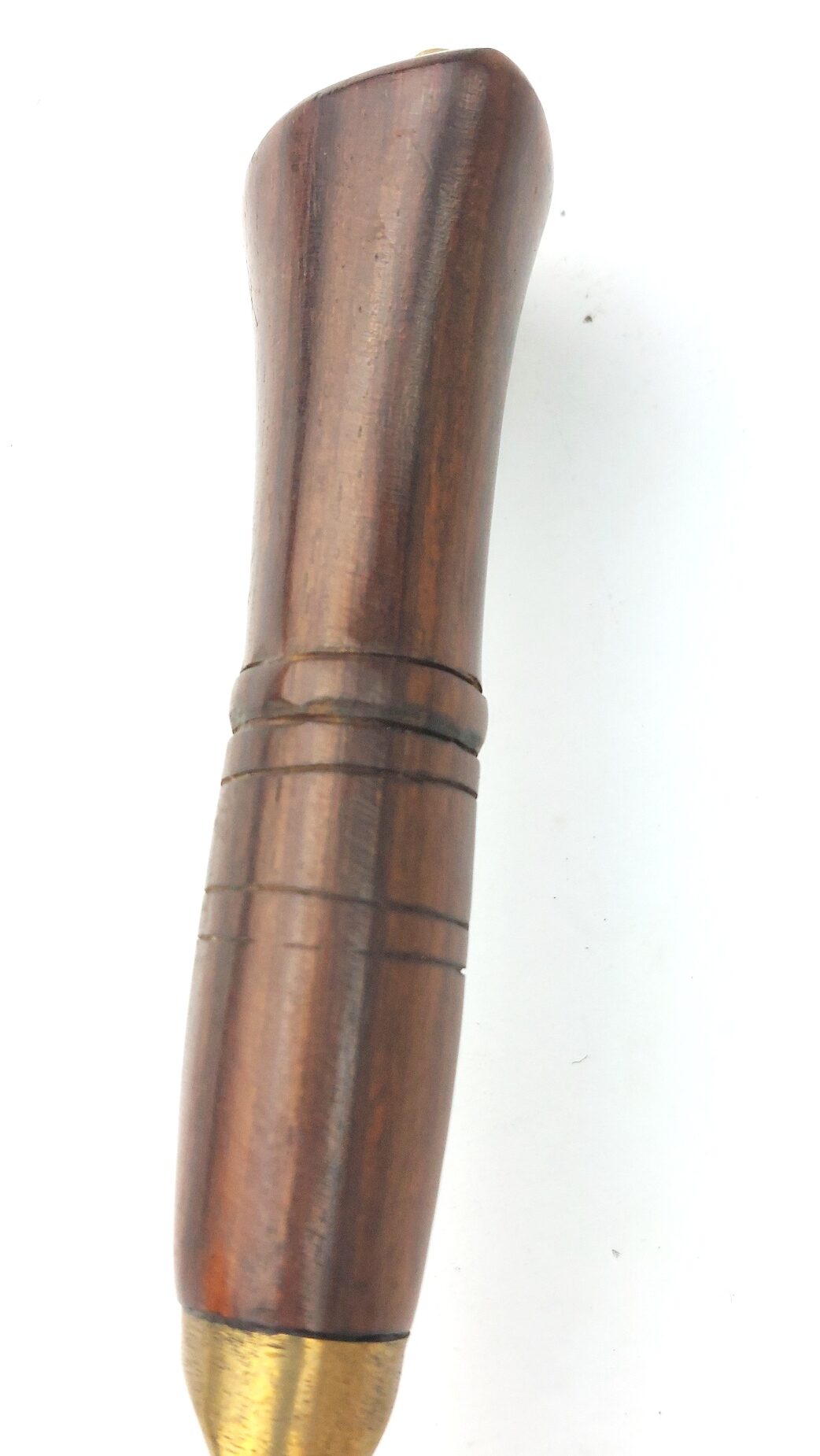
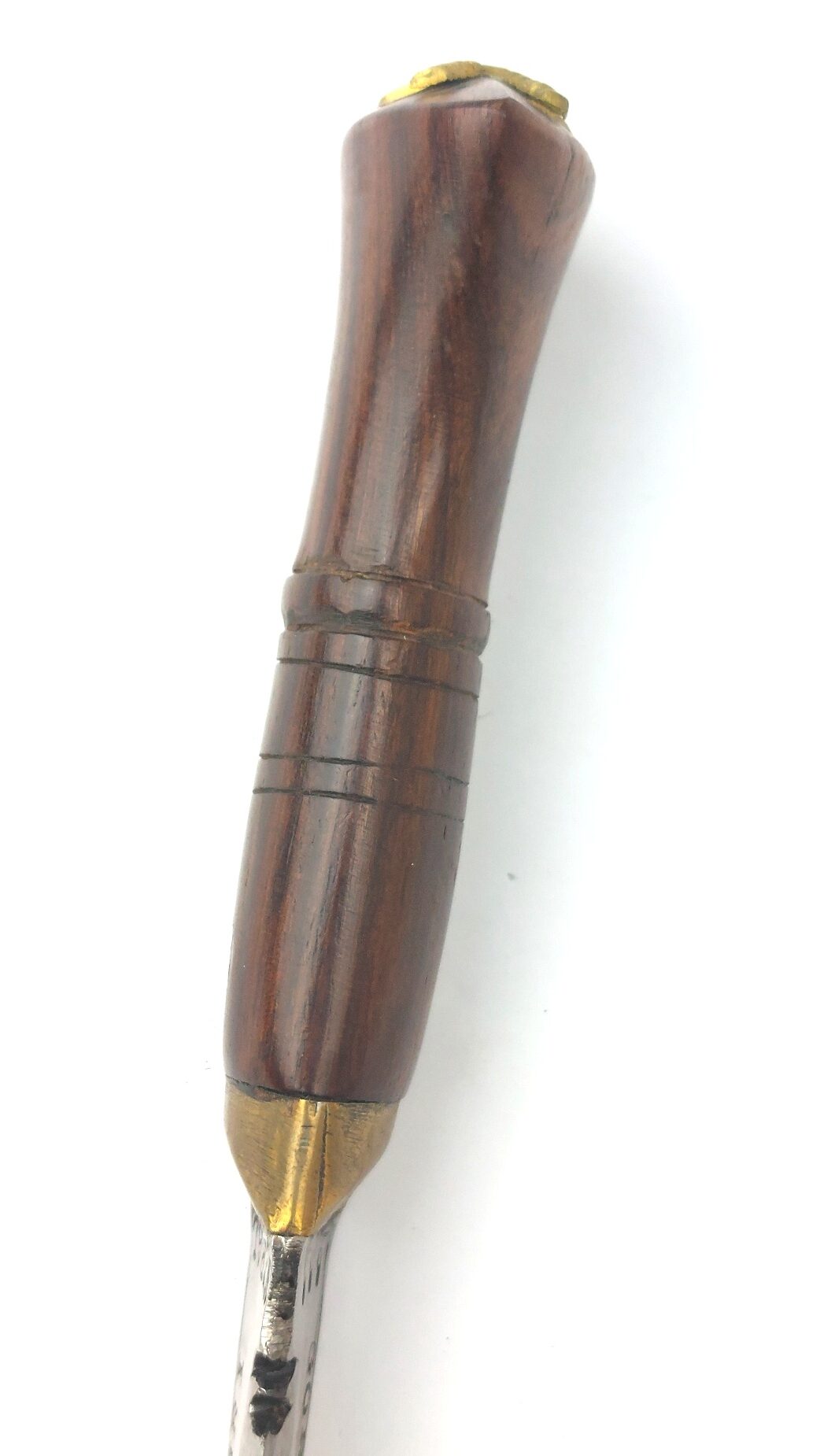
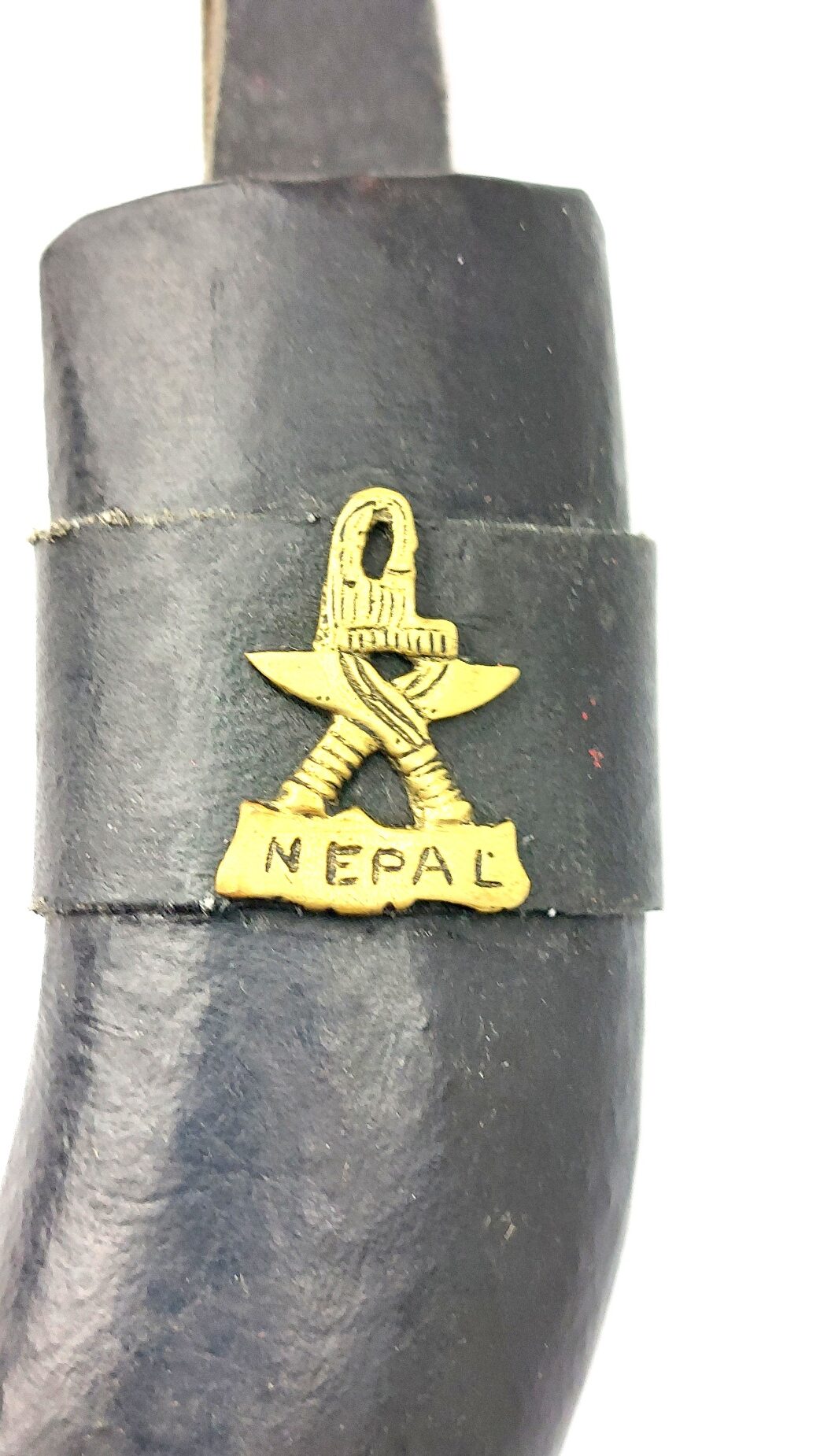
The wooden grip is of classic Nepalese pattern, slightly waisted with carved ring decoration and a flared pommel cap. The pommel is fitted with a small brass badge depicting the crossed kukris motif, while the scabbard retains a matching brass emblem marked “NEPAL” beneath the crossed blades. These badges visually reference the traditional insignia of the Gurkha regiments of the British and Nepalese armies.
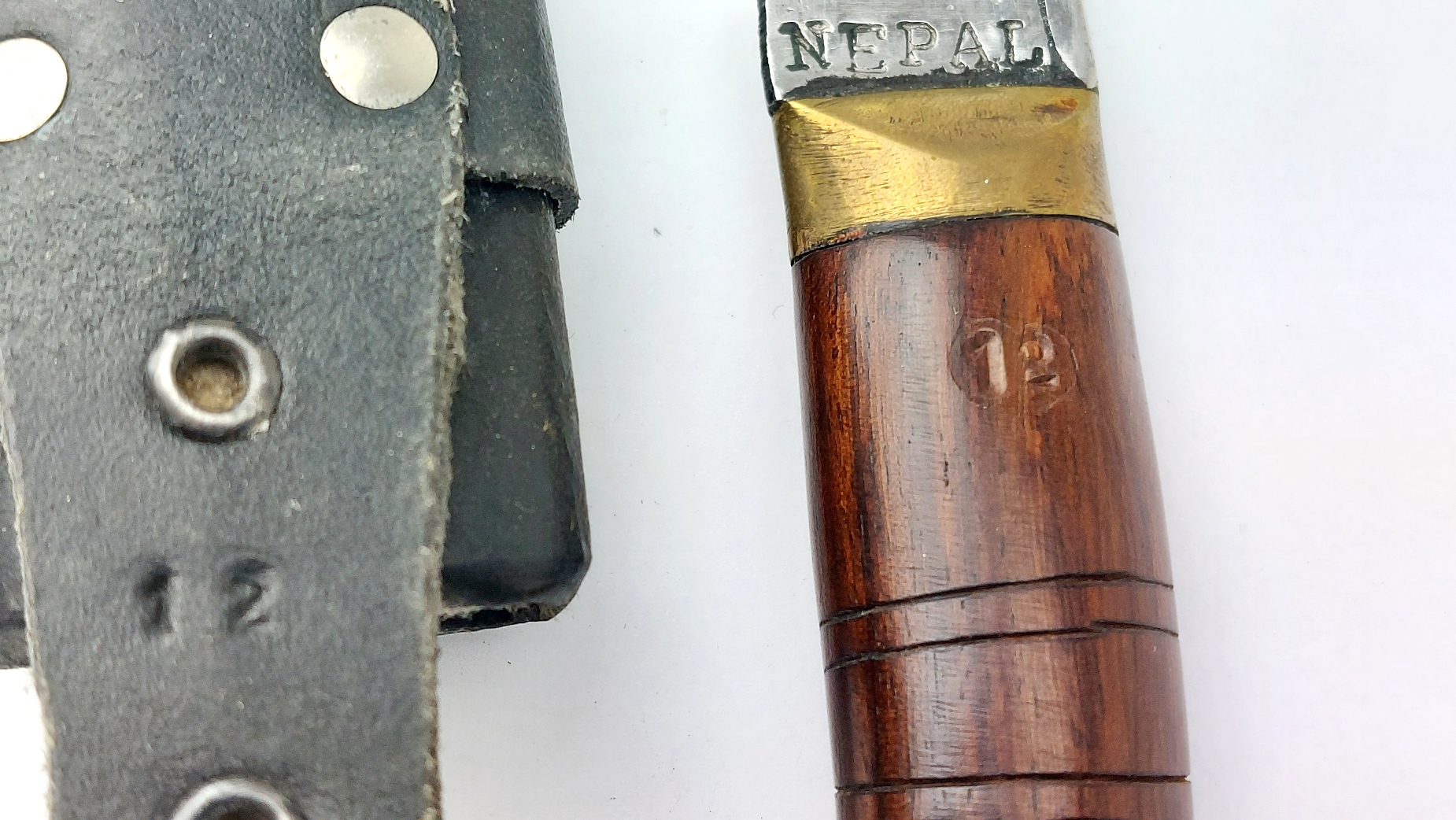
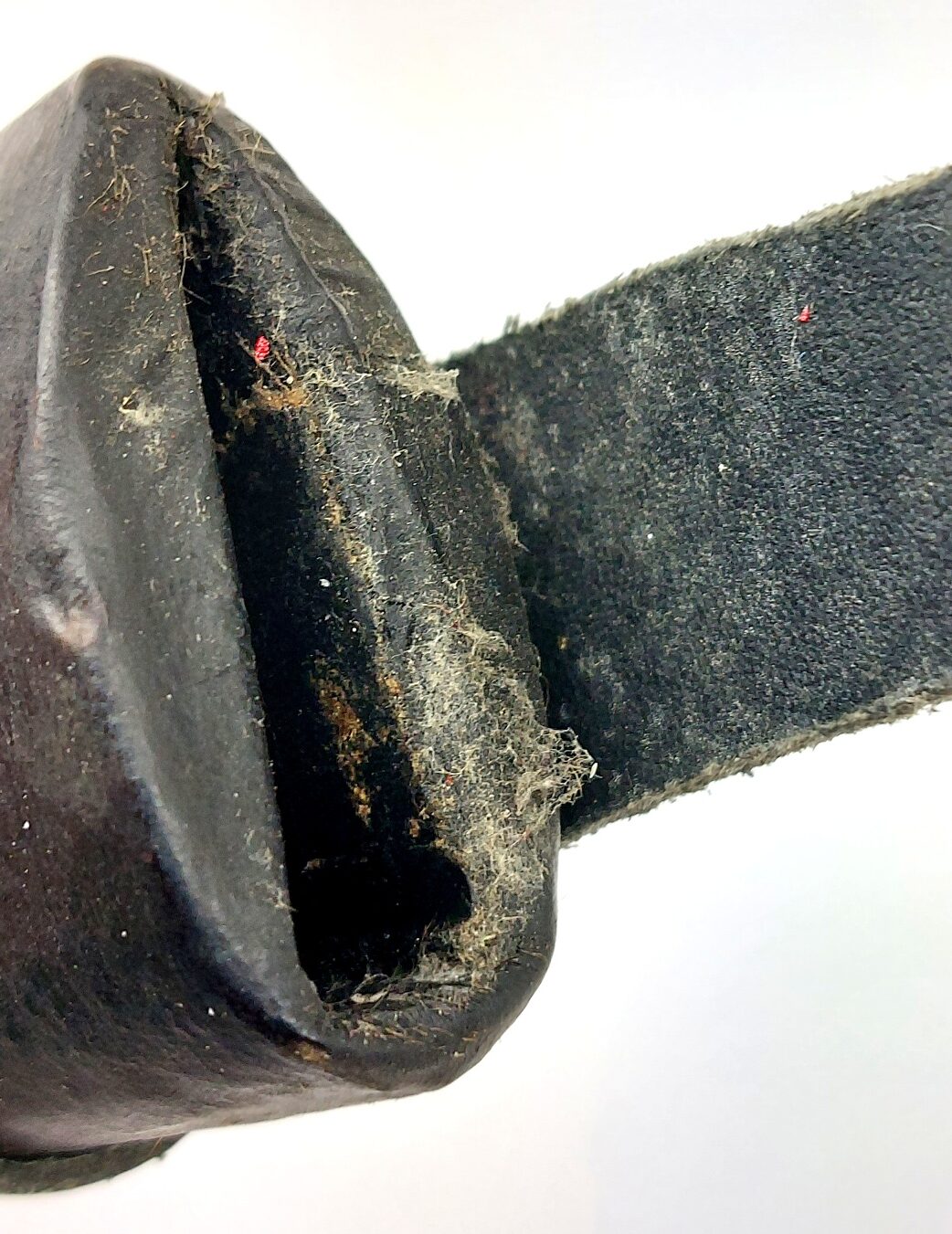
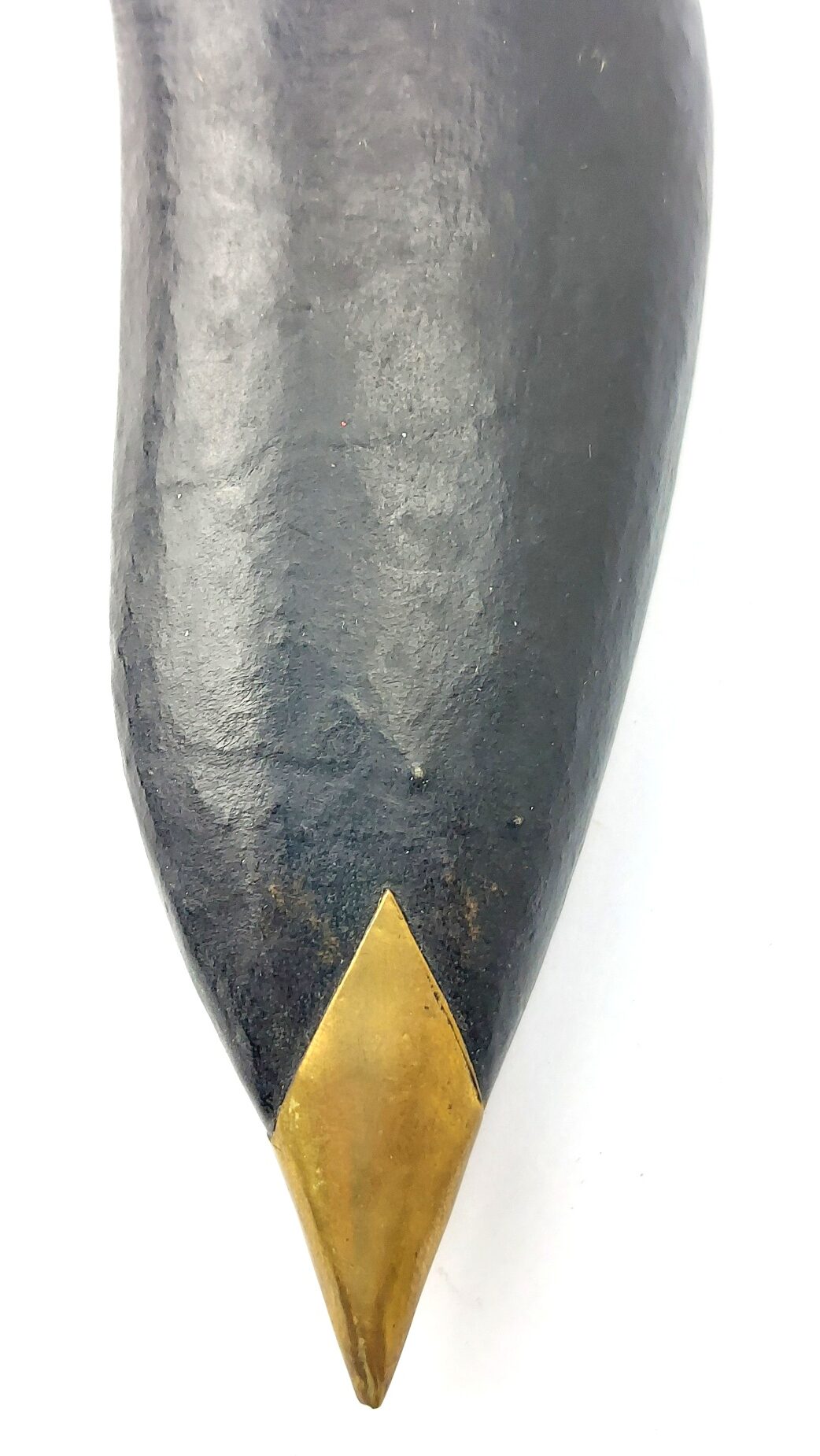
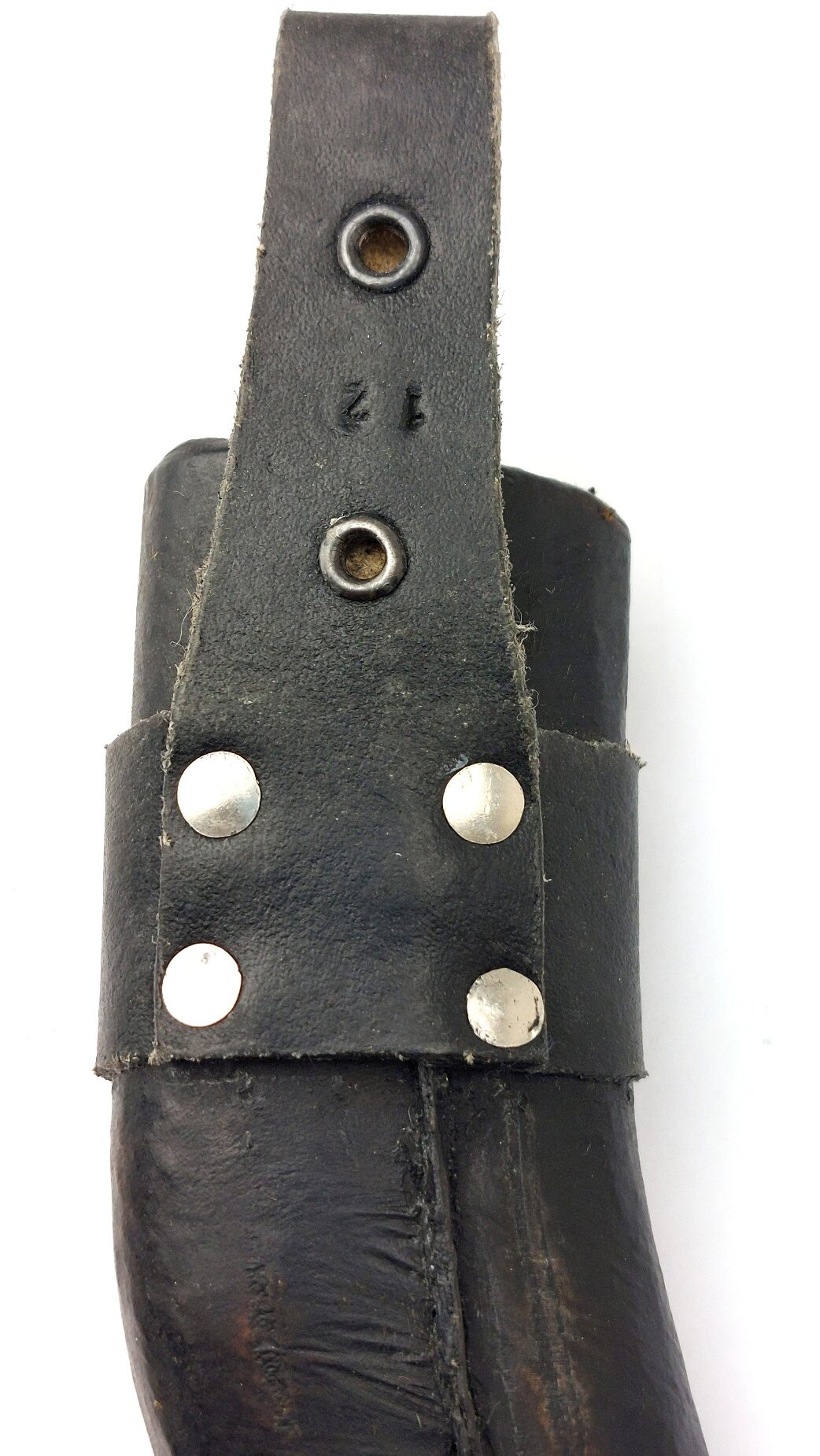
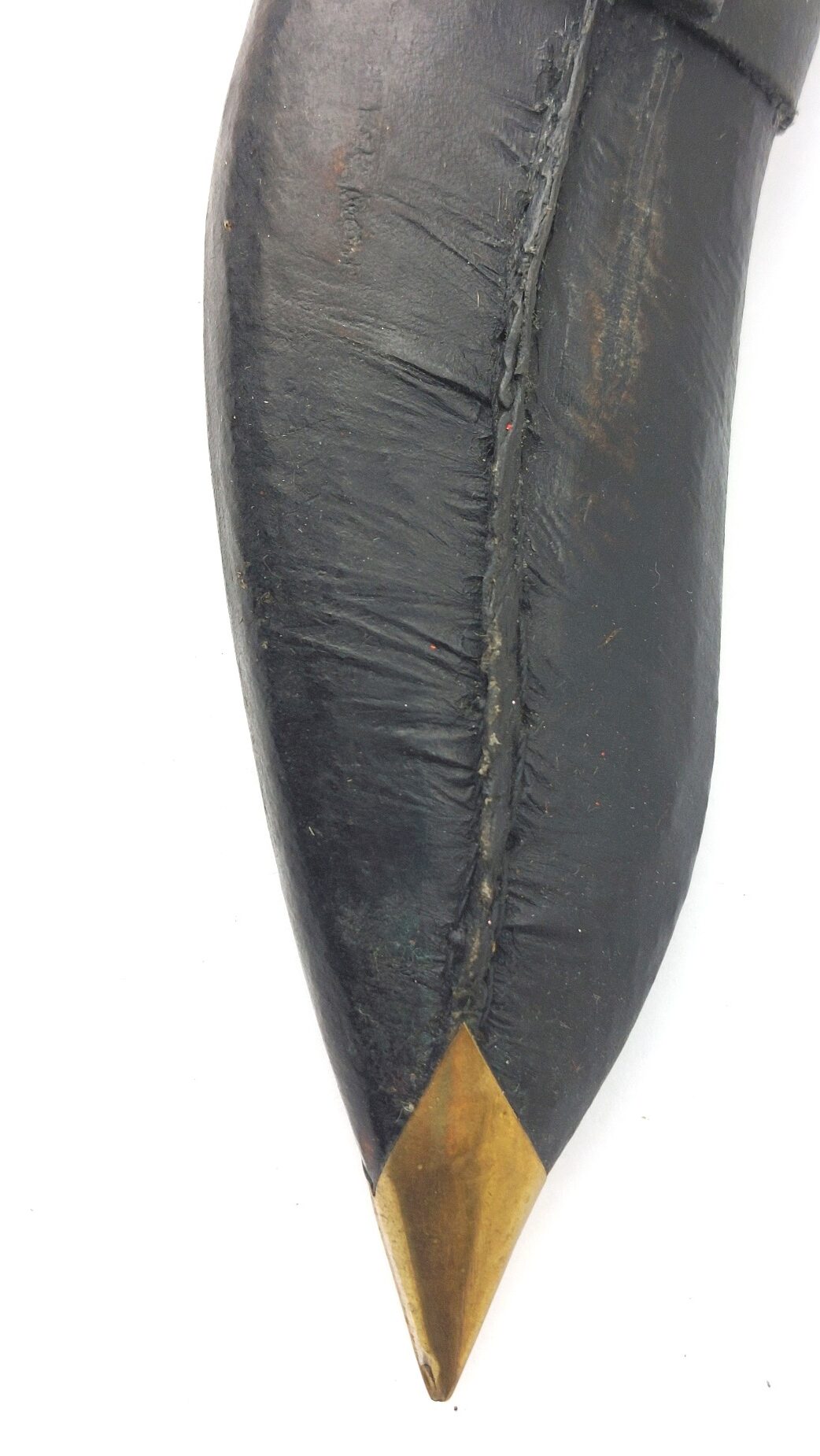
The kukri is accompanied by a leather-covered wooden scabbard with brass chape and belt hanger. Both the hilt and the scabbard strap are stamped with the number 12, suggesting they have remained together as a matched set.
This smaller kukri pattern is commonly produced as a presentation, souvenir, or ceremonial knife, often sold in Nepal or carried as a symbolic representation of Gurkha heritage rather than as a full military fighting kukri.
Approx. Measurements – Blade length: 15 cm. Overall length: 25.5 cm.
History Note:
The kukri (or khukuri) is the traditional knife of Nepal and is inseparably associated with the Gurkha soldiers, renowned for their service in both the British Army and the Nepalese Army since the early nineteenth century. The distinctive inward-curving blade design is believed to have evolved from ancient South Asian chopping weapons and is particularly effective for both cutting and chopping tasks.
The emblem of two crossed kukris has long served as the symbol of the Gurkha regiments and remains one of the most recognisable military insignia in the world. It appears on regimental badges, cap badges, and military equipment connected with Gurkha units.
Smaller kukris such as this example are frequently produced in Nepal as commemorative or presentation pieces celebrating Gurkha military heritage, often bearing inscriptions such as “Khukuri”, “Nepal”, or “Gorkha Army.” They were widely sold to soldiers, travellers, and collectors visiting Nepal during the twentieth century.
*Condition*
The knife remains in good overall condition. The blade retains a bright polished finish with minor surface marks from handling and sharpening. The stamped and engraved markings remain clear. The wooden hilt shows light wear consistent with age and handling. The leather scabbard is structurally sound but displays expected wear, creasing, and surface marks. The leather belt loop shows some fraying to the edges and the internal throat area displays age-related wear. The brass mounts and decorative badges remain present with light patina and handling marks. Please see photographs as part of the condition report.
*In order to complete the online purchase we will require a picture/scan of a photo ID (Driving Licence, Passport or an official document with a recent picture). If you don't posses any such document please call to buy. If we consider that the proof of ID is incorect or insuficient, we reserve the right to cancel the transaction.
*We also reserve the right to cancel the transaction with a full refund if there is any suspicion that the provided item will be used in any way contrary to the laws and legislation of UK.