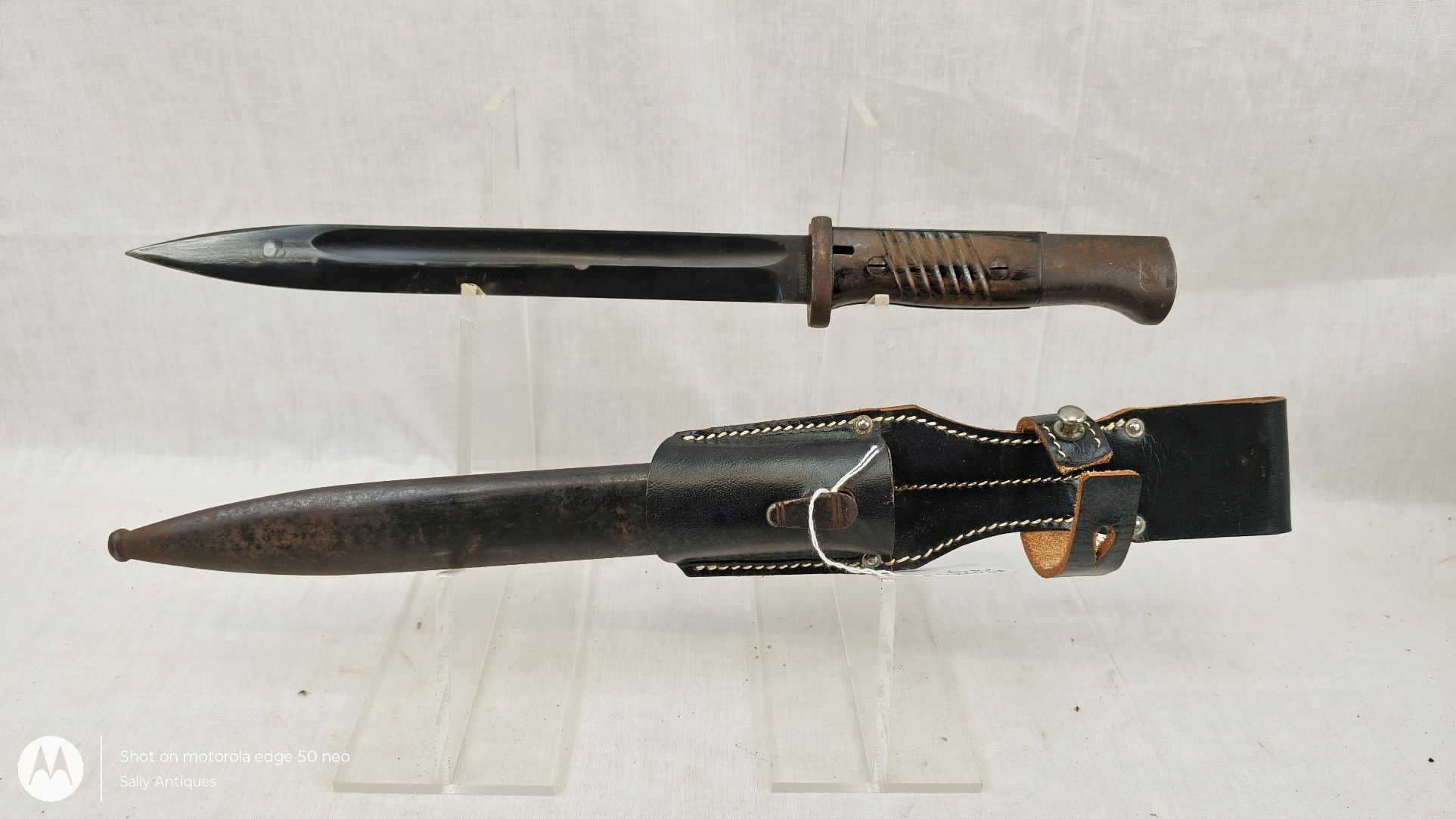
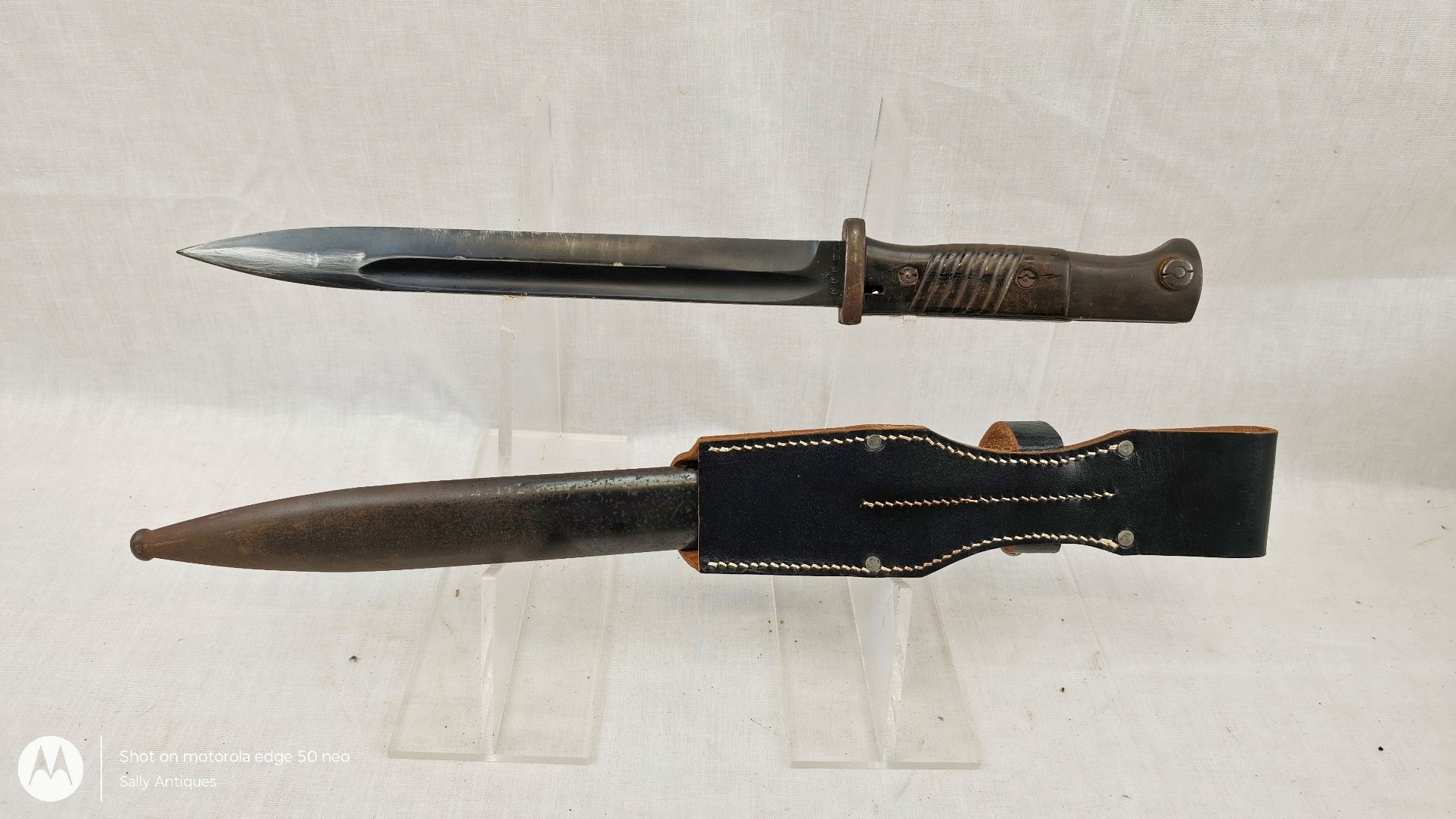
~ WW2 Era German Mauser K98 Rifle Bayonet, Scabbard and Black Leather Frog ~
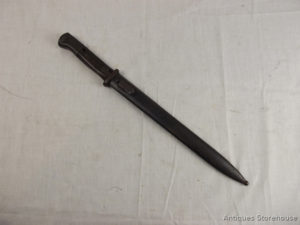
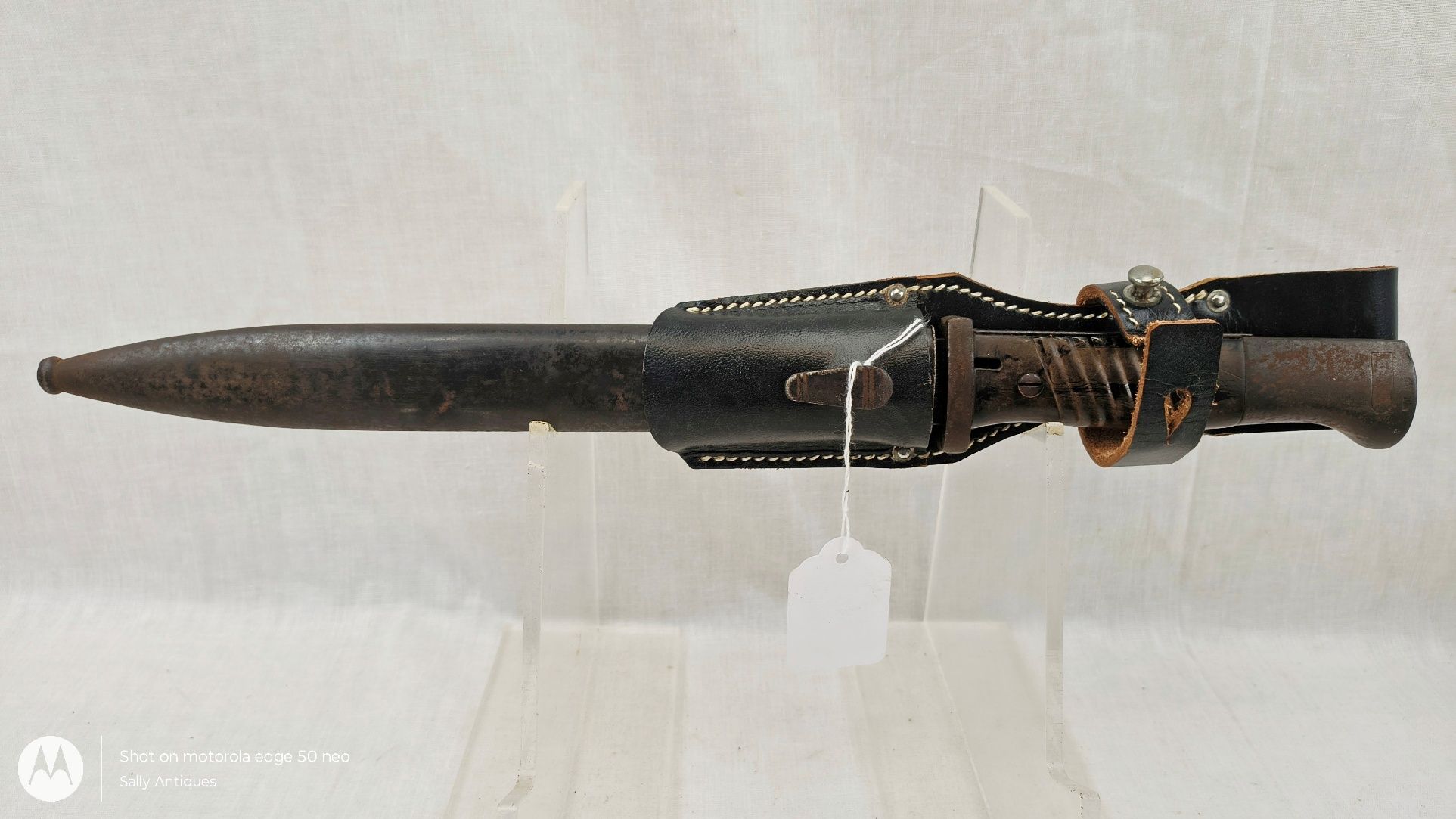
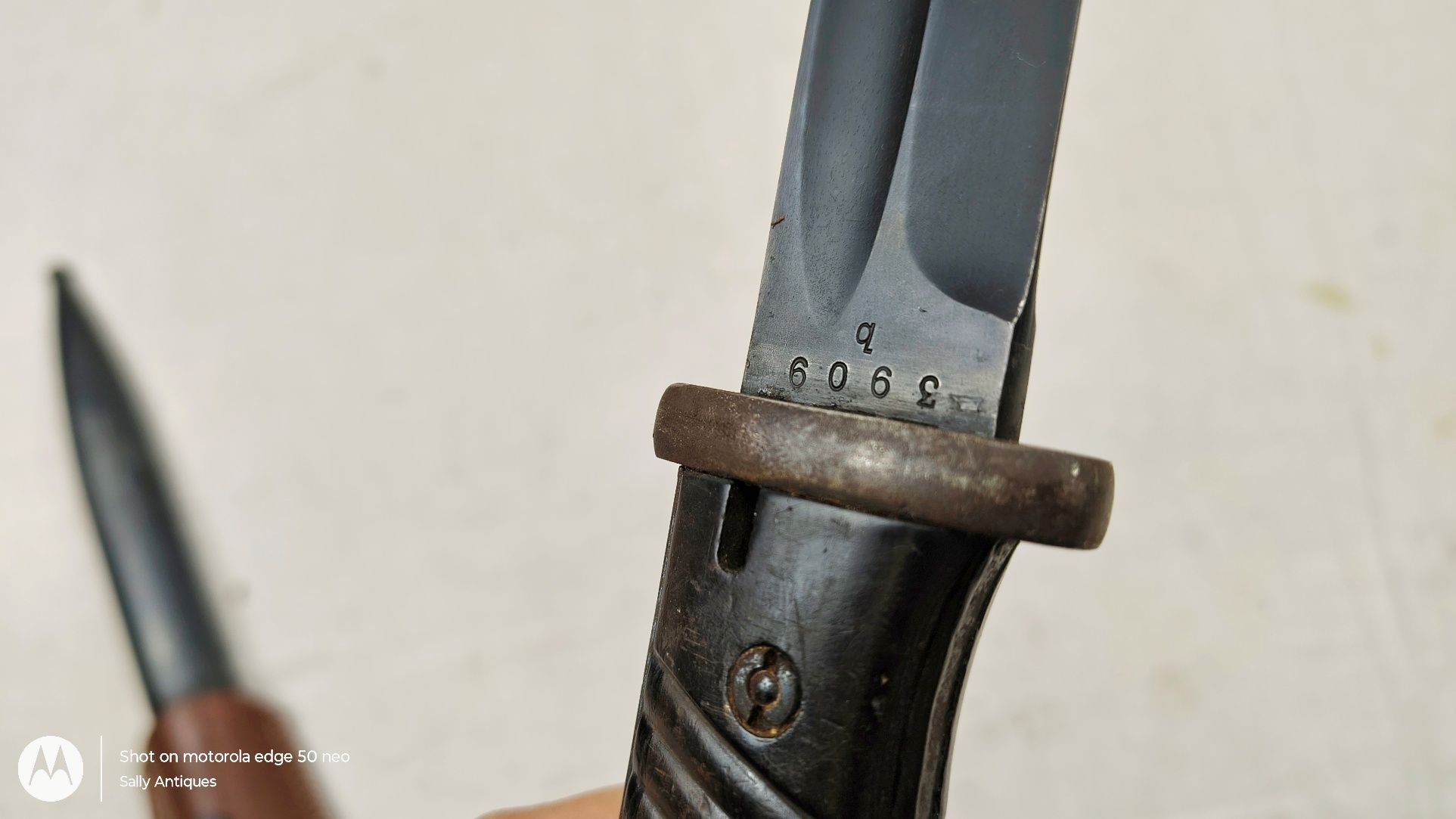
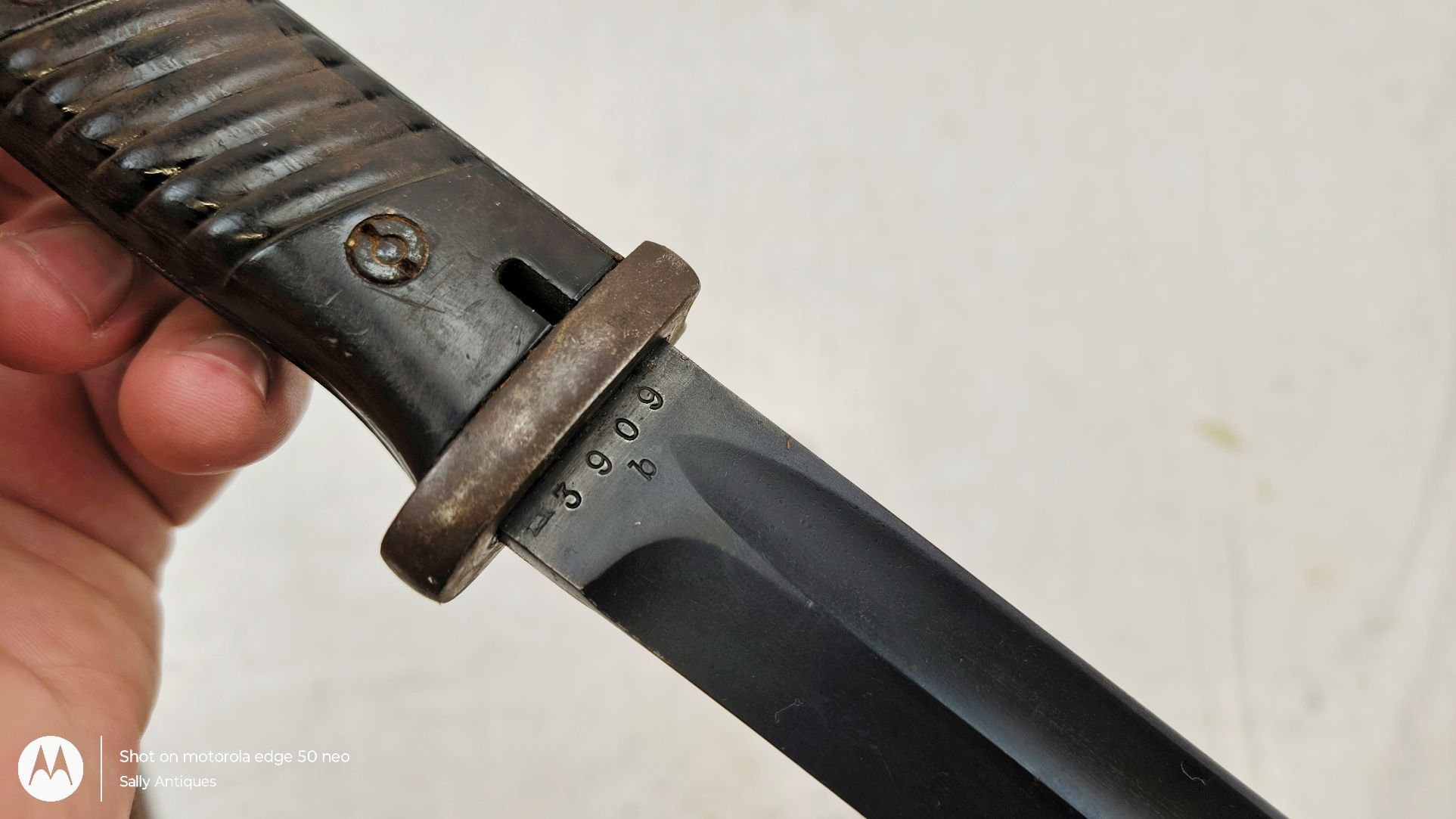
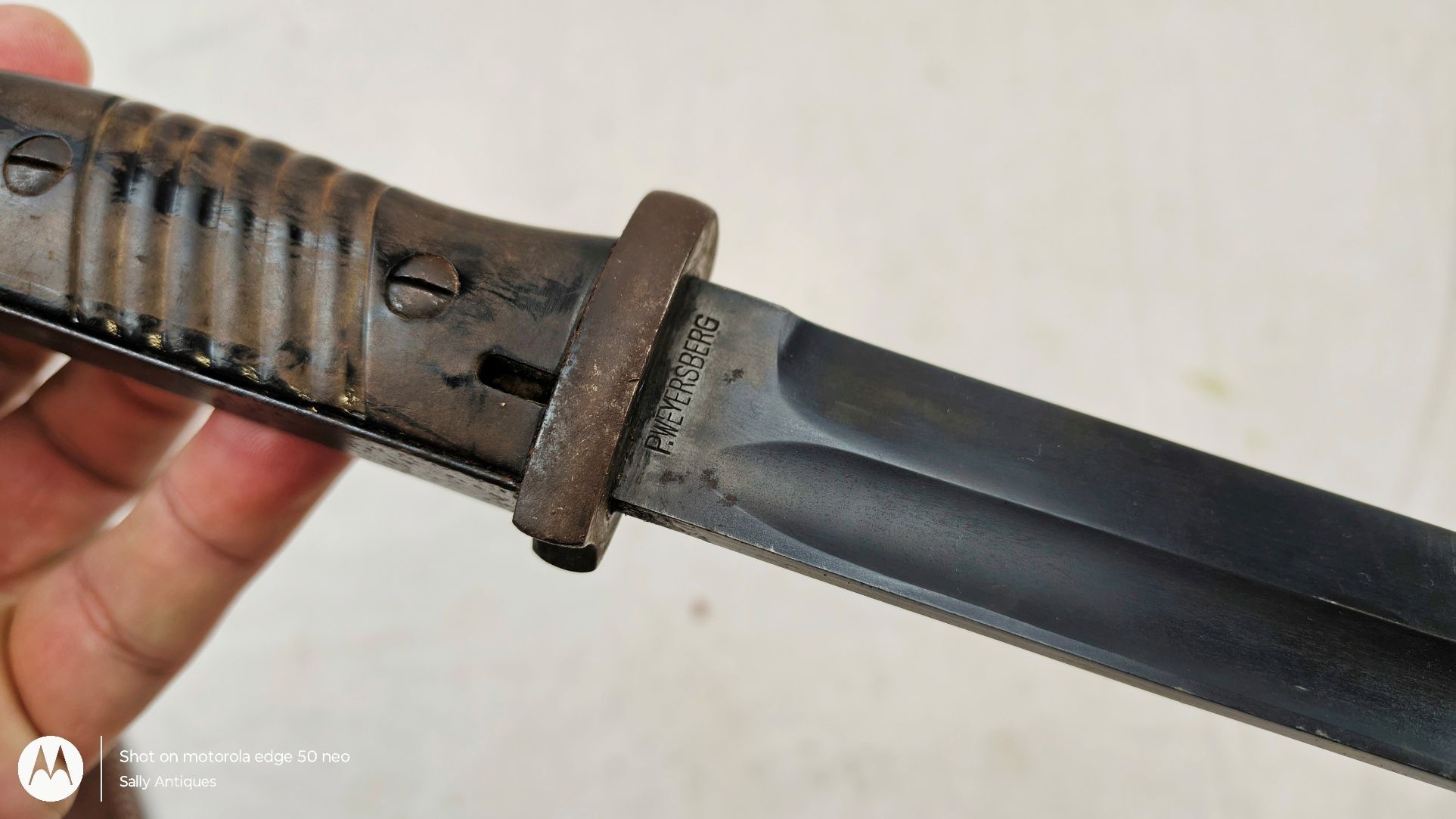
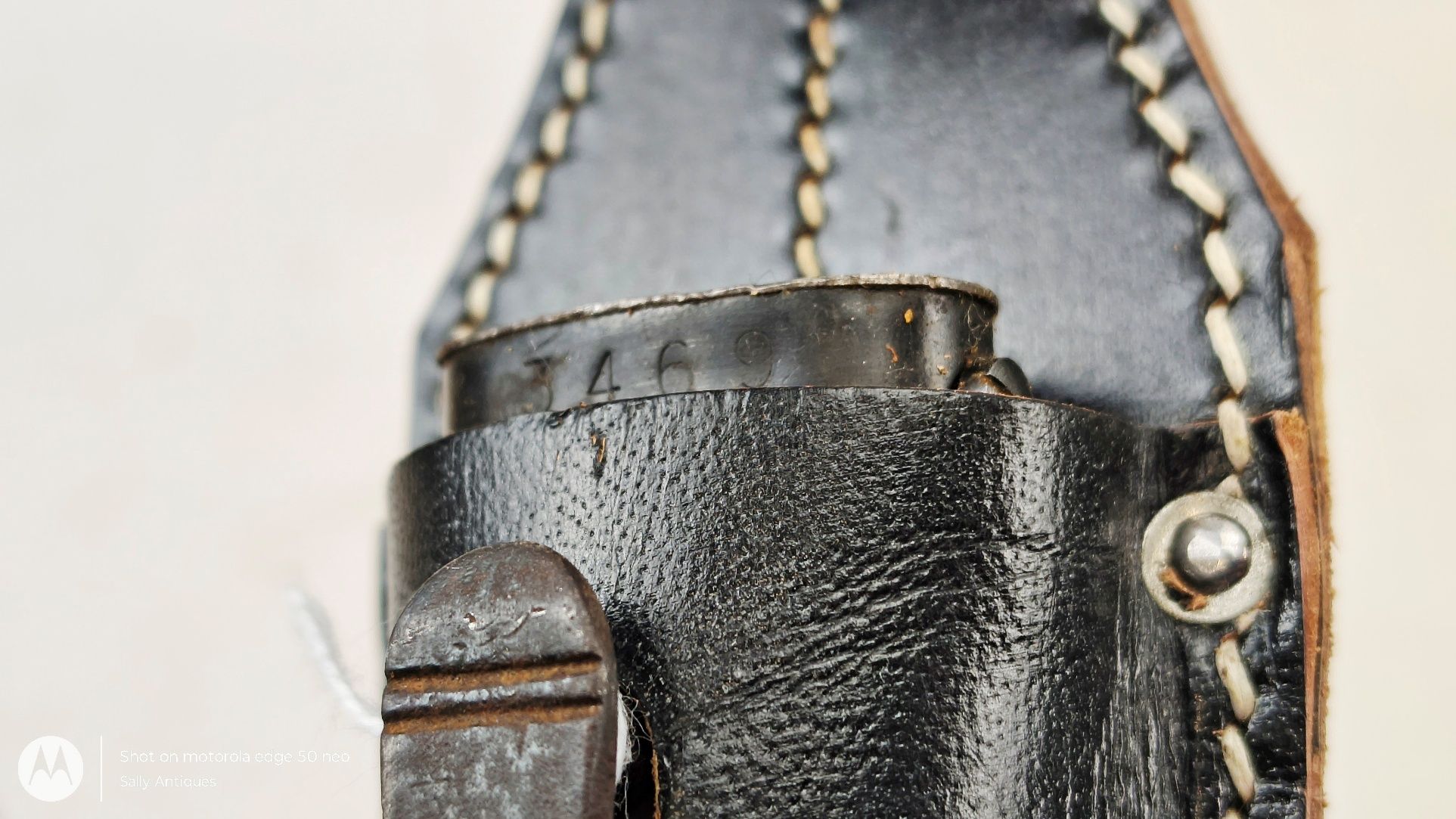
This is a K98 Karabiner bayonet serial numbered 3909 b on one side and P WEYERSBERG on the other. The scabbard is serial numbered 3469.
The Frog is a modern replacement.
The Karabiner 98k (K98k) bayonet, officially known as the Seitengewehr 84/98 III (S84/98 III), was the standard-issue bayonet for the German Army during the Second World War. Designed to fit the Karabiner 98k rifle—the primary German service rifle of the period—it was a practical and widely manufactured weapon accessory.
Development
The bayonet design traces its roots to earlier German bayonets from the First World War. The S84/98 model was originally adapted from the long Gewehr 98 bayonet series but shortened to improve handling in the field.
By 1934, the shortened S84/98 III pattern was standardised for the new K98k rifle.
Features
Blade: Single-edged, spear-point blade around 25 cm (10 in) long.
Grip: Wood or Bakelite grips fixed with rivets, depending on production year.
Scabbard: Blued steel scabbard, usually carried in a leather frog on the soldier’s belt.
Markings: Most were stamped with a manufacturer’s code (letter/number system), Waffenamt acceptance marks, and date of manufacture.
Use in WWII
Issued to virtually all branches of the Wehrmacht, Waffen-SS, and other forces using the K98k.
Functioned as a utility knife as much as a fighting weapon—used for cutting, digging, and general camp tasks.
Some were fitted with matching numbers (bayonet and scabbard stamped identically), which are highly collectible today.
Collectability
Common, as millions were produced, but condition and markings greatly affect value.
Matching-numbered sets, original frogs, and rare manufacturer codes can significantly increase desirability.
Post-war use: Many were captured and reissued by other nations, especially in Eastern Europe, which sometimes involved re-stamping or refinishing.