German, WWII, 6–7 April 1941, Adler über Land und Meer (“Eagle over Land and Sea”) Luftwaffe Front Newspaper – Balkan Invasion & North Africa Campaign Issue – 6 Pages
£70.00
A historically significant Luftwaffe frontline newspaper issued on the exact opening of the German invasion of Yugoslavia and Greece, packed with Balkan propaganda, Afrika Korps imagery and wartime troop content.
*German, WWII, 6–7 April 1941, Adler über Land und Meer (“Eagle over Land and Sea”) Luftwaffe Front Newspaper – Balkan Invasion & North Africa Campaign Issue – 6 Pages*
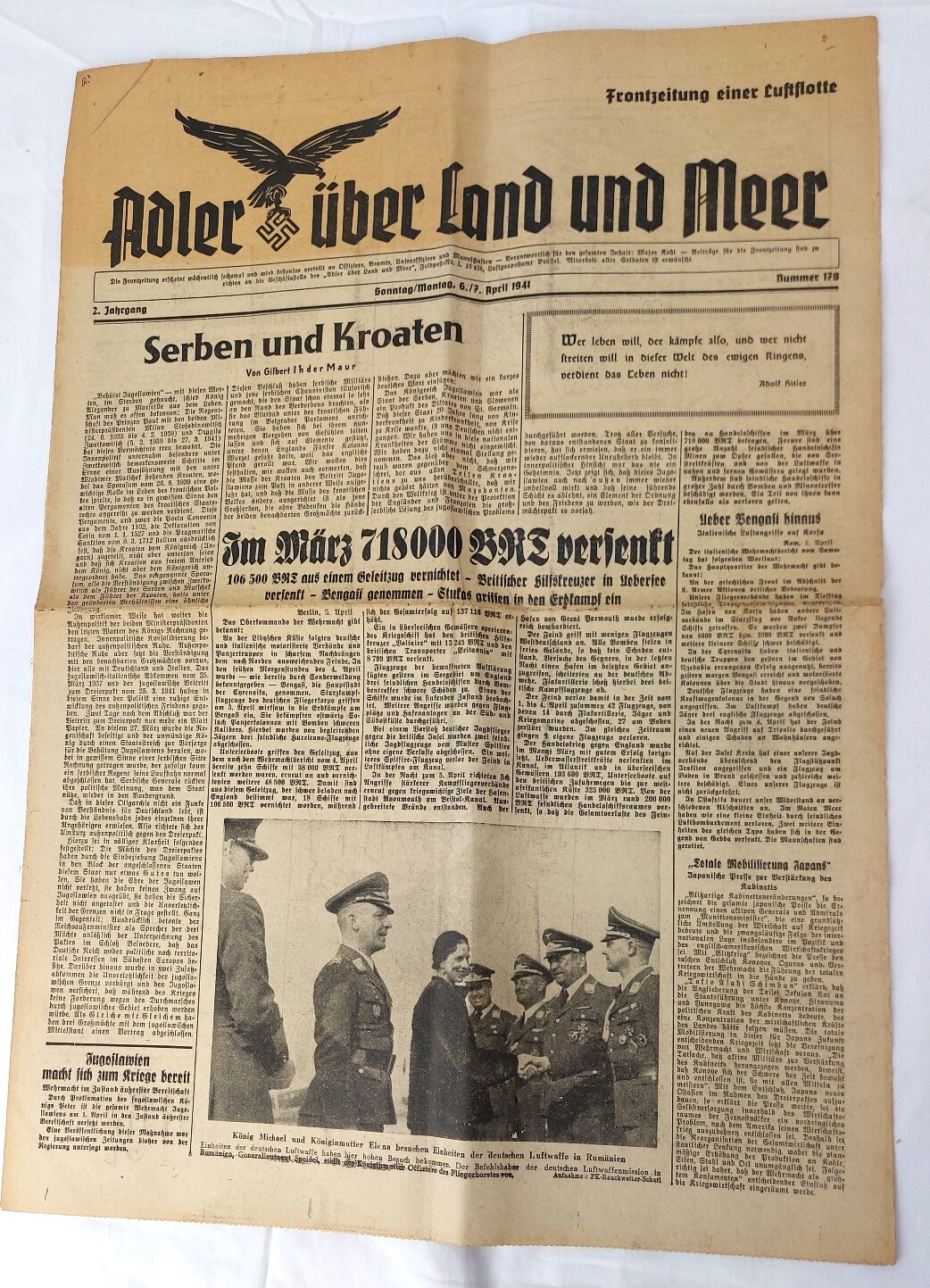
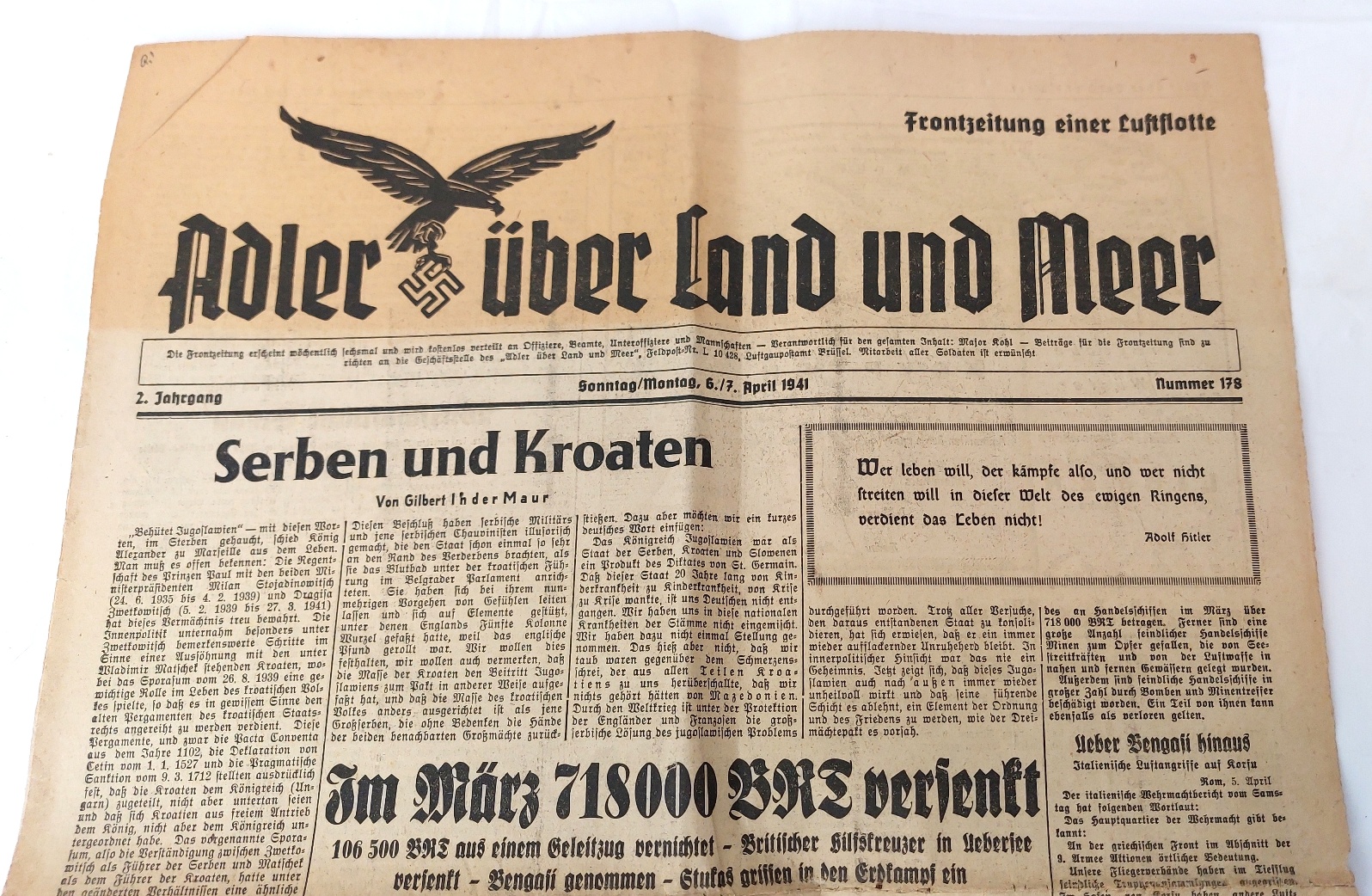
An original World War II German Luftwaffe frontline newspaper titled Adler über Land und Meer (“Eagle over Land and Sea”), officially described beneath the masthead as a Frontzeitung einer Luftflotte (“Frontline Newspaper of an Air Fleet”). This wartime publication was produced specifically for Luftwaffe personnel as a morale and propaganda newspaper combining war reporting, military photography, political commentary, humour, cultural articles and entertainment for troops in the field. This example is issue number 178, 2nd year of publication, dated Sunday/Monday 6–7 April 1941 — a highly significant date corresponding exactly with the opening of the Axis invasions of Yugoslavia and Greece during the Balkan Campaign.
The front page immediately captures the political atmosphere of April 1941. The lead article, “Serben und Kroaten” (“Serbs and Croats”), discusses ethnic divisions within Yugoslavia and attempts to frame political instability as justification for German intervention. This is an excellent example of wartime propaganda aimed at presenting military aggression as political necessity. A smaller notice beneath, “Jugoslawien macht sich zum Kriege bereit” (“Yugoslavia prepares for war”), directly references mobilisation efforts as the invasion unfolded.
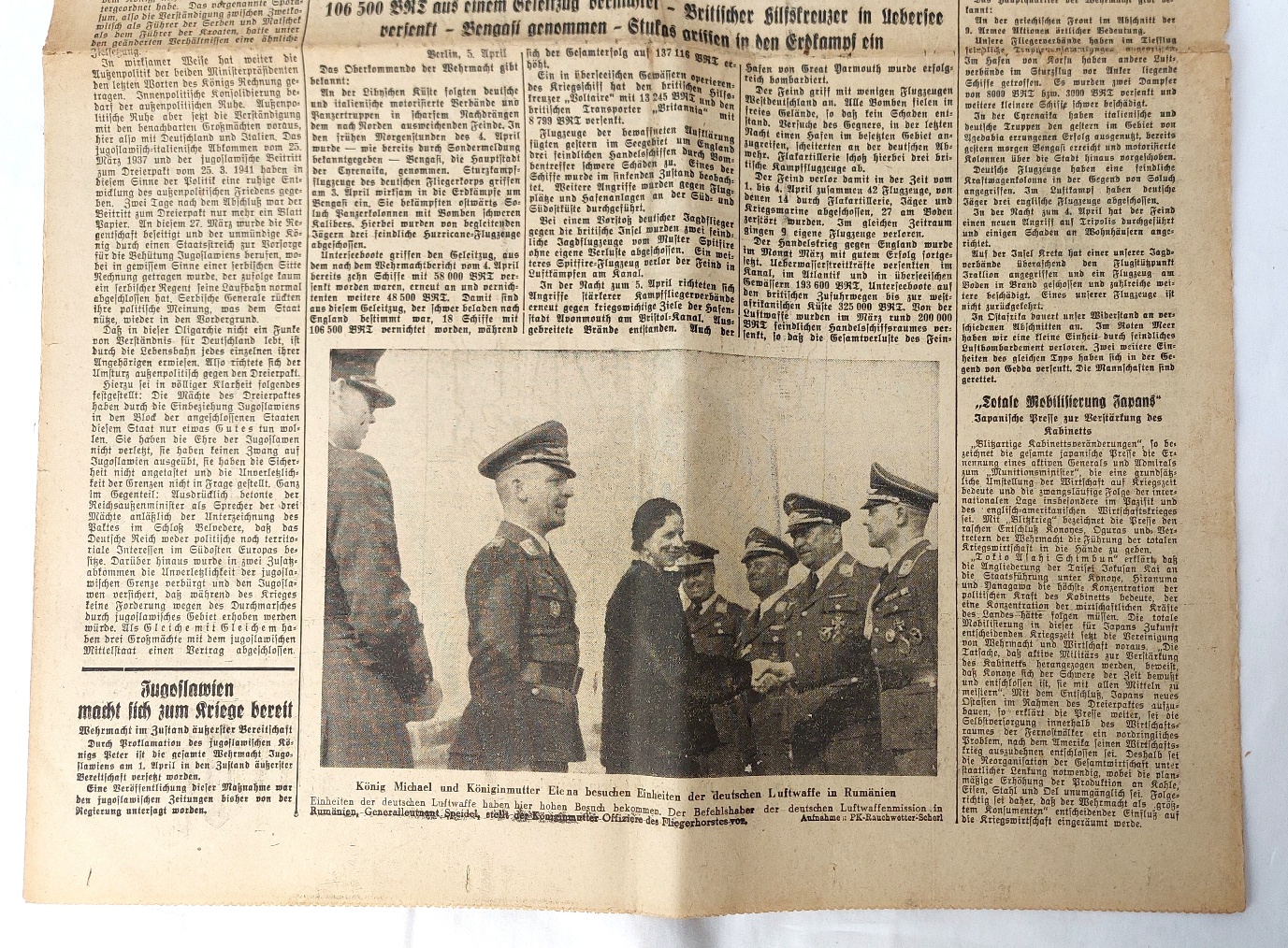
The large central headline, “Im März 718000 BRT versenkt”, proudly claims 718,000 gross registered tons of Allied shipping sunk during March, celebrating U-boat and air-war successes in the Battle of the Atlantic. Typical of wartime German newspapers, figures of enemy losses were heavily emphasised to reassure readers of inevitable victory. Sub-headlines mention the destruction of British shipping, attacks against convoys and the sinking or capture of additional vessels.
A striking photograph at the bottom of the front page shows King Michael I of Romania and Queen Helen greeting German Luftwaffe personnel in Romania. This image is especially important historically as Romania had become one of Germany's key allies and staging grounds for the forthcoming Balkan operations.
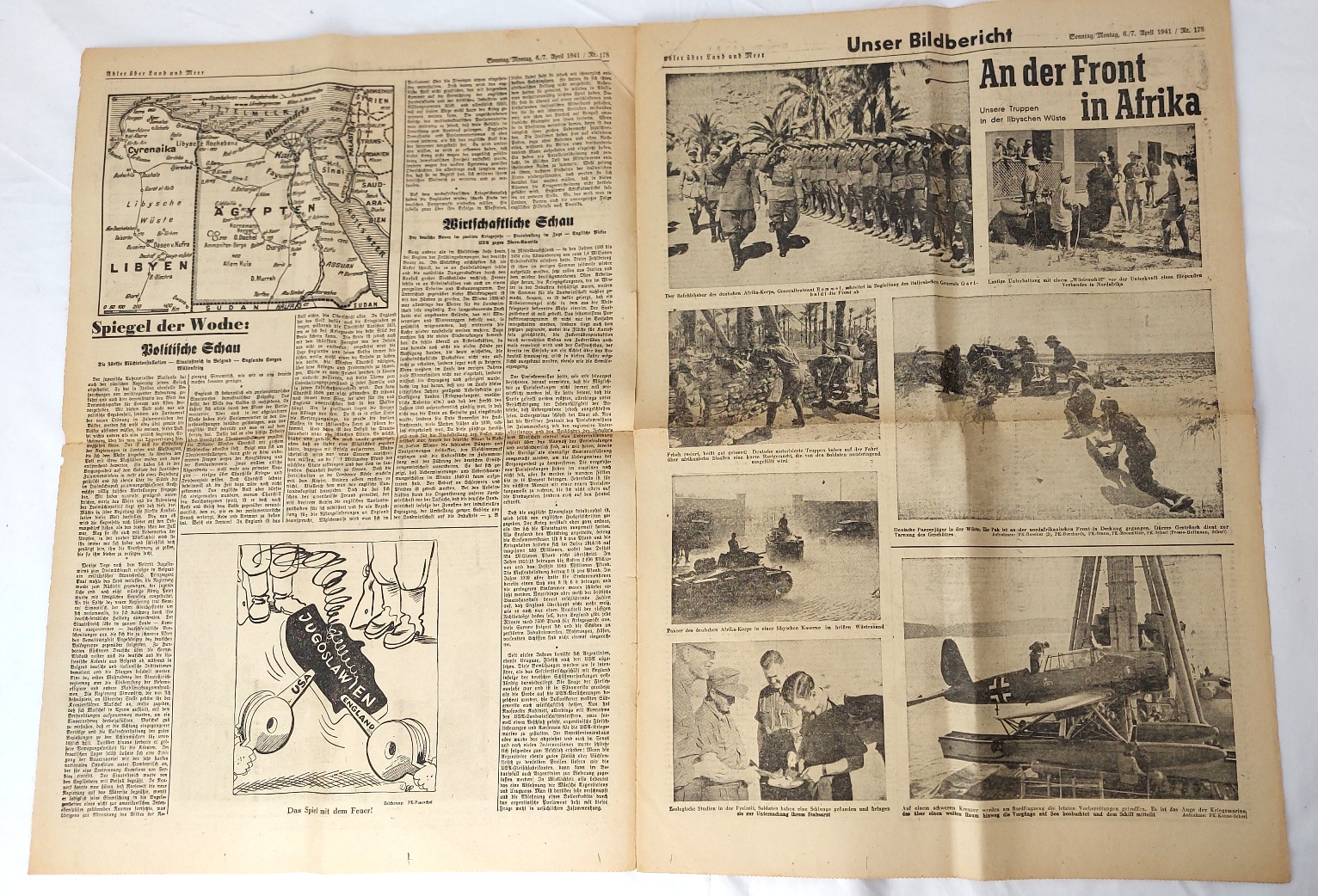
The interior pages contain a particularly fascinating wartime snapshot. A large illustrated feature titled “An der Front in Afrika” (“At the Front in Africa”) provides a photo report from the North African campaign. Images show German Afrika Korps troops in Libya, desert artillery positions, armoured vehicles, soldiers in the field and even a recovered seaplane being lifted aboard a vessel. This feature captures the very early phase of the Afrika Korps deployment under General Rommel during the first months of German intervention in North Africa.
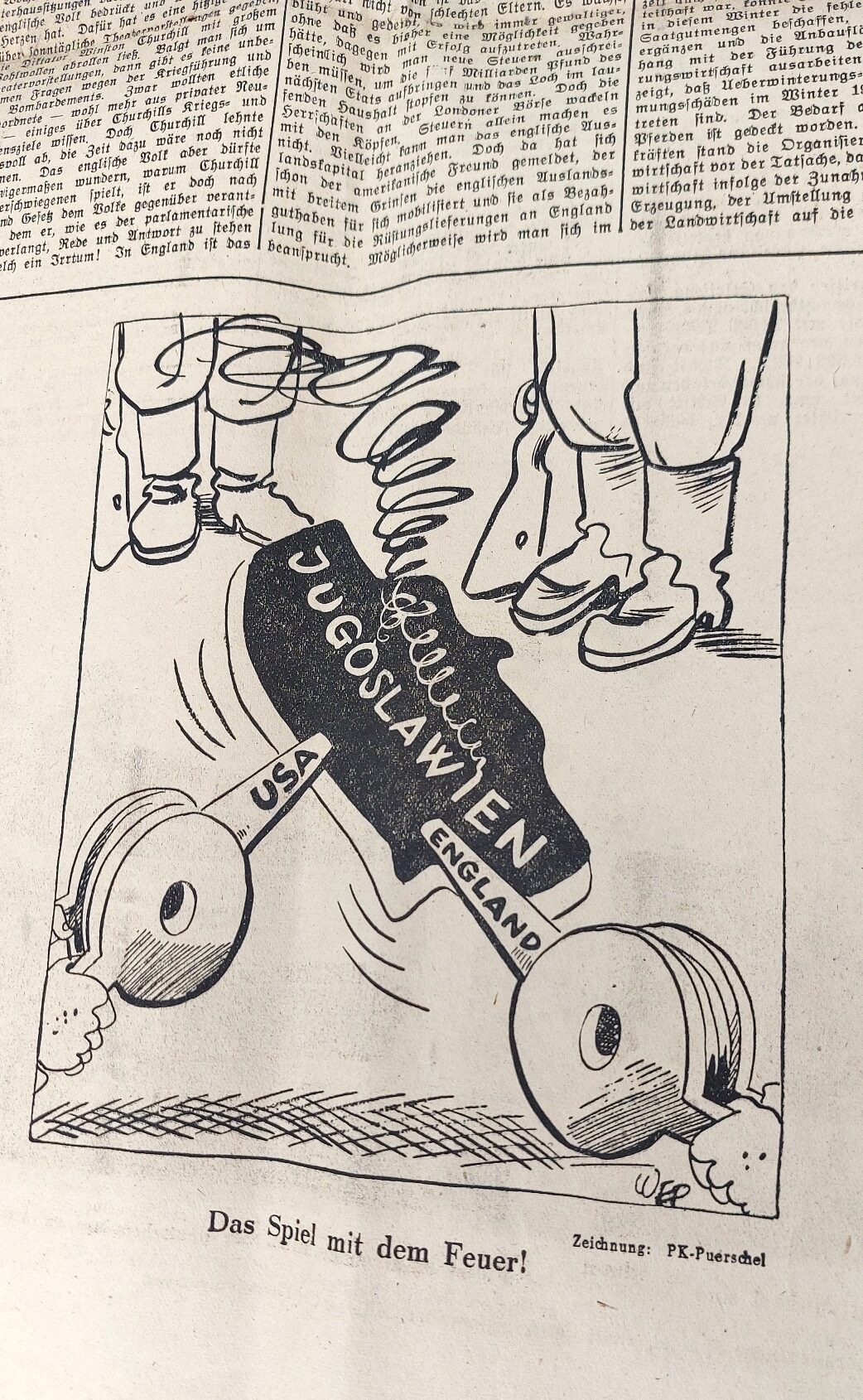
Another page titled “Spiegel der Woche: Politische Schau” (“Mirror of the Week: Political Review”) presents broader geopolitical commentary. An interesting propaganda cartoon shows Yugoslavia portrayed as a cart being pulled simultaneously by Britain and the United States, symbolising alleged Allied manipulation of Balkan affairs. Such imagery illustrates how newspapers like this blended news with visual political messaging.
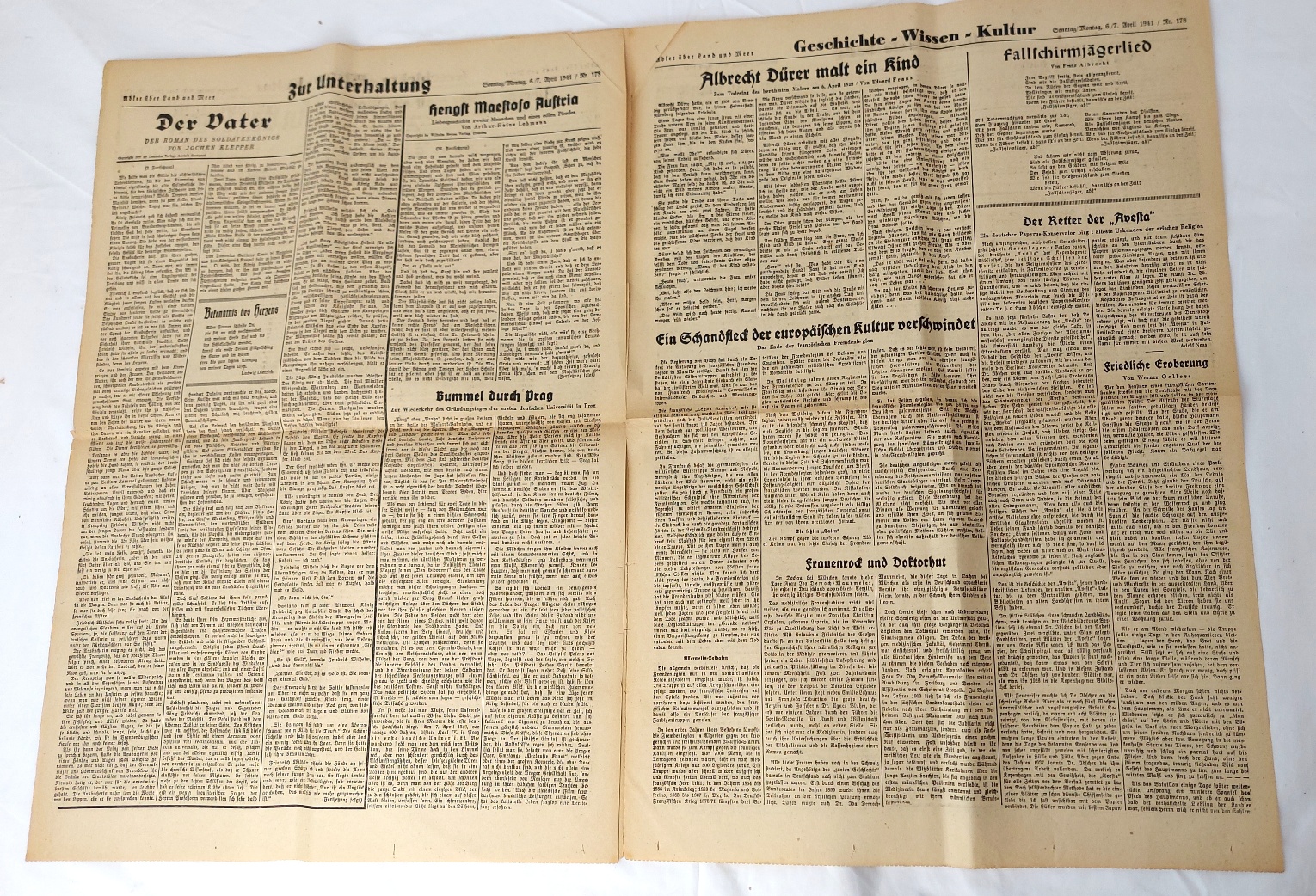
The cultural pages provide insight into the everyday content supplied to soldiers. There are literary pieces and essays including “Albrecht Dürer malt ein Kind” (“Albrecht Dürer paints a child”), a feature on German cultural heritage, historical articles, poems including “Fallschirmjägerlied” (Paratrooper Song), and entertainment sections intended to maintain morale away from combat.
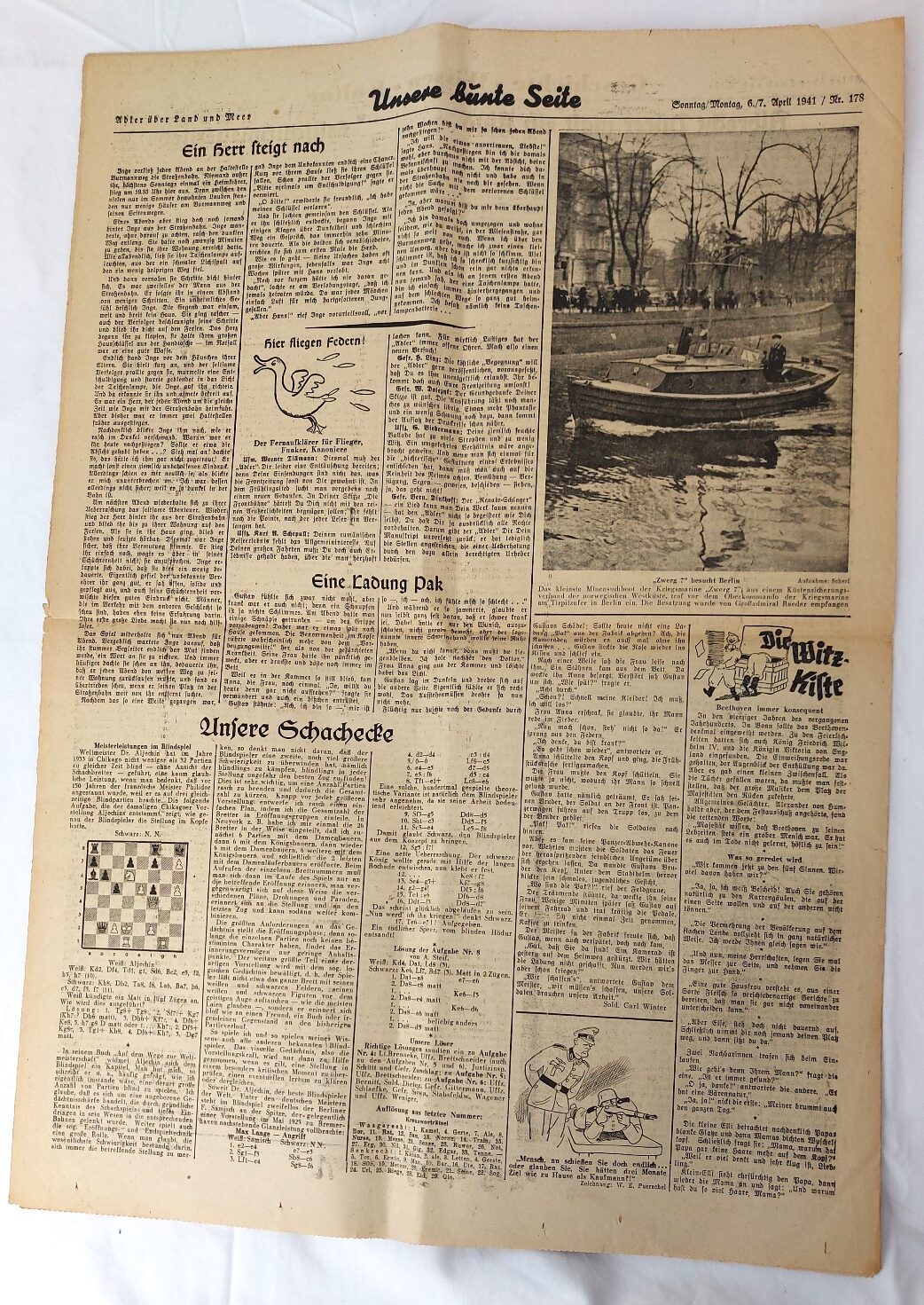
The final page is especially evocative because it shows the newspaper functioning not simply as propaganda but as field entertainment. It includes jokes under “Die Witzkiste”, chess problems under “Unsere Schachecke”, cartoons and short stories. Particularly interesting is a photograph captioned “Zwerg besucht Berlin”, showing a captured British miniature submarine known as Zwerg displayed in Berlin after being recovered from the Norwegian campaign. Such exhibitions were used to demonstrate supposed German superiority and boost public confidence.
Approx. Measurements – 6 pages.
History Note: Dated precisely on the opening day of the Balkan Campaign, this issue represents a remarkable wartime snapshot of German military expansion in spring 1941. It combines reporting on Yugoslavia and Greece, North African operations, naval warfare, culture and troop entertainment in one publication. Front newspapers such as Adler über Land und Meer were printed on low-quality wartime paper intended for temporary use, making complete surviving examples increasingly scarce today.
*Condition* Paper remains complete with expected age toning and fold lines from wartime handling and storage. The centre section remains fragile but is not torn. Light edge wear and age-related handling marks present. Please see photographs as part of the condition report.