*German, 1929, Aschaffenburg 50-Year Reunion Group – Student Fraternity Cap and Couleurband “Deutsches Recht, Deutsche Ehre” with Enamel Bandknopf and Named Photograph, Schloss Johannisburg*
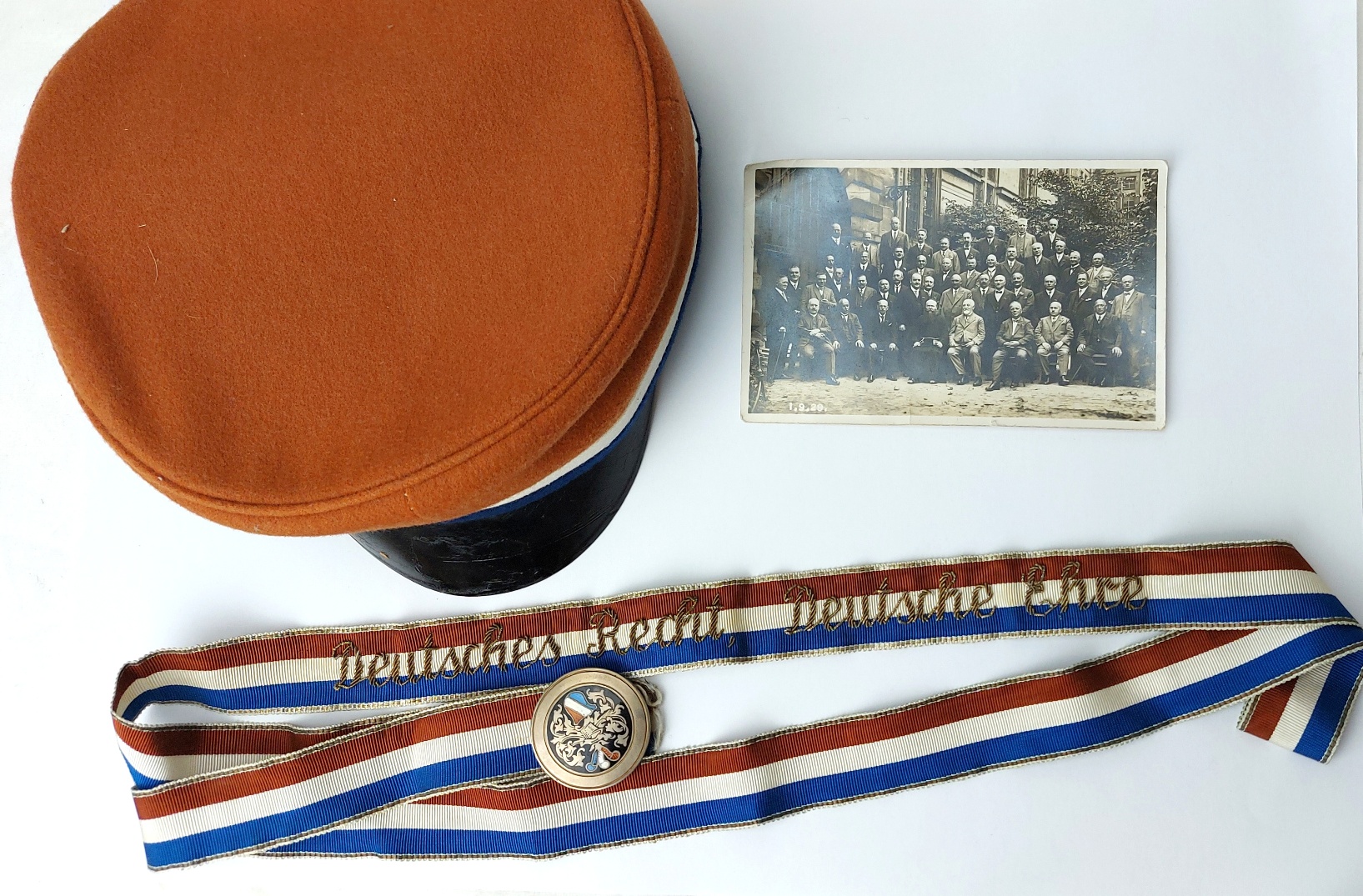
An evocative and historically rich grouping connected with the civic and academic life of Aschaffenburg, comprising a German student fraternity cap, ceremonial Couleurband with enamel fastening button, and a photographic postcard commemorating a birth-year reunion held in 1929.
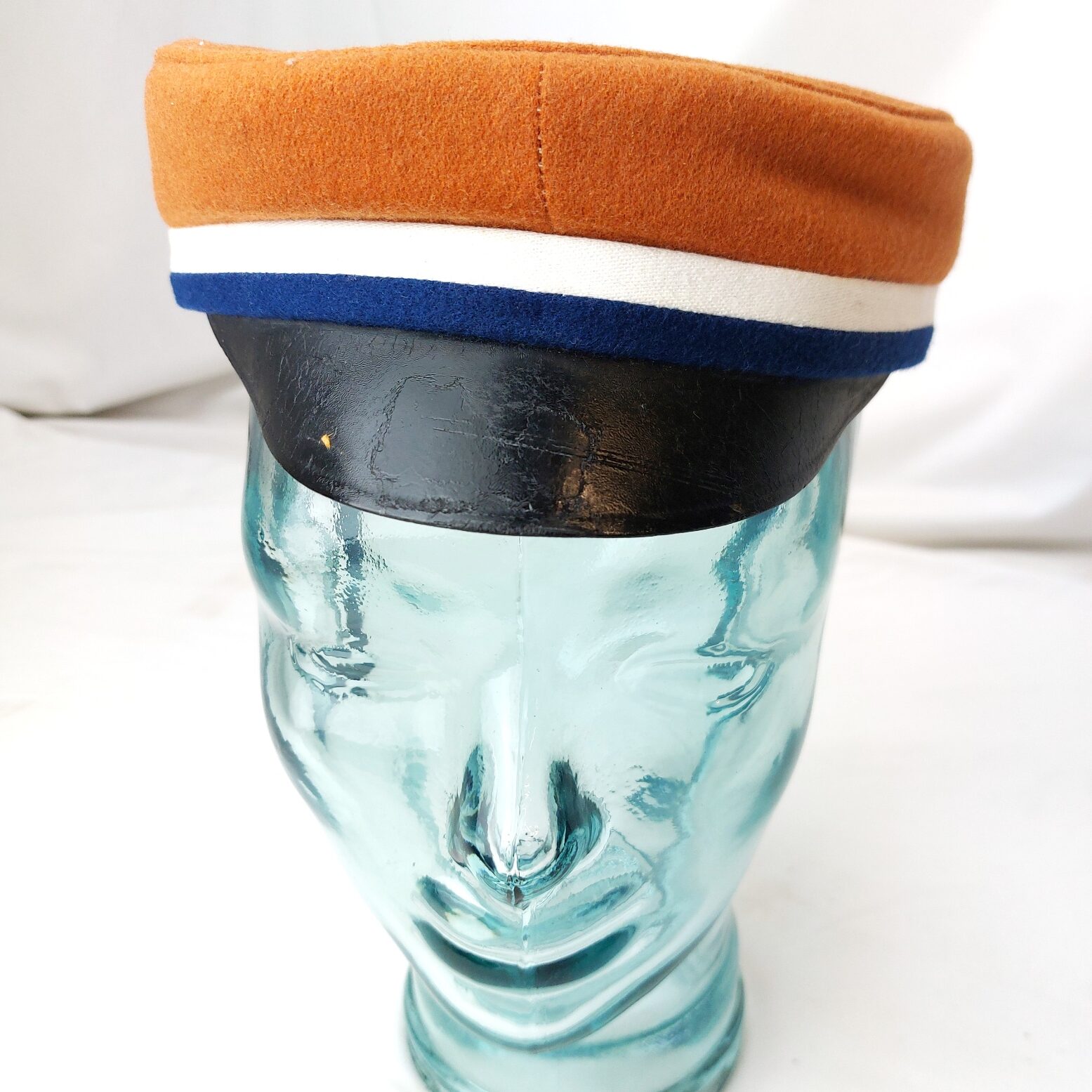
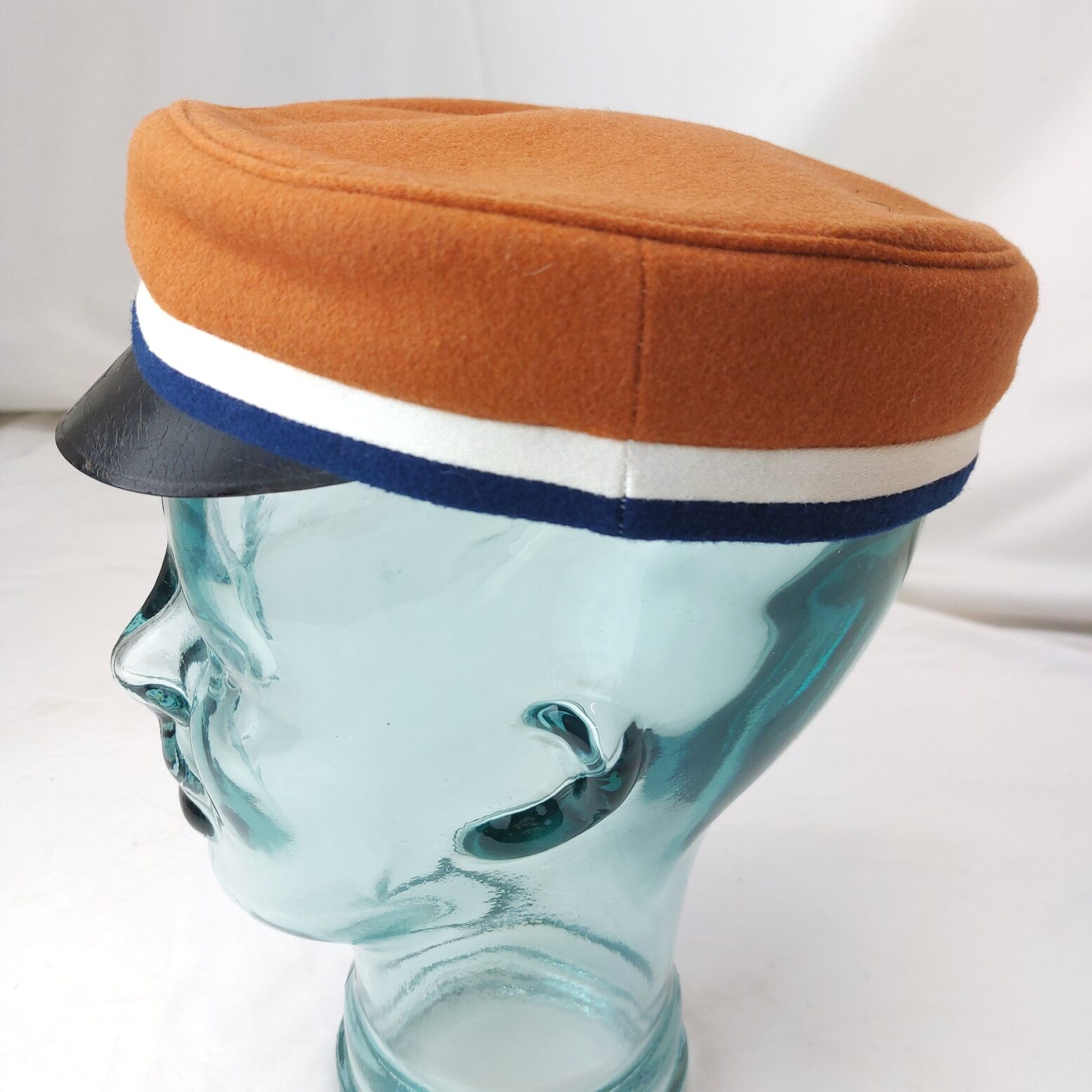
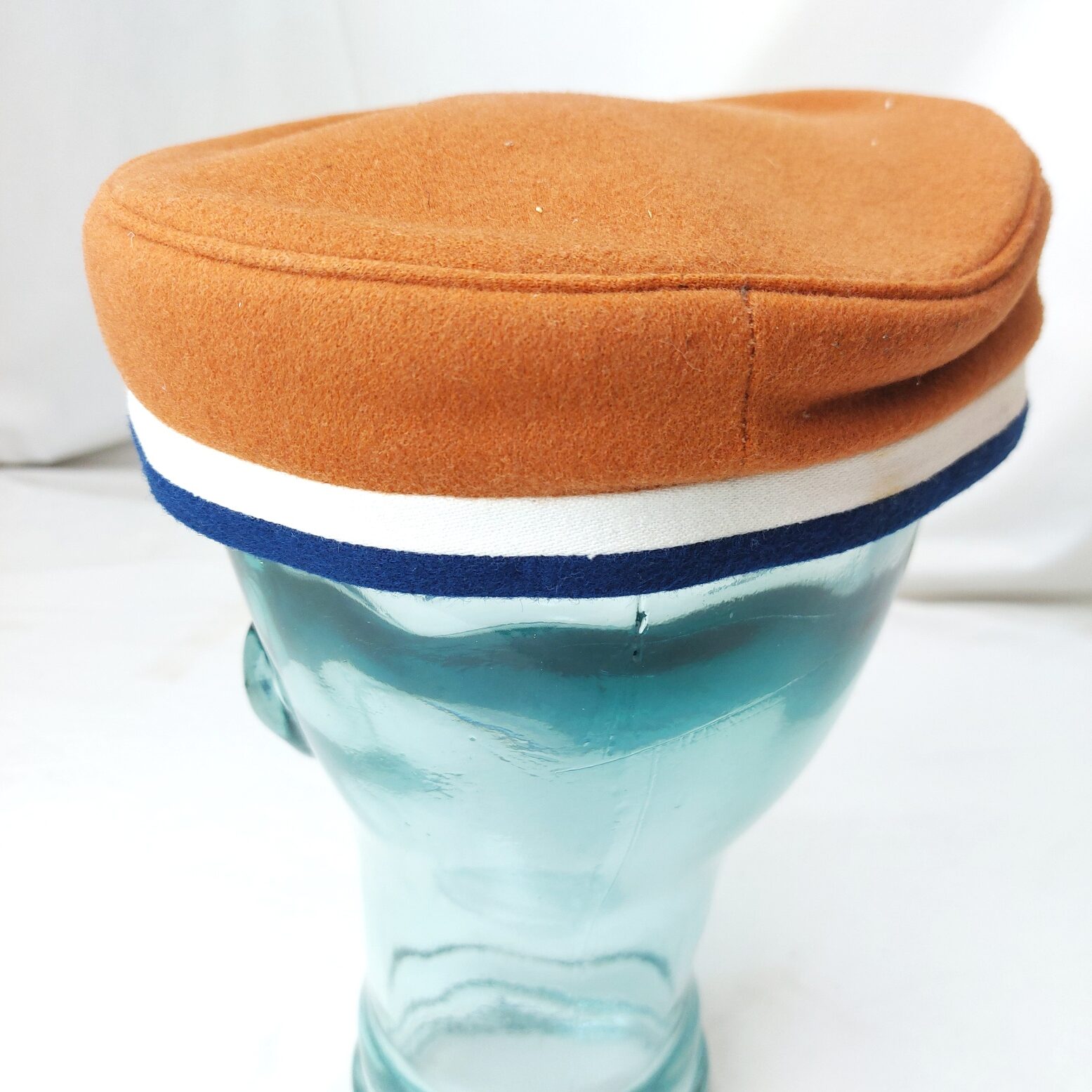
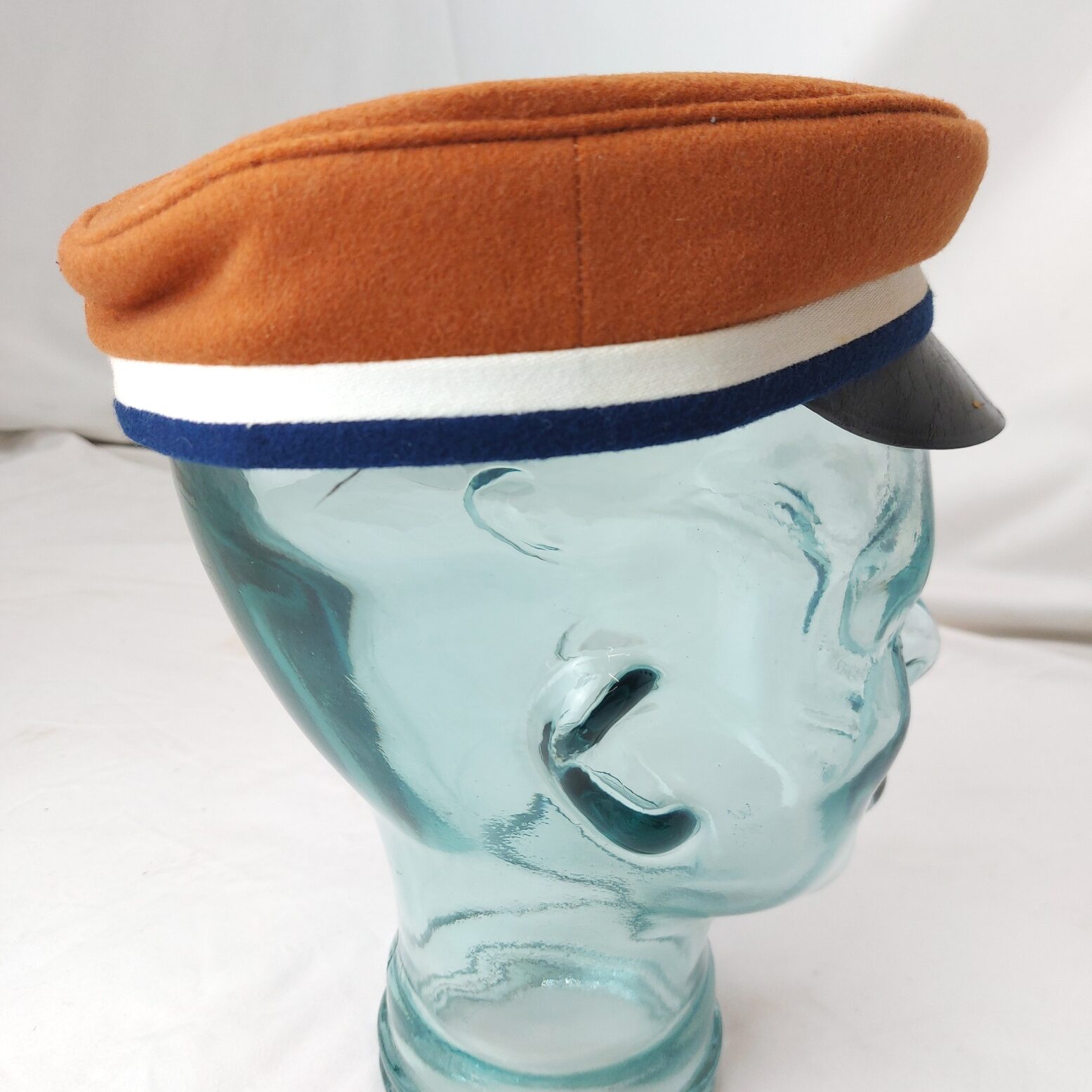
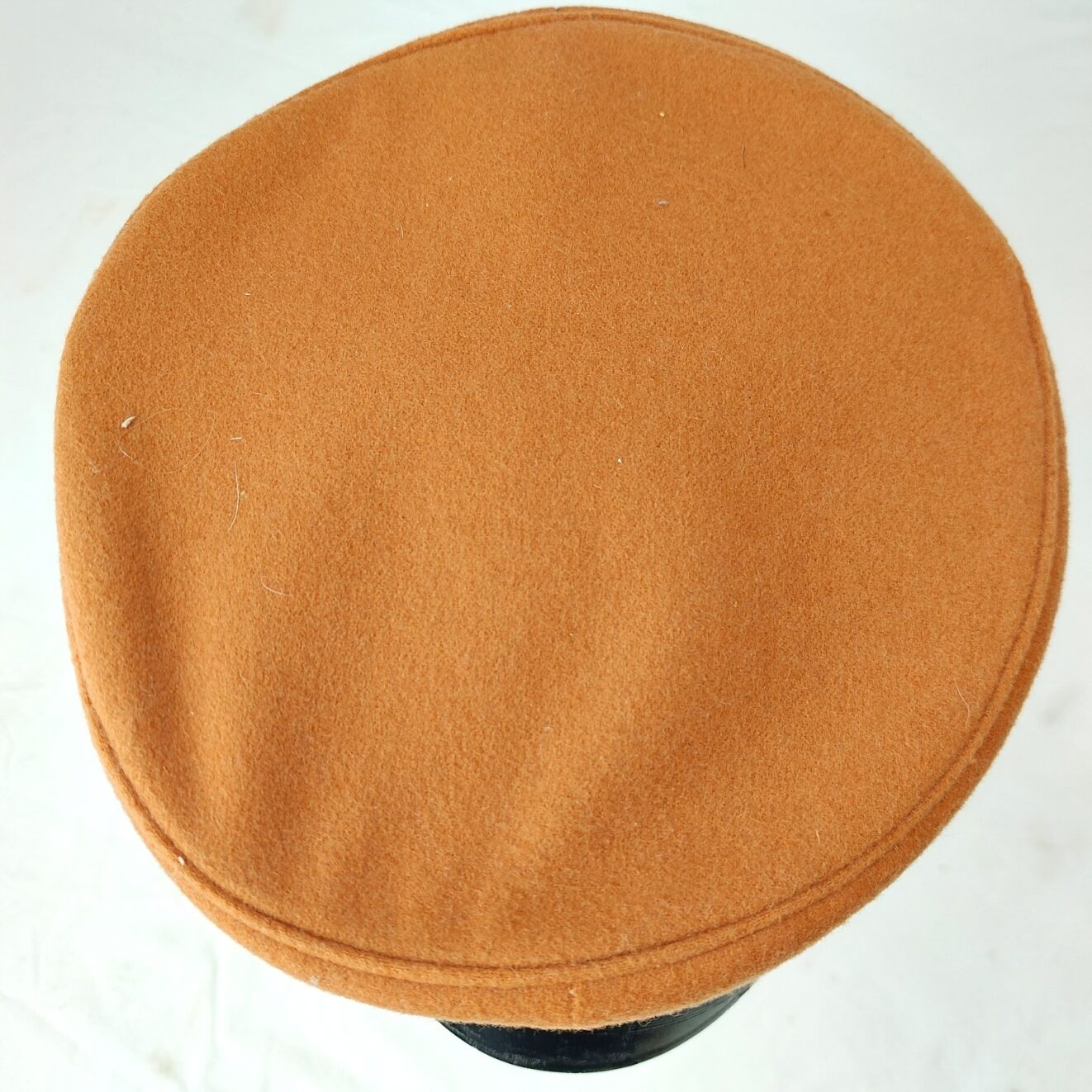
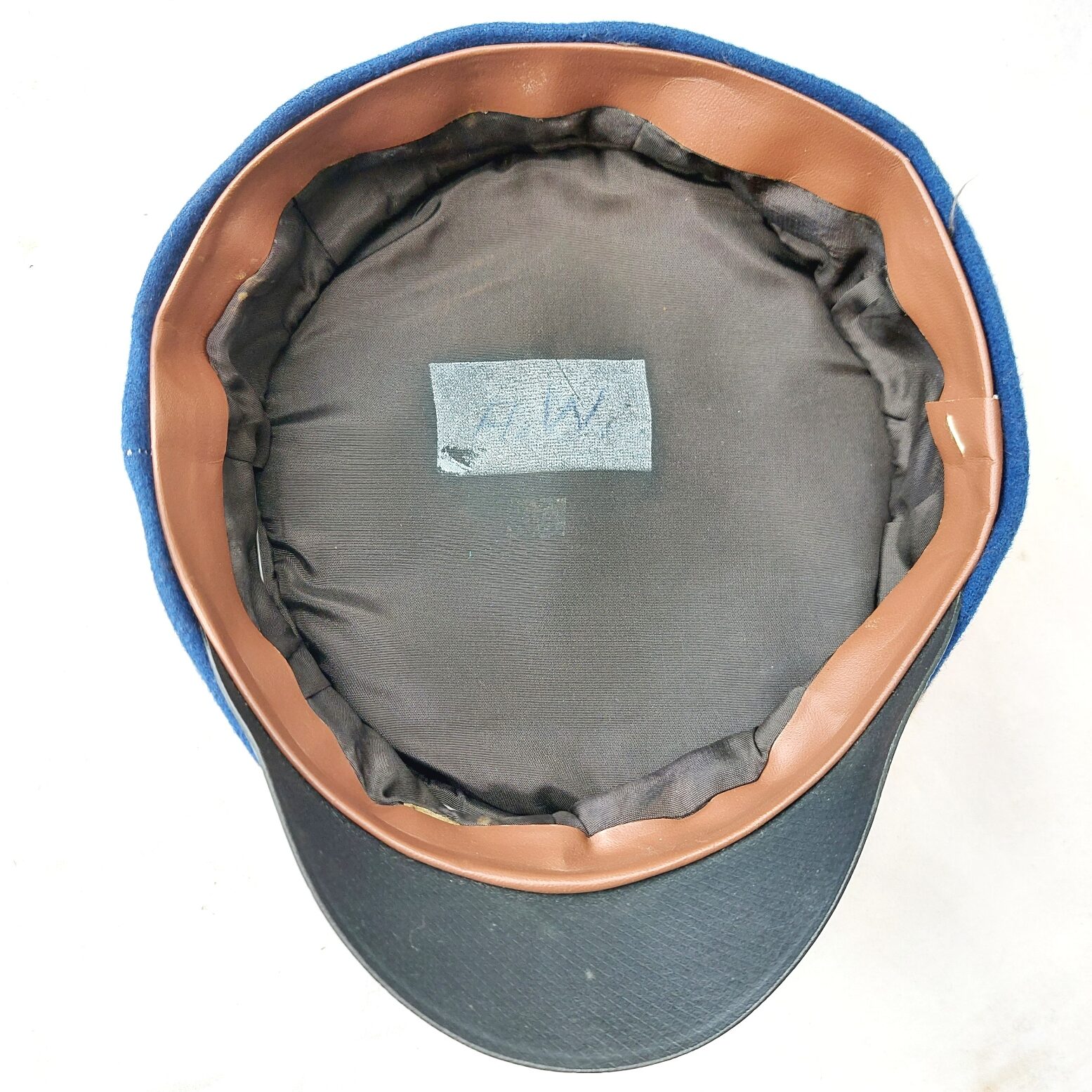
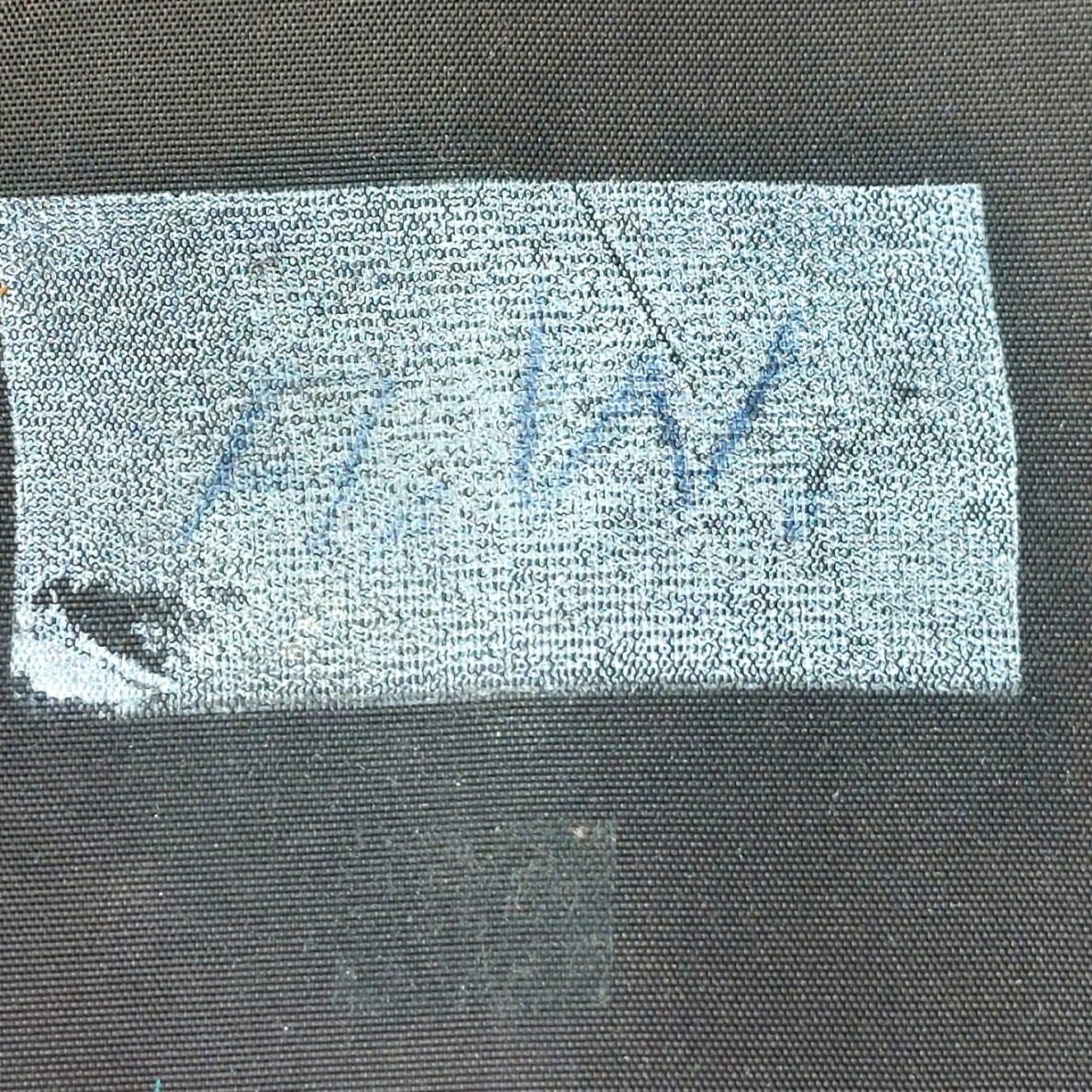
The cap is of classic Studentenverbindung style (in the style of a German student fraternity), constructed with a flat circular crown in orange felt above a coloured band in orange, white, and blue, finished with a short black leather visor. The interior retains its lining and is marked “HW”, likely indicating the original owner’s initials. Such caps were worn by members of German student corporations during formal academic gatherings, ceremonies, and fraternity events.
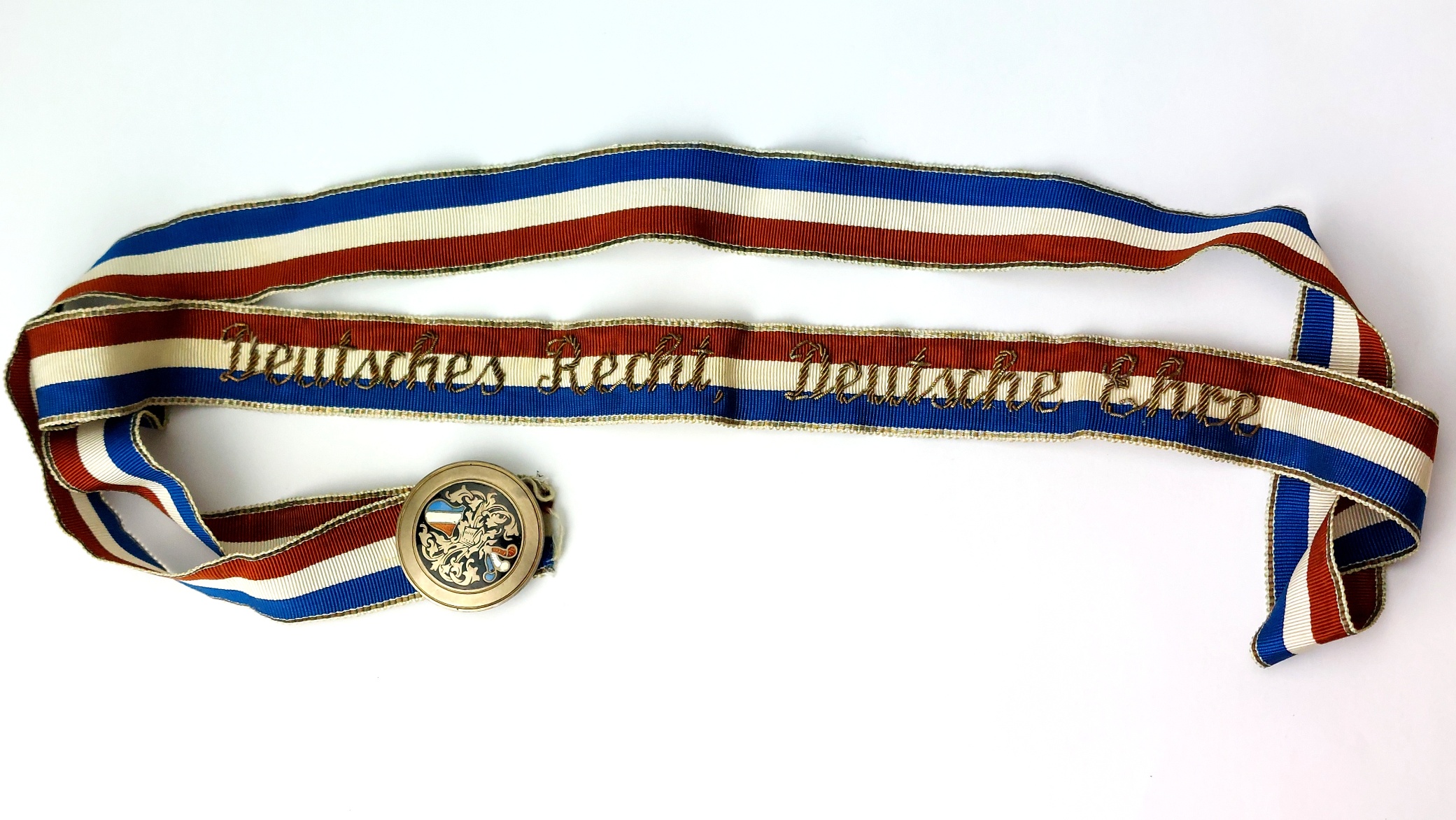
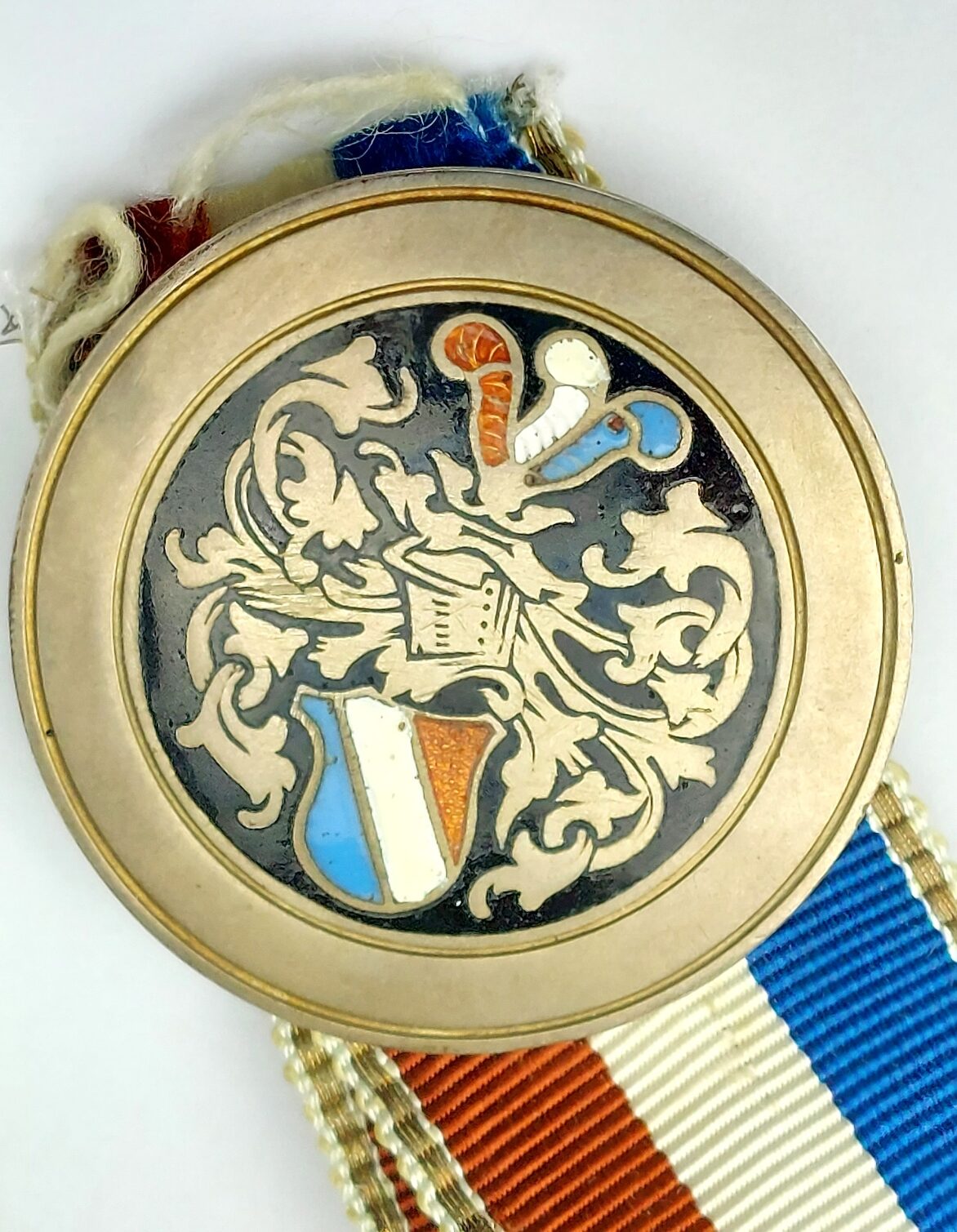
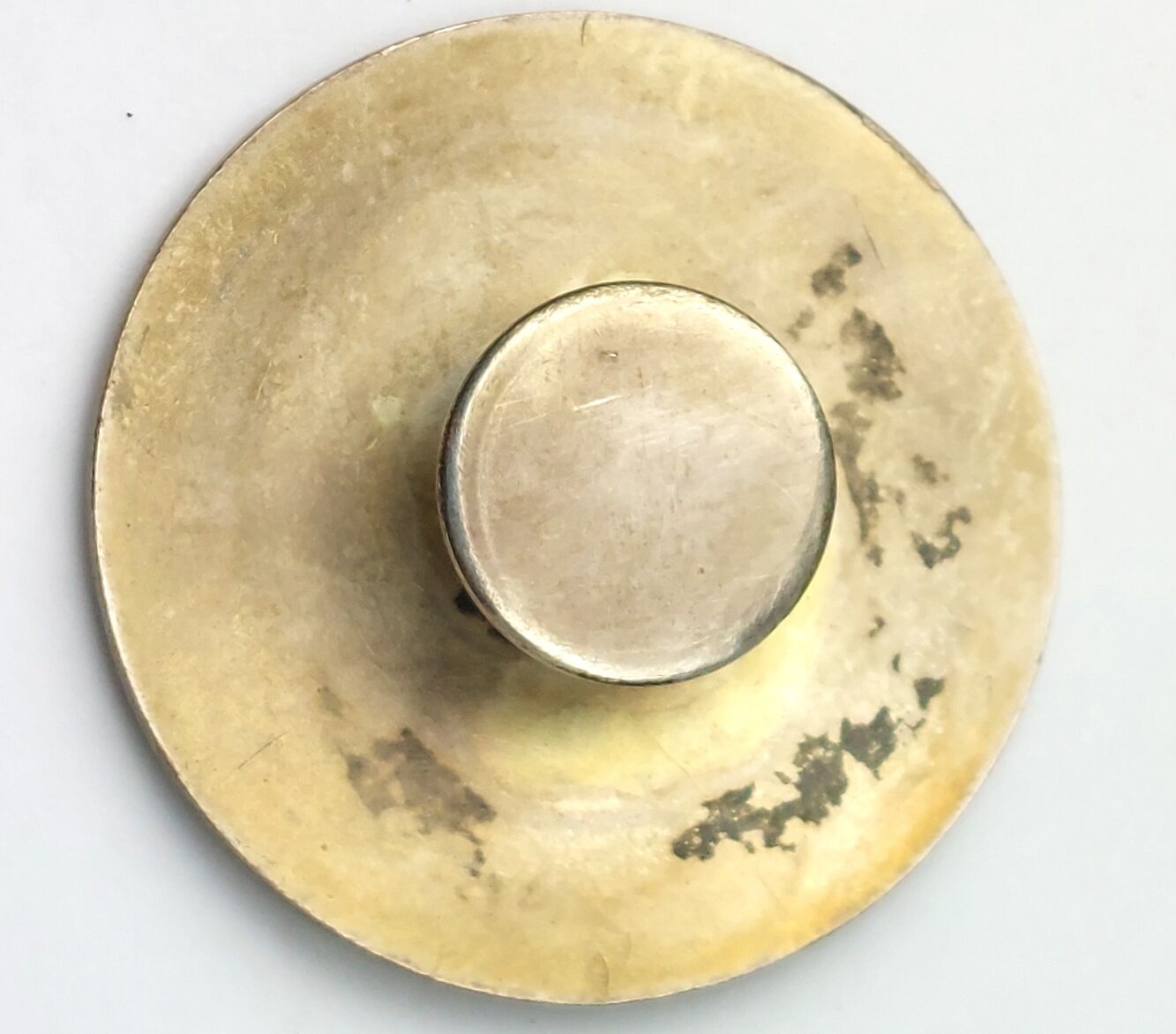
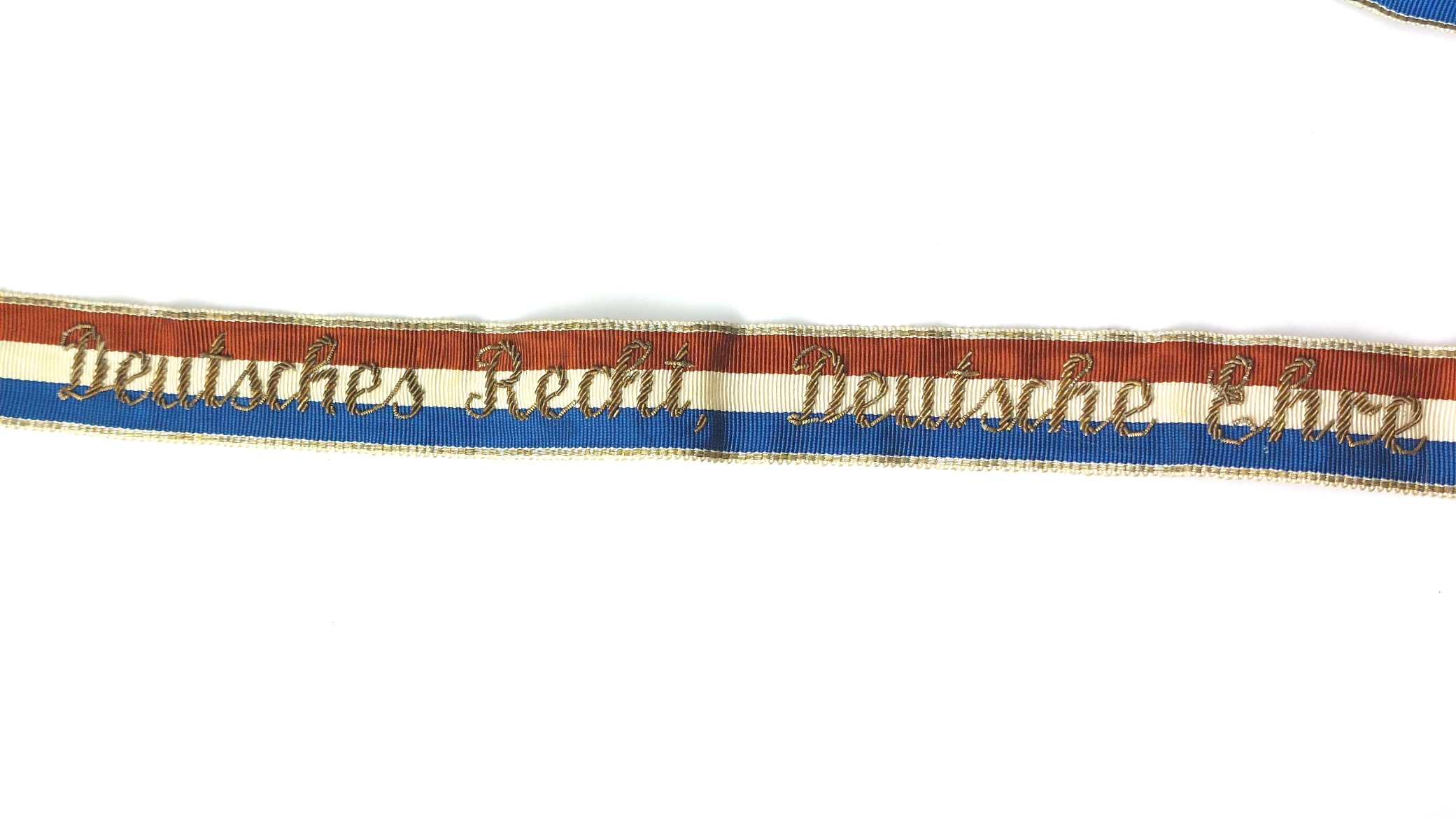
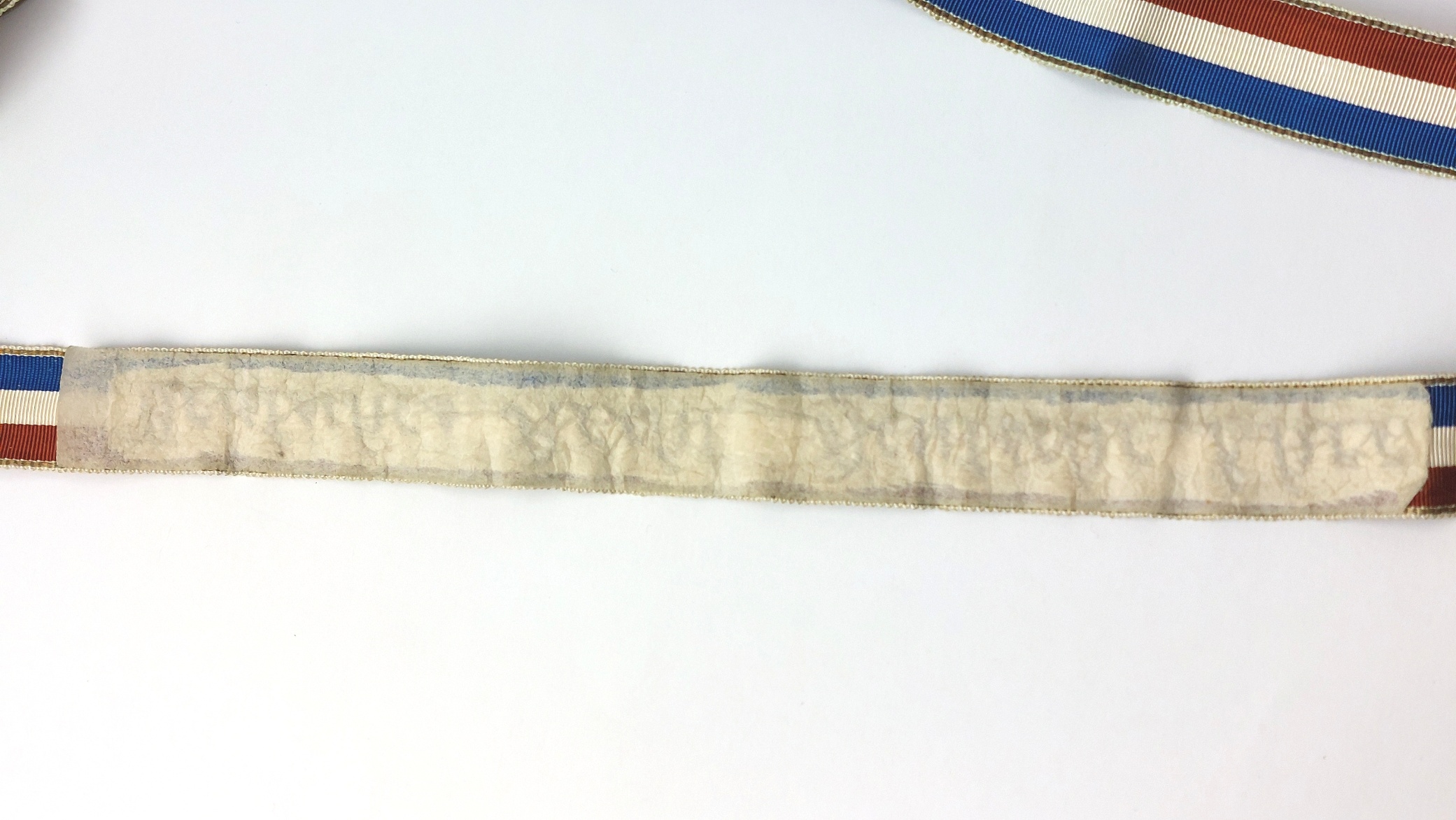
Accompanying the cap is a long Couleurband (ceremonial sash) measuring approximately 125 cm in length. The band is woven in the same orange, white, and blue colours, finished with gold edging, and embroidered in Gothic script with the motto: “Deutsches Recht, Deutsche Ehre” (“German Justice, German Honour”). The ends of the band are joined by a decorative enameled Bandknopf, displaying heraldic ornamentation including a knight’s helmet and stylised mantling. Such fittings were used to fasten the ceremonial sash when worn diagonally across the chest and are typical elements of Studentika, the regalia associated with German student fraternities.
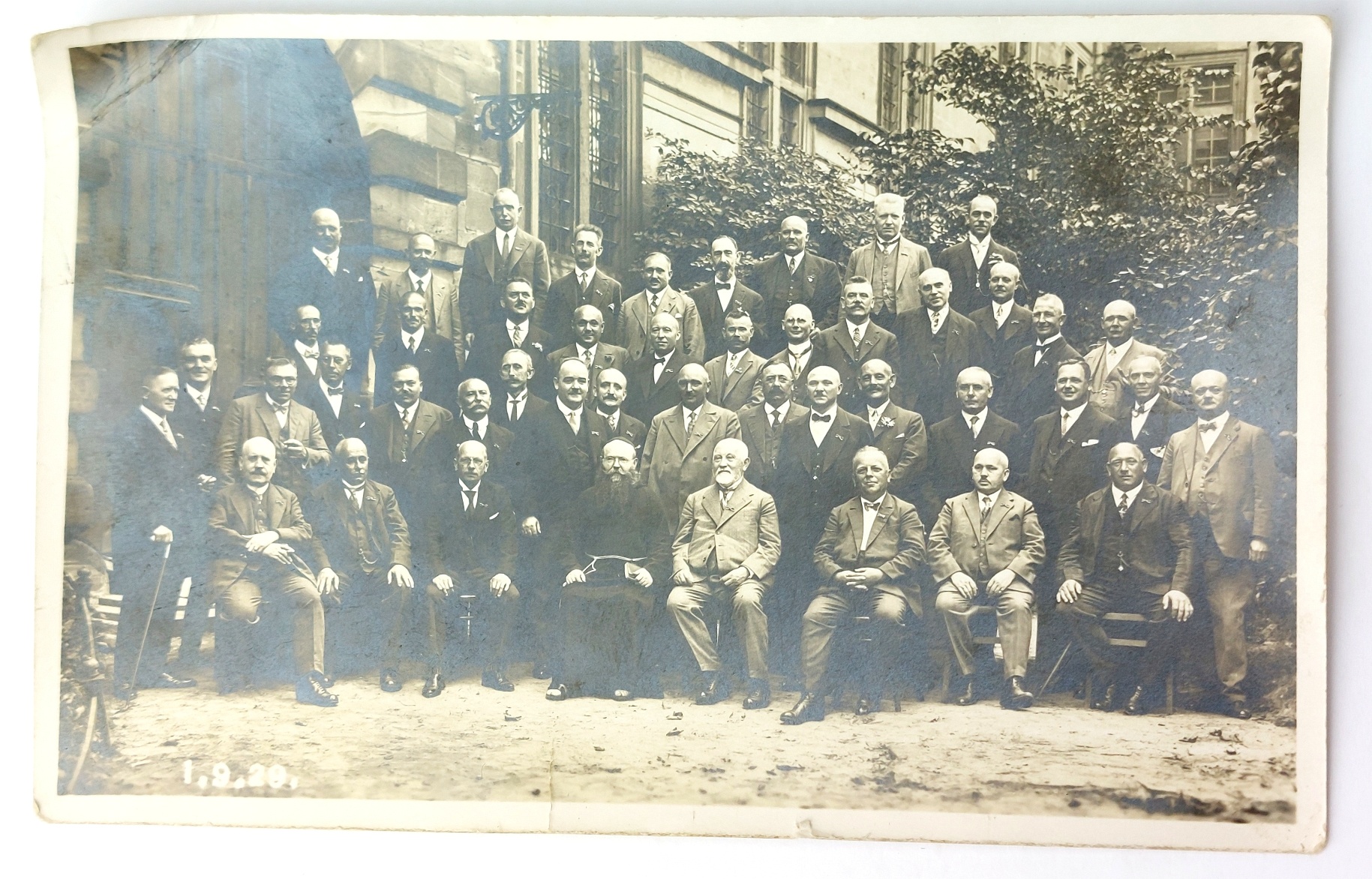
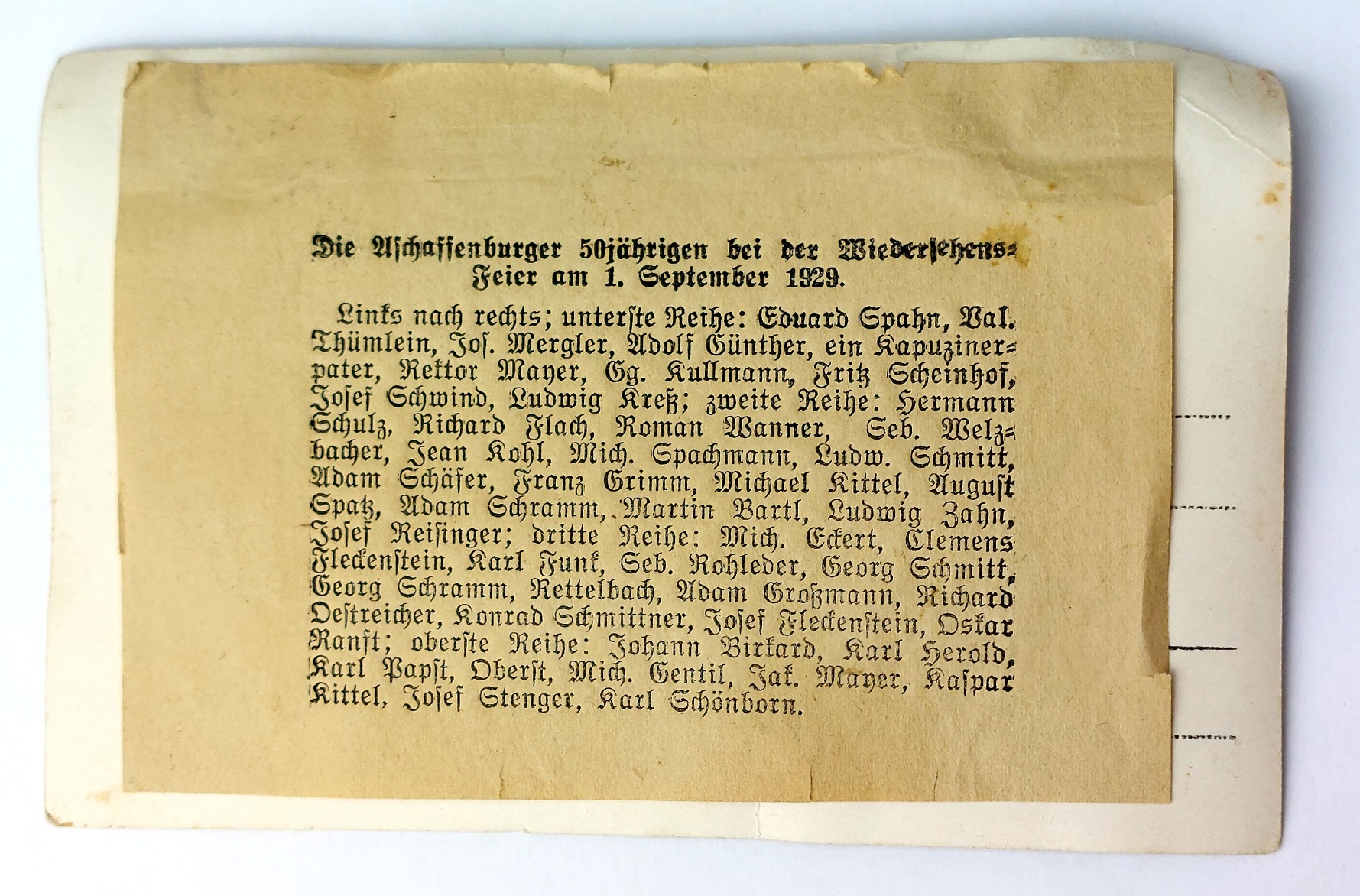
Also included is a photographic postcard measuring approximately 14 × 9 cm, depicting a large group of men assembled before a monumental architectural backdrop. The image is dated 1 September 1929, and the reverse caption identifies the gathering as: “Die Aschaffenburger 50jährigen bei der Wiedersehensfeier am 1. September 1929.” Translated, this reads: “The Aschaffenburg Fifty-Year Group at the reunion celebration on 1 September 1929.” The photograph lists the names of those present (see below), creating a detailed record of a cross-section of the city’s civic and social leadership during the late Weimar period.
Approx. Measurements: Cap diameter: Approx. 19 cm; Couleurband length: Approx. 125 cm; Photograph: 14 cm × 9 cm
Historical Note:
The photograph records a Jahrgangsfeier, a traditional Franconian and Bavarian civic celebration in which people born in the same year gather to commemorate a milestone anniversary. In this case the caption identifies the participants as “Die Aschaffenburger 50jährigen,” indicating men celebrating the 50-year anniversary of their birth cohort, meaning those pictured were likely born around 1879.
By 1929 these individuals represented an established cross-section of Aschaffenburg’s civic, religious, and commercial life. Among the names listed are several figures connected with prominent local families and institutions. One of the most notable is Michael Gentil, a member of the influential Gentil industrial dynasty. The family operated the Gentil Pumpenfabrik, an iron foundry and machine works that was a significant employer in the city. Michael belonged to the same family as his brother Anton “Pumpen-Anton” Gentil (1867–1951), the eccentric industrialist, art collector, and patron who built the well-known Gentil-Haus, today preserved as a museum. Another individual listed is Josef Schwind, likely connected to the prominent Schwind family of Aschaffenburg, which produced several civic leaders including Dr. Vinzenz Schwind, later mayor of the city. Also identified is Rektor Mayer, whose title indicates a school headmaster or senior educational administrator, a position of considerable authority in German towns of the period. Perhaps the most visually distinctive figure in the photograph is “ein Kapuzinerpater” (a Capuchin friar) seated in the front row. His presence reflects the important role of the Capuchin monastery at Kapuzinerplatz in the city’s religious life and suggests that one member of the 1879 cohort had entered the Capuchin order.
The architectural backdrop visible in the image strongly suggests the group assembled within the inner courtyard of Schloss Johannisburg, the imposing Renaissance palace built between 1605 and 1614 by the architect Georg Ridinger. The rusticated red sandstone masonry and monumental arched portal visible in the photograph correspond with features of the castle’s courtyard, a location frequently used for formal civic photographs.
The date 1 September 1929 marked the peak celebration of the group’s reunion. In local tradition the participants would often process through the city before gathering at a prominent landmark—such as Schloss Johannisburg—for an official commemorative portrait. Taken during the final years of the Weimar Republic, the image captures a generation reflecting on fifty years of shared life—from their birth during the late German Empire of the 1870s to a reunion held only weeks before the global economic crisis of October 1929, which would soon transform German society.
The accompanying student cap and ceremonial Couleurband likely belonged to one member of this Aschaffenburg cohort, preserved together with the photograph as a personal memento of both his earlier student fraternity life and the reunion of his birth-year community.
*Condition*
The cap remains in good overall condition with light age-related wear. The felt retains strong colour and form, while the visor shows minor surface wear consistent with age and handling. The interior lining remains present and marked “HW.” The Couleurband remains structurally sound with clear embroidered lettering and intact colour bands, displaying only minor wear from age and storage. The enamel Bandknopf retains good colour and detail. The photographic postcard shows typical age toning and light handling wear but remains clear and legible, with the caption and names on the reverse intact. Please see photographs as part of the condition report.
Footnote – PhotoCard Reverse Inscription (Original German):
“Die Aschaffenburger 50jährigen bei der Wiedersehensfeier am 1. September 1929.”
Unterste Reihe:
Eduard Spahn; Val. Thümlein; Hof. Mergler; Adolf Günther; ein Kapuzinerpater; Rektor Mayer; Gg. Kullmann; Fritz Scheinhof; Josef Schwind; Ludwig Krebs.
Zweite Reihe:
Hermann Schula; Richard Flach; Roman Wanner; Seb. Welzbacher; Jean Kohl; Mich. Spachmann; Ludw. Schmitt; Adam Schäfer; Franz Grimm; Michael Ritter; August Spatz; Adam Schramm; Martin Bartl; Ludwig Zahn; Josef Reisinger.
Dritte Reihe:
Mich. Eckert; Clemens Fleckenstein; Karl Funk; Seb. Rohleder; Georg Schmitt; Georg Schramm; Kettelbach; Adam Großmann; Richard Destreicher; Konrad Schmittner; Josef Fleckenstein; Oskar Ranft.
Oberste Reihe:
Johann Birkard; Karl Herold; Karl Papst; Oberst; Mich. Gentil; Jak. Mayer; Kaspar Rittel; Josef Stenger; Karl Schönborn.