~ Circa 2nd Century BC Antique Roman-Celtibertian 'AS' Coin #7 ~
This is a Roman-Celtiberian coin named ' AS and dates back to circa 2nd century BC.
Archaeologically, the Celtiberians participated in the Hallstatt culture in what is now north-central Spain.
The Celtiberians were Celtic-speaking people of the Iberian Peninsula in the final centuries BC. These tribes spoke the Celtiberian language. Extant tribal names include the Arevaci, Belli, Titti, Lusones, and Berones. Cassius Dioappears to imply that the Ebro river forms a demarcation between Celtiberians and other tribes.
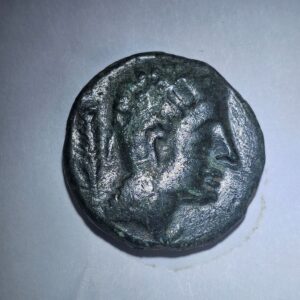
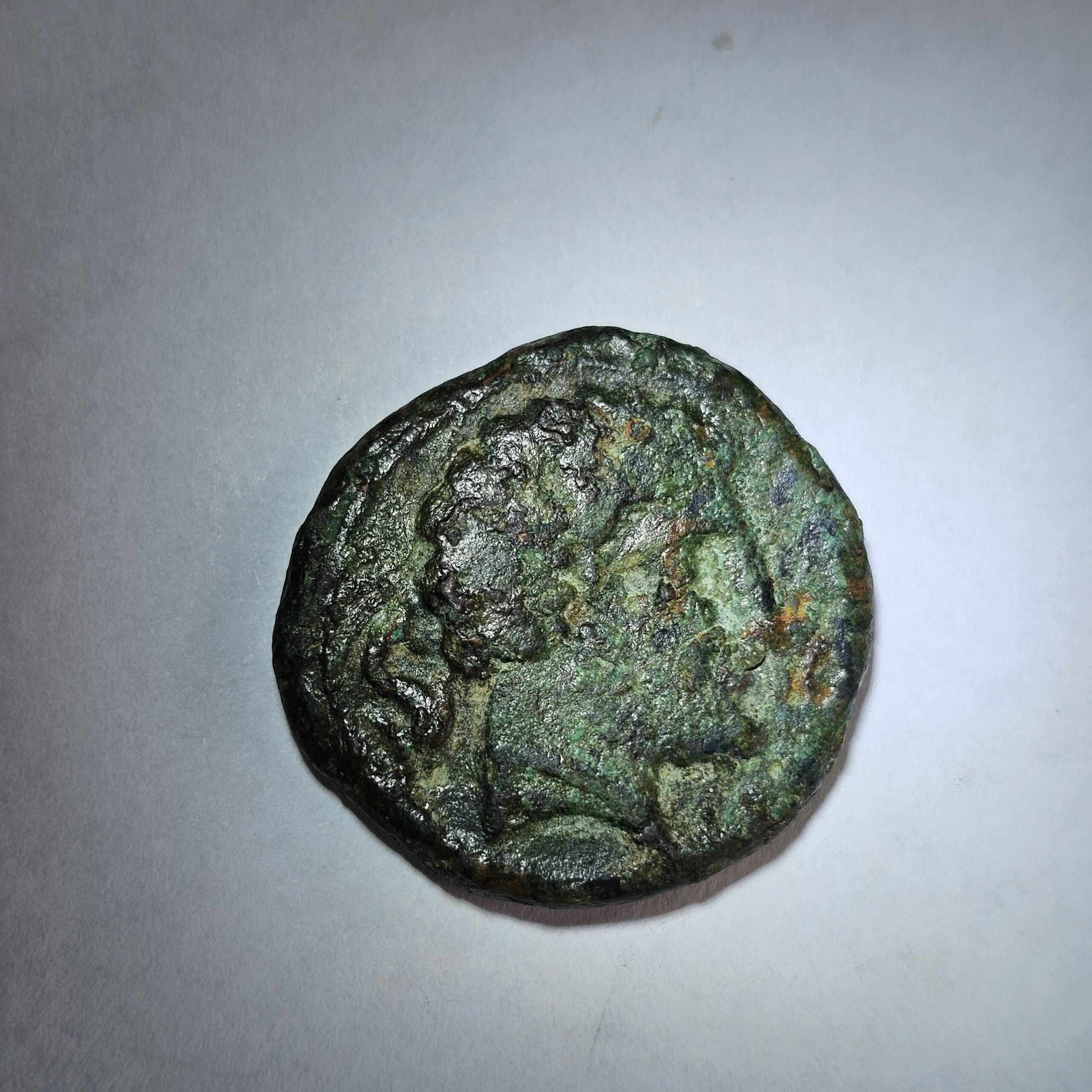
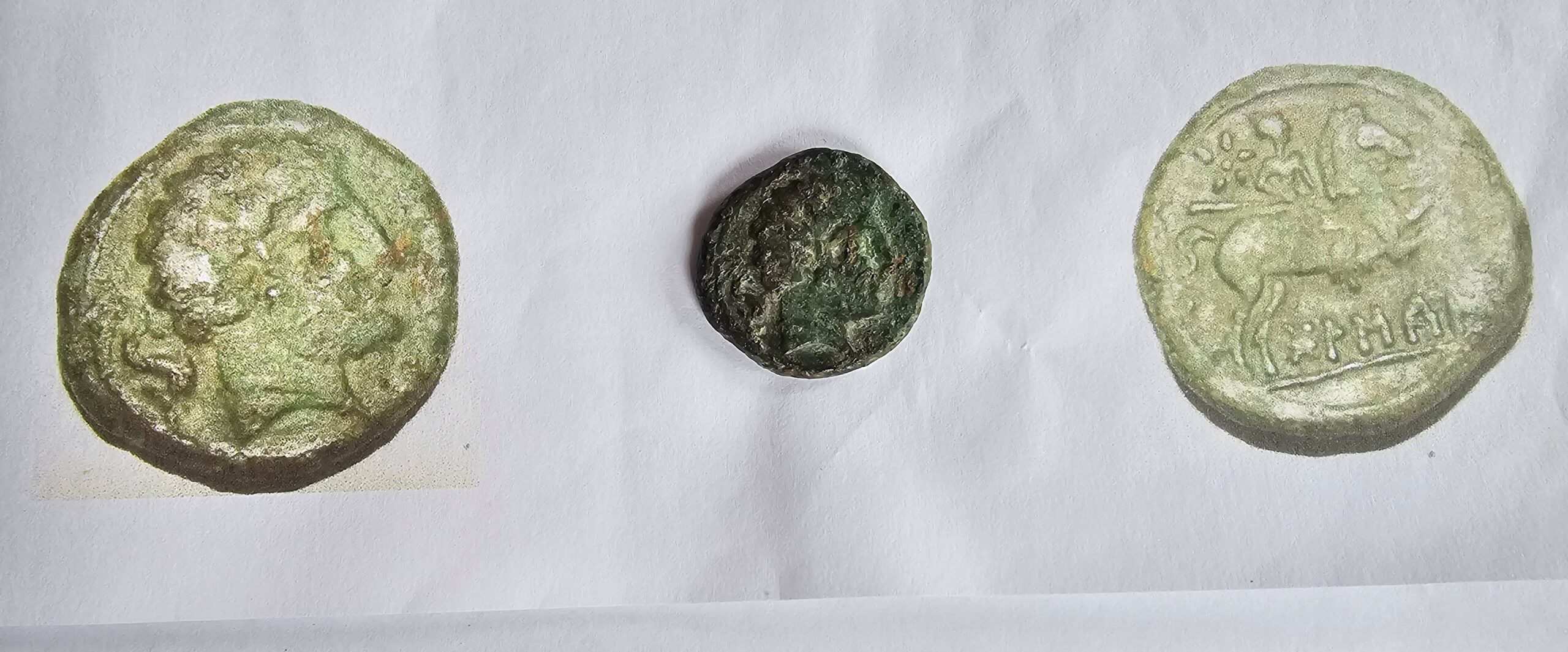
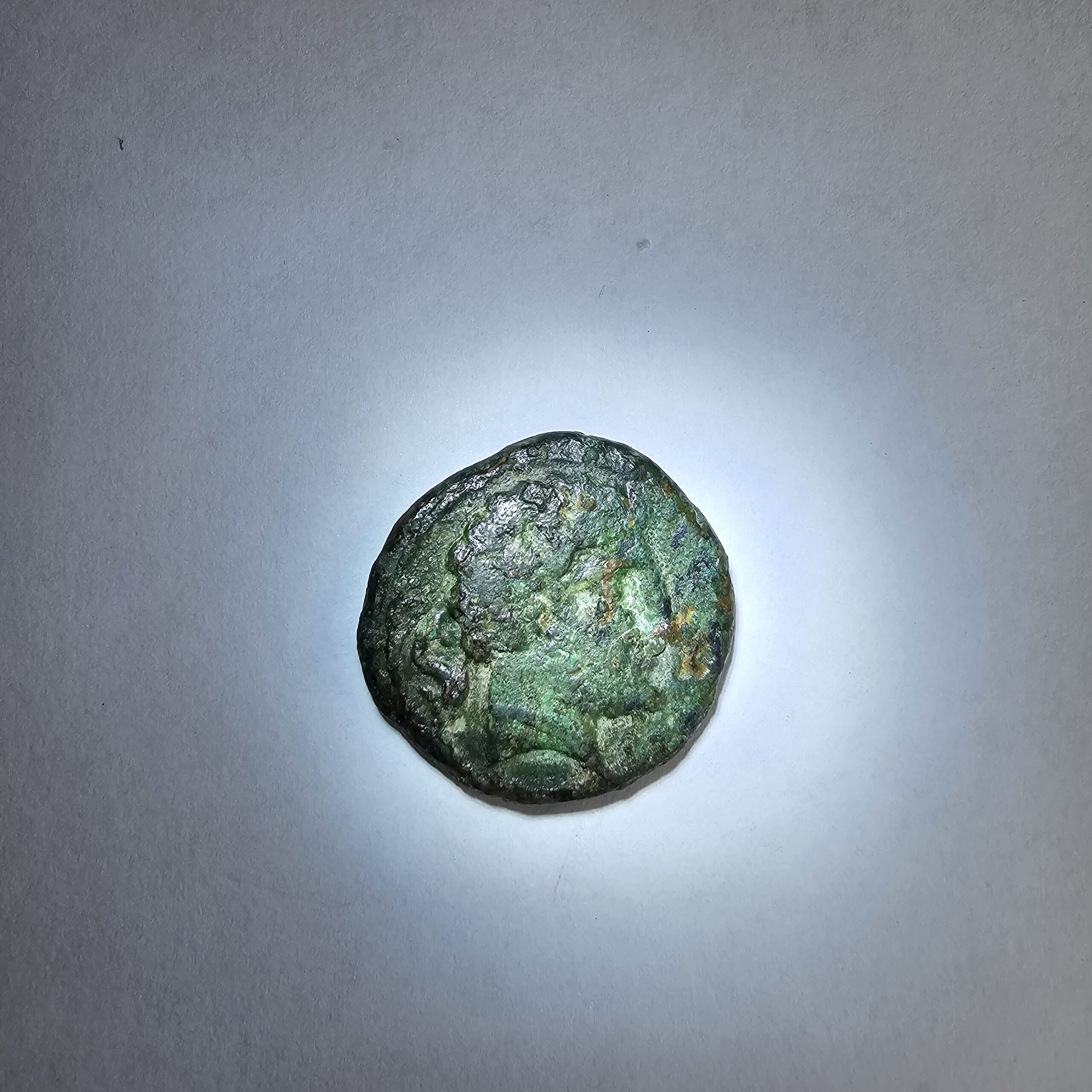
The Obverse of the coin depicts a Male Head to right with a dolphin behind it.
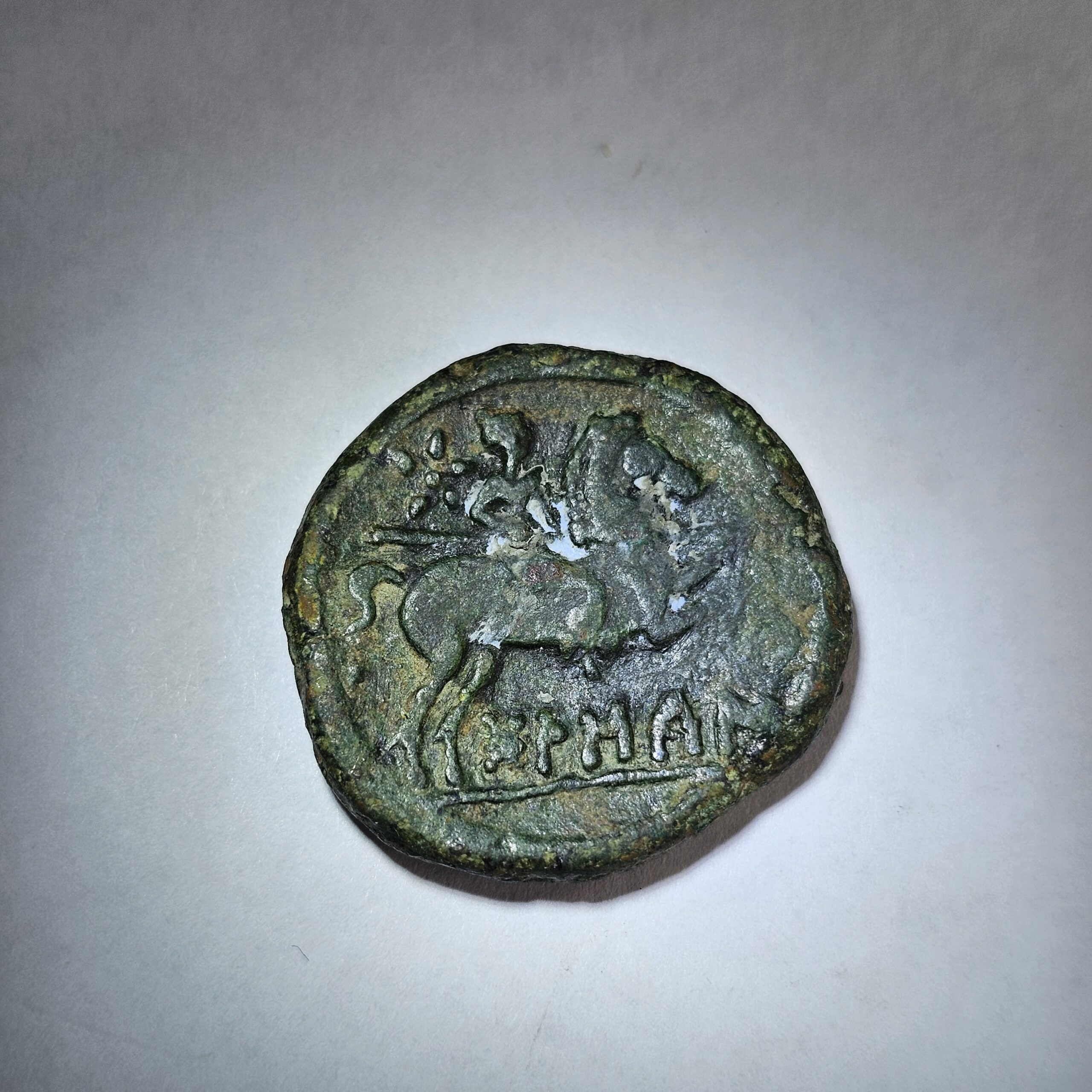
The Reverse depicts a Rider with a spear to the right, in front of a flower, all under Iberian legend.
Historical Context
During the 2nd century BC, following the Second Punic War (218–201 BC), the Iberian Peninsula came increasingly under Roman control. The region — then known as Hispania Citerior (eastern Spain) and Hispania Ulterior (southern Spain) — was populated by various Celtiberian tribes, such as the Arevaci, Belli, Titti, and Lusones, each with their own fortified towns (oppida).
Although these peoples retained much of their native culture, the presence of Roman military, trade, and administration encouraged the adoption of Roman coin denominations, such as the As, while keeping distinctly Celtiberian iconography and inscriptions.
Thus, the so-called Roman–Celtiberian coinage represents a fusion of Roman monetary systems with indigenous artistry and symbolism.
Minting and Circulation
These coins were struck locally using dies carved by native engravers, often showing a mix of Roman and Iberian artistic traditions.
They circulated widely within tribal territories and later across Roman-controlled Spain as regional coinage accepted under Roman oversight.
By the late 2nd century BC, many Celtiberian mints had adopted Latin legends, reflecting deeper integration into the Roman Republic’s economy and administration.
~ Dimensions ~
The coin diameter is 25 mm and it weighs 10.1 grams.
~ Condition ~
The coin is in fair condition for age. As seen in the pictures both size are visible.