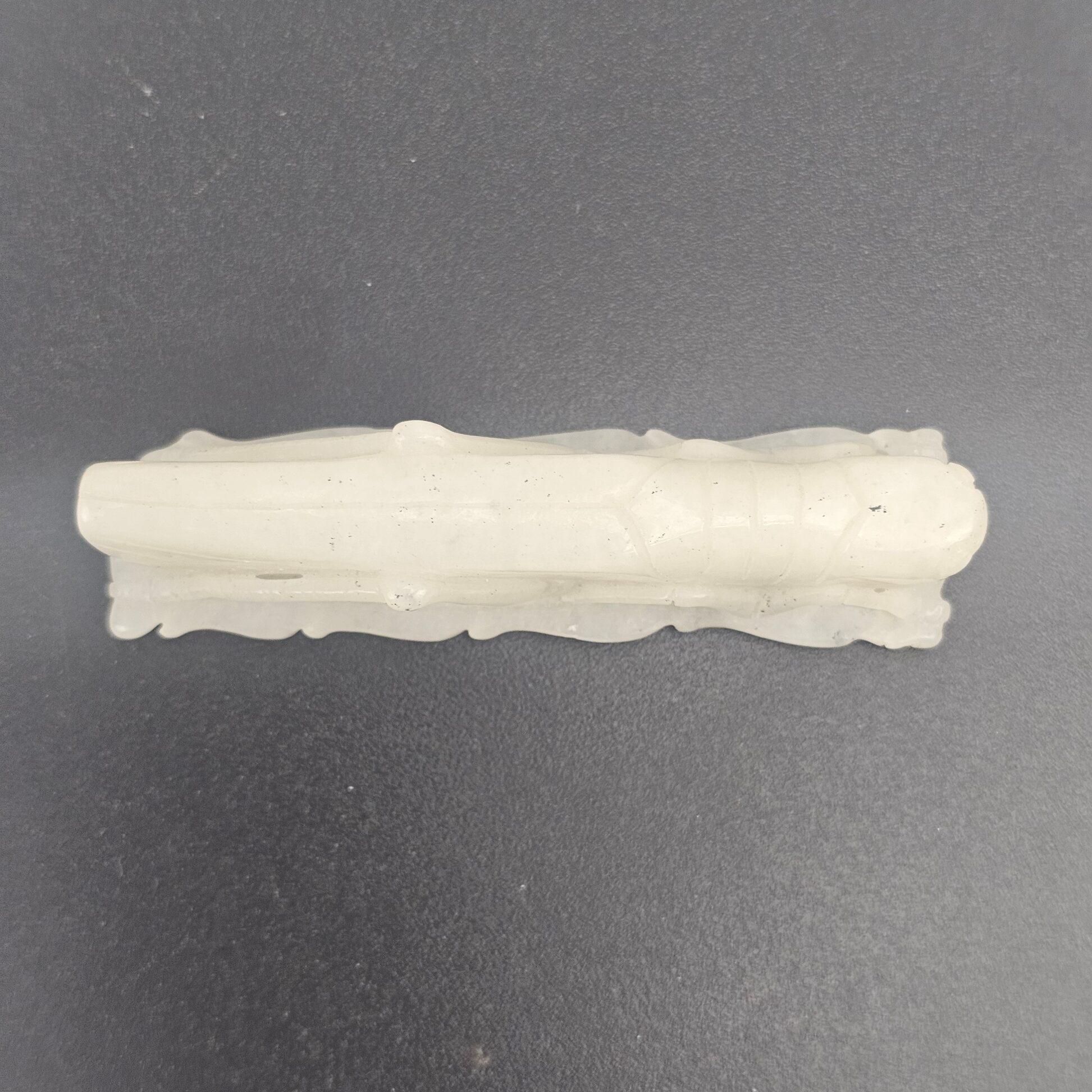
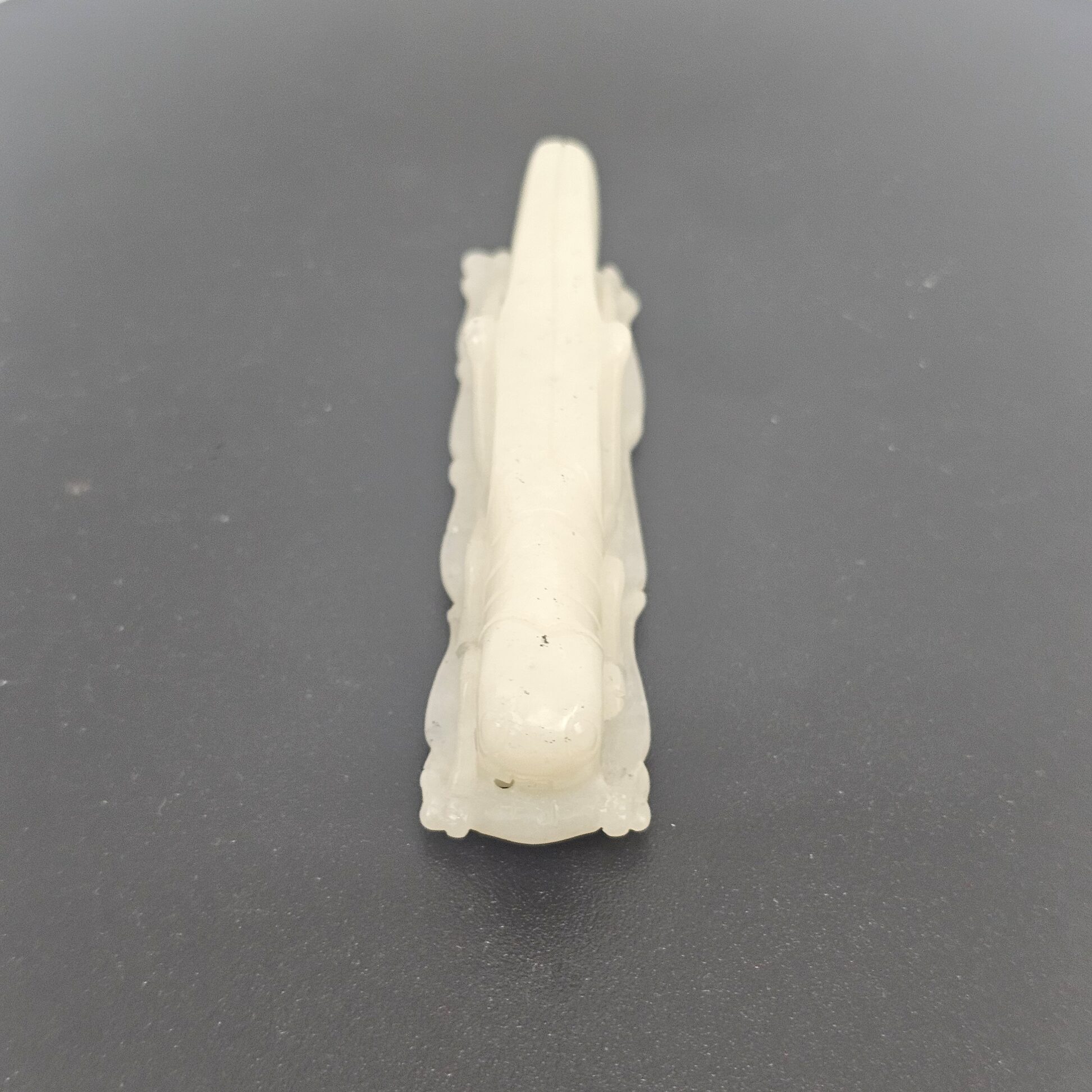
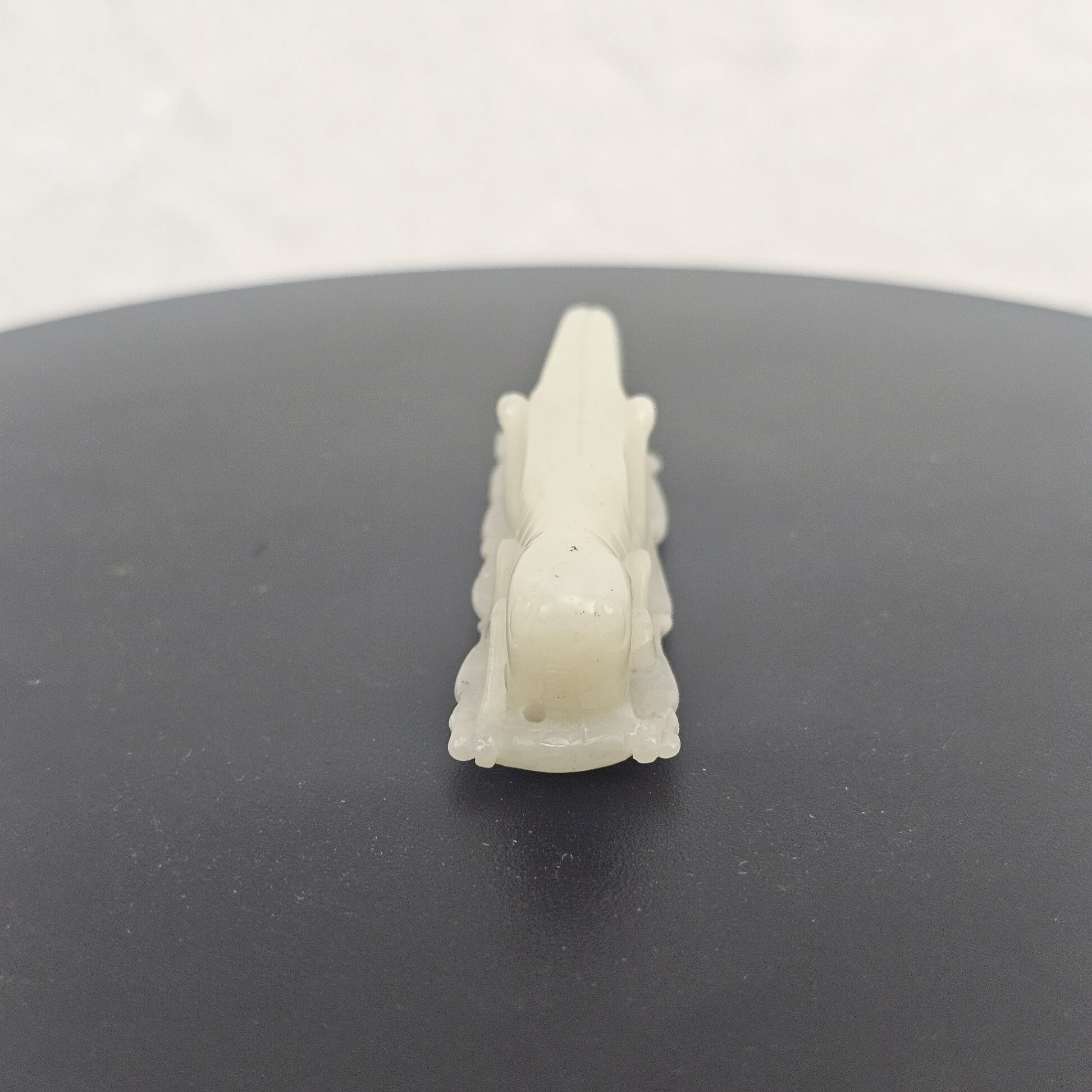
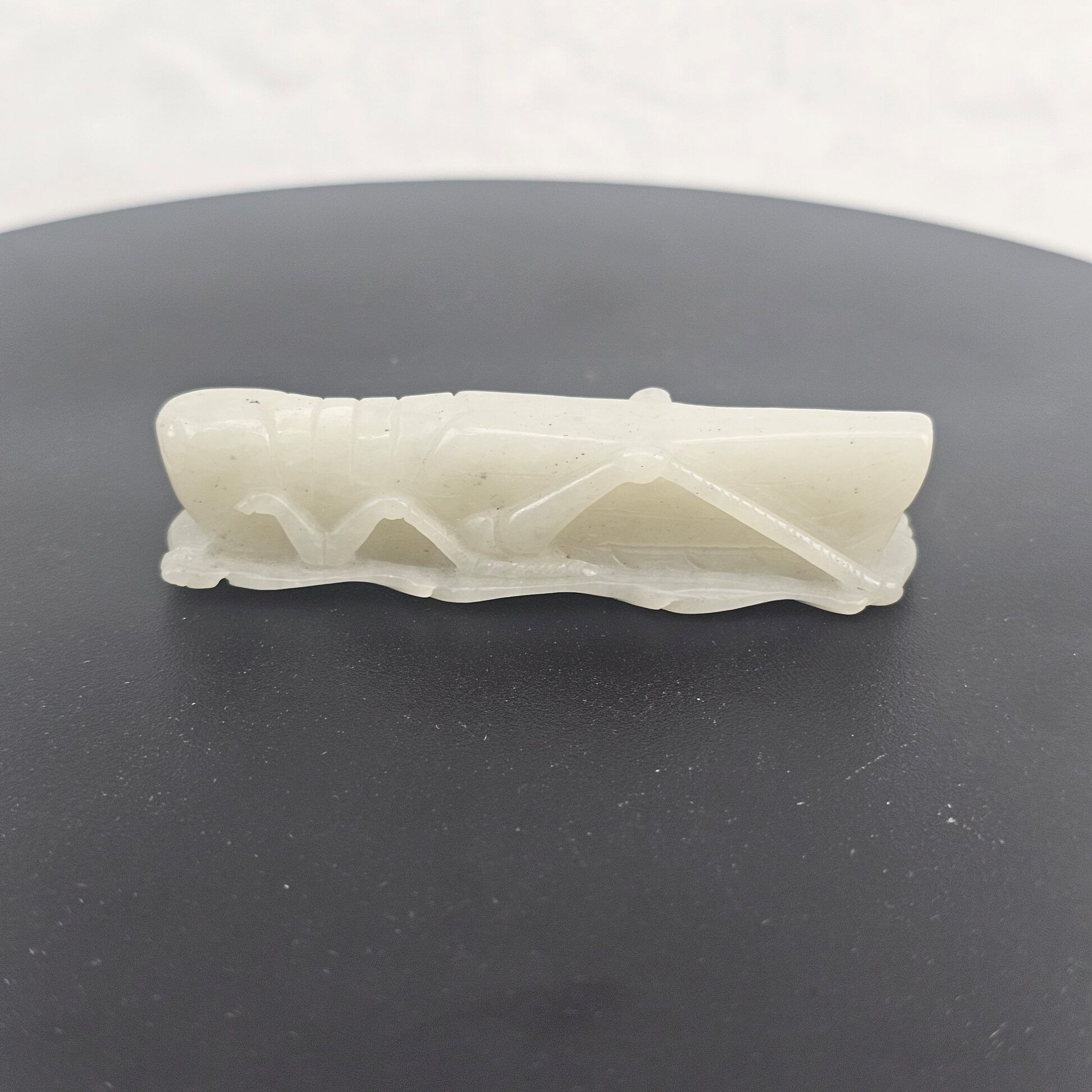
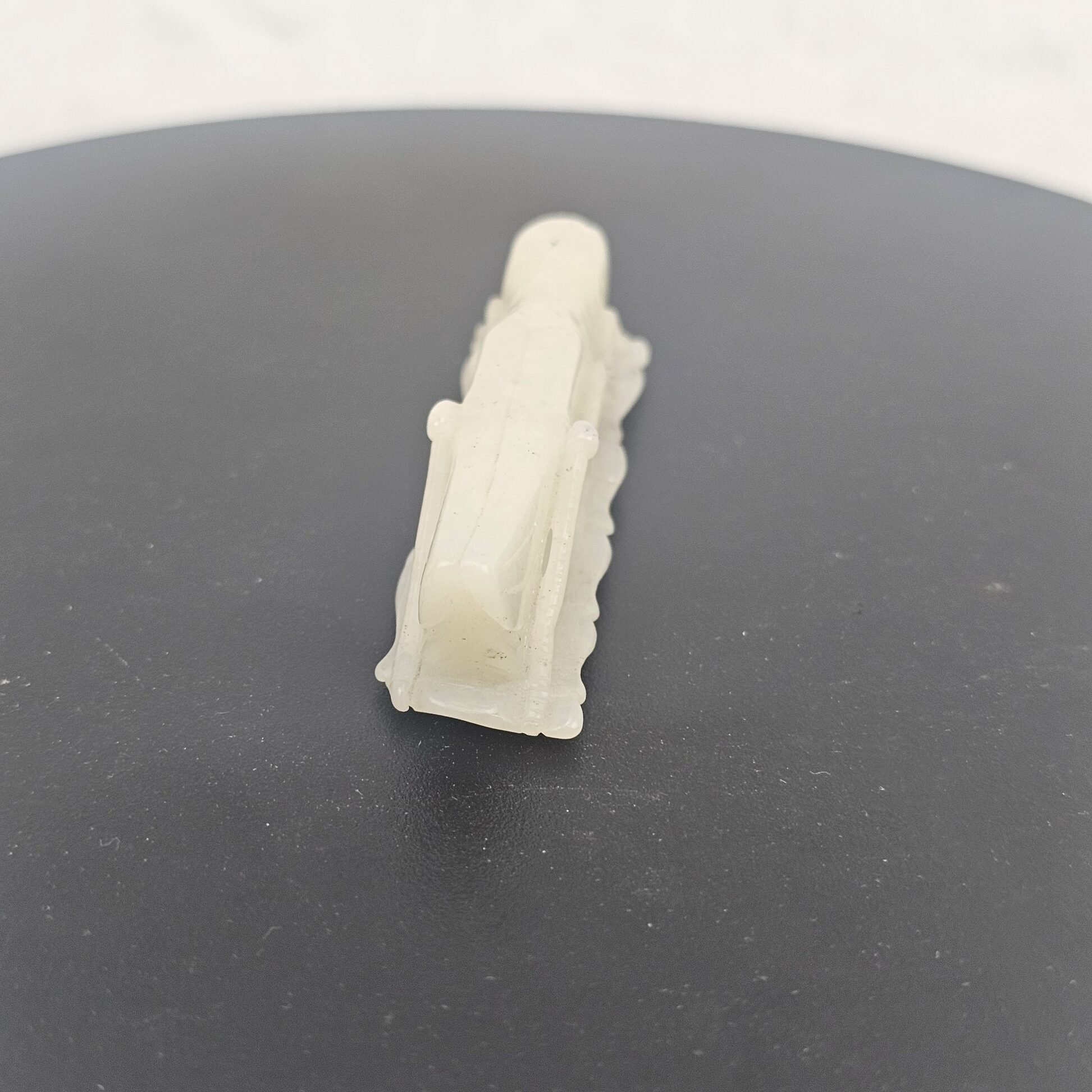
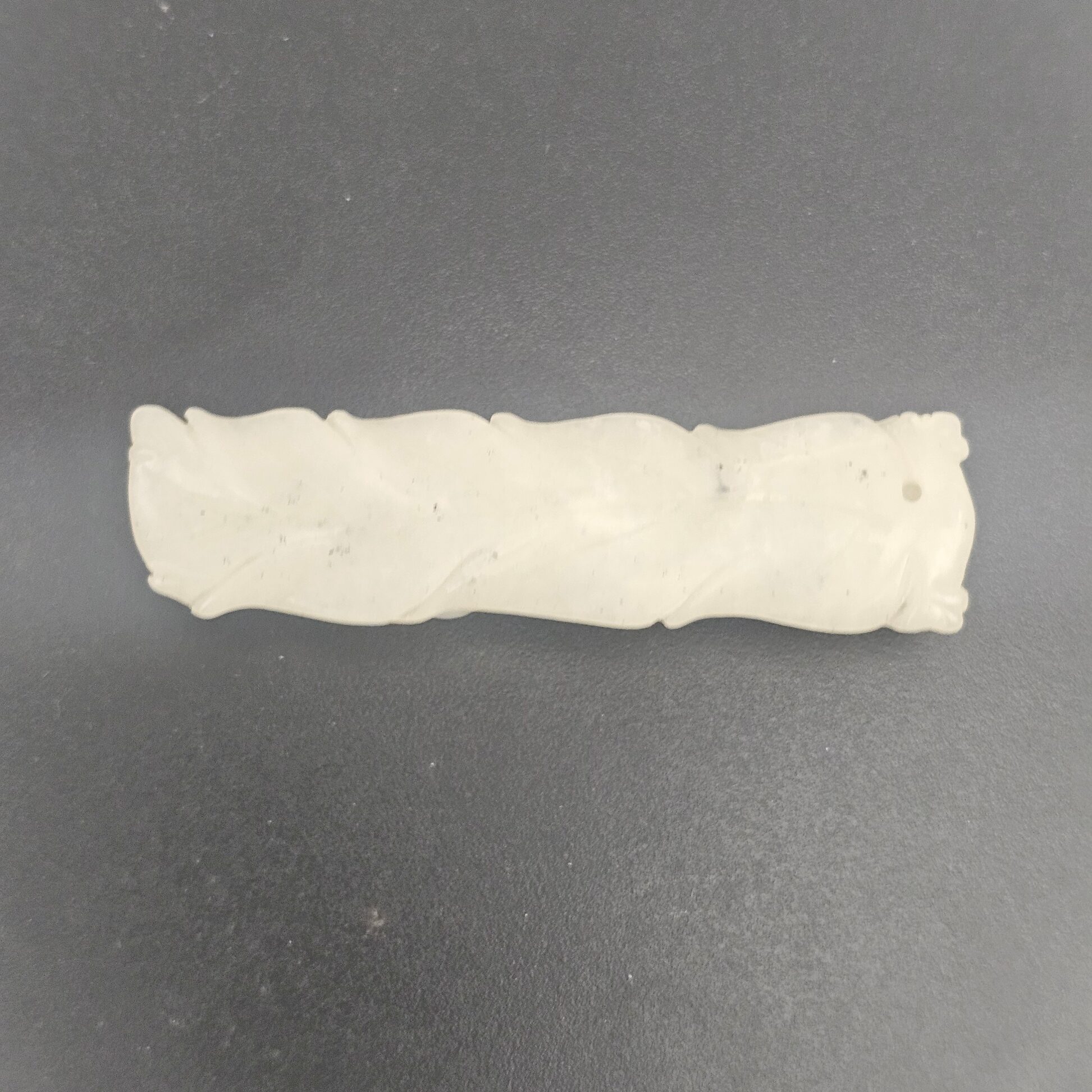
~ Chinese Qing Period Or Earlier Jade Grasshopper Pendant, 18th–19th Century ~
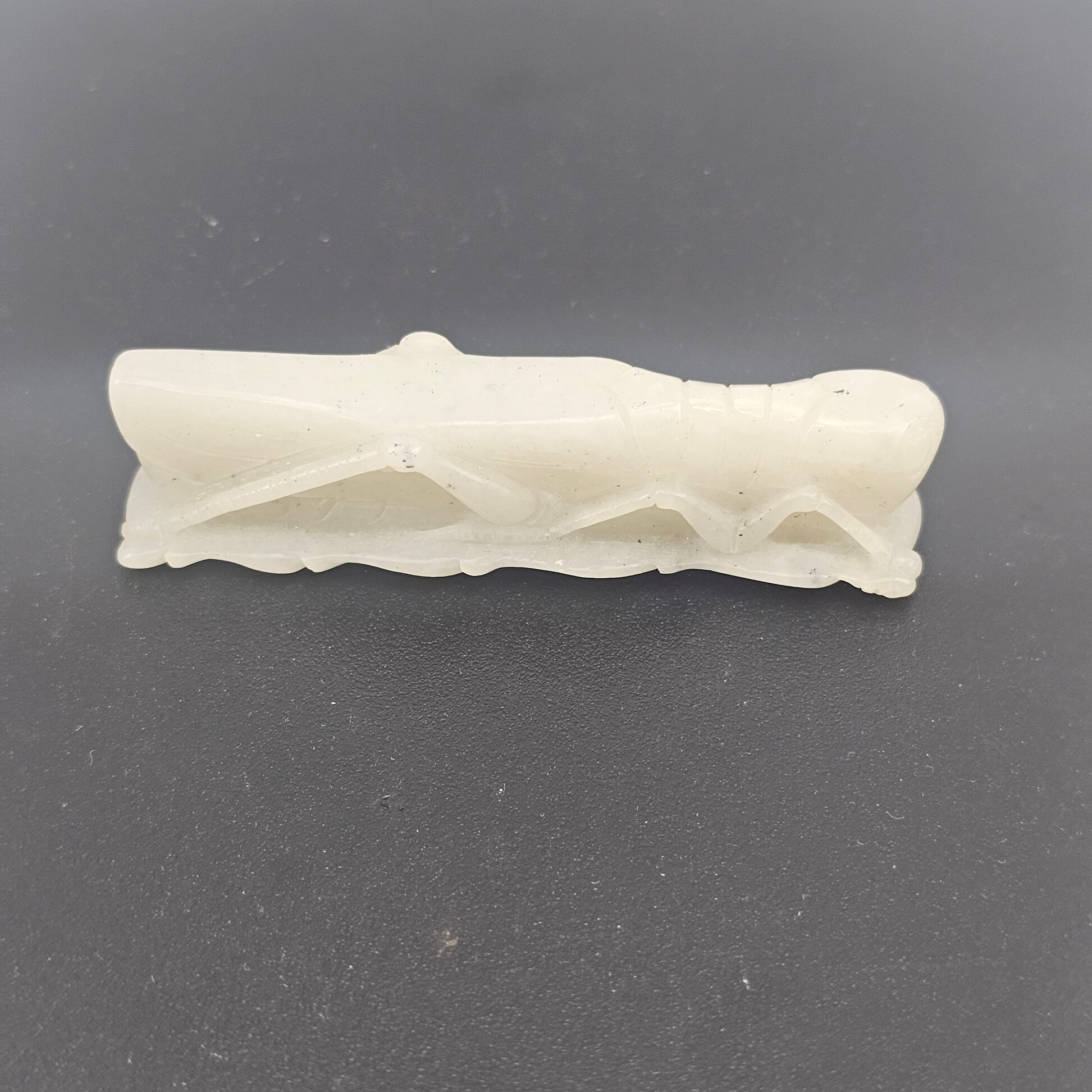
A finely carved white jade pendant in the form of a naturalistic grasshopper or locust, depicted at rest on a carved base of grass or millet stalks. The insect is rendered with considerable skill: the rounded head, segmented thorax and tapering abdomen are all clearly defined, the folded wings lie flat along the dorsal surface with incised detail suggesting venation, and three pairs of legs are articulated beneath the body, with the characteristic long hind legs of the grasshopper clearly depicted. The base consists of a cluster of carved grass or cereal stalks, naturalistically rendered with incised parallel lines suggesting stem segmentation and small leaf or node details at intervals. A small suspension hole is drilled through the head end of the piece, confirming its use as a pendant or amulet. The underside reveals additional carving detail to the underbelly of the insect. The stone is a pale cream-white with very slight warm tonal variation, displaying a fine waxy lustre and areas of semi-translucency characteristic of quality nephrite. Small natural dark mineral inclusions are visible within the body of the stone, consistent with genuine natural stone rather than a manufactured material.
Historical Context
The grasshopper — known in Chinese as zhōngsī (螽斯) - carries profound symbolic significance in Chinese culture and has been one of the most beloved subjects in Chinese decorative arts for millennia. The grasshopper became an auspicious symbol of fertility, abundance, and many offspring in Chinese culture, with its significance rooted in the Classic of Poetry (Shī Jīng), one of the oldest collections of Chinese poetry, in which the creature serves as a metaphor for descendants multiplying like insects in the grass. The carving of grasshoppers and locusts in jade has a documented history stretching back to the Han dynasty (206 BC–220 AD), when jade cicadas and insects were placed in tombs as funerary objects. By the Qing dynasty, naturalistic grasshopper carvings in white nephrite were prized as amulets, scholarly objects, and pendants worn or displayed for their auspicious associations.
During the Qing dynasty, the keeping of live grasshoppers in ornate cages became a fashionable pursuit at the imperial court and among the Chinese literati, and the insects were celebrated for both their song and their beauty — a cultural context that greatly elevated the status of grasshopper imagery in the decorative arts of the period. White nephrite, particularly the celebrated Hetian (Hotan) nephrite from Xinjiang, was the stone most associated with imperial taste and Confucian virtue throughout the Qing period. Qing dynasty jade carvings, particularly those with a white tone and fine carving, have attracted sustained collector interest from mainland Chinese buyers eager to repatriate objects associated with their cultural heritage.