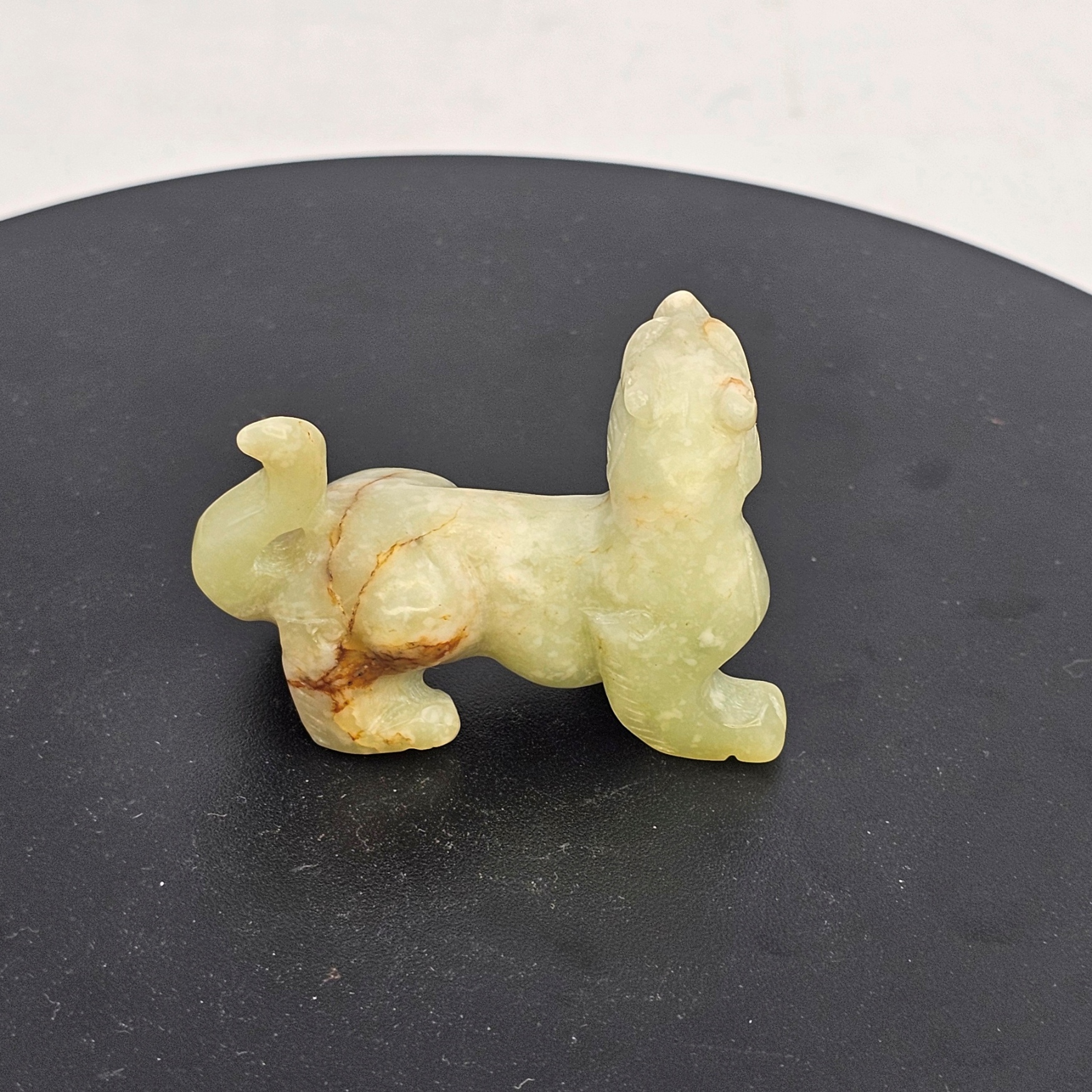
~ Chinese Qing Dynasty Nephrite Jade Carving Of A Lion ~
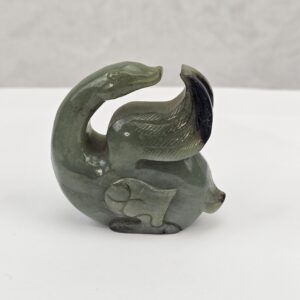
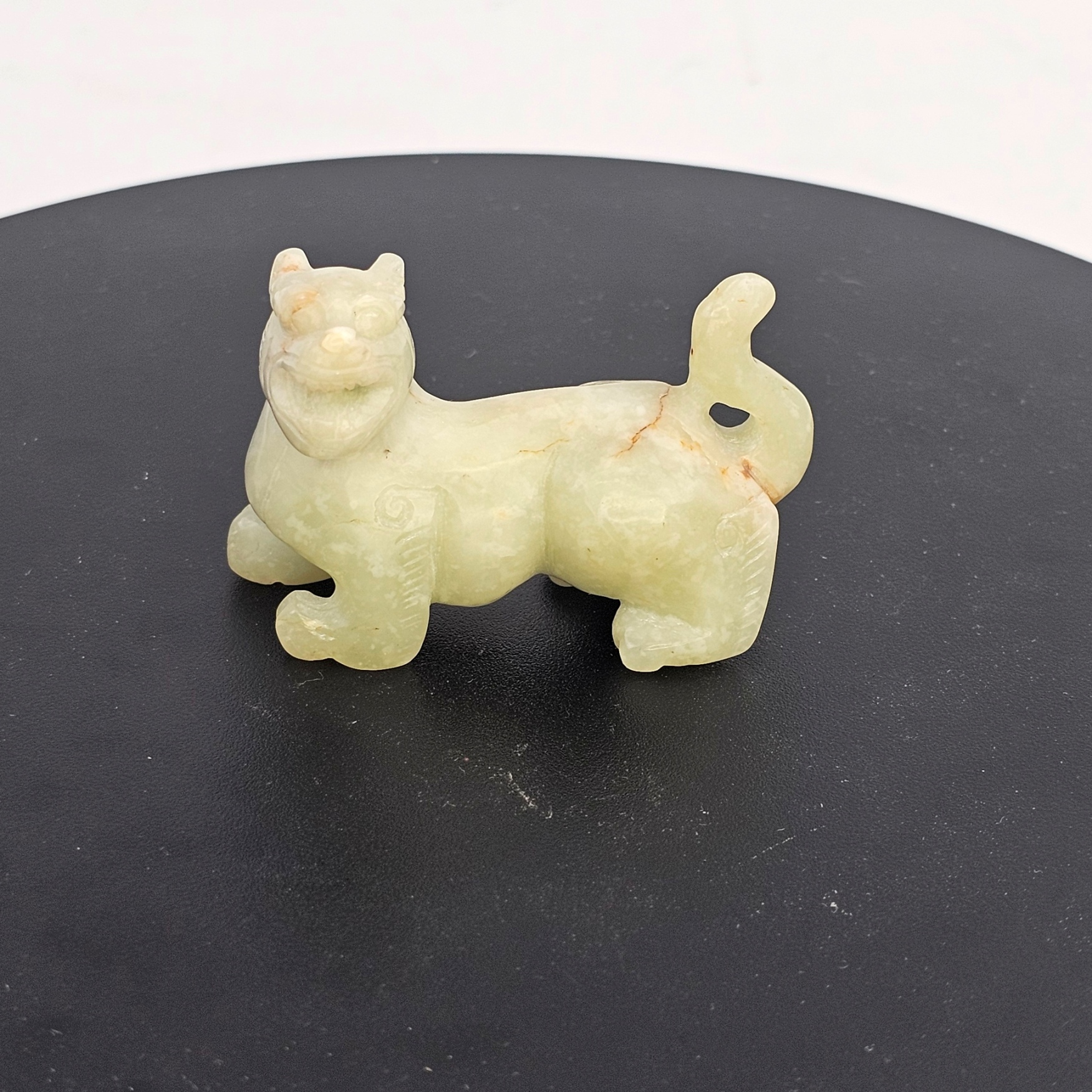
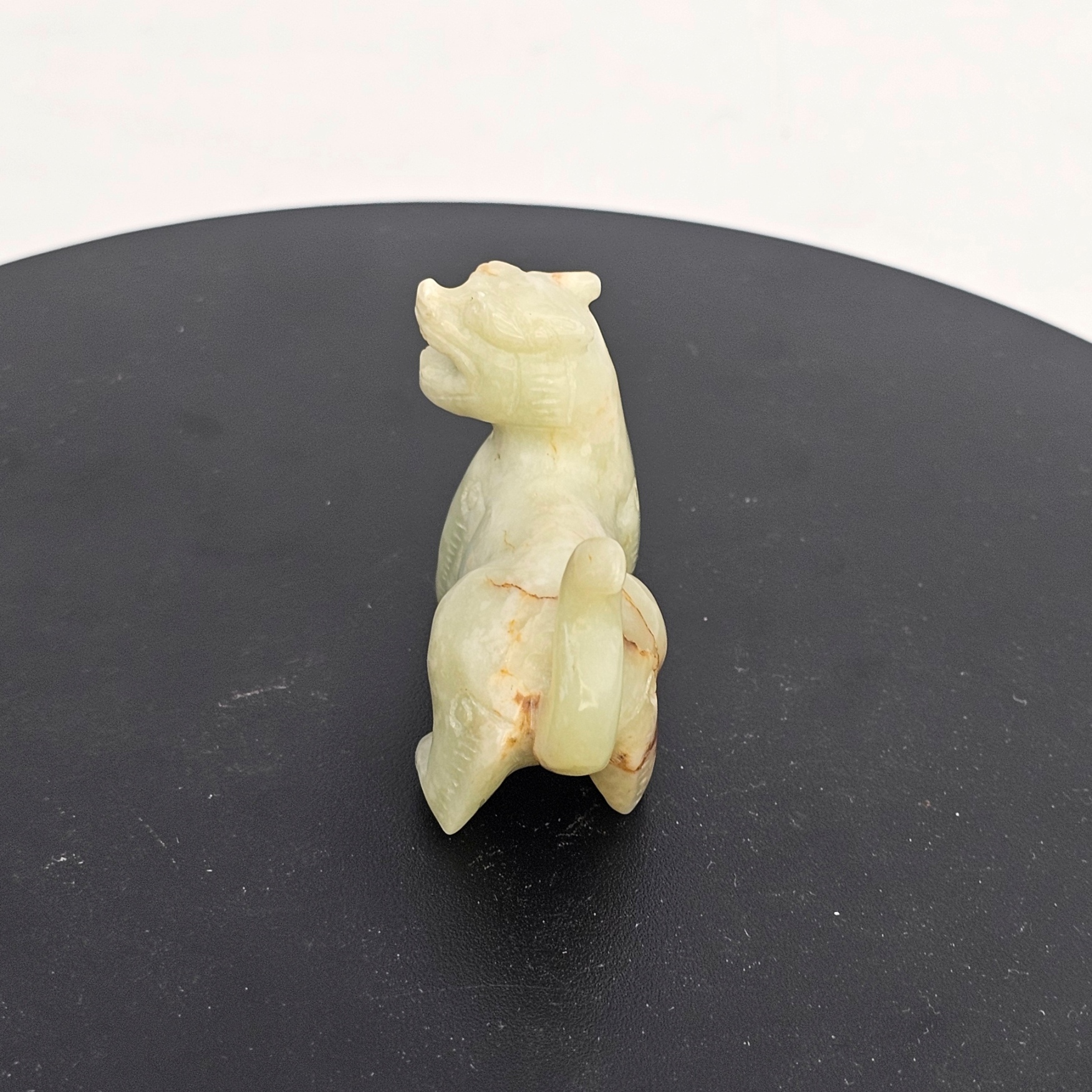
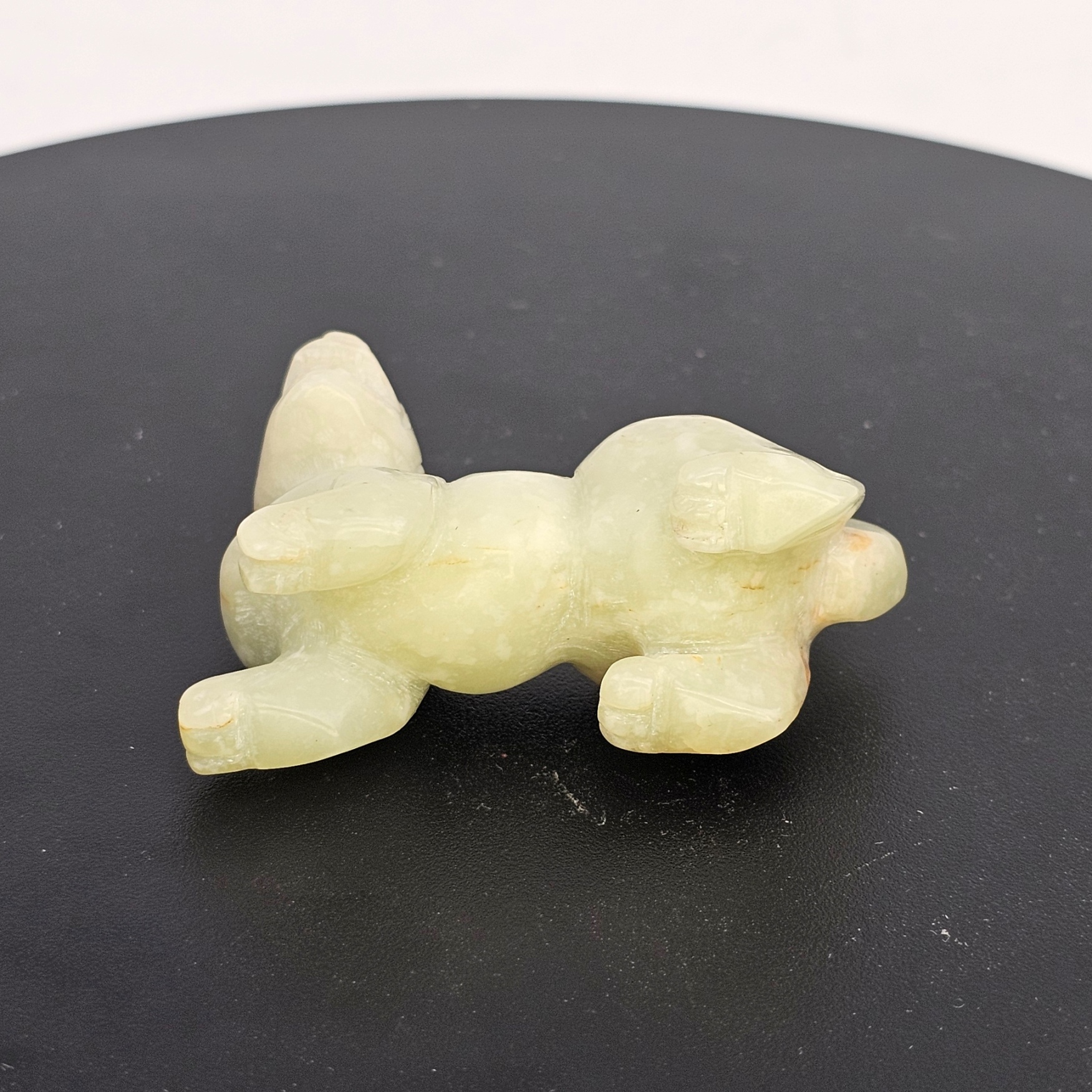
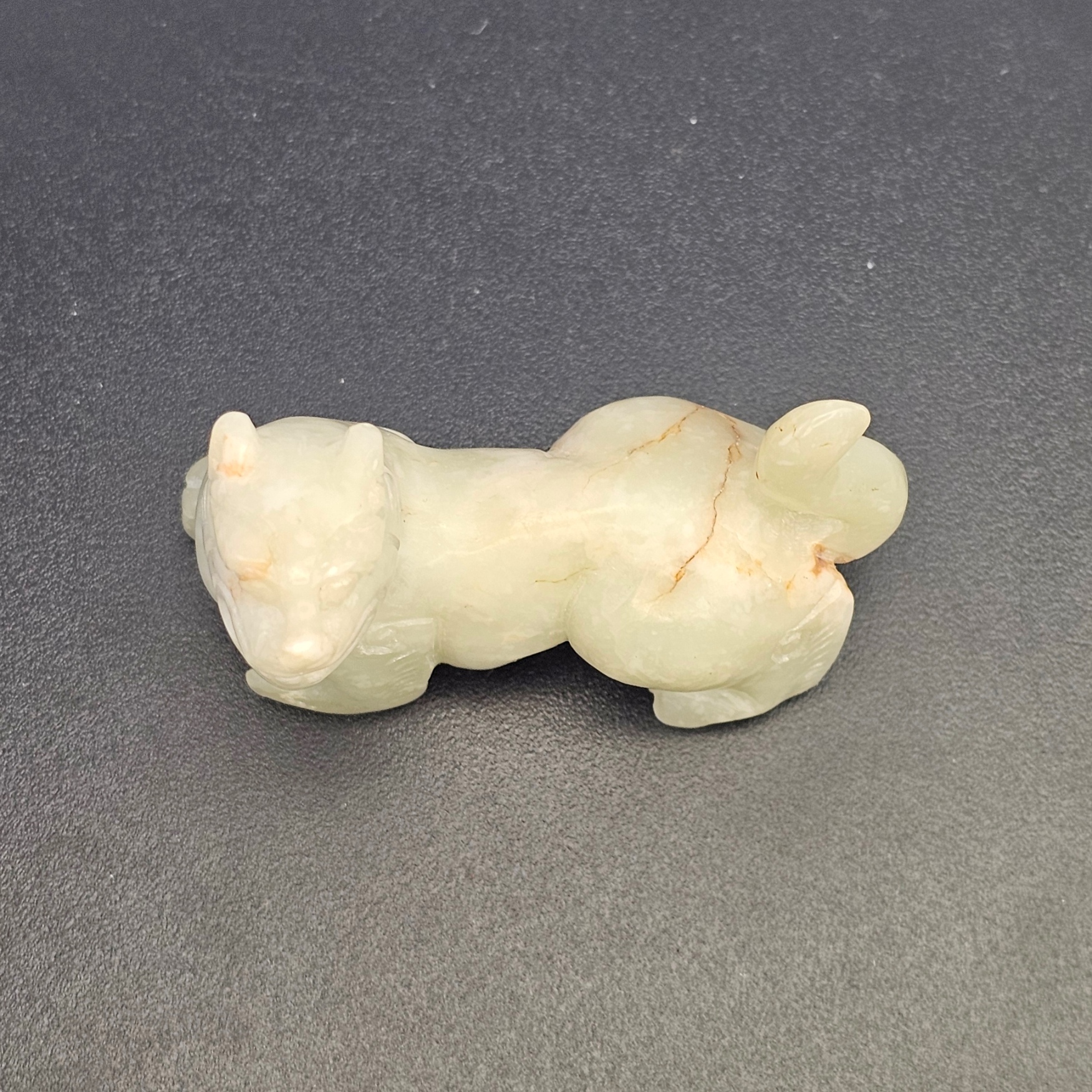
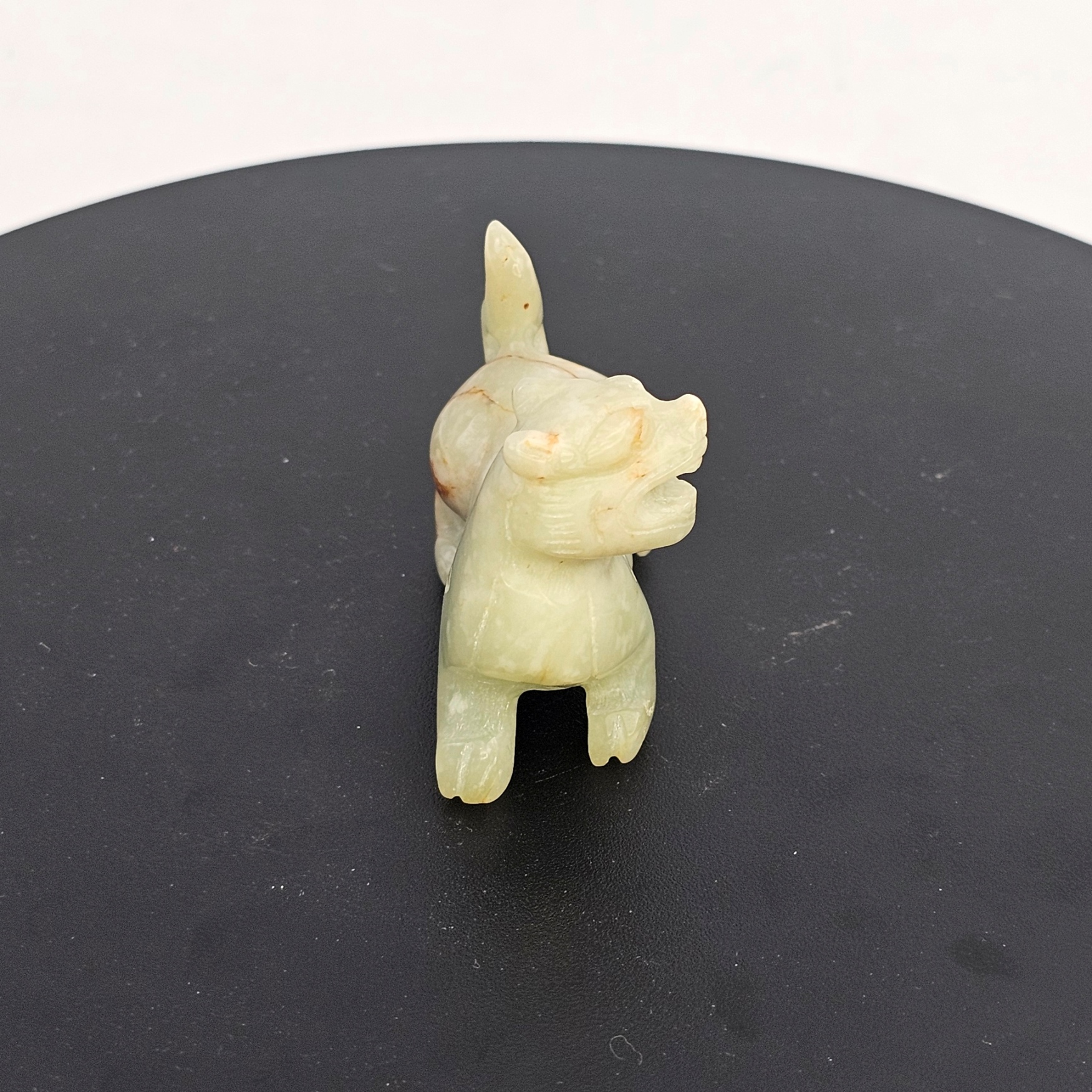
A charming and well-carved nephrite jade figure of a guardian lion, or shishi, depicted in a striding pose with the body turned slightly, the head raised and turned to face forward with an alert, open-mouthed expression. The face is well-defined with prominent boss-like eyes, a broad flat muzzle, and incised whisker lines, capturing the characteristic ferocity and benevolence of the traditional guardian lion form. The mane is suggested through incised curling strokes across the chest and shoulders, and each foreleg is decorated with a scrolling cloud or flame motif in low relief, a decorative device commonly associated with Qing period mythical beast carvings. The tail curls upward to one side in a stylised flame form, with a small pierced loop at the tip, indicating the piece may have originally functioned as a toggle or pendant as well as a standalone desk object. The underside reveals four well-formed paws, cleanly finished to a flat base. The stone is a pale celadon green with areas of chalky white and warm amber or russet veining running through the body, the natural variation incorporated sympathetically into the overall form.
Historical Context
The guardian lion, known in Chinese as shishi, has been a fixture of Chinese palatial, temple, and domestic architecture since at least the Han dynasty, typically placed in pairs at the entrances to important buildings to ward off malevolent spirits and attract good fortune. During the Qing dynasty (1644 to 1912) the form was extensively reproduced in miniature as a jade carving, both as an auspicious desk object for the scholar's table and as a toggle or personal amulet worn suspended from the belt or garment. Small jade guardian lions of this type were produced throughout the Qing period, with quality ranging from finely imperial workshop pieces in pure white Hetian nephrite through to vigorous folk carvings in celadon and mottled stones. The scrollwork on the forelegs and the flame-form tail of this example are consistent with the decorative vocabulary of mid to late Qing production, as is the confident but relatively compact treatment of the mane and facial features. The combination of a striding stance with the alert turned head is a particularly characteristic Qing format, echoing larger architectural stone lions while compressing the form for intimate handling. The pale celadon stone with russet inclusions was considered auspicious and was widely used for animal carvings of this type throughout the eighteenth and nineteenth centuries.
~ Dimensions ~
The lion has a length of 2.5 inches (6.3 cm), a width of by 1.1 inches (3 cm) and a height of 1.8 inches (4.6 cm).
It weighs 66.5g.
~ Condition ~
The piece is in great condition with no cracks or chips.
#1370