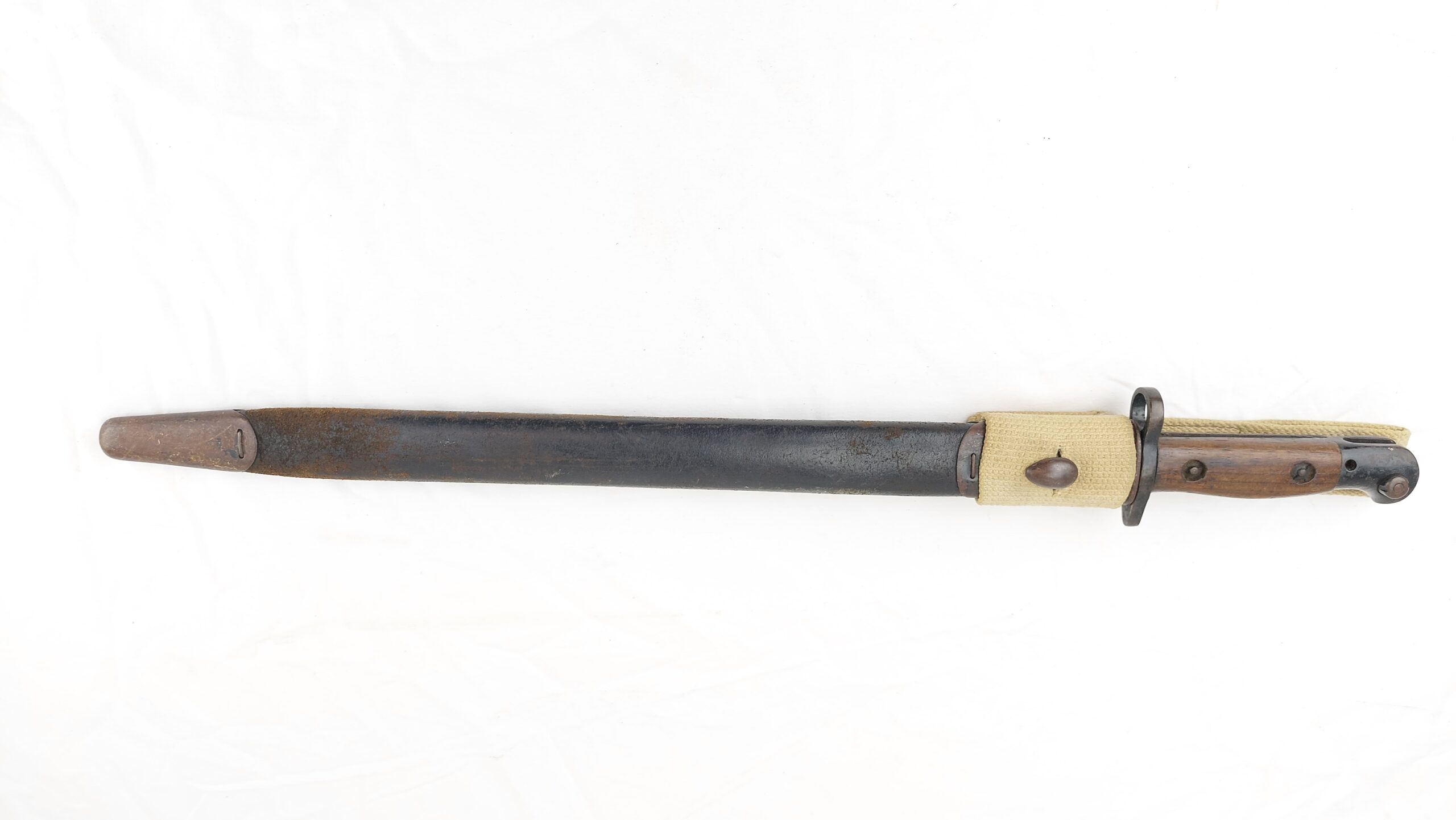
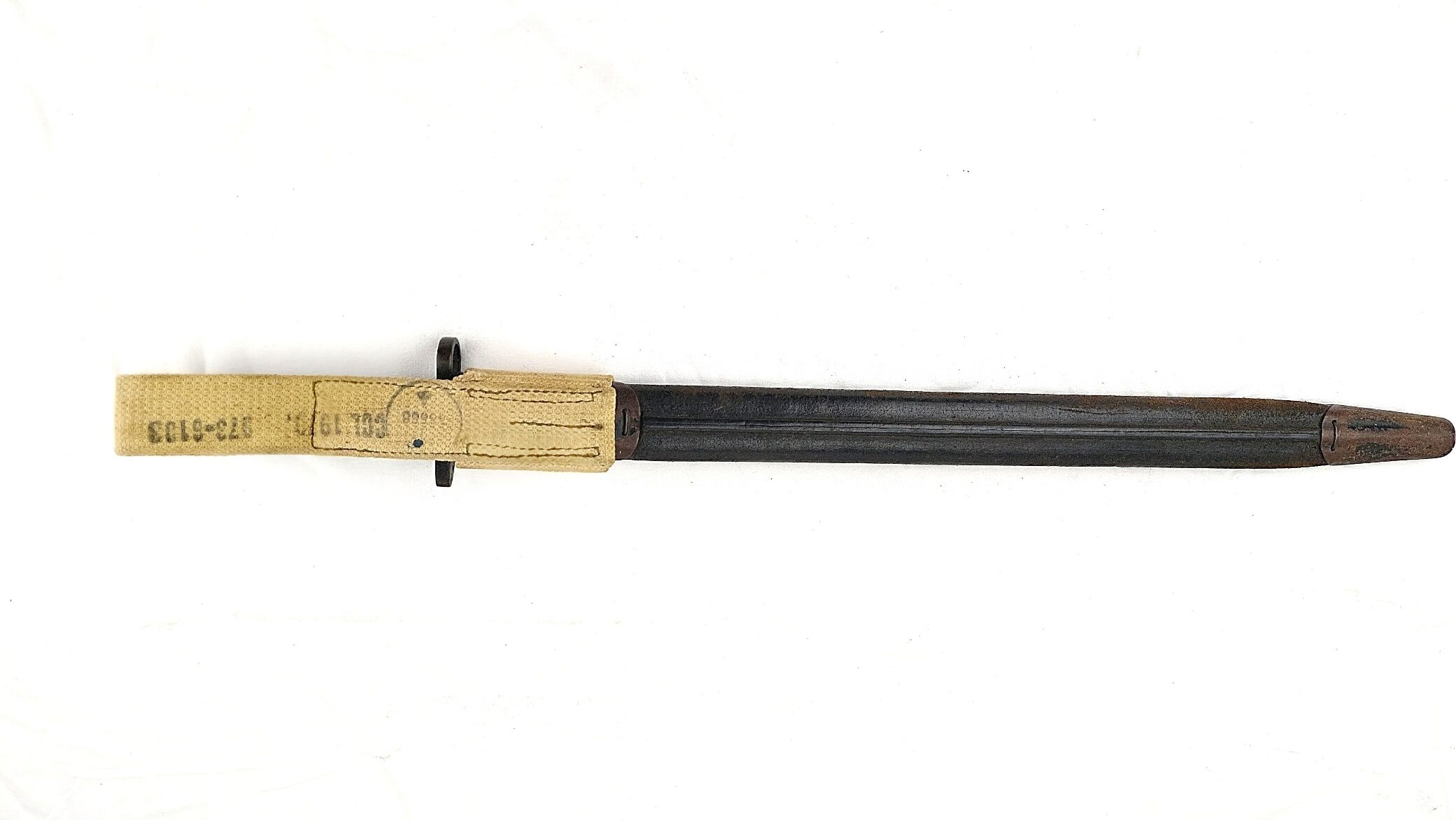
*British, WWI, Pattern 1907 SMLE Bayonet, Scabbard & Frog, Sanderson Bros. & Newbould Ltd., July 1918*
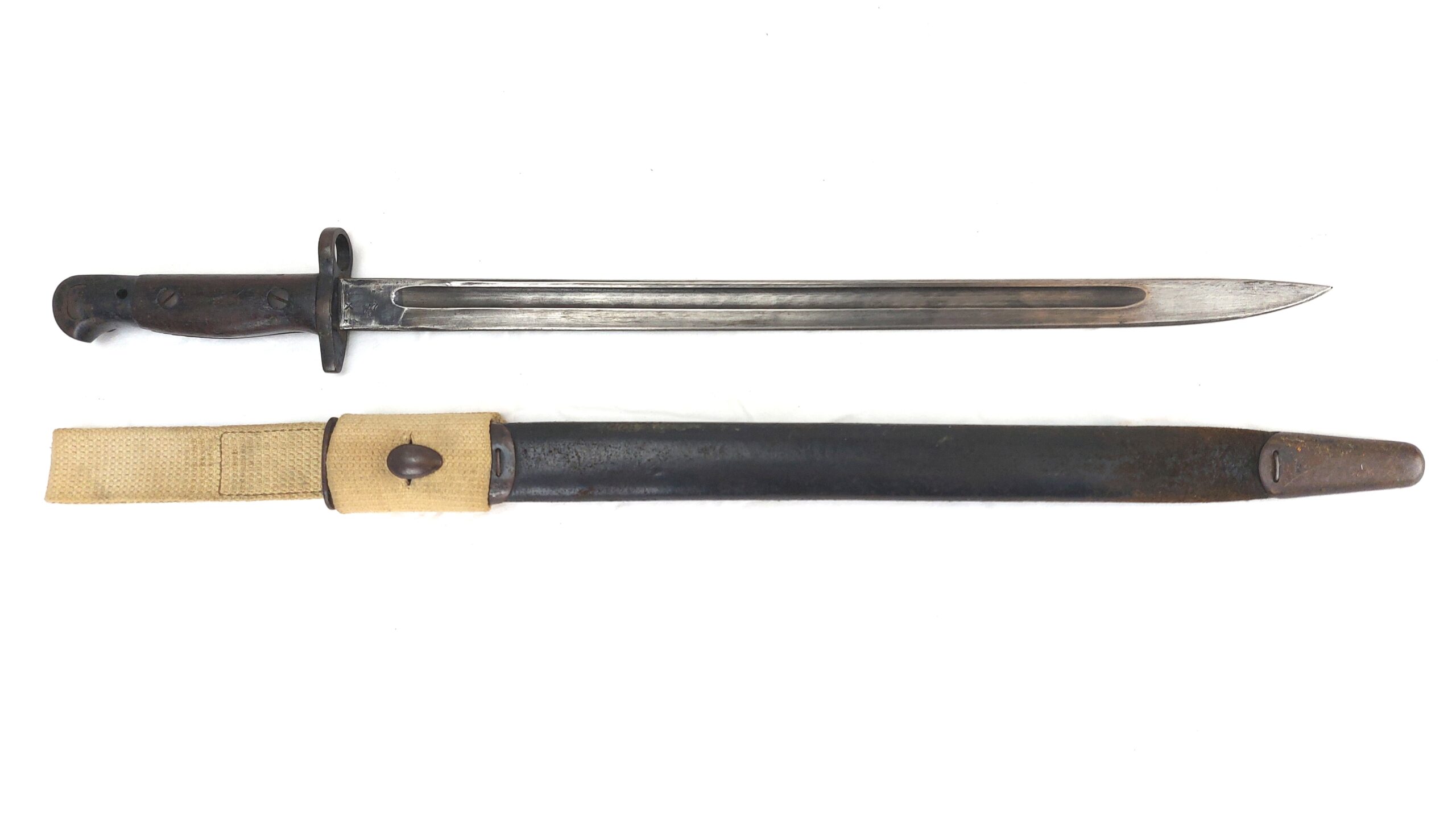
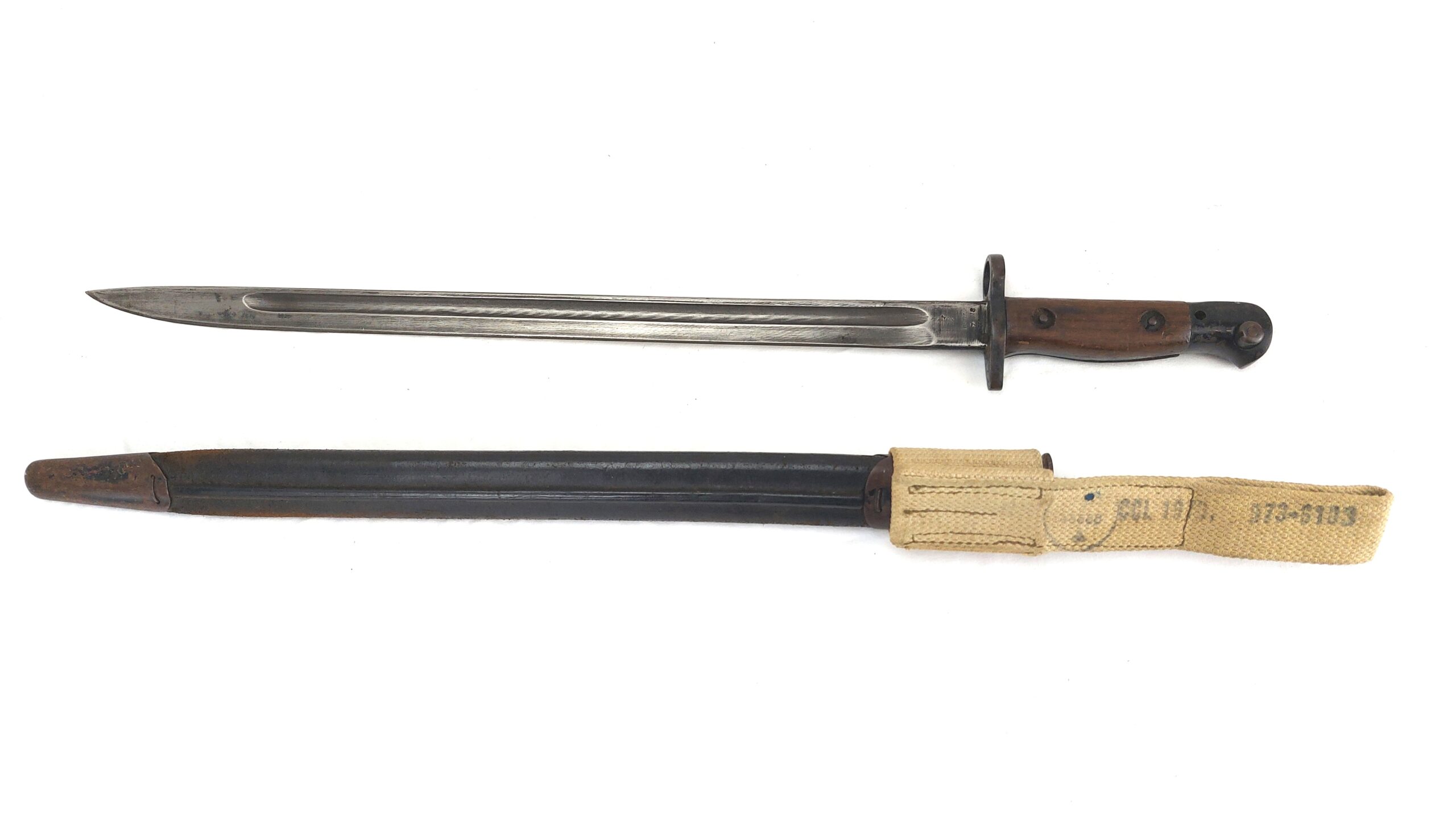
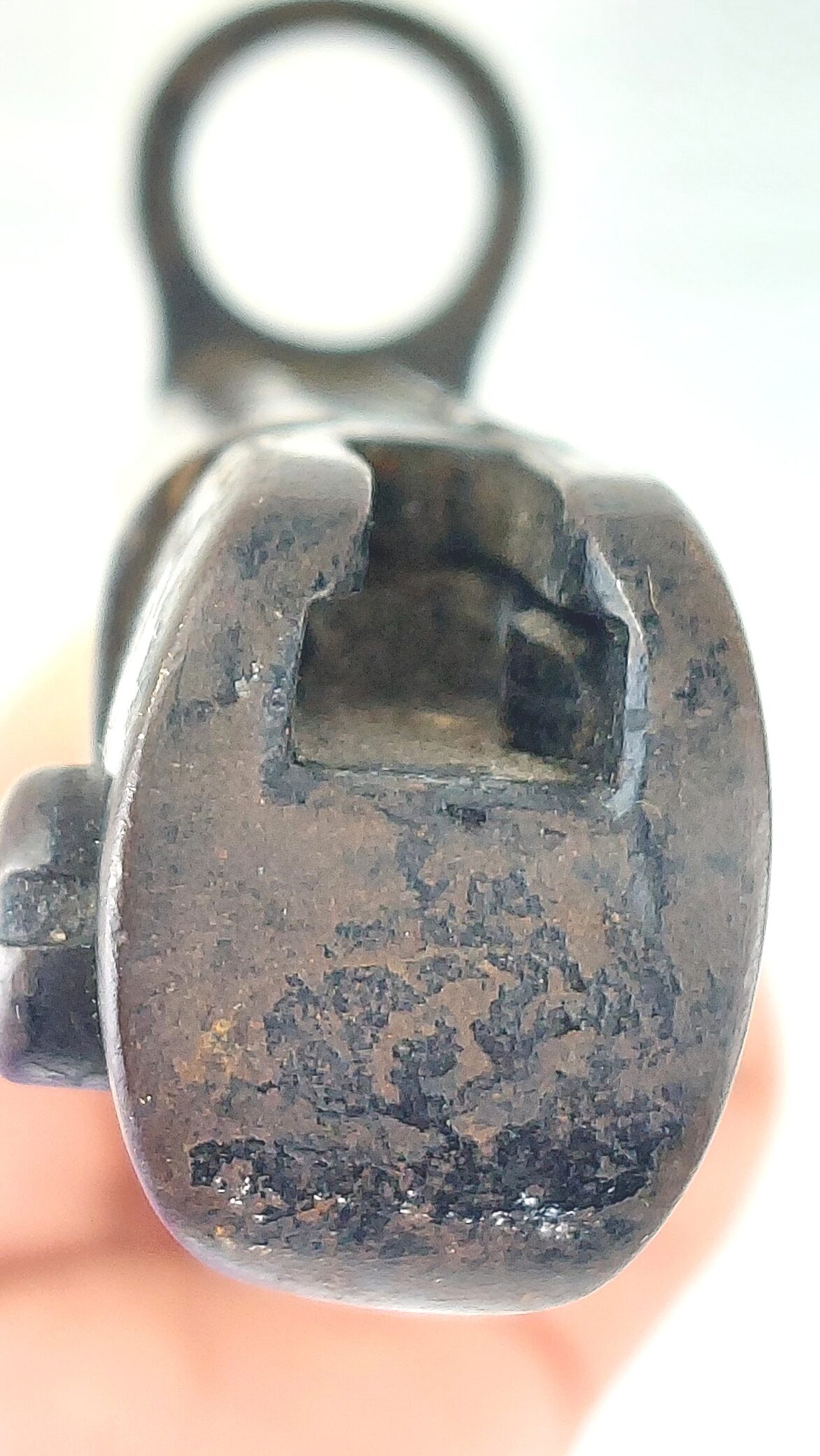
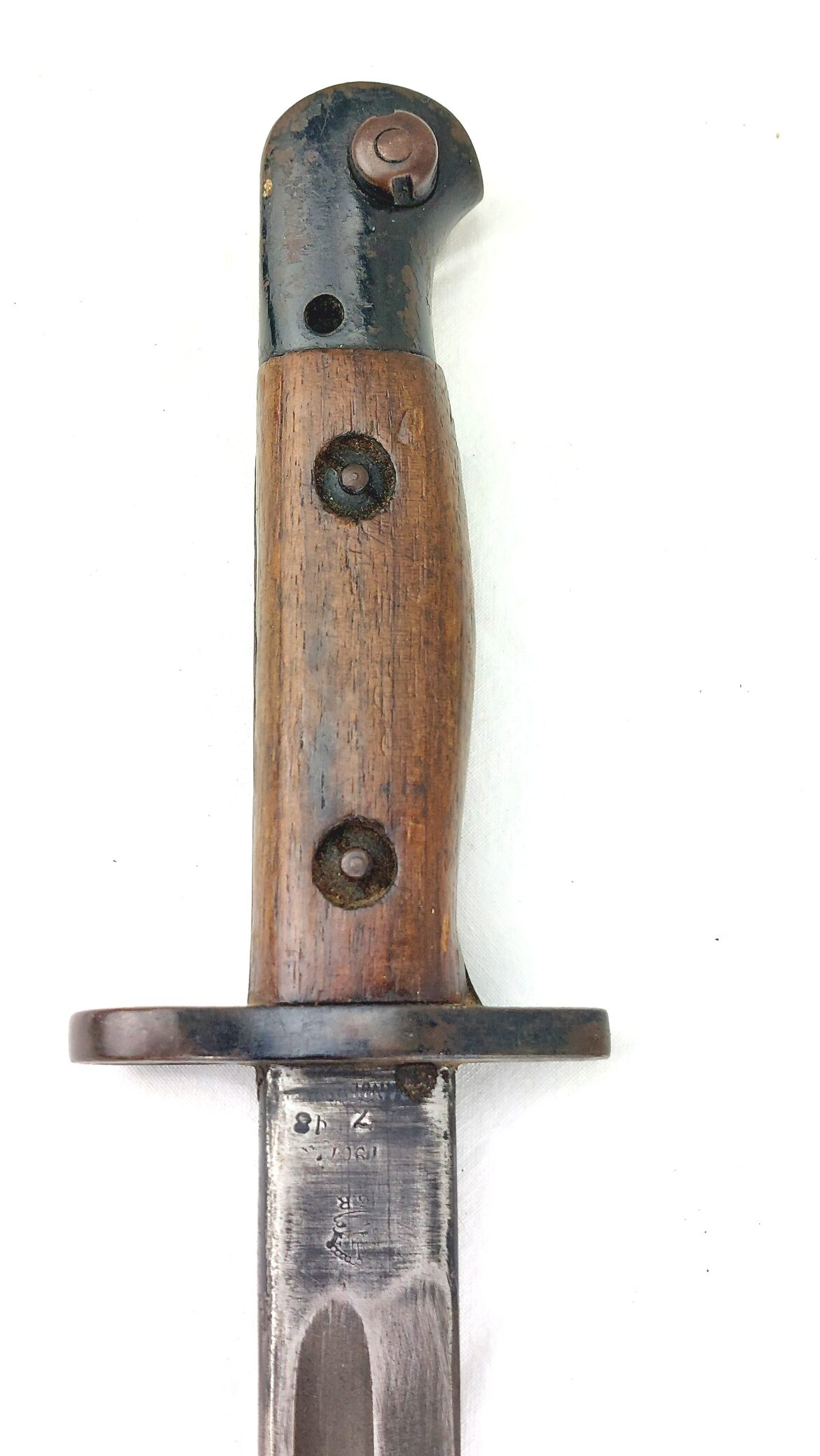
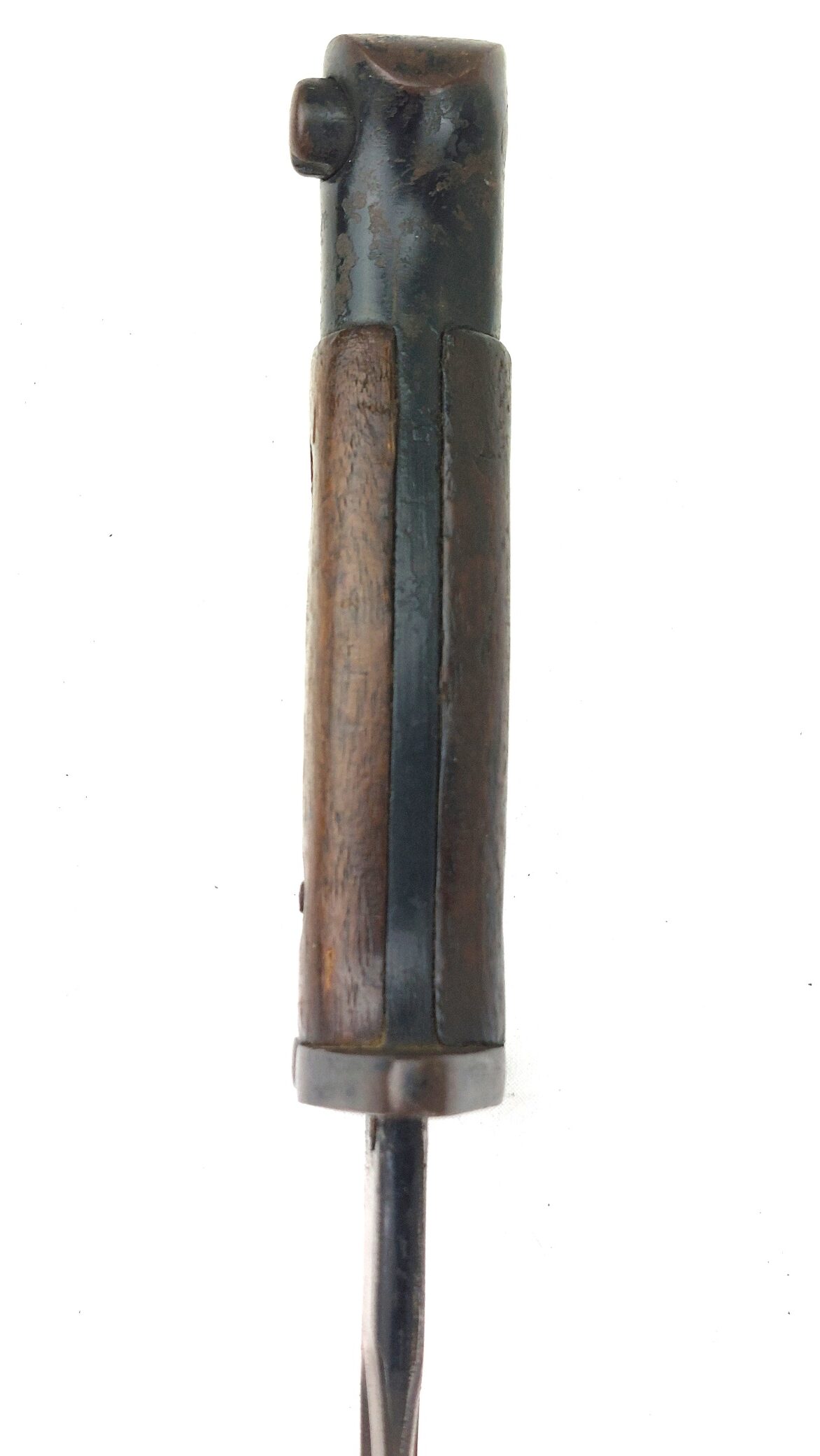
Original British First World War Pattern 1907 bayonet for the Short Magazine Lee-Enfield (SMLE), complete with period scabbard and later webbing frog.
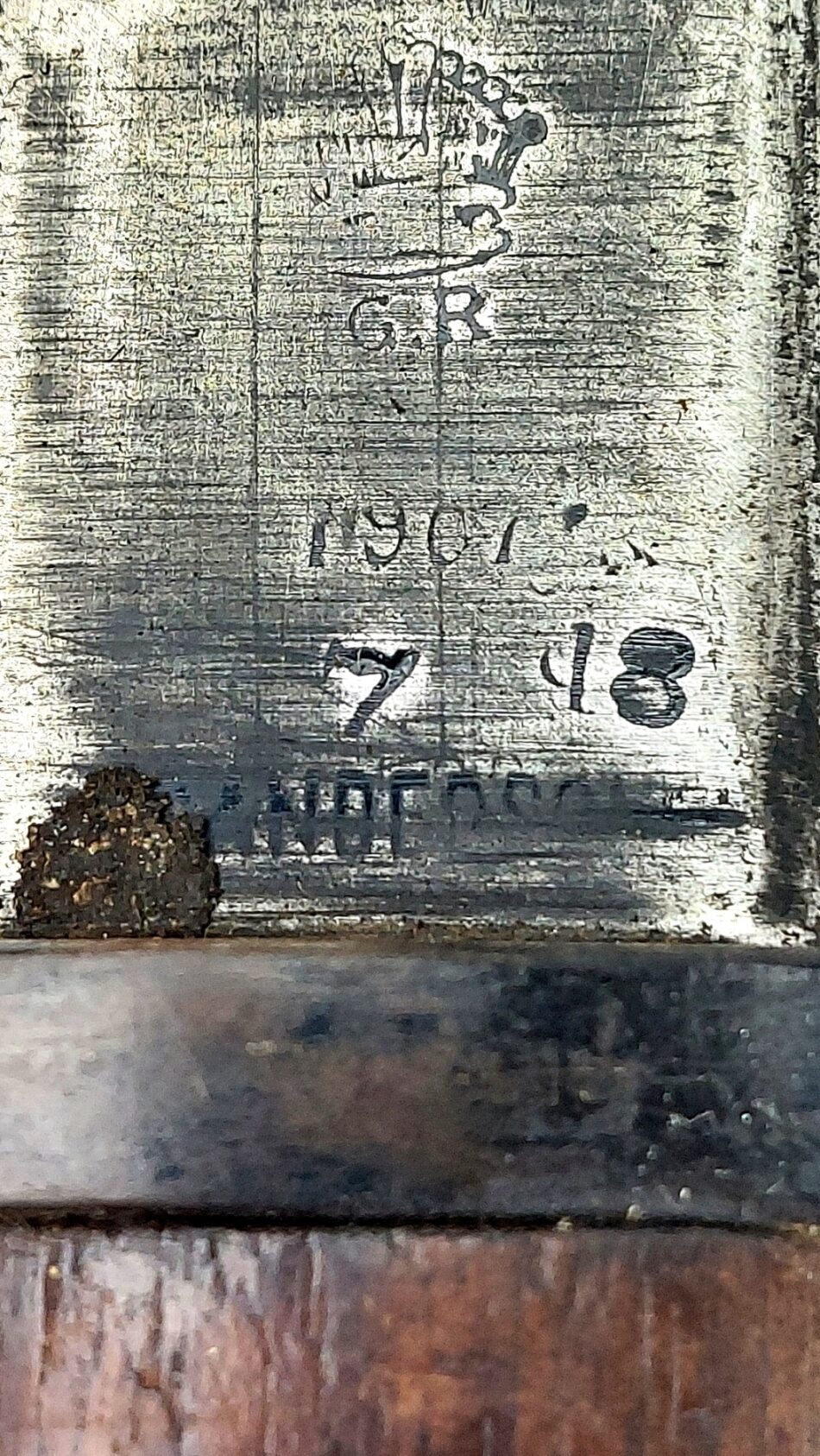
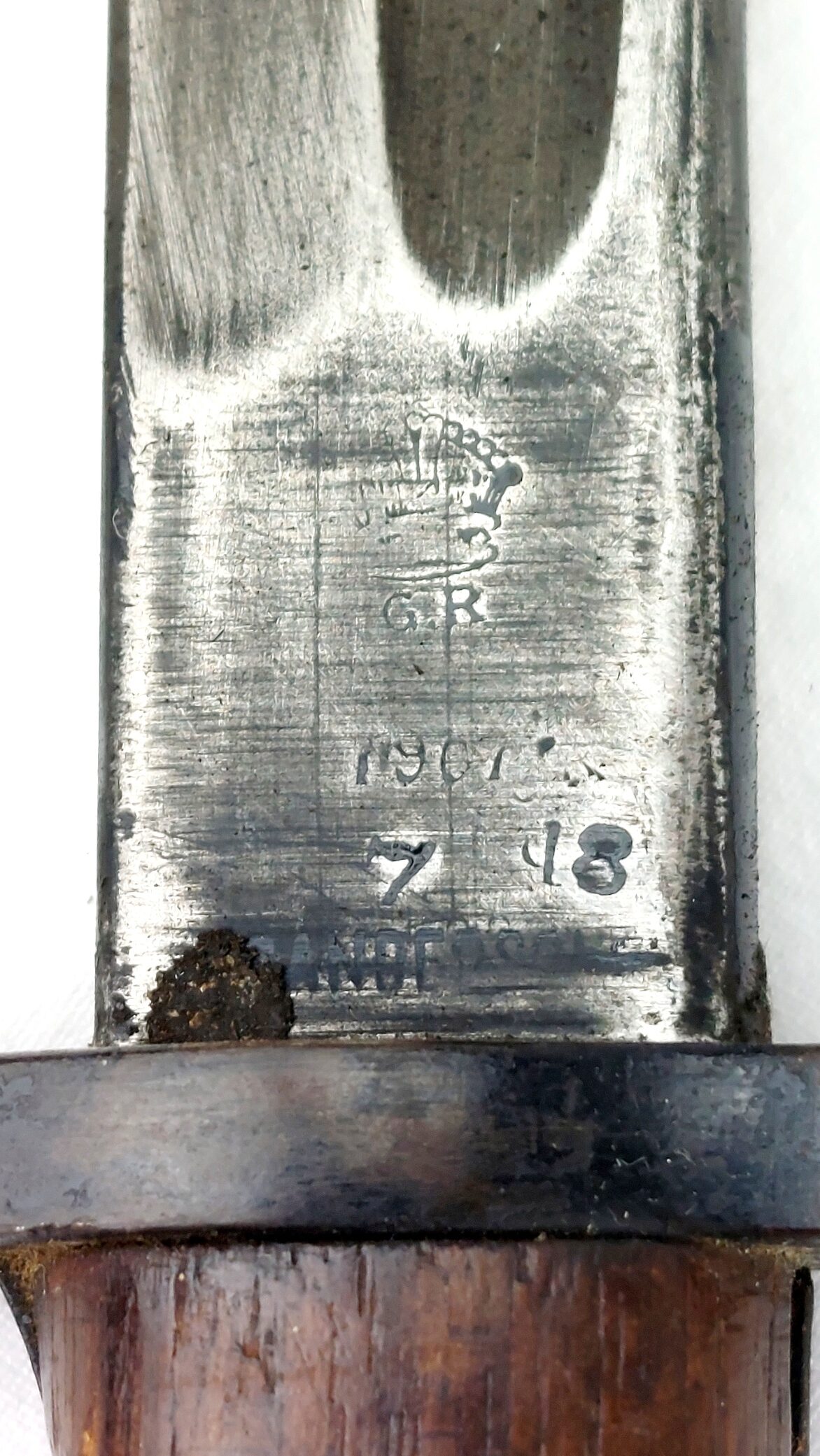
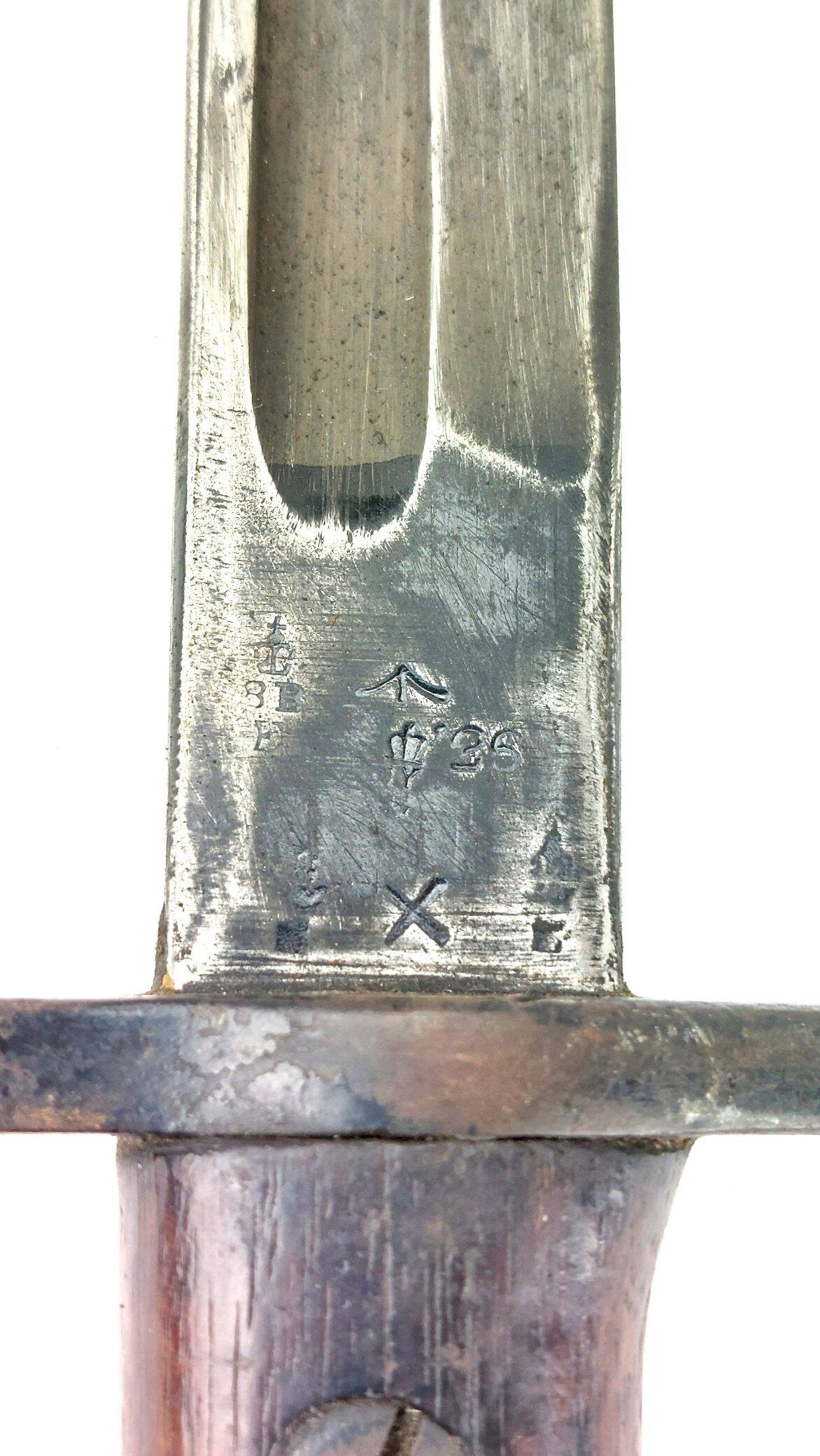
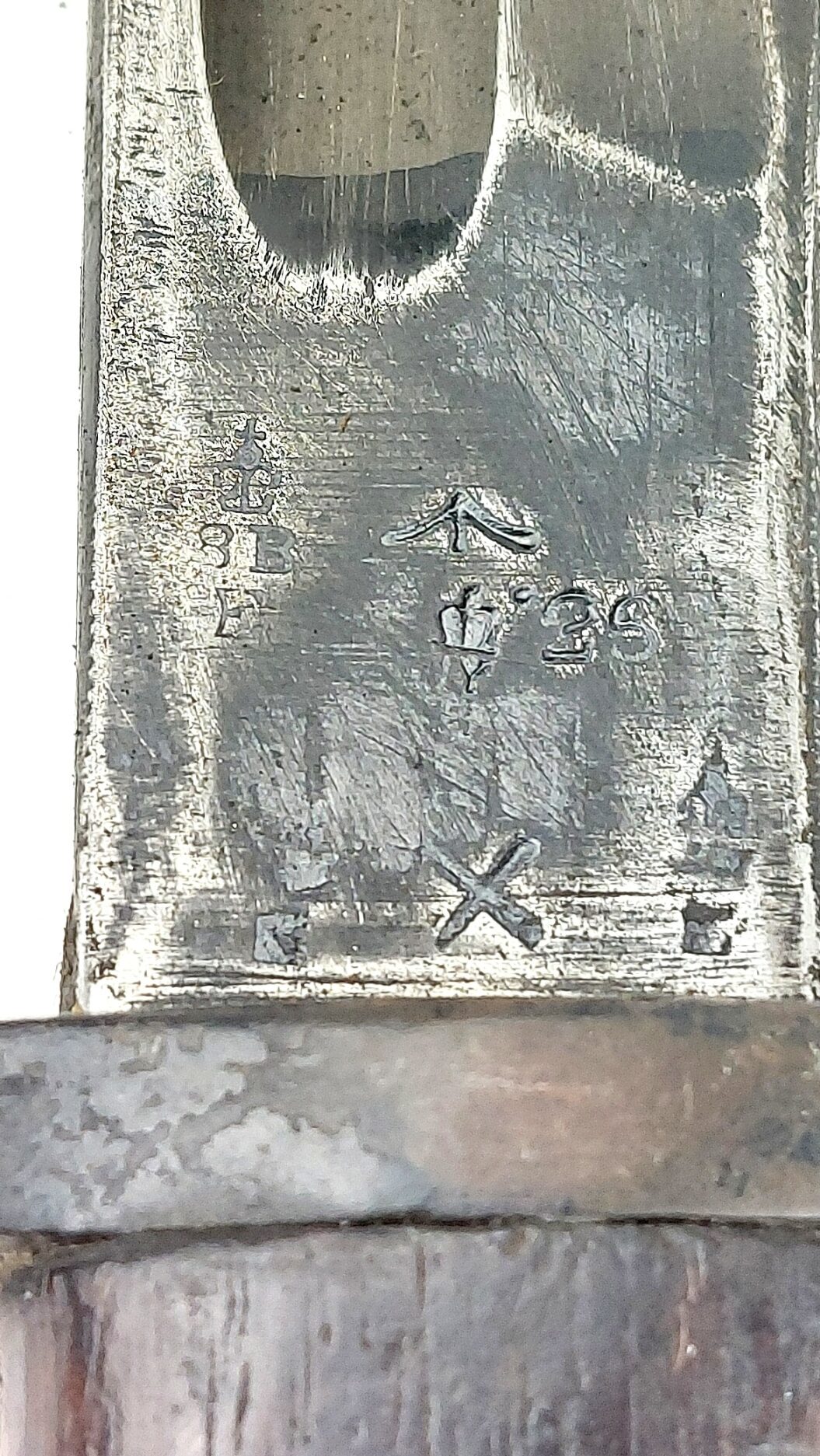
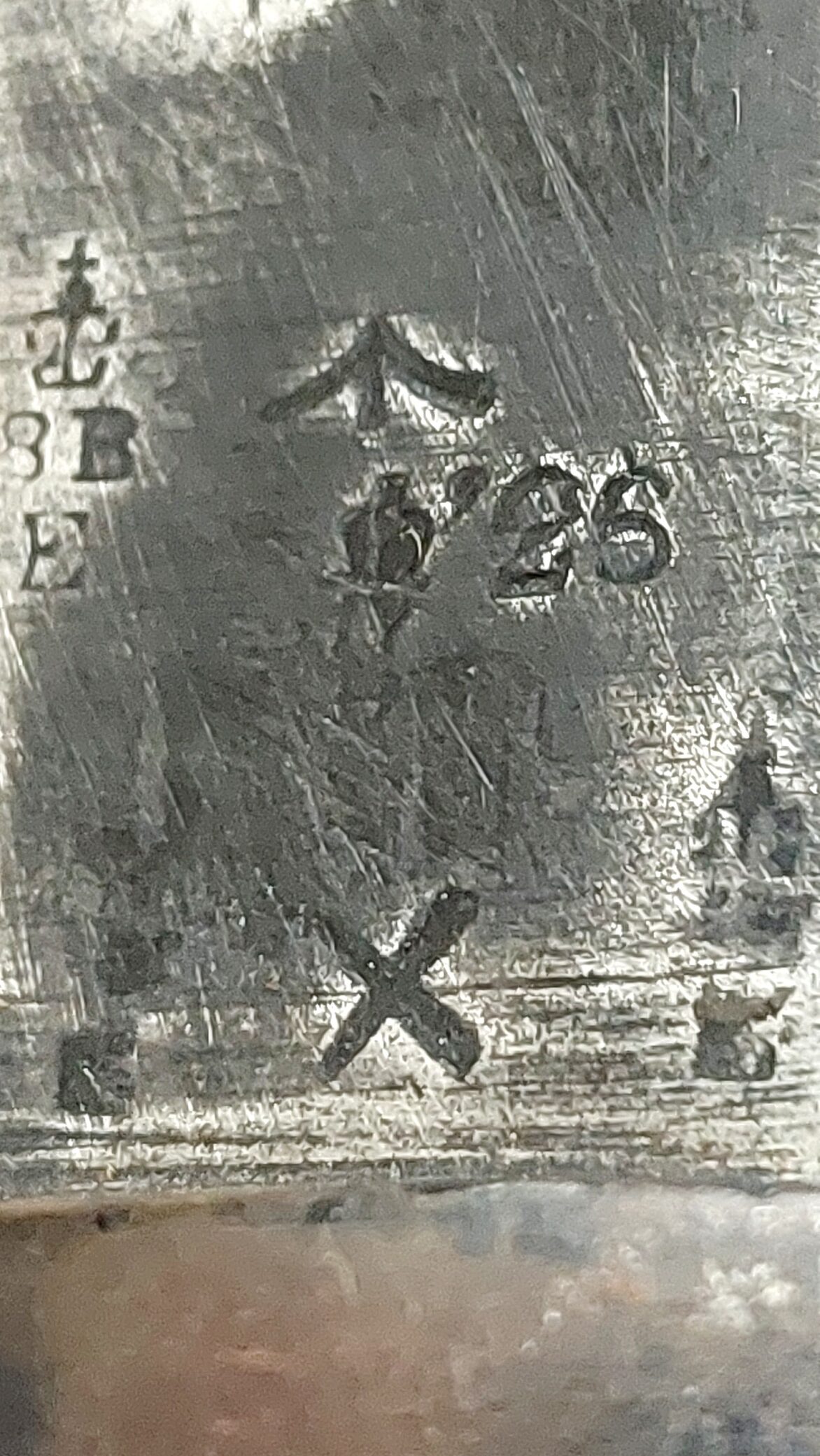
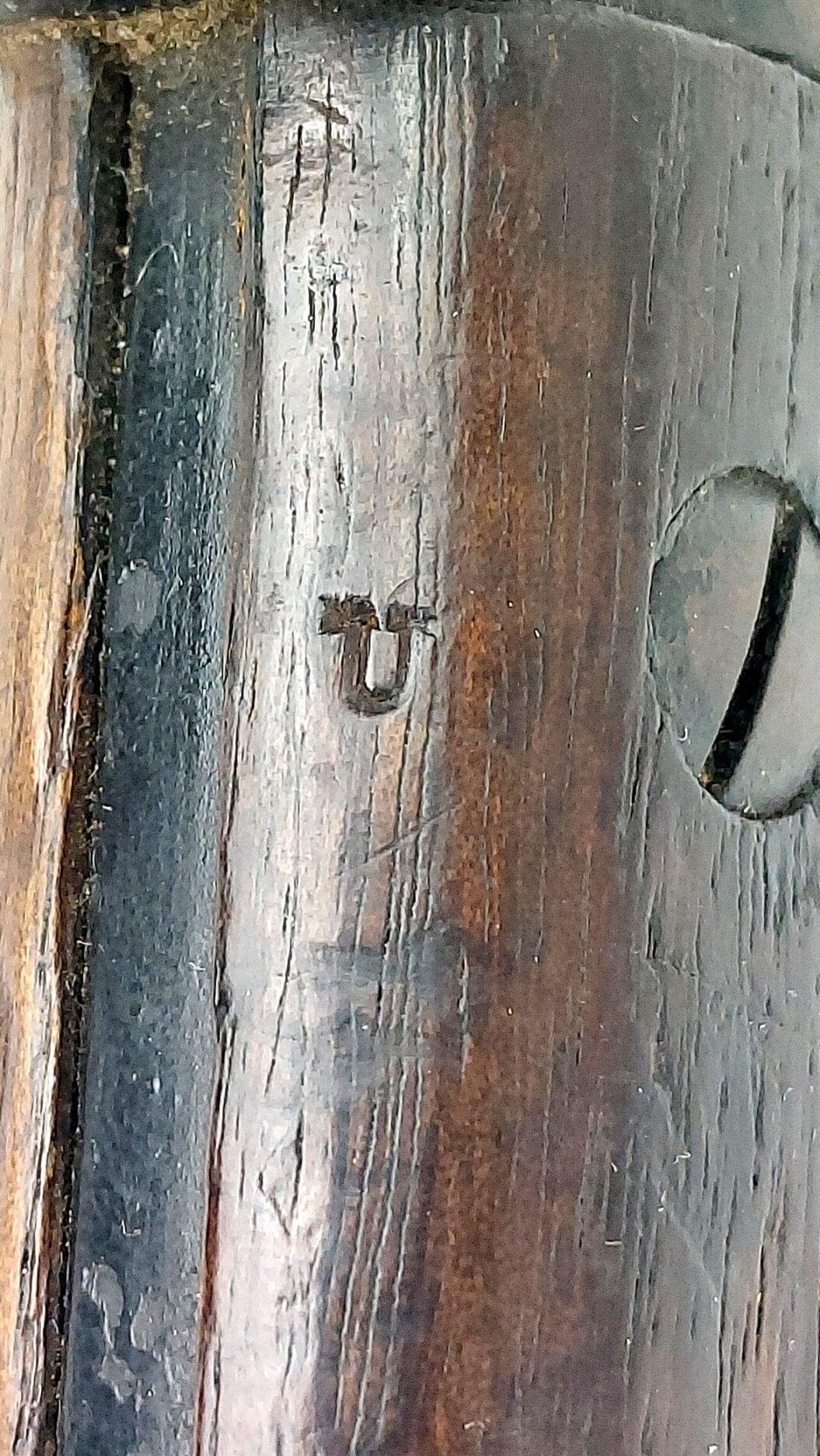
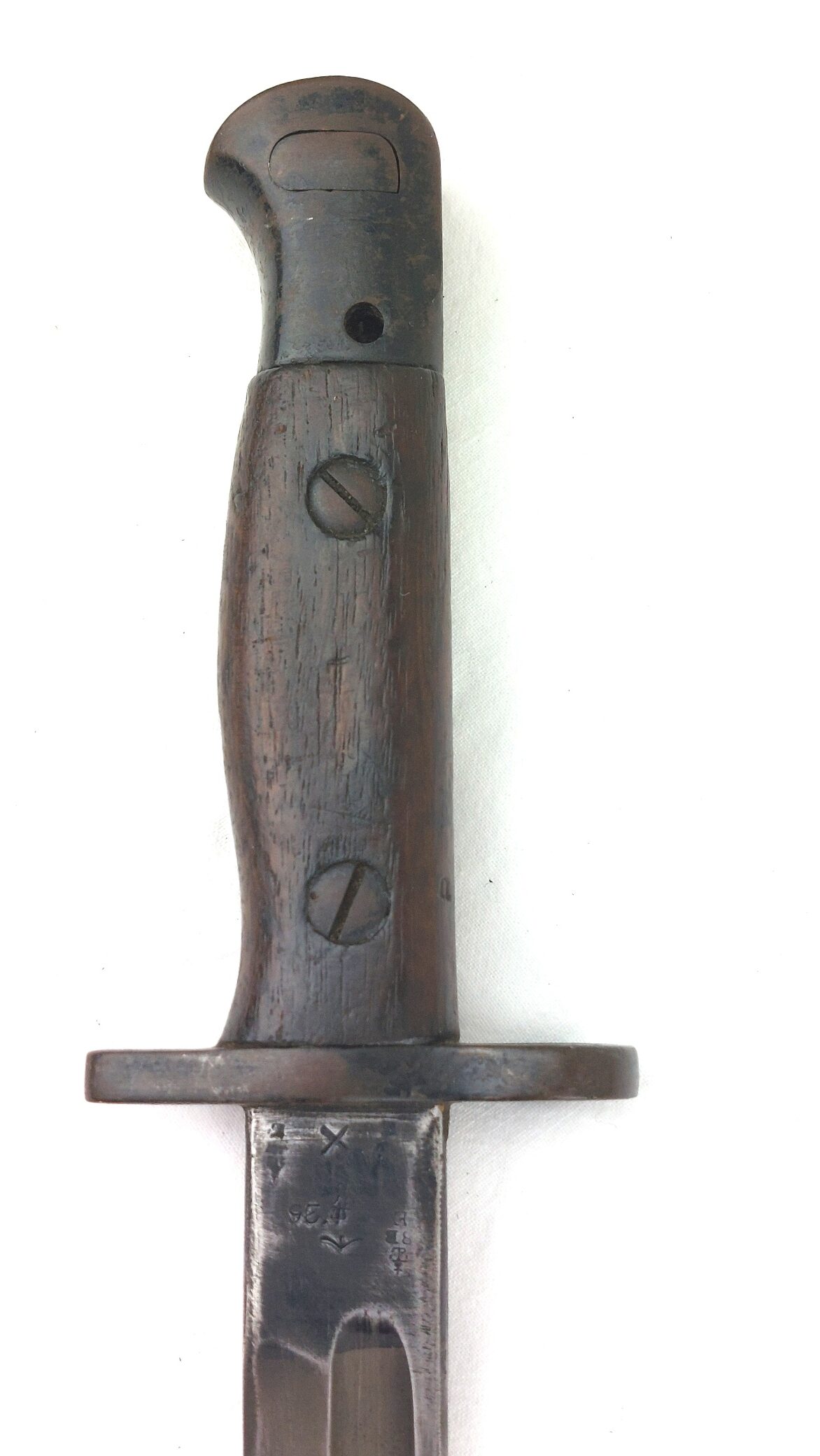
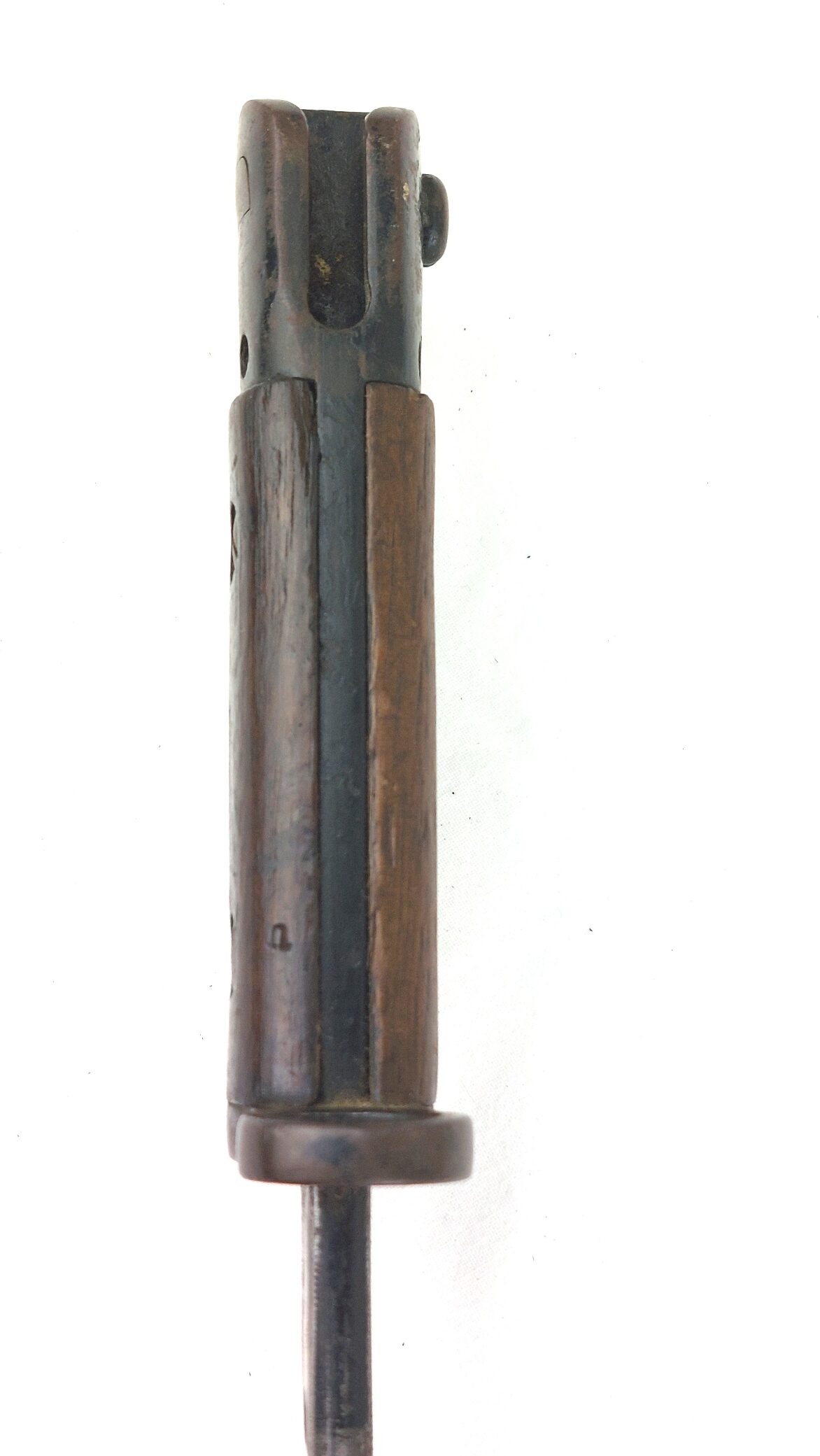
The blade is correctly stamped on the ricasso (obverse) with Crown over “GR” over “1907”, beneath “7 ’18” indicating manufacture in July 1918, and the maker’s mark Sanderson for Sanderson Bros. & Newbould Ltd. of Sheffield. The reverse ricasso bears multiple British ordnance inspection and acceptance marks, including the “X” bend-test mark, confirming successful proof and flexibility testing during service acceptance. Additional government and inspection stamps are present, including broad arrow ownership marks, crown-over inspection numbers, all consistent with late-war British ordnance manufacture. The wooden grip scales retain their correct form and fasteners, with a clearly struck “U” inspection mark visible.
The blade measures 43 cm, with an overall length of 55.2 cm, and represents the more commonly encountered Pattern 1907 configuration without the hooked lower quillon, following the 1913–1916 modification eliminating the quillon for practicality in service.
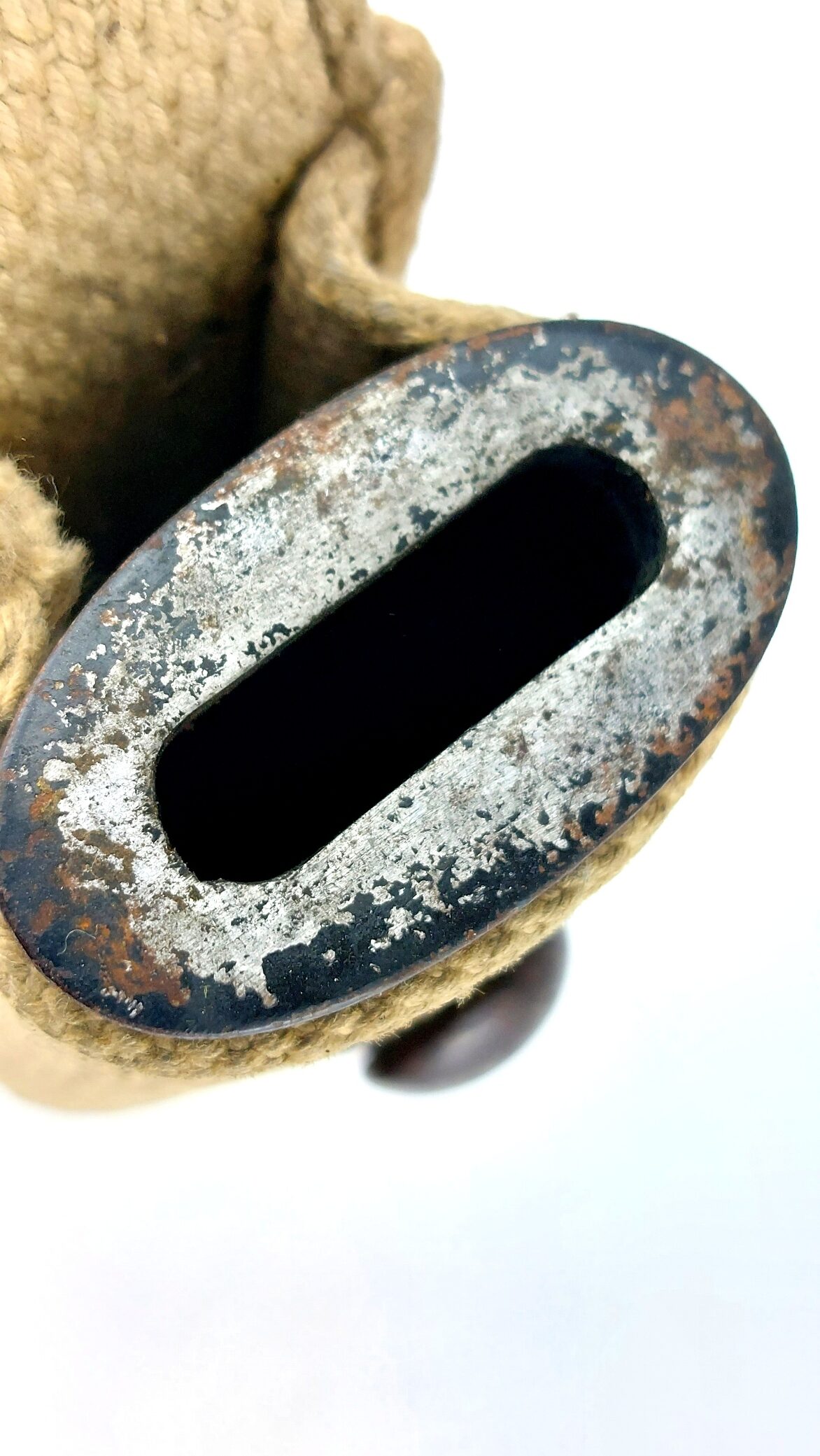
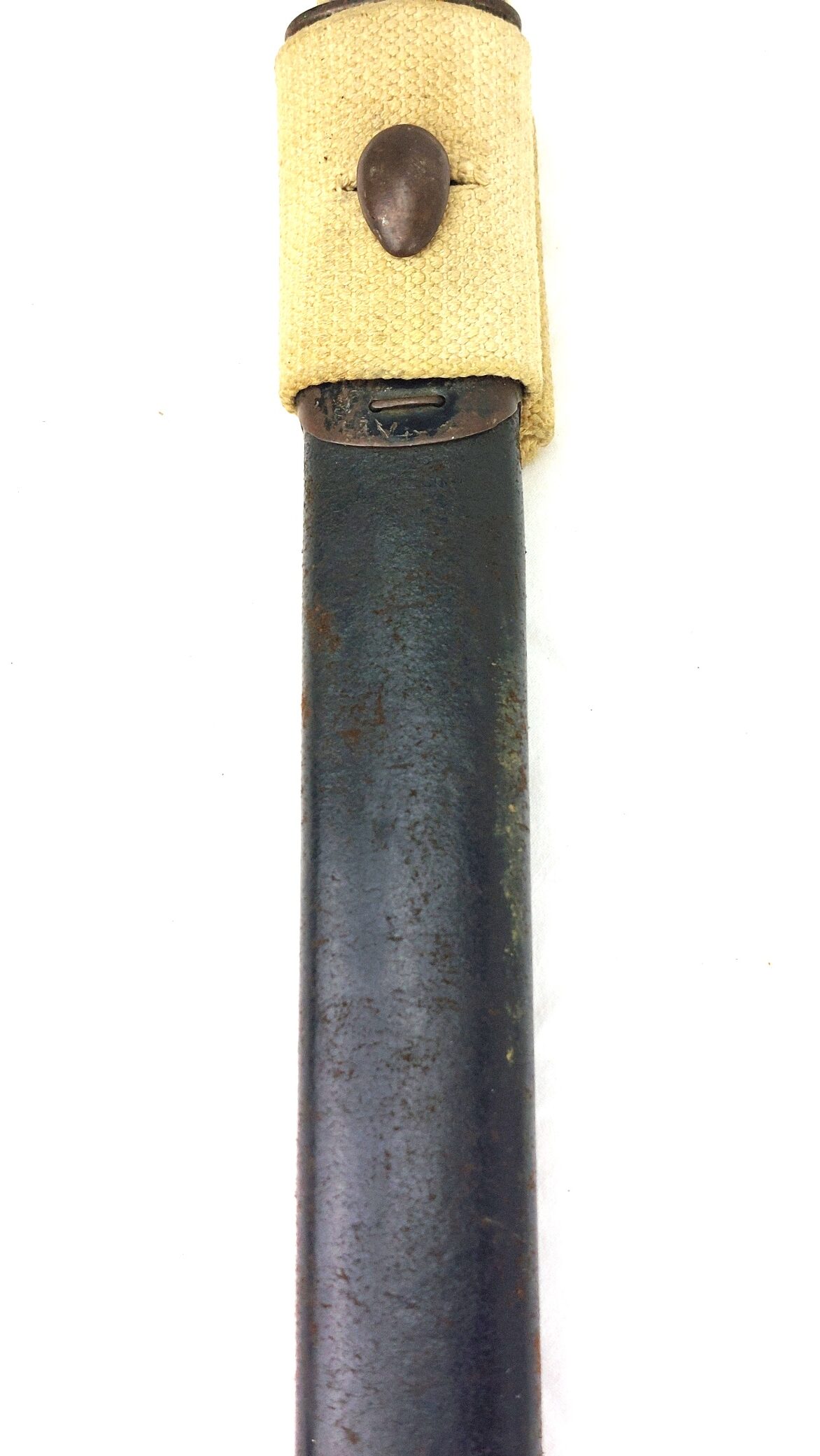
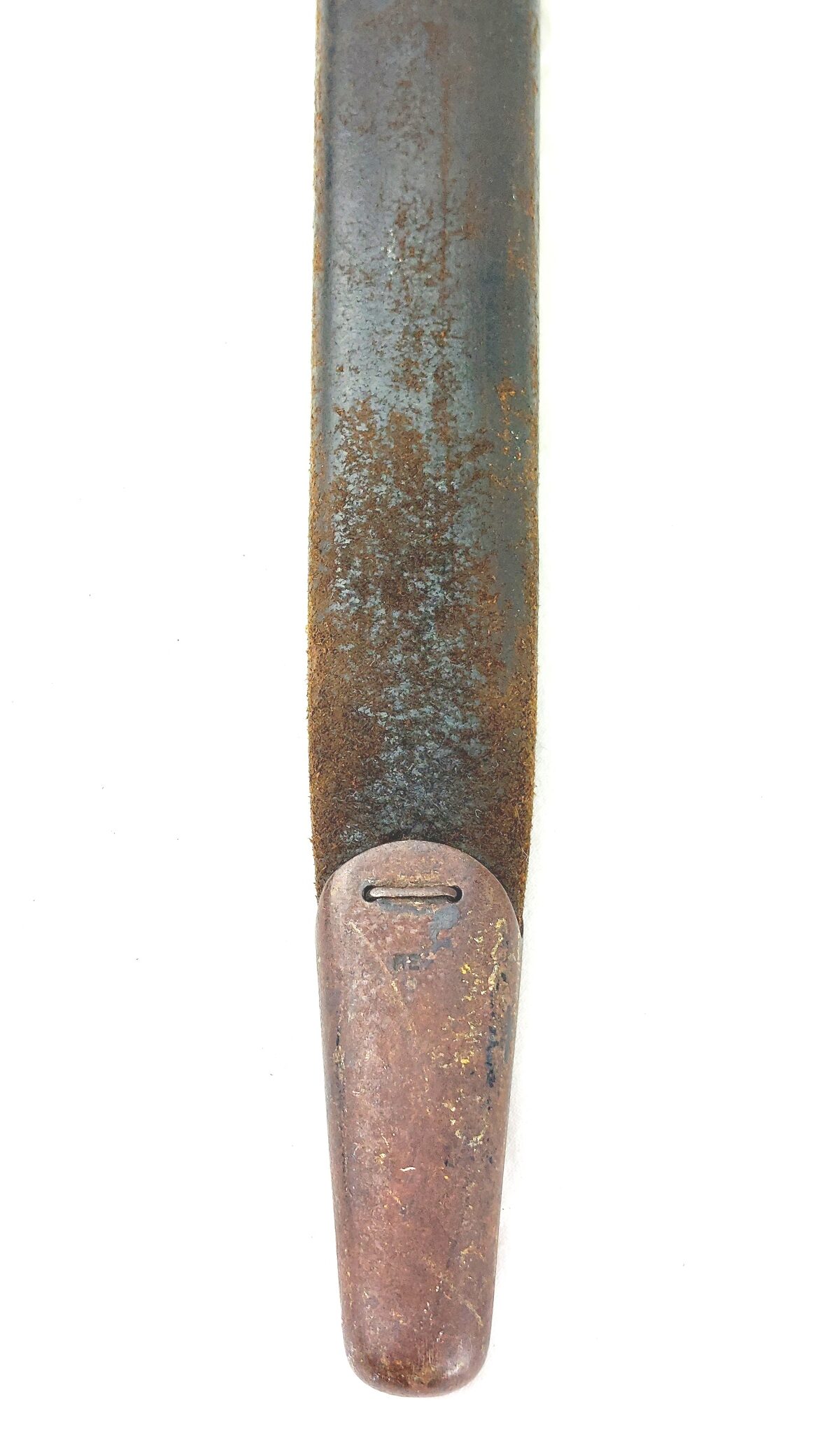
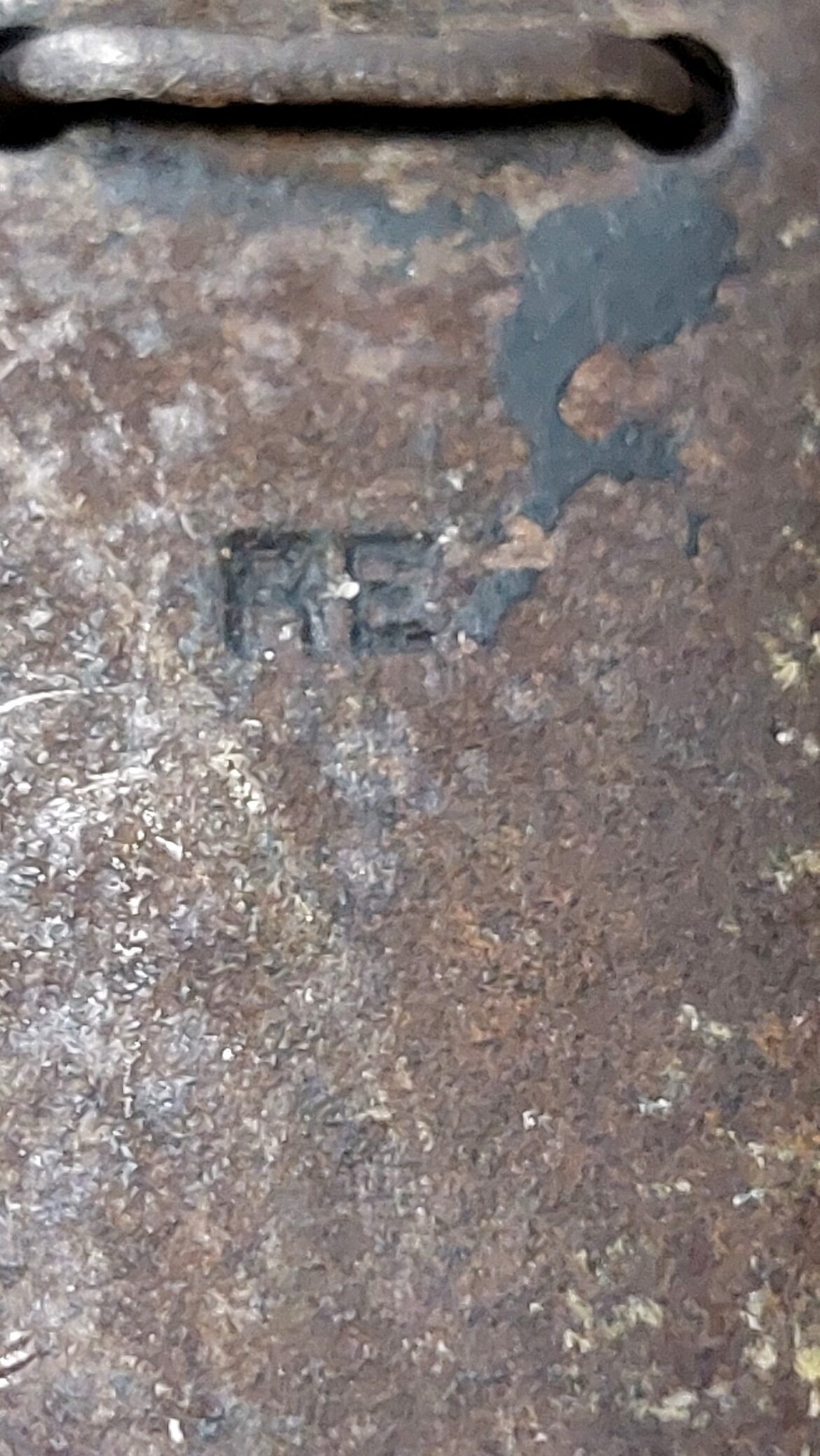
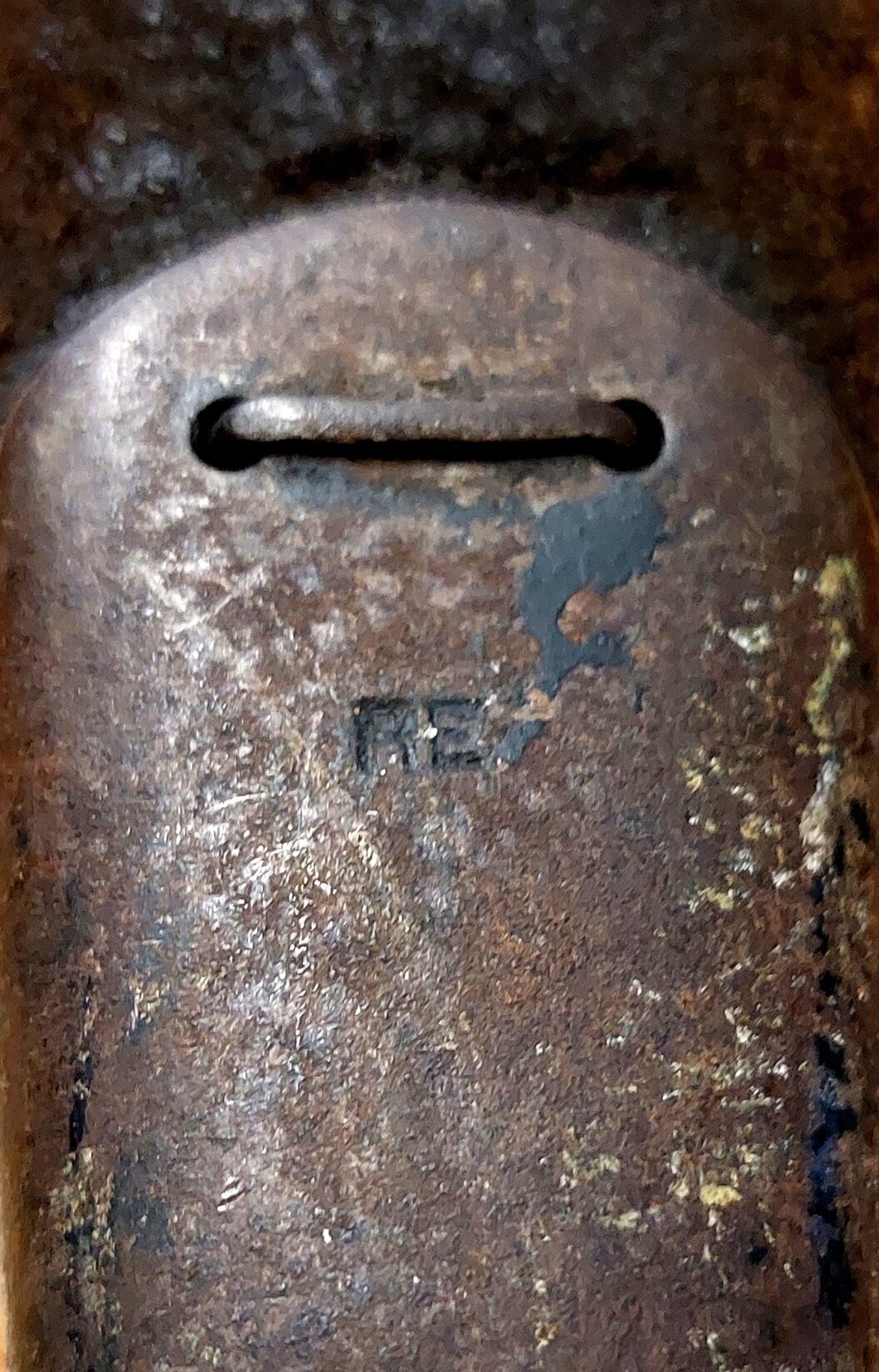
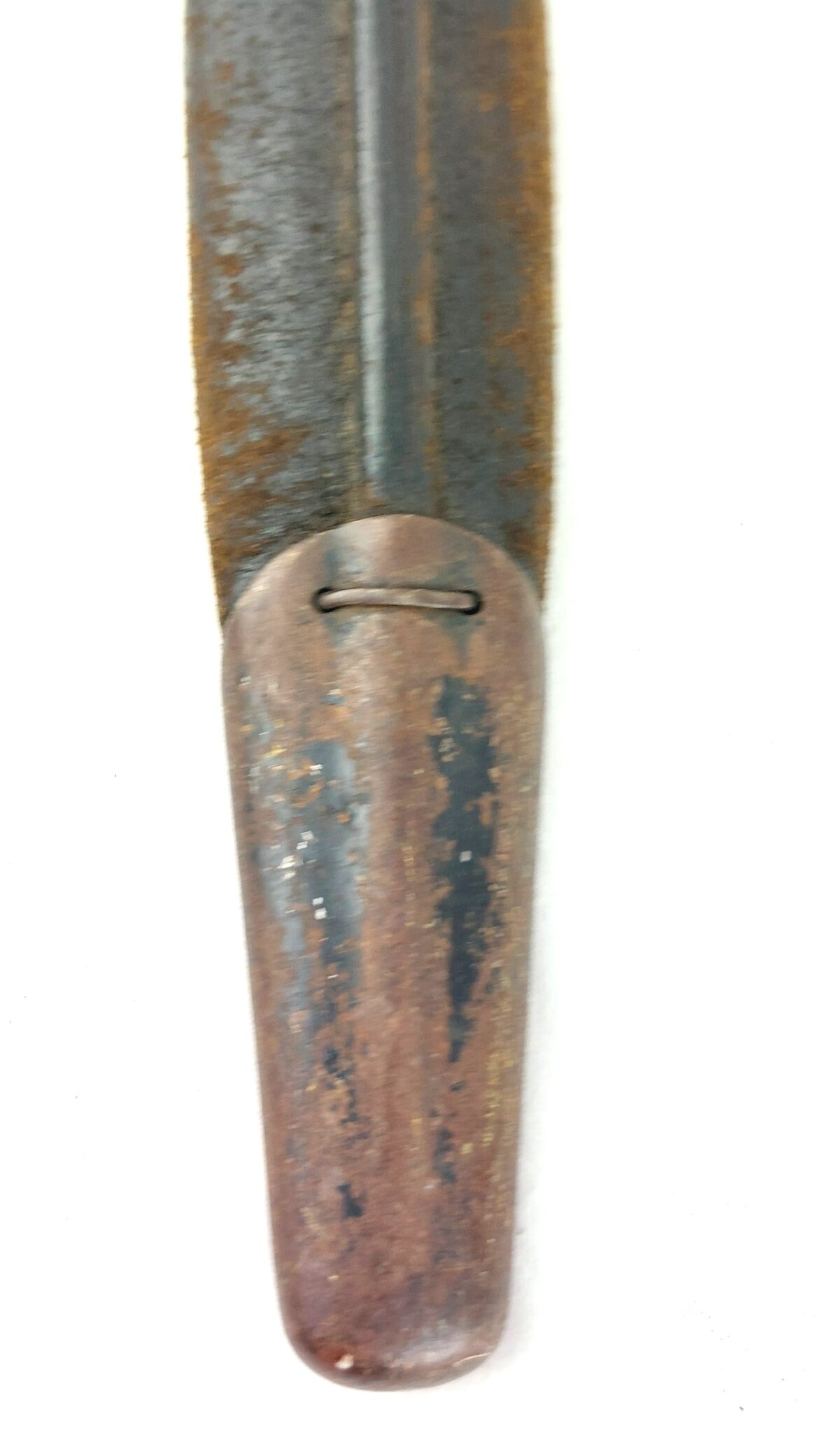
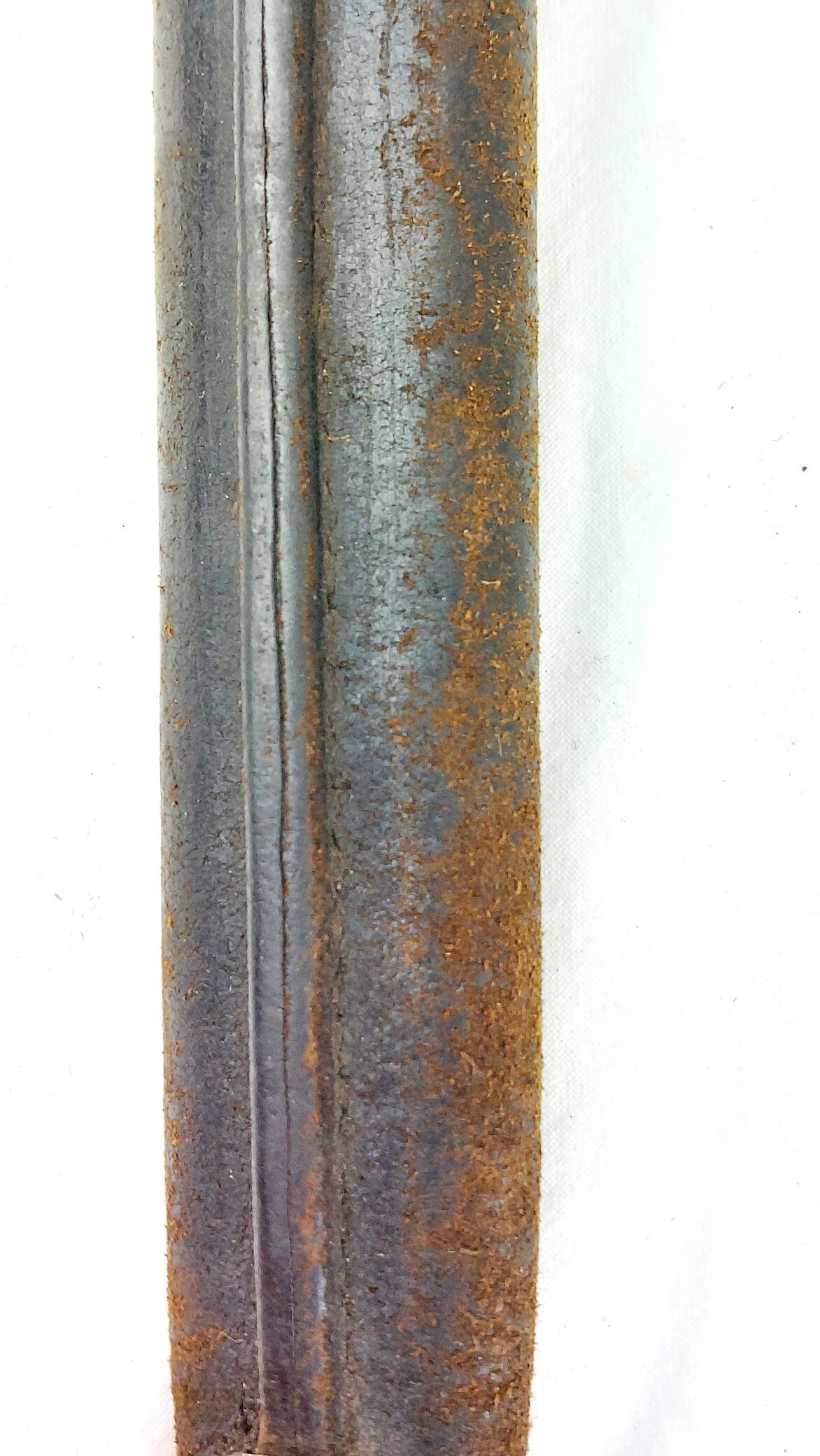
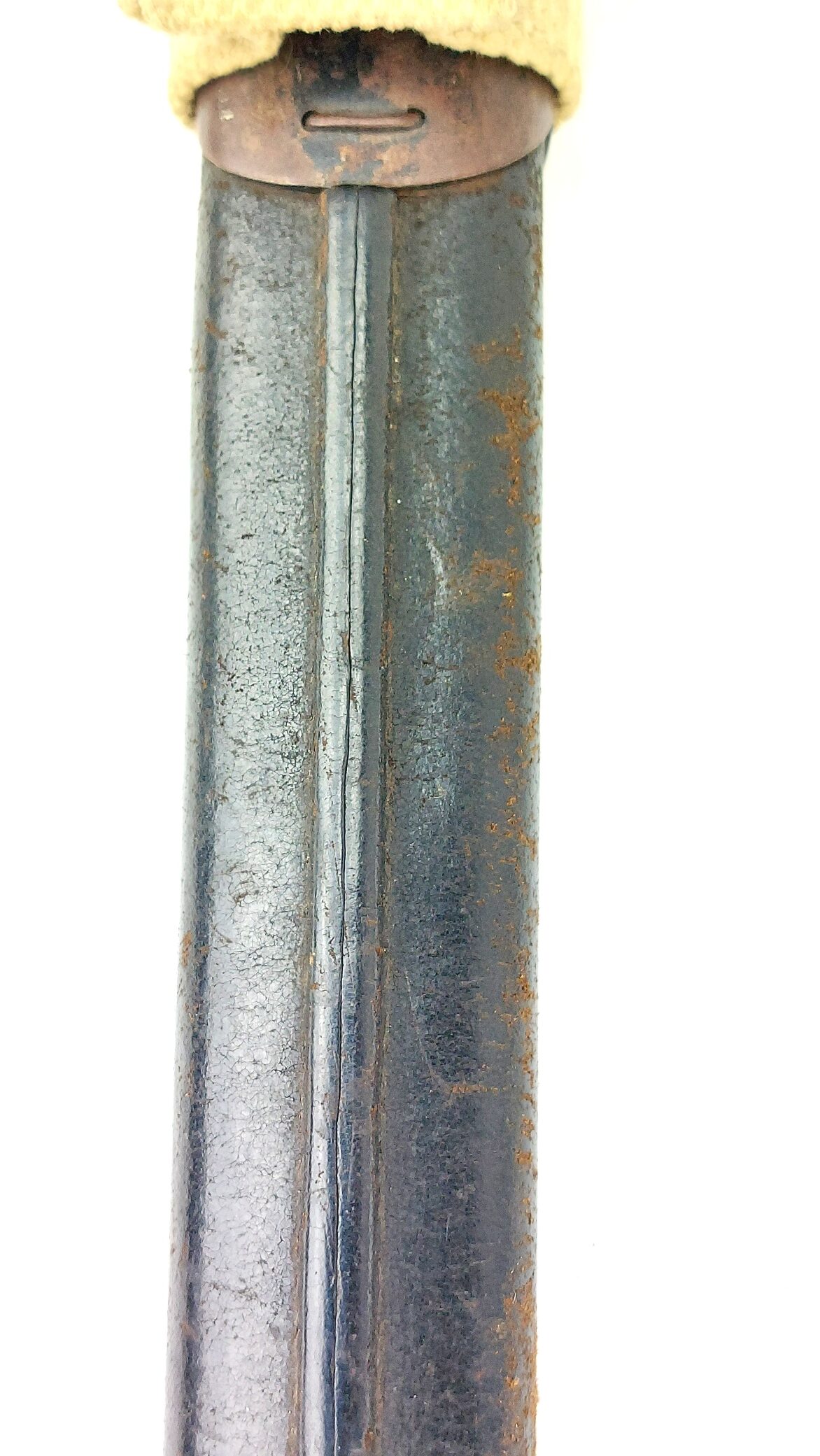
The bayonet is accompanied by a British No. I Mk. II scabbard, identifiable by its teardrop frog stud, correct steel body, and leather chape. The scabbard base bears “RE”, a recognised British inspector’s/viewer’s mark, appropriate to wartime production.
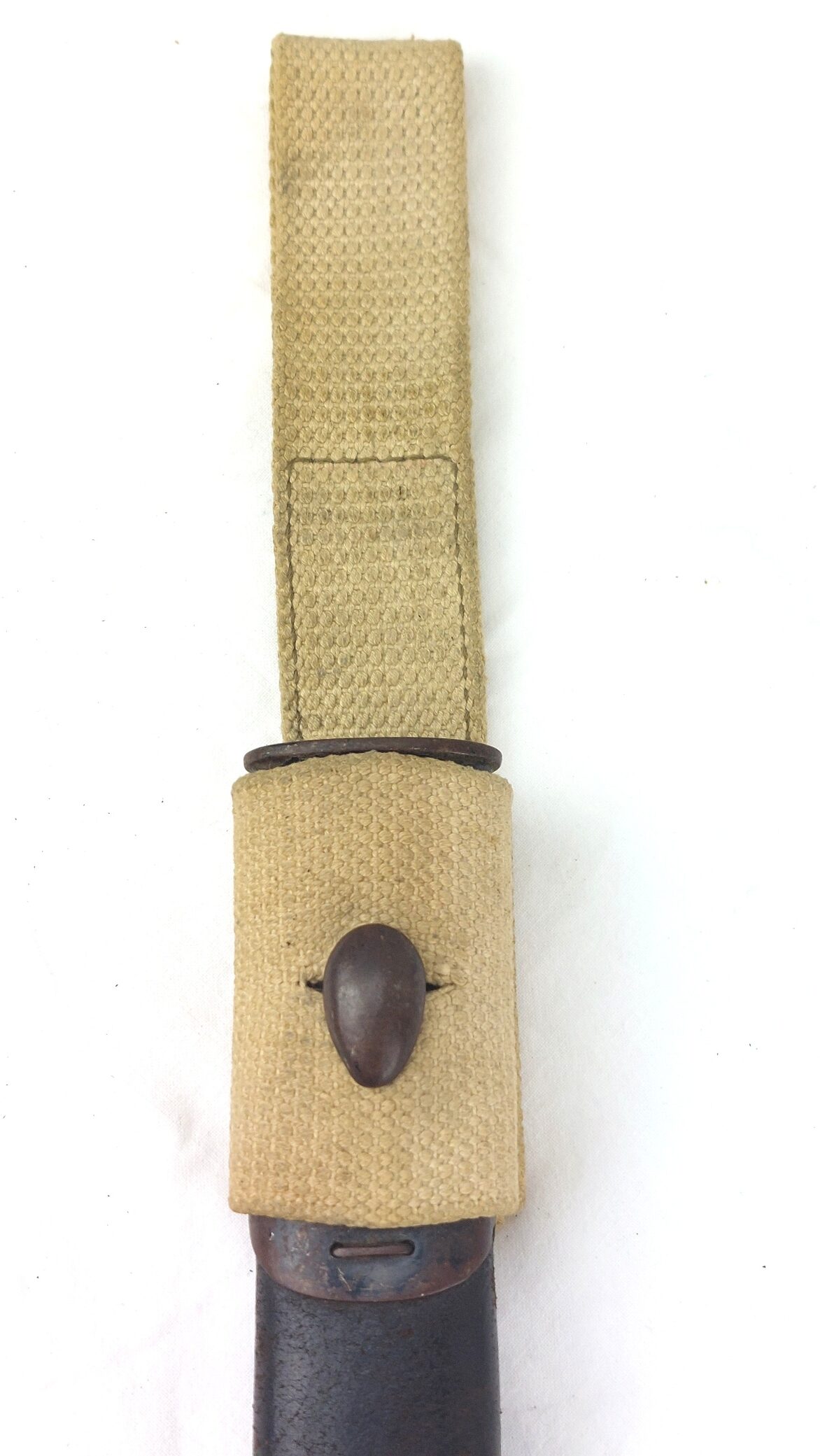
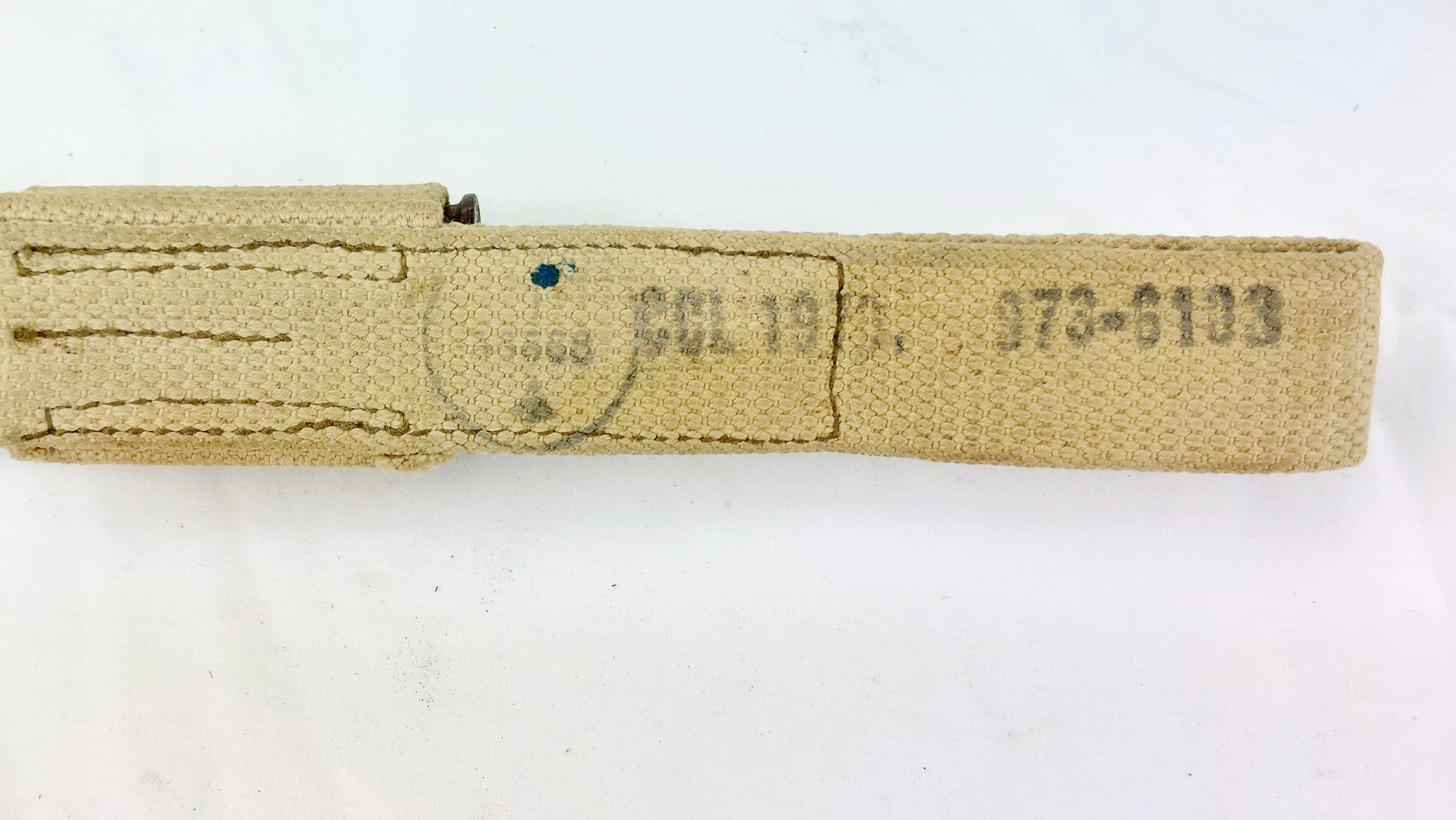
The web frog is a later British military issue example of 1958 Pattern type, manufactured in pale khaki webbing. It is marked “CCL”, a recognised British webbing contractor’s code, and bears the number “973-6133”, corresponding to the final seven digits of the British NATO Stock Number 8465-99-973-6133 for the Pattern 1958 bayonet frog. Such abbreviated NSN markings were commonly applied to web equipment during the post-war period, particularly on fabric items. The frog is therefore a correct British/Commonwealth military issue example dating from the post-WWII / Cold War period, and is not contemporaneous with the 1918-dated bayonet.
Historical Note:
The Pattern 1907 bayonet was the standard British bayonet of the First World War, designed for use with the SMLE rifle and intended to provide reach and balance comparable to contemporary continental bayonets. Production continued throughout the war, with late examples such as this July 1918 Sanderson reflecting the peak of British wartime industrial output during the final months of the conflict.
British manufacturers of the Pattern 1907 included Royal Small Arms Factory Enfield, Sanderson Bros. & Newbould, Wilkinson Sword, Robert Mole & Sons, Vickers, James A. Chapman, and Remington (U.S. contract).
*Condition*
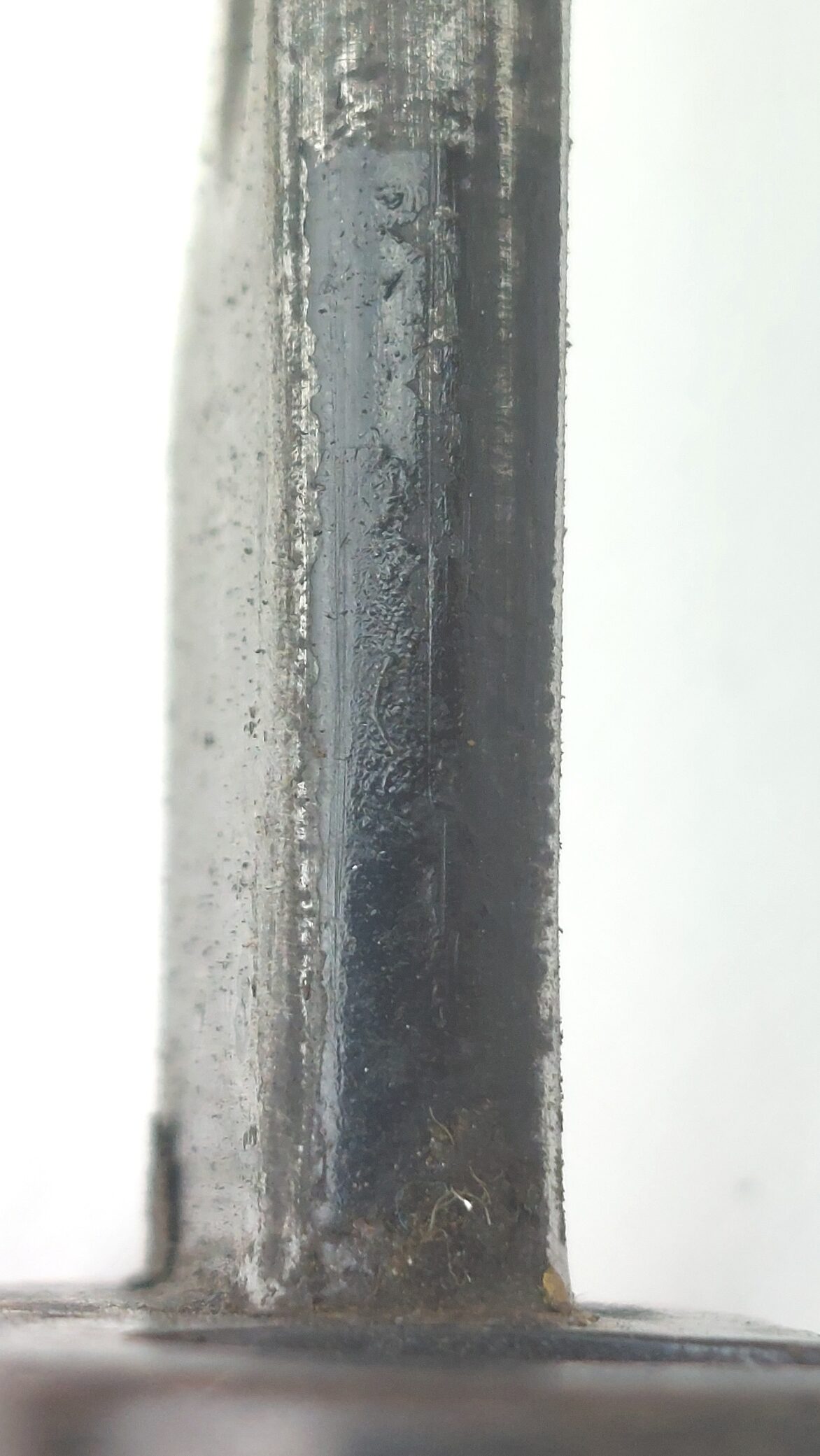
Blade remains straight with clear markings throughout, showing honest service wear, light surface oxidation, and age-related patina consistent with wartime use. Edge retains its original profile. Grips are solid with expected handling marks and intact rivets. British Pattern 1907 leather scabbard with steel mouth and steel chape. The leather body remains intact, showing heavy service wear, surface dryness, and age-related darkening, with no major splits or repairs. The steel mouth and chape show oxidation and pitting but are secure and structurally sound. The chape bears an “RE” British inspector’s mark, consistent with period inspection. Frog shows later manufacture wear and markings as noted. Please see photographs as part of the condition report.
JAQGOXACE_272210072025