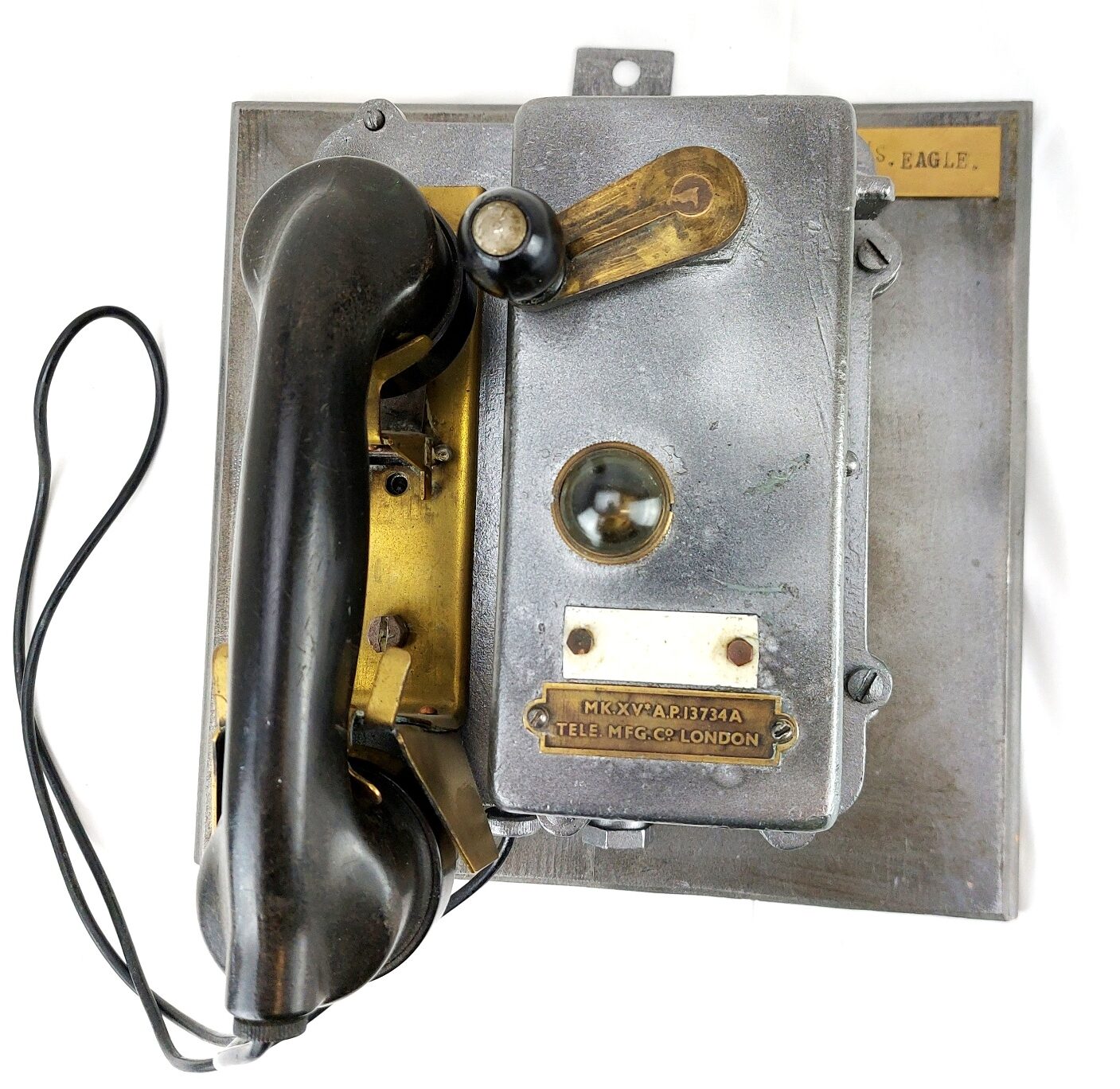
*British, WW2, Royal Navy, HMS Eagle Sound Powered Bulkhead Telephone, Mark XV (A.P.13734A), by Telephone Manufacturing Co., London*
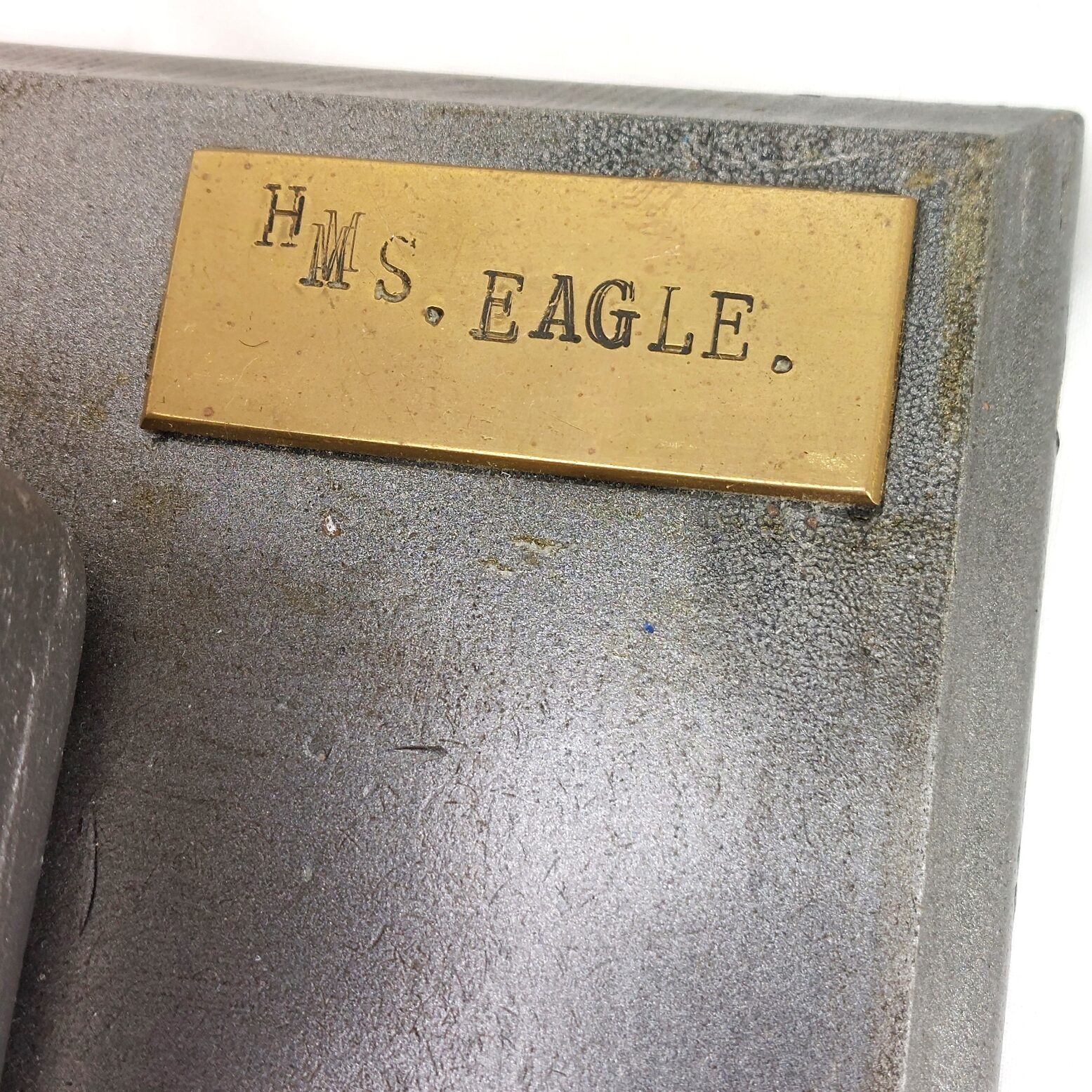
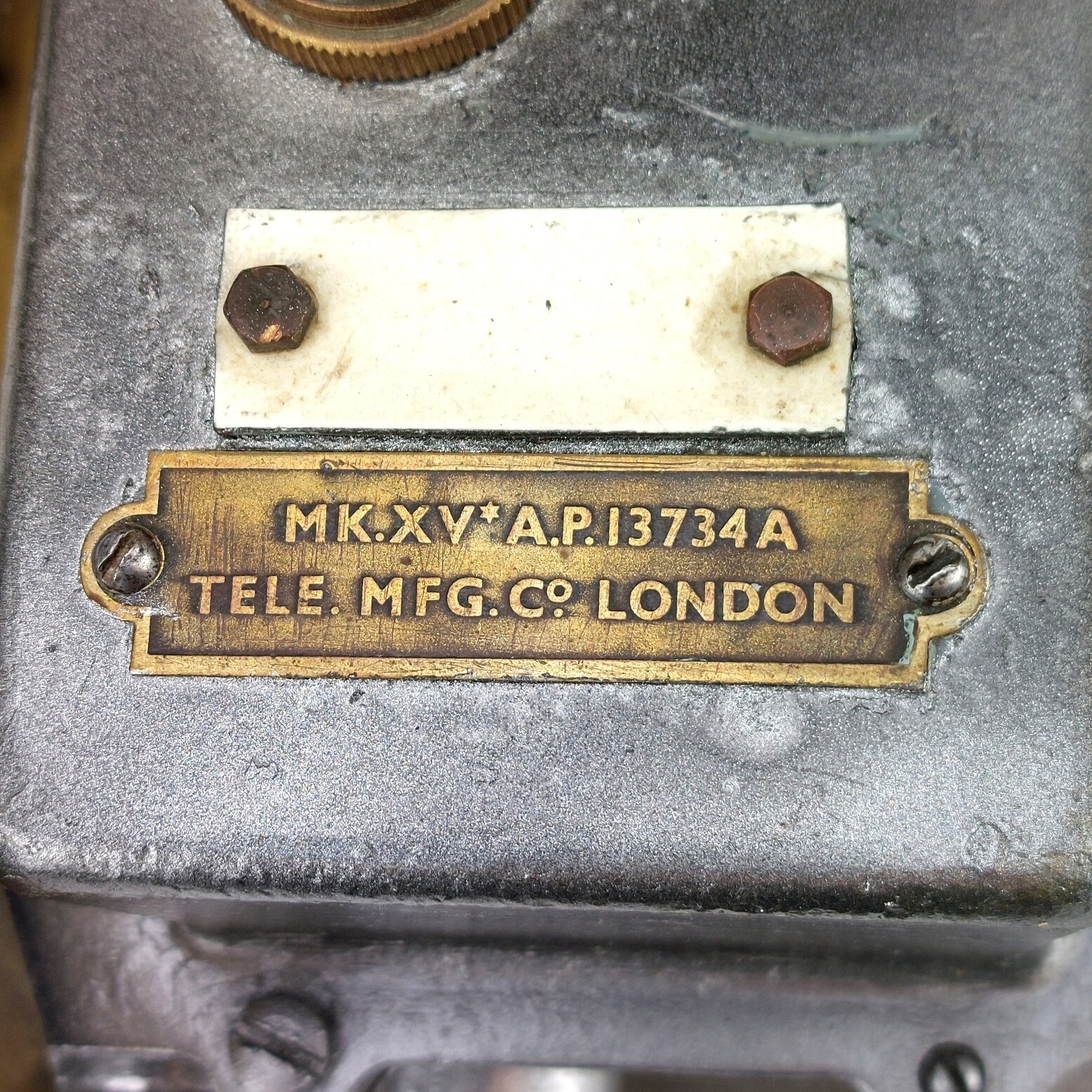
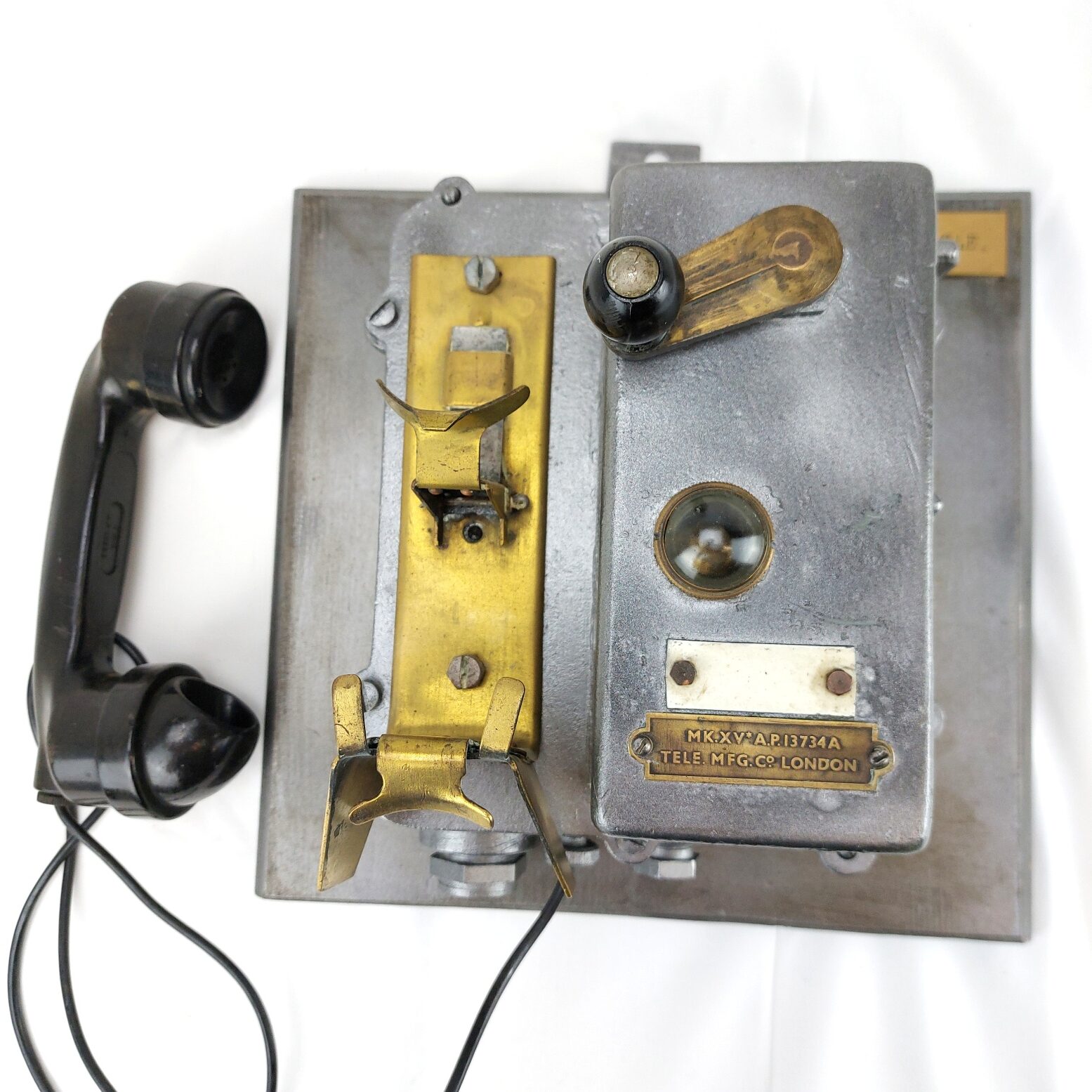
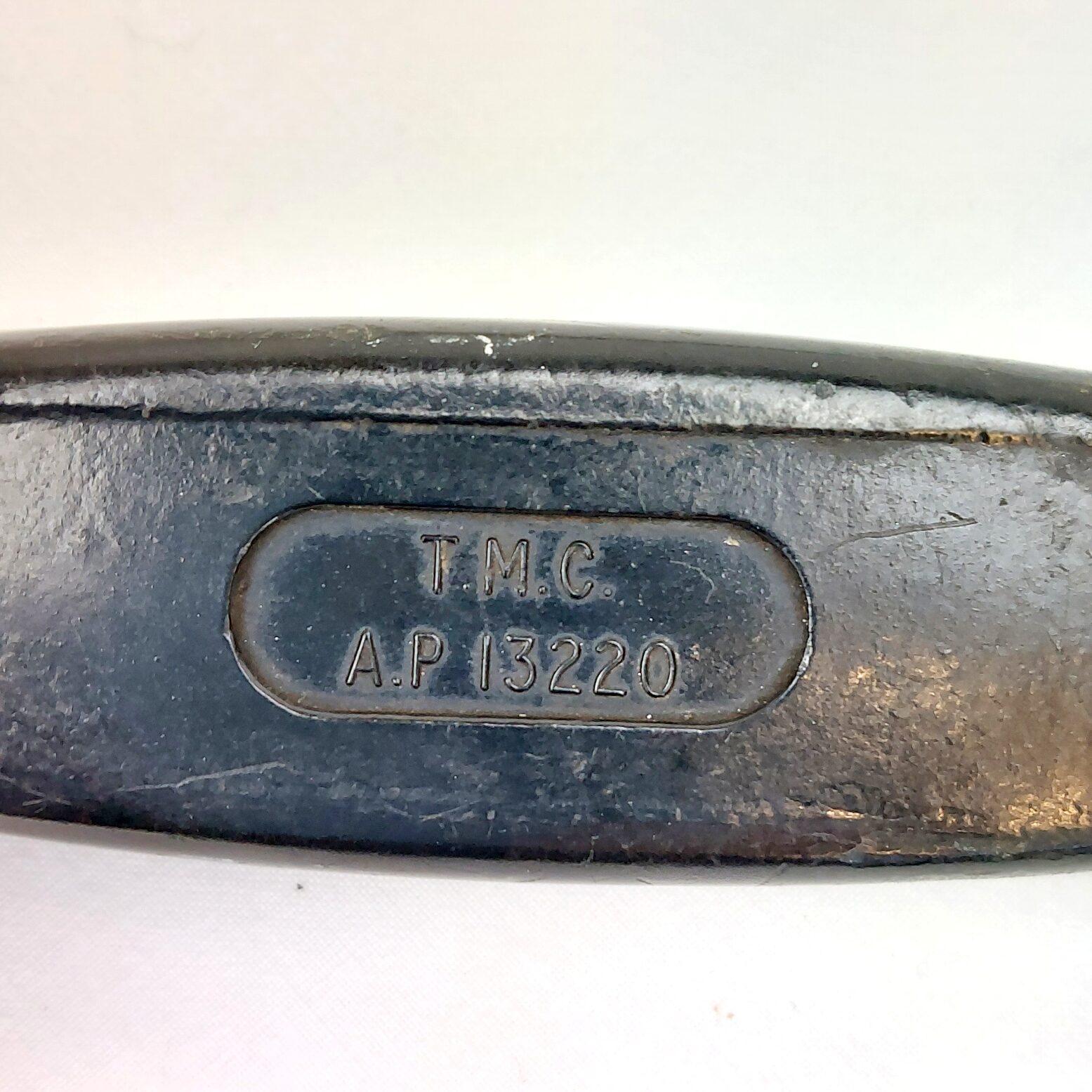
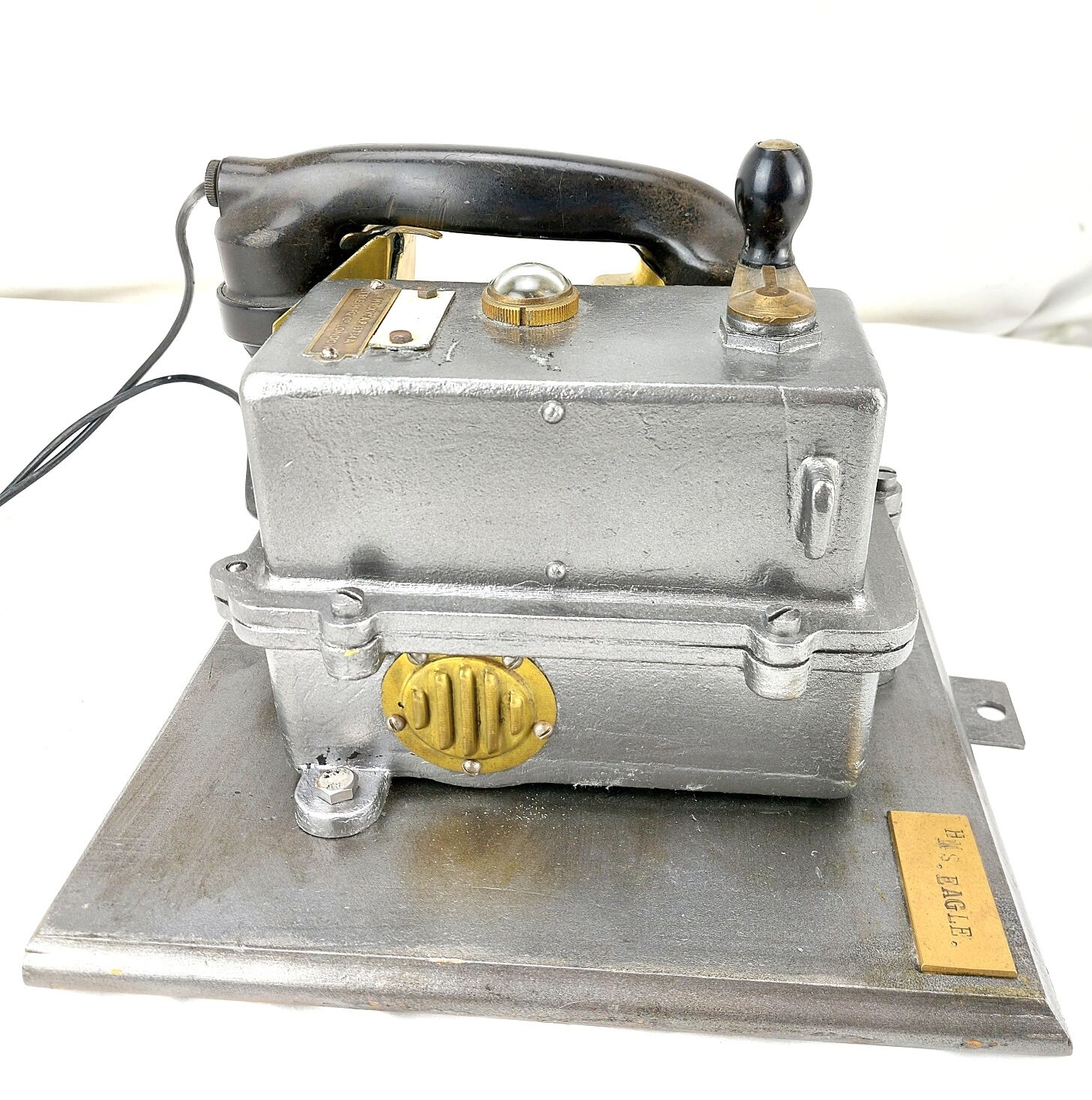
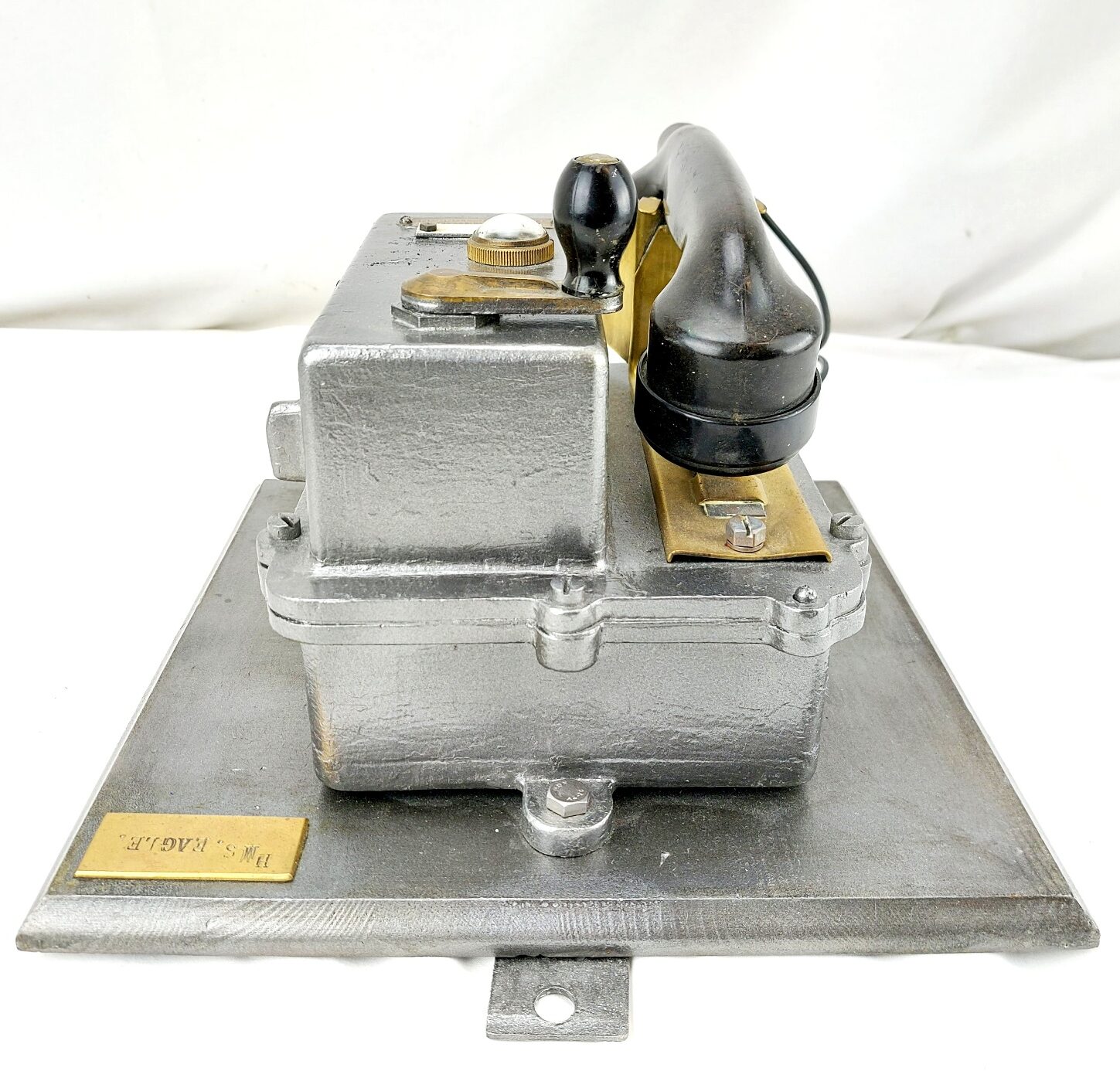
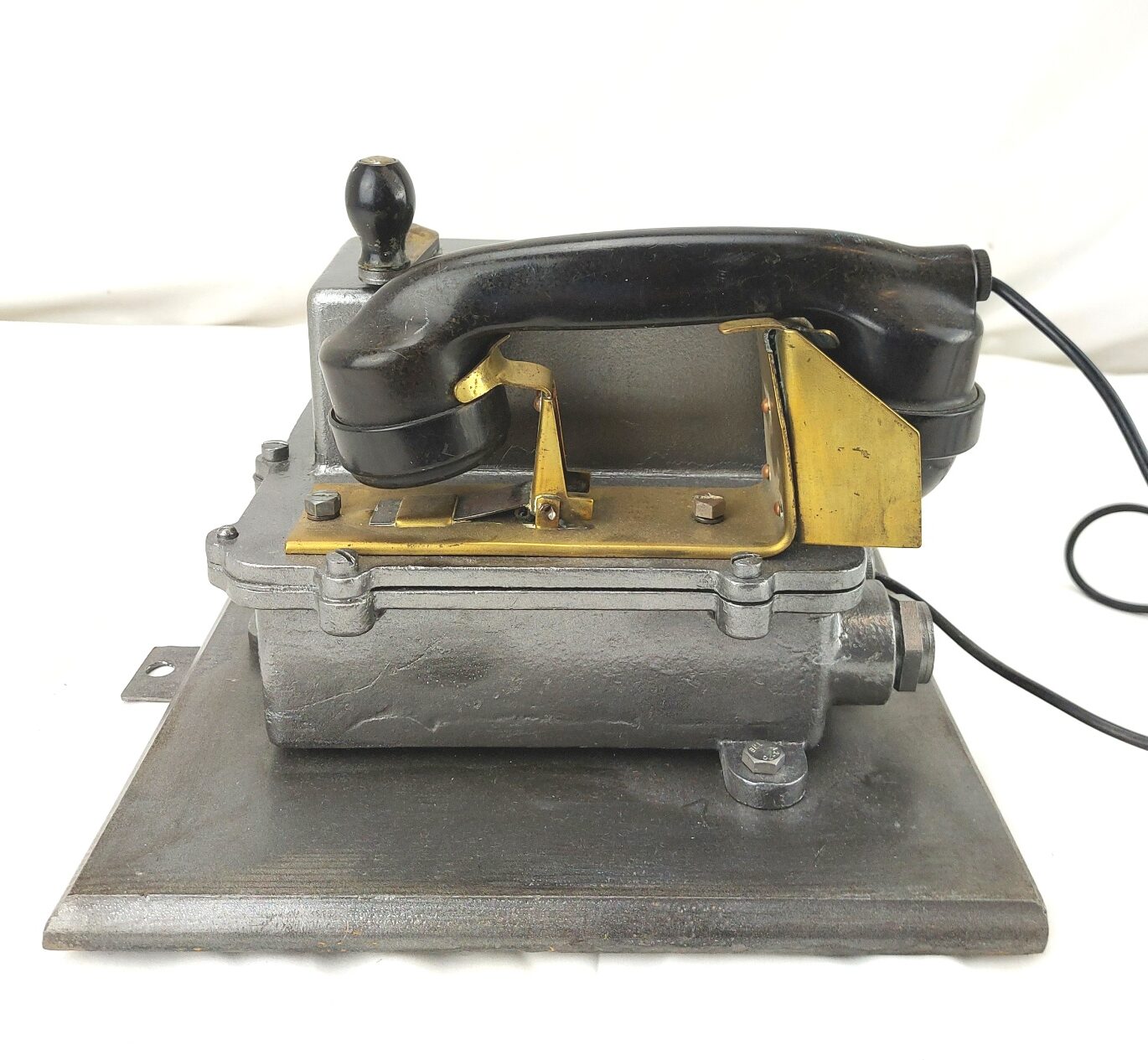
A scarce World War II Royal Navy sound-powered bulkhead telephone, Admiralty Pattern A.P.13734A, Mark XV, manufactured by the Telephone Manufacturing Company Ltd (TMC), London. Constructed in heavy cast alloy with brass fittings and mounted to its original grey-painted board, the set retains its black Bakelite handset marked “T.M.C. A.P.13220”, with original connecting lead and cradle. Brass plaques read “MK.XV A.P.13734A TELE. MFG. CO. LONDON” and “H.M.S. EAGLE.”
Approximate measurements: 32 cm × 31 cm (base), 22 cm tall.
Historical Note: TMC’s sound-powered (battery-less) telephones were developed by the firm’s Marine Department for shipboard service, designed to withstand vibration, moisture, and impact. Self-energising and independent of mains or battery supply, they provided dependable communication under battle conditions and remained operable even during power loss. Their proven durability later saw them adopted for mines, tunnels, and industrial sites ashore.
The Mark XV Admiralty Pattern A.P.13734A telephone was a robust, sound-powered internal communication system designed for use aboard Royal Navy warships during the Second World War. Manufactured by TMC, it formed part of the Admiralty’s standardized internal communication network, linking key operational areas such as the bridge, engine room, damage-control stations, and flight control offices. Unlike earlier voice pipes or electrically powered sets, the Mk XV required no external power source, relying instead on sound induction to transmit speech—a crucial advantage during battle conditions or power failures.
This example is engraved to HMS Eagle, the Royal Navy’s pioneering aircraft carrier that served with distinction throughout the Second World War. From 1939 to 1942 she operated in the Indian Ocean and Mediterranean, escorting convoys to Malta and Greece, and launching Fleet Air Arm Swordfish strikes against Axis shipping until her loss in August 1942.
HMS Eagle would carried more than 300 sound-powered telephones linking her bridge, flight deck and engine spaces, but she was struck by four torpedoes from U-73 during Operation Pedestal in August 1942 and sank within eight minutes—making surviving examples, likely removed during salvage, exceptionally rare relics of Britain’s wartime carrier fleet.
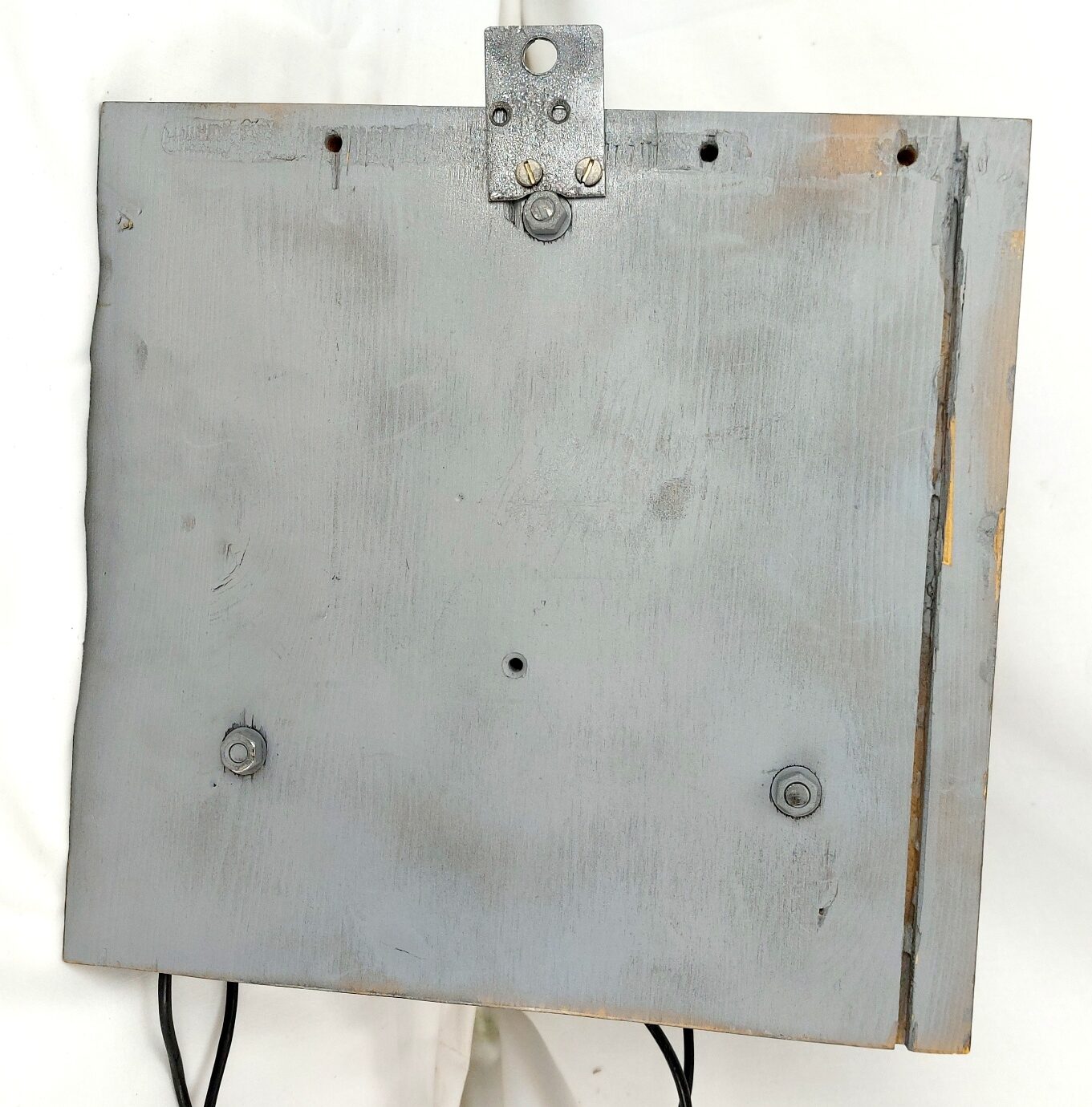
*Condition* Excellent preserved condition with clear markings and well-maintained alloy surfaces. Brass fittings retain warm patina; handset and cradle intact, wiring present but untested - the winder winds nicely. Mounting board shows later repaint consistent with display. A rare and evocative naval communication instrument directly associated with one of Britain’s most storied wartime carriers. Please see photographs as part of the condition report.