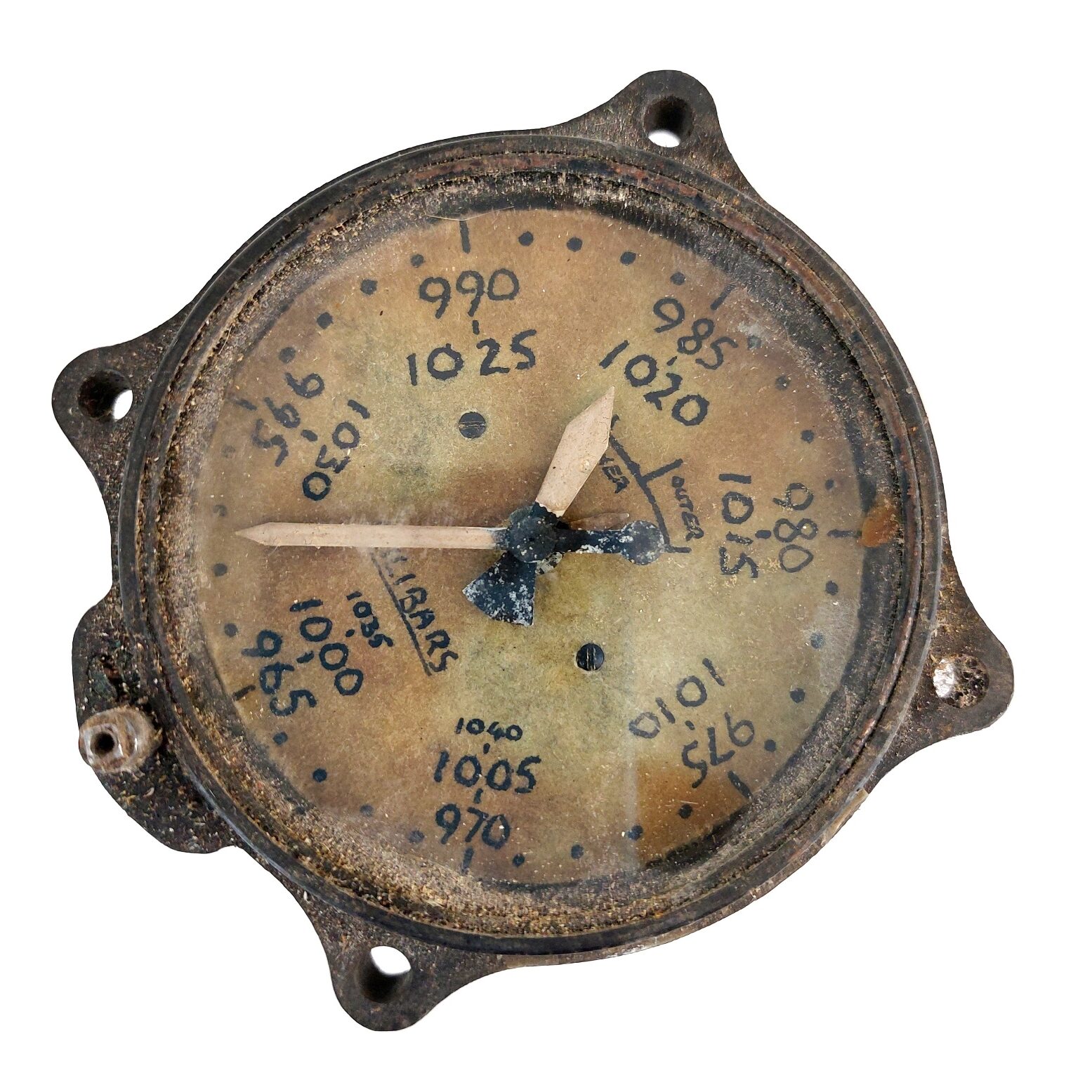
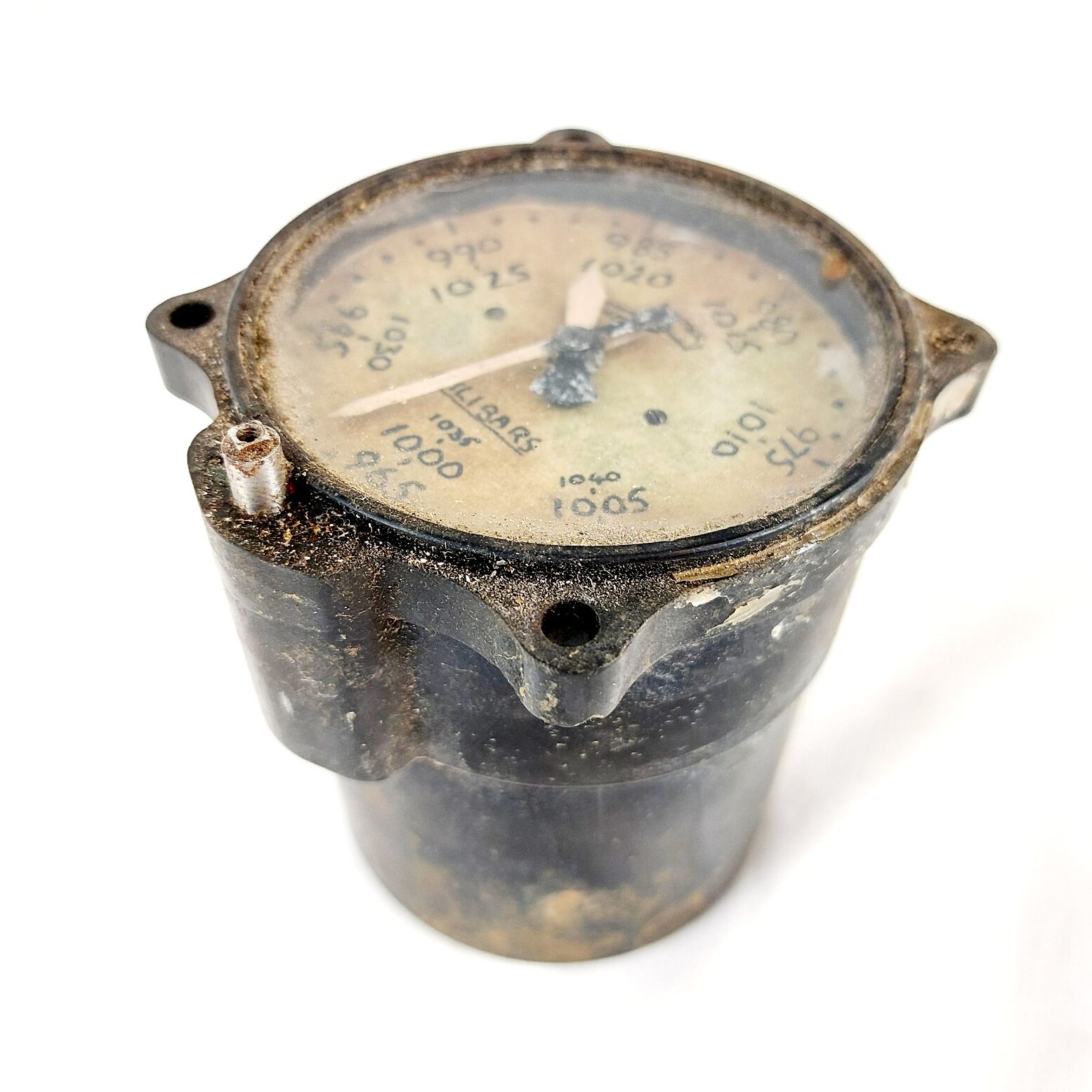
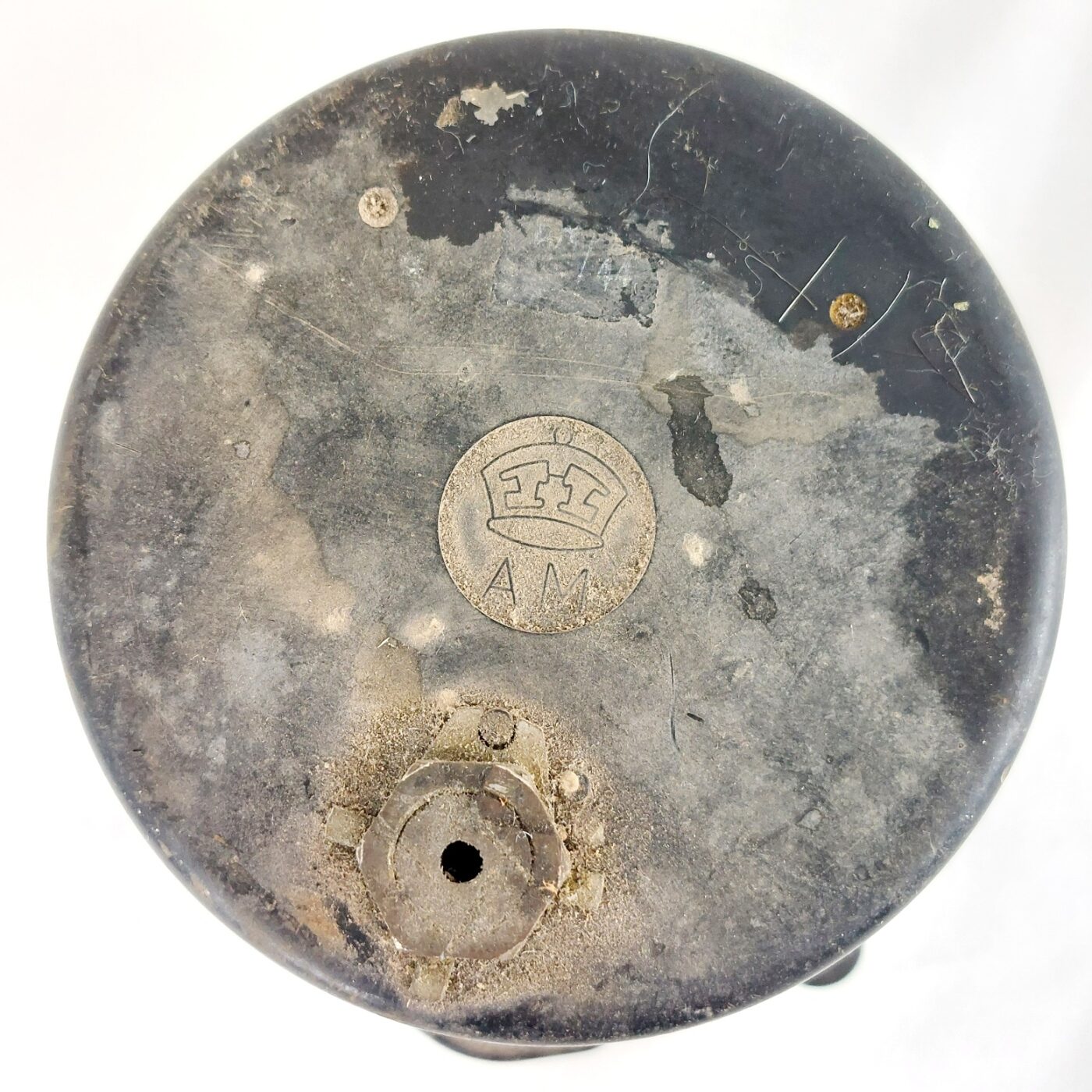
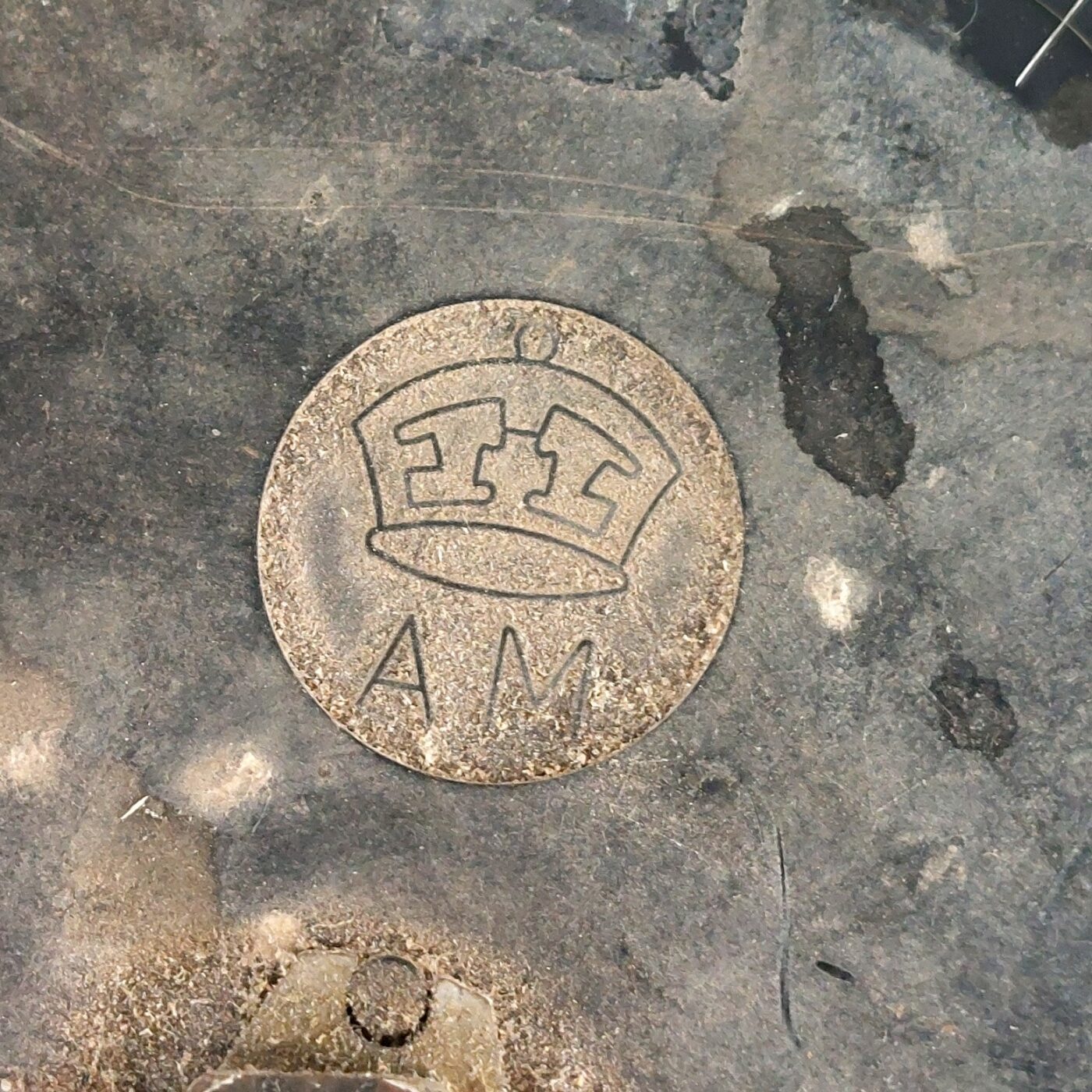
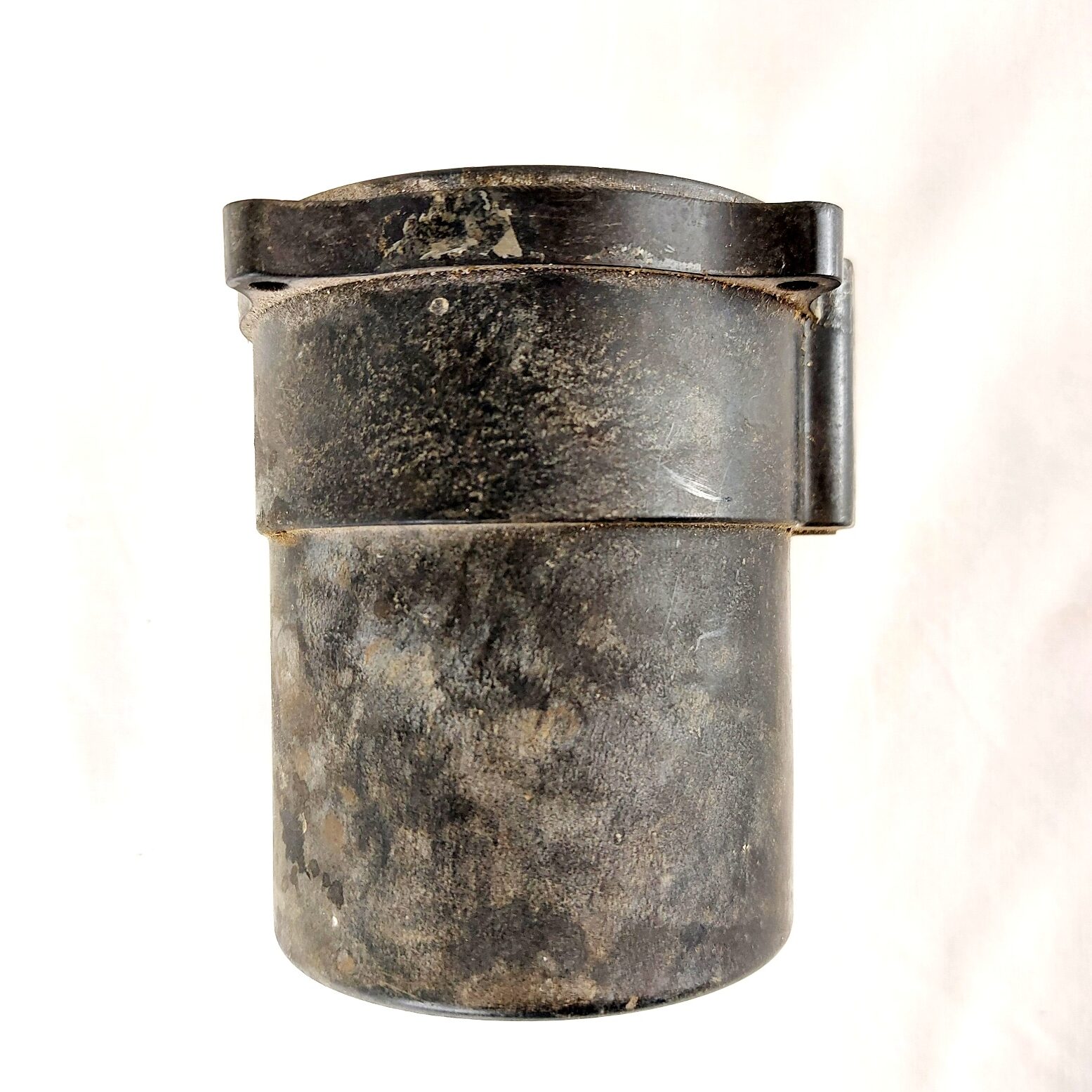
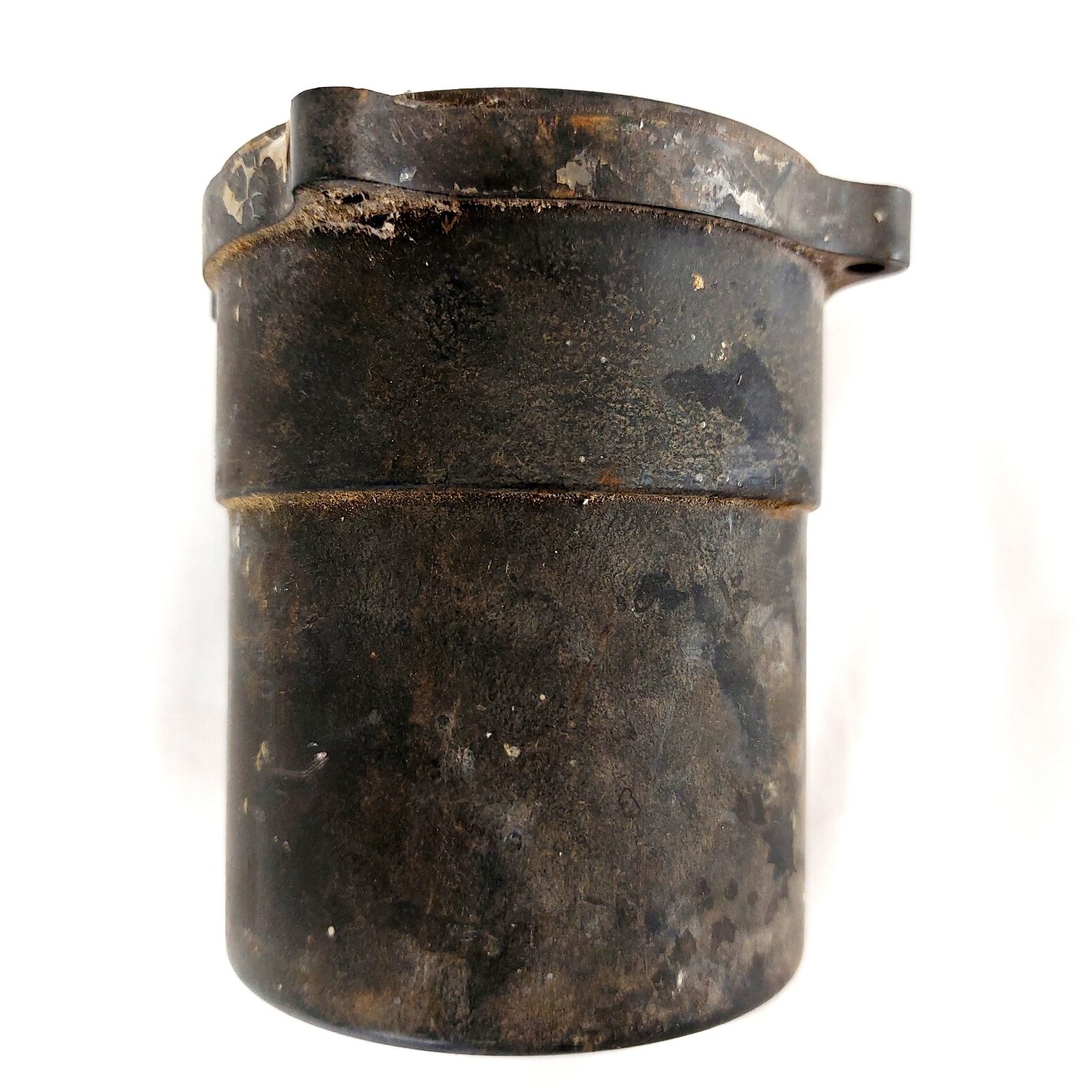
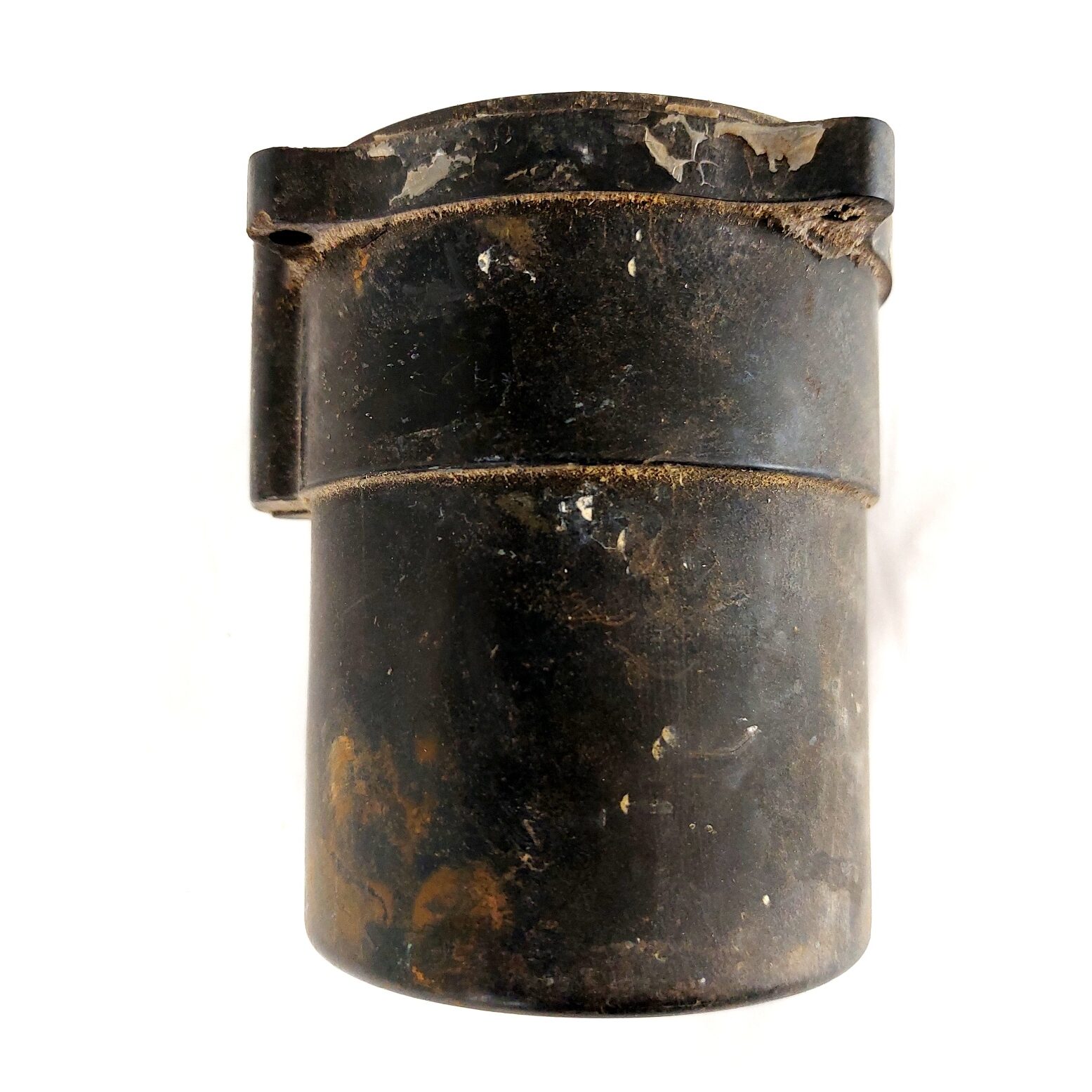
A unique surviving World War II RAF aircraft altimeter, housed in its original Air Ministry (“A•M” with crown)–marked casing, approximately 8 cm in diameter and 9.8 cm deep. The instrument body, pneumatic port and rear pressure connection conform to the pattern of the RAF Mk. VIII/Mk. IX altimeter series, as fitted to frontline aircraft such as the Spitfire, Hurricane, Blenheim, Wellington and early Lancasters.
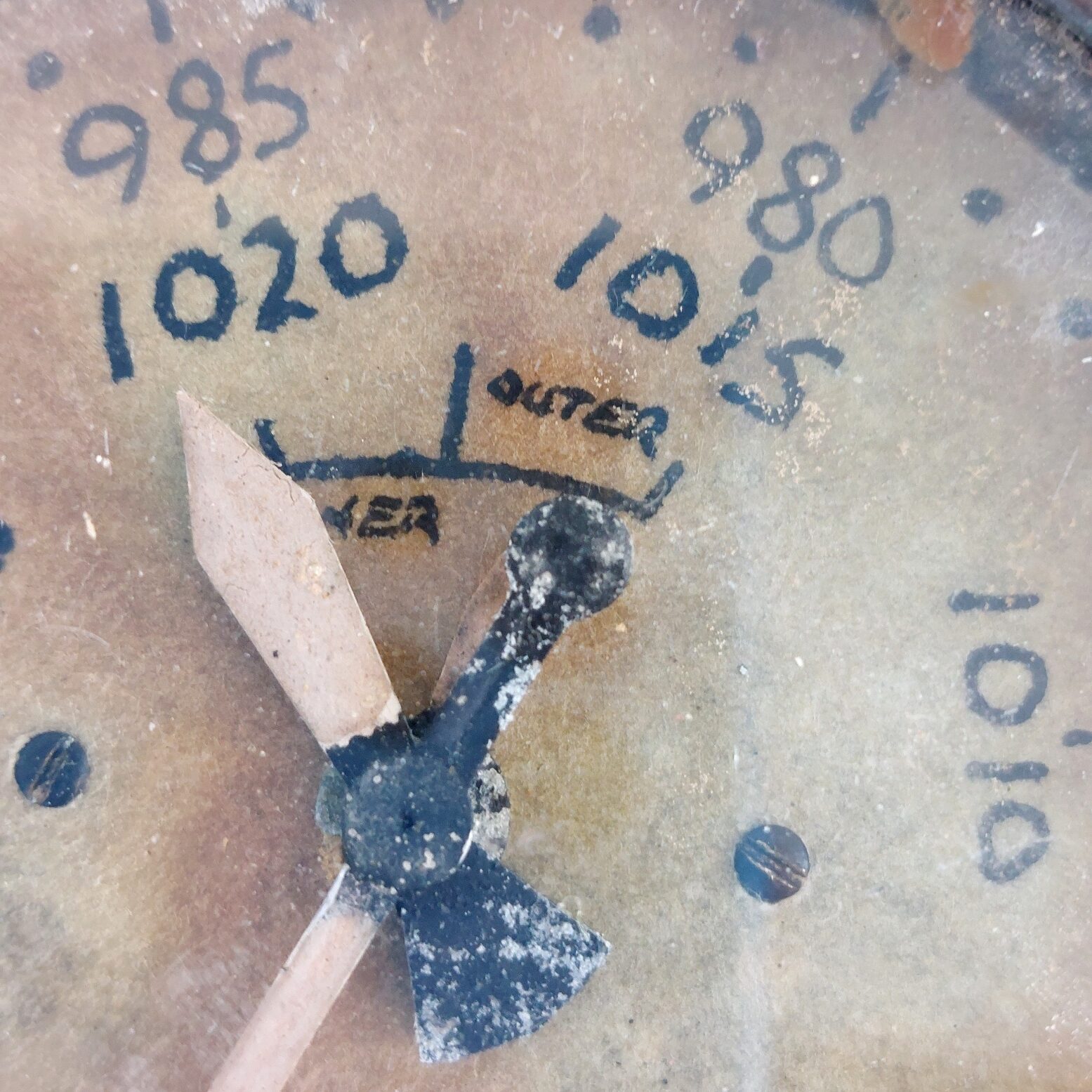
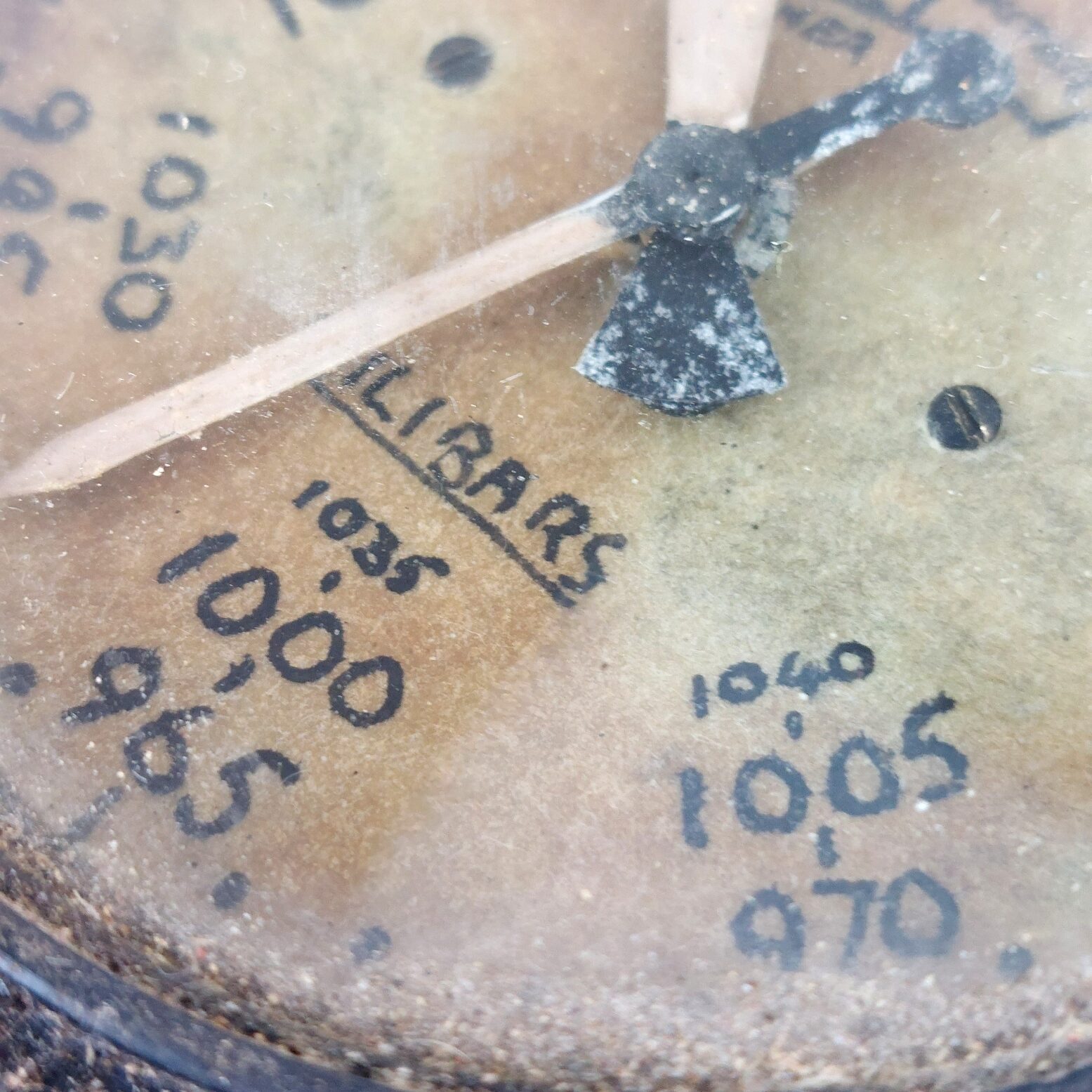
Today, however, the altimeter presents an extraordinary and evocative feature: its original factory-printed dial is gone, replaced by a handwritten field-made face displaying atmospheric pressure values in millibars (mB / hPa). Three improvised pointer blades replace the standard altitude and subscale hands. This handwritten dial transforms the instrument into a small artefact of wartime urgency. In the relentless tempo of RAF operations, spare parts were scarce, aircraft required constant attention, and Instrument Sections often worked through the night. We can only imagine the scene that produced this improvised dial: a damaged altimeter stripped from a fighter or bomber, a fitter faced with shortages, and necessity forcing ingenuity over formality. A fresh piece of card, a pencil, and a steady hand created a functional face so the mechanism could still be used perhaps for training or testing. If only this altimeter could talk, its story would likely be far richer than any standard-issue panel gauge.
Historical Note: RAF Mk. VIII and Mk. IX altimeters were precision barometric instruments, translating atmospheric pressure into altitude indications using a stack of finely calibrated aneroid capsules. Their printed dials showed altitude in feet, with a barometric Kollsman subscale typically in millibars. Throughout 1940–44, and especially during the peak of operational losses and rapid aircraft turnover, RAF Repair Depots and Instrument Sections frequently reused such components as ground-training aids. Apprentice instrument technicians learned calibration and pressure response using non-flying examples, sometimes fitted with simple handwritten scales like the one seen here. The combination of a genuine AM-marked wartime casing with a fully improvised dial makes this an excellent example of a field-converted instructional instrument, likely altered during the war or shortly after.
Markings: Rear casing with Air Ministry “A•M” and crown stamp. Dial hand-marked in millibars / hectopascals.
*Condition* Relic to fair condition. Original AM-marked casing with pronounced external wear, oxidisation and paint loss. Front bezel and glass heavily clouded and internally stained. Handwritten dial of card or paper exhibiting fading, moisture staining and dirt. Pointer set non-standard and corroded. Movement untested. A compelling display or reference example. Please see photographs as part of the condition report.