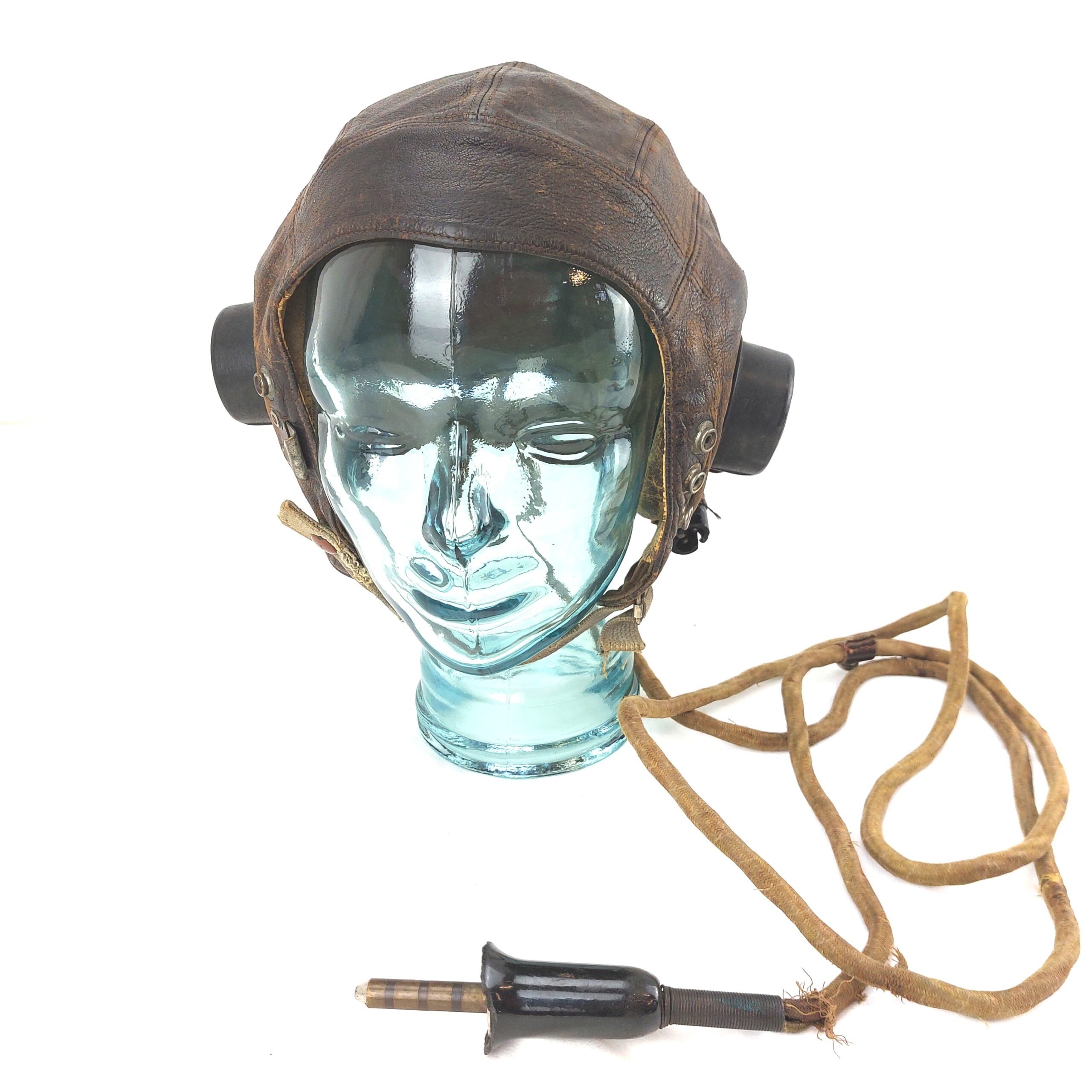
*British, WW2, RAF 2nd Pattern C-Type Leather Flying Helmet with Receivers and Loom, Size 3*
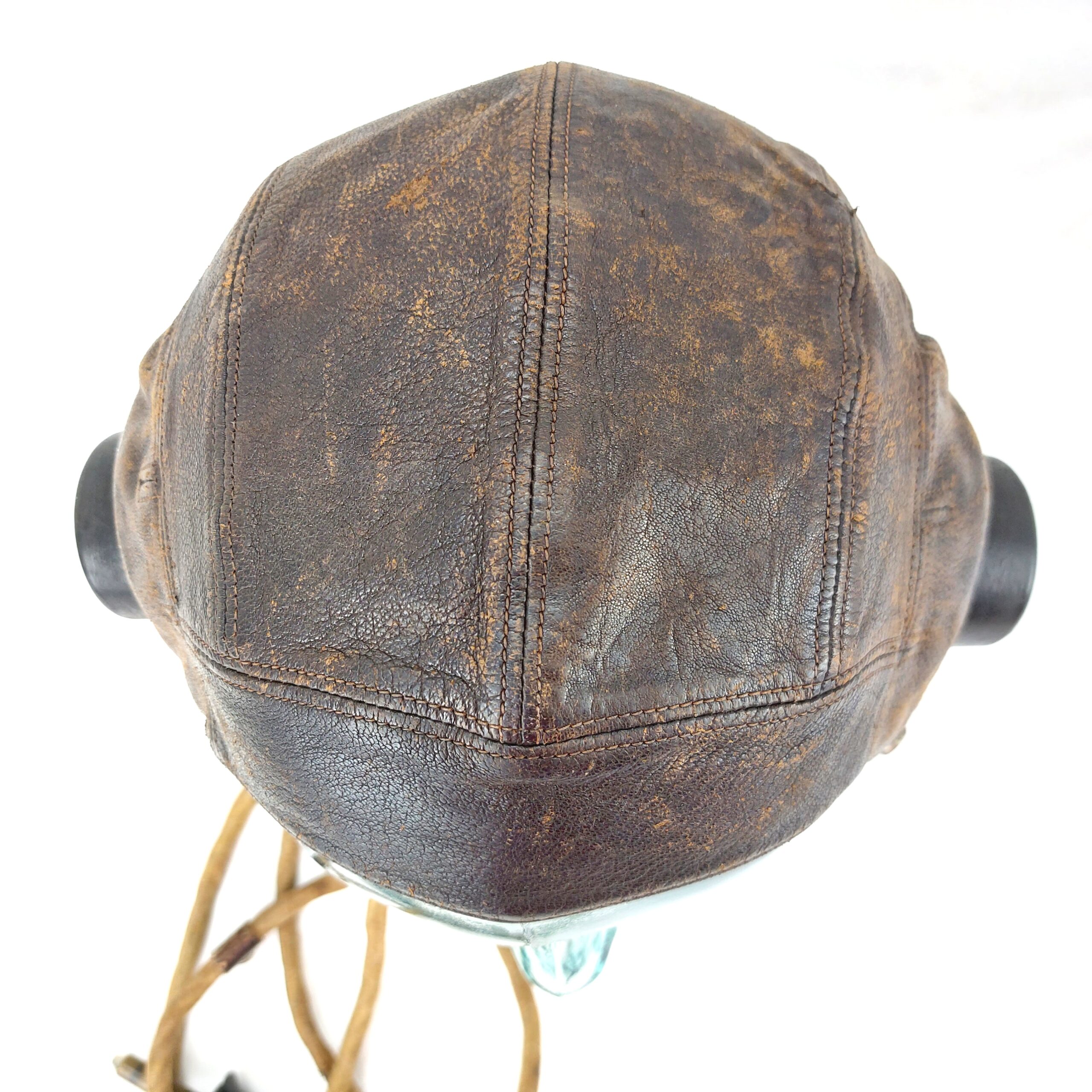
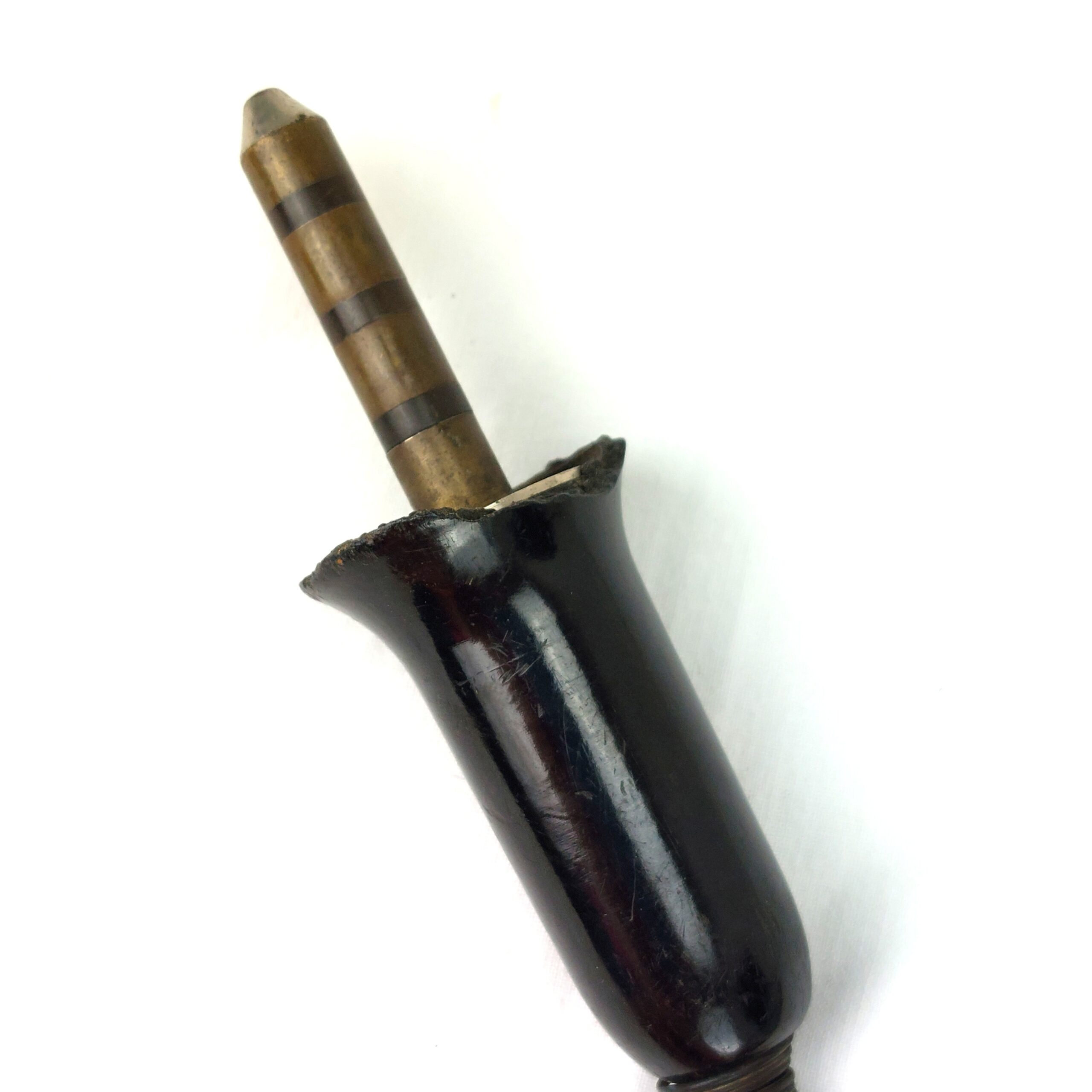
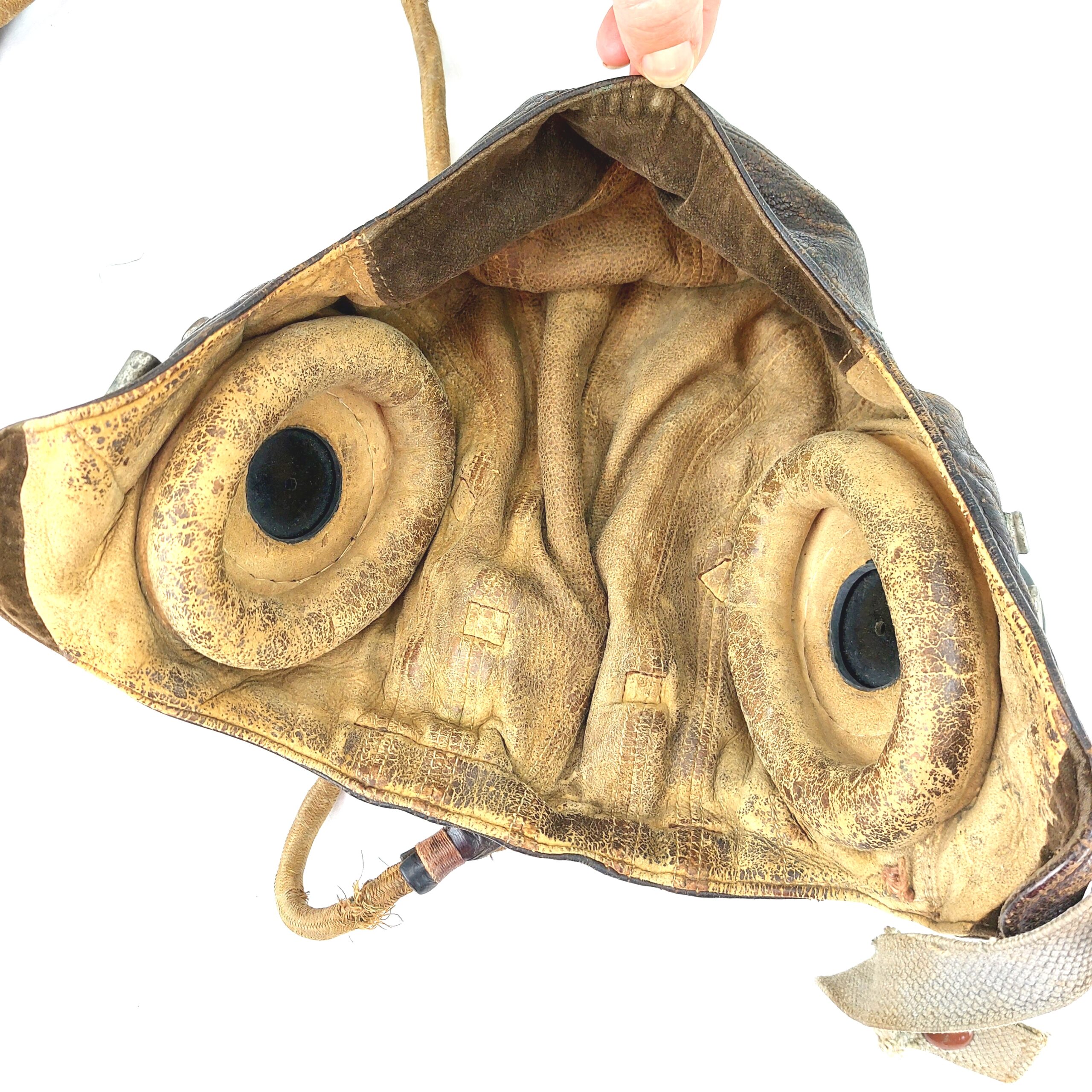
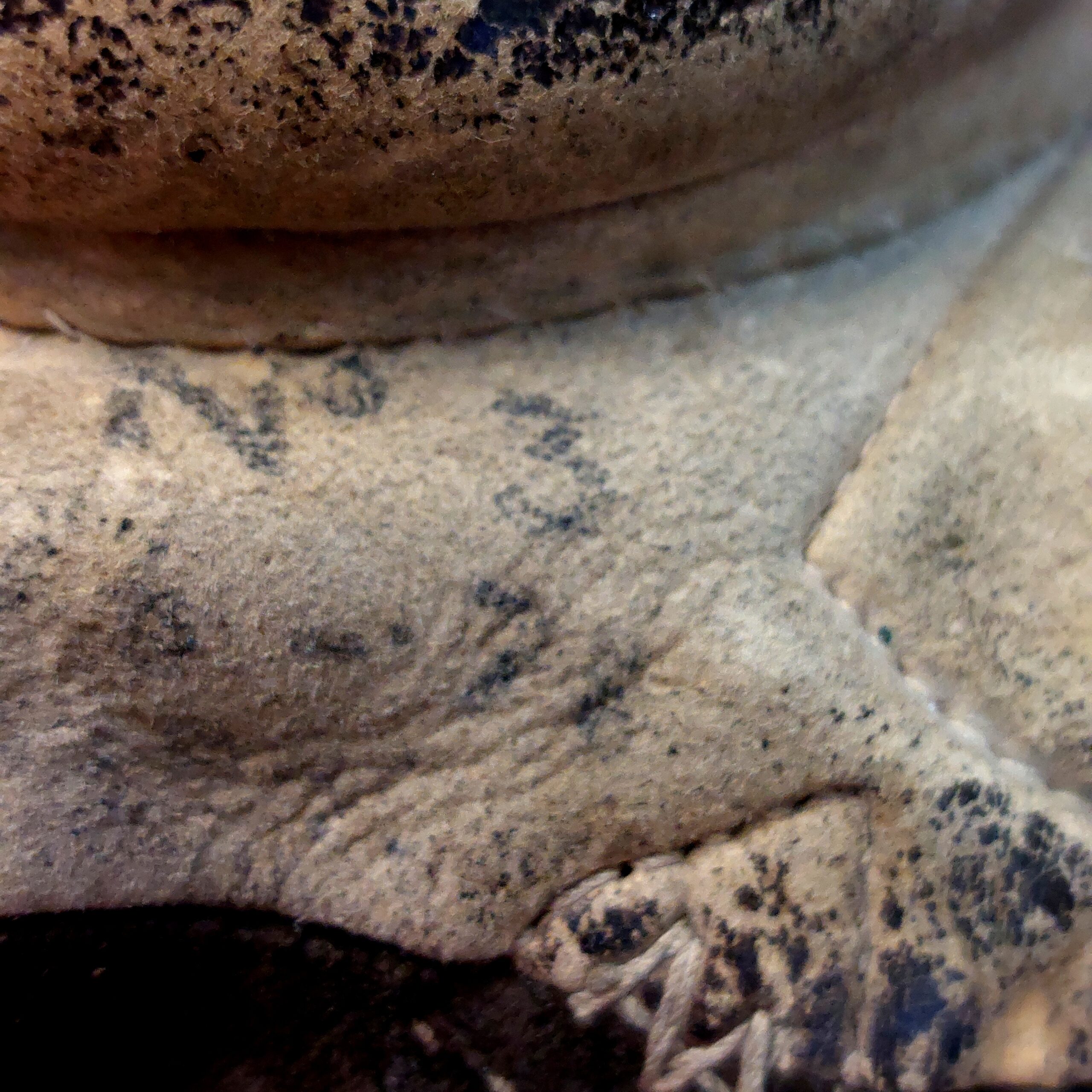
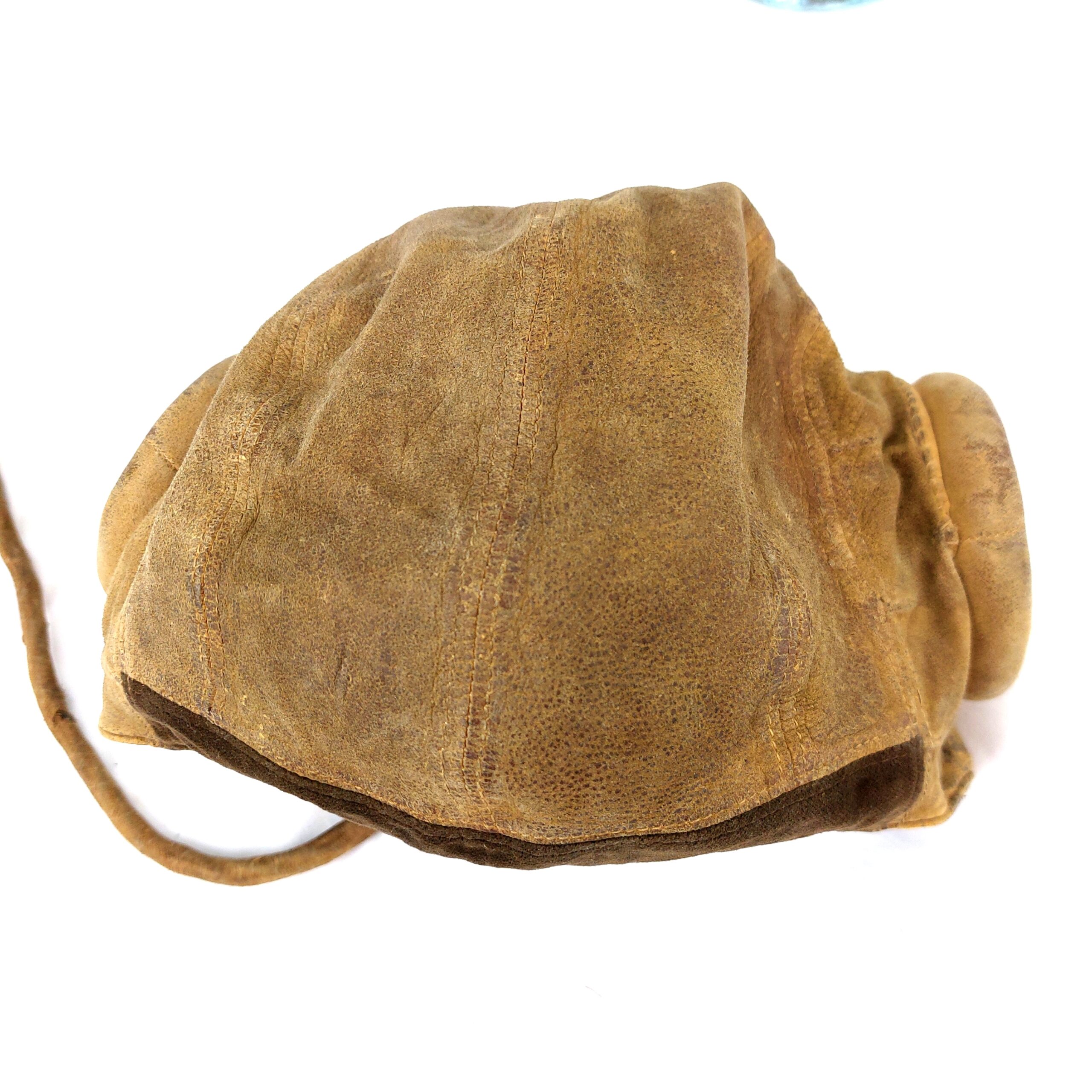
A wartime RAF C‑Type leather flying helmet, complete with integral earphone receivers, internal wiring loom, and Type 2091 plug. Size‑marked “No. 3” in ink beneath the left inner earphone, with original chamois lining and canvas chin strap present. This is a good example of the RAF’s definitive wartime flying helmet, showing honest service wear while remaining intact and complete.
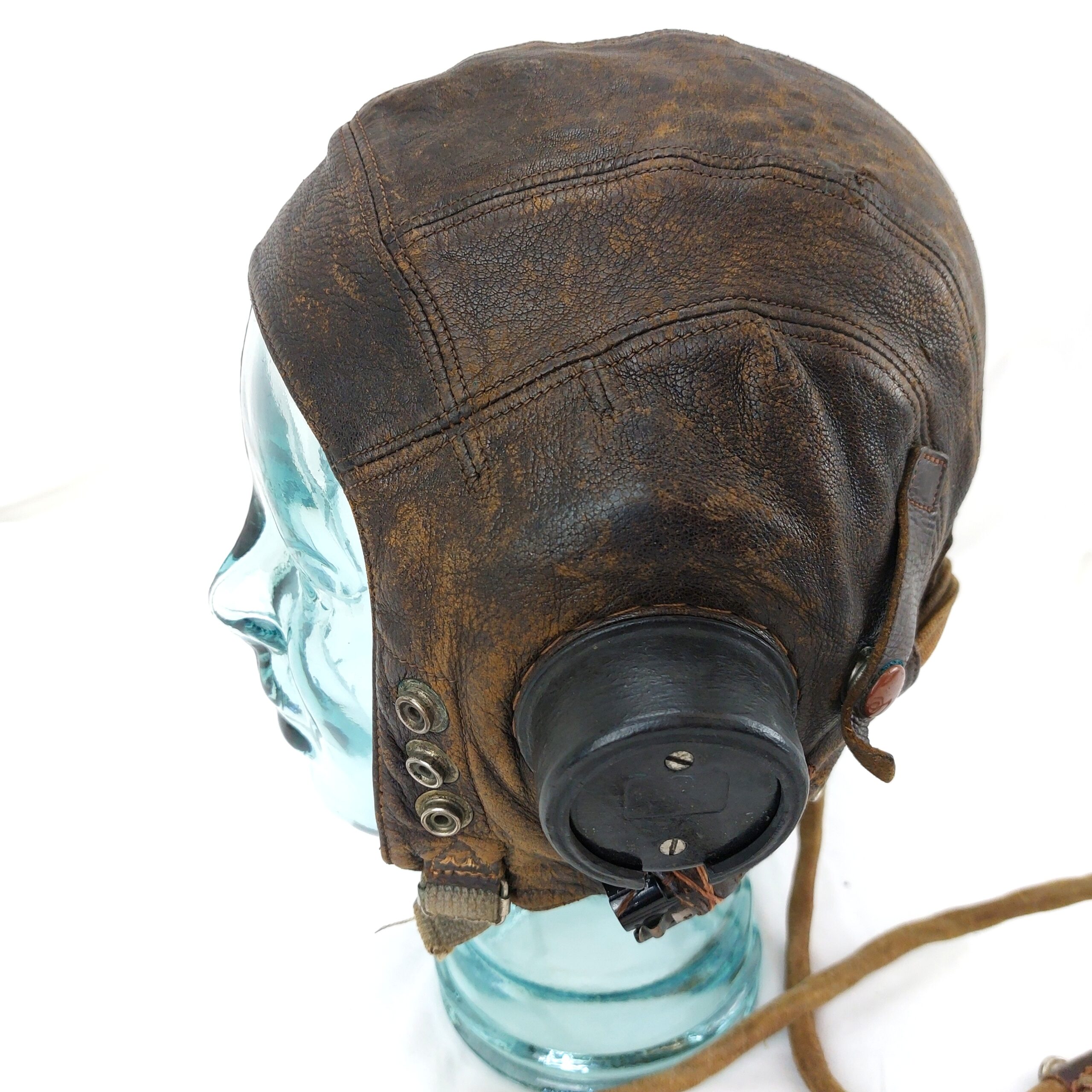
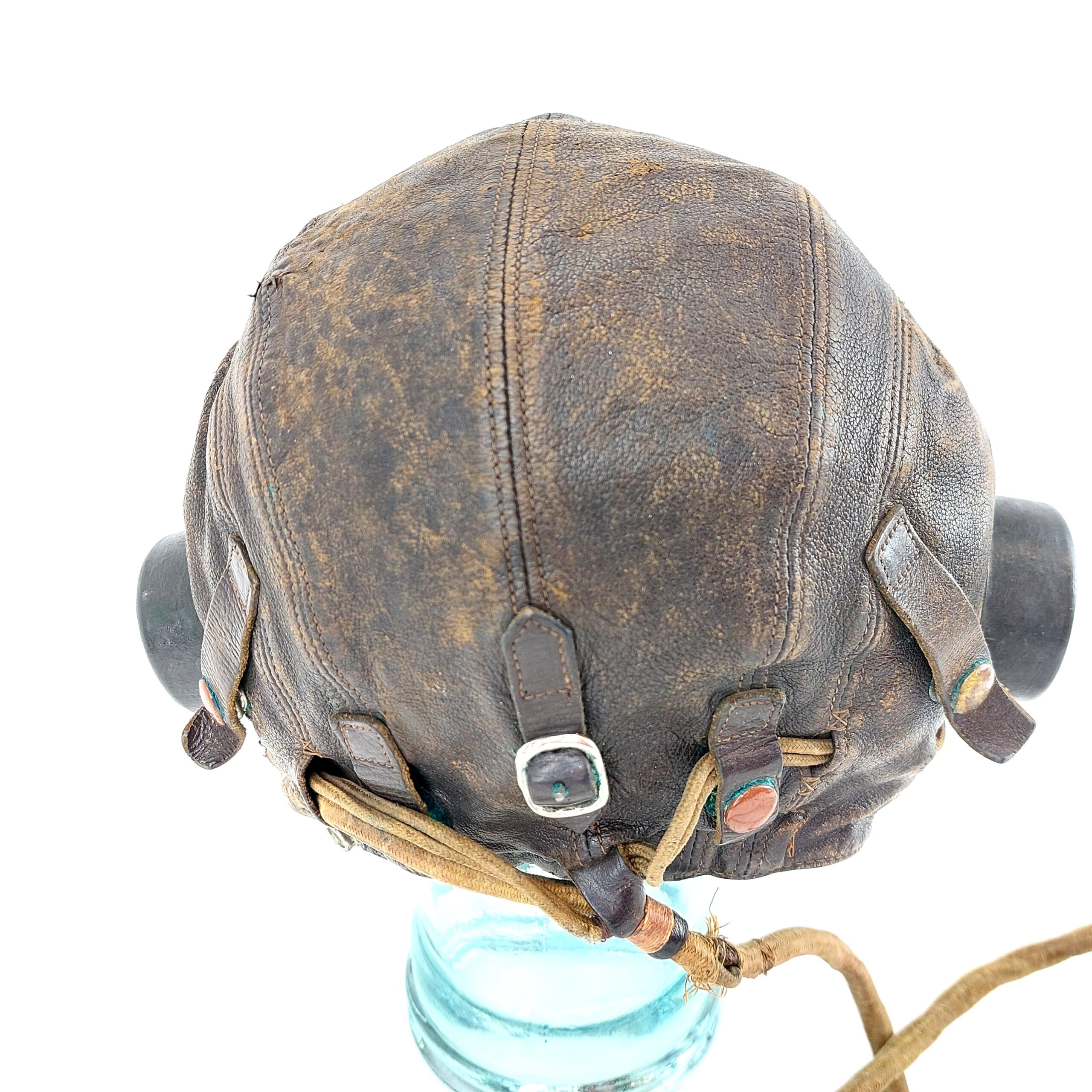
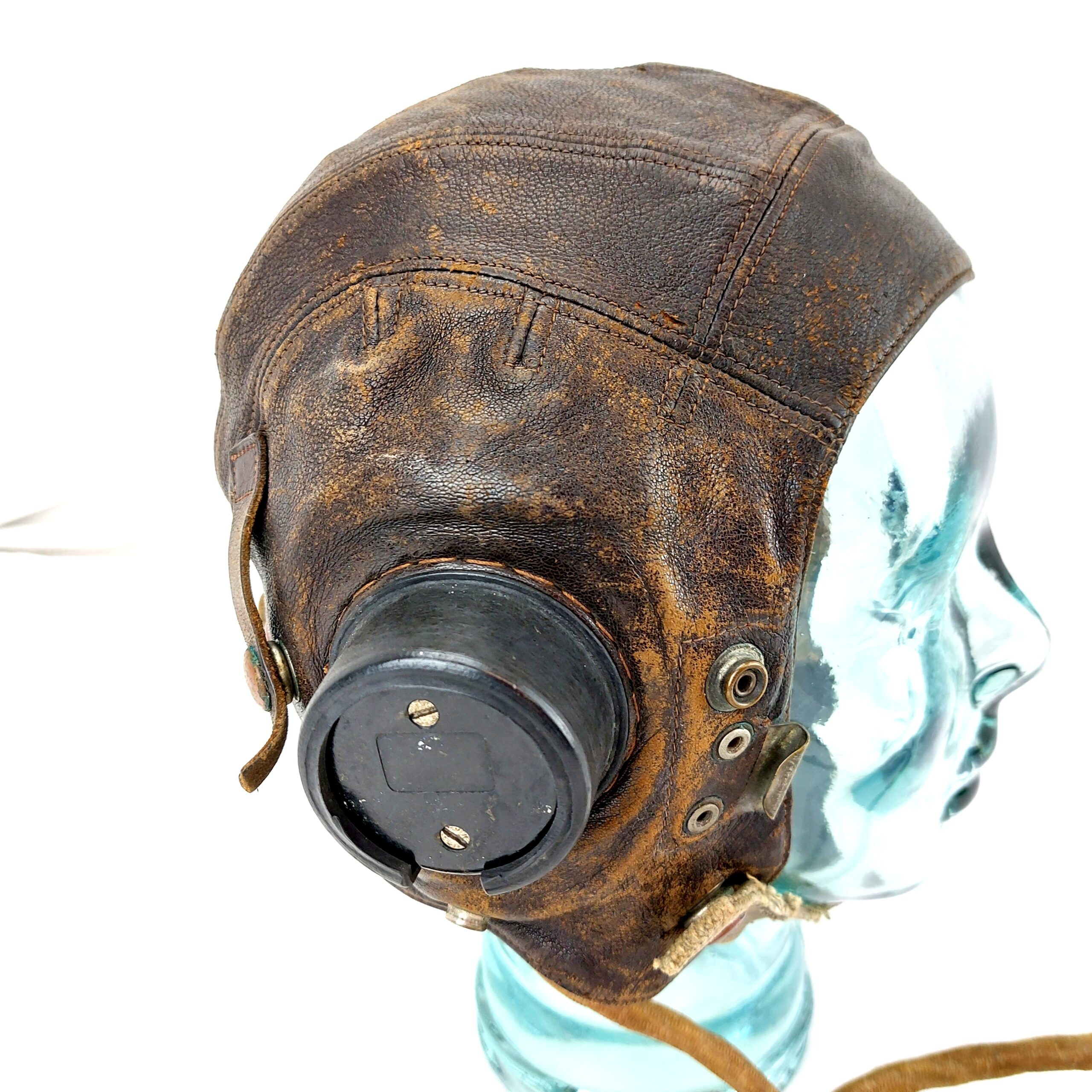
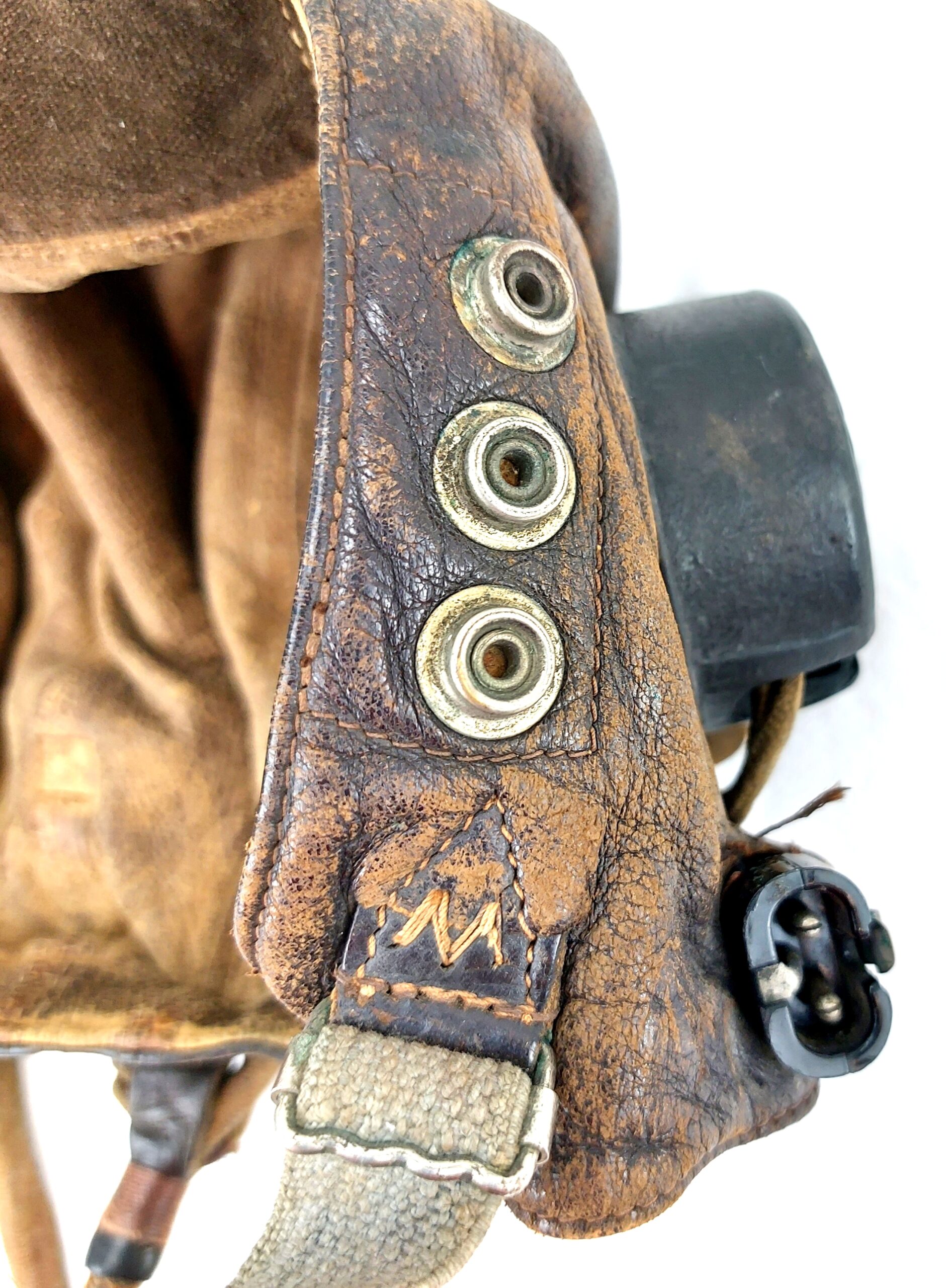
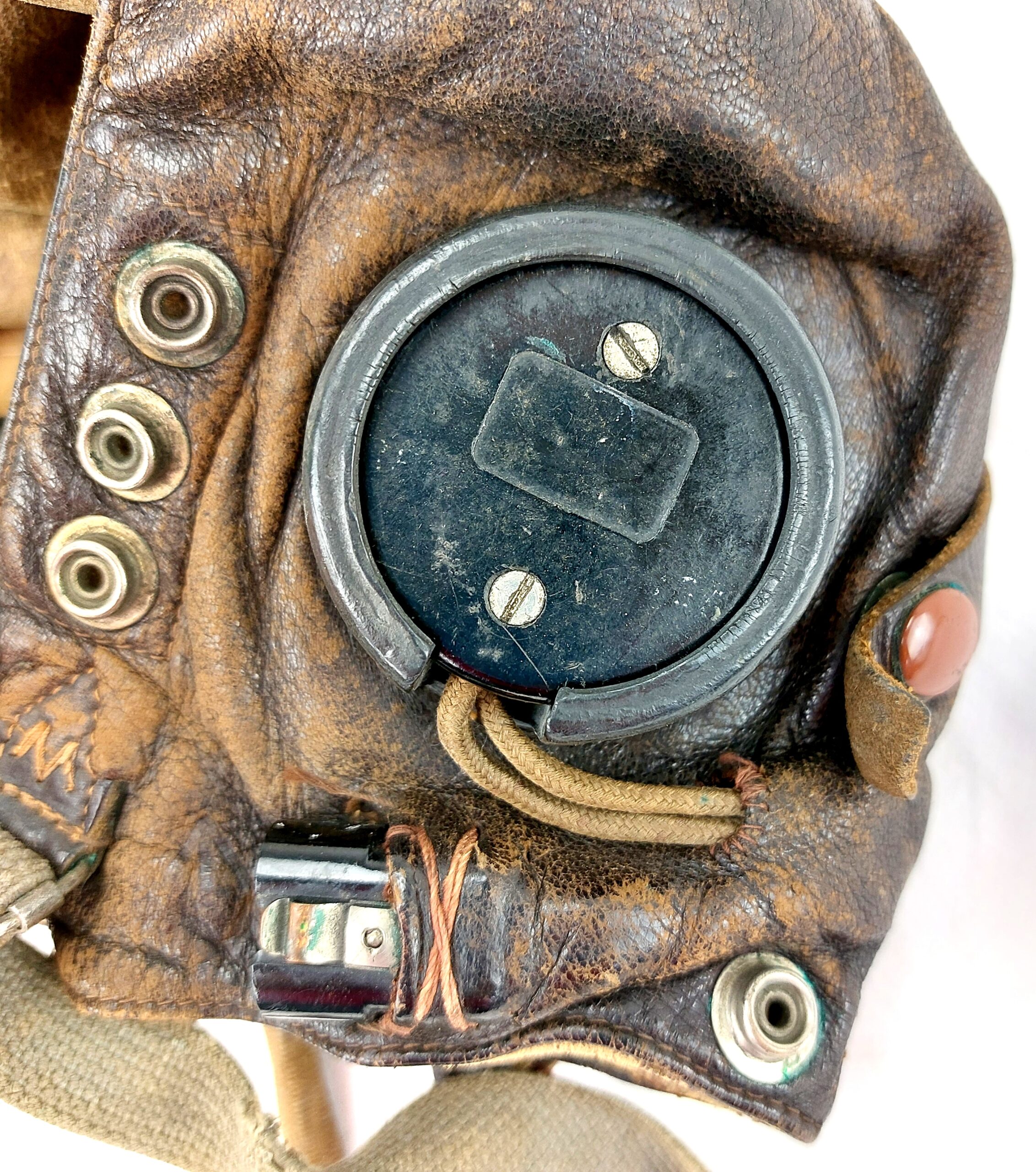
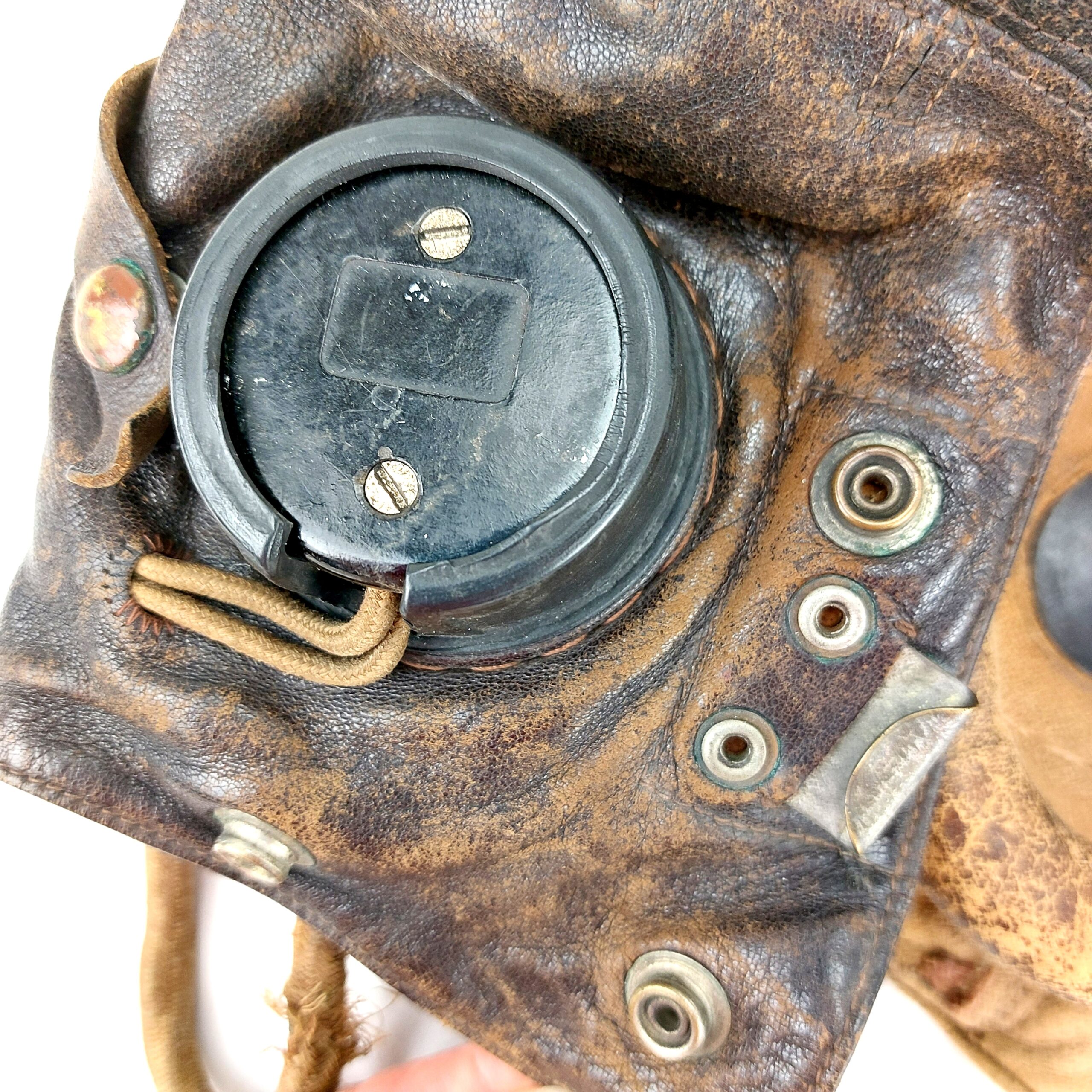
Introduced in late 1941 to replace the earlier B‑Type, the C‑Type was designed specifically to integrate radio communications and oxygen mask fittings into a streamlined leather helmet. Unlike the B‑Type, which had separate zipped or sewn‑on earphone housings and no provision for internal wiring, the C‑Type incorporated rigid Bakelite receiver cups built directly into the helmet and a factory‑installed loom terminating in a Type 2091 plug. Goggle retaining tabs and press‑stud fittings for oxygen masks (Types E, G, and later H) were standard features. The example here shows these key identifiers: integral black receiver housings at each ear, external press studs for the mask clips, rear leather loops for goggle straps, and a sewn‑panel crown. The size “No. 3” marking is correct for Air Ministry sizing (No. 1 being smallest, No. 4 largest).
This pattern of helmet is sometimes referred to as the “Second Pattern” C‑Type or, more accurately, the first pattern internally wired C‑Type. This version was introduced in March 1944, replacing the earlier externally wired model, and saw use throughout the rest of the conflict. The rear of this helmet features three leather straps, which is correct for a wartime example; the later five‑strap version superseded this just before the end of the war.
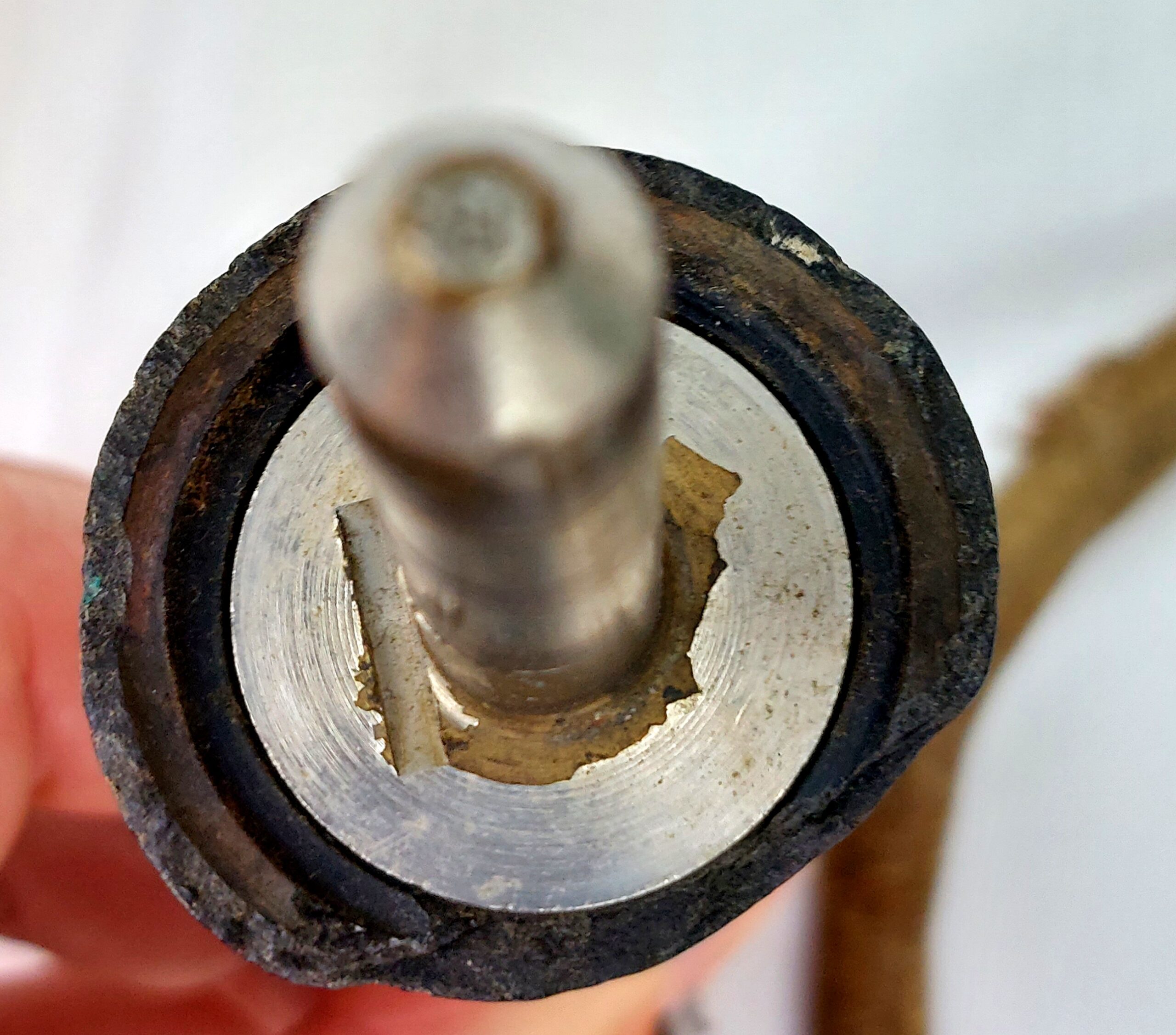
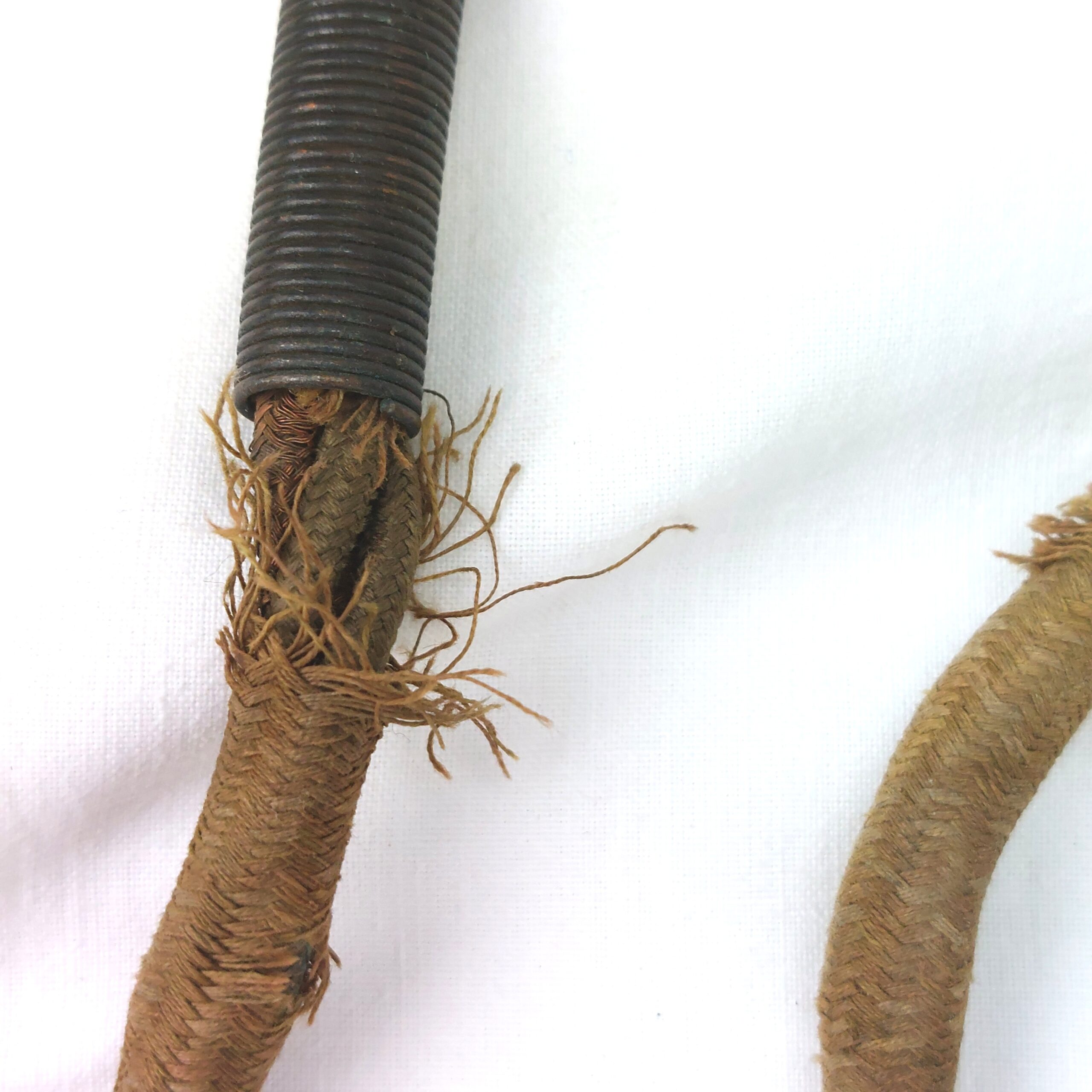
The helmet matches this March 1944 production pattern, identifiable by its leather chin strap with canvas reinforcement, the arrangement of the press studs, and the absence of the post‑1944 rubber earcup cushions used on the third pattern. The wiring loom remains attached, with some fraying to the fabric covering from age, but is complete with the correct plug. The receivers appear to be AM 10A/13466 pattern, secured in their housings by original fixings.
*Condition*
Condition is excellent given age and service use. The leather shell has developed a rich patina, with surface wear and creasing across all panels. The interior chamois lining shows typical darkening and light spotting but remains supple and has no tears. The earphone housings are intact, the loom is secure, and all hardware — oxygen mask press studs, goggle straps, and buckles — remains present, showing some verdigris and age toning. The plug has chips to the edges. Overall, this is a solid and displayable RAF flying helmet, well-suited to a Battle of Europe or bomber command display. Please see photographs as part of the condition report.