
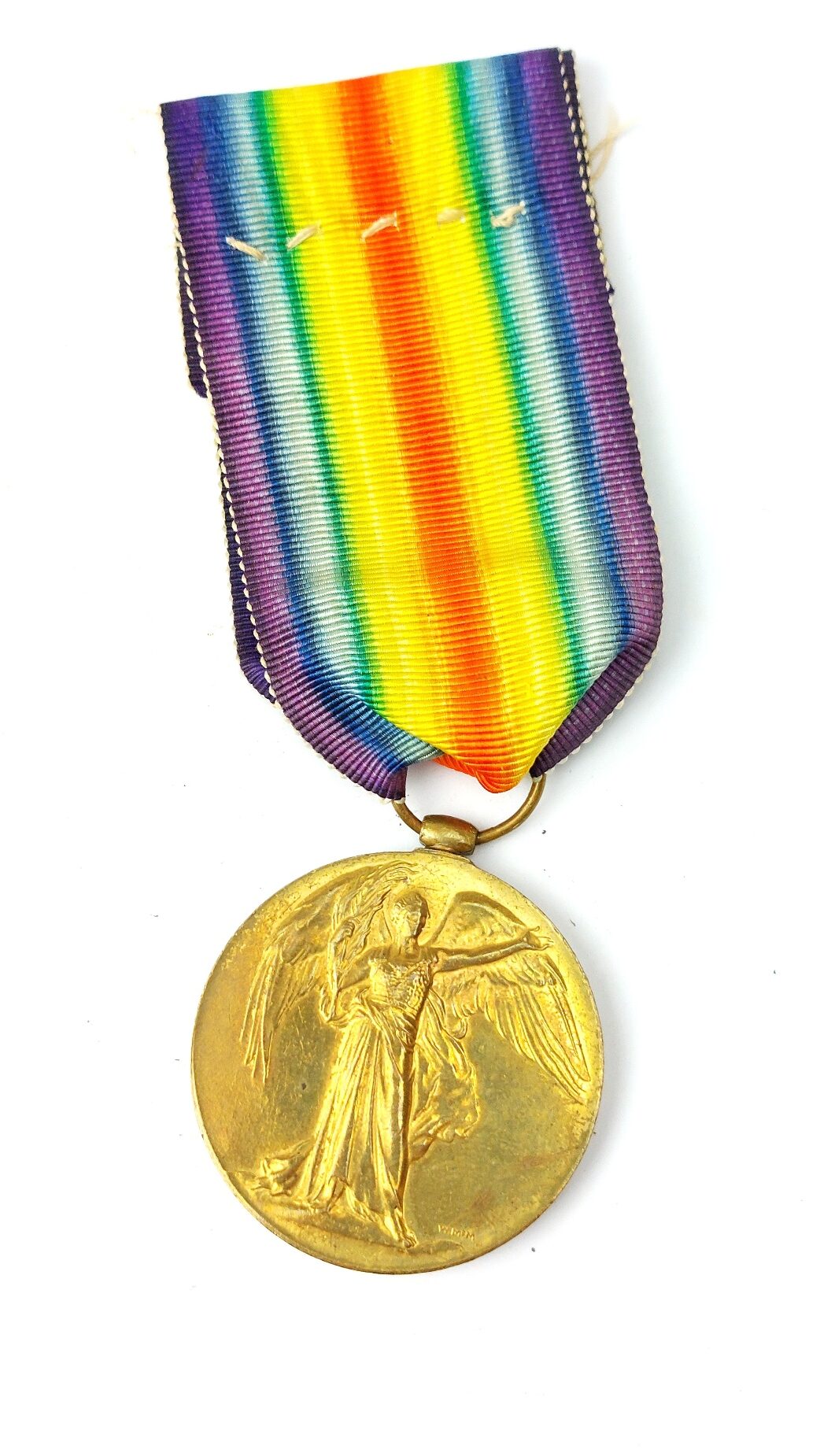
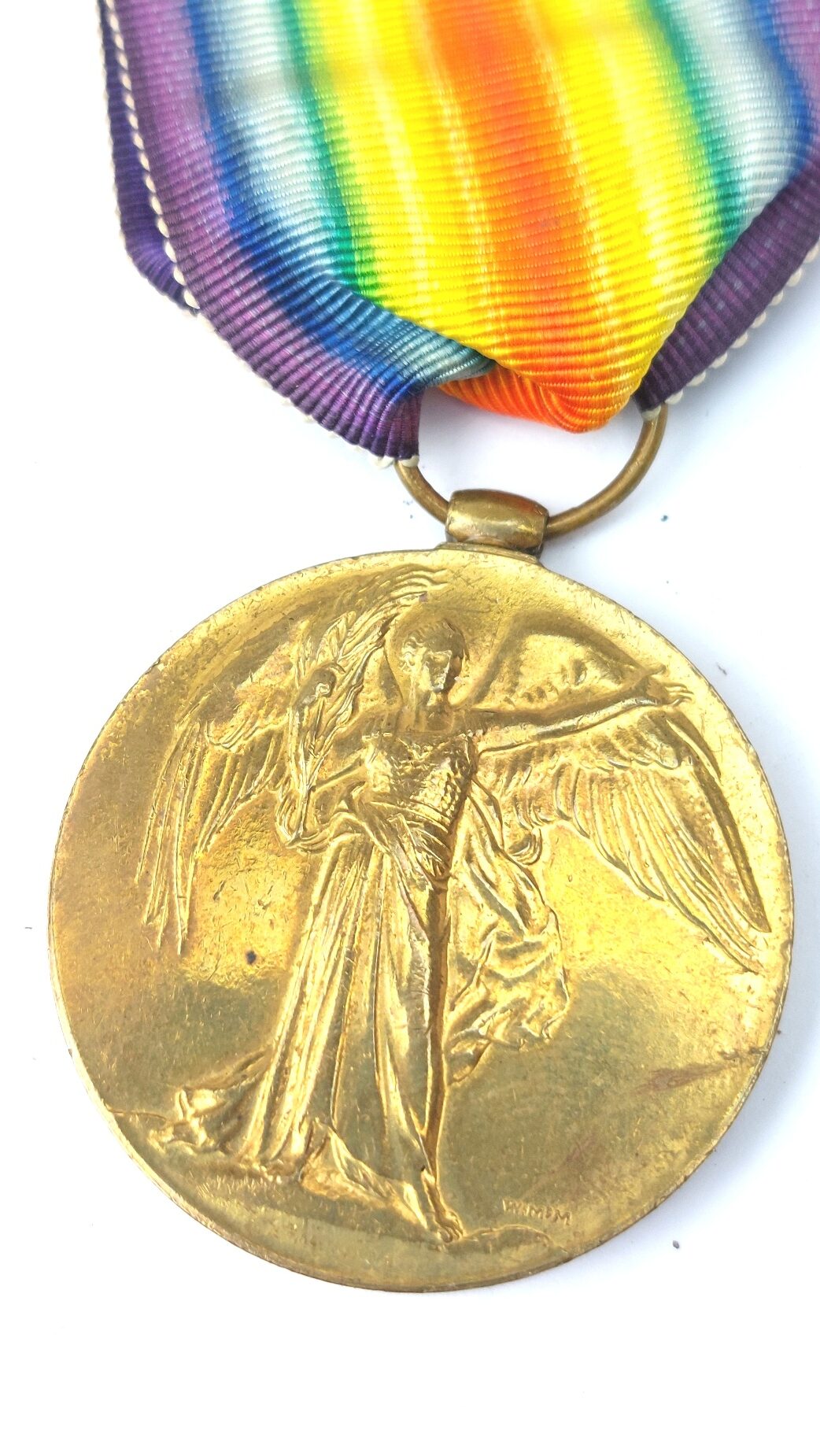
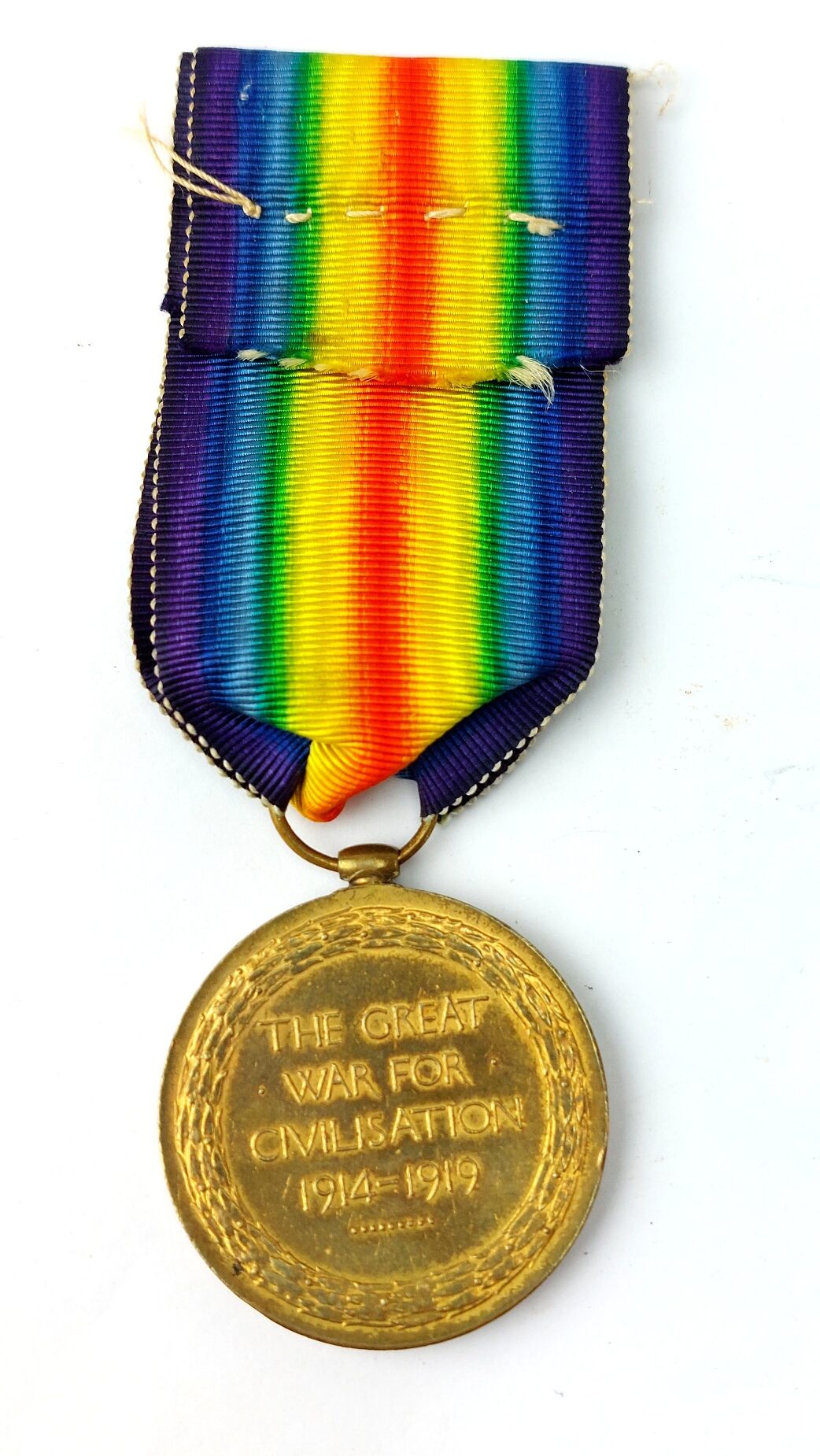
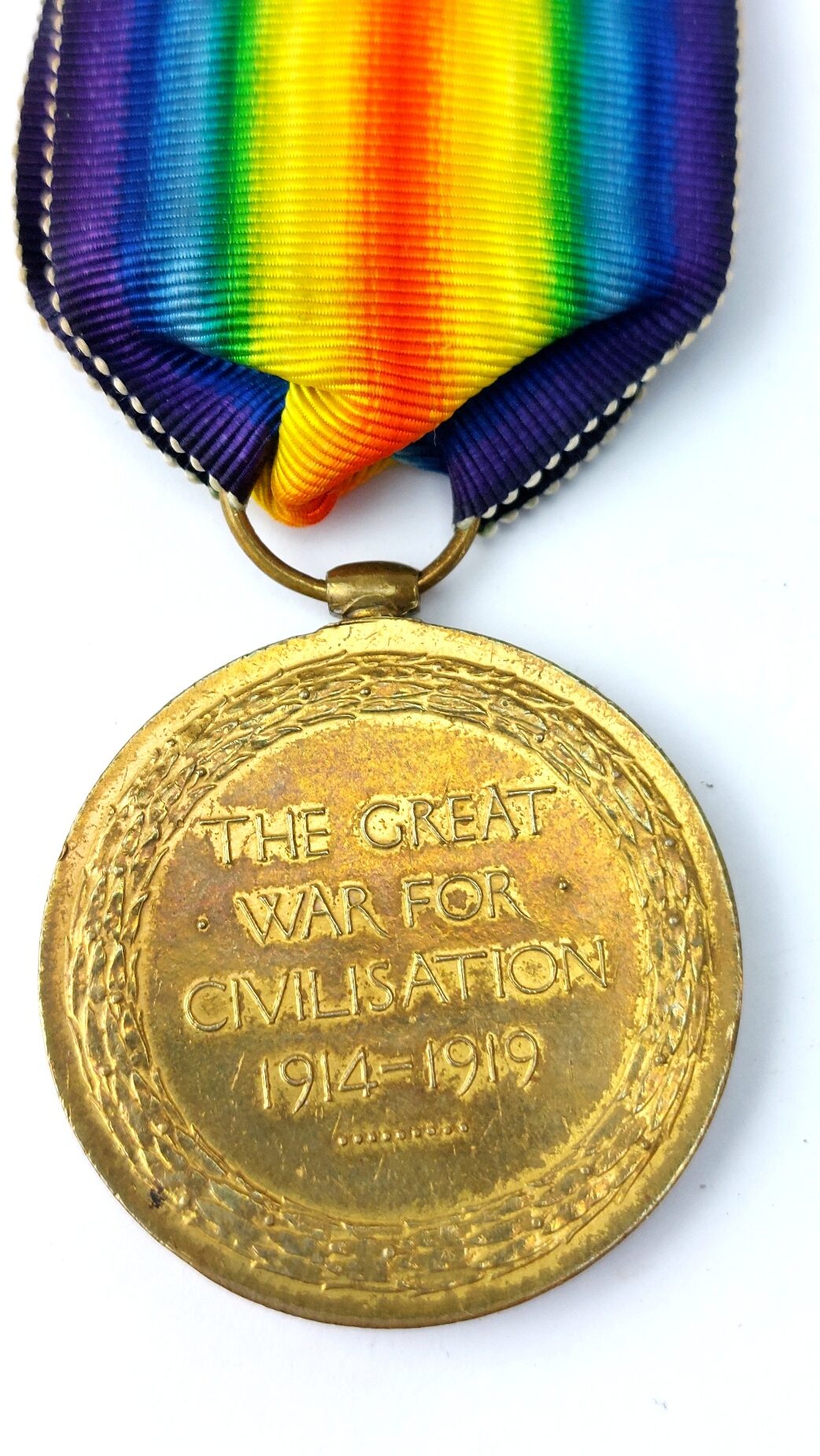
British, WW1, Victory Medal, Named to 7834  Pte. William Ivor Mitchell, 1st Hertfordshire Regiment – Killed in Action 31 July 1917 – Ypres / Passchendaele Casualty

£45.00

A thoroughly researched and named WW1 casualty medal to a Hertfordshire Regiment soldier killed on the opening day of Passchendaele, with surviving family and pension records allowing his full story to be reconstructed.

Availability: 1 in stock

Would you like to find out more about this product?
Enquire about this product

*British, WW1, Victory Medal, Named to 7834  Pte. William Ivor Mitchell, 1st Hertfordshire Regiment – Killed in Action 31 July 1917 – Ypres / Passchendaele Casualty*

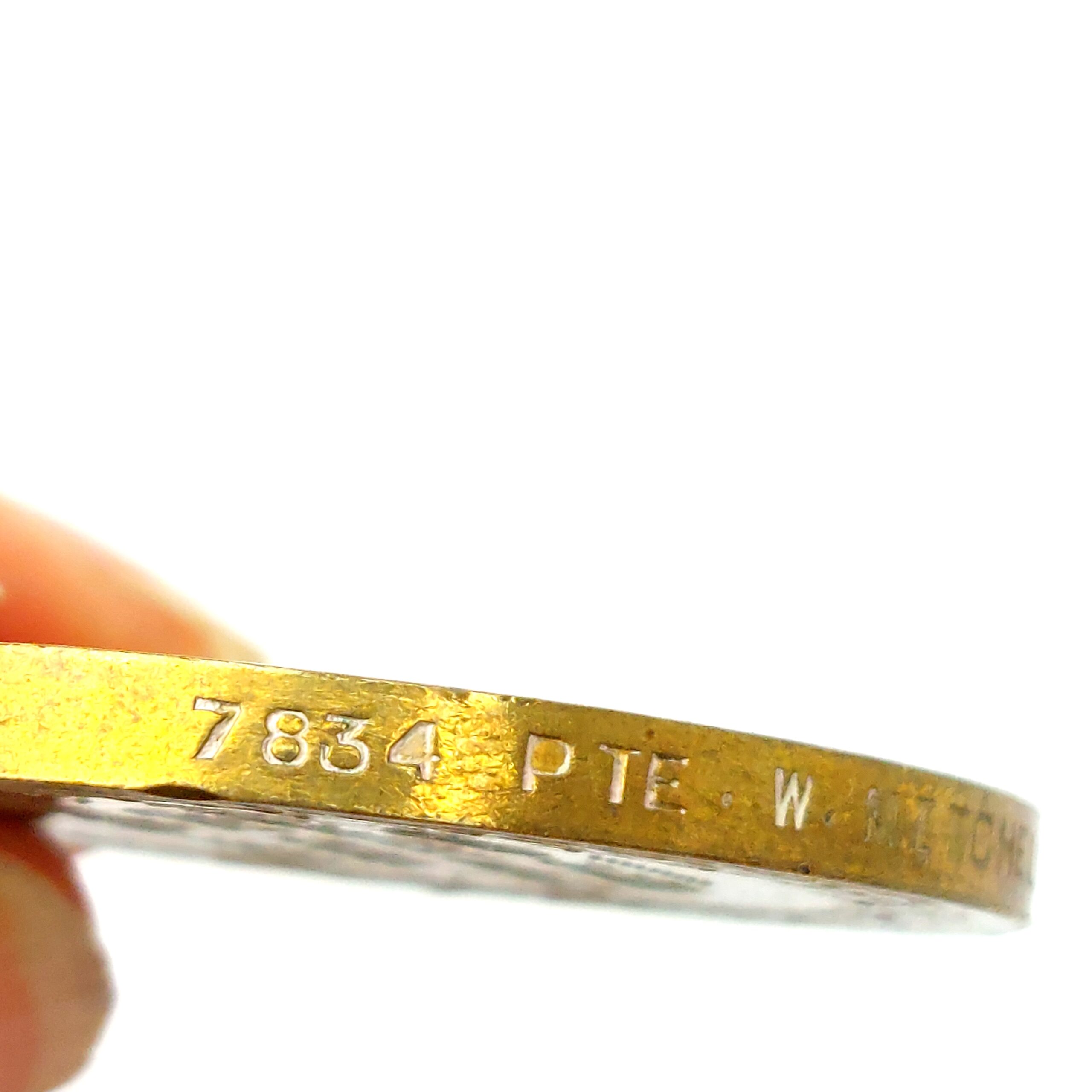
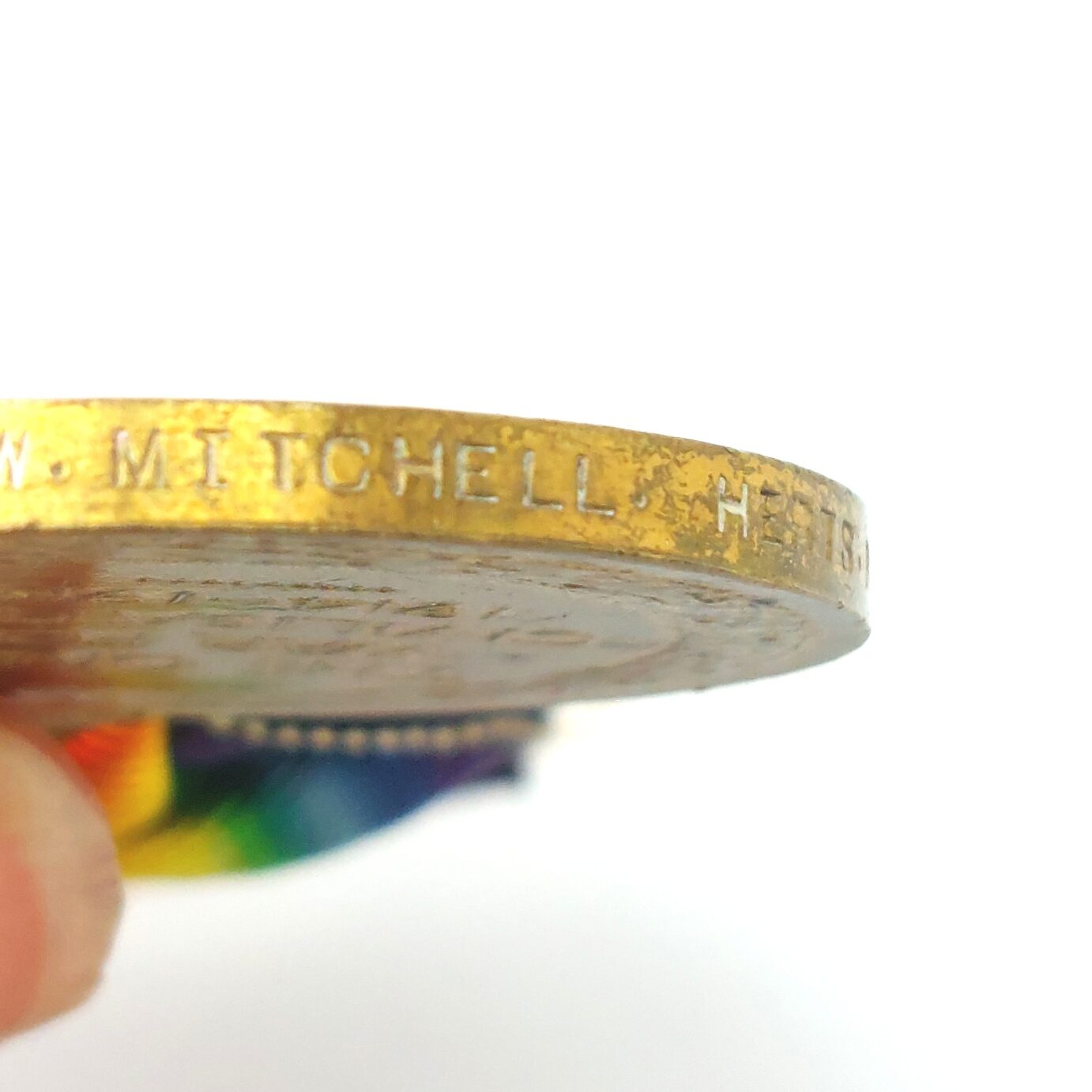
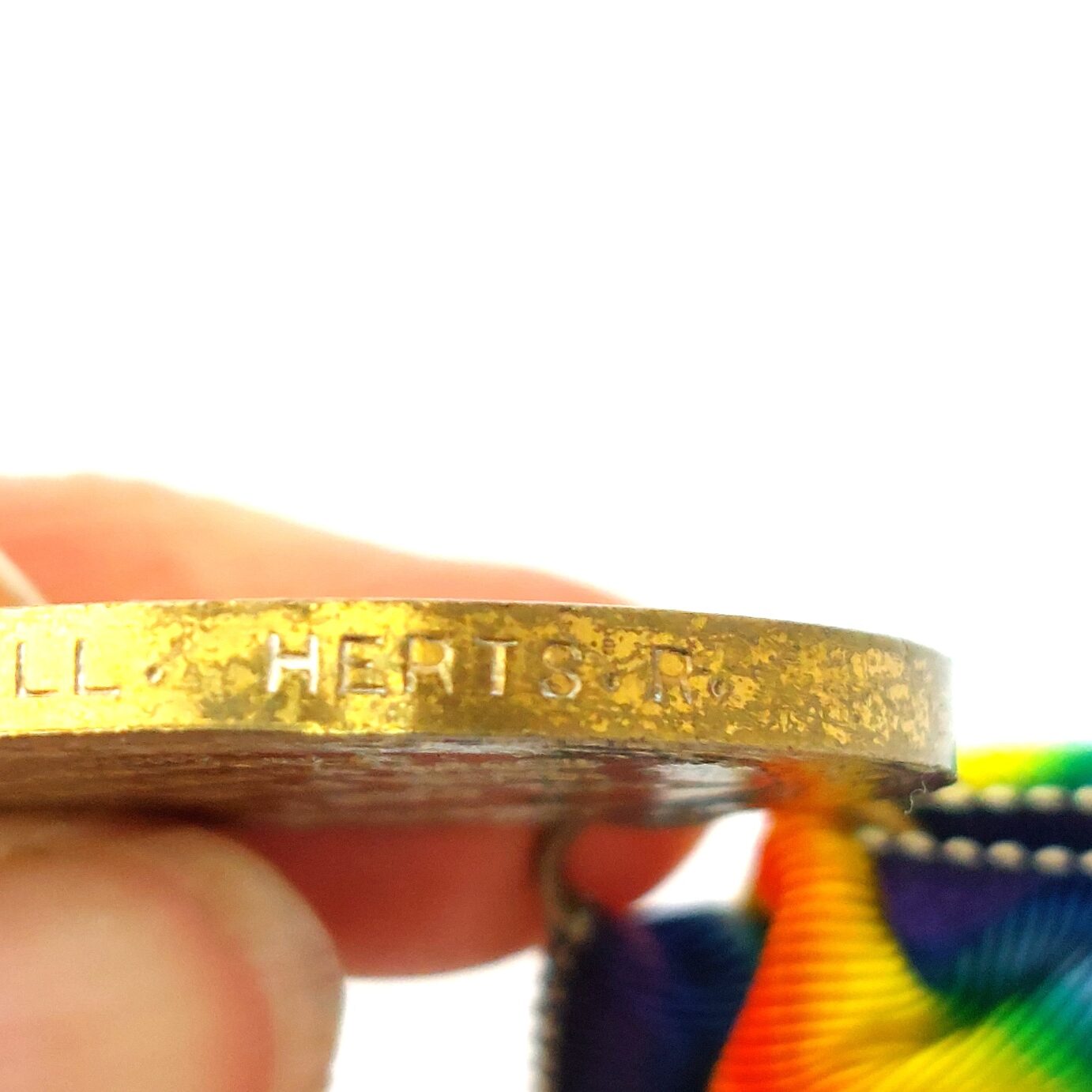
An original First World War British Victory Medal correctly impressed around the rim: "7834 PTE. W. MITCHELL. HERTS. R."

The medal retains its original rainbow ribbon and displays the classic Winged Victory design by William McMillan to the obverse, with the reverse bearing the inscription: "THE GREAT WAR FOR CIVILISATION 1914–1919."

Research confirms the recipient as Private William Ivor Mitchell, initially serving under Territorial number 7834 and later renumbered 267982 following the 1917 Territorial Army renumbering scheme. The medal therefore represents his personal entitlement and is directly attributable to a documented wartime casualty.

Approx. Measurements – Standard Victory Medal issue.

History Note:
William Ivor Mitchell was born at Reading, Berkshire, in 1881. Surviving casualty records record his age as 36 years, consistent with his death on 31 July 1917. He served with the 1st Battalion Hertfordshire Regiment, a Territorial battalion that fought on the Western Front as part of the British Expeditionary Force. His military entitlement is recorded within his Medal Index Card (WO 372/14/40632), while surviving medal roll entries confirm service under both numbers 7834 and later 267982, reflecting the Territorial Force renumbering system introduced in 1917.

The 1st Battalion Hertfordshire Regiment mobilised in August 1914 and proceeded overseas in November 1914, serving with the British Expeditionary Force in France. During the war the battalion fought through many of the major actions on the Western Front, including operations around Ypres, Festubert, and later the increasingly large and costly offensives of 1916–1917. By 1917 the battalion had become deeply involved in the attritional fighting that characterised the later years of the war.

Casualty and family records identify him as the son of Mrs M. A. Mitchell of 7 Awbury Terrace, Orts Road, Reading, and husband of Sarah Dove Mitchell, residing at 144 Southampton Street, Reading. Surviving dependant and pension papers (Western Front Association Archive Ref. 11/W/6884; pension papers 611/11W) provide an unusually personal glimpse into family life. William and Sarah had four children: Winifred Edna Mitchell – born 25 June 1908; Nora Dove Mitchell – born 18 February 1911; Edith Kathleen Mitchell – born 13 August 1913 and William Ivor Mitchell – born 2 September 1916. Only around ten months after the birth of his youngest child, Private Mitchell was lost. Following his death, records show Sarah Mitchell receiving a widow's pension award on behalf of herself and their four children.

War Office casualty material and pension correspondence show that he was initially reported missing, a common occurrence during the chaos of major offensives, before later being officially confirmed Killed in Action on 31 July 1917. This sequence appears within surviving casualty documentation including War Office Daily List No. 5365 and associated pension records.

The date itself is highly significant. 31 July 1917 marked the opening day of the Third Battle of Ypres (Passchendaele), specifically the Battle of Pilckem Ridge, one of the largest and bloodiest British offensives of the war. Initial gains came at immense cost, and many soldiers disappeared amid the destruction and confusion of the battlefield before their fate could later be established.

The surviving documentation creates a particularly human story: a Berkshire family man in his mid-thirties with a wife and four young children, likely a pre-war Territorial soldier who answered the call in 1914 and ultimately lost his life during the opening stages of Passchendaele.

*Condition*
Good original condition with age-related wear and patina to the bronze finish. Original impressed naming remains clear and legible. Ribbon mounted with period stitching and showing light service and age wear. Please see photographs as part of the condition report.

RQMBOXDO_9373241622
Download QRPrint QR
Scroll to Top