*British, WW1, 18-Pounder High-Explosive Shell by V.S.M. with No.80 Time & Percussion Fuse (Inert)*
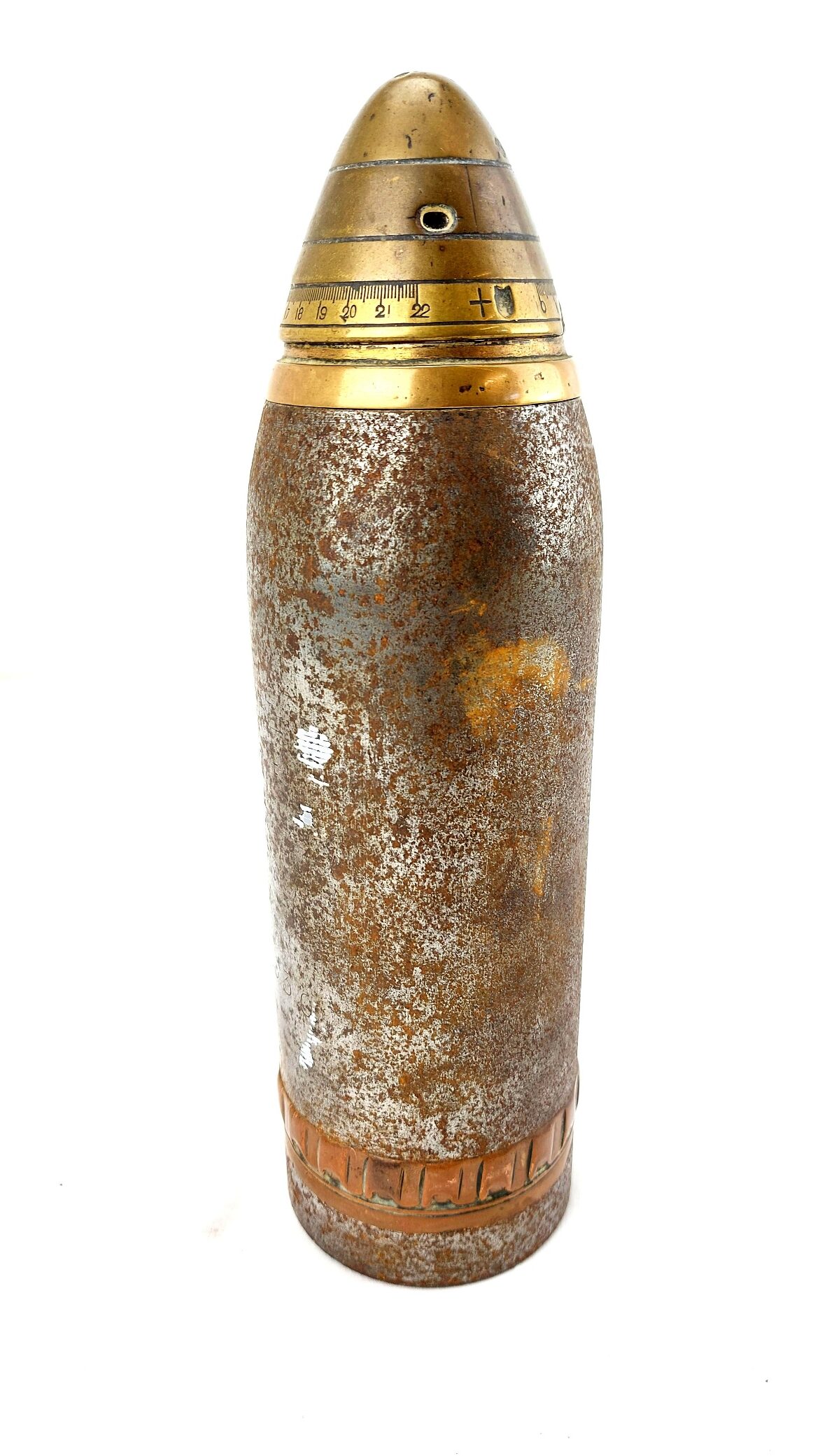
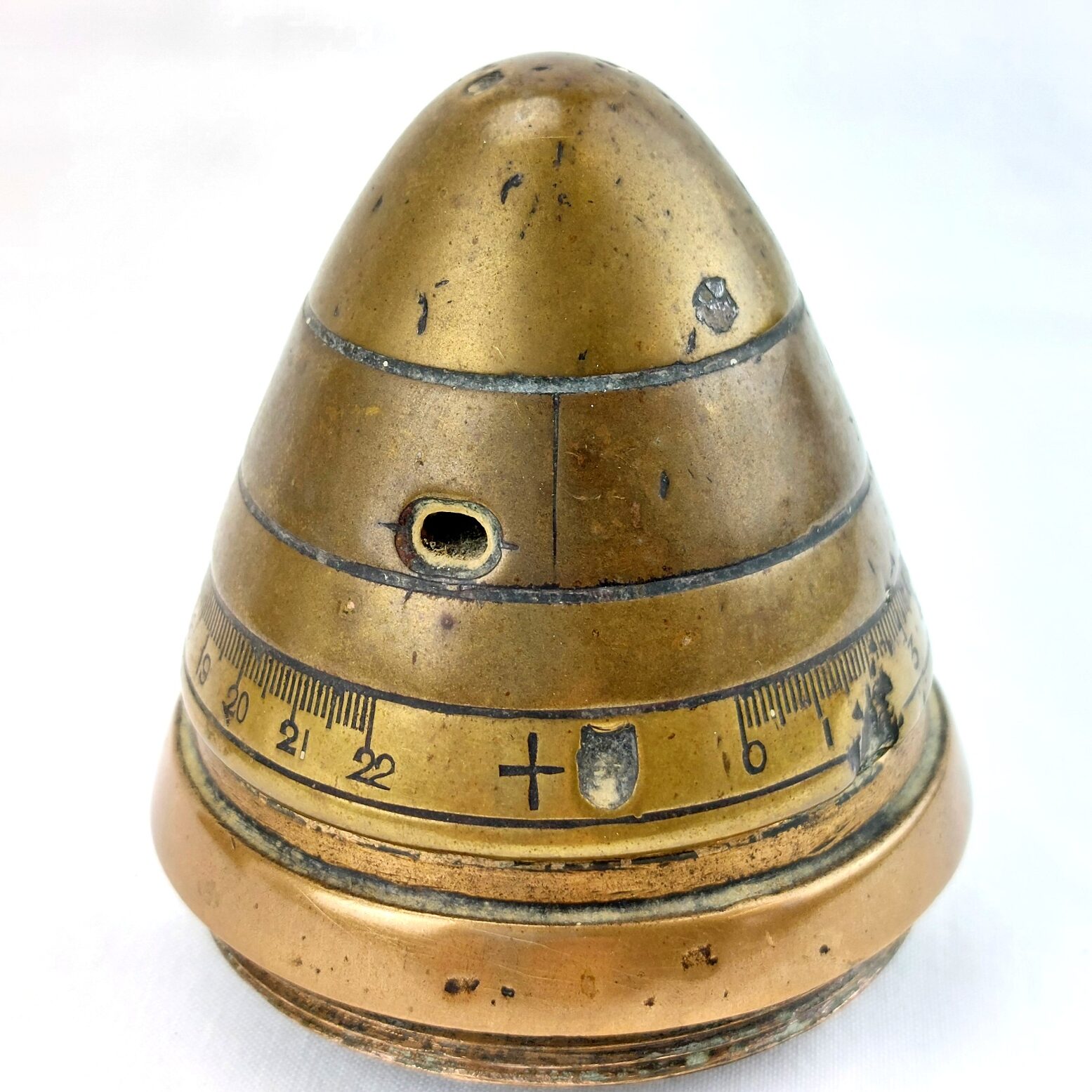
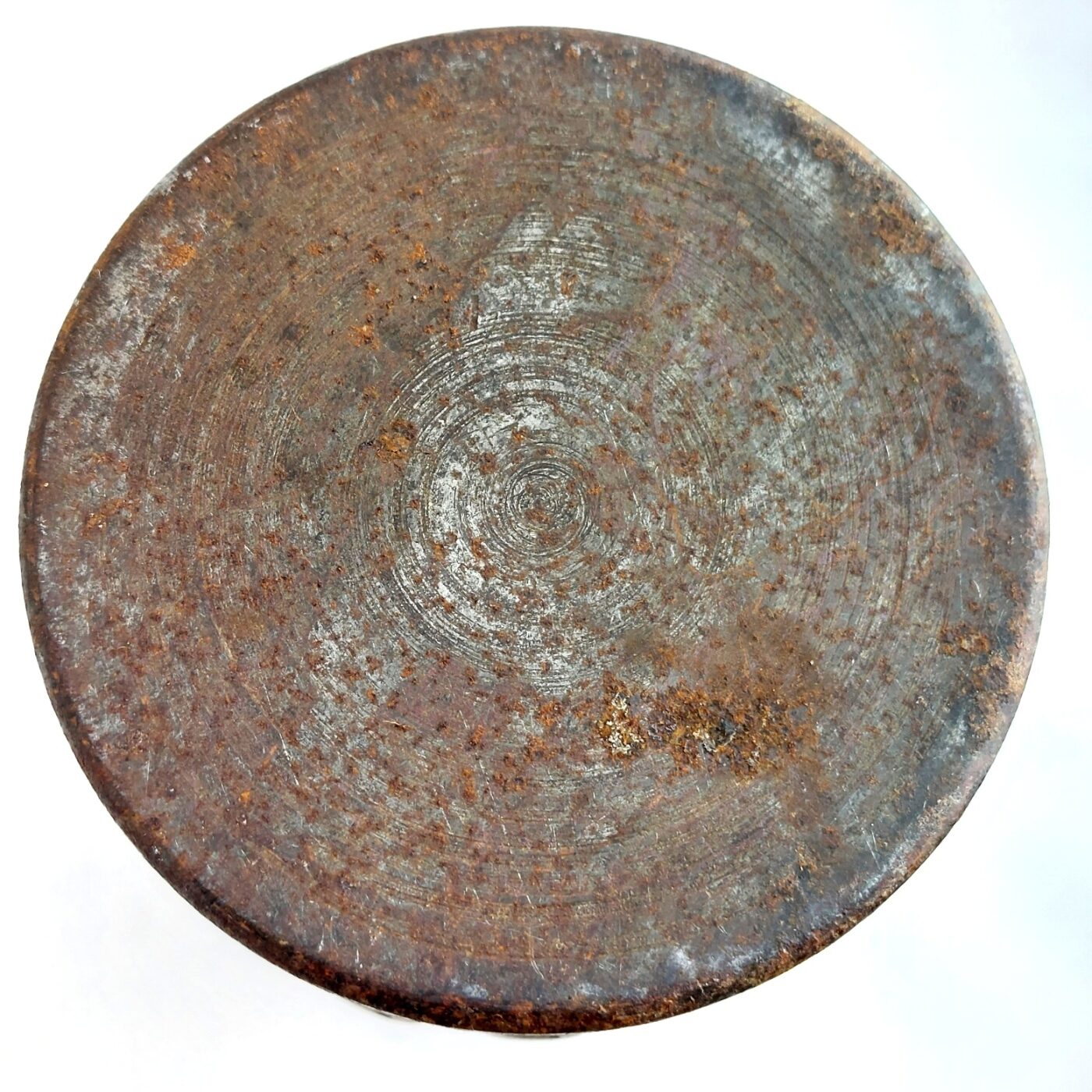
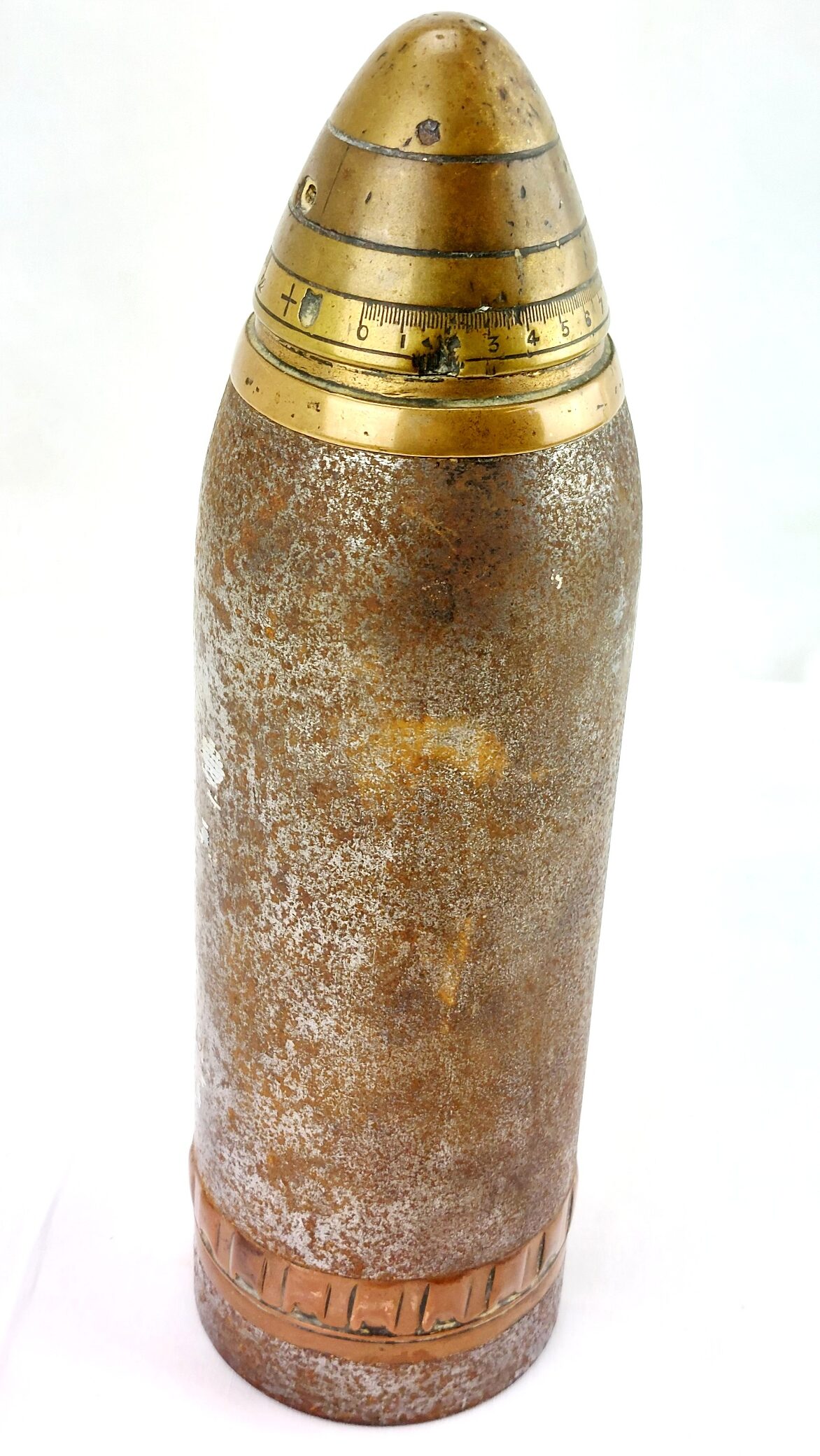
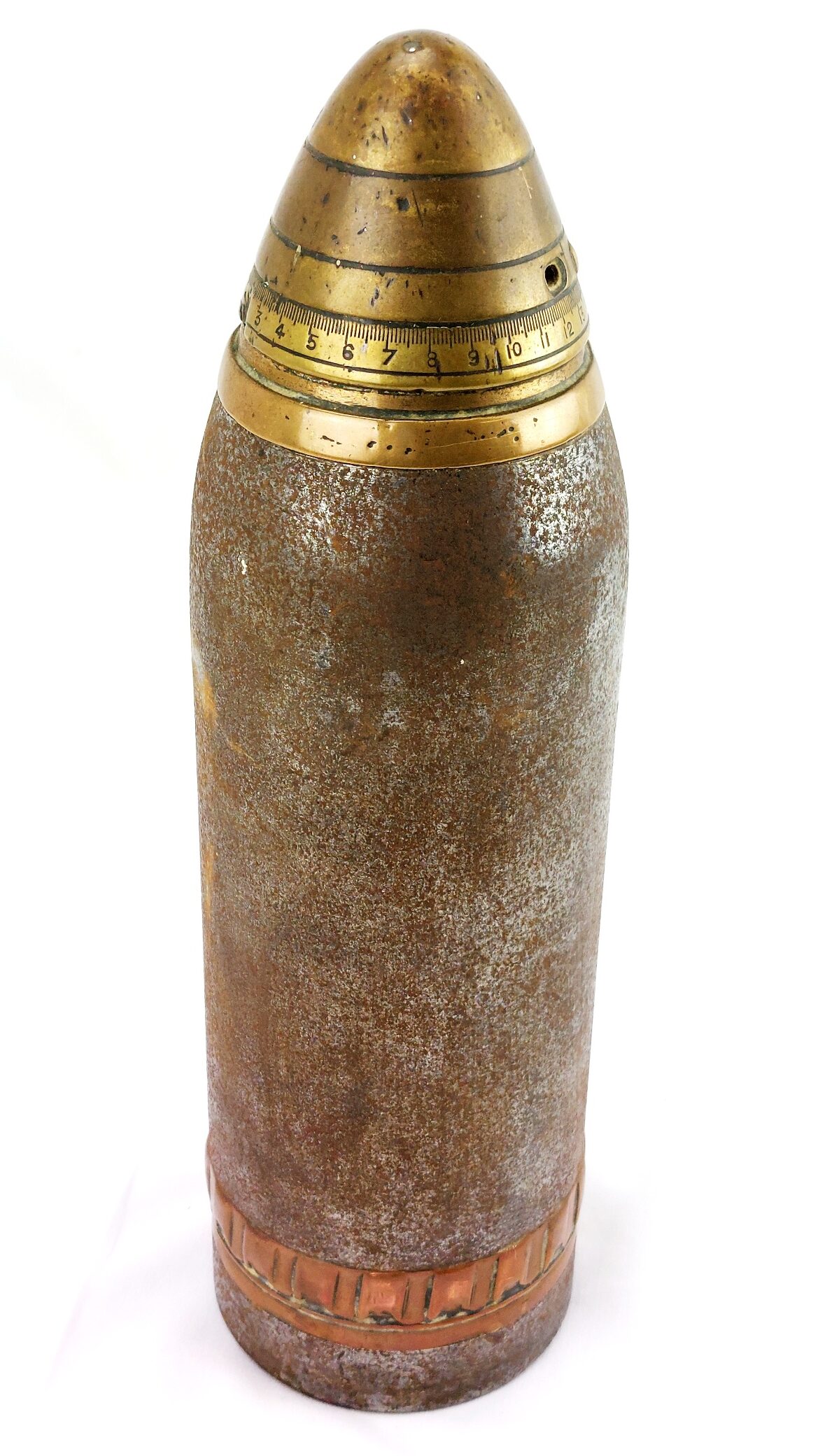
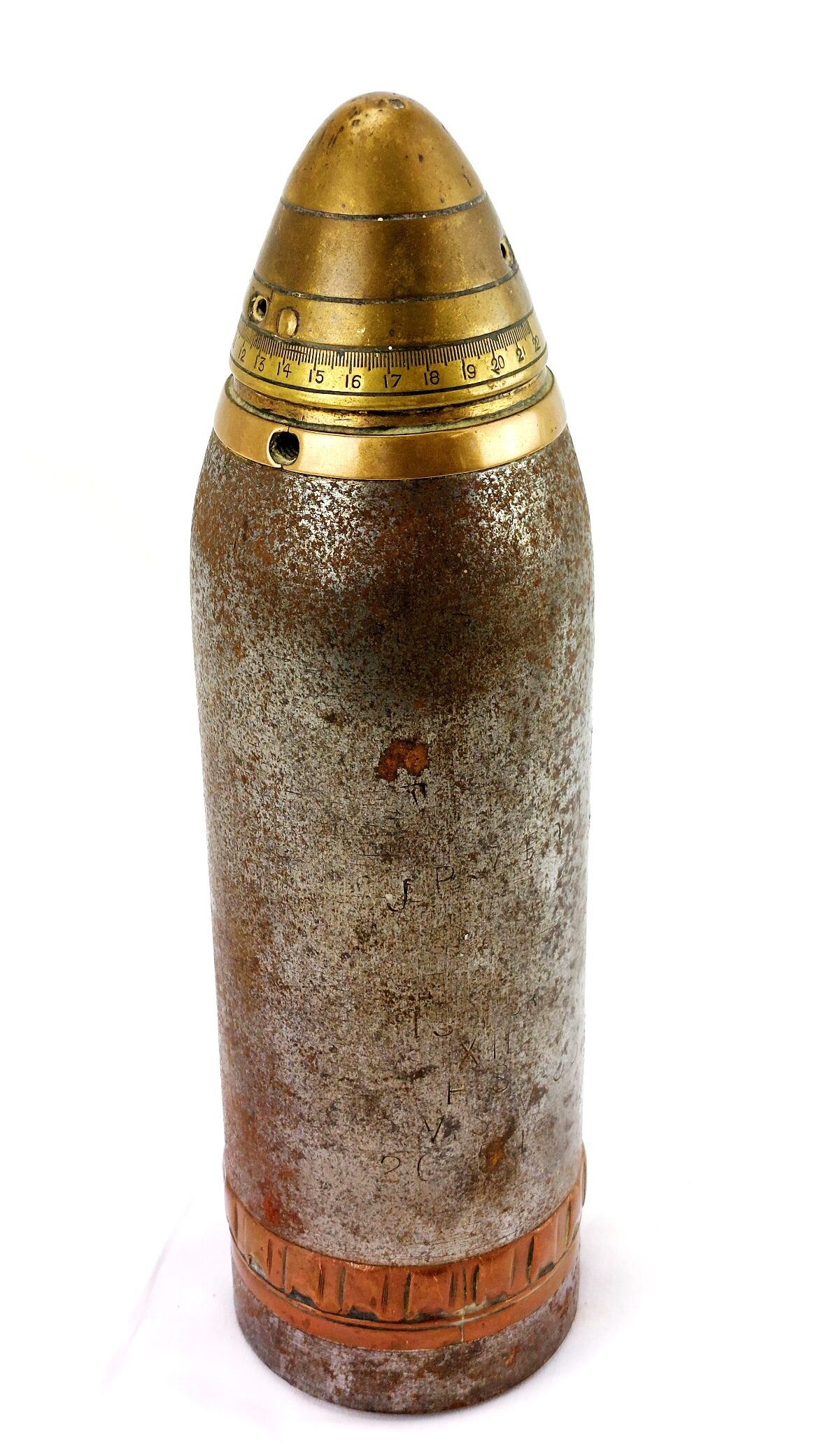
A First World War British 18-pounder high-explosive projectile, complete with its original brass No.80 time-and-percussion fuse, standing approximately 29 cm tall and measuring 8.2 cm in base diameter. The shell body is manufactured from forged steel with a surviving copper driving band showing clear evidence of firing, including lands and groove impressions from the 18-pdr field gun’s rifling.
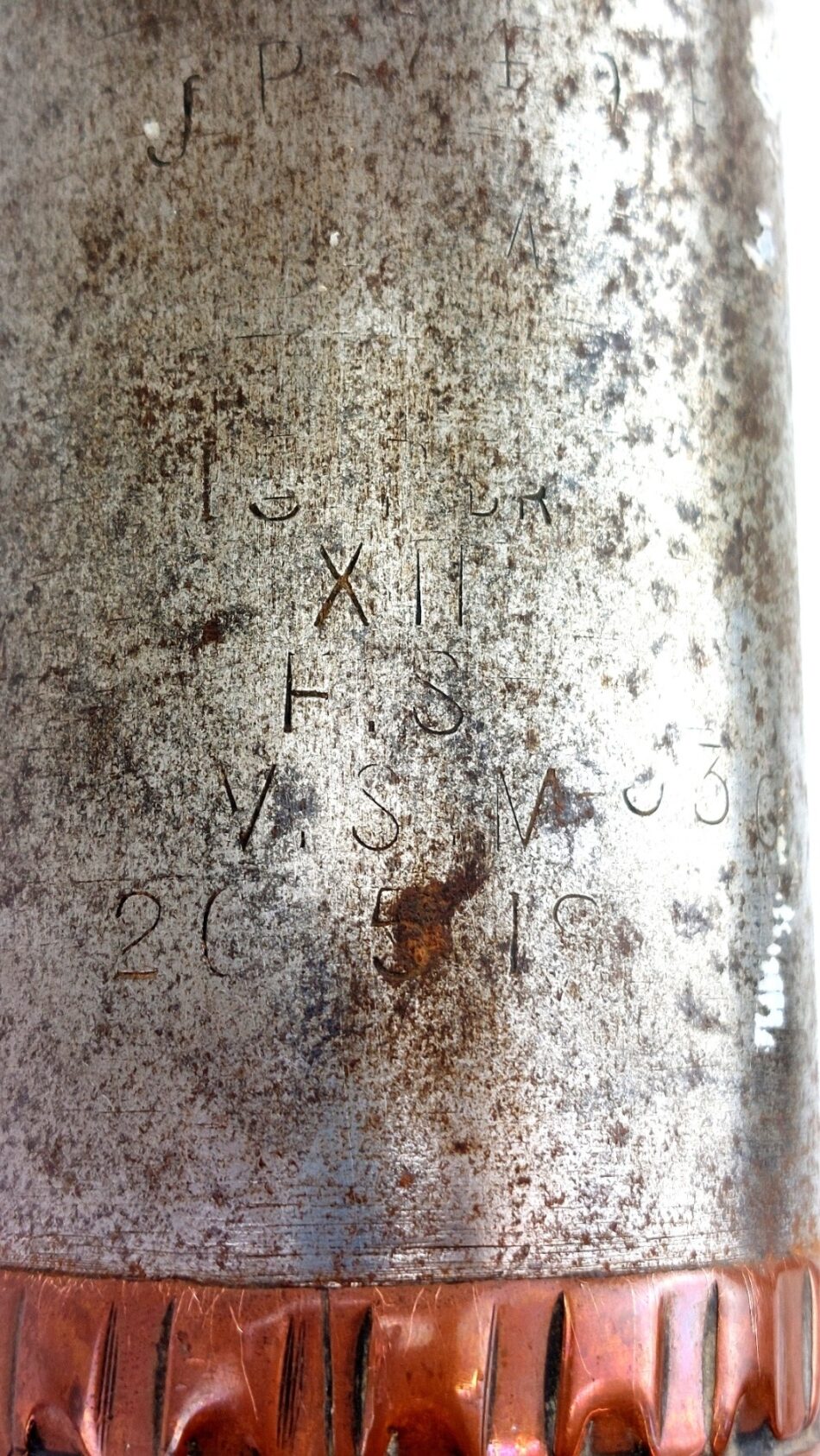
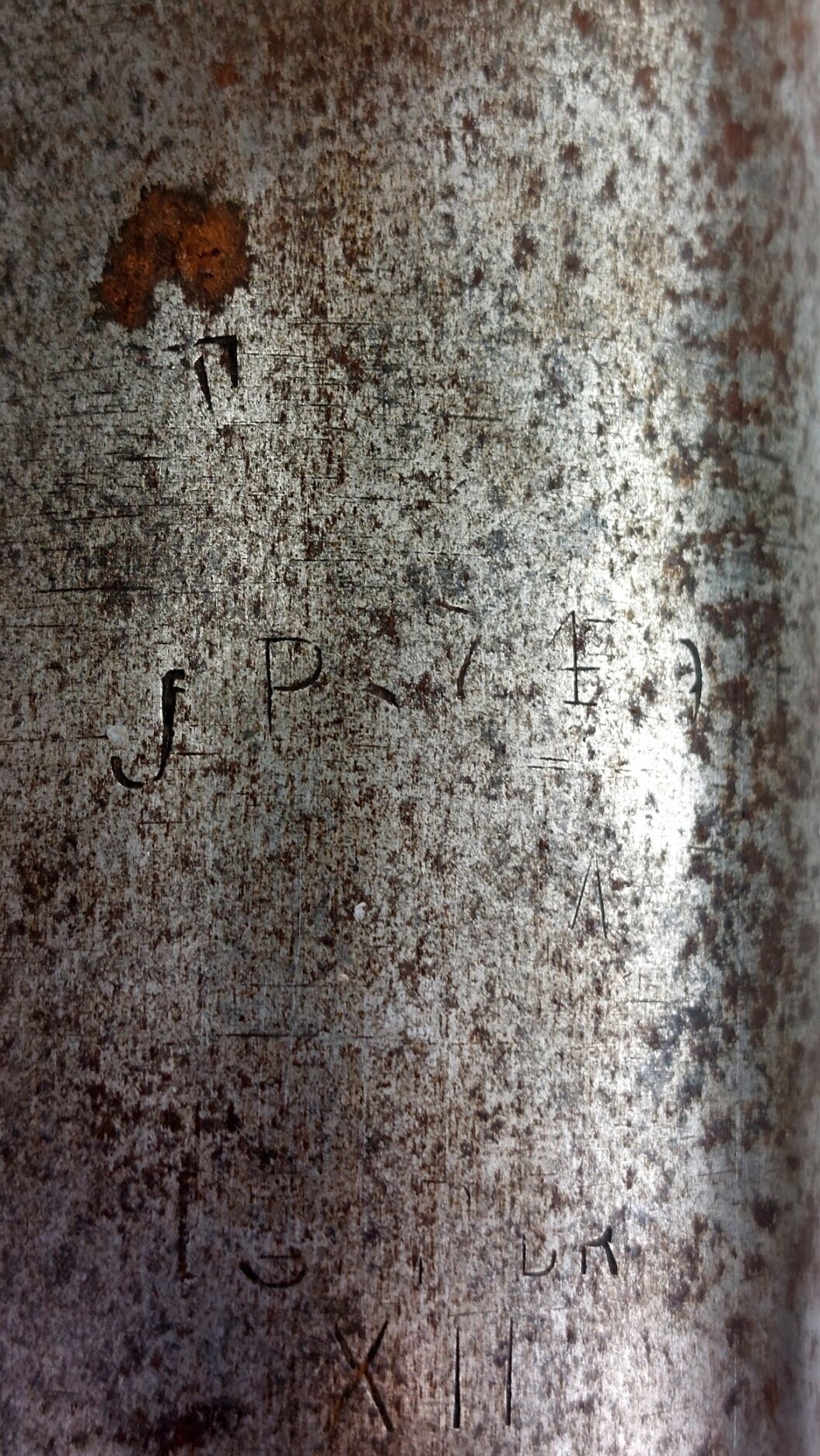
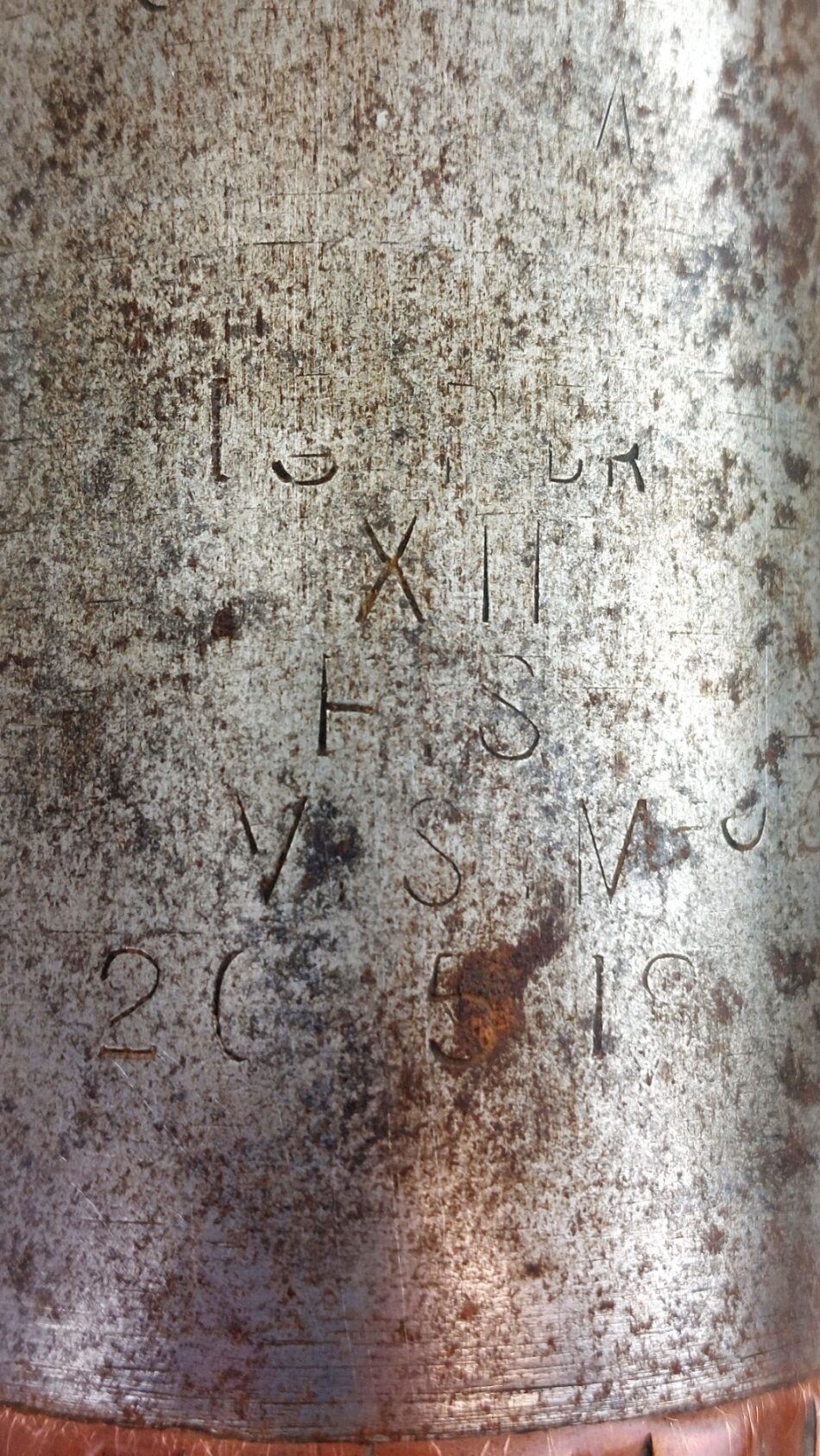
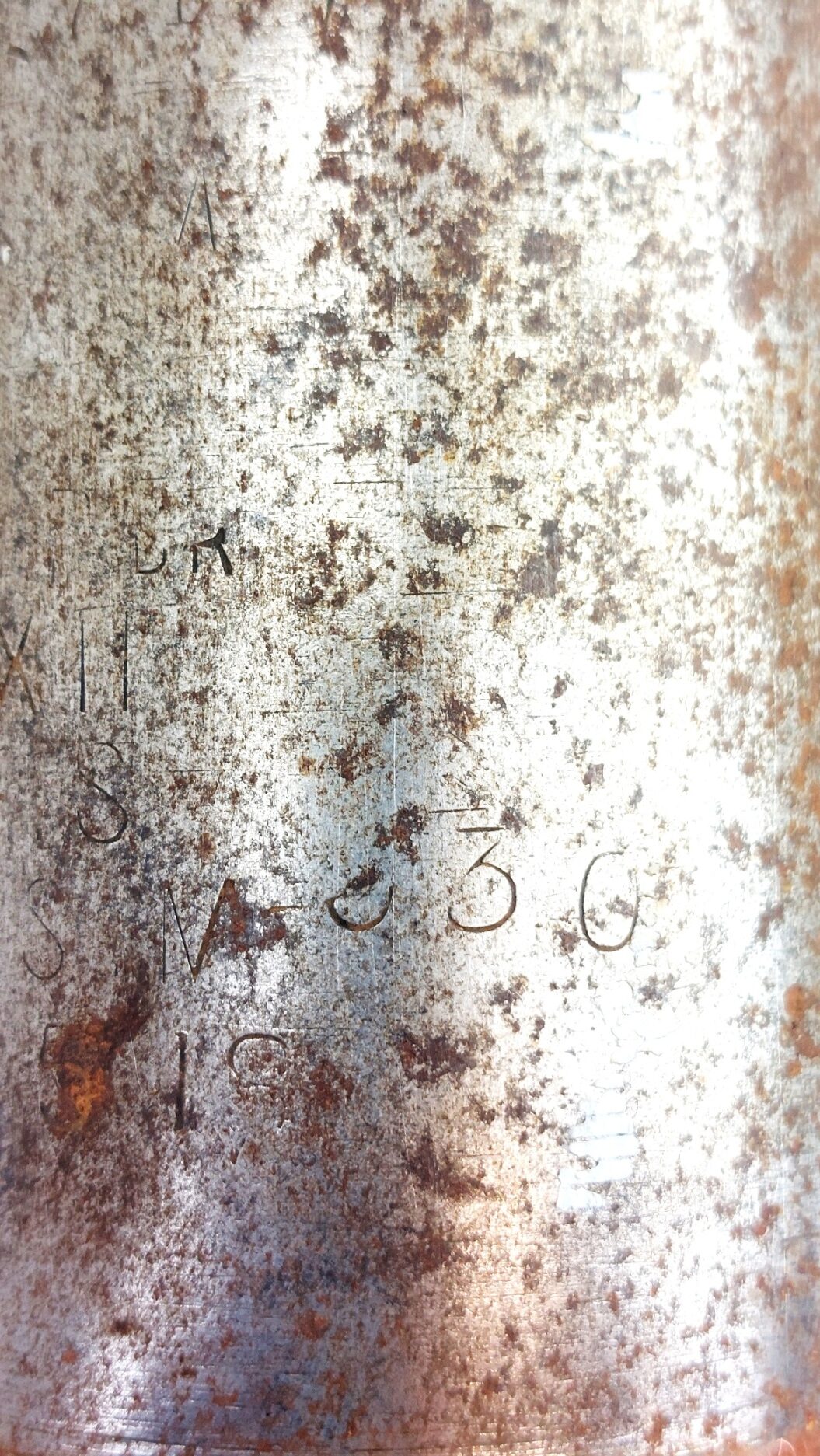
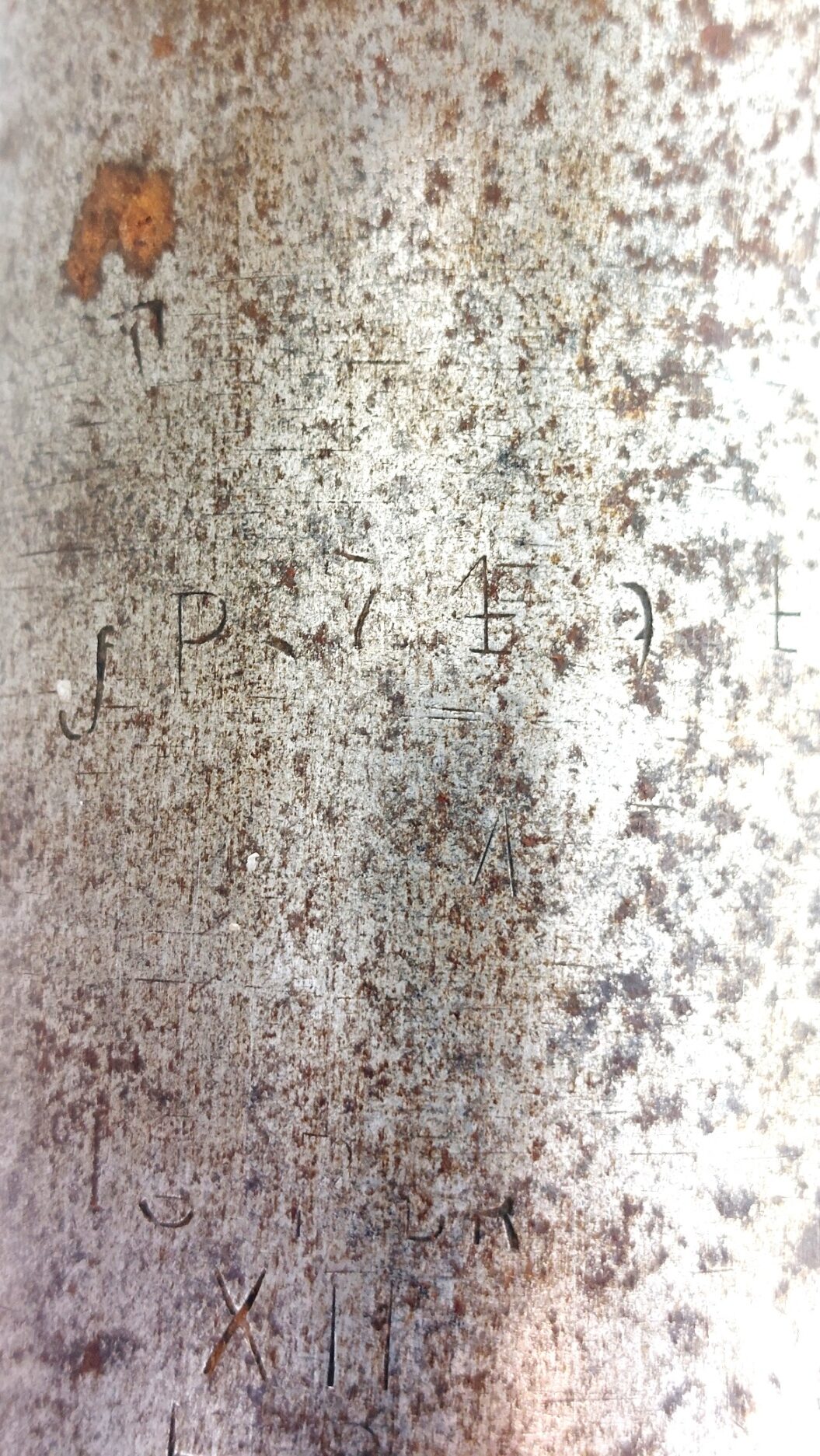
The shell retains partially visible factory and inspection marks on the steel body, including “26 5 18” (26 May 1918, the body manufacturing date), “V S M” (Vickers, Sons & Maxim – the forging contractor), “F S” (filling or inspection code), “XII”. These stamps, though softened by age, are still legible and characteristic of late-war British production.
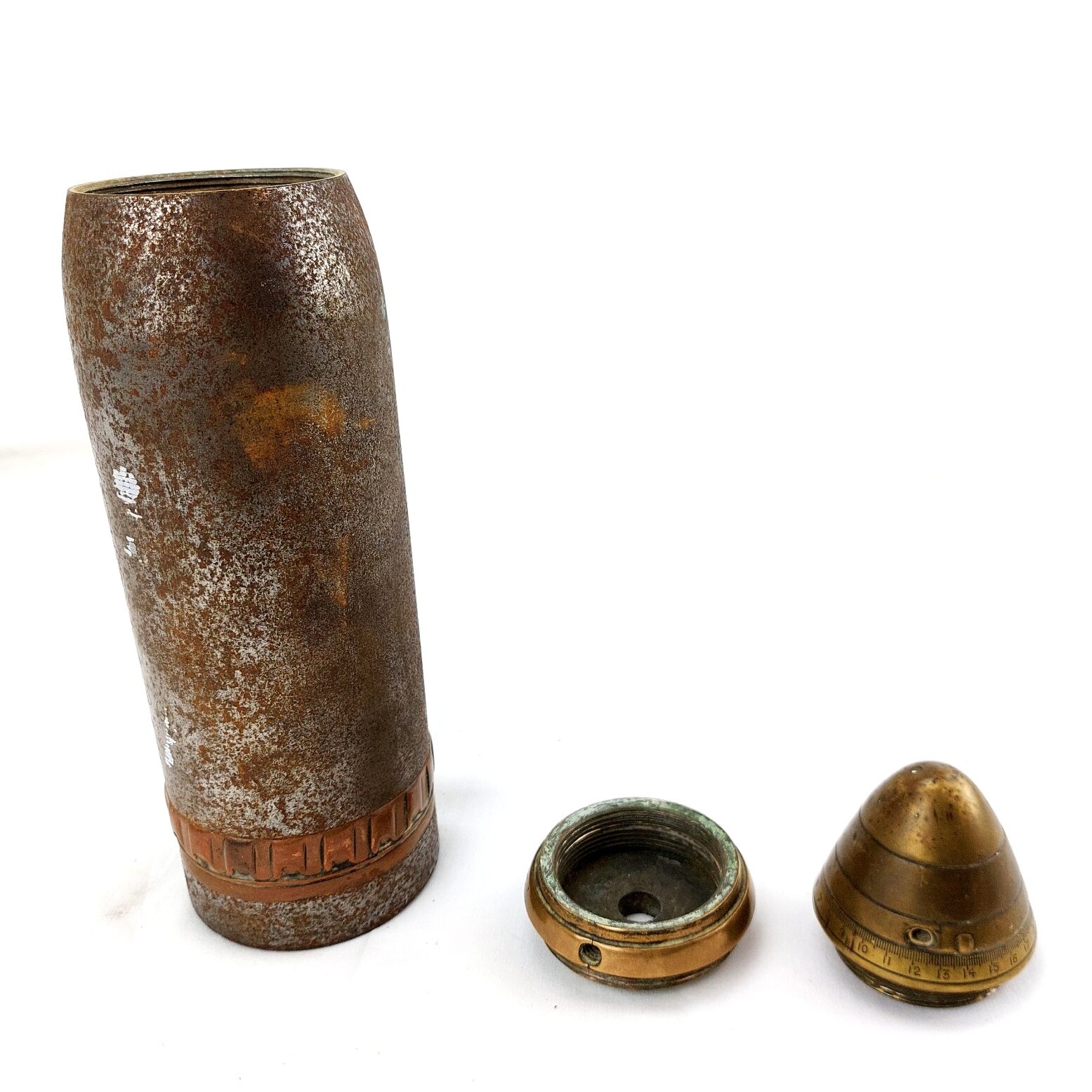
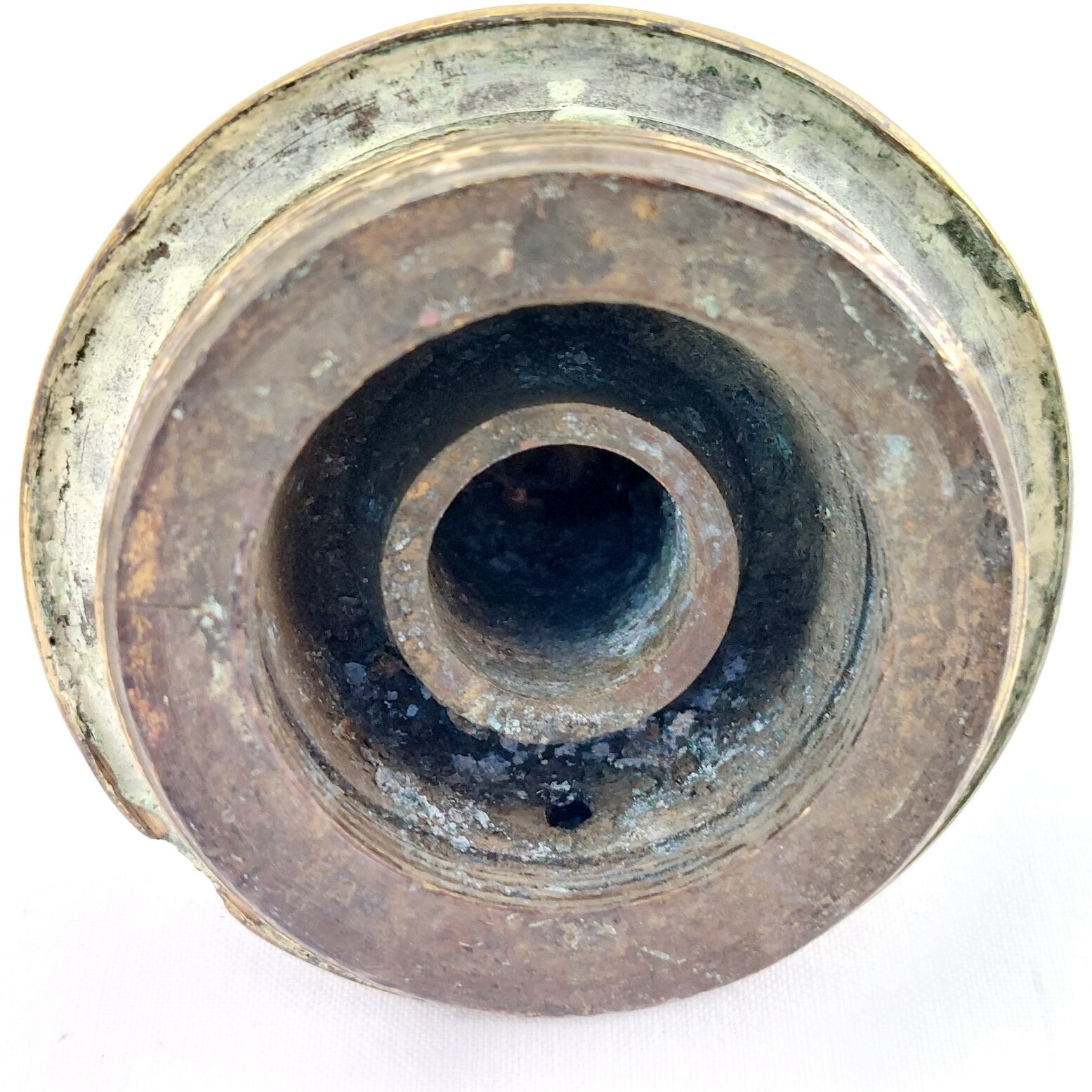
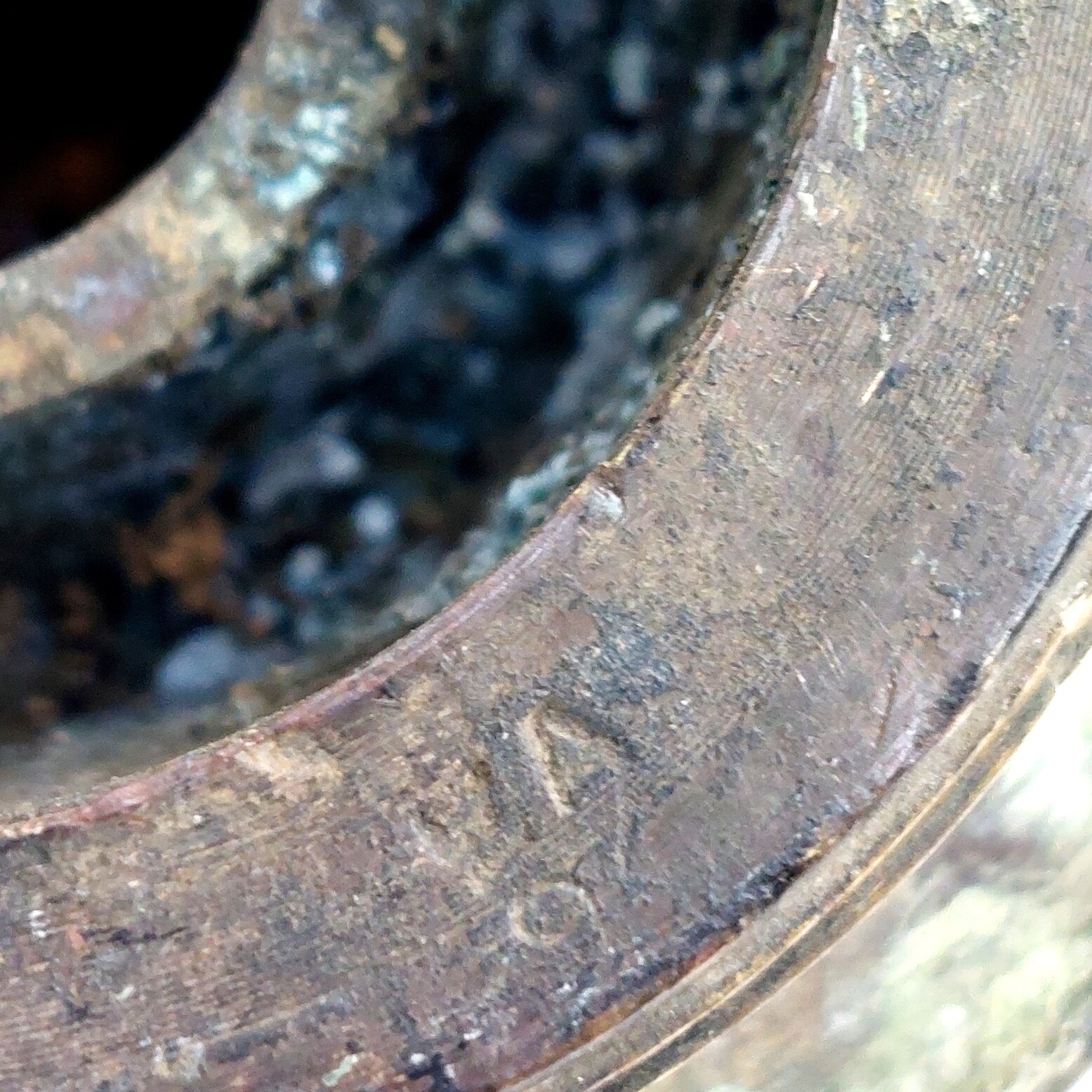
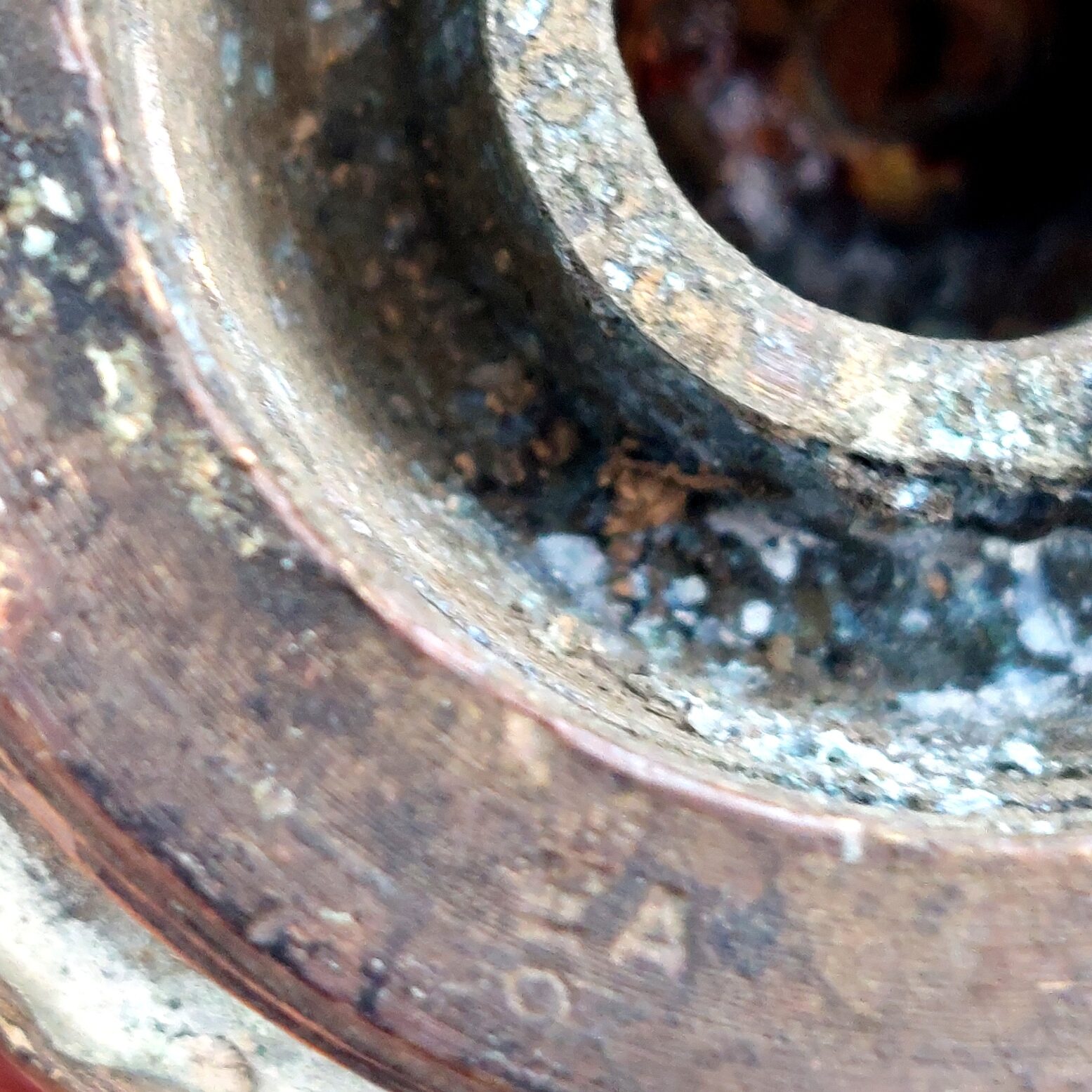
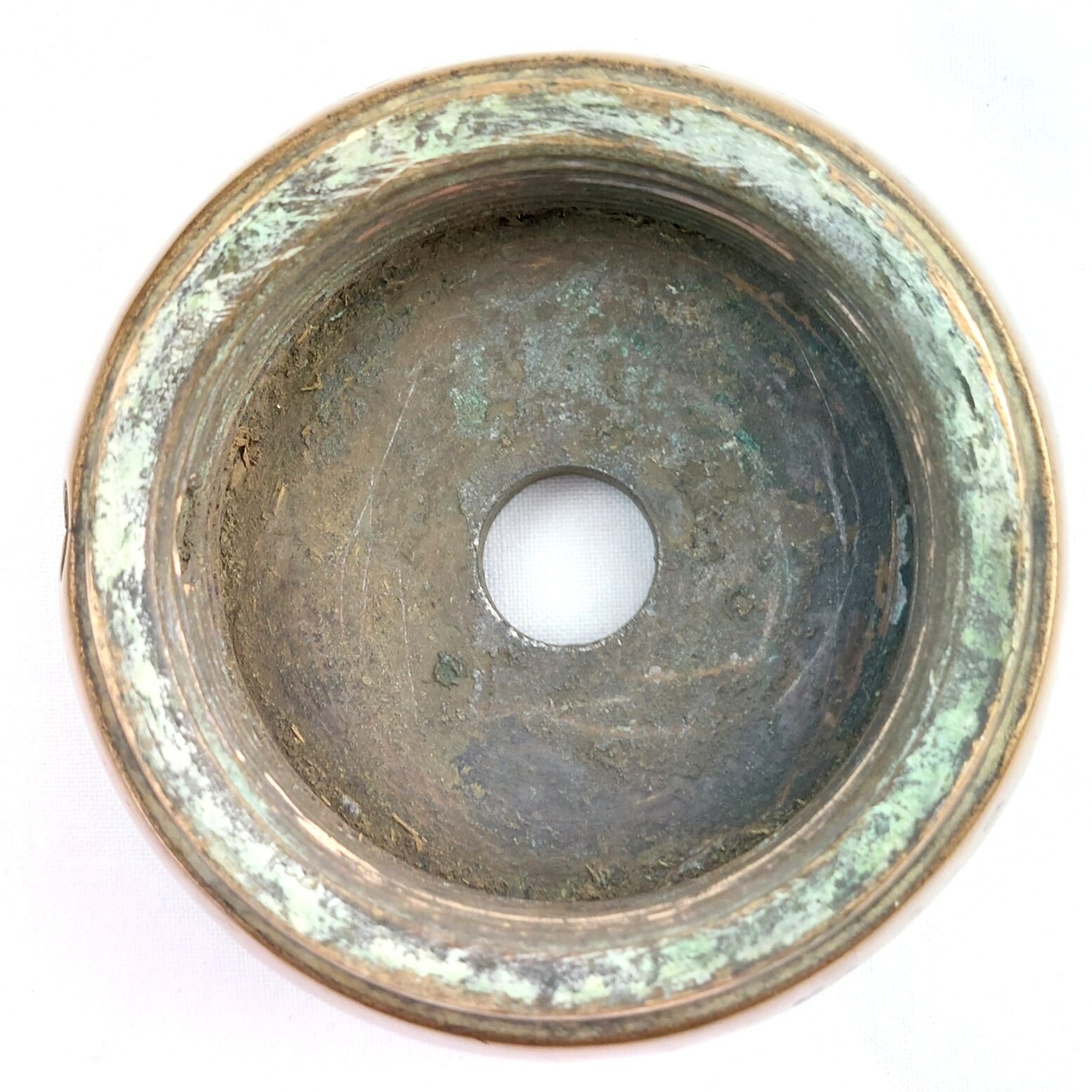
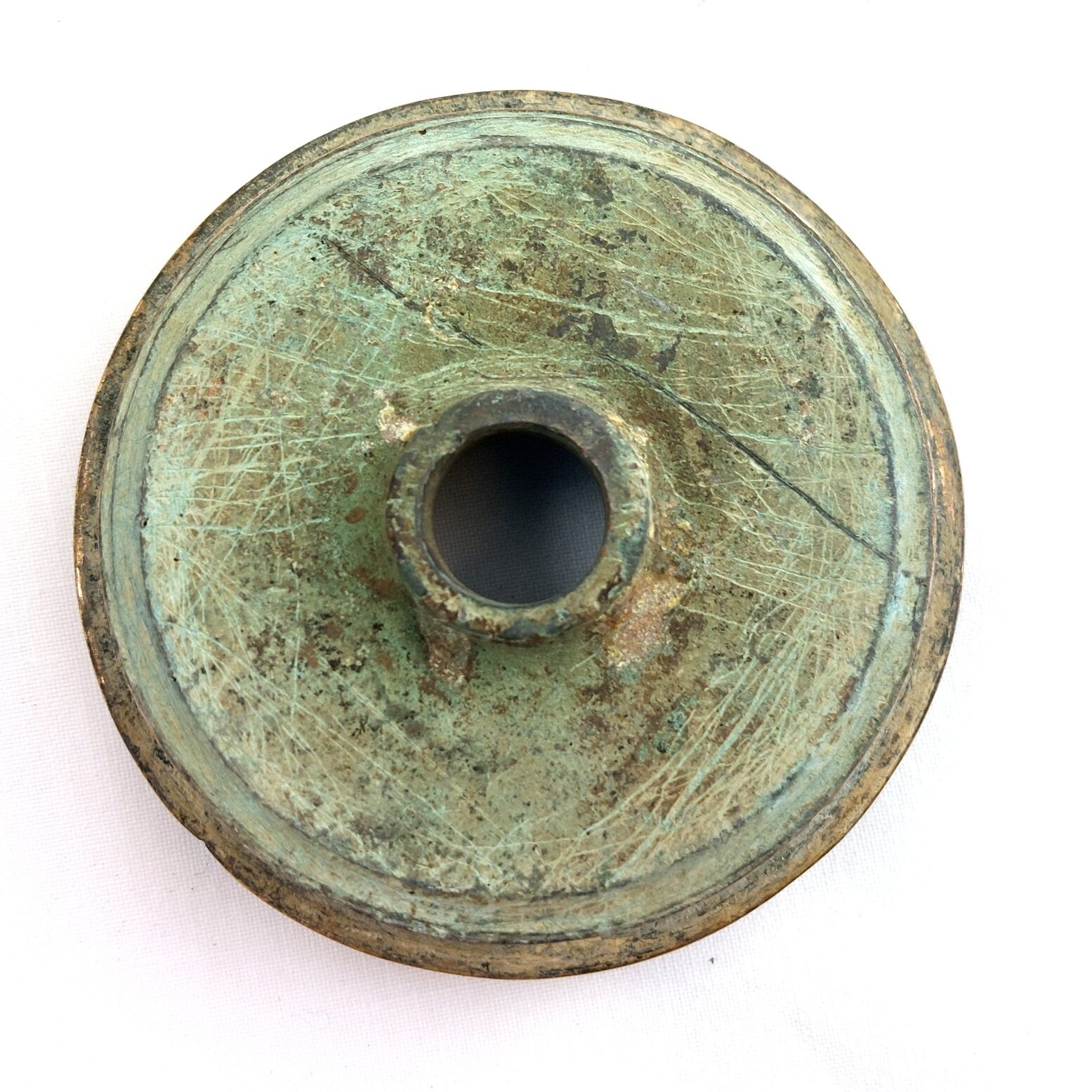
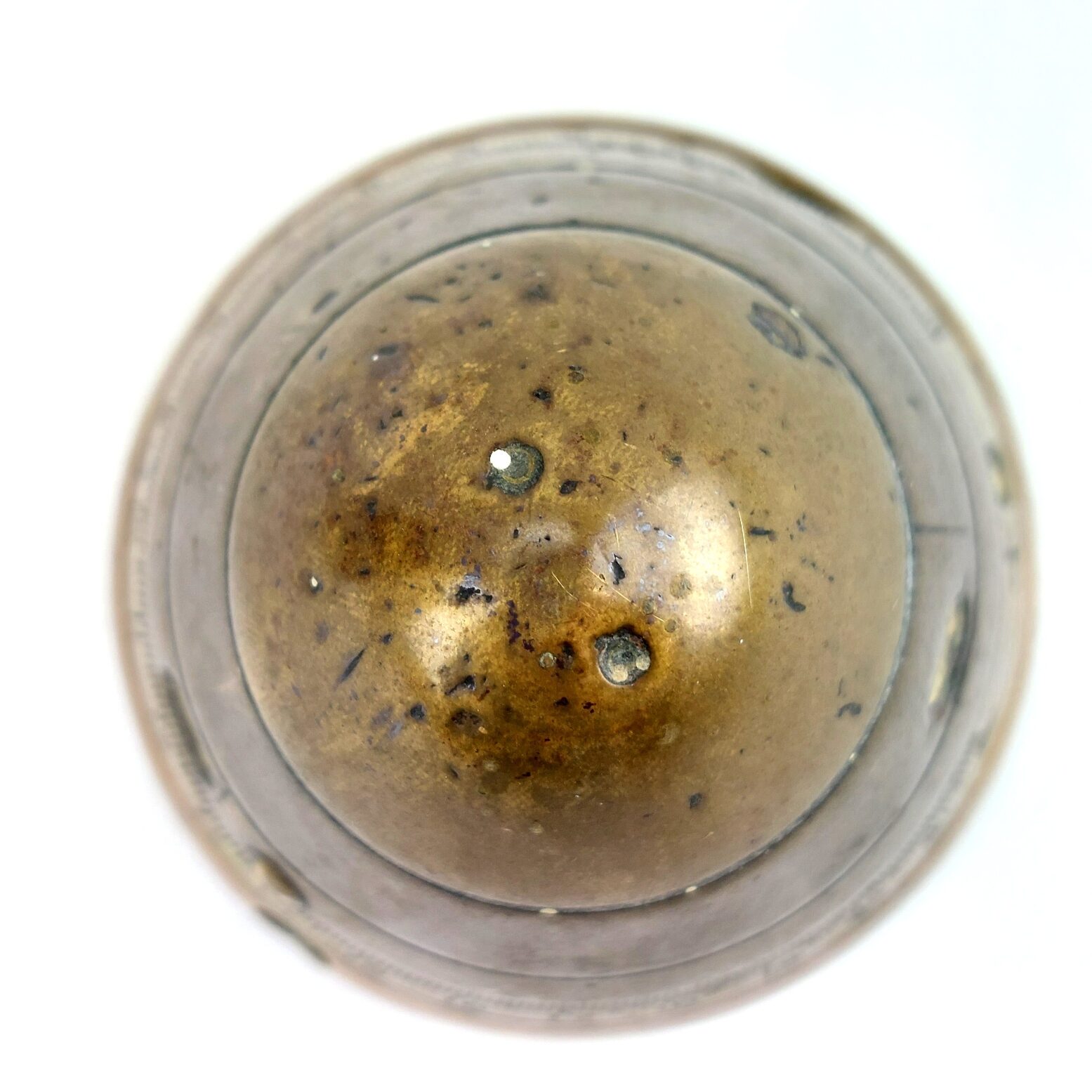
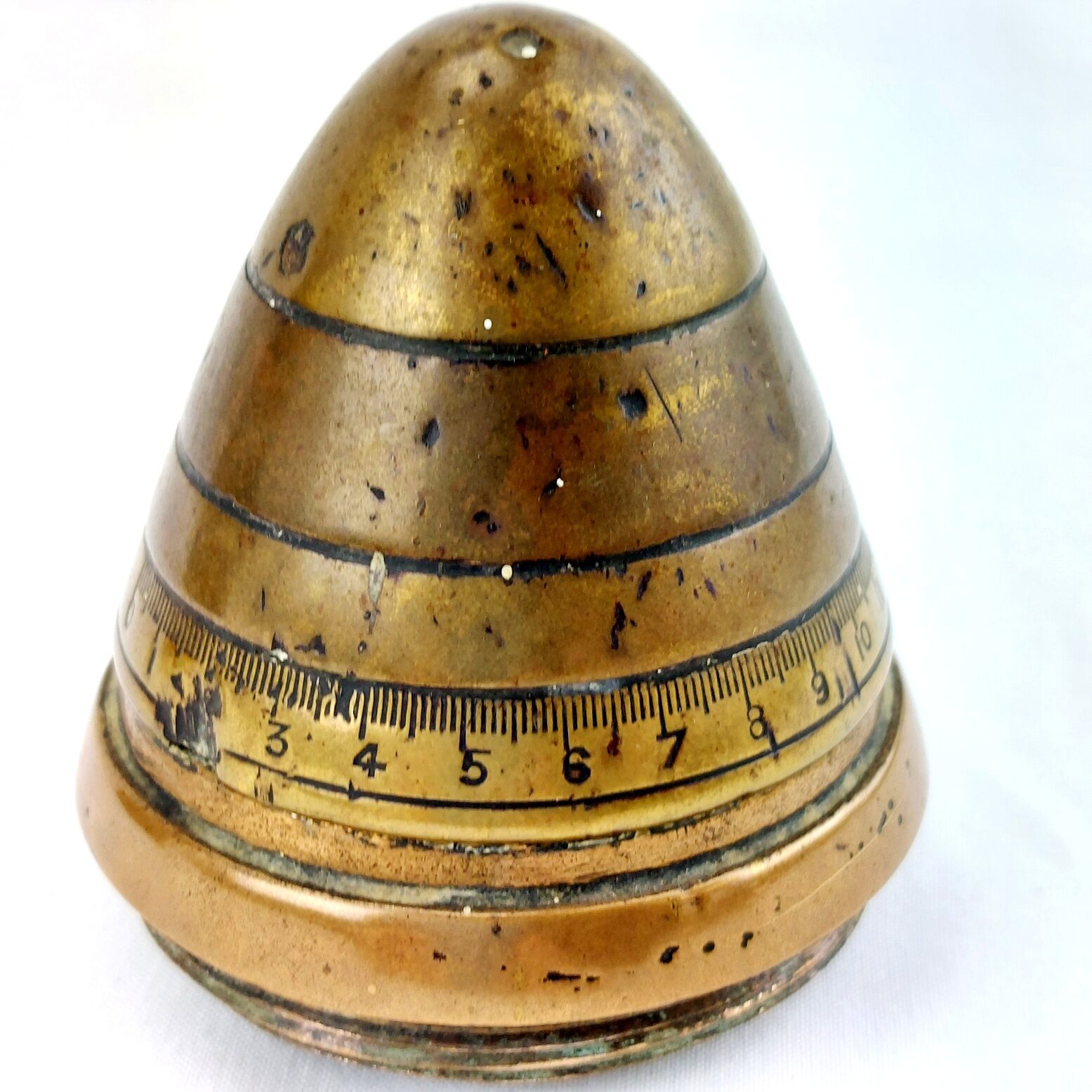
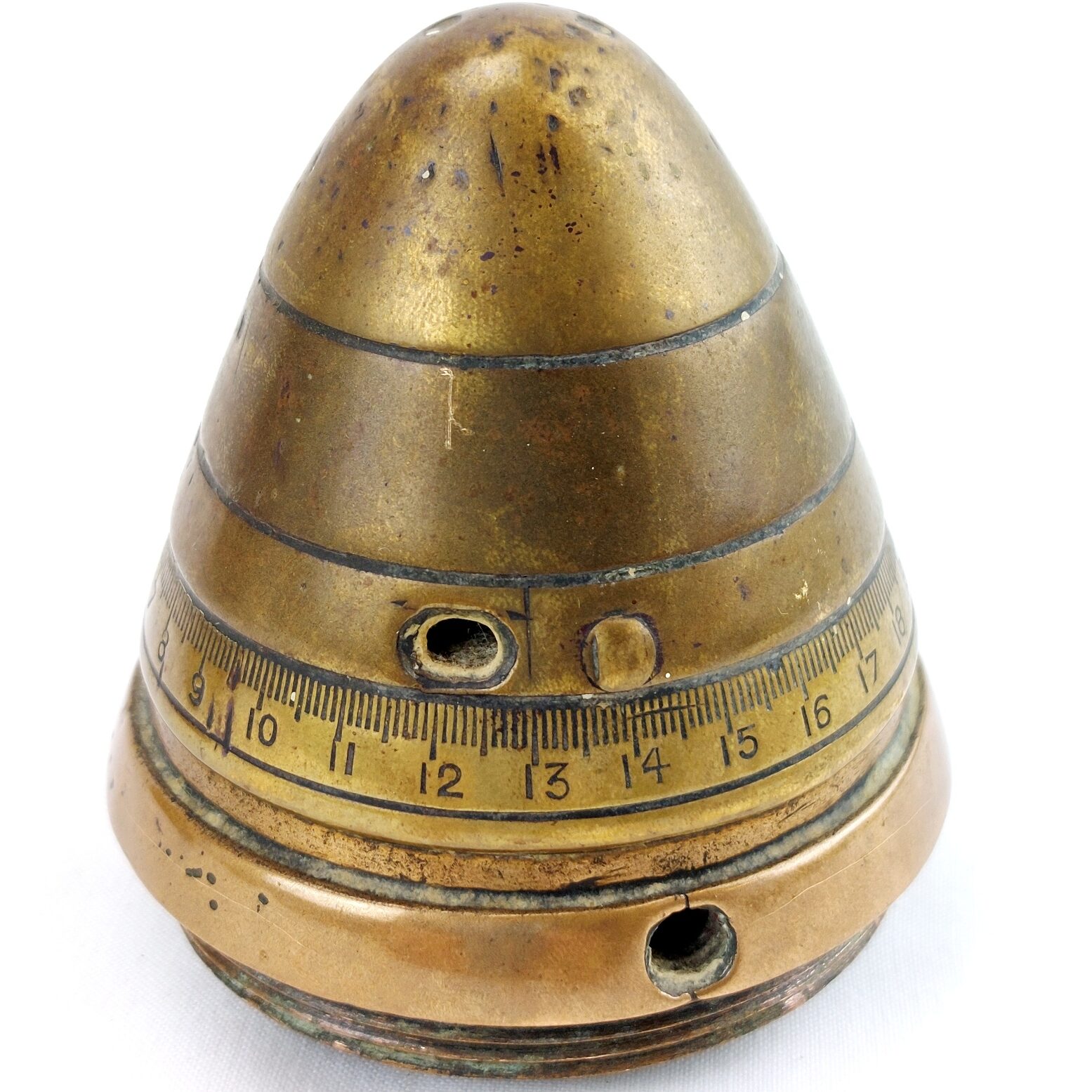
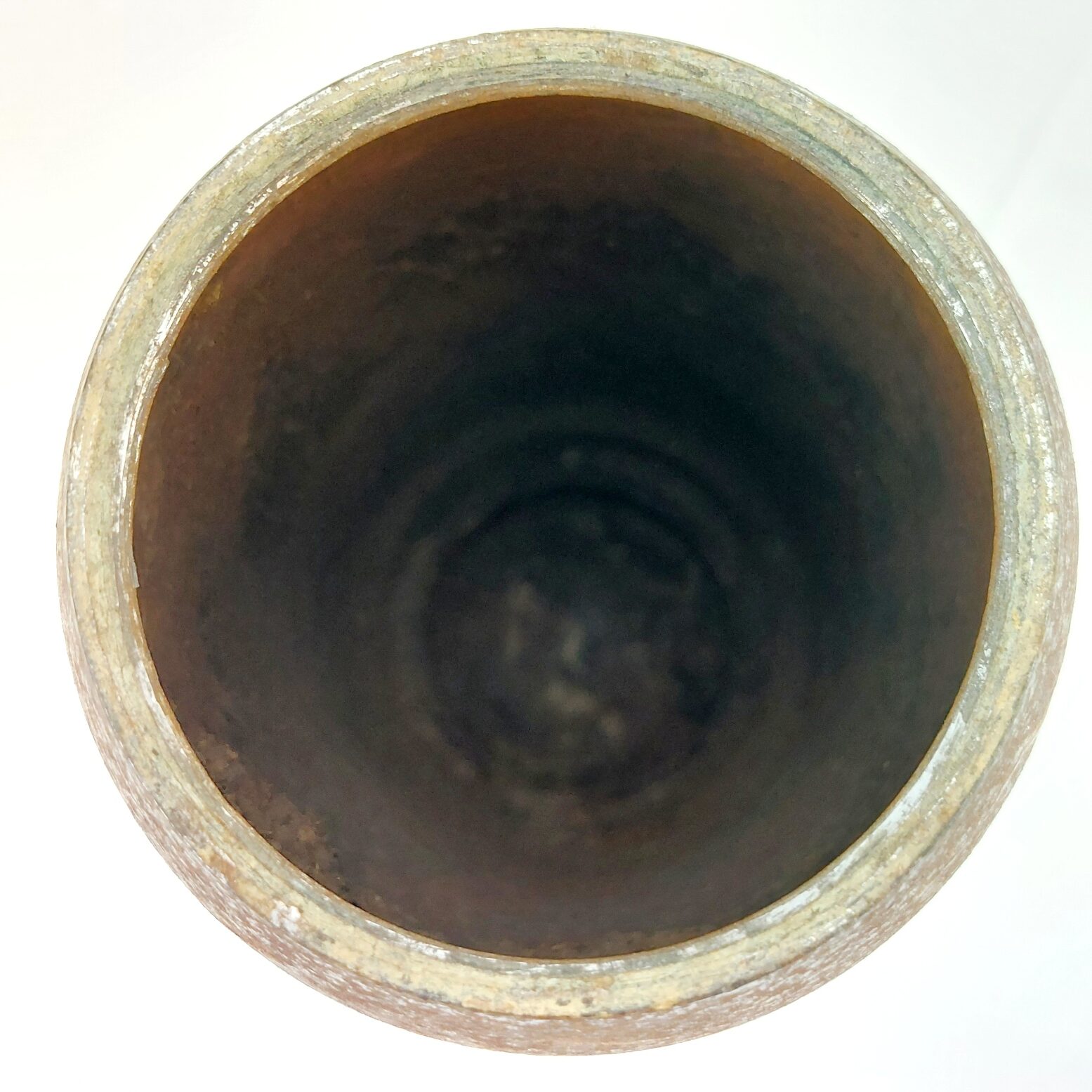
The brass No.80 fuse features its original 0–22 second graduated time ring, with the “+” percussion symbol and the square time-function symbol cleanly visible. Internally, on the lower fuse body, a clearly impressed inspector’s mark “EA” is present—an Enfield inspection stamp consistent with fuse component acceptance. No other maker or date marks survive, the outer stamps having been lost to service wear and later corrosion. The fuse remains fully inert, with internal cavities and channels visible upon disassembly.
Historical Note:
The British 18-pounder field gun was the principal light artillery piece of the Royal Field Artillery during the First World War. Combining rapid fire with excellent accuracy, it was used in every major British action on the Western Front from 1914 to 1918. The No.80 fuse, a sophisticated design allowing both timed airburst and percussion detonation, was the standard British artillery fuse for shrapnel and high-explosive shells alike.
This projectile’s markings place it firmly in the intense late-war production period: the body forged by Vickers, Sons & Maxim in May 1918, and filled shortly afterwards before issue to the front. Surviving complete examples—particularly with intact, original fuses—are increasingly scarce, as most were expended or scrapped in the decades following the war.
*Condition*
An honest, stable inert shell showing the expected surface pitting and corrosion from long-term field exposure, yet retaining some clear maker and inspection stamps on the body. The copper driving band is complete, with deformation from firing and visible rifling marks. The No.80 fuze shows external wear, with softened engraving in places, but the 0–22 second scale, time/percussion symbols, and the internal inspector’s stamp “EA” are intact. The fuze disassembles correctly, with aged but stable internal surfaces. Overall, a well-preserved late-war example retaining both its original fuze and a full suite of identifiable markings. Please see photographs as part of the condition report.
RQMEHXADO_5864220025