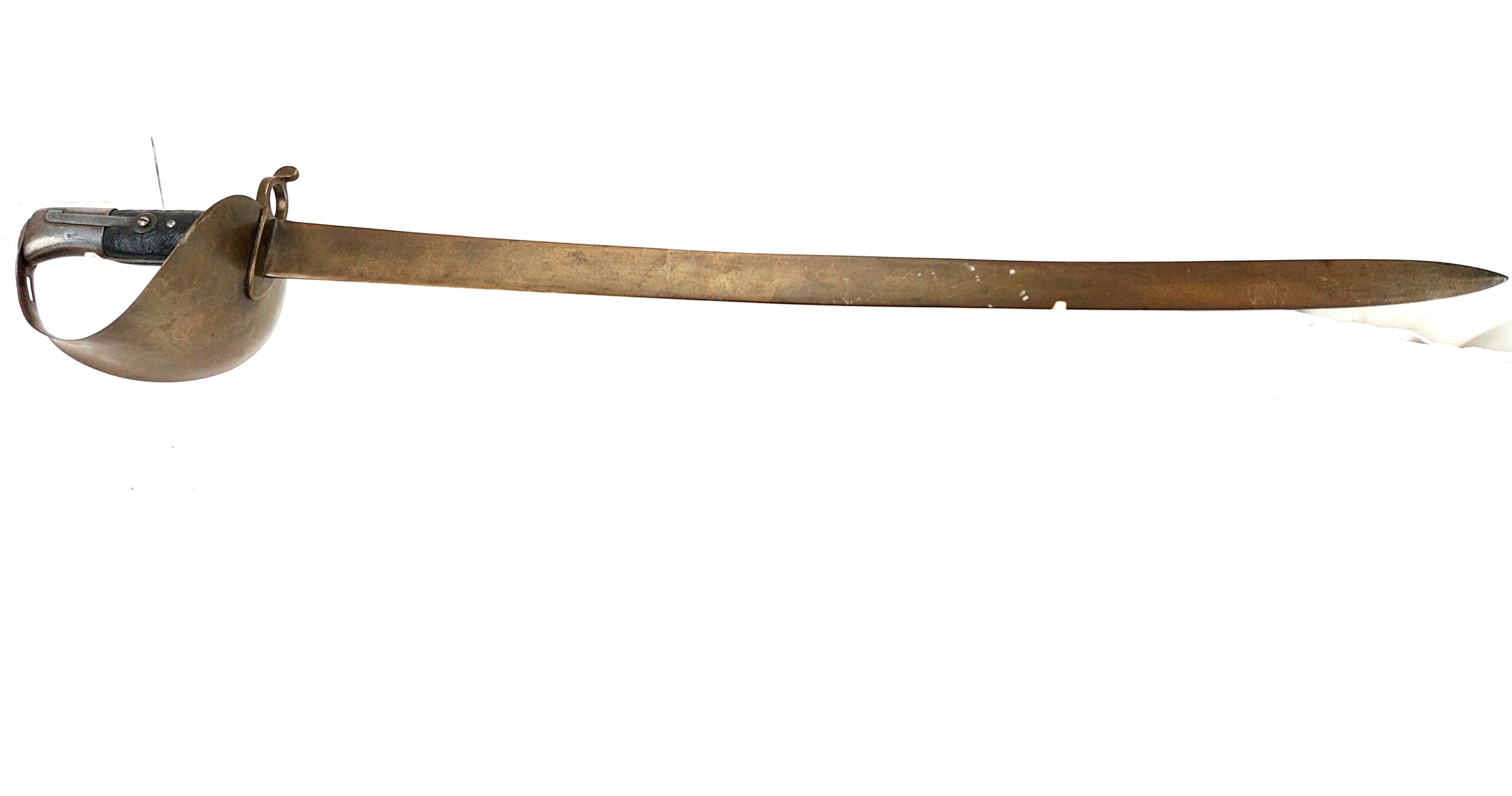
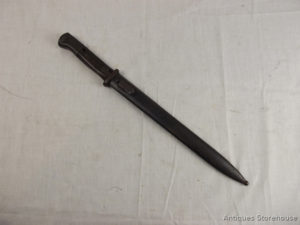
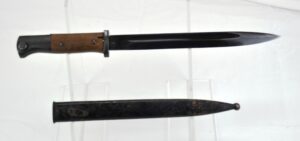
*British, Pattern 1859 Type II Naval Cutlass Bayonet, Solingen Blade, Attributed to Gebrüder Weyersberg*
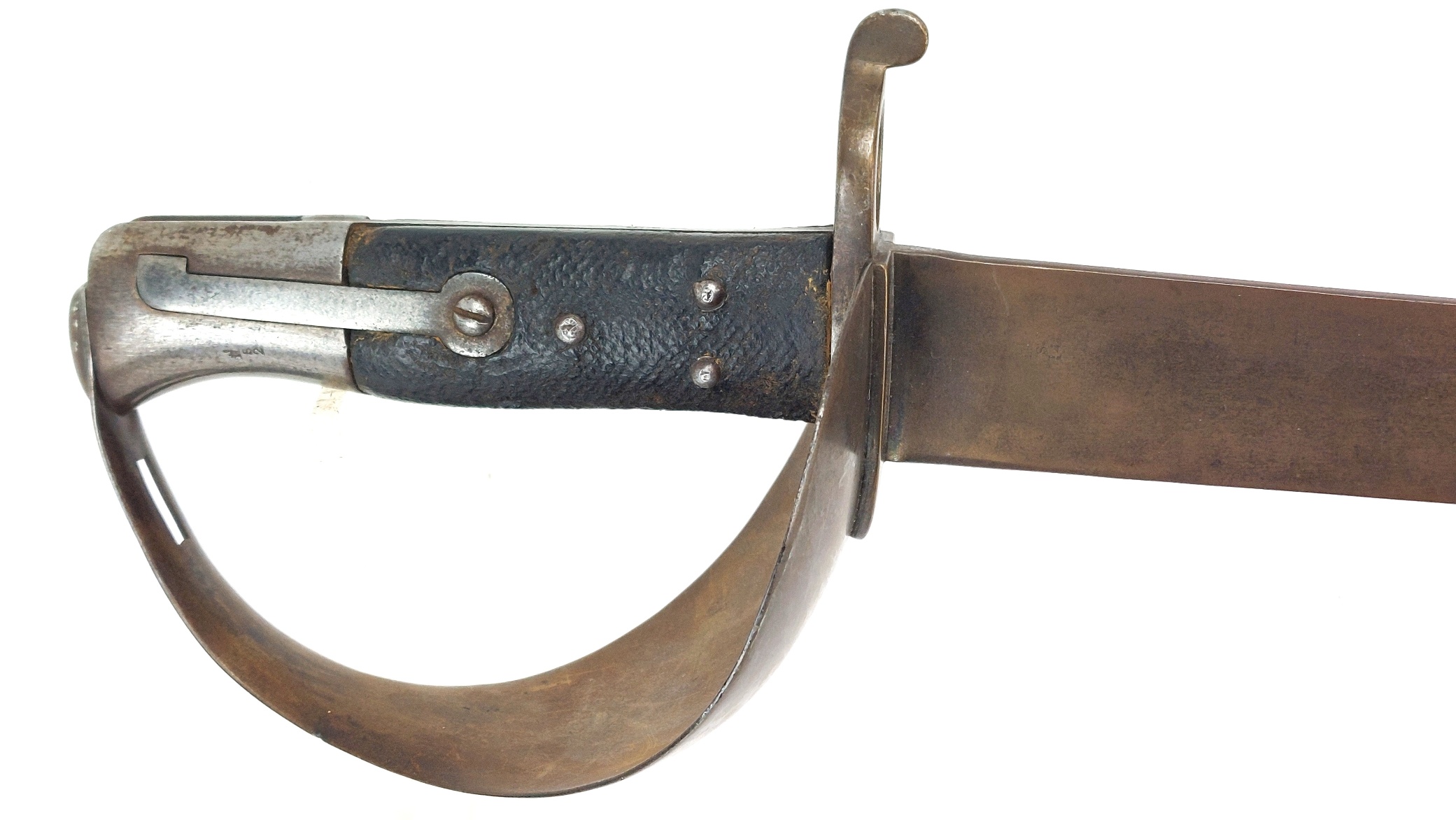
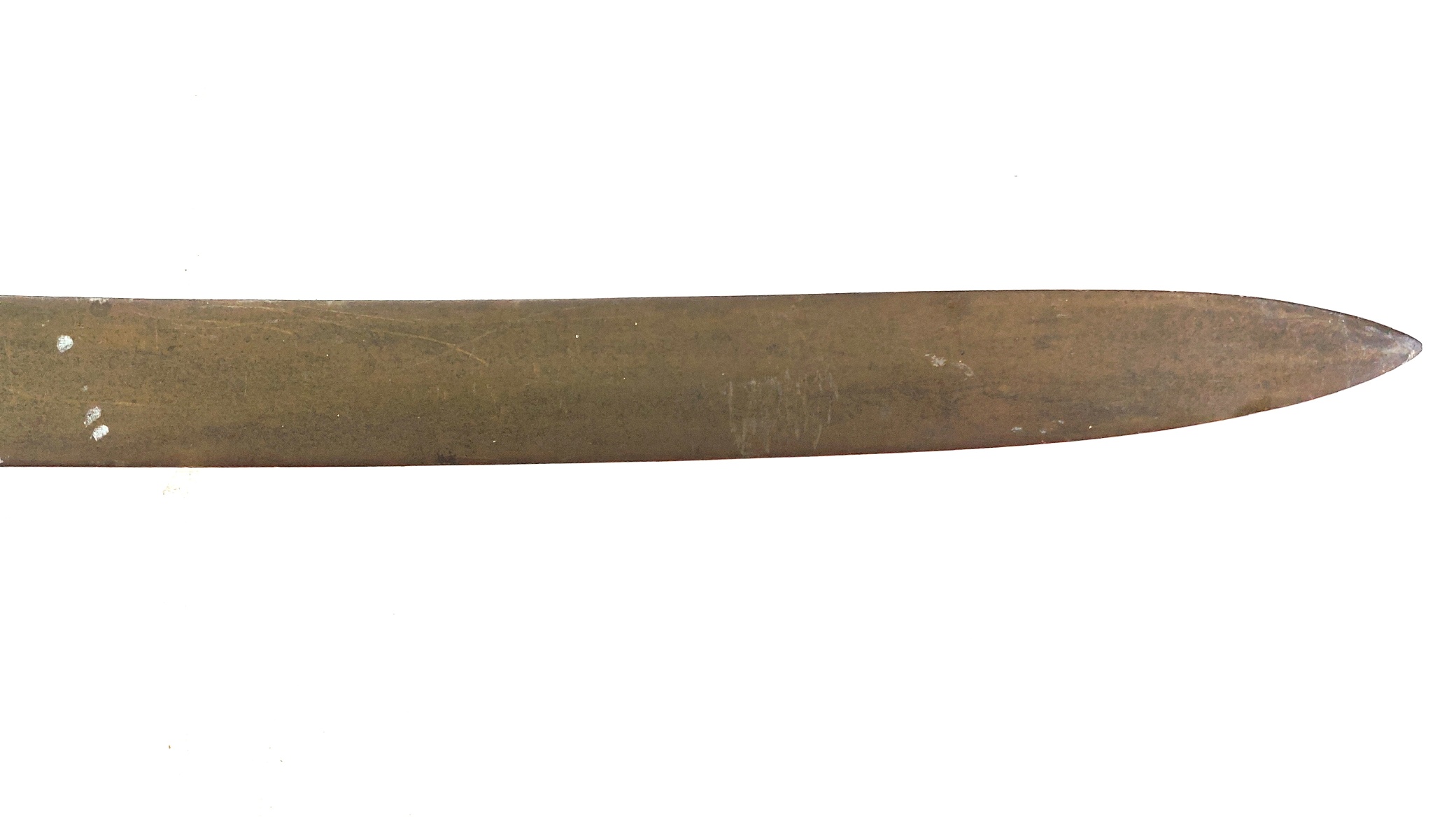
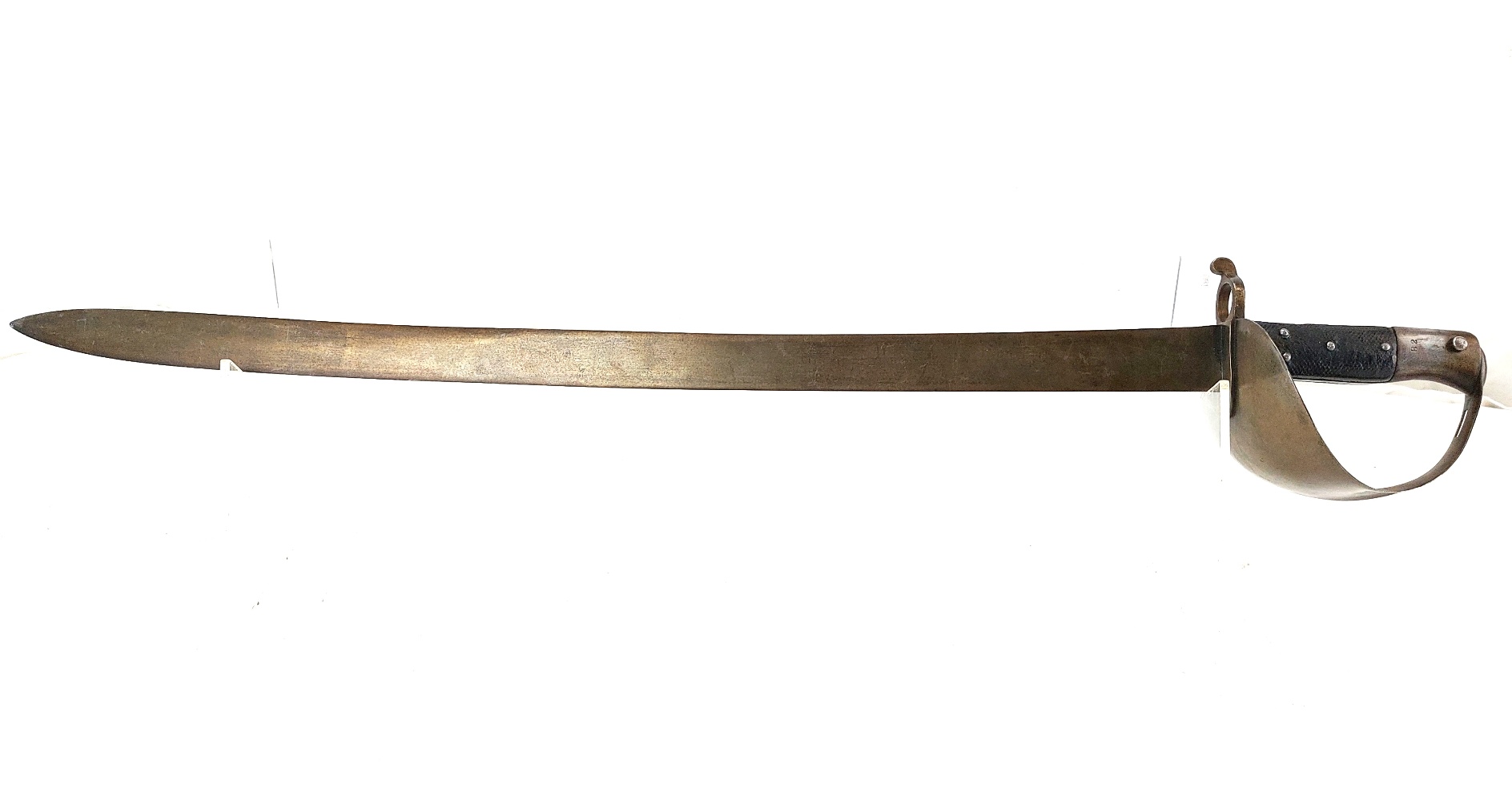
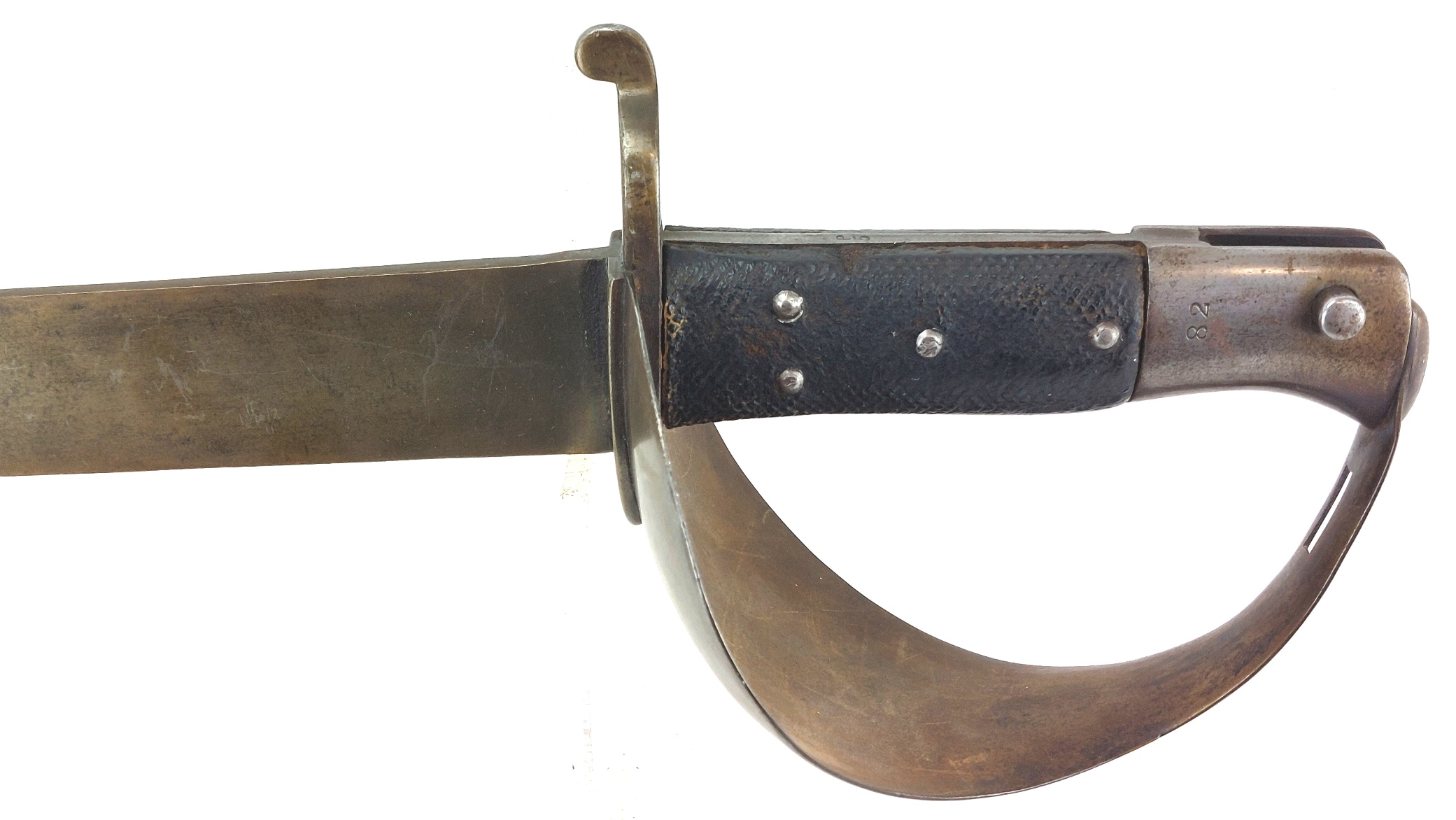
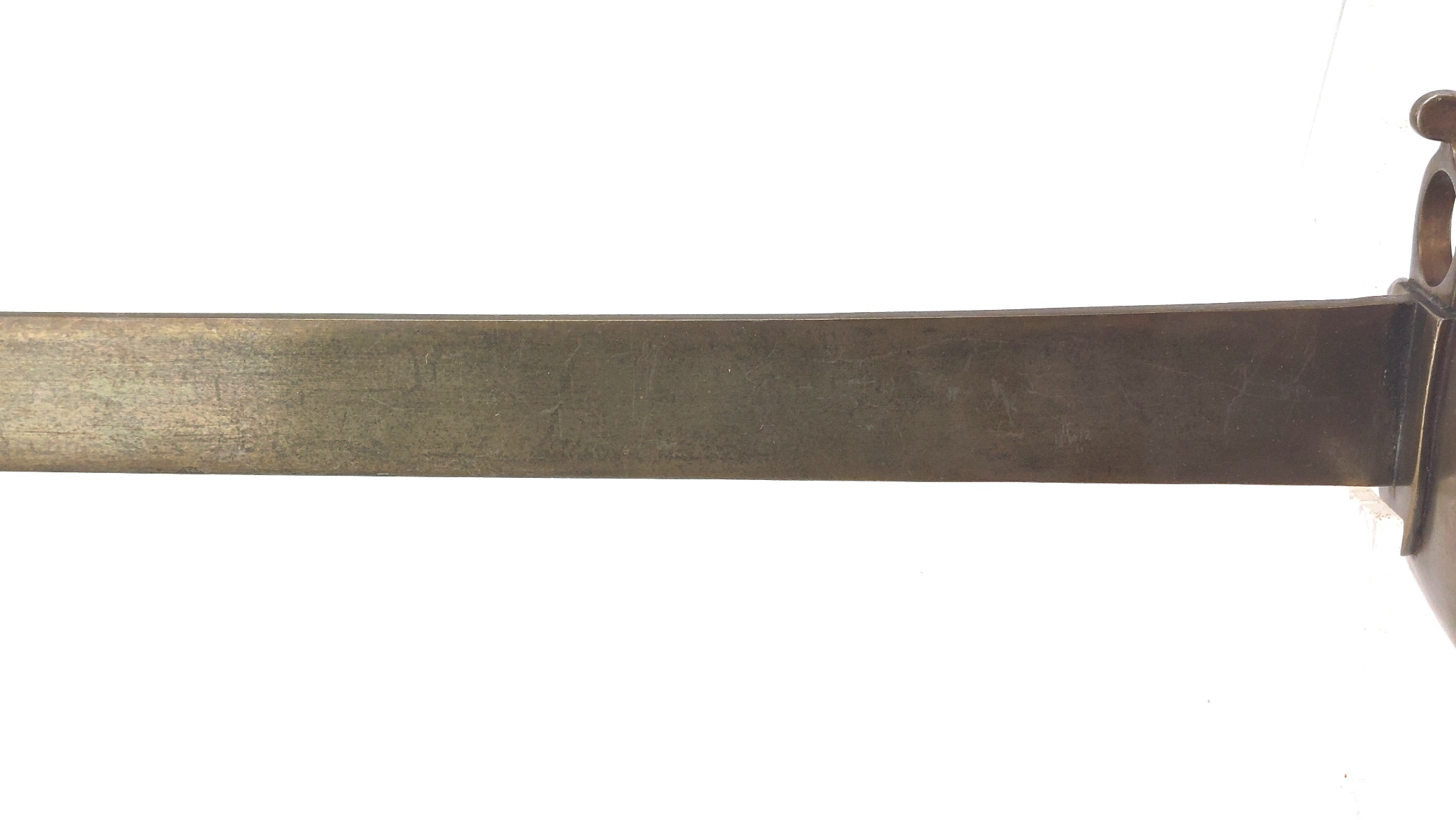
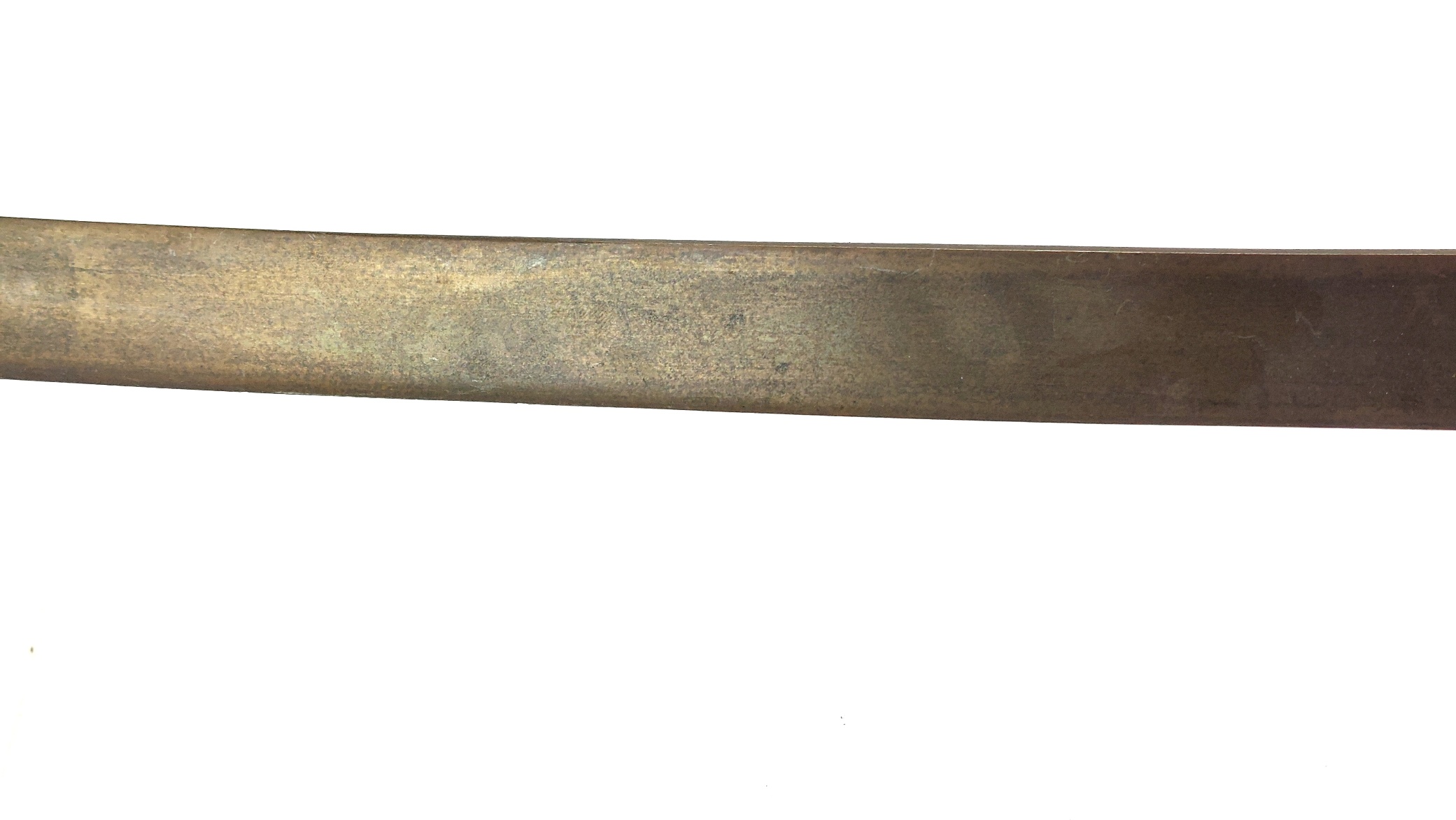
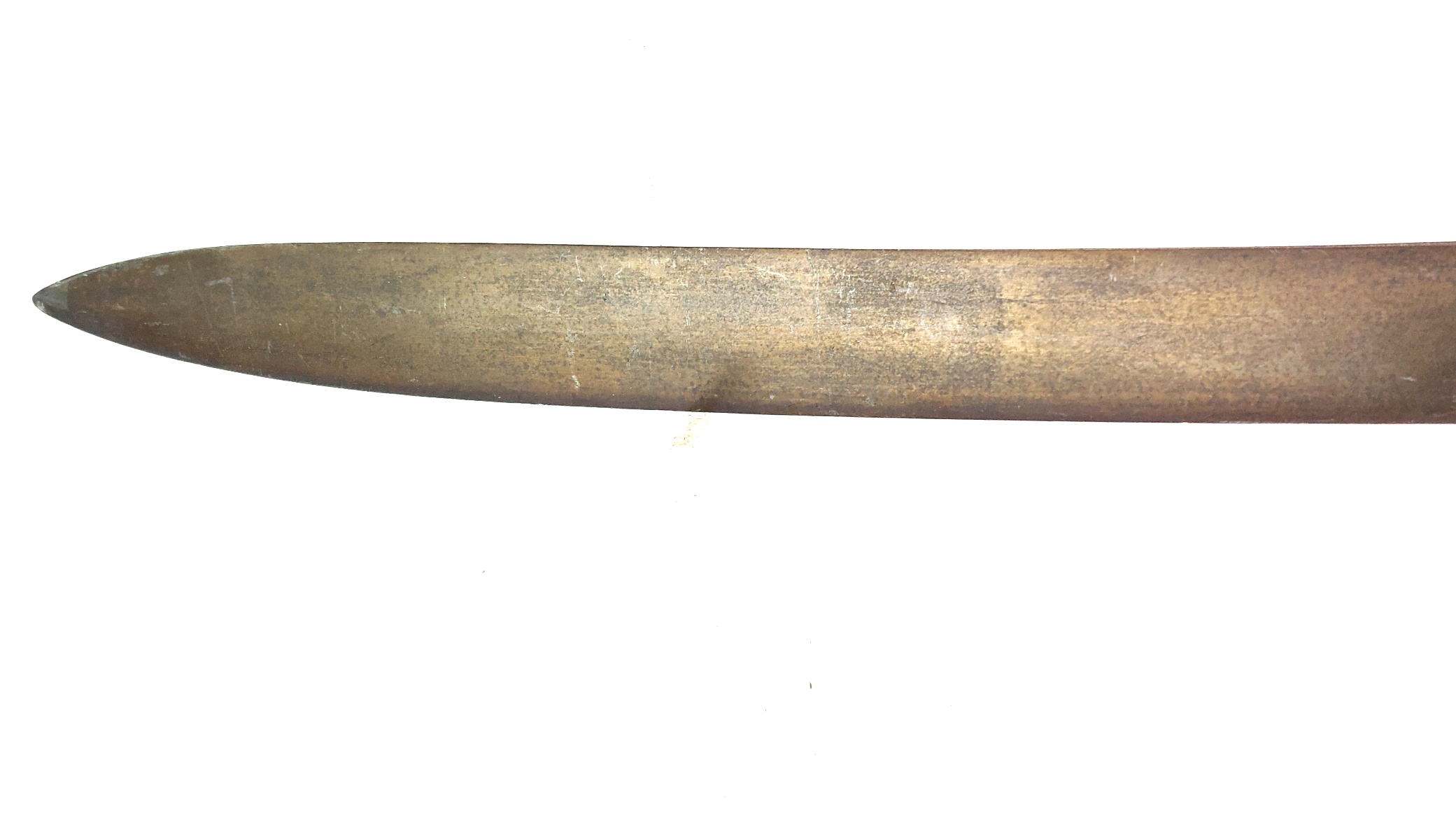
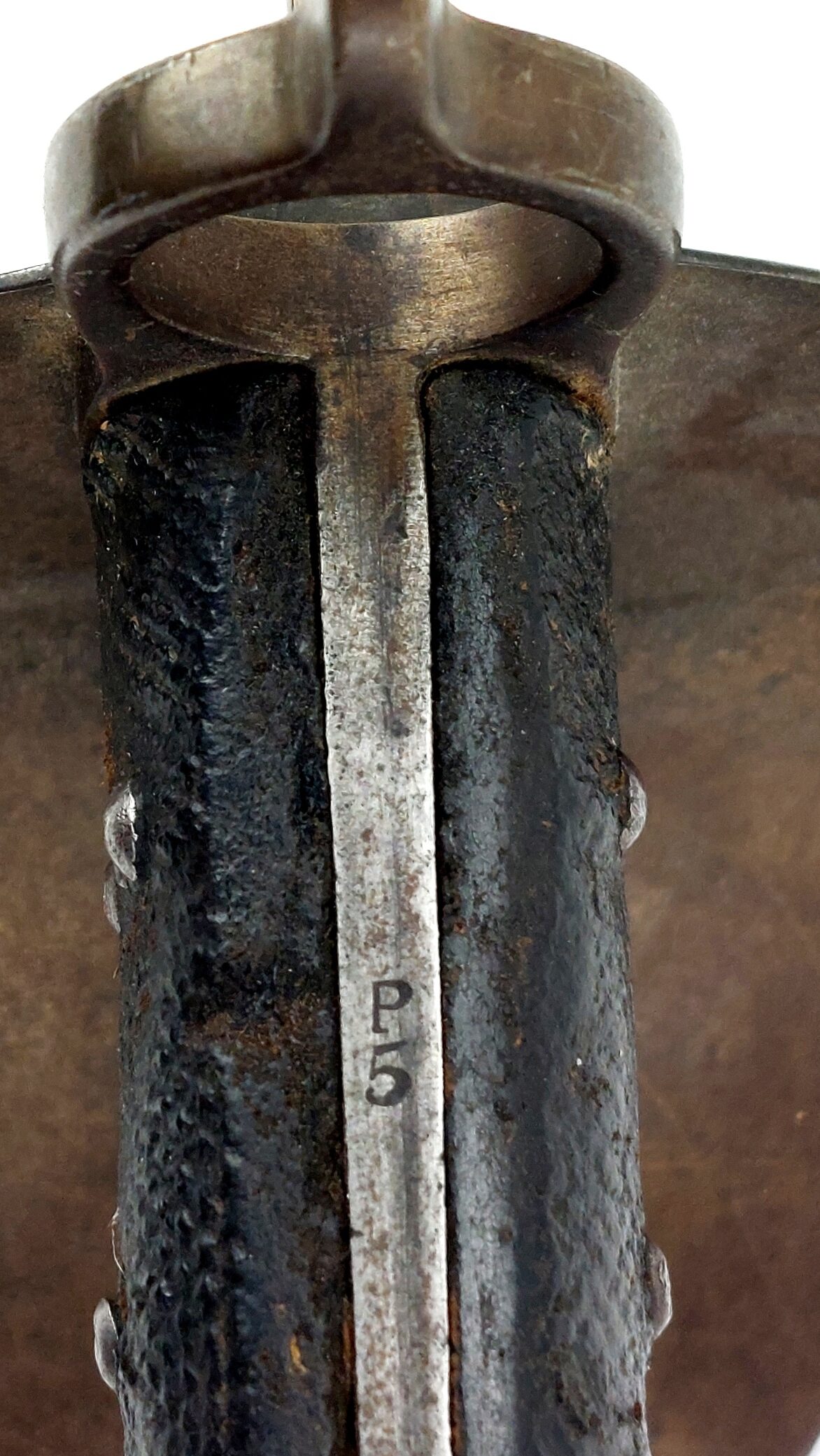
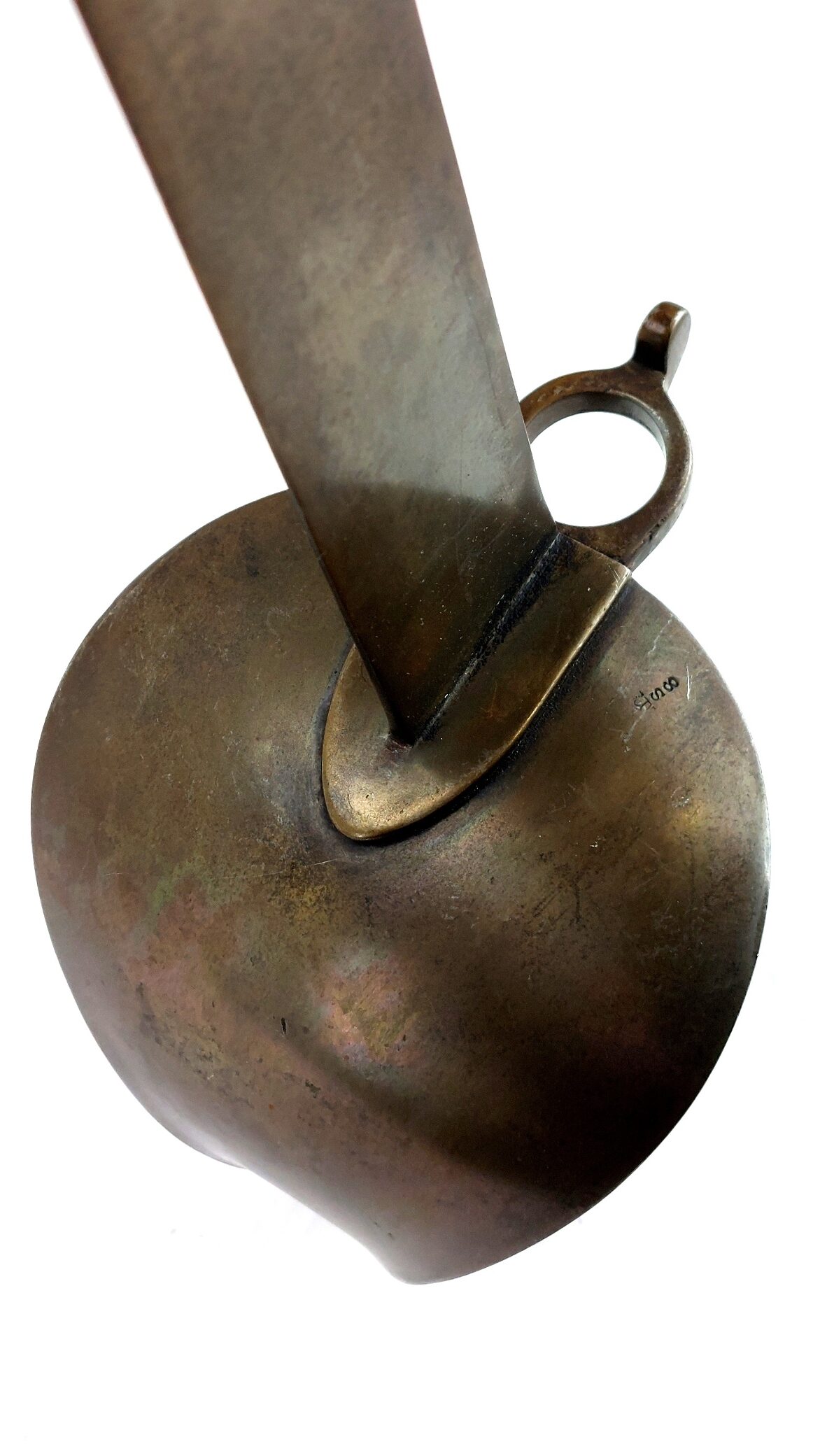
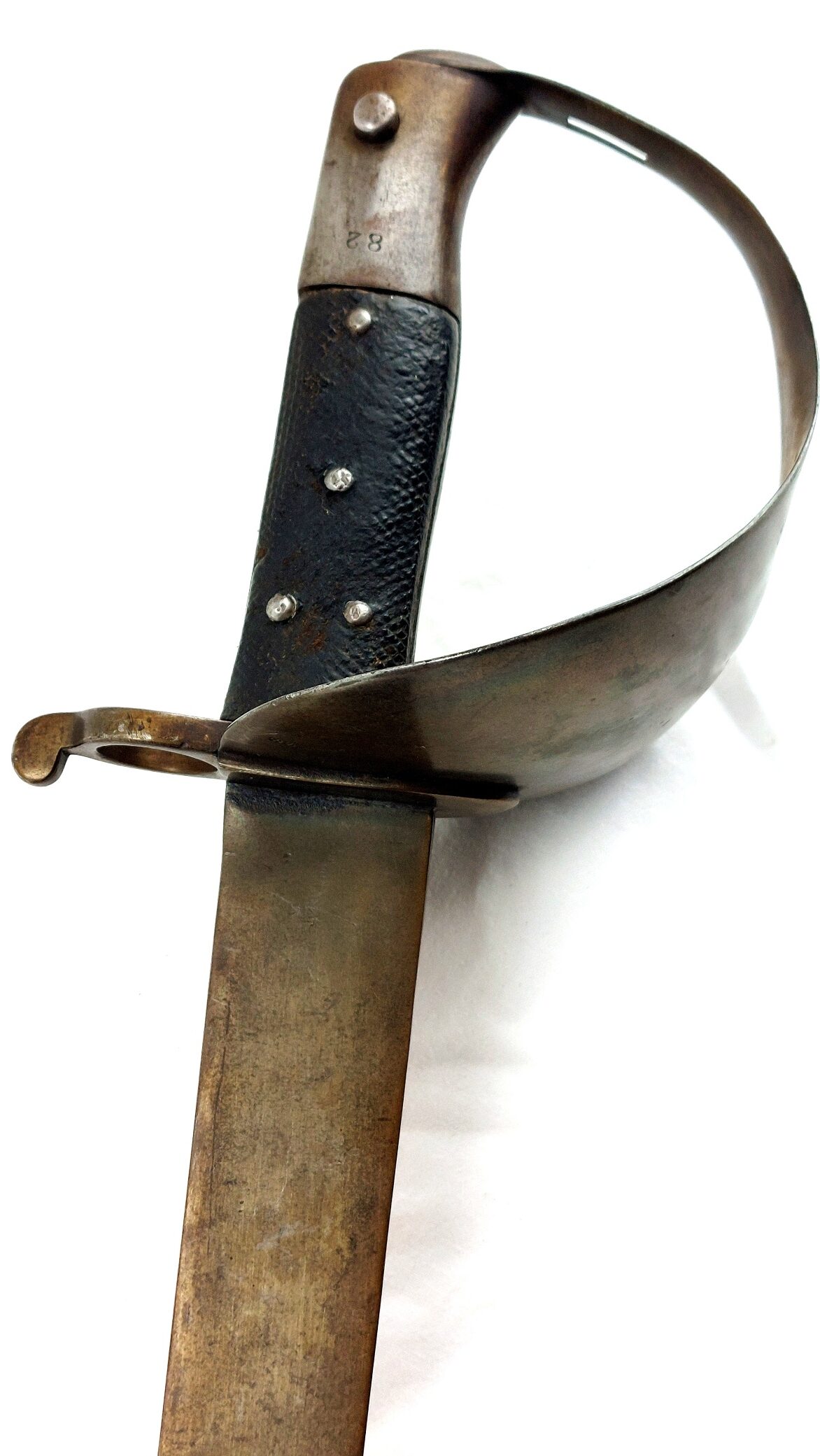
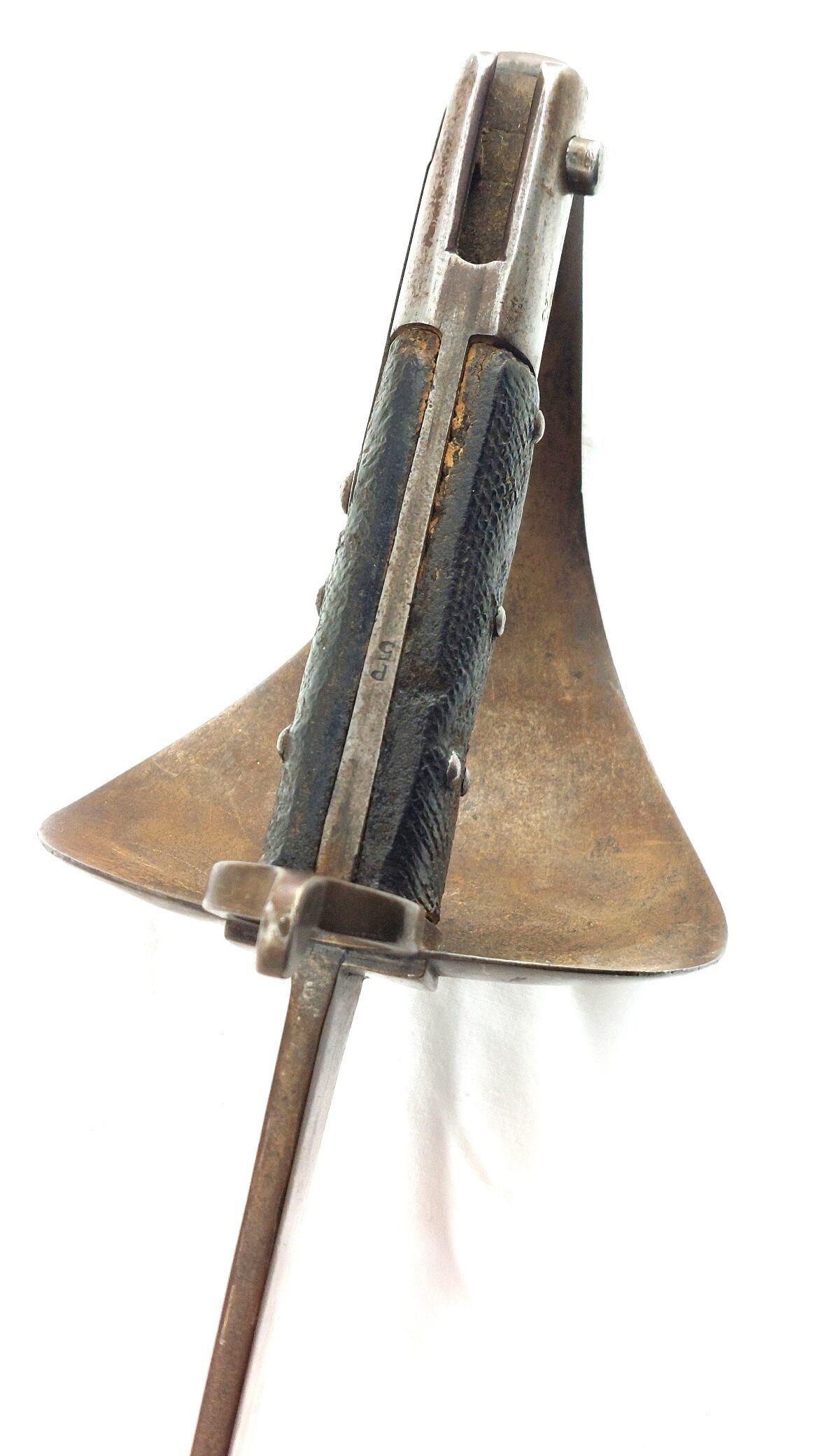
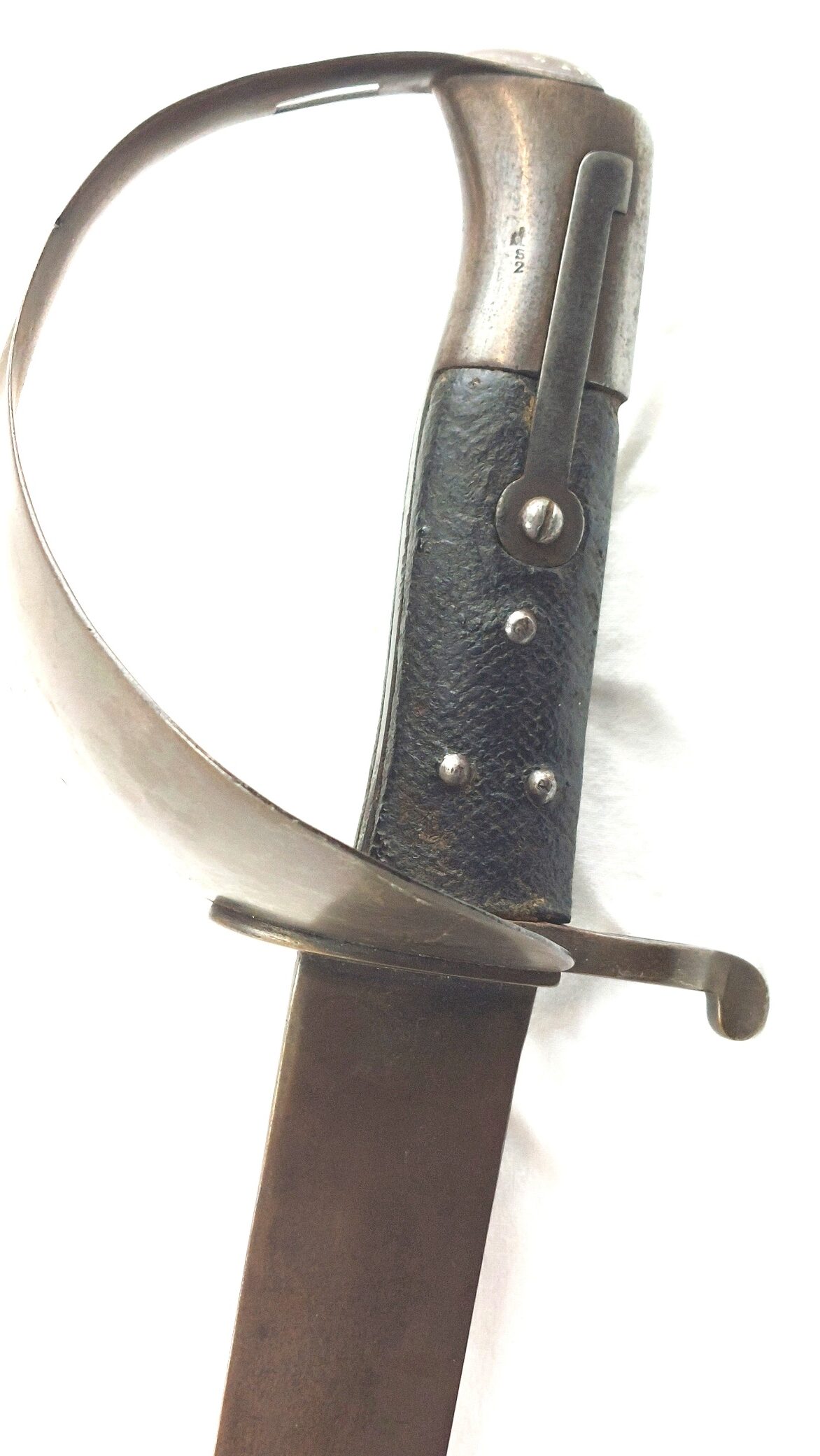
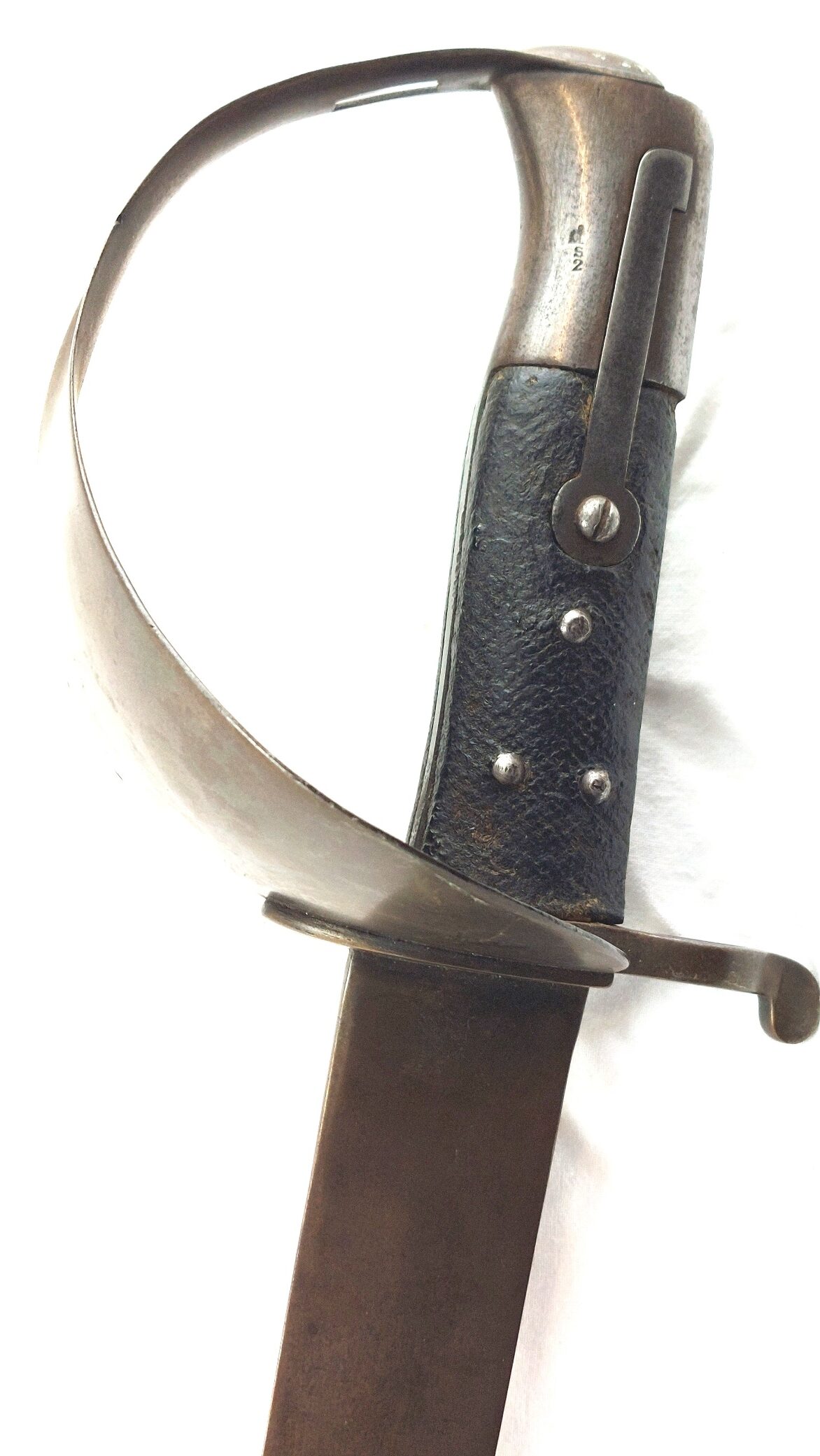
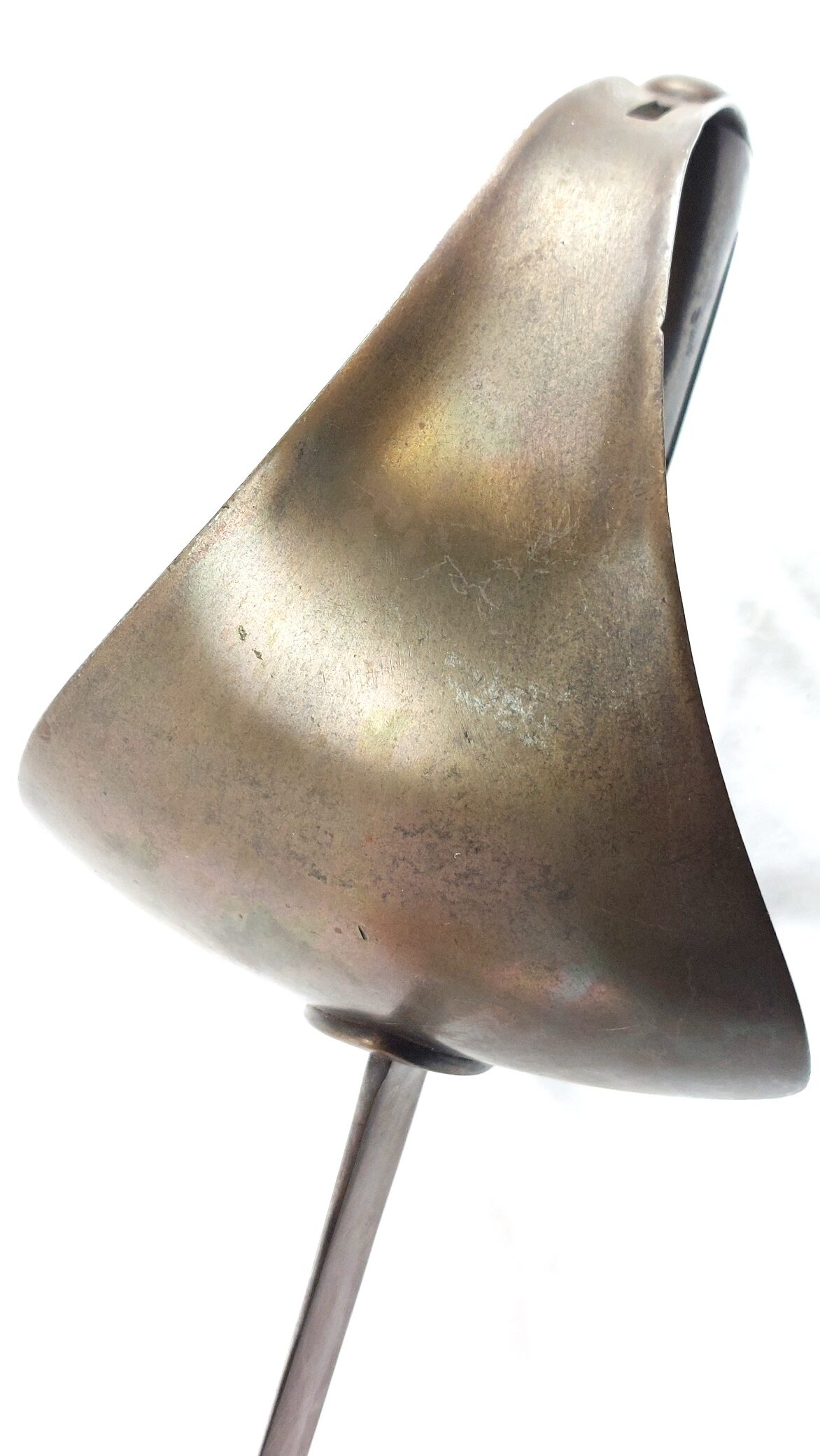
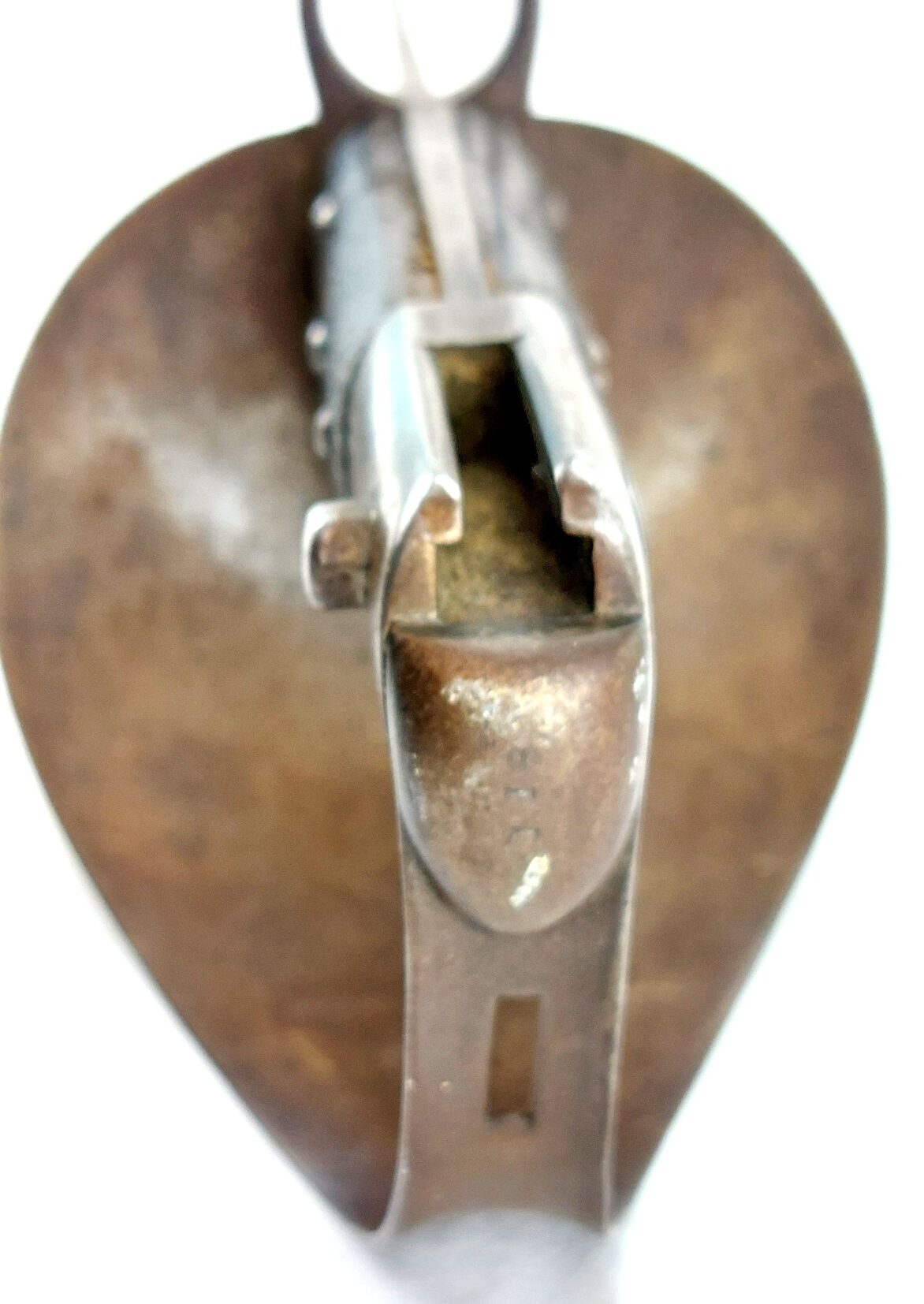
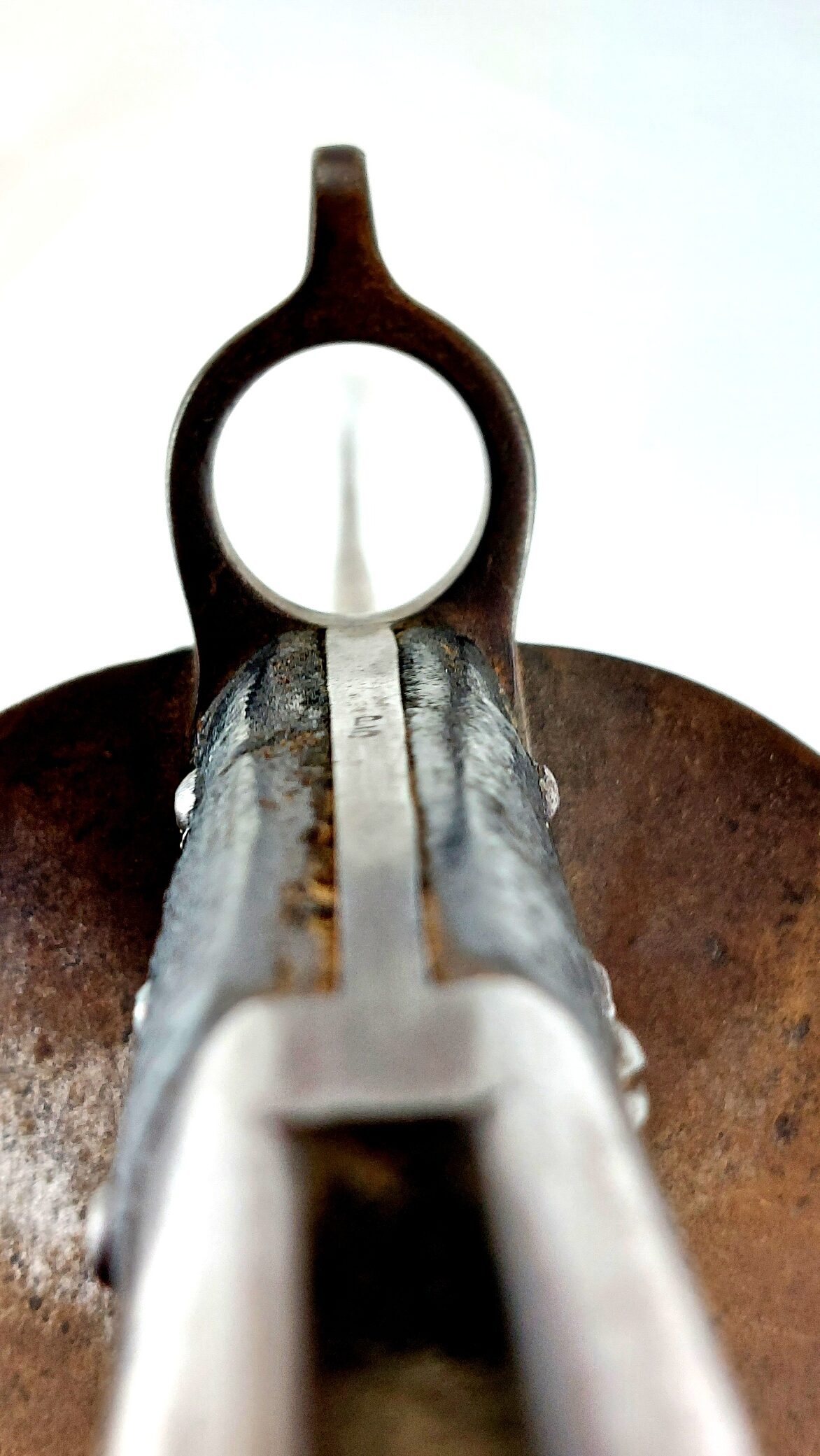
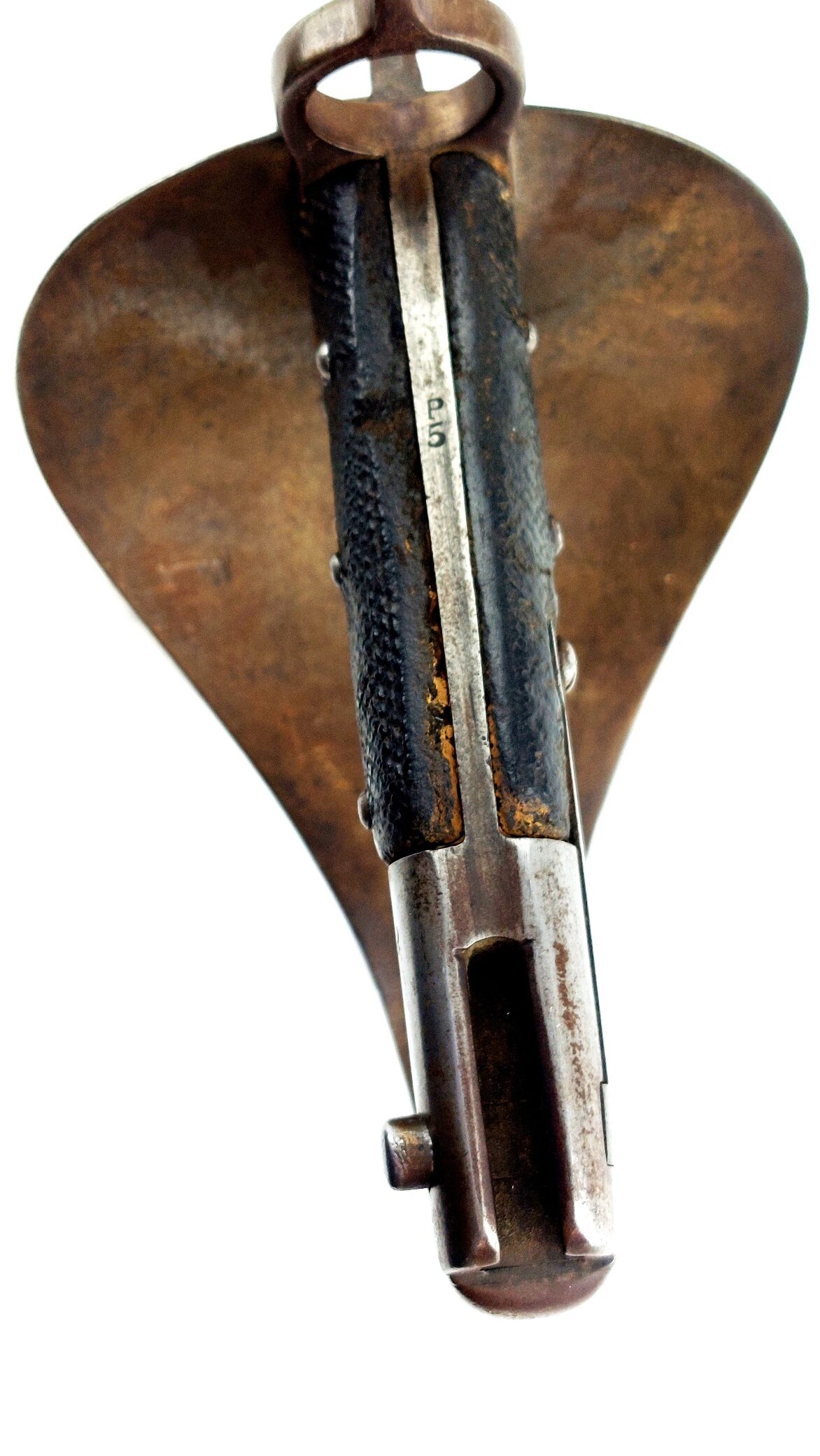
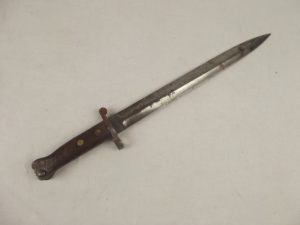
A fine and increasingly scarce British Pattern 1859 Type II Naval Cutlass Bayonet, produced for use with the Pattern 1858 Enfield Naval Rifle. This robust example retains its heavy steel bowl guard with correct bayonet bar fixing, full-length steel tang, and original two-piece pressed chequered leather grip secured by rivets. The substantial naval cutlass-style blade is single-edged, unfullered, and slightly curved, terminating in a spear-point tip sharpened on both sides. Overall, the bayonet presents as an honest, service-used piece with attractive age patina and clear evidence of British ordnance inspection throughout.
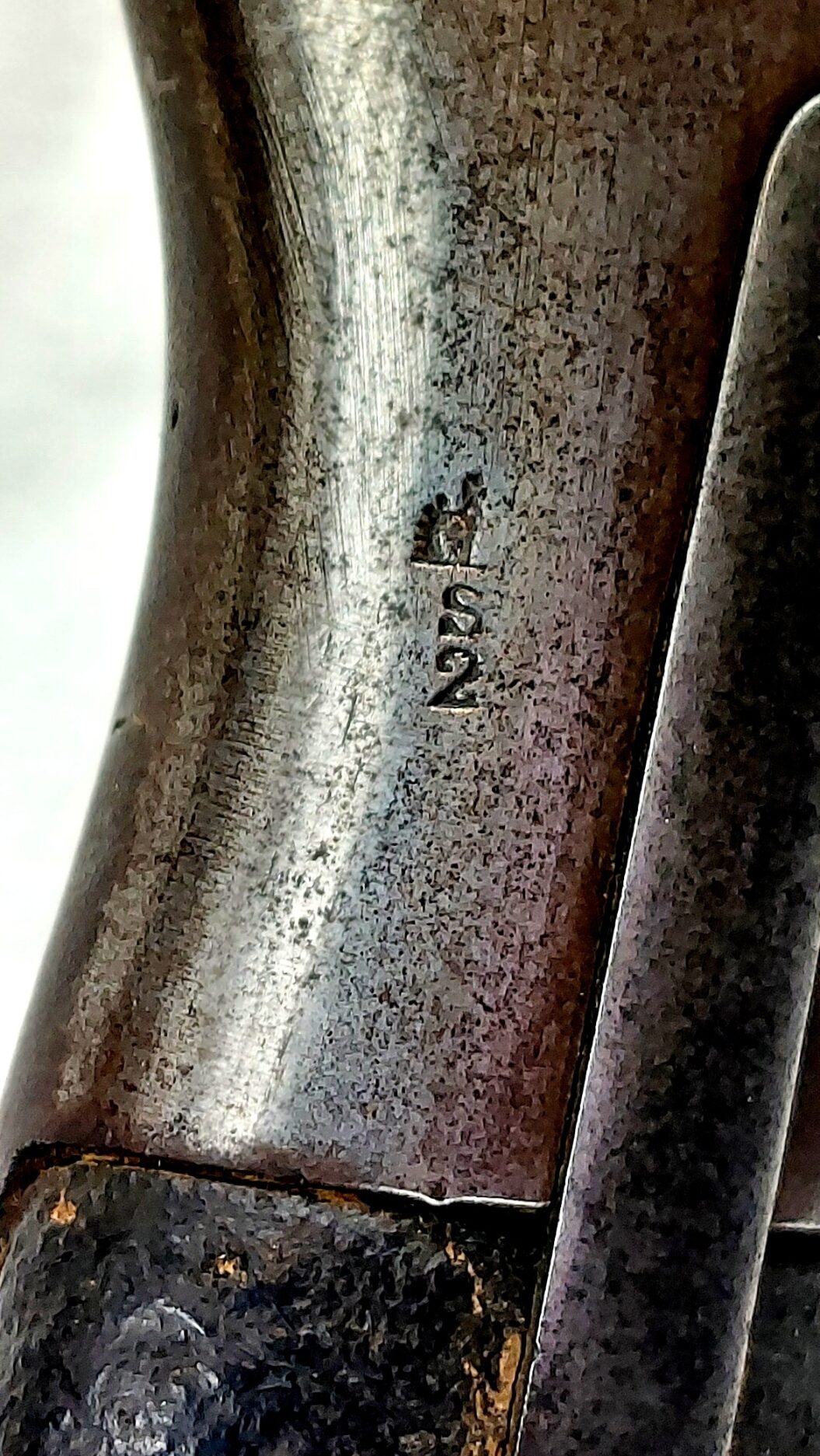
Markings:
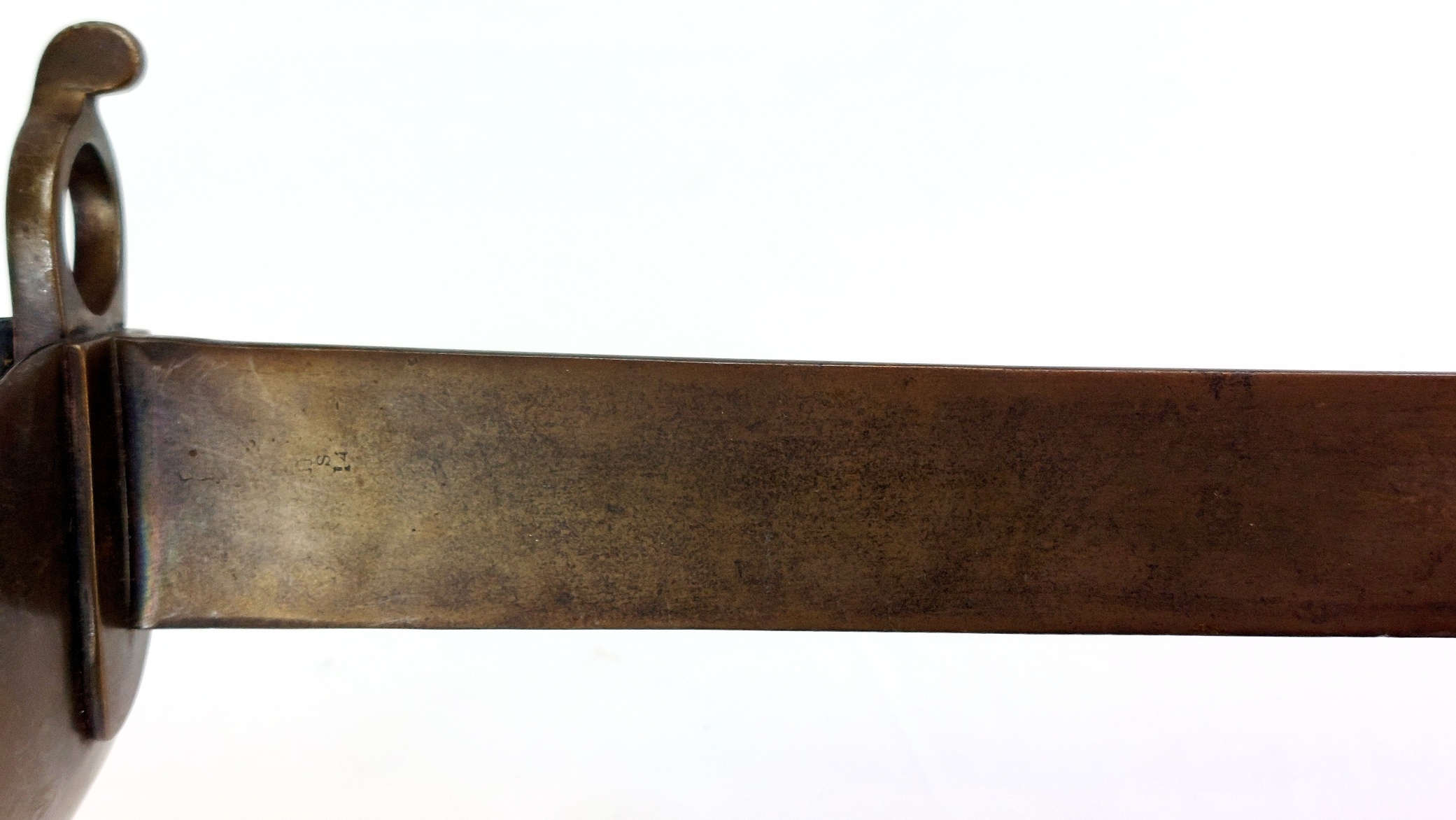
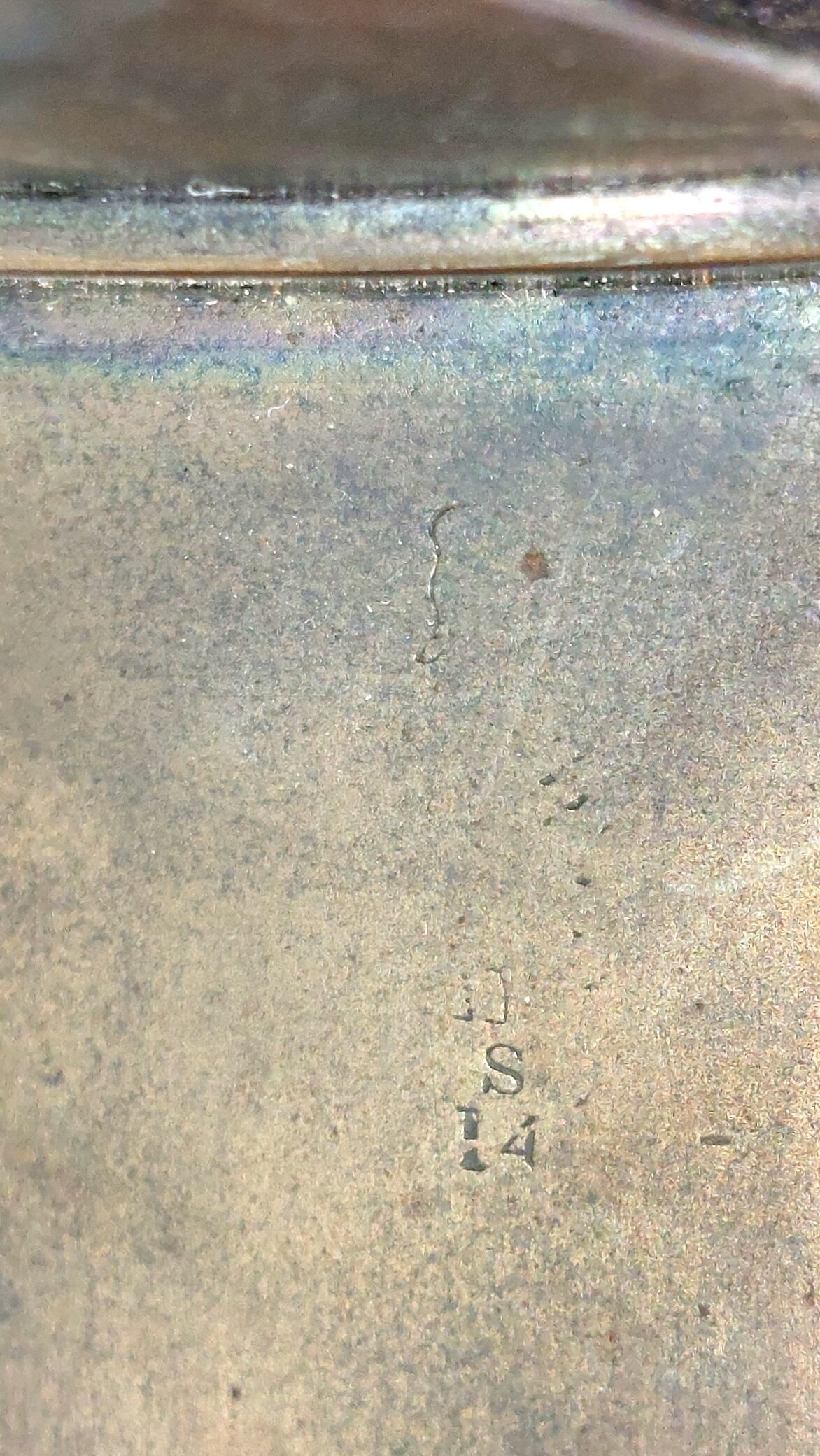
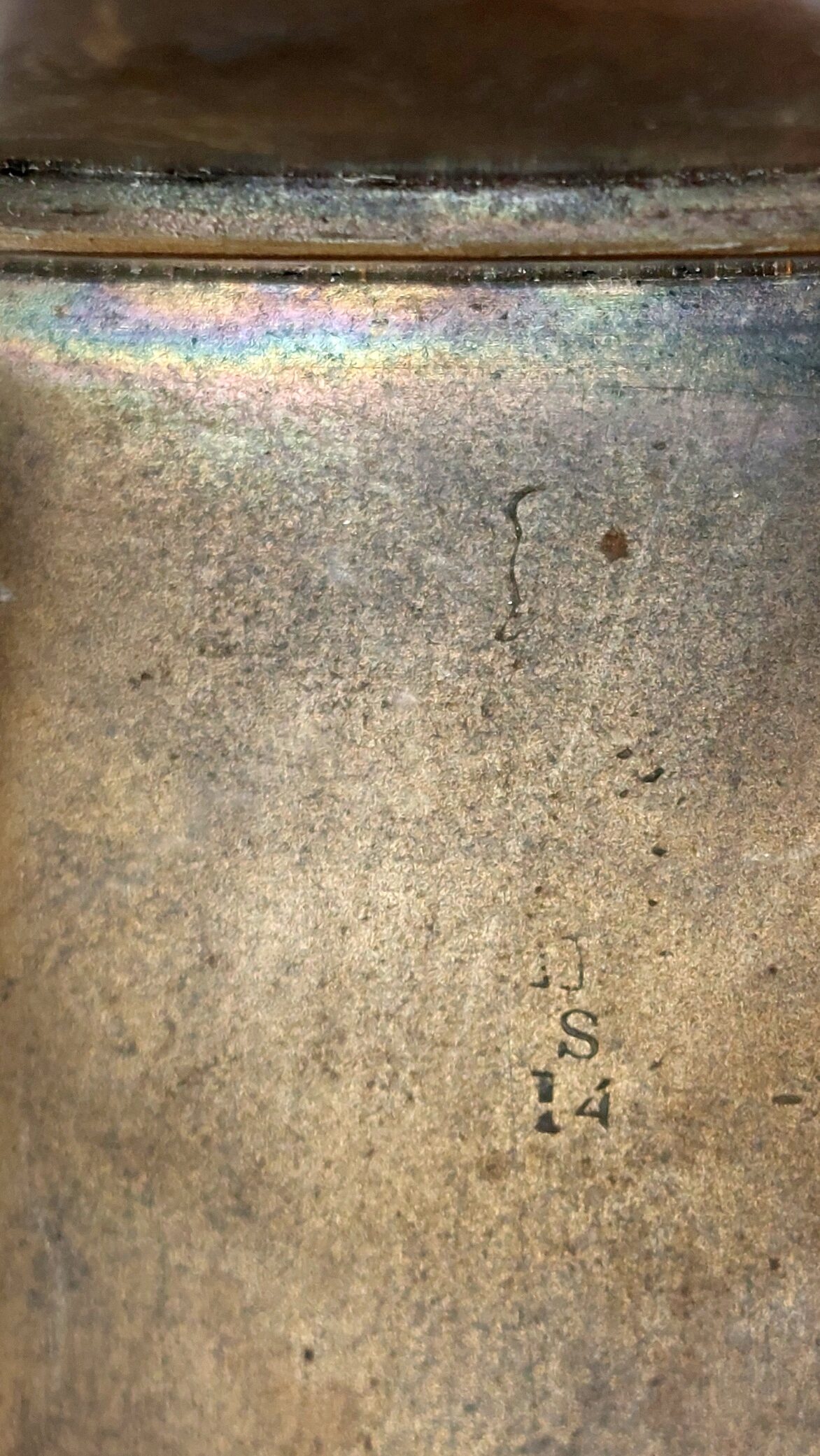
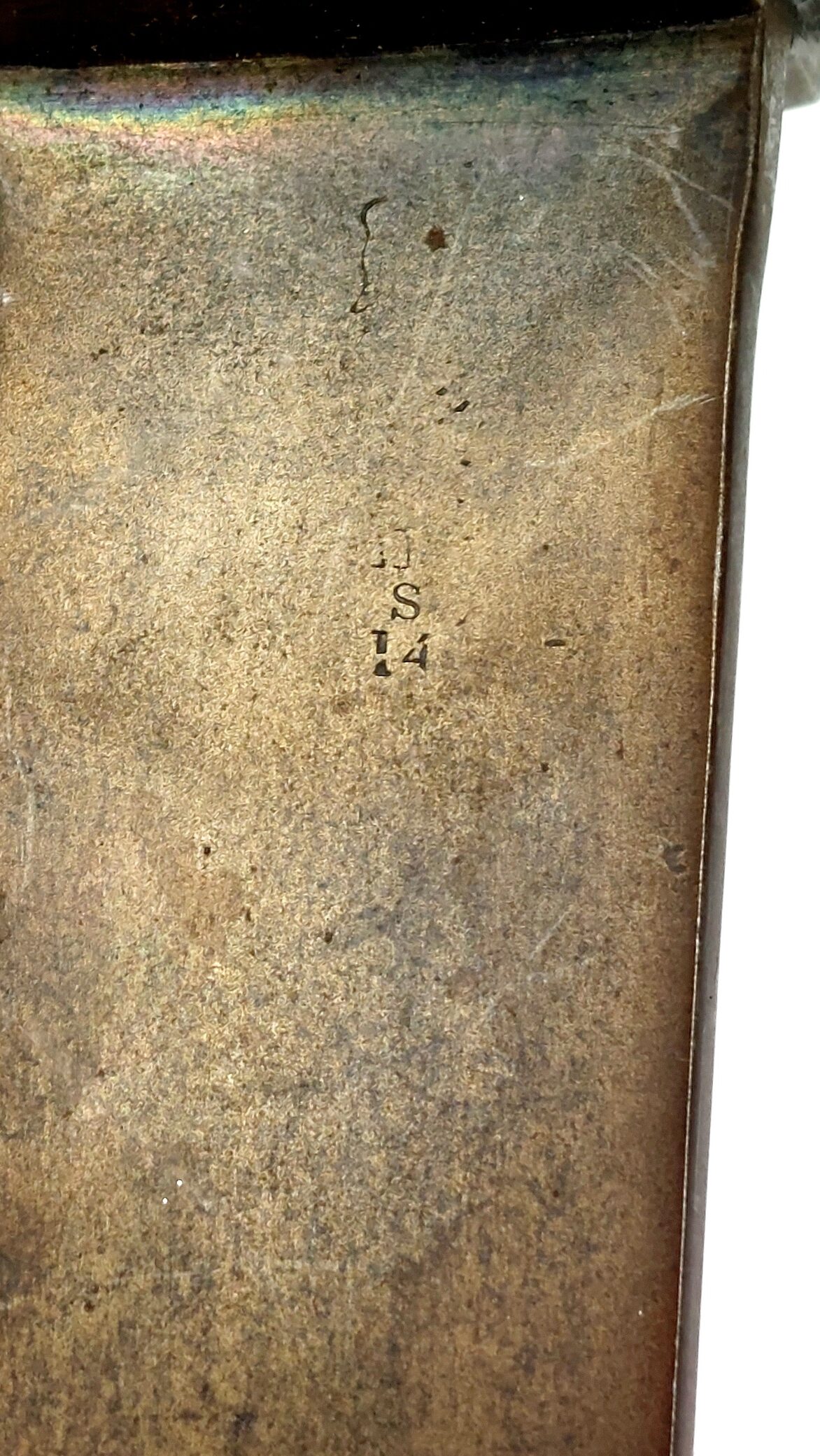
- Ricasso: faint Crown over S / 14 (Solingen inspection)
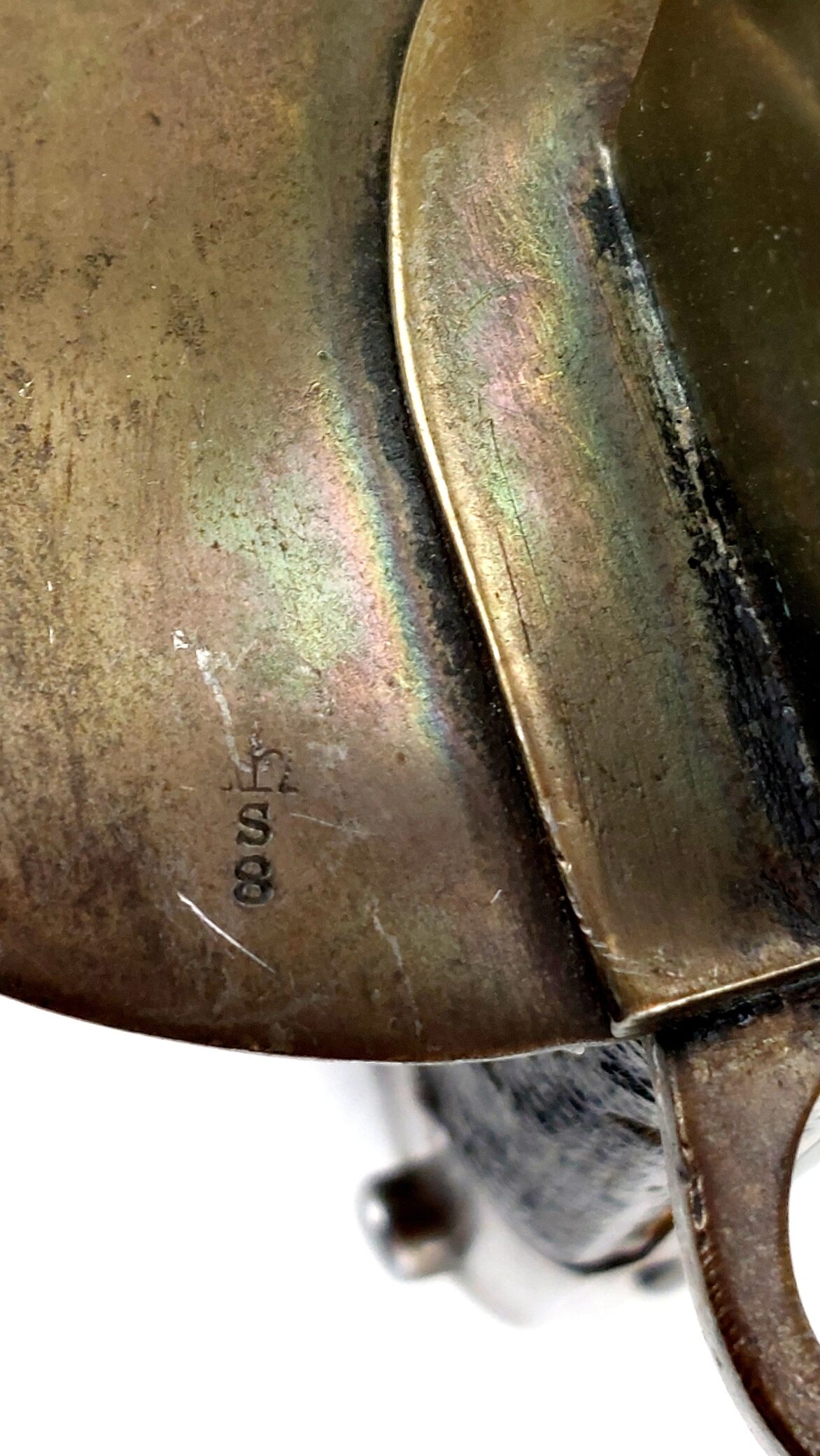
- Guard: Crown over S / 8 and Crown over S / 2
- Tang: P / 5
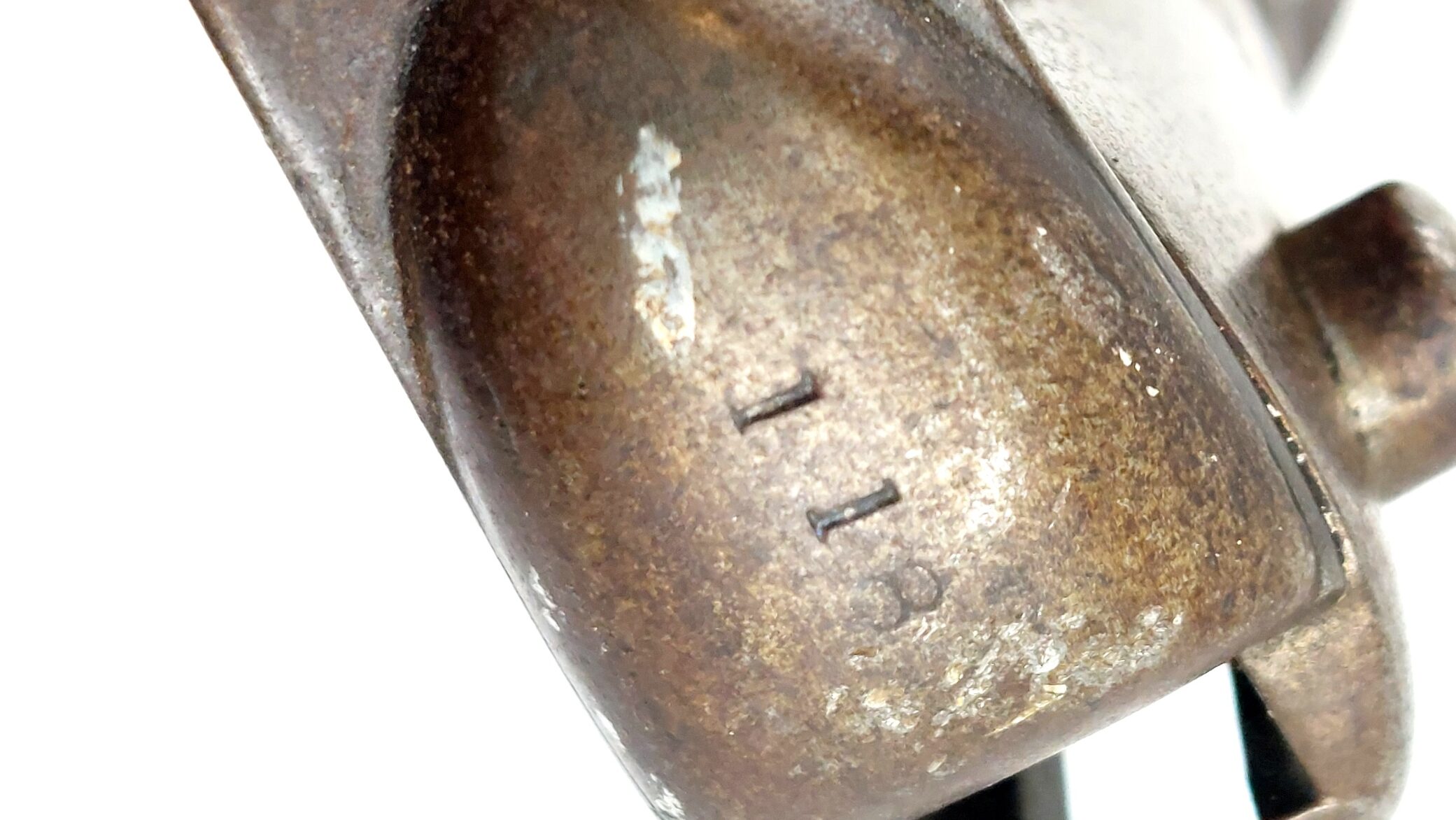
- Pommel: 118
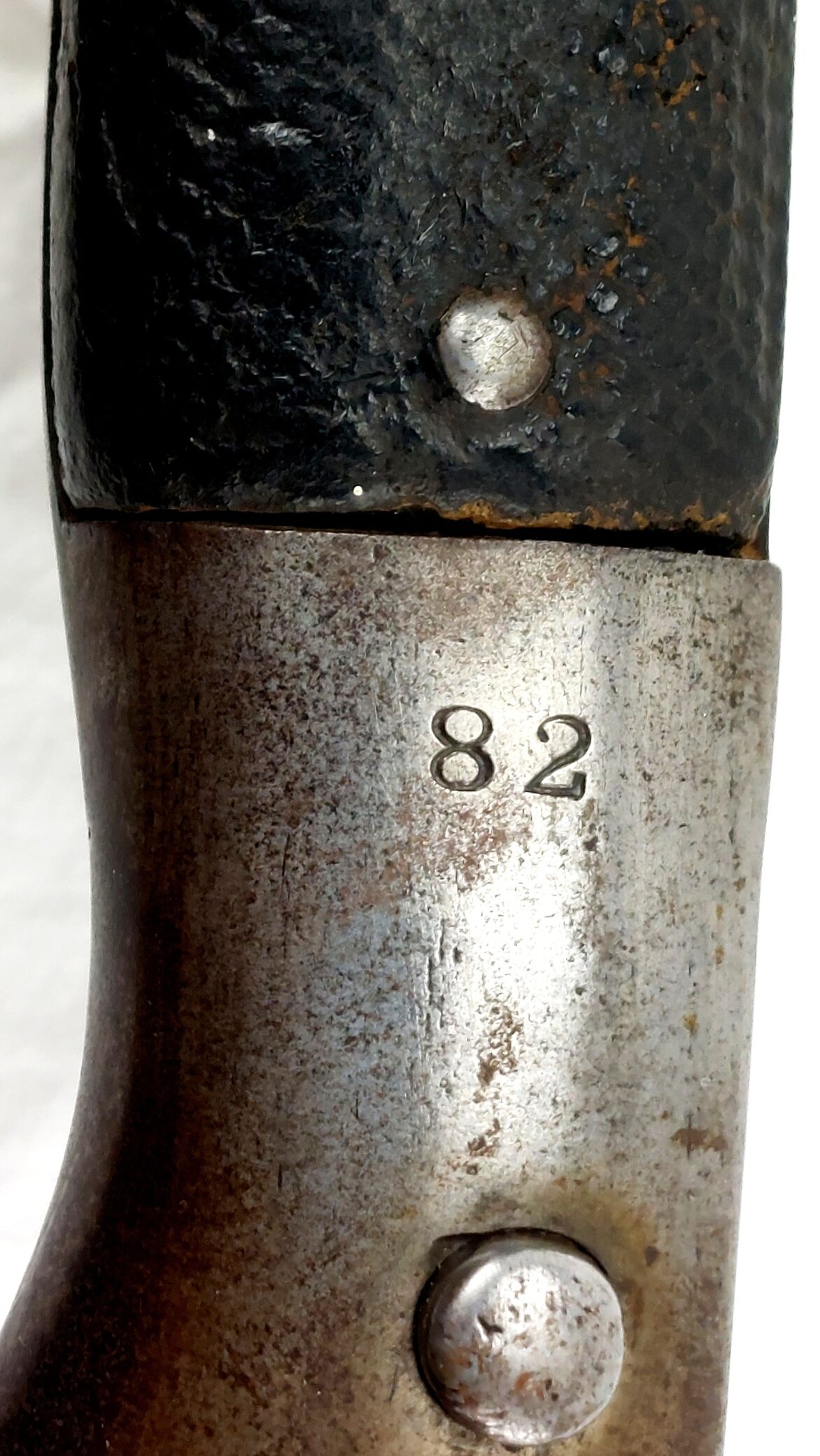
- Grip scale: 82
- A faint remnant of the crowned head trademark, consistent with Weyersberg manufacture, is believed to survive on the ricasso.
Approx. Measurements - Blade length: 68 cm. Blade width: 3.5 cm. Overall length: 82.5 cm
Historical Note:
The Pattern 1859 Naval Cutlass Bayonet was developed as a dual-purpose weapon, intended to function both as a hand-held cutlass and as a bayonet mounted to the Pattern 1858 Enfield Naval Rifle. These rifles differed from standard infantry Enfields by having thicker barrels and five-groove rifling rather than the usual three.
In practice, the design proved cumbersome. With a blade length of approximately 27 inches and an overall length of 33 inches, the bayonet was effectively the same length as the rifle’s barrel itself, making the weapon awkward and poorly balanced when fixed. Despite this, approximately 80,000 examples were contracted by the British military.
Aside from a very small Birmingham contract of fewer than 800 examples by Reeves, the vast majority of blades were manufactured in Solingen, Germany. So extensive was British reliance on Solingen production that the Ordnance Department established a permanent viewing room in Solingen, where blades were inspected prior to shipment to England. These inspected blades bear the distinctive Crown / S / number marks, the number identifying the individual British viewer.
Once shipped to Britain, the blades were hilted and assembled by contractors before final acceptance. Ordnance records note that many bayonets were later returned to the Royal Small Arms Factory, Enfield Lock, for repair or refurbishment, often due to blade quality issues—making well-preserved survivors increasingly desirable today.
The Pattern 1859 remained in service following the conversion to the Snider–Enfield, before eventually being superseded by the 1871 Pattern for the Martini-Henry. Many later cutlass bayonets were produced by cutting down earlier 1859 examples, a process which weakened the blades and further reduced the number of intact originals.
The Weyersberg family were among Solingen’s most important blade-making dynasties, with documented activity dating back to the 15th century. By the mid-19th century, Gebrüder Weyersberg, founded in 1787, had become a major international supplier of military blades, including those used by the British Ordnance, as well as during the American Civil War. Their most famous trademark was the crowned King’s Head, elements of which are often faintly encountered on British-contract blades. In 1883, the firm merged with W.R. Kirschbaum & Cie to form Weyersberg, Kirschbaum & Co. (WKC), one of the most recognisable names in later German edged-weapon production.
*Condition*
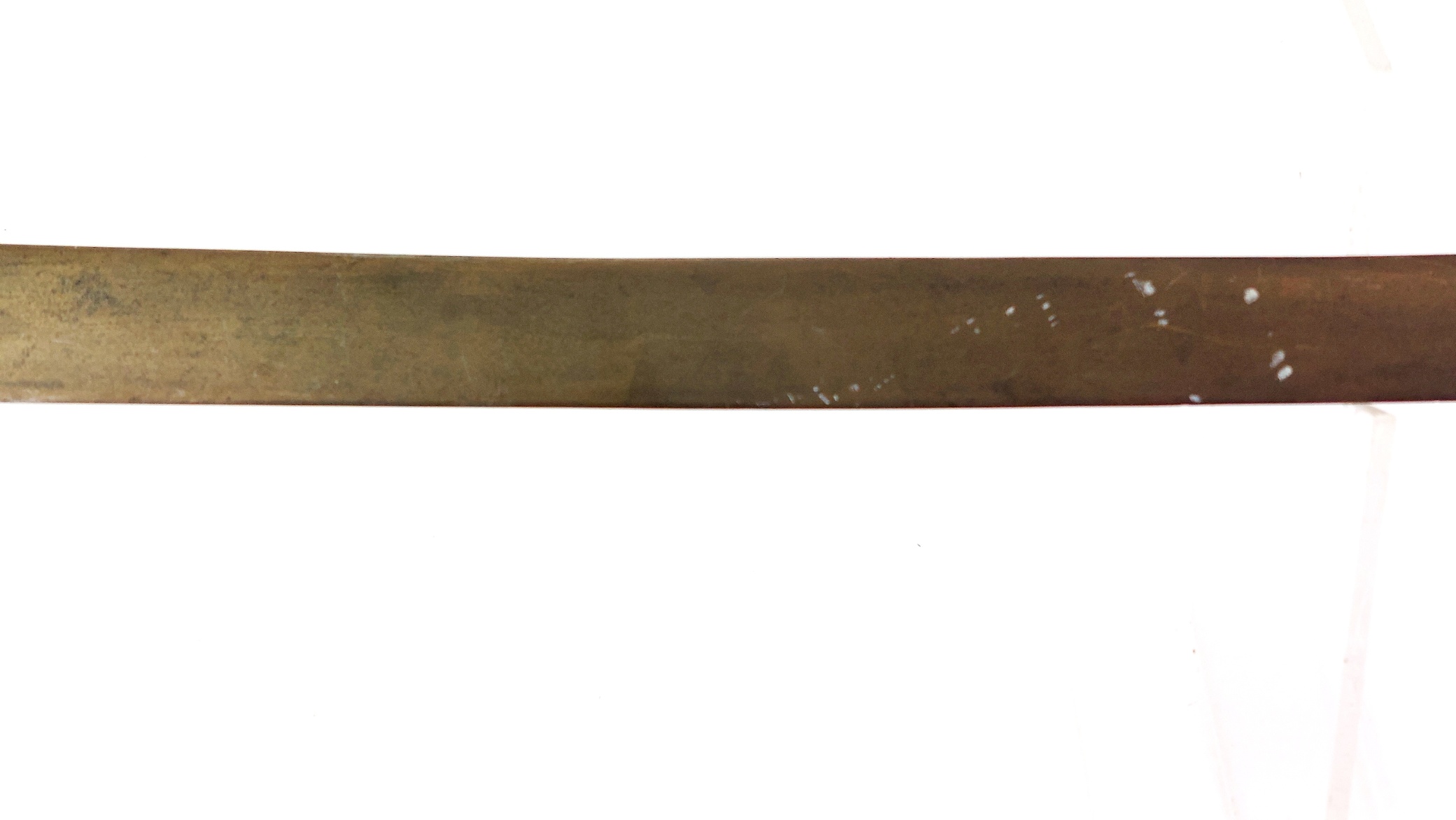
Blade with uniform age patina, scattered light surface oxidation, and no structural issues. Bowl guard sound and well-formed, showing expected service wear. Grip scales intact with good texture; rivets secure. All components tight and correct. Markings remain legible, with the Solingen inspection stamps particularly well preserved. Please see photographs as part of the condition report.
JAQAOOXBOO_272410072025