*British, Mid-20th Century, Brass Gimballed Nautical Compass with Corrector Balls*
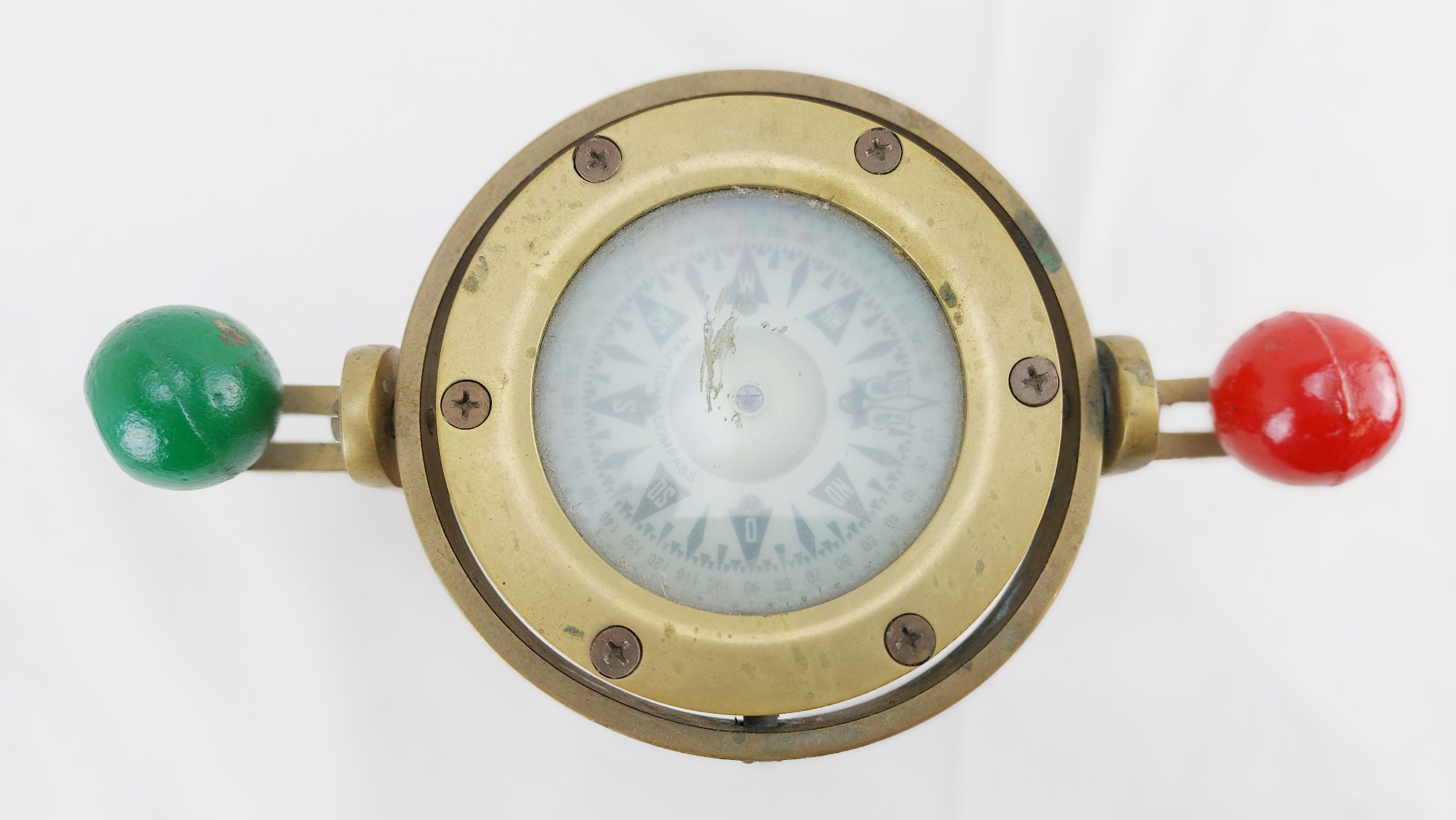
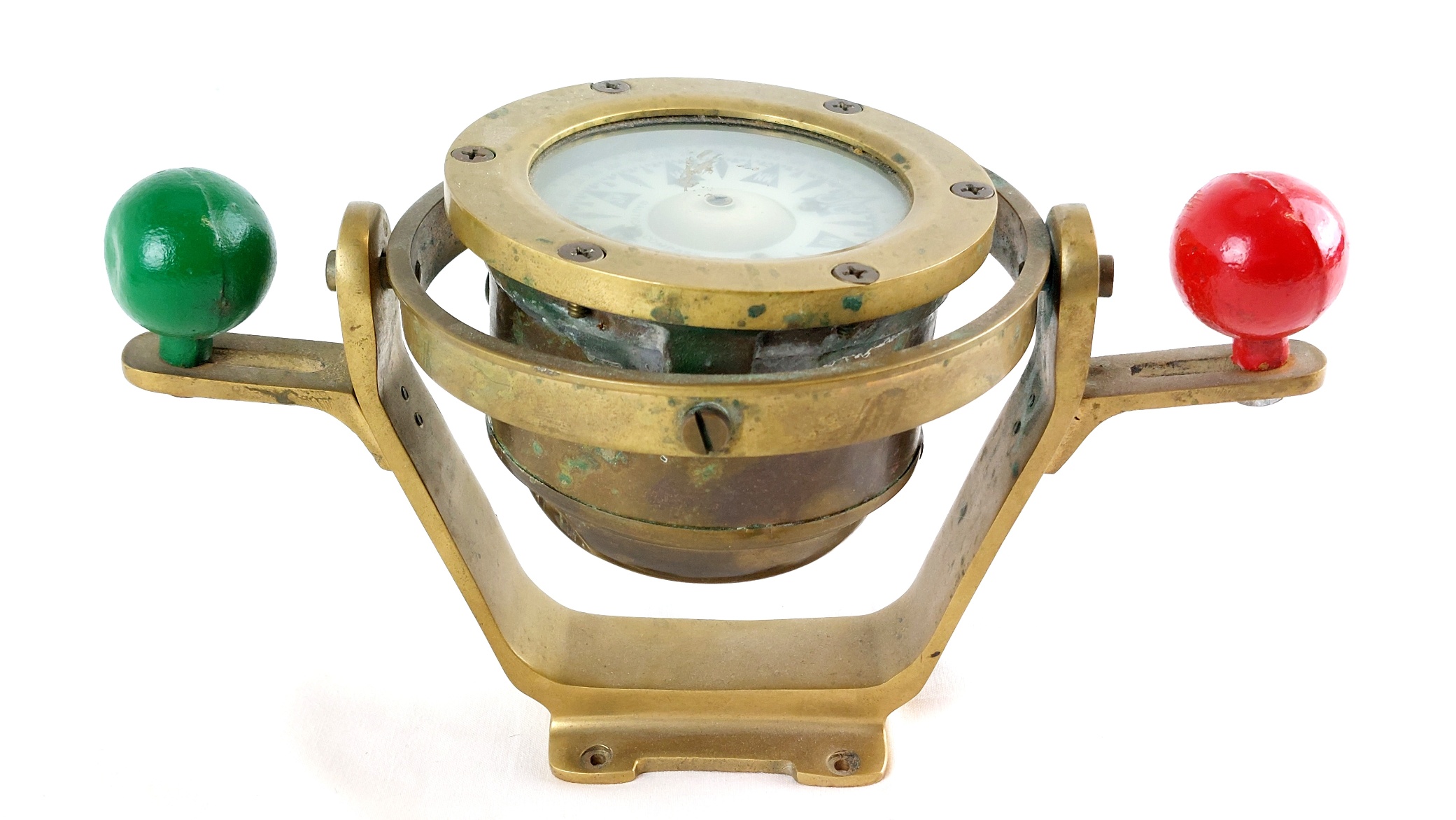
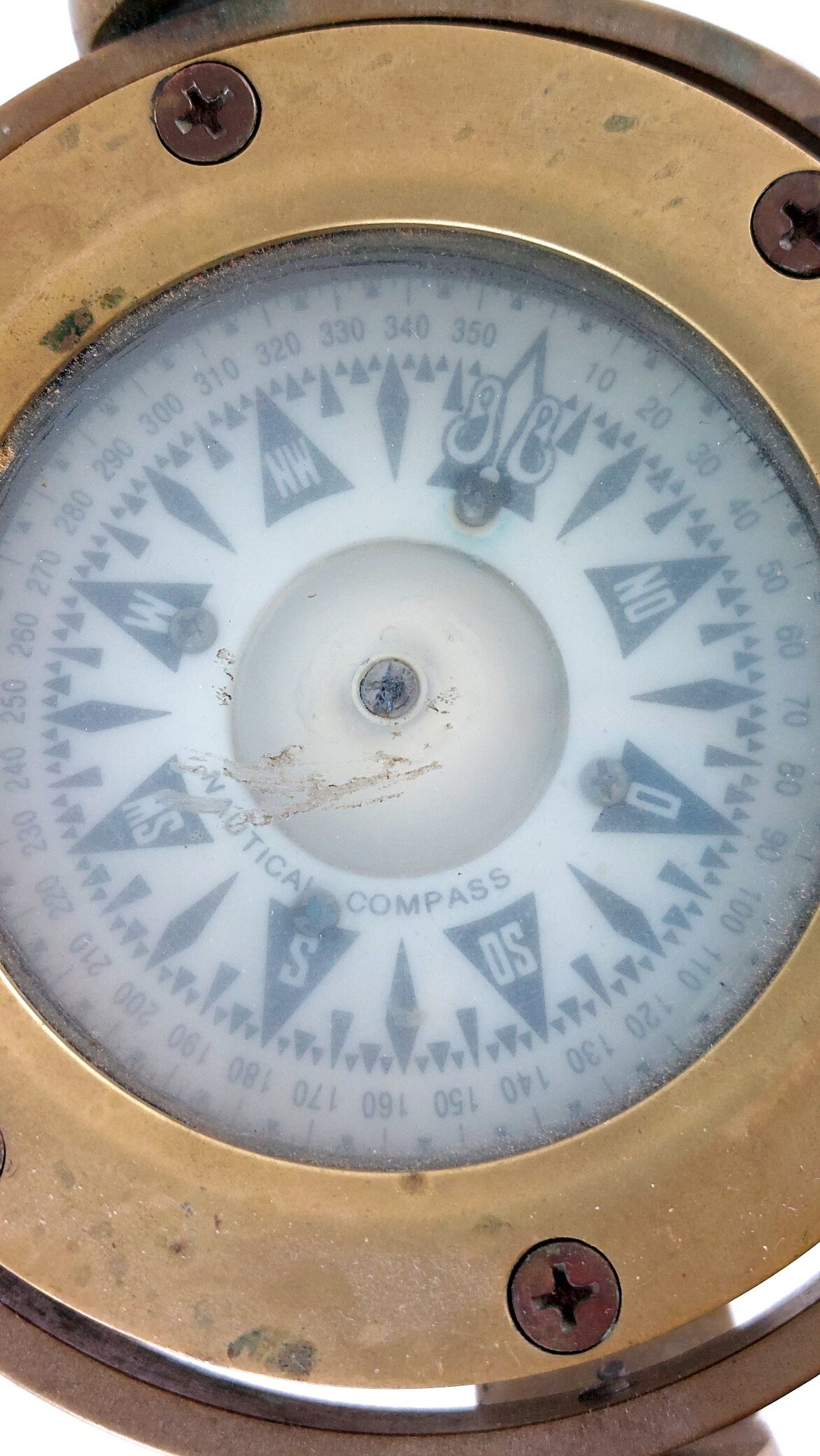
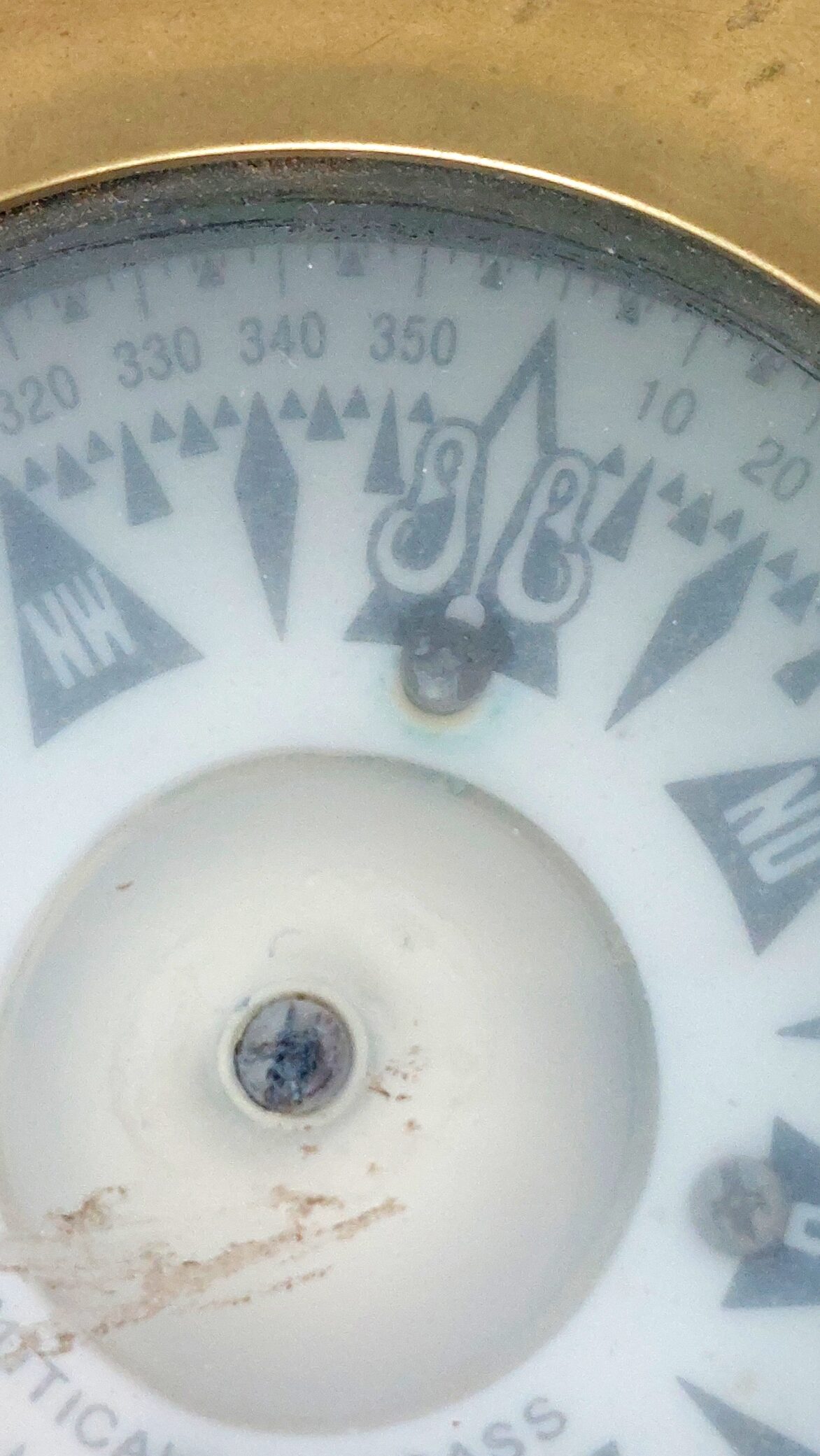
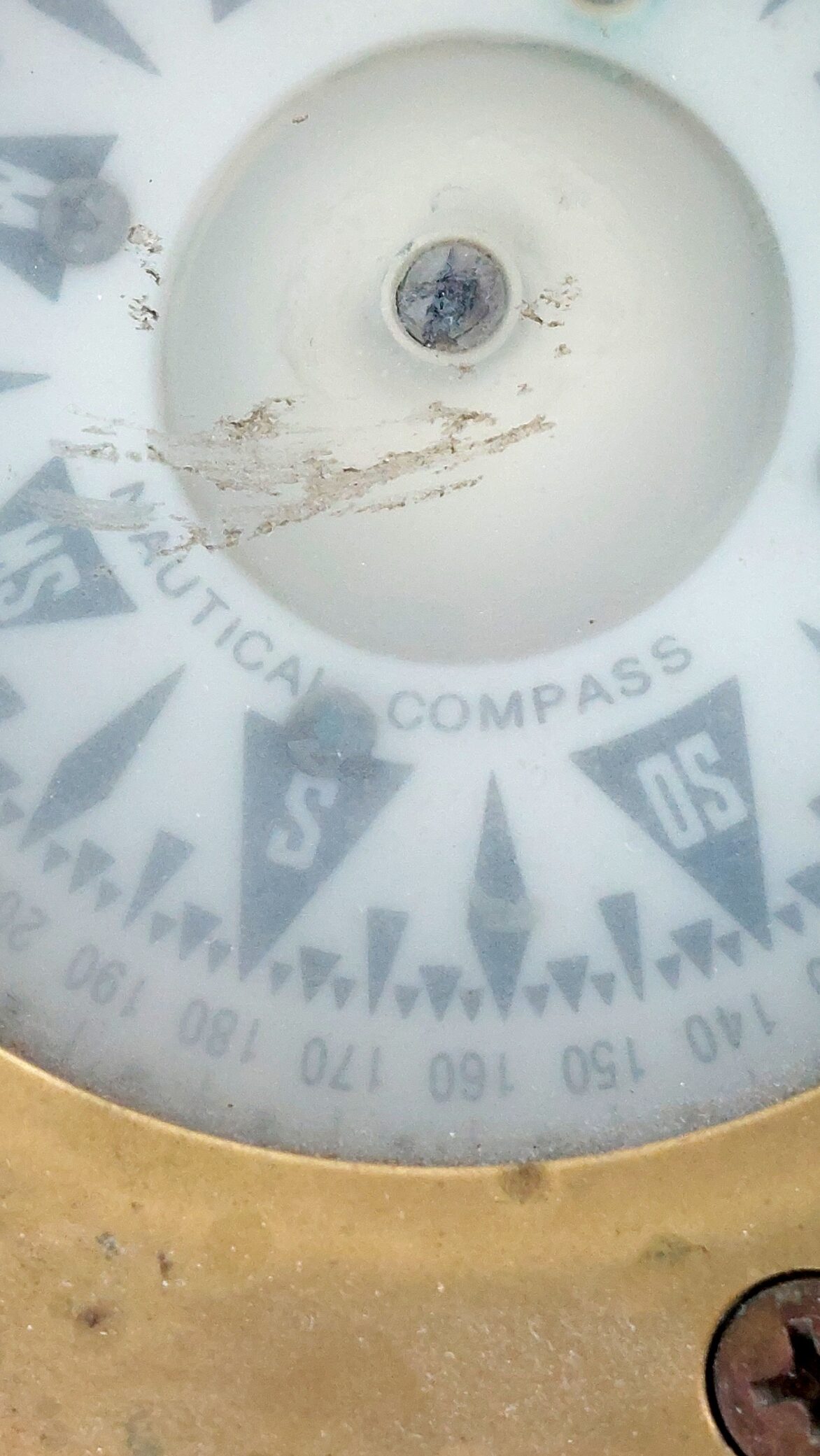
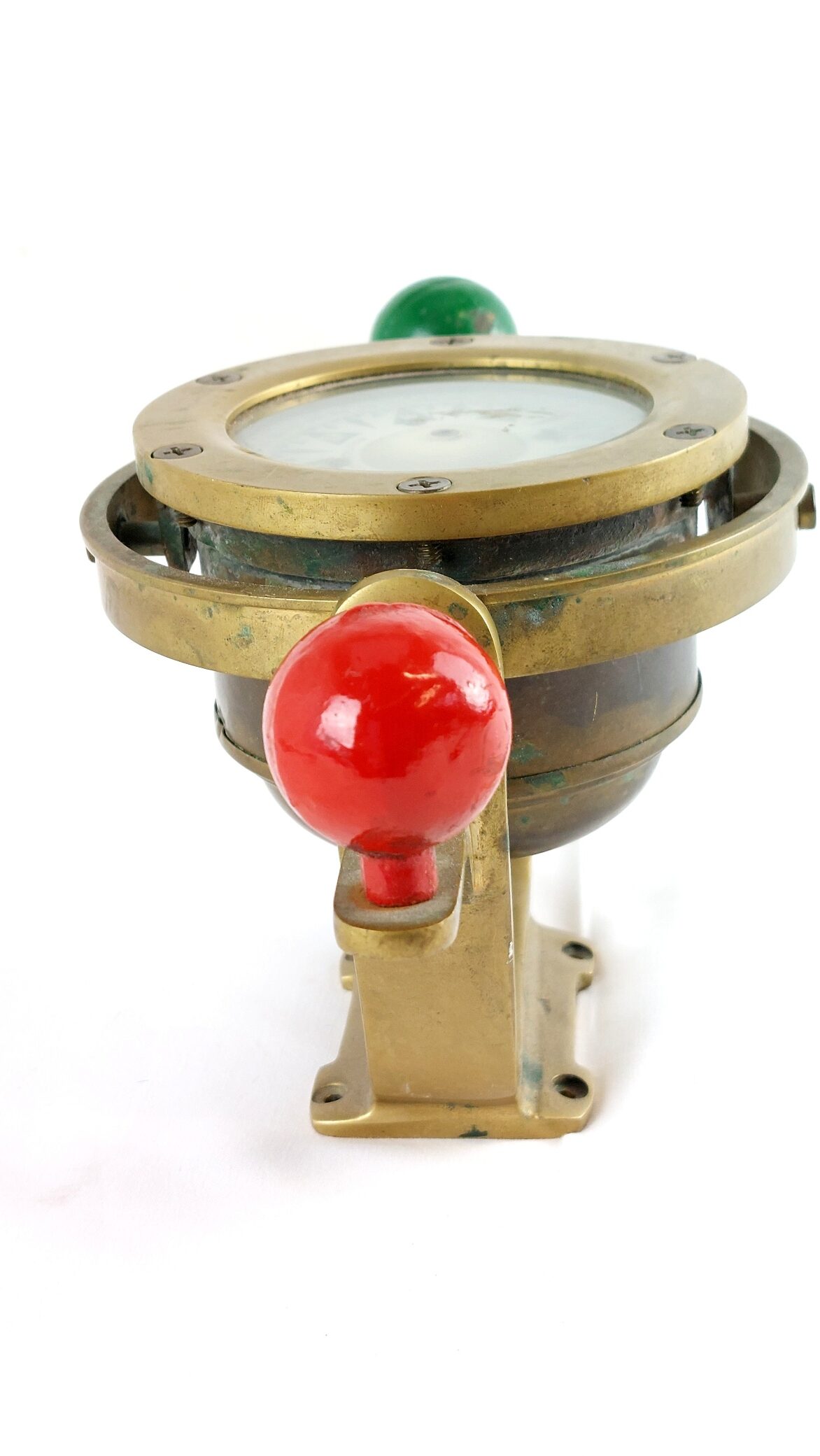
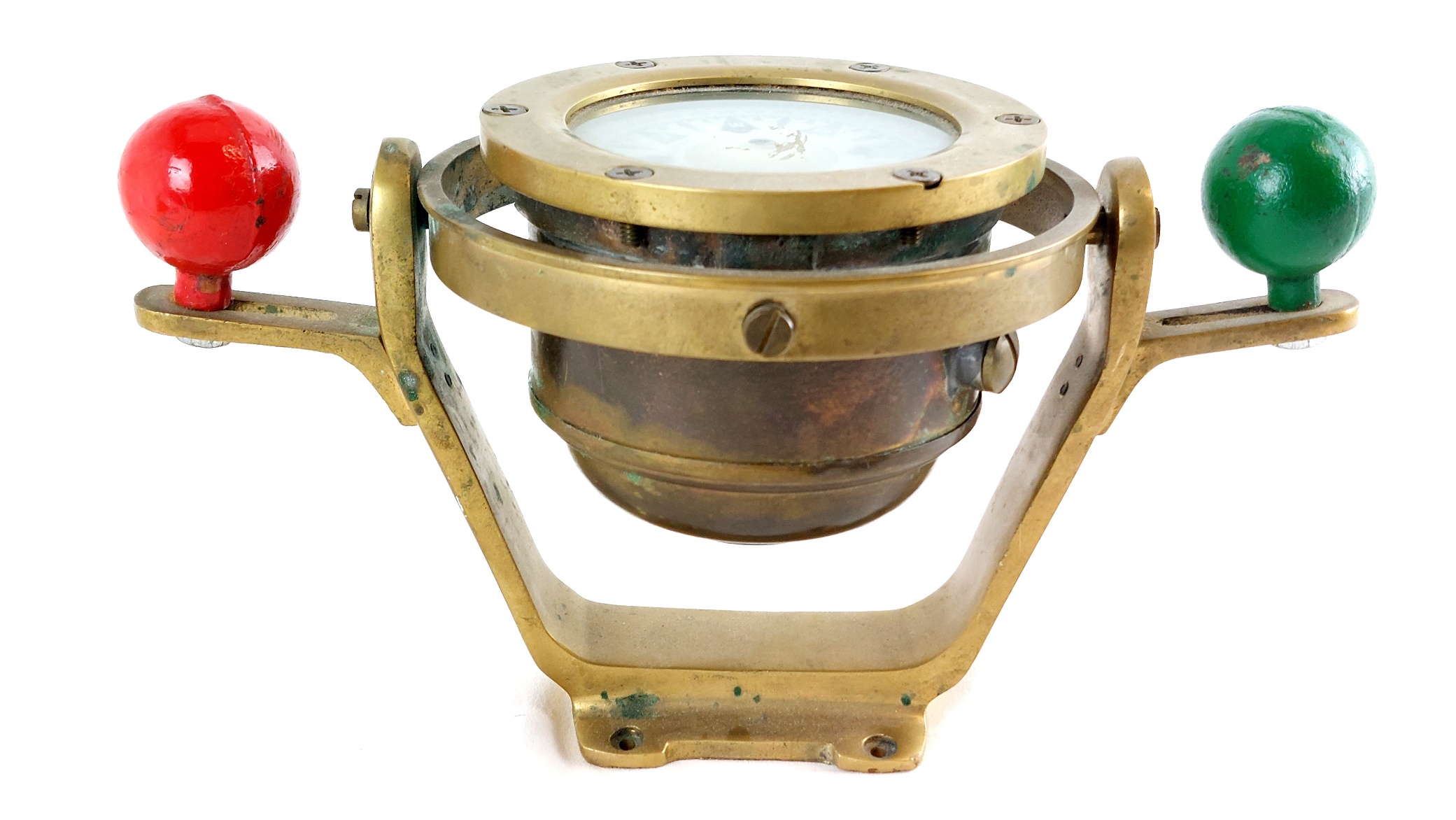
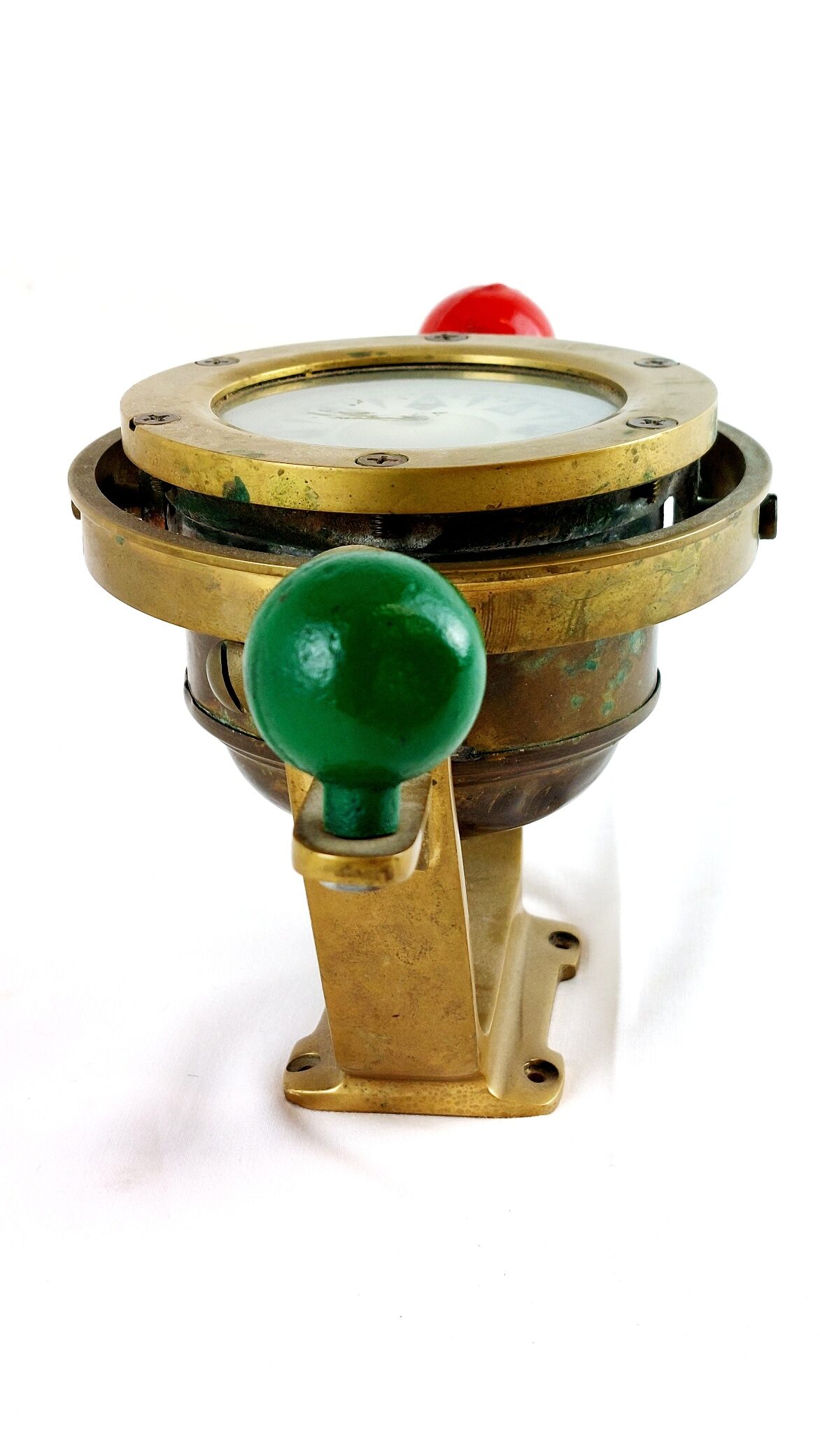
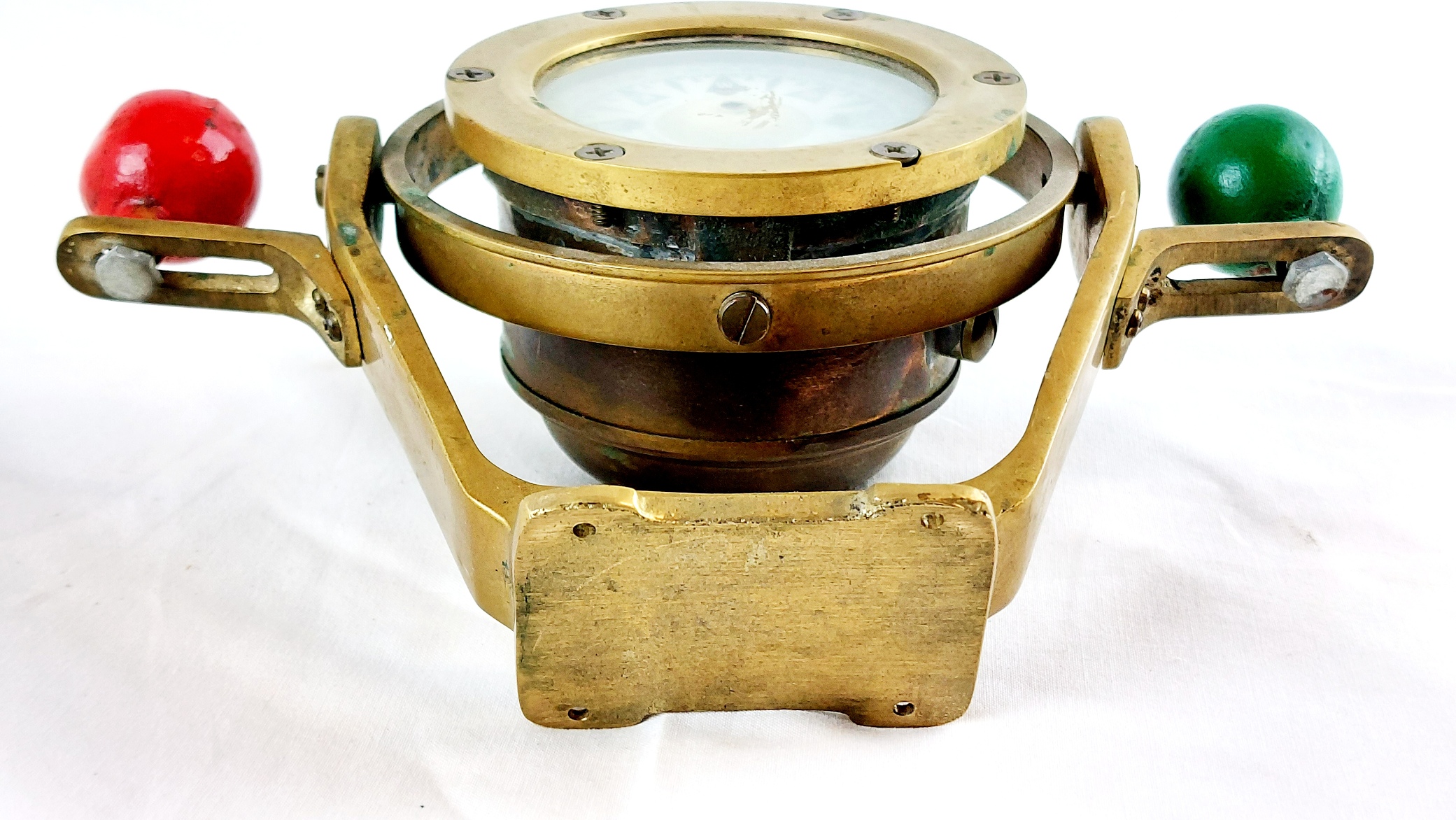
A compact mid-20th-century brass gimballed nautical compass, complete with its original U-shaped brass mounting bracket and a matched pair of port (red) and starboard (green) compensating spheres. The compass card is printed “NAUTICAL COMPASS” with an ornate monogram at North—likely the mark of a small marine-instrument workshop rather than a named manufacturer.
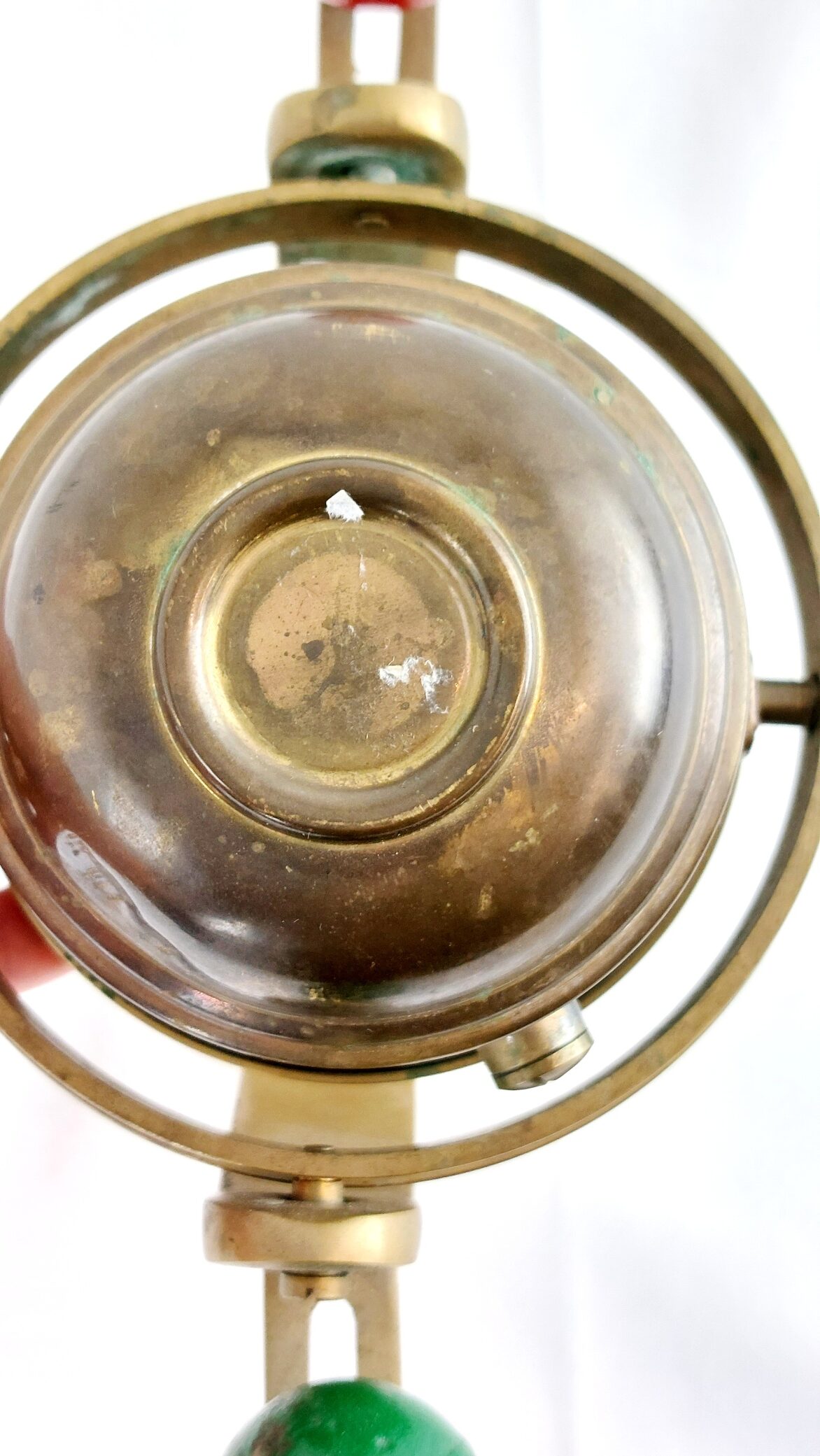
The compass bowl is mounted within a twin-axis brass gimbal allowing free movement aboard a vessel, and the domed underside retains its original pressed-brass construction. The presence of adjustable corrector balls on a compass of this size is unusual, indicating that this was intended as a working deviation-compensated compass rather than a decorative souvenir.
Measurements (approx.) Compass body diameter: 10 cm. Diameter including frame: 12 cm. Height including bracket: 13 cm
Historical Note: The evolution of the marine magnetic compass was heavily shaped by the shift from wooden to iron-hulled ships in the 19th century. As steam power and metal construction introduced large masses of ferrous material onboard, compass deviation became a serious navigational problem.
In 1854, John Gray of Liverpool patented one of the earliest binnacles with adjustable correcting magnets, establishing the principle of onboard deviation correction. This system was refined in the 1880s by Lord Kelvin (Sir William Thomson), who introduced the now-iconic pair of compensating spheres mounted beside the compass. These became known in Britain as “Kelvin’s balls” and in the United States as “navigator’s balls.”
Smaller vessels adopted simplified versions of the same system—often miniature correcting spheres fitted to compact gimballed compasses like the present example. Such instruments were widely used on yachts, pilot boats, lifeboats, harbour craft, and auxiliary deck positions from the 1930s to the 1970s.
*Condition* A presentable working-age example showing honest maritime use. Brass surfaces display expected patina, verdigris spots, and handling marks. The compass card remains readable with some surface wear and abrasions beneath the glass. Glass intact without cracks. Corrector balls retain period red and green paint with chips and scuffs. Gimbal pivots moving freely. No replaced parts observed. Please see photographs as part of the condition report.