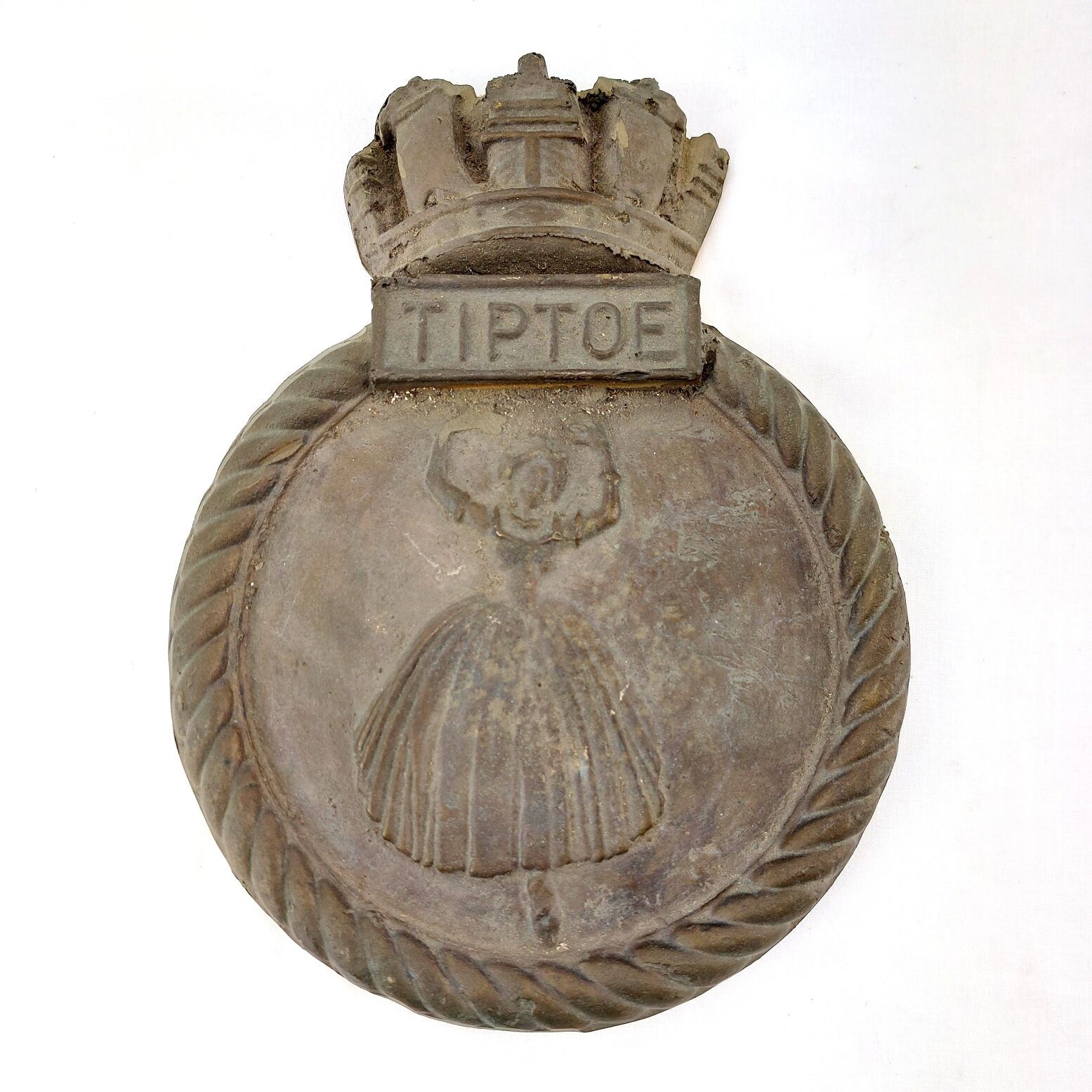
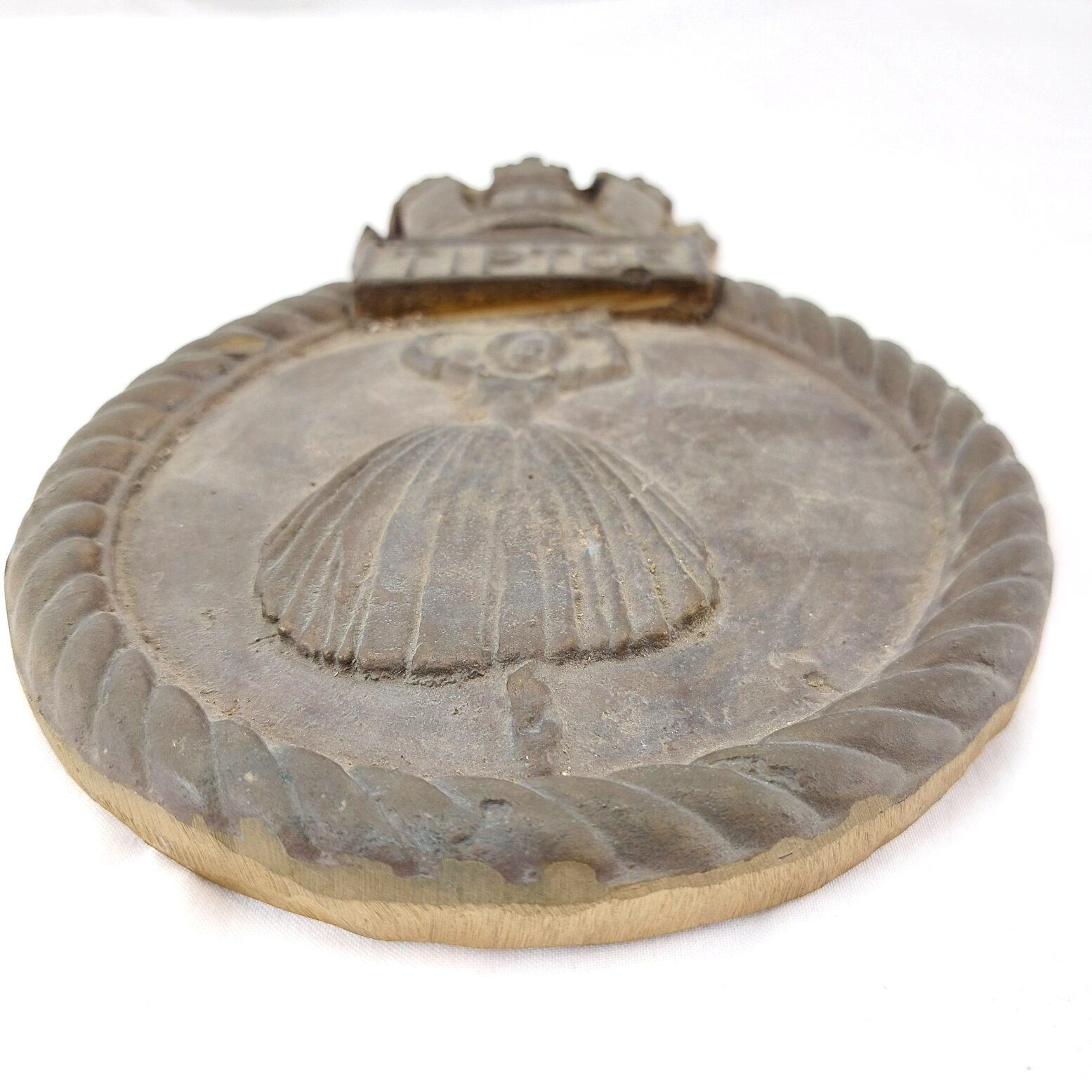
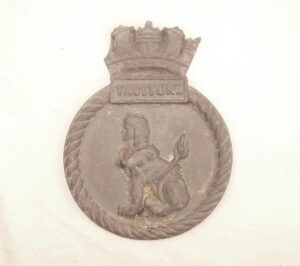
A rare and exceptionally heavy Admiralty screen-badge crest for HMS Tiptoe (P332), the late-war T-class submarine launched in 1944. Cast in solid bronze/brass and weighing approximately 3 kilograms, the crest measures 16.3 cm in diameter and 22 cm tall, with a depth of around 1.5 cm.
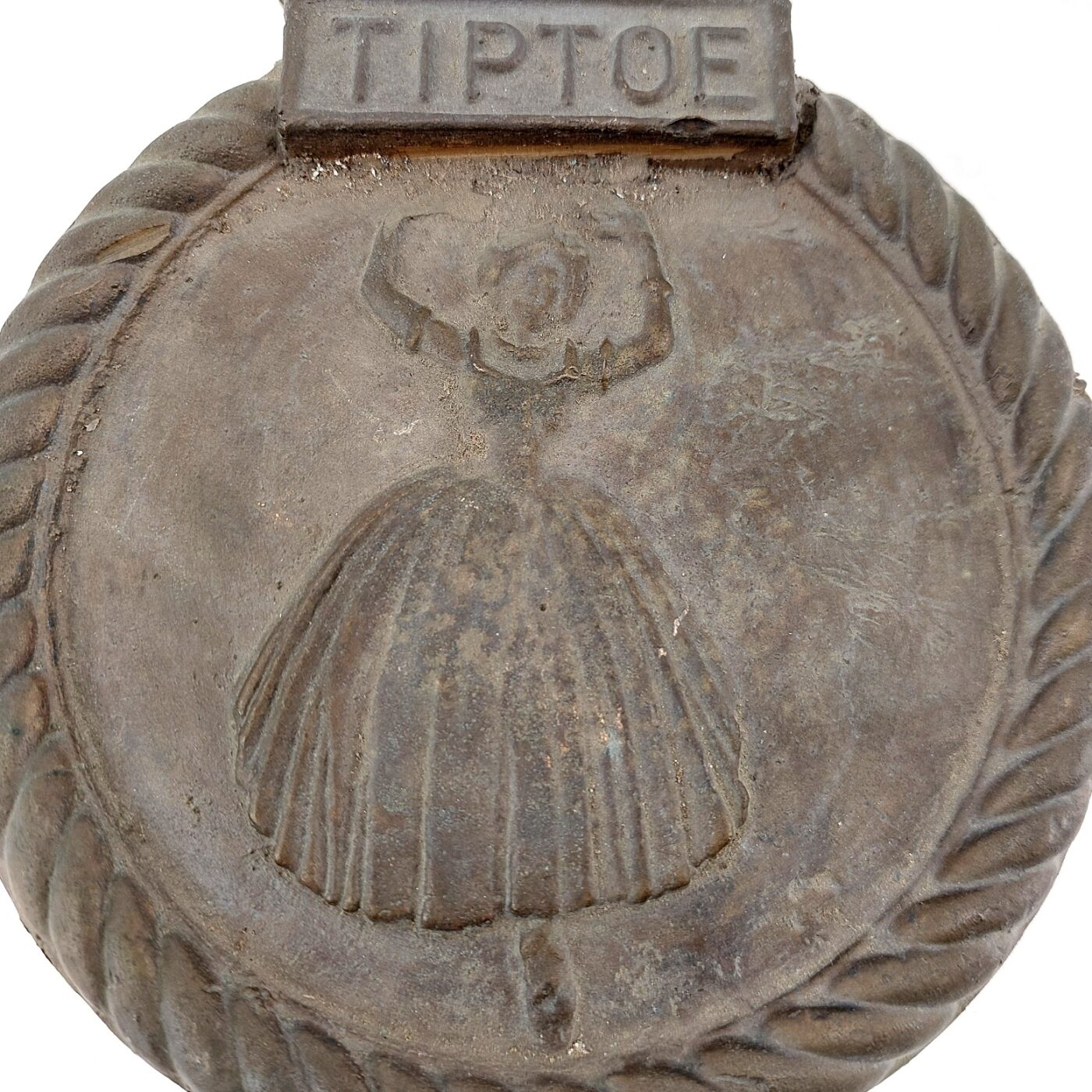
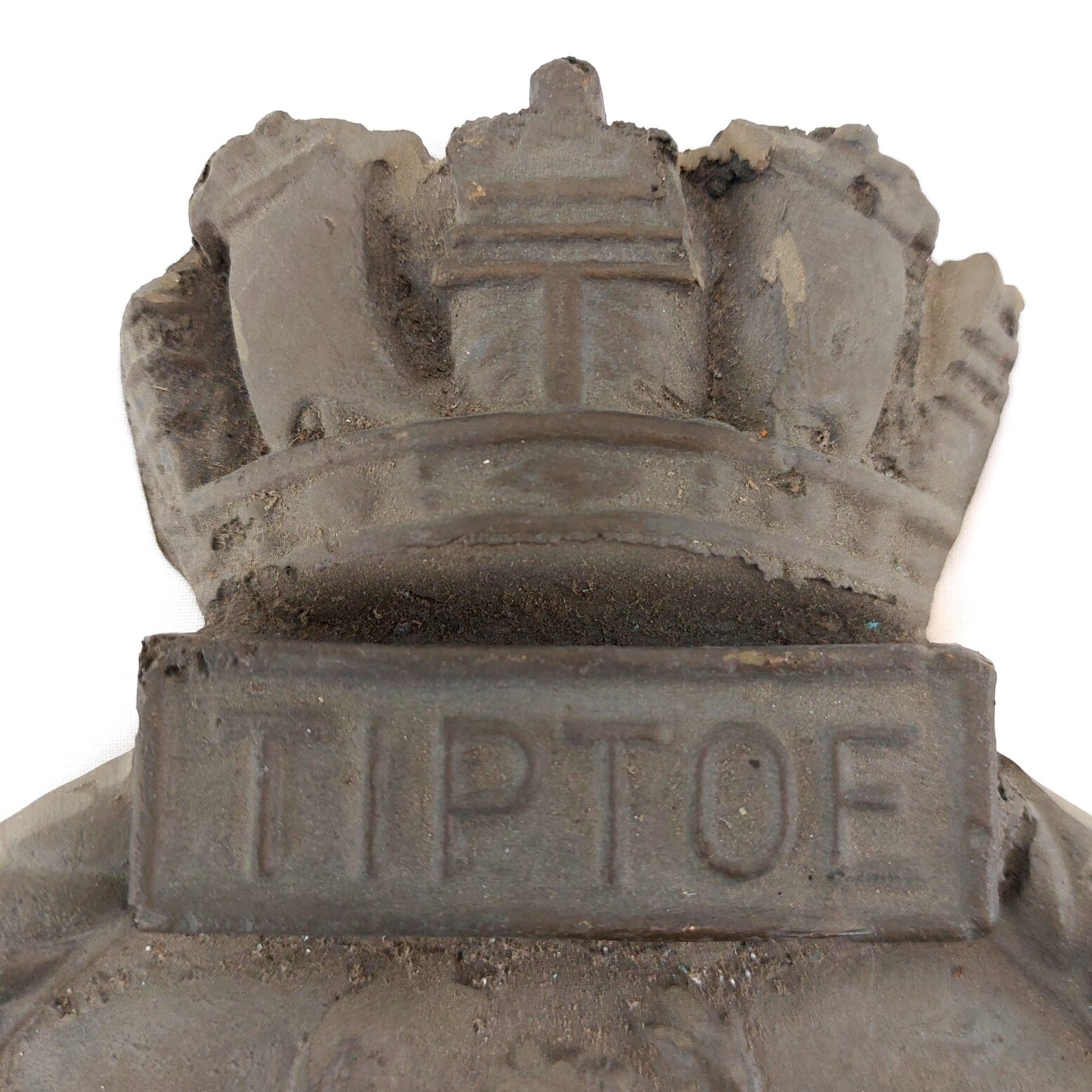
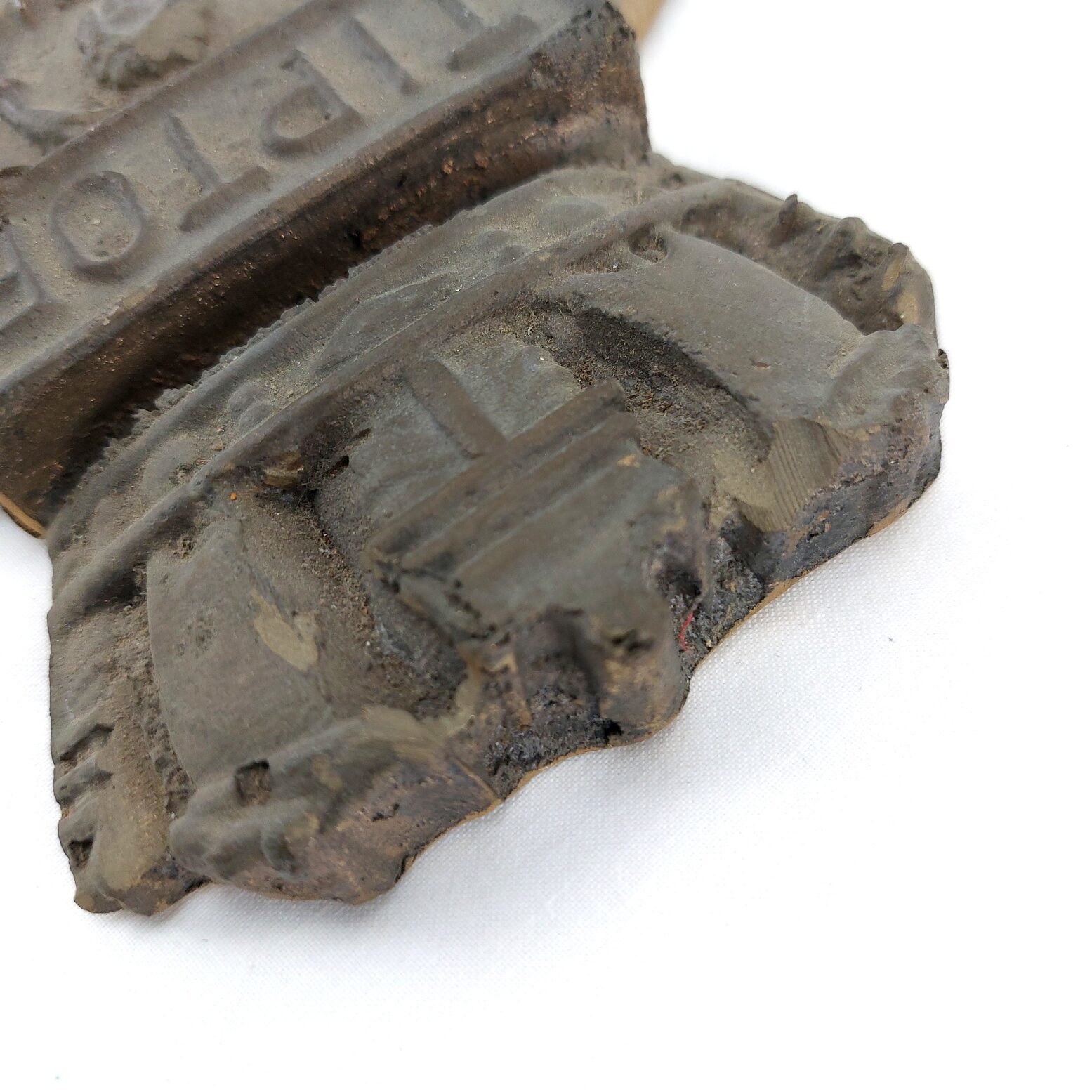
This example displays the dancer motif—a female ballet dancer raised en pointe, with her skirt flaring dramatically behind her. The figure shows the head, torso, arm and supporting leg, with the flowing tutu dominating the roundel. The badge follows the Admiralty’s official form: a rope-bordered roundel surmounted by the Naval Crown, with a raised name-tablet reading “TIPTOE.”
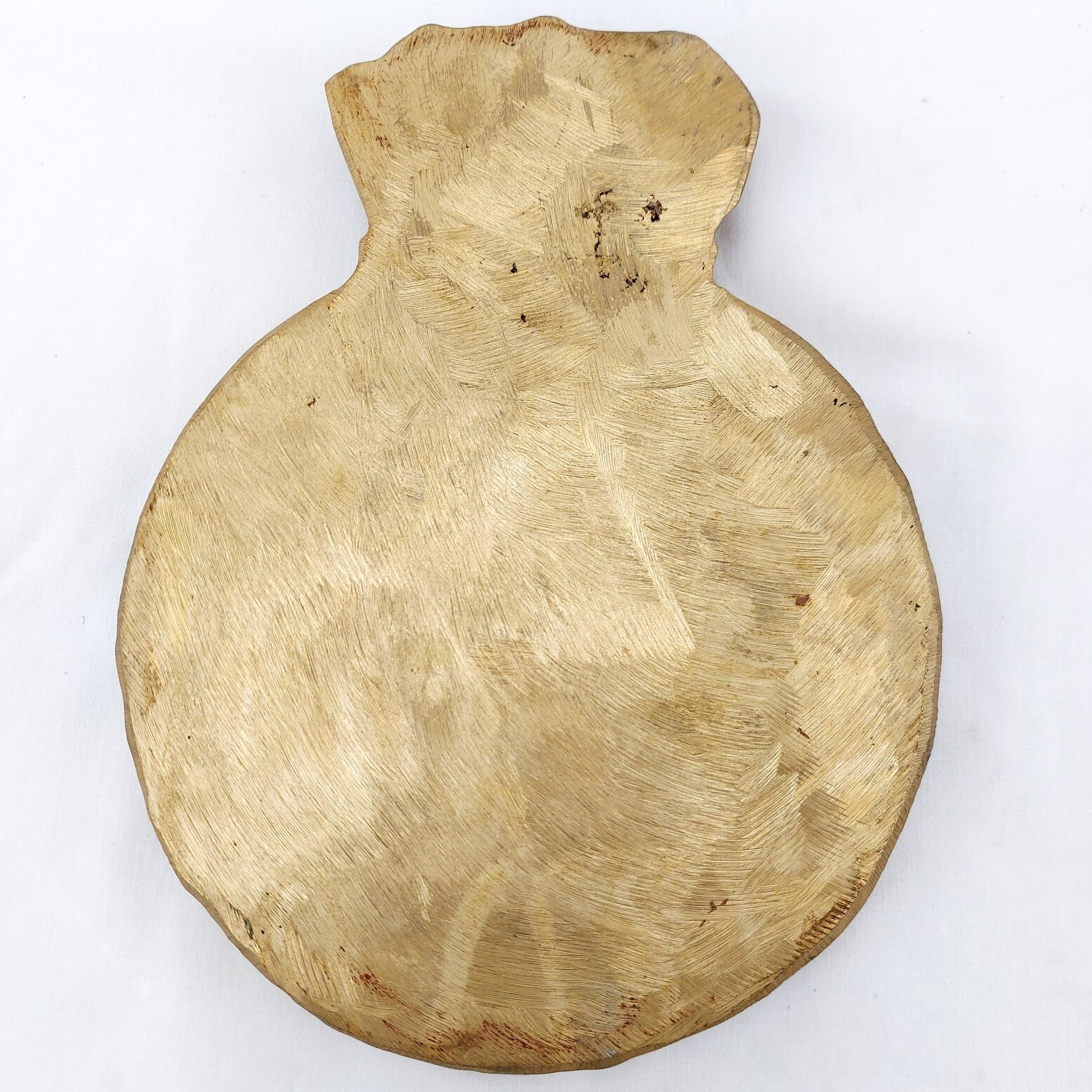
The reverse is flat and shows clear dockyard foundry tool-marks, with no hollowing or weight-reduction—features strongly suggestive of yard or contractor castings made either for shipboard display, depot use, or as pattern pieces for the issue-mounted badges. The reverse also retains a gold-toned protective coating typical of Admiralty and dockyard practice, applied to seal the raw bronze surface during storage or workshop handling. The slightly robust modelling and substantial weight further reinforce this interpretation. Pre-1960s submarine crests were produced in very small numbers—frequently only one or two per vessel—making early heavy castings such as this particularly scarce.
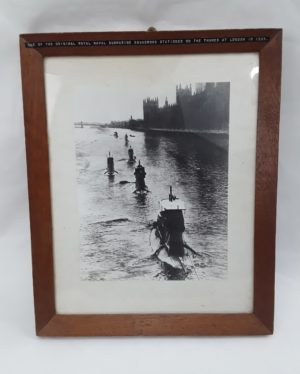
Historical Note: HMS Tiptoe (P332) was a Group 3 T-class submarine, constructed by Vickers Armstrong at Barrow-in-Furness and launched 25 February 1944. The boat’s name was personally selected by Winston Churchill, who remarked that a submarine should be able to “sneak up on someone undetected”—hence Tiptoe. Although commissioned too late to undertake extended wartime patrols, she completed working-up during the final months of World War II, joining the Home Fleet and preparing for Far Eastern service as hostilities ended. Her torpedo armament, radar suite and T-class diving characteristics represented the peak of British wartime submarine design.
Tiptoe became a workhorse of the post-war and Cold War Royal Navy, participating in NATO patrols, training duties, and submarine service commemorations—including her well-known 1969 ceremonial torpedo firing marking the 50th anniversary of the Submarine Service.
Submarine screen-badge crests are markedly rarer than those of surface ships: submarines typically carried only one, occasionally two, for internal display, and many were removed or destroyed upon decommissioning. Surviving solid-bronze early castings, especially those with distinctive motifs such as the Tiptoe dancer, are now highly sought after.
*Condition* An early cast-bronze Admiralty badge with deep relief and original patination. The dancer motif remains clearly legible despite age-softening. The Naval Crown shows period wear and chipping to the upper battlements, consistent with shipboard removal or long storage. Reverse flat and undisturbed, with characteristic horizontal and curved foundry finishing marks from Admiralty contractor work. No wooden backing present. Please see photographs as part of the condition report.