*British, c.1910–1952, Royal Marines Swagger Stick, King’s Crown*
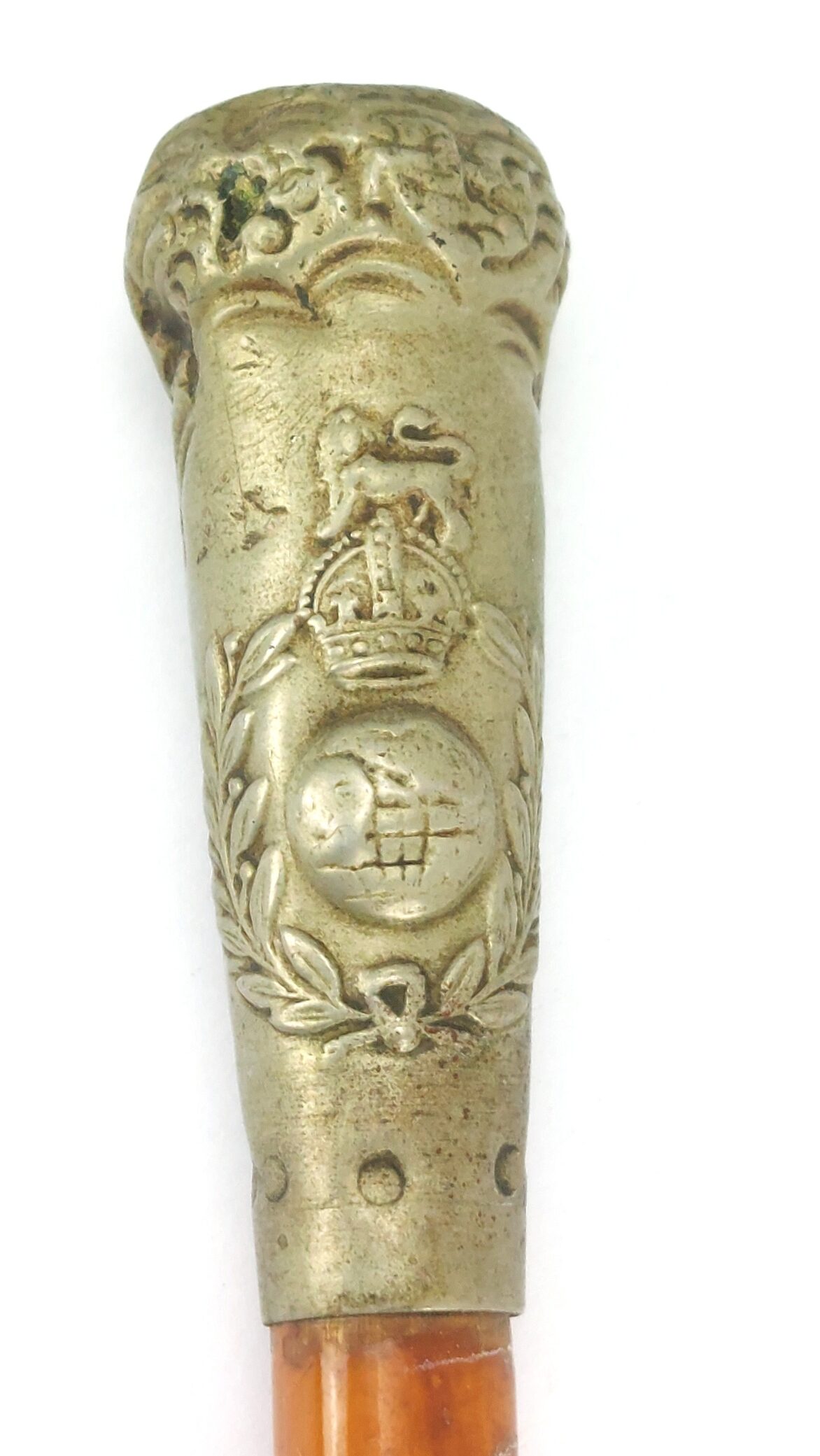
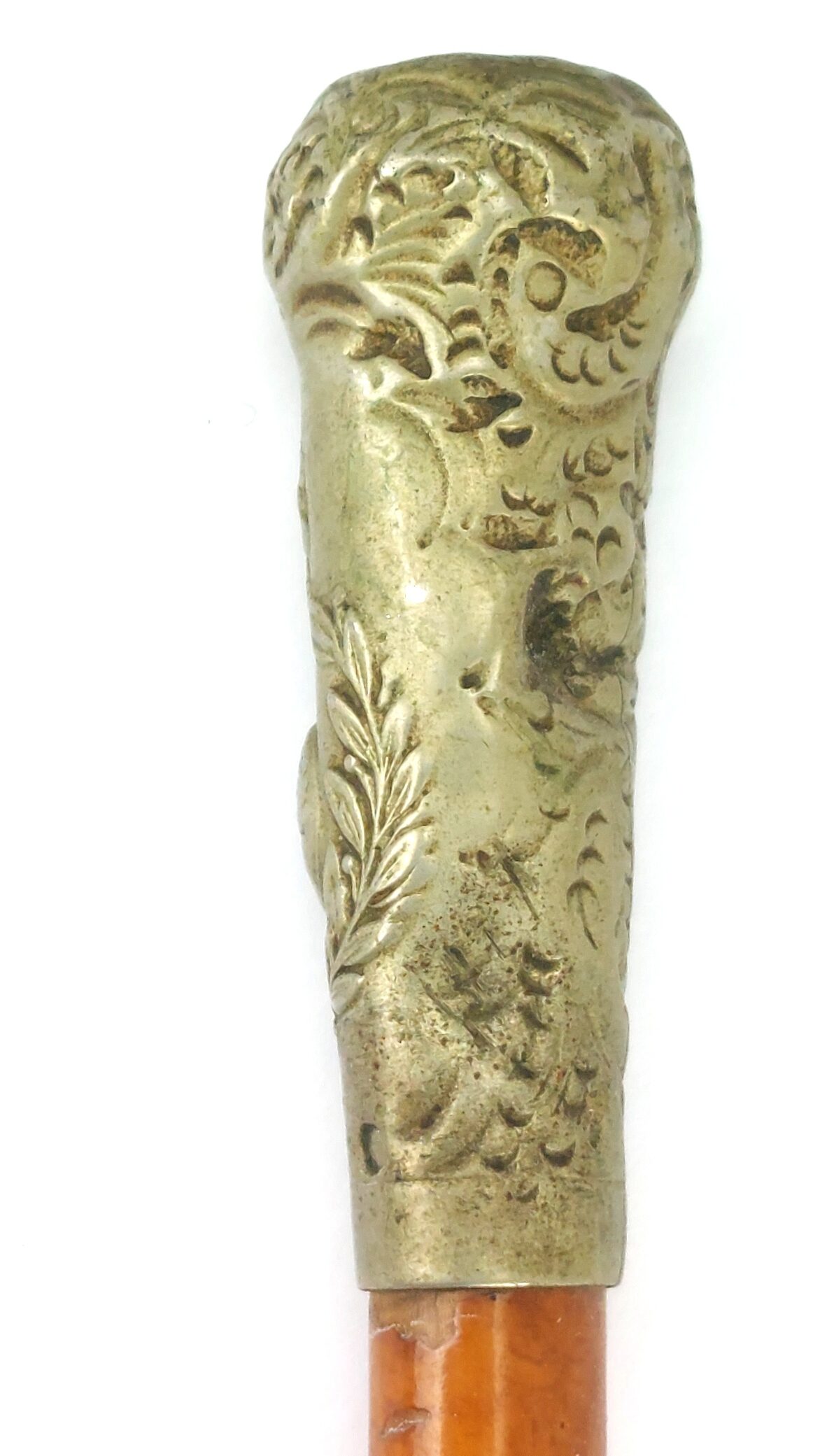
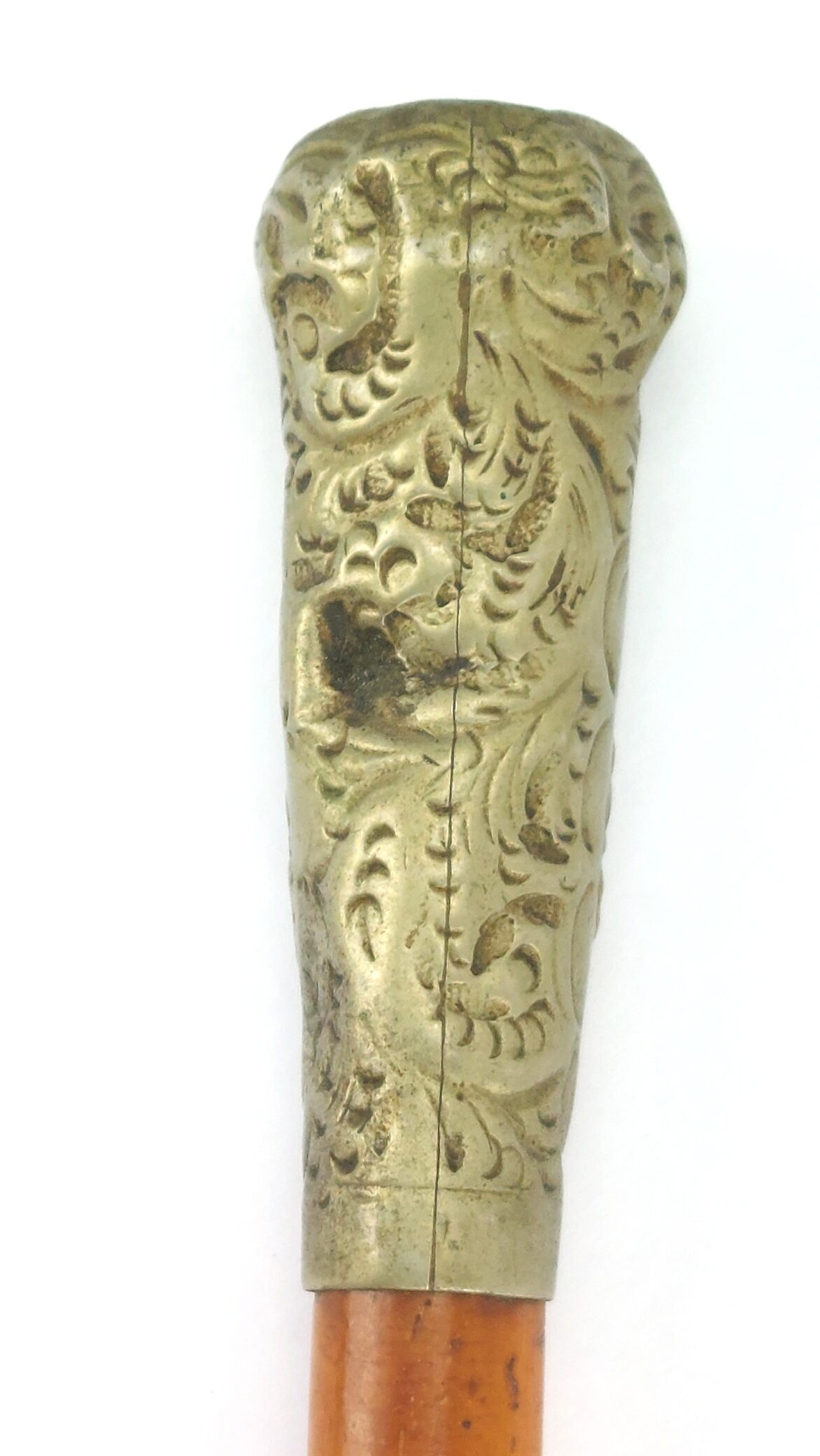
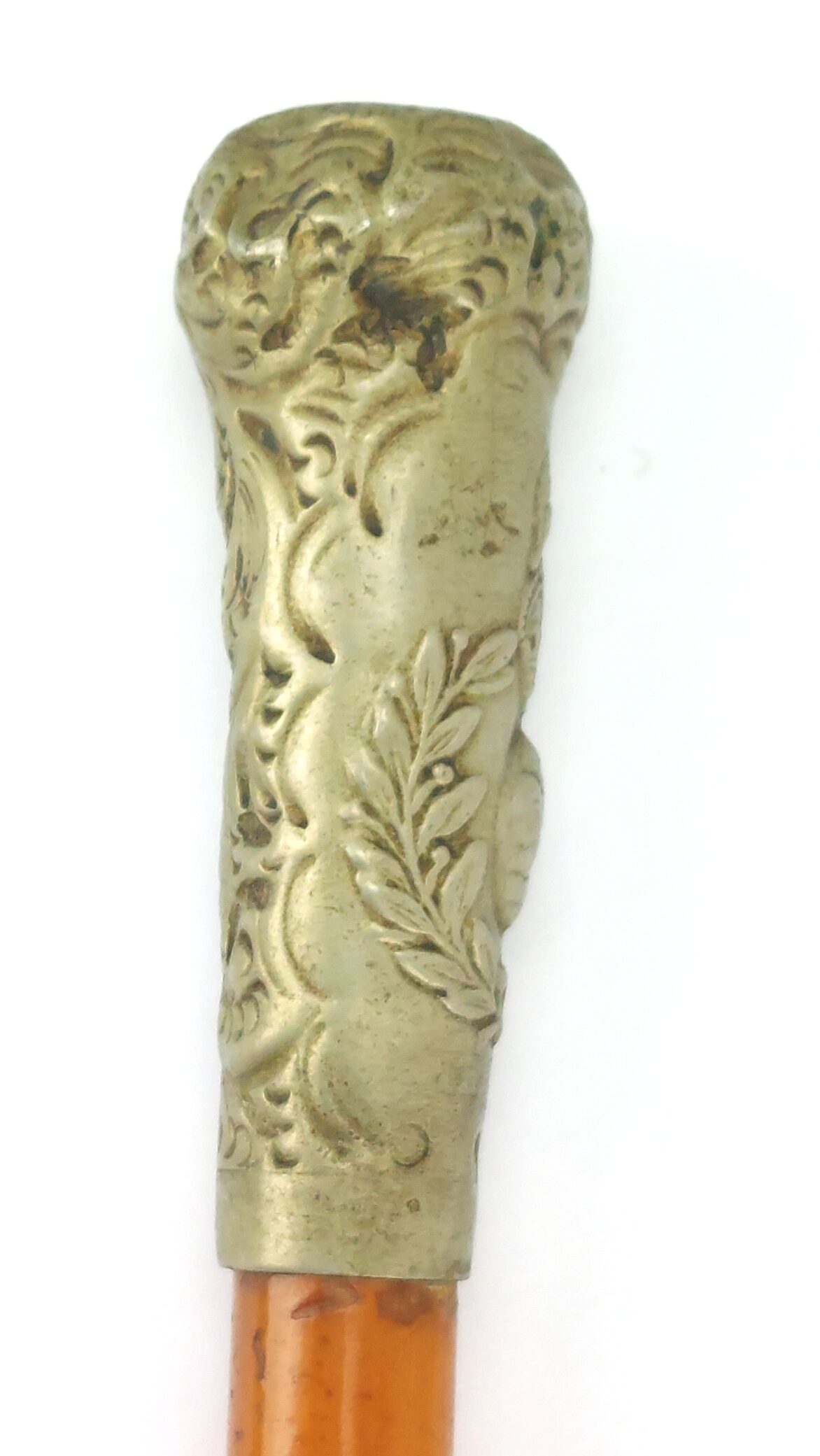
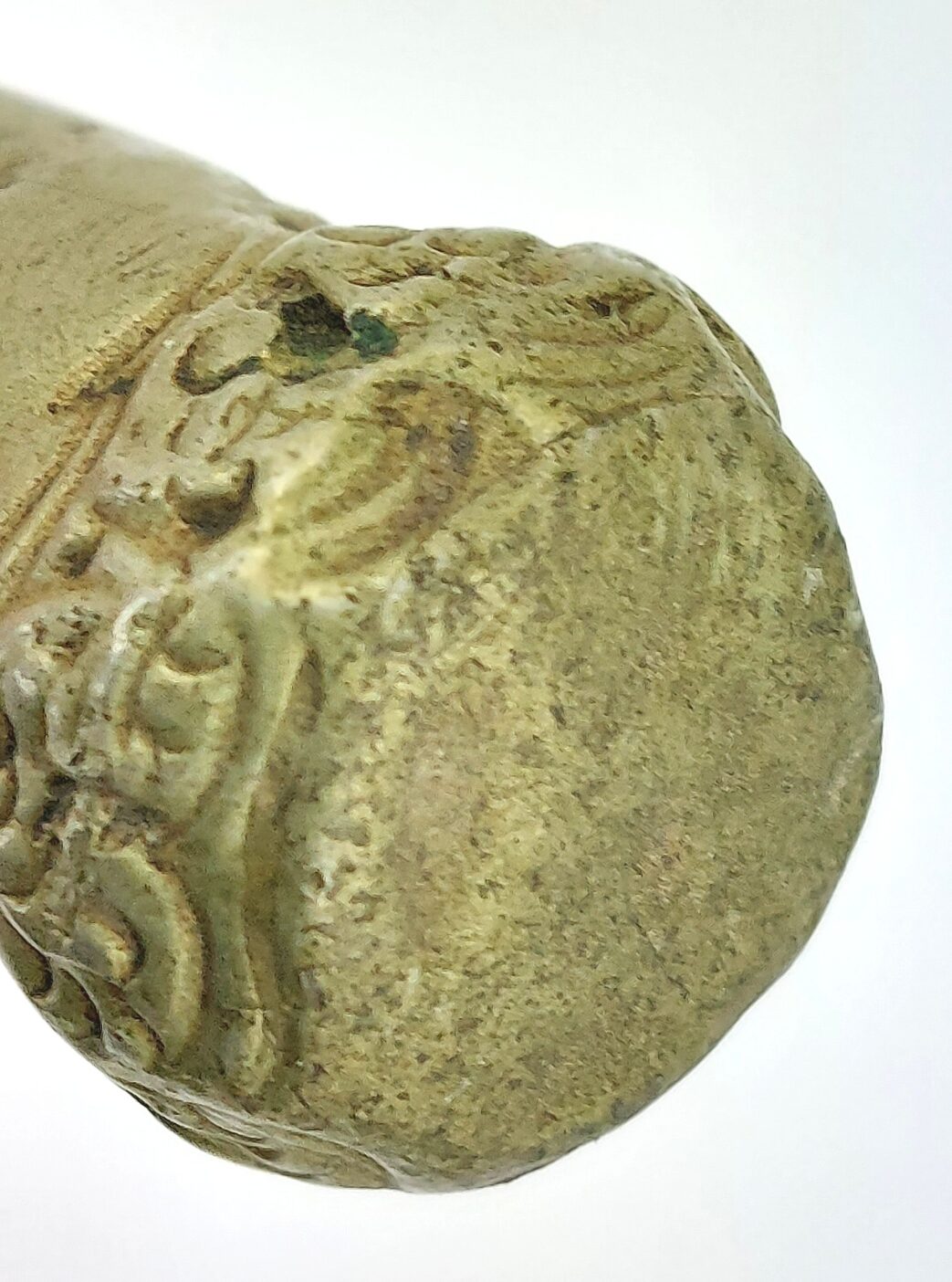
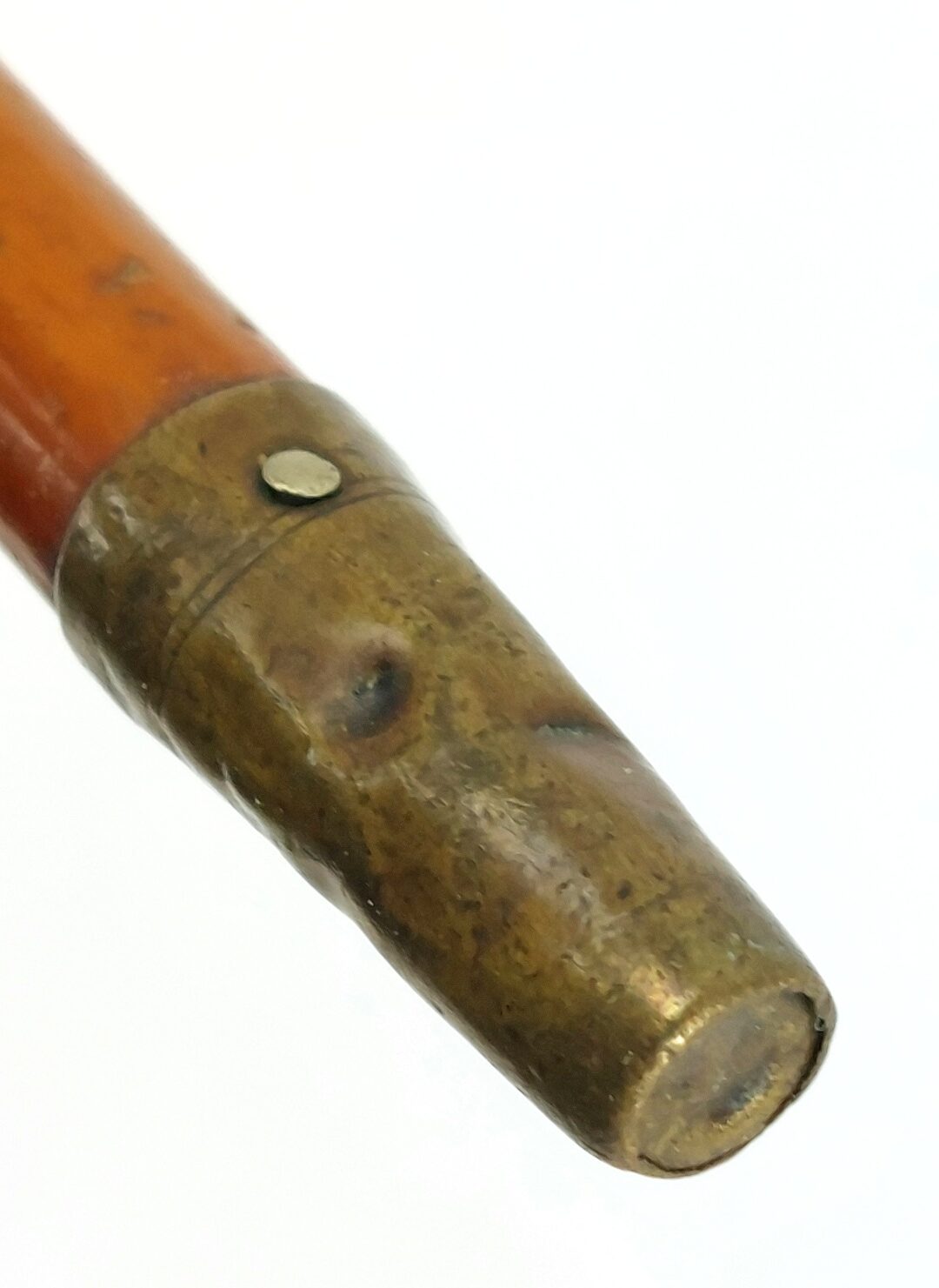
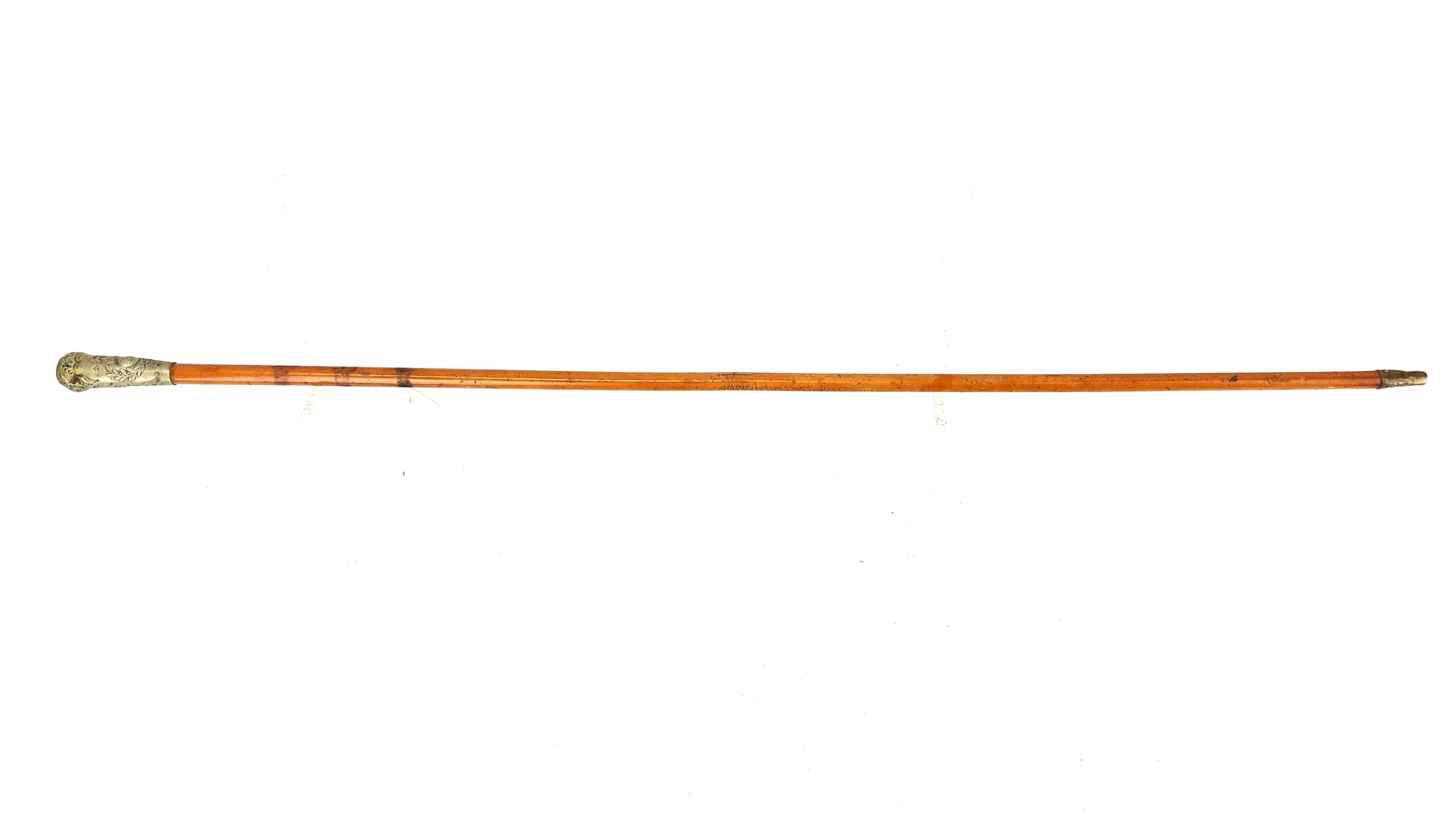
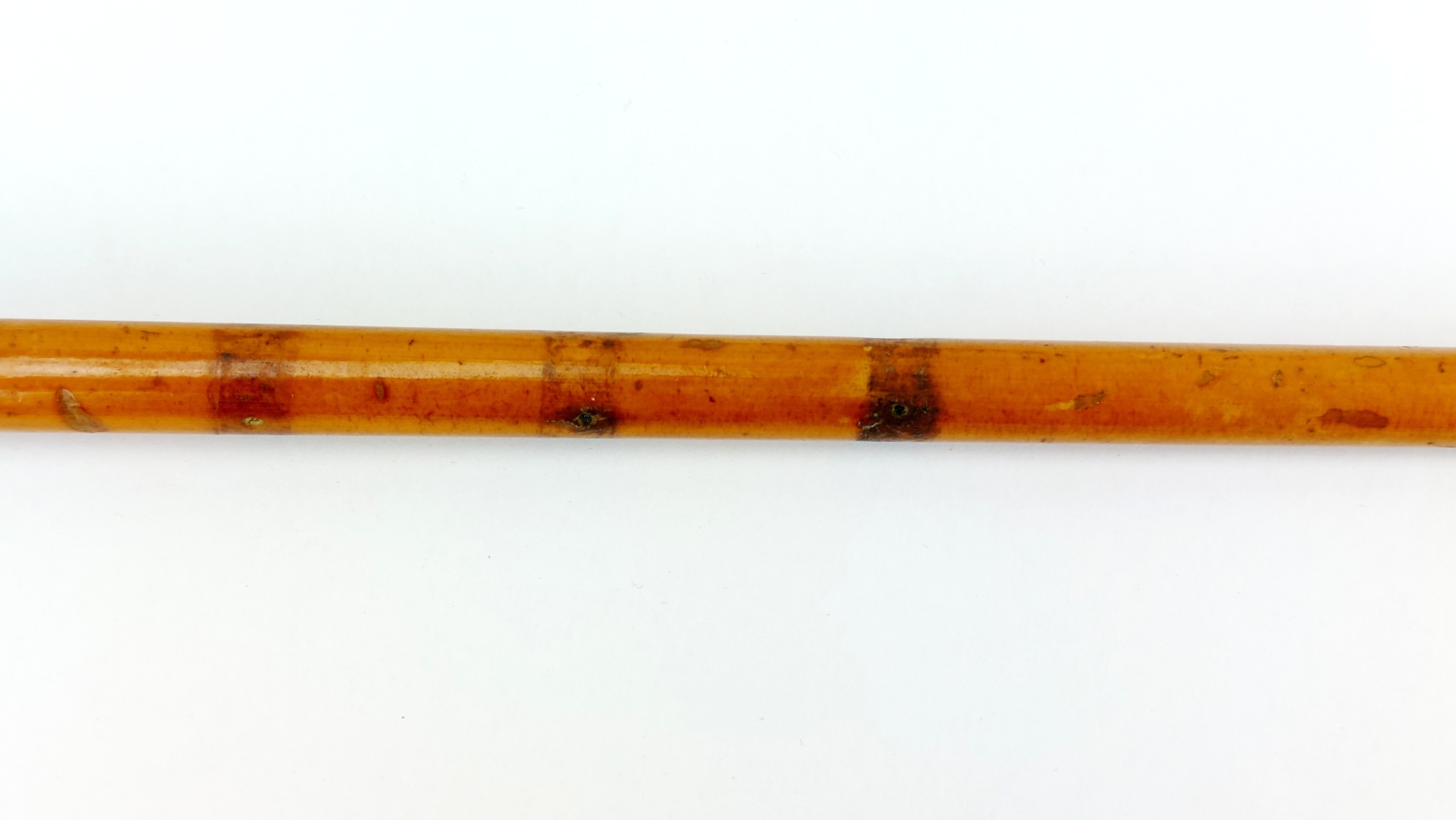
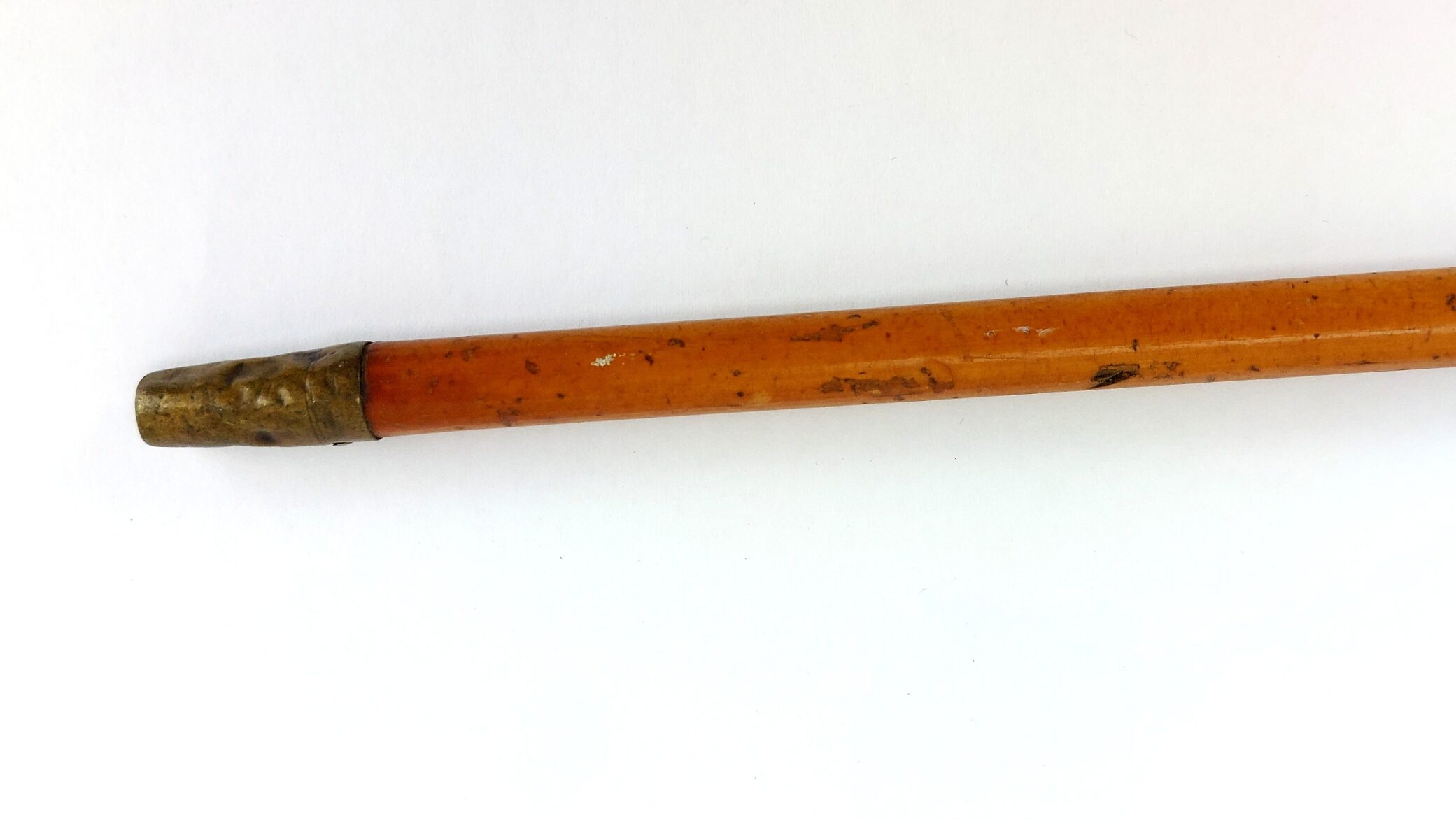
A Royal Marines swagger stick fitted with a cast white-metal pommel mount, decorated in relief with the King’s Crown above the Royal Marines globe-and-laurel emblem, flanked by foliate scrollwork. The pommel is of bulbous form, with decoration continuing around the sides, and is mounted to a polished cane shaft of warm amber-brown tone. The stick terminates in a plain metal ferrule at the tip.
The crown depicted is the King’s Crown, confirming manufacture during the reigns of Edward VII, George V, or George VI. The quality of the casting and the depth of the relief indicate a privately purchased piece rather than later mass-issued production.
Overall length is 62.8 cm. The white-metal pommel mount measures approximately 5.2 cm in length and 1.9 cm across the top.
Approx. Measurements - Overall length: 62.8 cm, Pommel mount length: approx. 5.2 cm, Pommel top diameter: approx. 1.9 cm
Historical Note:
Swagger sticks formed part of the walking-out and undress appearance of British officers and senior NCOs from the late Victorian period through the first half of the 20th century. Within the Royal Marines they served as symbols of authority, discipline, and corps identity, and were typically acquired privately rather than issued, leading to variation in design and finish.
While the King’s Crown places this example broadly within the period c.1910–1952, the stylistic features of this stick strongly suggest earlier manufacture. The heavy white-metal pommel with deep relief, the pronounced bulbous profile, and the elaborate foliate decoration are characteristic of Edwardian to early George V-period swagger sticks. Later inter-war and George VI examples tend to show flatter, lighter castings and more restrained ornamentation, often reflecting simplified post-war production. This example is most likely to date from the pre-WW1 or early inter-war years.
*Condition*
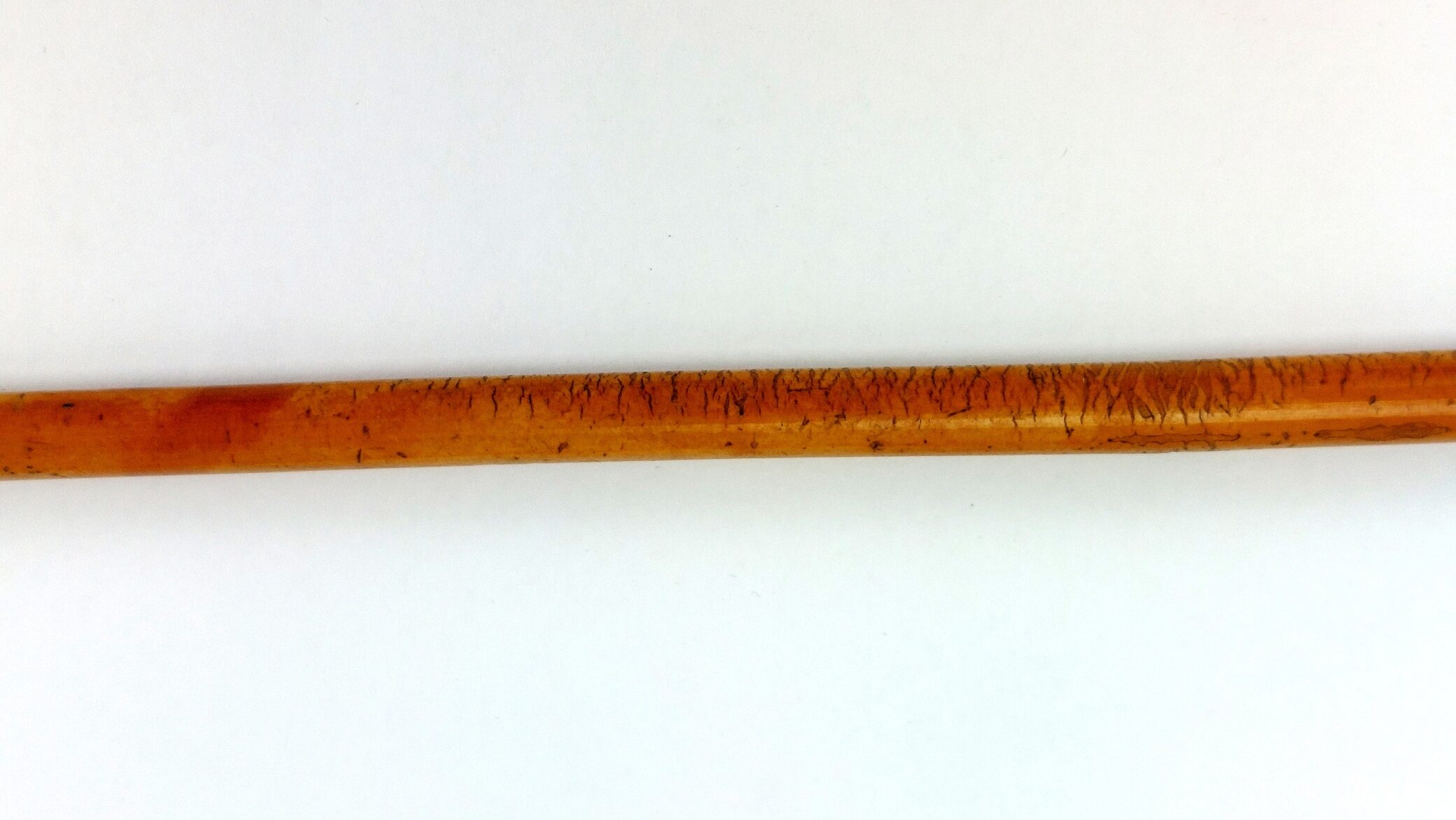
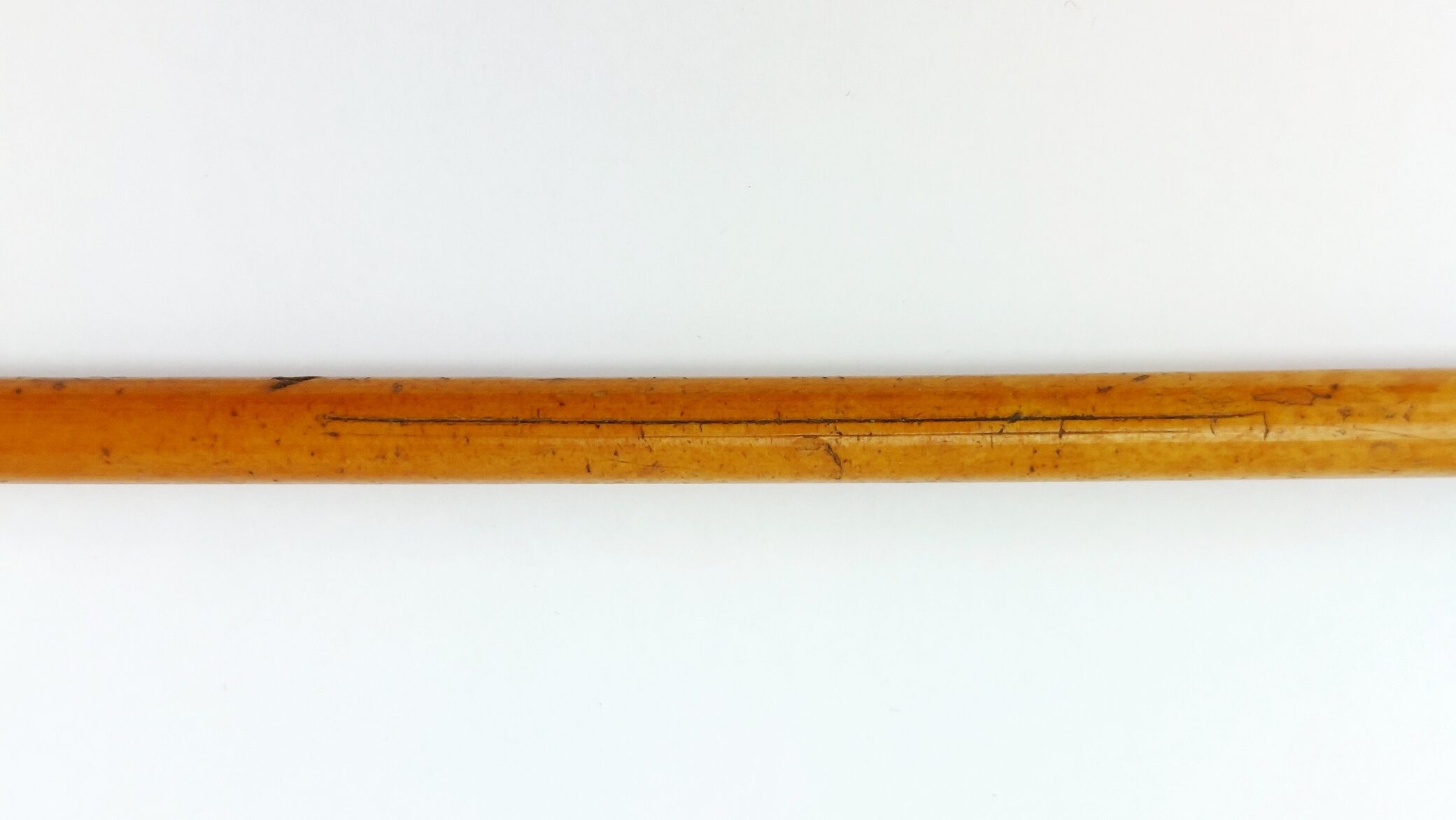
The white-metal pommel shows dents, surface wear, and softening to some of the relief, with areas of darkened patina consistent with age and handling. The cane shaft displays expected age-related marks, surface wear, and small blemishes but remains sound and straight. The lower ferrule shows wear and tarnishing. Overall, an honest period piece retaining strong visual character. Please see photographs as part of the condition report.