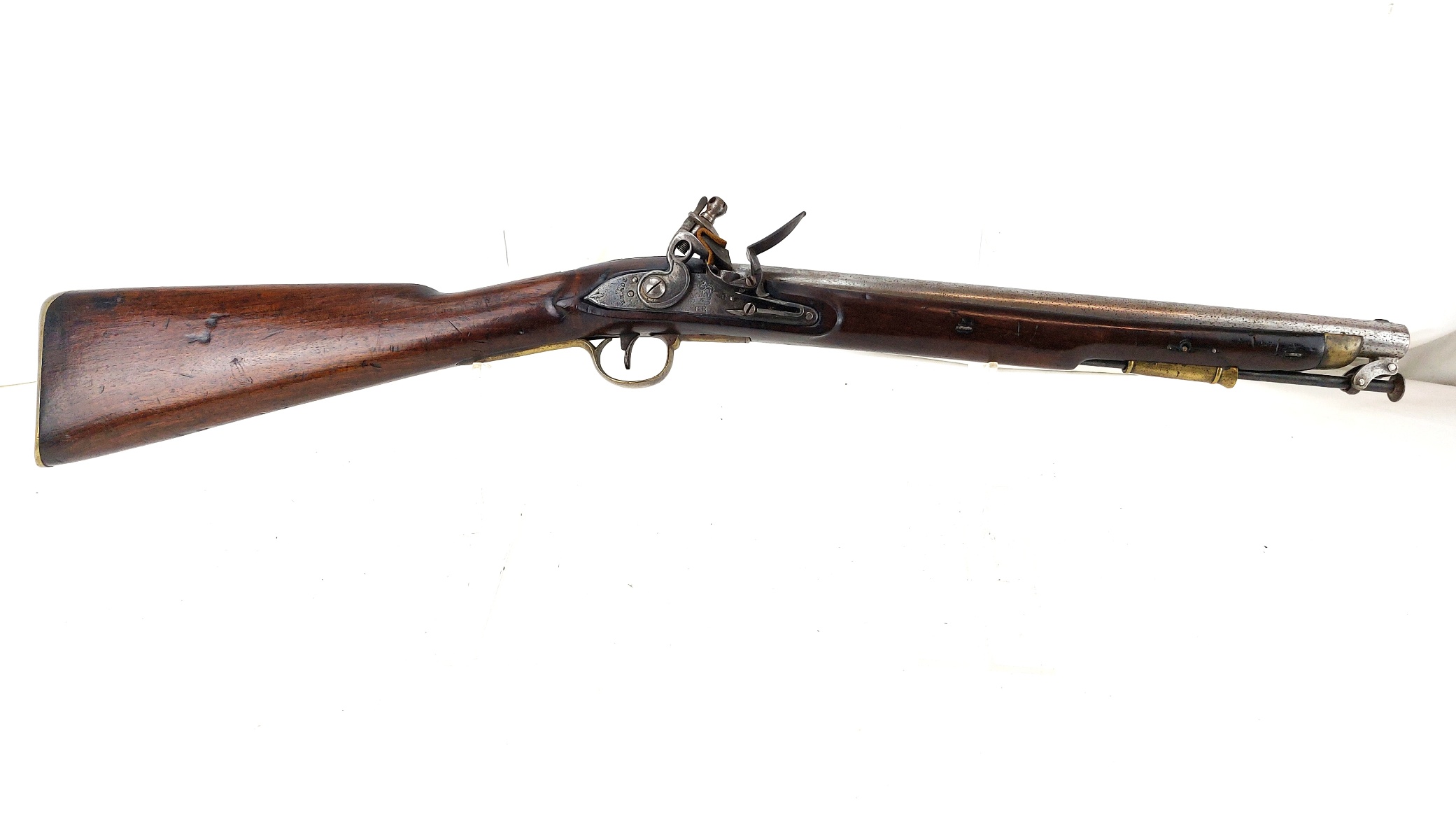
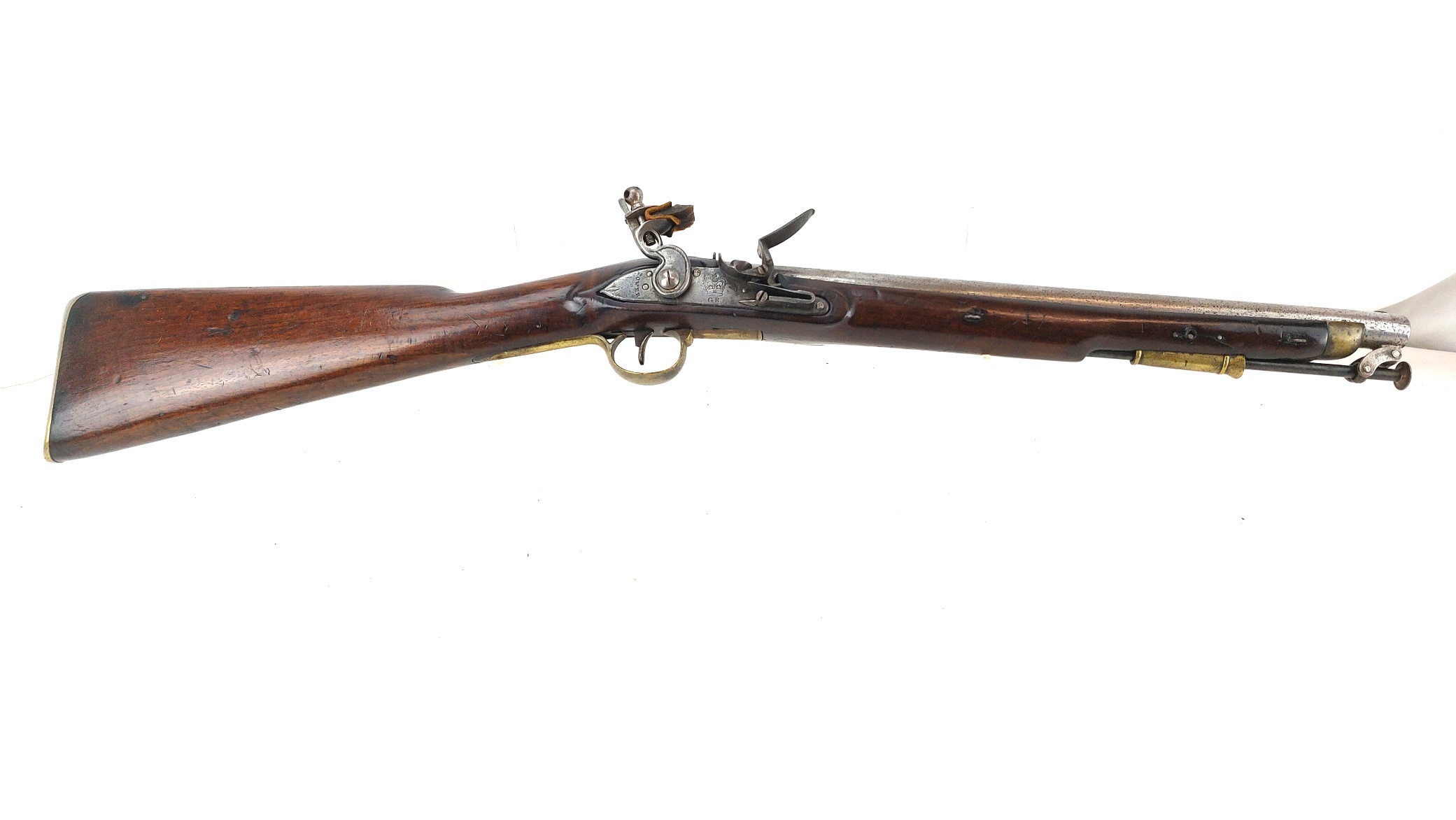
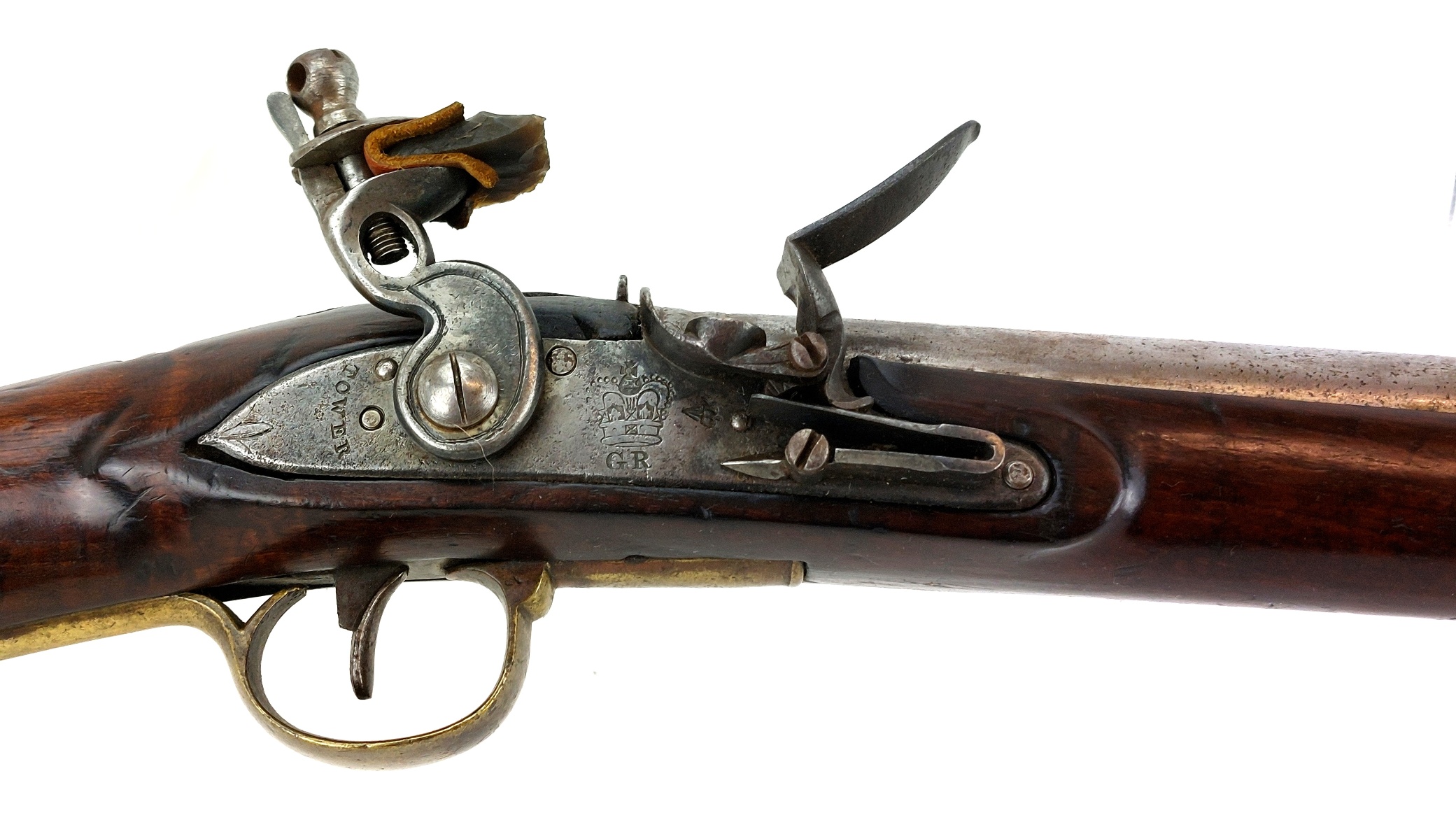
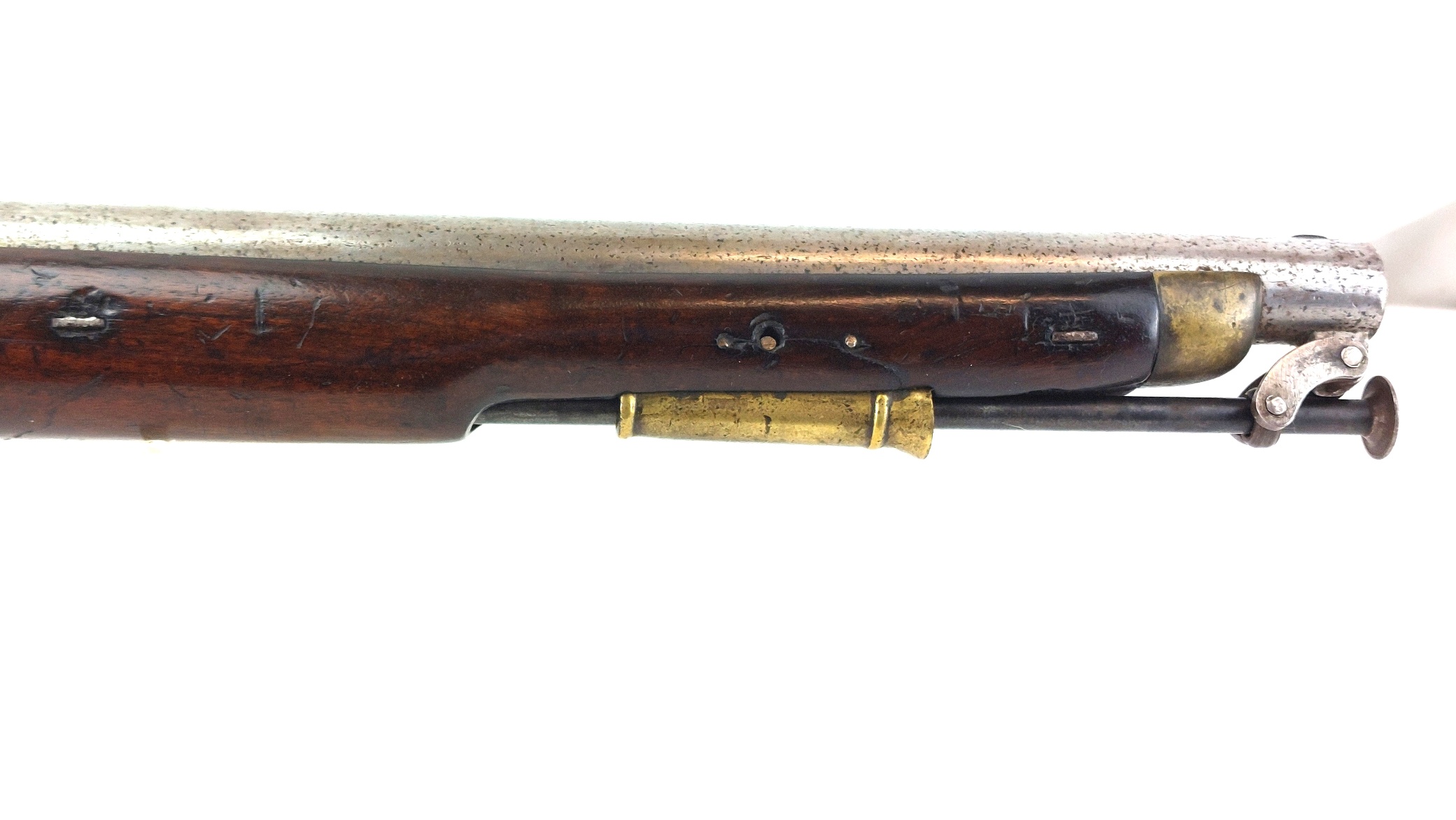
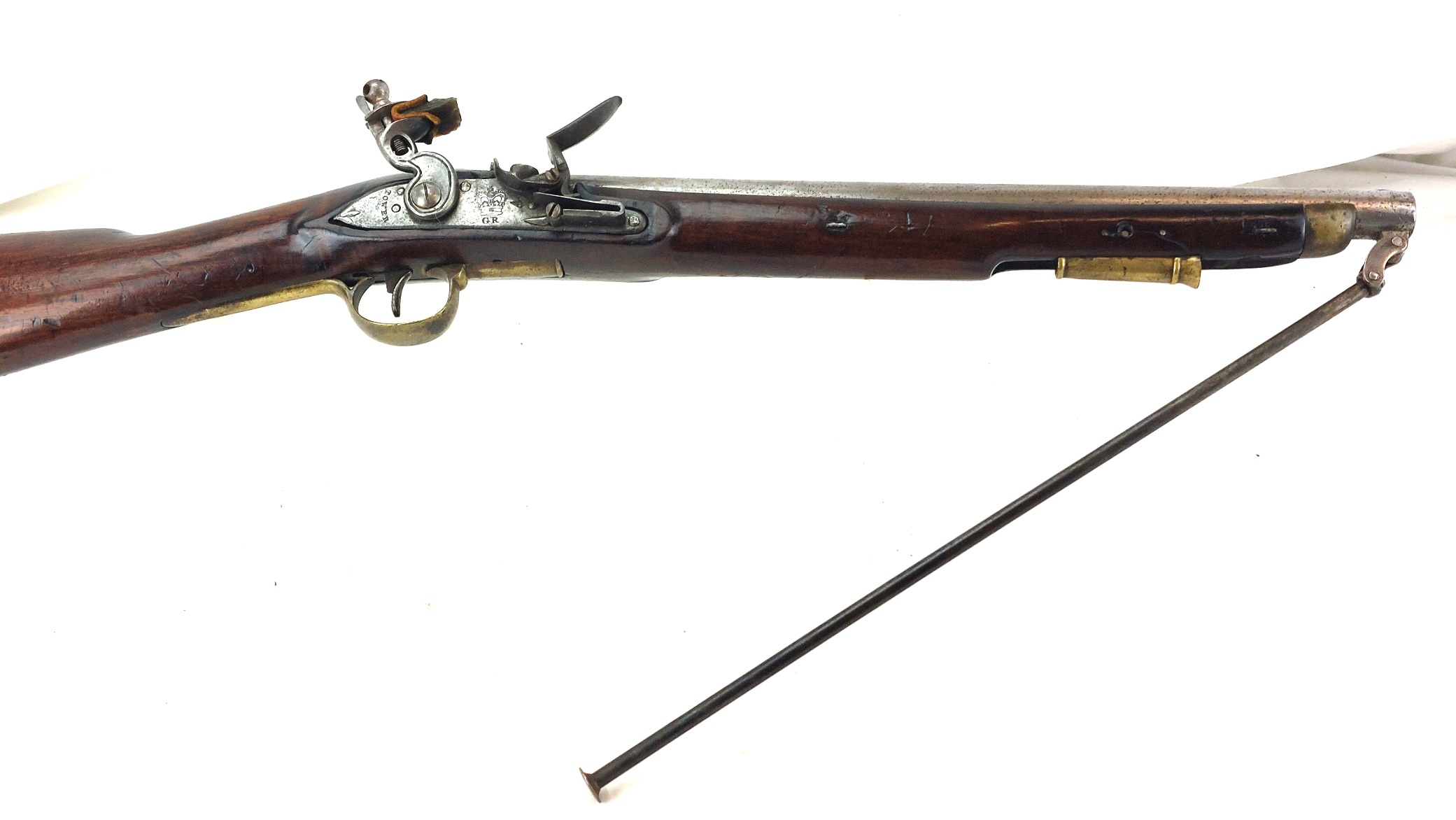
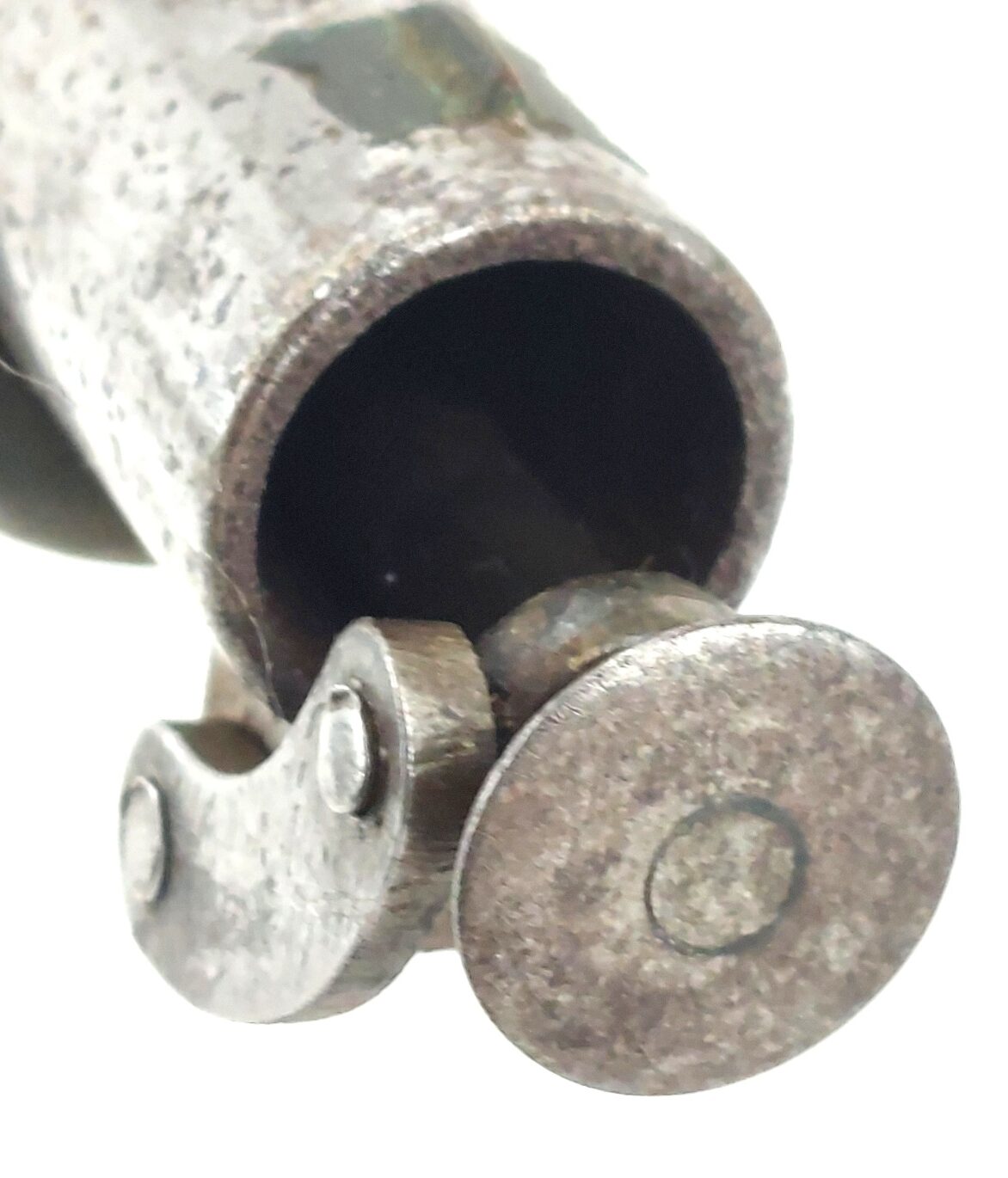
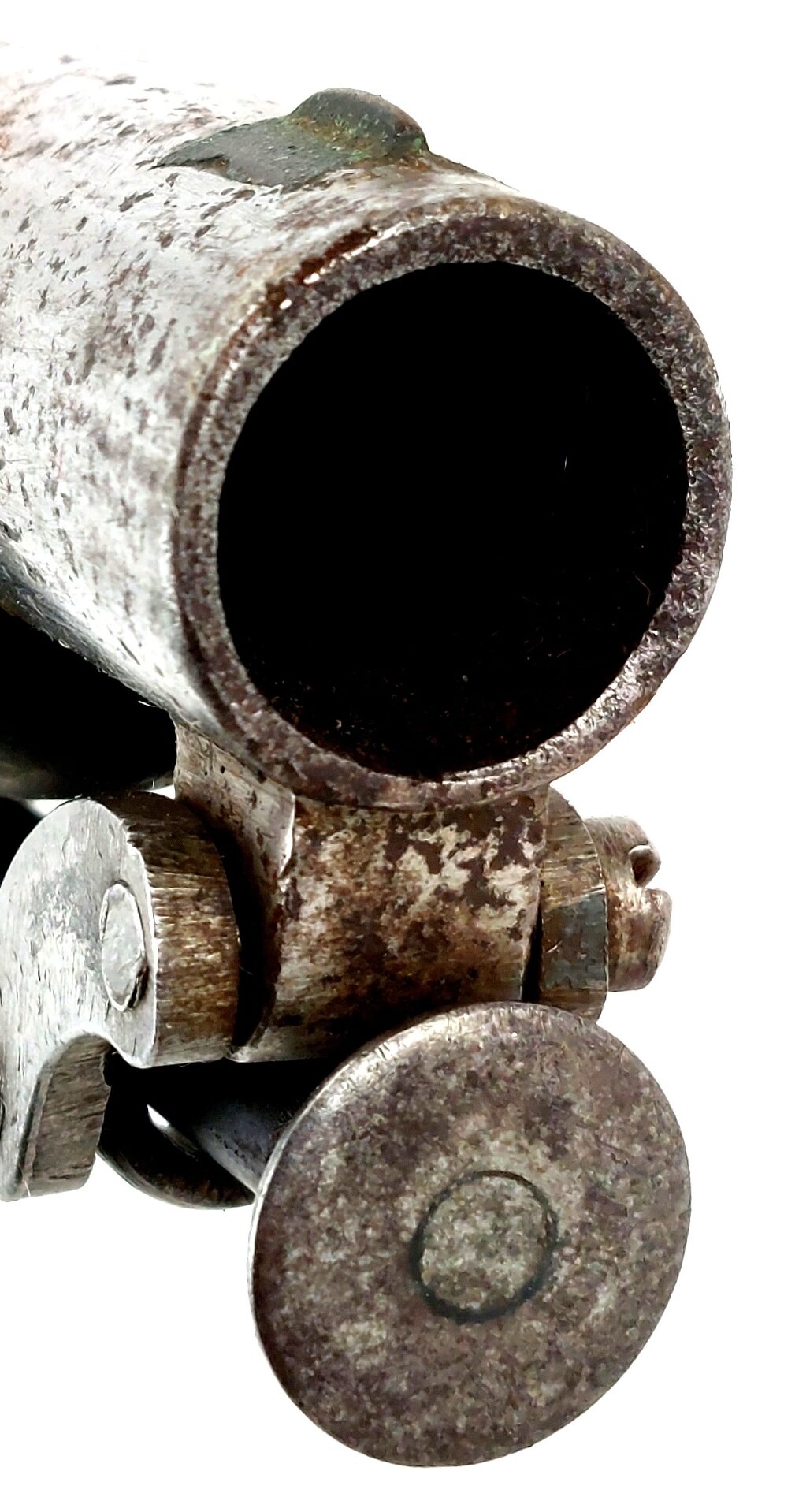
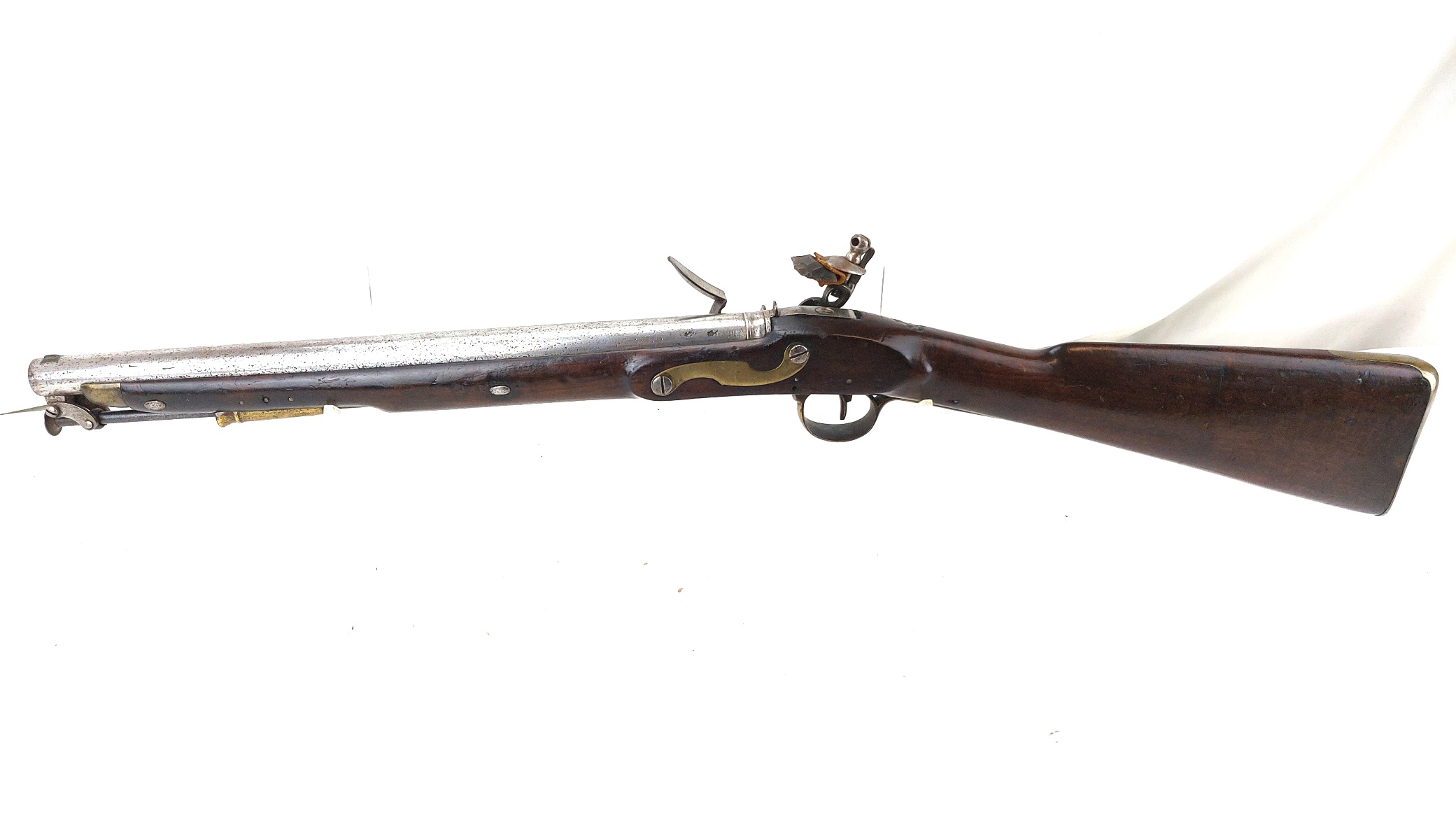
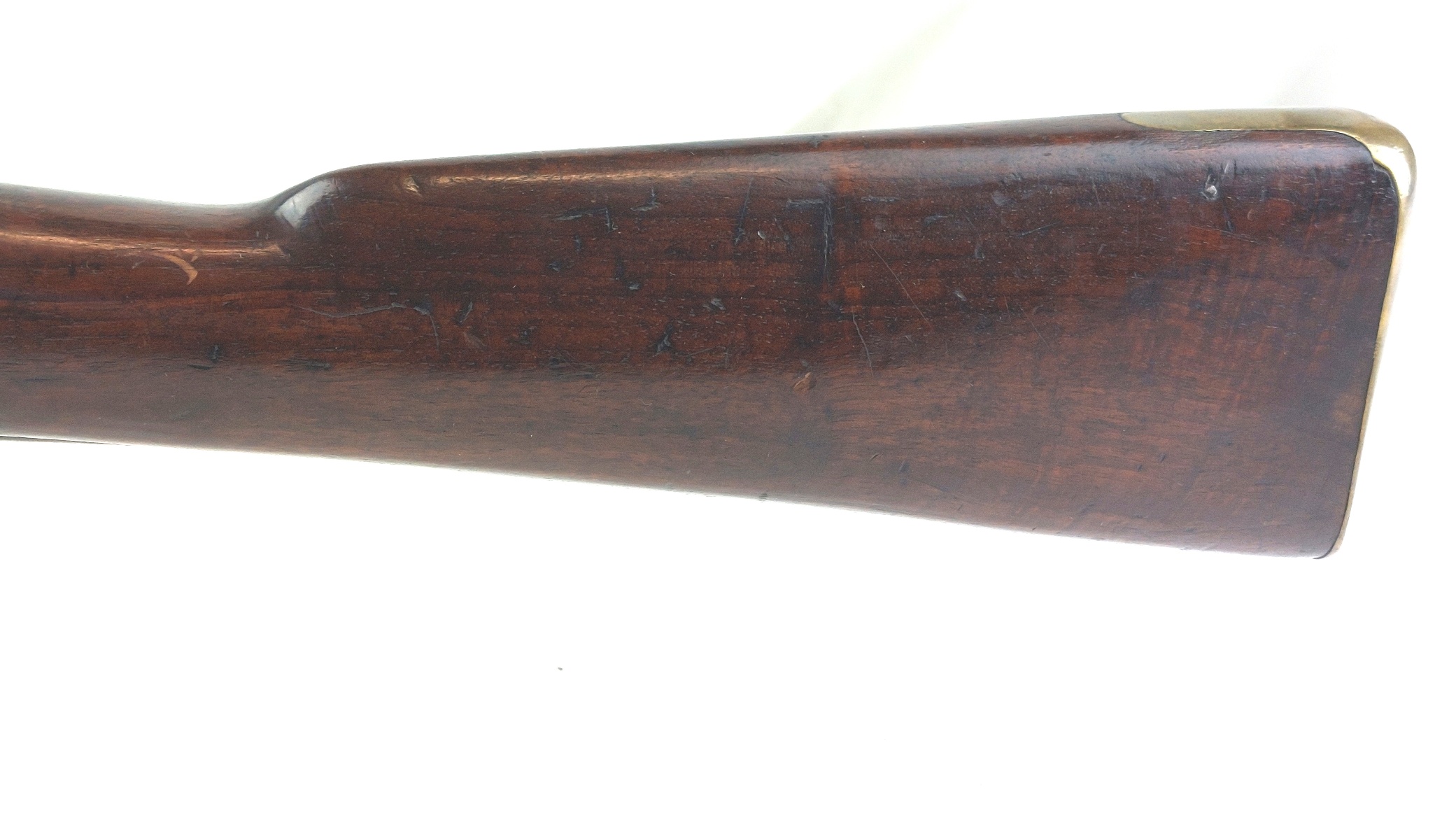
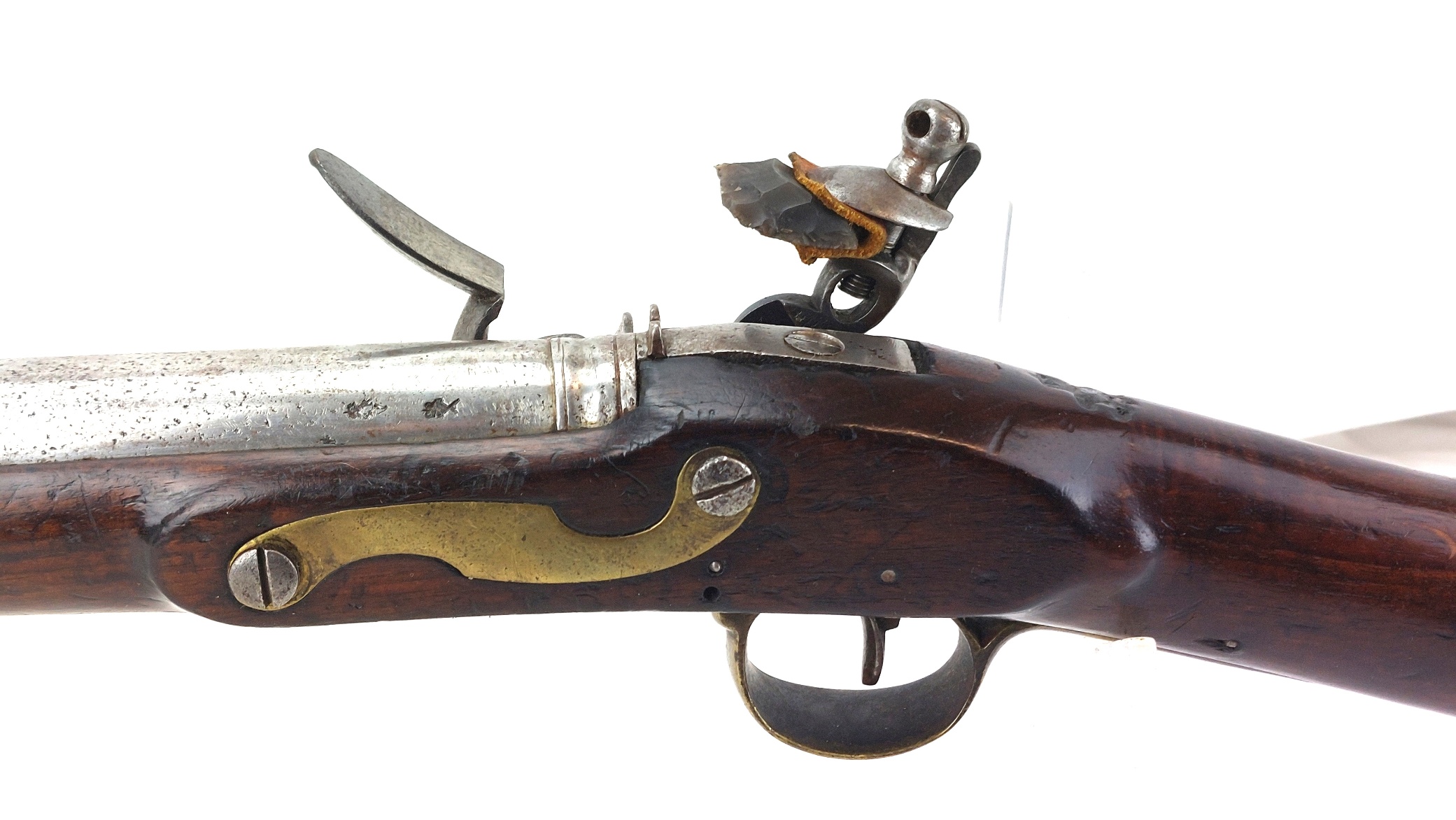
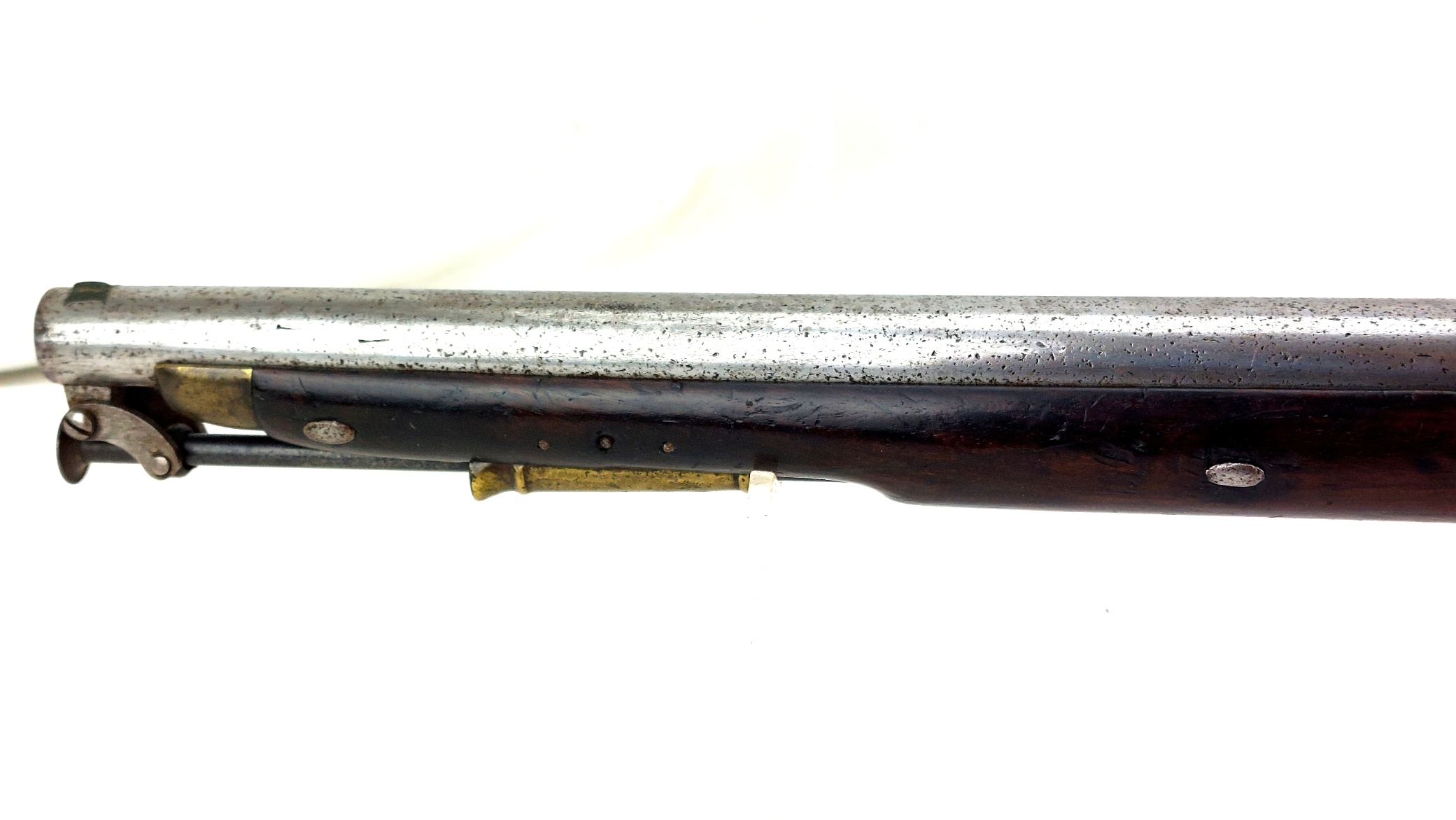
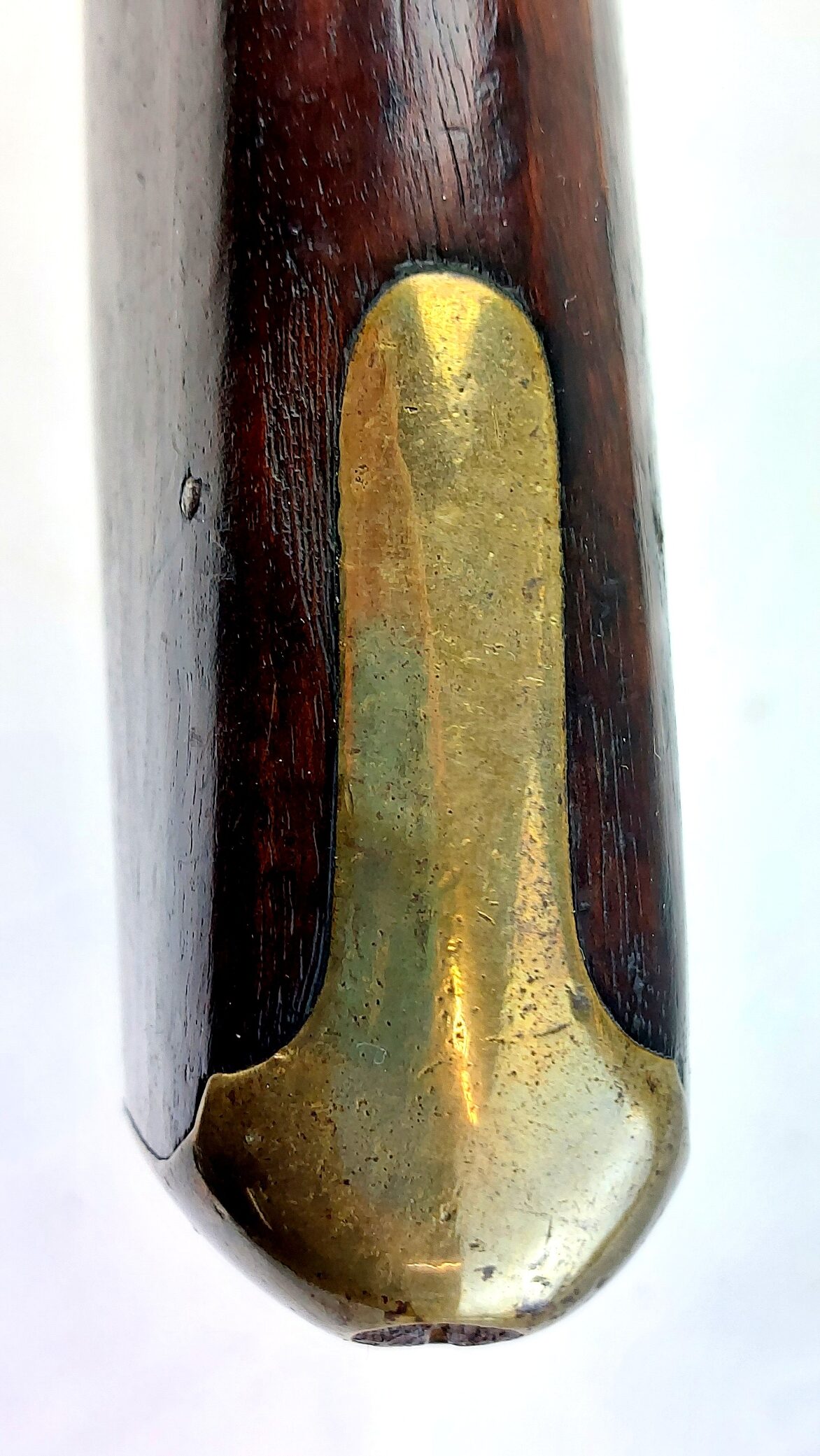
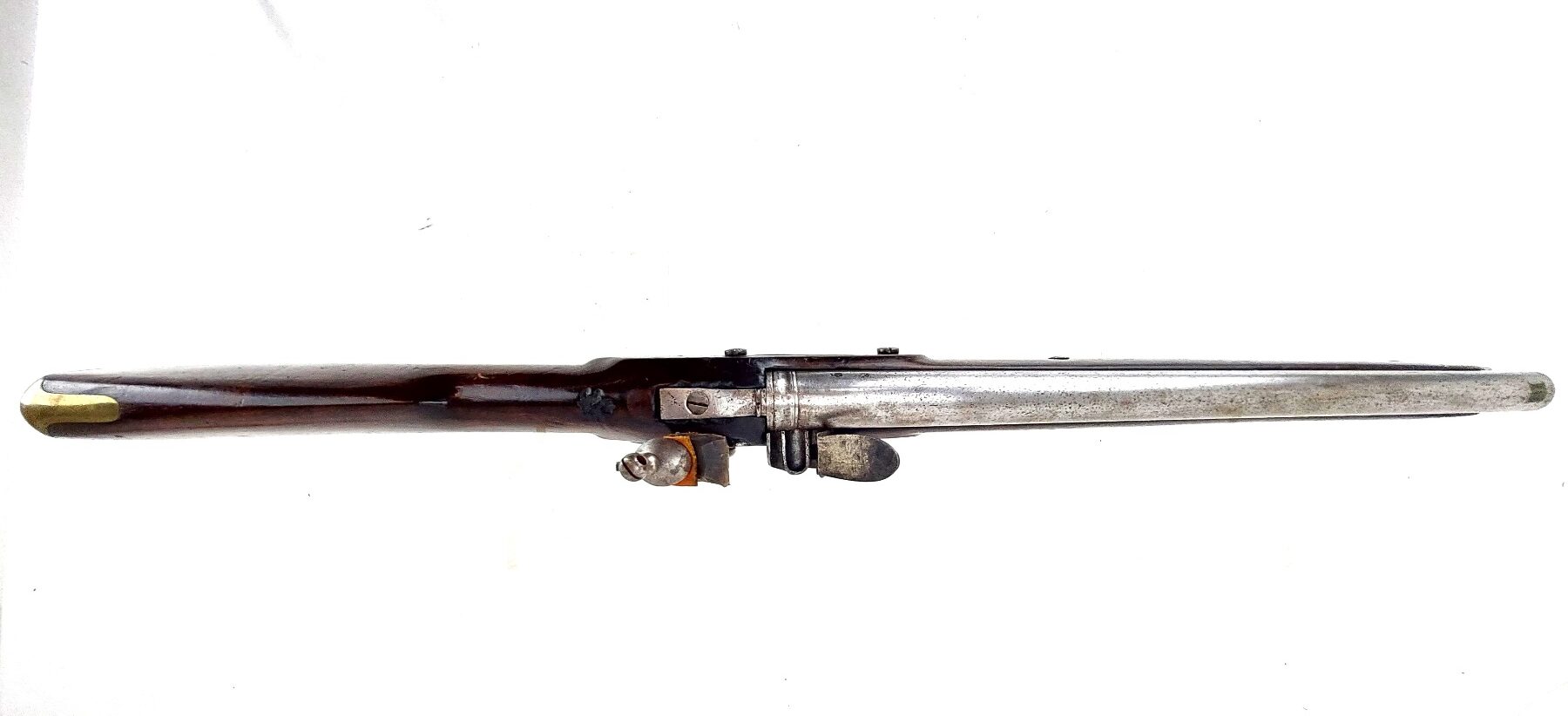
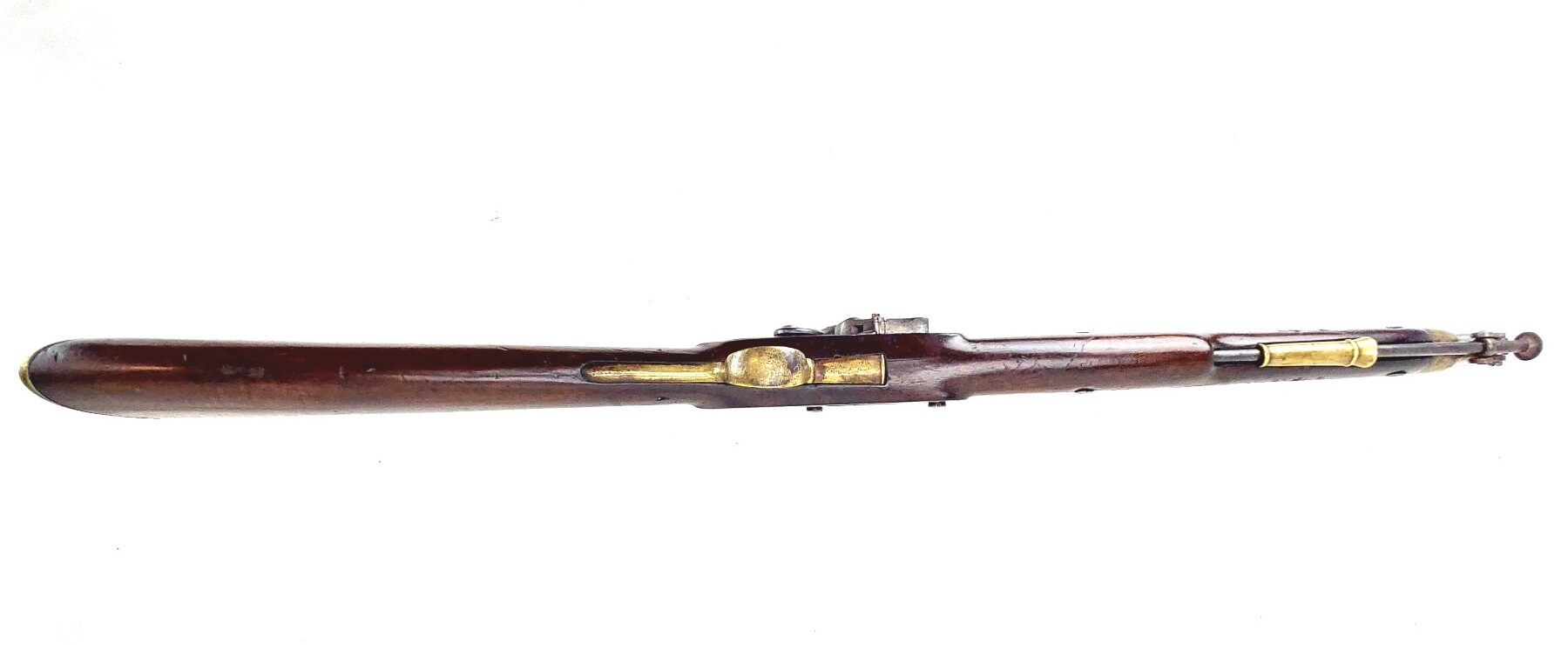
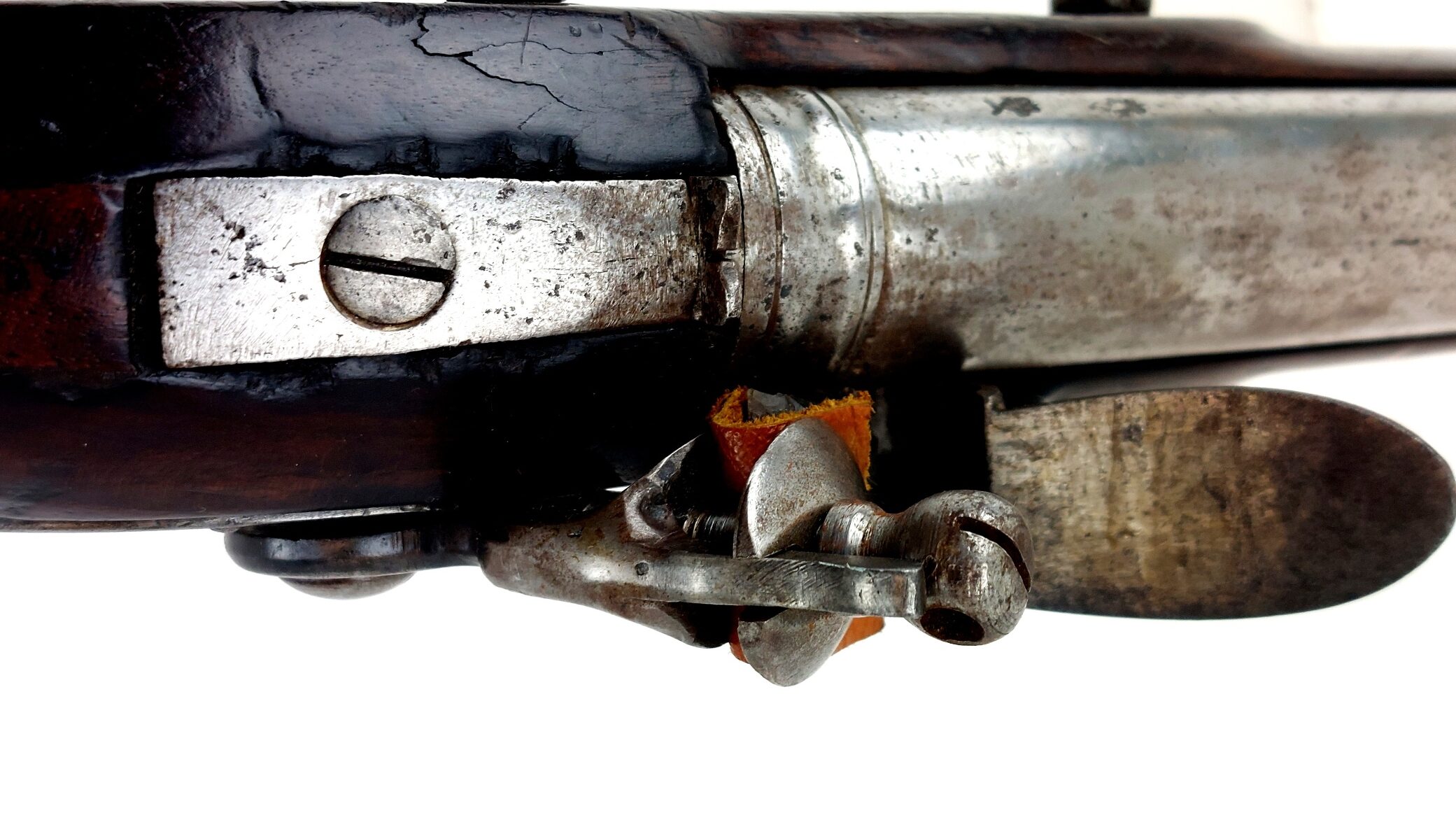
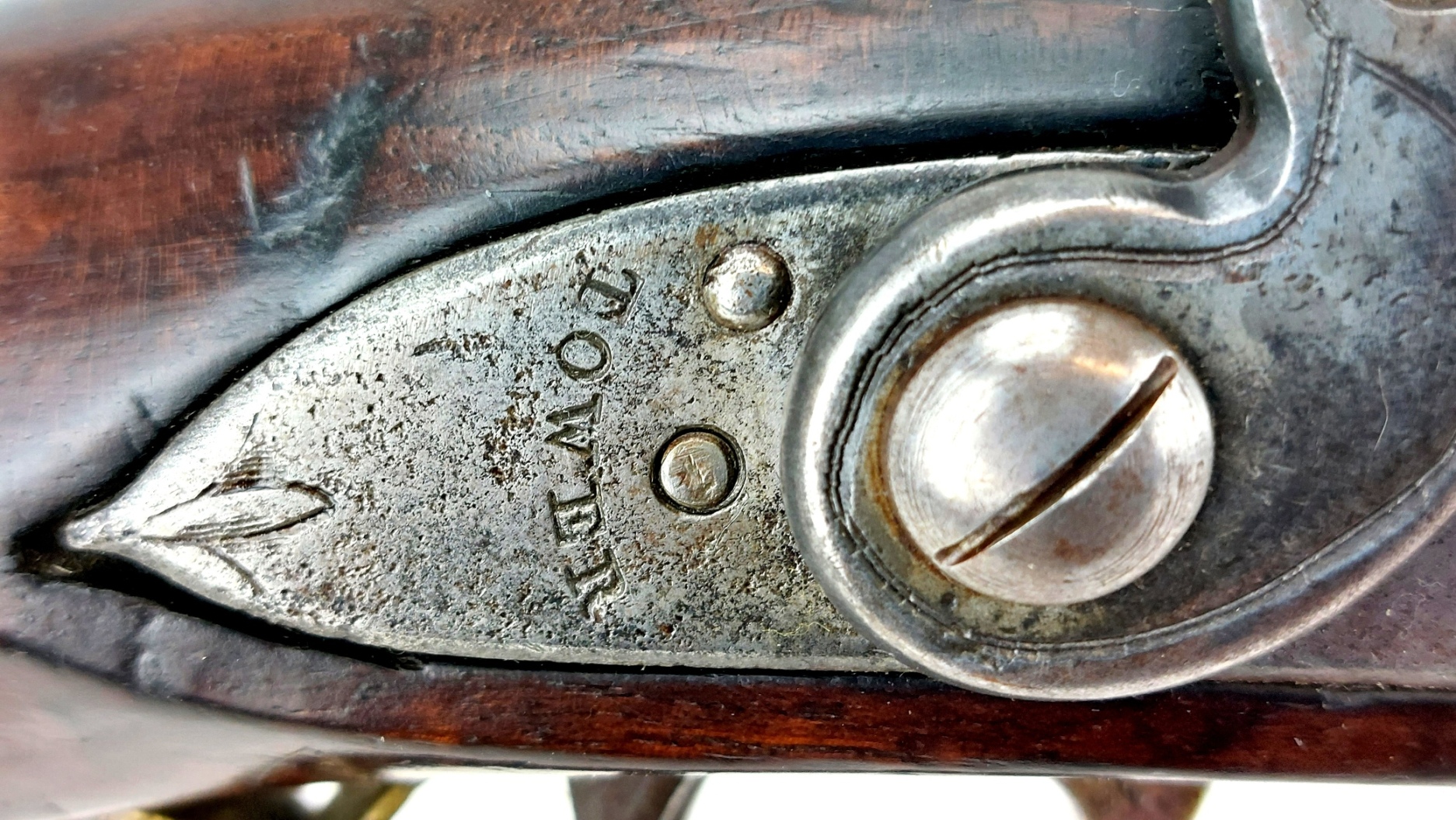
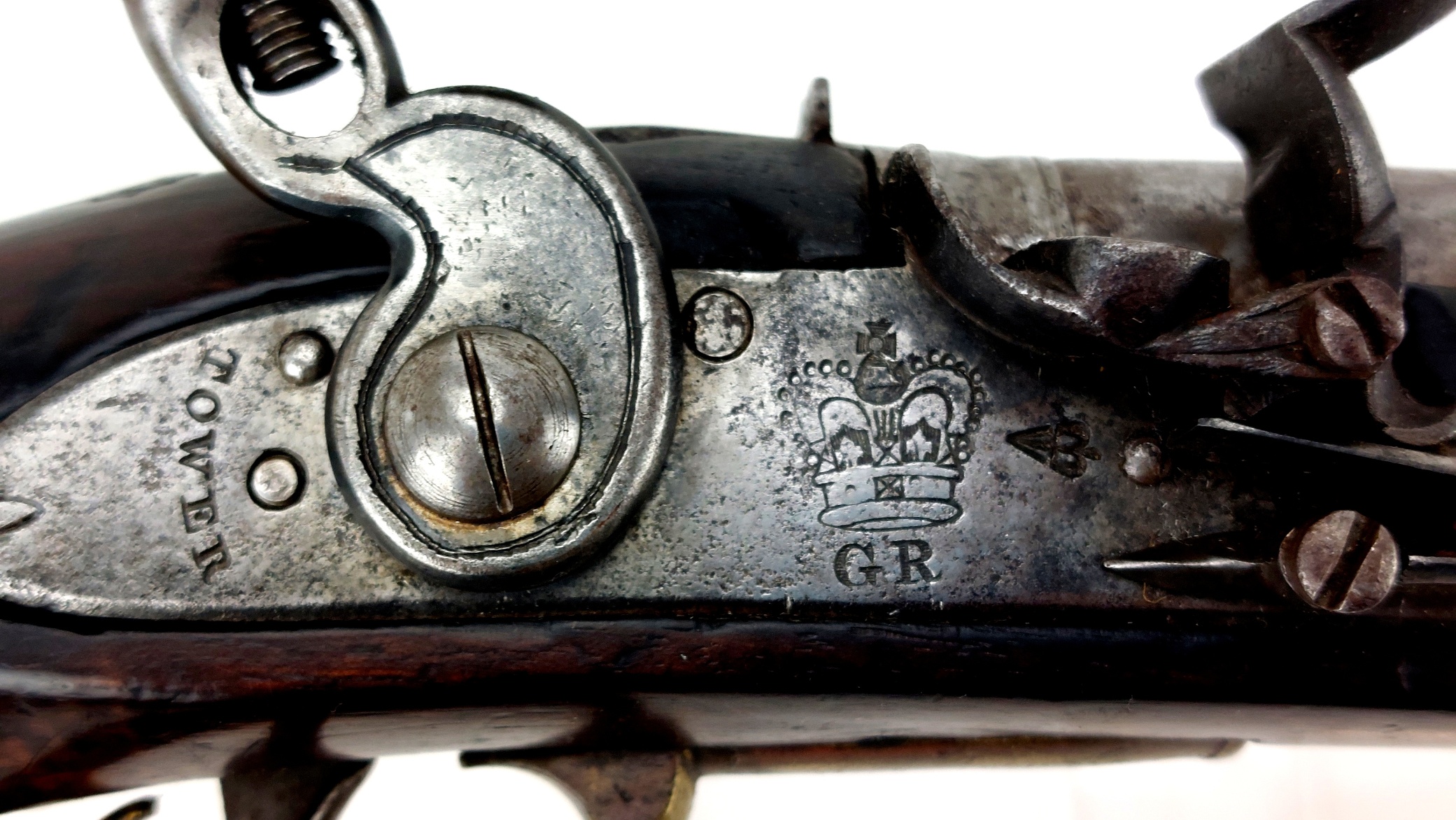
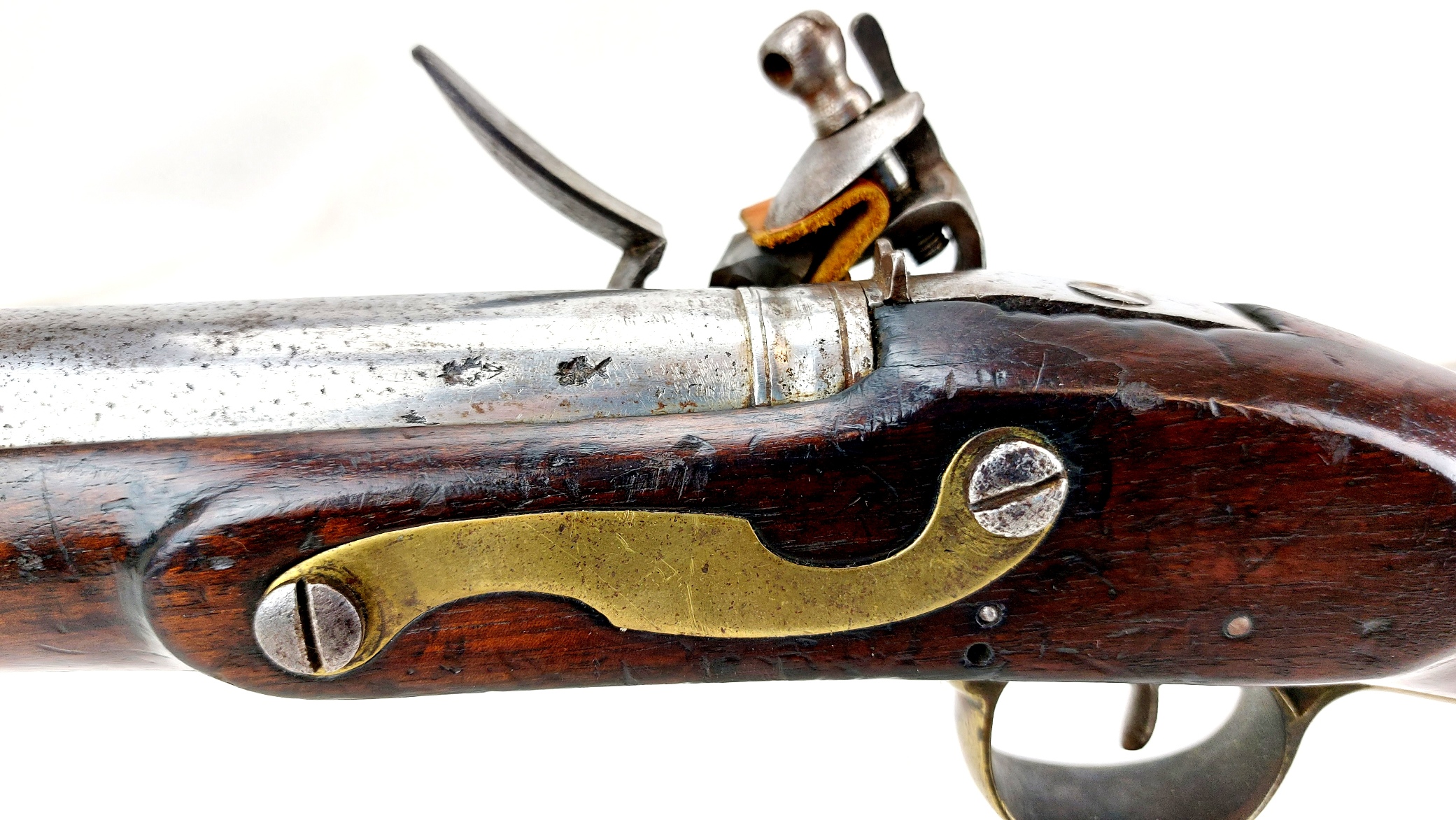
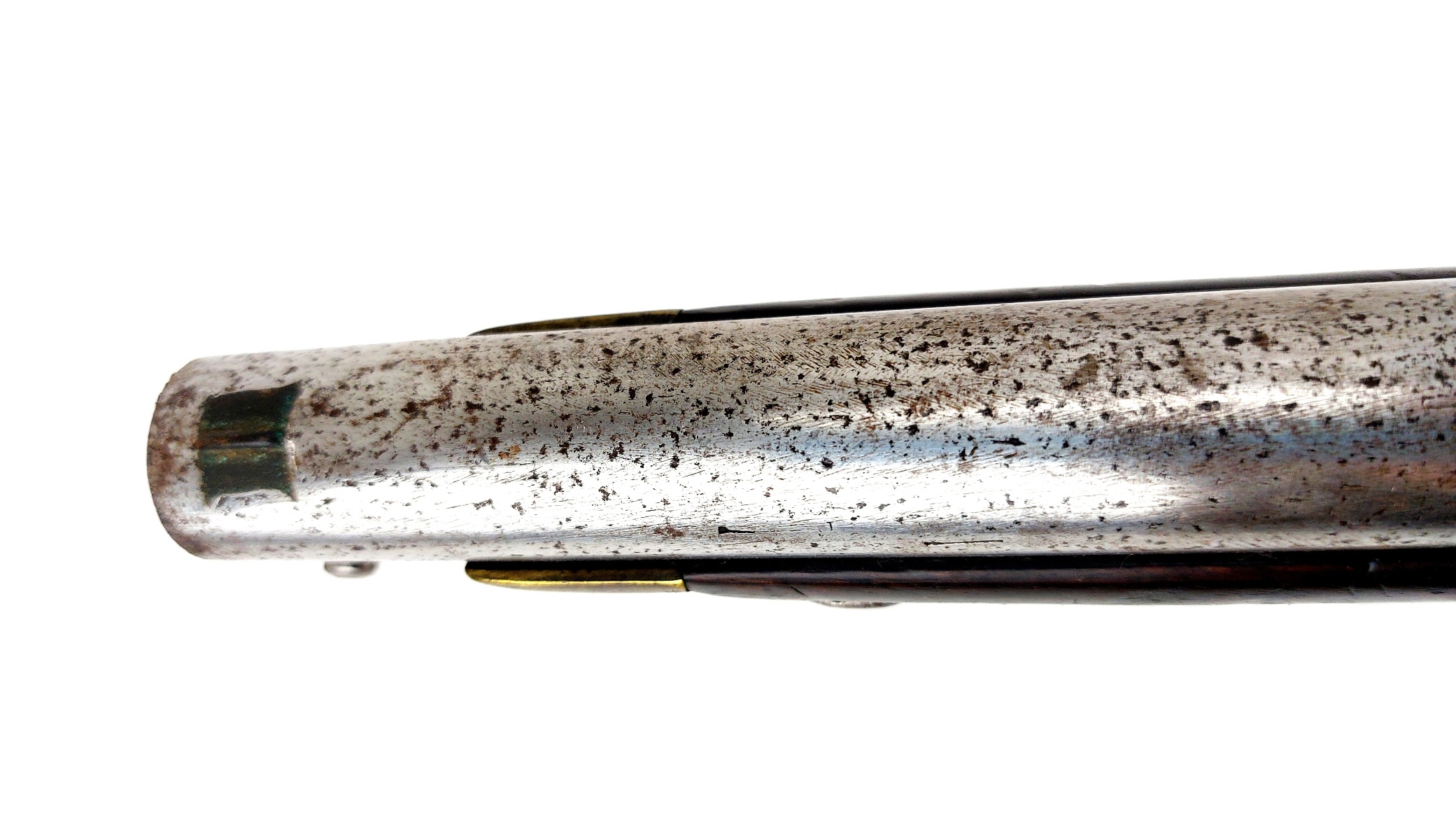
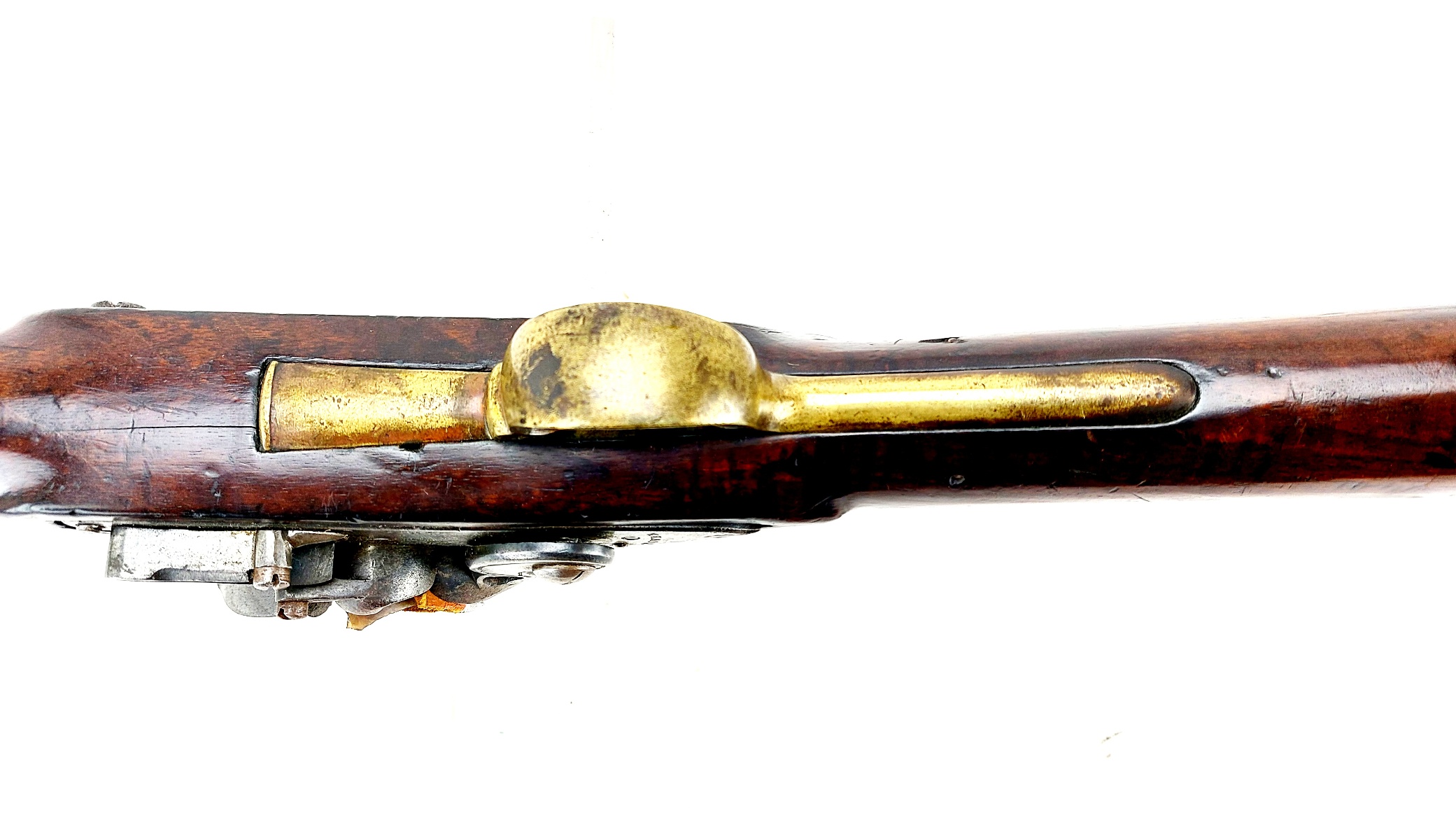
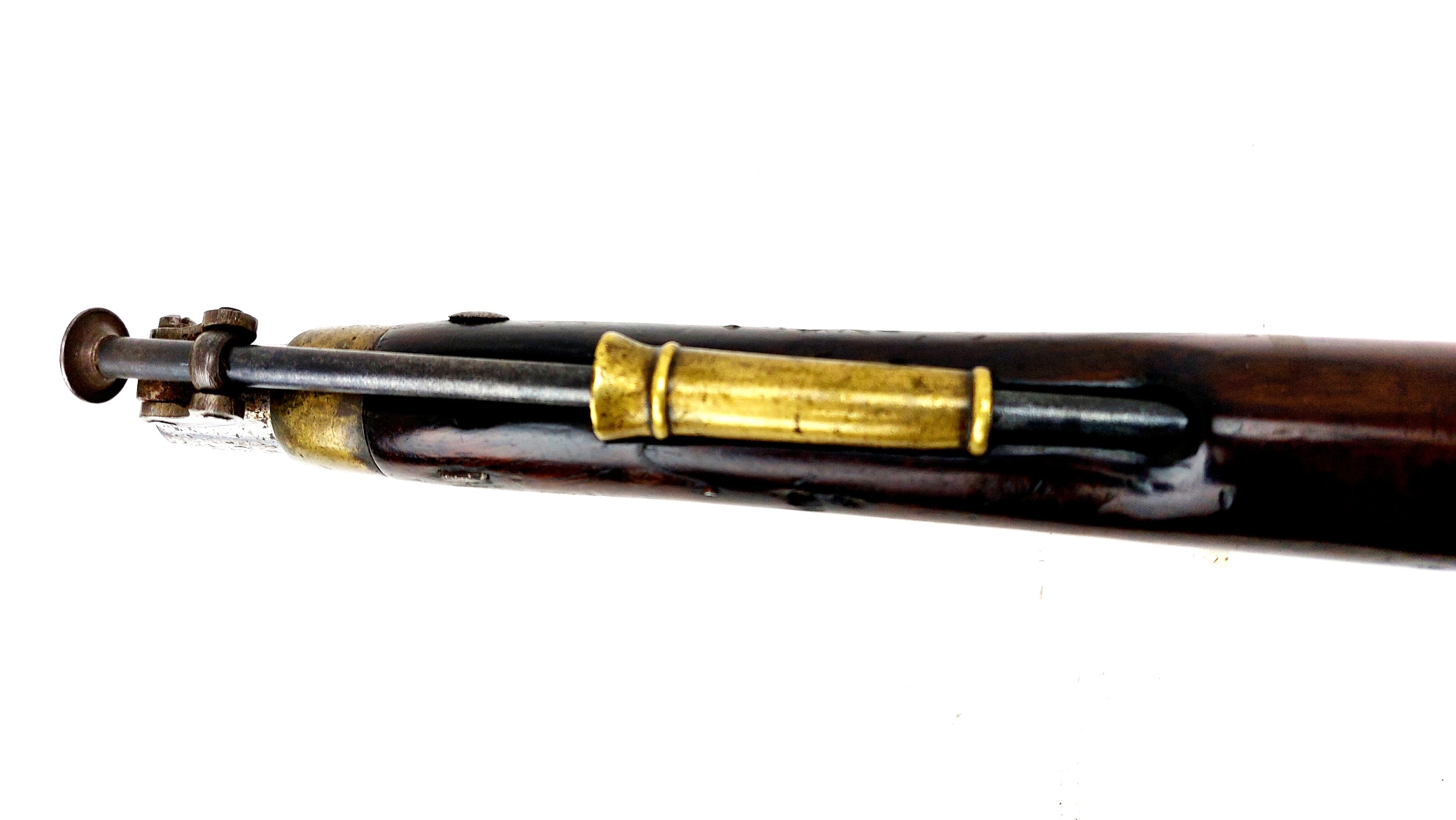
A scarce British Paget pattern flintlock cavalry carbine, of smoothbore .650 calibre, retaining its characteristic short, sighted barrel and swivel-mounted captive ramrod. The carbine is stocked in walnut with brass furniture, including butt plate and trigger guard, and fitted with a robust flintlock action marked “TOWER”, indicating Board of Ordnance inspection and assembly.
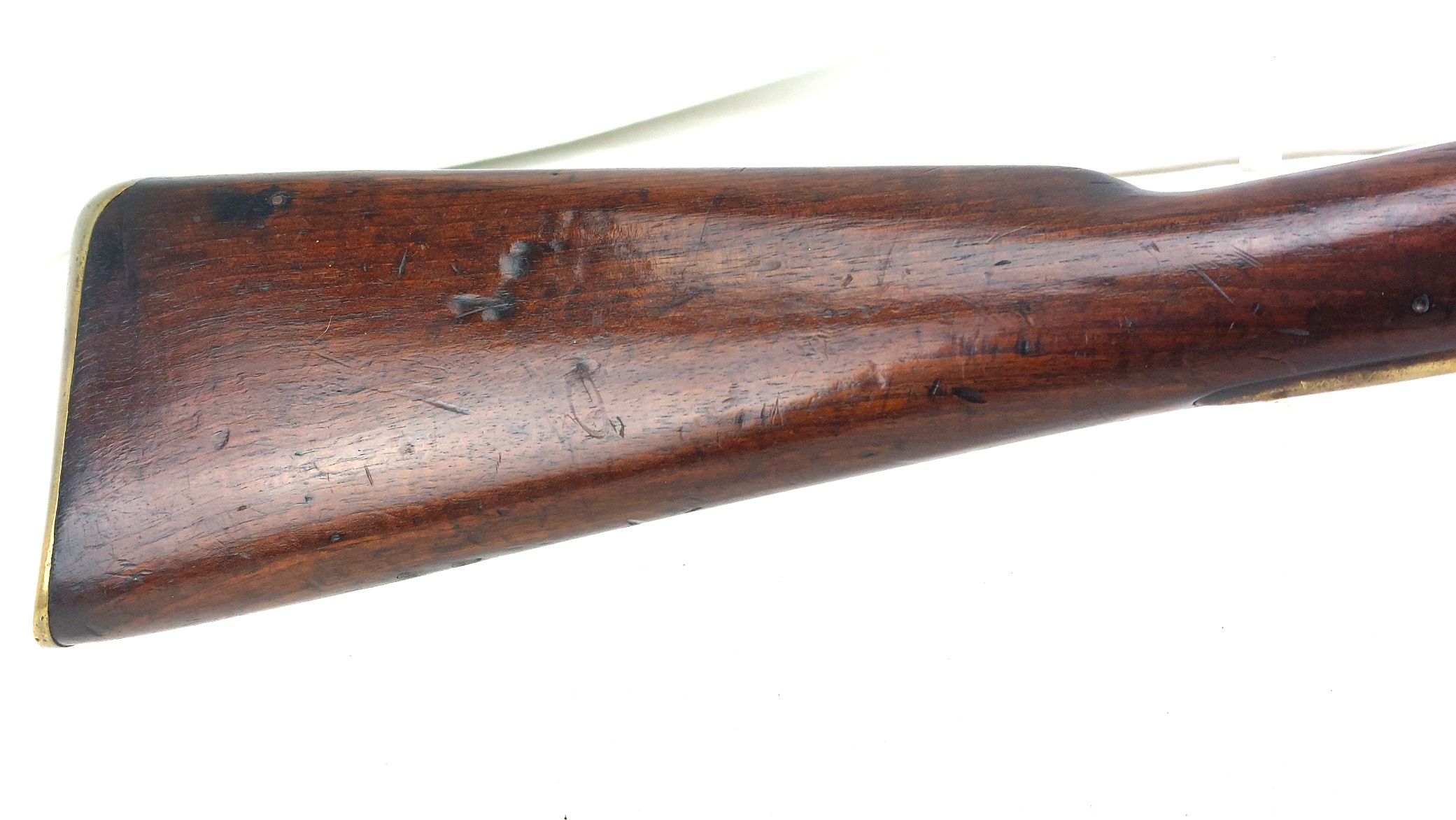
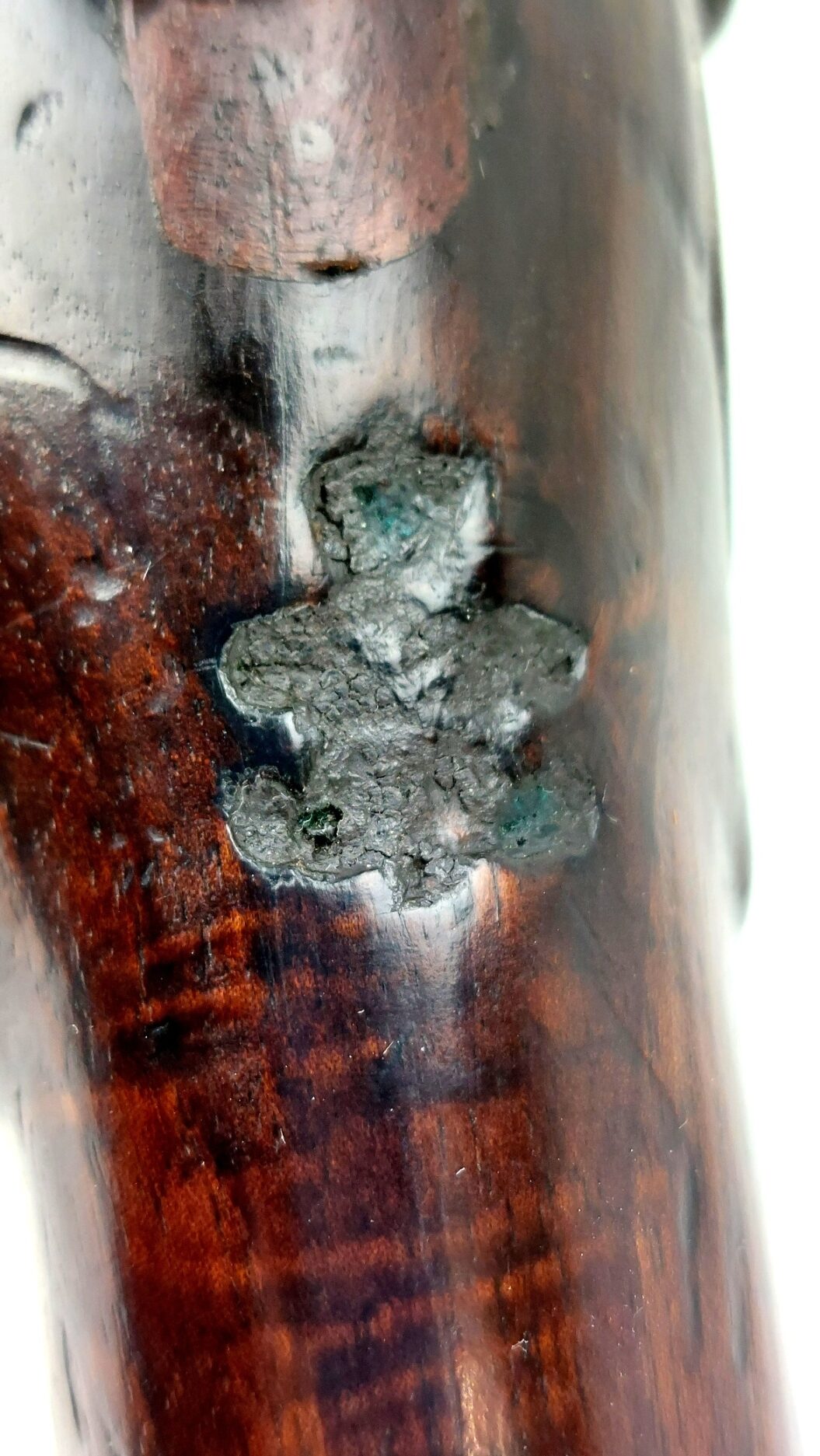
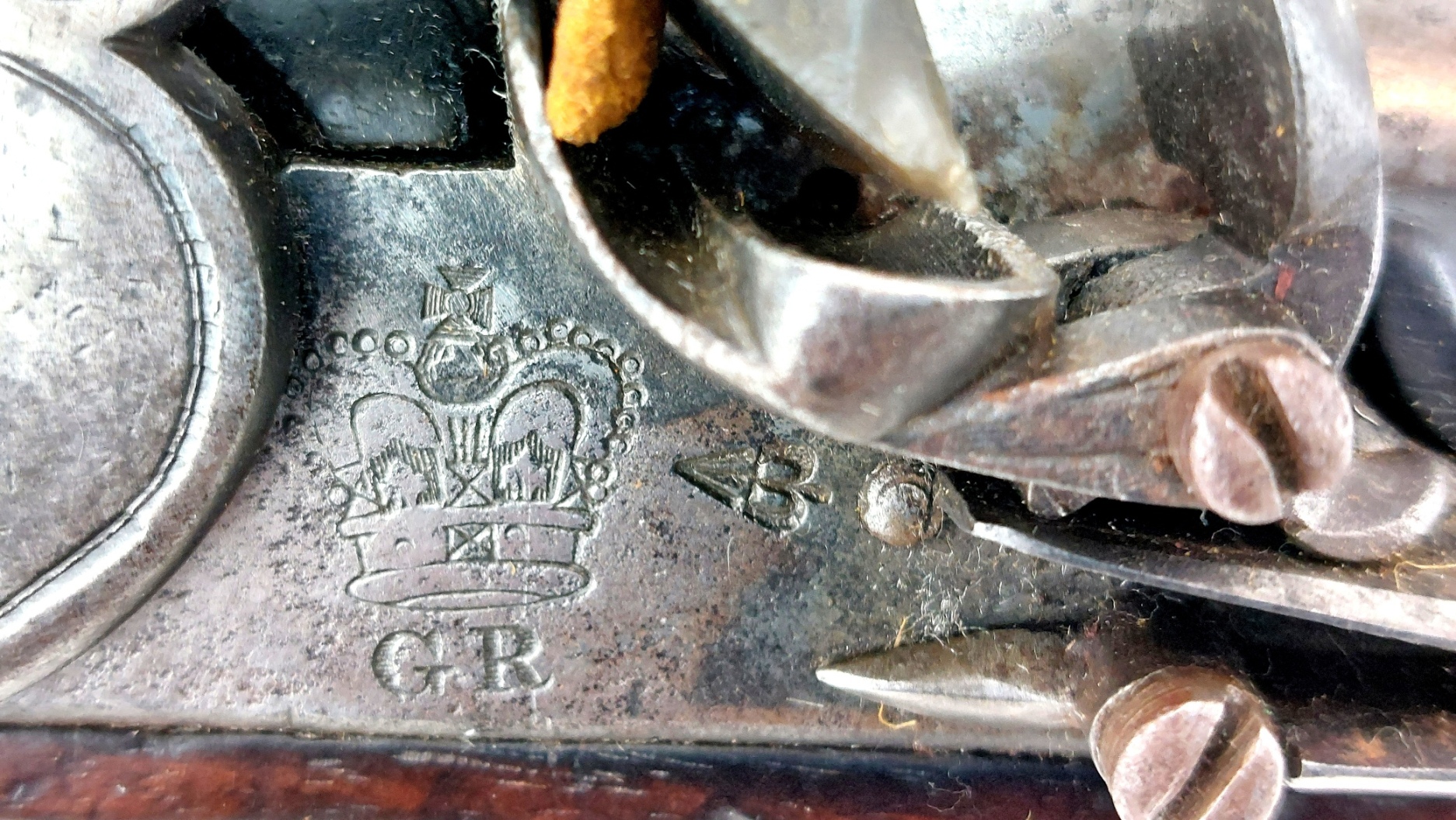
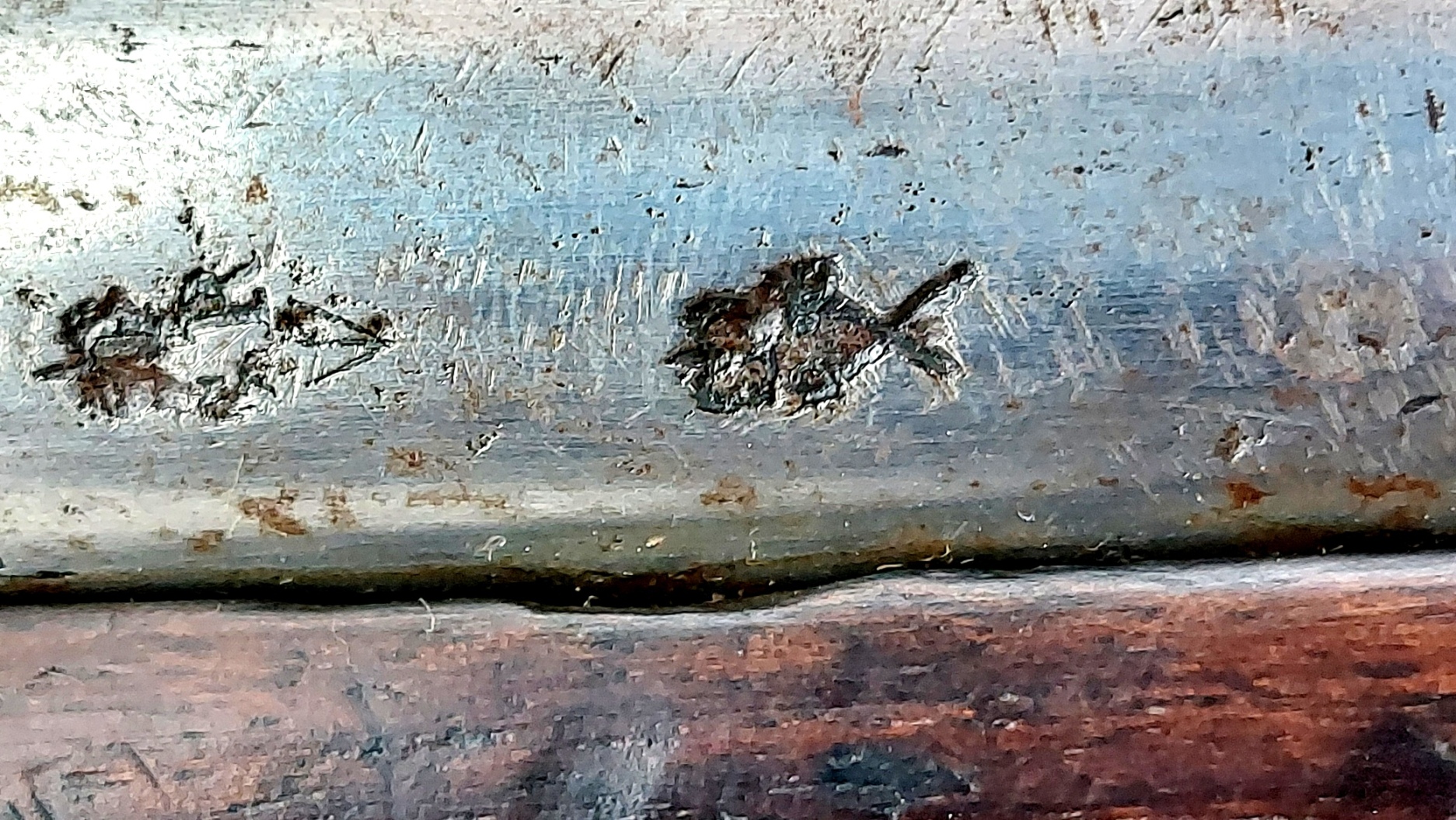
The lock is additionally stamped with Crown over GR and broad arrow, consistent with British government service arms of the Napoleonic period. The barrel bears British ordnance inspection marks, including a Crown over GR and crossed flags proof, visible near the breech. The stock shows an impressed oak leaf inspection mark to the rear. The carbine is fitted with the correct swivel ramrod, a defining feature of the Paget design intended to prevent loss during mounted service.
Approx. Measurements – Overall length: 79 cm. Barrel length: approx. 40 cm (c.15.5–16 in).
Historical Note:
The Paget carbine was developed during the opening years of the 19th century as an improvement on earlier British cavalry carbines such as the Elliot and 1796 patterns. Its most distinctive feature was its very short barrel, approximately 16 inches, which made the weapon significantly easier to load from horseback. The addition of a swivel ramrod addressed one of the greatest failings of earlier carbines: the frequent loss of the loading rod, which rendered a firearm useless in the field.
The design was championed by Lord Henry Paget, Earl of Uxbridge (later Marquis of Anglesey), Wellington’s cavalry commander during the Peninsular War and at Waterloo. While Paget’s personal involvement in the technical design is debated — the gun is often attributed to Henry Nock — the weapon became universally known as the Paget carbine.
The pattern is generally believed to have been introduced around 1805–1806, with widespread issue occurring from 1808 onwards. By the time of the Battle of Waterloo in 1815, Paget carbines were in extensive service with British light cavalry regiments, including light dragoons and hussars. They were intended primarily for defensive use when dismounted, such as guarding horses or holding ground, rather than accurate fire from the saddle. Although fast to load, the short smoothbore barrel limited accuracy and effective range, especially when fired with standard paper cartridges. Later examples experimented with slightly longer barrels in an effort to improve performance.
It was used extensively by British light cavalry regiments, including Light Dragoons and Hussars, during the Peninsular War and at Waterloo. Following the Napoleonic Wars, large numbers of Paget carbines were sold out of British service. In 1826, over 15,000 examples were exported to Mexico, where they saw extensive use, including during the Texas War of Independence, at the Battle of the Alamo, and later during the Mexican–American War (1846–1848). As a result, original British-retained examples are now significantly scarcer than their original production numbers might suggest.
*Condition*
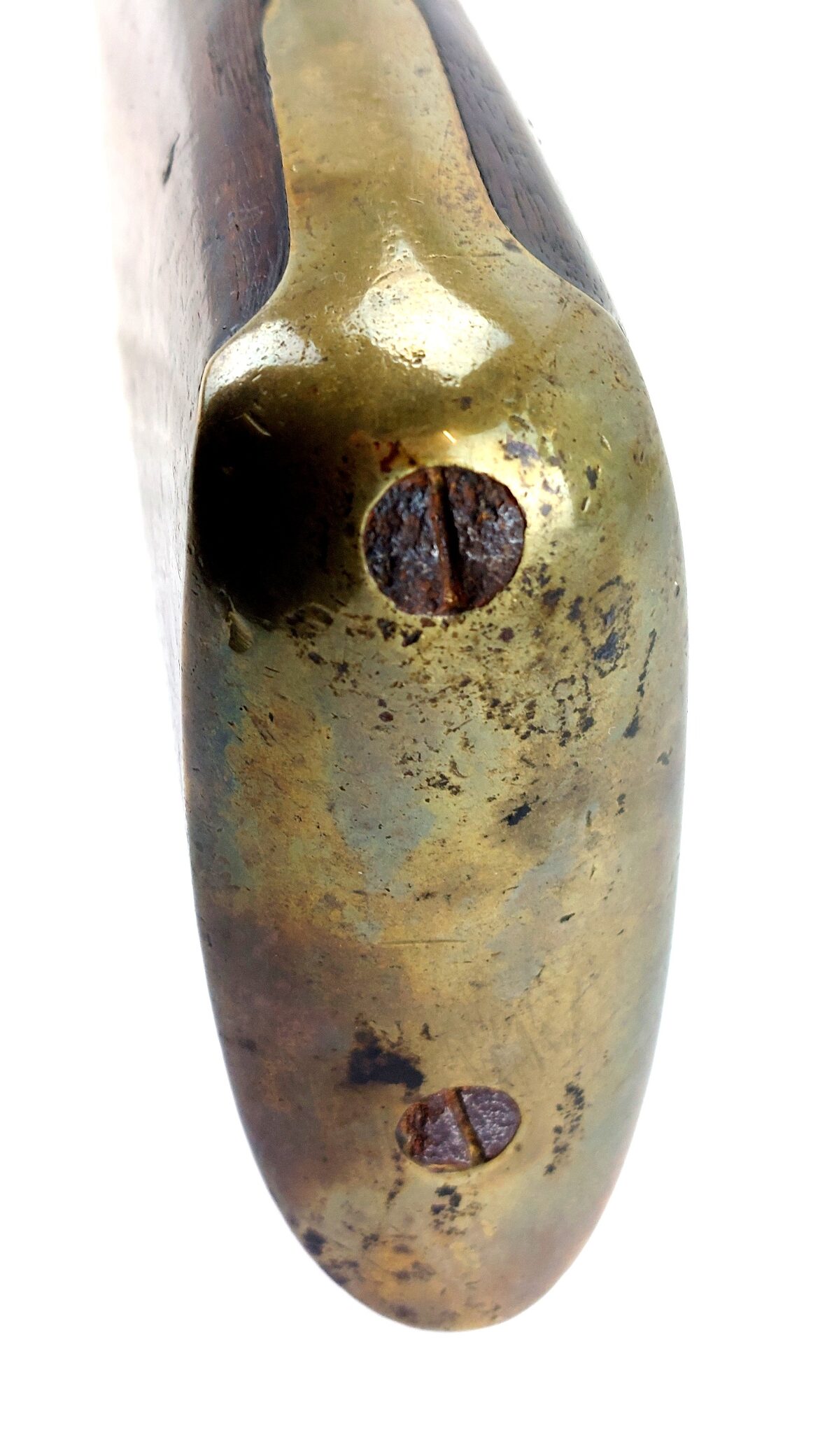
Overall very good condition. An honest, service-used example displaying minor expected wear throughout. The metal surfaces show some scattered oxidation, pitting, and age-related wear consistent with early 19th-century military use, particularly to the barrel and breech area. Lock markings remain legible, with clear Crown GR and Tower stamp. The stock shows handling marks, all in keeping with long service life. Brass furniture displays a dark, untouched patina with minor corrosion around screw heads. The swivel ramrod remains present. Overall, a sound and historically appealing Paget carbine with great patina, strong character and authenticity. Please see photographs as part of the condition report.
£1,500.00Original price was: £1,500.00.£1,100.00Current price is: £1,100.00.
Important!
*In order to complete the online purchase we will require a picture/scan of a photo ID (Driving Licence, Passport or an official document with a recent picture). If you don't posses any such document please call to buy. If we consider that the proof of ID is incorect or insuficient, we reserve the right to cancel the transaction.
*We also reserve the right to cancel the transaction with a full refund if there is any suspicion that the provided item will be used in any way contrary to the laws and legislation of UK.