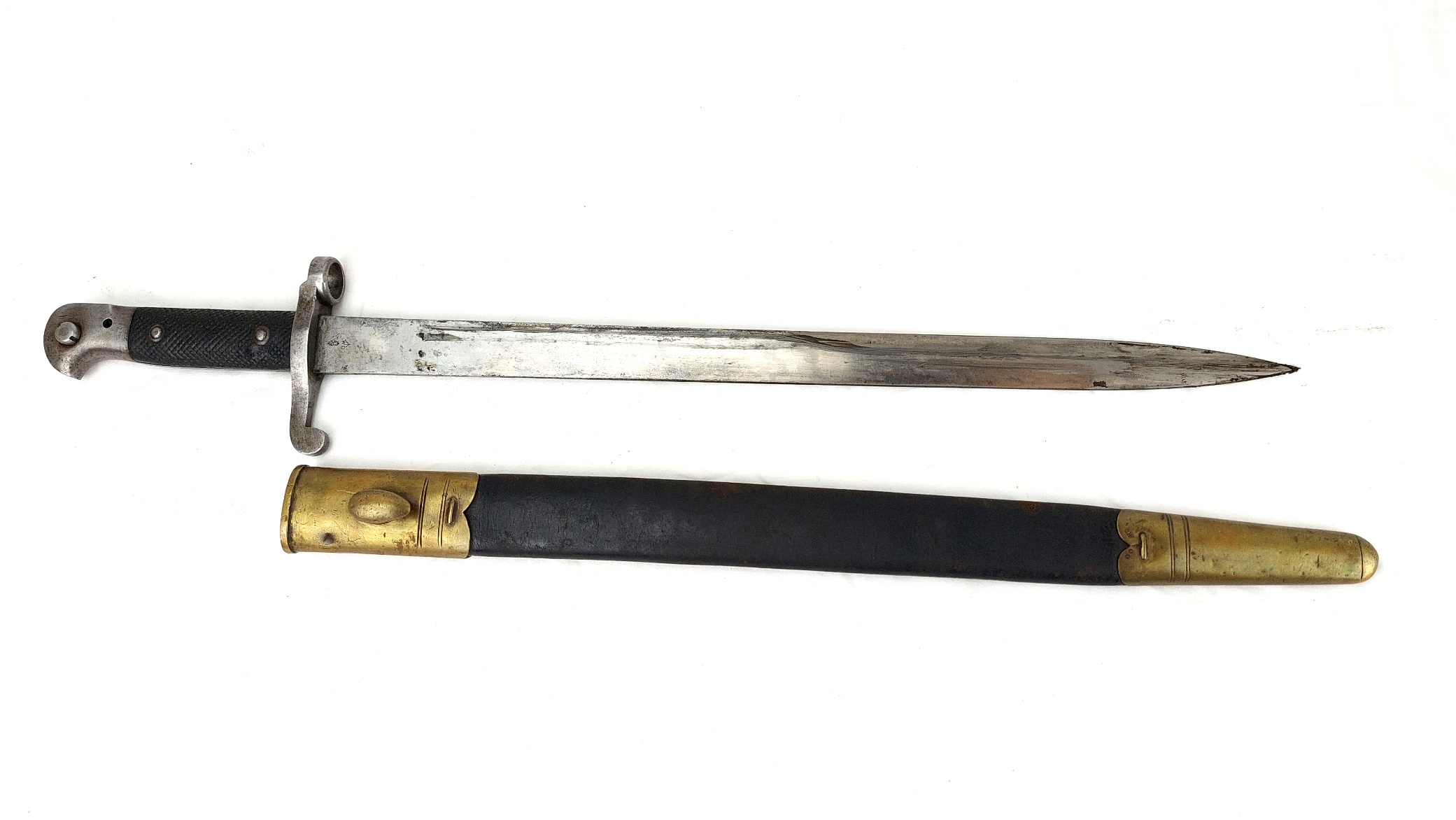
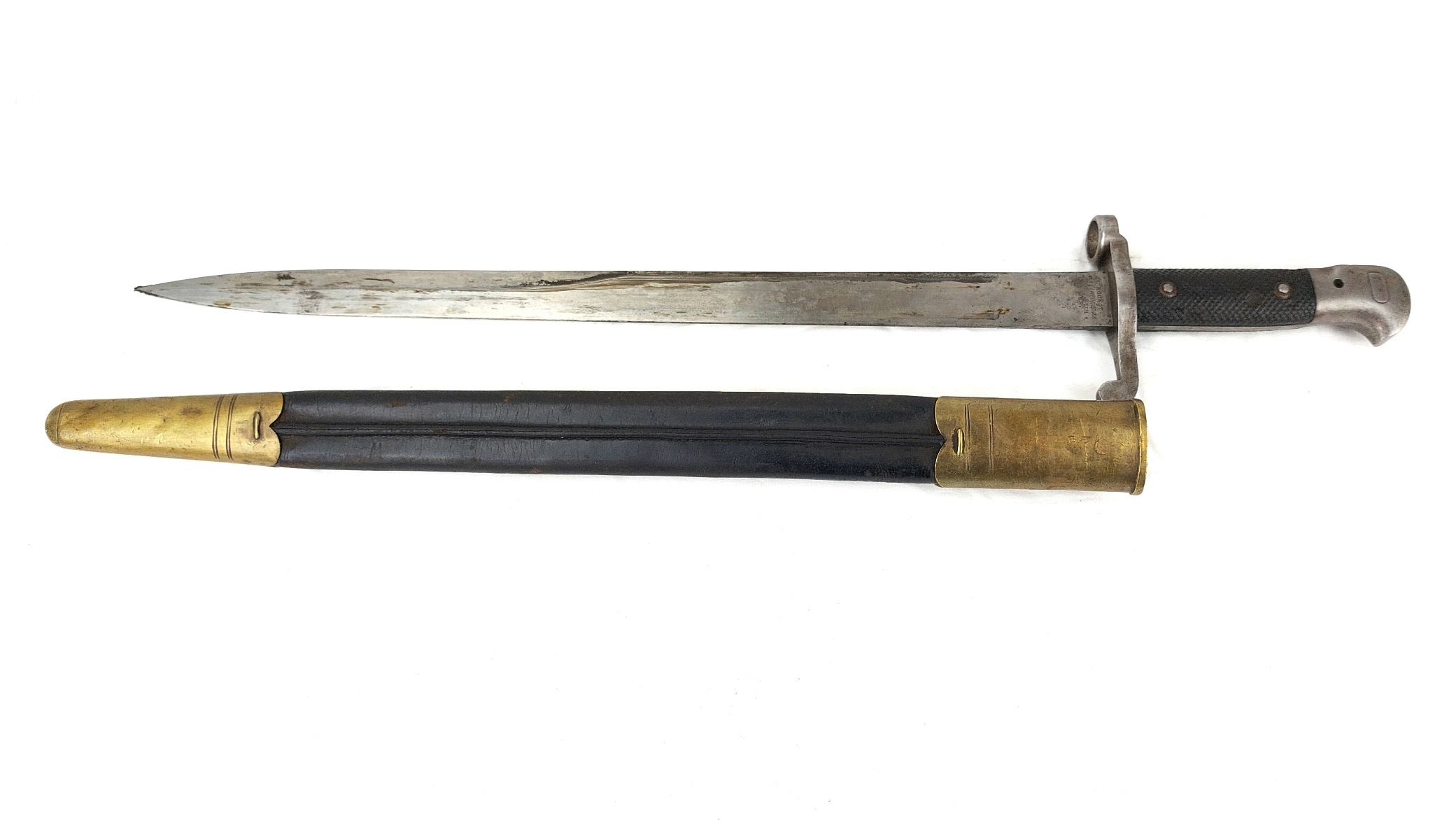
*British, Boer War-Dated 1889, Pattern 1887 Martini-Henry Sword Bayonet by Wilkinson, with Scabbard*
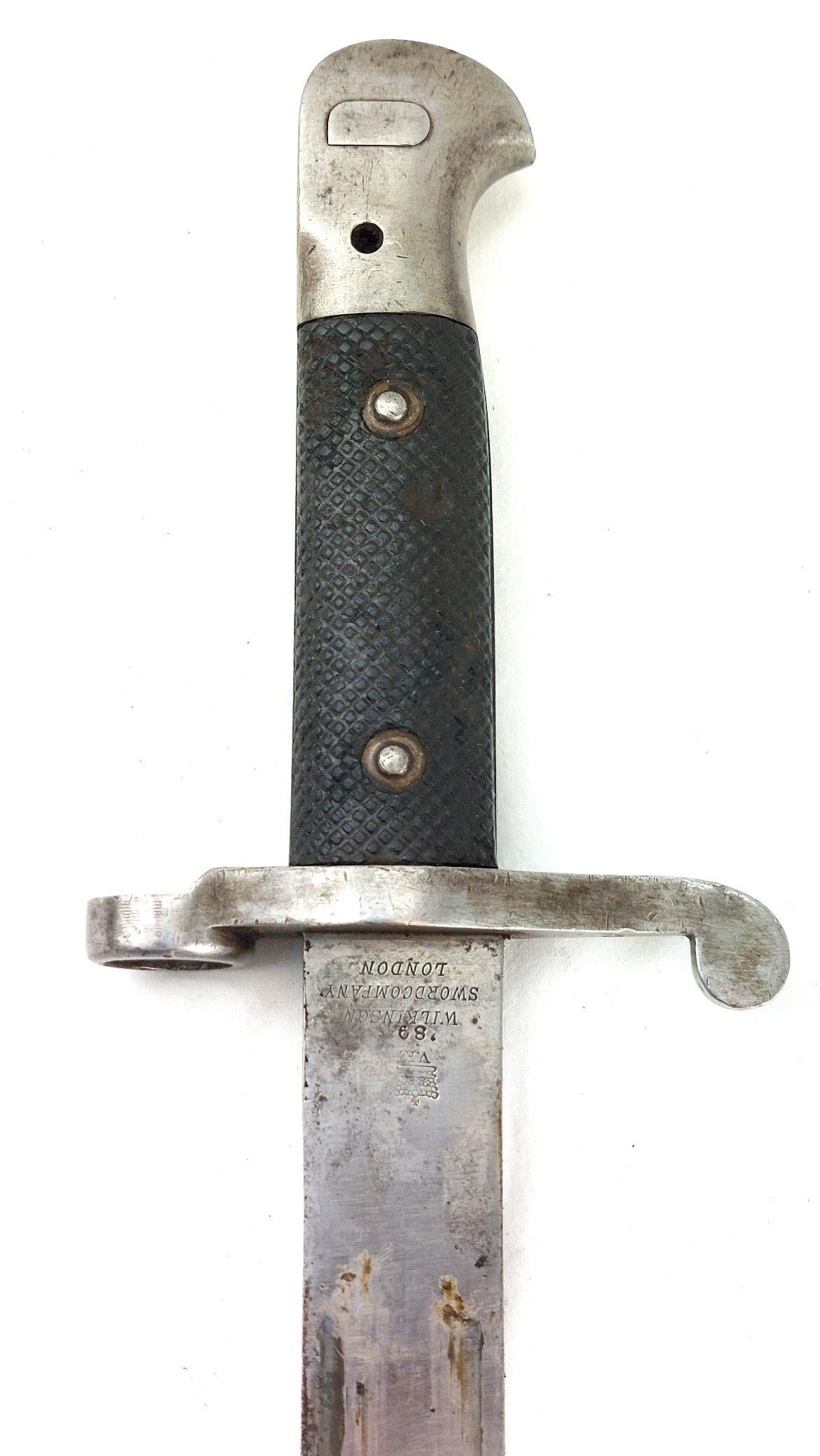
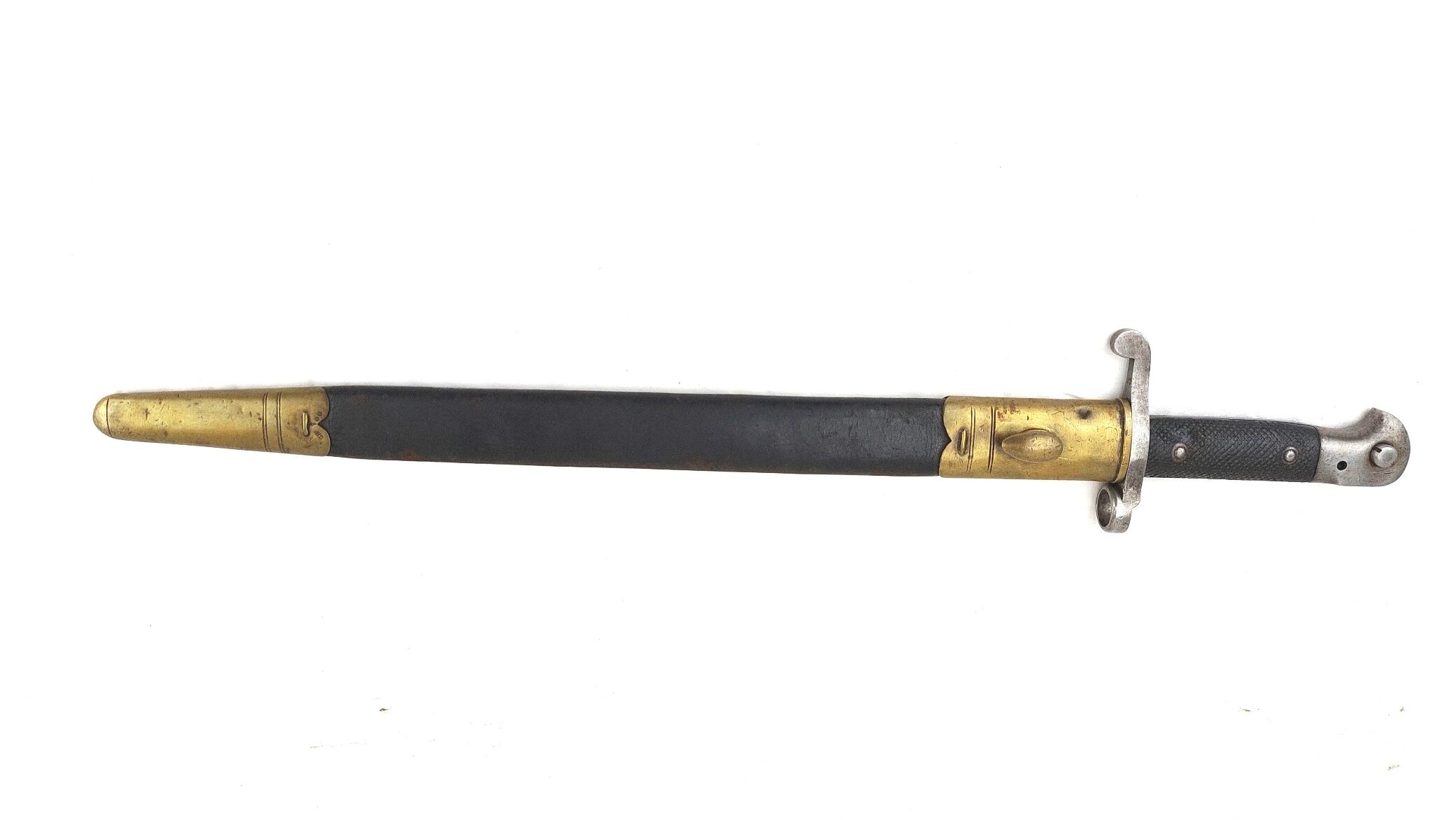
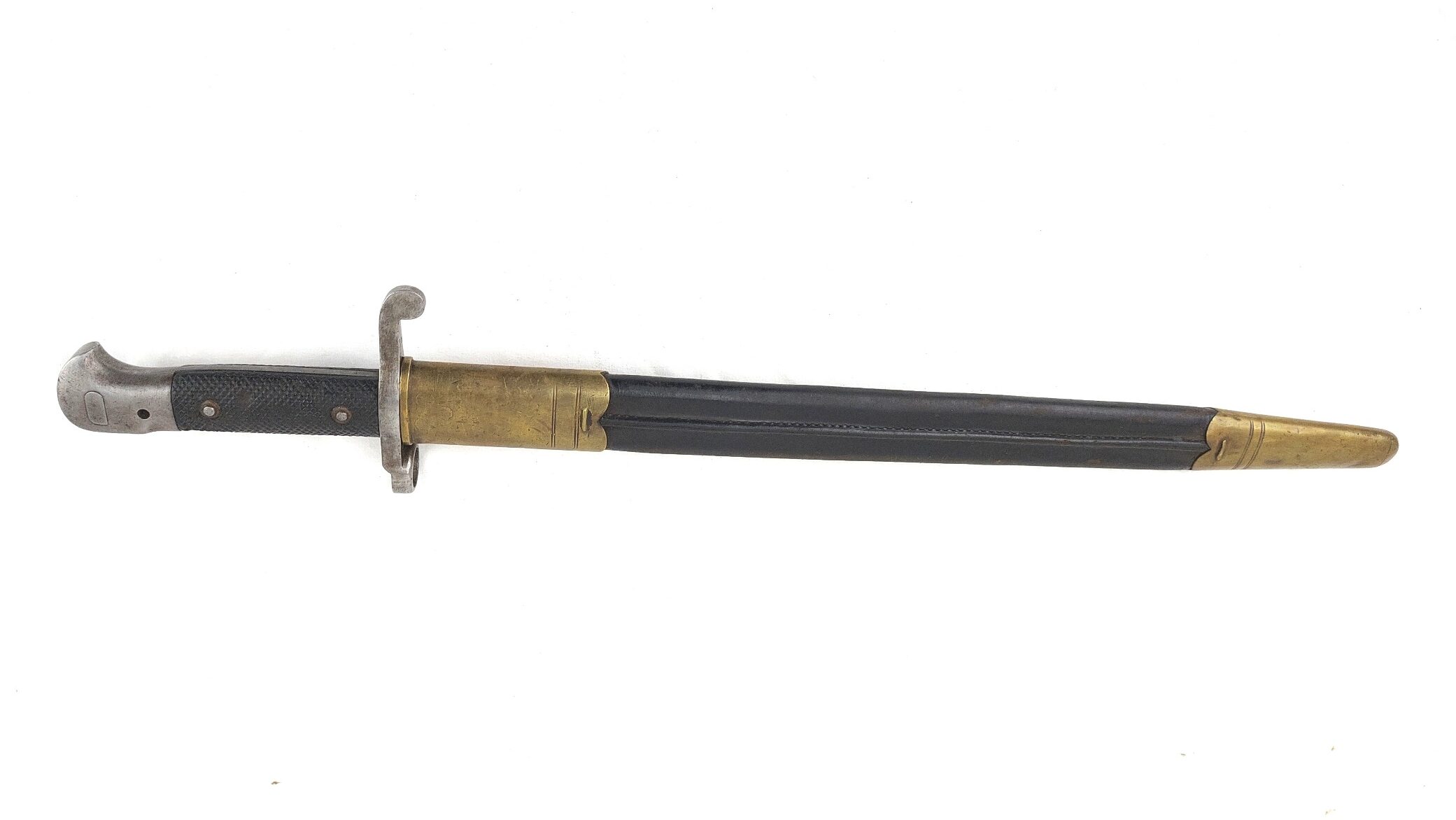
A fine and well-marked British Pattern 1887 sword bayonet for the Martini-Henry rifle, manufactured by the Wilkinson Sword Company and dated 1889. This pattern represented the final officially adopted sword bayonet for the Martini-Henry system and reflects late-Victorian infantry doctrine, which continued to value reach and cutting capability in bayonet combat.
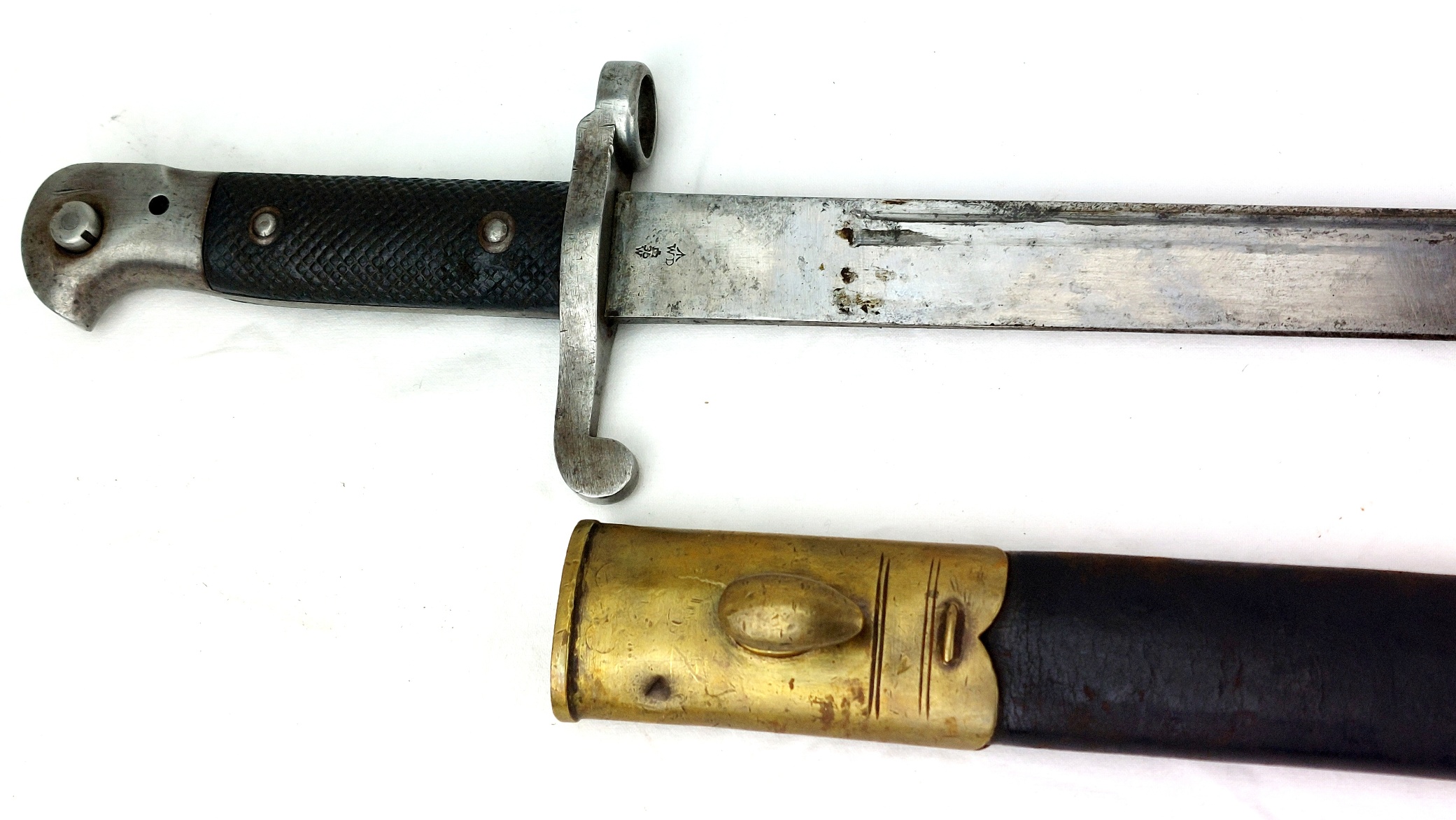
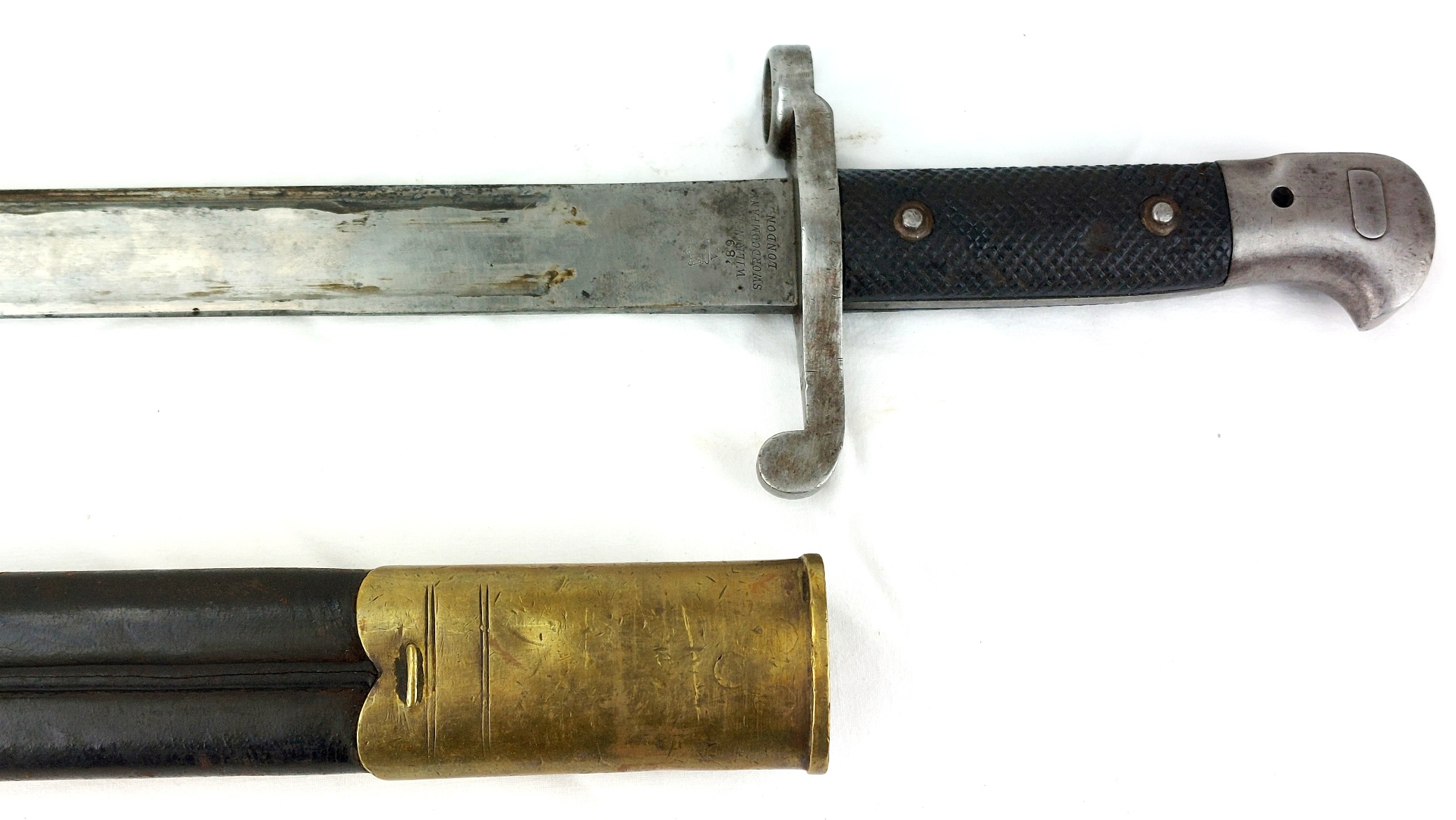
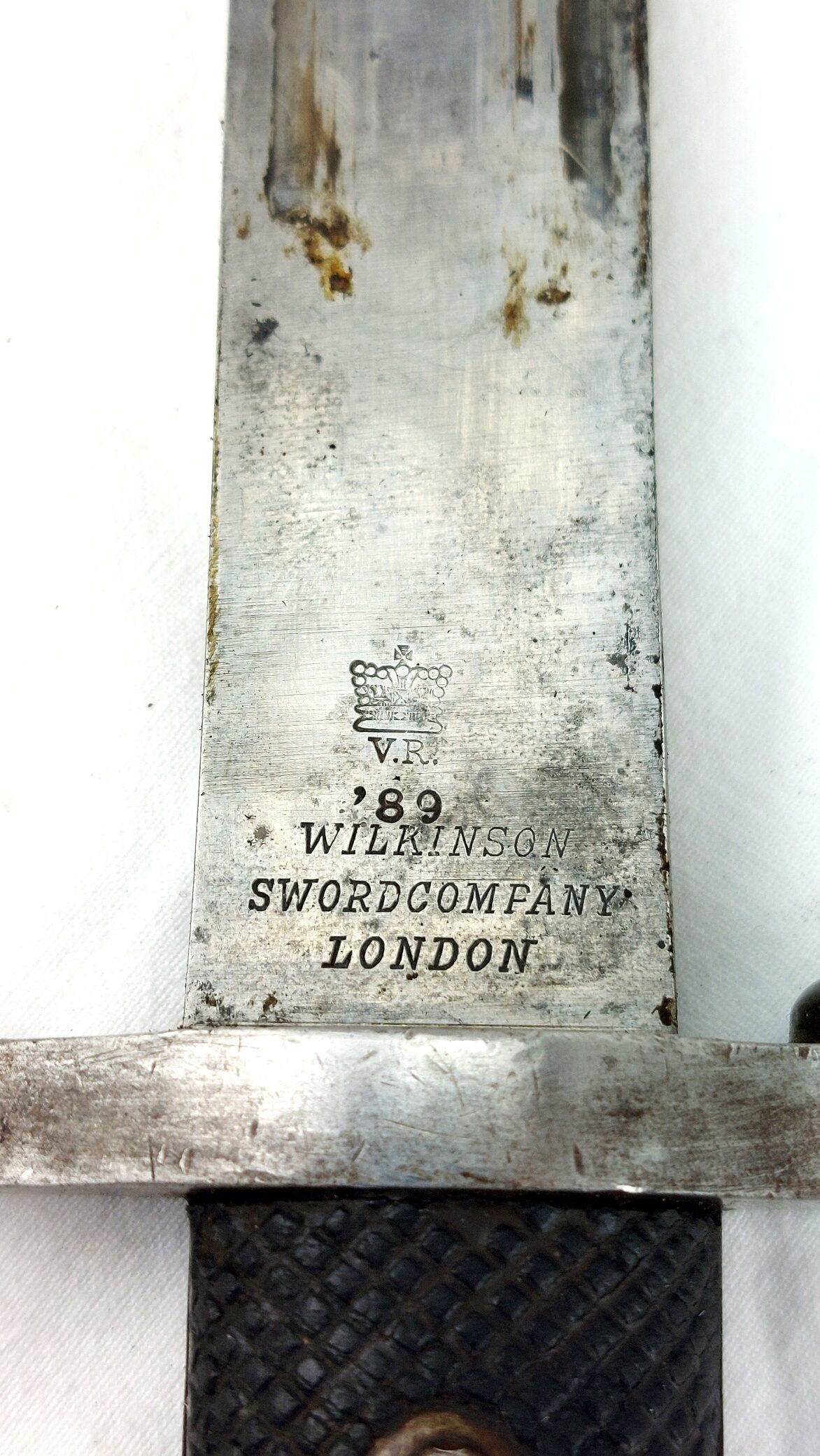
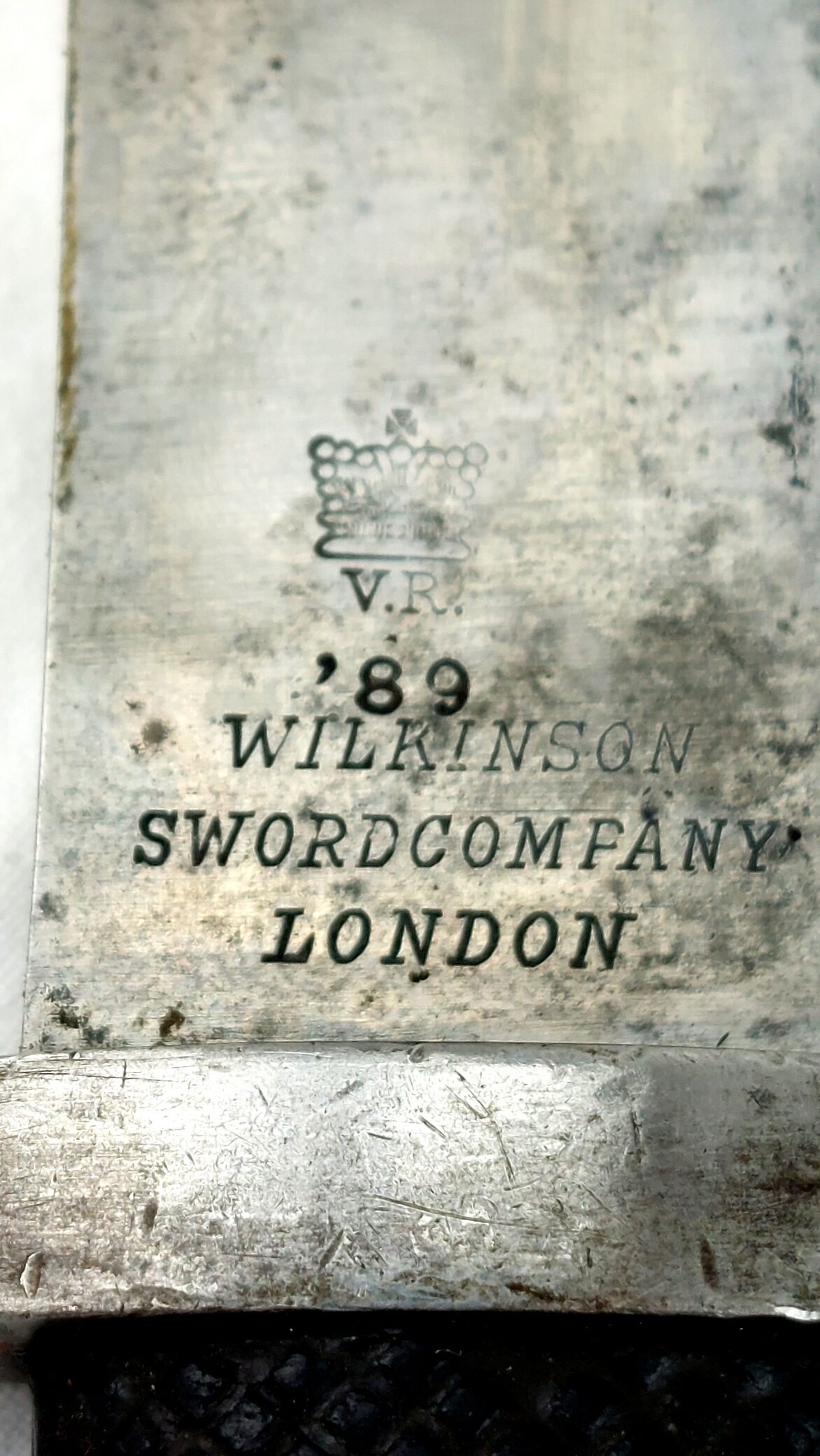
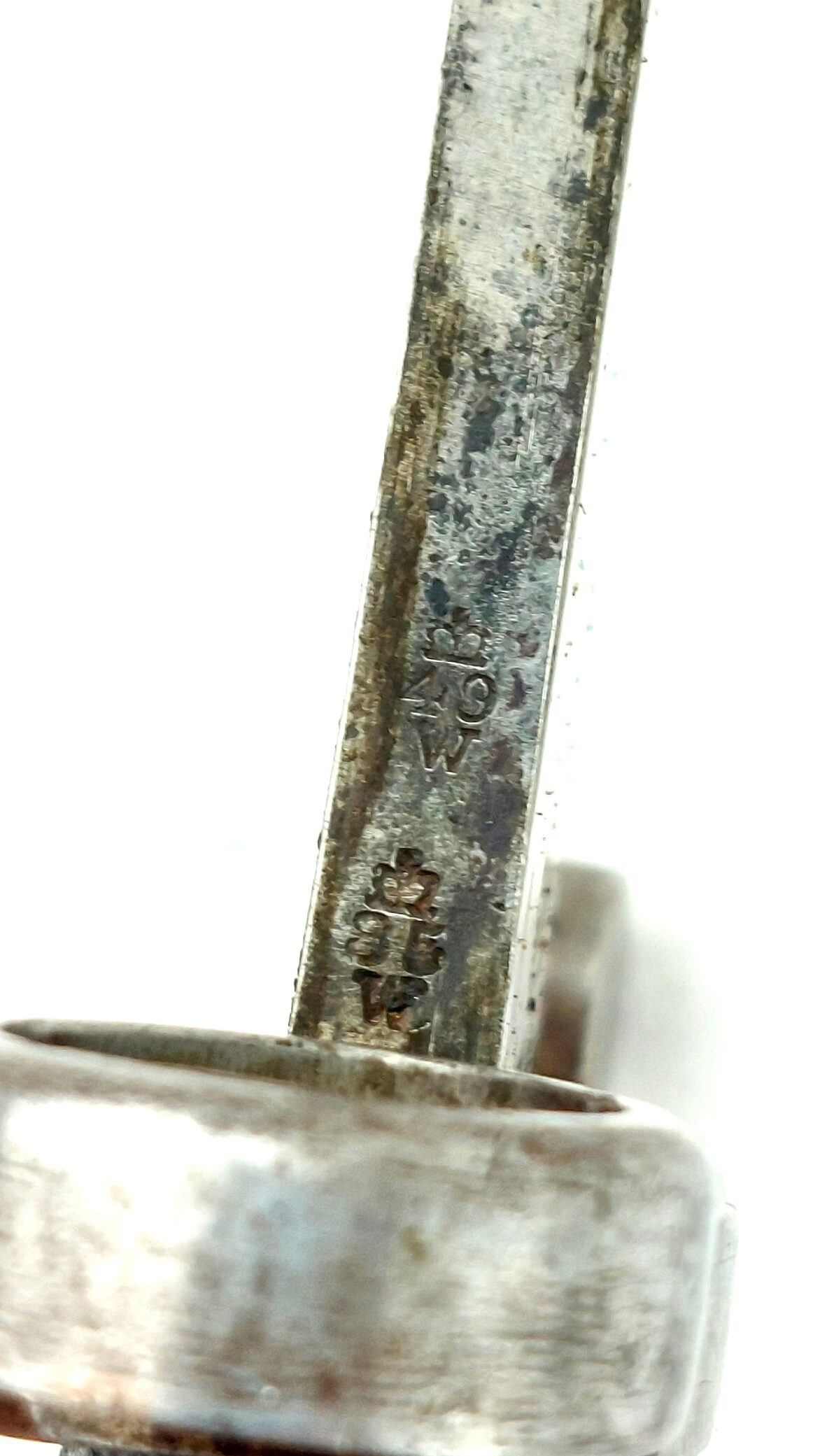
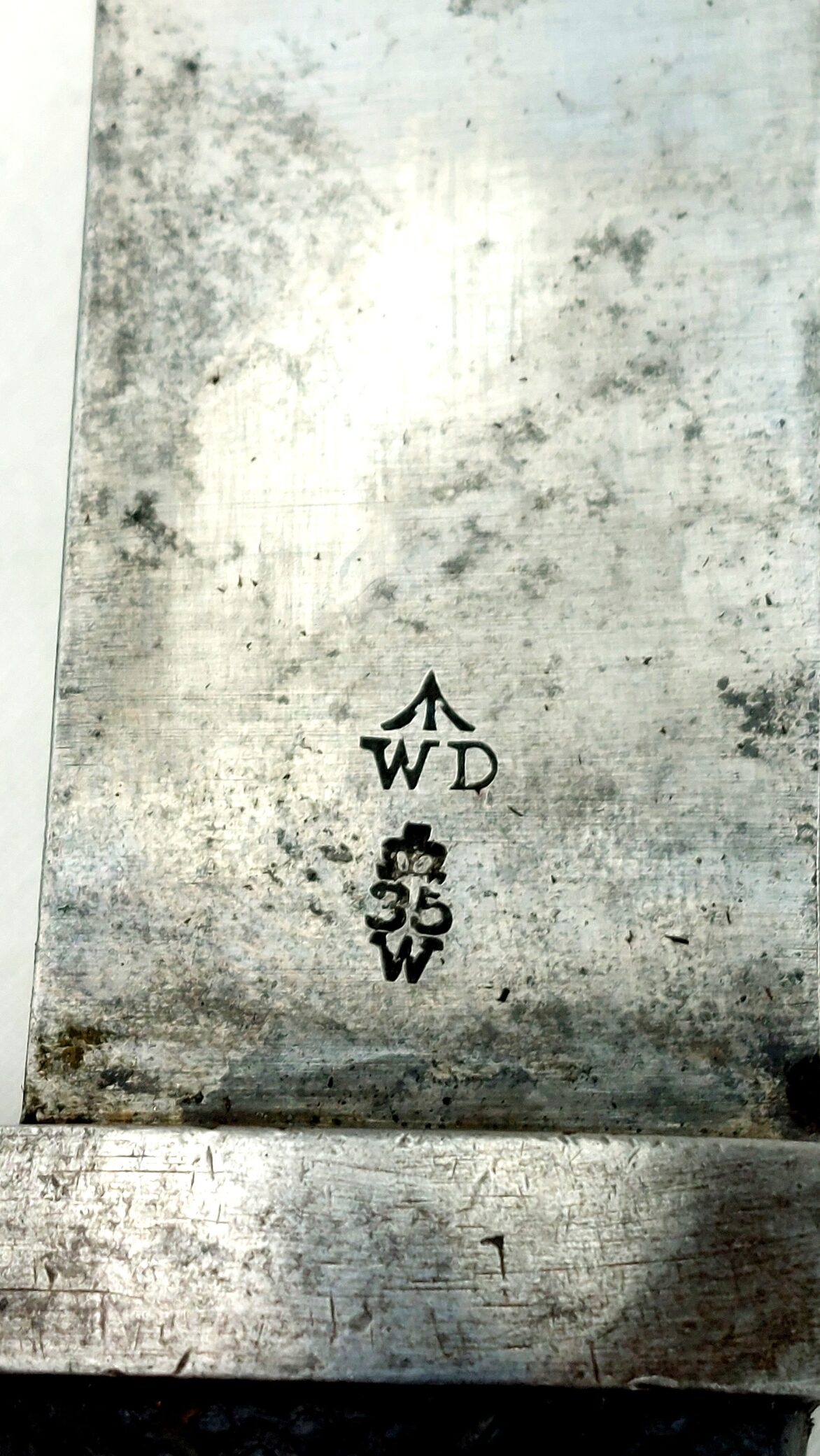
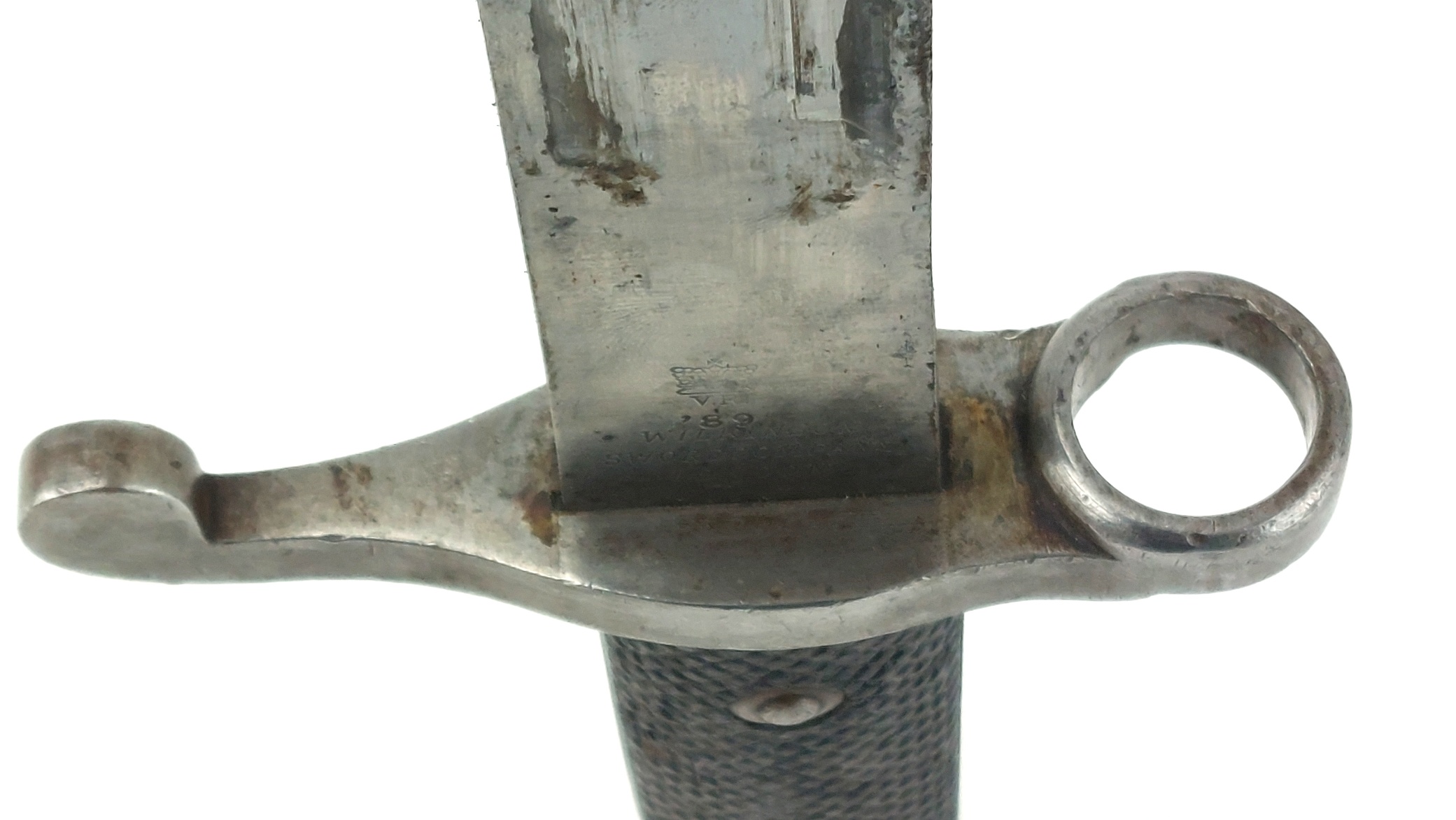
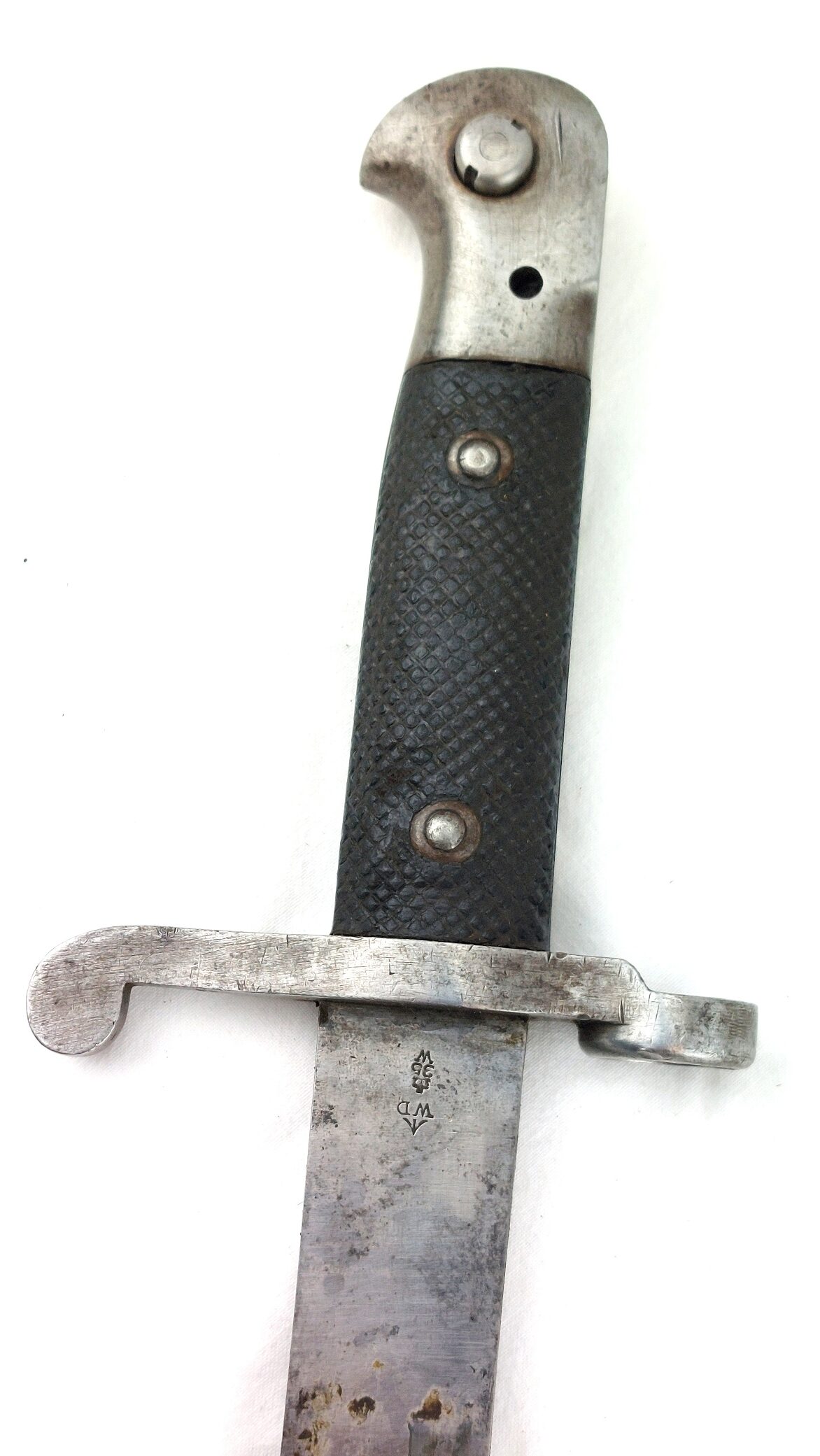
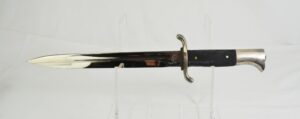
The long, unfullered blade retains clear ordnance and maker markings, including Crown over “VR,” the date “‘89,” and “WILKINSON SWORD COMPANY / LONDON” to the ricasso. Additional inspection and acceptance marks are present, including a broad arrow over “WD” for War Department ownership and multiple crowned inspection stamps incorporating the Wilkinson “W.”
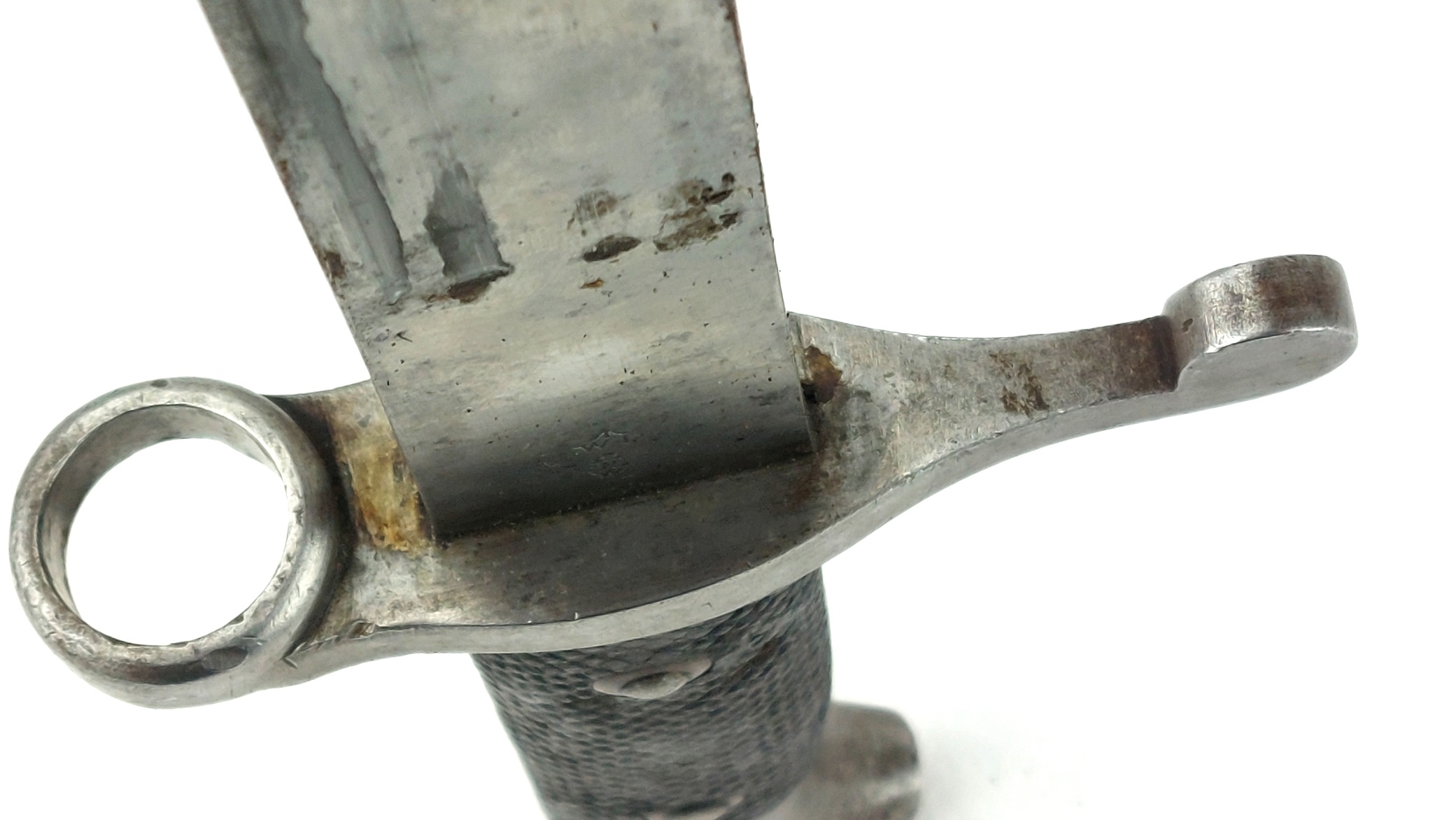
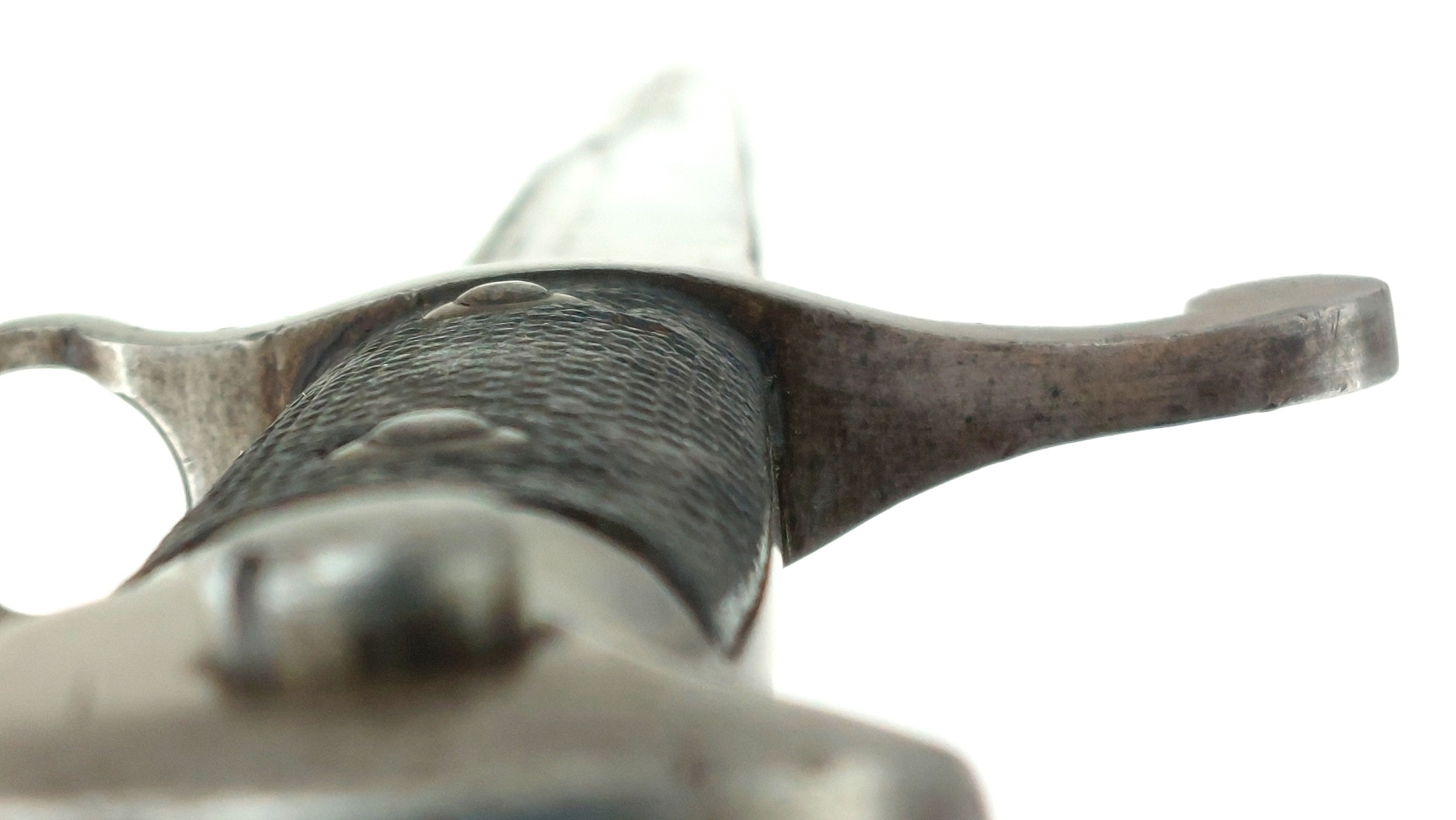
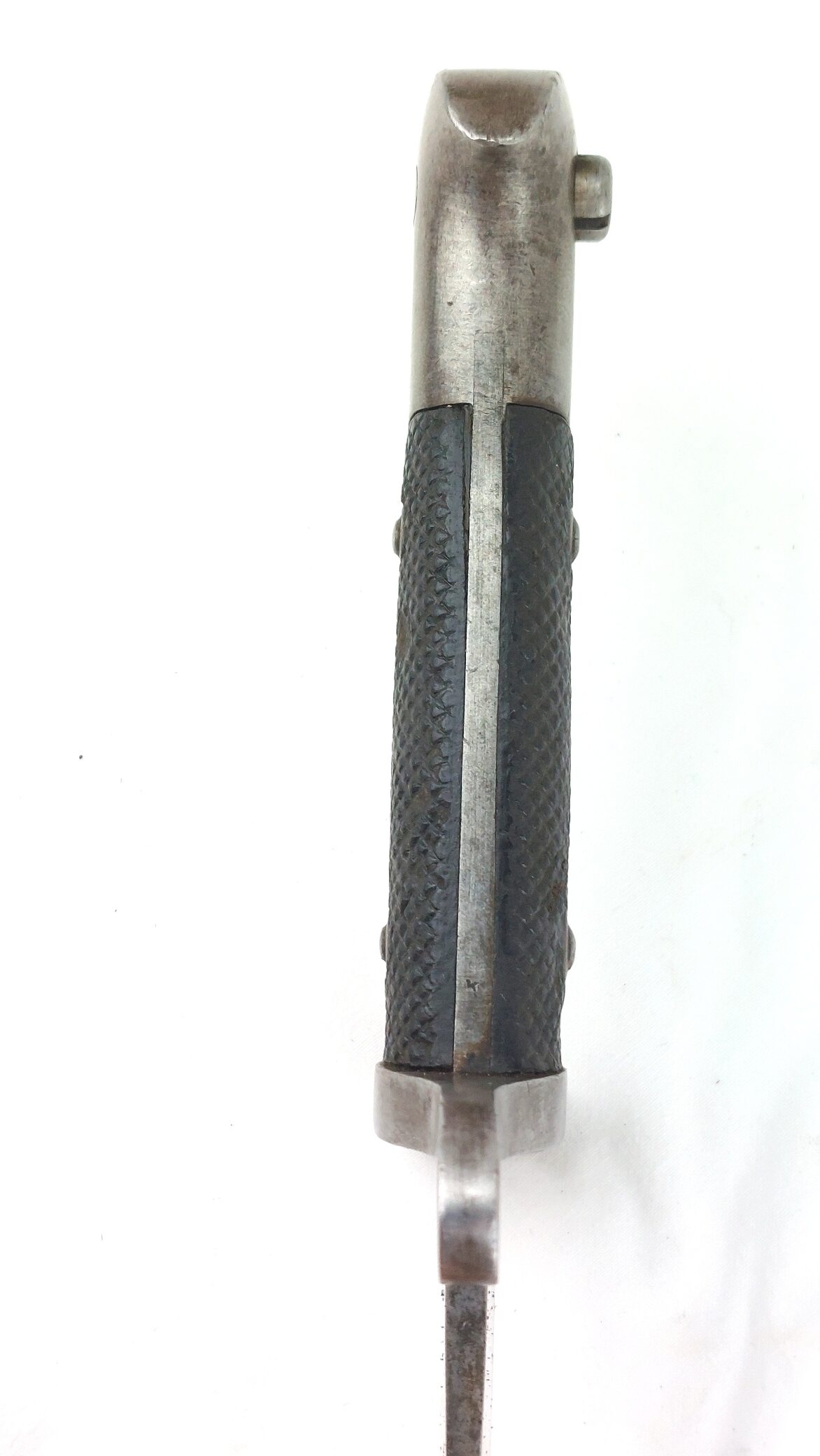
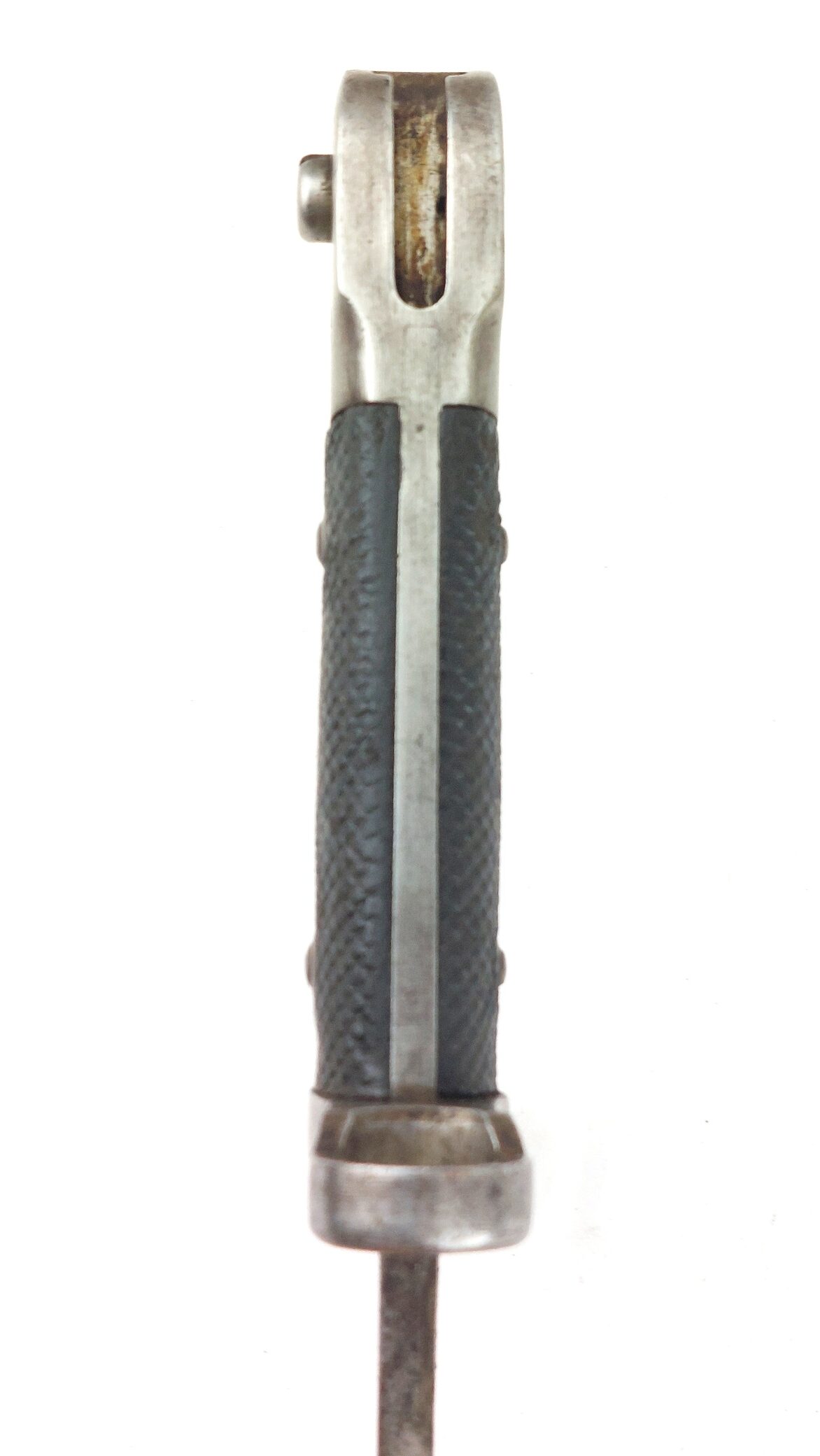
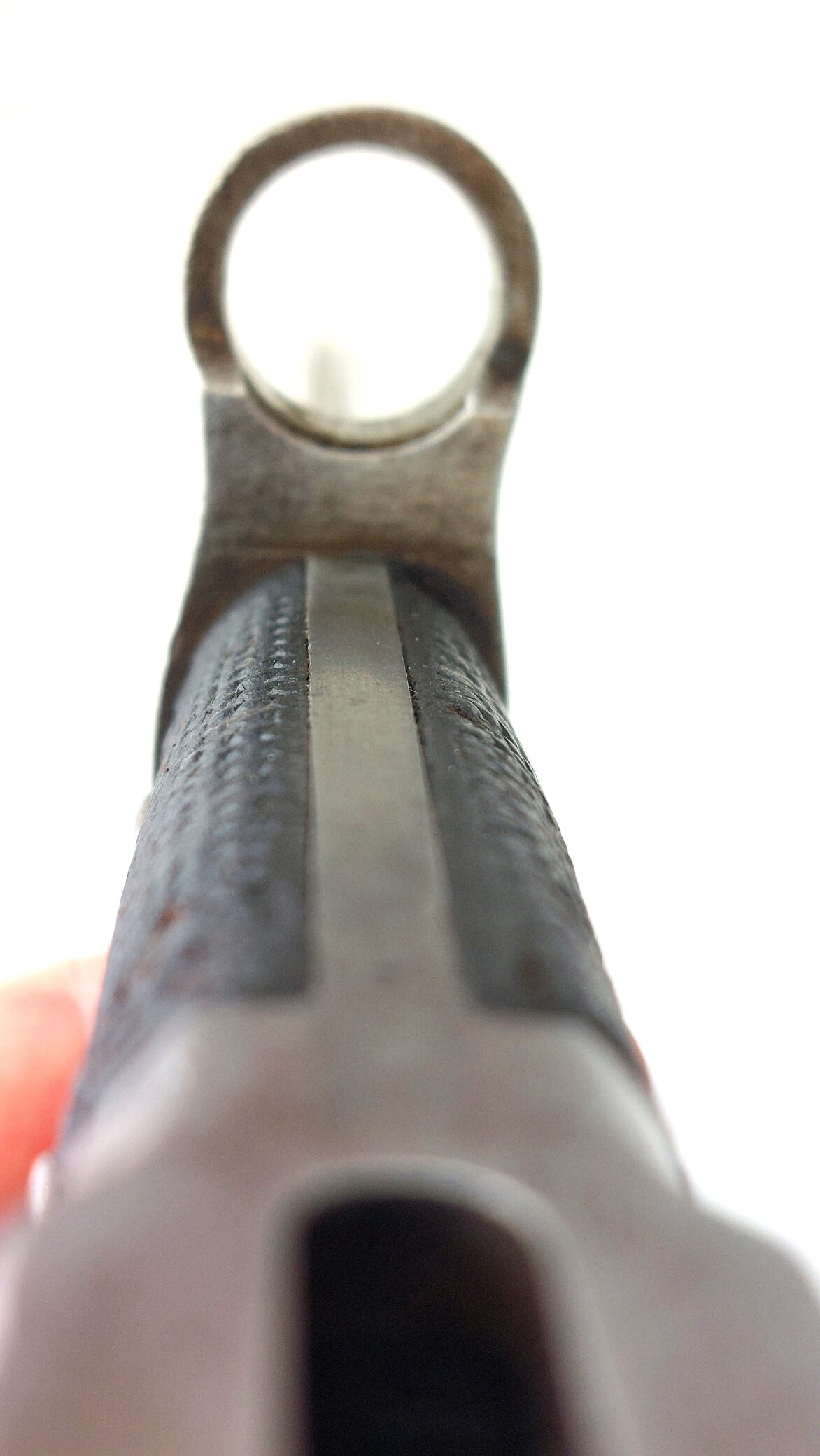
The bayonet features the correct stepped crossguard, two-piece chequered grip slabs secured by domed rivets, and the correct pommel with clearing hole, all consistent with Pattern 1887 manufacture.
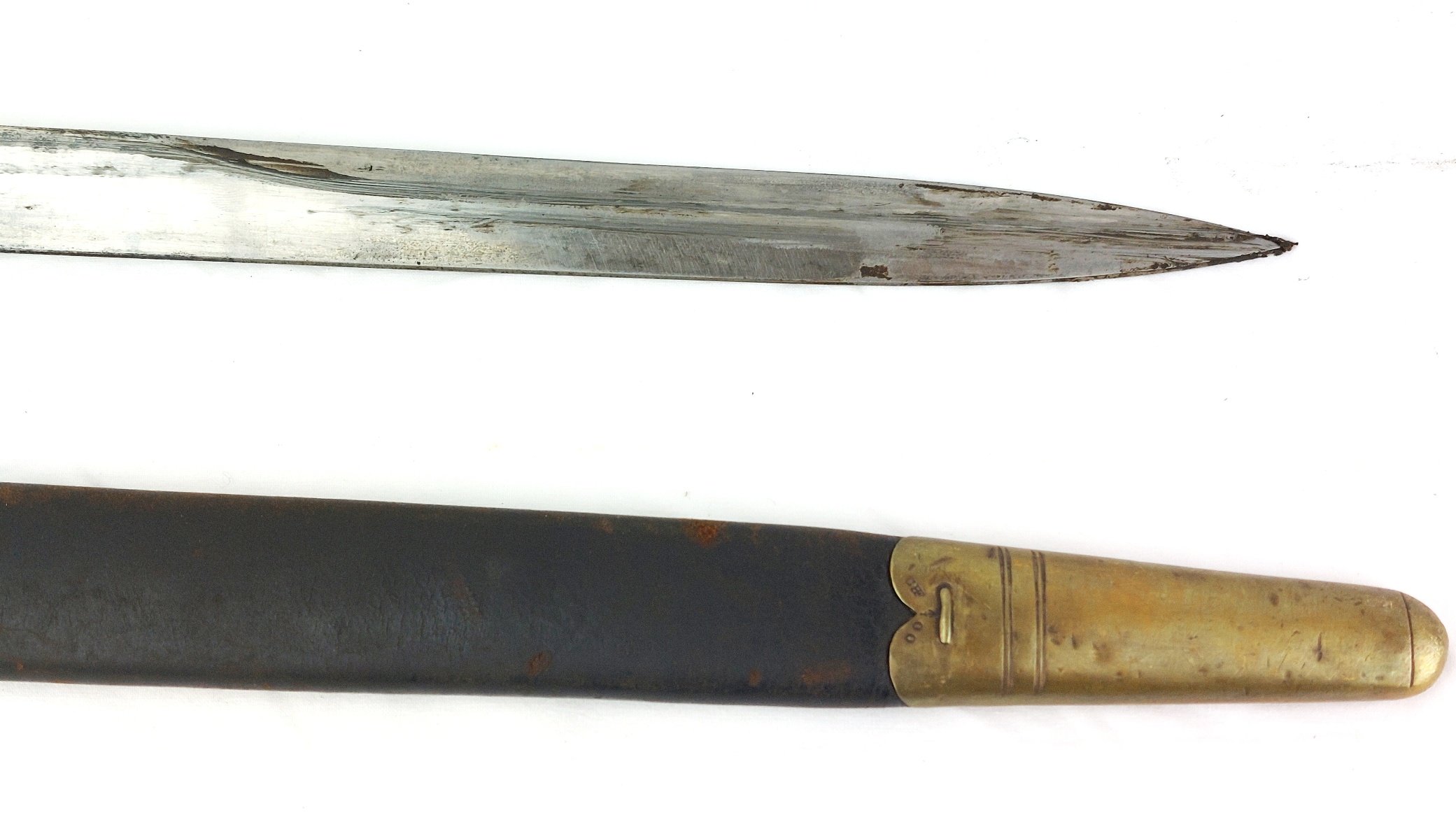
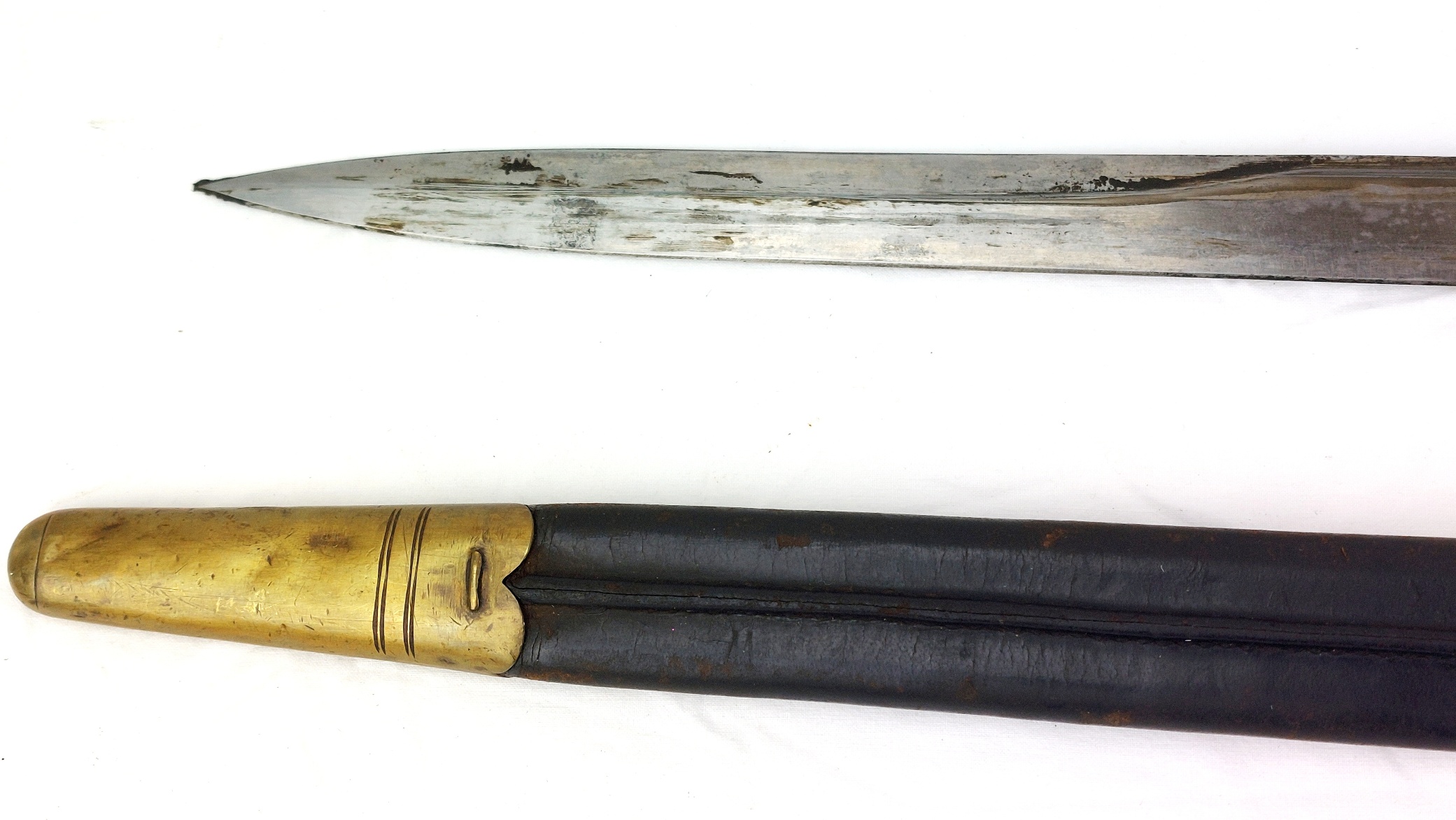
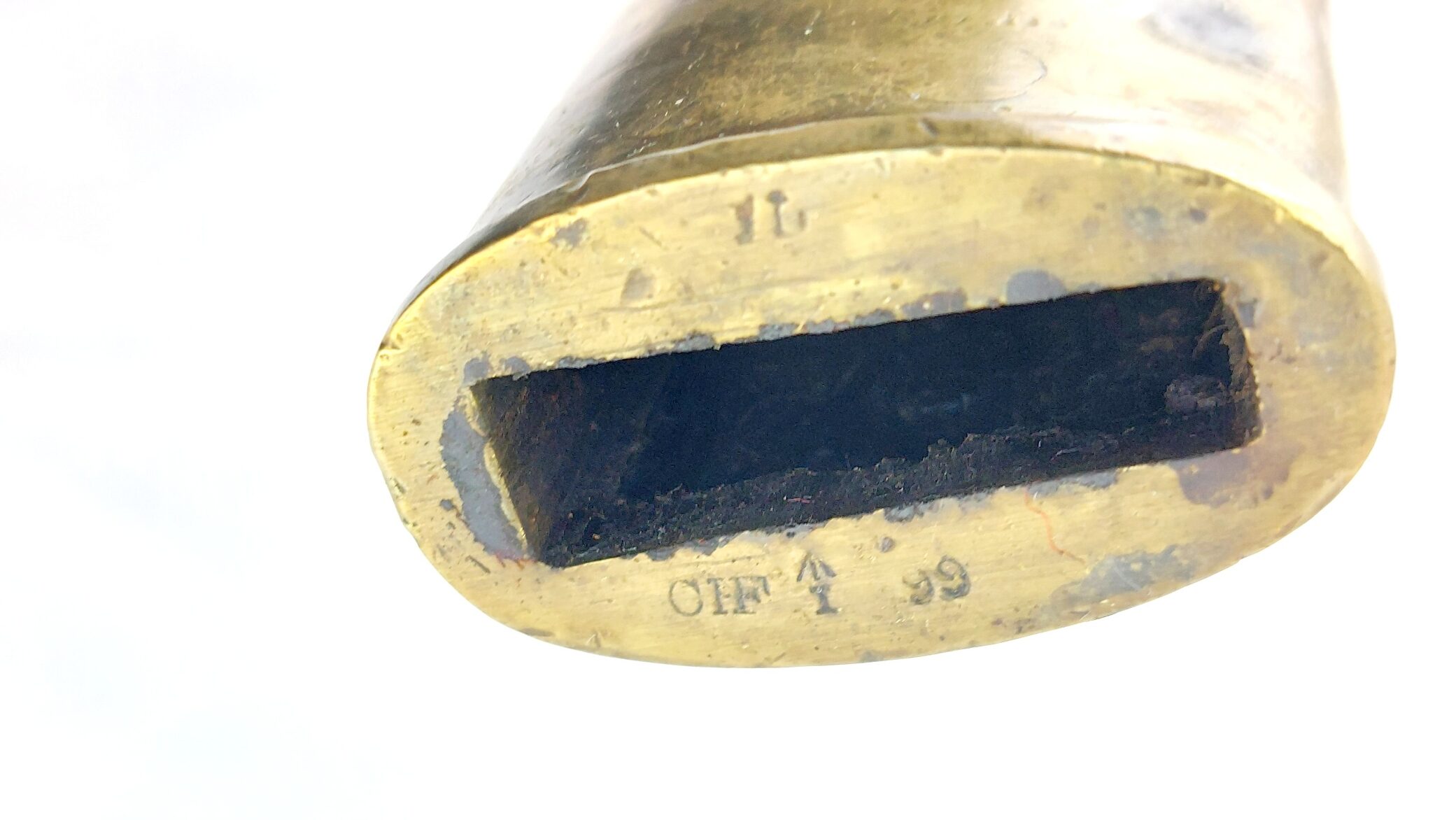
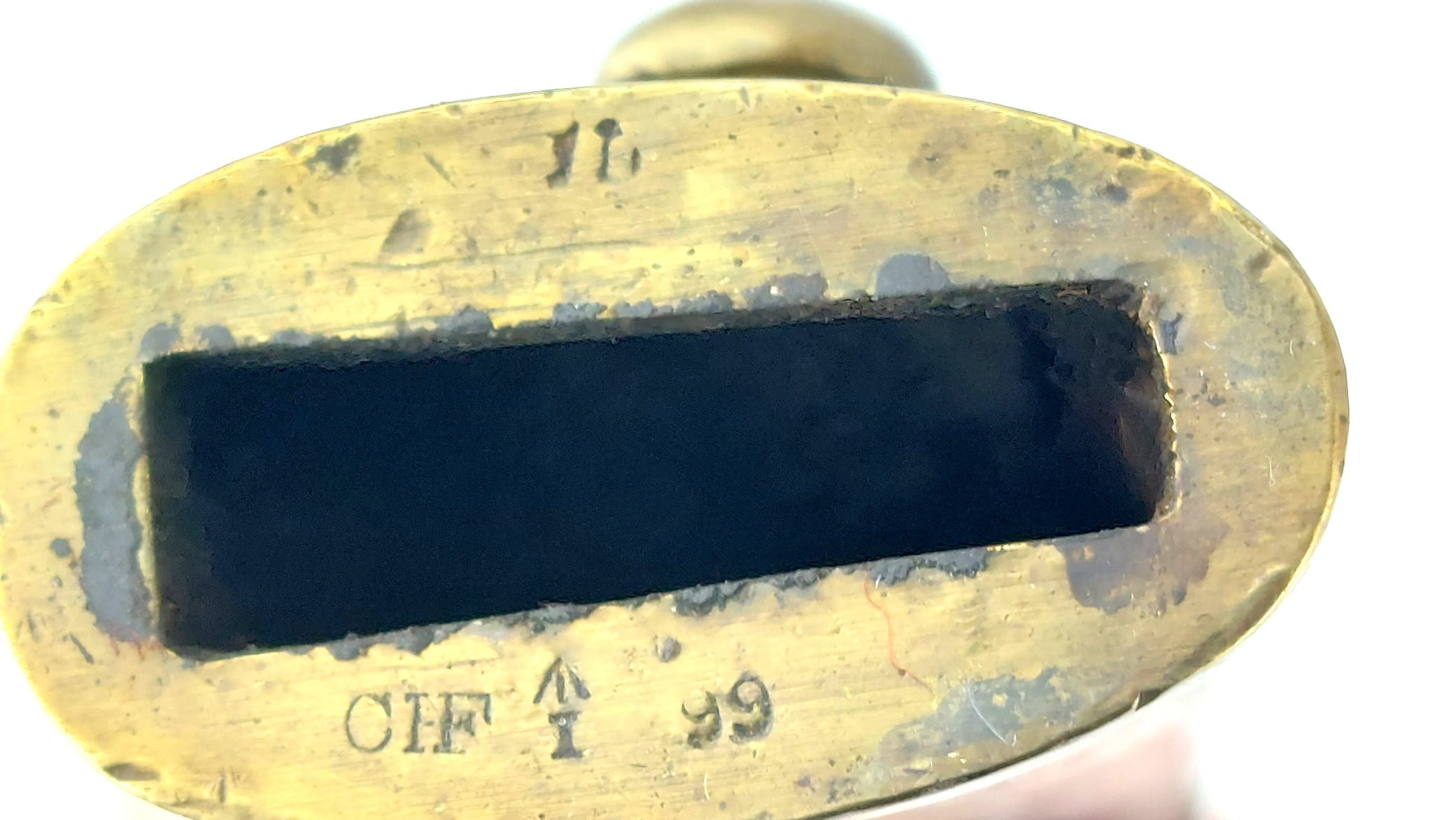
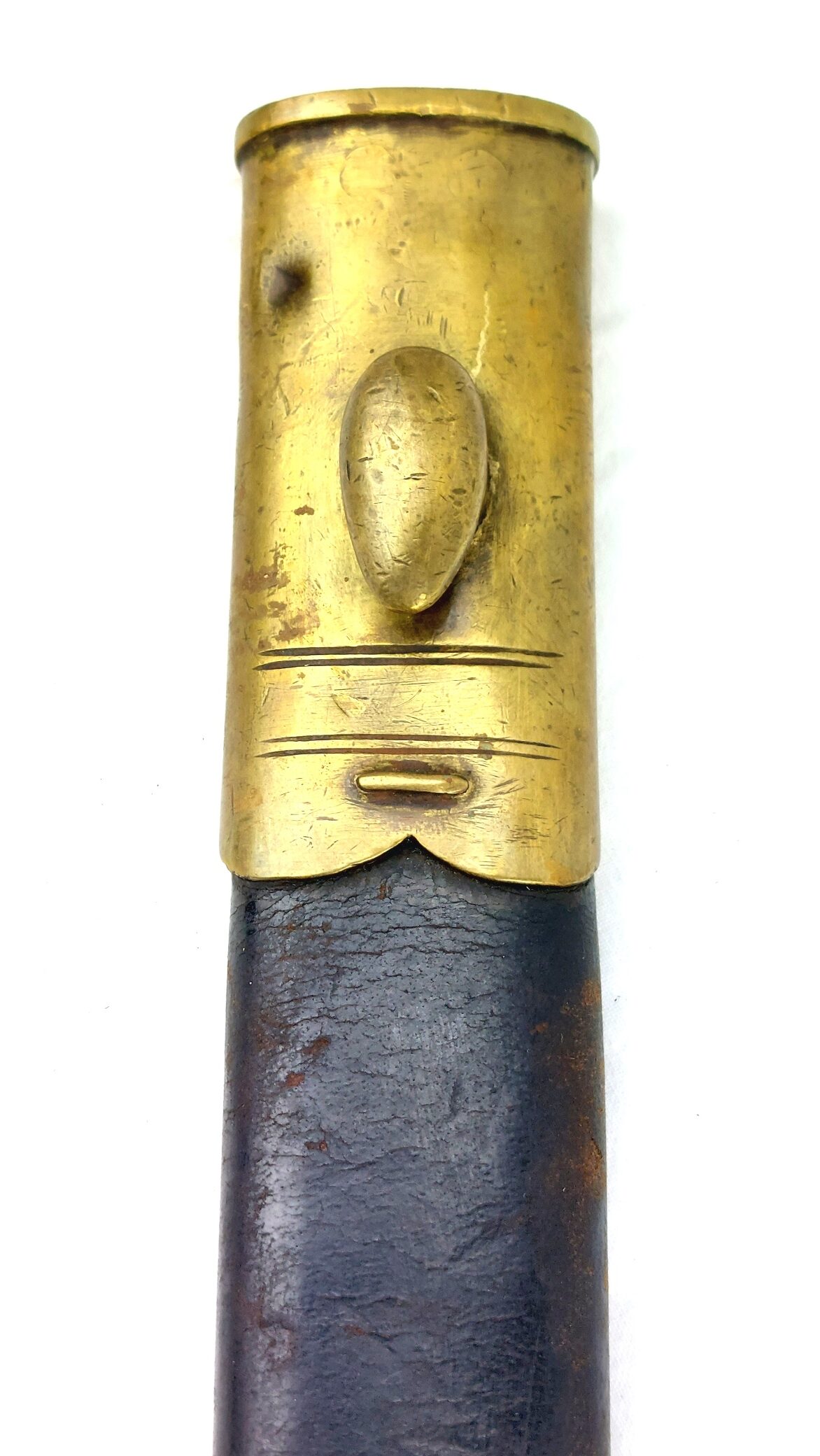
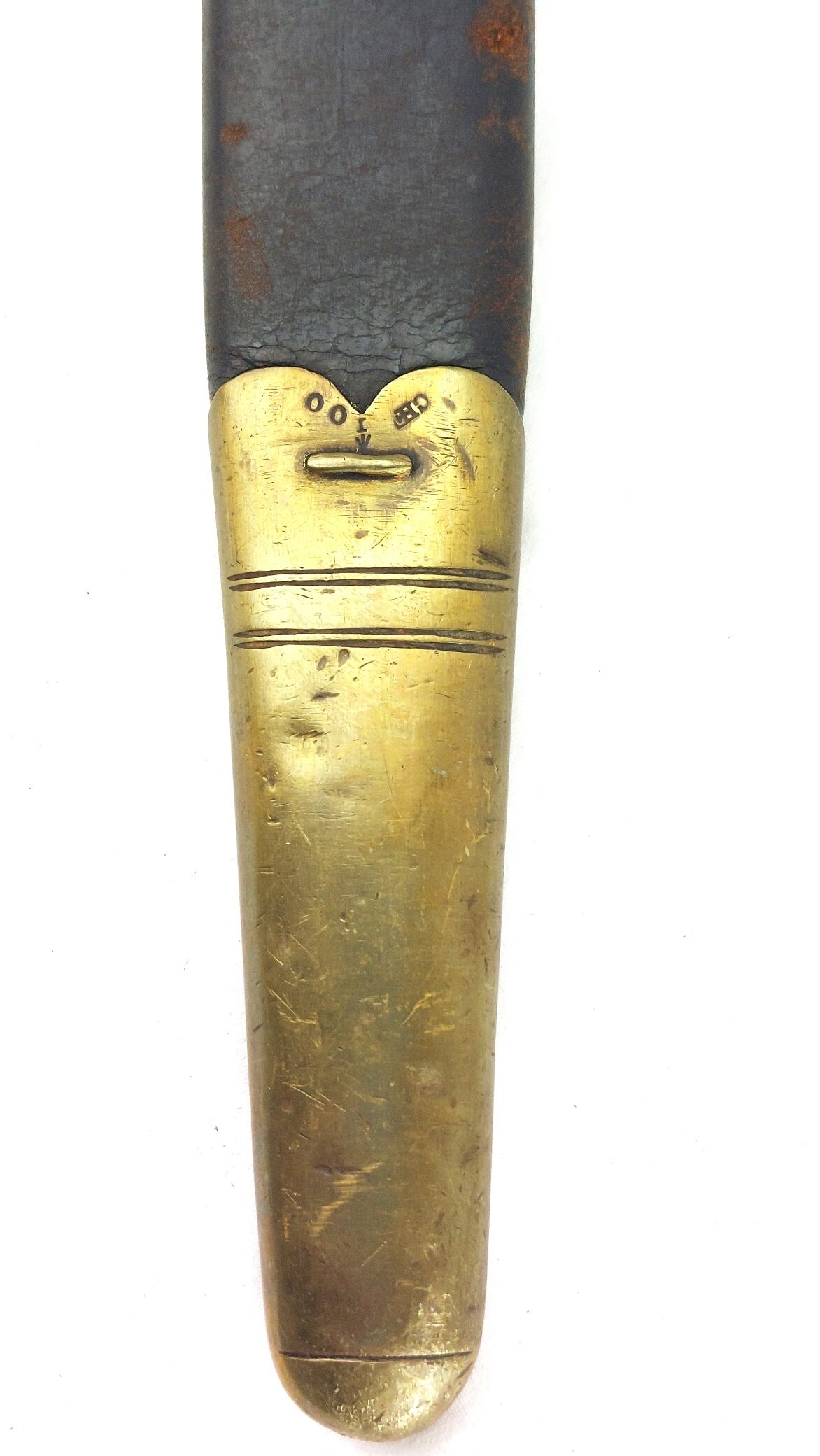
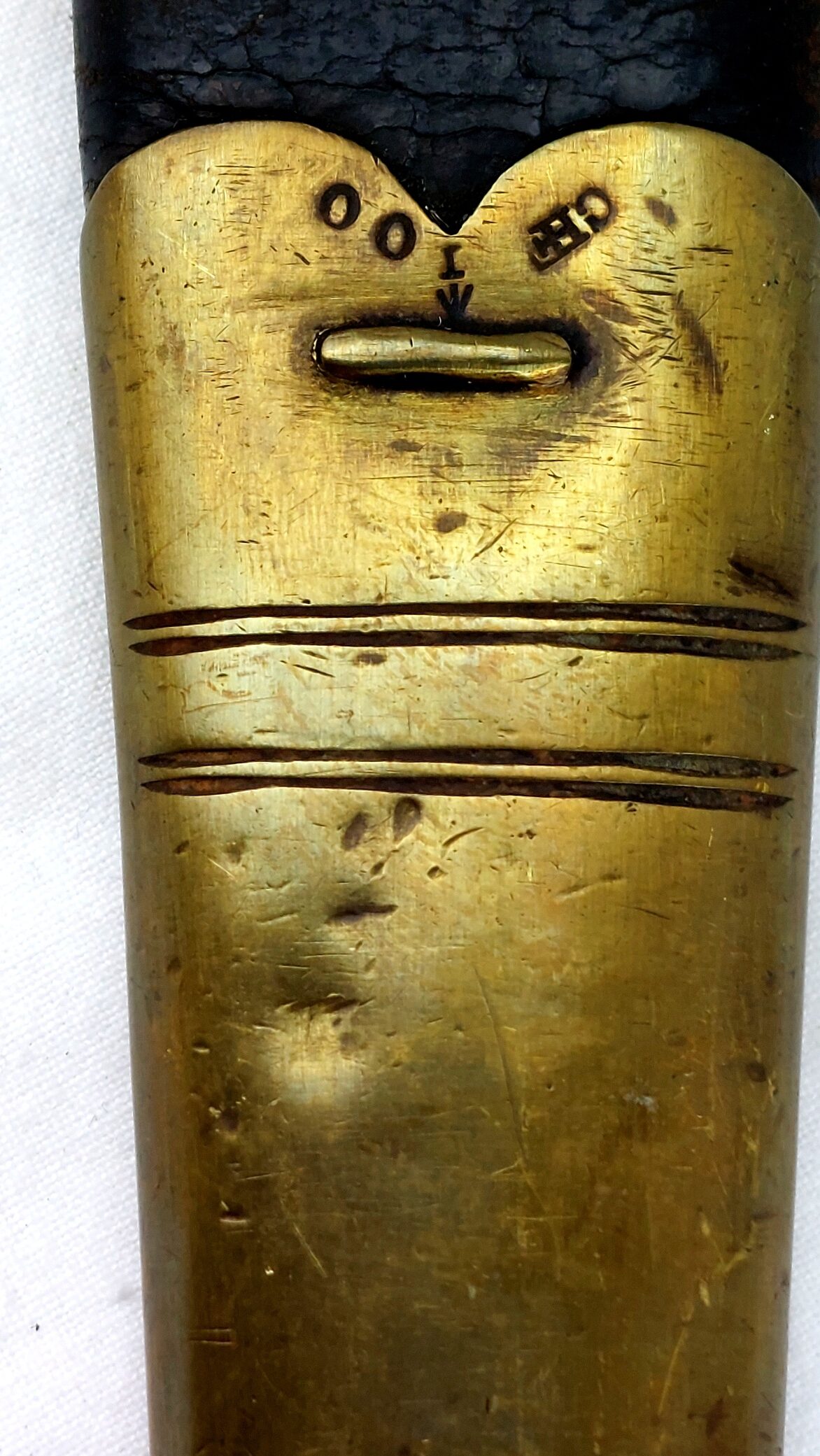
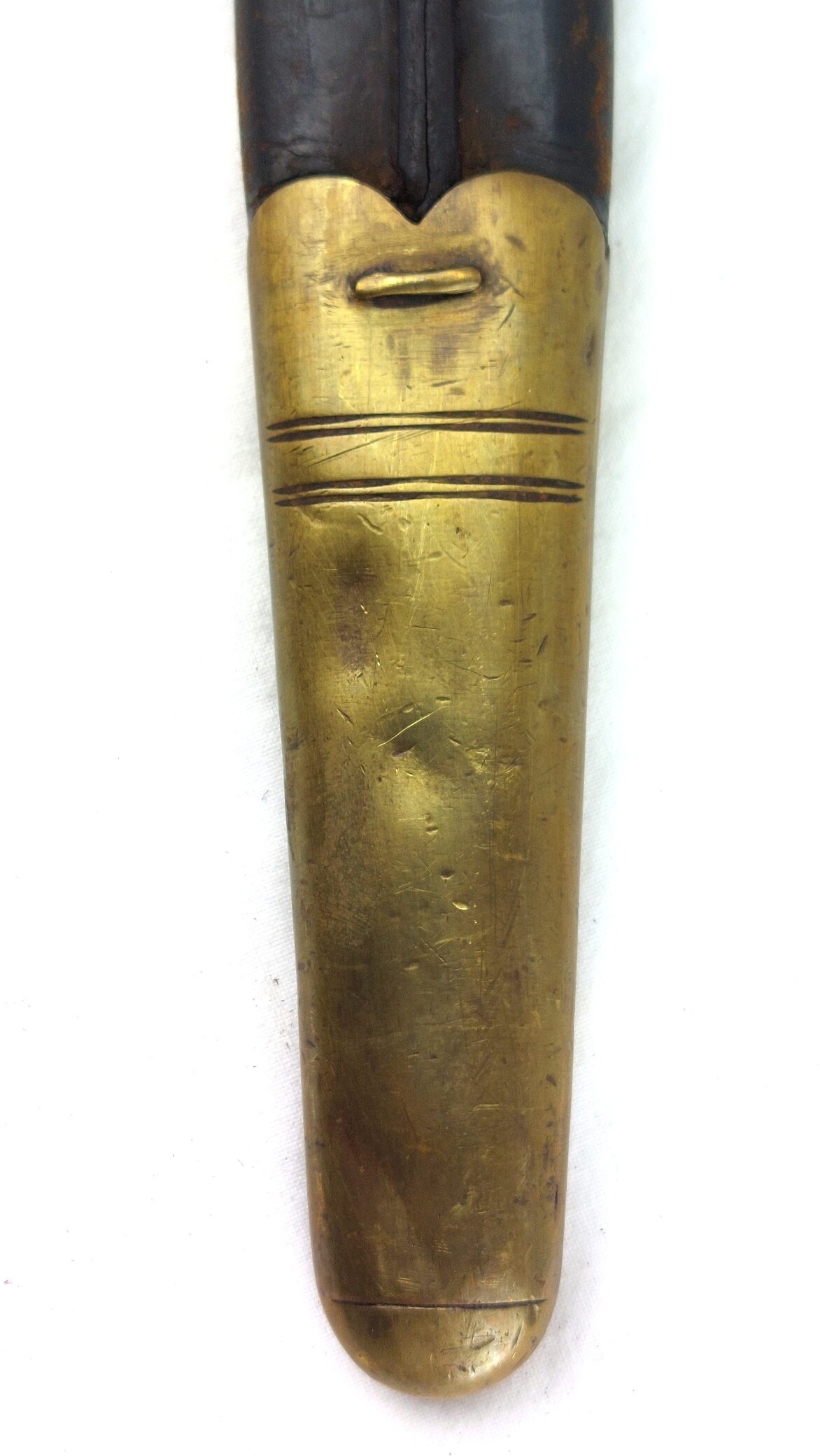
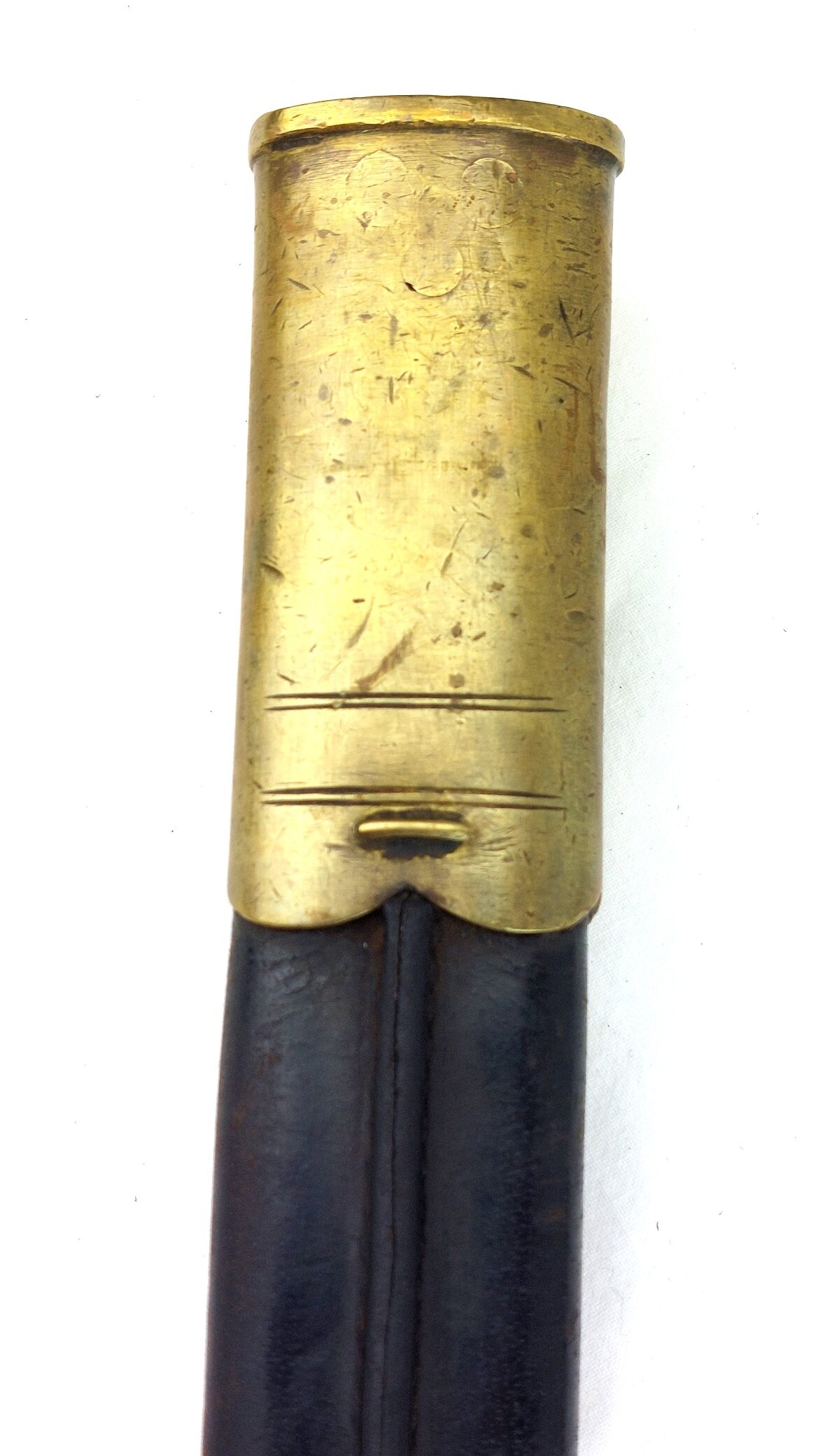
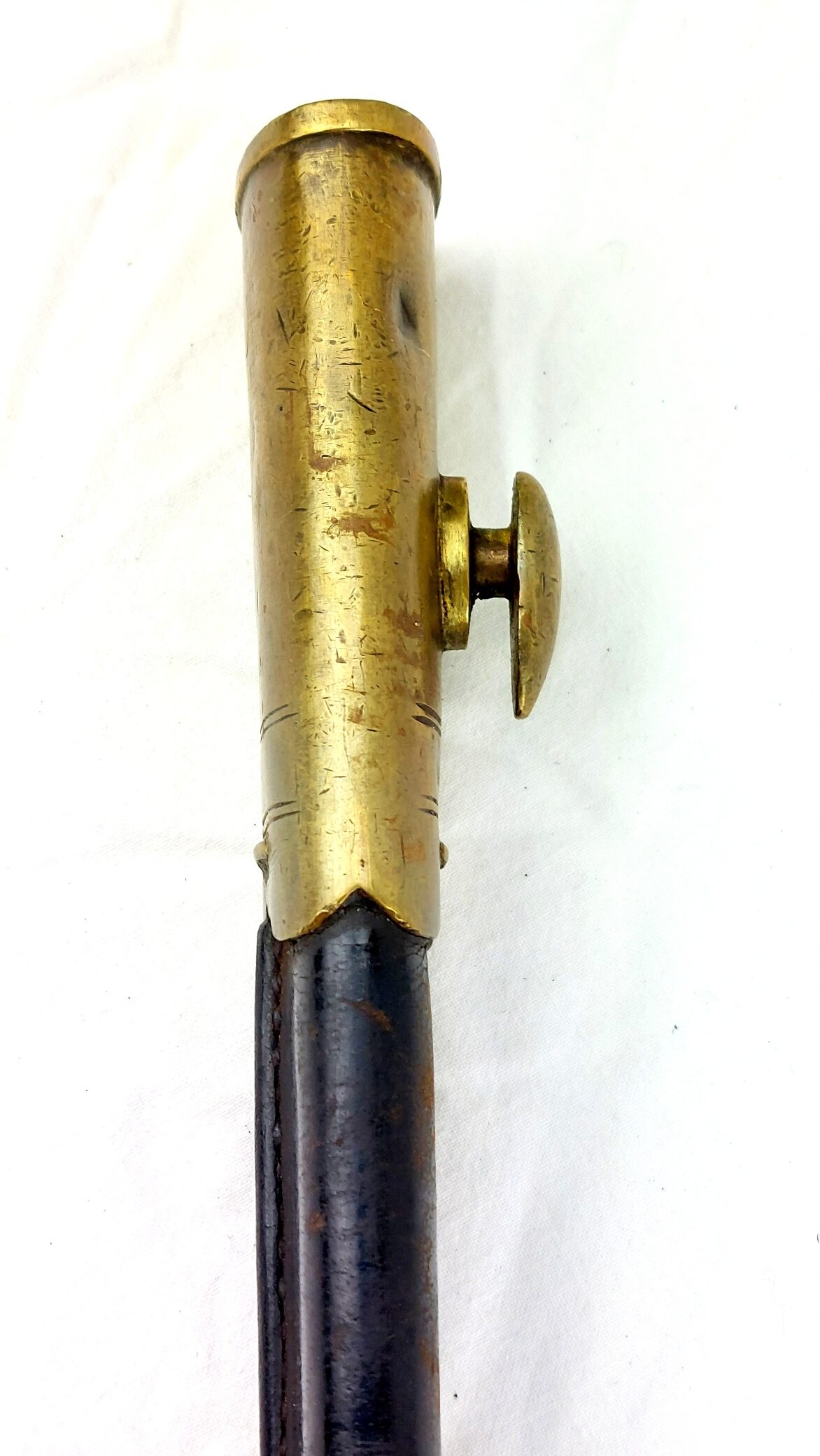
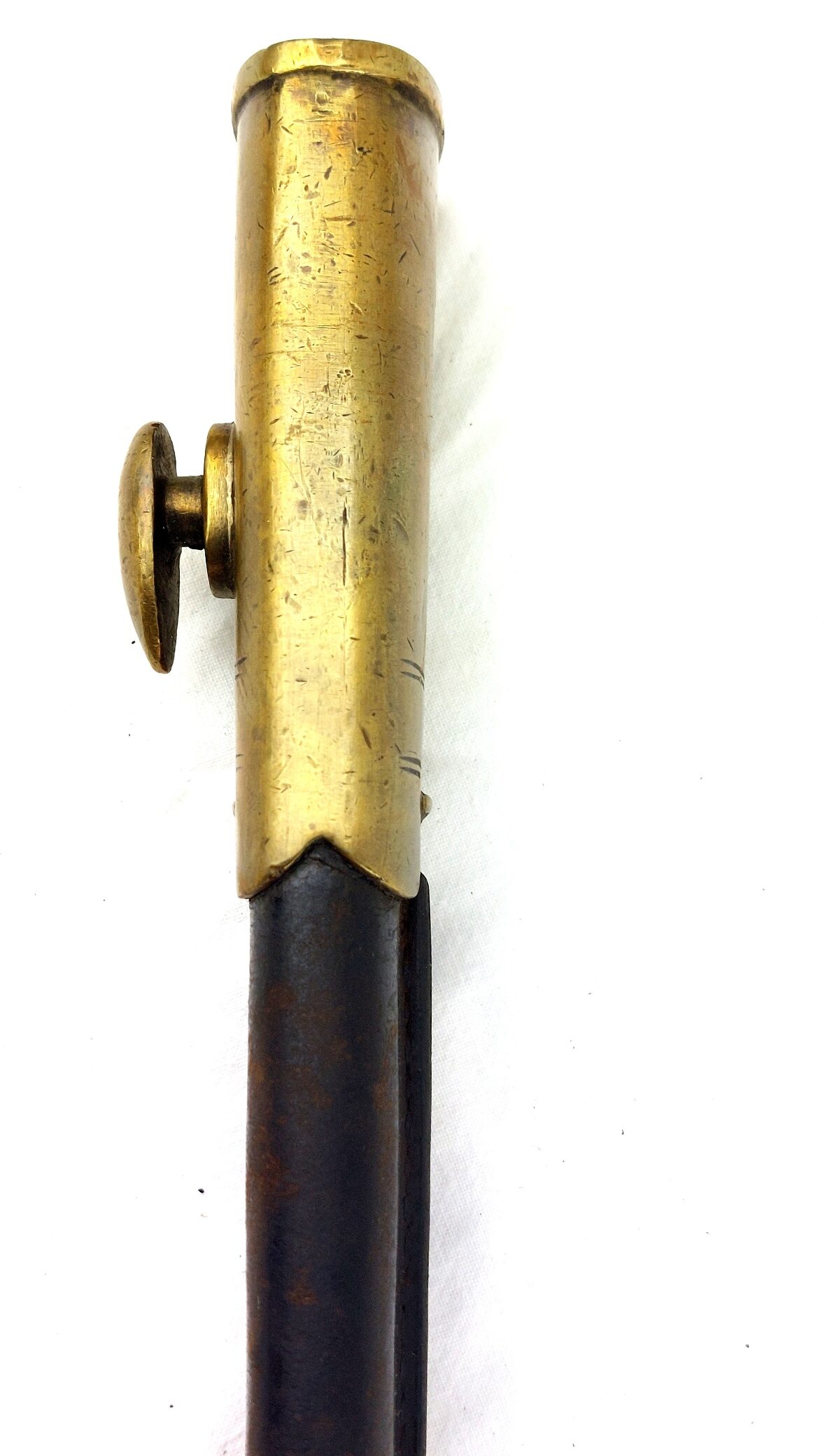
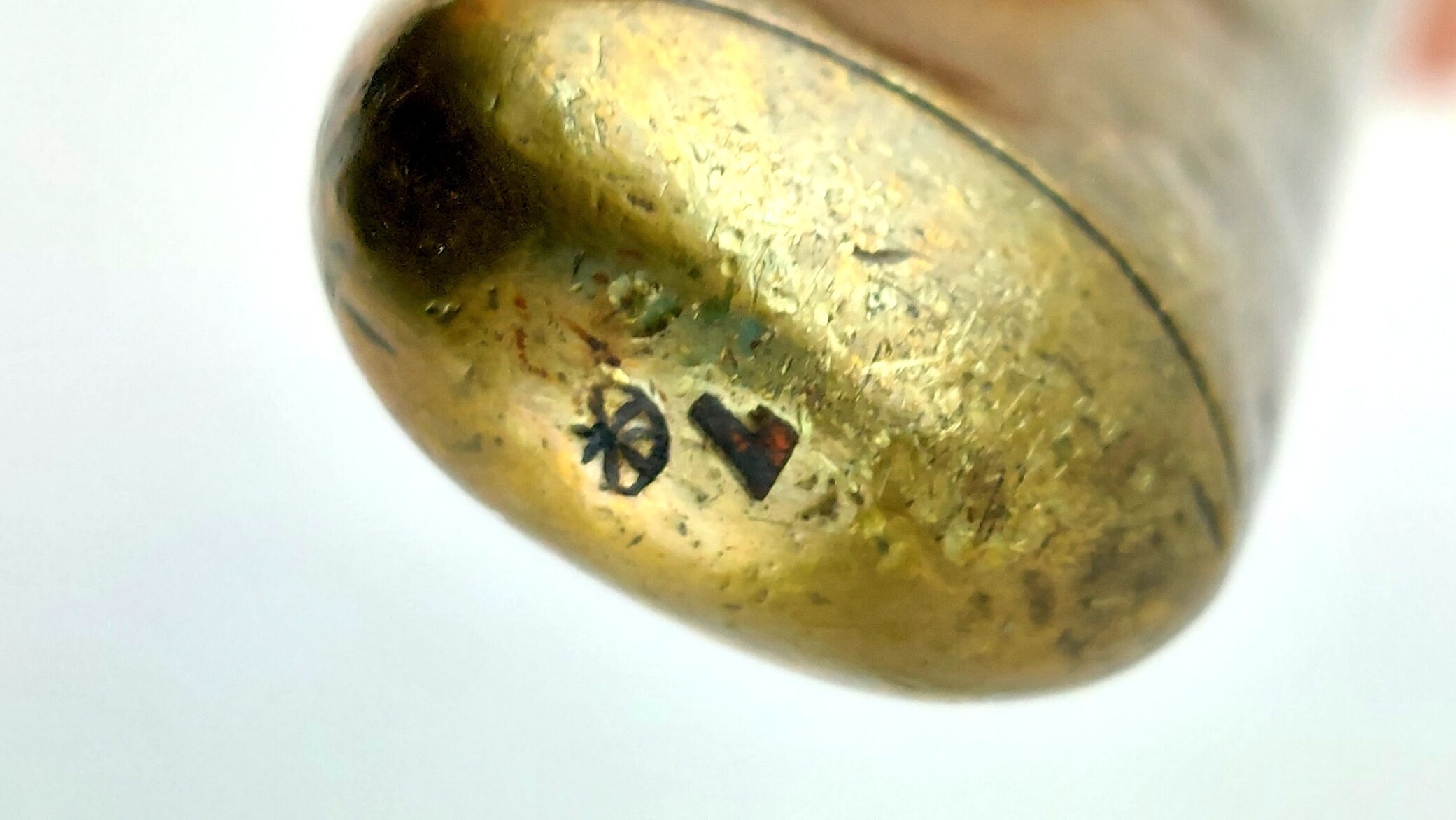
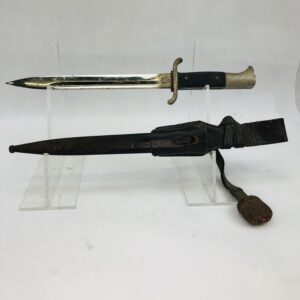
The bayonet is accompanied by its correct leather scabbard with brass throat and chape. The scabbard bears War Department ownership marks, inspection stamps, and dated marks “1899” and “1900,” indicating continued service into the turn of the century. The throat is additionally stamped “CIF” (or possibly “CFF”); while various interpretations have been proposed - including Ceylon Field Force, the precise attribution of this marking remains uncertain.
Approx. Measurements – Blade length: 46.5 cm. Overall length: 60 cm.
Historical Note:
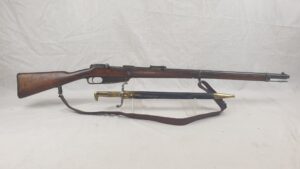
The Pattern 1887 Mk I sword bayonet was the final sword bayonet adopted for the Martini-Henry rifle, Britain’s last single-shot service arm. Introduced during the late Victorian period, it reflects contemporary infantry doctrine that continued to emphasise reach, weight, durability, and cutting power in bayonet combat, shaped by colonial warfare and the expectation of close-quarters fighting.
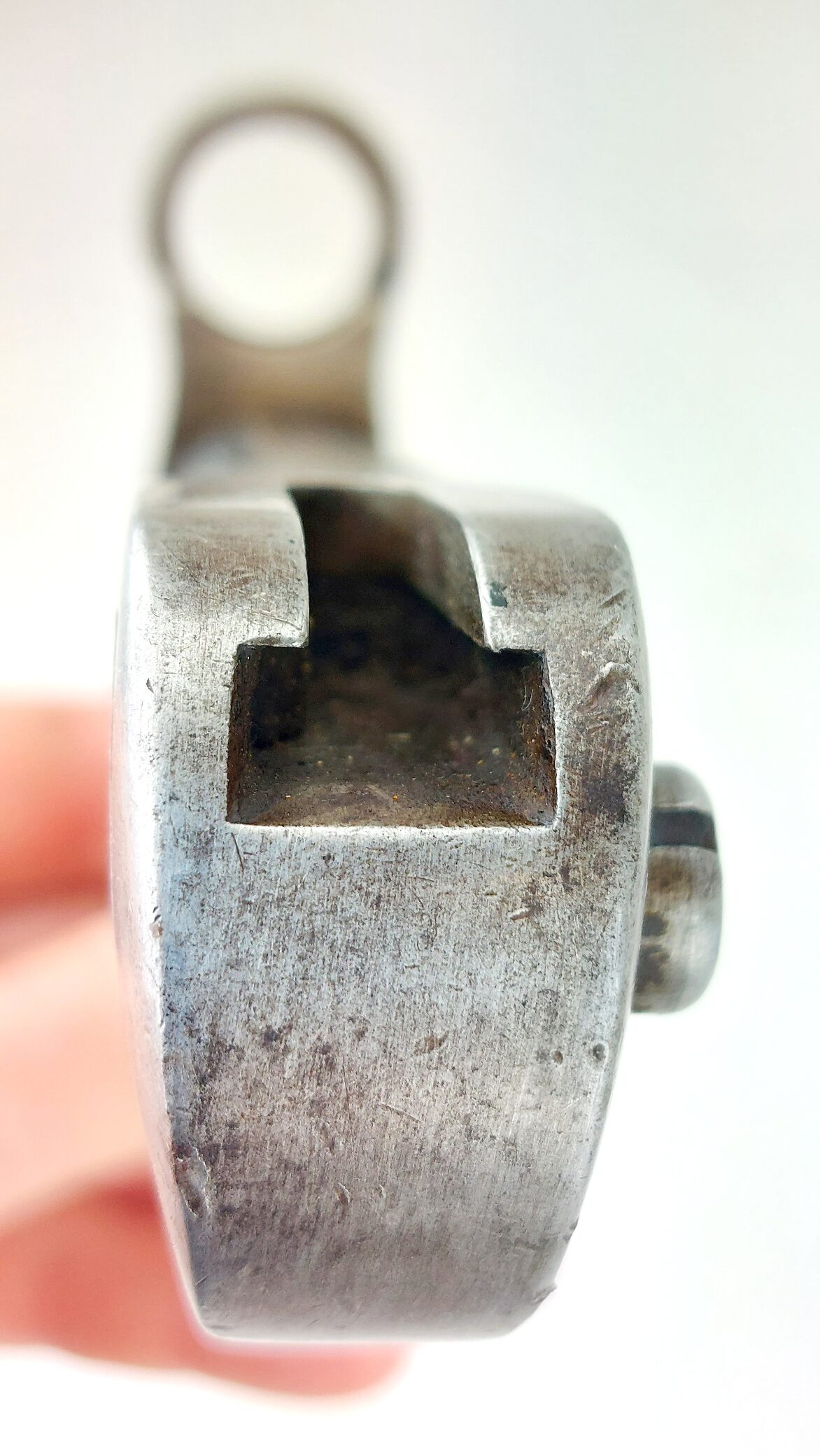
The design originated with the Enfield-Martini Pattern 1886 rifle, for which a substantial sword bayonet was developed incorporating a muzzle ring, pommel slot with spring catch, and a robust crossguard. When the Enfield-Martini programme was abandoned, these bayonets were adapted for use with the Martini-Henry Mk IV rifle and entered service in 1887 as the “Sword-Bayonet, Martini-Henry Rifle.” Subsequent standardisation introduced features such as the characteristic stepped crossguard and simplified blade form, and in 1888 the pattern was formally designated the Pattern 1887 Mk I.
Although the Martini-Henry was progressively superseded during the 1890s by the Lee-Metford and later Lee-Enfield systems, large numbers of Pattern 1887 sword bayonets remained in service with regular, reserve, naval, and colonial units. Late-1880s dated examples, such as this Wilkinson Sword Company manufacture, would have remained fully current during the period of the South African campaigns and the Second Boer War (1899–1902). Wilkinson was among the most respected British edged-weapon manufacturers of the era, and the clear War Department ownership, inspection, and acceptance markings present on this example are entirely consistent with official issue and sustained service use.
*Condition*
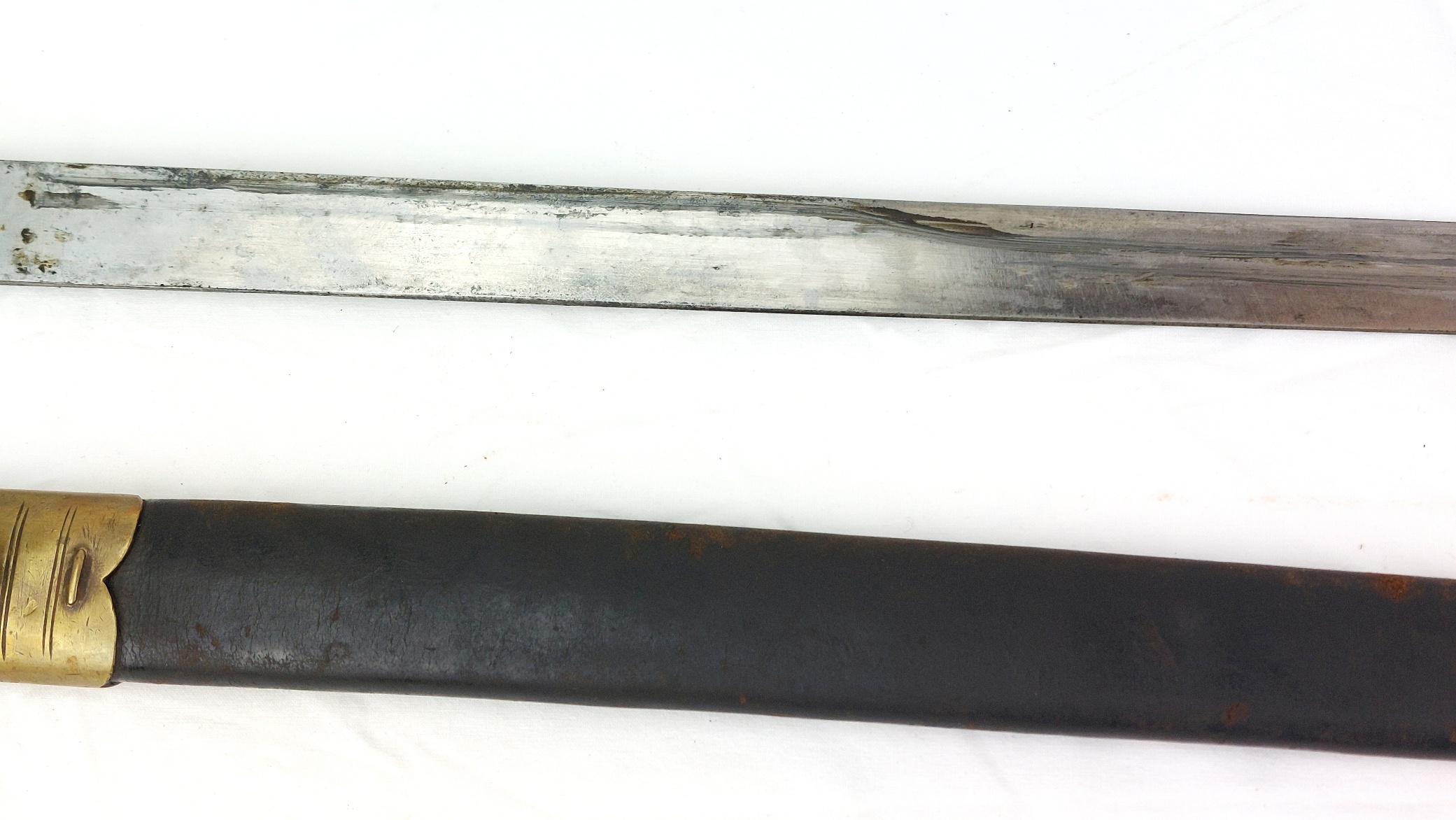
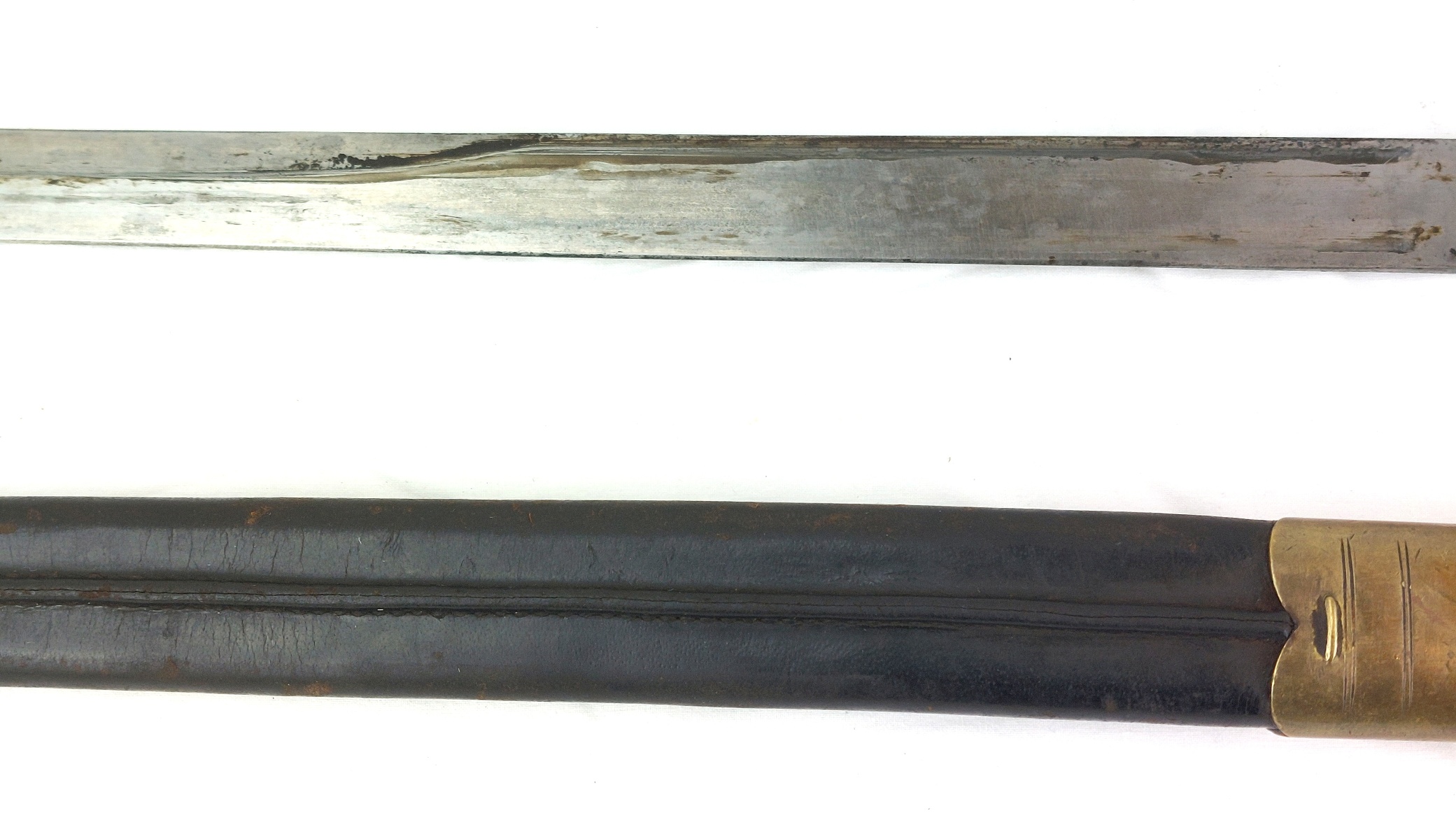
The blade shows honest service wear with areas of age patina, light pitting, and surface staining consistent with military use. Markings remain clear and legible. The hilt is solid, with grips secure. The scabbard shows expected wear to the leather and brass mounts, with clear stamps remaining visible. Please see photographs as part of the condition report.
JAQAEOXBHE_272110072025