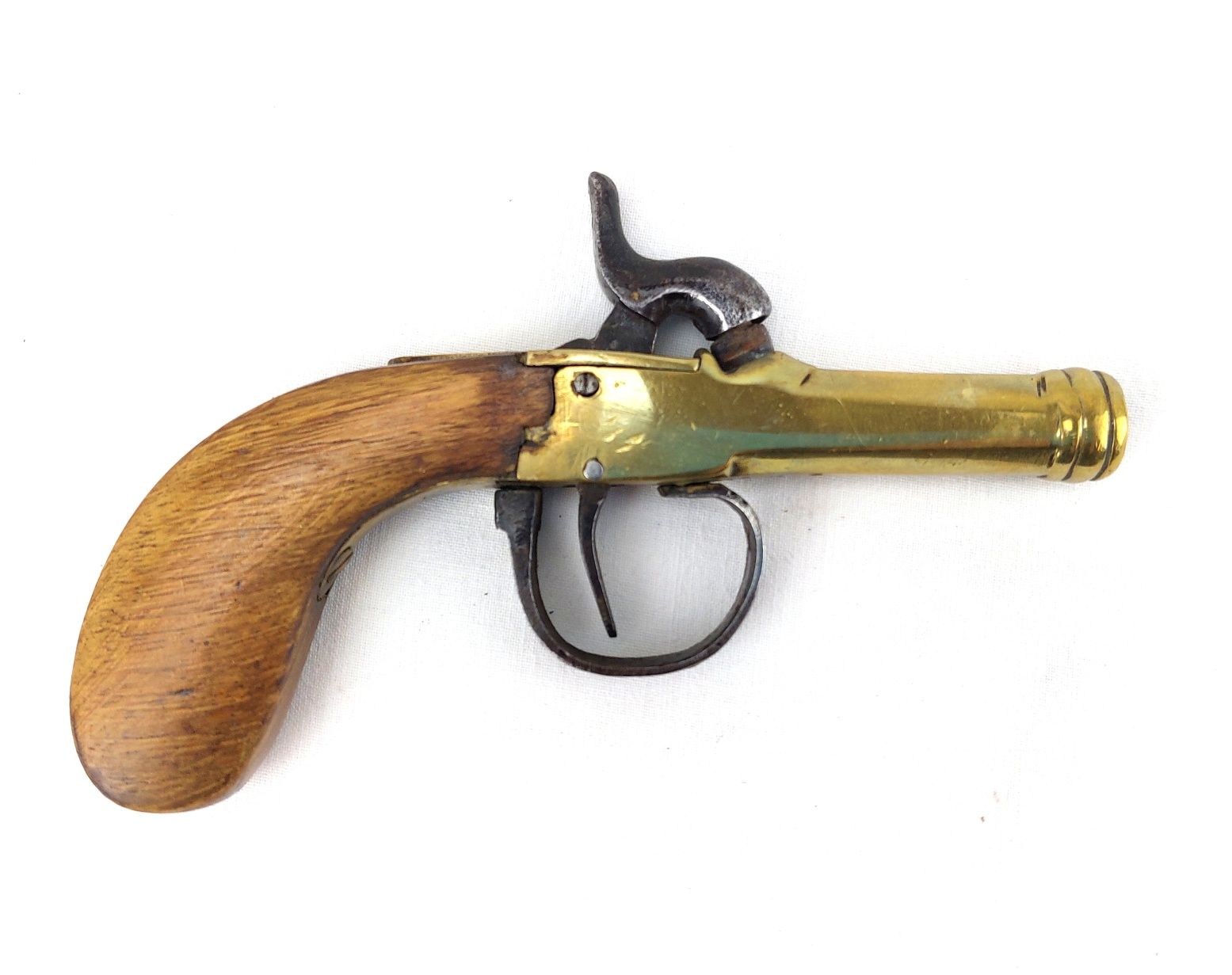
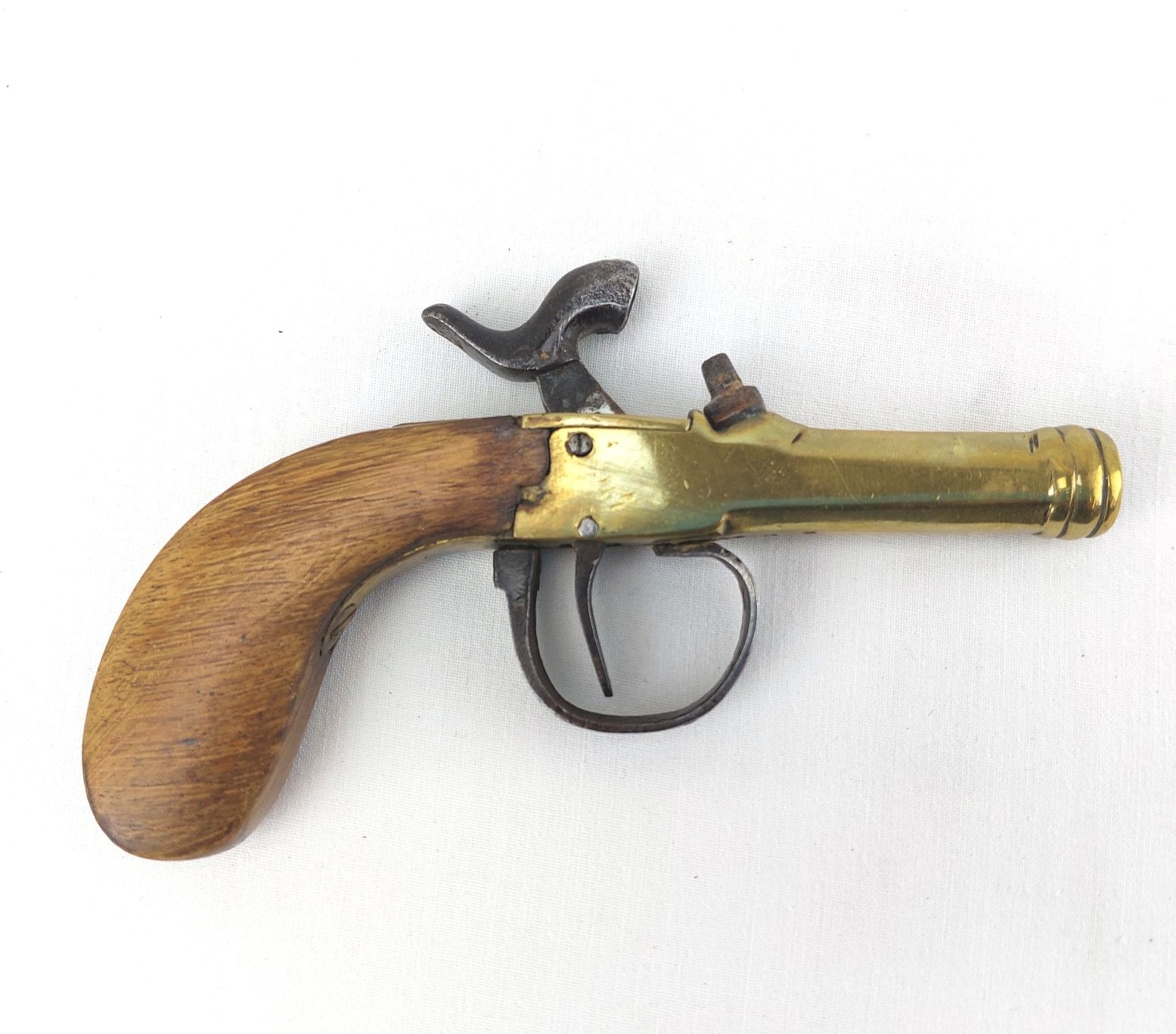
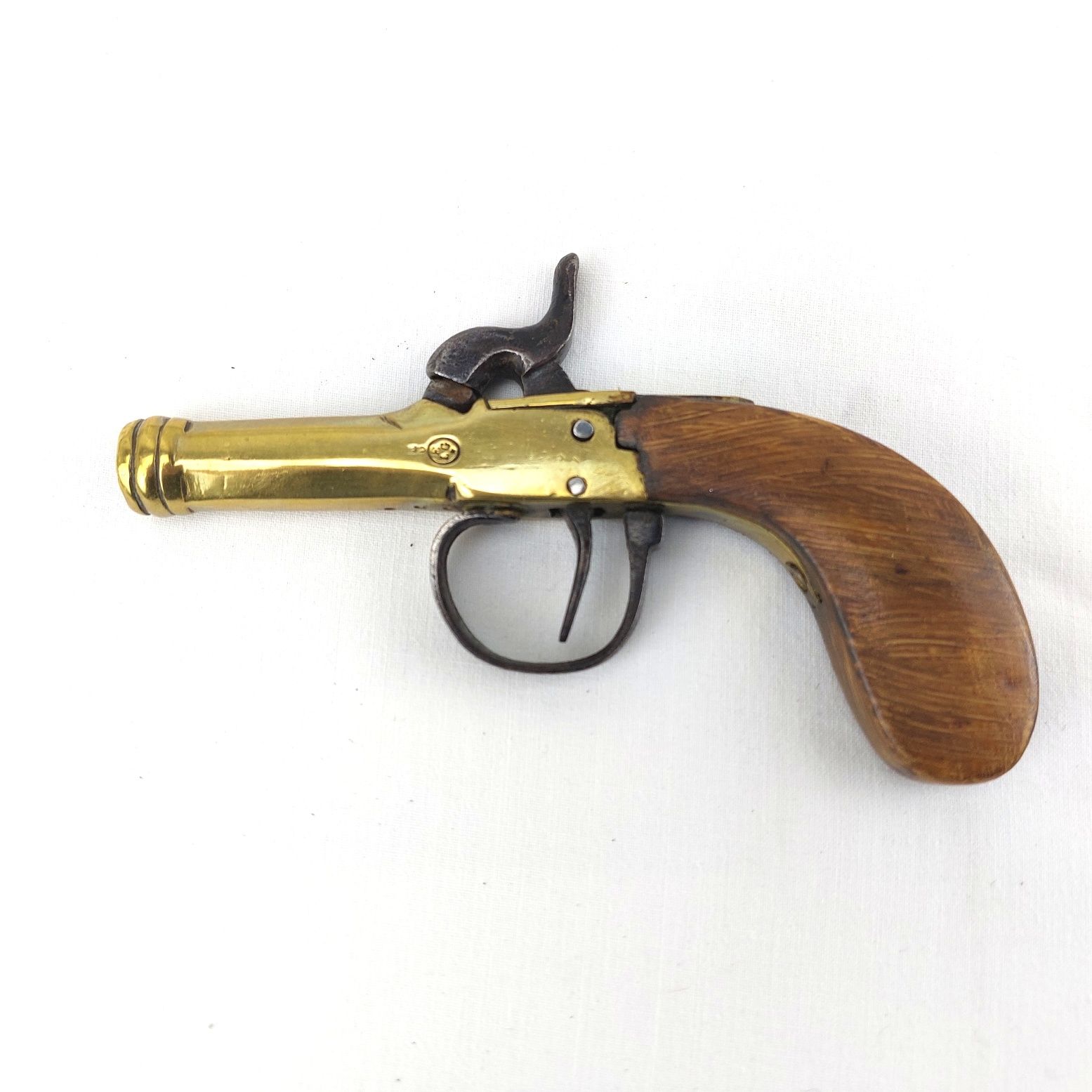
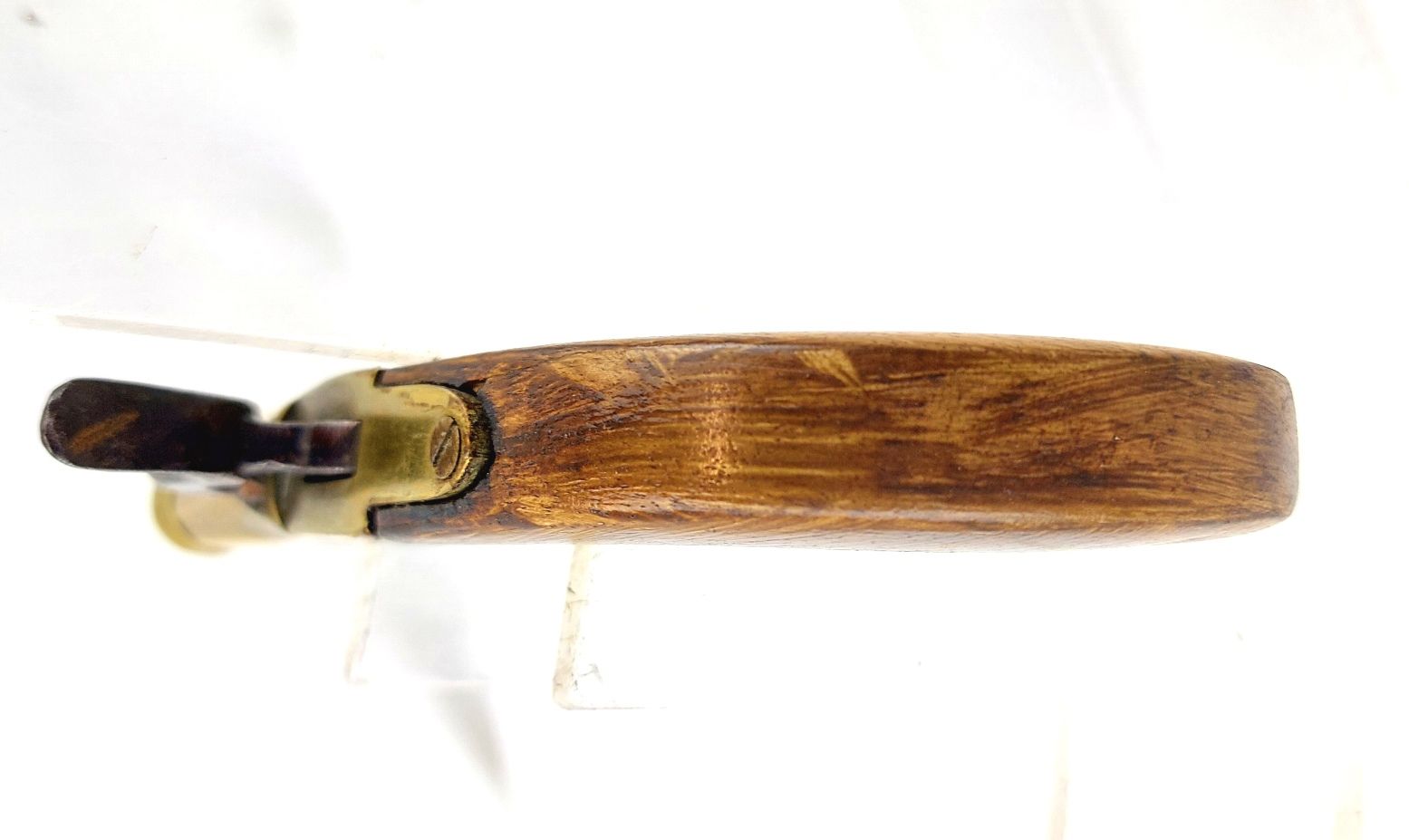
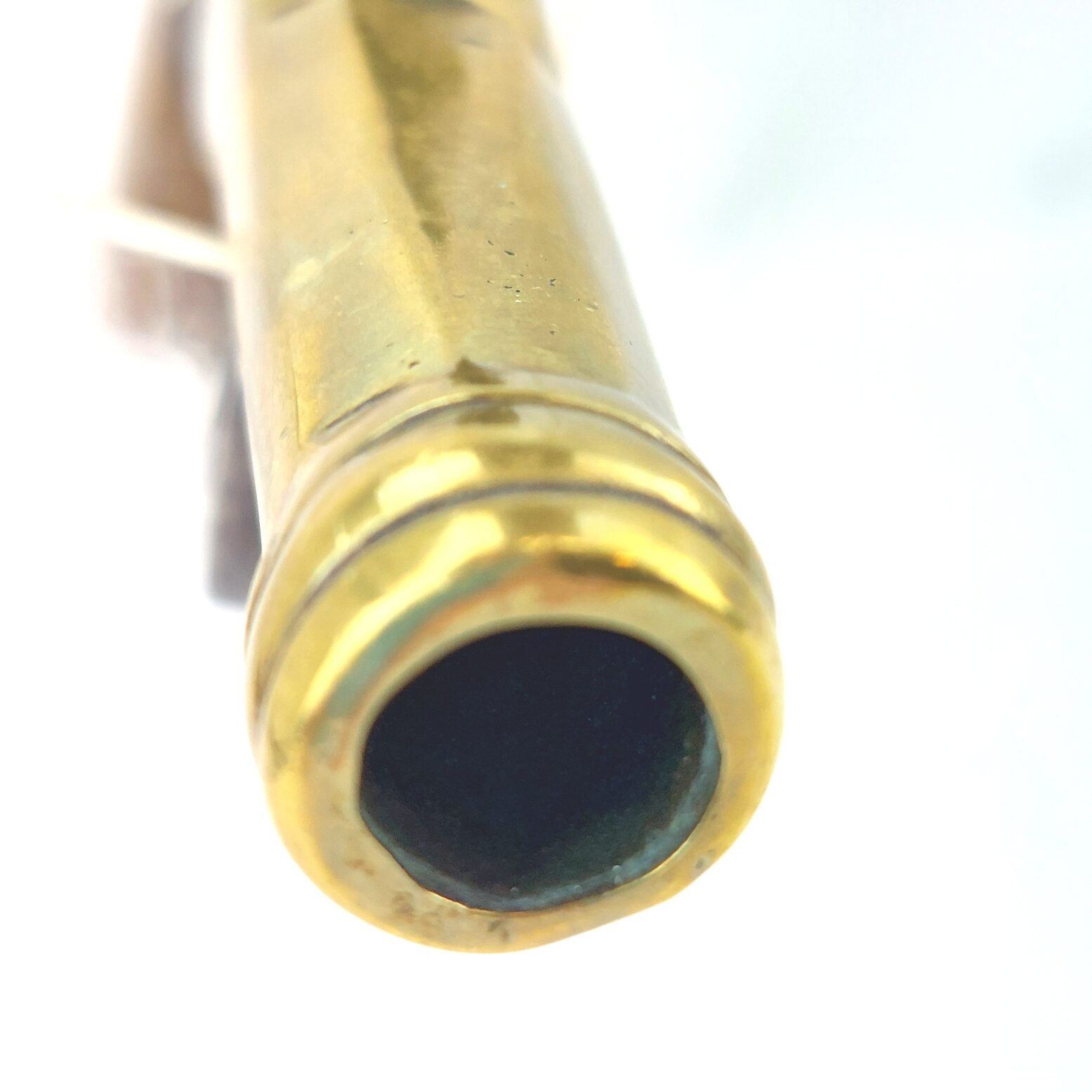
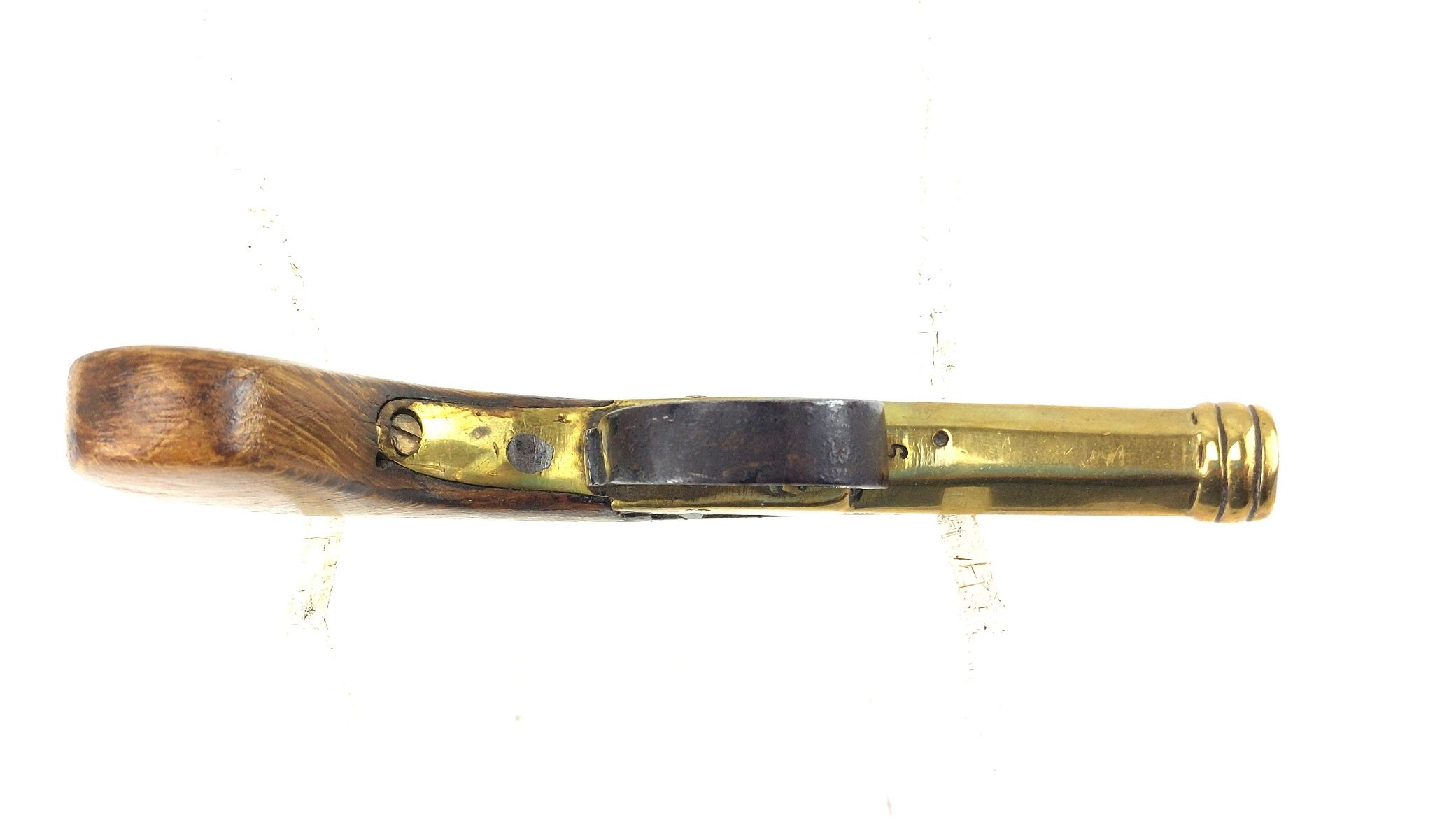
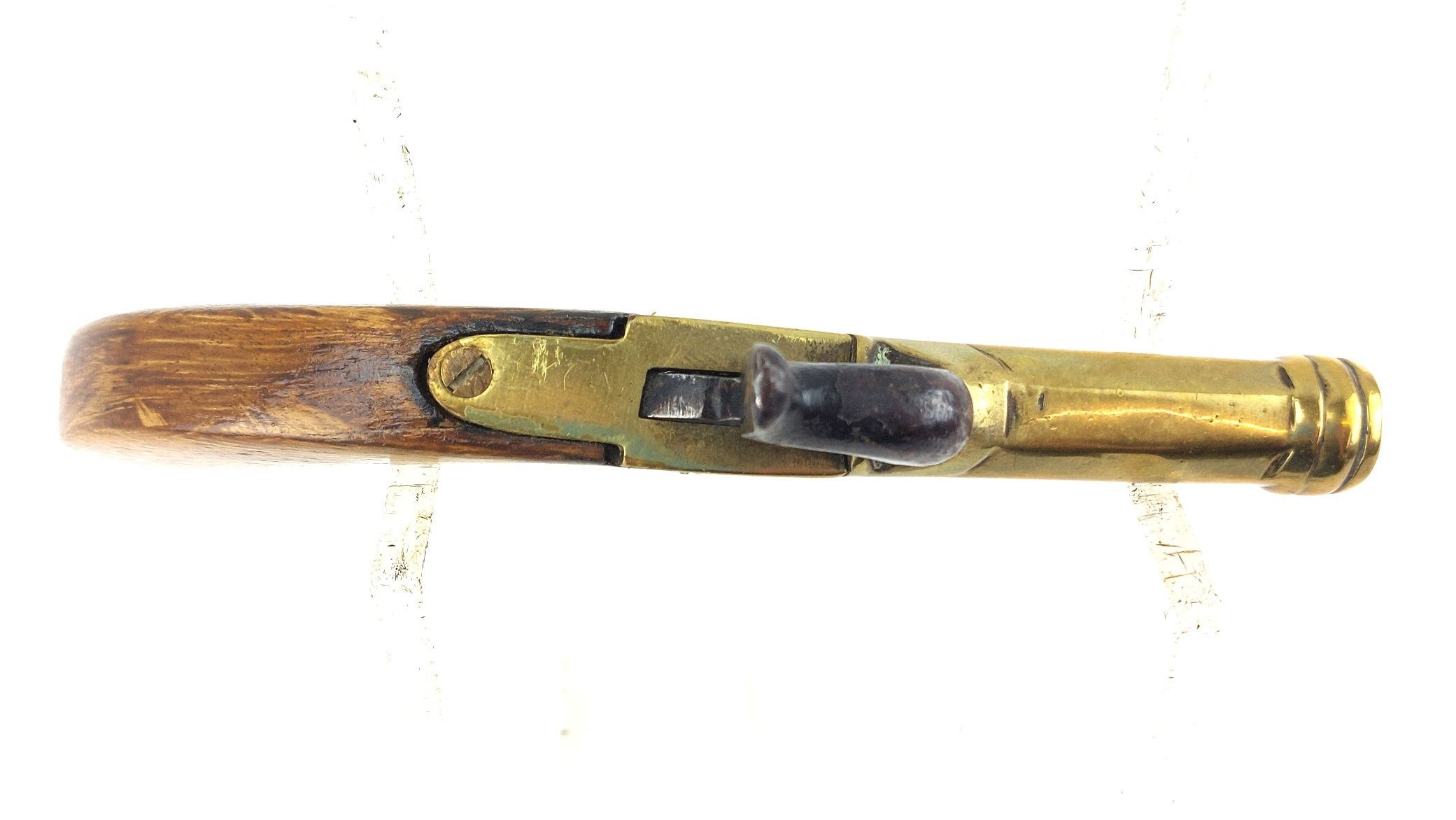
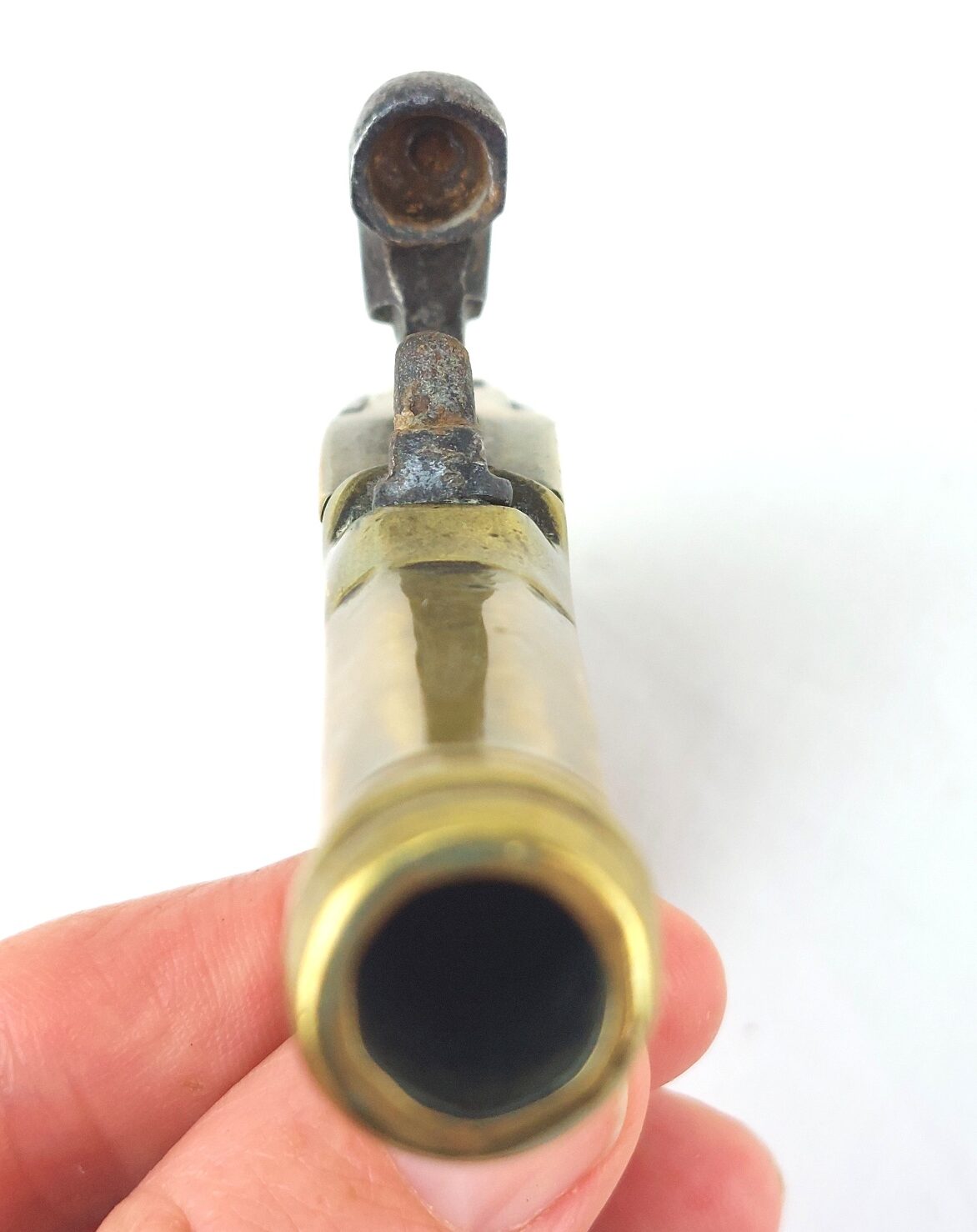
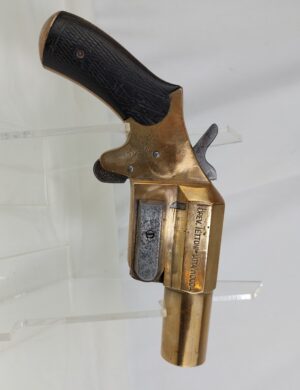
A mid-19th century percussion muff pistol, measuring approximately 13cm overall, with a cannon-barrelled brass frame and barrel. The barrel is octagonal at the breech, tapering to round with turned decorative bands at the muzzle, a distinctive feature of this type. It is fitted with a fixed steel trigger within a guard, a conventional percussion hammer, and a smooth walnut bag-shaped grip.
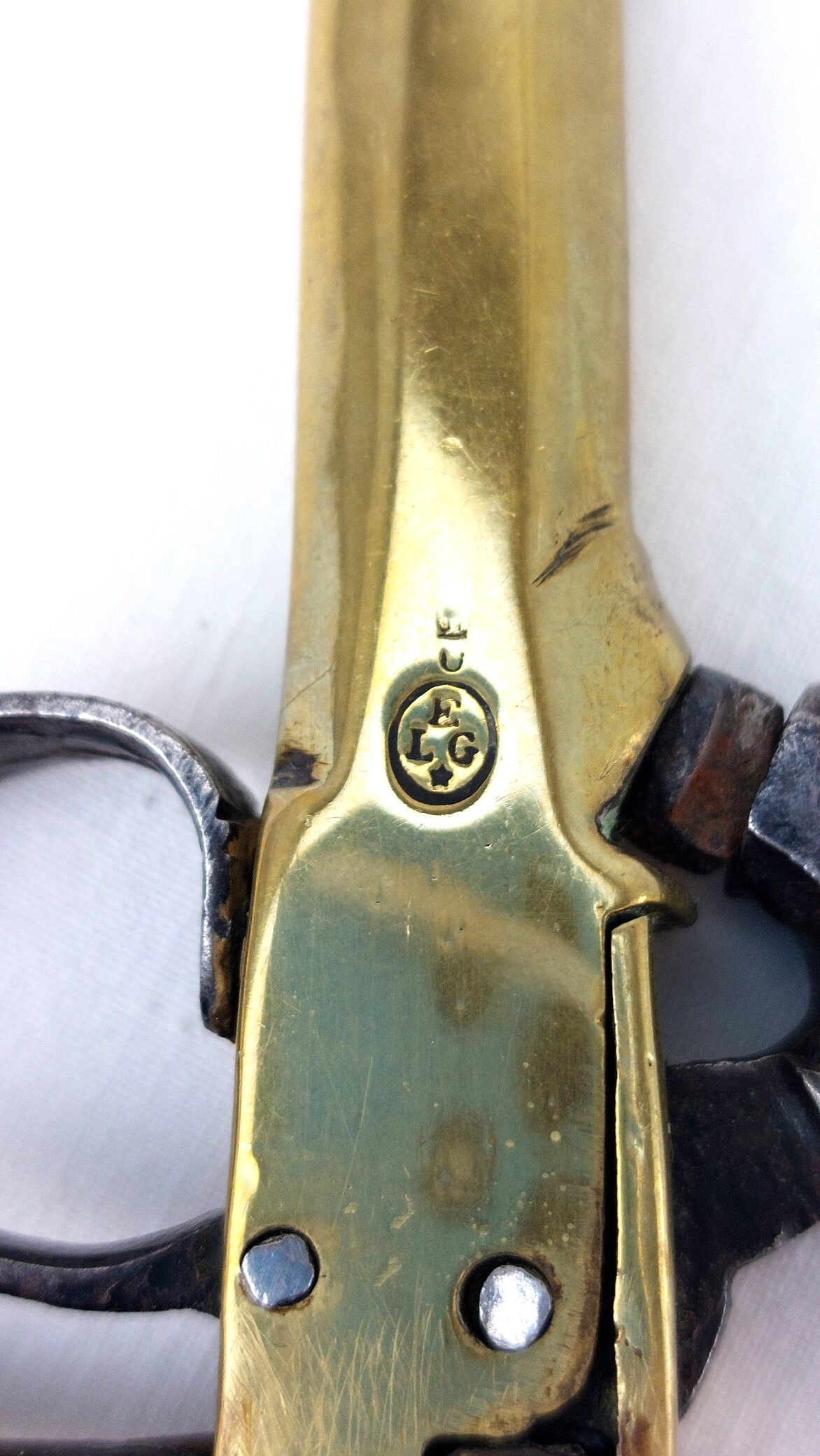
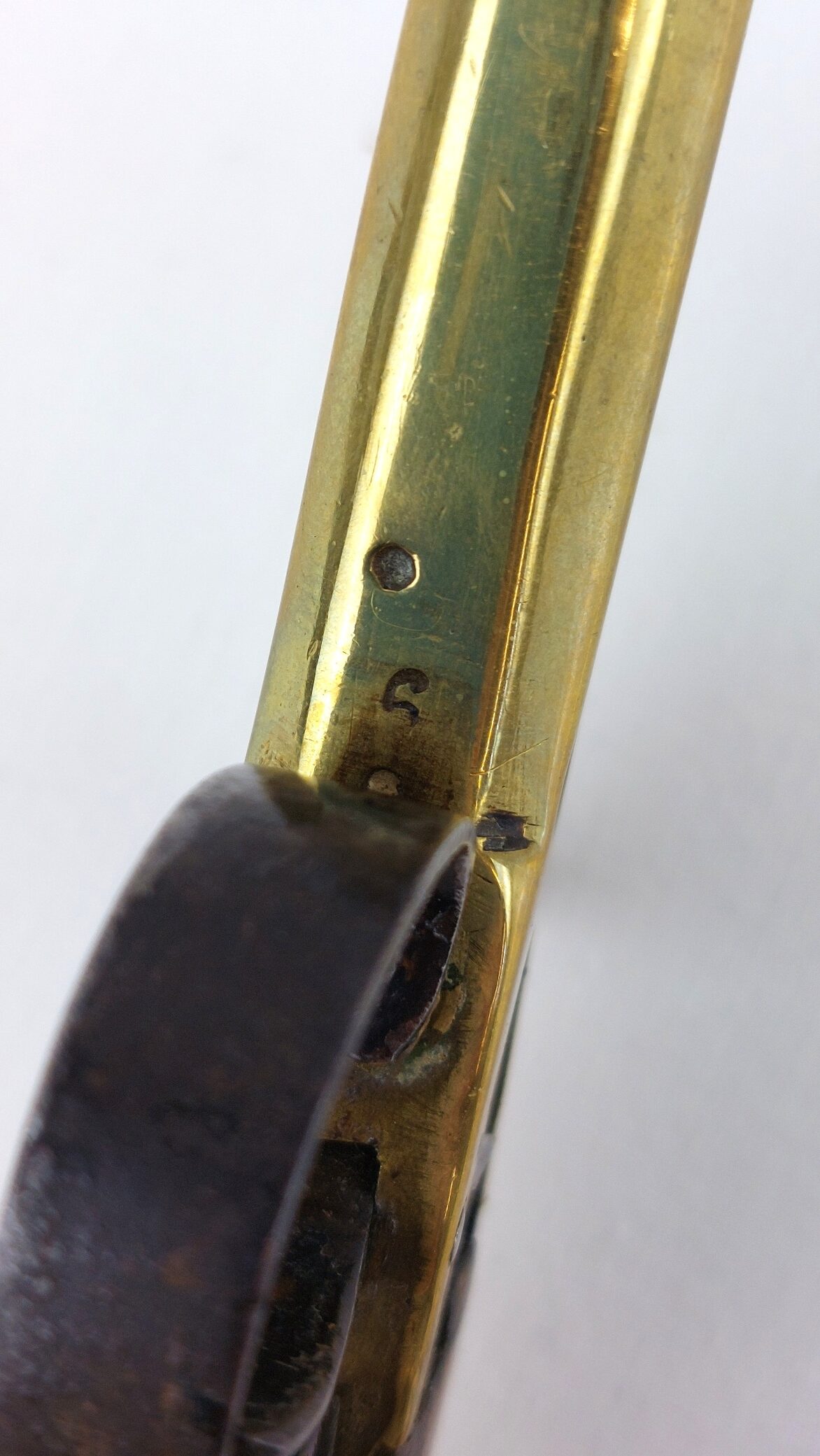
The left side of the barrel bears a crowned Liège proof mark ‘ELG’ in an oval, confirming inspection at the Liège proof house between 1846 and 1893. Additional small inspector’s stamps are also present, consistent with Belgian proof practices introduced after 1853. The pistol is smoothbore and designed for percussion cap ignition, firing a small lead ball at close range.
Historical Note:
Known as a muff pistol, this type of small defensive arm was named for the fur muffs fashionable among women in the 18th and 19th centuries, which often served as discreet concealment for such weapons. Compact and easily carried in a pocket or handbag, these pistols were intended for civilian self-defence rather than military service.
The cannon-barrel style, with its flared and banded muzzle, was fashionable between c.1820–1860, produced in great numbers by the Liège gunmaking industry. Belgium, and especially the city of Liège, was Europe’s foremost armsmaking hub in this era, producing affordable yet serviceable firearms for both domestic and export markets. Such pistols were sold widely throughout Europe and the United States, becoming the archetypal gentleman’s or lady’s pocket weapon of the Victorian period.
*Condition*
This pistol survives in good condition. The brass frame and barrel retain a warm aged patina with scattered light knocks and surface marks, while the decorative muzzle bands remain sharp and well defined. The steel components, including the hammer, trigger, and guard, show areas of dark patination and oxidation consistent with age, though all remain present and intact. The walnut grip is smooth, showing natural handling wear with evidence of possible light refinishing, and remains tightly fitted to the frame. Proof marks and inspector’s stamps are clear and legible, confirming its Belgian origin. The mechanism is complete but untested. Overall, this is a solid and attractive example with a pleasing patina and strong proofs. Please see photographs as part of the condition report.
*In order to complete the online purchase we will require a picture/scan of a photo ID (Driving Licence, Passport or an official document with a recent picture). If you don't posses any such document please call to buy. If we consider that the proof of ID is incorect or insuficient, we reserve the right to cancel the transaction.
*We also reserve the right to cancel the transaction with a full refund if there is any suspicion that the provided item will be used in any way contrary to the laws and legislation of UK.