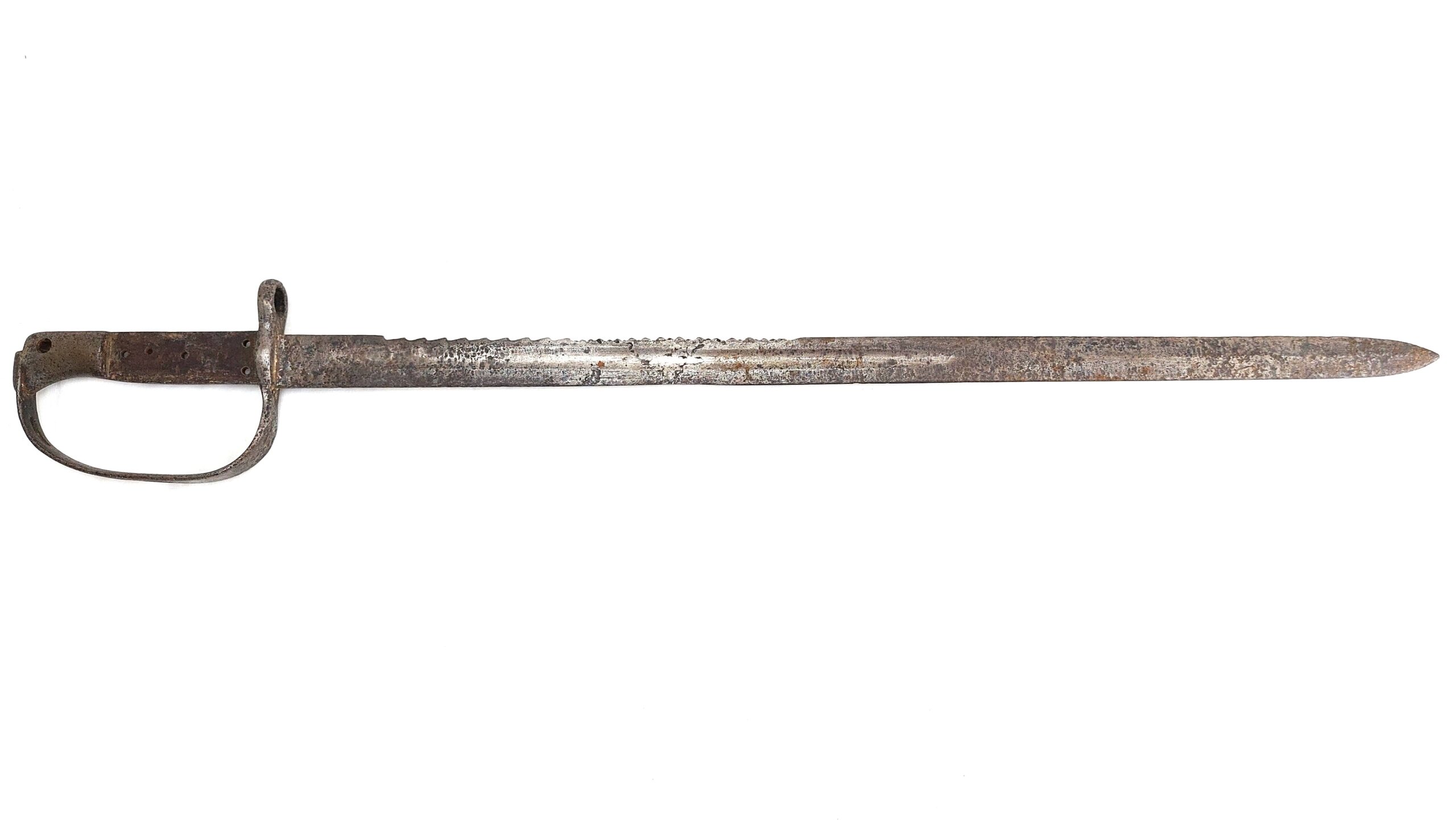
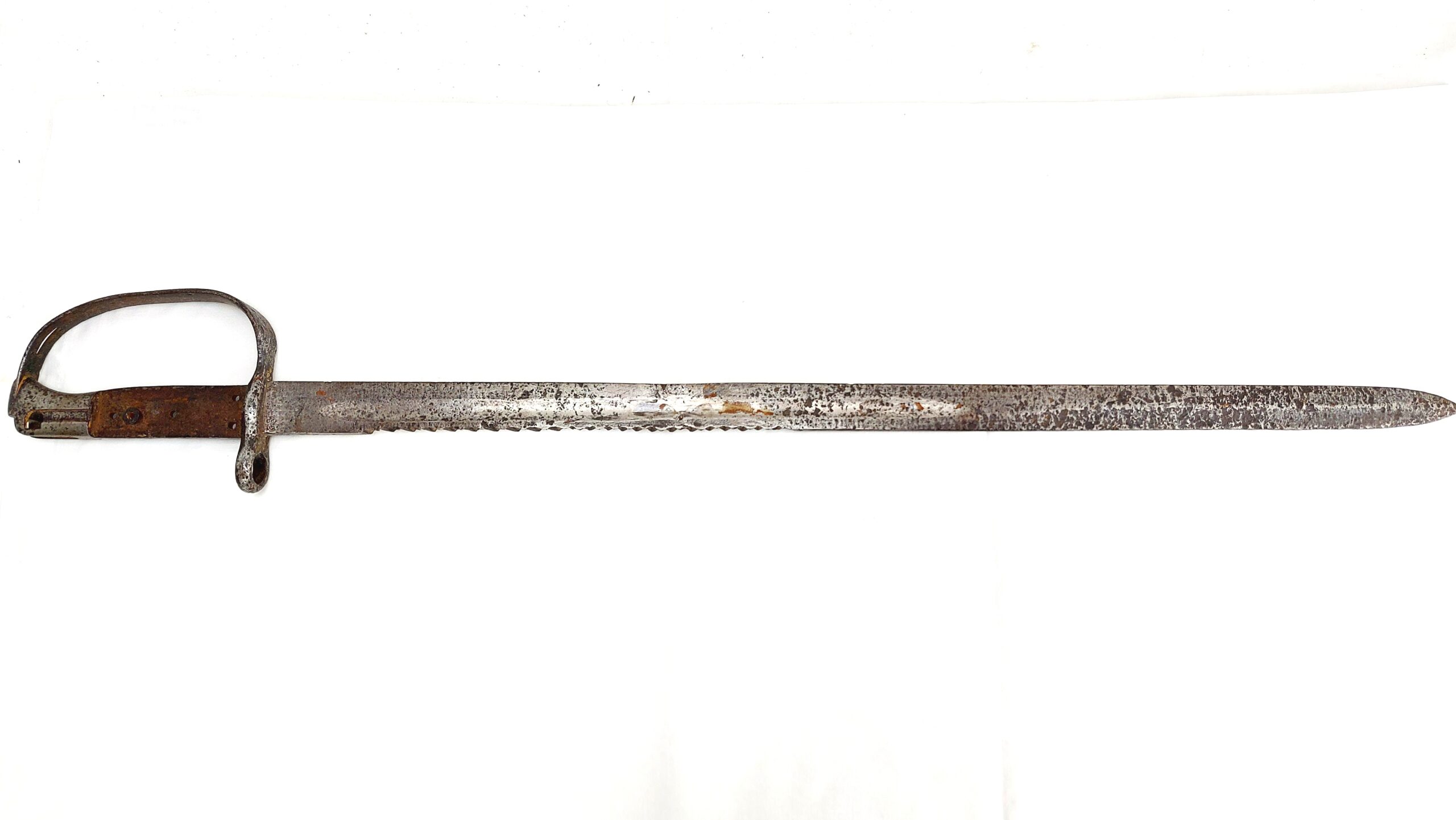
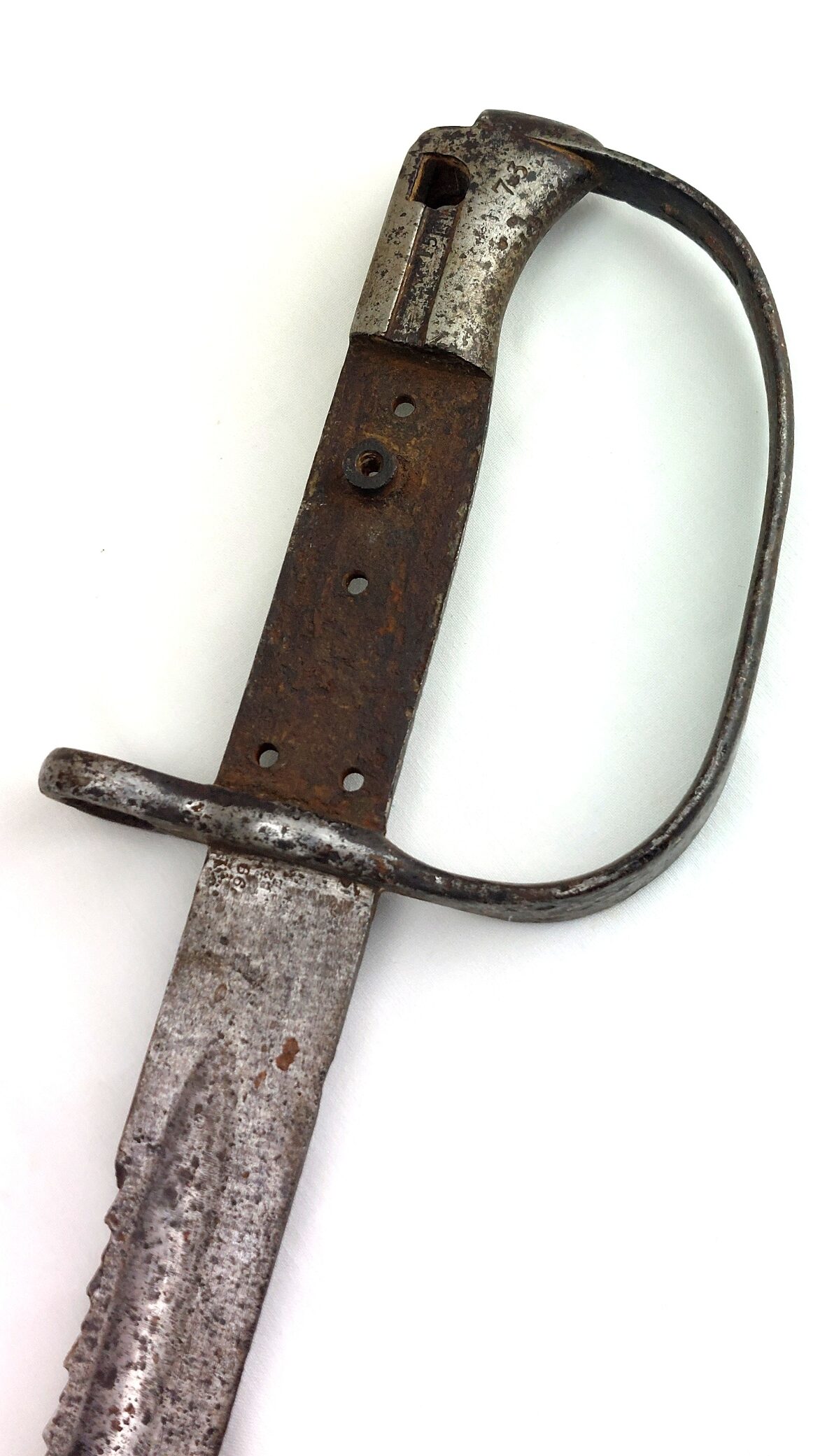
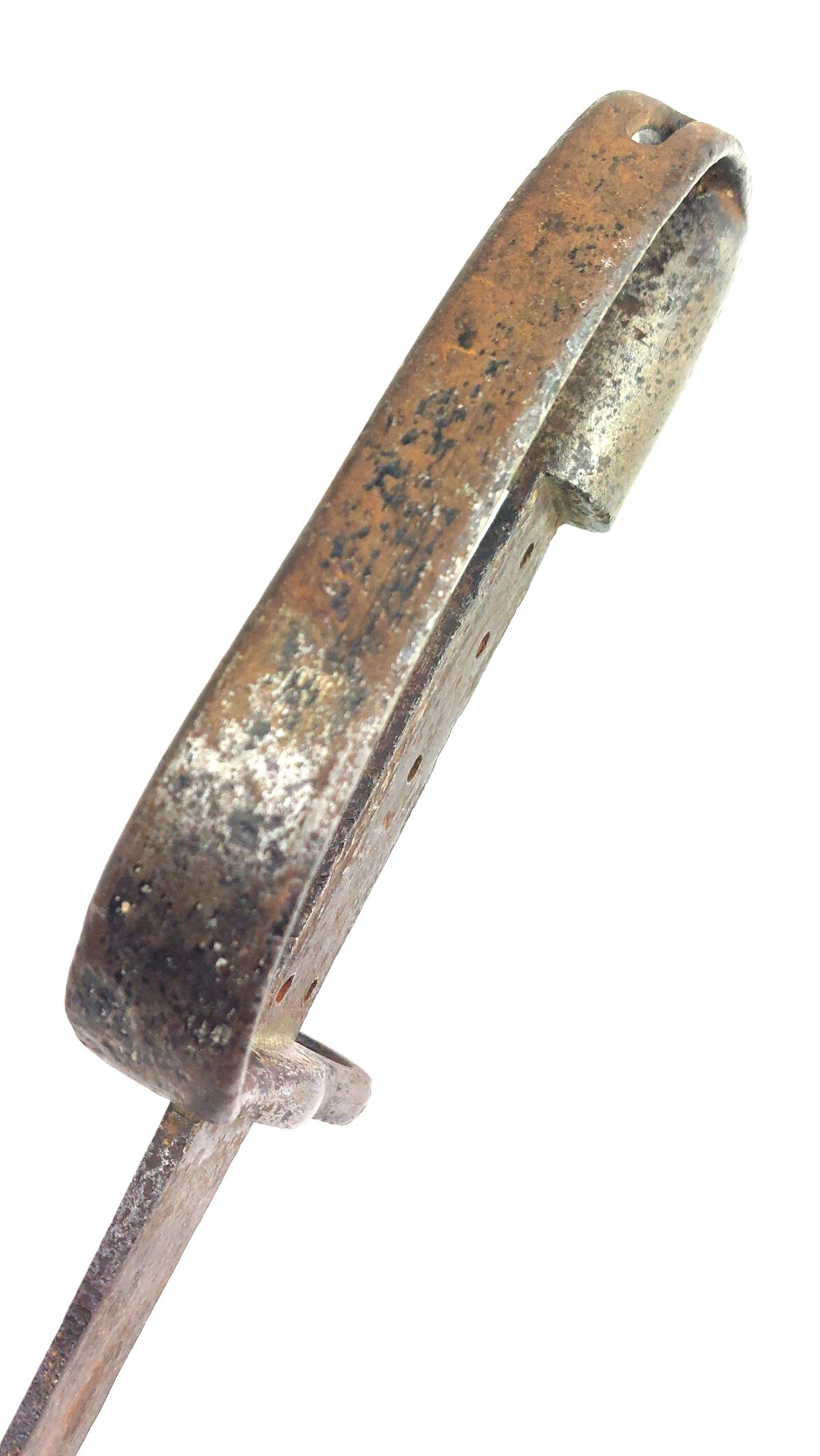
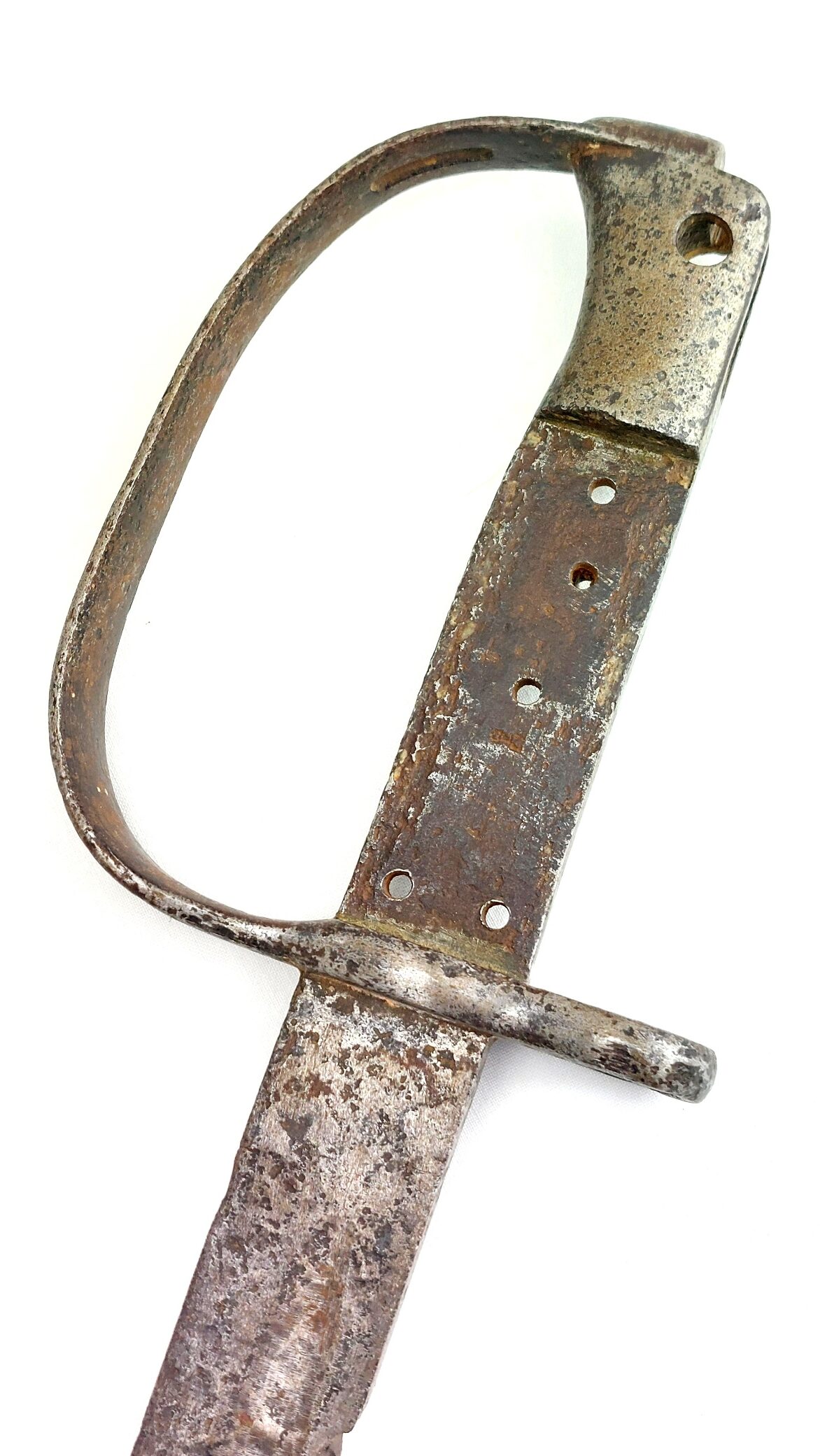
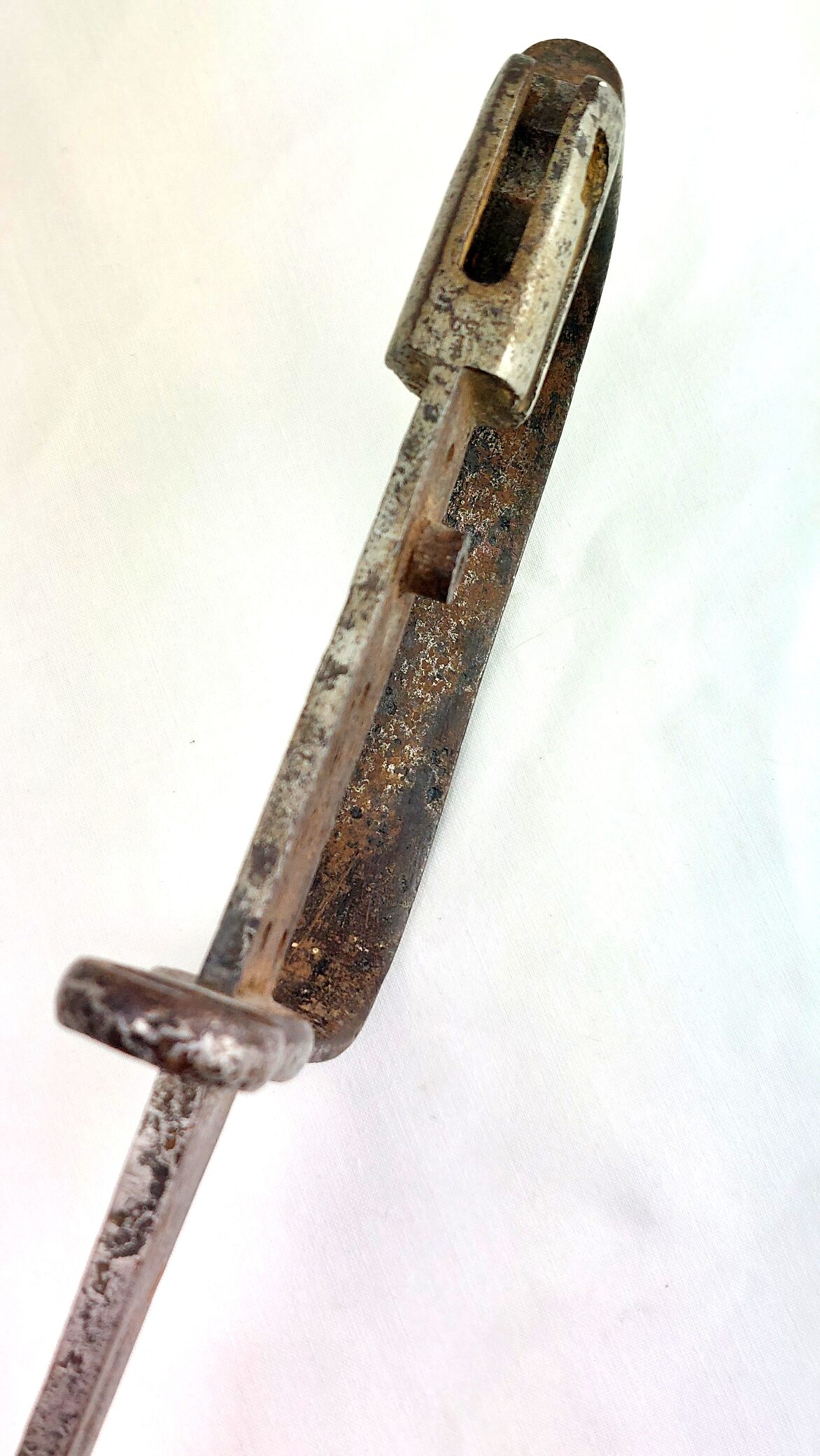
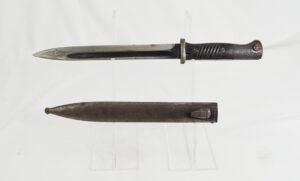
*British, c.1885 (Reissue 1899), Pattern 1879 Saw-Backed Sword Bayonet for the Martini-Henry Artillery Carbine Mk I*
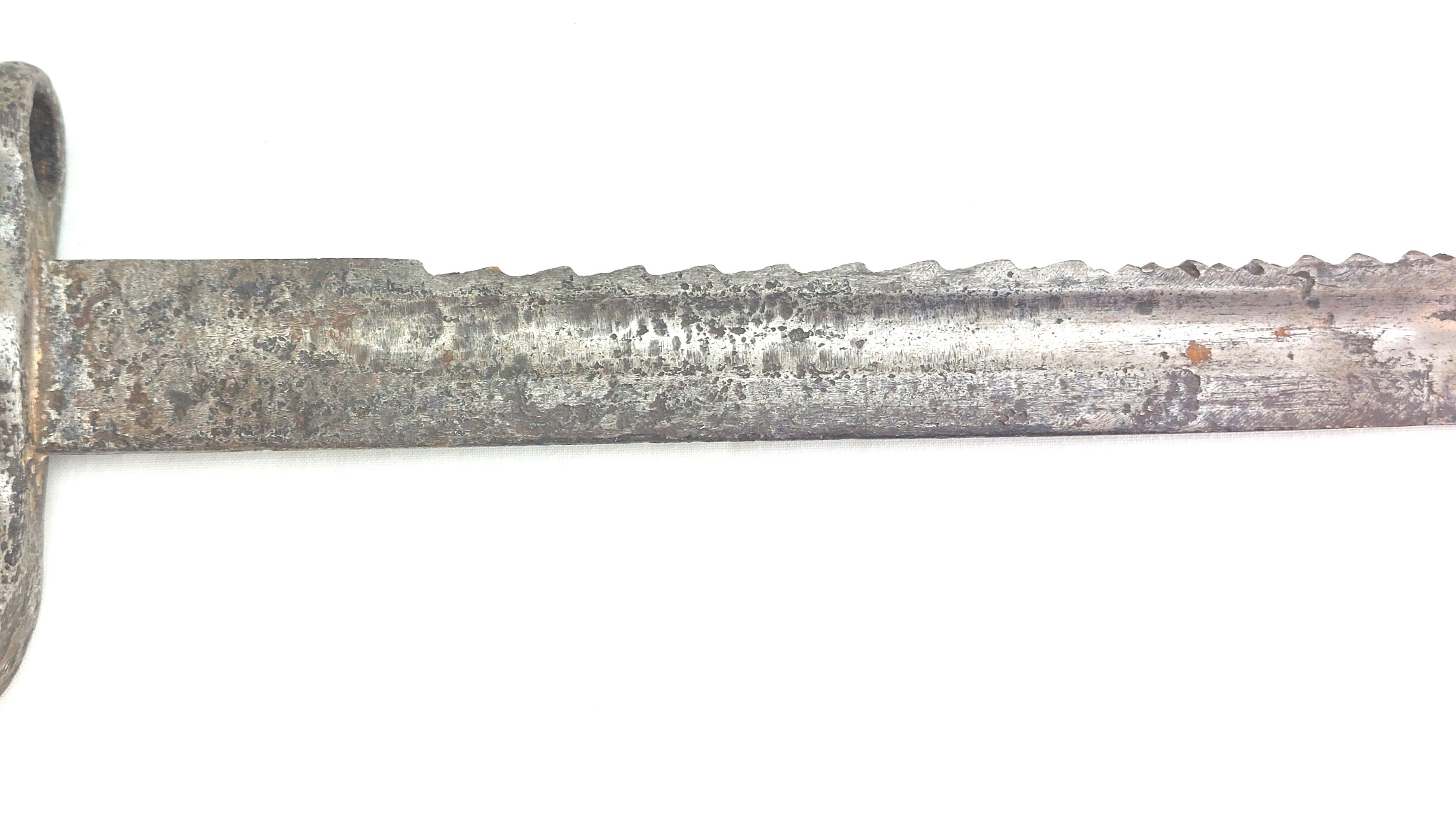
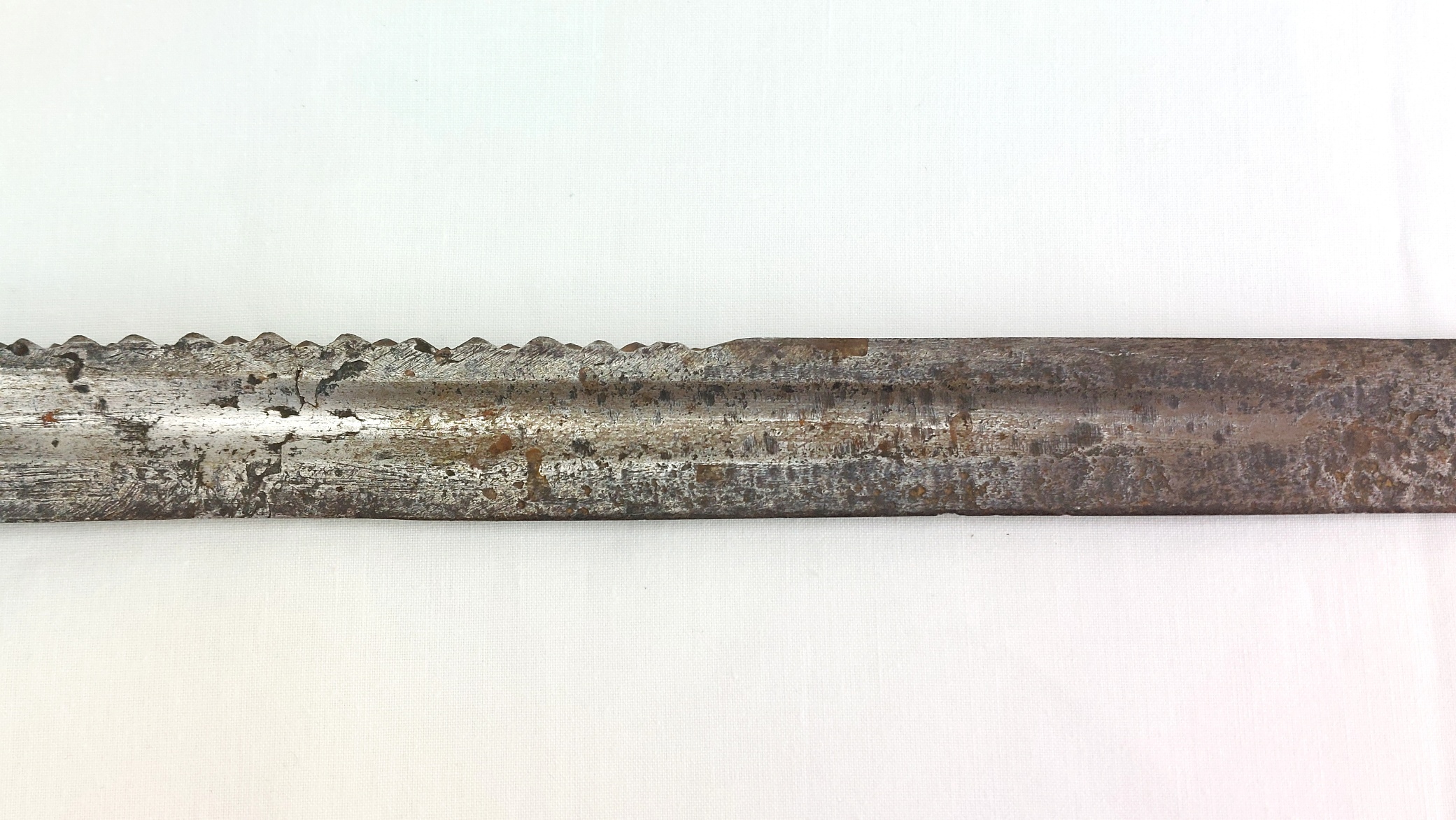
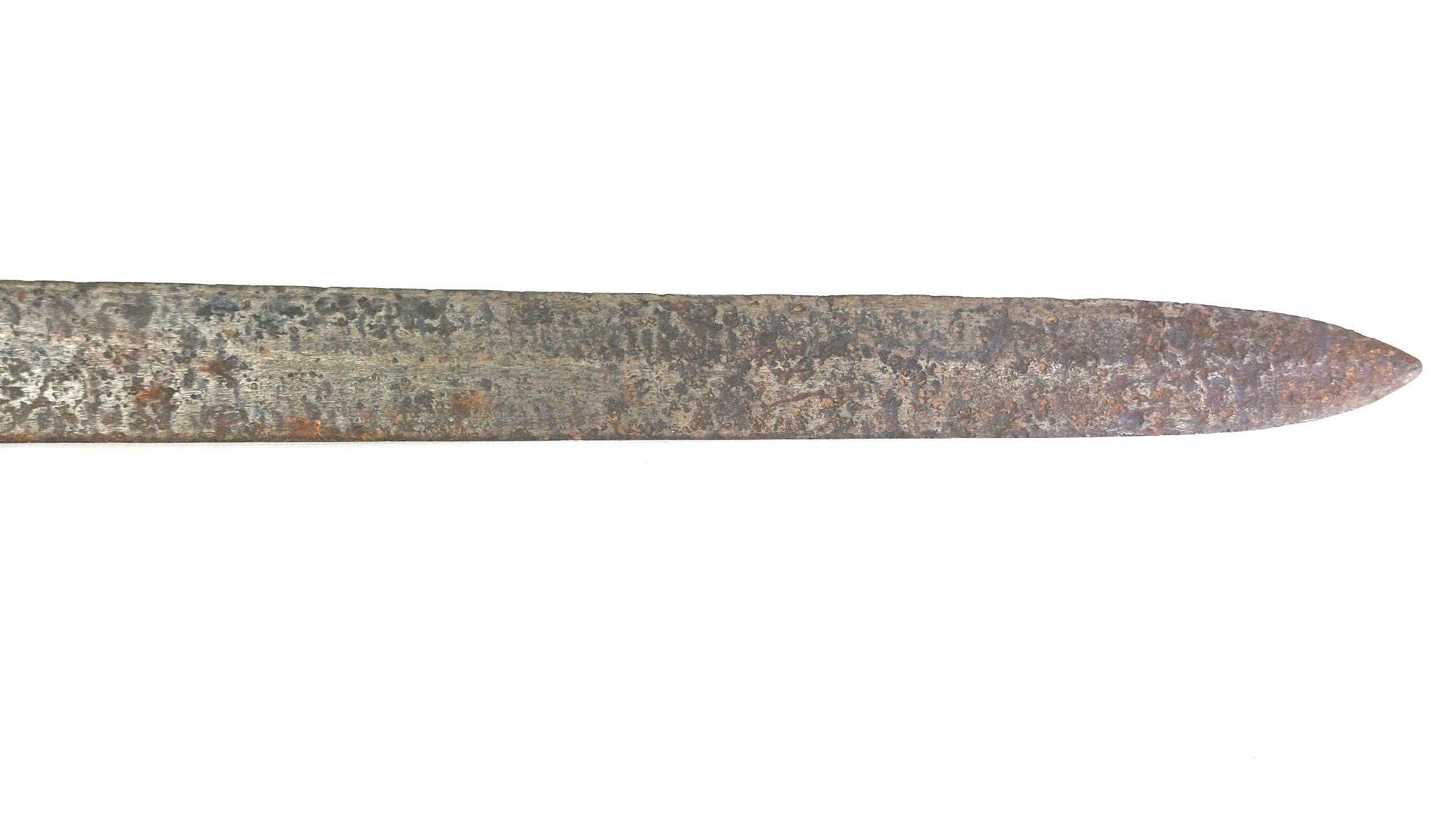
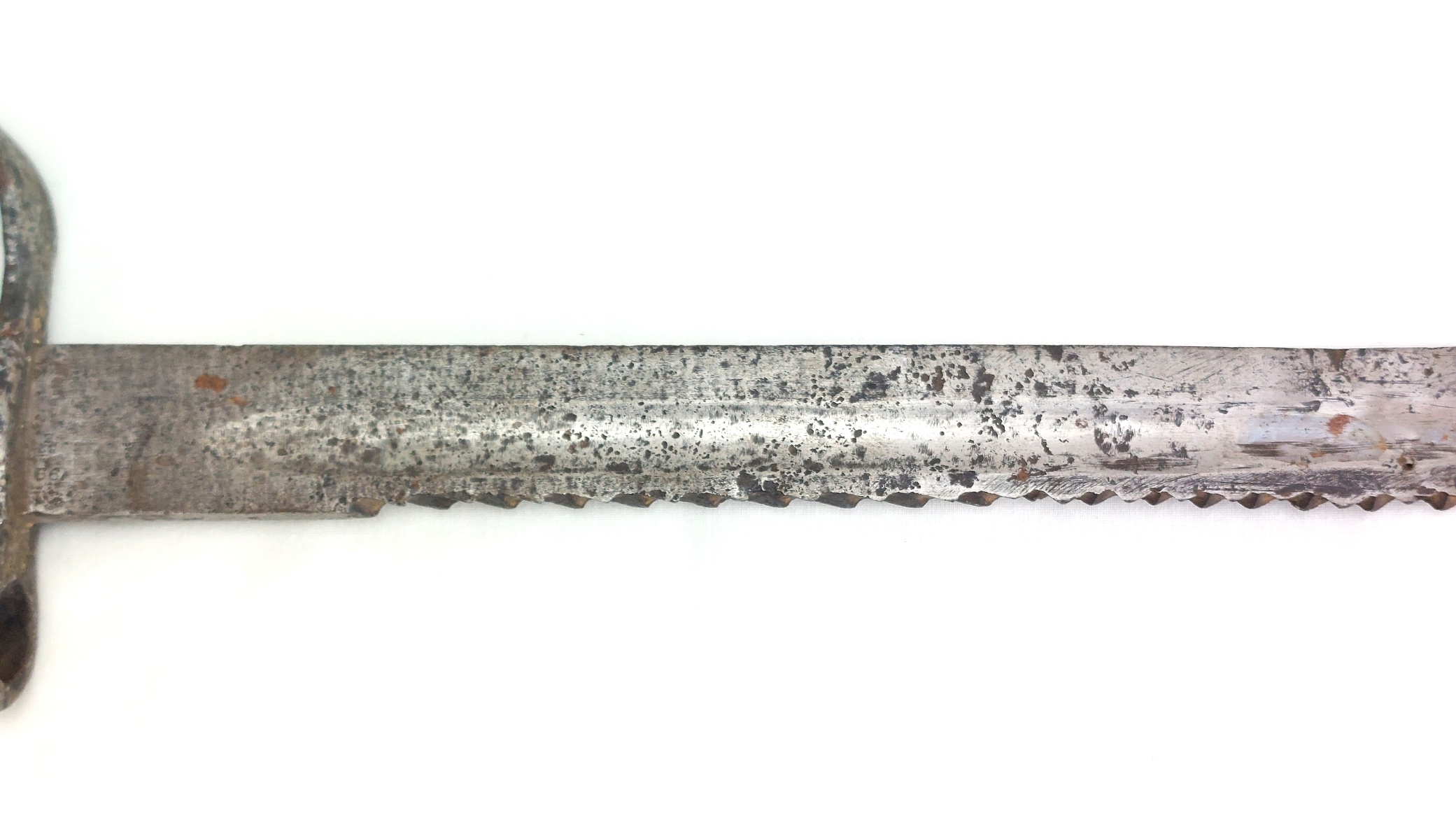
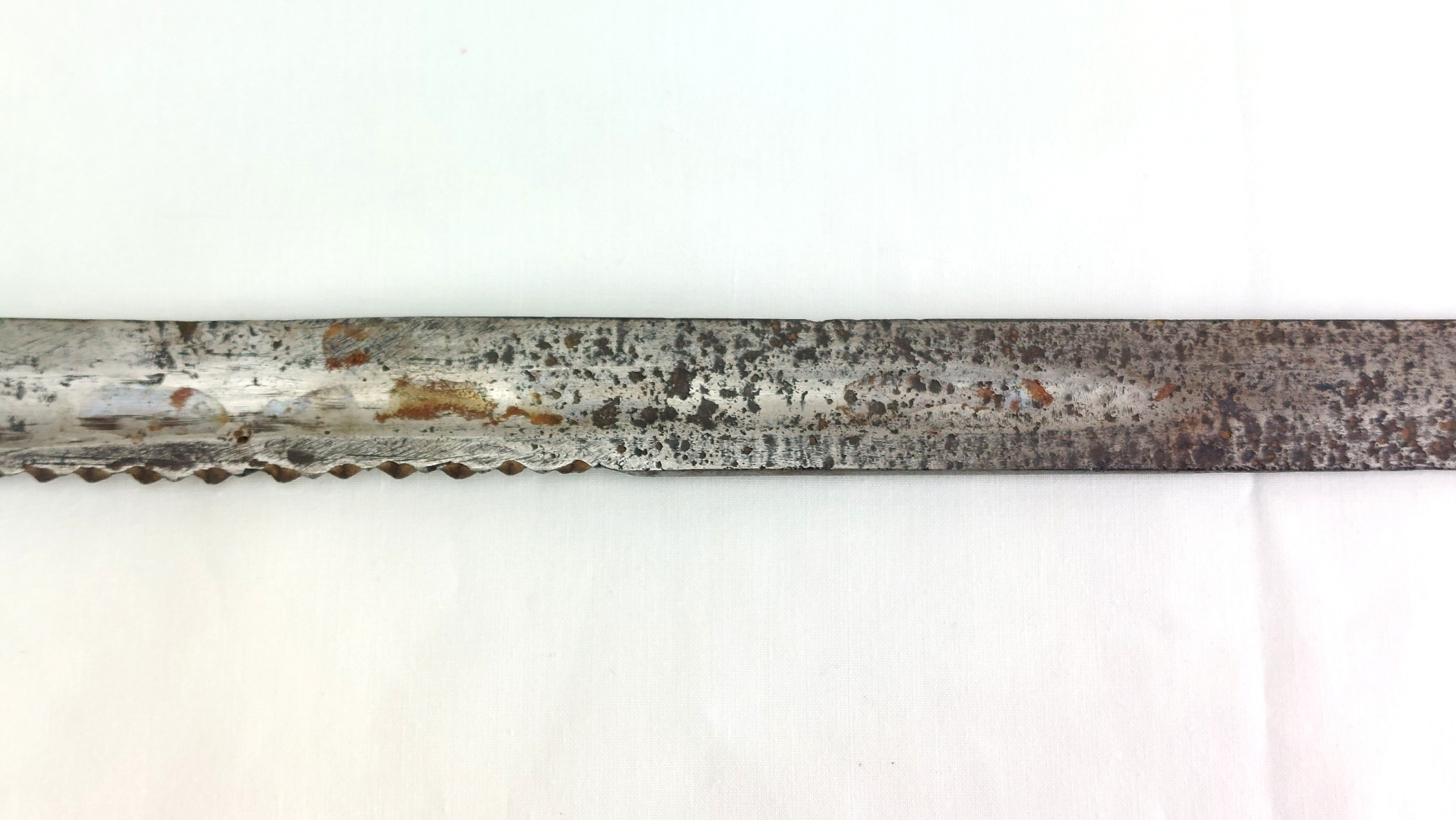
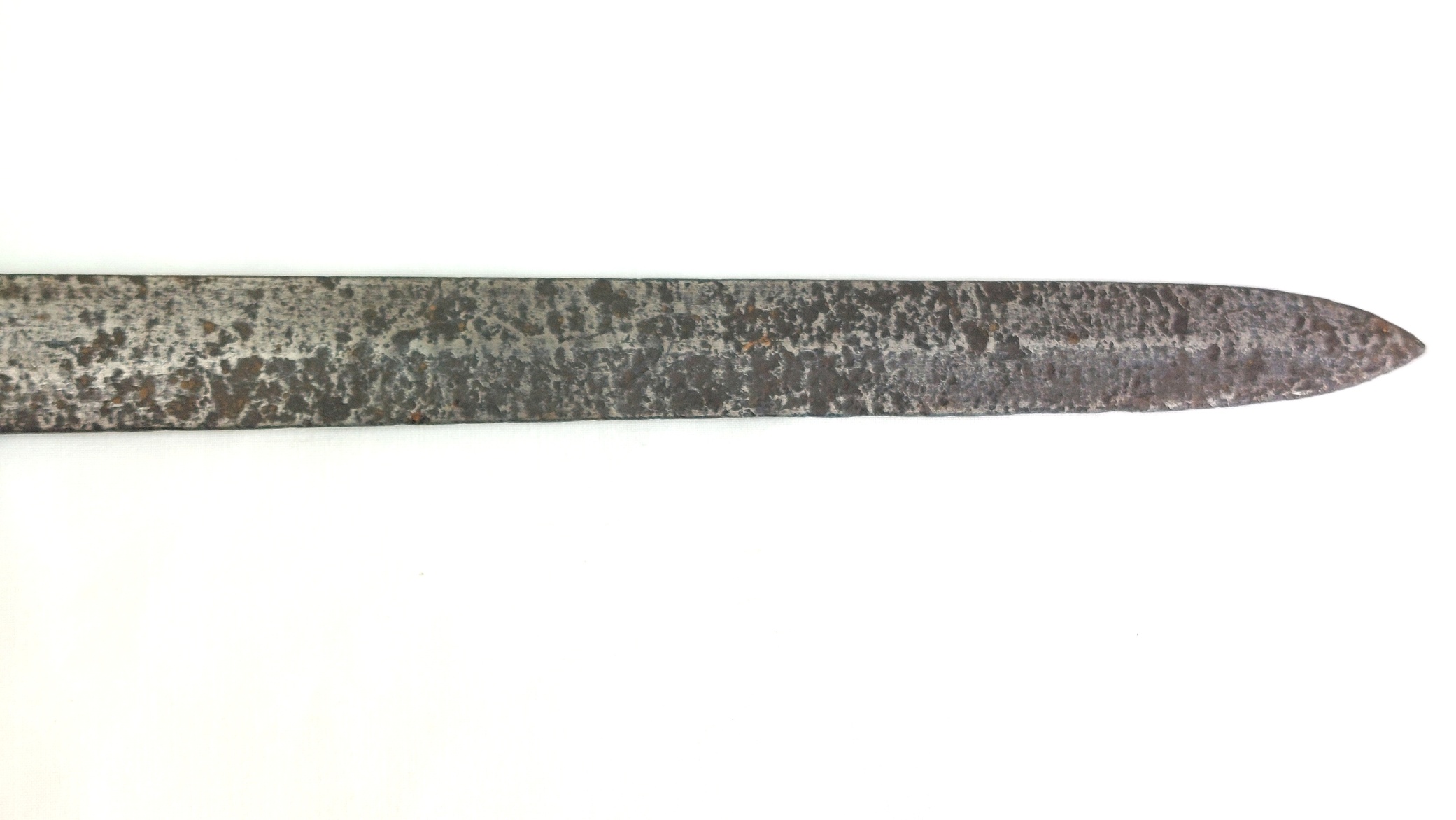
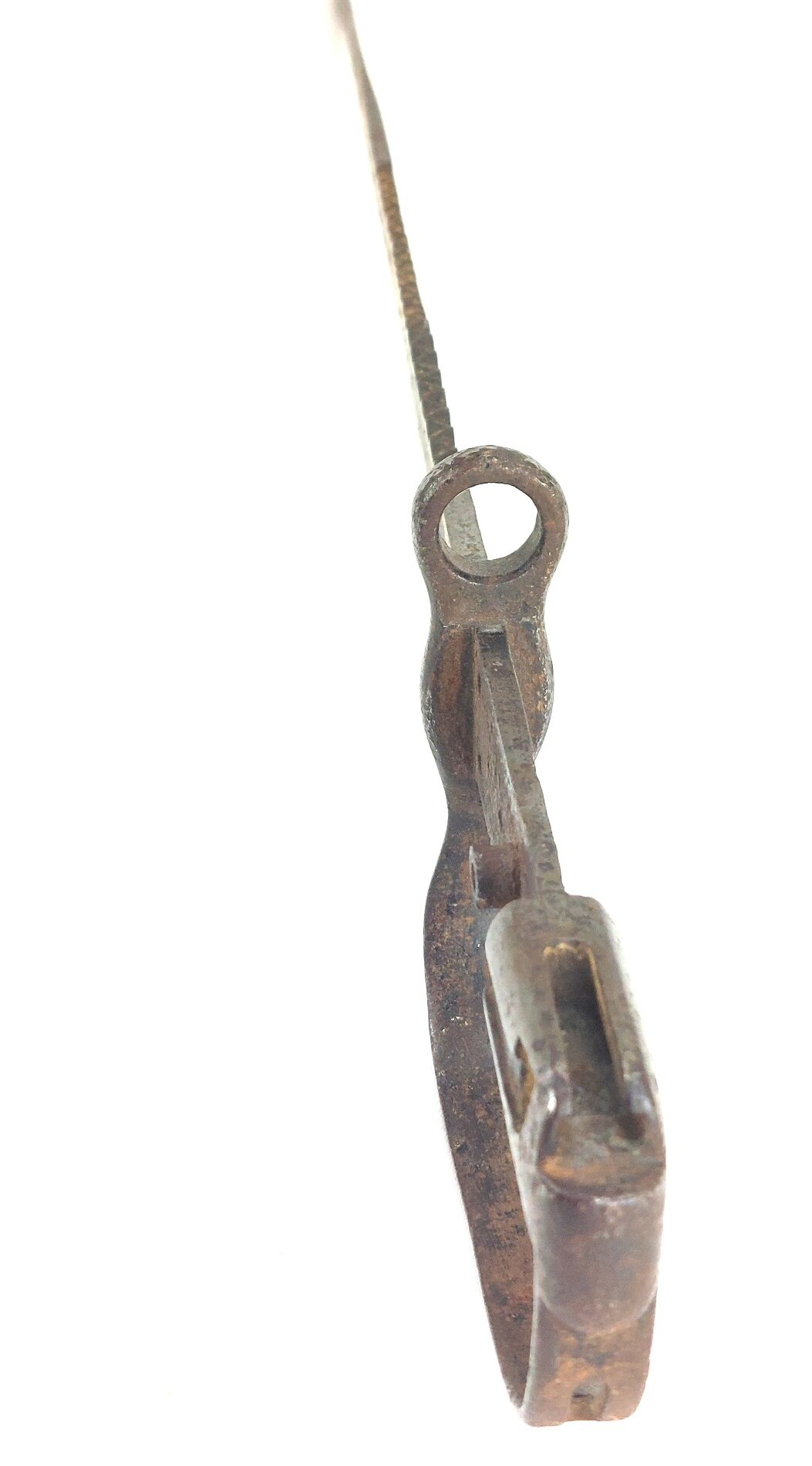
A scarce British Pattern 1879 saw-backed sword bayonet for the Martini-Henry Artillery Carbine Mk I. The blade measures 65 cm and is straight, broad, and robust, with 20 pairs of offset saw teeth cut into the spine above a short fuller that terminates and transitions into a pronounced medial ridge toward the point. The blade is double-edged for the final approximately 22 cm and finishes in a spear point.
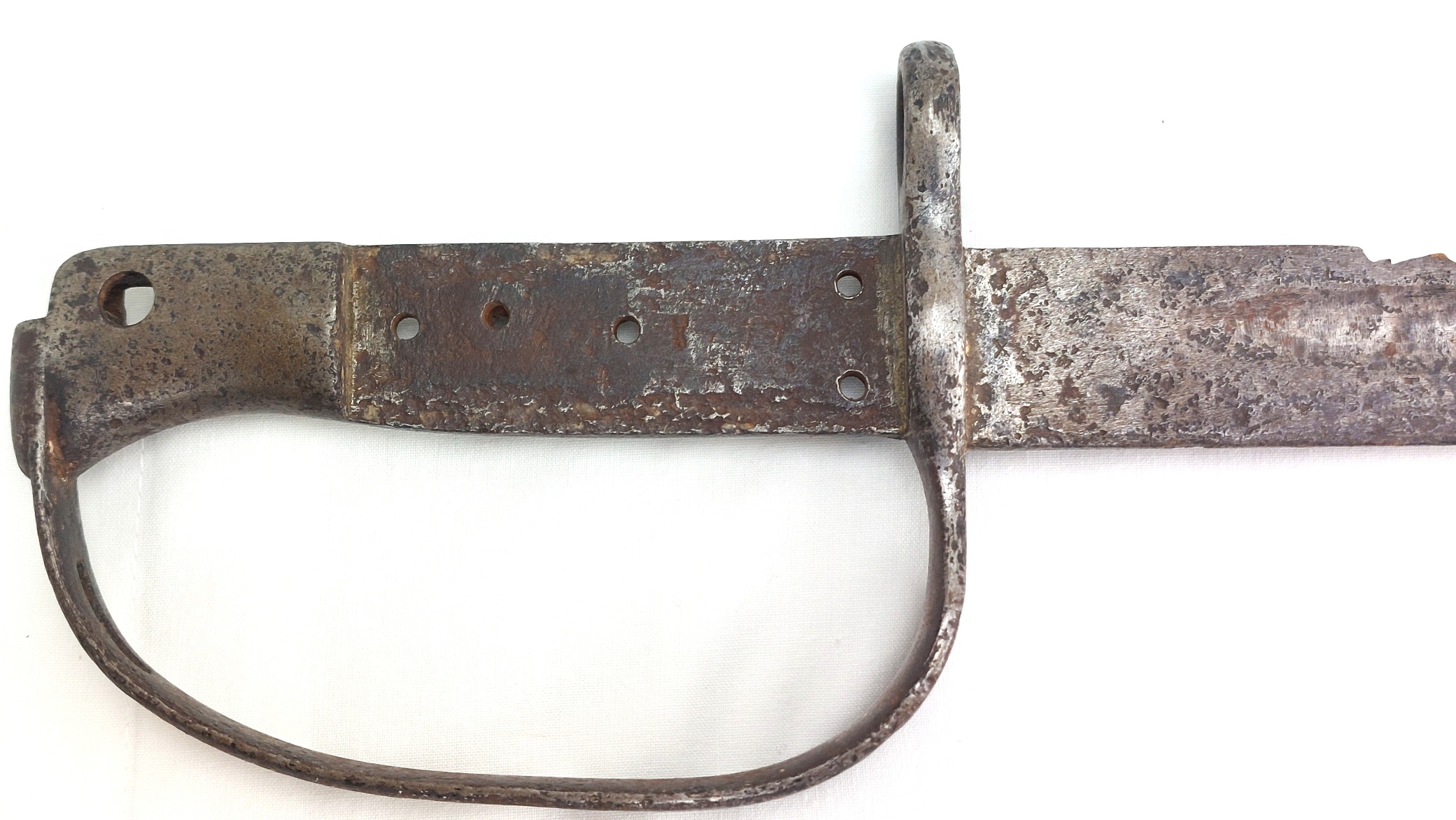
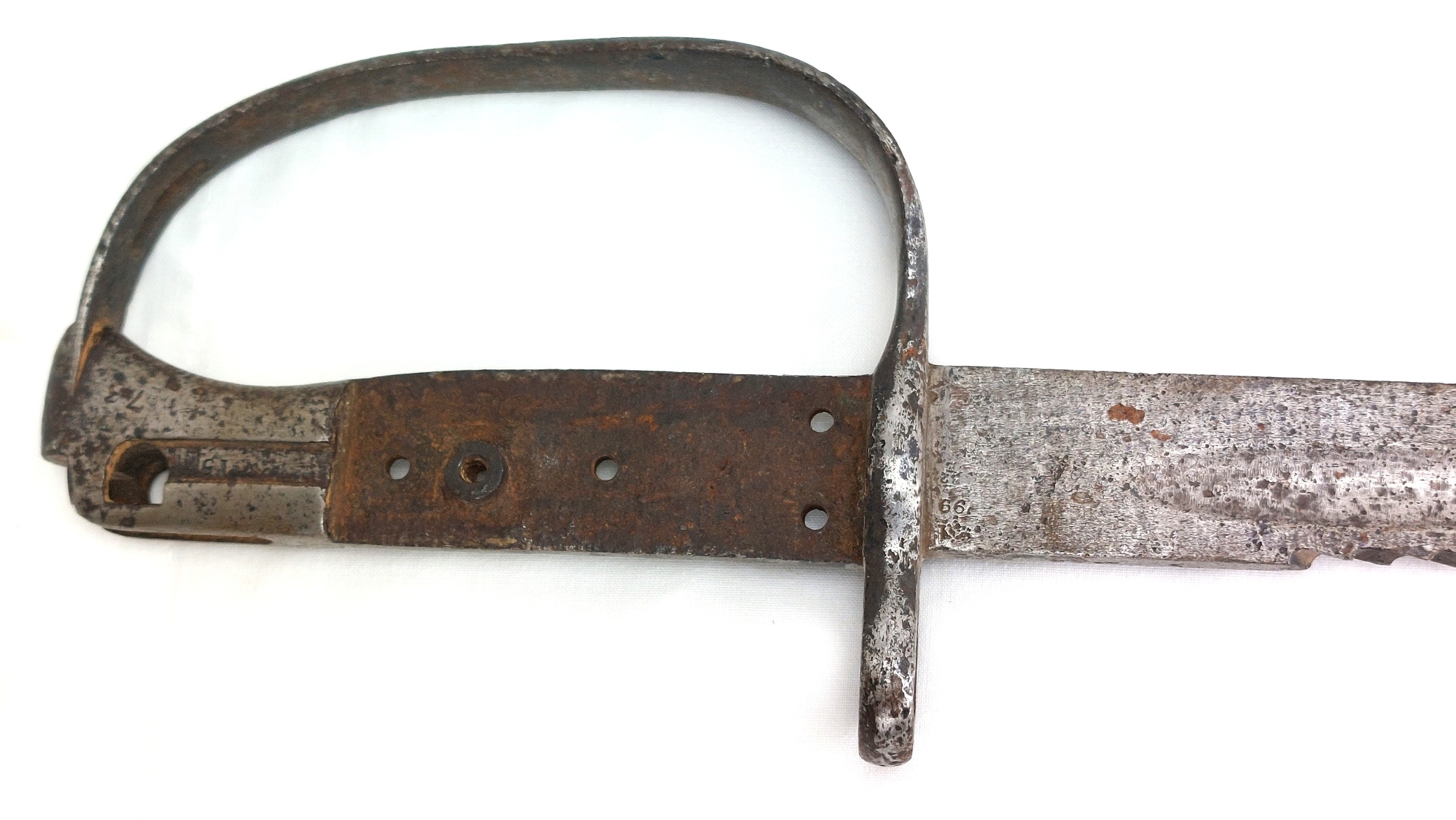
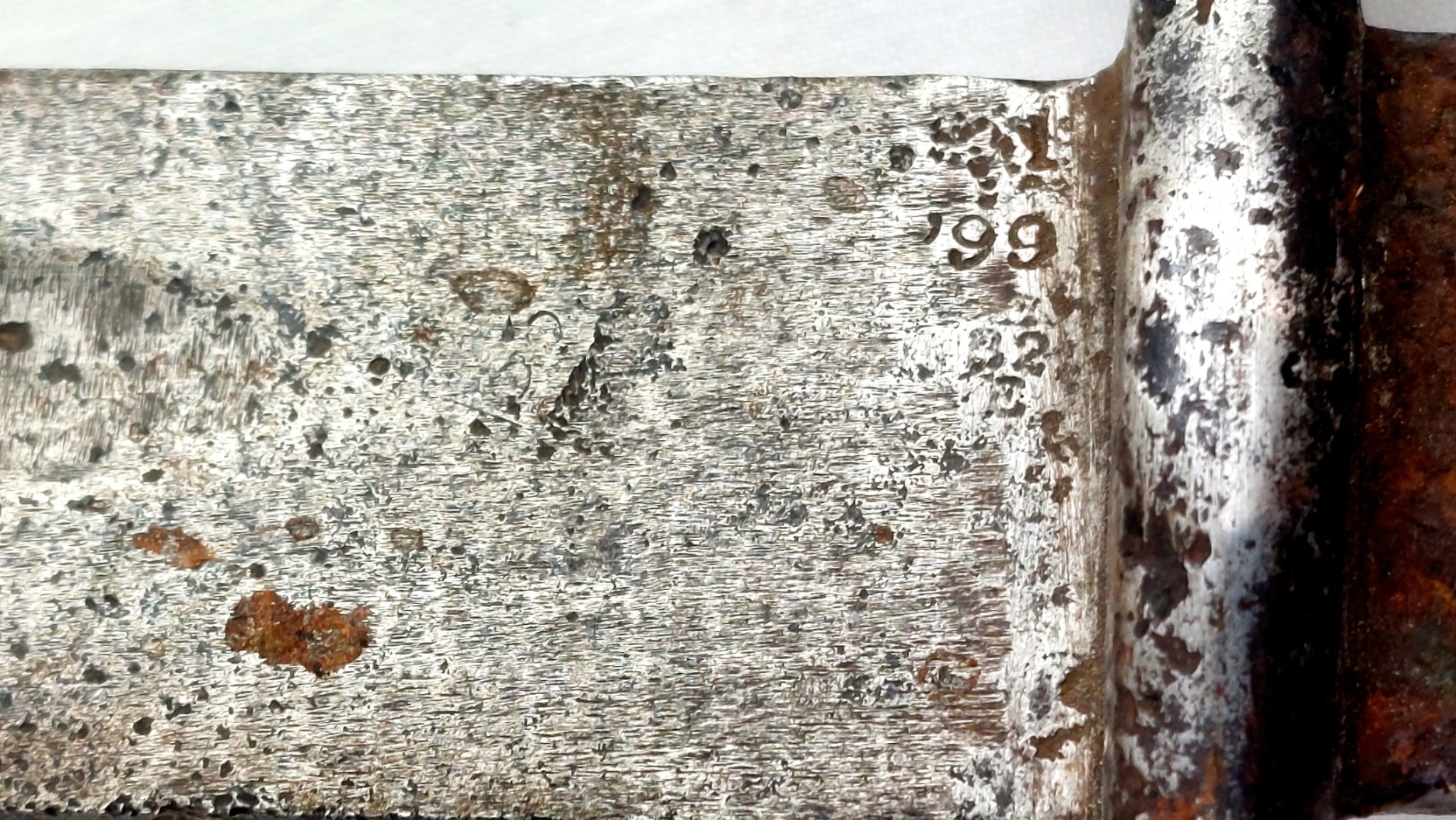
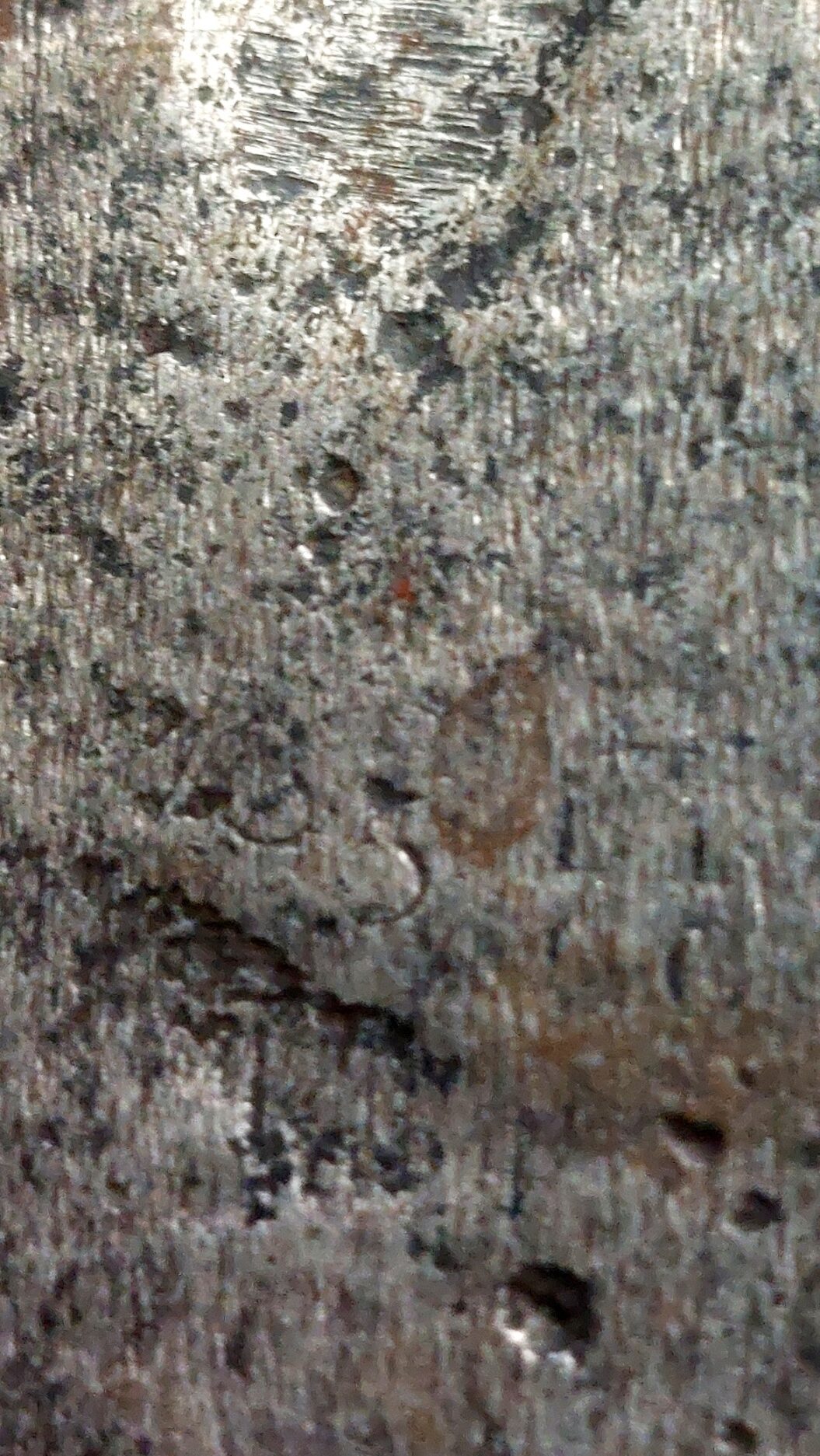
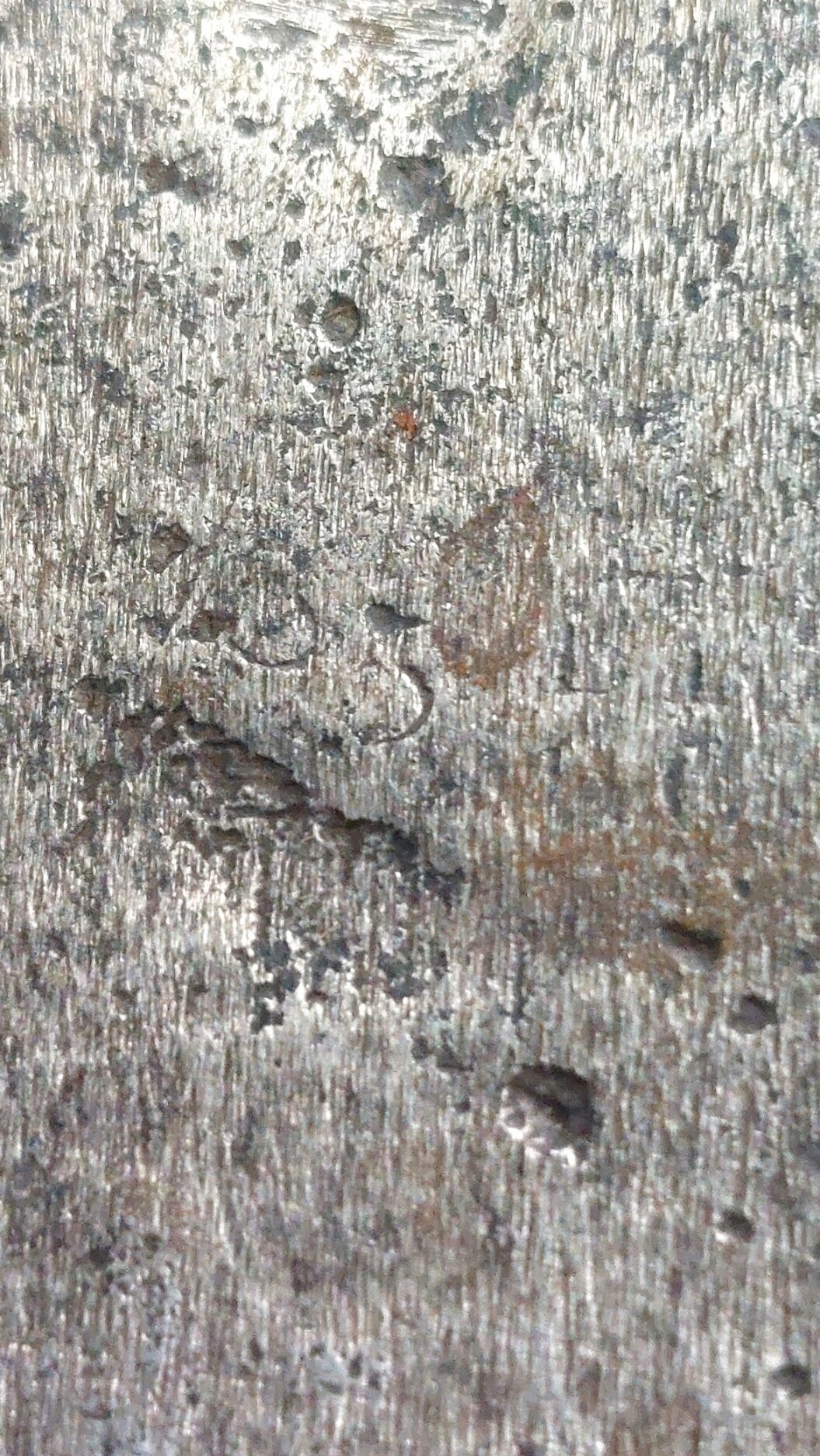
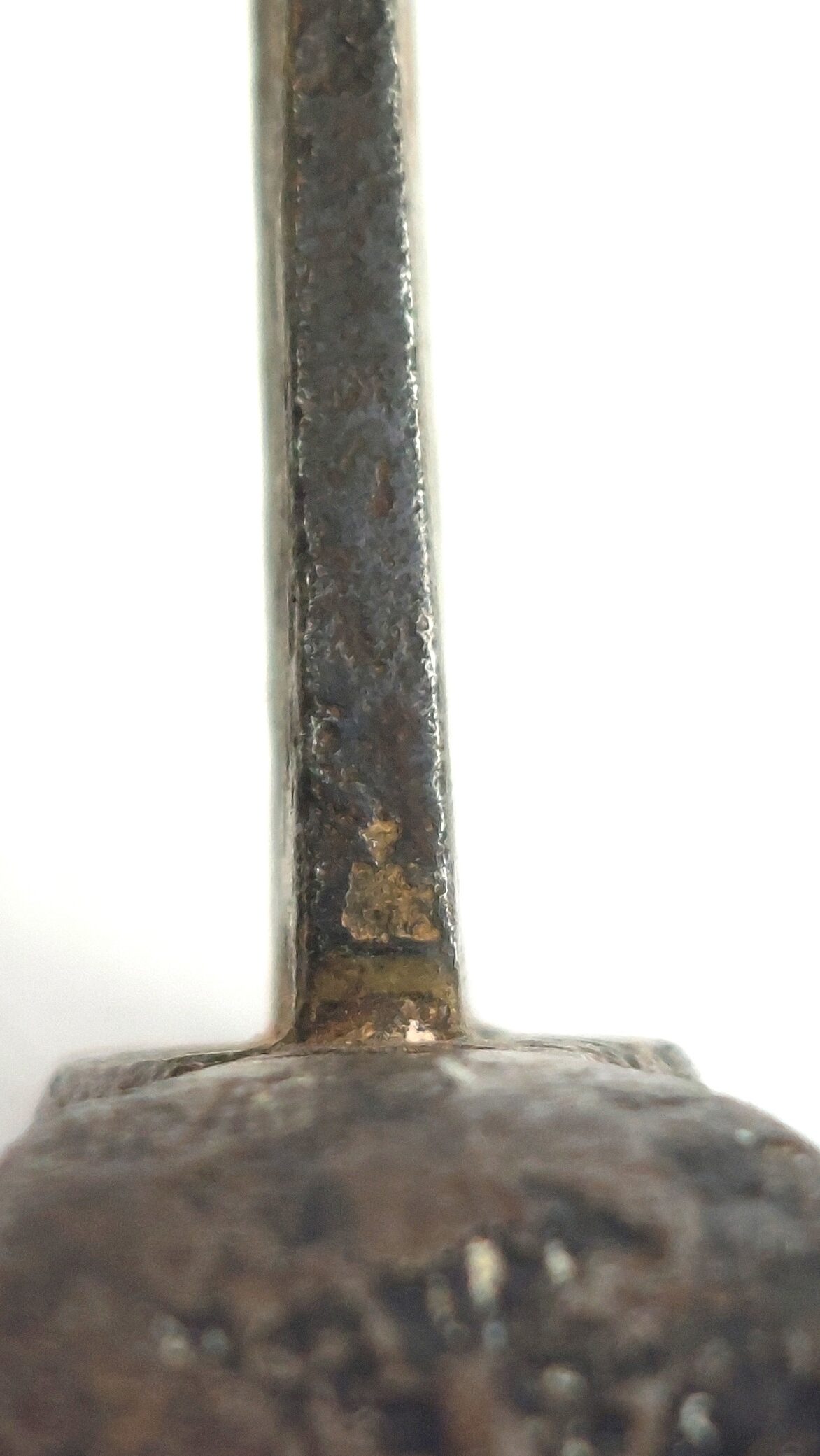
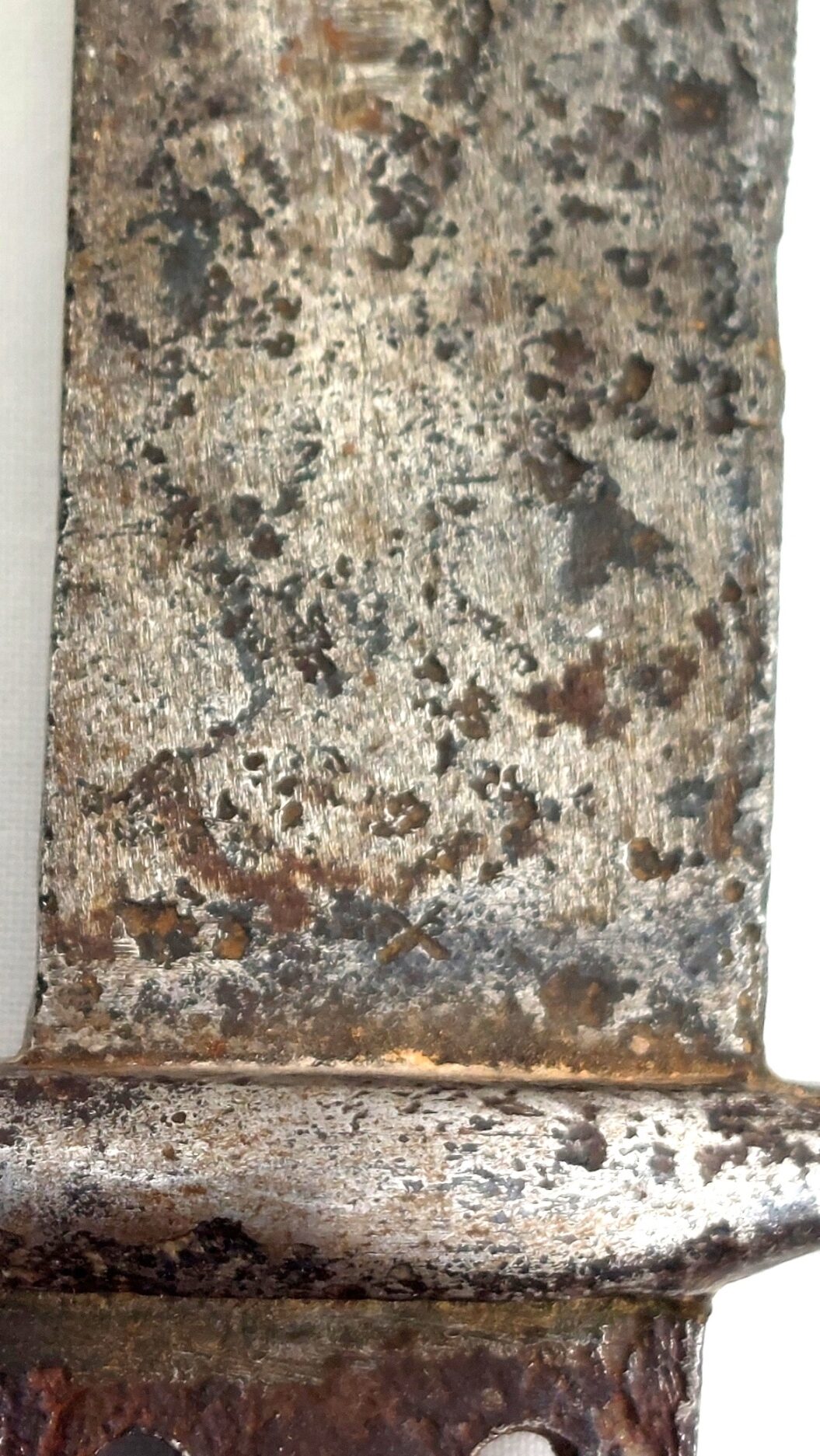
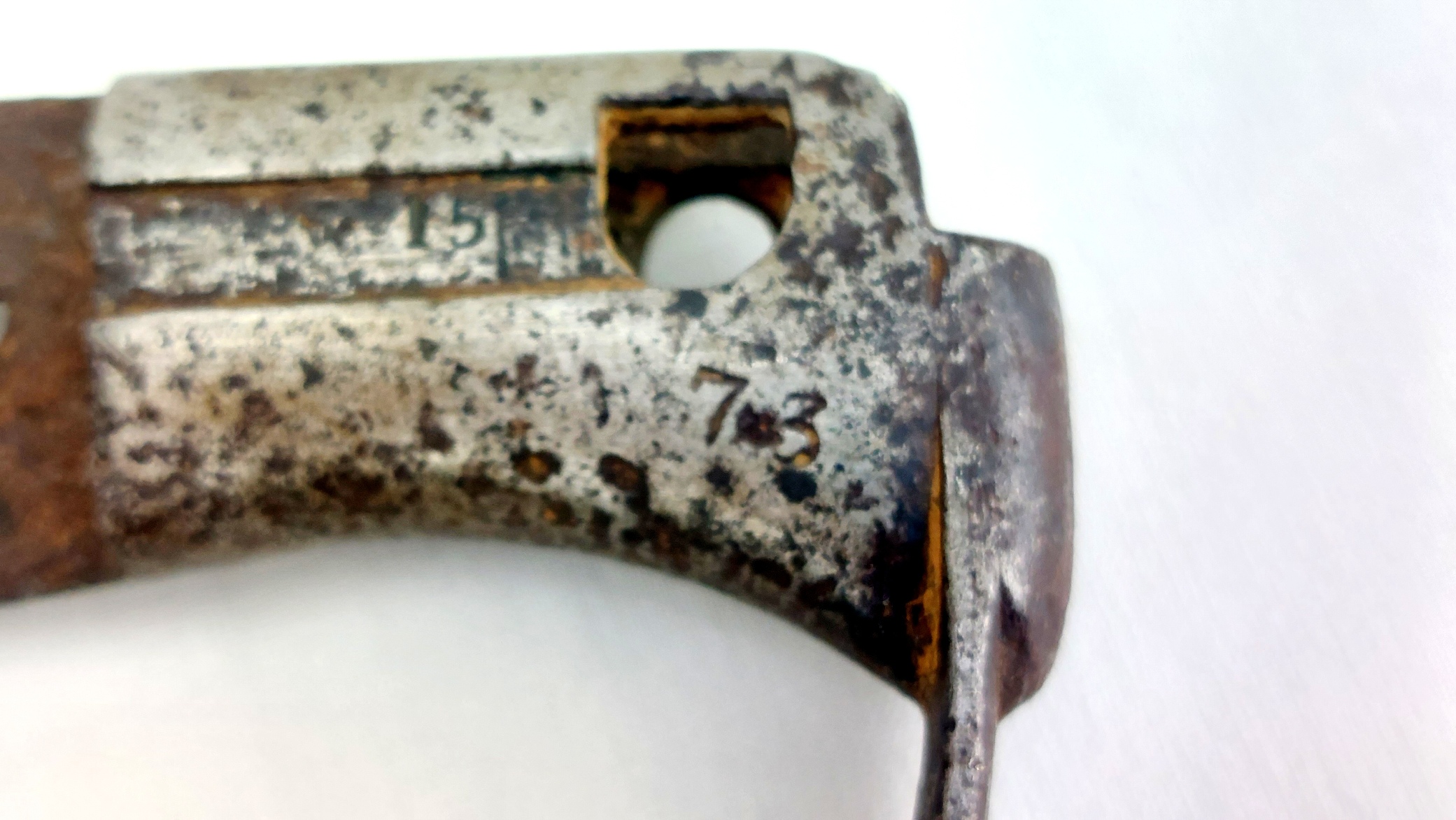
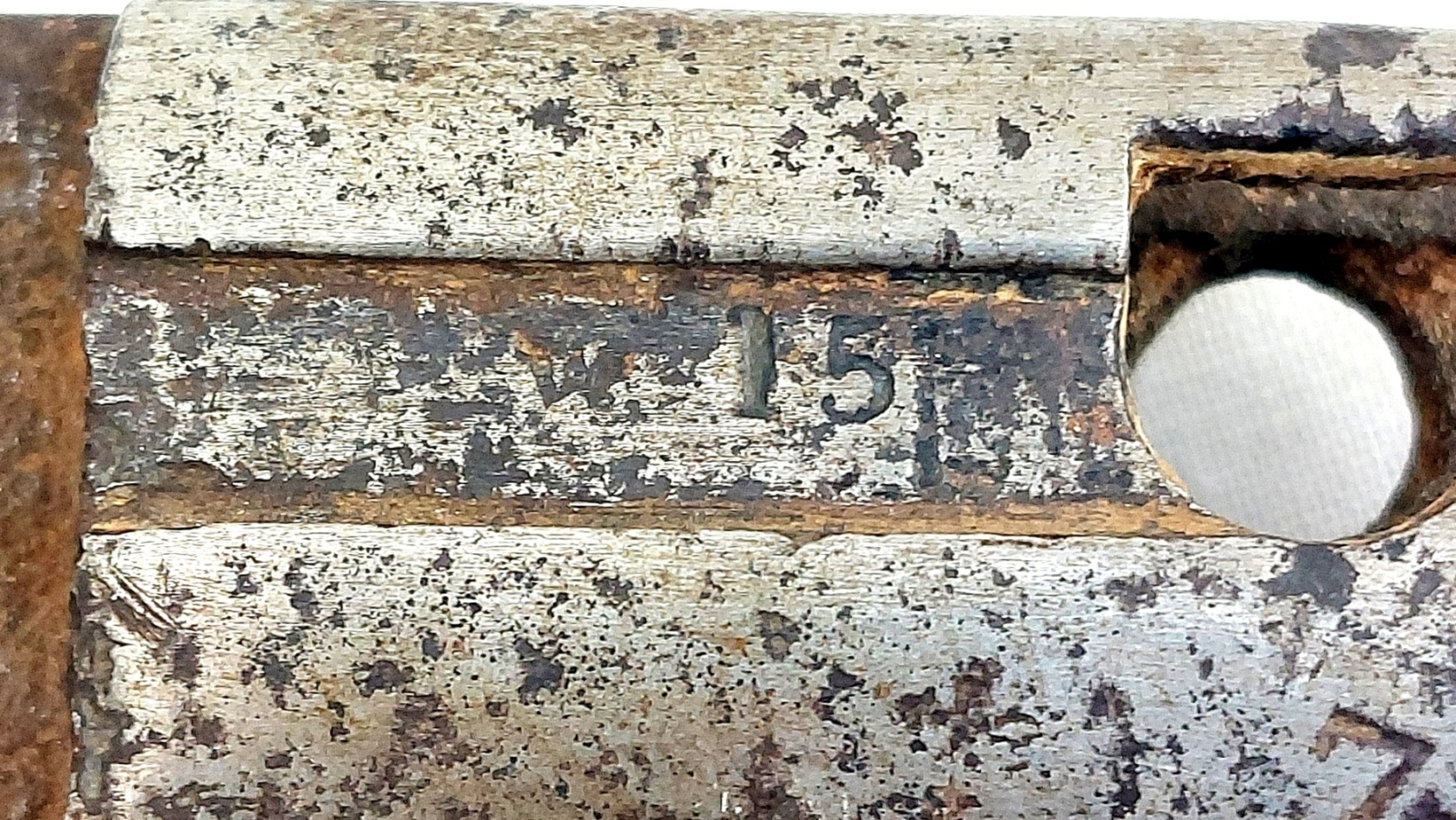
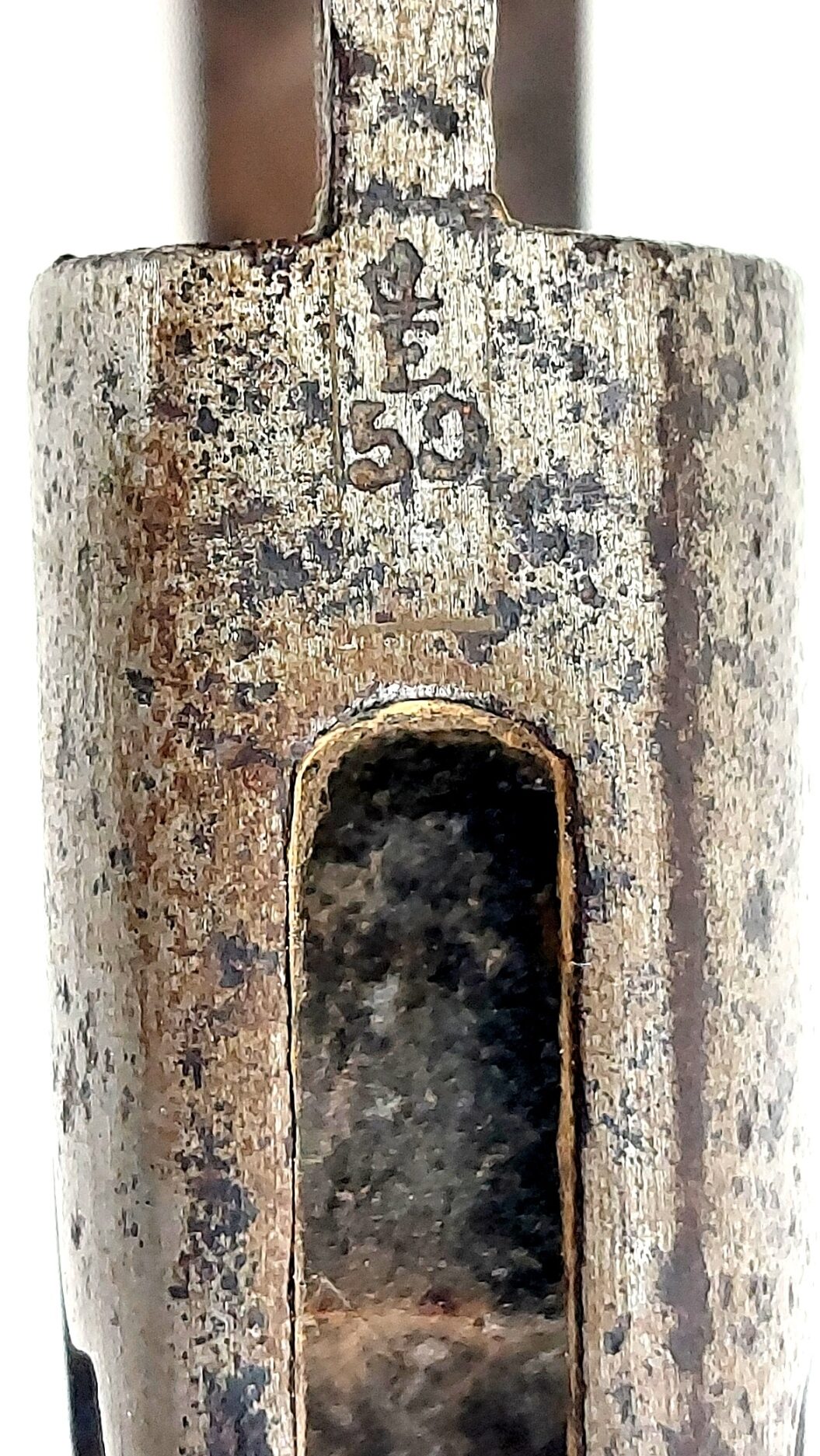
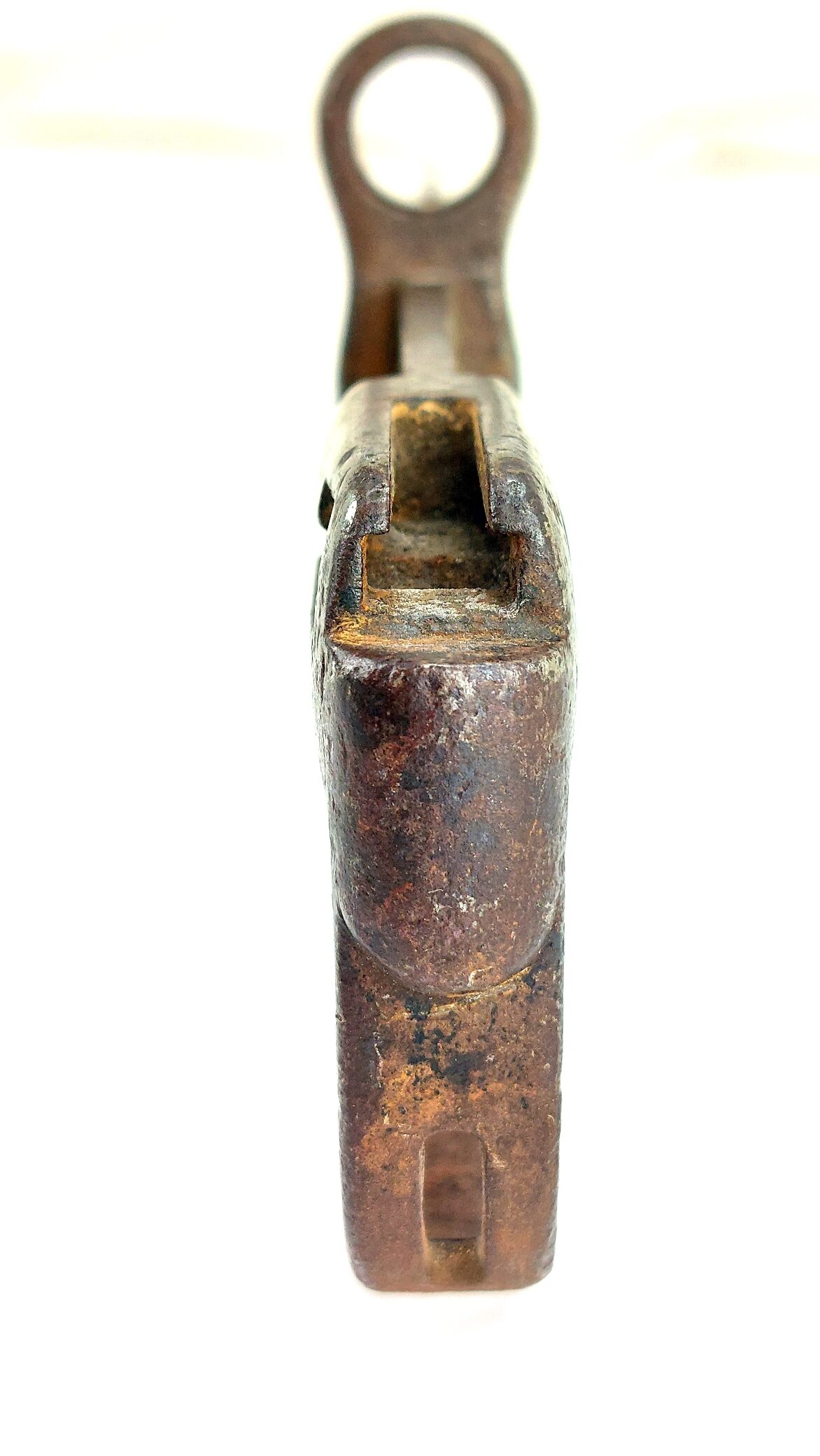
The ricasso bears a group of service and inspection markings, including a possible issue date “/85” (very faint), a clearly stamped reissue date “’99”, and Crown over 32 over E. The obverse shows an X bend-test mark, with an additional crown proof visible on the spine. The pommel is stamped “1173”, while “15” is present beneath the bayonet pin position. At the top of the bayonet slot is a Crown over E over 50 mark, with further crown proof marks visible on the tang.
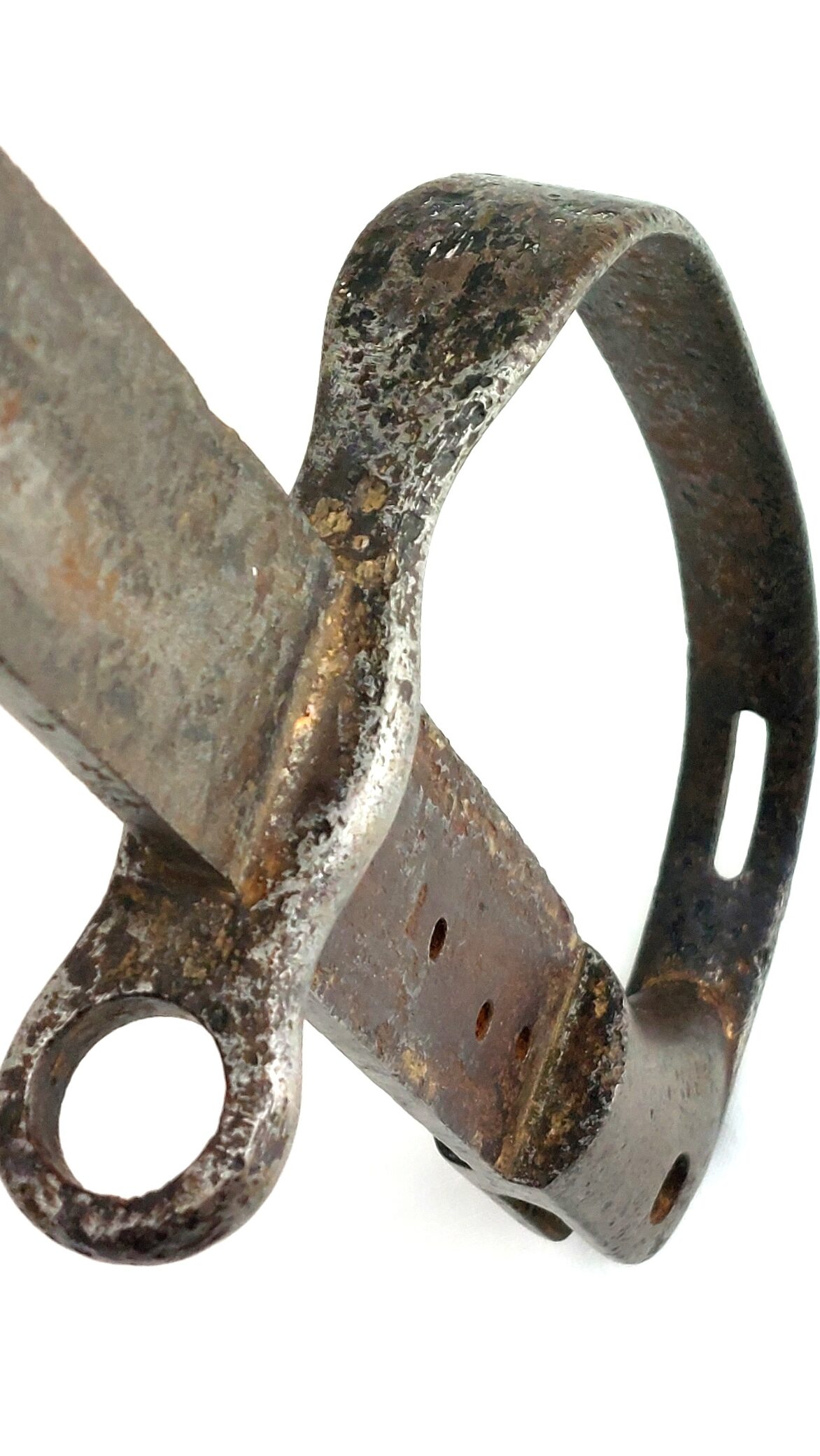
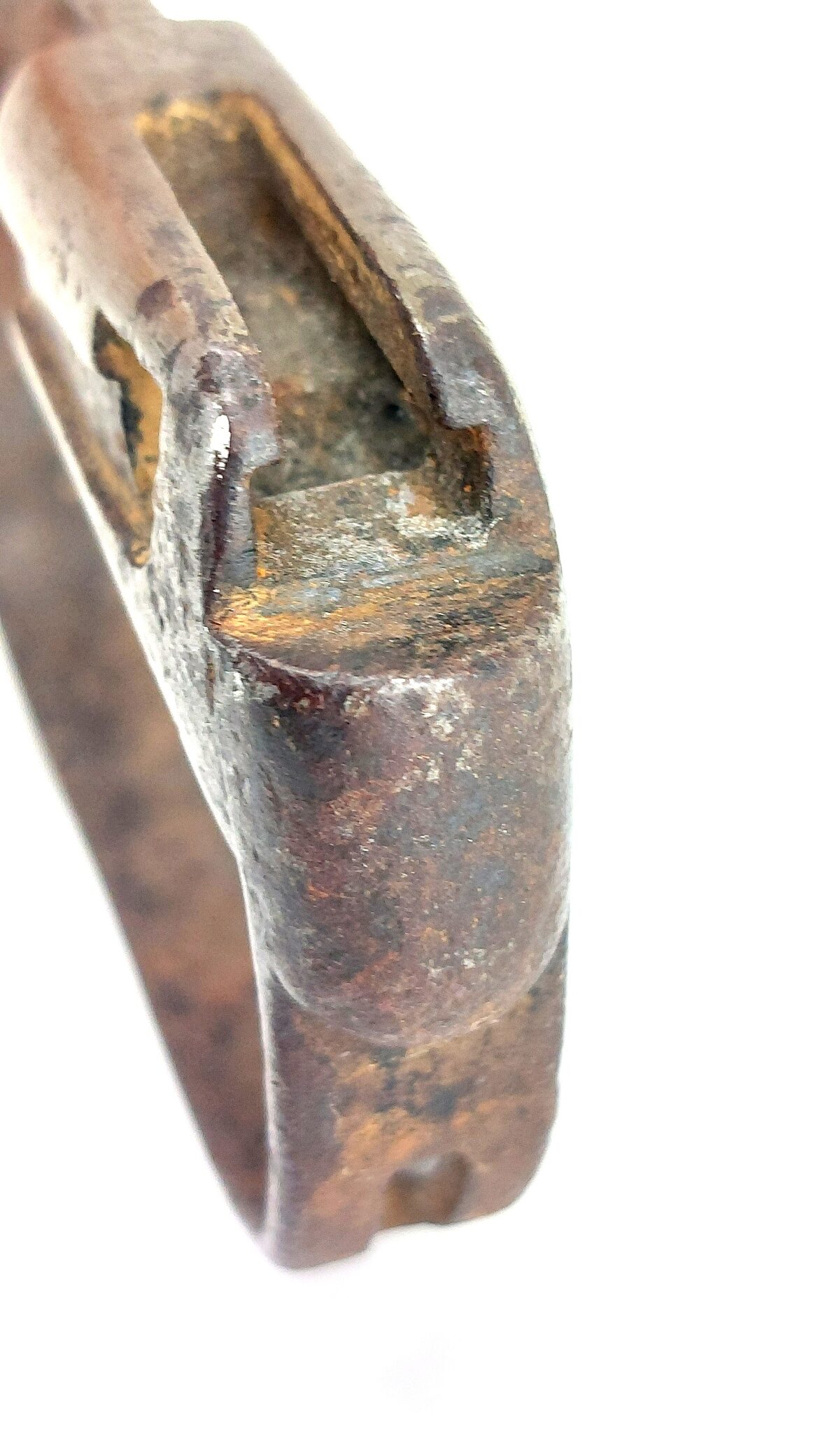
The hilt is fitted with the distinctive steel D-guard associated with the artillery sword bayonet pattern. The original chequered leather grip scales are absent, as is the bayonet mortice assembly, leaving the tang and grip rivet holes exposed. No scabbard is present.
Approx. Measurements – Blade length: 65 cm. Overall length: 79 cm.
Historical Note: The Pattern 1879 saw-backed sword bayonet was developed alongside the Martini-Henry Artillery Carbine by the Royal Small Arms Factory at Enfield. Two bayonet patterns were initially evaluated before approval was given to the long 25.75-inch bladed saw-backed sword bayonet. Initial production of approximately 5,000 artillery carbines began in 1878, with the bayonet entering service the following year.
Although officially in service for a relatively short period—from 1879 until about 1900—these artillery sword bayonets saw extensive active use. They accompanied British forces in India and Afghanistan, Egypt and the Sudan, the South African Boer Wars, and China during the Boxer Rebellion. In practice, they functioned as much as short swords as bayonets, with the sawback providing limited utility for clearing brush and light timber in the field. The 1899 reissue marking on this example suggests refurbishment and continued service into the Boer War period.
*Condition* Overall in heavily used service condition. The blade shows extensive pitting, corrosion, and surface wear throughout, with the saw teeth remaining visible but worn. The steel D-guard is intact but heavily worn. Grip scales and bayonet mortice are missing. No scabbard. Please see photographs as part of the condition report.
*In order to complete the online purchase we will require a picture/scan of a photo ID (Driving Licence, Passport or an official document with a recent picture). If you don't posses any such document please call to buy. If we consider that the proof of ID is incorect or insuficient, we reserve the right to cancel the transaction.
*We also reserve the right to cancel the transaction with a full refund if there is any suspicion that the provided item will be used in any way contrary to the laws and legislation of UK.