~ WW2 Nazi German Third Reich U-Boat Bronze Combat Clasp ~
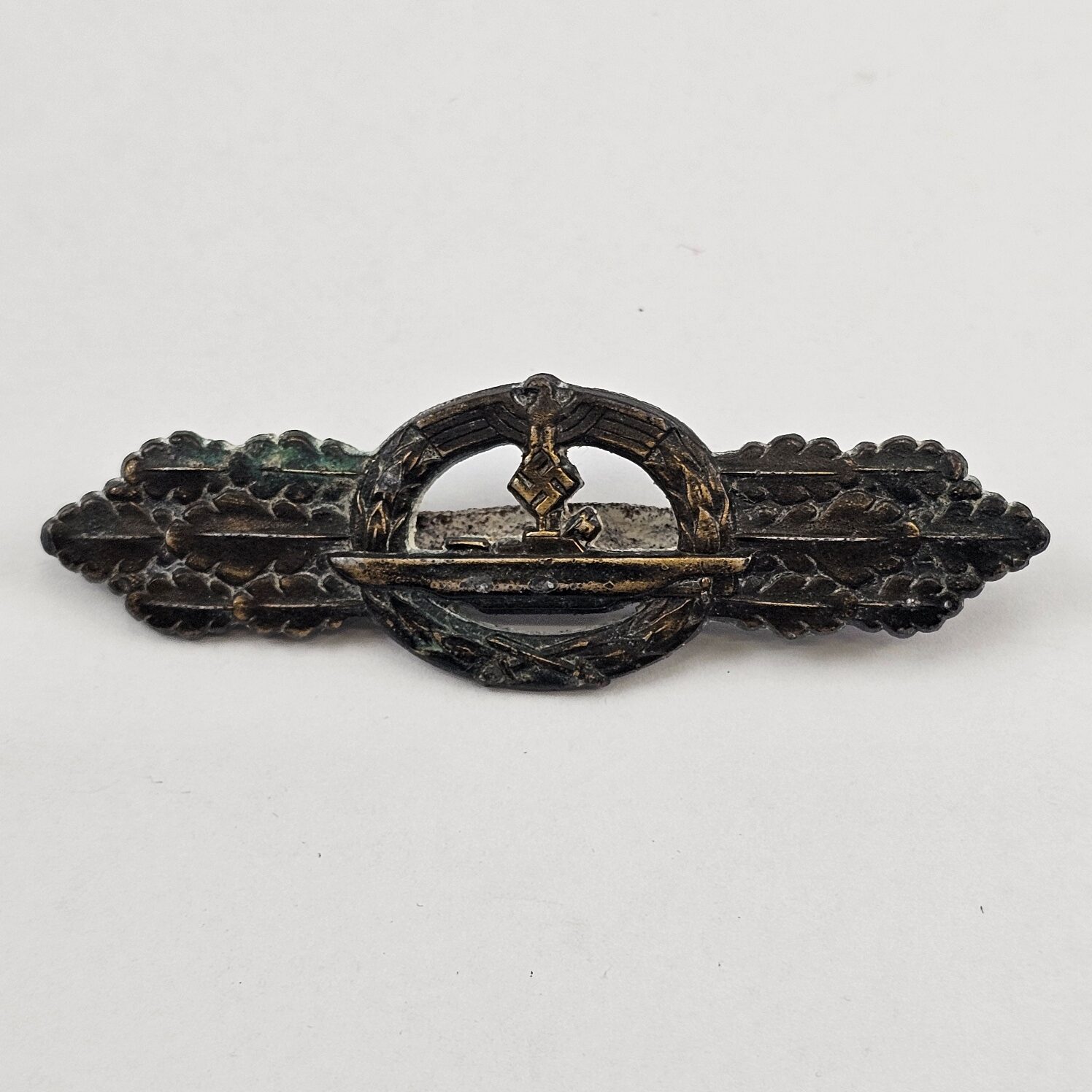
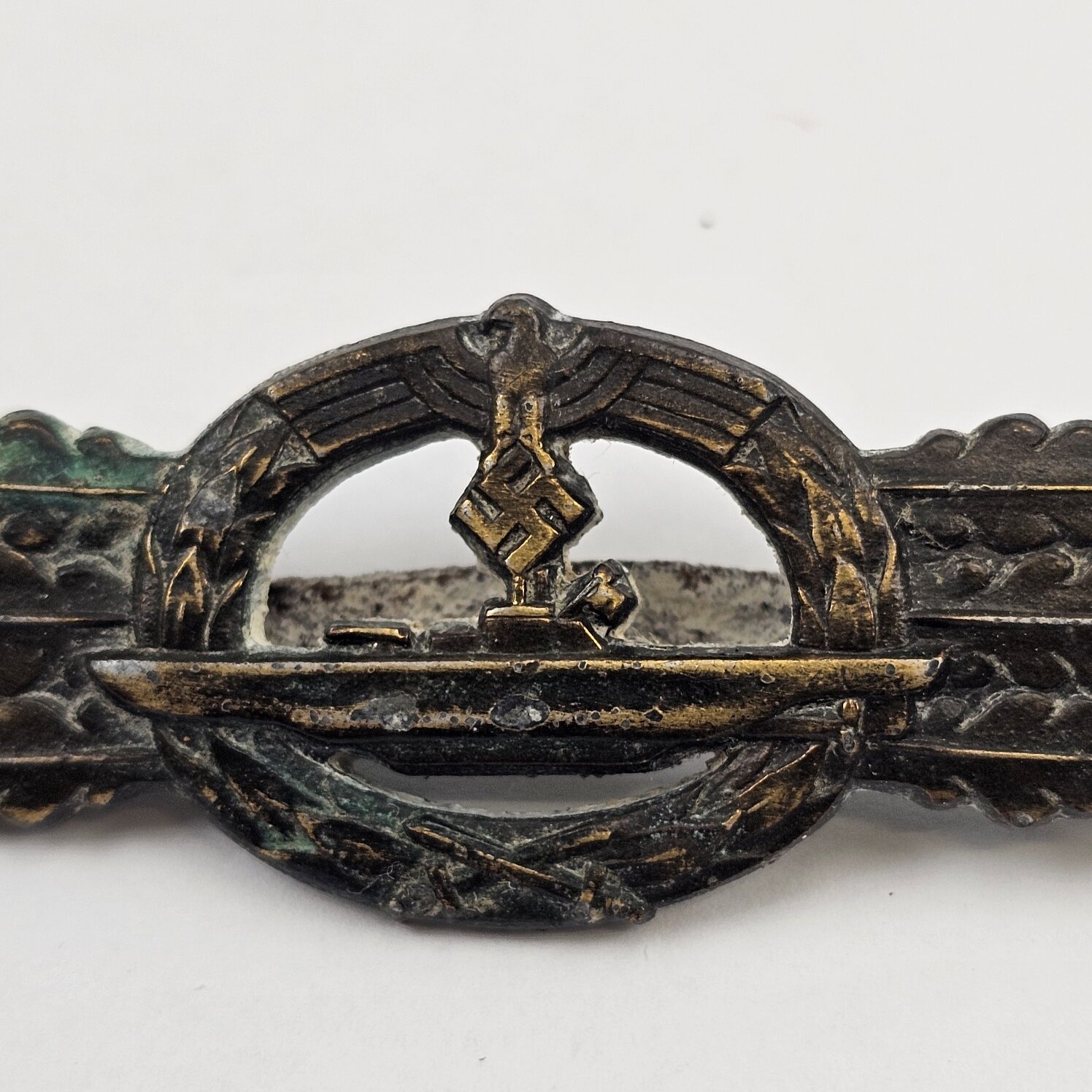
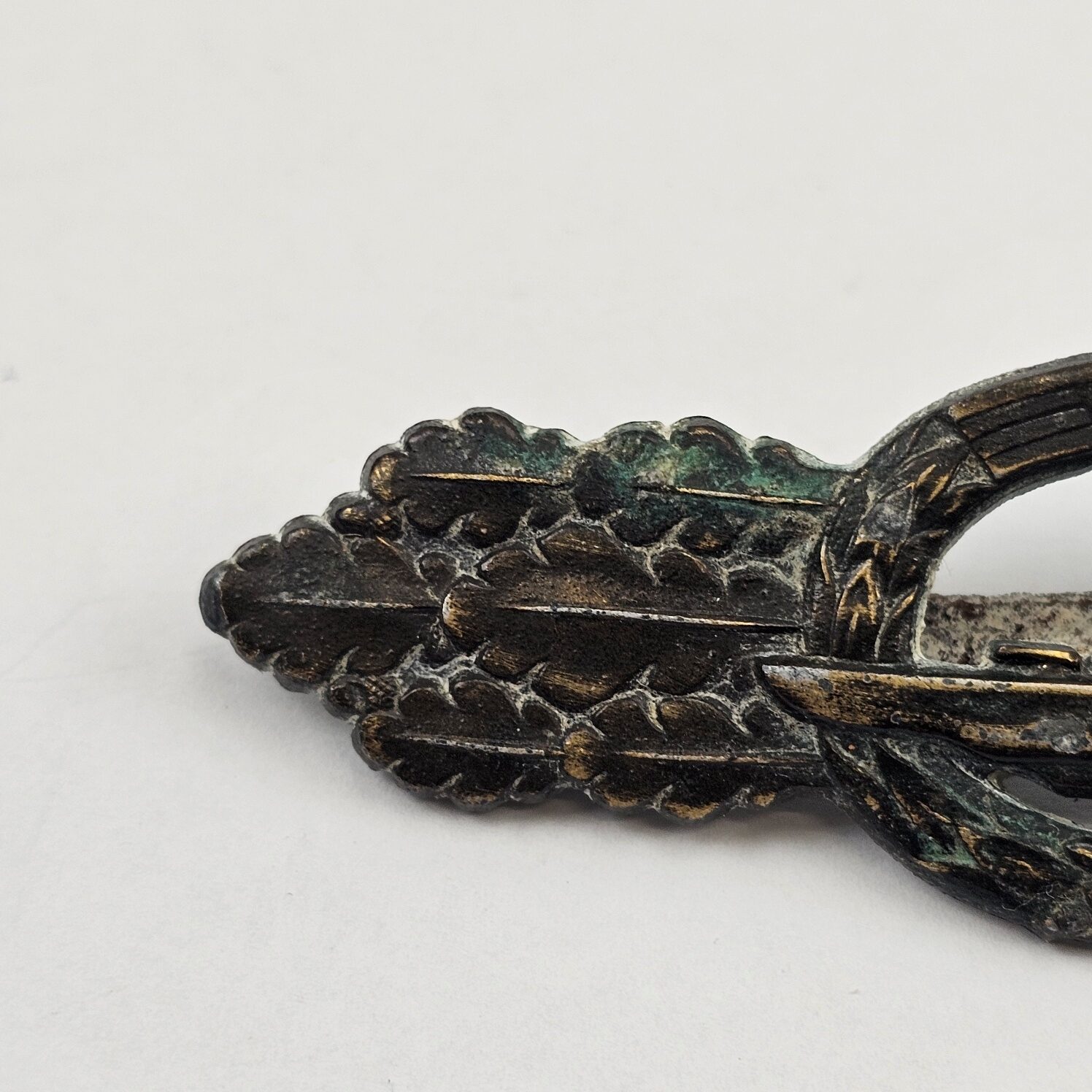
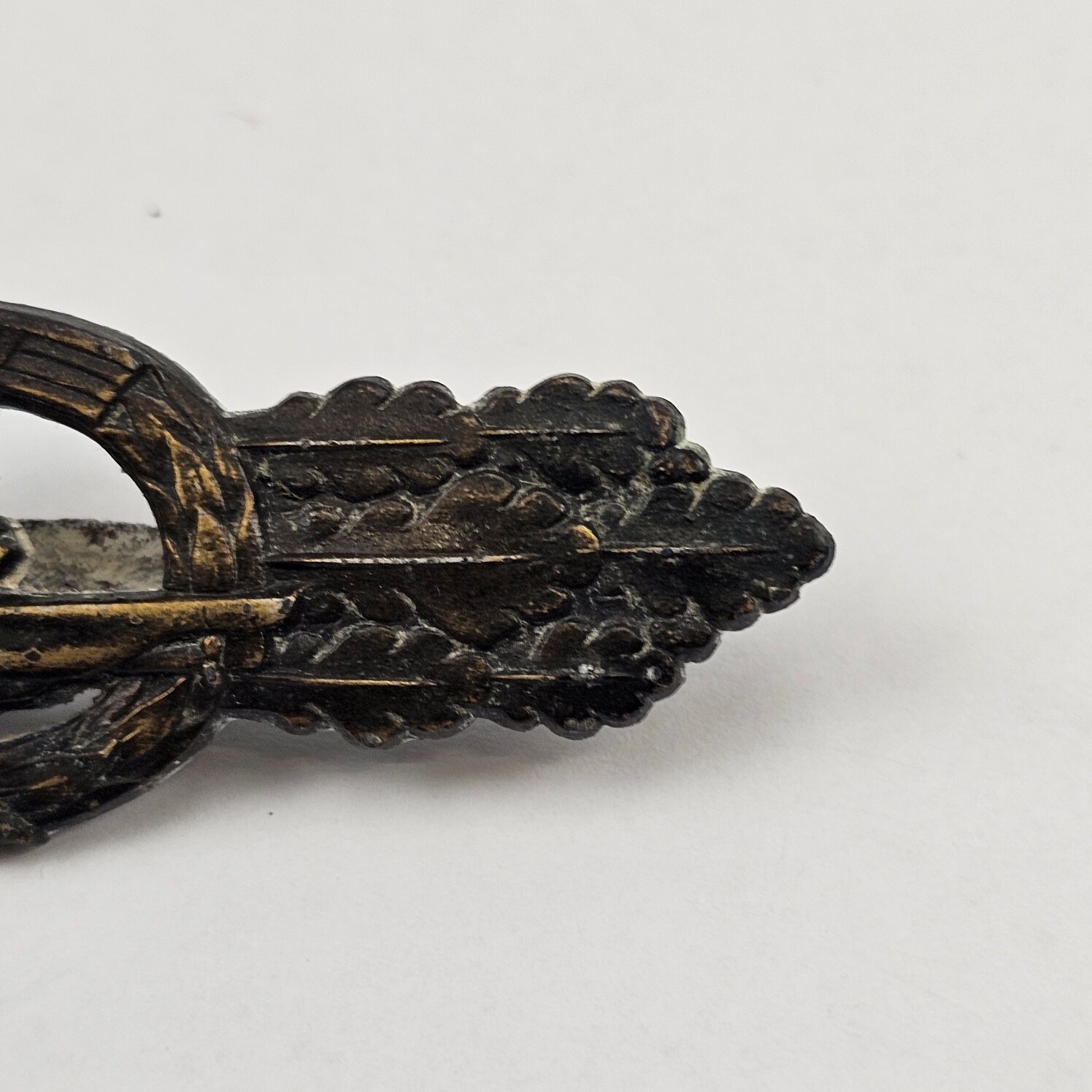
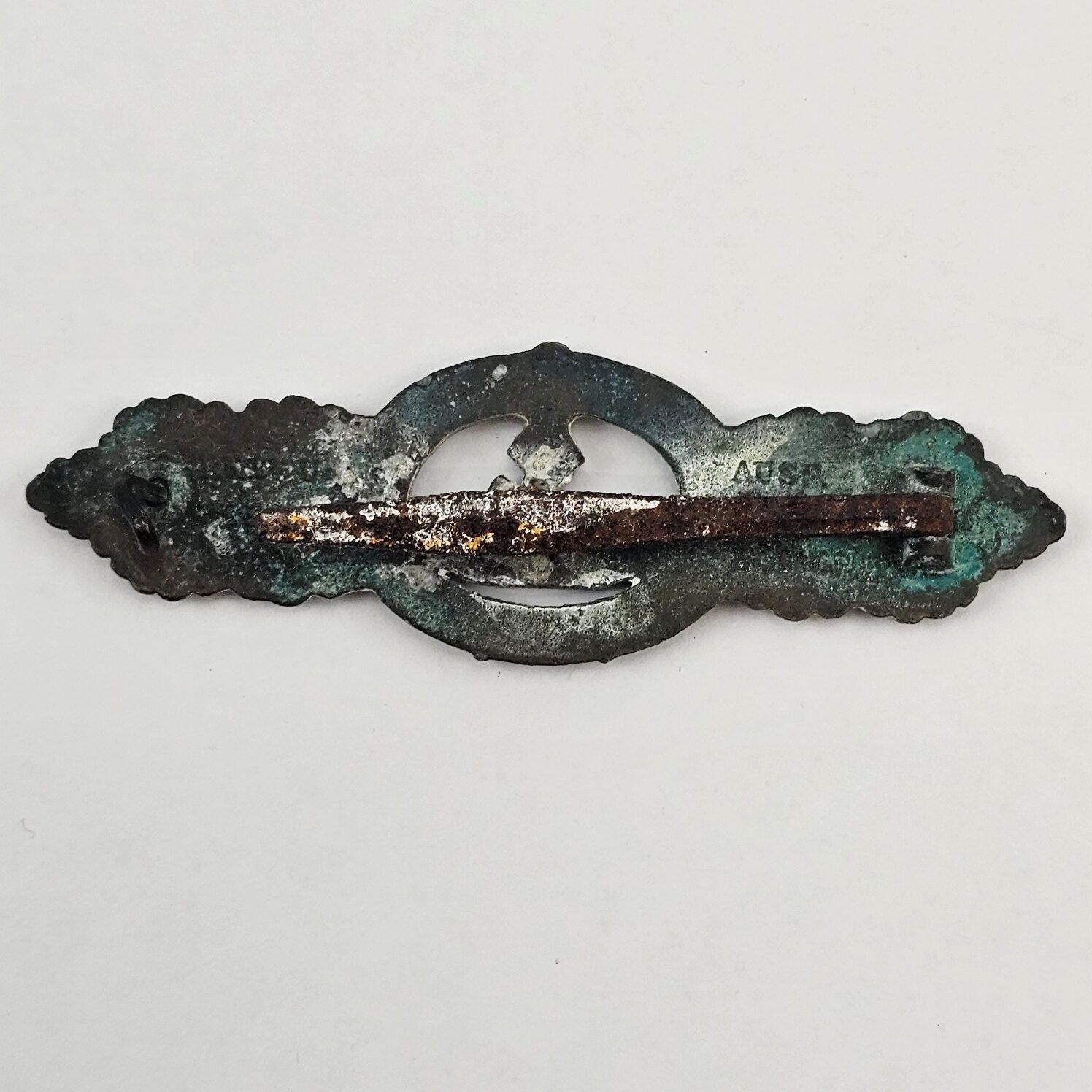
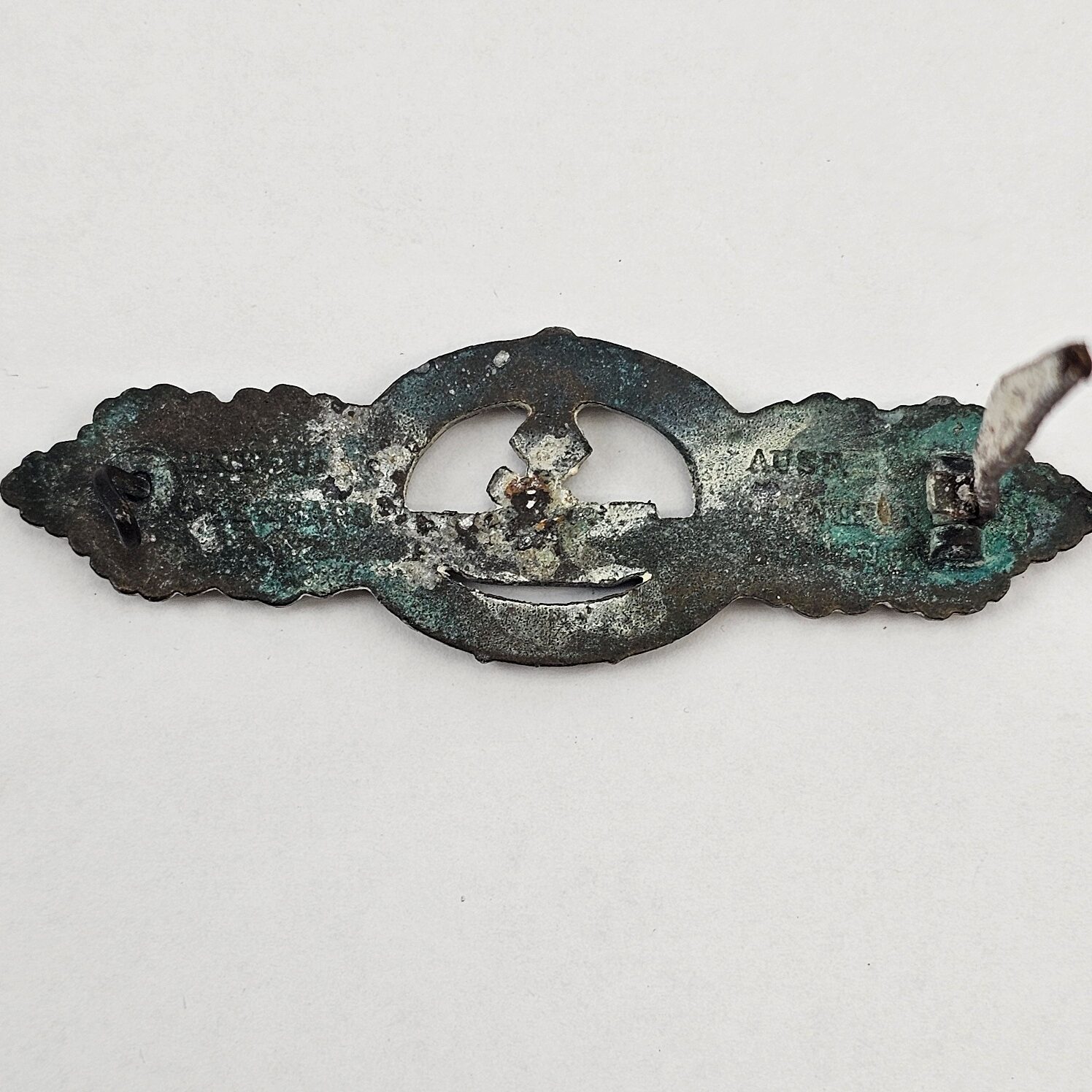
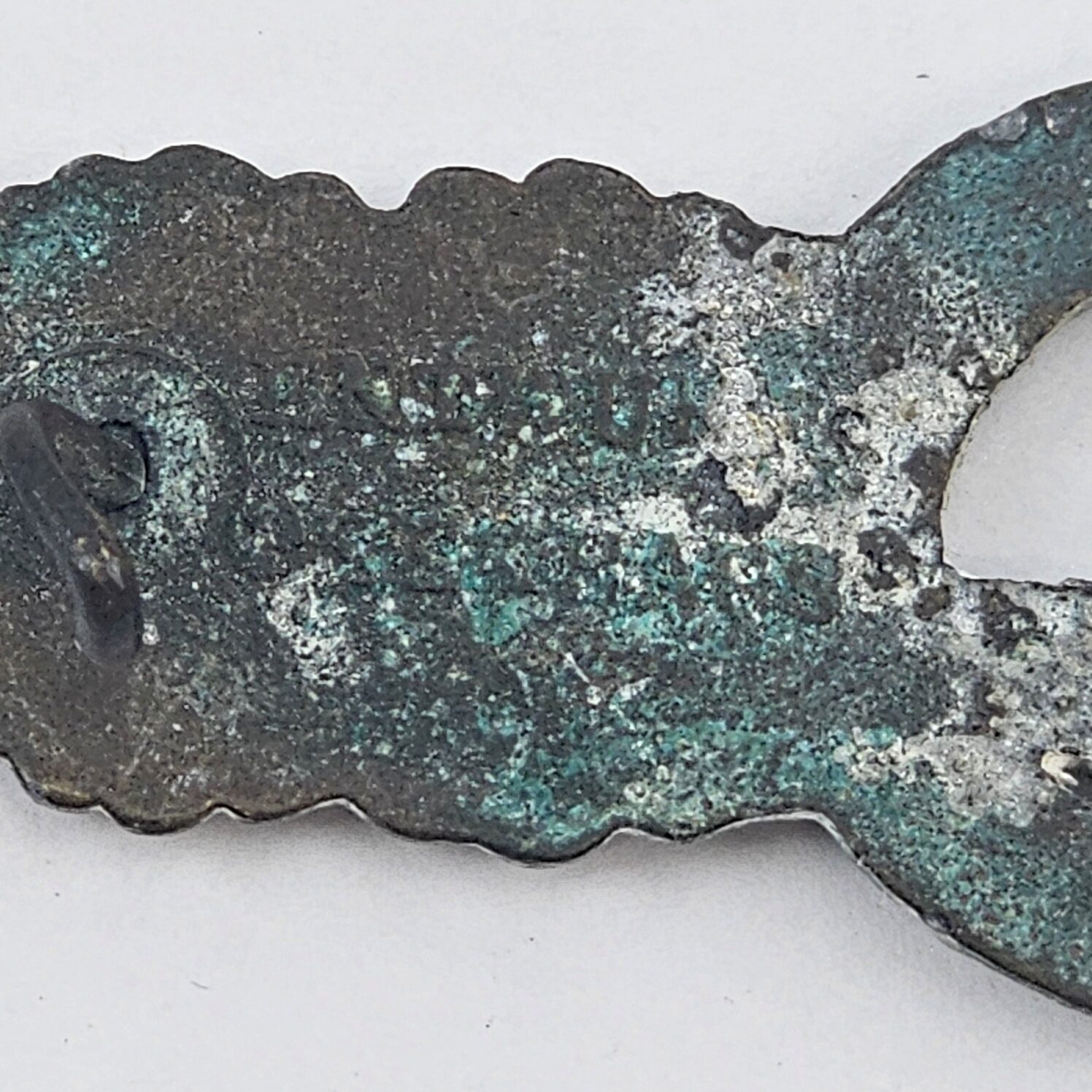
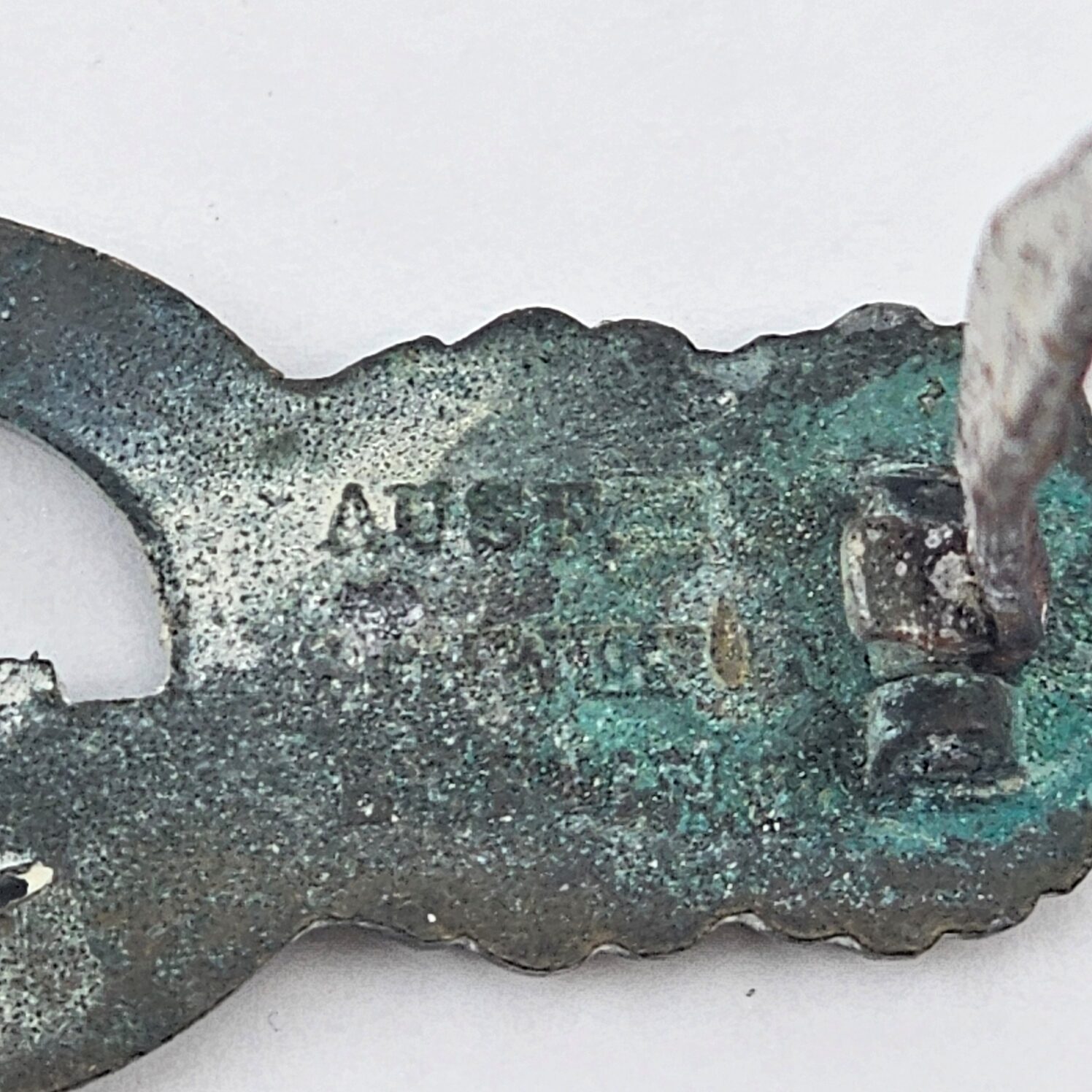
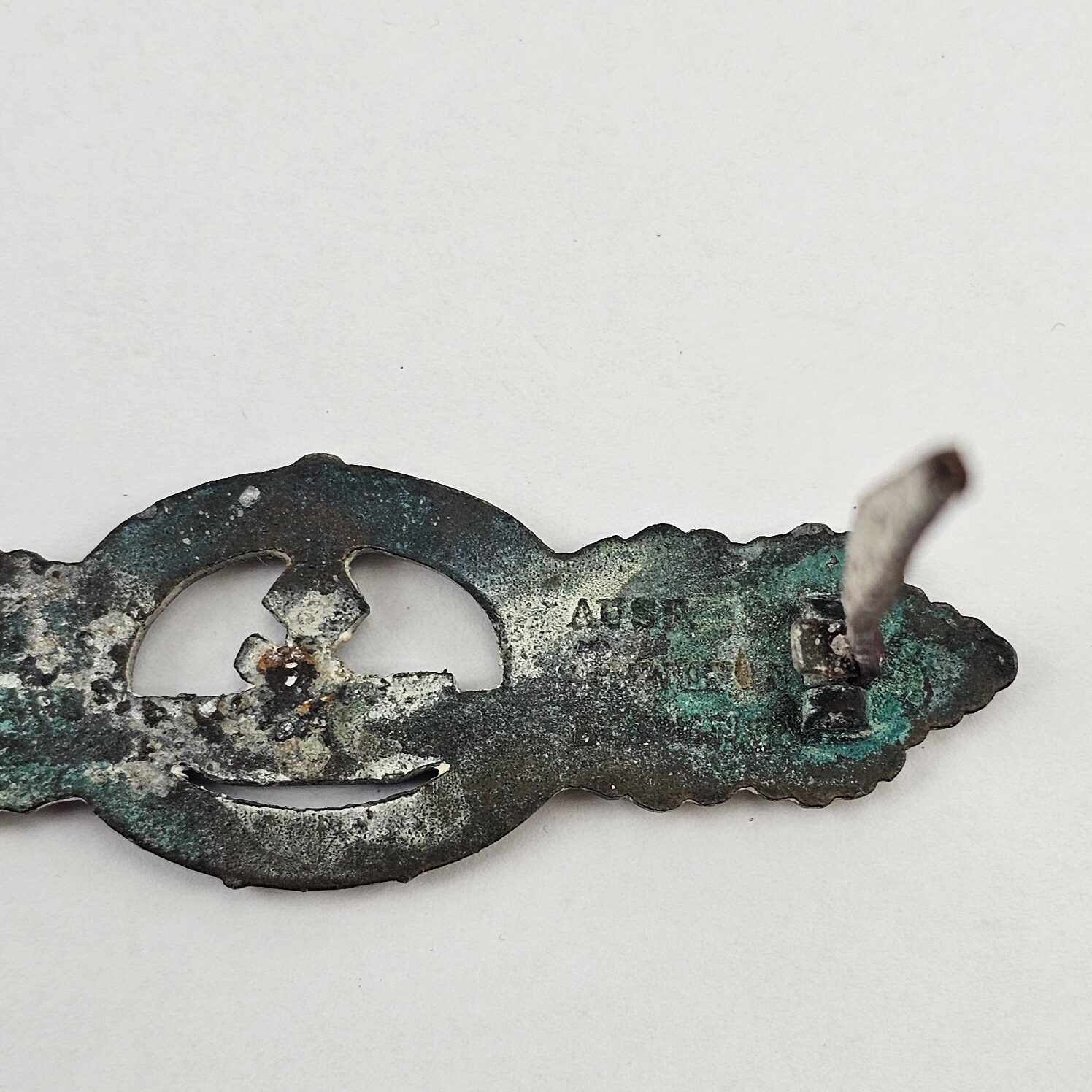
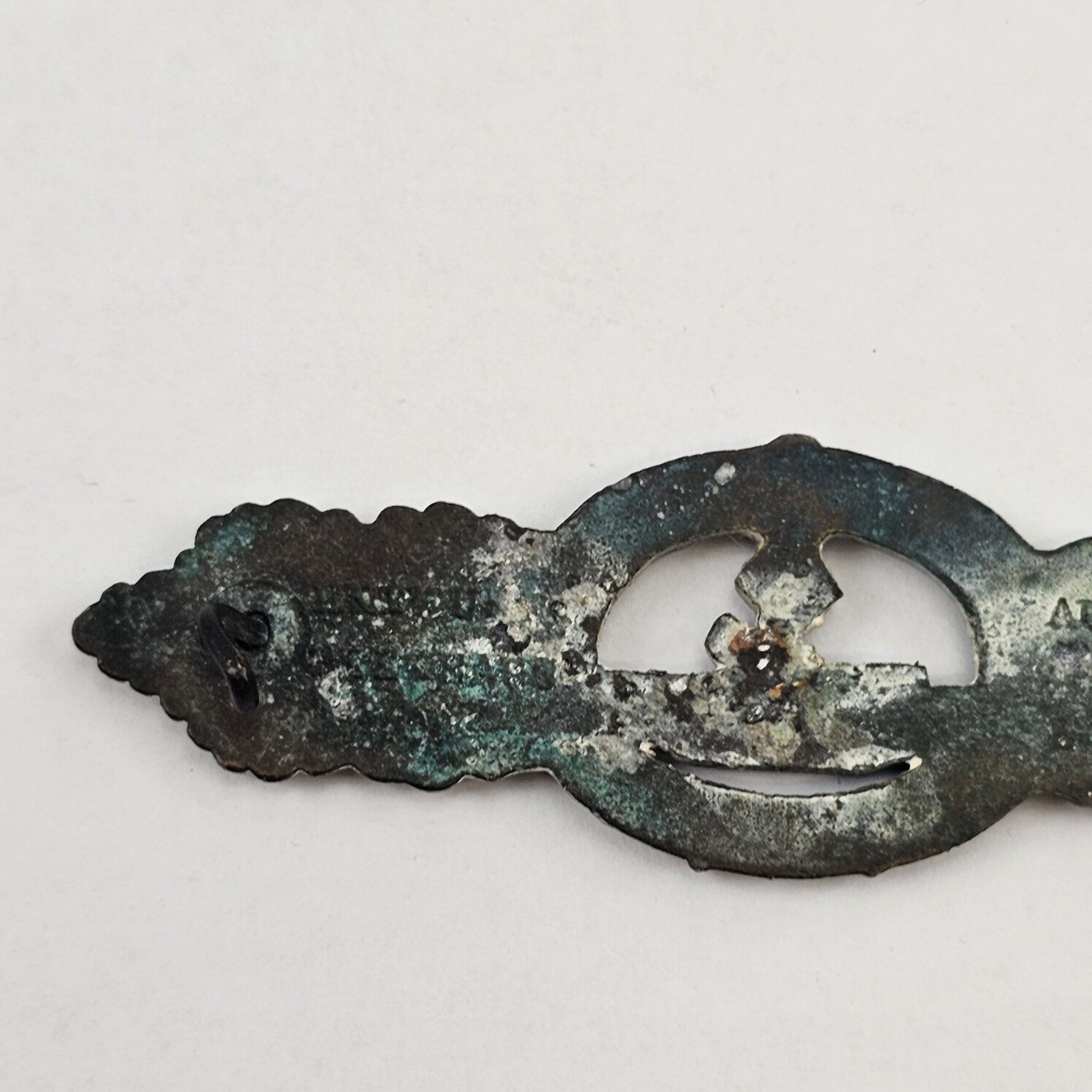
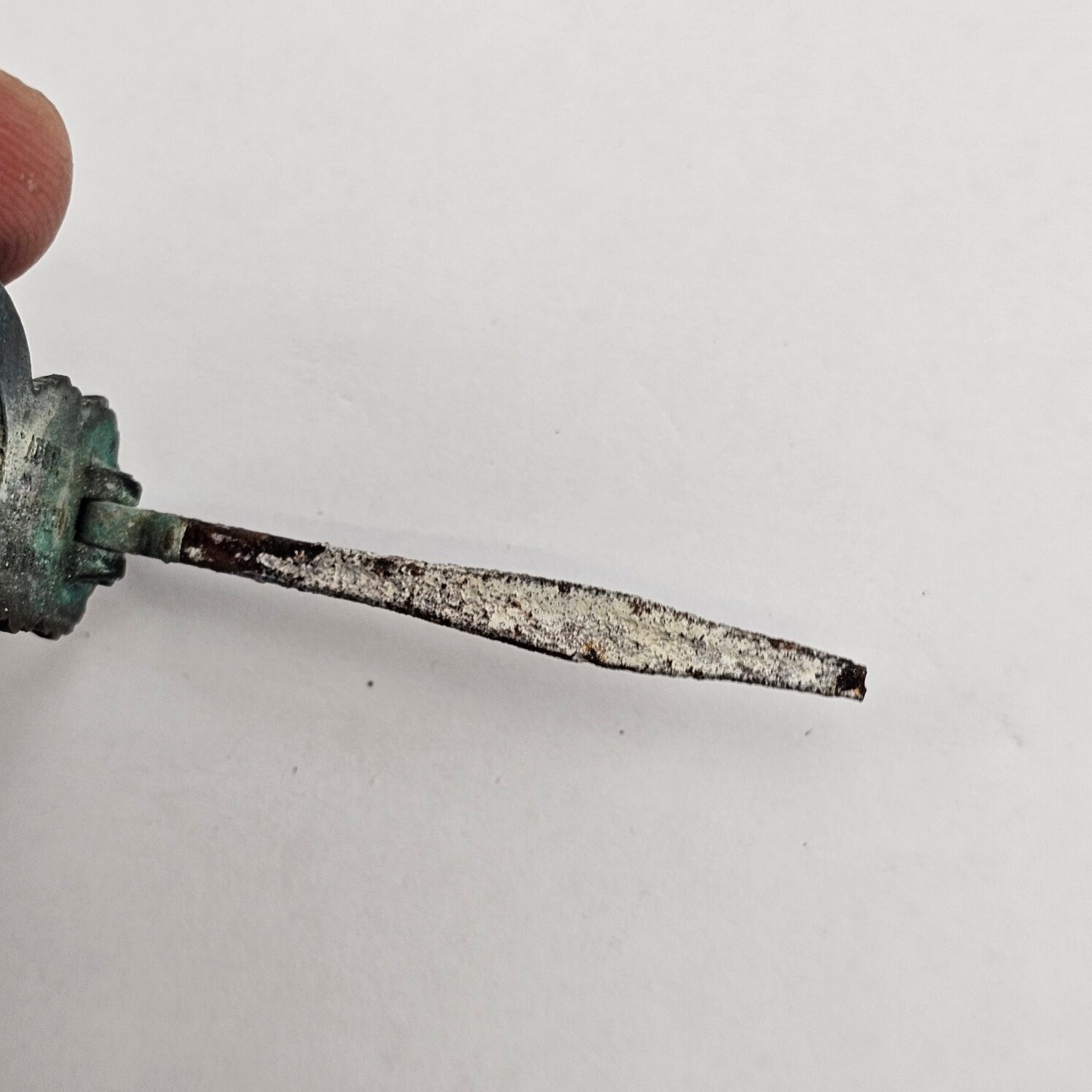
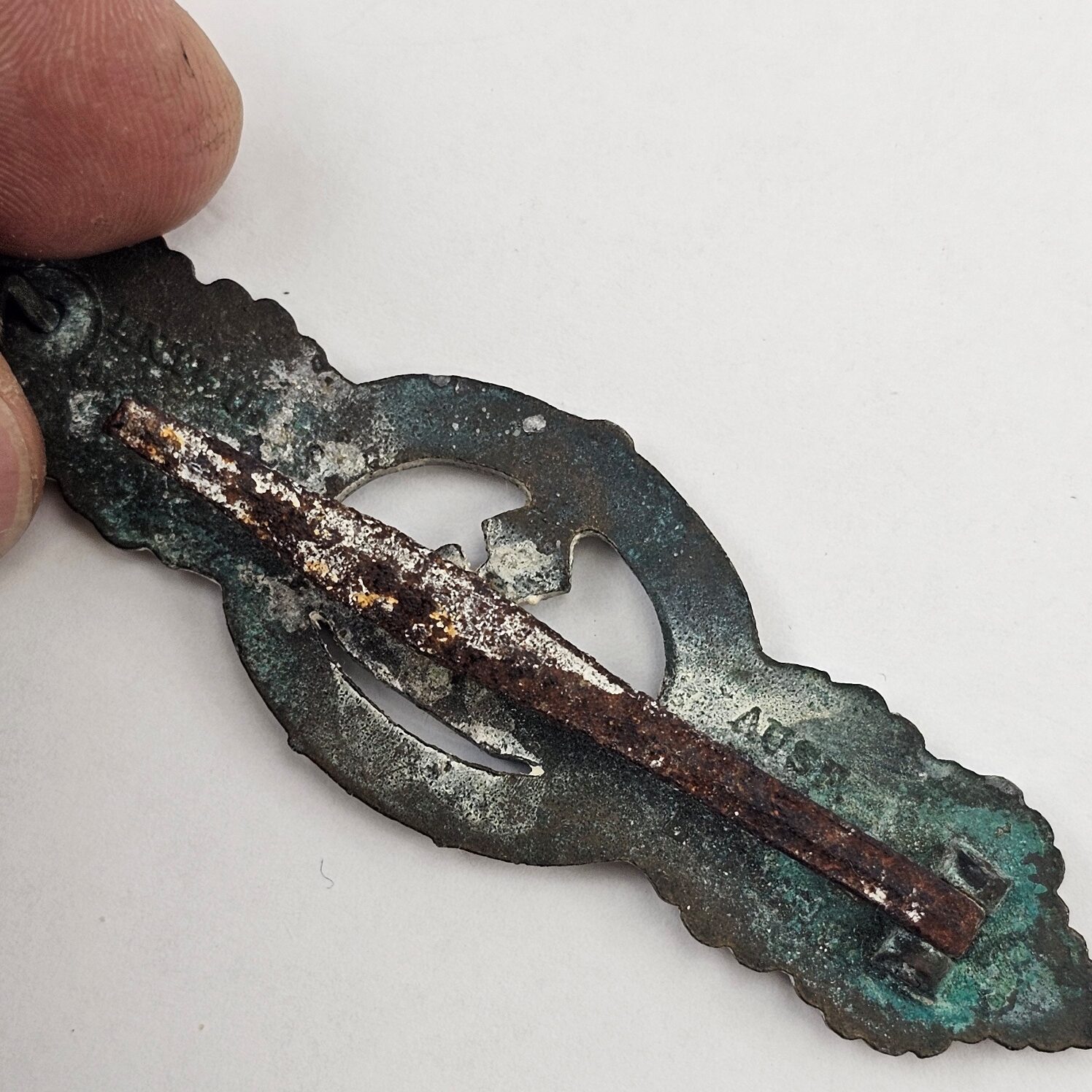
Late war Kriegsmarine U-Boat Clasp Bronze By Schwerin Berlin (U-Boot-Frontspange Bronze). Constructed in bronzed zinc, the obverse consists of an oval laurel wreath, with a raised U-Boat in the centre with a hollow backdrop topped with a Kriegsmarine National Eagle clutching a mobile swastika, flanked on each side by oak leaves. The reverse of the clasp is embossed with the manufacturer’s name and location “Ausf. Schwerin Berlin 68” and the designer’s name “Entwurf Peekhaus” complete with horizontal tapered pinback with an integral hinge and a crimped flat wire catch, measuring 76.46 mm (w) x 24.08 mm (h).
Historical Background
The U-Boat Combat Clasp in Bronze was introduced alongside the Silver and Gold grades as part of the U-Boots-Frontspange, officially instituted on 15 May 1944 by Admiral Karl Dönitz.
While the Silver clasp recognized extended front-line service, the Bronze clasp was intended to reward exceptional merit or specific acts of distinction under hazardous conditions, but it was less common than the Silver and rarer than most typical U-Boat decorations.
It served as the initial “higher” award for officers or men who demonstrated particular skill or bravery during patrols, before eligibility for the Silver or Gold grades.
Award Criteria
The Bronze grade was awarded to:
U-Boat crew or commanders demonstrating exceptional conduct on patrols
Individuals exceeding basic expectations in operational or tactical situations
Officers and men who stood out in a specific engagement, rather than for cumulative service alone
Because it was introduced late in the war, and fewer patrols were completed under operational conditions, the Bronze grade is scarcer than Silver in the surviving examples.
Design and Materials
The Bronze Combat Clasp closely mirrored the Silver and Gold grades in shape and design:
Eight-pointed, sweeping wing motif
Central U-Boat motif inside a laurel wreath
Crossed swords extending outward
Horizontal pin on the reverse for attachment to the uniform
Material composition:
Typically zinc or a similar pot metal, not actual bronze in the classical sense
Finished with a bronze-coloured wash to simulate traditional bronze
Susceptible to wear, flaking, and corrosion, especially on late-war examples
The term “Bronze” refers primarily to color and grade within the award hierarchy, not the metal itself.
Recipients and Notable Figures
Because the Bronze clasp was less common than Silver, recipients were generally recognized for specific acts of merit, rather than general longevity at sea.
Known recipients include:
Wolfgang Lüth – one of the top U-Boat aces; awarded Bronze before progressing to Silver
Albrecht Brandi – noted for tactical initiative in front-line patrols
Some posthumous awards to crewmen lost on particularly hazardous missions
Exact records are sparse due to destruction of documents in the final months of the war. Many Bronze clasps were later replaced with Silver when recipients continued service and met cumulative patrol criteria.