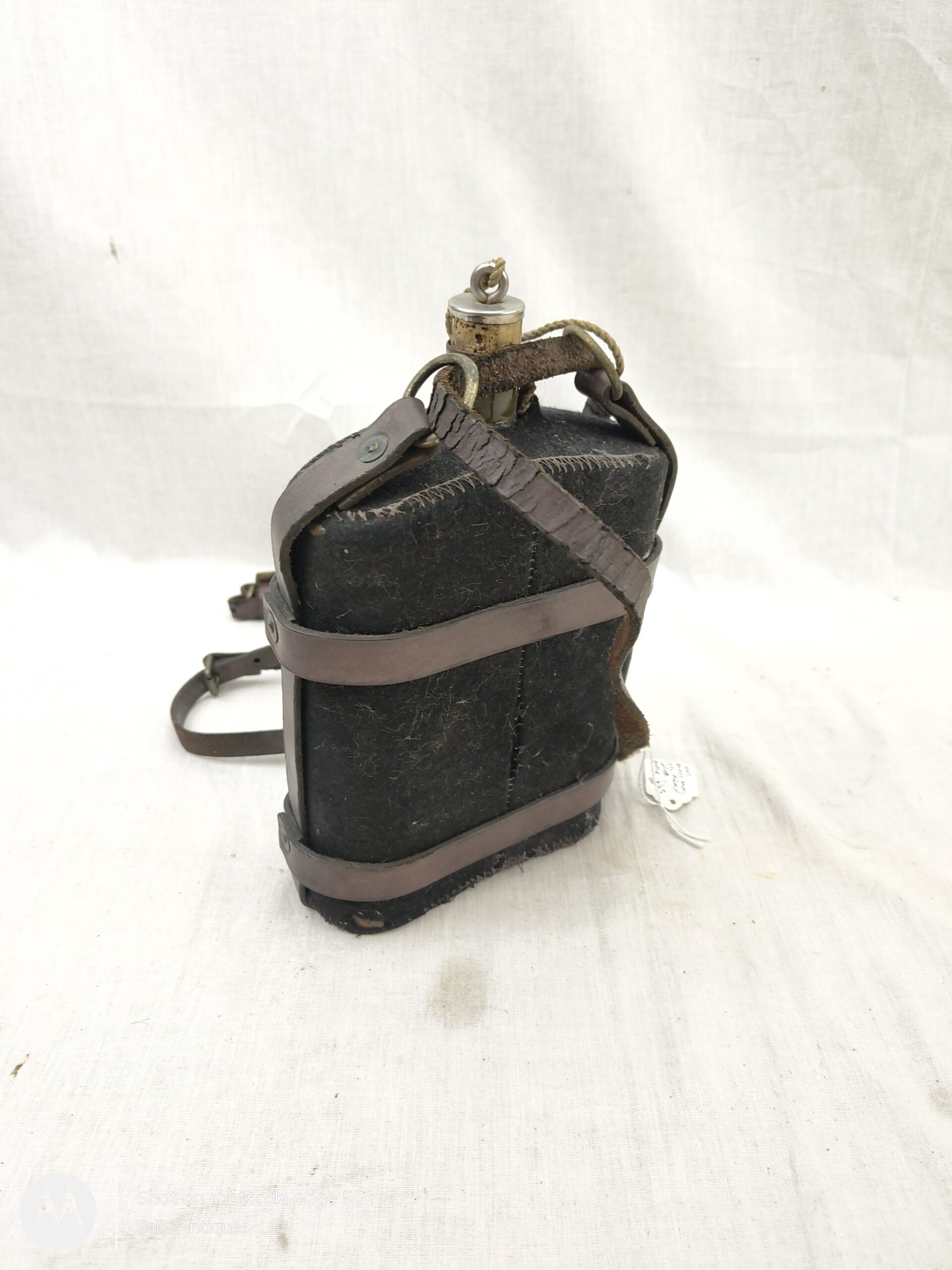
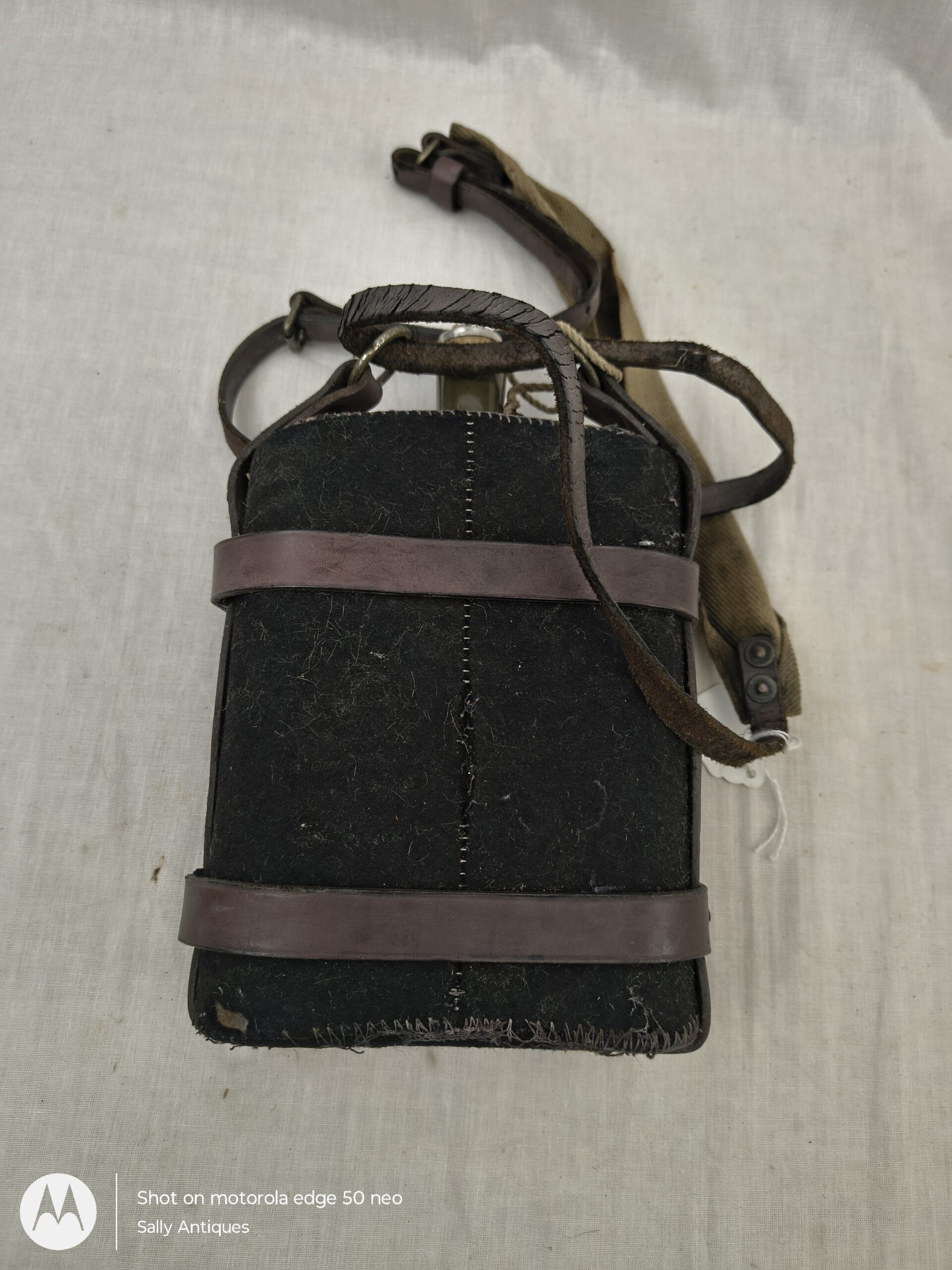
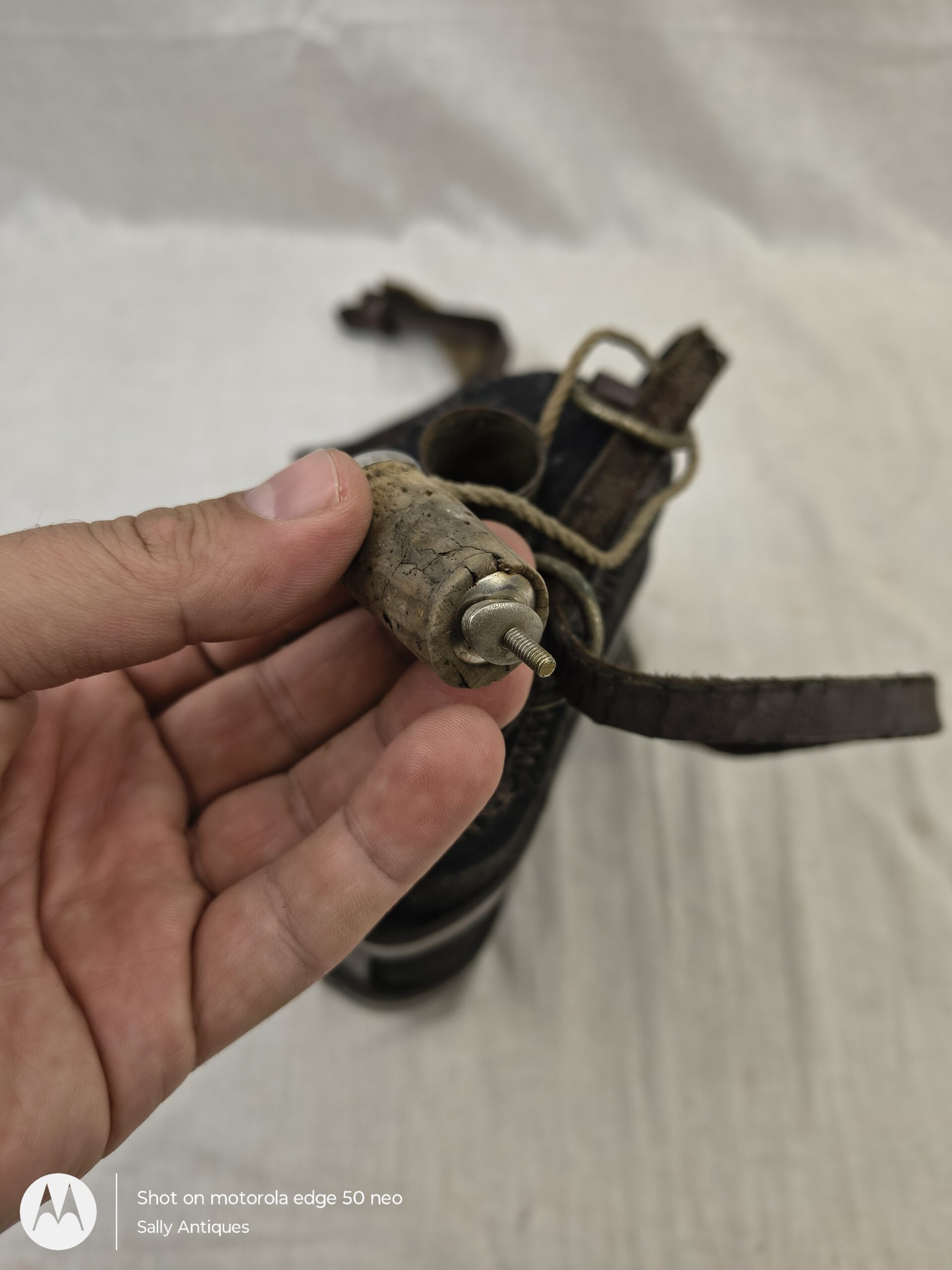
~ WW2 British Army 1939 Pattern Water Bottle ~
Historical Overview: 1939 Pattern (Mark VII) Water Bottle
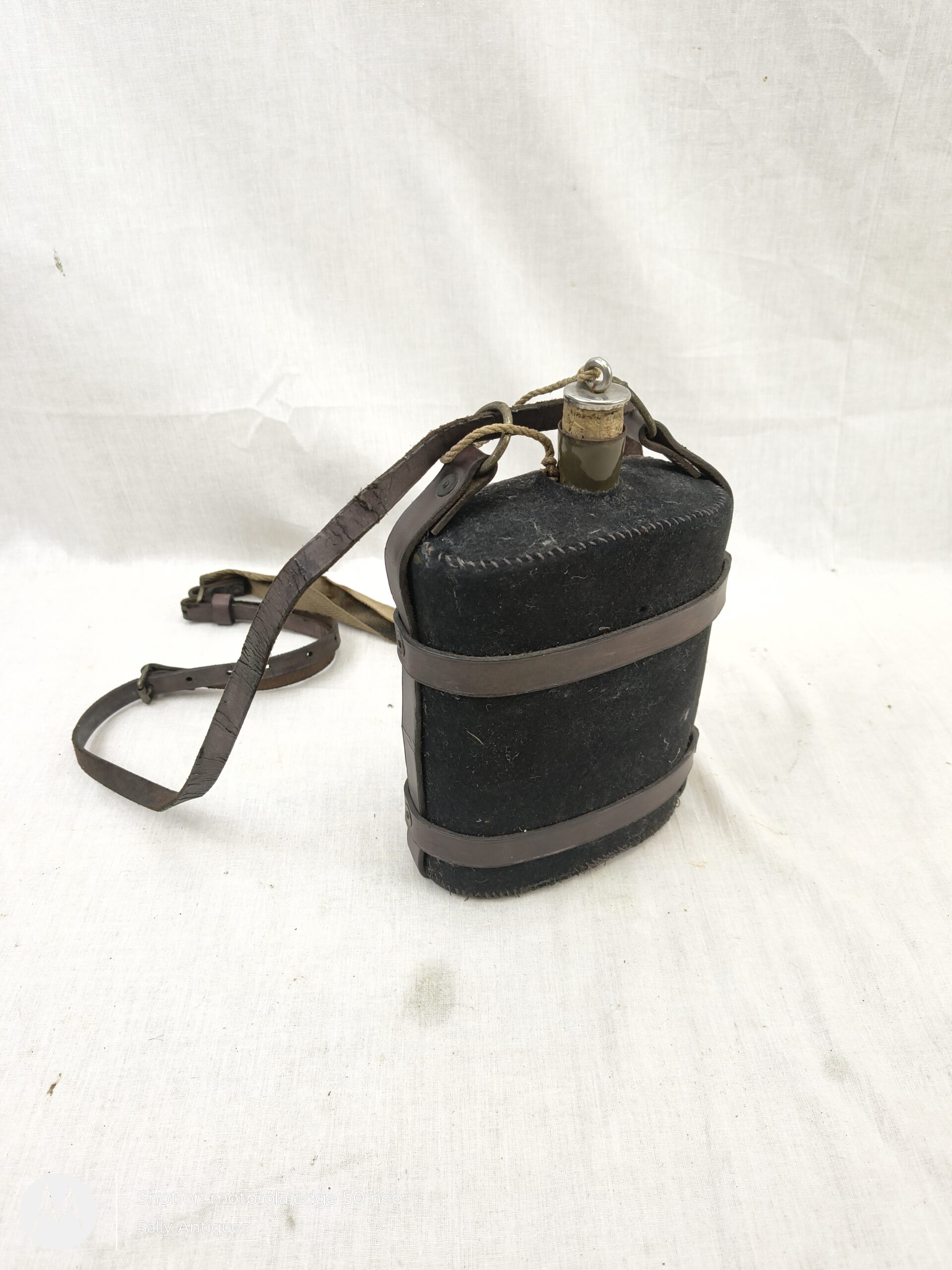
The Mark VII water bottle, introduced in 1939, replaced older models. It featured a green enamelled steel body for army use (RAF versions were cobalt blue), a cork stopper tethered by a cord attached to a wire loop, and a thick felt cover—usually khaki or green—to reduce noise and offer insulation.
Manufactured according to rigorous specifications, these bottles were produced by multiple factories across the UK and Commonwealth, including Bengal and Madras Enamel Works. Webbing carriers and covers were from firms like Mills Equipment Co. and Martin Wright & Sons.
The water bottle had a capacity of 2 pints (≈ 1.14 L) and dimensions roughly 190 mm × 140 mm × 80 mm.
Carriers: From Skeleton to Bucket
Early in WWII, the bottle was carried in a skeleton-style webbing harness, which exposed most of the bottle and allowed attachment to the soldier’s gear.
Around 1940, a sturdier “bucket-type” canvas webbing carrier was adopted. It better protected the bottle and integrated smoothly with the 1937 Pattern Web Equipment.