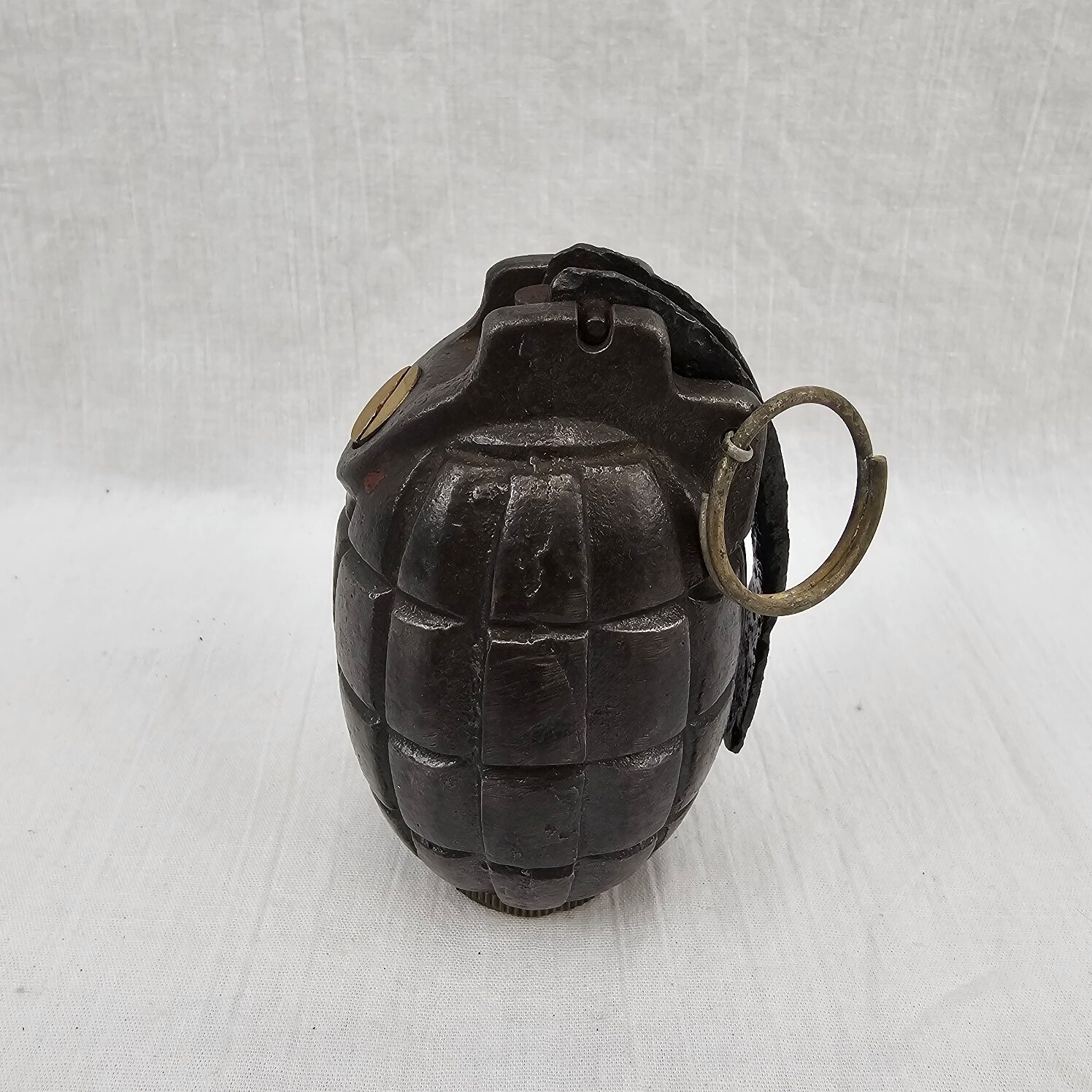
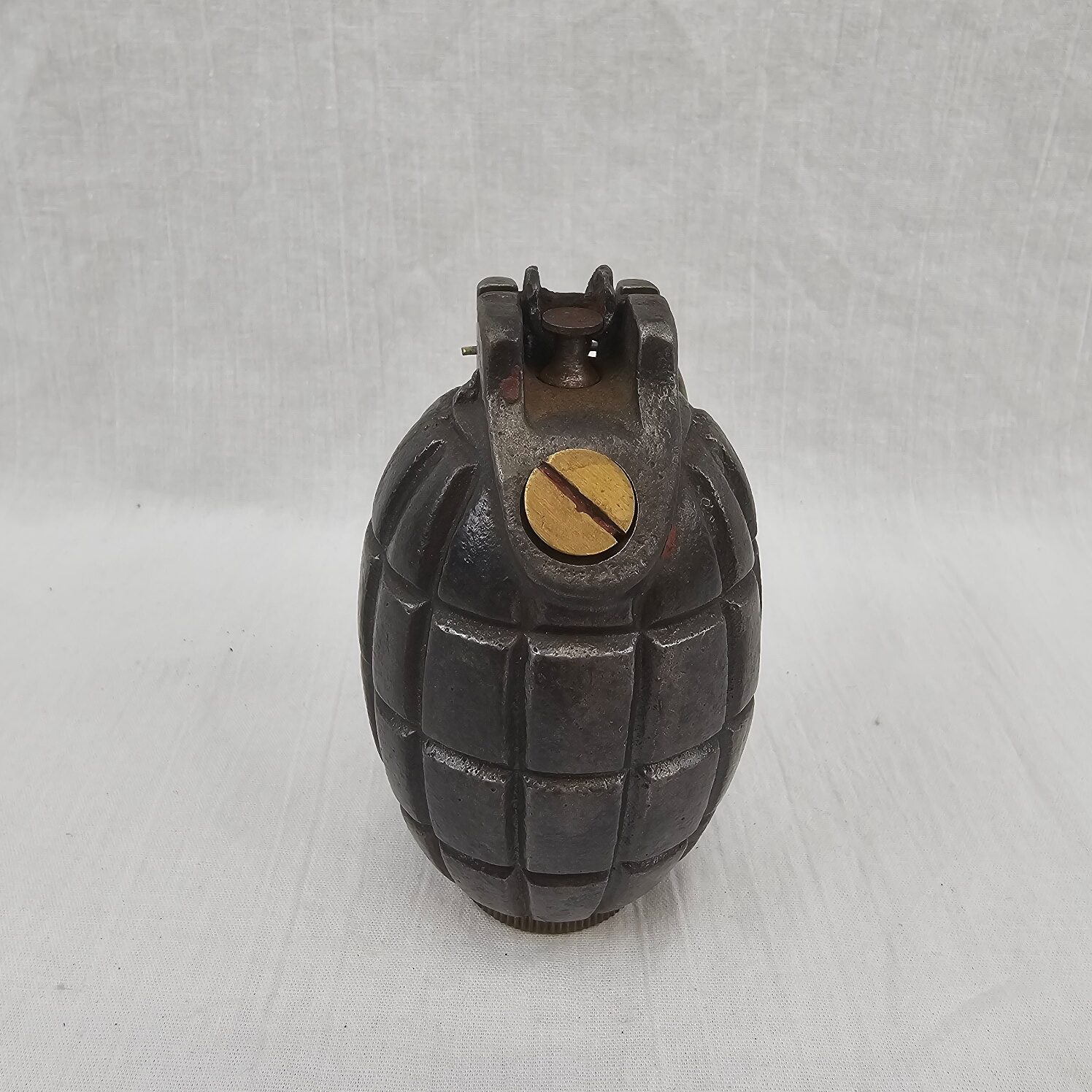
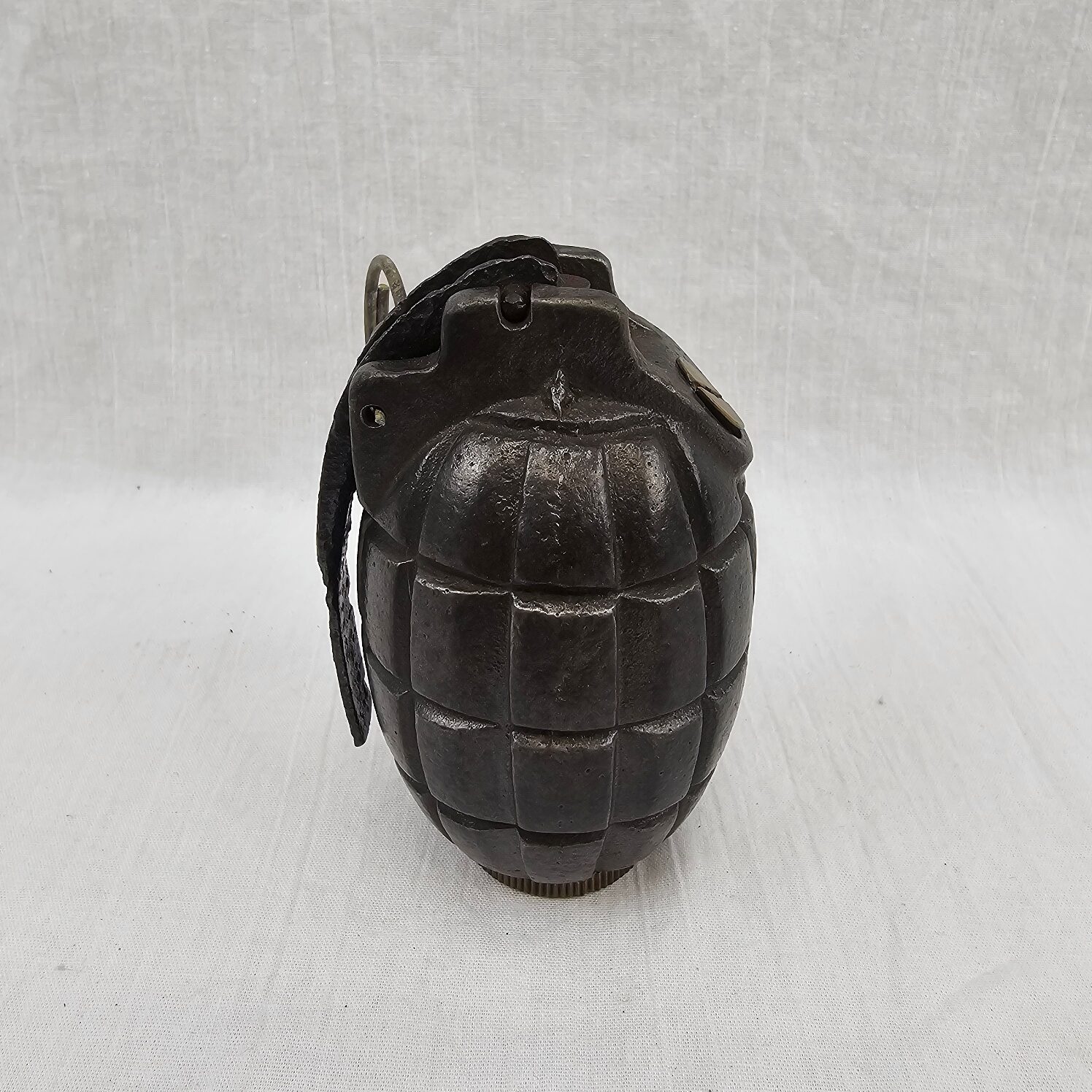
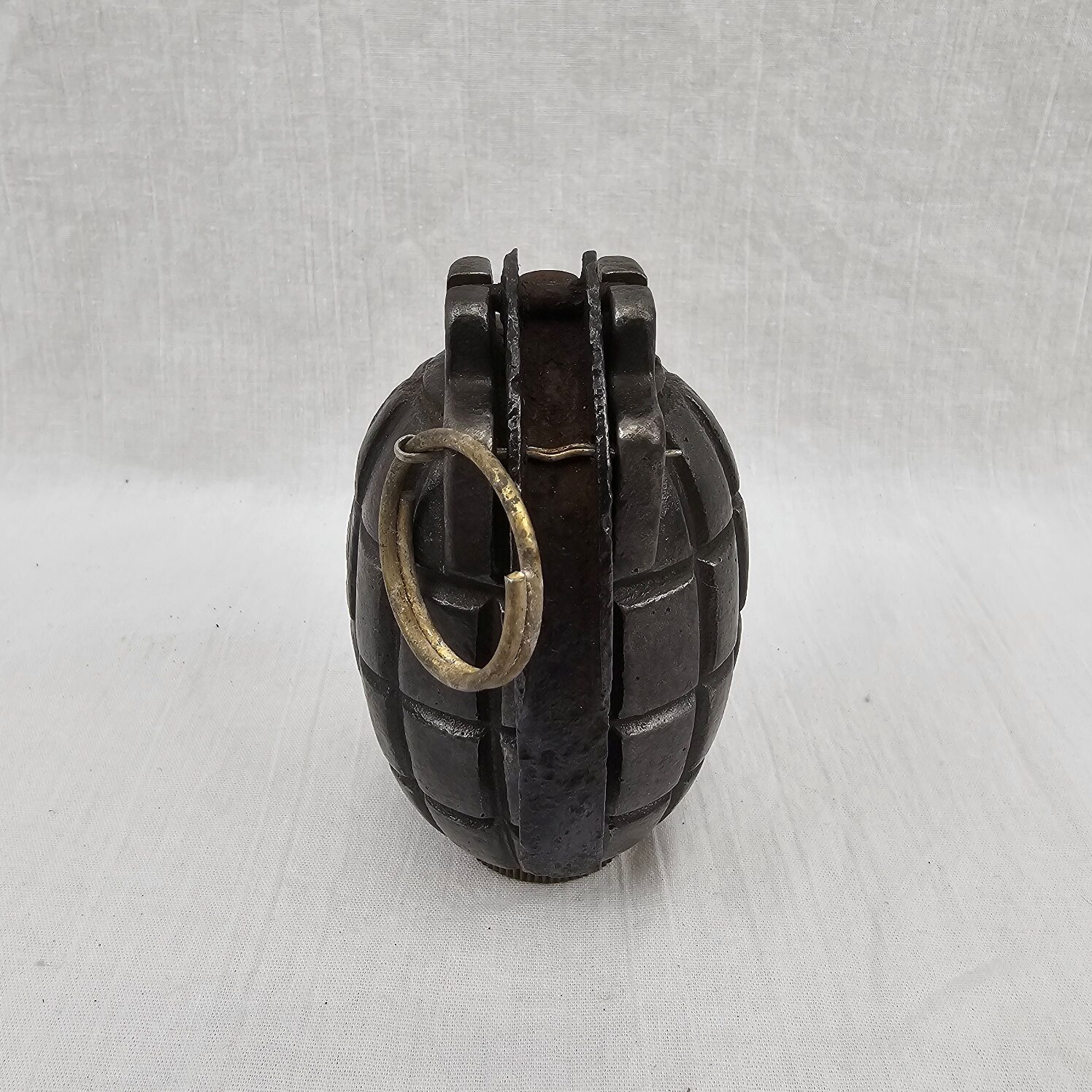
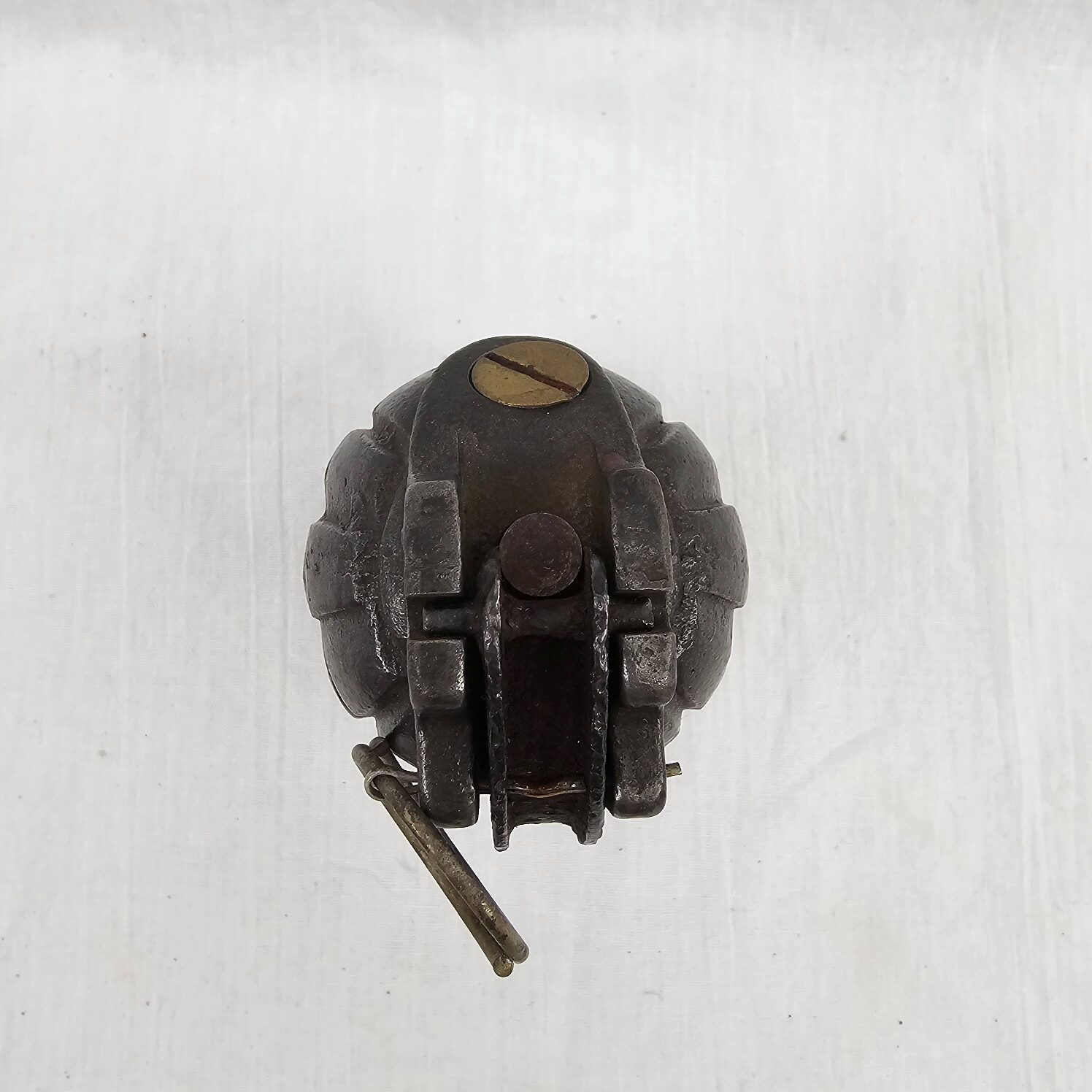
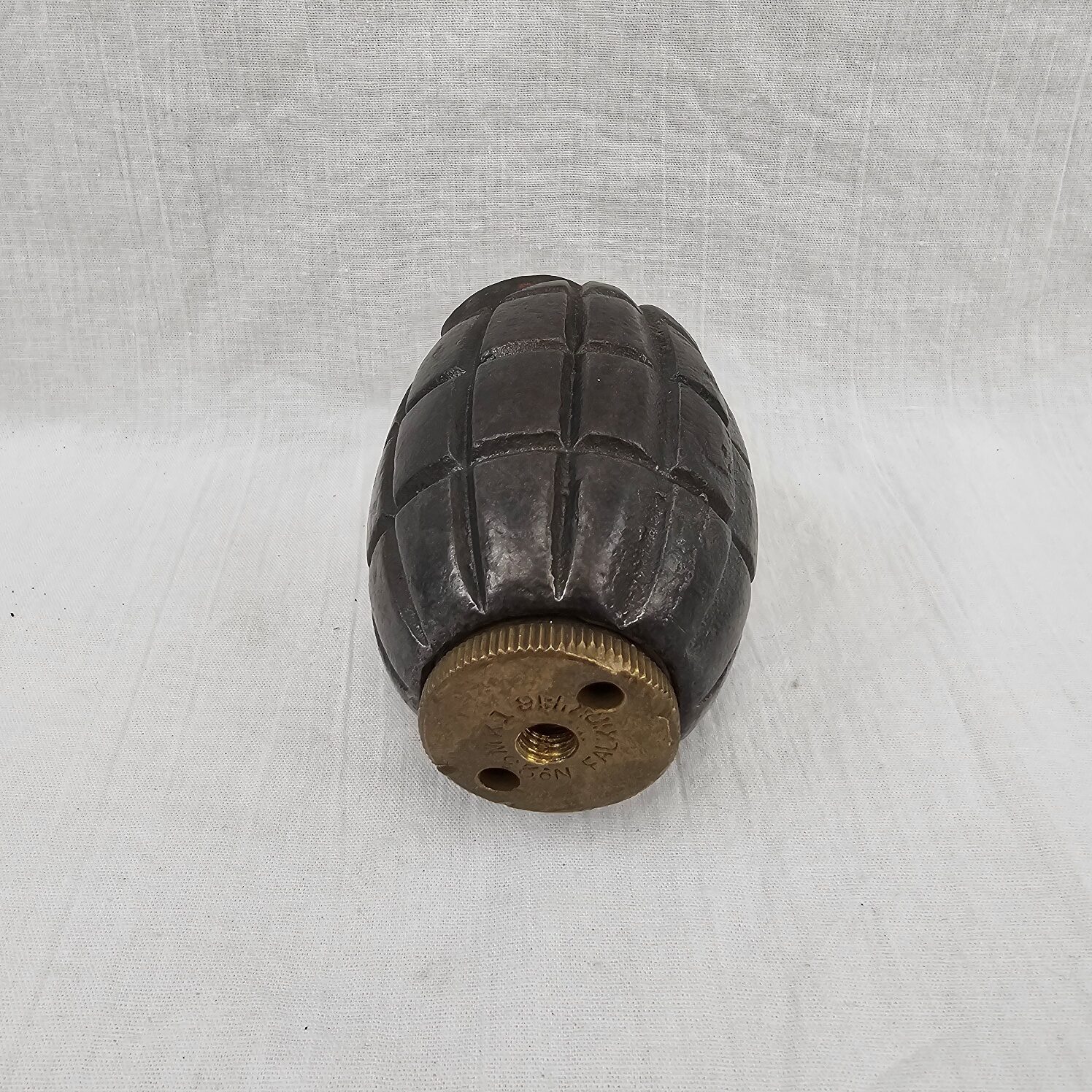
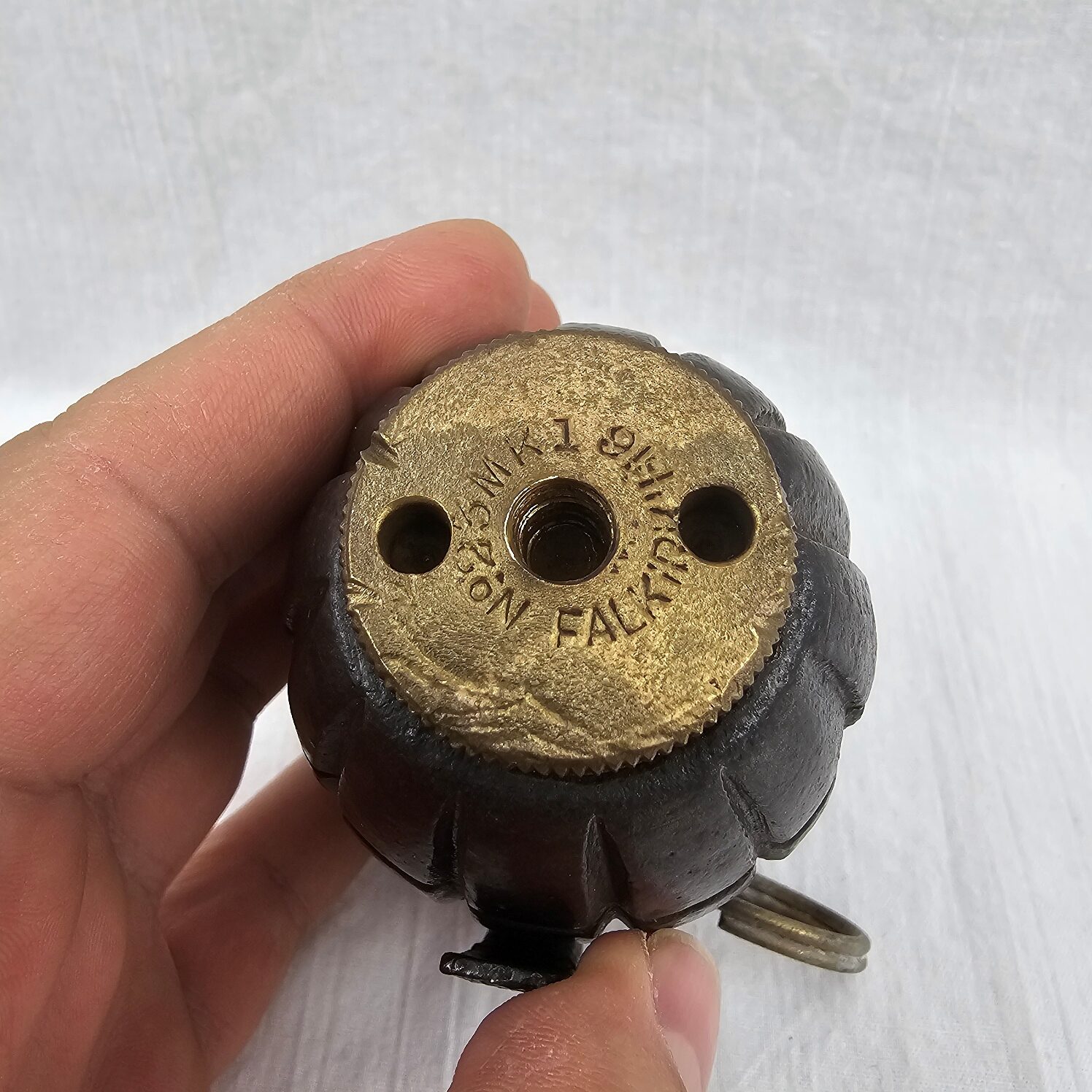
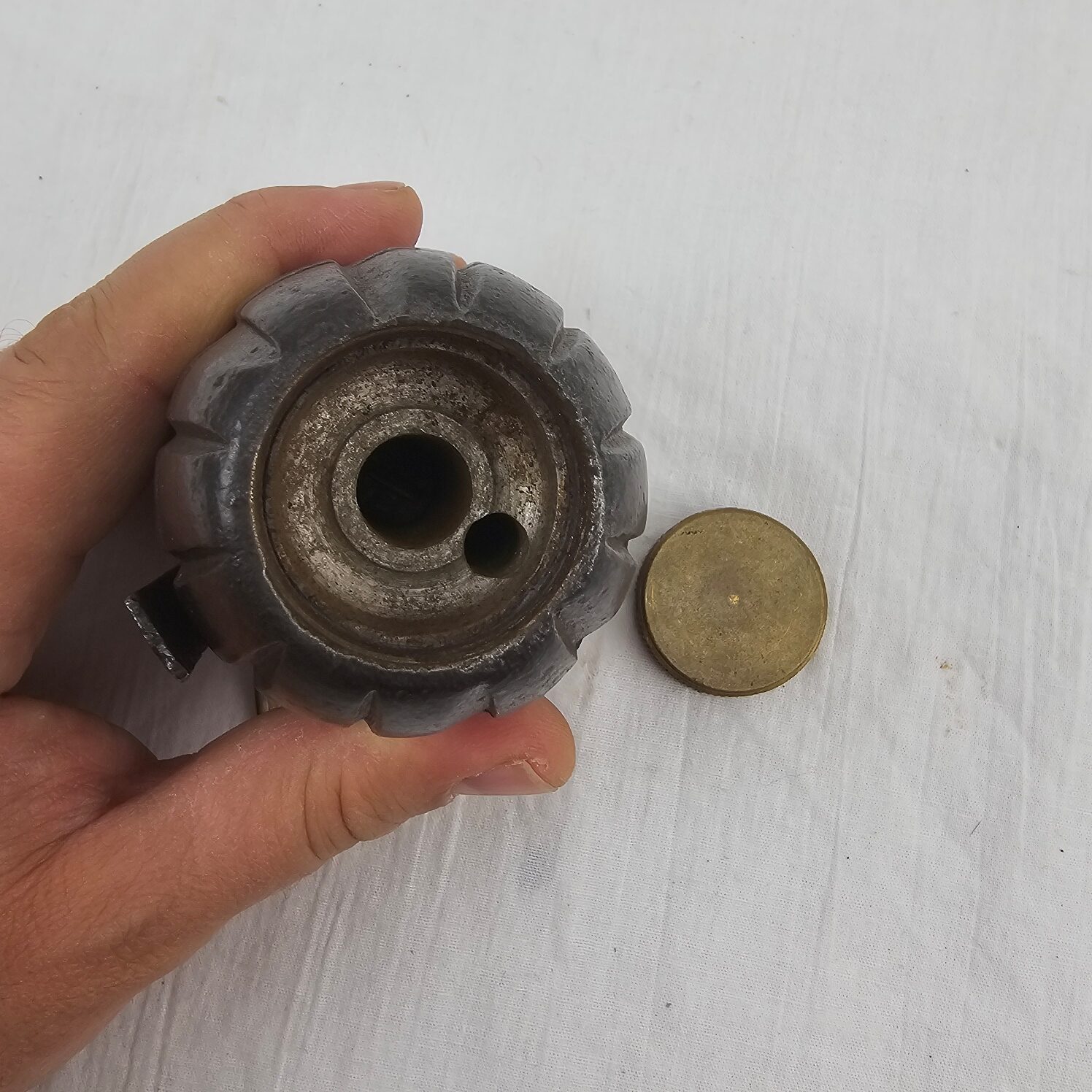
~ WW1 No.23 Mk I Original Paint, Early Lever Mills Bomb ~
The No.23 Mk I is one of the formative British hand-grenade types developed during the First World War. It represents an intermediate design between crude early grenades and the later standardised Mills patterns that dominated British and Commonwealth service. The No.23 family is important for understanding how trench warfare prompted rapid innovation in infantry ordnance.
The onset of static trench warfare in 1914–1915 created urgent demand for reliable, hand-thrown fragmentation weapons. Early improvisations were dangerous and inconsistent; weapon designers rapidly iterated to produce safer, more manufacturable grenades.
The No.23 series belongs to the transitional designs produced before William Mills’ more famous 1915 patent and subsequent mass-produced Mills Bomb (No.5 and later No.36 patterns). The No.23 Mk I incorporates a lever-style arming/shut mechanism that distinguishes it from later safety-pin-and-lever systems.
These grenades were issued to infantry for trench assault, bombing parties, and close-quarters clearing. They were part of the chaotic, experimental period of ordnance development where multiple types coexisted in theatres of war.
The No.23 Mk I typically has a cast body, often segmented to assist fragmentation. Early examples show crude casting and finishing compared with later standardised Mills production.
As an early lever design, the grenade uses a mechanical arming piece (the “lever”) that must be manipulated to arm or throw. This predates the more familiar spring-lever-and-pin arrangement of later Mills types.
Bodies were cast in iron or similar alloys. Surviving specimens may bear inspector marks, contractor/manufacturer stamps, and date codes — these are key for dating and attribution.
There were field and factory variations: some were stronger, some lighter, and many were modified in-service as immediate needs demanded.