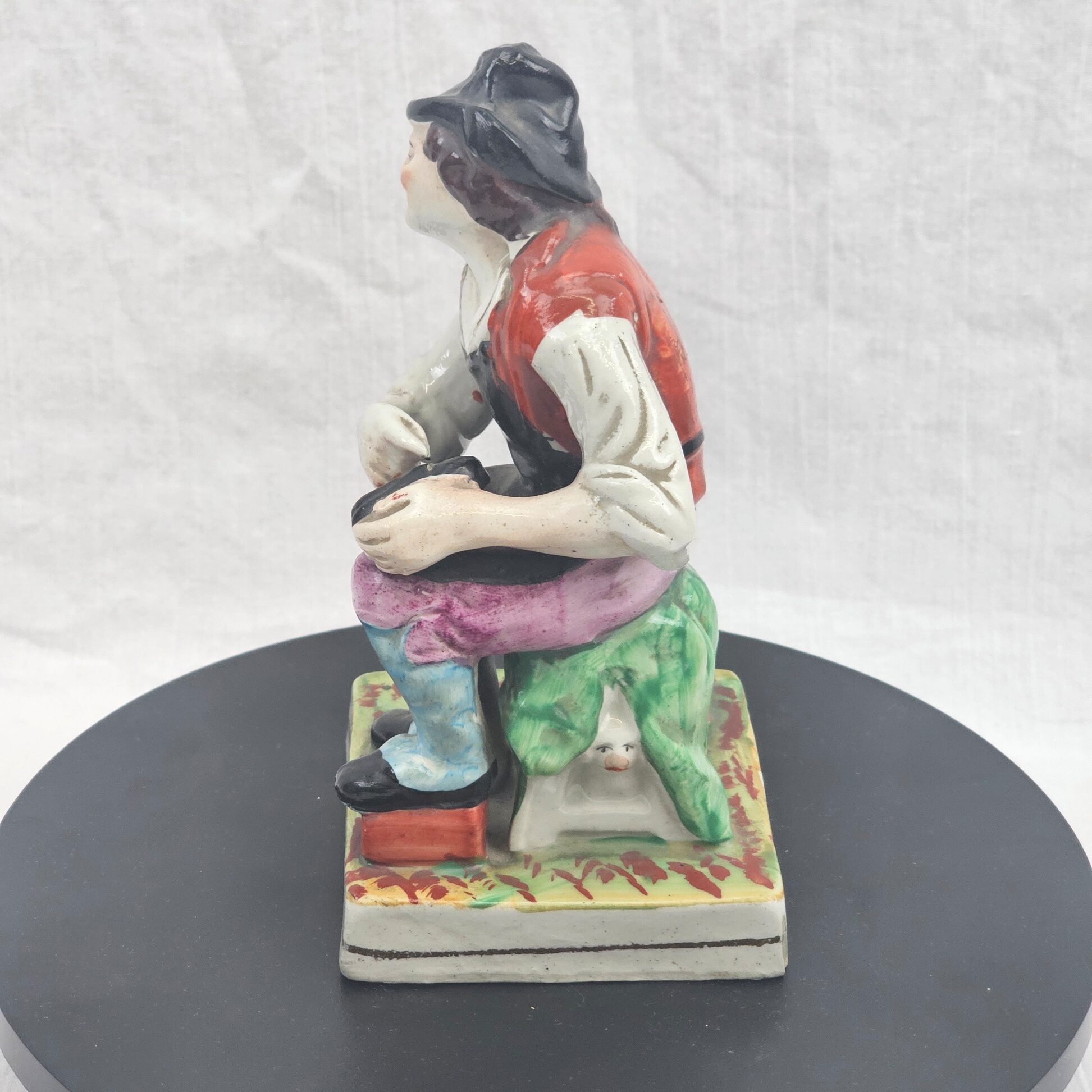
~ Victorian Staffordshire Pottery Figure of a Cobbler - The Cobbler Jobson, circa 1870 ~
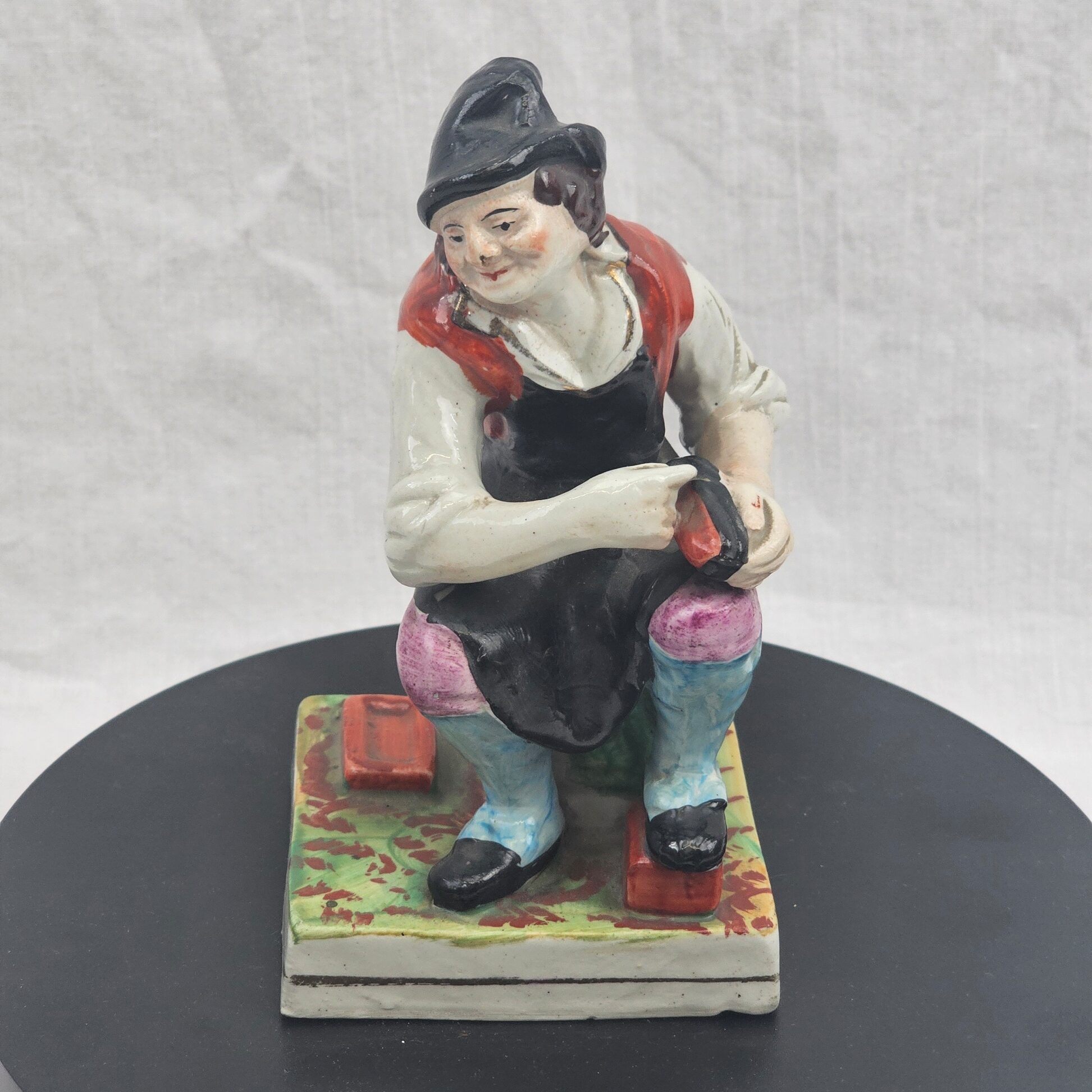
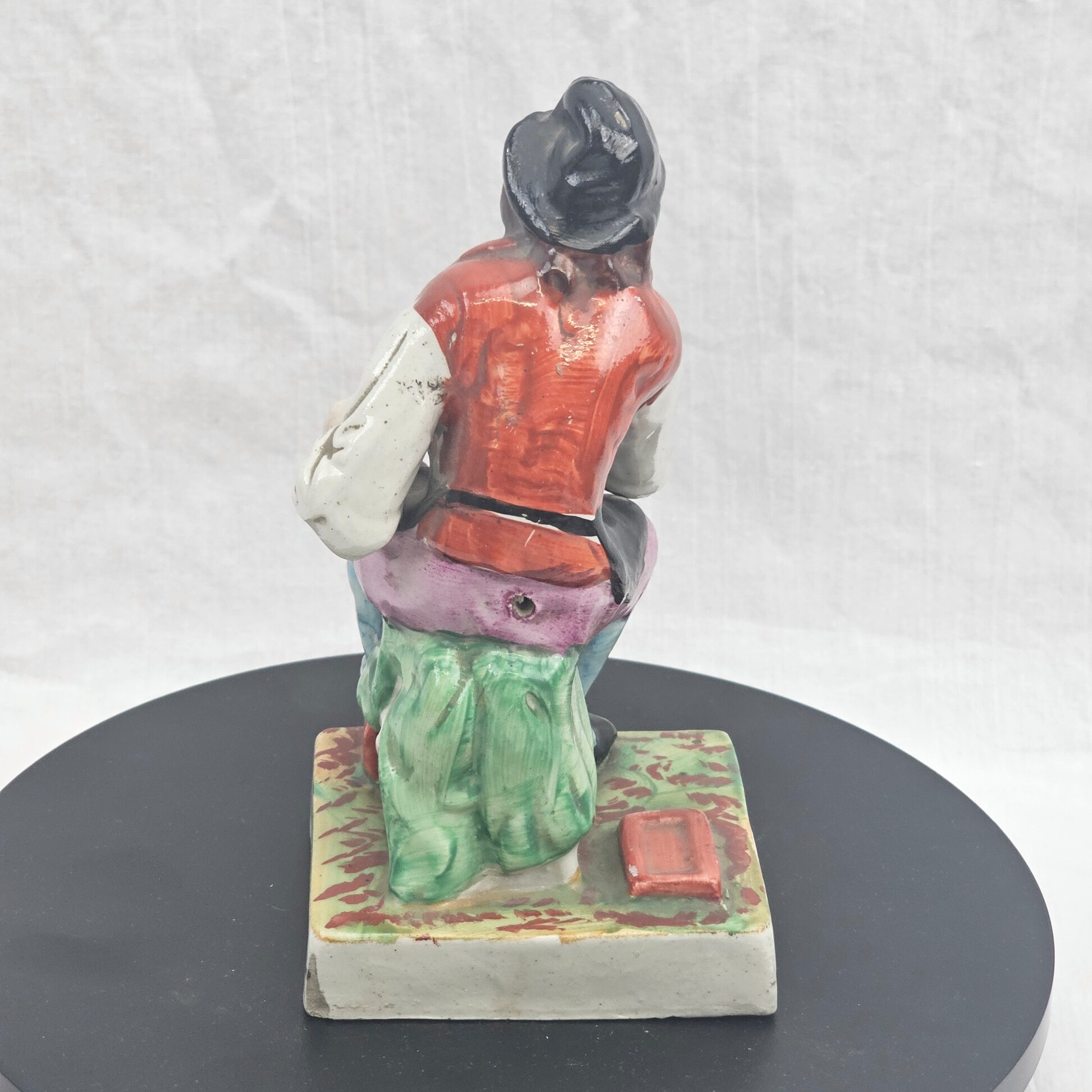
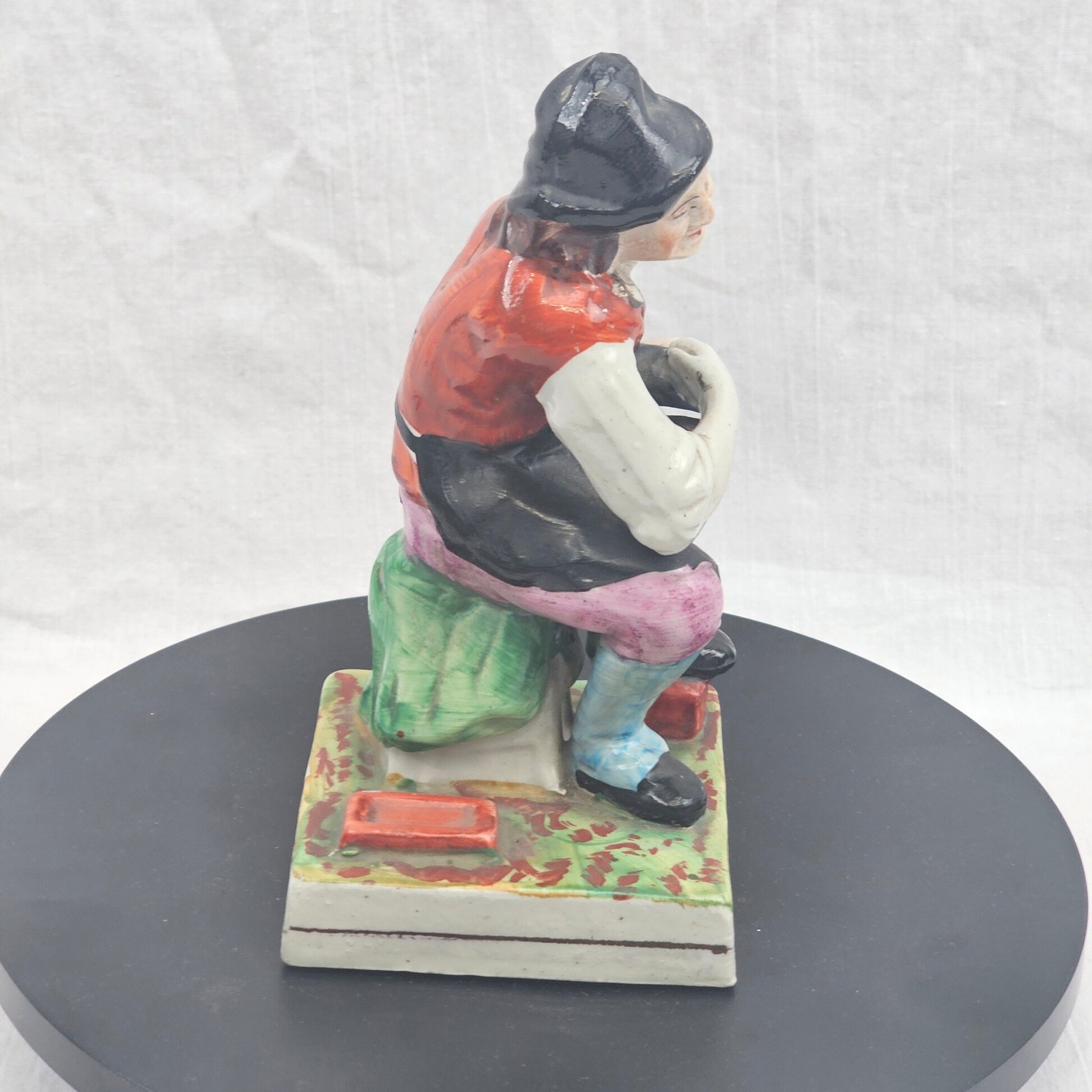
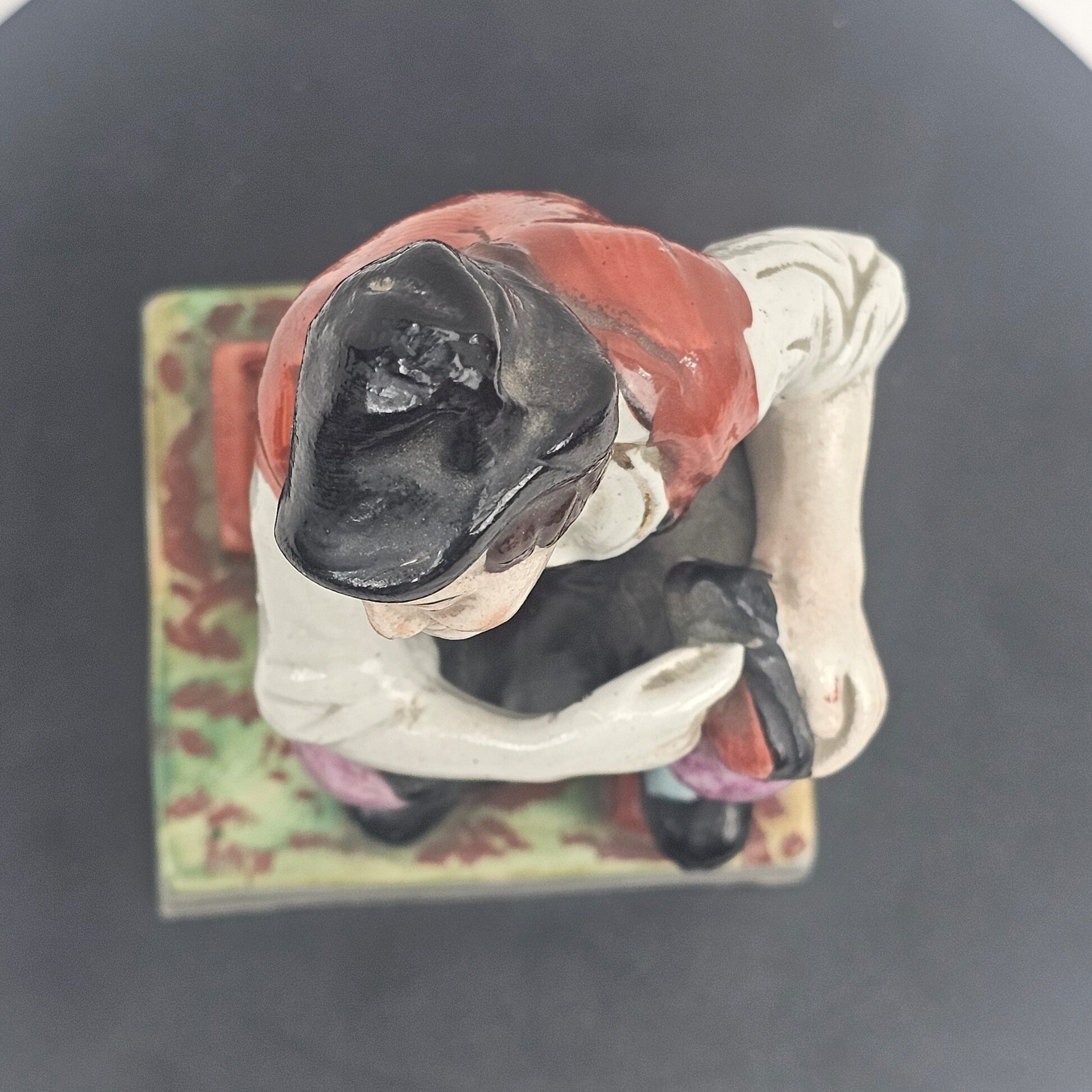
A vibrantly hand-painted Staffordshire earthenware figure of a seated cobbler, modelled fully in the round and representative of the well-established "Cobbler Jobson" type, one of the most enduring subjects in Victorian Staffordshire pottery. The cobbler is depicted mid-work, seated on a green-draped stool and leaning forward as he tends to a boot or shoe held in his left hand. He is dressed in a broad black glazed hat with a characteristic flattened brim, a red waistcoat over a white shirt, a black apron, mauve breeches, and pale blue stockings above black buckled shoes. His expression is lively and characterful, with flushed cheeks and an amused downward gaze. A small dog peers out playfully from beneath the stool - a defining detail of this figure type - and a pair of small terracotta-red cobbler's lasts or troughs are placed at his feet on the base. The figure stands on a square, stepped base decorated with a green and russet marbled splash-glaze. The reverse is modelled with equal care, distinguishing this as a genuinely in-the-round piece rather than a flatback, and consistent with its intended use as one half of a mantelpiece pair (the companion being the Cobbler's Wife, "Nell").
~ Historical Context ~
The "Cobbler and Wife" pairing was one of the earliest and most consistently reproduced subjects in English pottery figures, with origins in pre-Victorian Staffordshire pearlware of the early 1800s. The cobbler figure is traditionally identified with the character of Jobson from the popular ballad and theatrical tradition - an archetypal working man whose craft was both respected and romanticised. As the Victorian era progressed, versions of the subject continued to be produced by numerous unnamed Staffordshire potteries, with the later examples (from around 1850 onwards) typically rendered in the earthenware body with enamel overglaze colours rather than the earlier underglaze pearlware palette. The rich overglaze enamels seen here — particularly the vivid red of the waistcoat, the black of the apron and hat, and the marbled base — are wholly characteristic of the c.1860–1875 period. Staffordshire occupational figures of this type held great popular appeal: they were inexpensive, cheerful, and reflected the working and domestic world in a way that resonated with both town and country buyers at a time of rapid industrialisation. They were typically purchased in pairs and displayed on the mantelpiece shelf. This figure would originally have been accompanied by a seated female counterpart pouring ale. Unmarked, as was typical of virtually all Staffordshire figure production of this era.
~ Condition Report ~
Overall: Good antique condition consistent with approximately 155 years of age; structurally sound with no restorations detected.
Figure: No chips, cracks, or losses to the principal modelling of the figure itself; facial features, hat, hands, and boot are all intact.
Enamel decoration: Well-preserved with minor surface rubbing in areas of handling wear, most notably to the white shirt and the flesh tones of the hands; the red waistcoat retains strong, vivid colour.
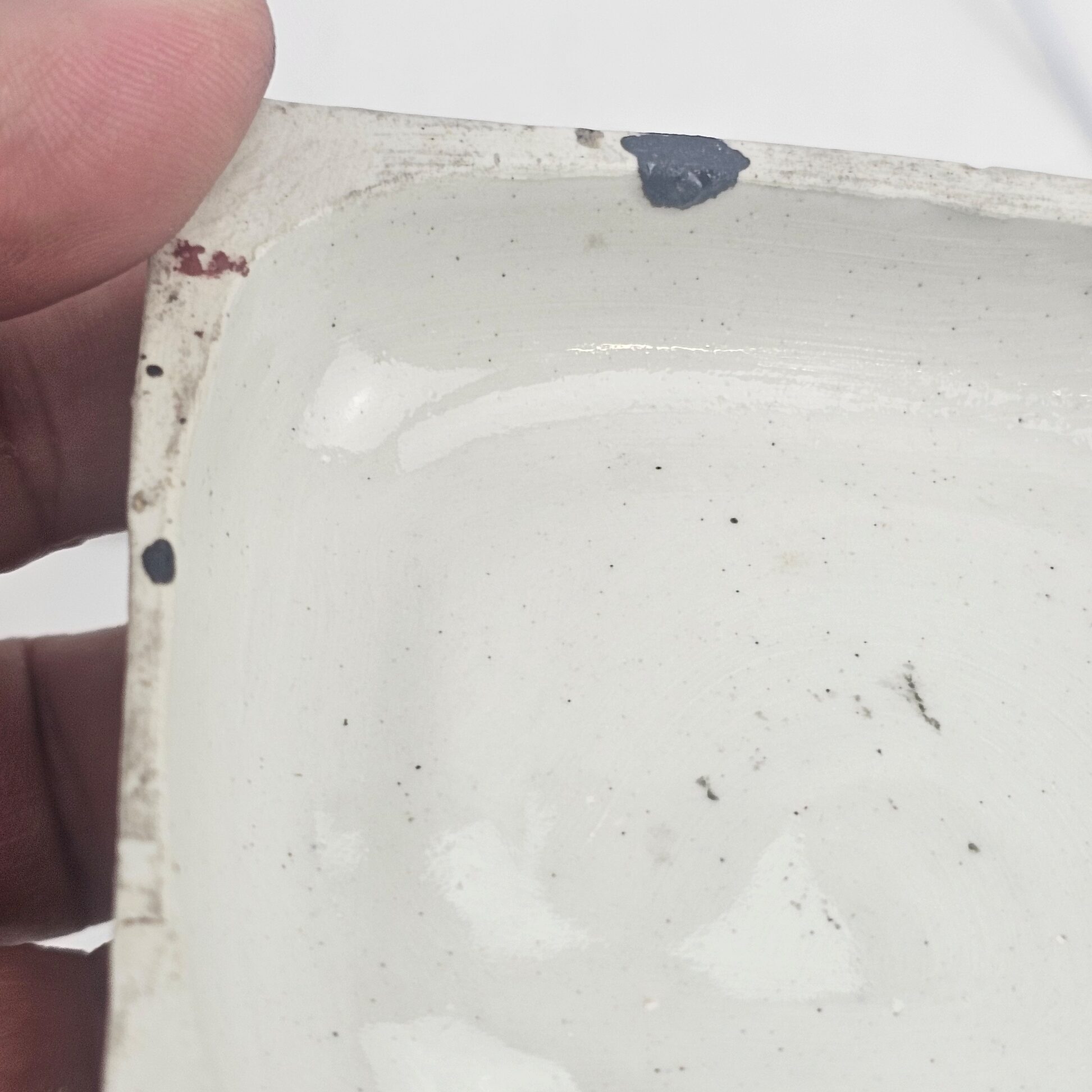
Base: A small corner chip is visible to the lower edge of the square stepped base (clearly visible in close-up photographs); no loss to the decorated upper surface.
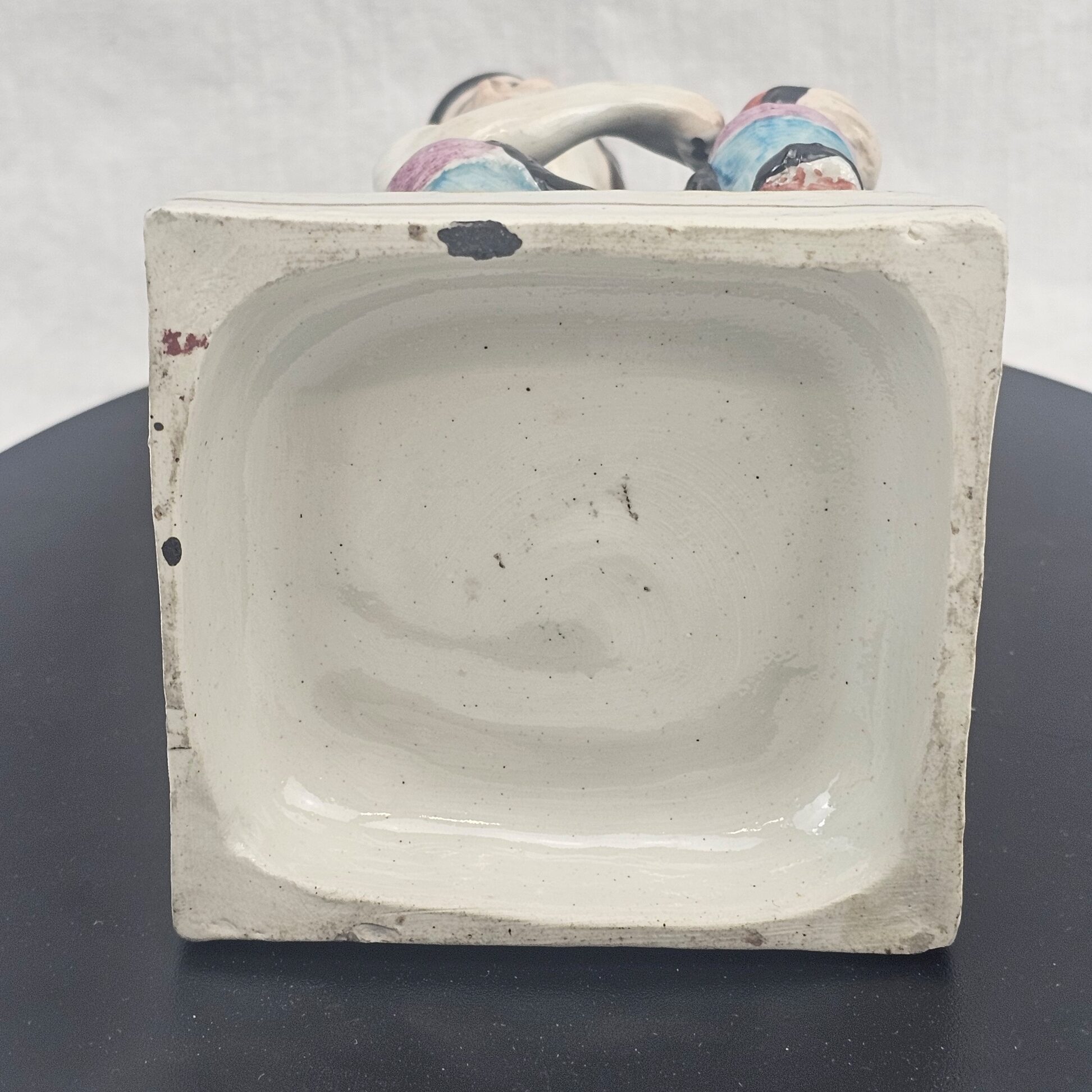
Underside: Open hollow base with clean, lightly speckled white glaze to the interior; a couple of black glaze spots visible, consistent with kiln contact at the time of manufacture - not damage. No maker's mark.
Back vent hole: A small circular firing vent hole is present at the rear waist of the figure, entirely typical of the construction method and not a defect.