~ Victorian Staffordshire Pottery Cottage Pastille Burner, Multi-Gabled, c.1845–1870 ~
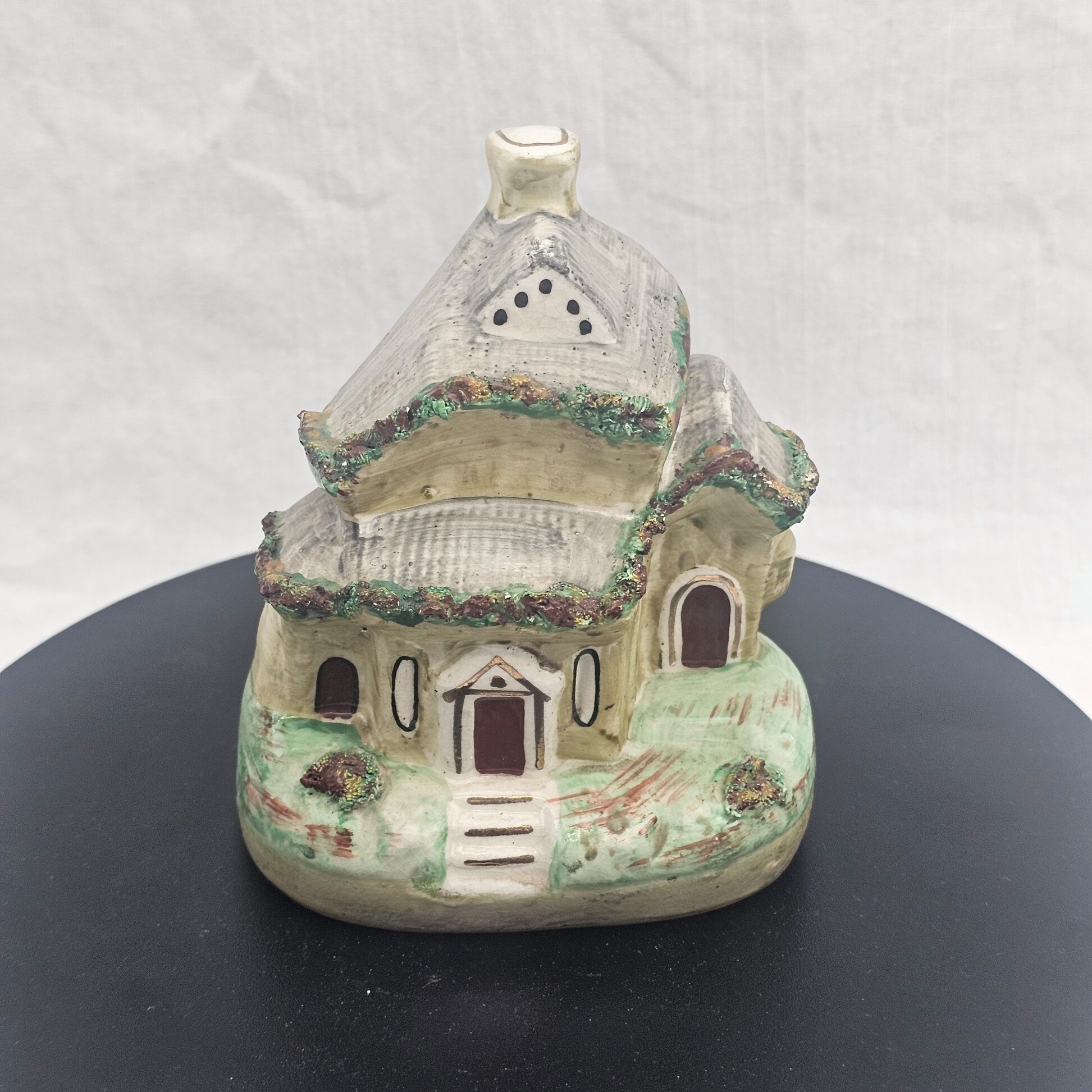
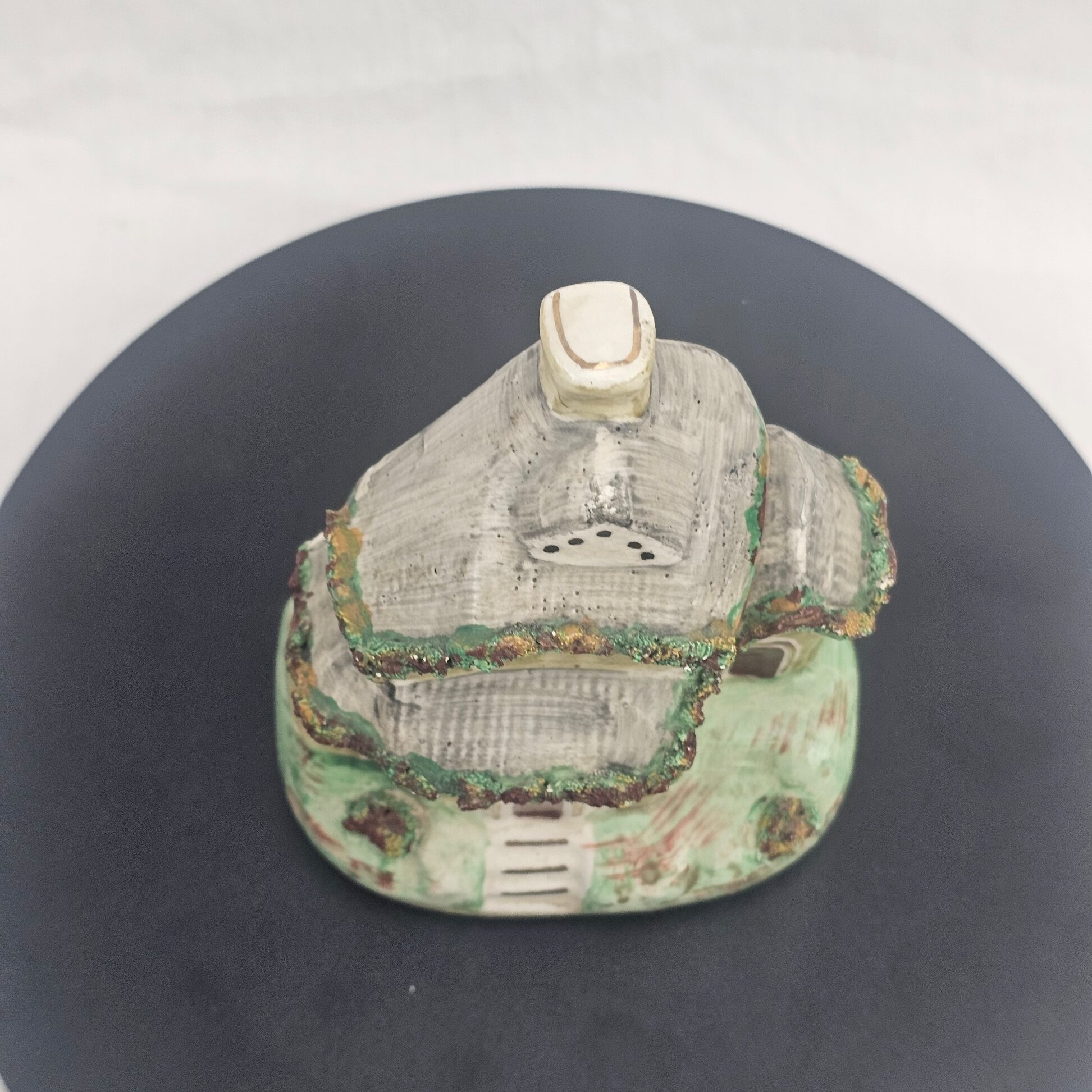
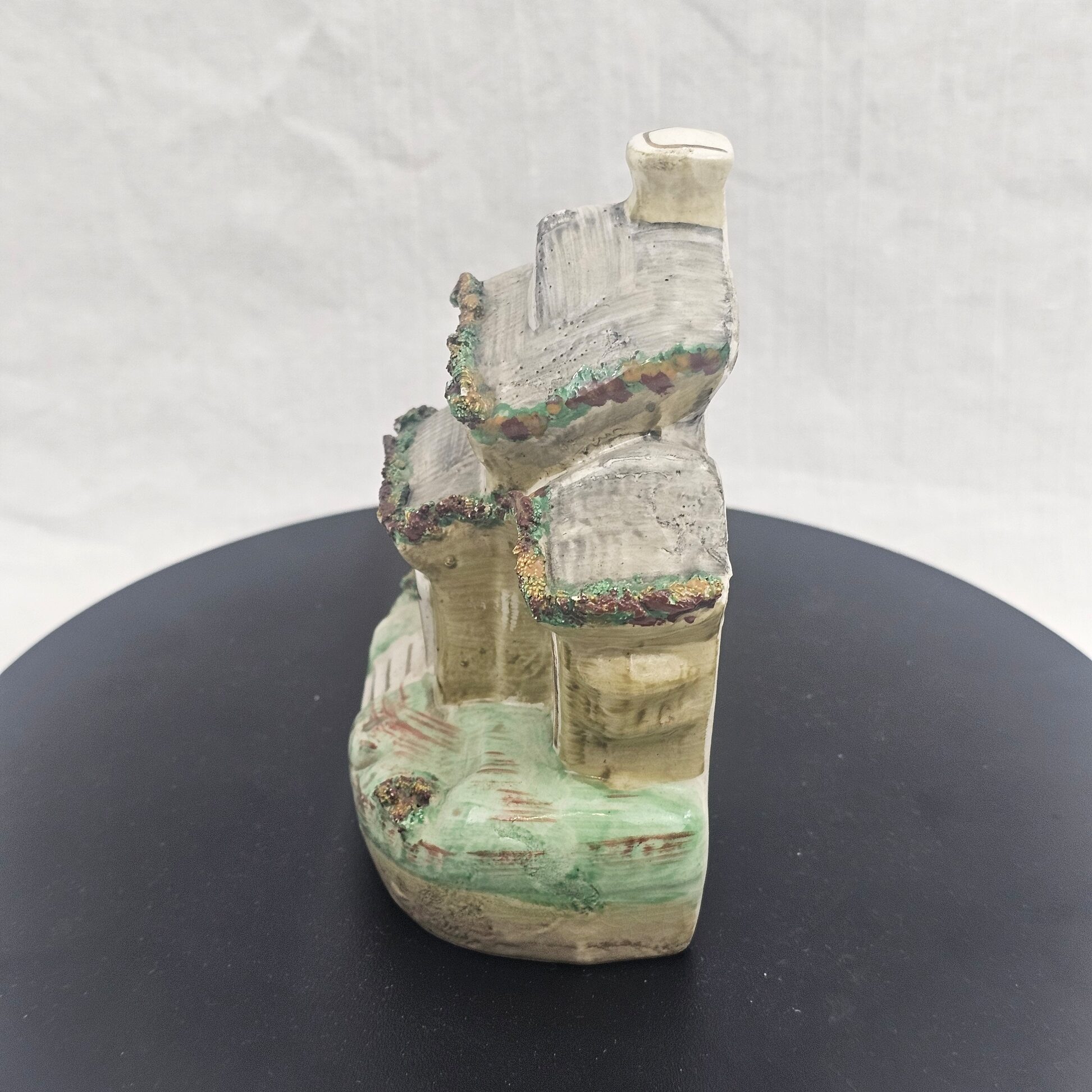
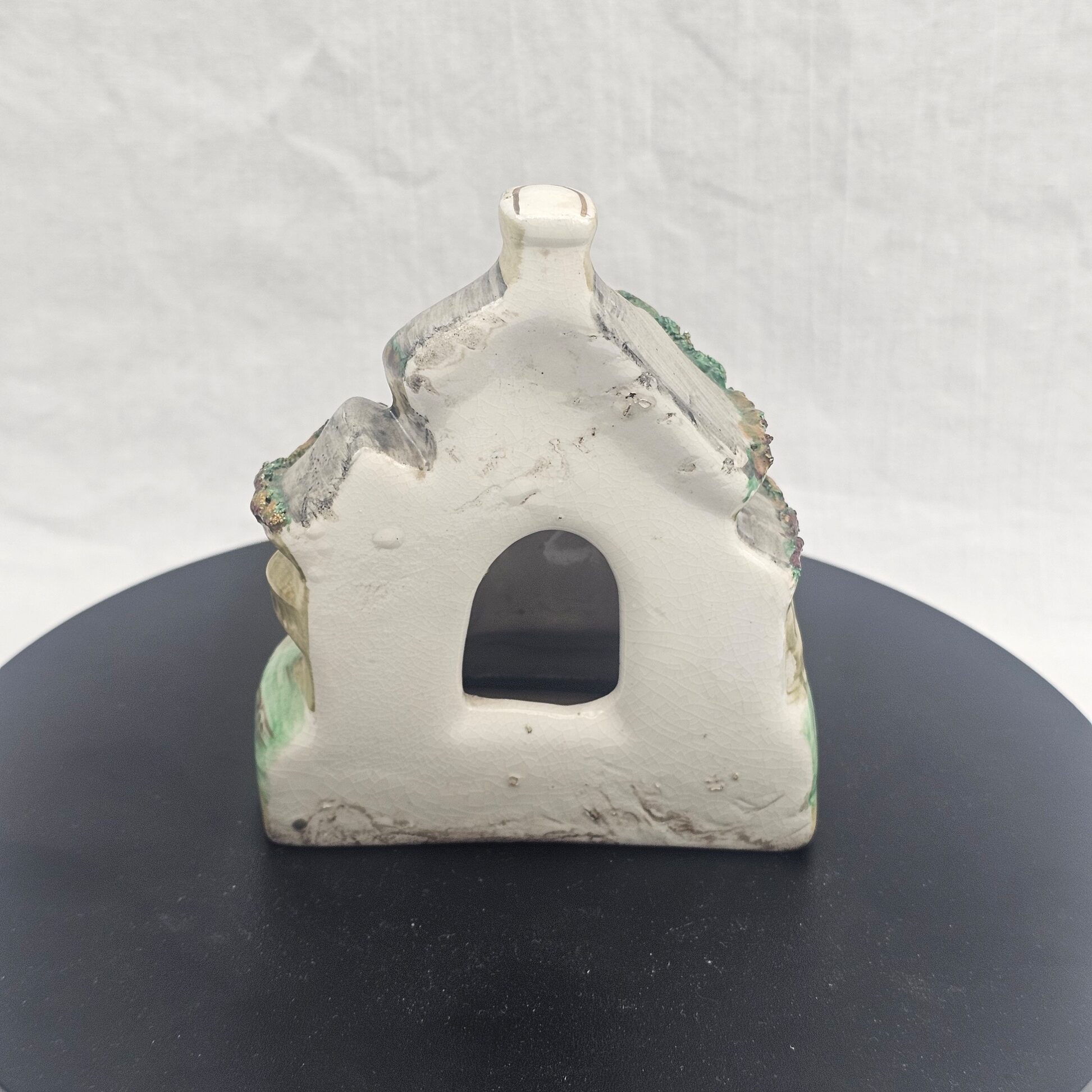
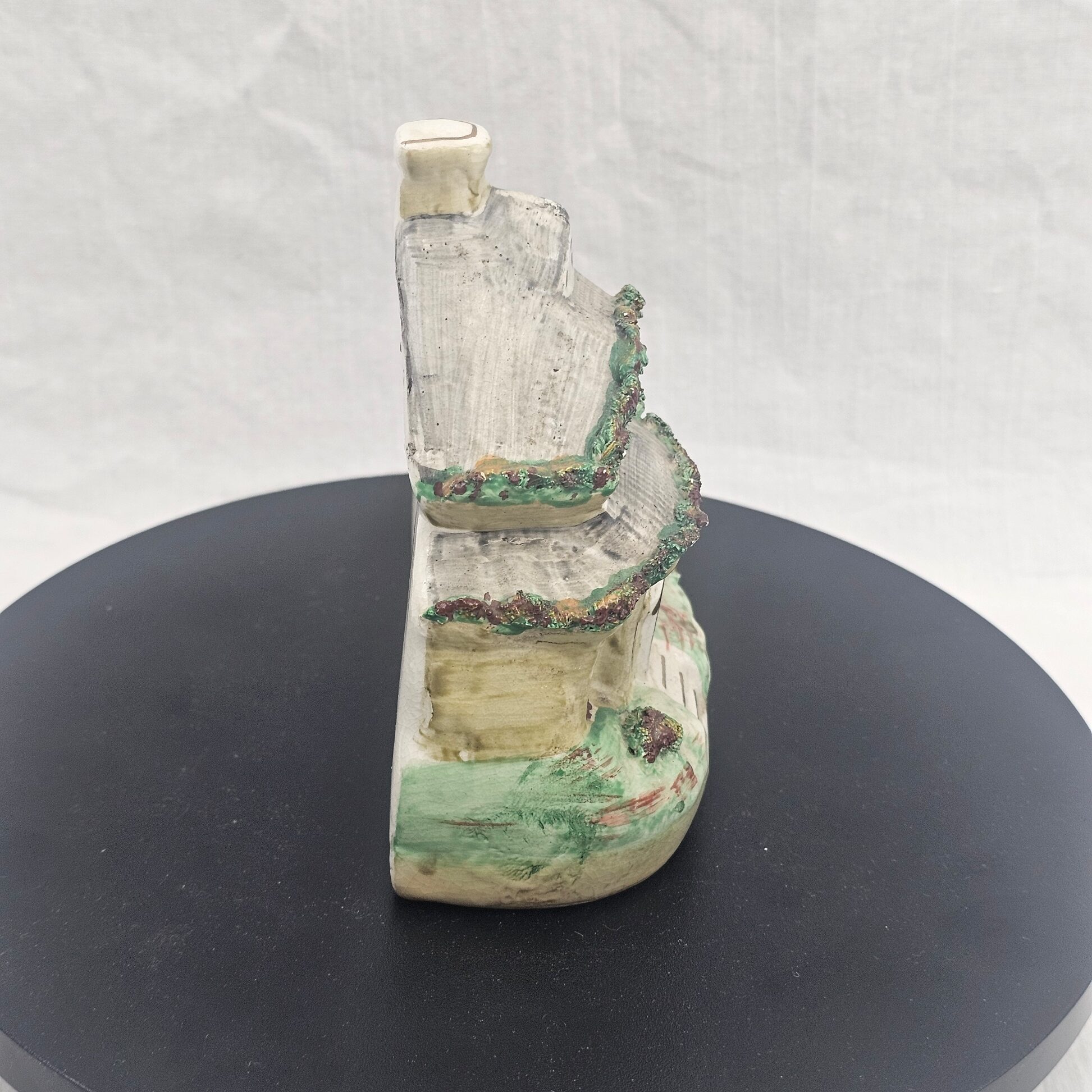
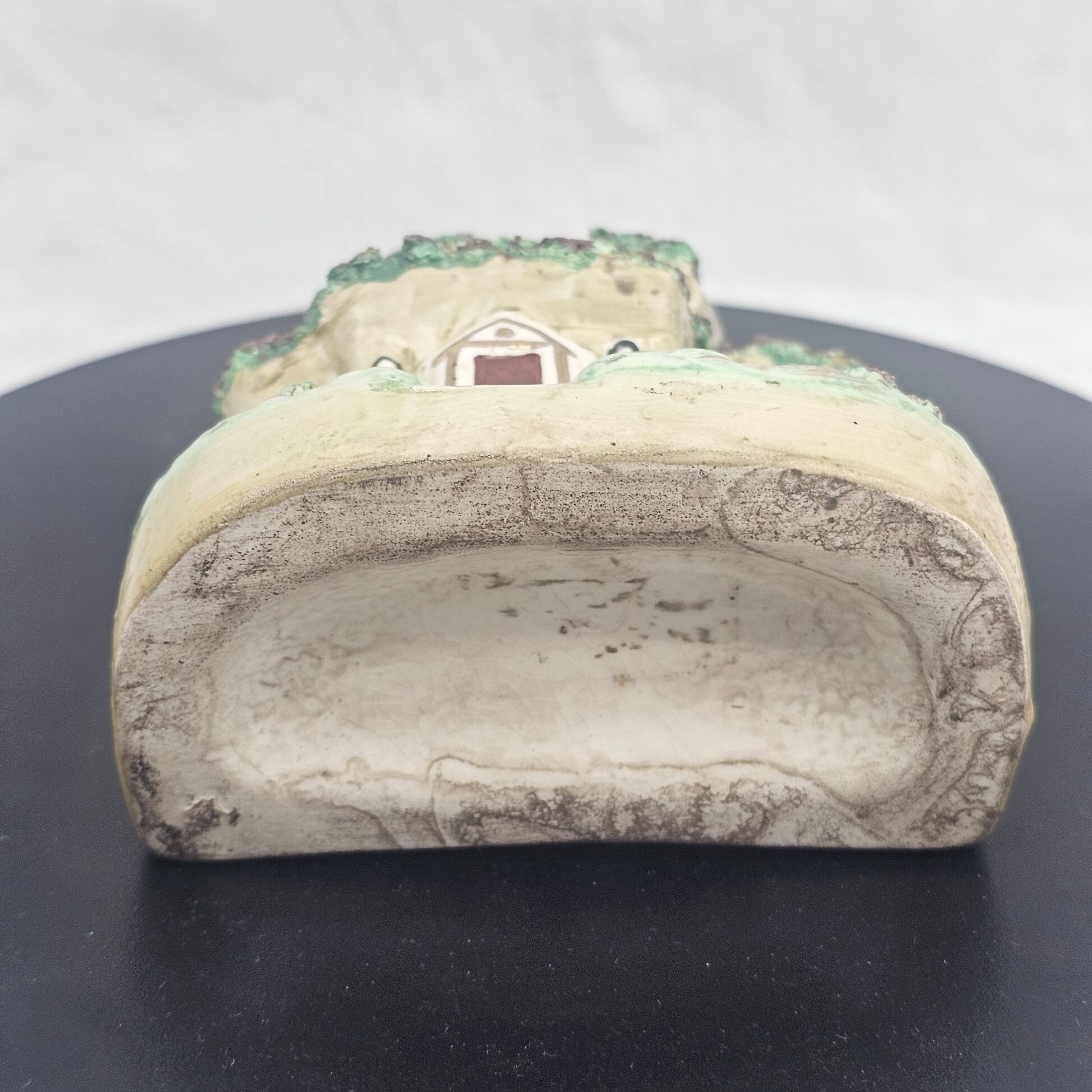
A characterful Victorian Staffordshire pottery cottage pastille burner of more than usual architectural complexity, modelled as a multi-gabled, asymmetrical thatched cottage with a stepped roofline. The roof is painted in grey-white brushstrokes to suggest thatch or slate tiling, and edged throughout with applied sieved-clay bocage in green and purple-brown. A triangular dormer in the upper roof section is pierced with a row of black-dot ventilation holes to allow smoke to escape when in use. A single cream chimney stack at the apex is open-topped. The front face features two oval windows with dark painted surrounds, a central red-brown arched doorway with a white-painted porch canopy, and painted steps at the base. The surrounding garden is painted green with applied foliage clusters and red/brown brushstroke paths. The rear carries the standard arched pastille-burner opening through which the incense pastille was inserted. The piece is of single-part construction — the hollow body is accessed only via the rear arch, with smoke escaping through the chimney and dormer vents. The base is unglazed and hollow. Unmarked. Approximate height 11–12 cm.
~ Historical Context ~
The thatched multi-gabled cottage was one of the most varied and picturesque formats in Victorian Staffordshire cottage pastille burner production, with individual examples rarely exactly repeating — each mould producing a slightly different compositional arrangement of gables, dormers and extensions. A Staffordshire cottage pastille burner of circa 1860–70 with a thatched double gable roof and sieved clay decoration, 13 cm high, was included in a collection offered at Bonhams, confirming active demand at major auction for this cottage format with bocage roofline detail. The addition of a pierced dormer as a secondary ventilation feature — alongside the open chimney — is a detail found on the more ambitiously modelled examples within the type, and contributes to the liveliness and asymmetric charm of the composition.
The practice of burning aromatic pastilles in pottery cottage burners reached its commercial peak in Britain between approximately 1820 and 1870, before ventilation and sanitation improvements made them obsolete as household objects. These small Staffordshire pottery incense burners were used to help diffuse unpleasant household odours, with scented wisps of smoke escaping picturesquely through the chimney of the model house. This example's applied sieved-clay bocage edging in green and mauve/purple, the grey-white brushstroke roof, and the palette of green, cream and red/rust are characteristic of production from the mid-Victorian period, c.1845–1870.
~ Condition Report ~
The piece presents in good condition with no significant structural defects to disclose.
Roof and bocage: The grey brushstroke roof is intact. The applied sieved-clay bocage edging along all visible rooflines appears well-preserved, with good coverage and colour retention in green and purple/brown across the front, sides, and from the overhead view. Dormer ventilation holes are present and intact.
Chimney: The chimney stack is intact with the open top confirming original function.
Front face: The oval windows, doorway, porch canopy, and steps are all present. The green garden paintwork and applied foliage clusters appear in good order.
Rear (Image 4): The arched pastille opening is clean and intact. The plain white rear wall shows minor age grime and surface soil.
Right and left sides (Images 3 & 5): The bocage edging is intact on all rooflines visible from the sides. The stepped profile is clearly defined.
Underside (Image 6): The unglazed hollow base shows heavy age grime and dirt accumulation, expected and appropriate for age. No cracks or damage apparent.
No chips, structural cracks, losses to moulded elements, or evidence of restoration are apparent from examination of the photographs. Buyers are encouraged to review all images carefully before purchasing.