~ Victorian Staffordshire Flatback Pottery Clock Group - Scottish Highland Couple with Bagpipes, circa 1860-1880 ~
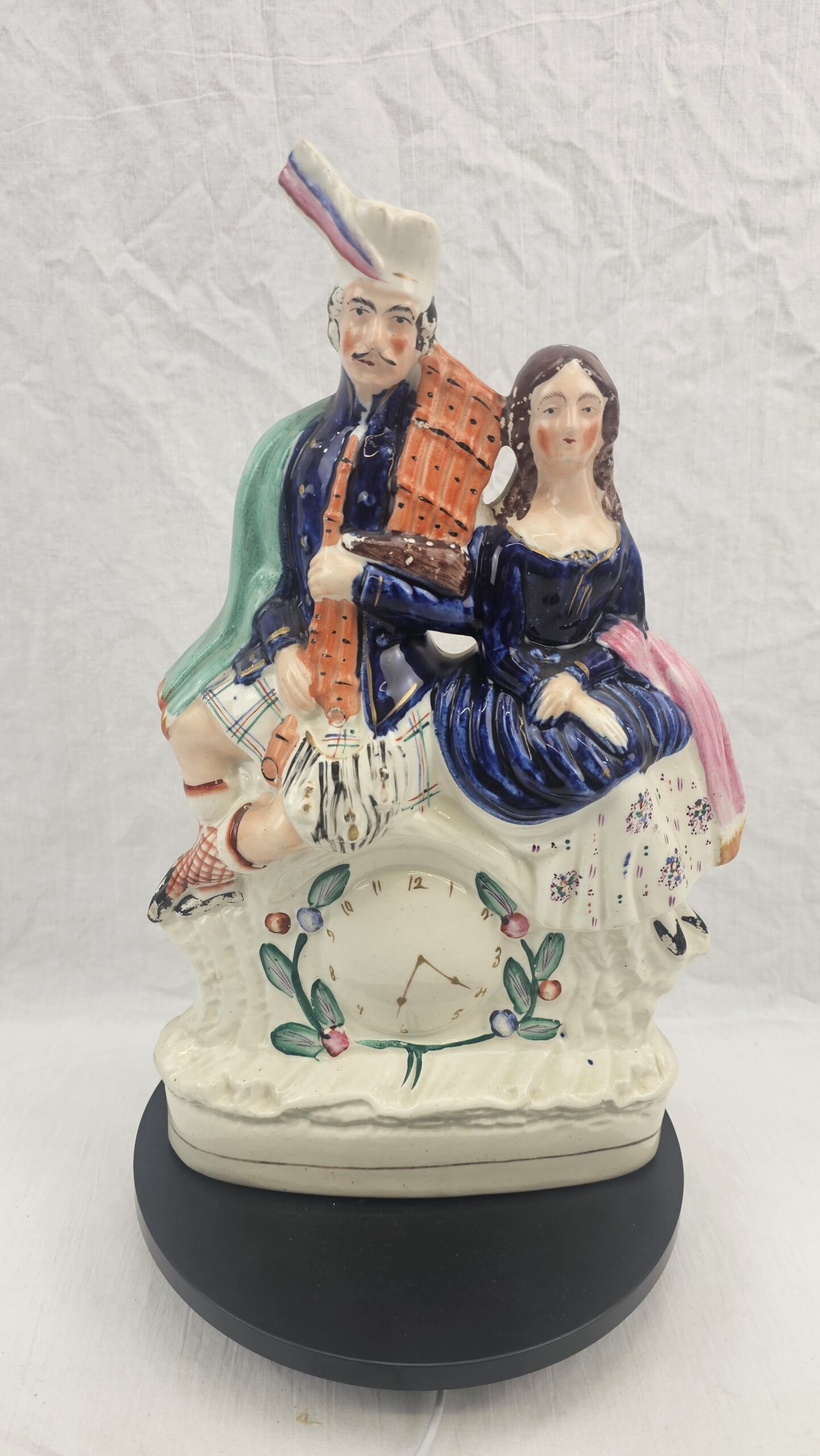
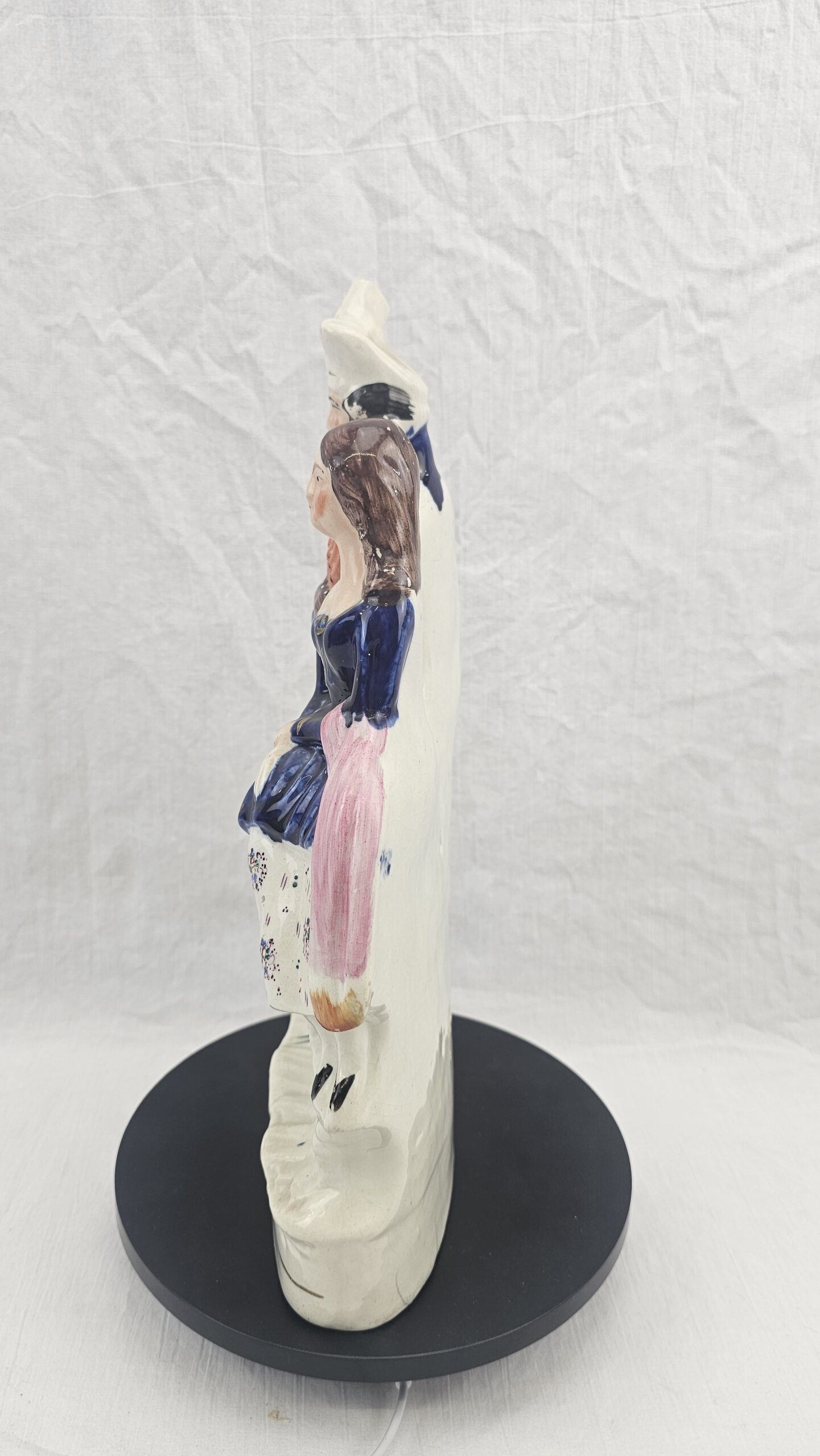
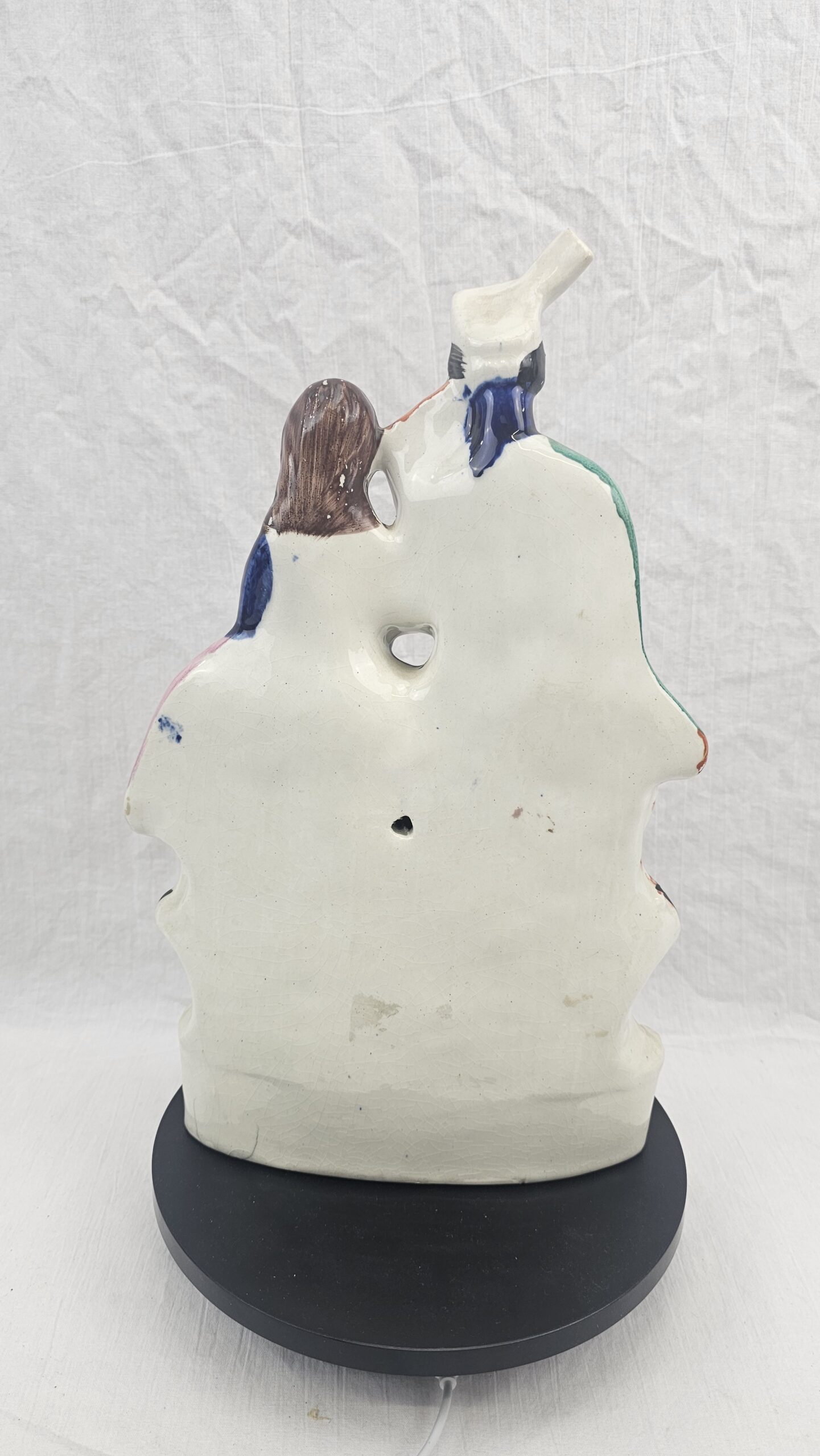
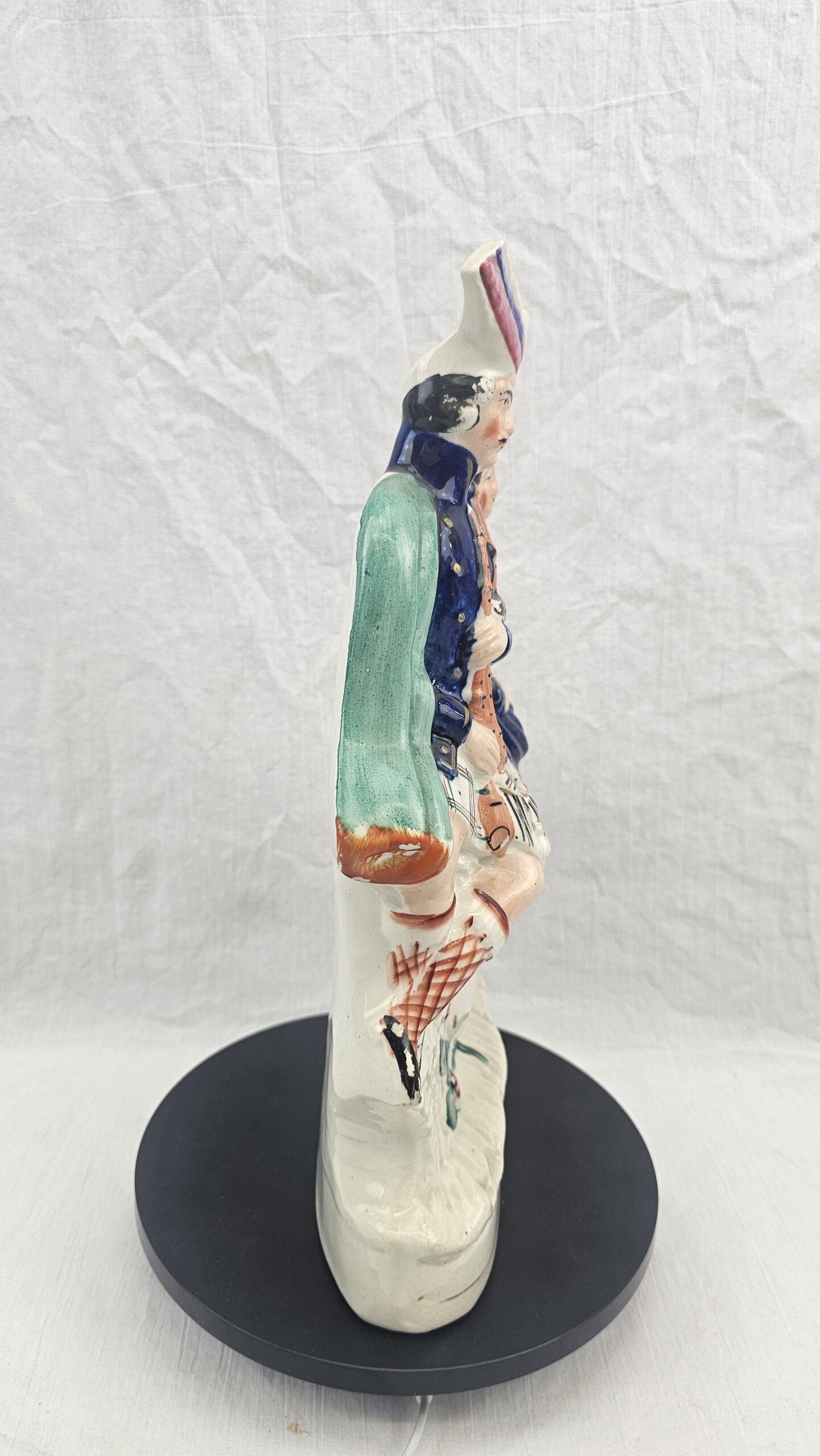
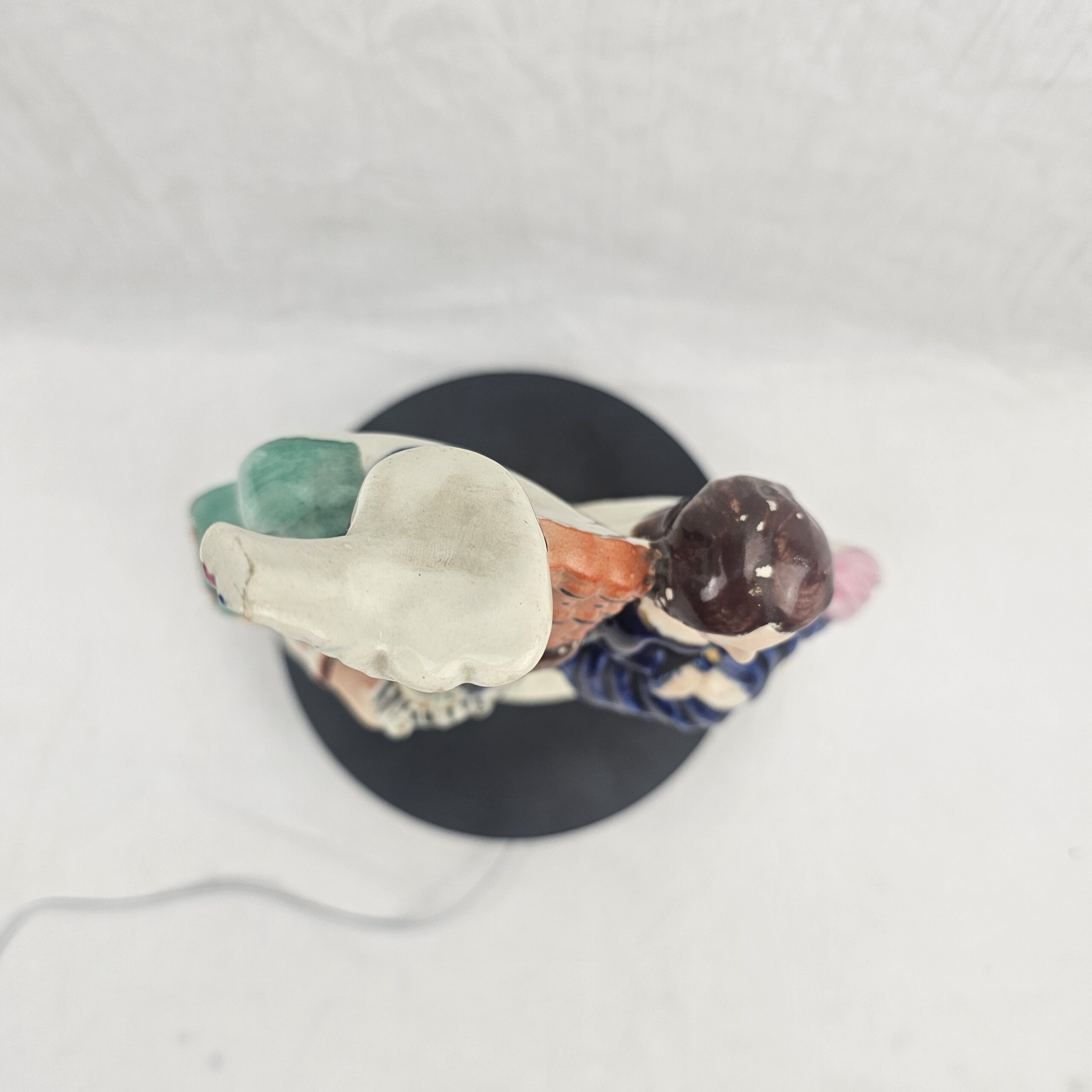
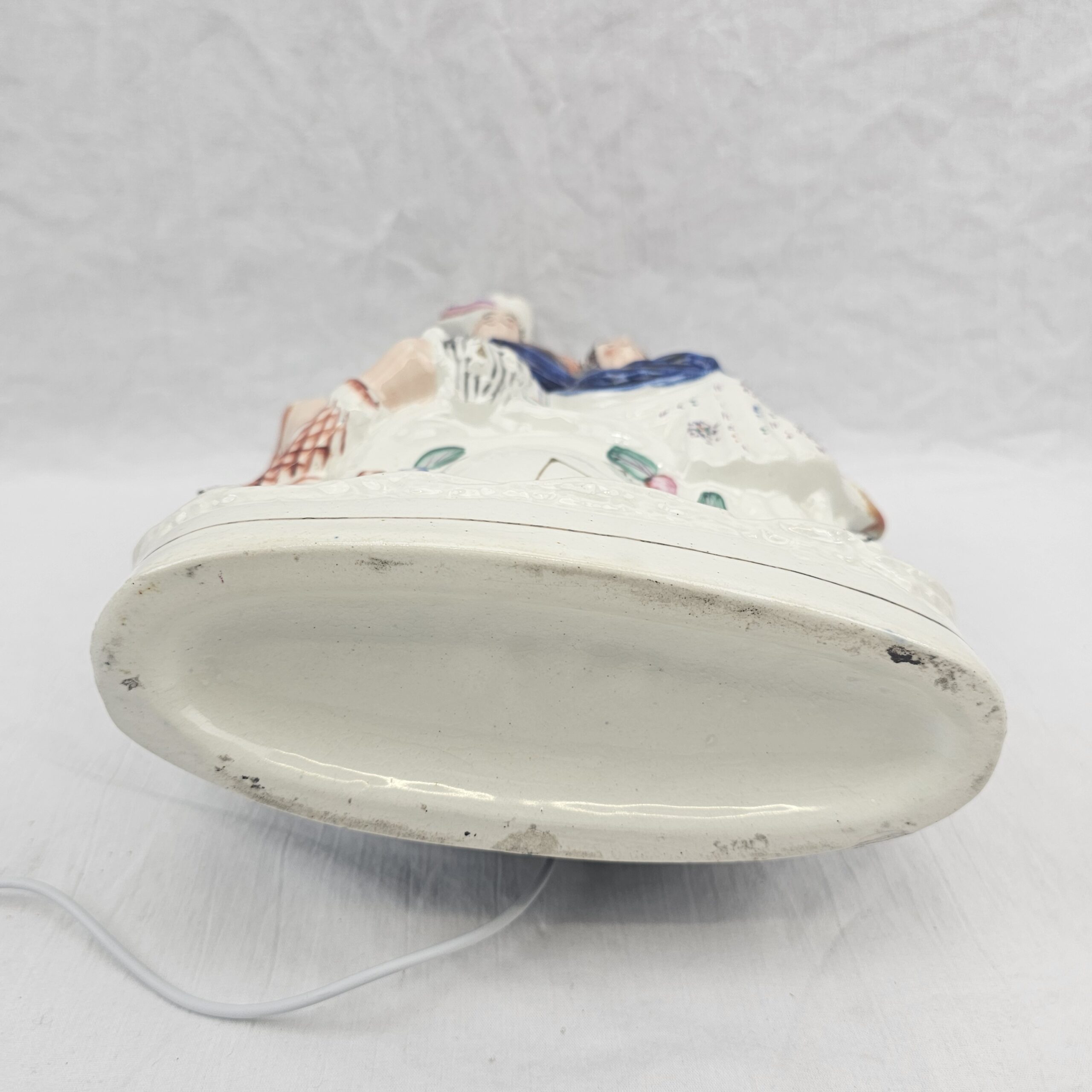
A striking and boldly decorated Victorian Staffordshire flatback clock group depicting a seated Scottish Highland couple, one of the most celebrated and sought-after subjects within the Staffordshire figure tradition. The man is modelled to the left, wearing a tall white cockade bonnet with blue and pink feathers, a cobalt blue military-style coat with gilt buttons over a green plaid sash, and tartan hose. He holds a set of bagpipes, the bag rendered in vivid orange tartan with a dark brown chanter across his lap. His companion sits to the right in a deep cobalt blue bodice and skirt with a pink underskirt and white flounced hem decorated with scattered floral sprigs; her long dark brown hair falls to her shoulders. Between and below the pair is the characteristic faux clock face - painted with Arabic numerals in gilt, with gilt hands and surrounded by a hand-painted garland of green leaves with red and blue berries. The whole group rises from a shaped, moulded base. The reverse is undecorated white-glazed flatback, as intended for mantelpiece display. The piece is currently presented on a later black wooden circular plinth, which is not original to the figure.
~ Historical Context ~
The flatback figurine is designed to be seen set against a wall - the front is decorated but the back is left plain as you would not see it when on show. Clock groups of this type, in which a faux clock face is incorporated into the body of the piece, were among the most popular and widely produced of all Victorian Staffordshire mantelpiece ornaments, known colloquially as "poor man's clocks" - decorative objects that evoked the prestige of a real mantel clock at a fraction of the cost. Figures depicting pastoral scenes and pursuits, reminiscent of rural life, were of great sentimental importance to the rural poor now flocking to find work in rapidly industrialising towns and villages. The Scottish Highland subject became particularly fashionable in the mid-Victorian period, driven by Queen Victoria and Prince Albert's passionate embrace of Scotland - the purchase of Balmoral in 1848 and the establishment of the Highland Court aesthetic catalysed a nationwide romanticism for all things tartan. Staffordshire potters responded enthusiastically, producing a wide range of Highland figures and groups depicting pipers, couples, hunters, and lairds throughout the 1850s-1880s. Unmarked, as was typical of Victorian Staffordshire production.
~ Condition ~
Overall: Good antique condition commensurate with approximately 150 years of age; the group retains strong original colour and displays well.
Figures: Both principal figures are structurally sound; the modelling of faces, costumes, hat feathers, and bagpipes is intact with no observed chips or losses to the front-facing surfaces.
Enamel decoration: Well-preserved; the cobalt blue, orange tartan, green plaid, and gilt details retain good vibrancy with expected light surface wear and minor rubbing to gilt numerals on the clock face.
Back: Flatback, as intended. A small white glaze irregularity is present at the rear shoulder/neck area of the female figure - this may be a period manufacturing blemish or minor old restoration; buyers should examine in person. A circular darker vent hole is present mid-back; its precise origin (manufacturing or later) should be confirmed on close inspection.
Base: The shaped oval base is intact with no observed chipping; some surface grime consistent with age and mantelpiece display.
Underside: Clean white-glazed oval hollow base; a faint impressed mark is potentially visible but not clearly legible in photographs.
Plinth: The black circular wooden display plinth is a later addition and not original; it is not included in the price guidance below as its value is negligible.