~ Victorian Staffordshire Equestrian Portrait Figure of Dick Turpin on Black Bess, c.1850–1870 ~
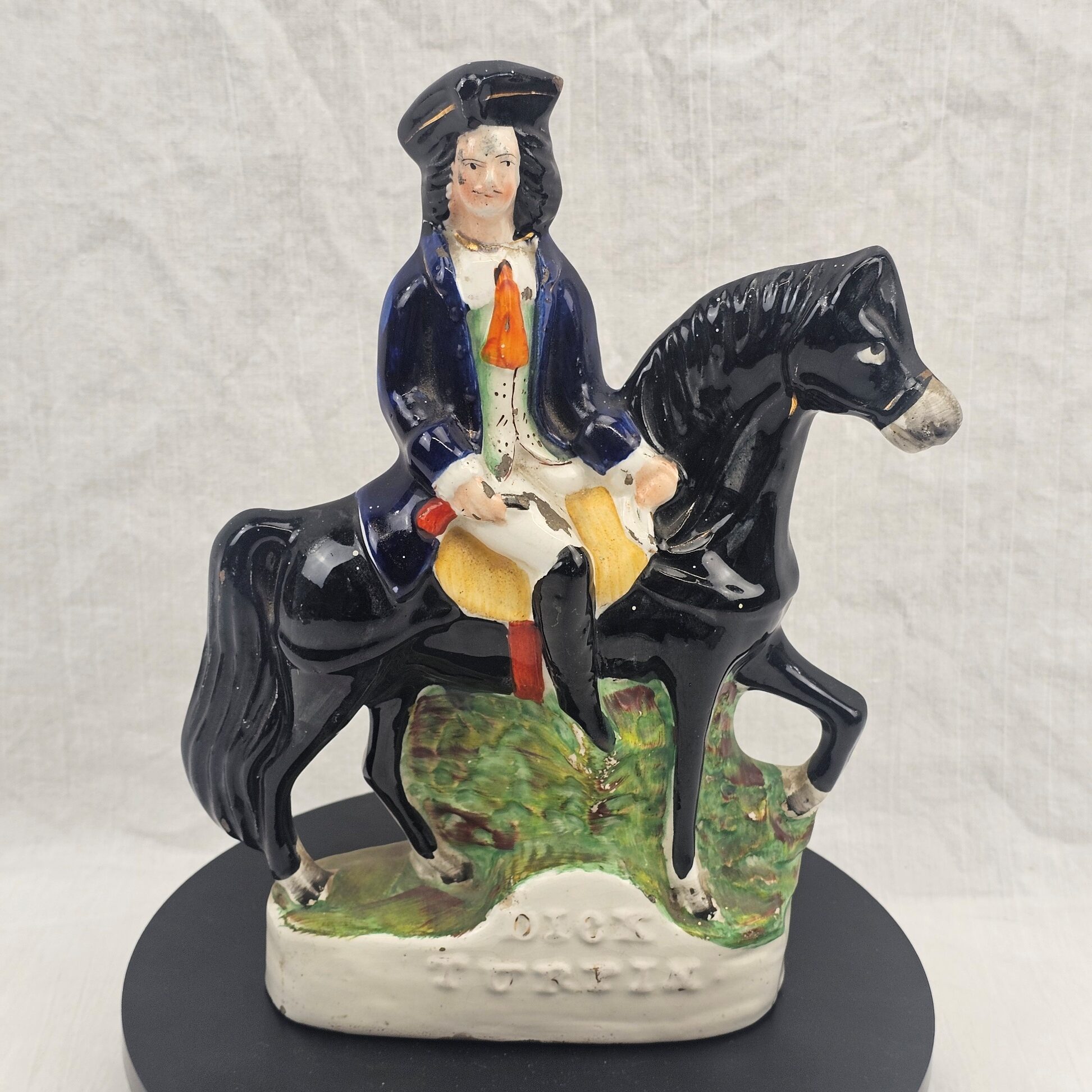
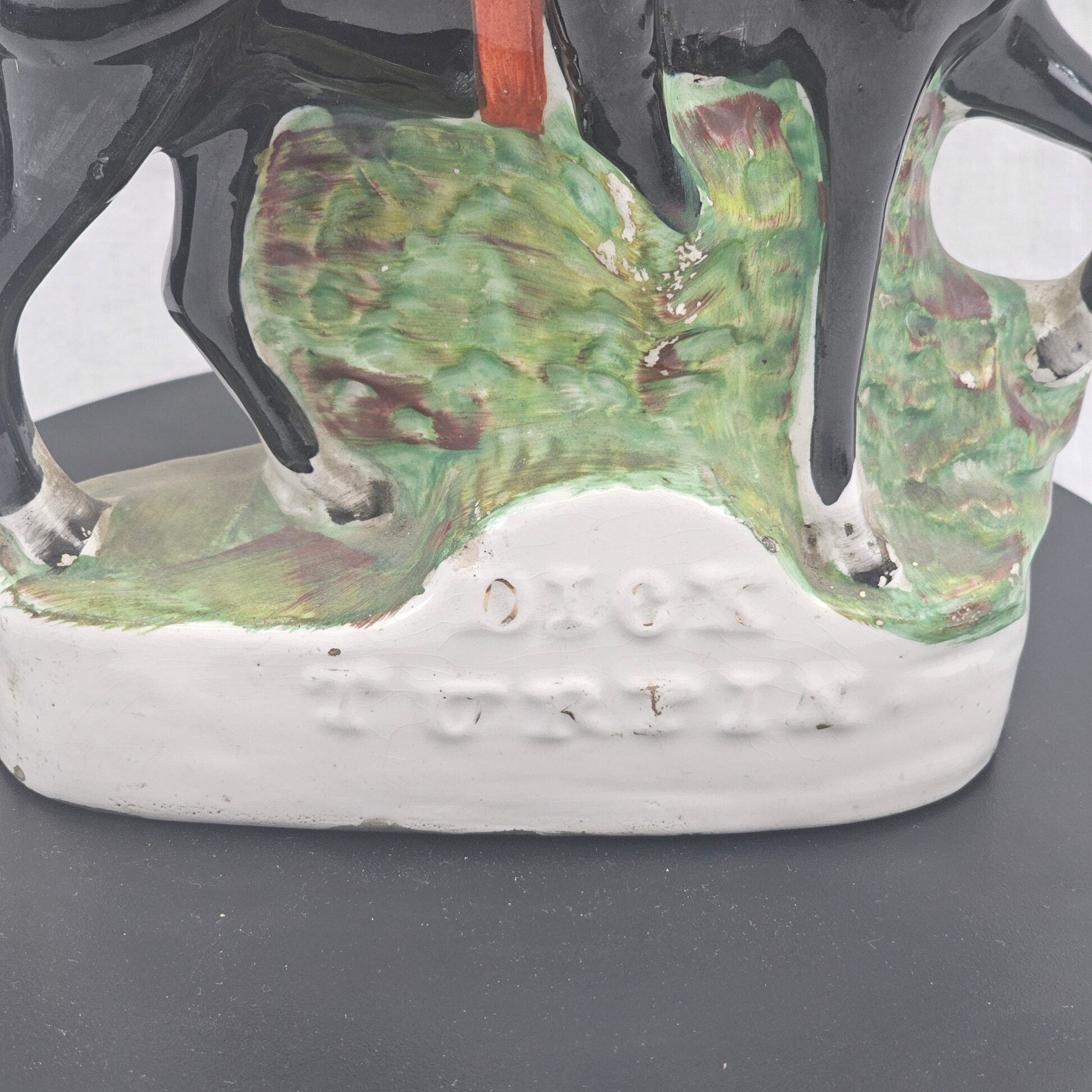
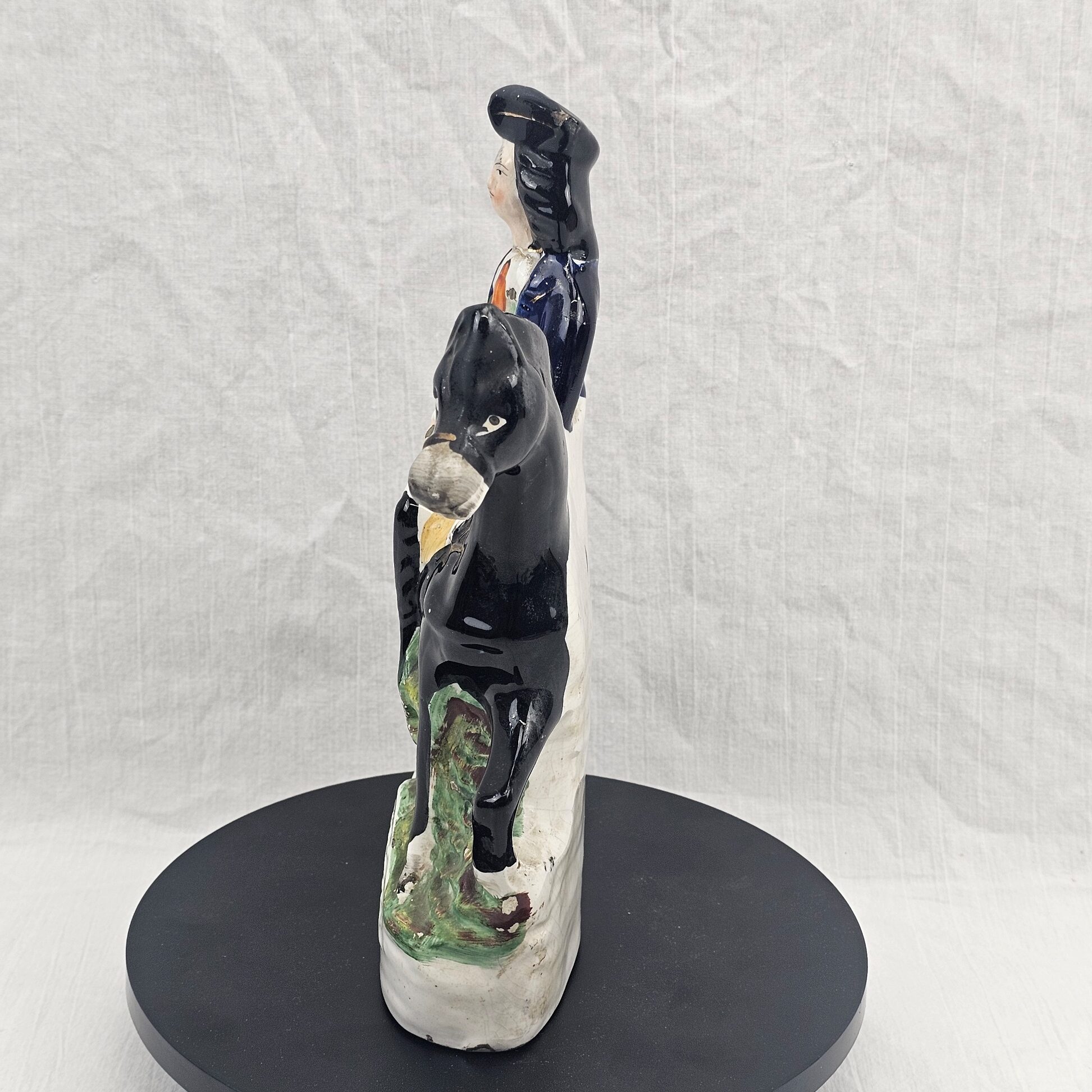
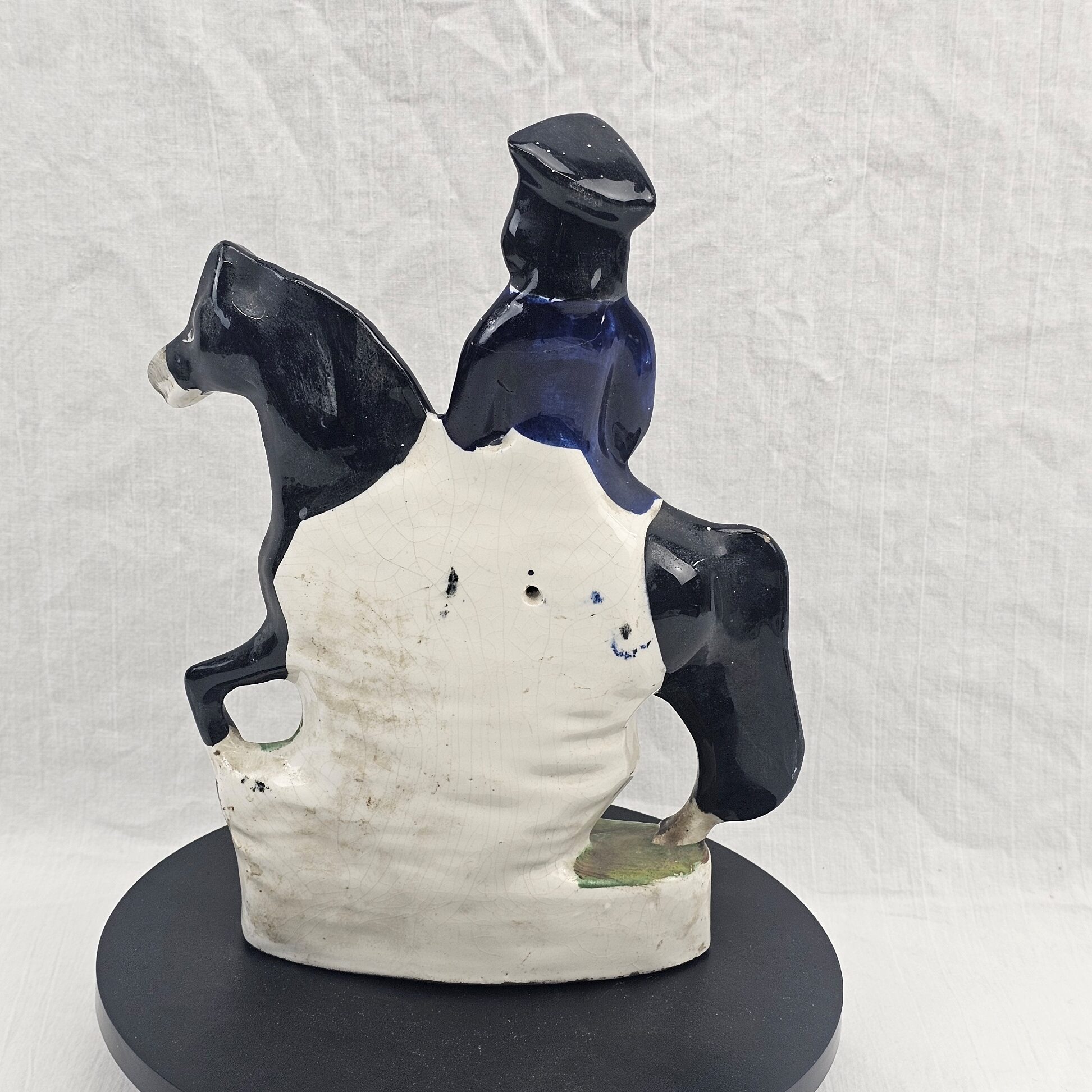
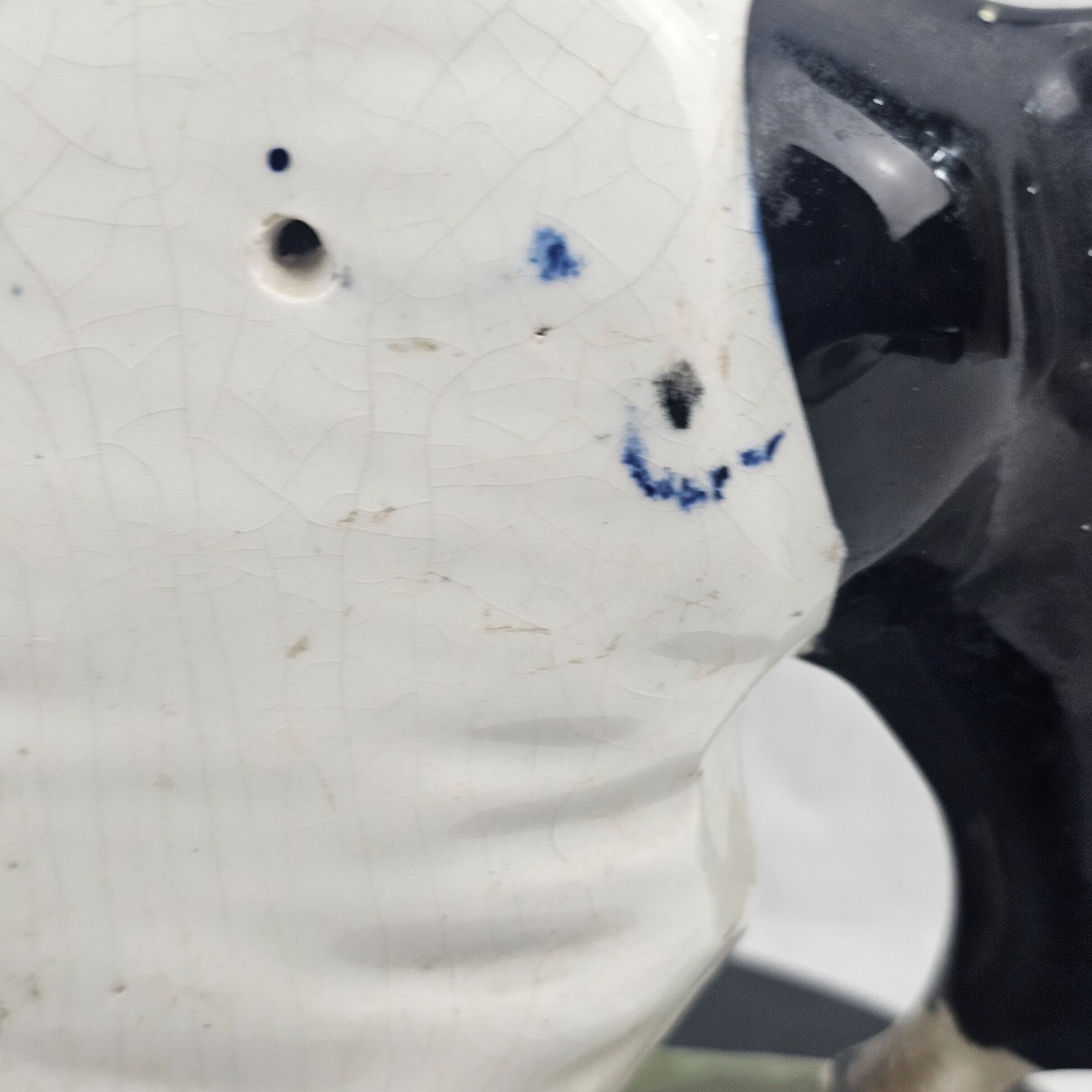
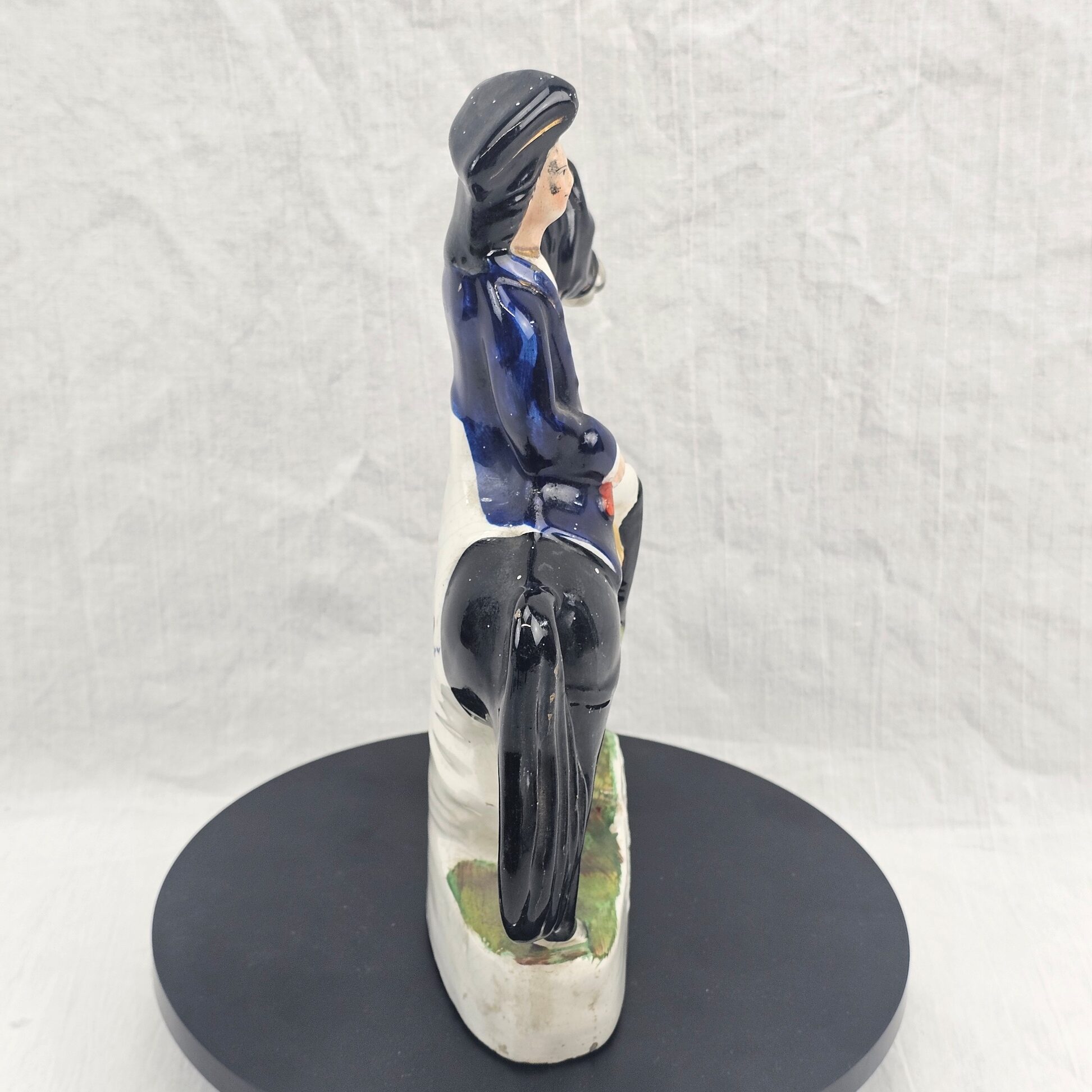
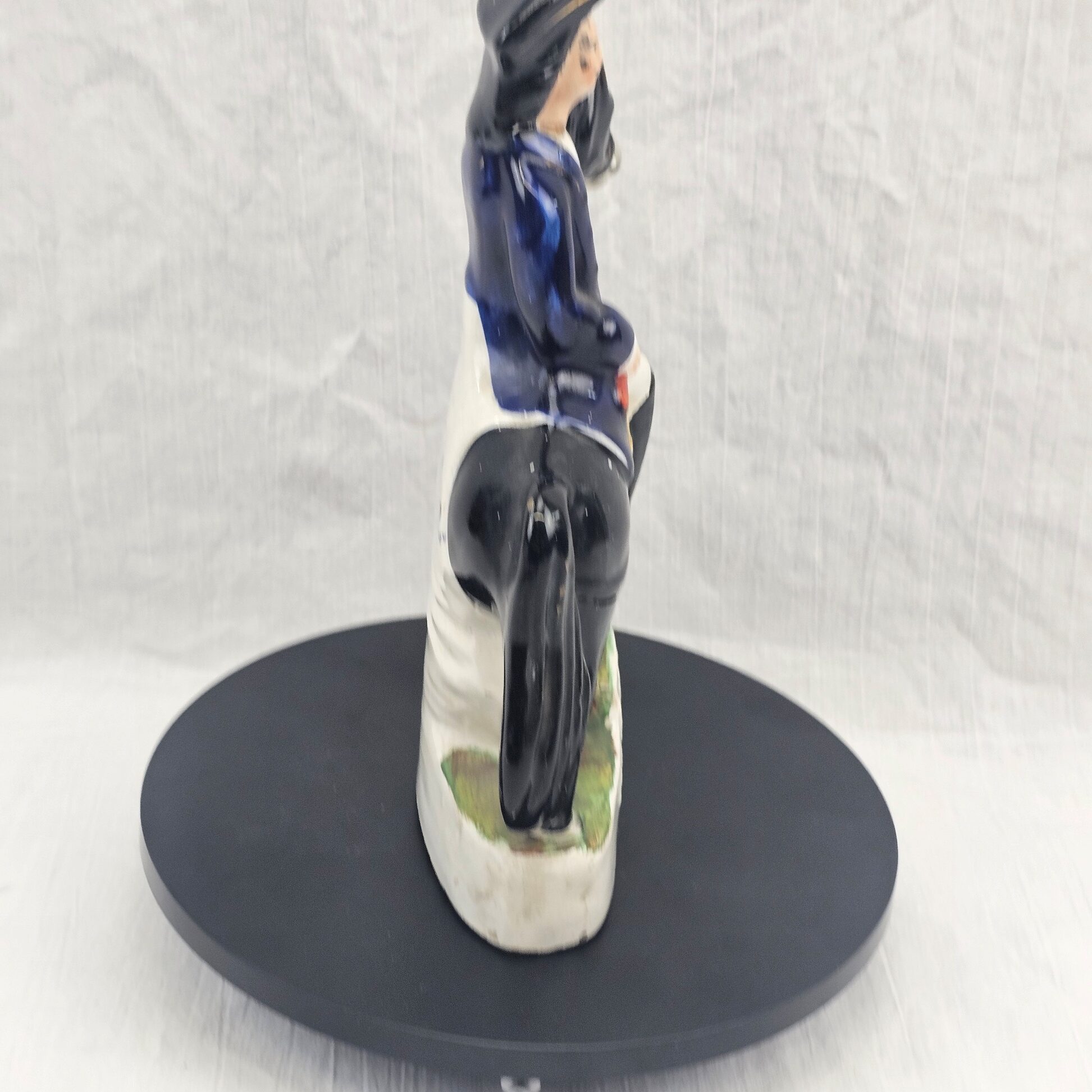
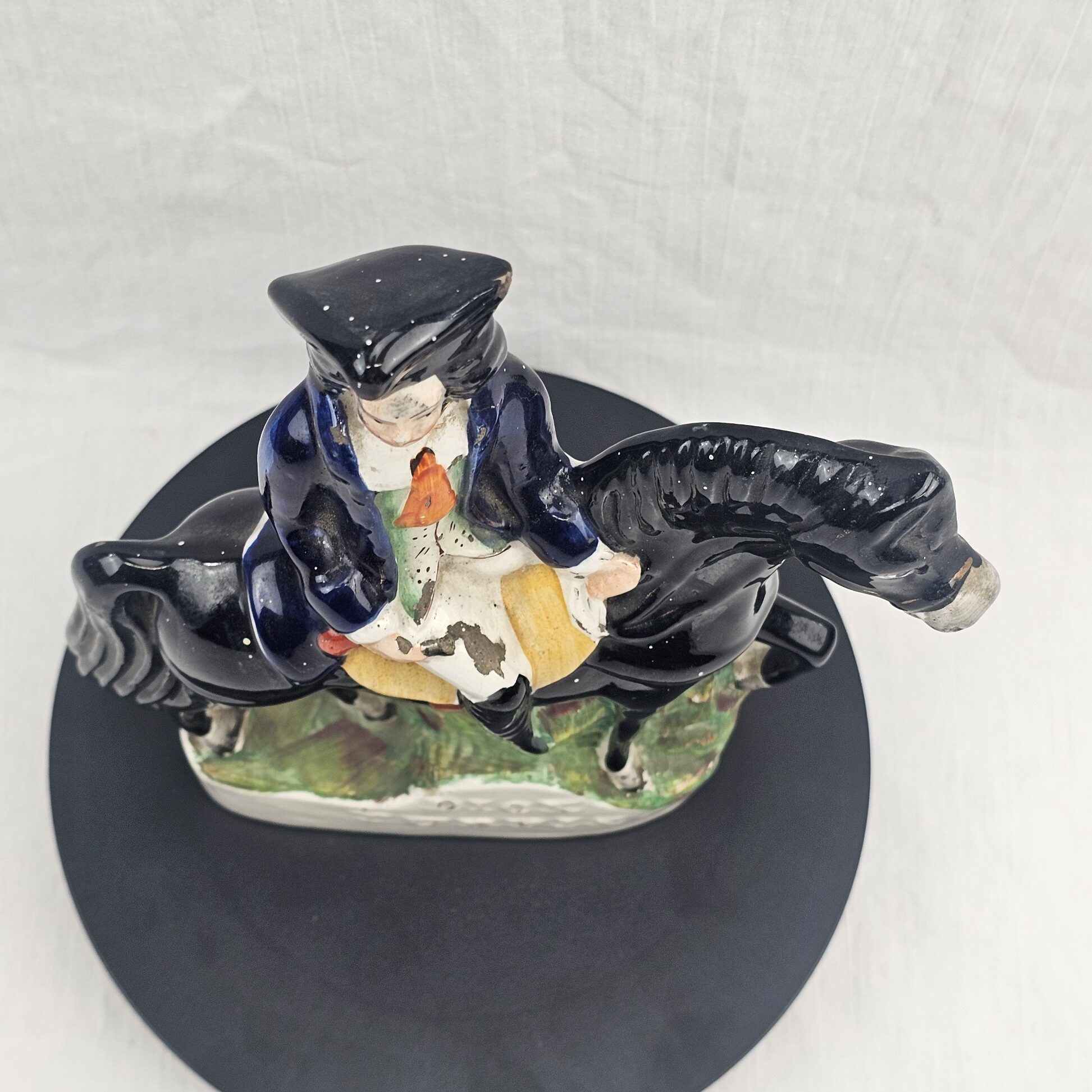
A boldly hand-painted Victorian Staffordshire pottery flatback equestrian portrait figure of the celebrated highwayman Dick Turpin, mounted on his legendary black mare Black Bess. The figure is titled in impressed lettering to the white oval plinth base: DICK / TURPIN. Turpin is modelled seated astride a rearing, fully black-glazed horse, dressed in a black tricorn hat with gilt highlight, a cobalt blue long coat, white waistcoat with orange/red cravat, and yellow breeches. He holds a pistol in his right hand and the reins in his left. The horse stands above a naturalistic green and earth-toned mound, the whole supported on a flat-backed white glazed oval plinth. The reverse is undecorated - characteristic of the Staffordshire flatback tradition - with two standard kiln vent holes to the body. Blue paint splash marks visible to the rear are consistent with manufacturing overspray rather than damage. Approximate height 28 cm (11 inches); width approximately 20 cm (8 inches).
~ Historical Context ~
Dick Turpin (1705–1739) was an English highwayman and robber from Essex who became one of the most romanticised criminal figures in British popular culture. His legendary status — and in particular the fictional account of his midnight ride to York on Black Bess — was cemented by William Harrison Ainsworth's hugely popular novel Rookwood, published in 1834. The novel's success triggered an immediate and enduring demand for Turpin-related imagery, and the Staffordshire potteries responded swiftly: the story of Dick Turpin and his associate Tom King was revived and embellished by the 1834 novel, and Staffordshire equestrian figures of the pair were produced from around 1840 onwards.
The Dick Turpin equestrian figure was typically produced as one of a facing pair alongside Tom King (Turpin's fellow highwayman, accidentally shot by Turpin in 1737), with Turpin conventionally shown on a black horse and King on a white. In the standard pair format, Turpin holds a pistol in his right hand, his left on the reins, wearing a tricorn hat, long jacket, waistcoat, and trousers with knee-boots — precisely as seen here. The subject was referenced in the definitive collector's guide Victorian Staffordshire Figures 1835–1875 by A. & N. Harding (Book 1, Page 264, figs 947/948). This figure is consistent with production circa 1850–1870 based on the style of modelling, glaze palette, and form of the impressed title.
~ Condition Report ~
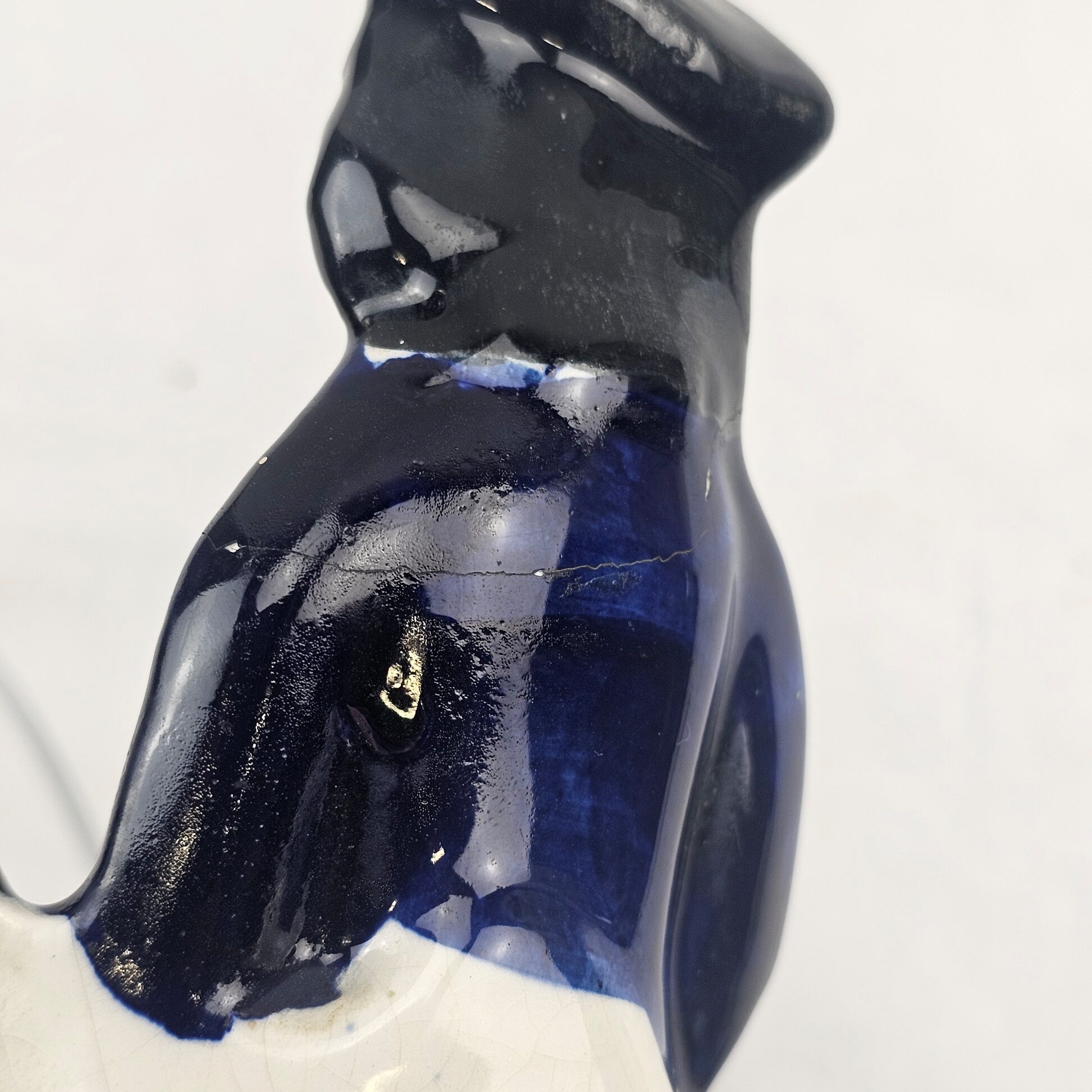
The figure presents in good overall condition with strong colour, but one condition issue must be clearly disclosed.
A crack is visible around the head, showing that it cam off and it was reattached at one point in time.
Rear surface (Images 4 & 6): The white glazed reverse shows age-appropriate crazing throughout — typical and expected for Victorian Staffordshire earthenware of this period. Two kiln vent holes are present — standard production features, not damage. Blue paint splash marks are visible, consistent with manufacturing overspray.
Front and sides: The cobalt blue coat, black horse, orange cravat, yellow breeches, gilt hat and green naturalistic mound all retain good colour and strength. Some minor surface loss is visible to the rider's waistcoat area (images 1 and 9), consistent with age.
Title plinth (Image 2): The impressed "DICK / TURPIN" lettering is clear and well-defined.
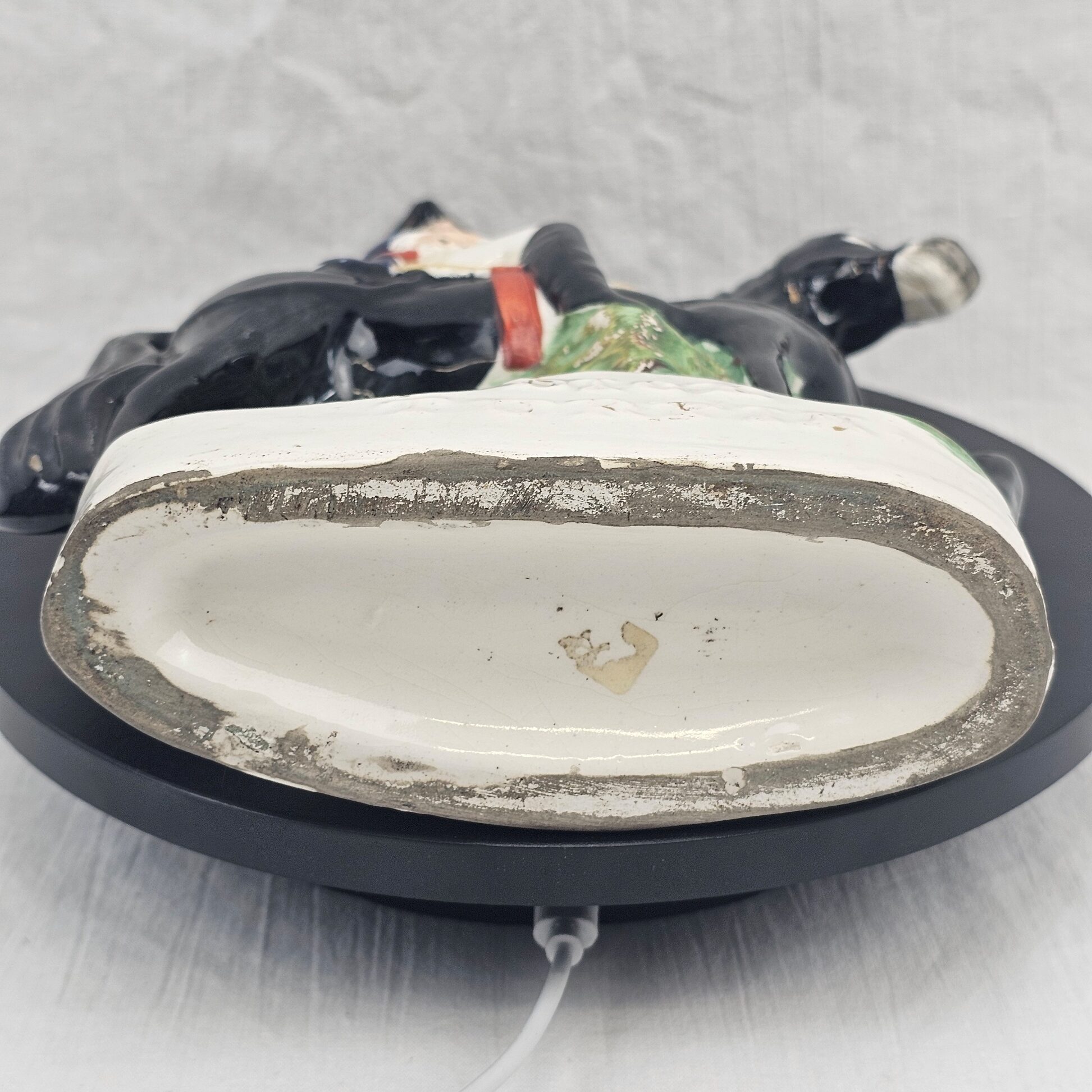
Underside (Image 10): The unglazed hollow oval base shows age wear and grime to the foot rim, with a paper label remnant inside. No cracks are visible on the underside.
Buyers are encouraged to review all images carefully before purchasing.