~ Victorian Majolica 'Bird on a Bucket' Jug — Rustic Barrel Stave Design with Perching Songbird, c.1880 ~
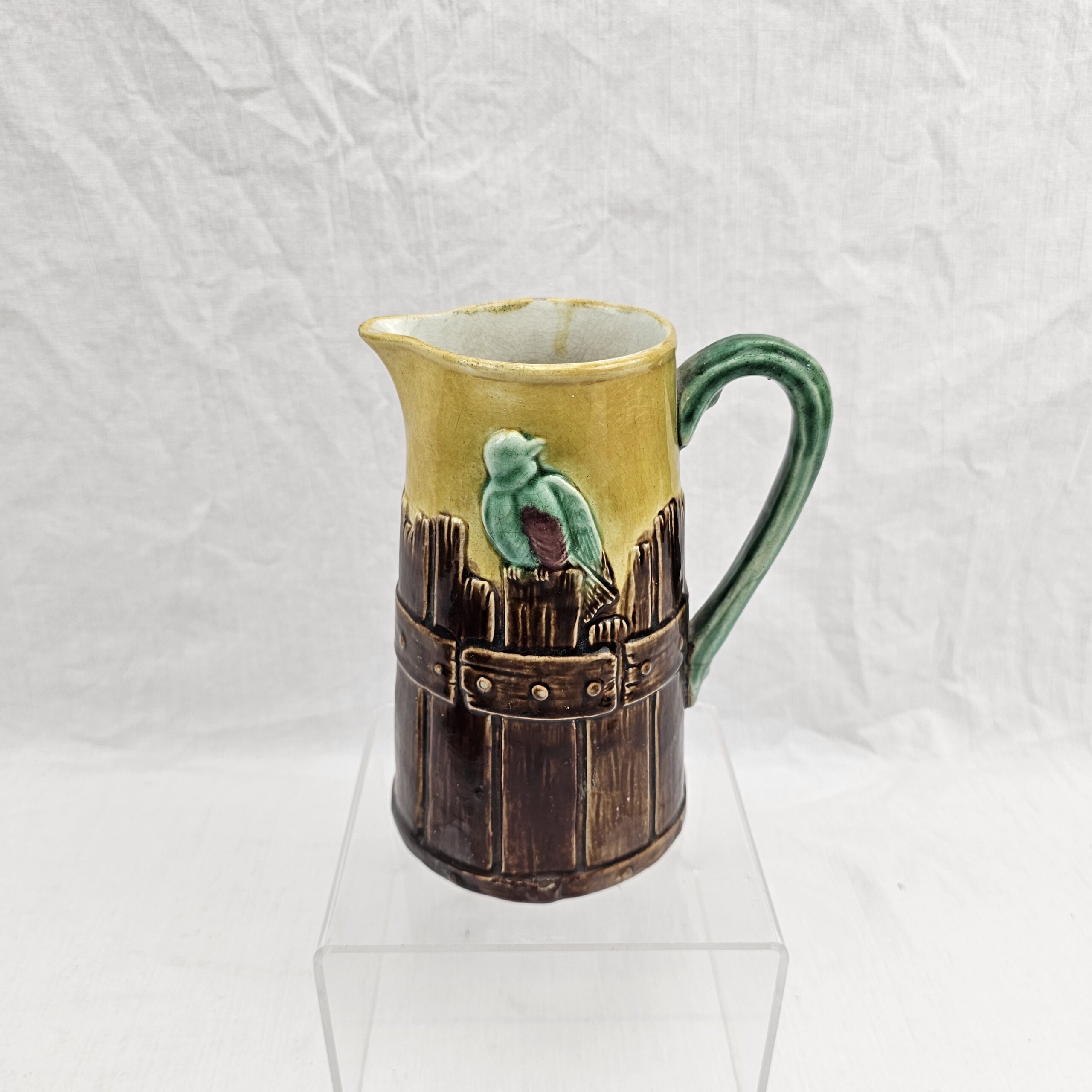
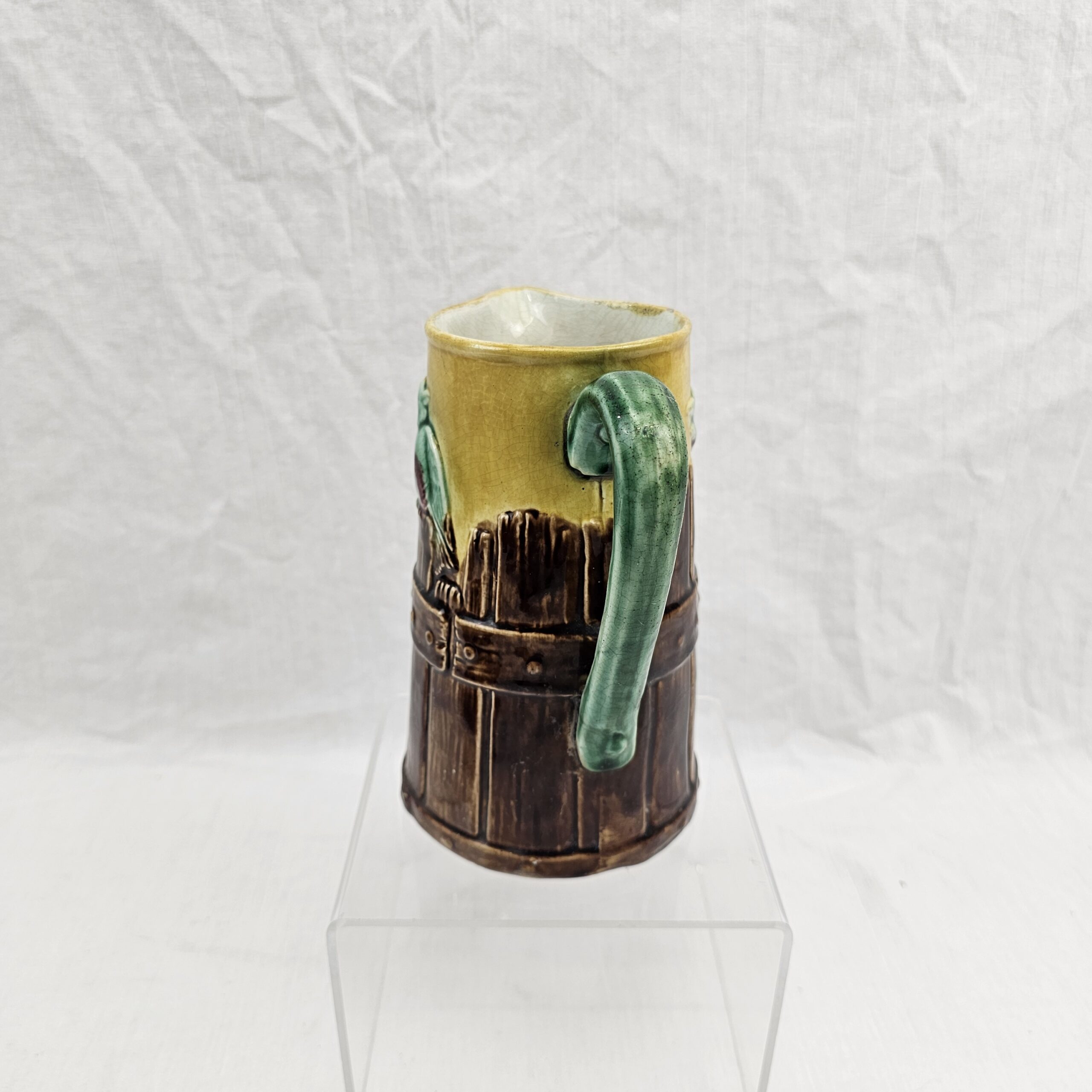
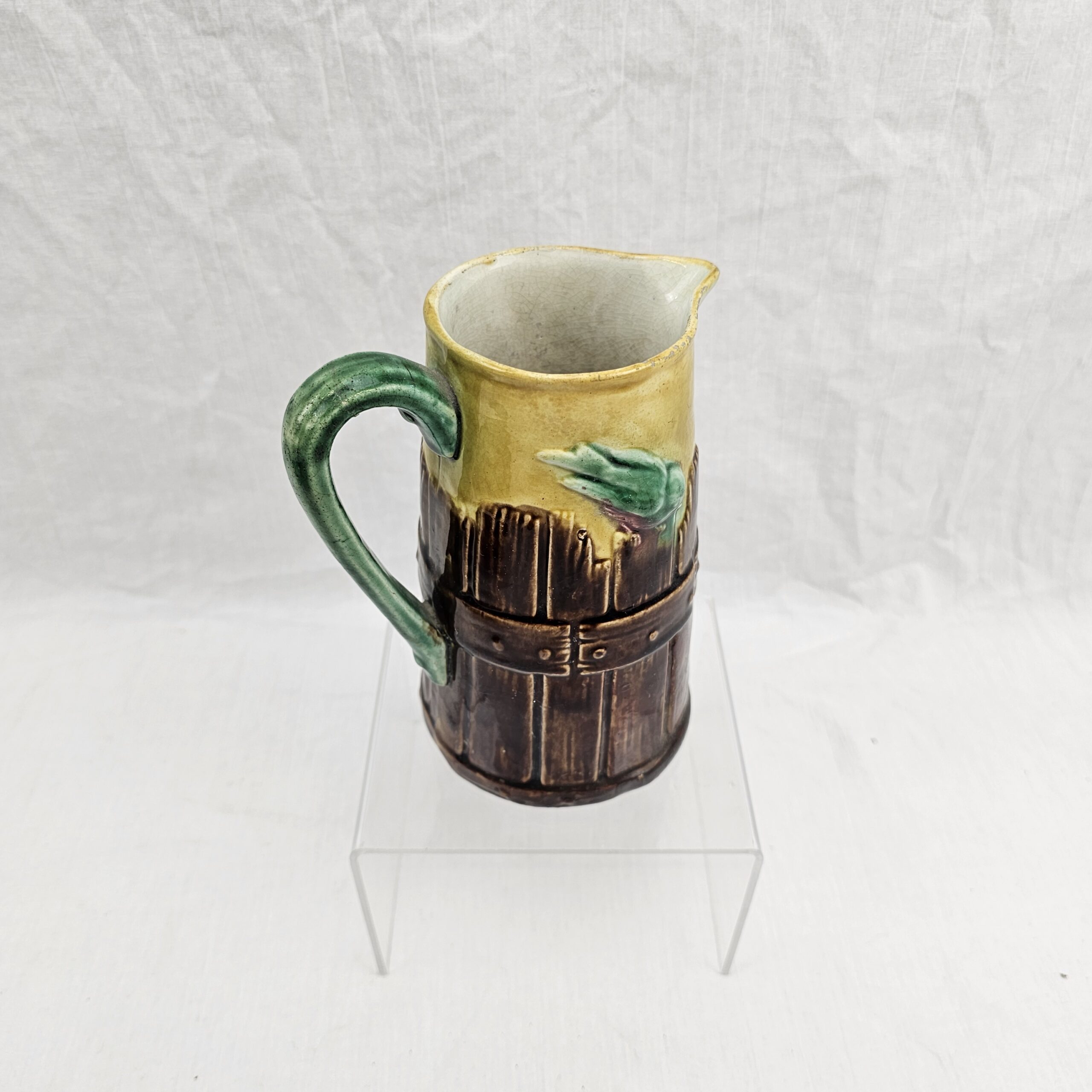
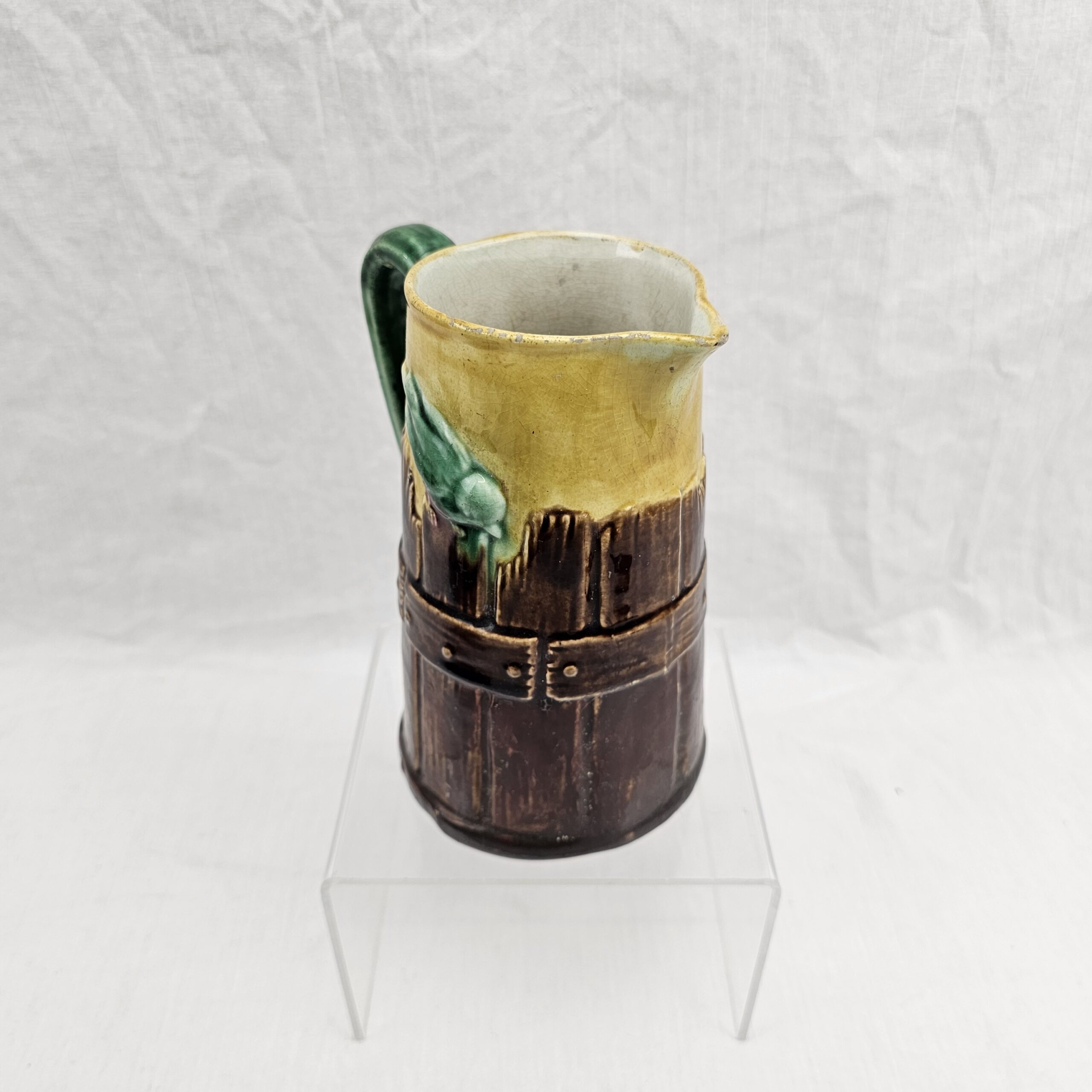
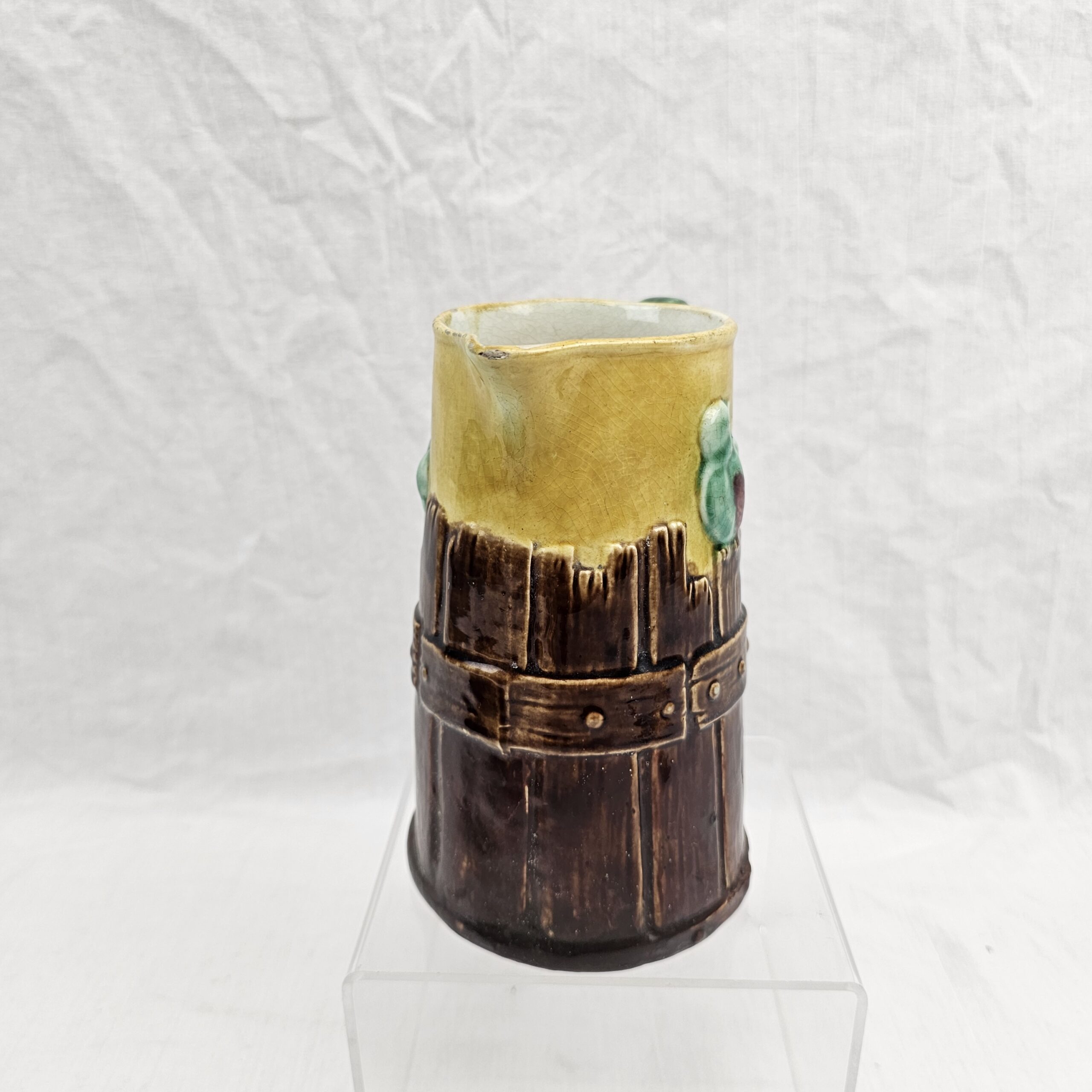
A whimsical and highly characterful Victorian majolica jug, its charming trompe l'oeil design modelled as a rustic wooden water bucket or barrel overflowing with liquid. The lower two-thirds of the cylindrical body is moulded to realistically replicate a staved wooden pail — each vertical stave picked out in dark chocolate brown with finely incised grain, bound about the middle by a broad horizontal strap with moulded rivets, evoking the ironwork binding of a cooper's barrel. The upper section of the jug transitions into a warm, brimming pool of yellow-ochre glaze suggesting water or cream pouring over the top of the staves, the junction between wood and liquid handled with pleasing naturalistic skill.
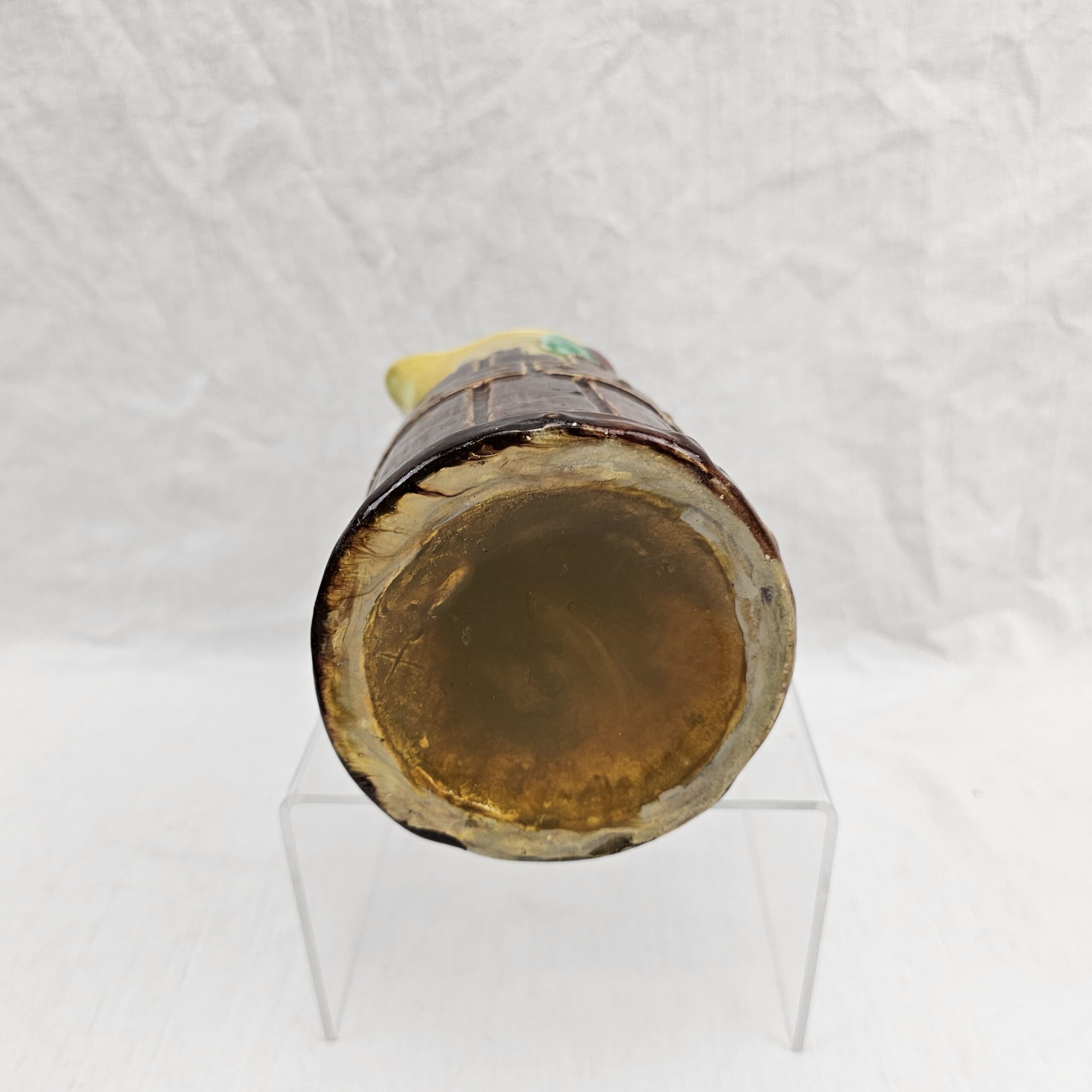
Perched playfully on the top edge of the staves, as if having alighted for a drink, is a delightful small green songbird with purple-brown wing markings — the piece's most appealing detail and the one most likely to catch the eye of a buyer. The handle is modelled as a curling green vine stem. The interior is cream-glazed. The base is partially glazed in amber with a rough foot ring; a faint incised mark is visible but not clearly legible.
~ Historical Context ~
Victorian majolica was made between 1849 and 1900, typically relief-moulded, vibrantly coloured, and used for everything from utilitarian pieces to decorative showpieces — always naturalistic and in step with trending fashion.
The barrel or bucket as a majolica motif had considerable currency in the 1880s and 1890s, appearing on jugs and pitchers by a number of English and Continental manufacturers — notably Minton, who used barrel-effect grounds on several notable jug designs. A Minton Majolica jug featuring a blackberry bush on a barrel-effect ground, and George Jones jugs featuring lilies on brown barrel grounds, are well-known examples of this popular rustic device. The trompe l'oeil concept of liquid appearing to brim and overflow from the top of the barrel is a clever and playful design trick typical of the best Victorian majolica thinking. The addition of the perching songbird elevates this from a purely functional object to a narrative one, giving the jug considerable decorative personality. The origin of this piece is most likely English or northern French, circa 1875–1895.
~ Condition ~
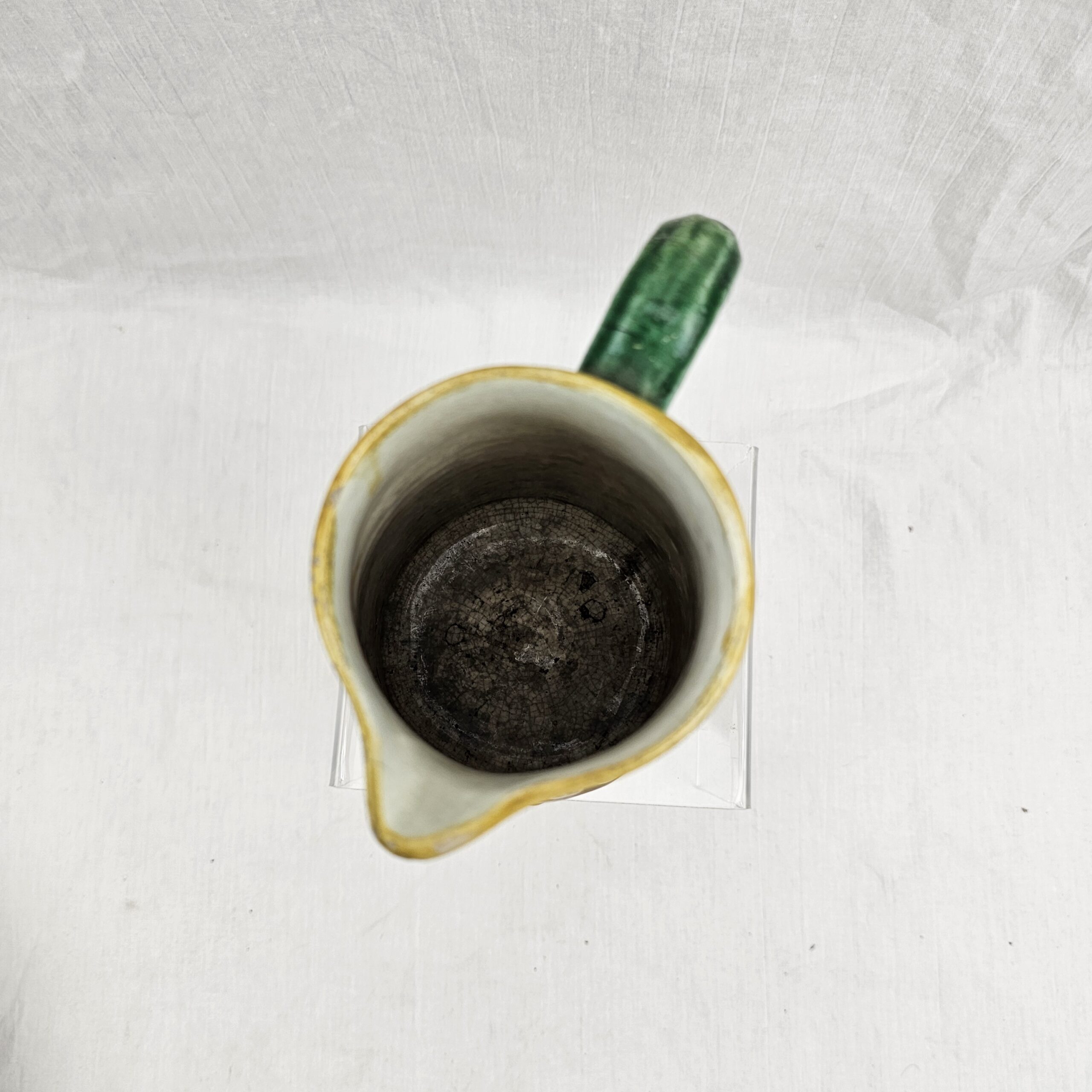
Interior staining — the interior shows very heavy dark/near-black staining and discolouration throughout (clearly visible in image 6). This is the most significant condition point and must be fully disclosed. The staining appears deep and is likely from prolonged use or storage; it would require professional cleaning to address
Exterior — the exterior is in generally pleasing condition; the barrel stave modelling is crisp and intact, the bird is undamaged, and the handle is sound
Crazing — some age-related crazing is visible on the yellow upper section, consistent with the period
Base — partially glazed foot ring with age dirt and a faint incised mark; no clearly legible maker's mark visible
No chips or cracks are apparent to the exterior