~ Victorian Continental Harlequin Figure Porcelain Pocket Watch Holder , c.1850-1880 ~
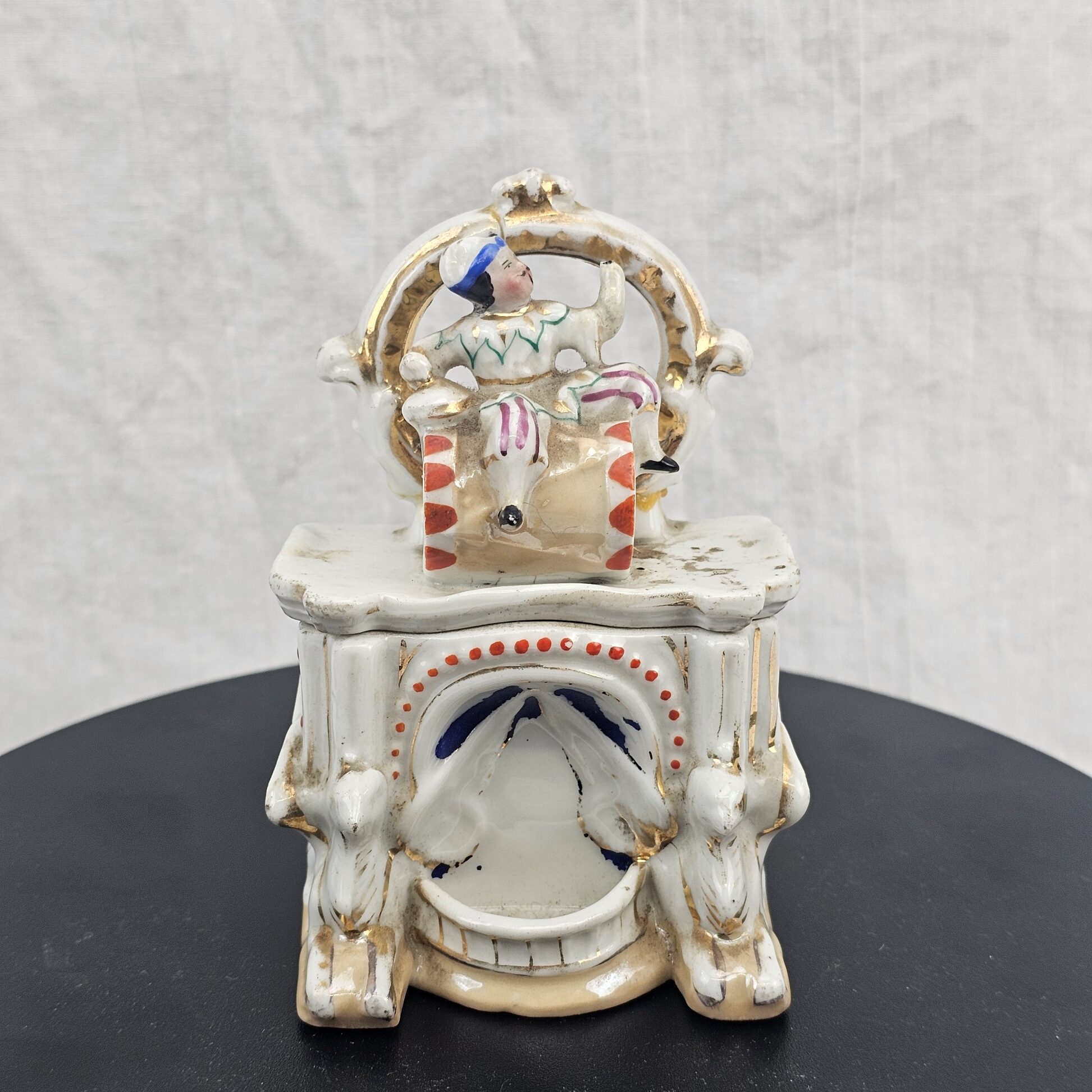
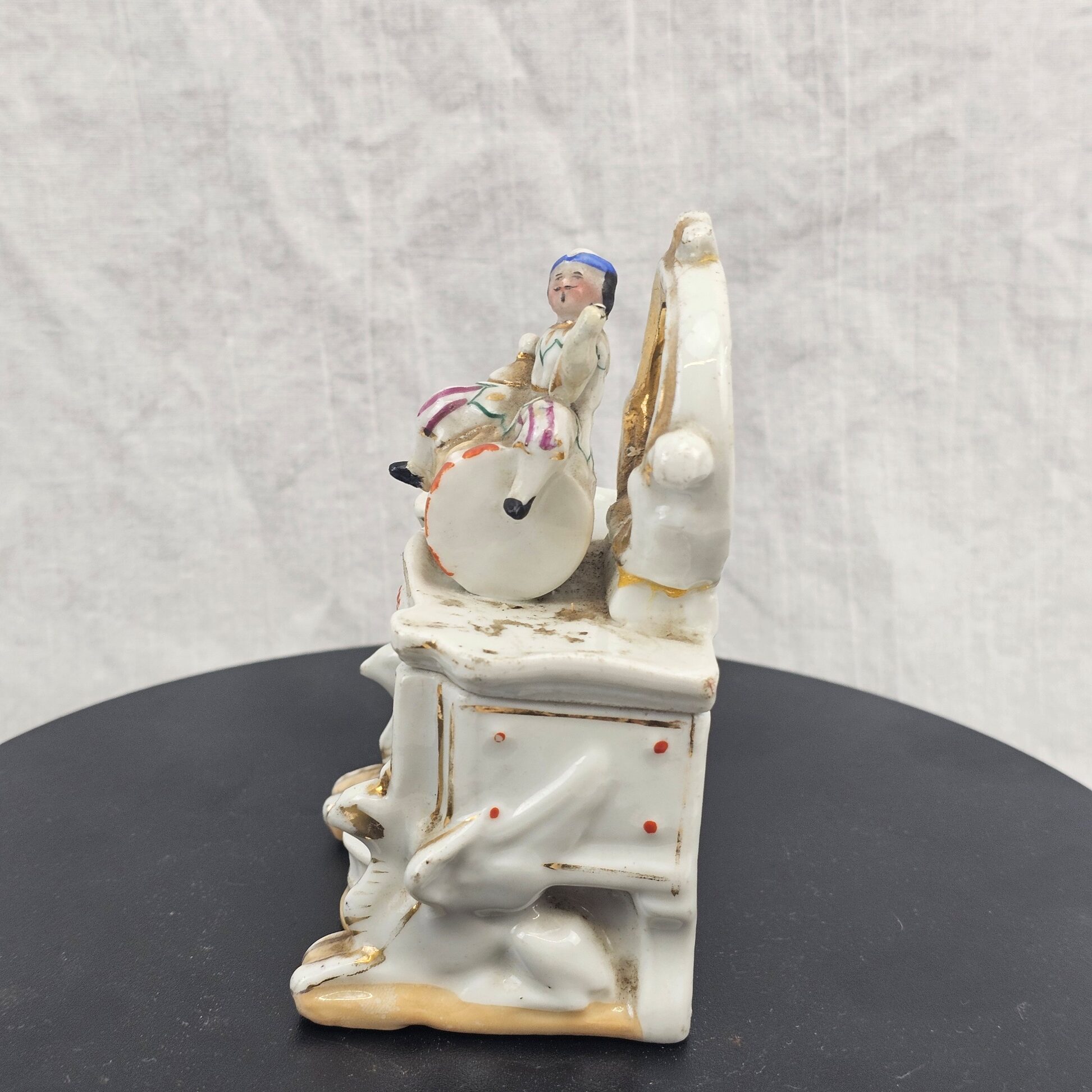
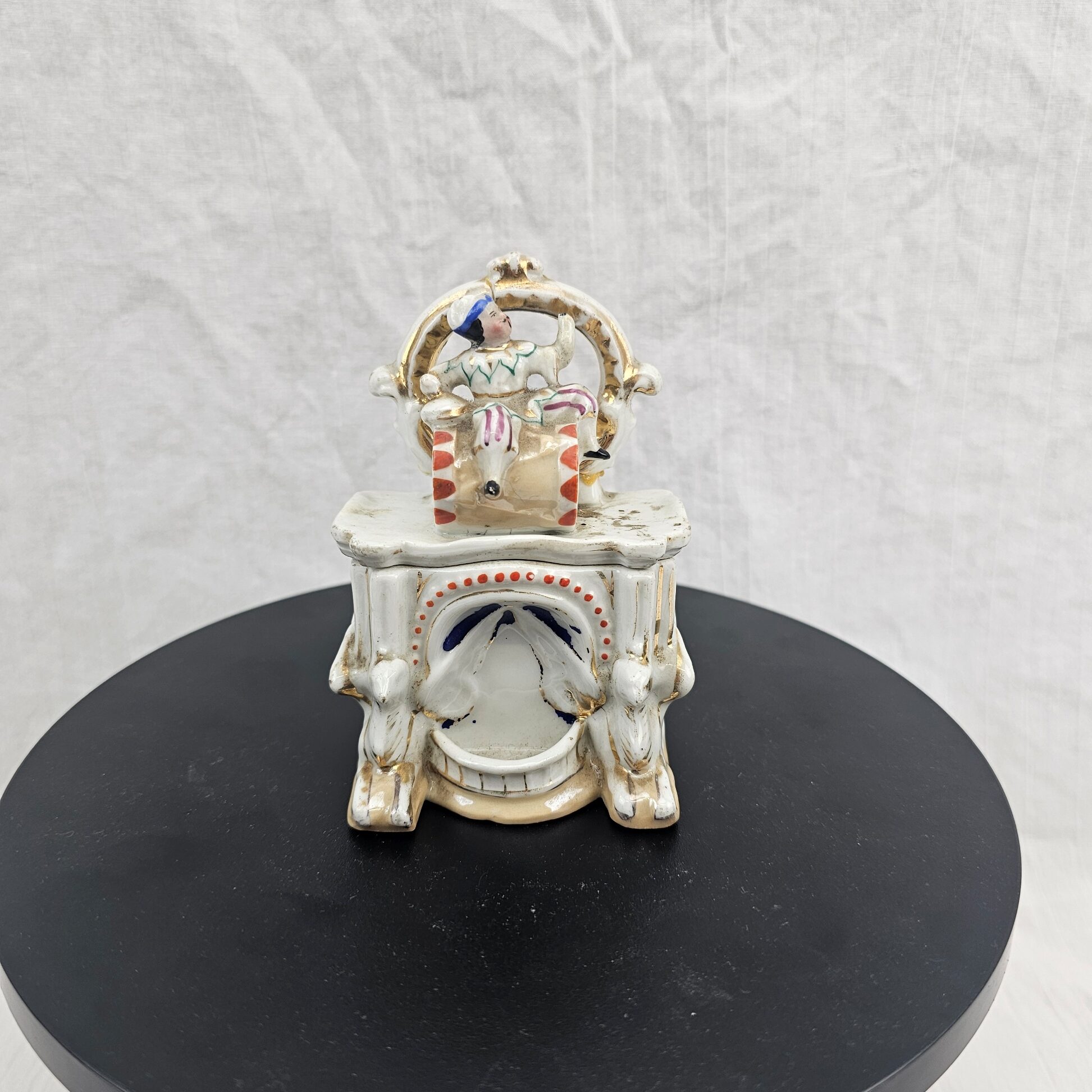
A charming and unusual Victorian two-piece porcelain pocket watch holder featuring a seated Harlequin in Commedia dell'Arte costume, with a circular aperture for displaying the pocket watch and a lower box for storing winding keys — a delightful example of the domestic novelty wares produced for the Victorian bedroom mantelpiece.
This engaging two-piece porcelain piece served a very specific and practical purpose in the Victorian household: the pocket watch holder. At night, Victorians usually hung their pocket watches on special stands. Because the face was raised and visible, this had the effect of converting the pocket watch into a clock. Watch holders were made of many materials, including wood, china, metal, and bone, and some were of such an elaborate design that the watch itself was almost lost. Etsy
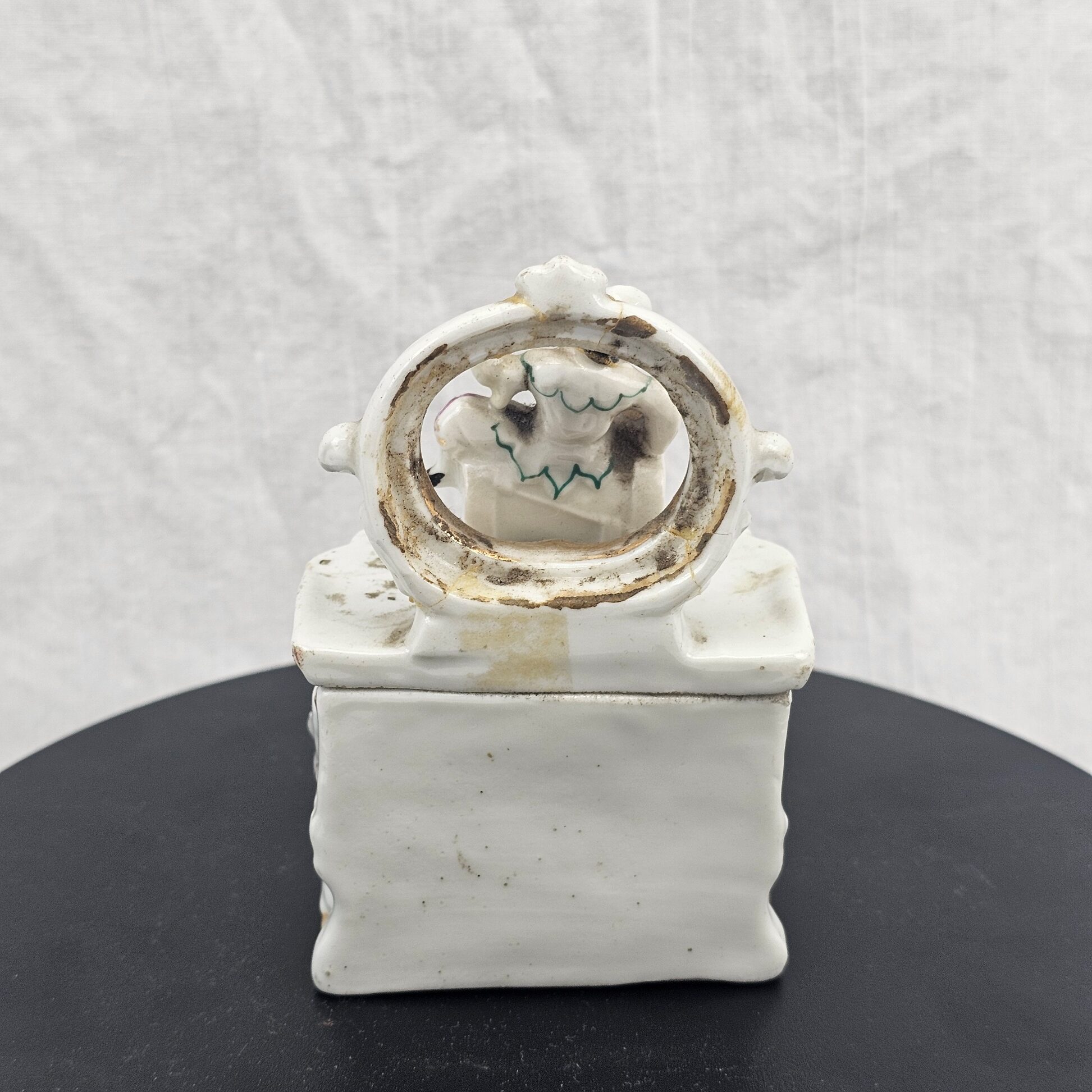
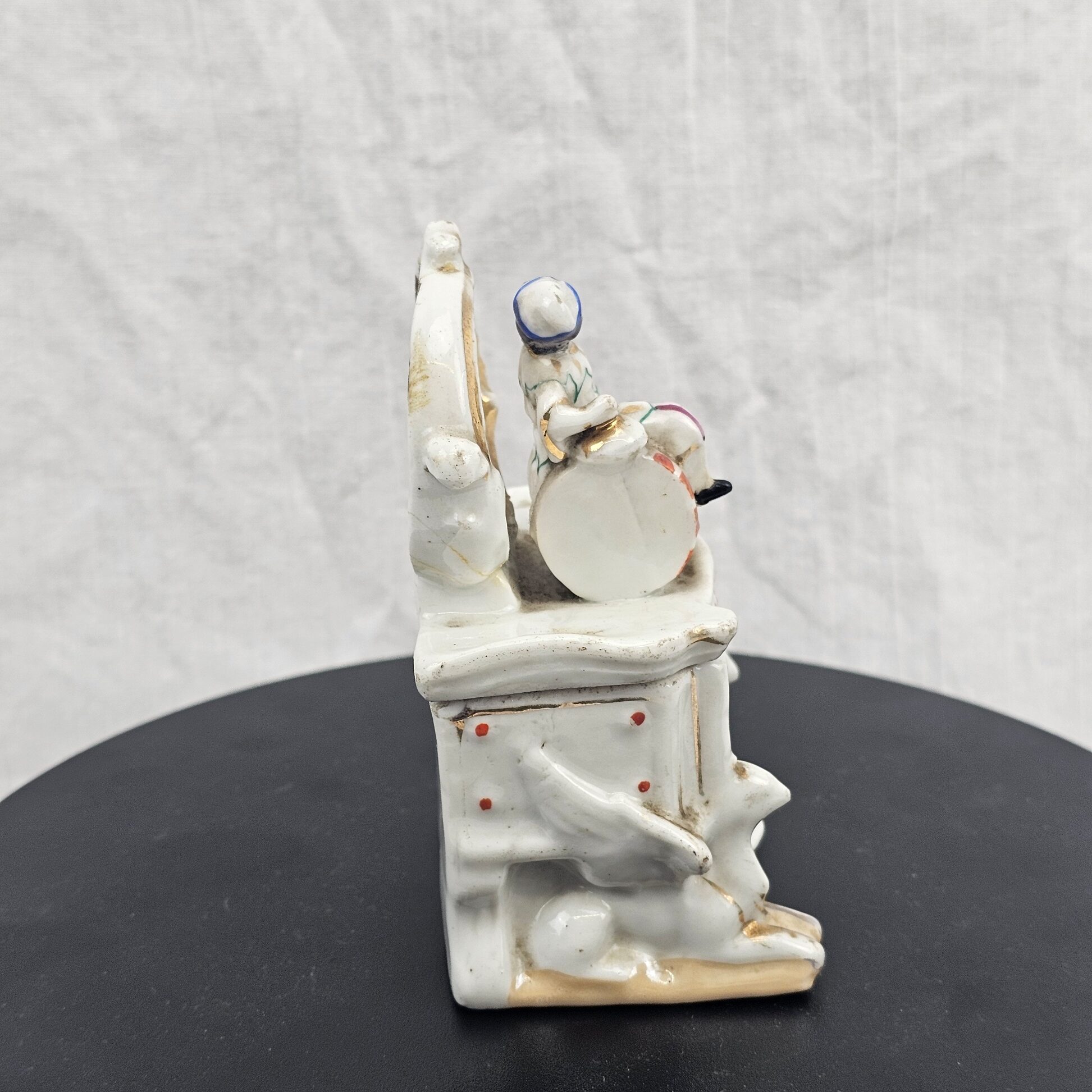
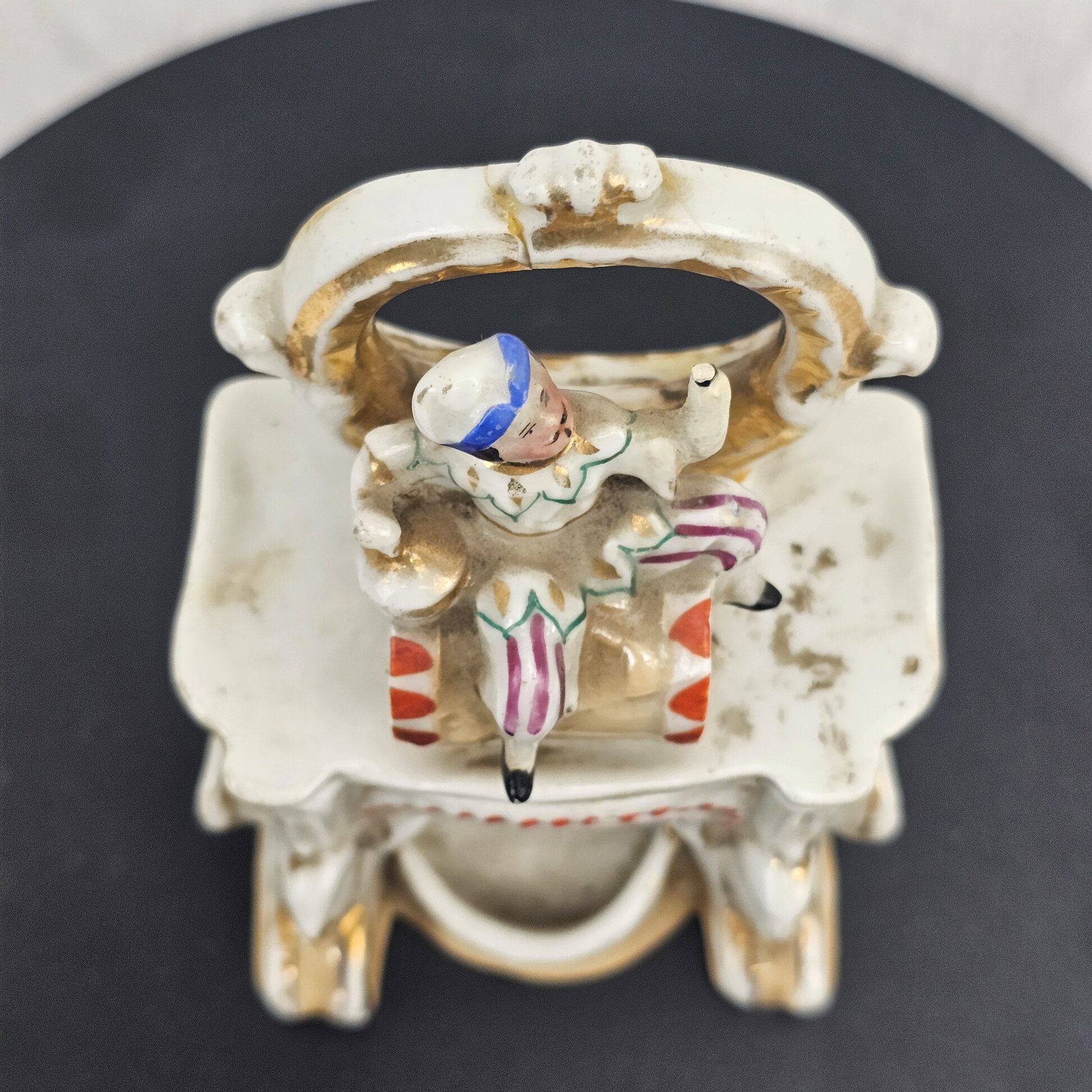
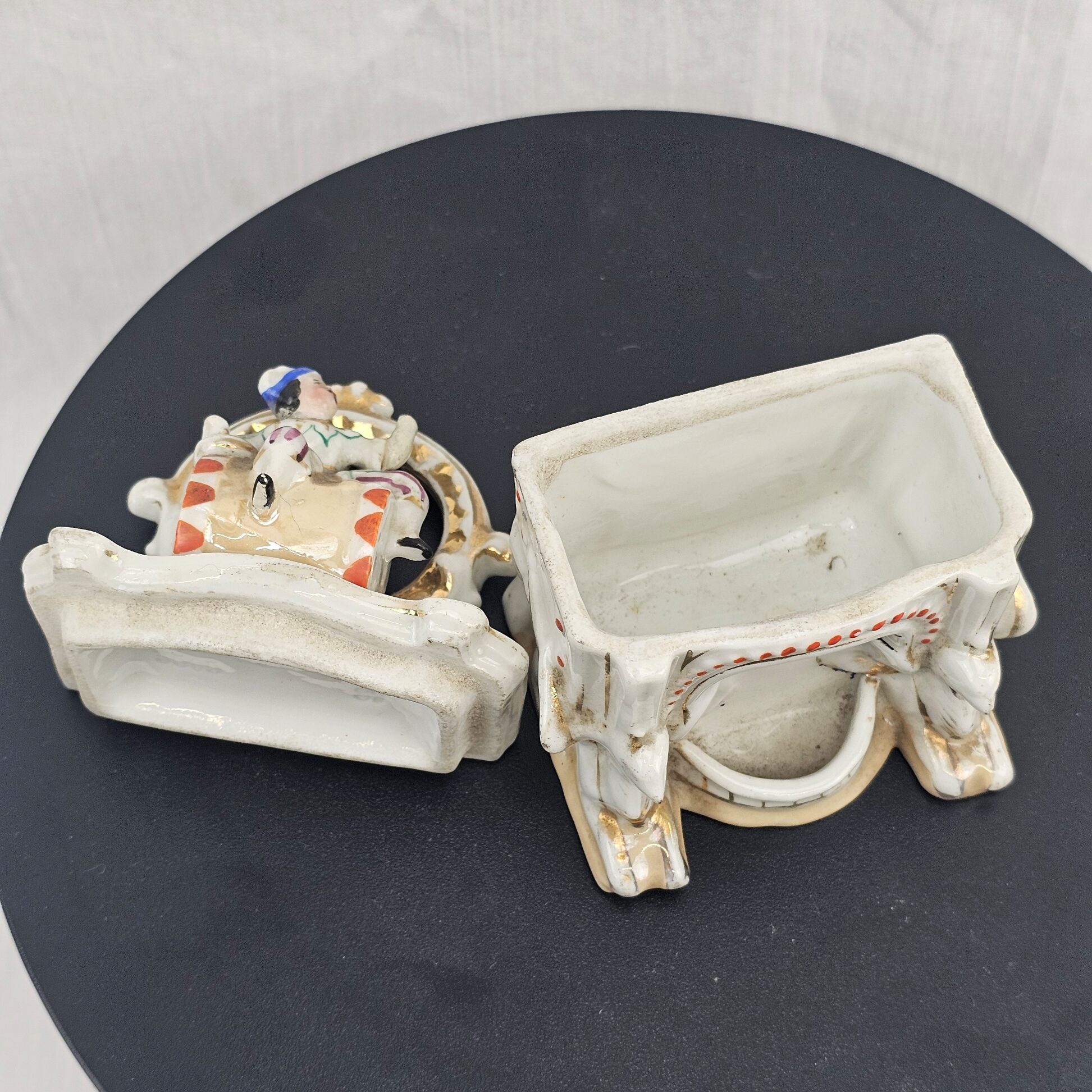
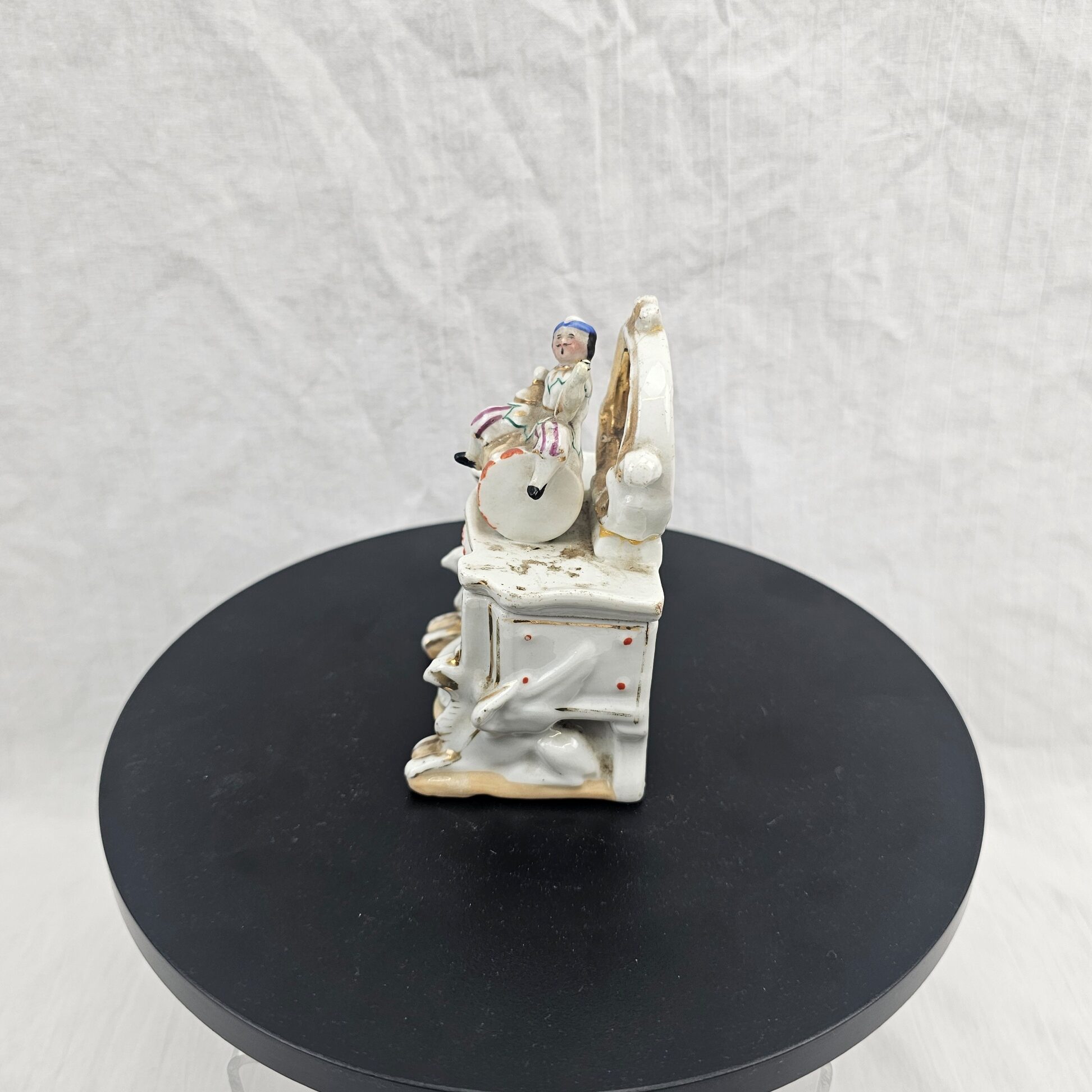
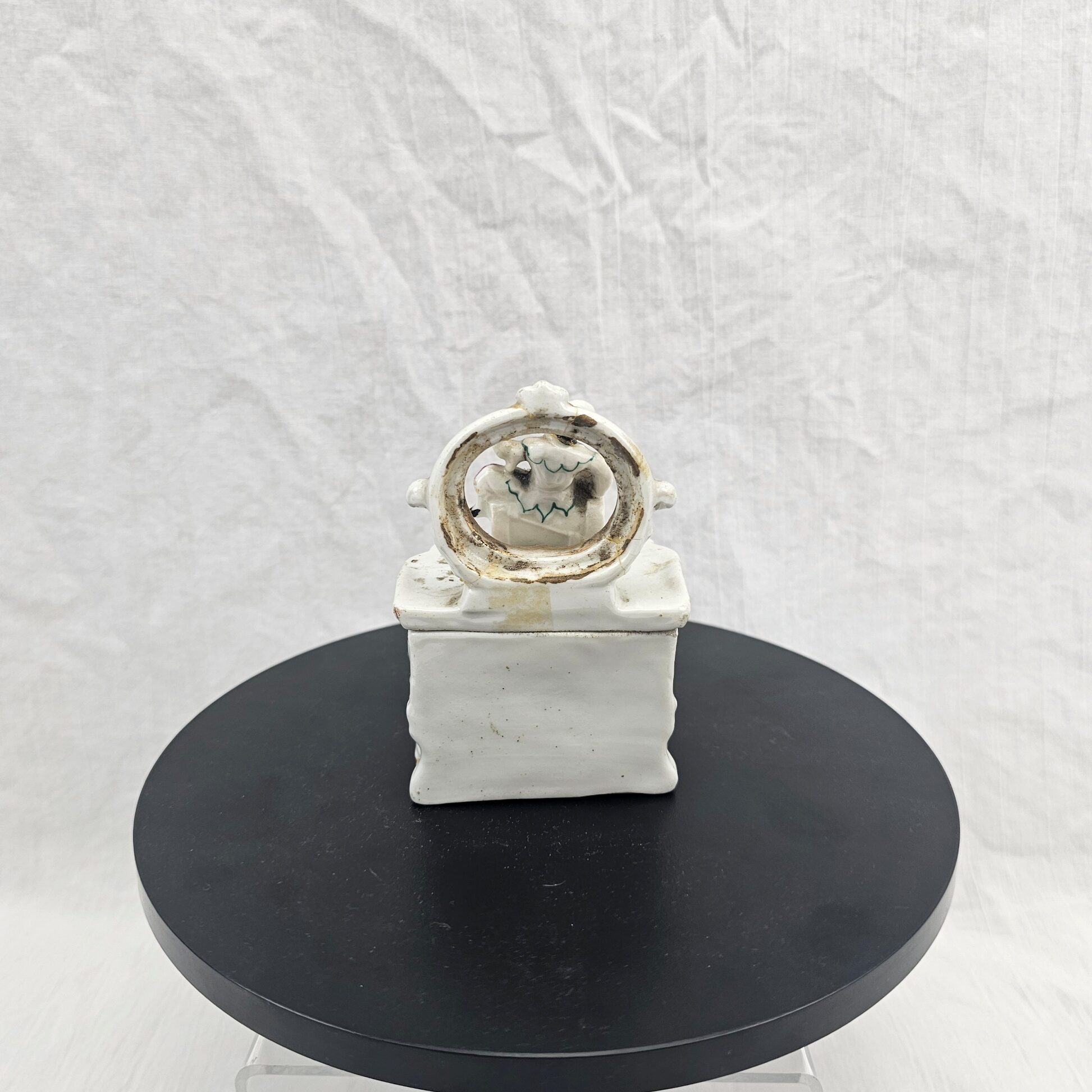
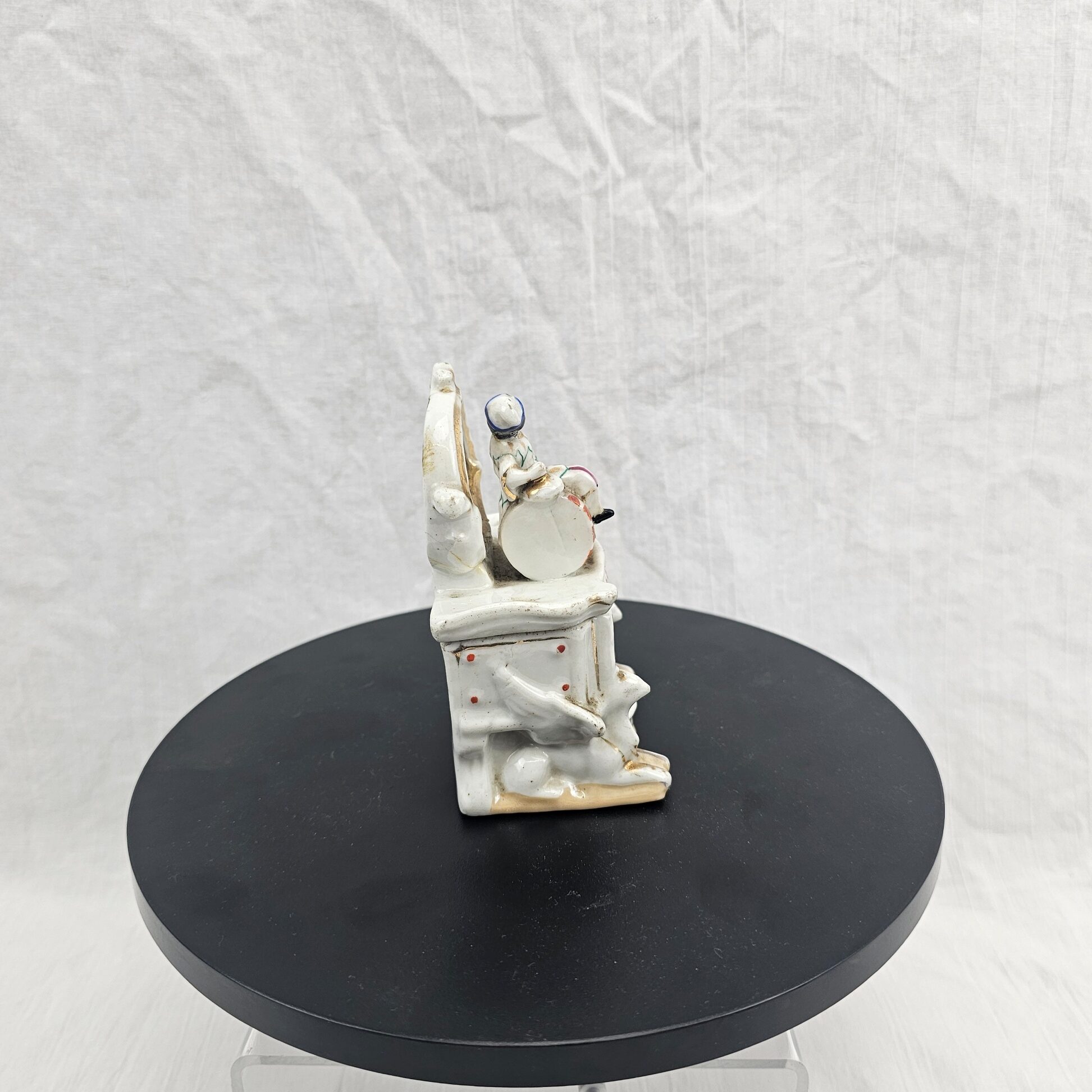
This example takes a theatrical form. The upper section (which lifts away from the lower box, as shown in image 10) is the watch-display element: a decorative assembly centred on a large circular aperture within a moulded Rococo frame, surmounted by a scrolled crest with flower ornaments. Seated beside and in front of this frame is a small but vividly painted Harlequin figure in the Commedia dell'Arte tradition — dressed in the classic costume of his type: an orange-red diamond-patterned coat with pink/purple striped breeches, a blue cap, and painted facial features. He sits in a relaxed, animated pose, one leg crossed and one arm raised, his gaily coloured costume providing the primary colour accent of the whole piece. The pocket watch would have been suspended from a hook or rested in the circular aperture, its face visible when the piece was placed on the bedside table or dressing room shelf.
The lower section is a neat rectangular box on Rococo-scrolled feet, the front face decorated with a large arched opening with cobalt blue interior and a red dot border, and gilt line decoration to the moulded pilasters and scrollwork. This lower compartment would have provided storage for a watch winding key and other small accessories. The interior of the box base (image 10) is glazed white.
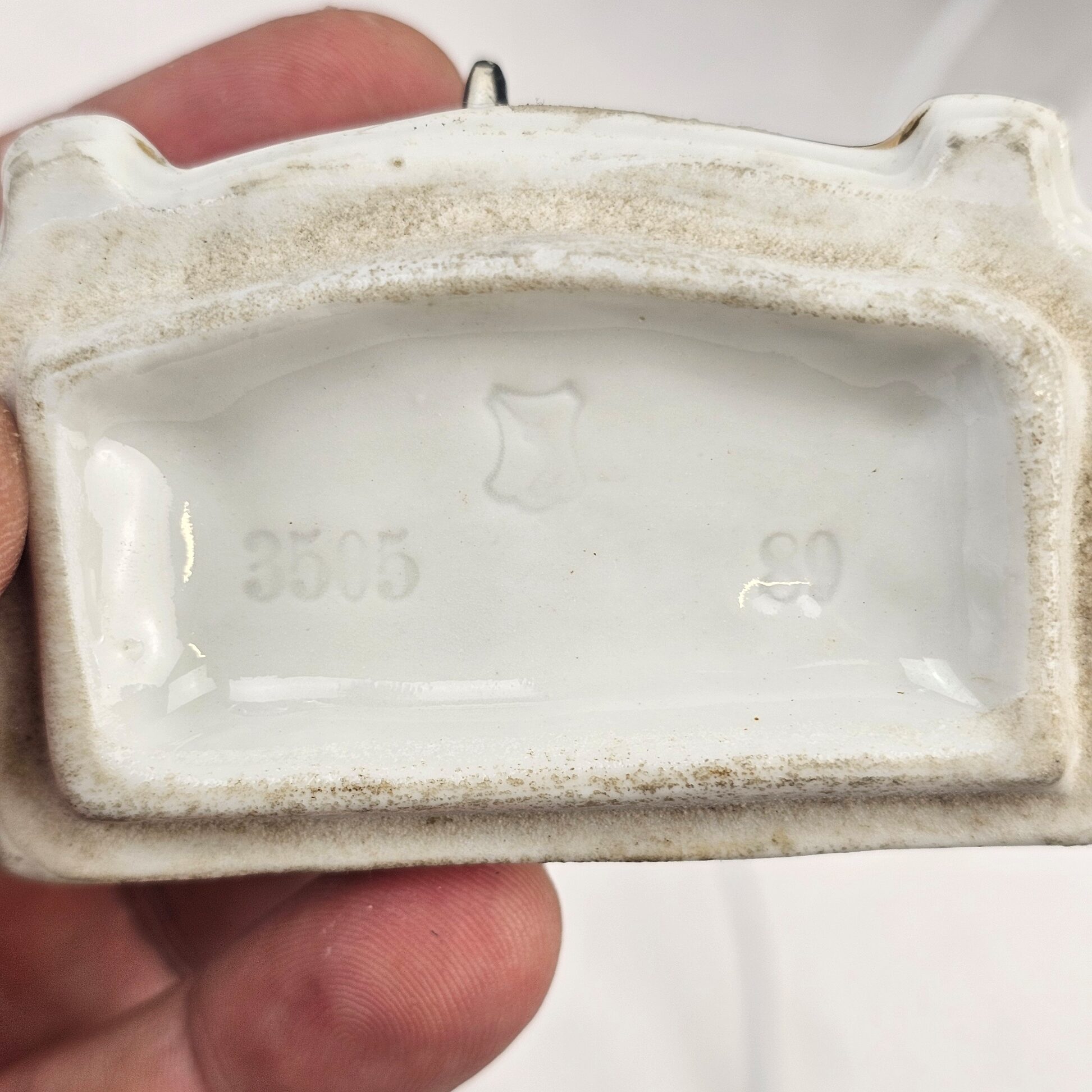
The impressed marks on the base (image 11) show the numbers 3505 and 20, and what appears to be a small impressed crown or shield — consistent with a Continental European porcelain factory of the mid-to-late 19th century, most likely a Thuringian German manufacturer, possibly Conta & Boehme of Pössneck or a closely related factory. These Thuringian factories produced large quantities of figural porcelain novelties and domestic wares for the Victorian market. The body is fine white porcelain, as seen in the unglazed base sections.
~ Historical Context ~
Watch stands were superseded in the 1920s by the increasing popularity of wristwatches. During their heyday — roughly 1840 to 1910 — they were a standard bedroom and dressing room accessory for any household that kept a pocket watch, which by the Victorian period encompassed most of the middle and upper working classes. The theatrical novelty form — using a Harlequin or other Commedia dell'Arte figure as the decorative subject — reflects the Victorian enthusiasm for theatrical imagery and the broader Continental Rococo revival tradition. The Harlequin character, with his diamond-patterned costume and acrobatic associations, was a perennial favourite of German and Continental porcelain factories throughout the 19th century. Etsy
Conta & Boehme and similar Thuringian factories exported these figural novelty pieces across Europe and to Britain in enormous quantities, finding a ready market among Victorian collectors of curios and bedroom decorative objects.
~ Condition ~
This piece shows honest age-related wear that is characteristic of a domestic object that has been regularly handled and displayed over more than a century.
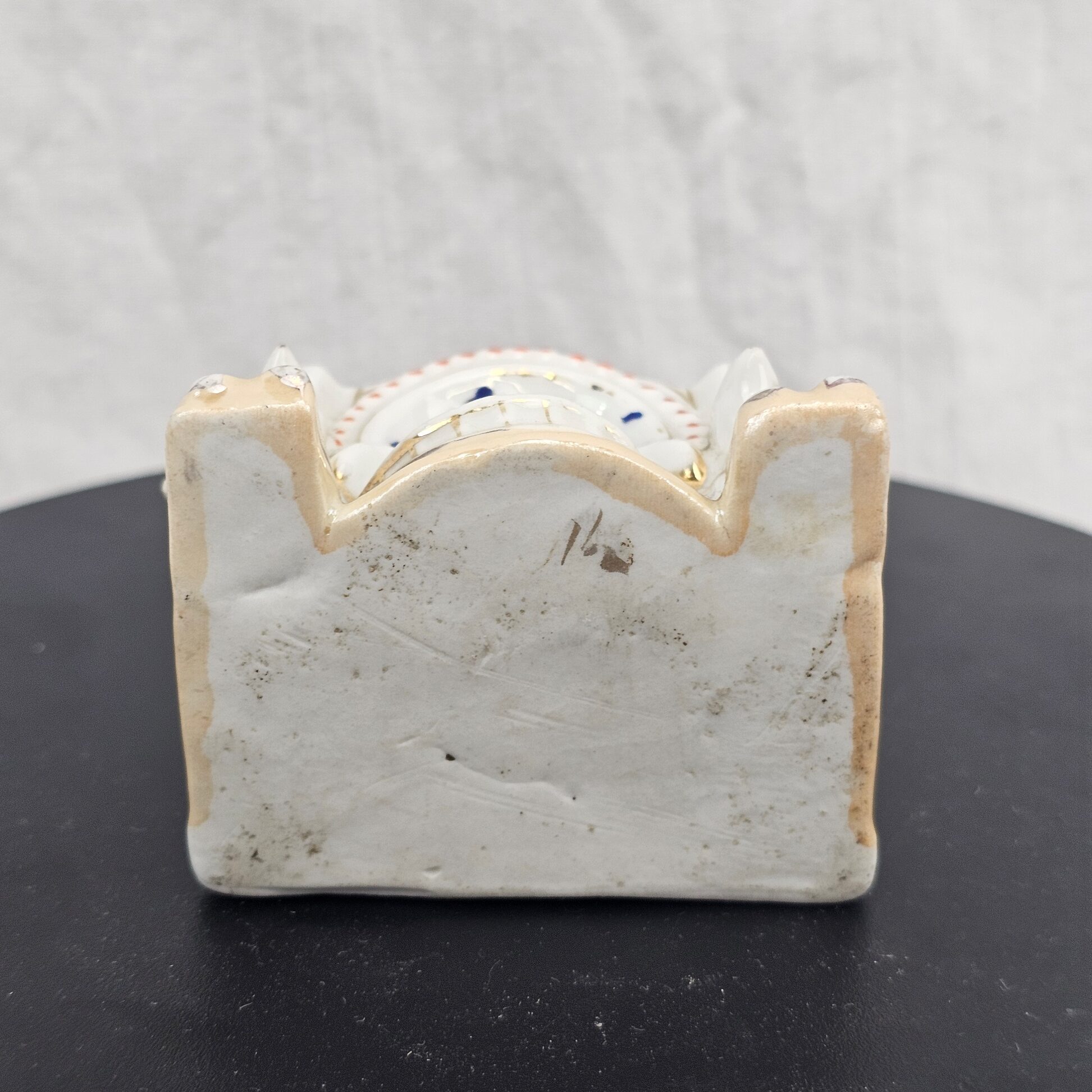
General surface: Considerable dirt and grime accumulation throughout, particularly visible on the upper flat surfaces of the lower box (images 5 and 9) and within the circular frame of the upper section (images 3 and 7). This detracts from the overall presentation but is surface soiling rather than structural damage.
Gilding: The gilt decoration shows significant wear across much of the surface — particularly on the scroll feet, the upper section frame, and the moulded edges. This is consistent with extensive handling over many decades.
Circular frame (upper section): The interior of the frame (visible in images 3 and 7) shows heavy darkening and discolouration, likely from oxidisation and prolonged exposure. This would be less visible when a pocket watch was placed in position.
Harlequin figure: The painted enamel decoration on the figure is well-preserved with good colour retention - the oranges, blues, and pinks remain vivid.
Structure: The two-piece construction is intact. The left-hand of the character seems to be chipped, though buyers are encouraged to examine all photographs closely and enquire before purchasing.
Overall this is an honest, well-used example that would benefit from careful cleaning. It is priced to reflect its condition transparently.