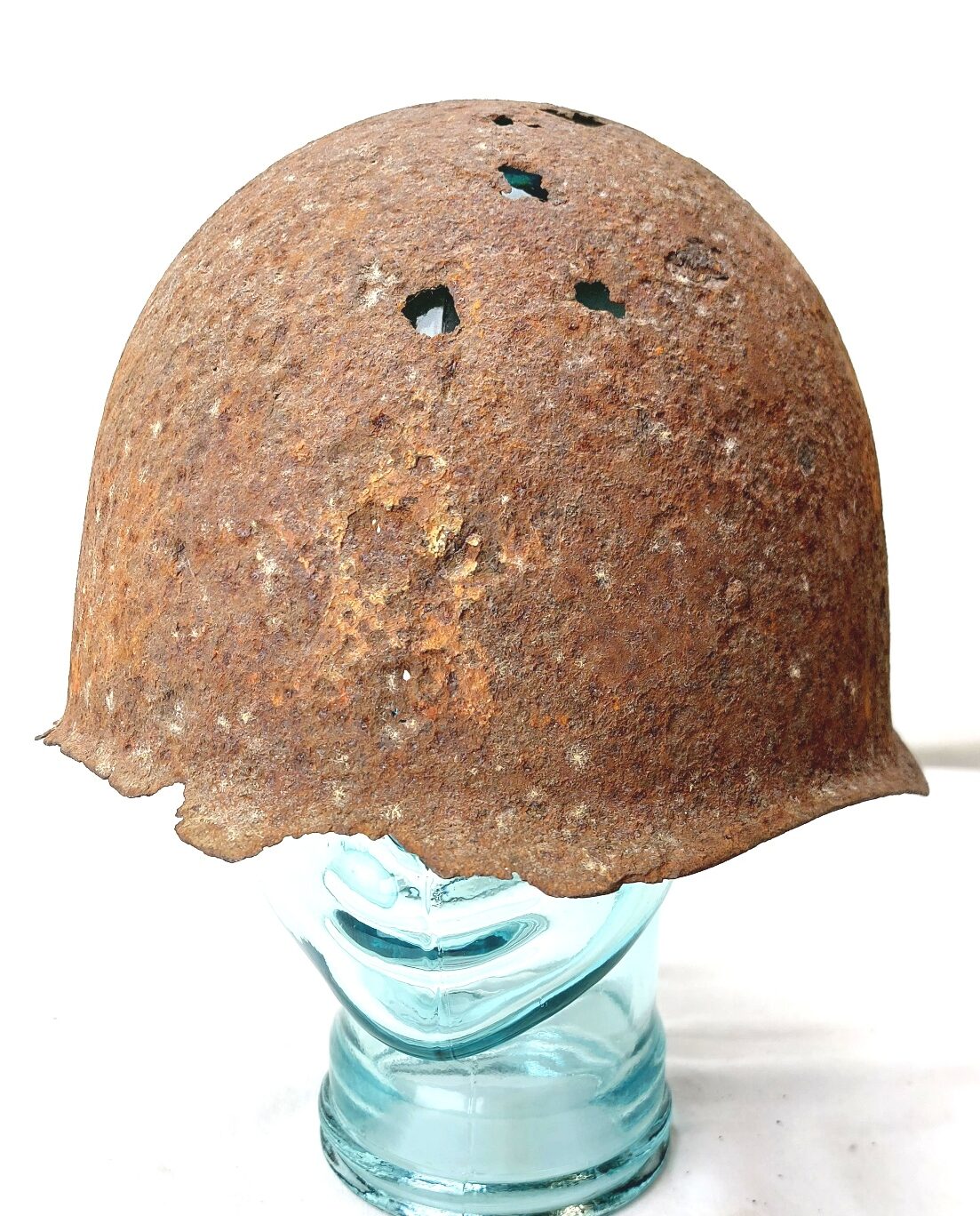
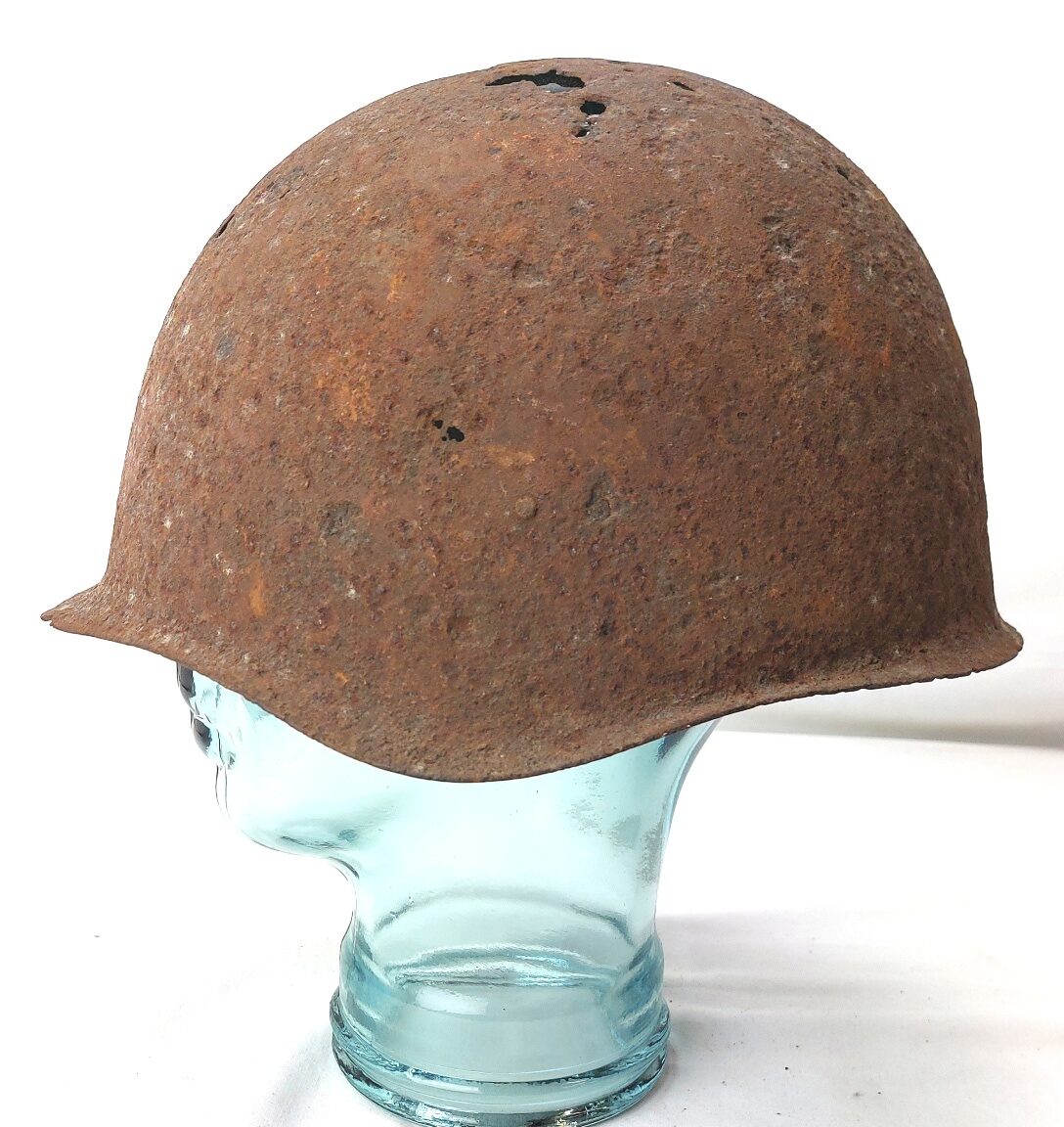
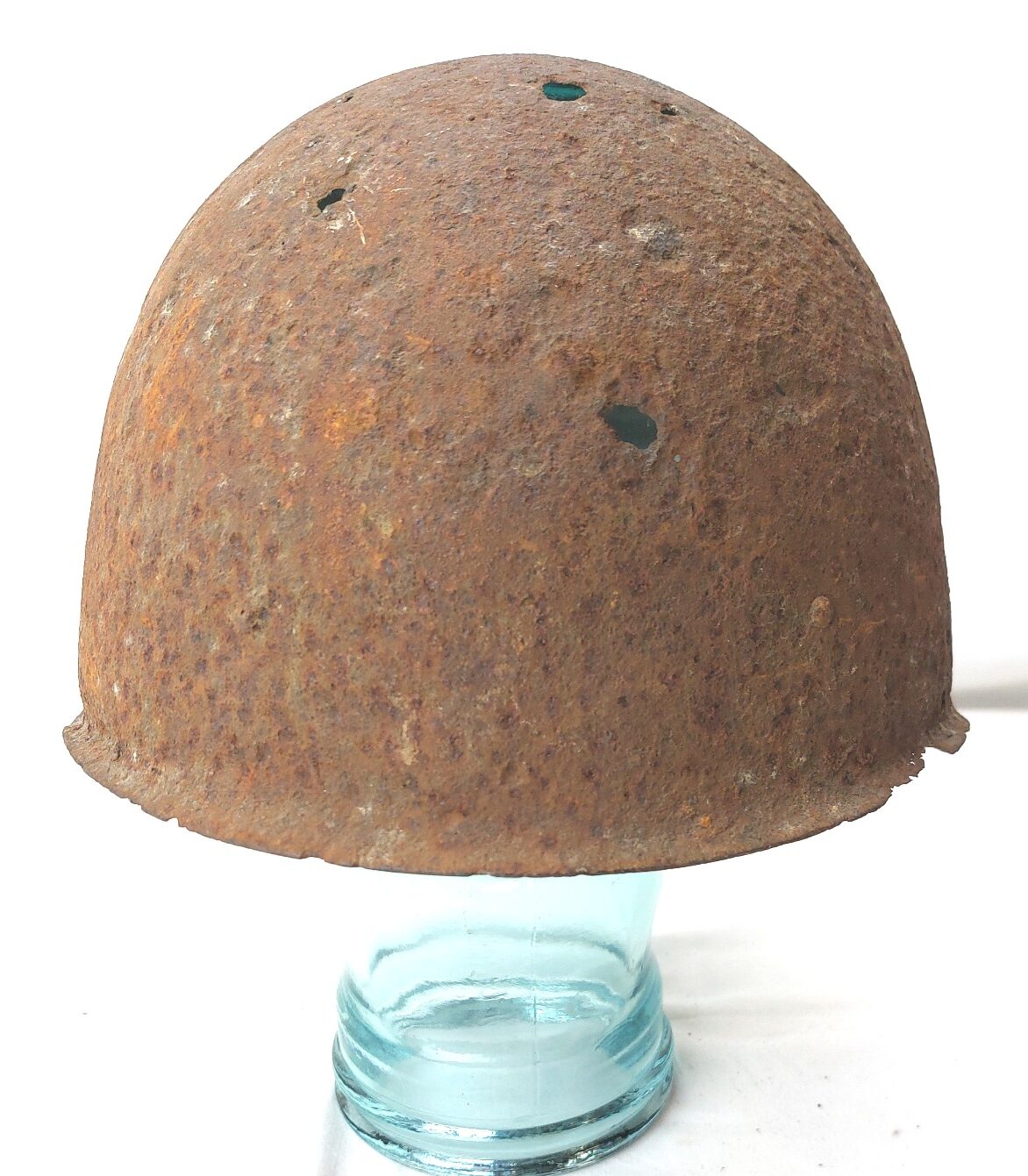
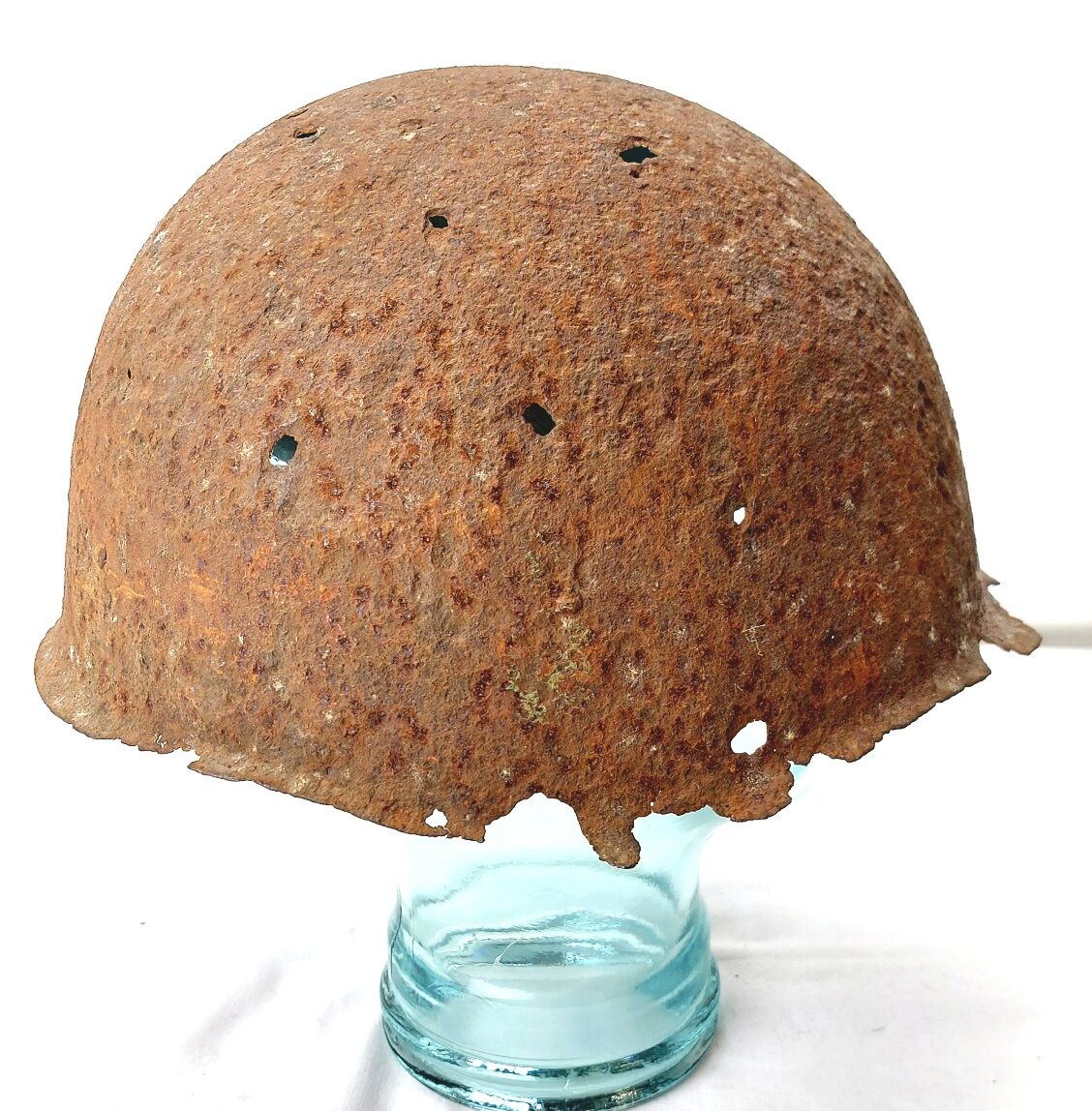
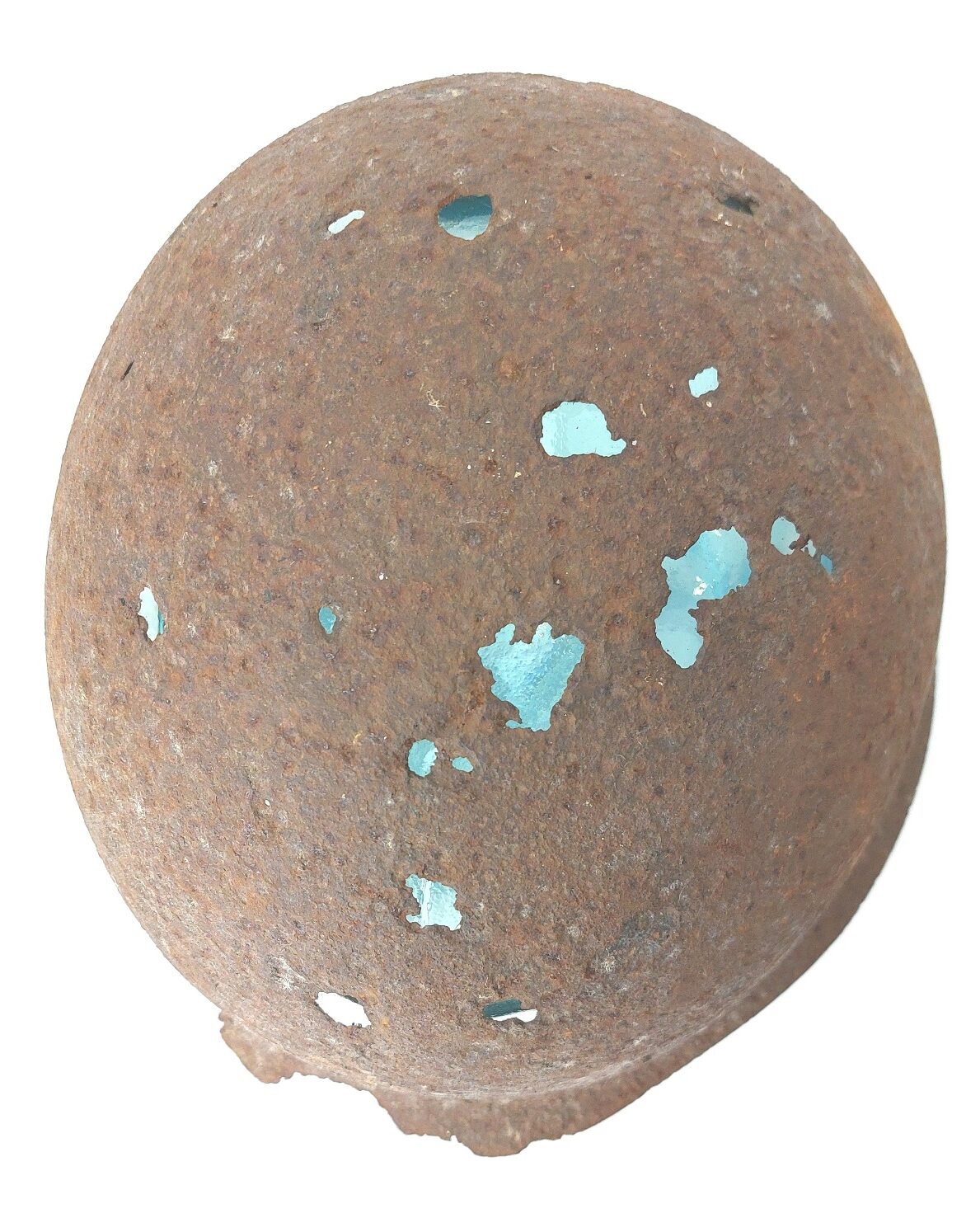
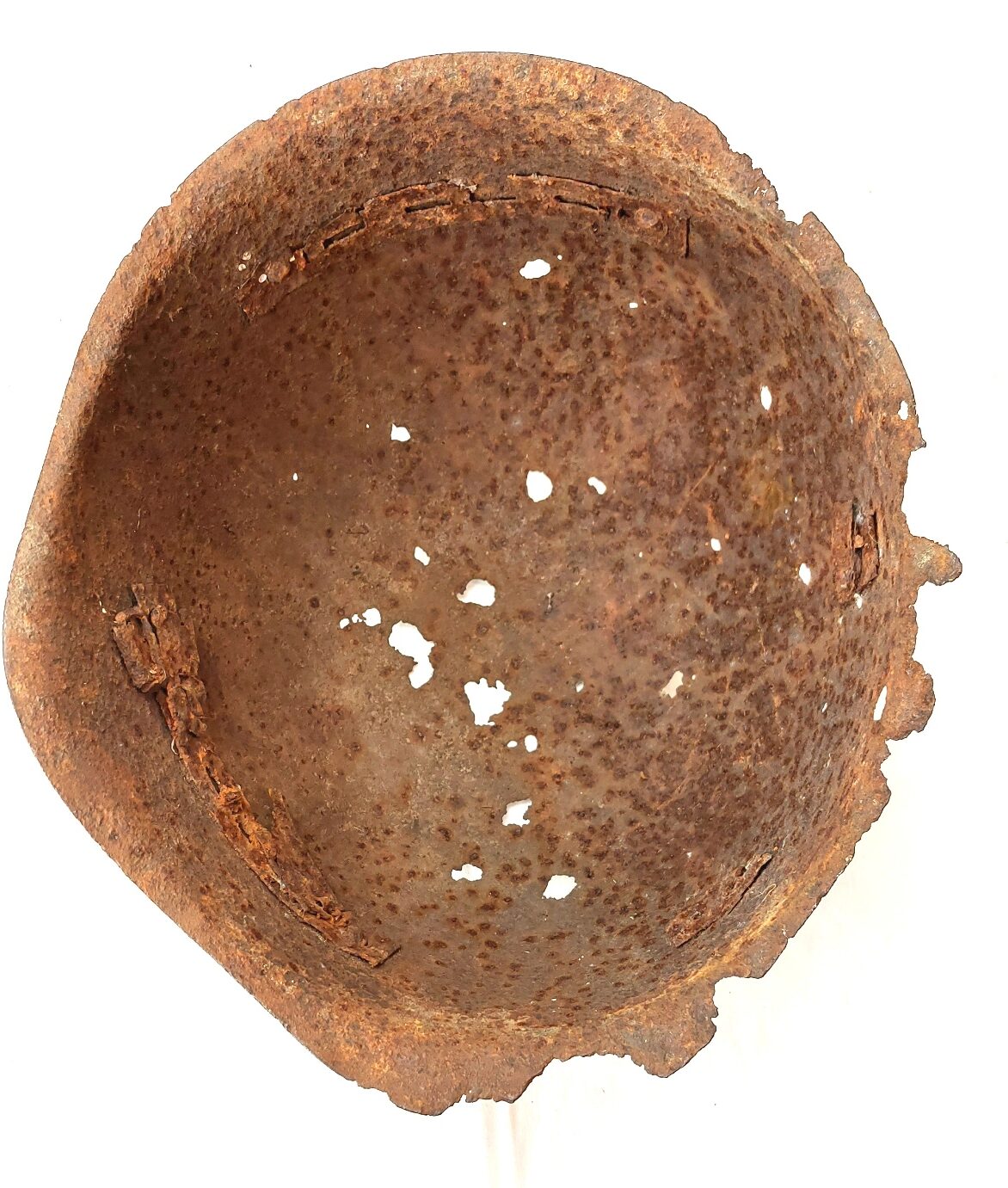
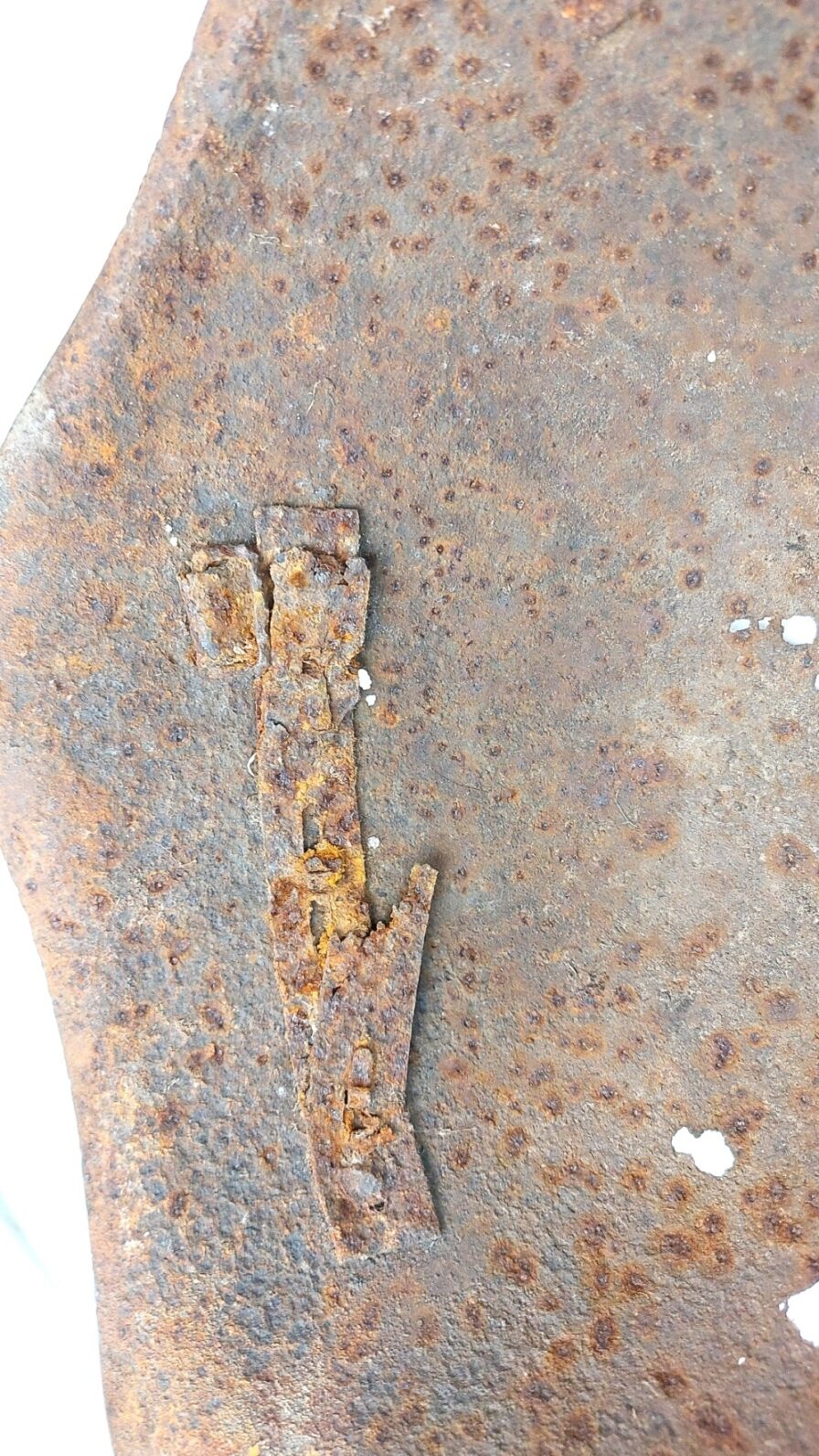
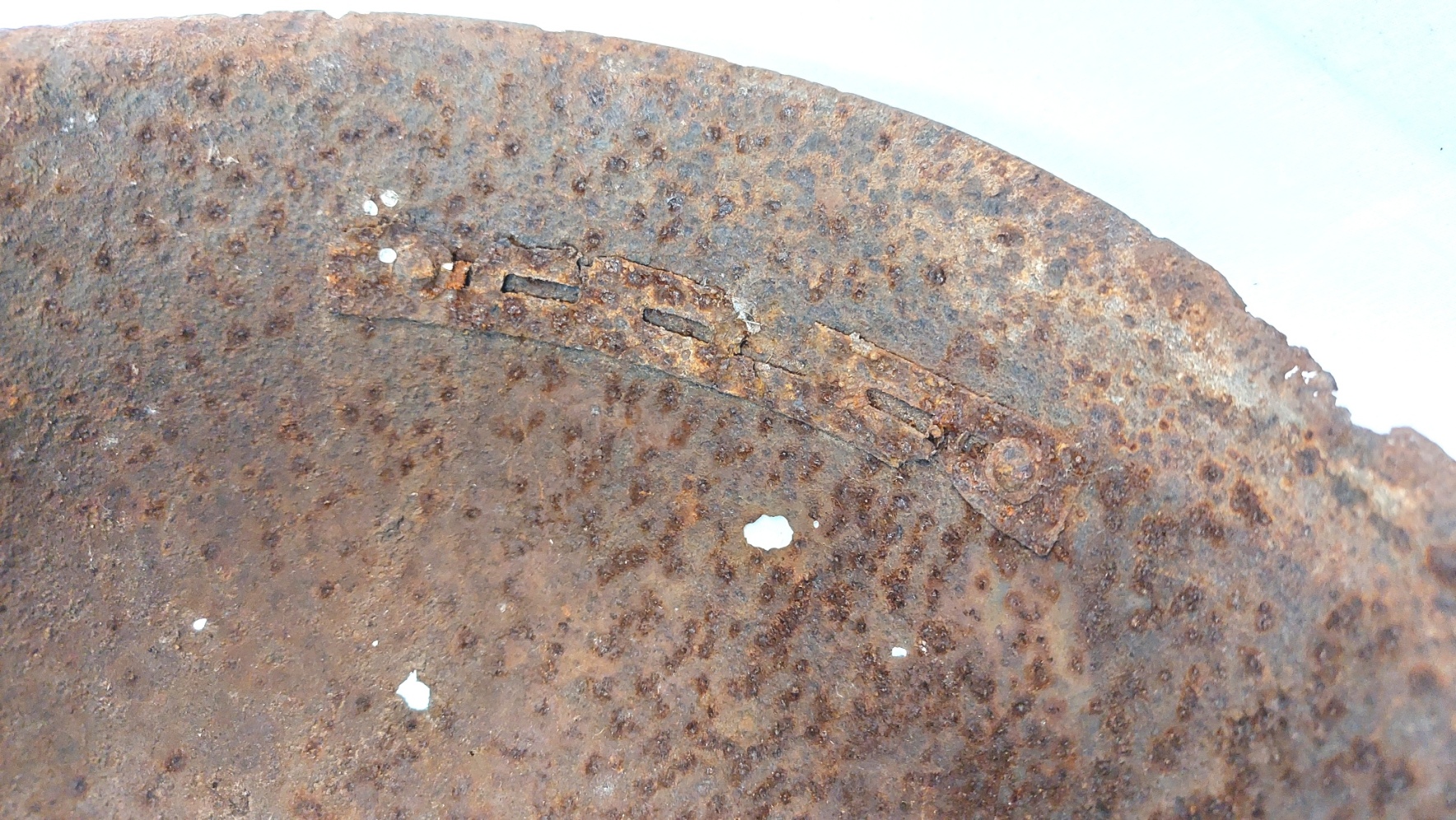
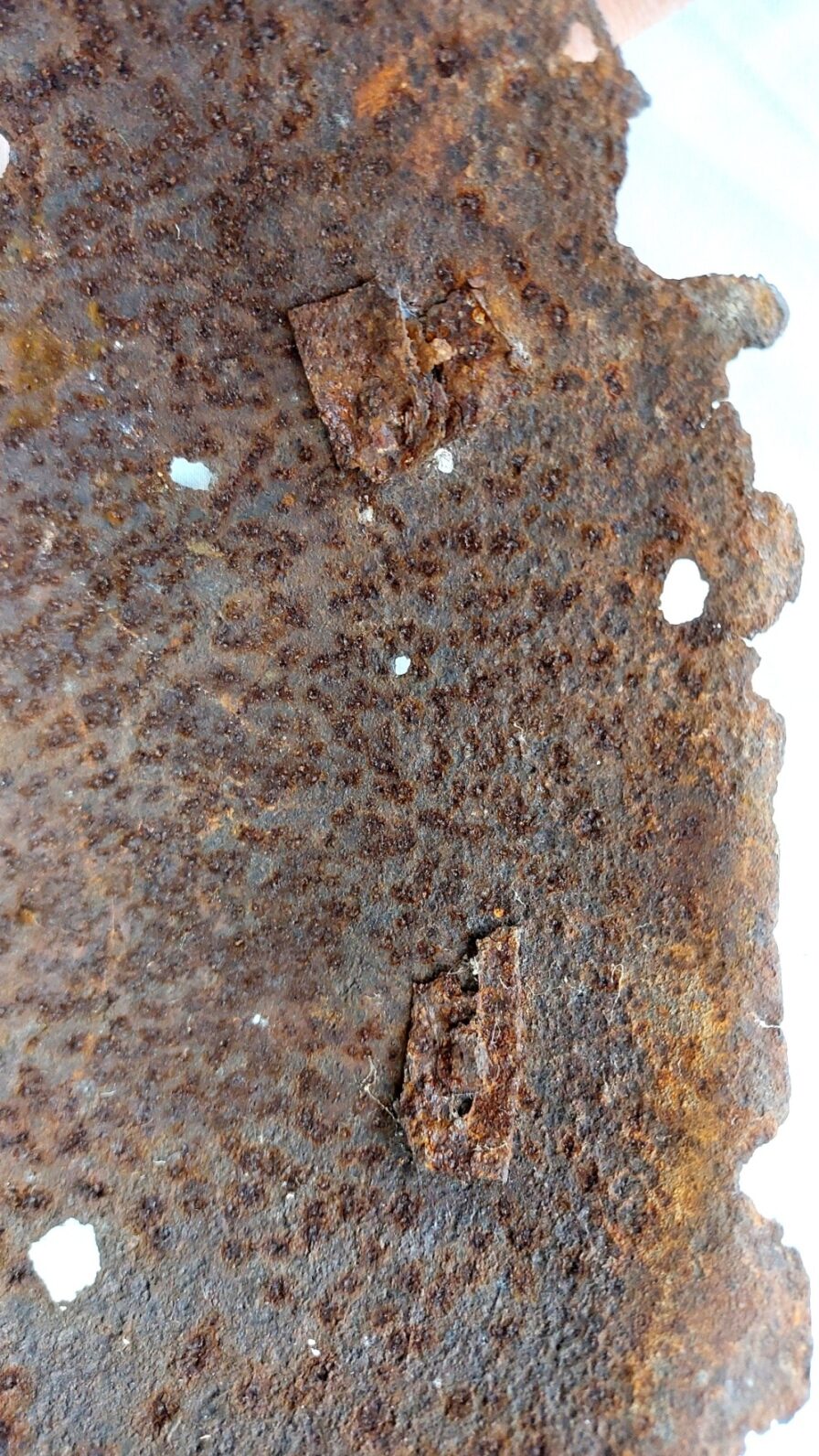
A relic Soviet SSh-40 steel combat helmet, recovered from the Kursk battlefield, retaining its original shell with the remains of the internal liner band fittings still visible inside. The helmet shows heavy corrosion throughout with multiple perforations from long burial, and loss to the lower rim consistent with ground recovery from a former battlefield.
The form, flared edge, and surviving liner band attachment points identify the helmet as the SSh-40 pattern, the standard steel helmet issued to the Red Army from 1940 onwards and used extensively during the Second World War, including at Stalingrad, Kursk, and throughout the later Eastern Front campaigns.
The helmet remains in untouched relic condition, with no restoration, preserving its as-found appearance.
Approx. Measurements – Width: 23 cm. Front to back: 25 cm. Height: approx. 16–17 cm.
Historical Note:
This helmet was recovered from the Kursk battlefield, scene of one of the most decisive engagements of the Second World War. The Battle of Kursk, fought in July–August 1943, was the largest armoured battle in history and marked the final major German offensive on the Eastern Front. Following the defeat at Stalingrad, the German High Command launched Operation Citadel, an attempt to encircle and destroy Soviet forces holding the Kursk salient. Anticipating the attack, the Red Army constructed extensive defensive belts consisting of trenches, bunkers, minefields, anti-tank guns, and fortified strongpoints. When the German assault began, the fighting became some of the most intense of the war, with massive use of artillery, armour, and aircraft on both sides. One of the most famous engagements occurred near Prokhorovka, where hundreds of tanks clashed at close range in one of the largest tank battles ever fought. The German offensive ultimately failed, after which Soviet counter-offensives forced the Wehrmacht into a retreat that continued for the remainder of the war.
Due to the scale of the battle and the enormous casualties sustained, large quantities of equipment were left on the battlefield. Helmets such as this were often buried in trenches, shell craters, and defensive positions, where they remained for decades before being recovered. Relic helmets from the Kursk region commonly show severe corrosion caused by long burial in soil and exposure to blast damage, as seen on this example.
*Condition*
Relic condition. Heavy corrosion throughout with multiple rust perforations to the crown and sides. Lower rim heavily degraded with losses. Interior liner band remains present but heavily rusted. No liner or chinstrap remaining. No visible markings due to corrosion. Untouched battlefield-recovered state. Please see photographs as part of the condition report.