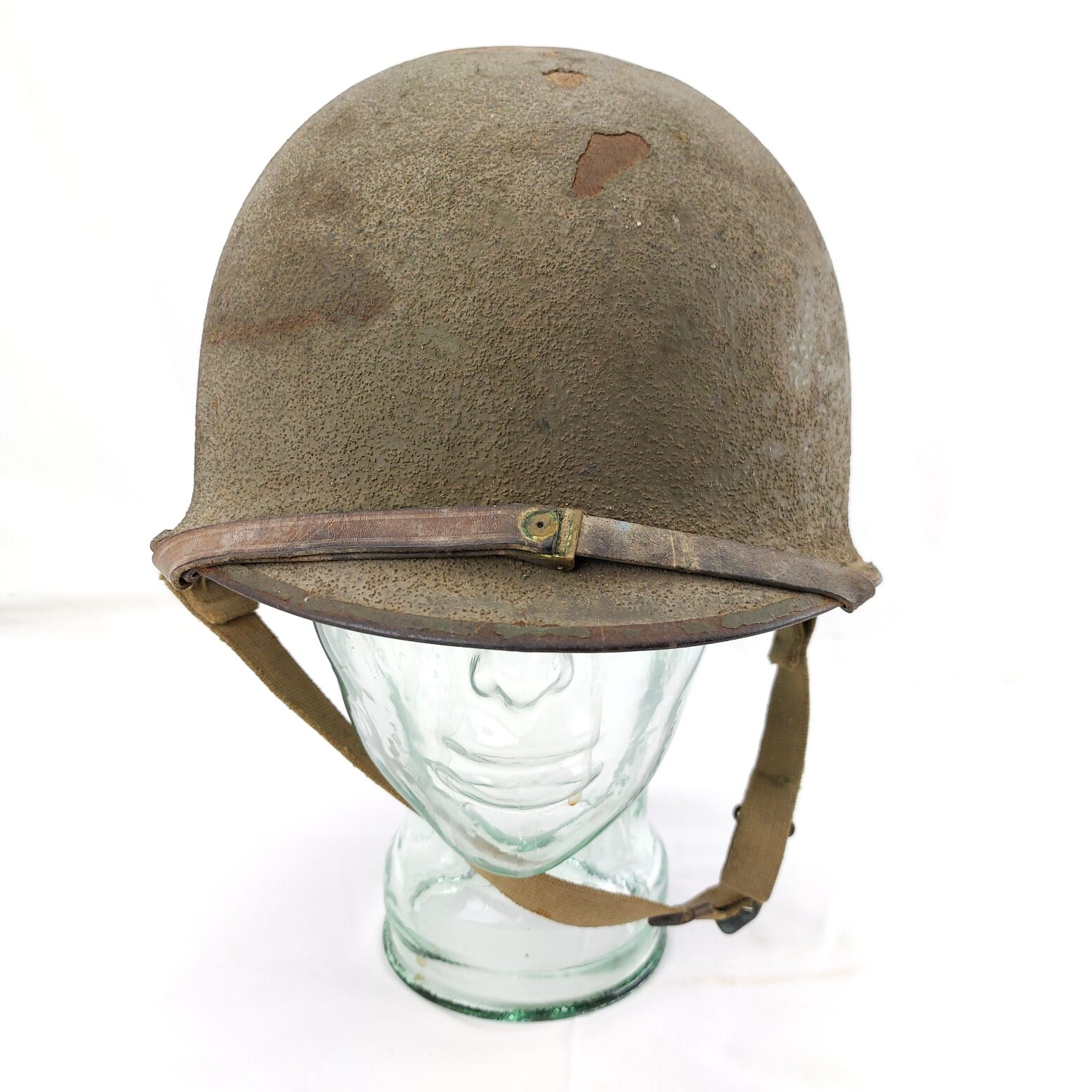
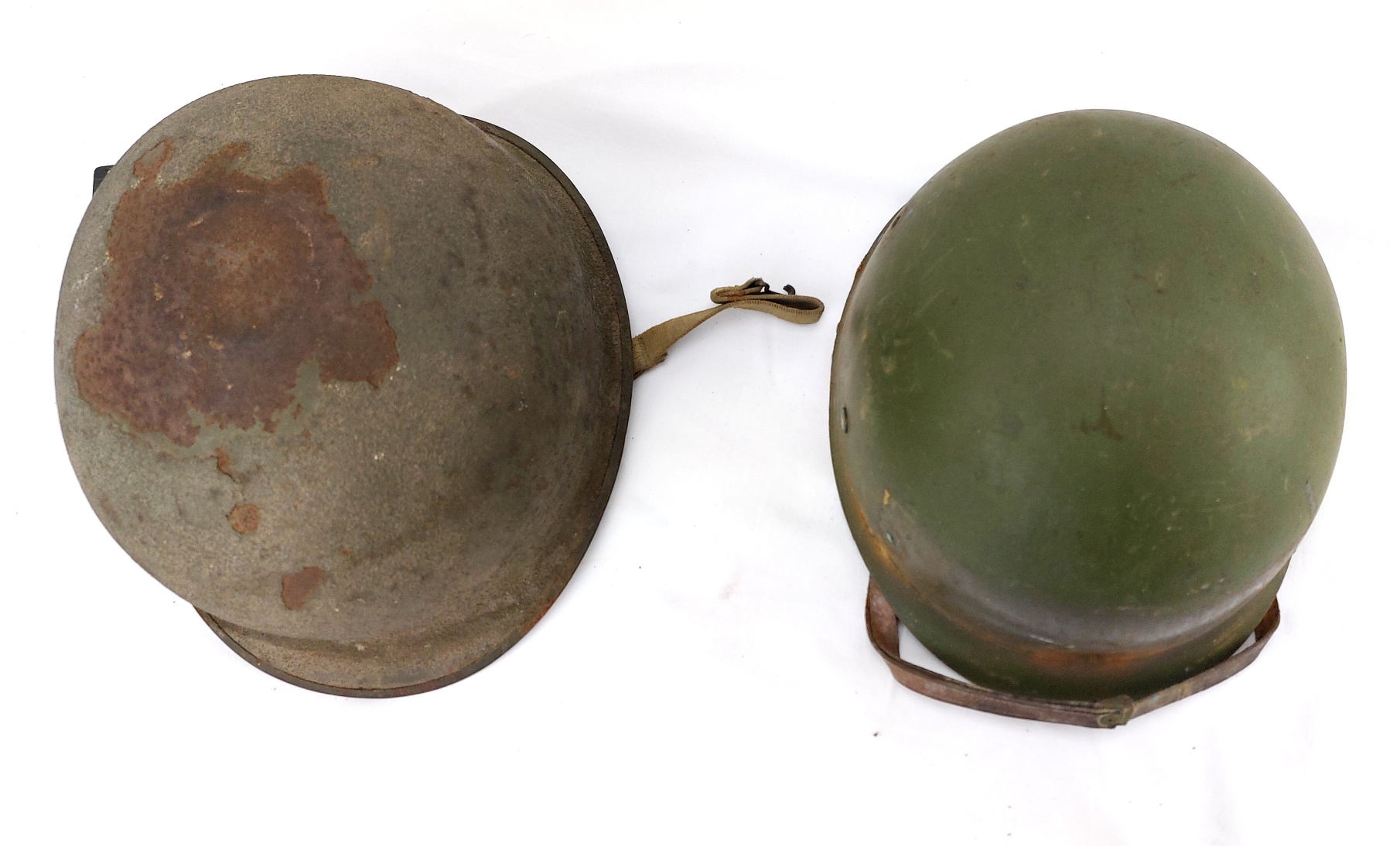
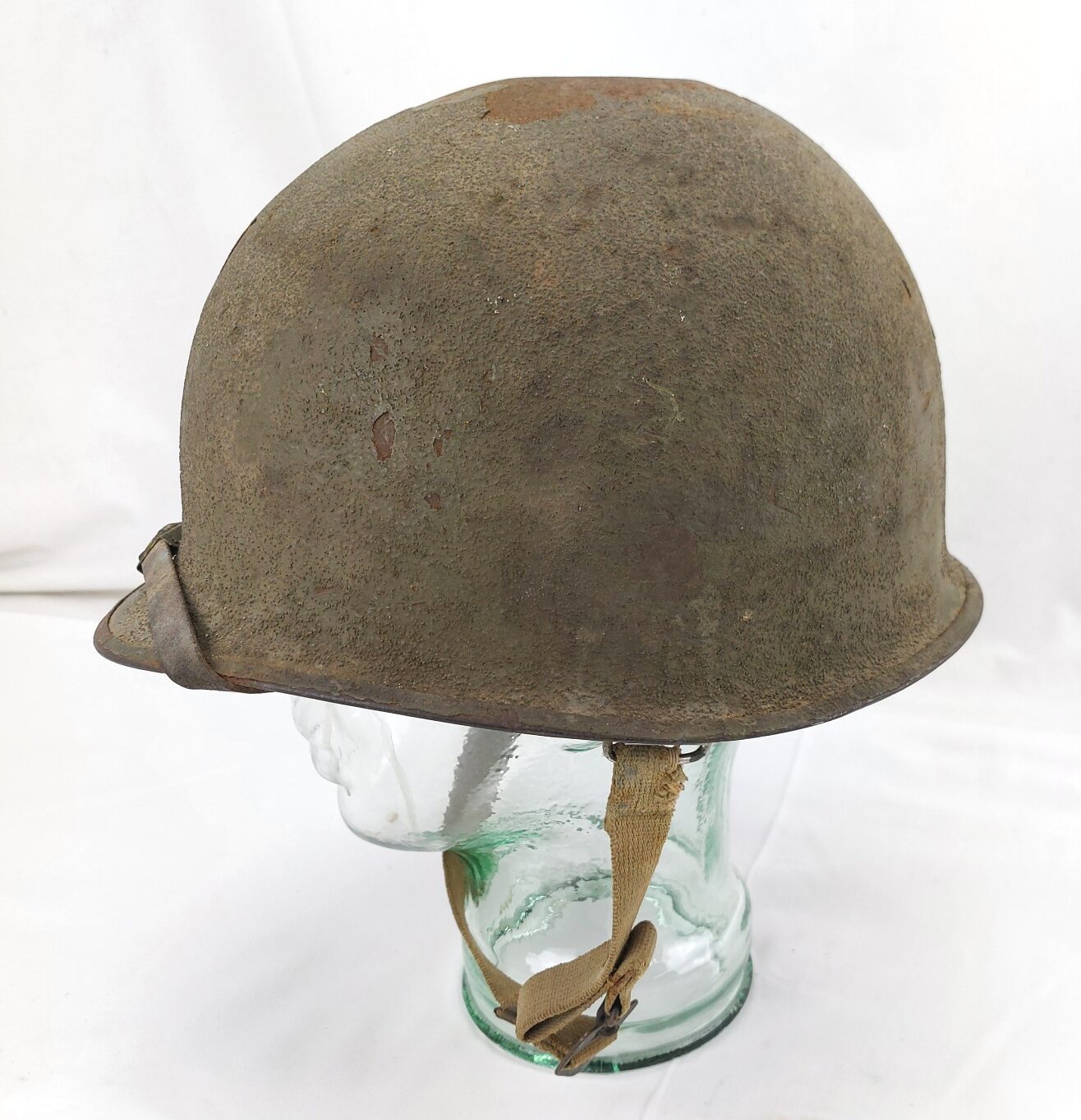
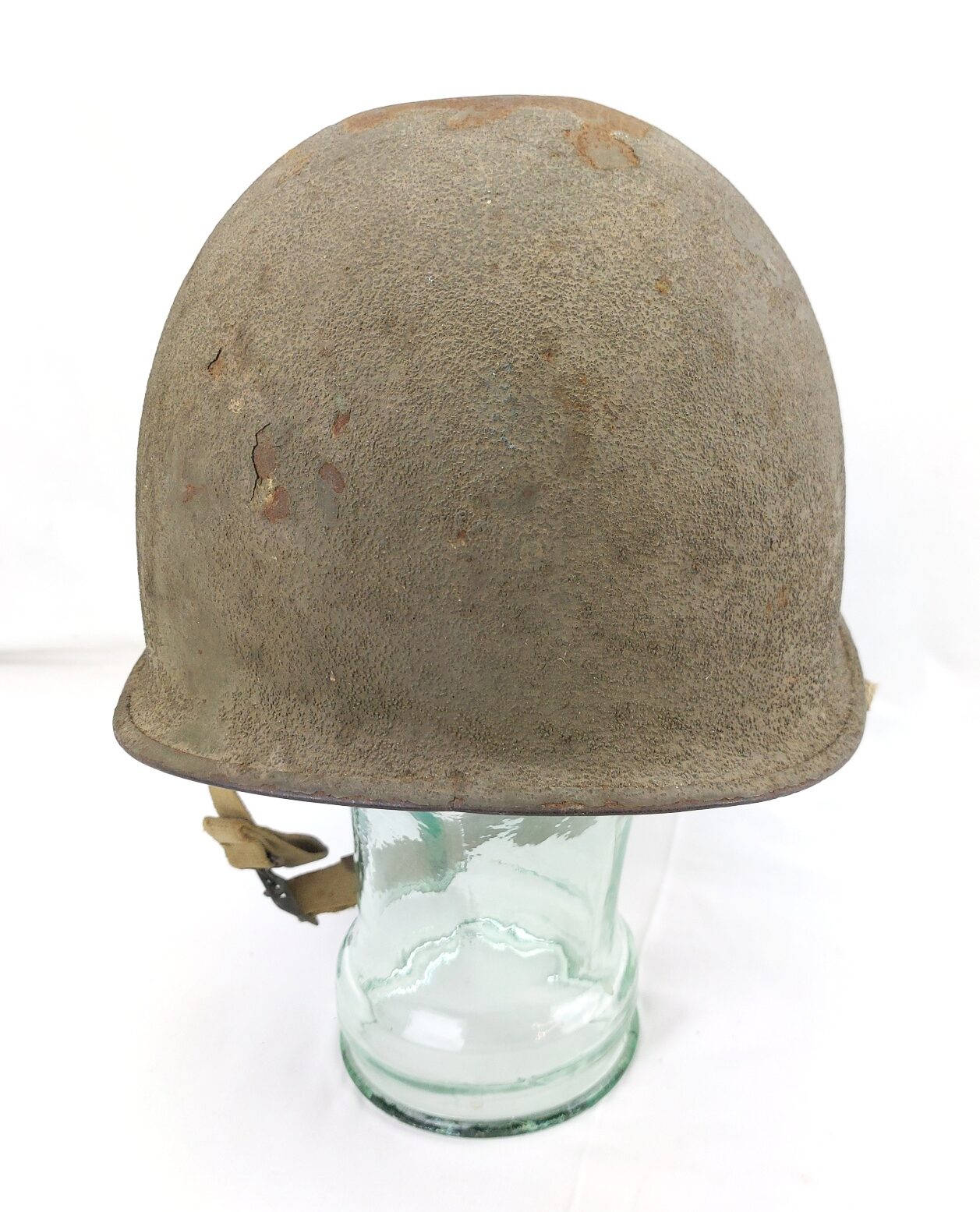
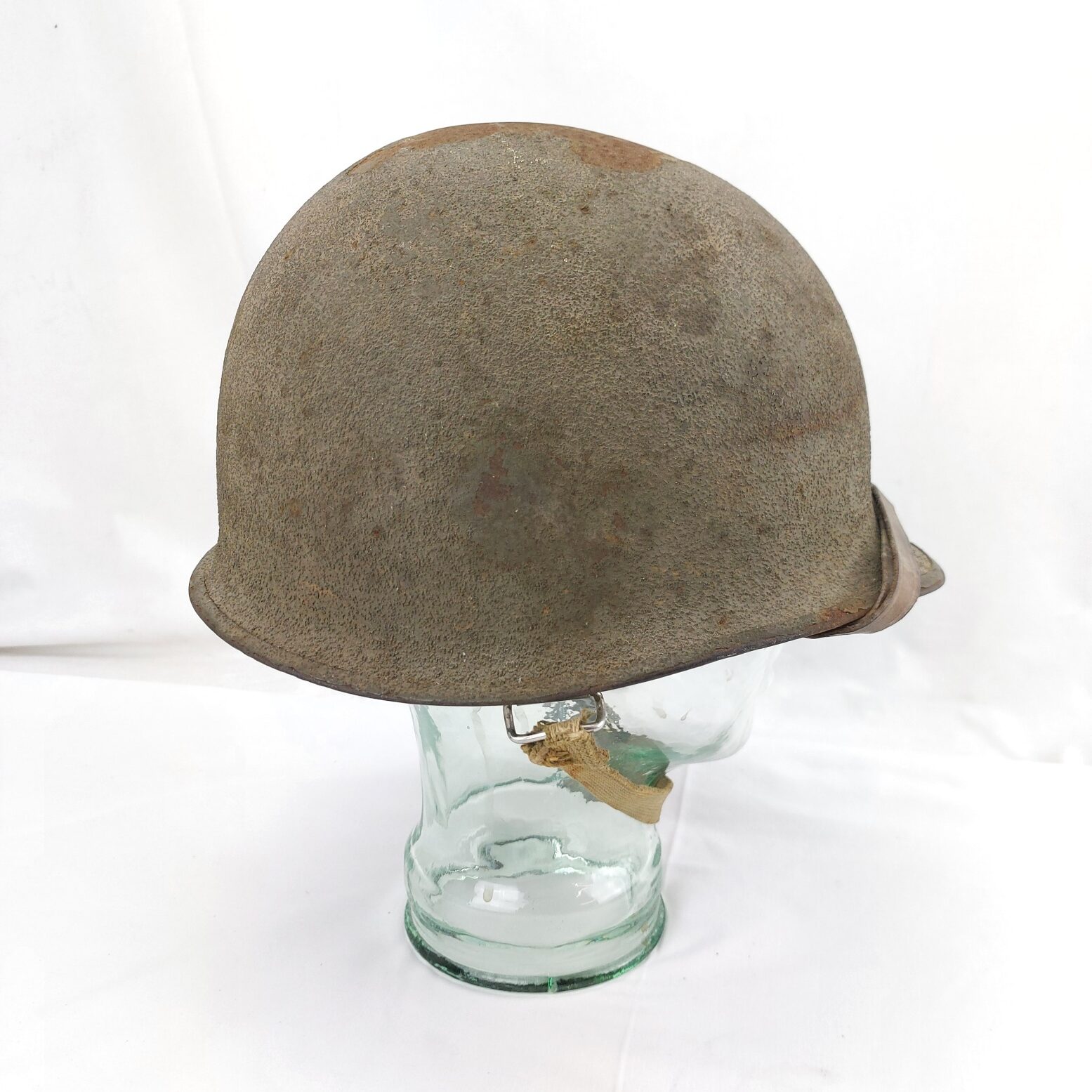
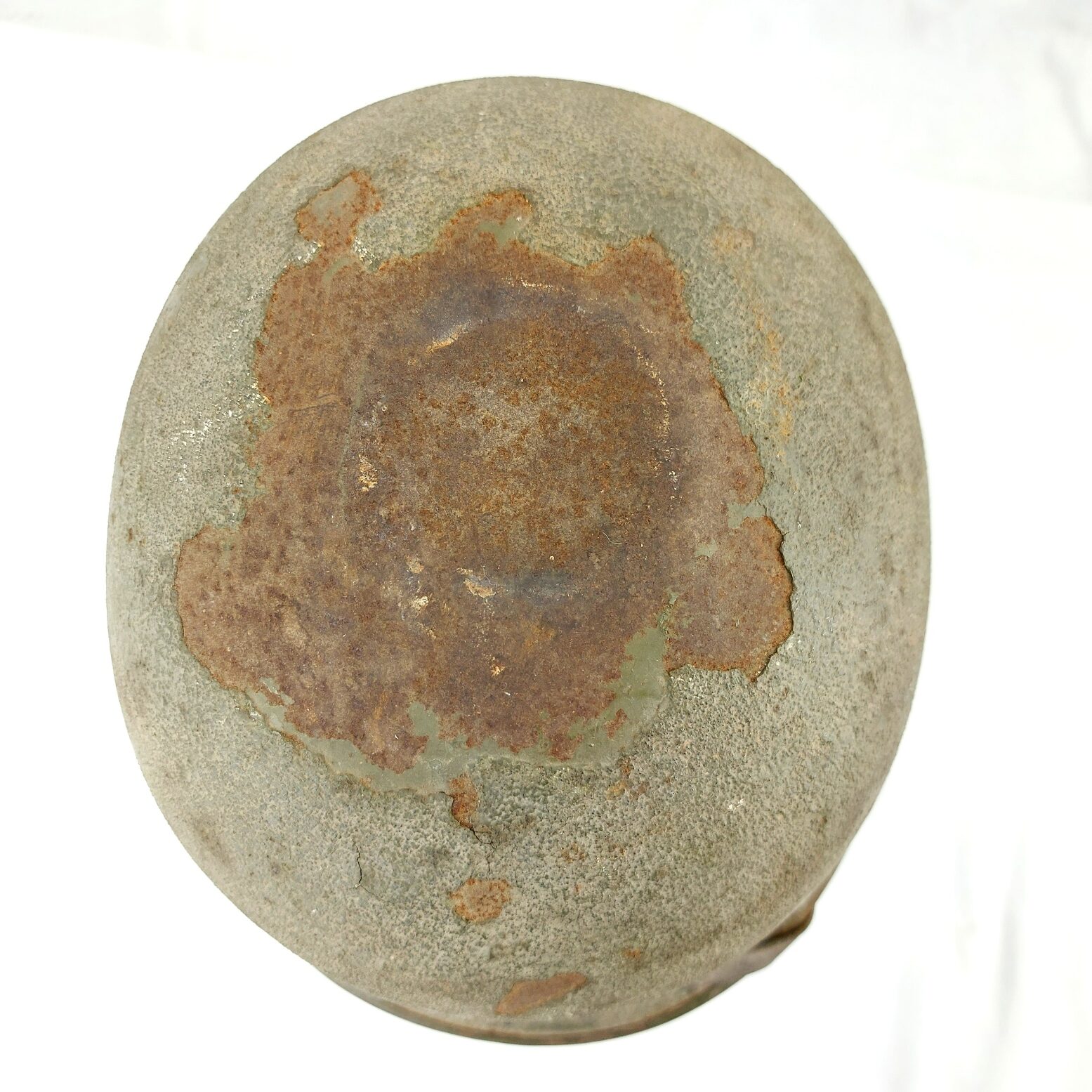
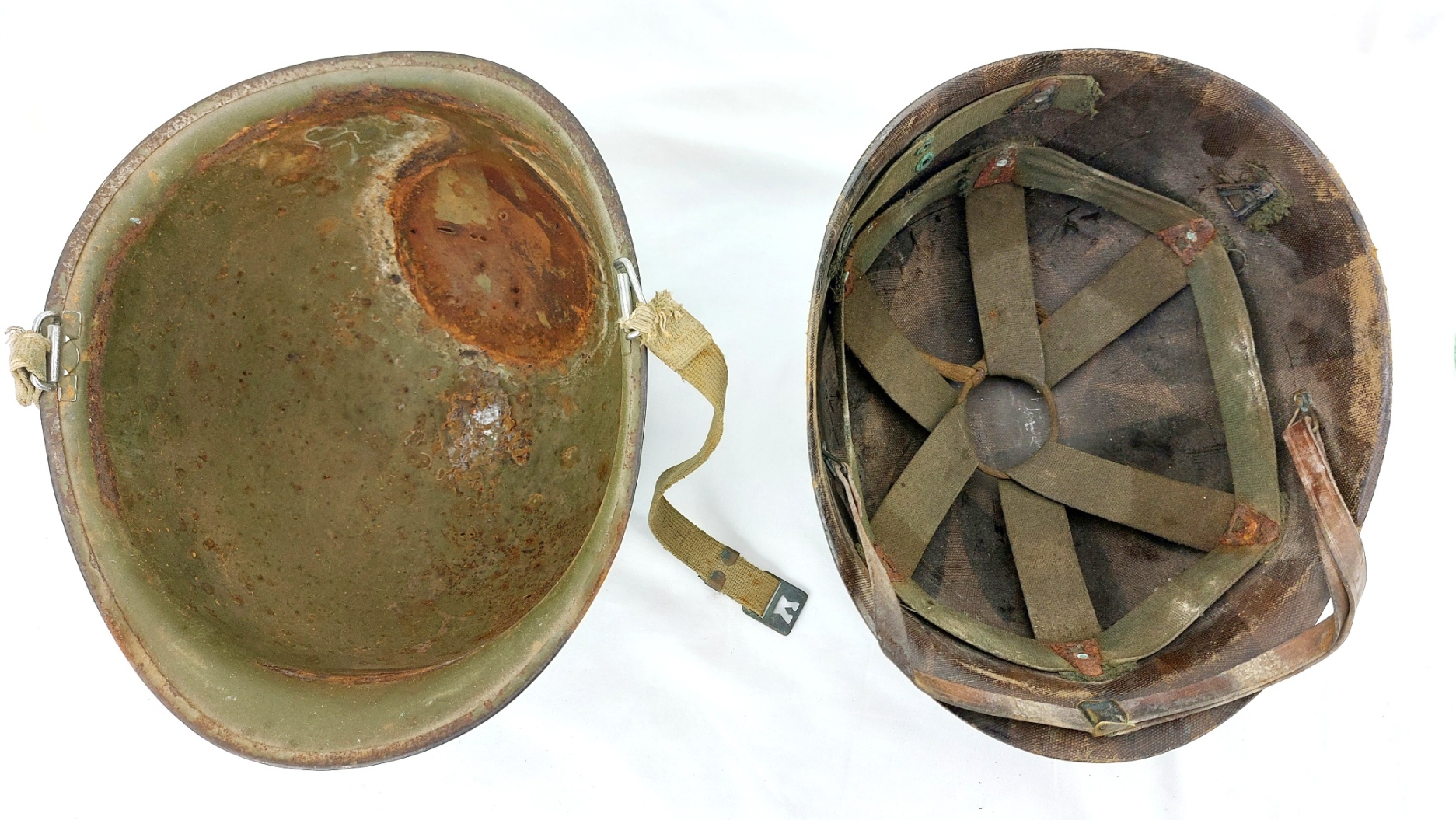
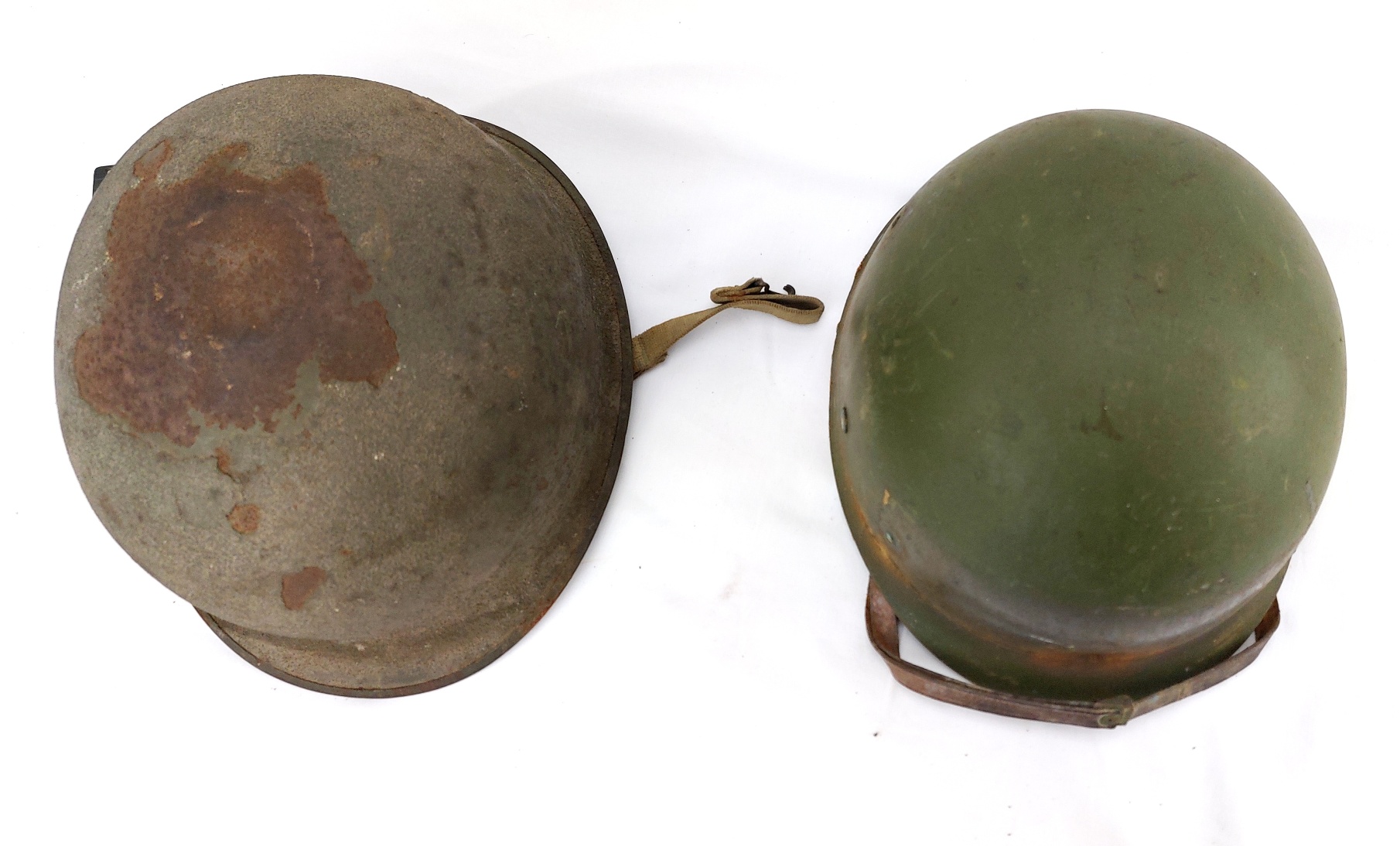
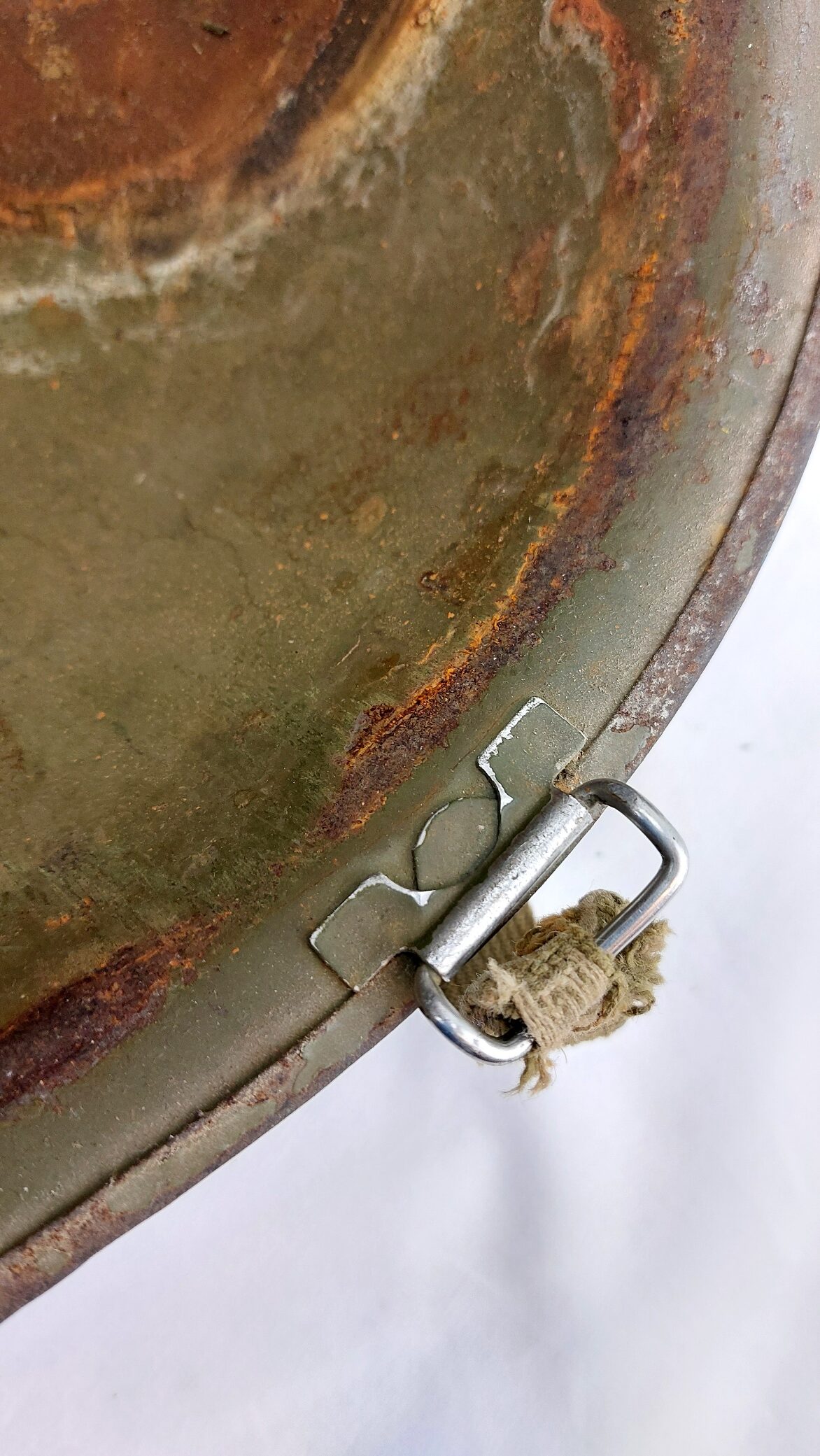
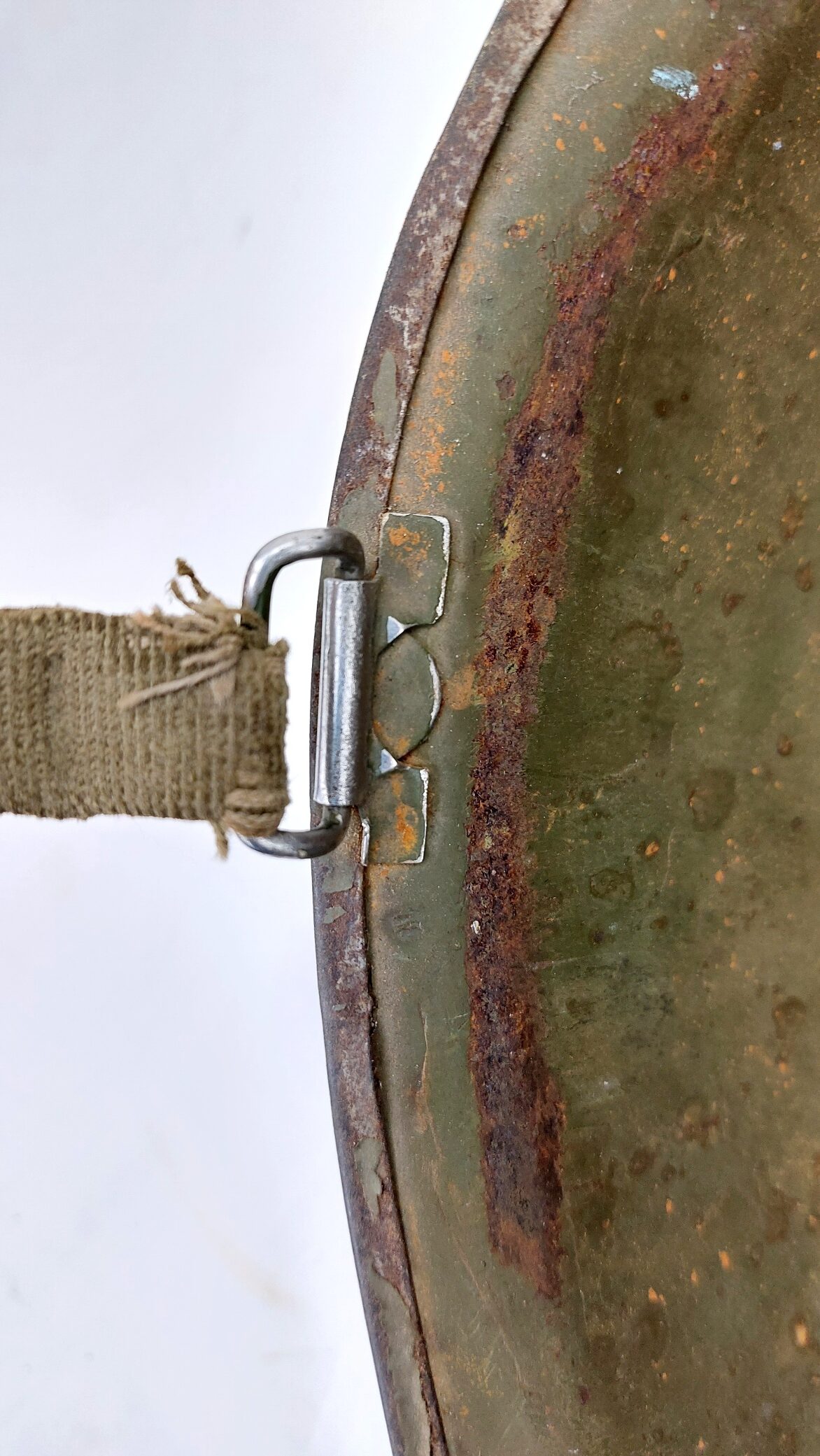
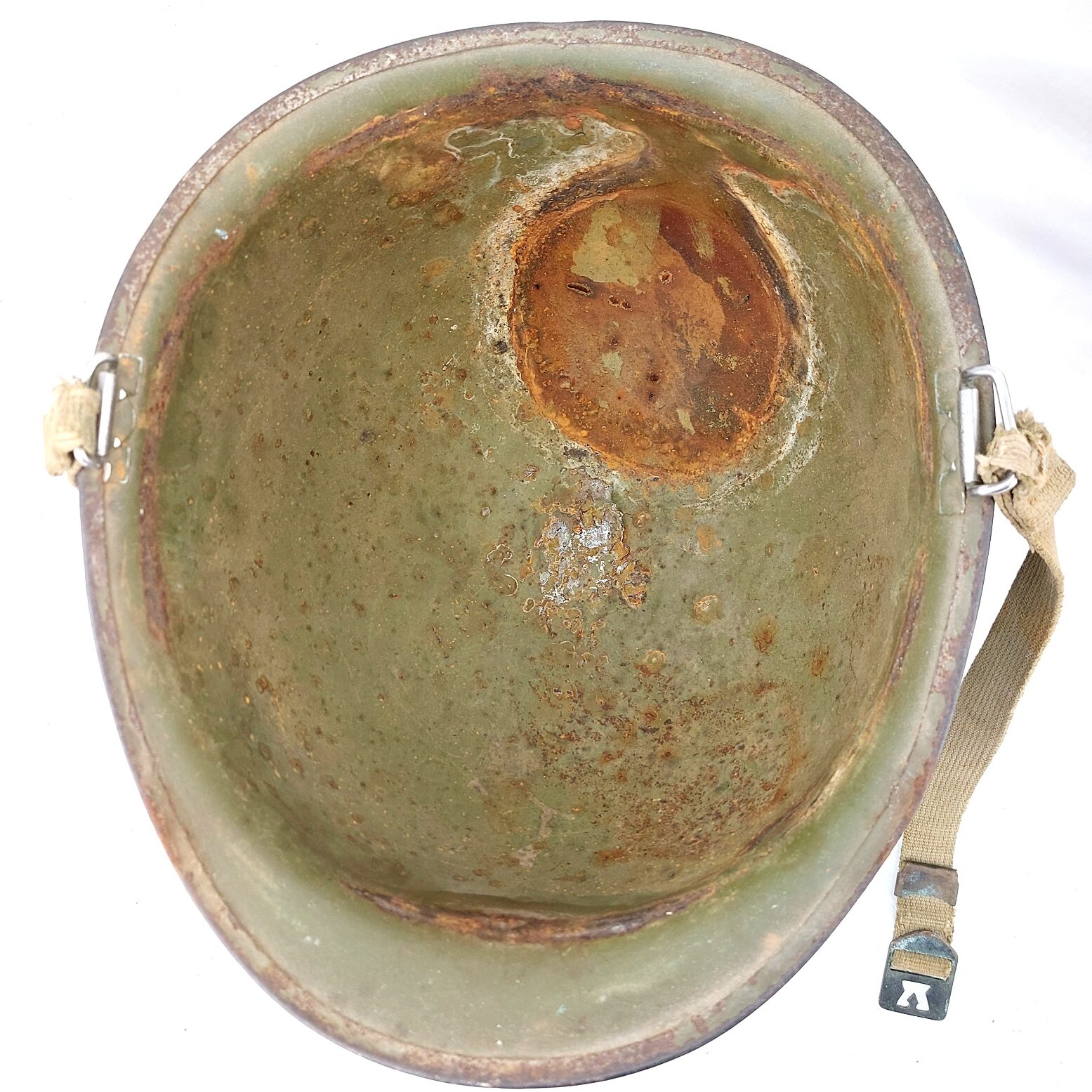
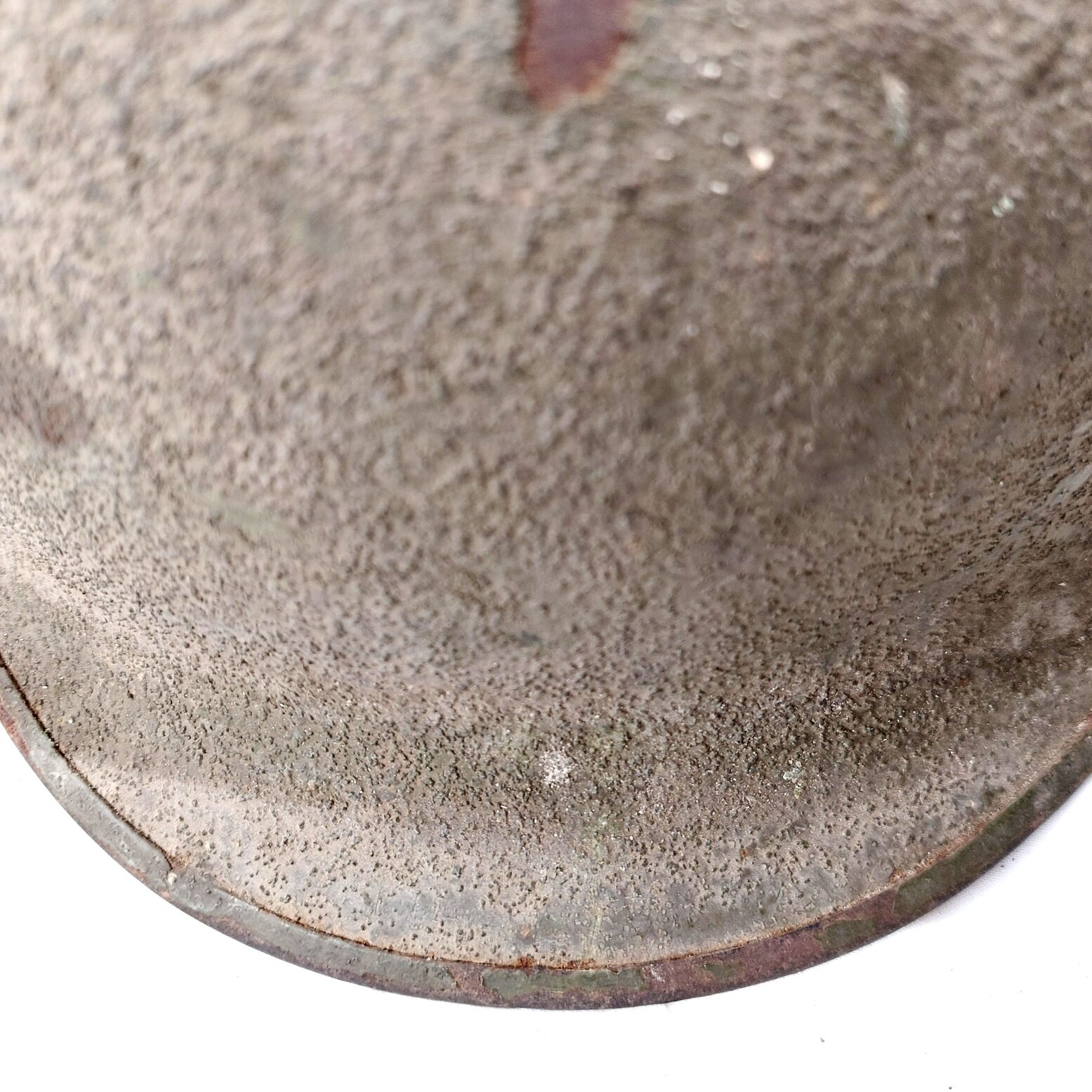
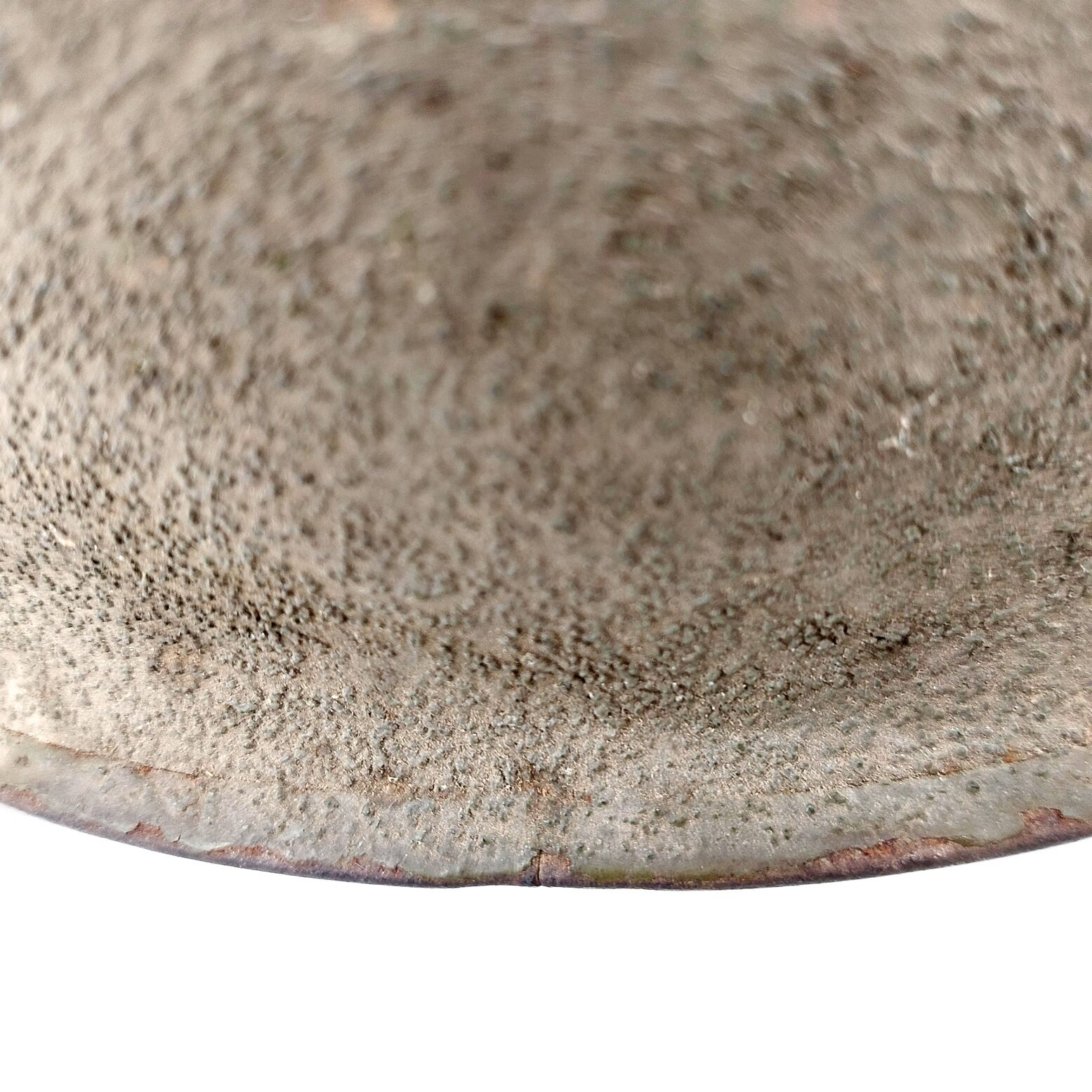
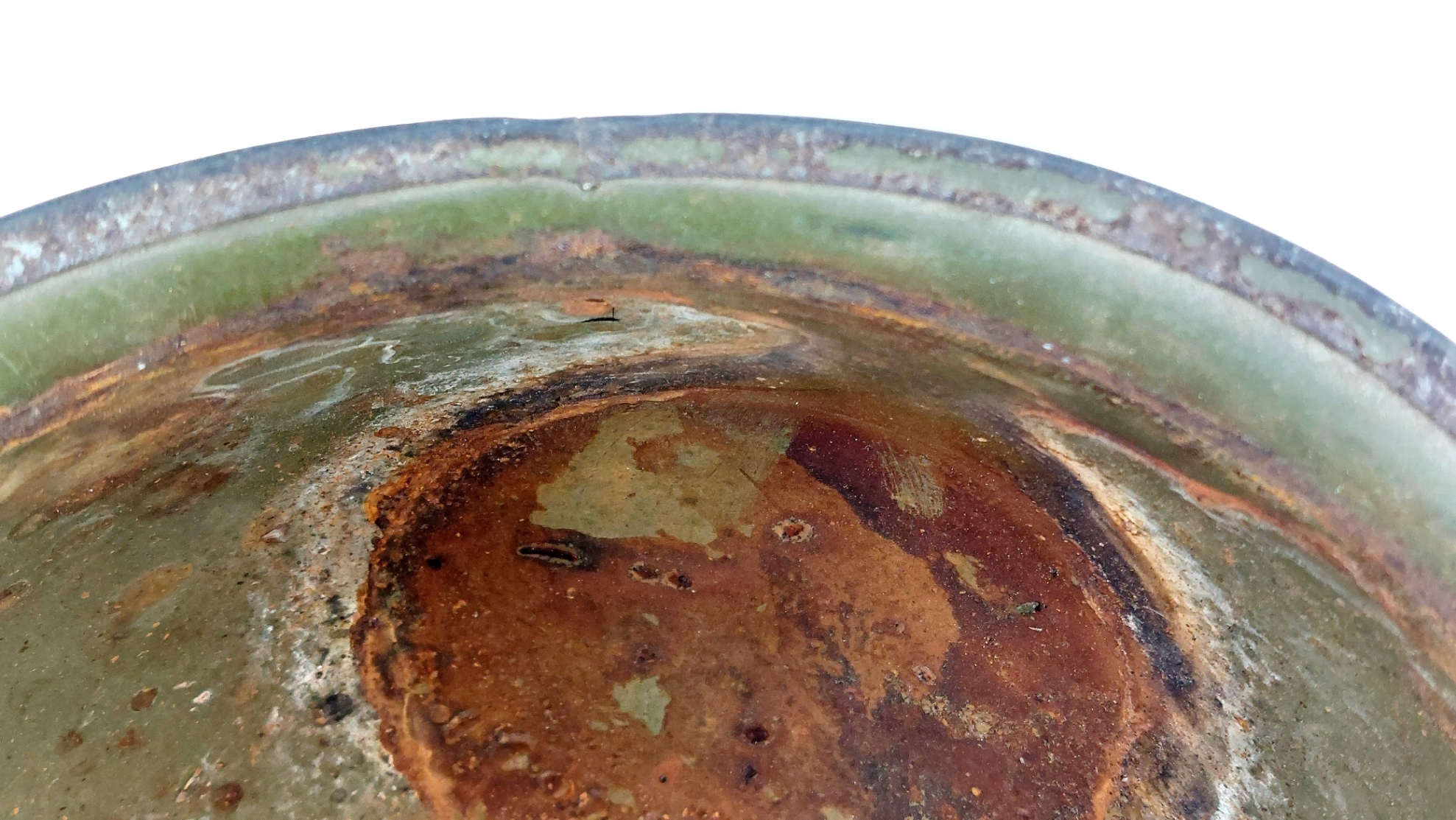
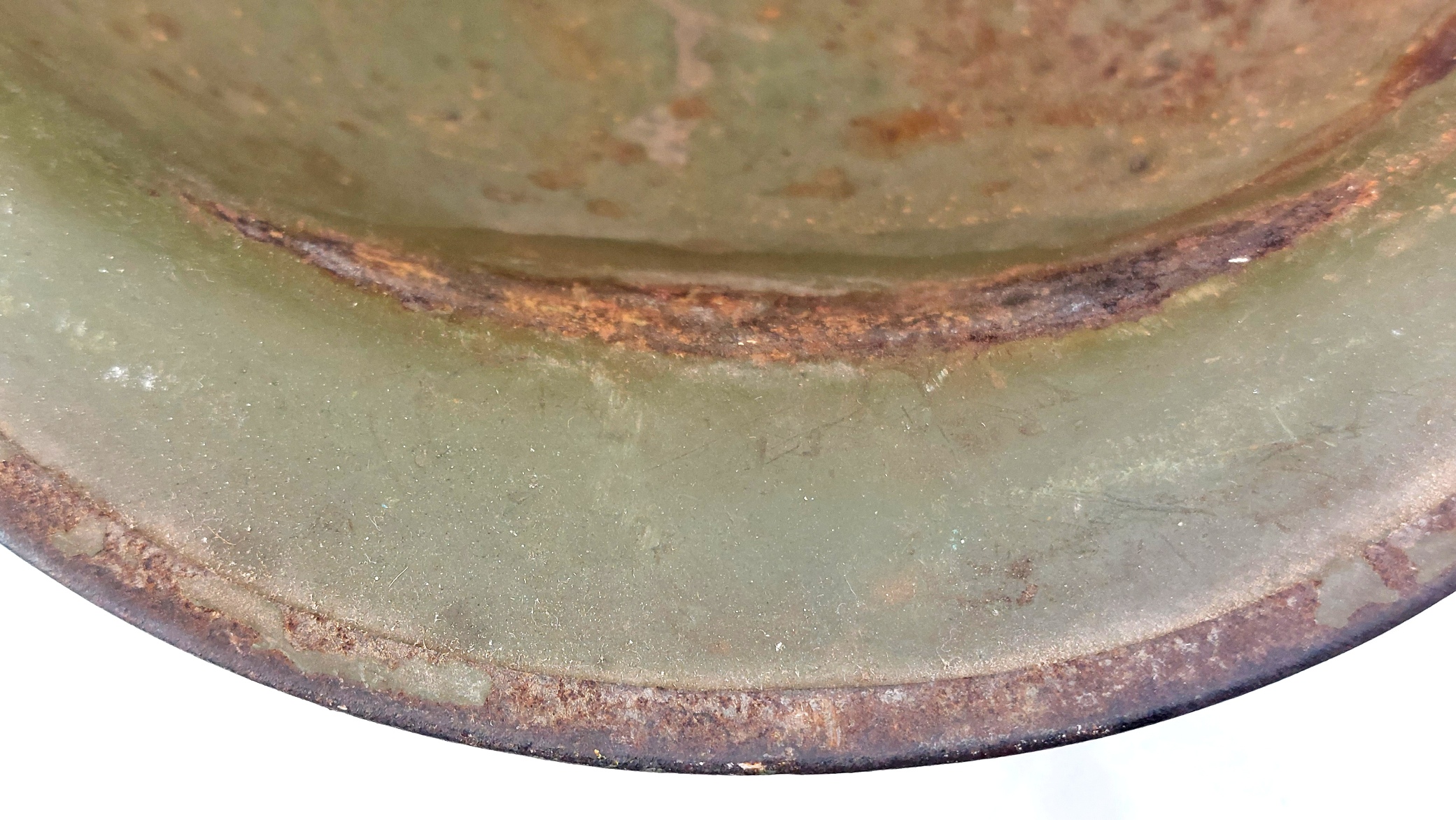
An original Second World War U.S. M1 infantry helmet comprising a rear-seam, swivel-bale combat shell paired with a wartime high-pressure fibre liner manufactured by Firestone Tire & Rubber Co., Akron, Ohio. The steel shell retains traces of its original cork-textured olive drab finish, now worn and patinated with widespread rusting. A distinct crown dent is present, the steel driven inward in a manner consistent with a sudden wartime impact from flying debris or blast pressure.
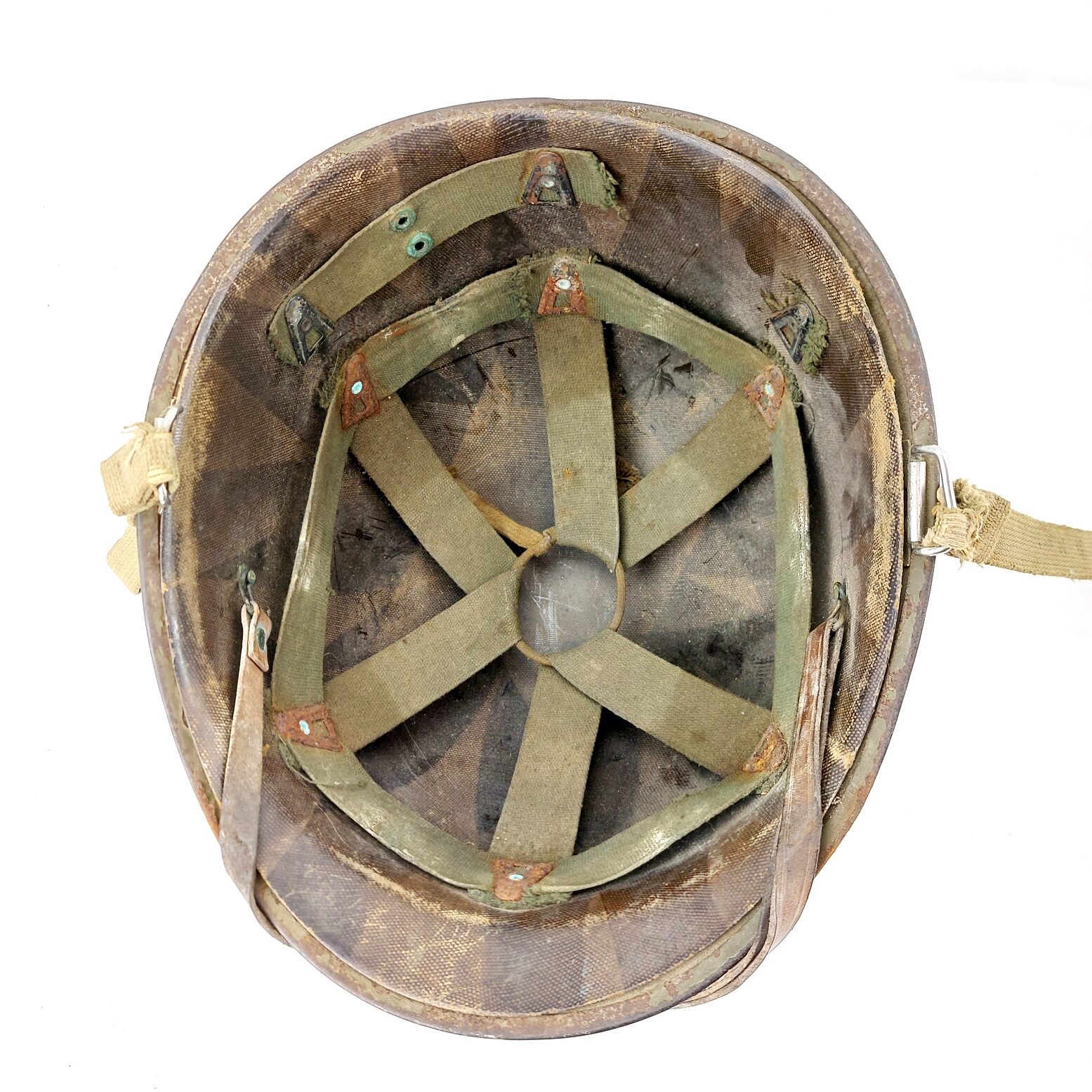
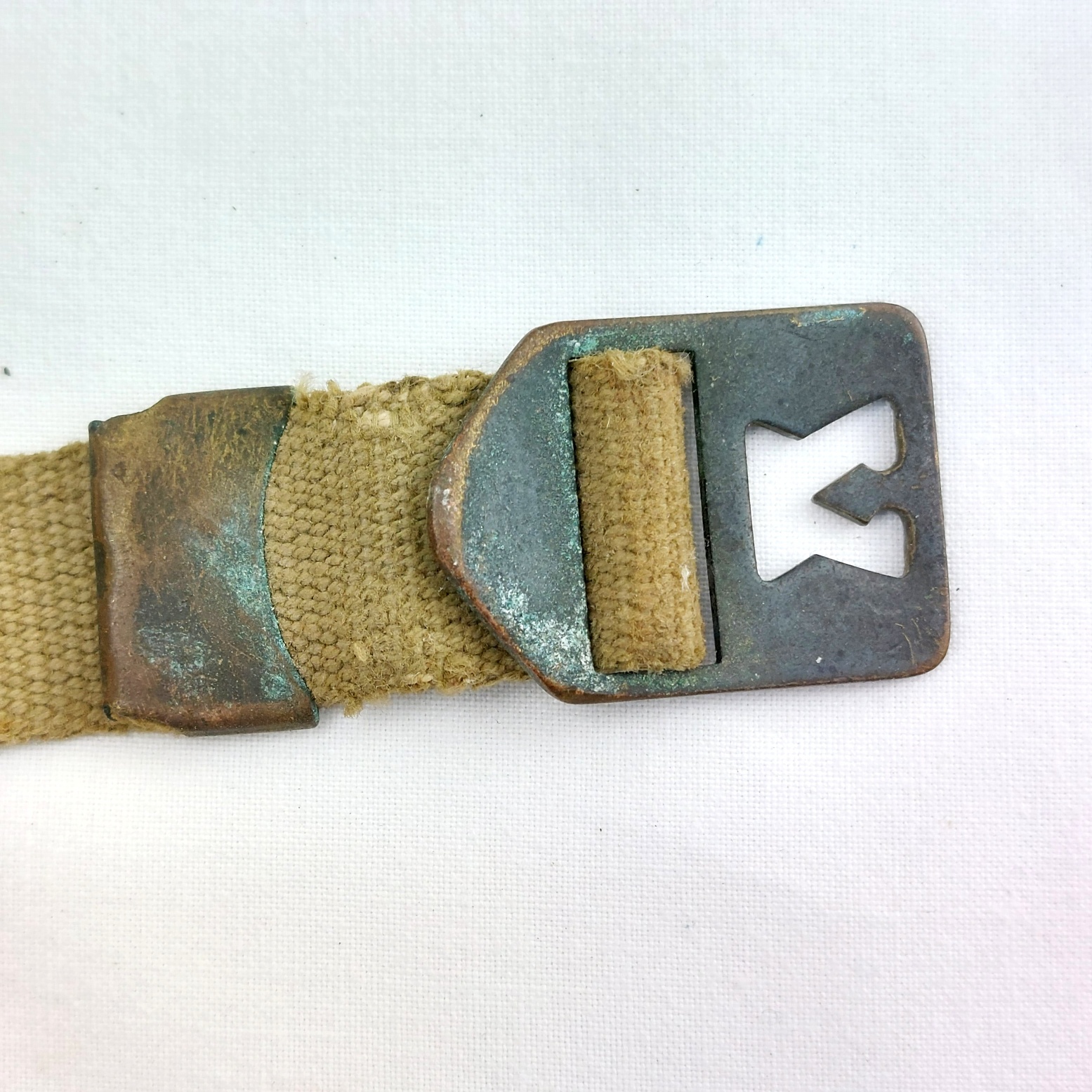
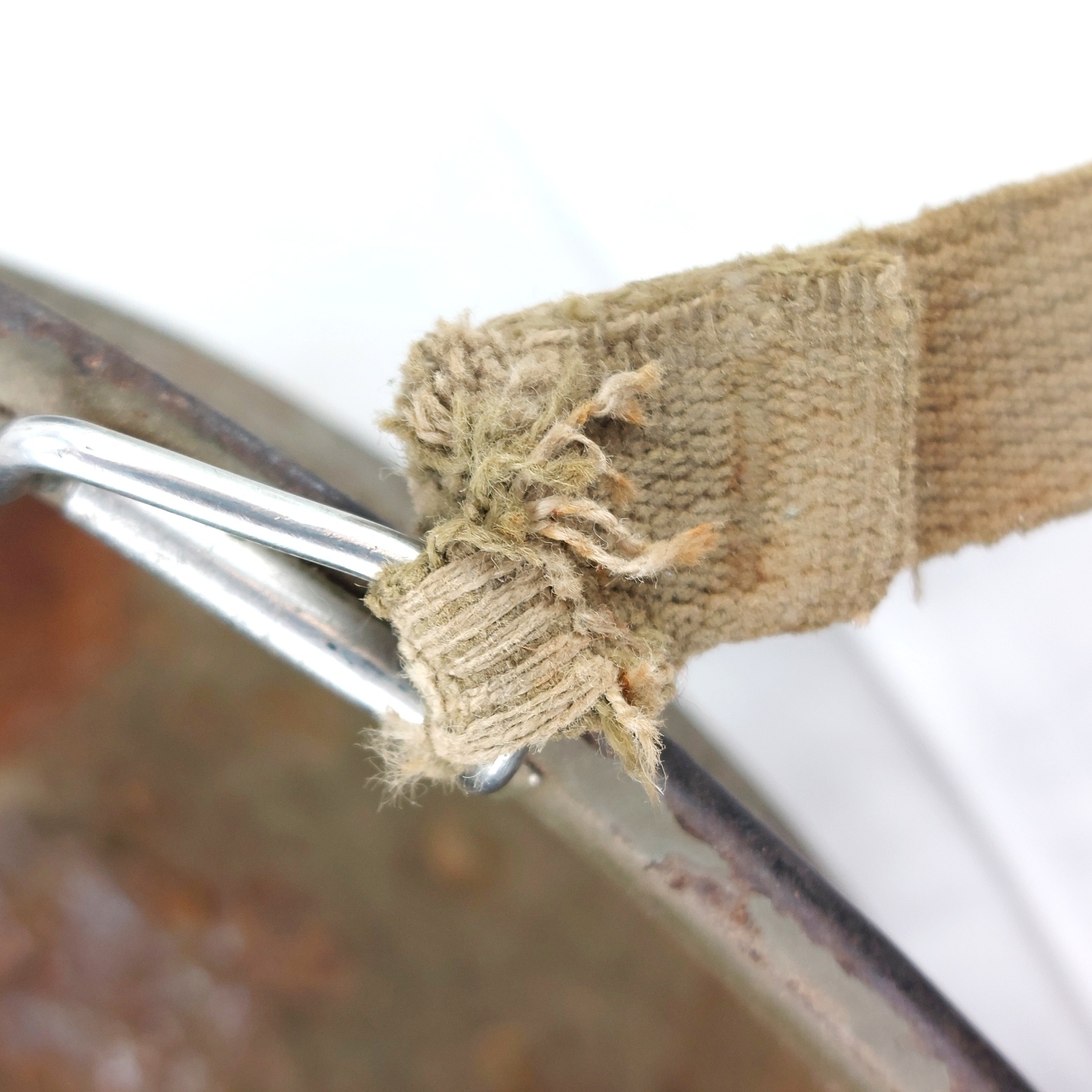
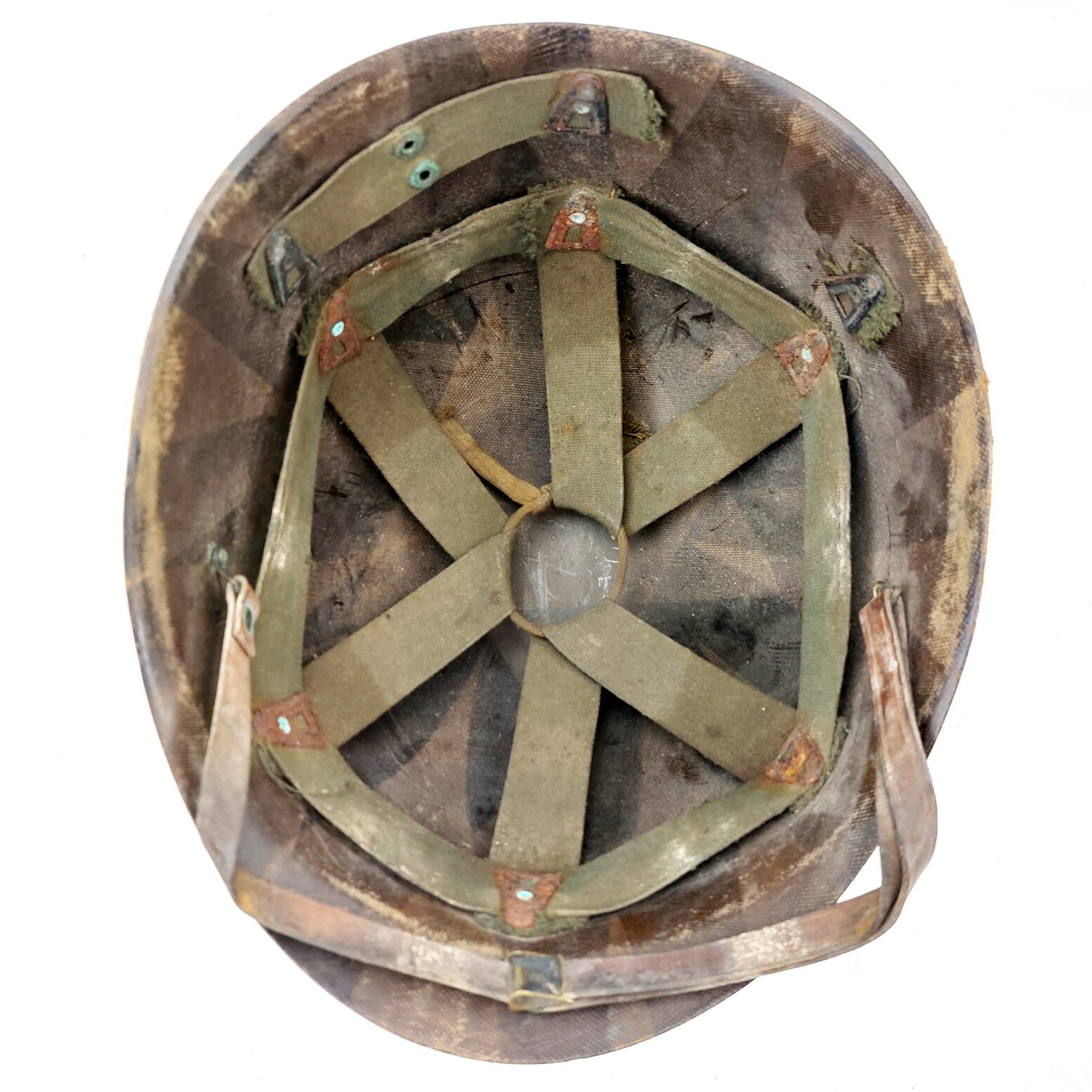
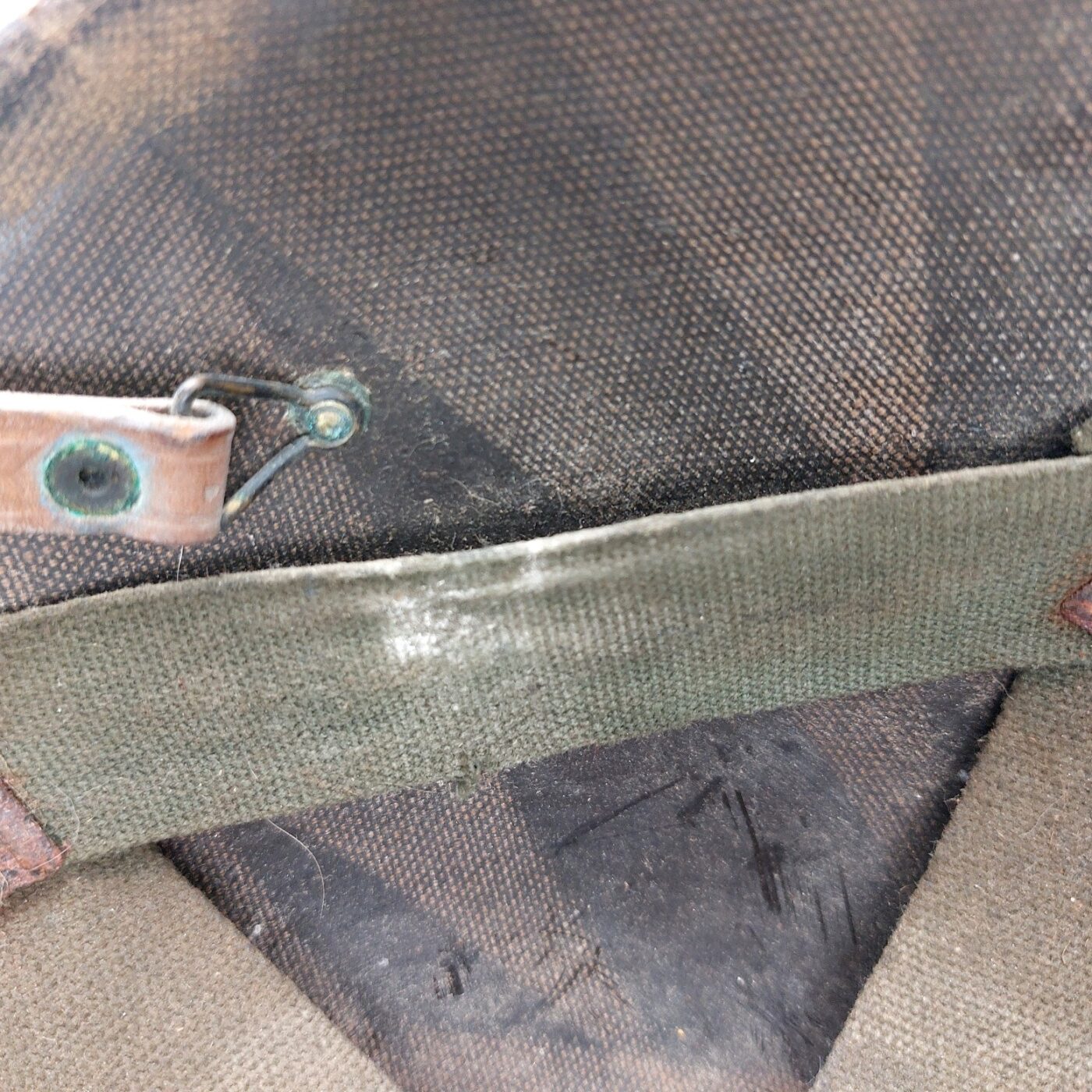
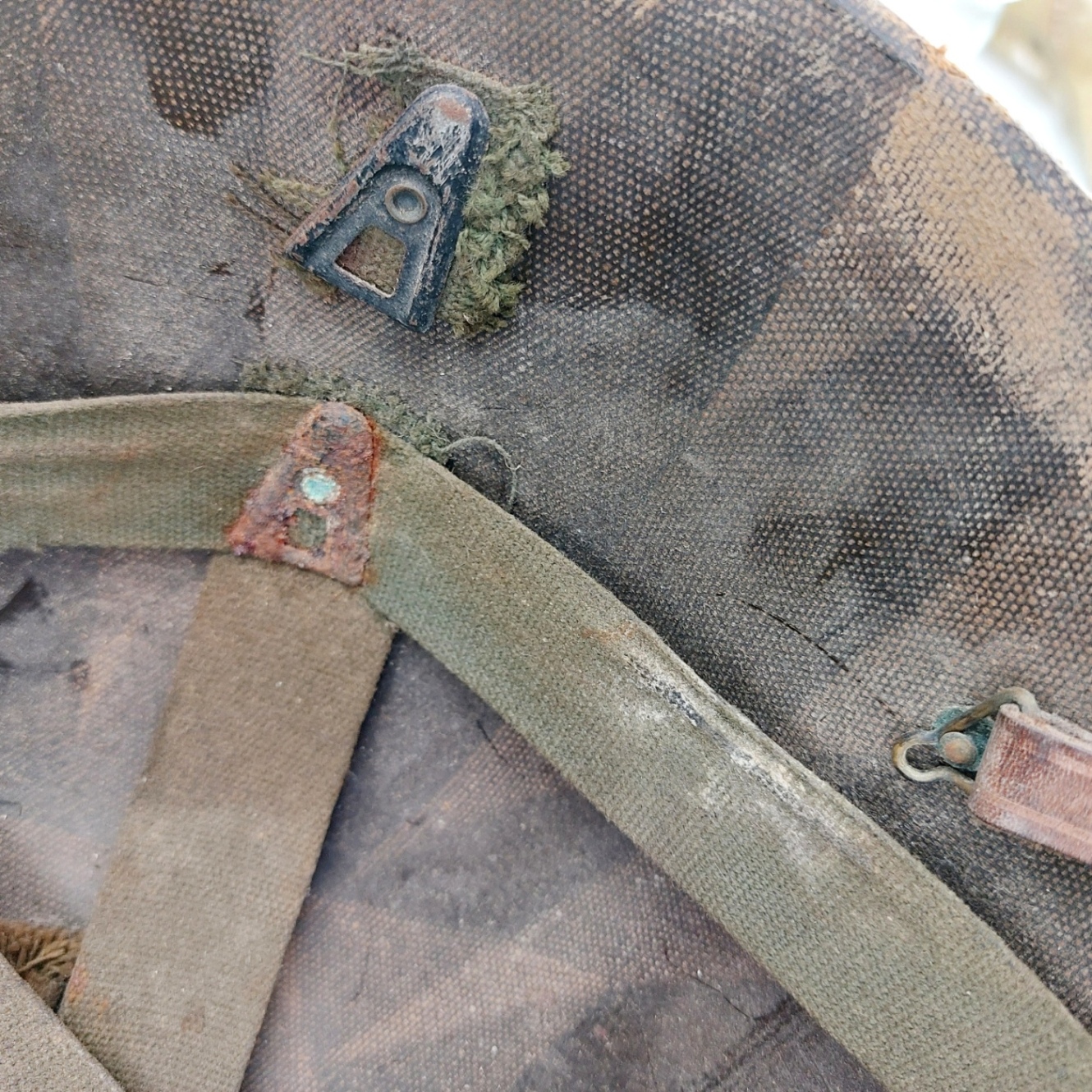
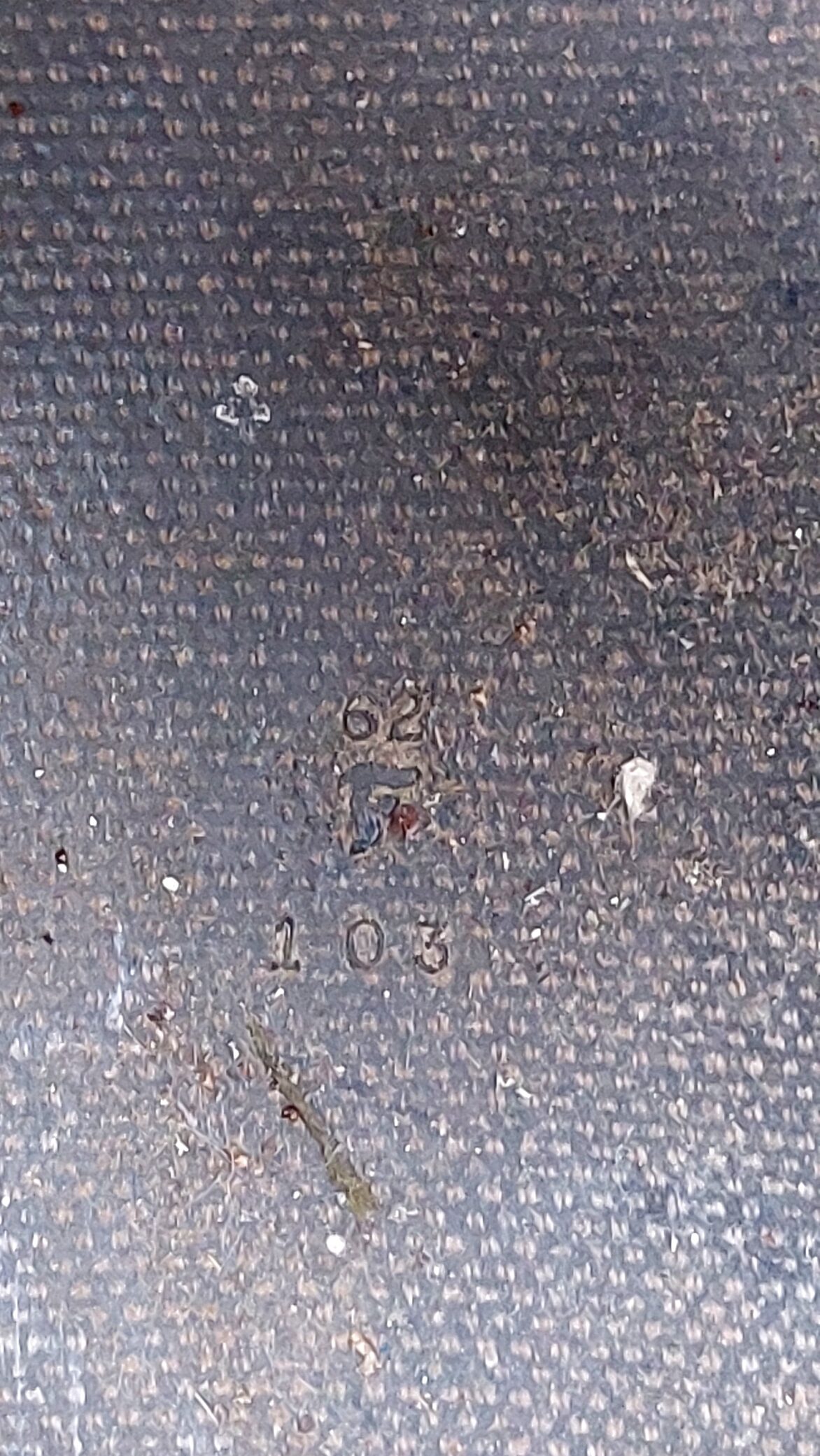
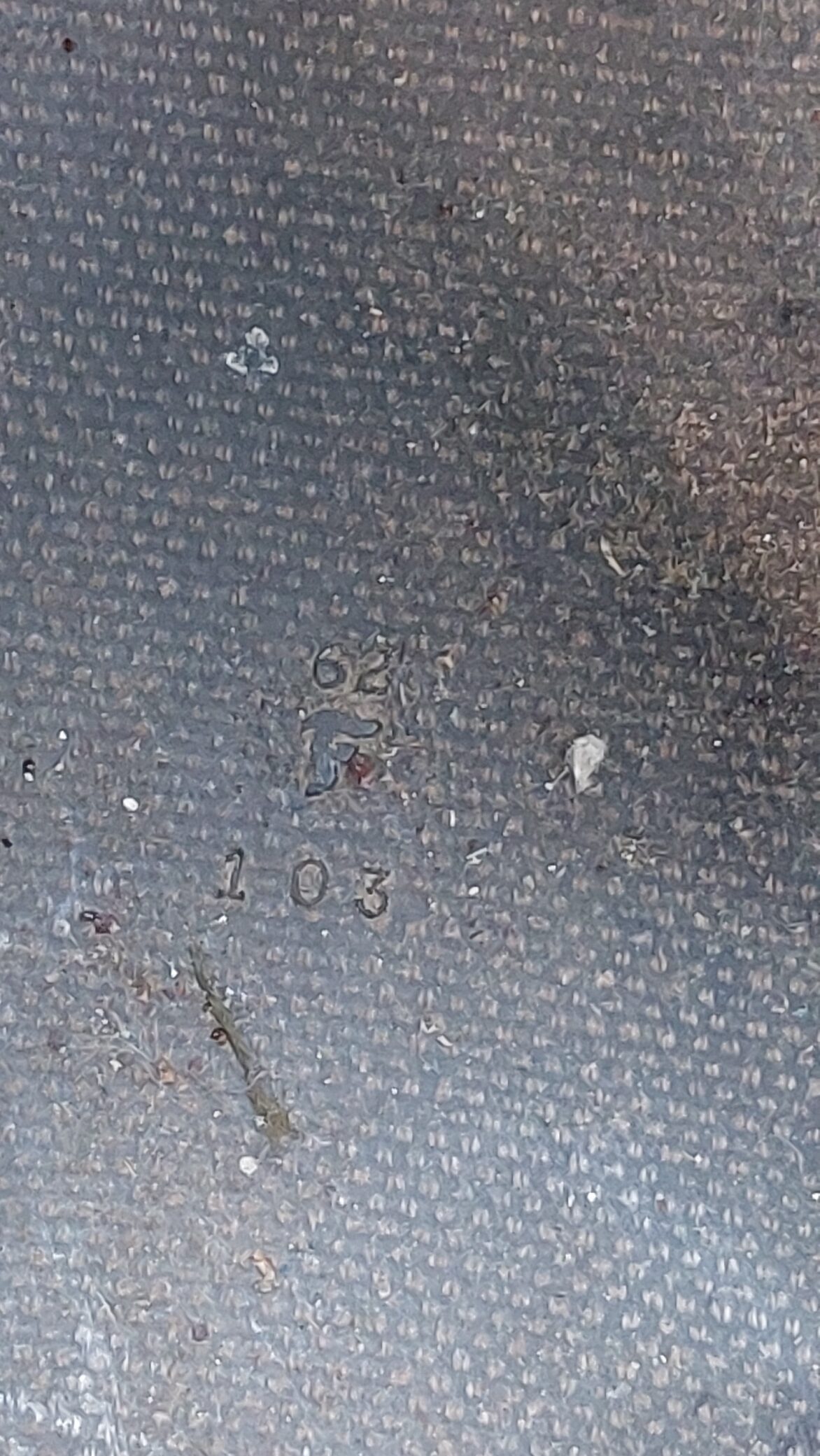
The liner is a wartime Firestone high-pressure example, identified by the internal mould stamp ‘62 F 103’, the ‘F’ denoting Firestone manufacture and the surrounding numbers corresponding to Firestone’s mould and cavity coding used between 1942 and 1945.. The OD3 HBT suspension remains in place, secured by triangular A-washers, all heavily worn and stained from long service. The period leather liner chinstrap survives but is dry and cracked. The nape strap is present but broken on one side. Standard wartime garter studs are fitted; the absence of inverted “A” straps confirms the liner as an infantry model rather than an airborne variant.
Historical Note: The M1 helmet was the principal U.S. combat helmet of the Second World War and saw service in all major theatres. By late 1943, shells were produced with rear-seam rims and swivel chinstrap bales, reflecting improvements introduced after field experience. Firestone, one of the largest producers of high-pressure liners, manufactured over 7.5 million between 1942 and 1945. The combination of a well-worn combat shell, a clearly marked Firestone liner, and a pronounced impact dent is characteristic of helmets that experienced prolonged frontline service during the late-war campaigns in Europe and the Pacific.
*Condition* The steel shell exhibits extensive wartime wear with paint loss, patination and rusting, and a clear wartime impact dent to the crown. Cork texture is largely worn away. The chinstrap is original but frayed and fragile. The liner shows heavy service wear: the web suspension is stretched, stained and darkened; the nape strap is broken on one side; and the leather chinstrap is cracked. The fibre body has darkened with age, and the A-washers and garter studs show oxidation. No signs of post-war repainting or refurbishment are visible. Please see photographs as part of the condition report.