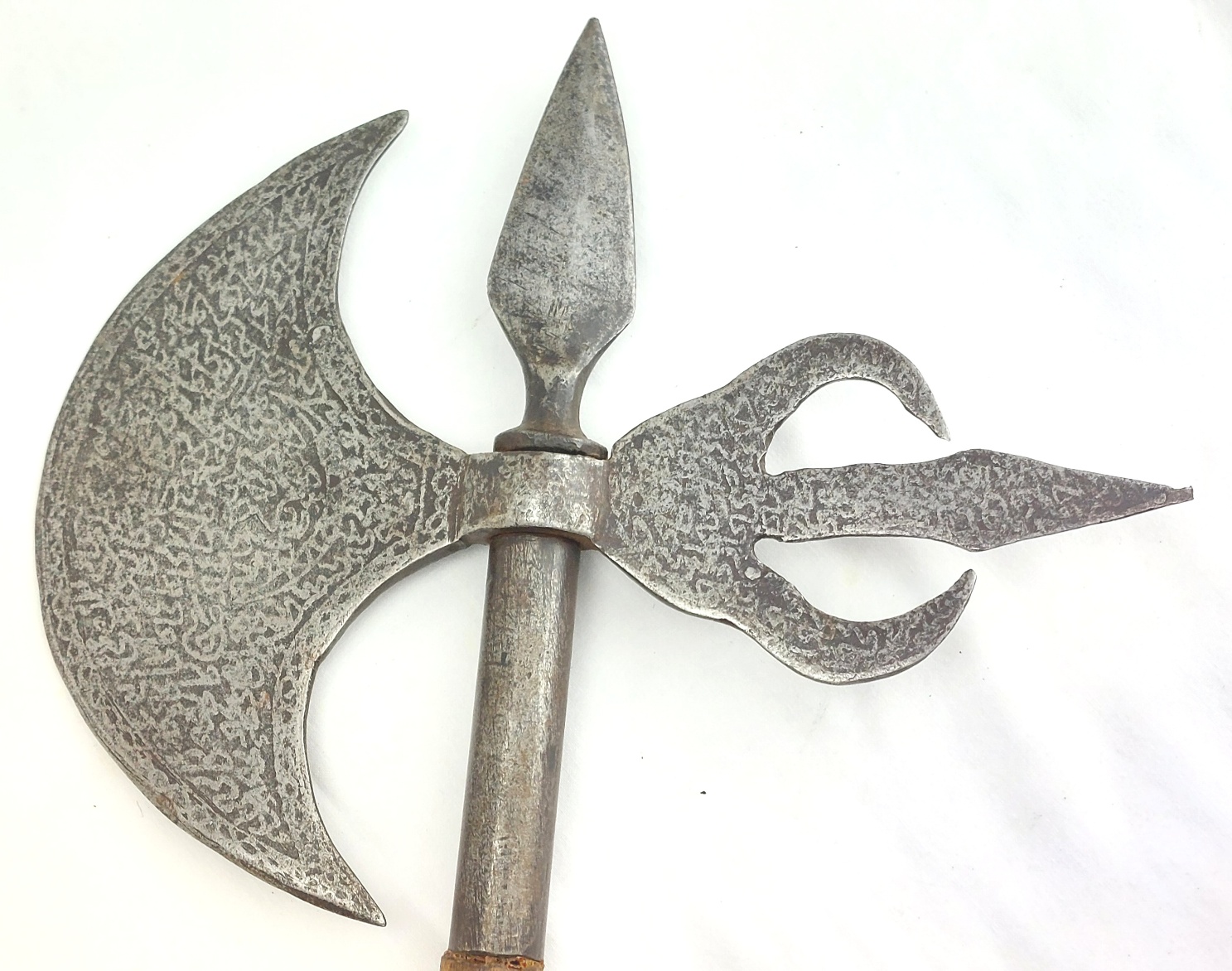
*Sudan (North Africa), c. 1881–1899, Mahdist Period Tabar-Type Axe*
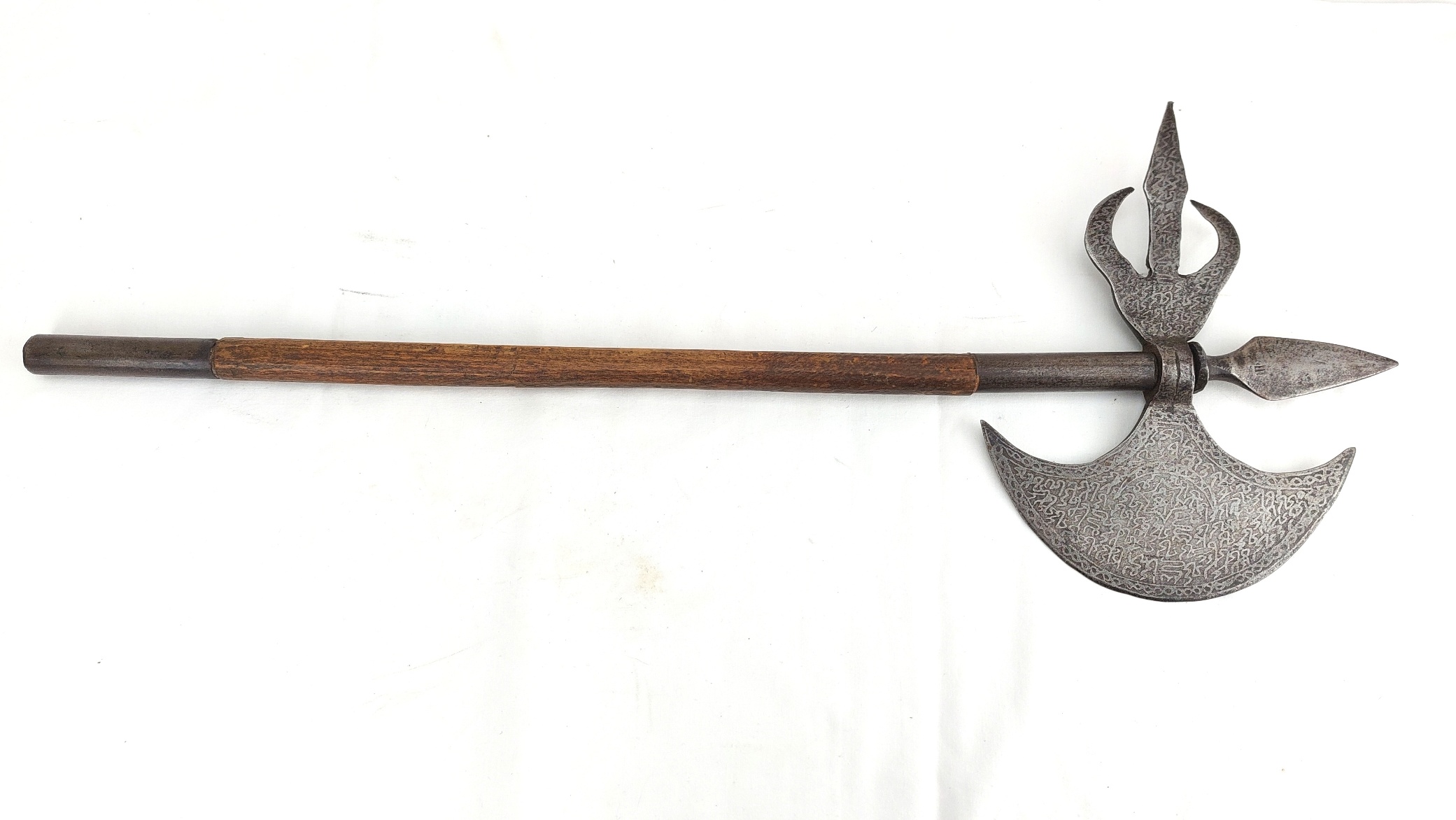
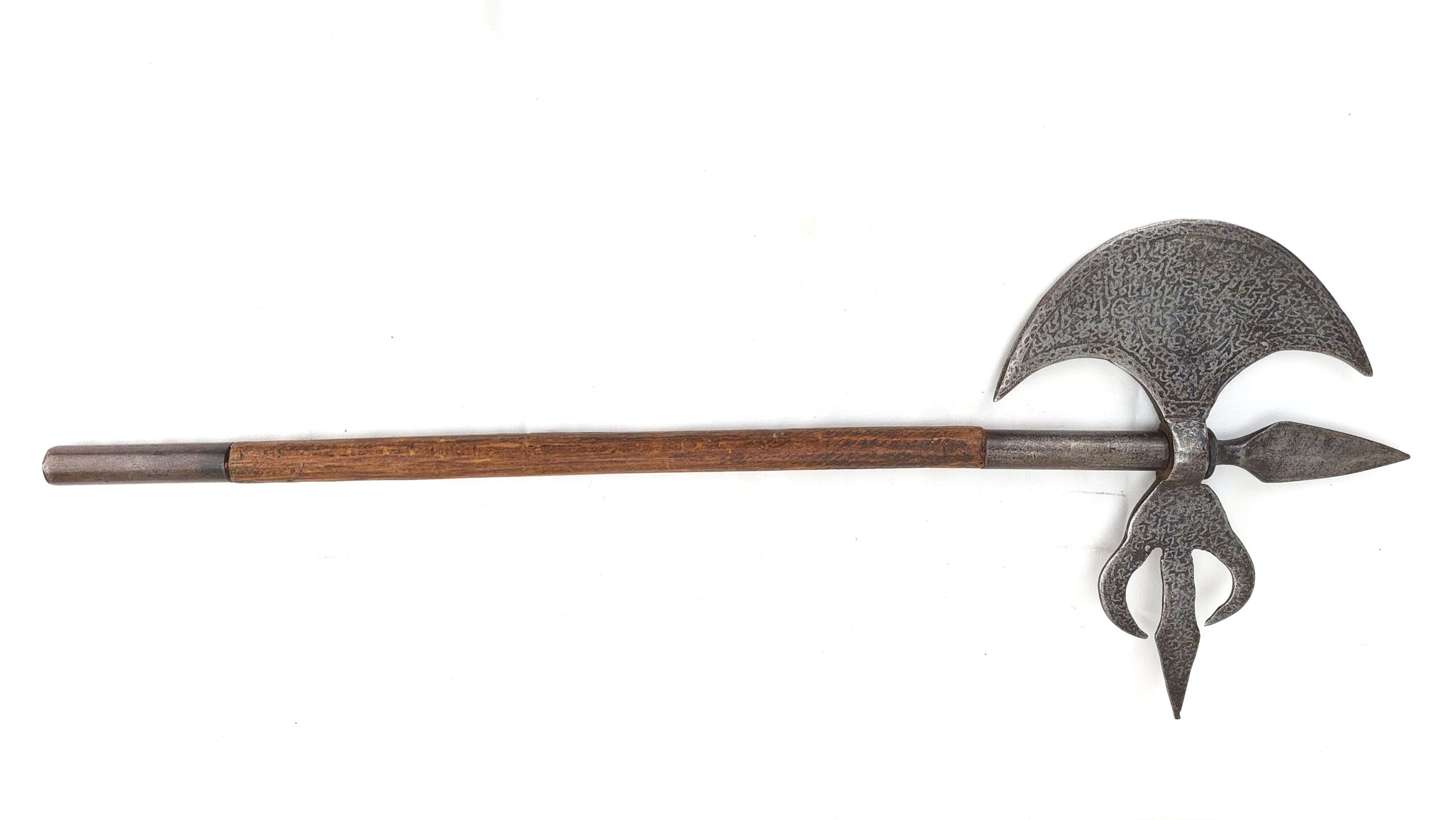
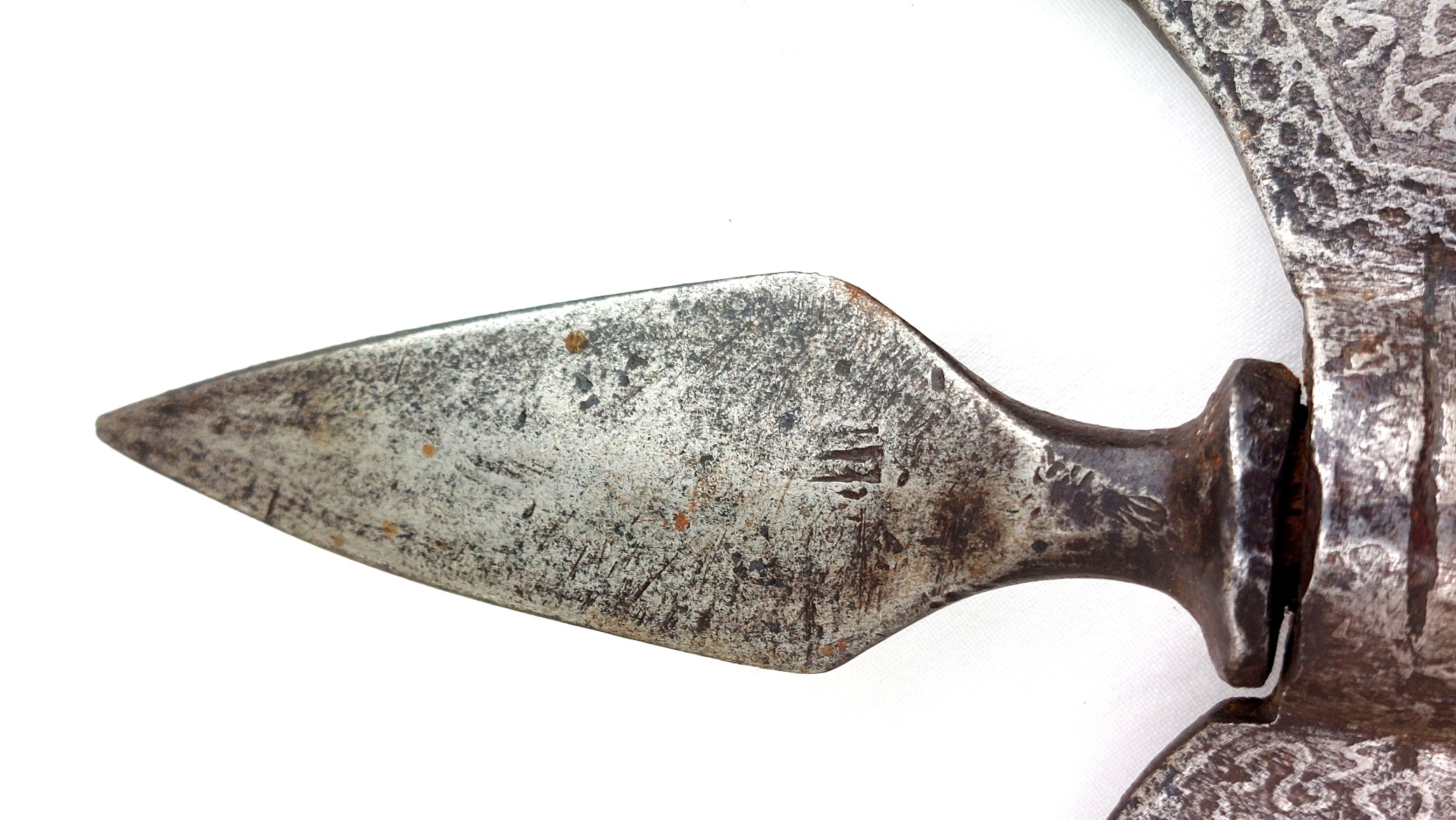
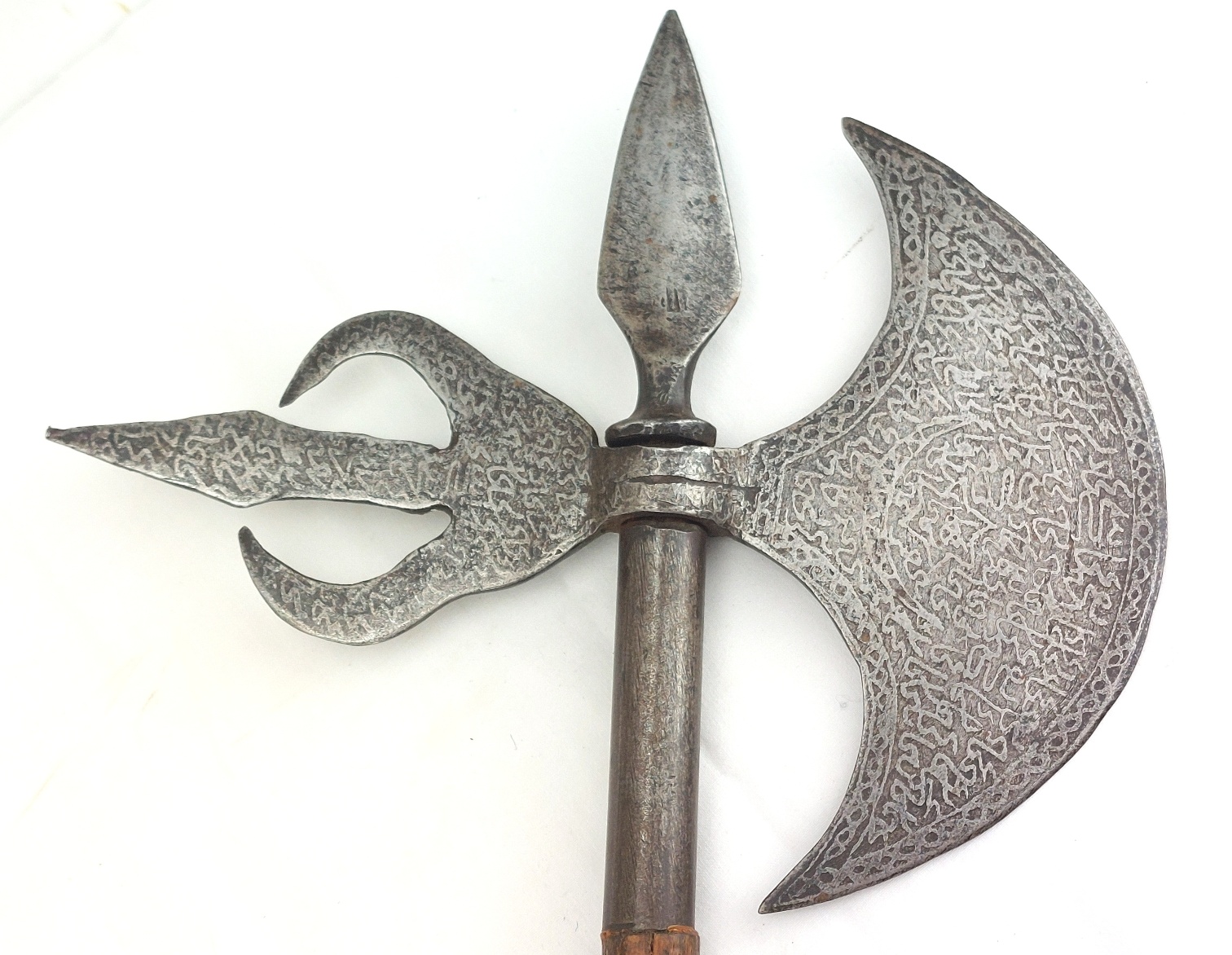
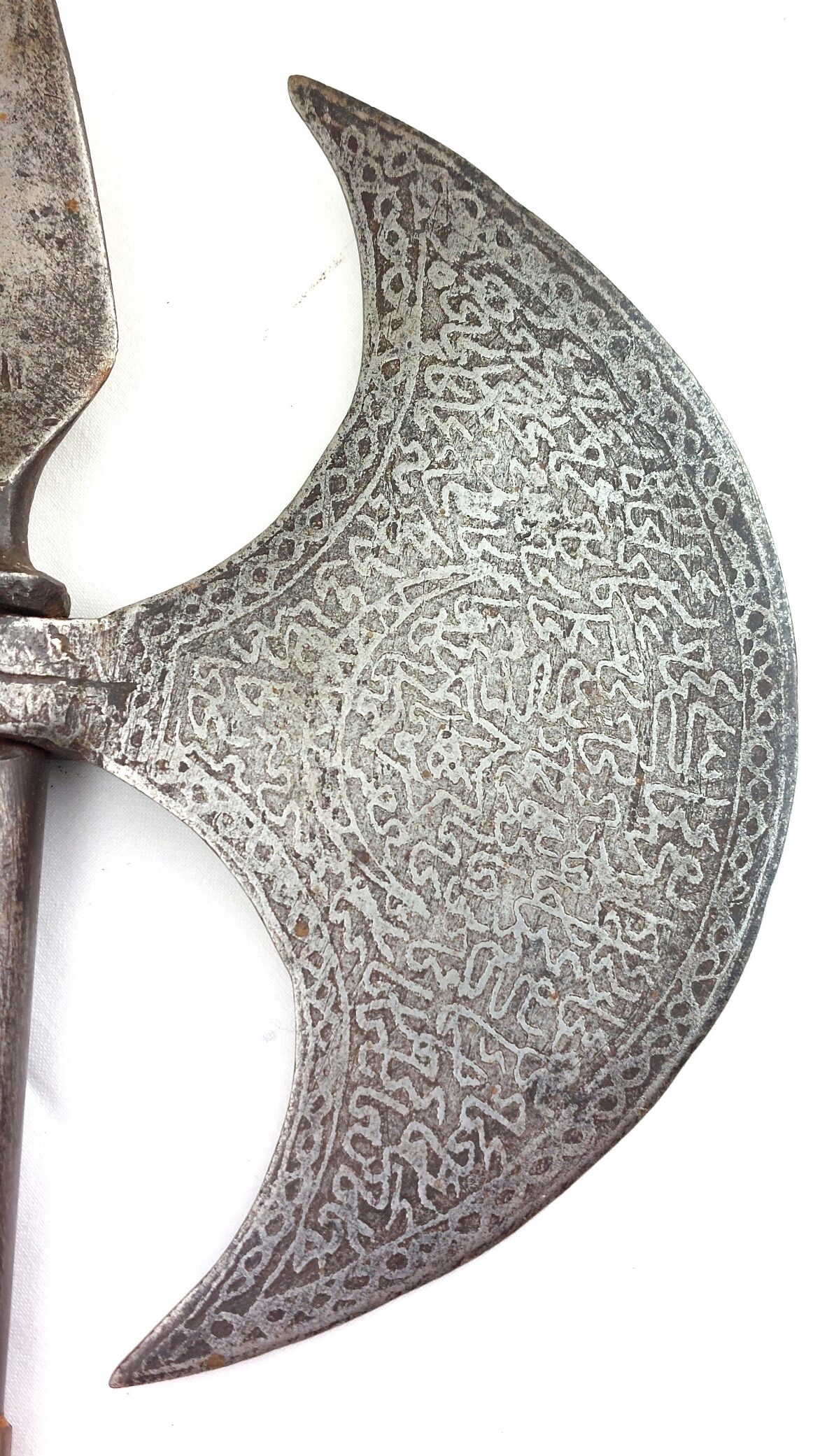
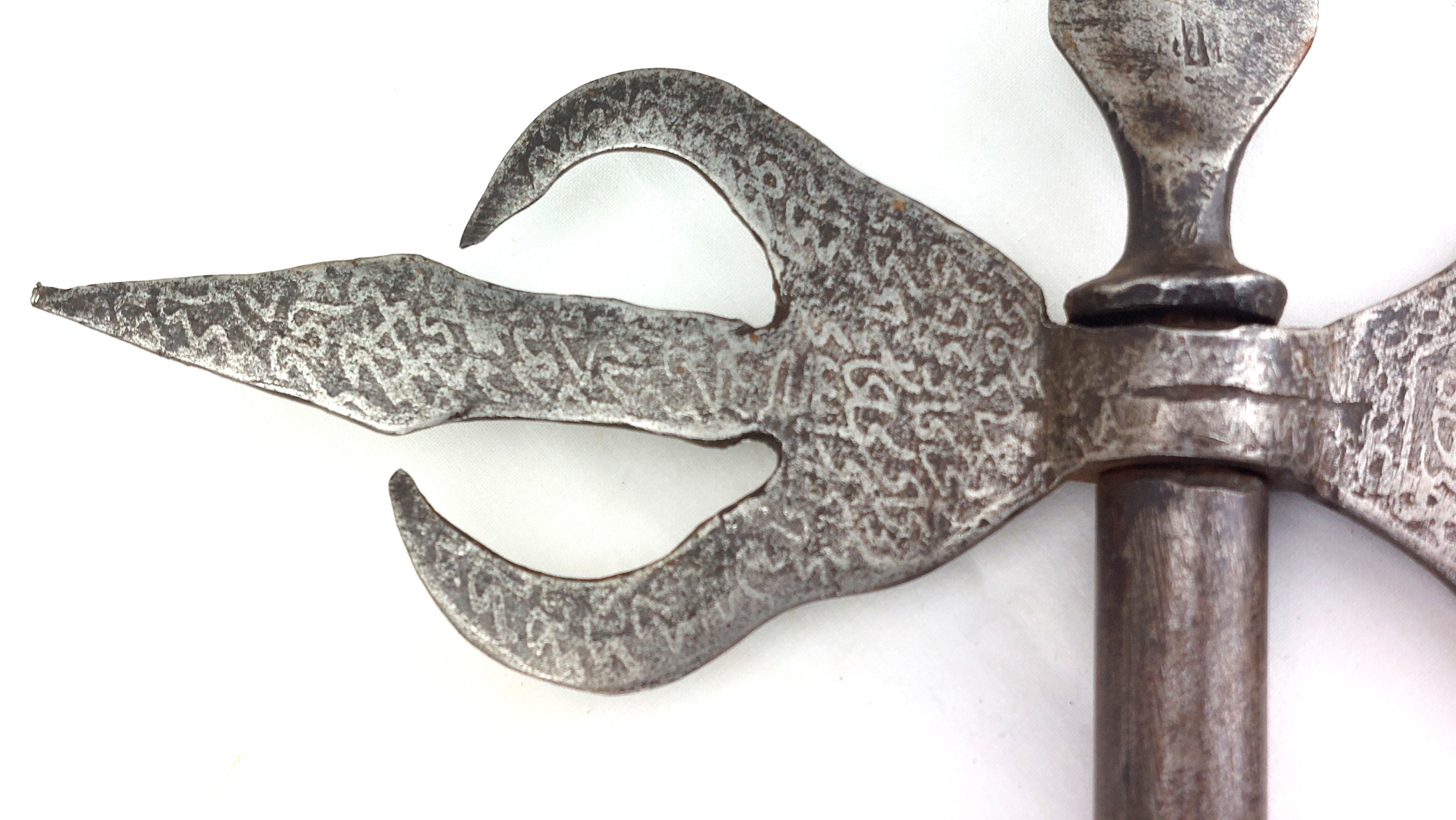
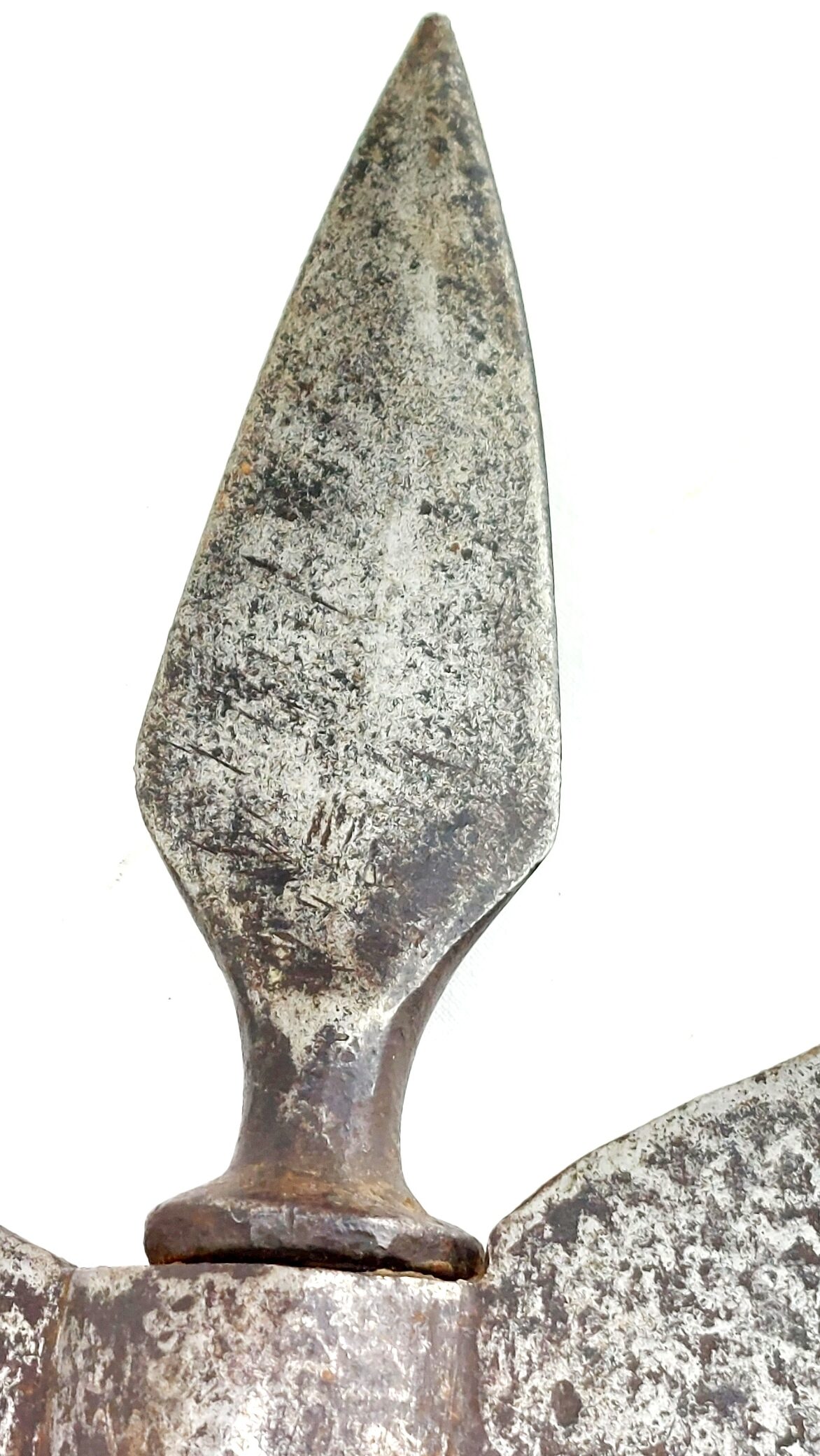
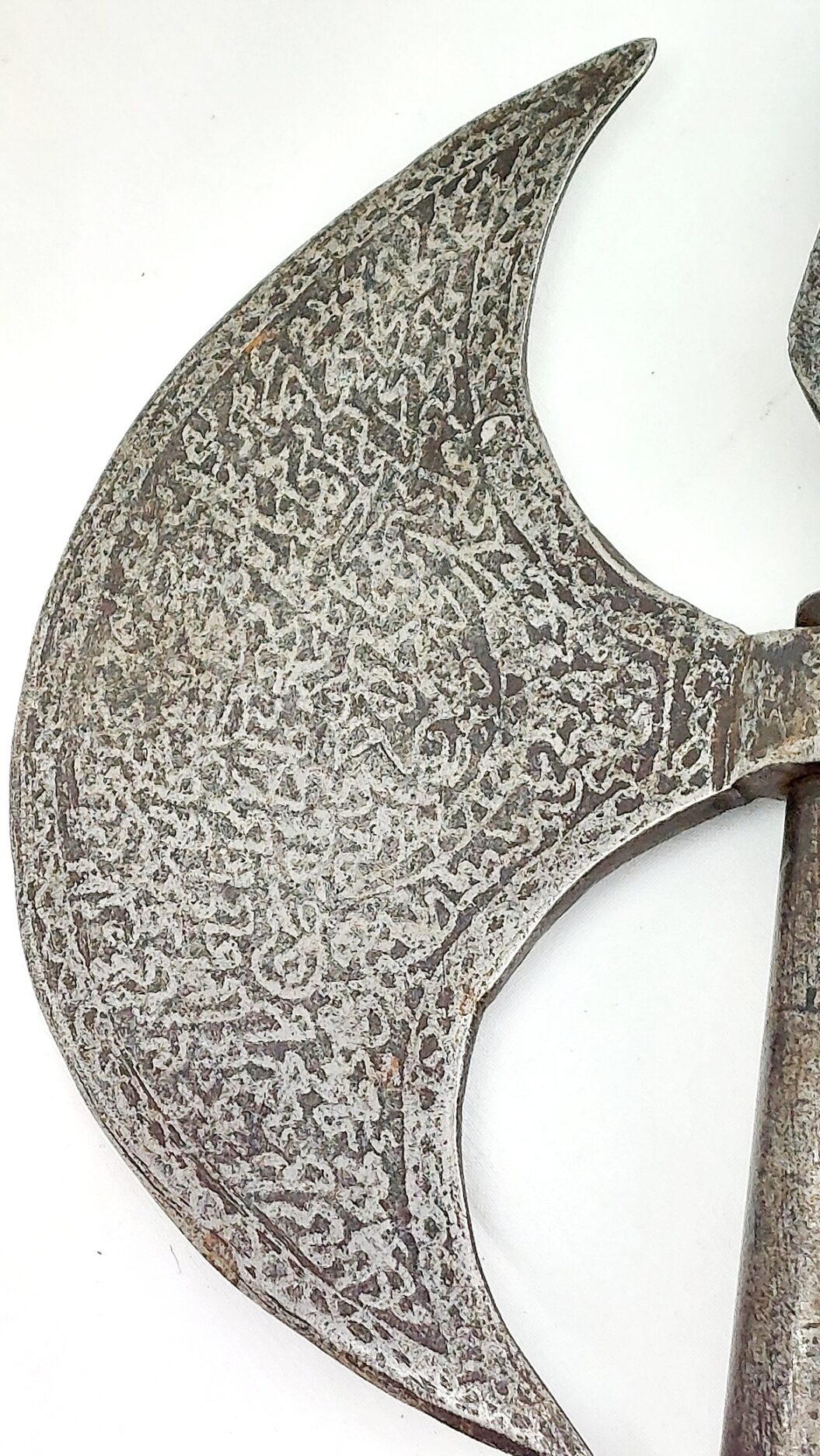
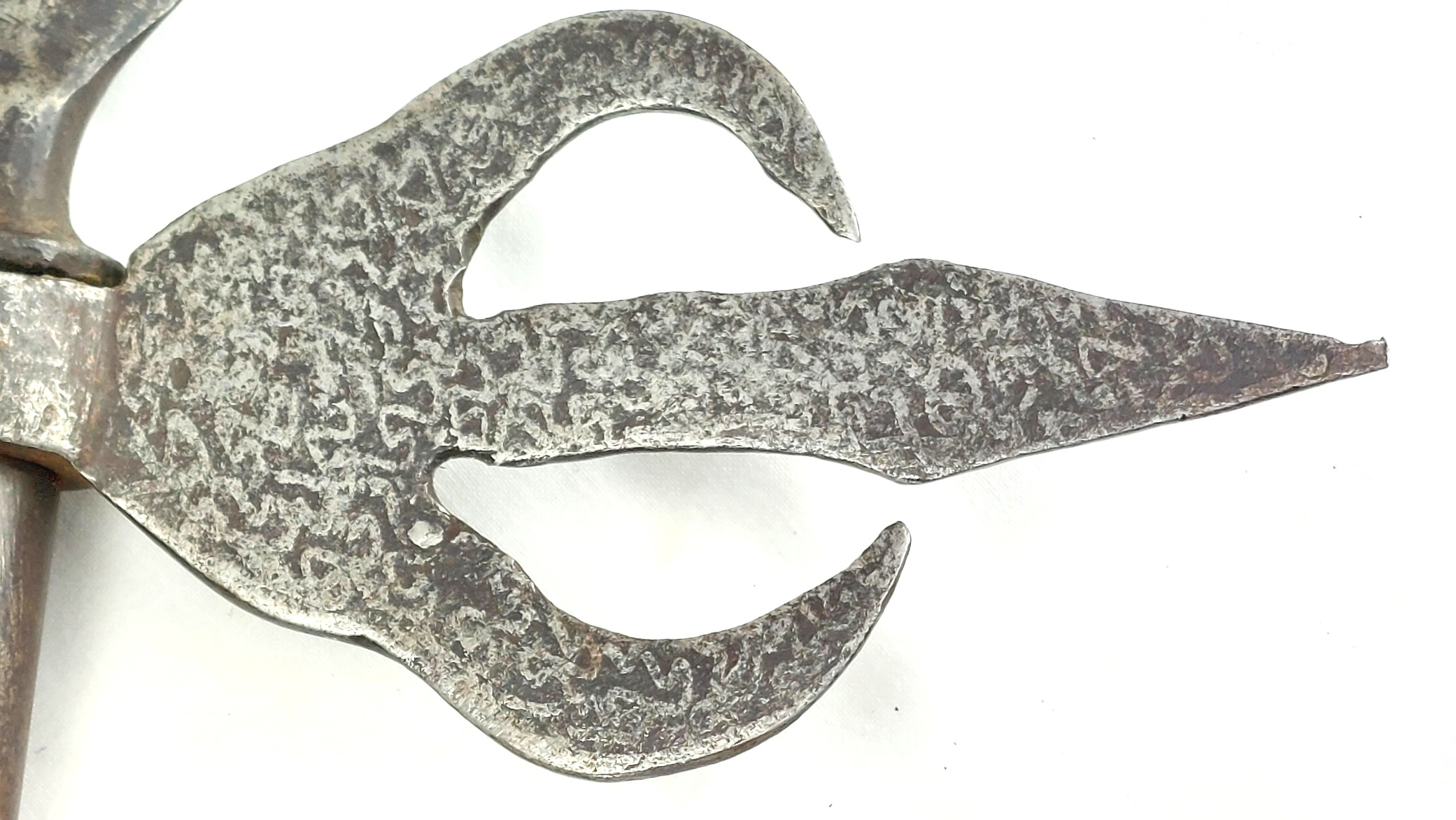
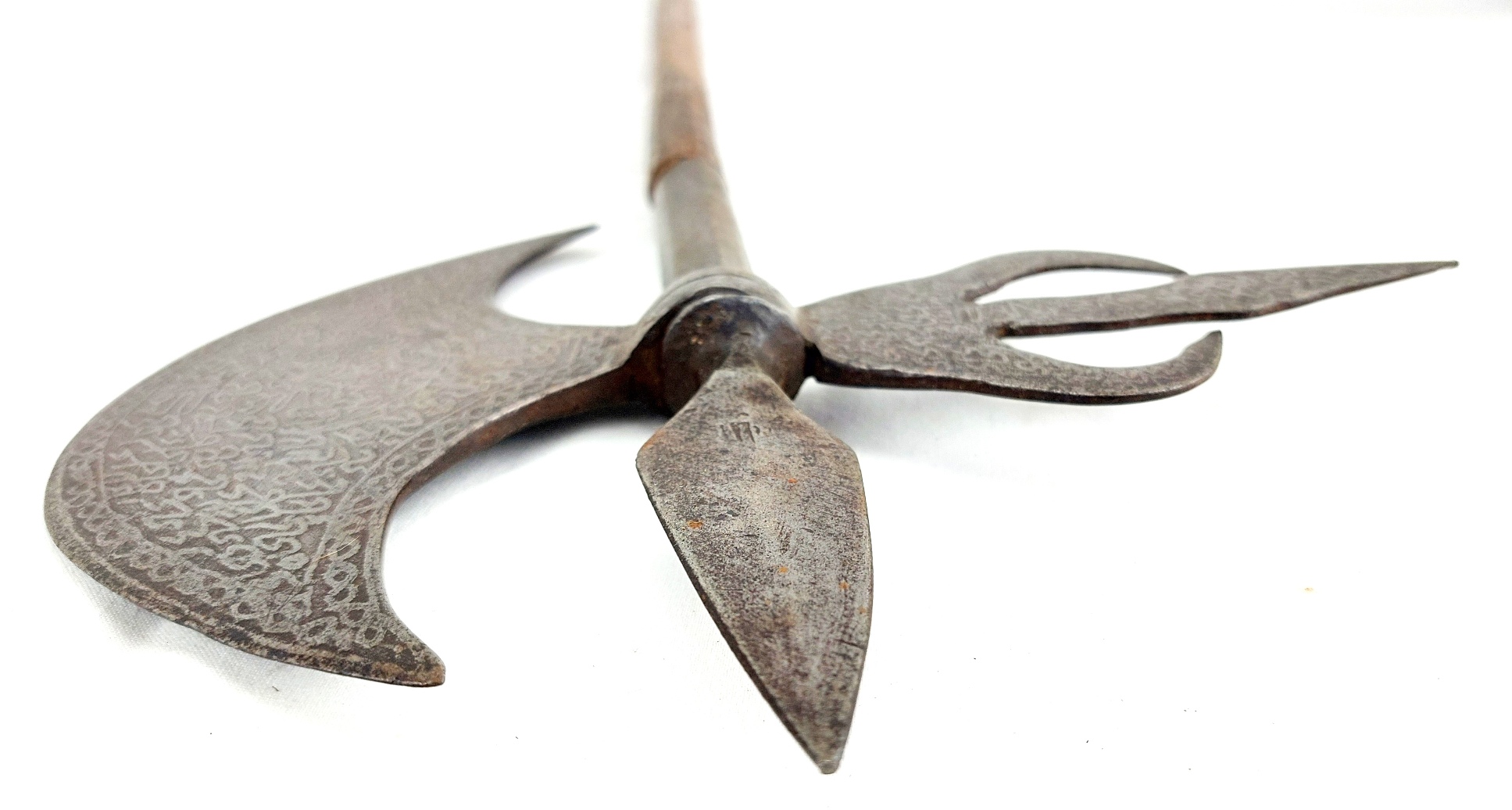
Iron axe of tabar / tabarzin form, featuring a broad crescent cutting blade opposed by a pronounced rear spike or pick, with an additional central thrusting spike rising from the head. The blade surfaces are decorated with dense, repeating engraved line work forming an abstract, calligraphic-style pattern, typical of Indo-Persian decorative traditions and their regional derivatives.
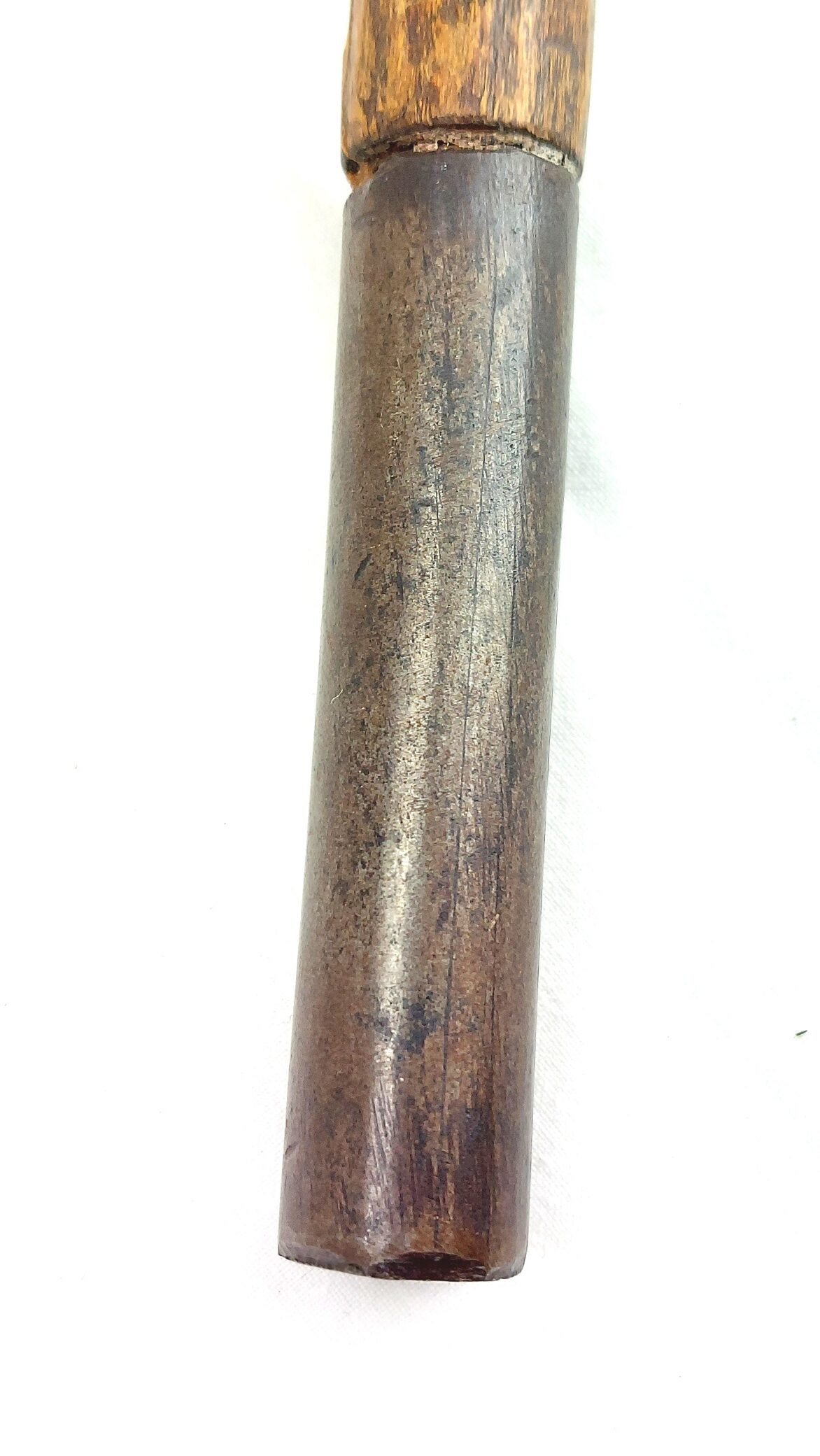
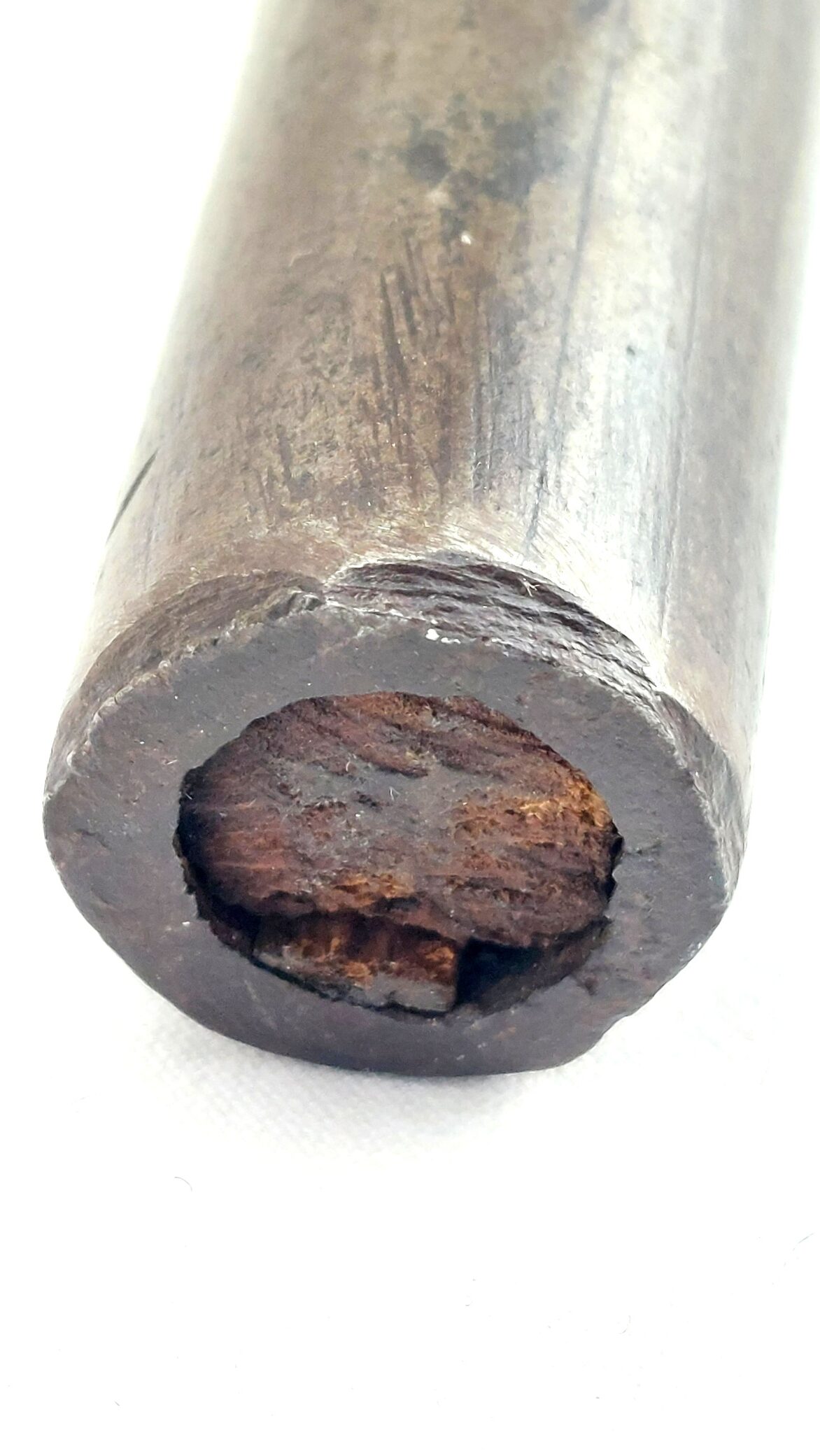
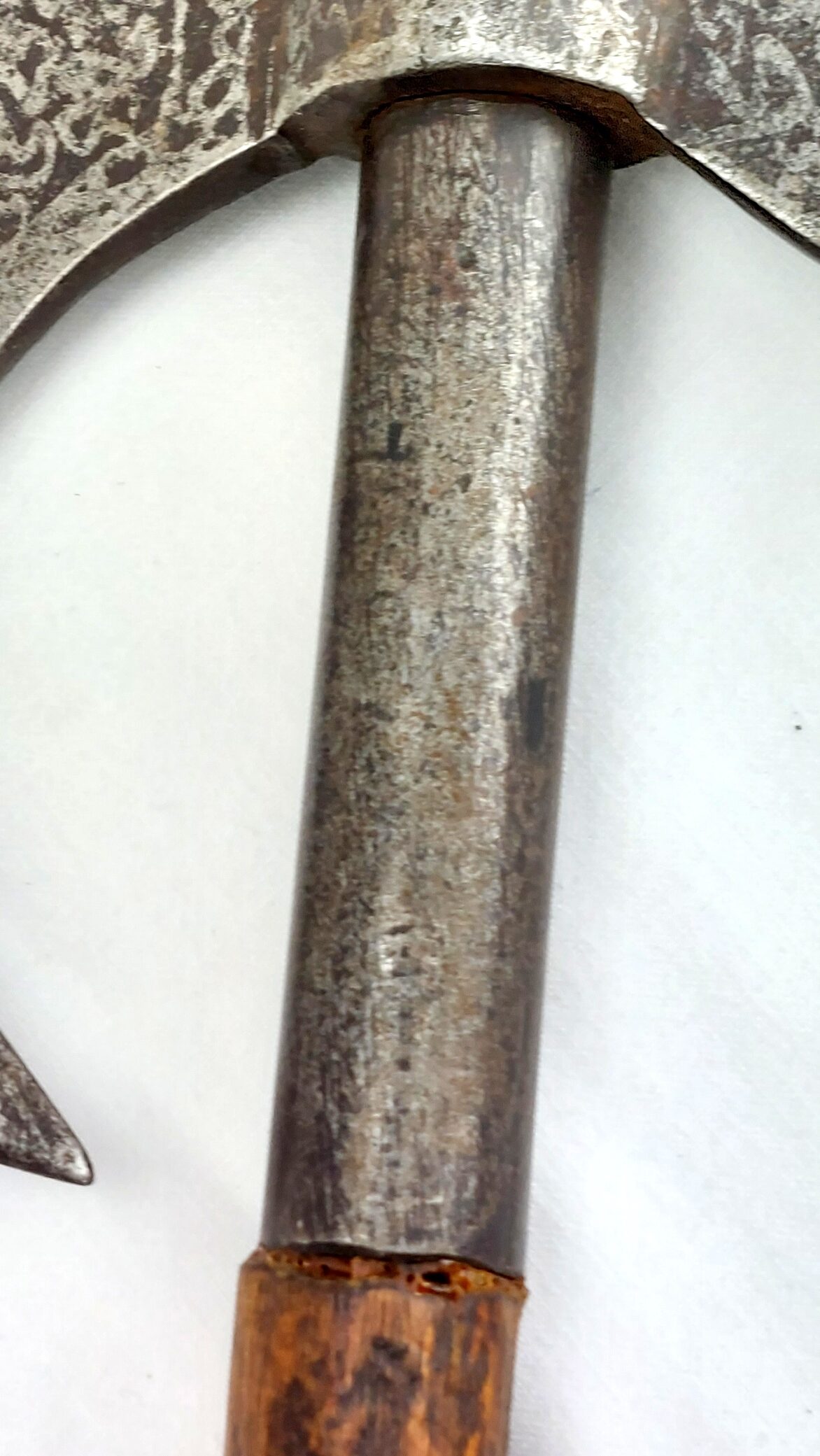
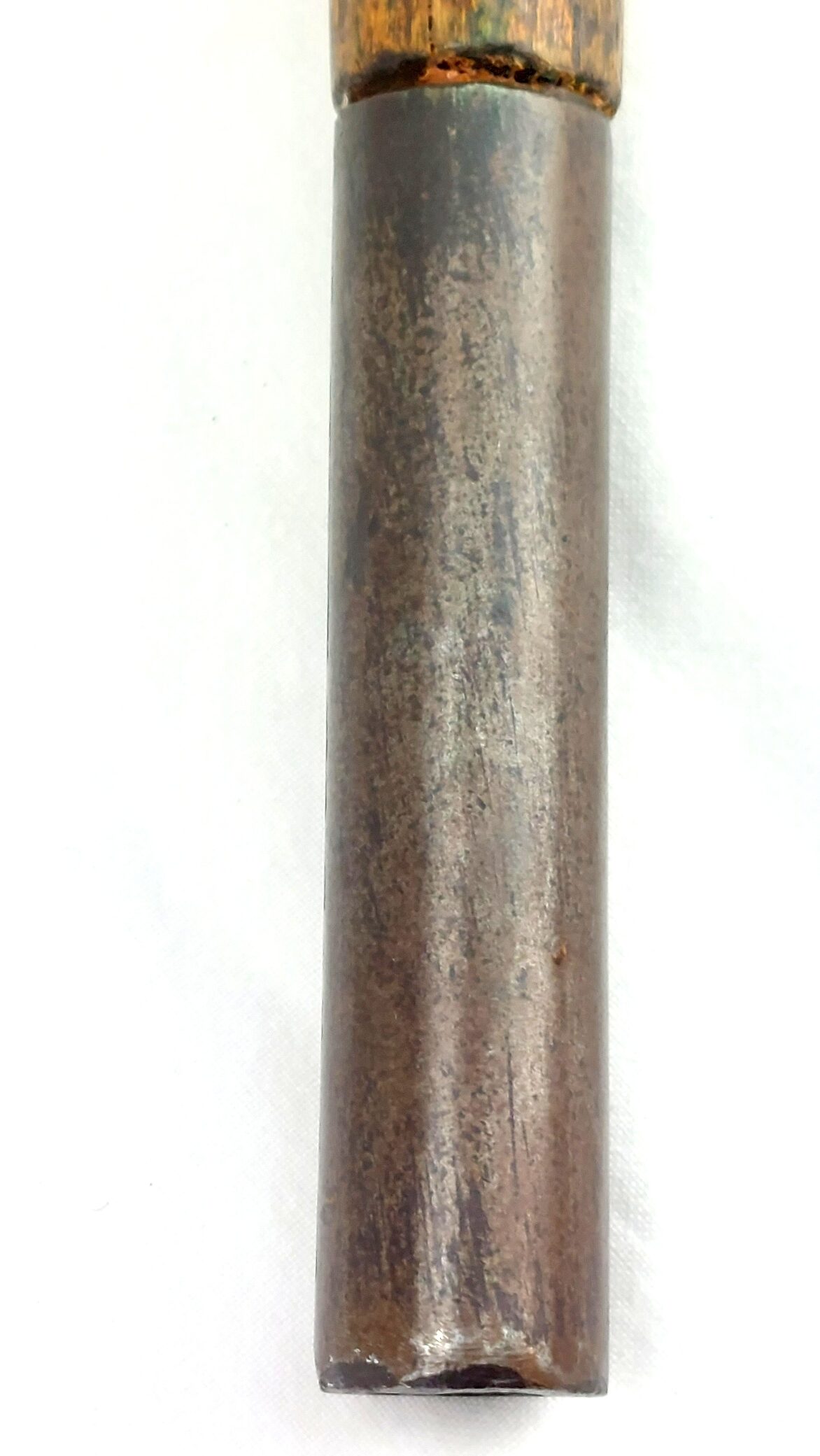
The head is mounted on a plain wooden haft with a cylindrical metal ferrule at the base, the handle being functional and utilitarian rather than ornamental. Construction and finish emphasise strength and practical use over refinement, with clear hand-forged characteristics throughout.
Approx. Measurements:
Overall length: 62.3 cm
Head length: 20 cm
Blade width: 23.5 cm
Metal ferrule: 8 cm
Wooden haft length: 34 cm
Historical Note:
The form of this axe derives from the Indo-Persian tabar (or tabarzin) tradition, a weapon type that originated in Persia and spread widely across the Islamic world, including the Ottoman Empire, India, Arabia, and North Africa. By the 18th and 19th centuries, tabar-type axes were both practical fighting weapons and symbolic objects, carried by soldiers, guards, dervishes, and religious figures.
In Sudan, particularly during the Mahdist period (c. 1881–1899), weapons of Persian and Ottoman inspiration were widely adopted, copied, and locally produced. The Mahdist forces, led by Muhammad Ahmad al-Mahdi, relied heavily on edged weapons during the early stages of the conflict, before capturing modern firearms from Egyptian and British forces. Axes, spears, swords, and knives remained important both militarily and symbolically.
While finely finished Persian examples—especially those of the Qajar period—often display gold or silver koftgari, figural scenes, and fully metal shafts, Sudanese Mahdist examples are typically plainer, with engraved or etched decoration rather than inlay, and wooden hafts intended for hard field use. The decoration on this axe, while extensive, is abstract and repetitive rather than figurative, aligning well with weapons produced or adapted for Sudanese use rather than elite Persian court manufacture.
Within Mahdist culture, the tabar carried strong symbolic meaning, representing resistance, religious authority, and freedom from Turco-Egyptian rule. It was both a weapon of war and a visual statement of defiance, particularly when carried alongside other symbolic items such as the begging bowl associated with dervish traditions.
Taken together—form, decoration, construction, and haft style—this axe is best understood as a 19th-century North African example, very plausibly associated with Sudan and the Mahdist era, rather than a high-status Persian ceremonial piece.
*Condition*
In good, honest, untouched condition. The iron head shows consistent age-related wear, oxidation, and surface pitting, with engraved decoration remaining clearly visible across all blade elements. Edges show expected softening from age and use, with no evidence of modern sharpening or restoration. The wooden haft displaysminor age cracks, surface wear, and darkened patina consistent with long-term handling and storage. The metal ferrule remains secure. Overall structurally sound, with no active movement between head and haft. Please see photographs as part of the condition report.
JAQEEXBBE_290602022026