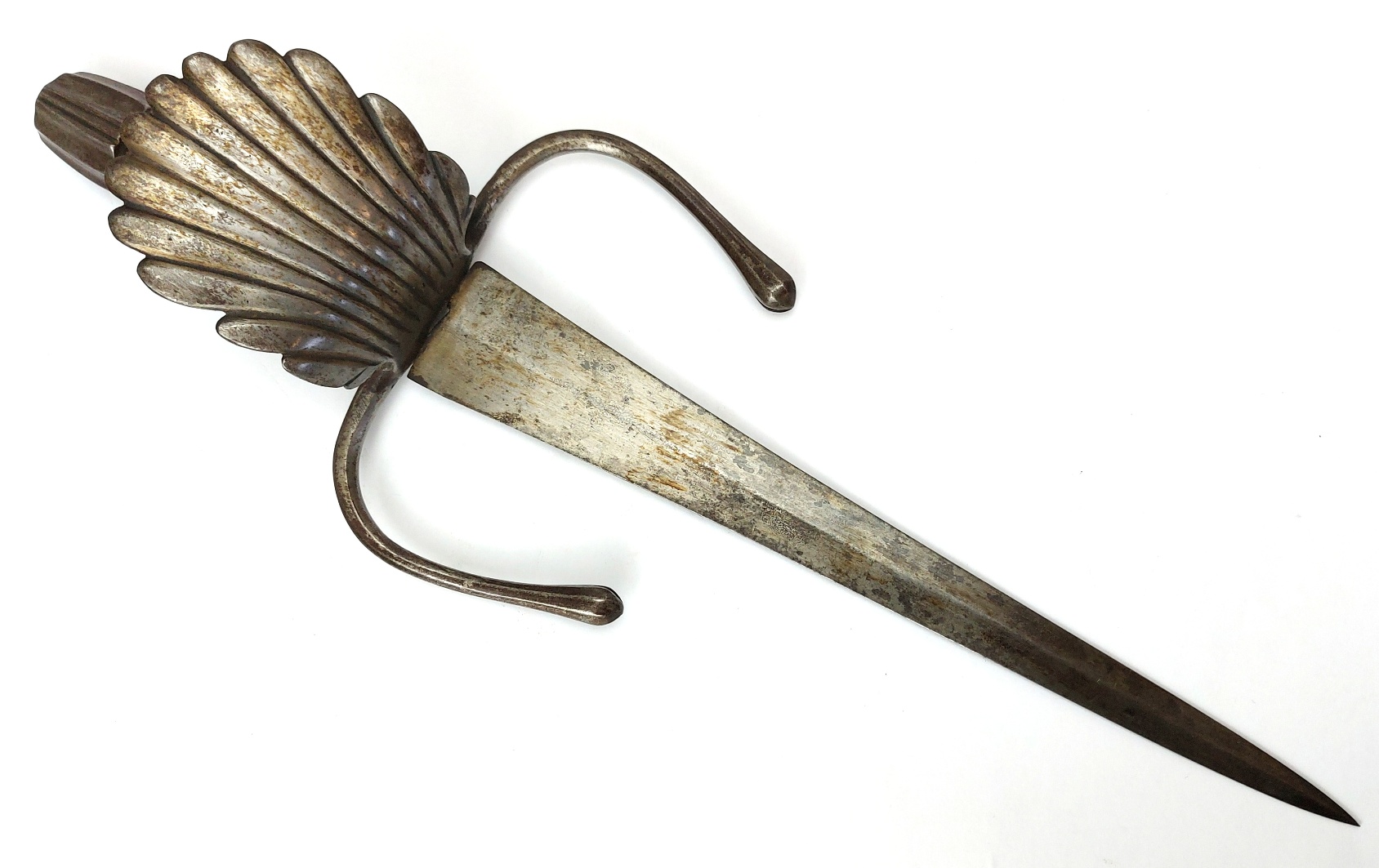
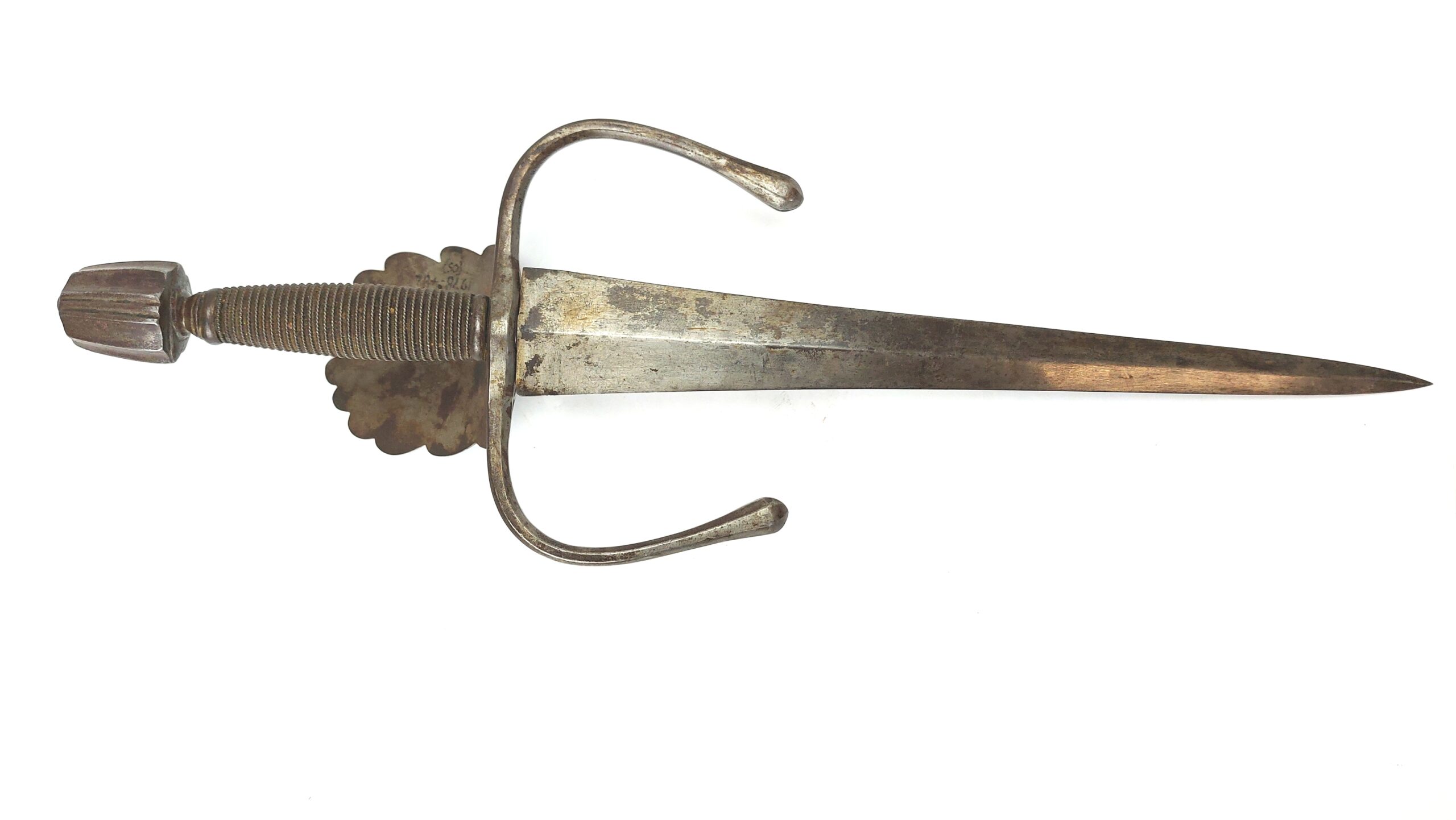
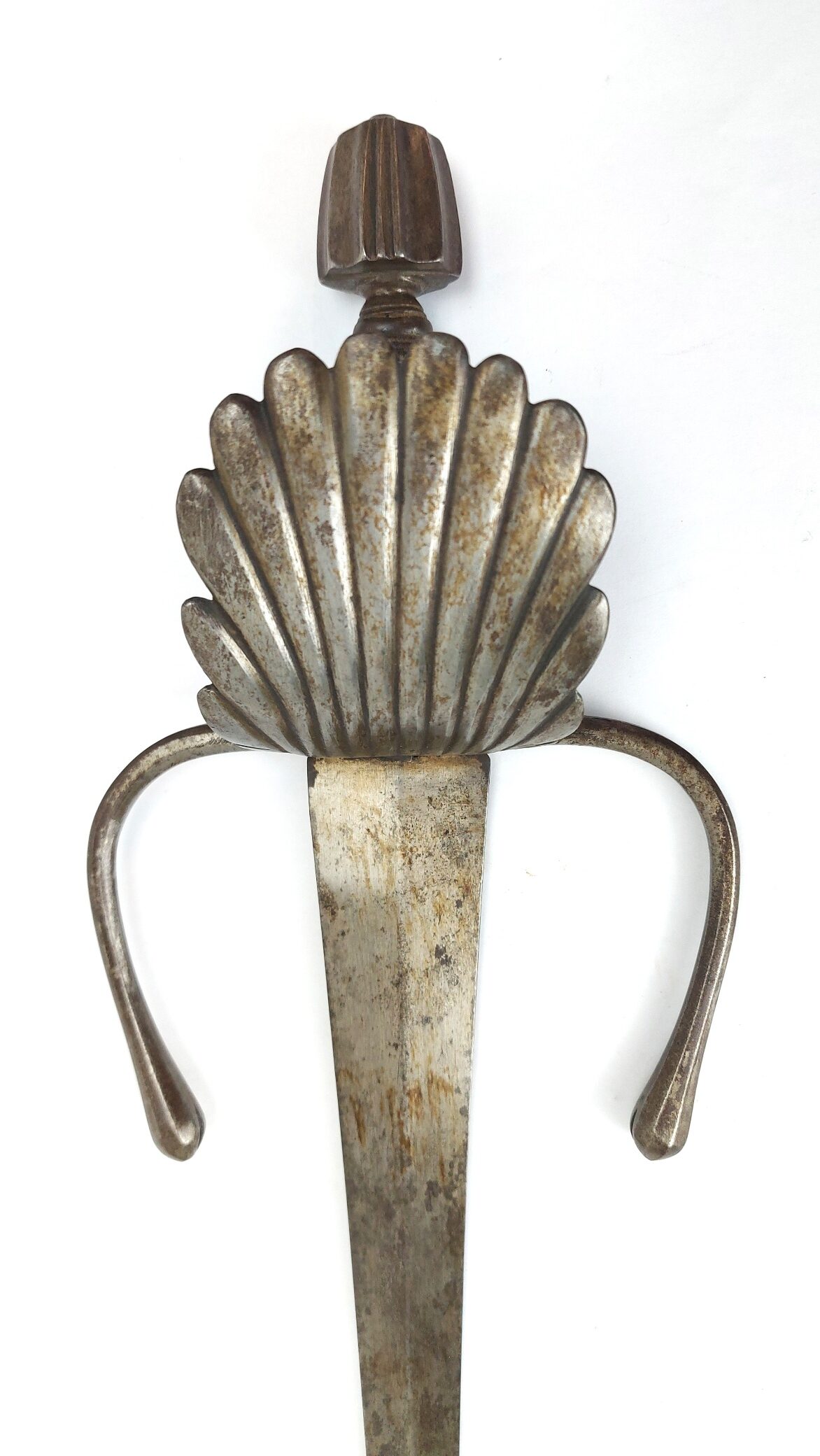
*Spanish / Italian, c.1720–1760, Shell-Guard Main-Gauche Left Hand Parrying Dagger, Pecten Guard, S-Shaped Quillons, 18th Century*
A robust 18th century left-hand dagger (main-gauche) of classic southern European form, probably Spanish or Italian, dating to approximately 1720–1760.
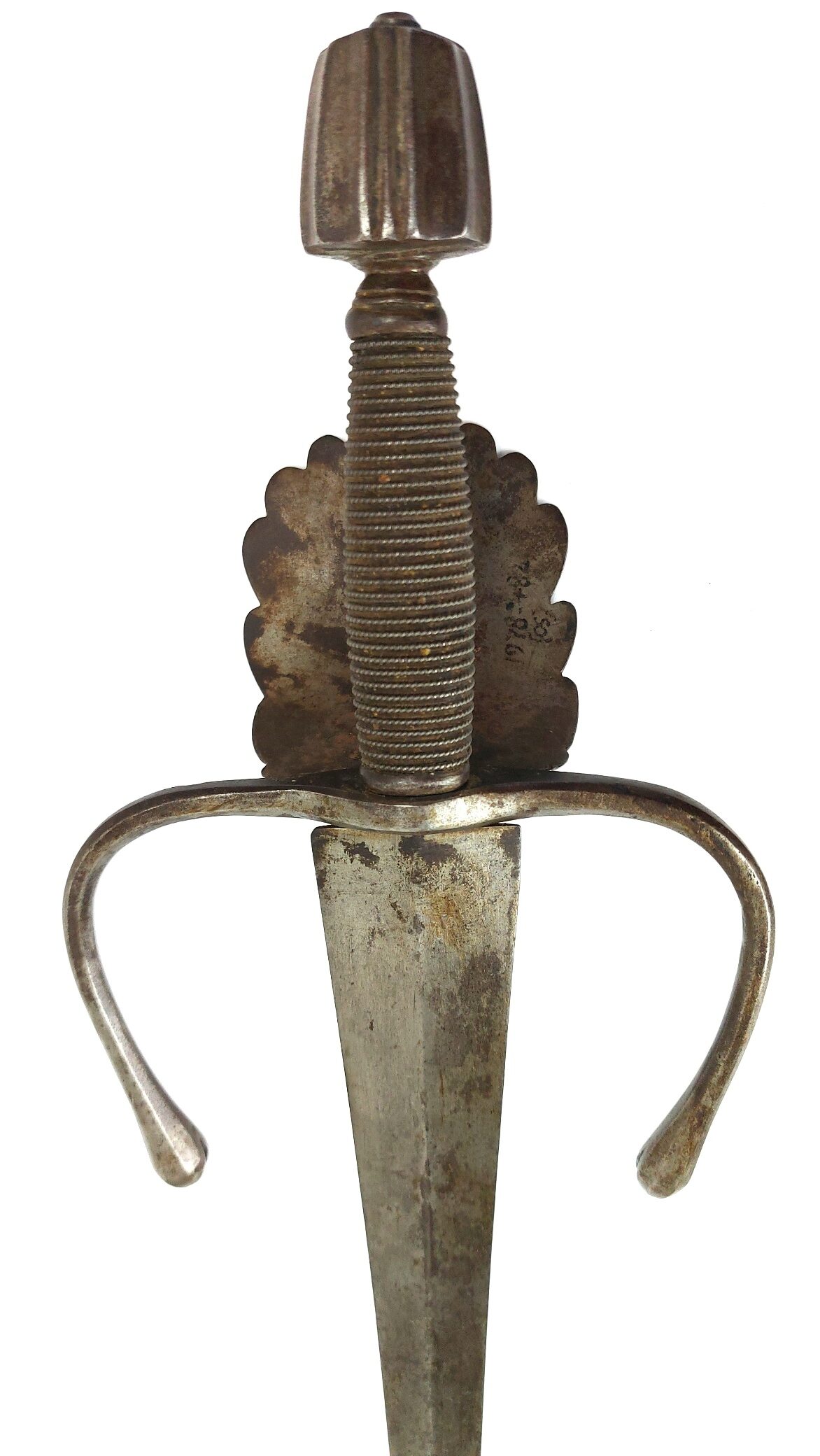
The dagger has a straight double-edged blade of stiff diamond section with a pronounced central ridge, intended for thrusting and for parrying an opponent’s blade when used together with a rapier or smallsword. The blade measures 29.5 cm and retains good thickness and rigidity, typical of defensive daggers of this type.
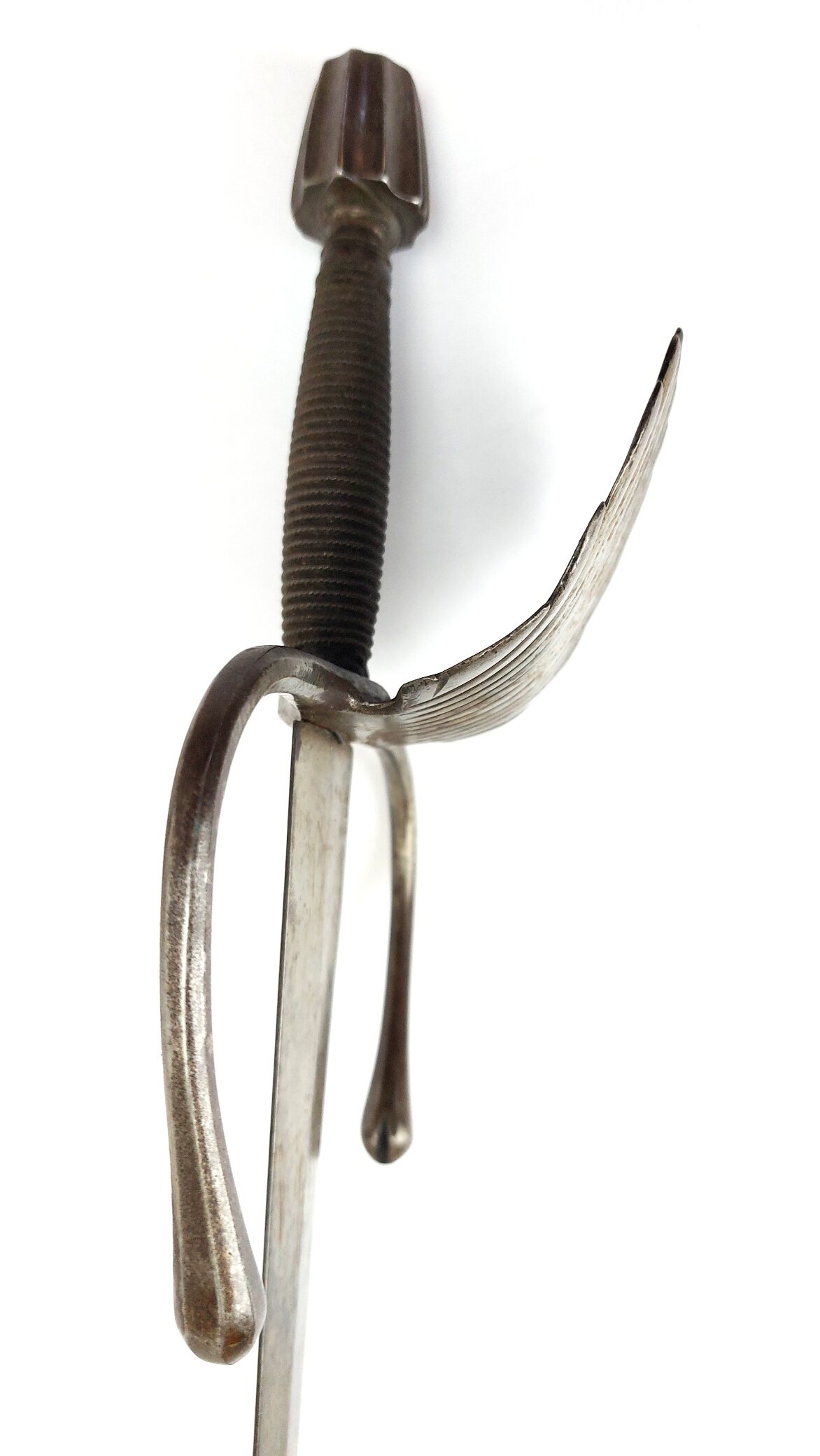
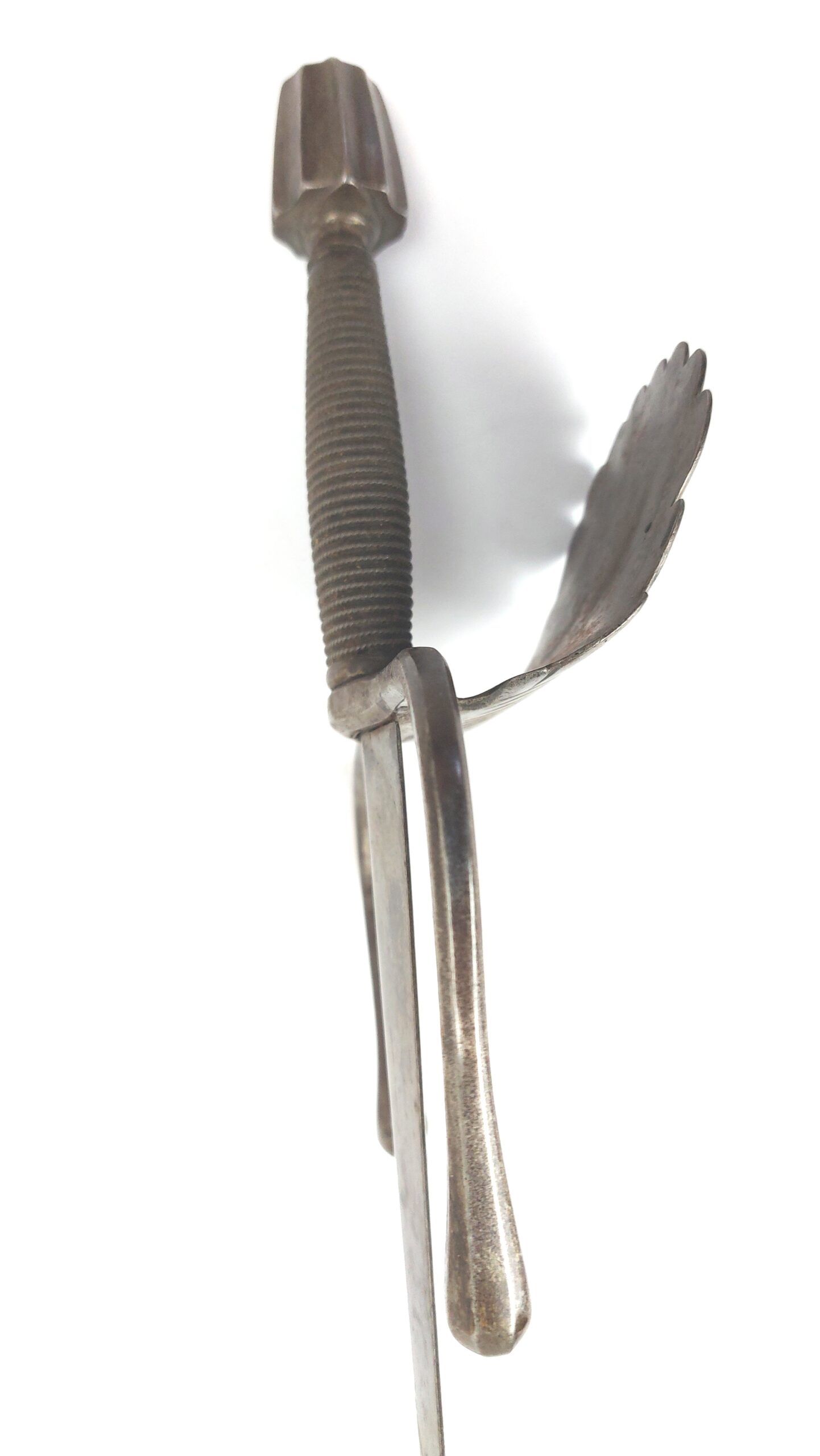
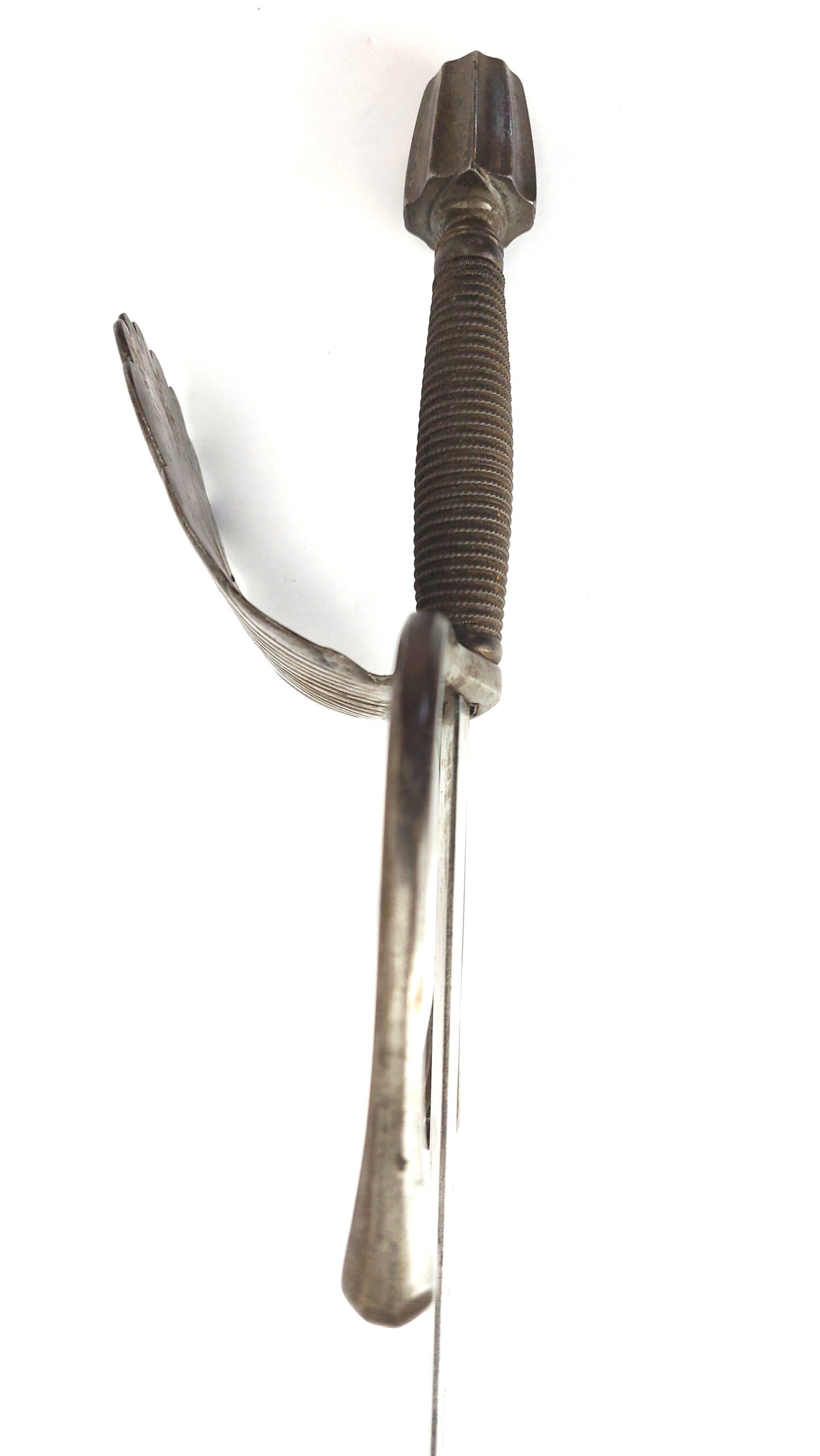
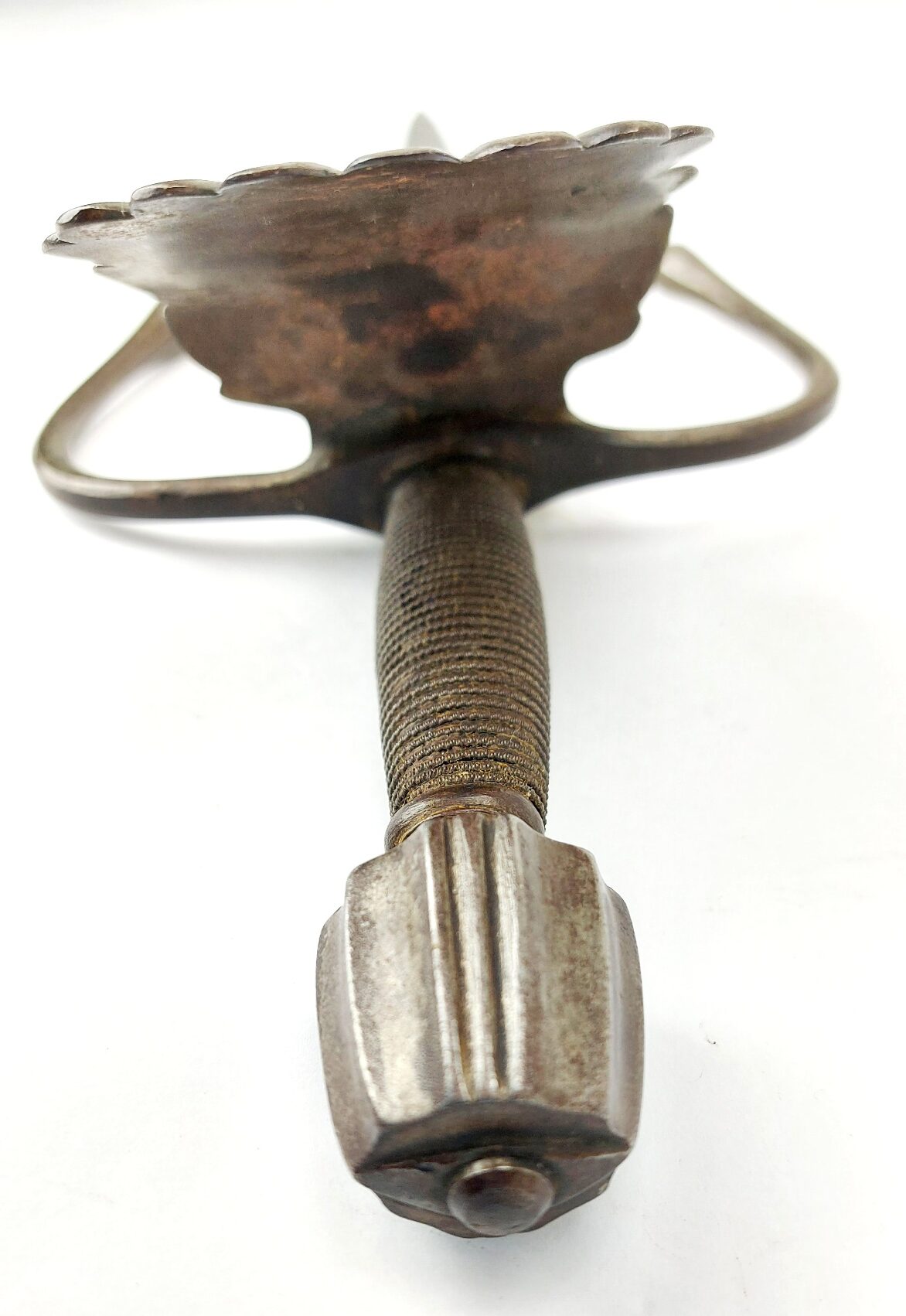
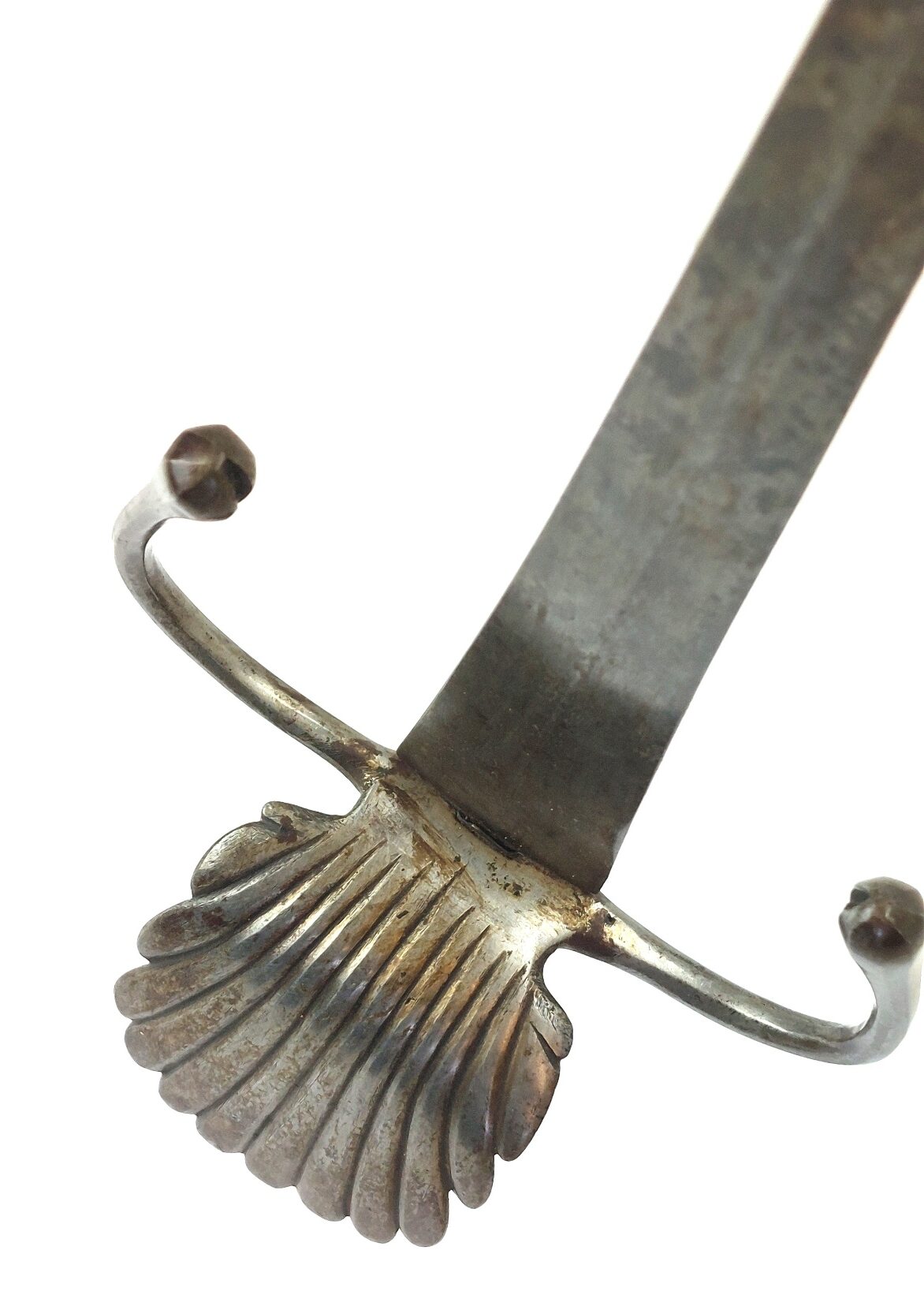
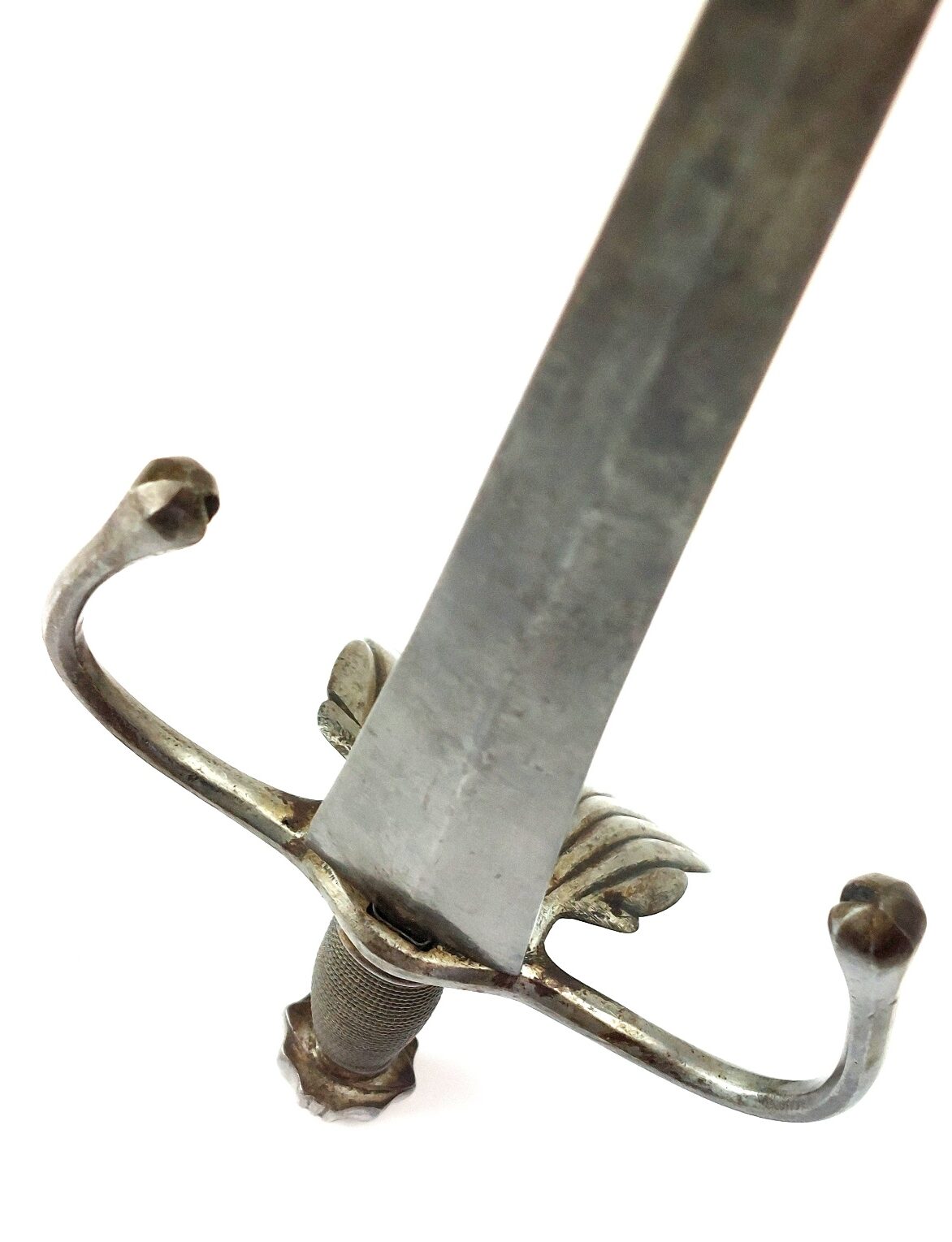
The hilt is fitted with a large fluted scalloped shell guard of pecten form, designed to protect the hand while fencing at close quarters. A pair of opposing S-shaped quillons curve forward and rearward from the guard, terminating in rounded button finials. This configuration was intended to help catch or control an opponent’s blade during circular parries.
The grip is of solid metal construction with a spirally fluted finish, secured by a threaded tang and faceted pommel, a traditional method of assembly seen on 18th century Spanish and Italian daggers. The form is strong and utilitarian, typical of working fighting weapons rather than later decorative reproductions.
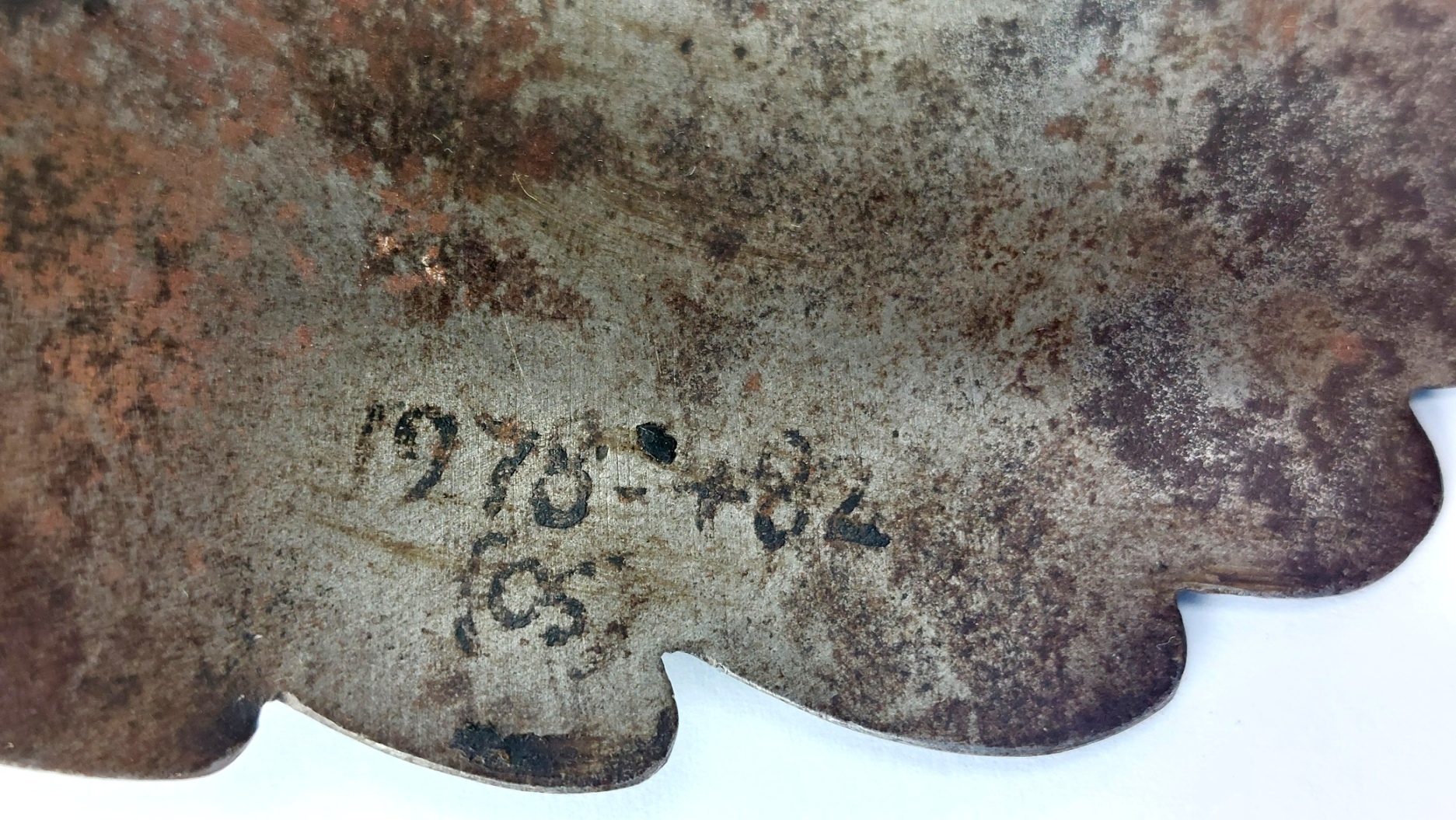
The inked number to the reverse of the guard - 1978 - 482 (05) - appears to be an old collection or inventory marking and suggests the dagger was formerly part of a studied or catalogued collection.
Approx. Measurements – Blade length: 29.5 cm. Overall length: 42.5 cm. Width across guard: 16.6 cm.
History Note:
The main-gauche (French for “left hand”) was carried in the off-hand together with a rapier or smallsword and used defensively to parry, deflect, or trap an opponent’s blade while delivering a counter-thrust with the sword.
Shell-guard daggers of this type were widely produced in Spain and Italy during the late 17th and 18th centuries. Earlier pierced guards gradually gave way to solid fluted shells, which offered greater strength and hand protection while remaining suitable for fencing use. The deeply curved opposing quillons seen on this example are characteristic of southern European fighting daggers intended for practical use rather than ceremonial display.
*Condition*
Good overall condition for age. Blade with wear, staining and areas of light pitting consistent with period use. Hilt solid with no looseness. Shell guard slightly uneven with minor bends consistent with age and use. Good dark patina throughout. Old ink collection number to reverse of guard. Please see photographs as part of the condition report.
RQMCEOXGOO_2298232233