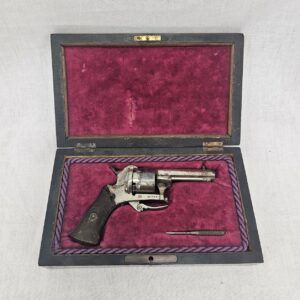
“British, c.1860, Cased 6-Shot Tranter Revolver, by Thomas W. Watson, Pall Mall, with Accessories, in Brass-Bound Burr Walnut Case, Obsolete Calibre” has been added to your cart. View cart
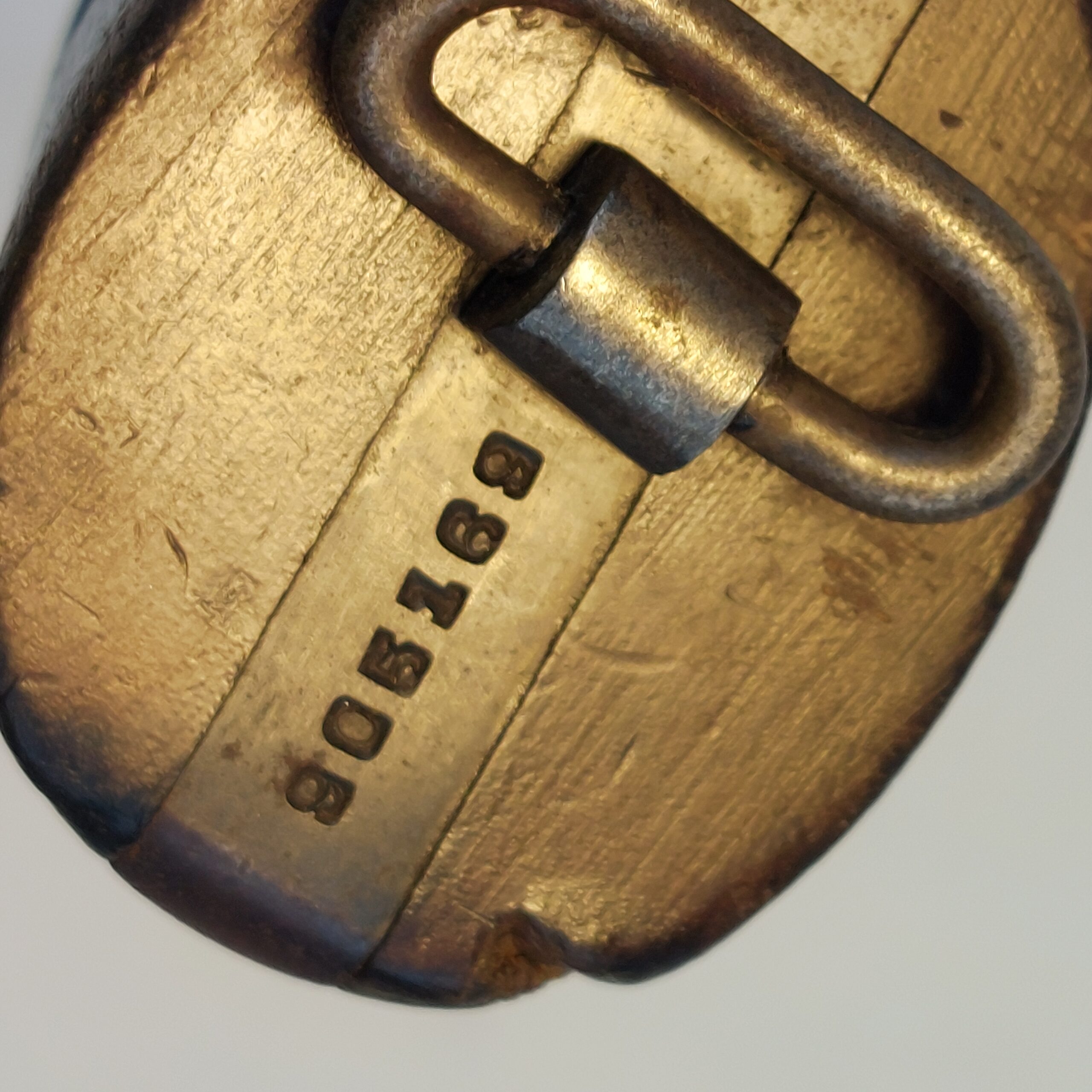
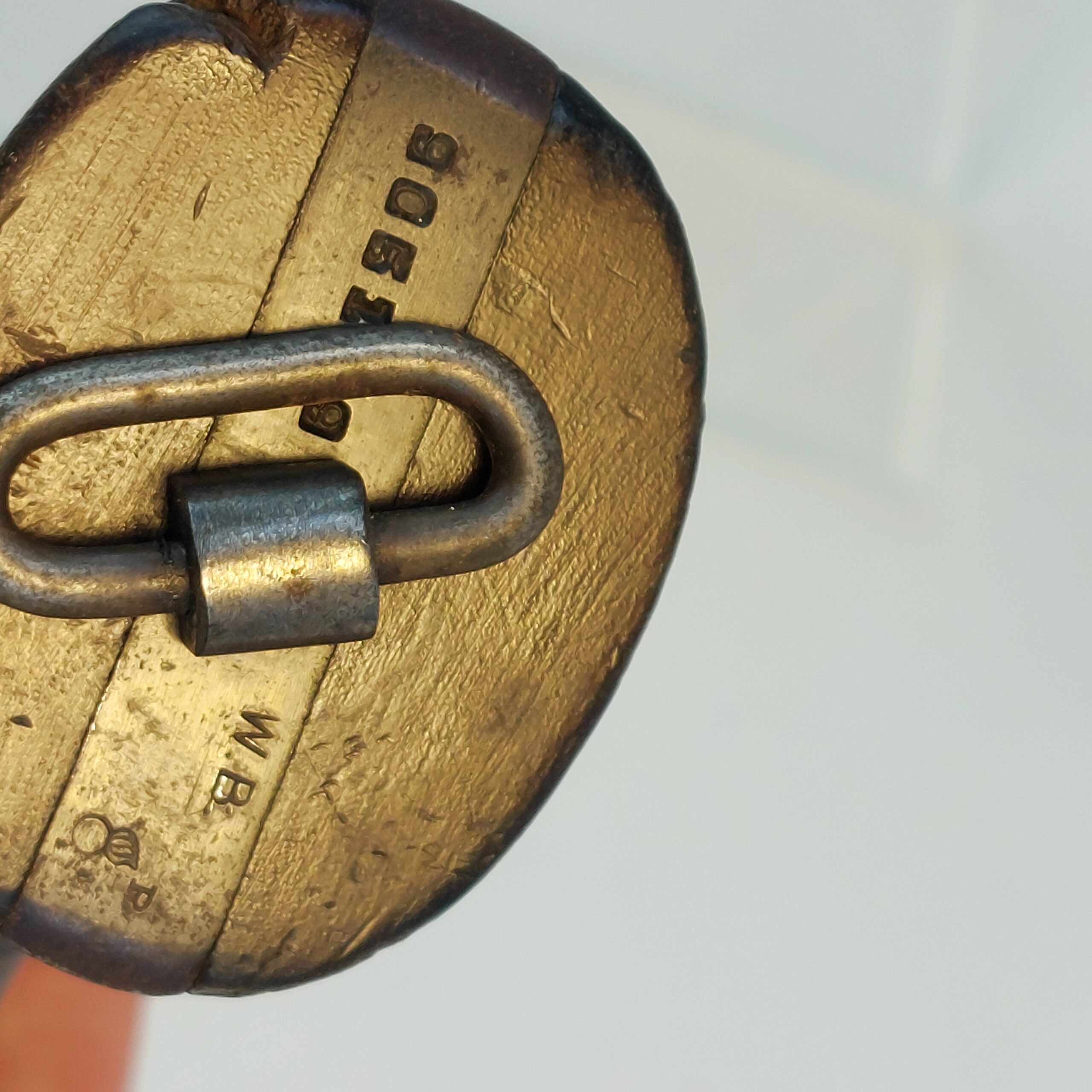
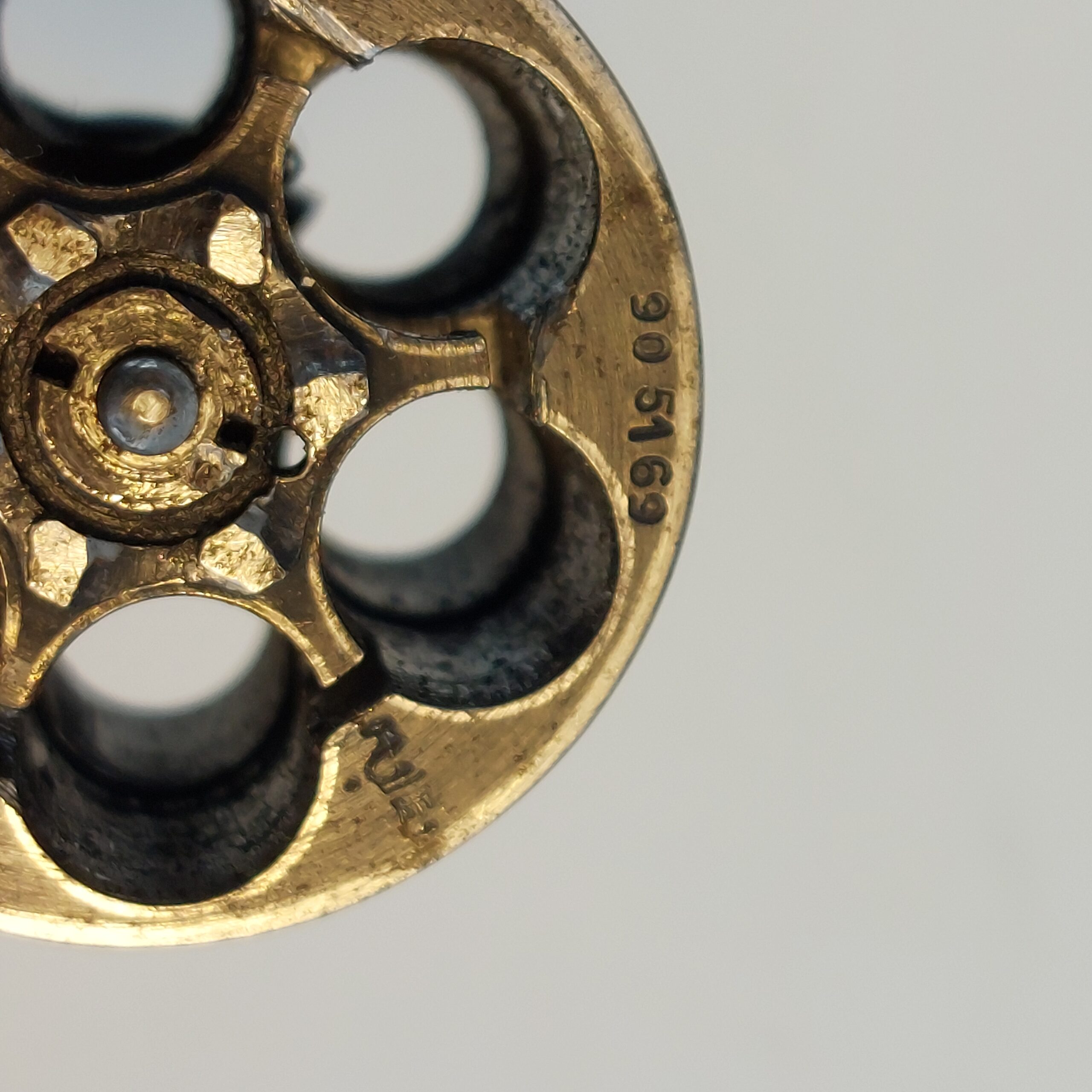
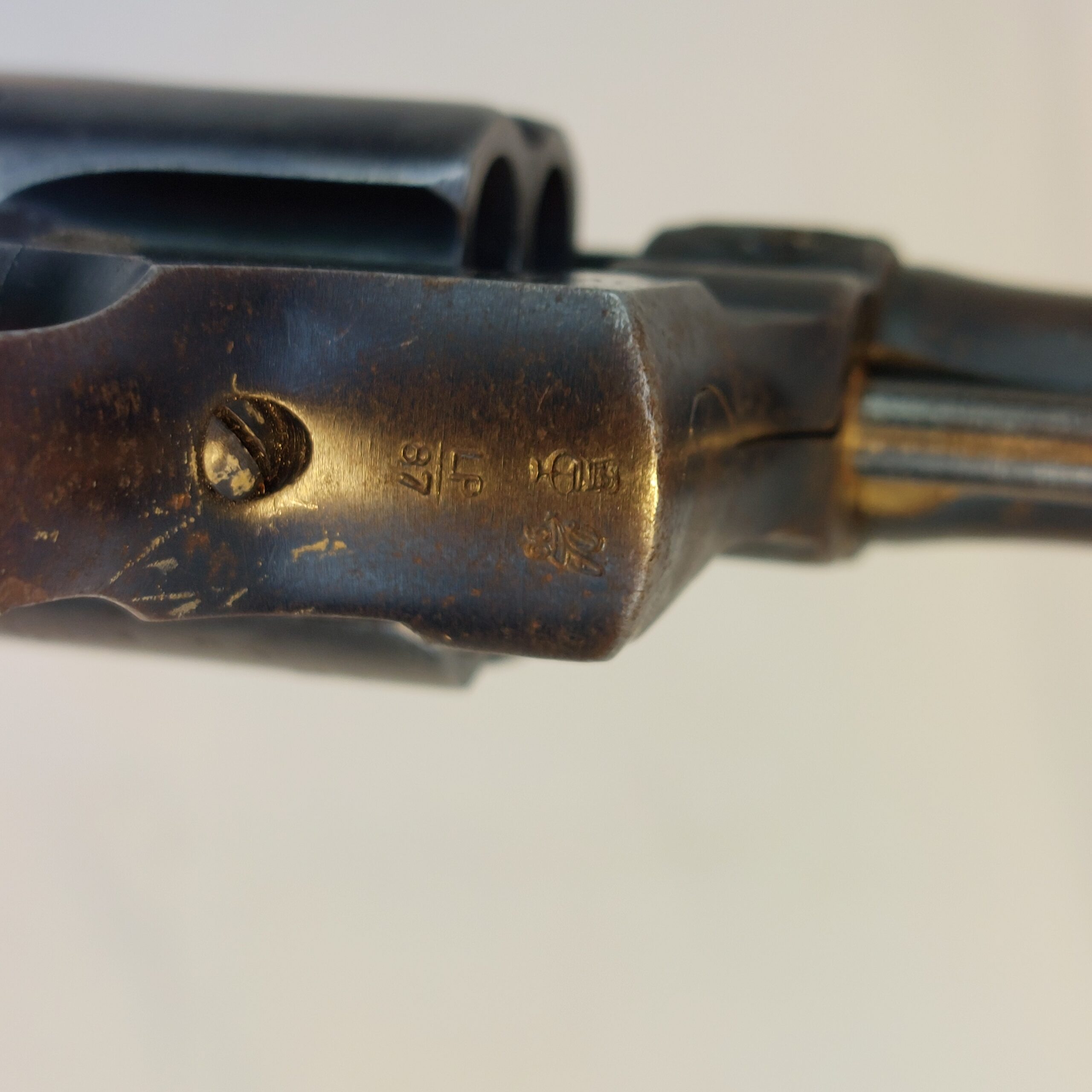
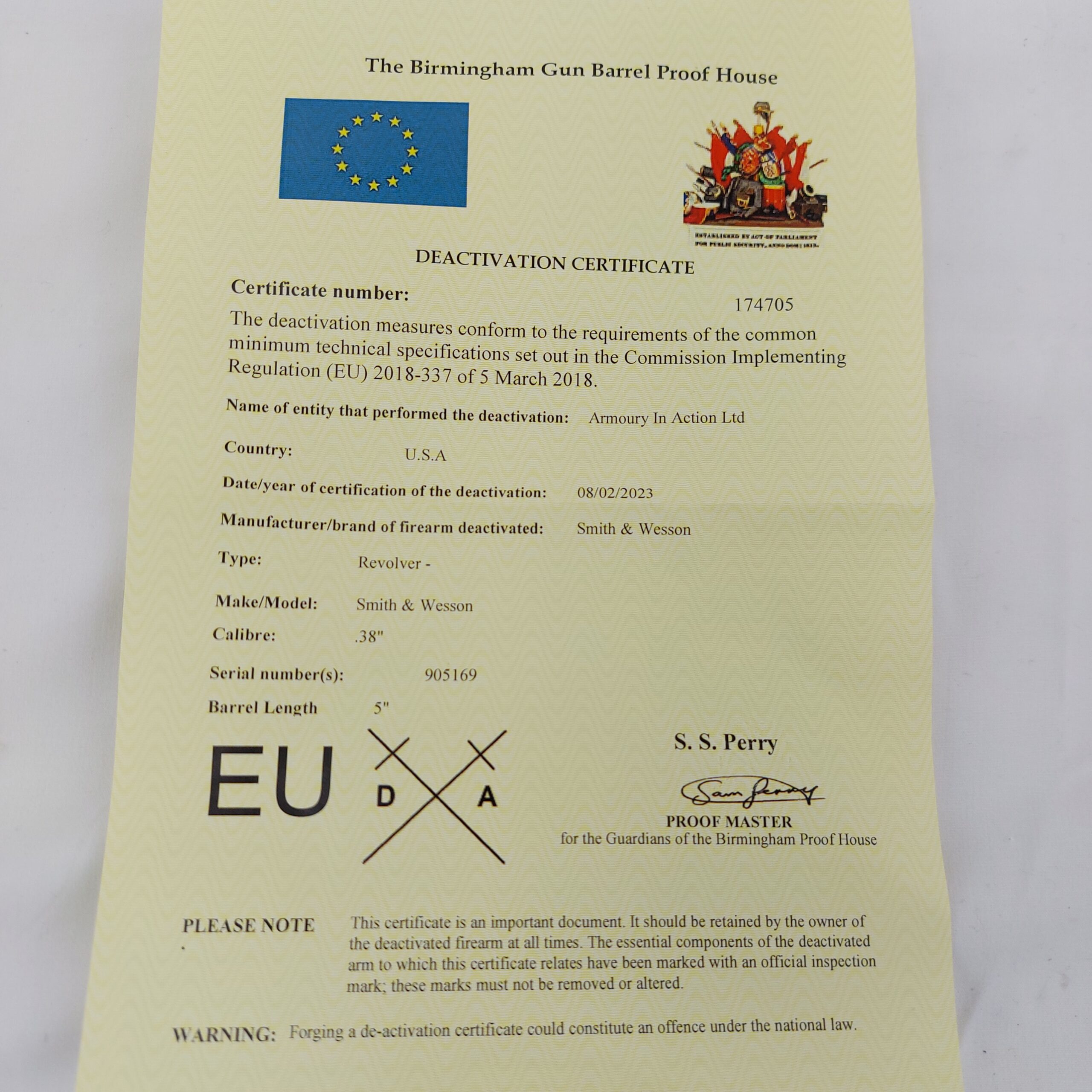
Serial number 905169 - clearly marked on cylinder and bottom of butt. .38"Calibre, barrel length 5".
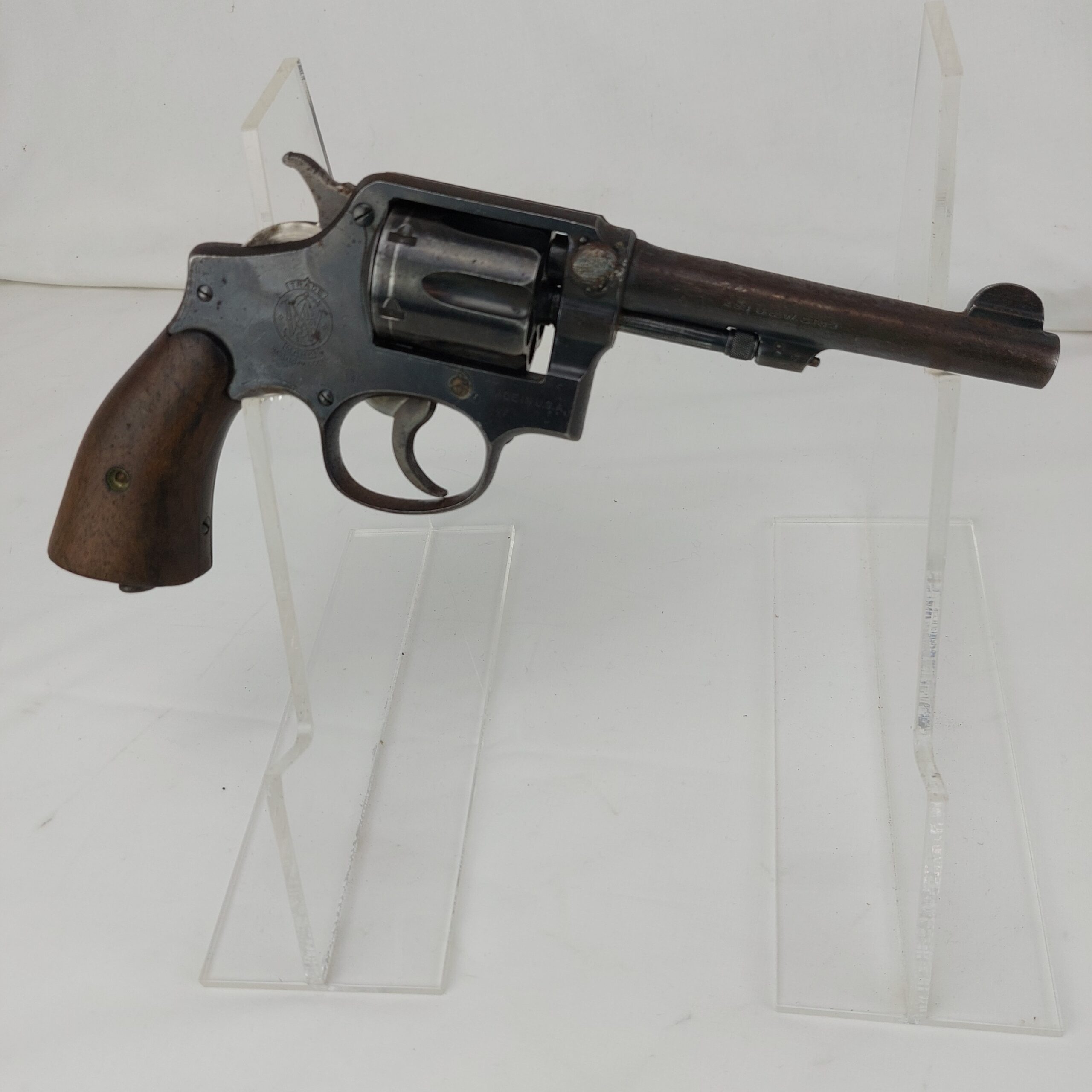
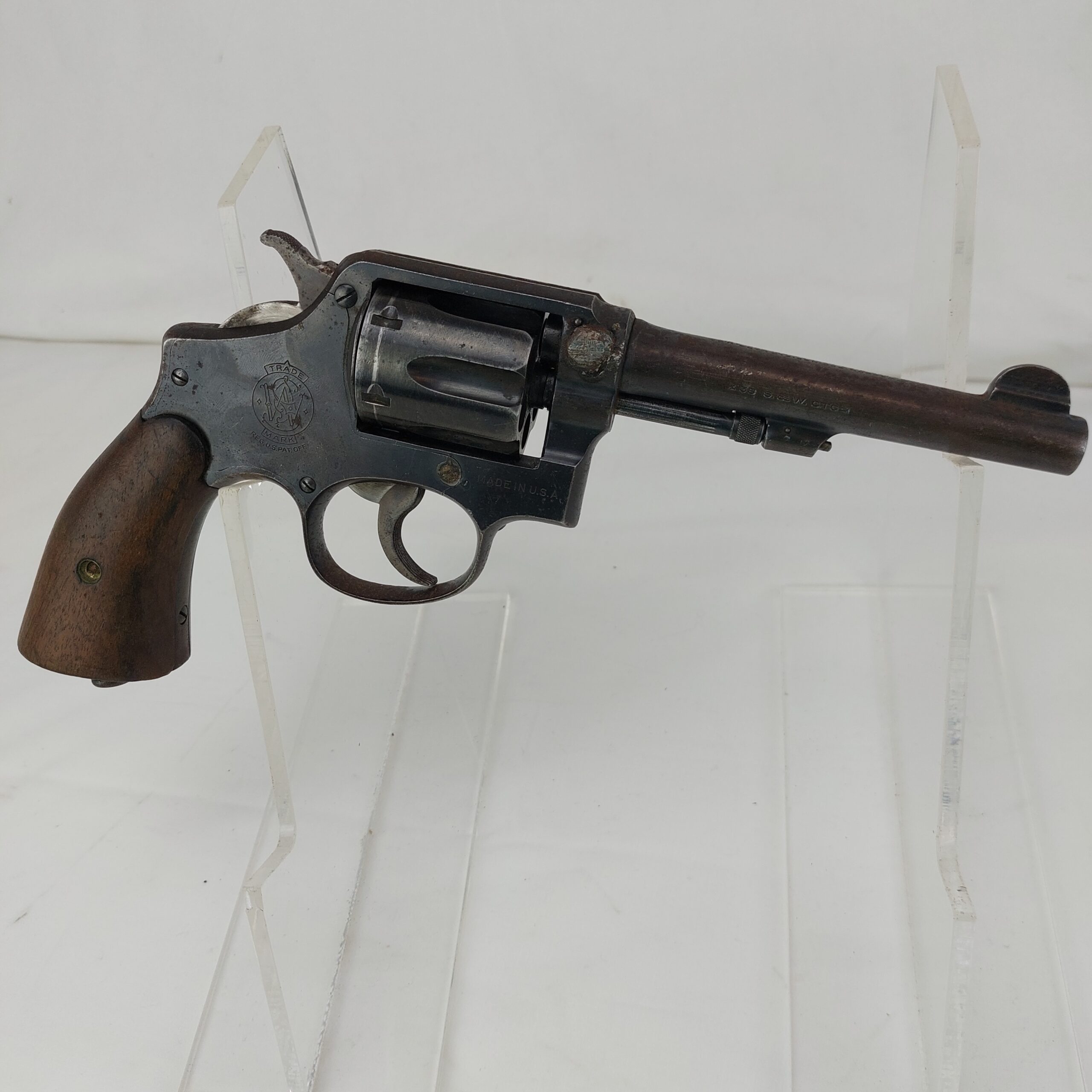
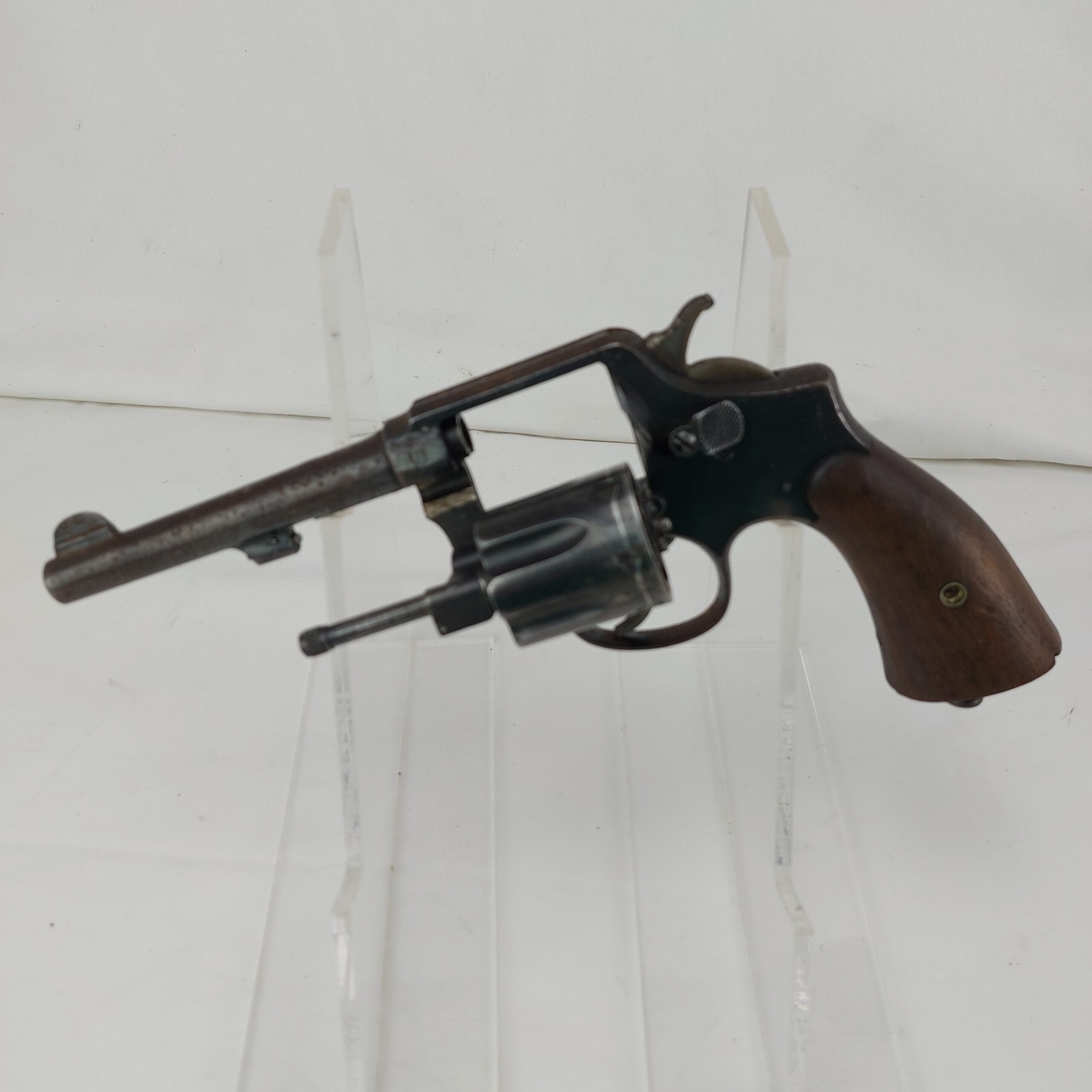
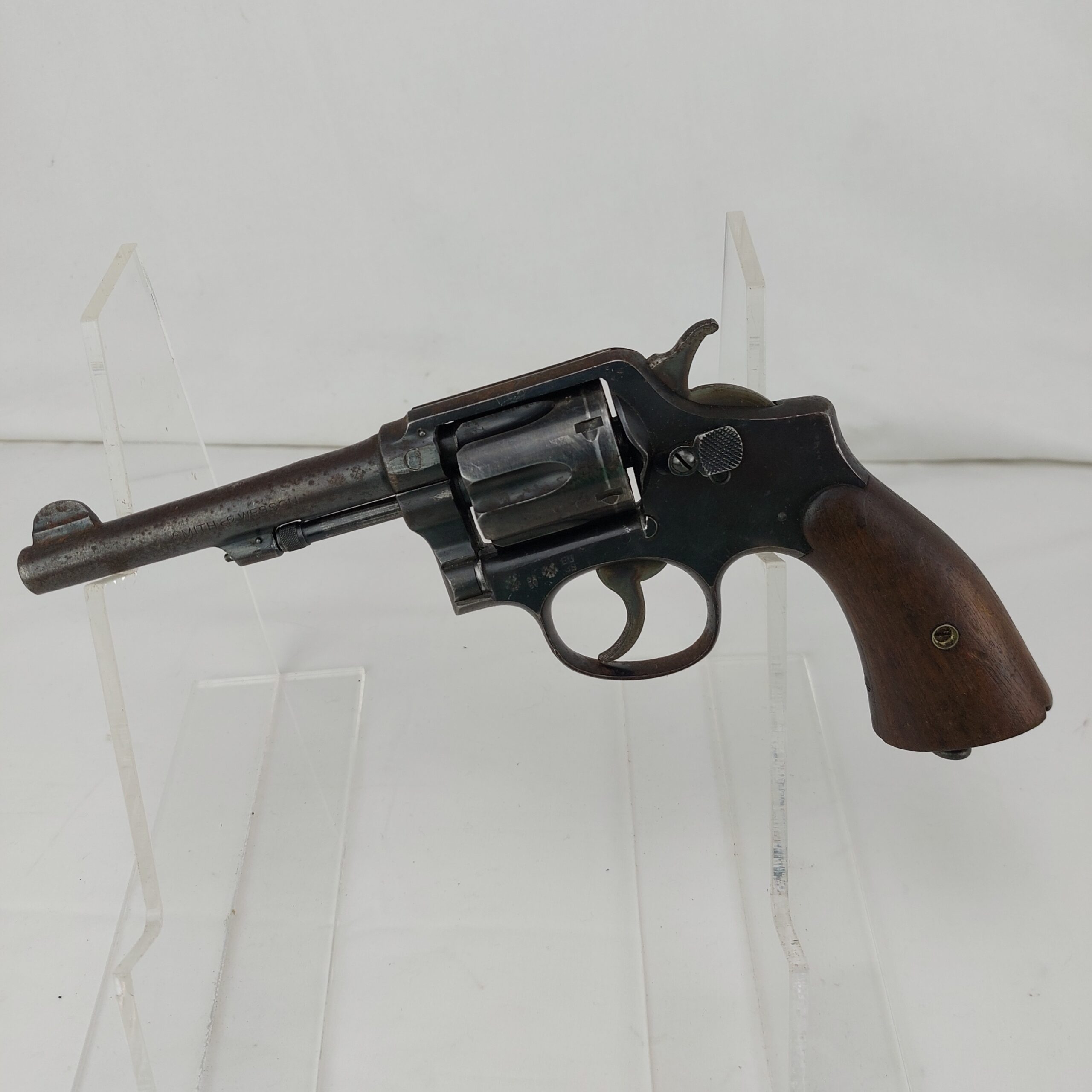
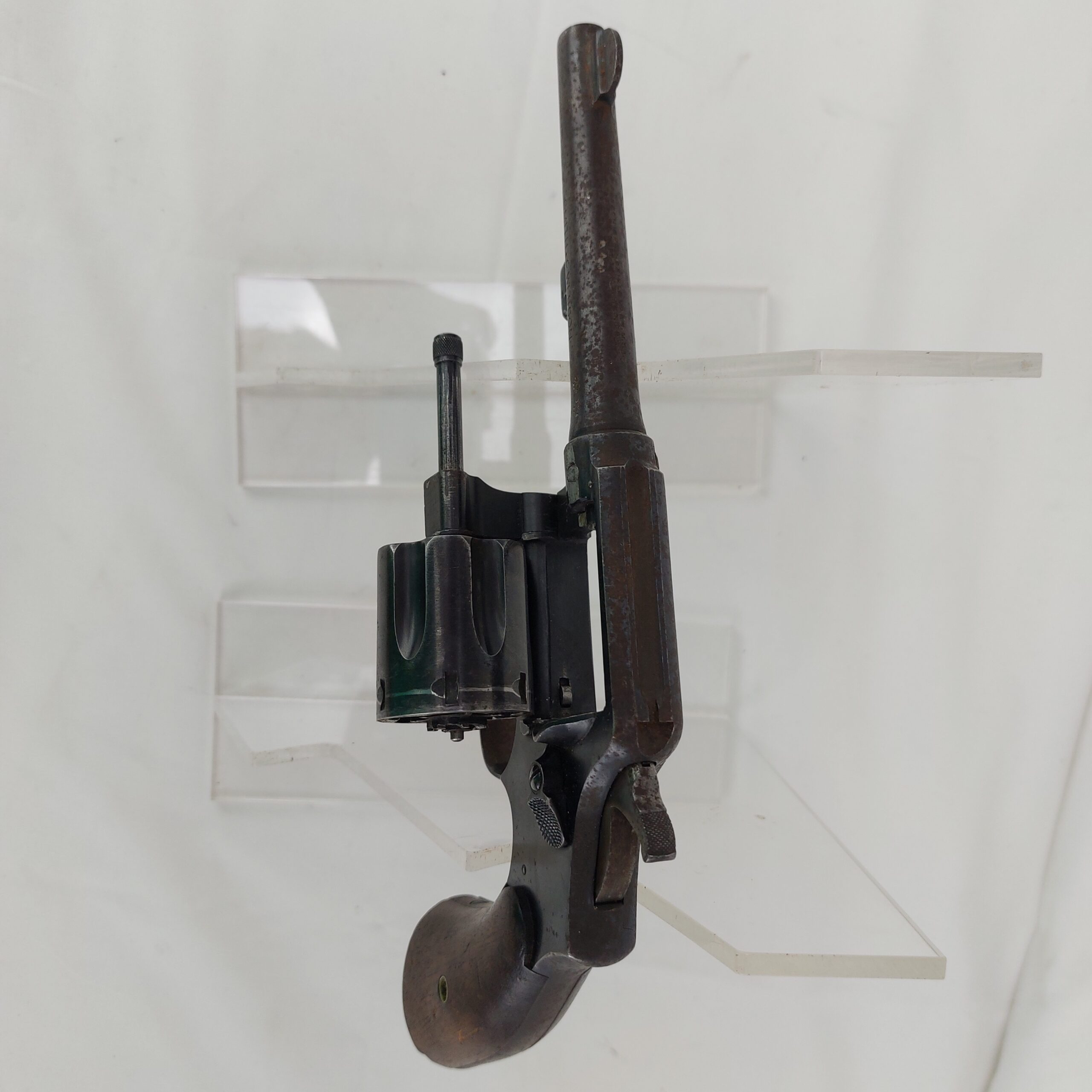
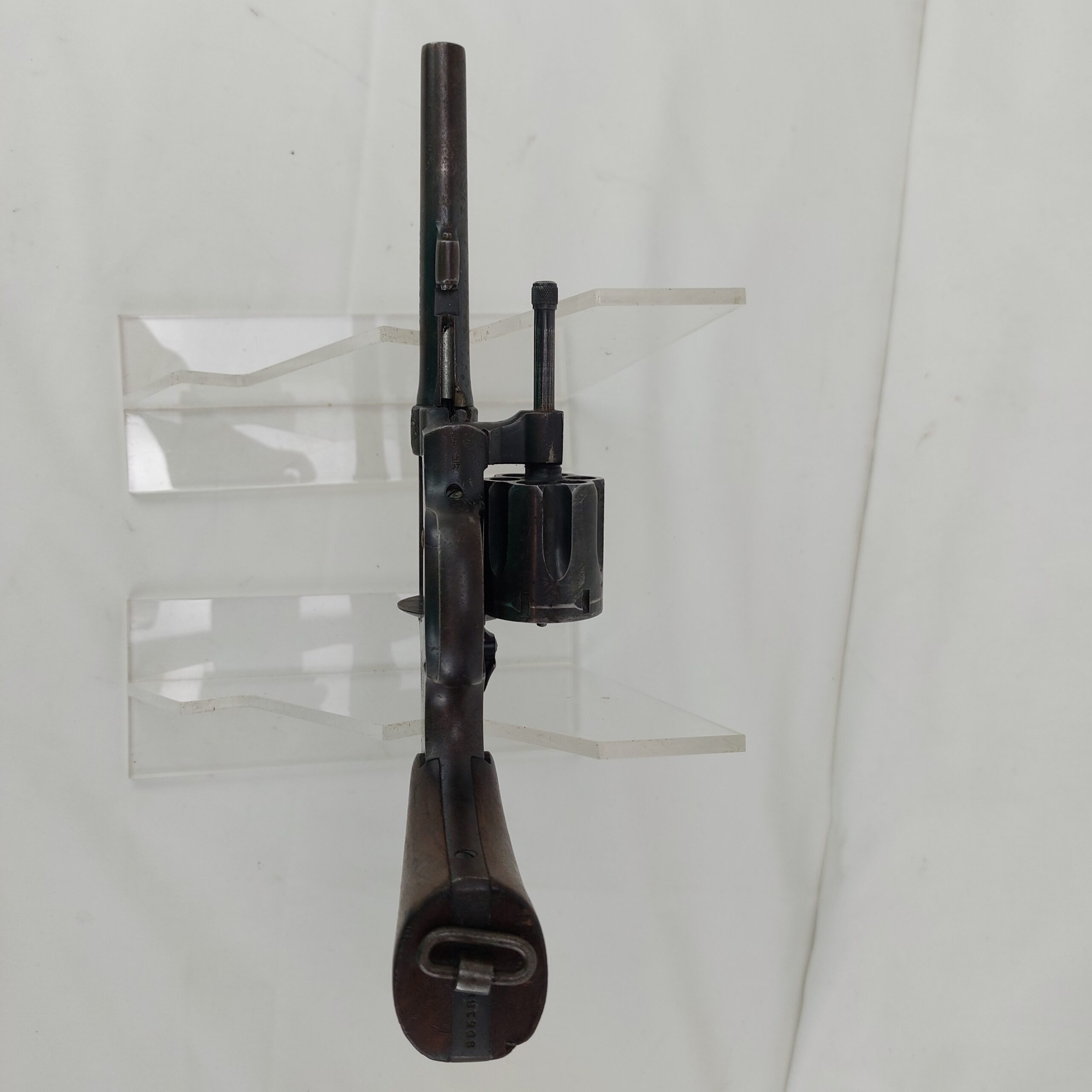
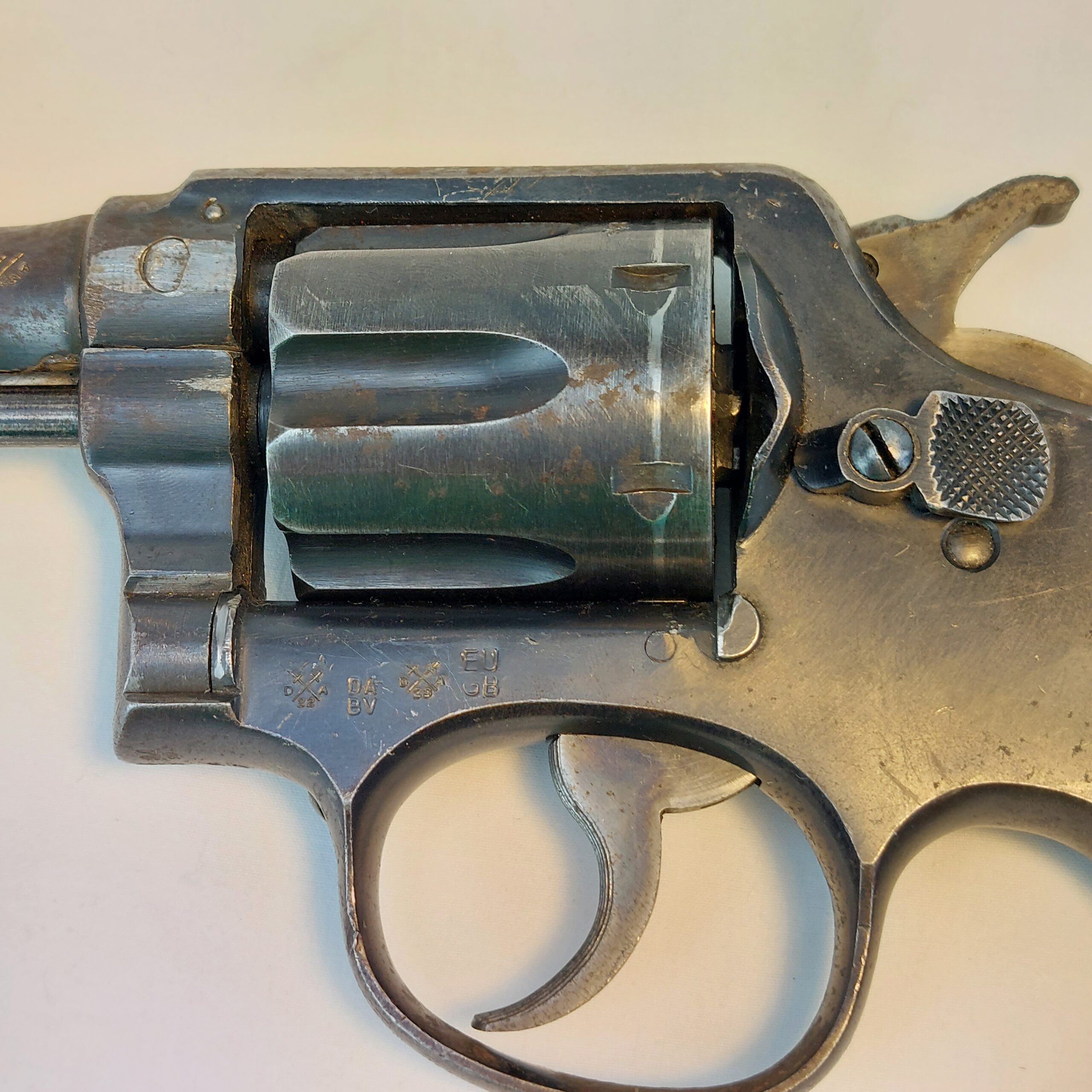
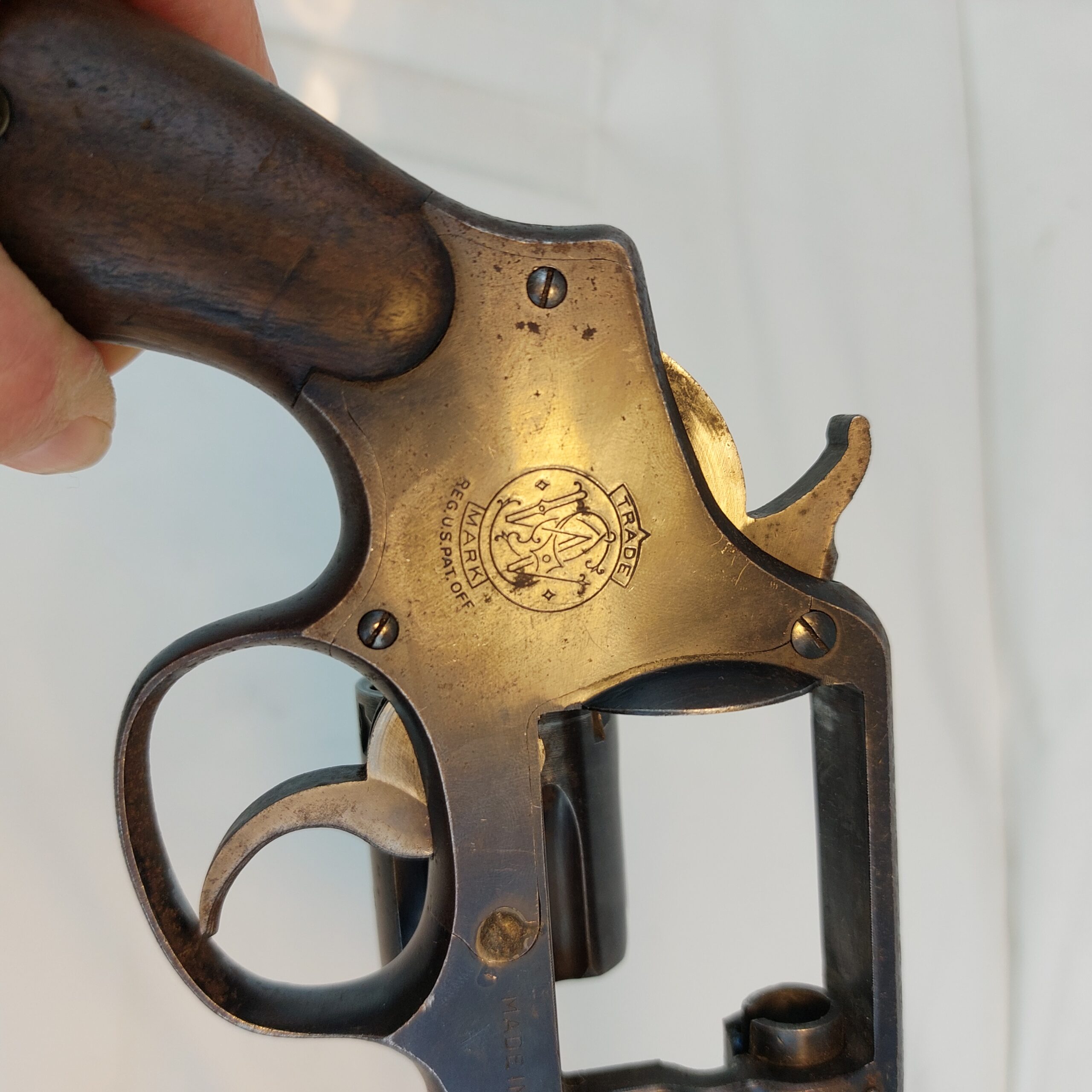
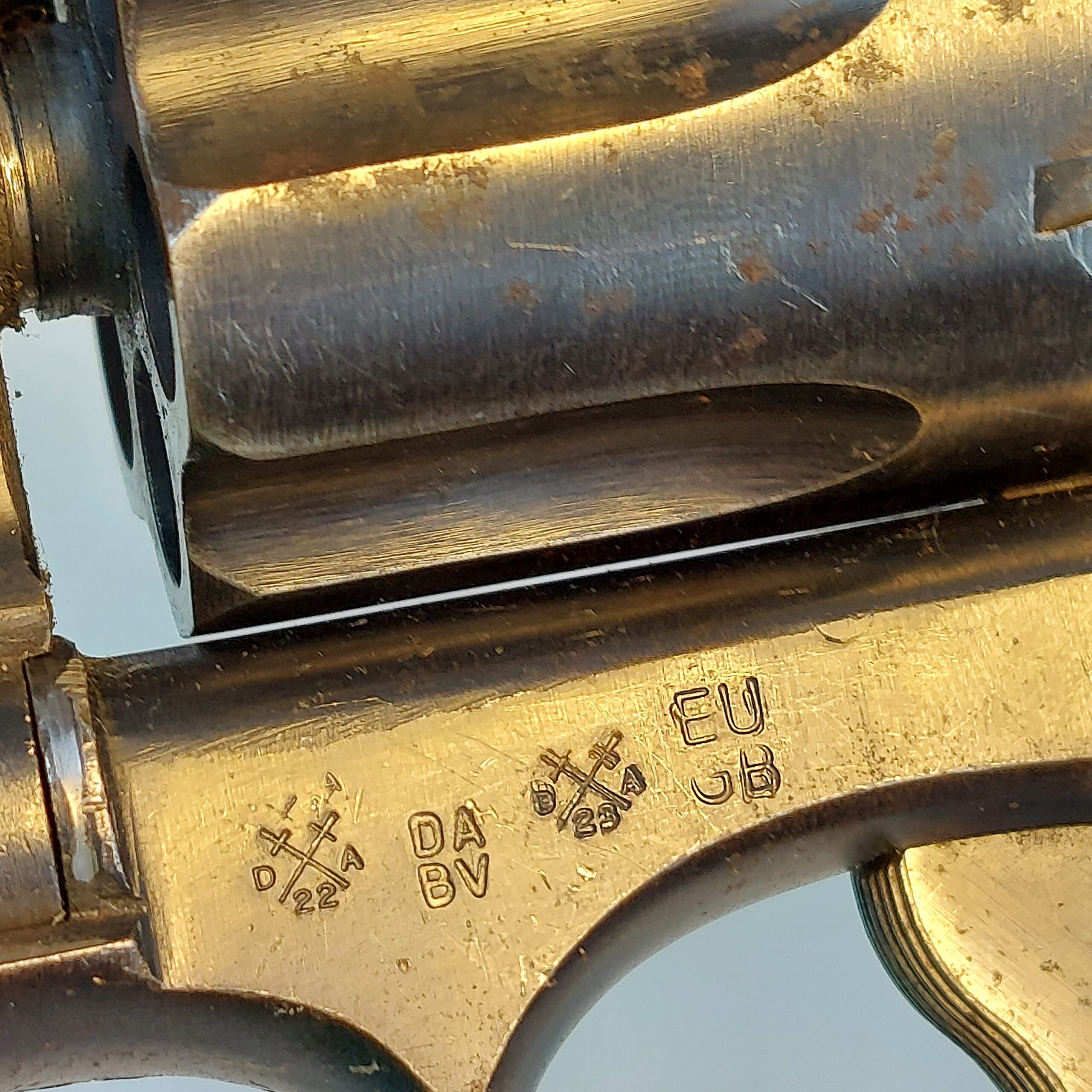
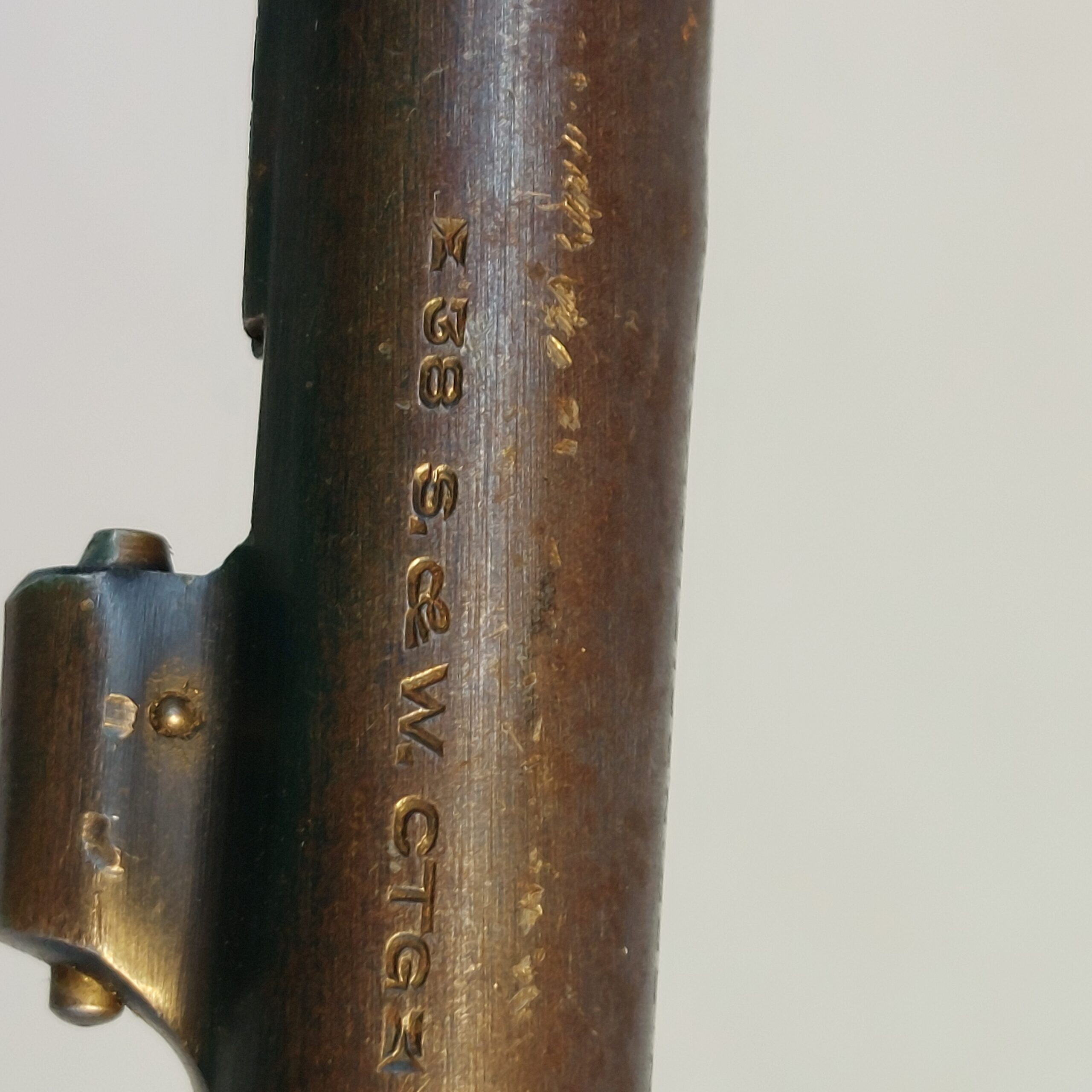
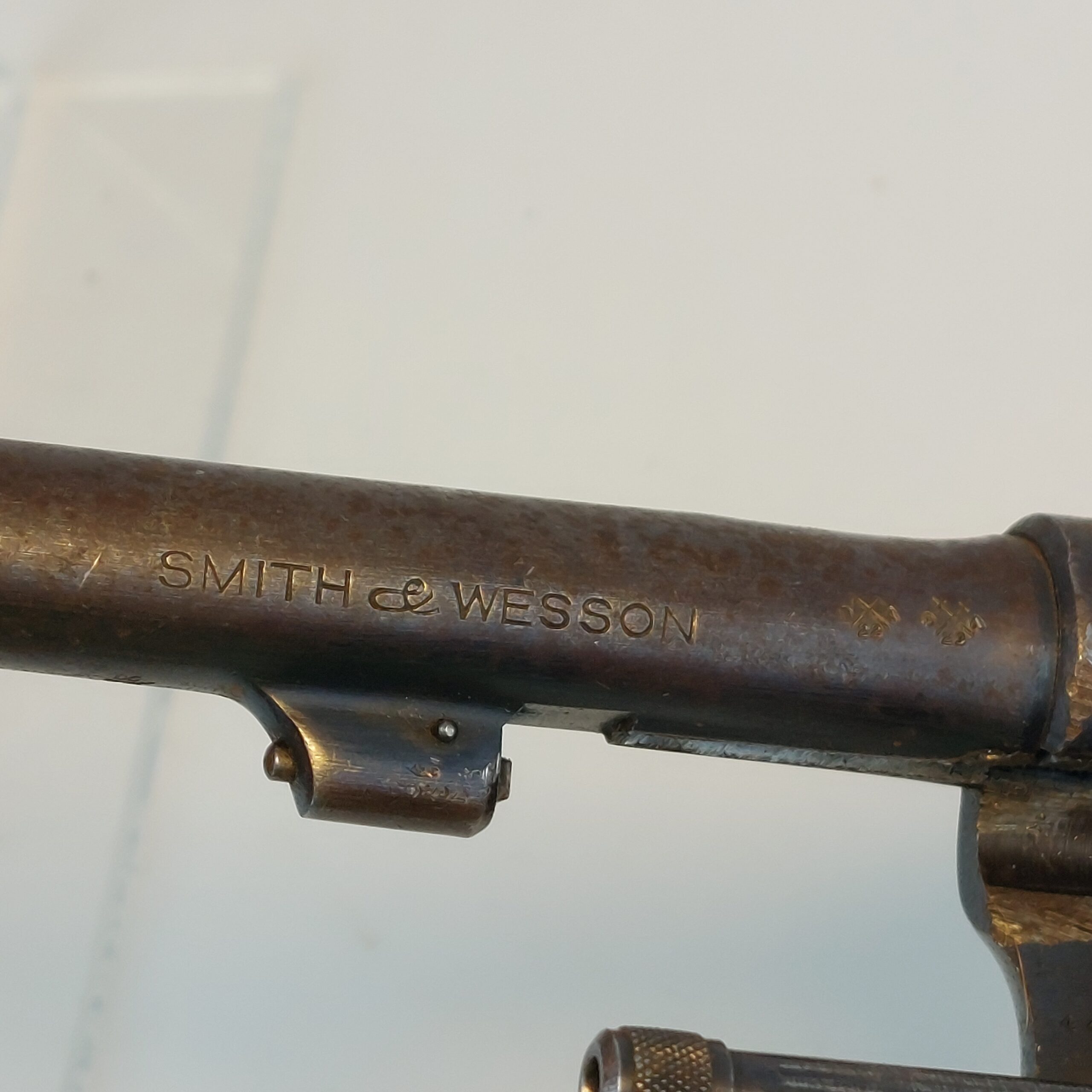
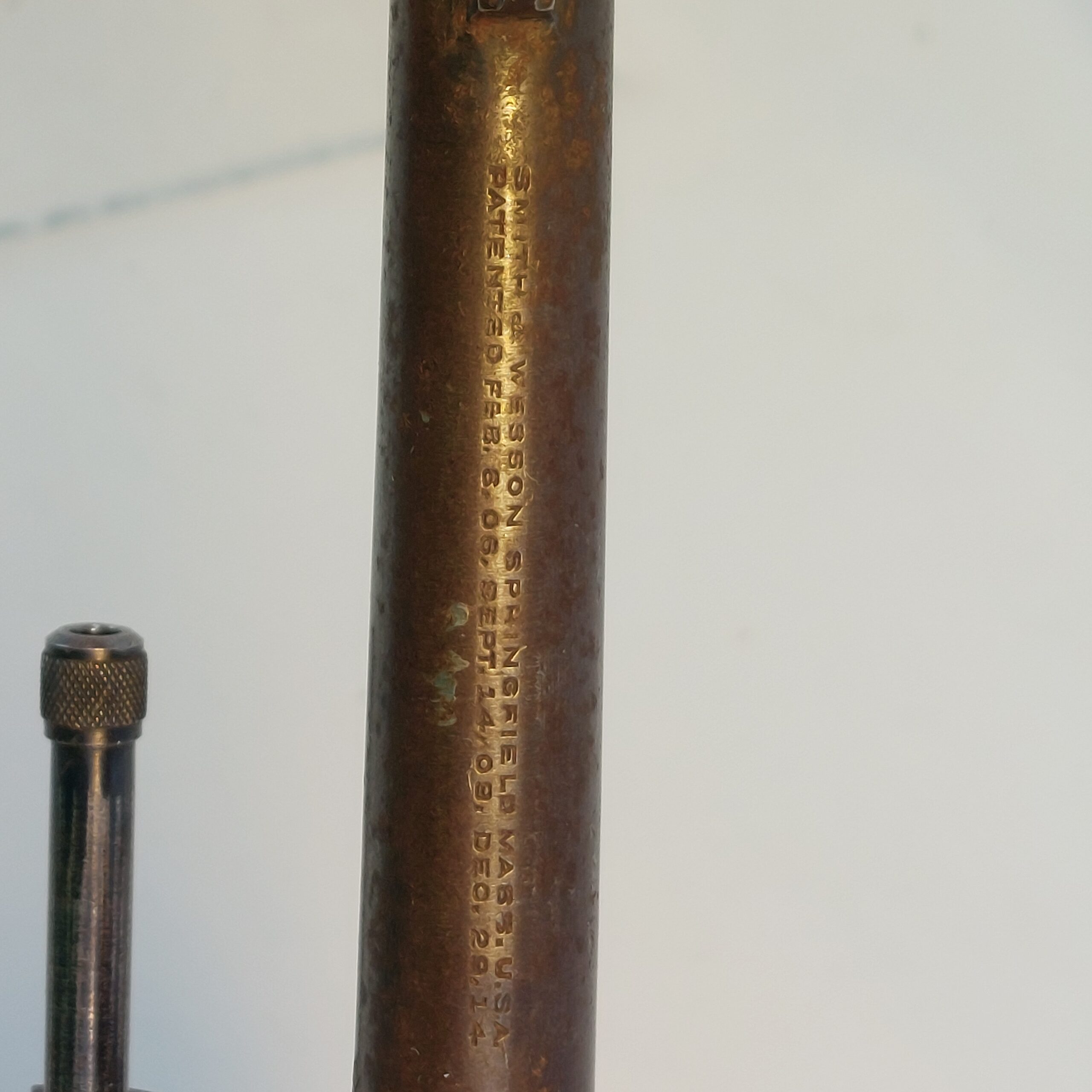
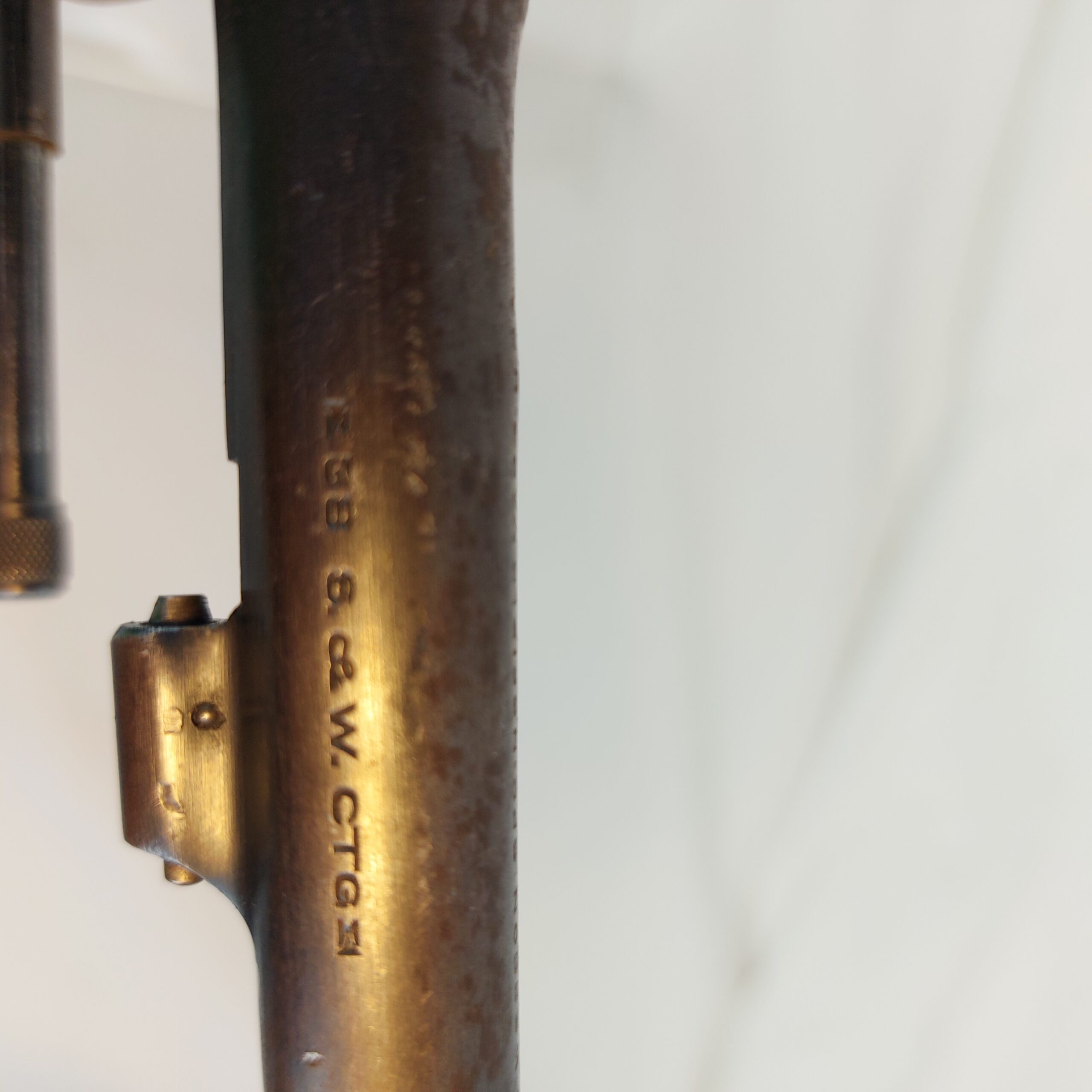
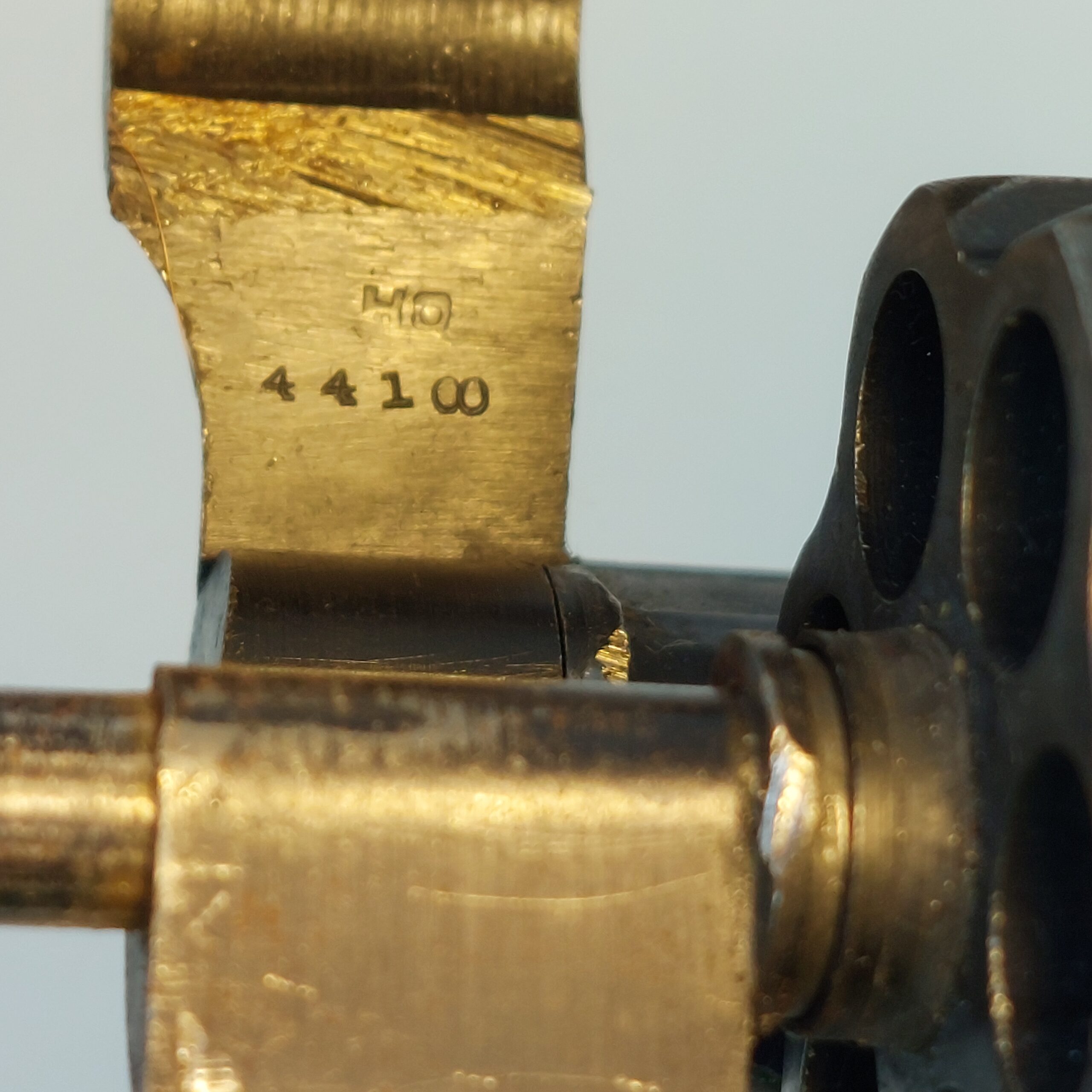
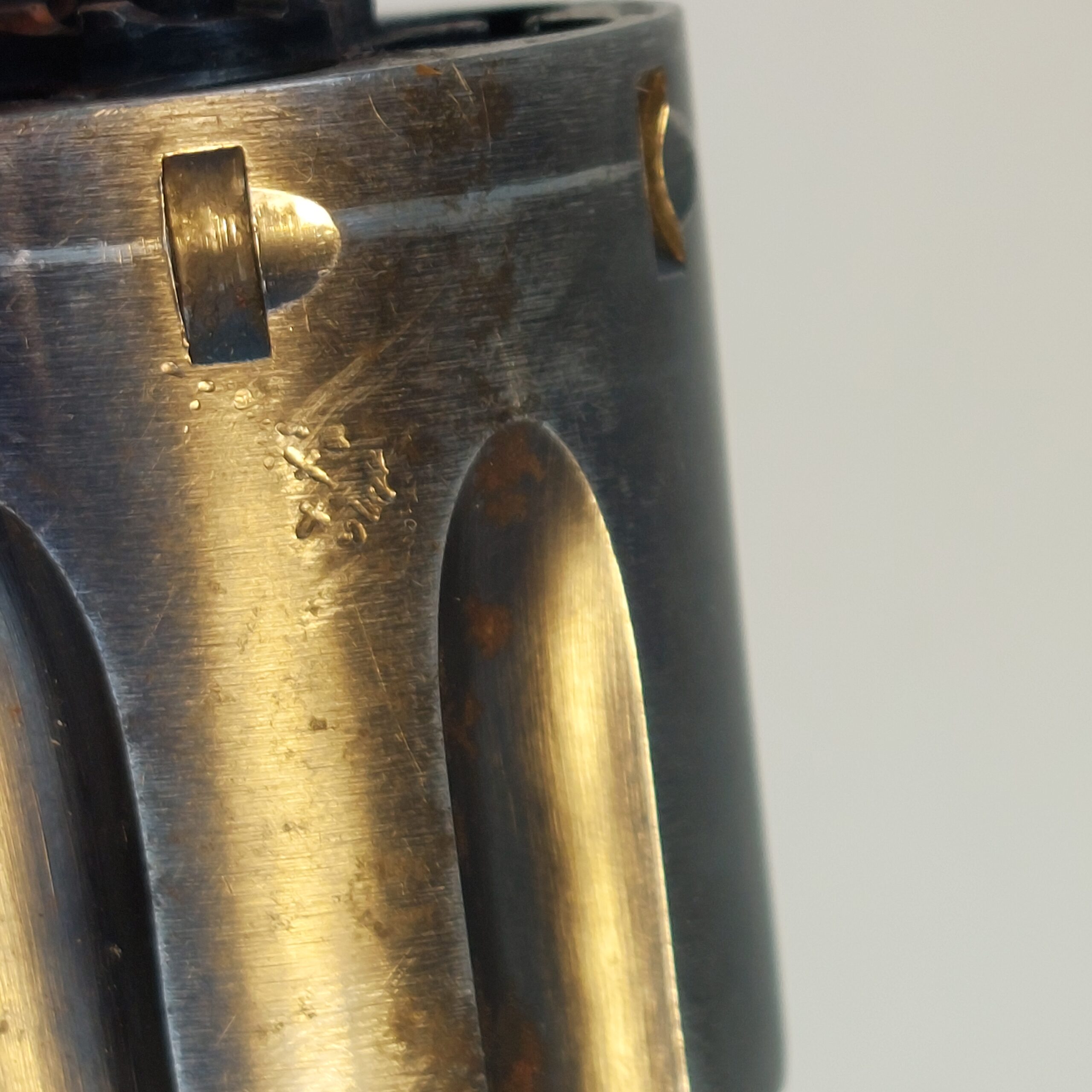
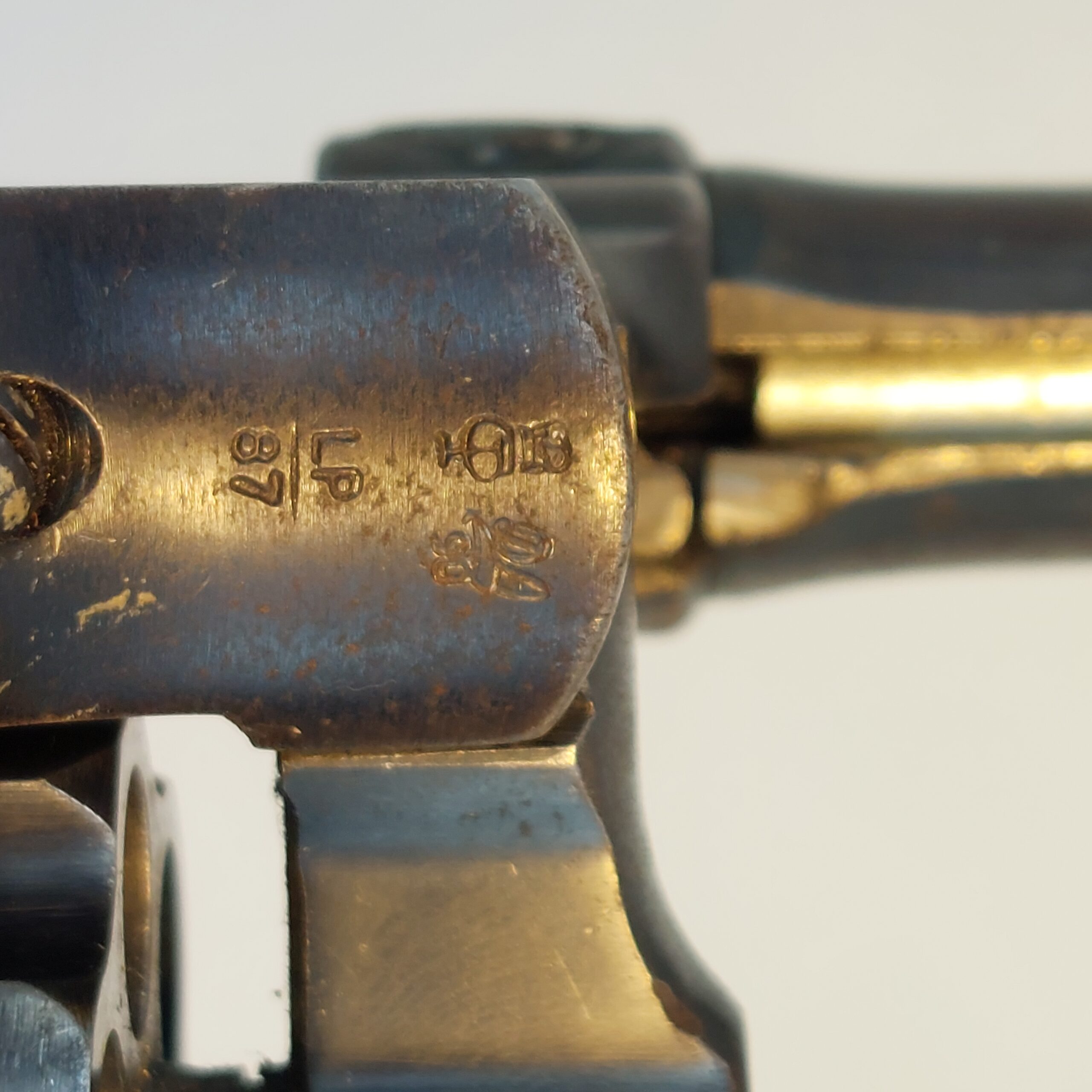
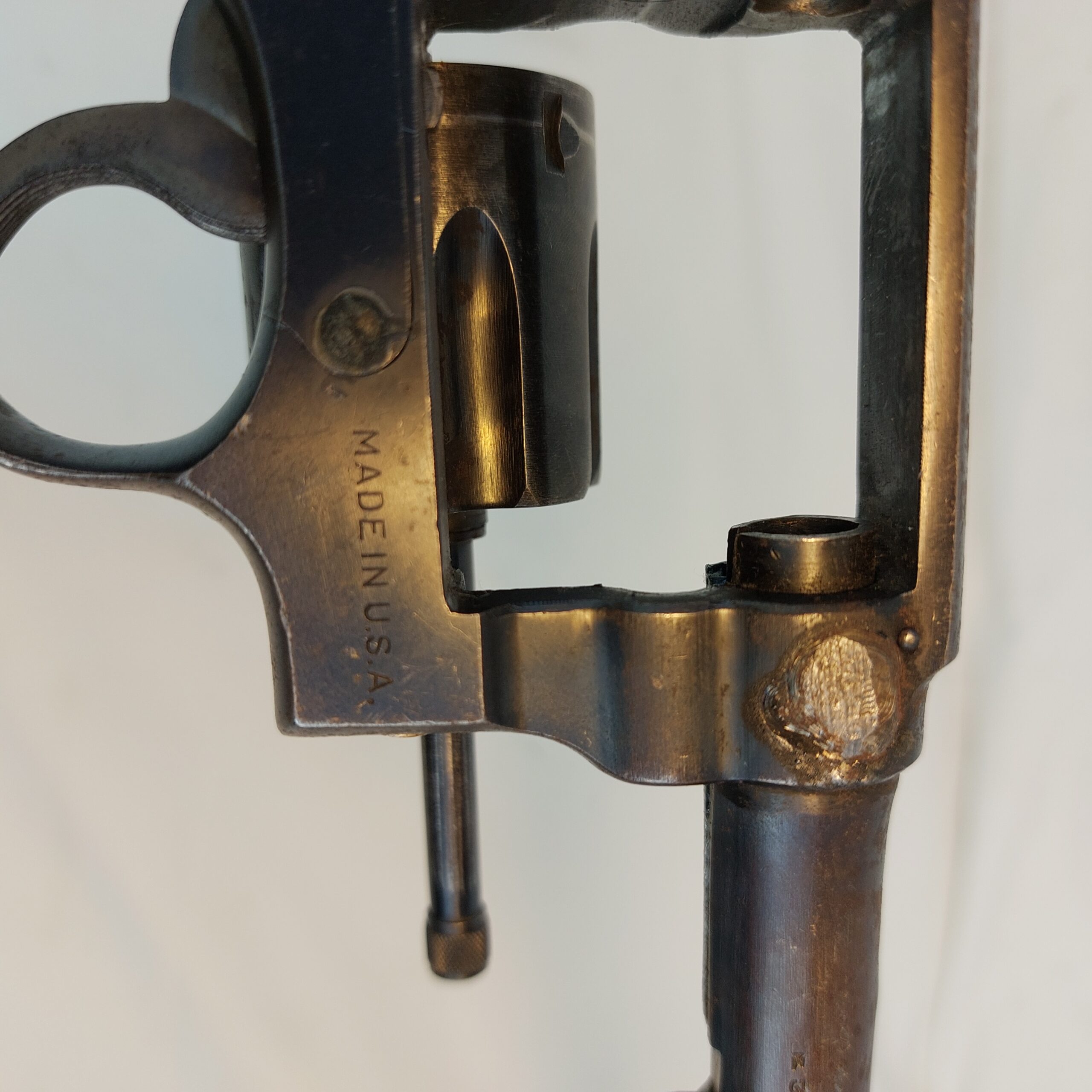
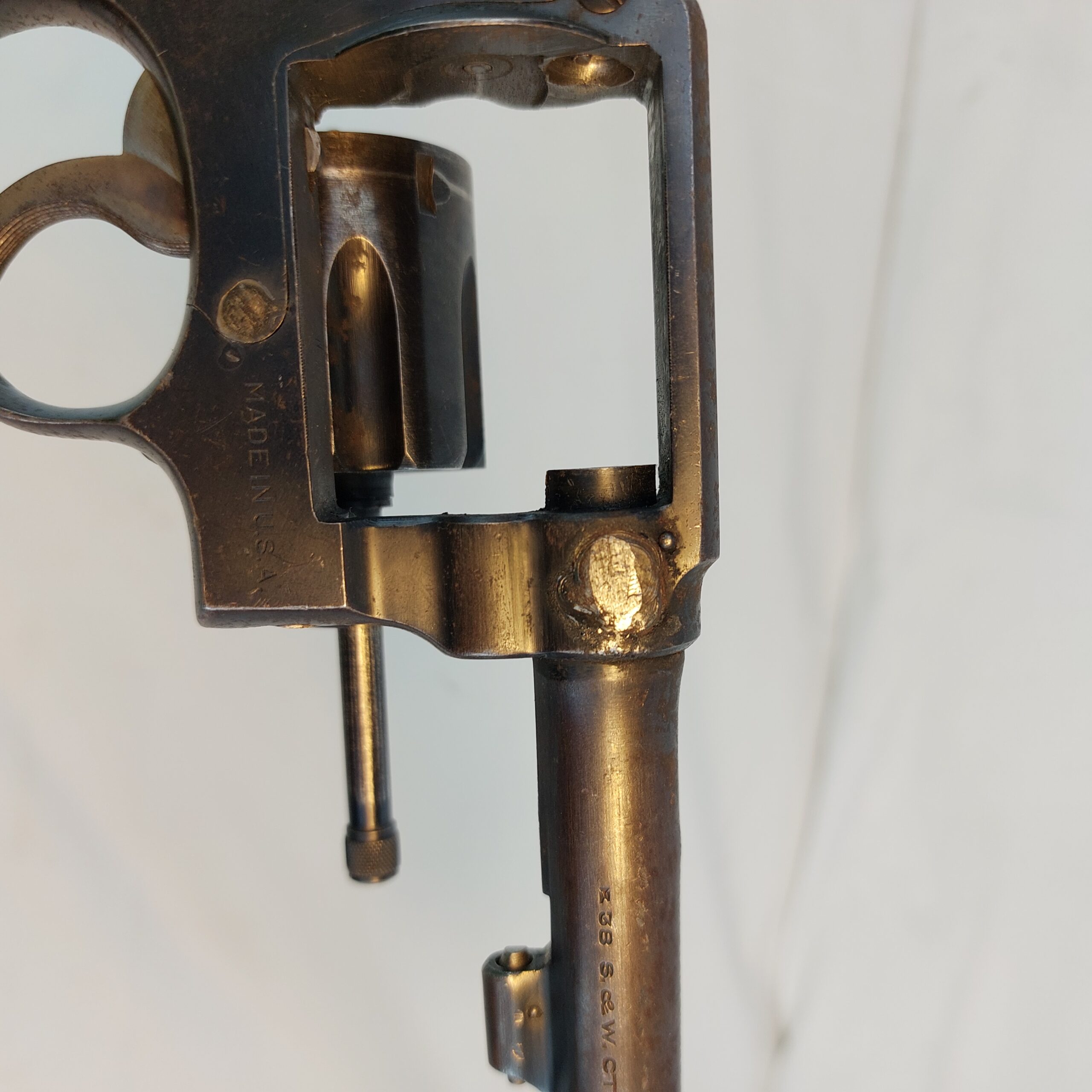
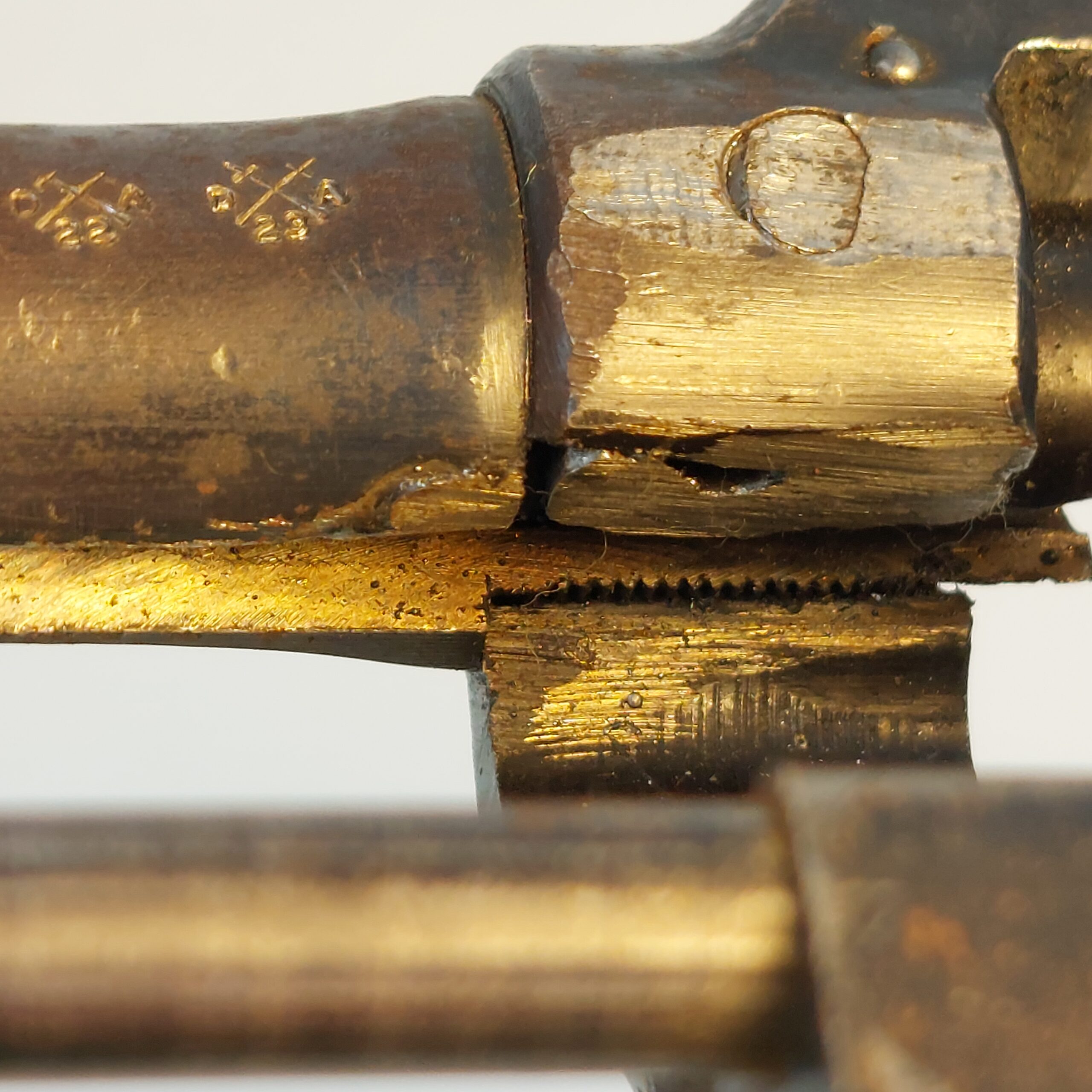
On the barrel is engraved "38 S&W. CTG", on the other side "Smith & Wesson" and along the top "Smith & Wesson, Springfield, Mass, USA, Patented Feb 6.06.Sept.14.09.Dec.29.14." There is a trademark stamp on the frame and " Made in the USA". The W.B. mark on the butt is the inspection mark of Waldemar Broburg who inspected from July 1, 1941 to June 16, 1942. G.H.D. replaced W.B. There is also the flaming bomb ordnance mark and a P - the "P" proof mark indicates this revolver has passed military proof testing. There are various British proof marks on the frame, cylinder and barrel supporting that this was a Lend Lease Revolver. Under the forcing cone are the letters HD and the number 4418. The revolver has a lanyard loop on the butt and walnut grip.
The S&W M&P military revolvers produced from 1942 to 1944 had serial numbers with a "V" prefix, and were known as the Smith & Wesson Victory Model. Early Victory Models did not always have the V prefix. During World War II 590,305 of these revolvers were supplied to the United Kingdom, Canada, Australia, New Zealand, and South Africa under the Lend-Lease program, chambered in the British .38/200 caliber already in use in the Enfield No 2 Mk I Revolver and the Webley Mk IV Revolver. Most Victory Models sent to Britain were fitted with 4-inch or 5-inch barrels. The 5-inch barrel was standard production after 4 April 1942. The Office of Strategic Services (OSS) supplied thousands of these revolvers to resistance forces. The finish on Victory Models was typically a sandblasted and parkerized finish. Other distinguishing features of the Victory Model revolver are the lanyard loop at the bottom of the grip frame, and the use of smooth (rather than checkered) walnut grip panels. However, some early models did use a checkered grip, most notably the pre-1942 manufacture.
Smith & Wesson used overlapping serial number ranges until the 1950’s and 1960’s, when serial numbers started to include letters. It wasn’t until the 1980’s that serial numbers became unique across the entire company.
*Condition*
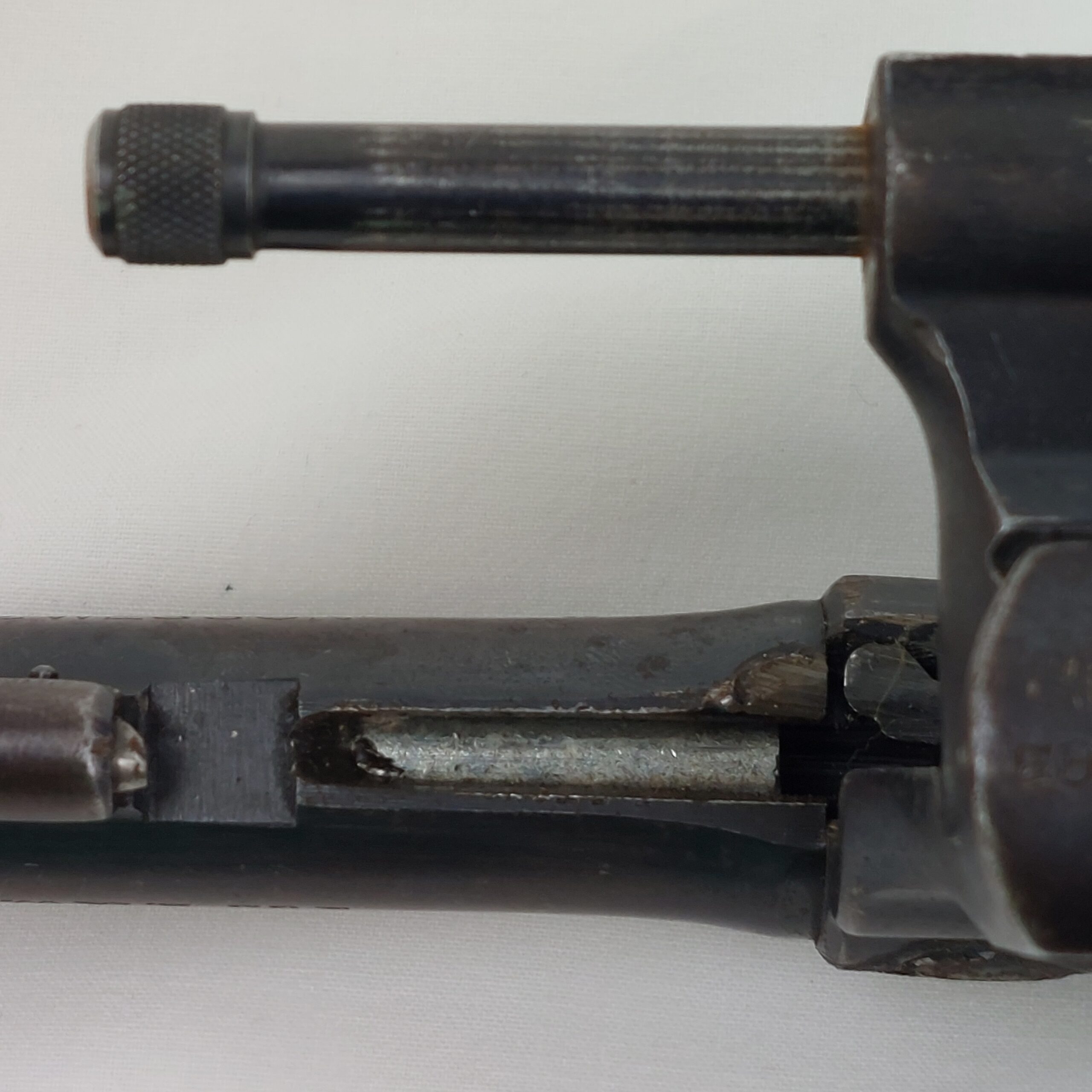
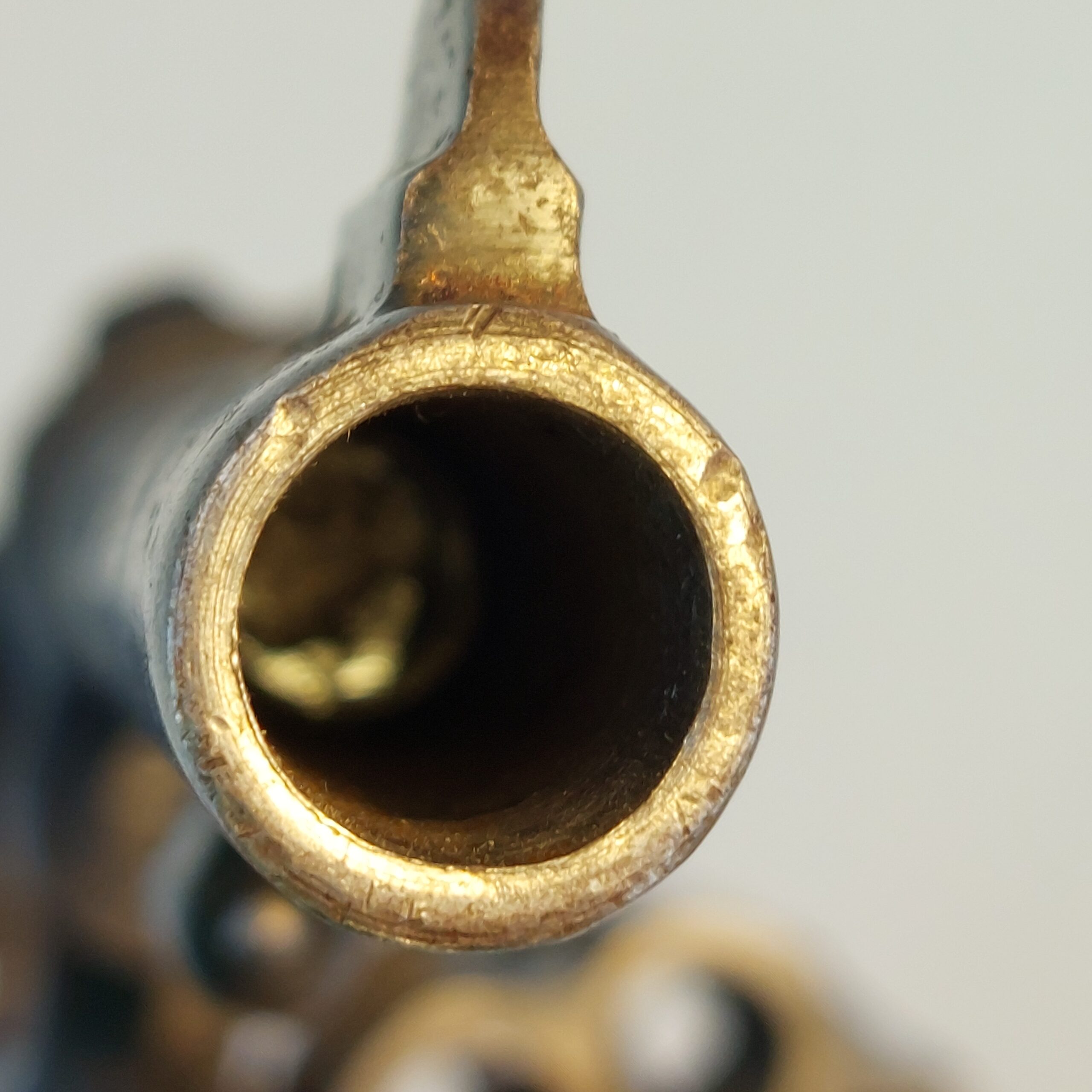
The rear barrel plate is missing. The gun does not strip and dry fire, there is some rusting and tarnishing commensurate to the age and history of the revolver. Please see photographs as part of the condition report. Deactivation certificate included.
*In order to complete the online purchase we will require a picture/scan of a photo ID (Driving Licence, Passport or an official document with a recent picture). If you don't posses any such document please call to buy. If we consider that the proof of ID is incorect or insuficient, we reserve the right to cancel the transaction.
*We also reserve the right to cancel the transaction with a full refund if there is any suspicion that the provided item will be used in any way contrary to the laws and legislation of UK.