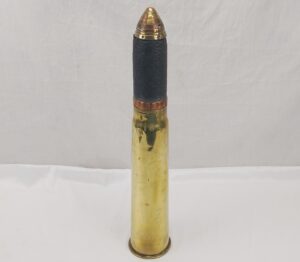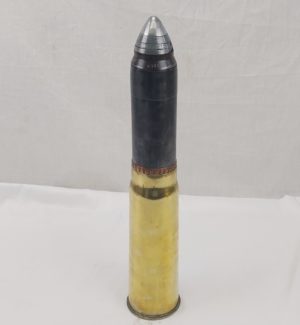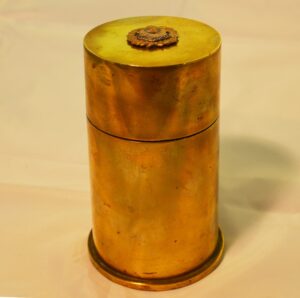
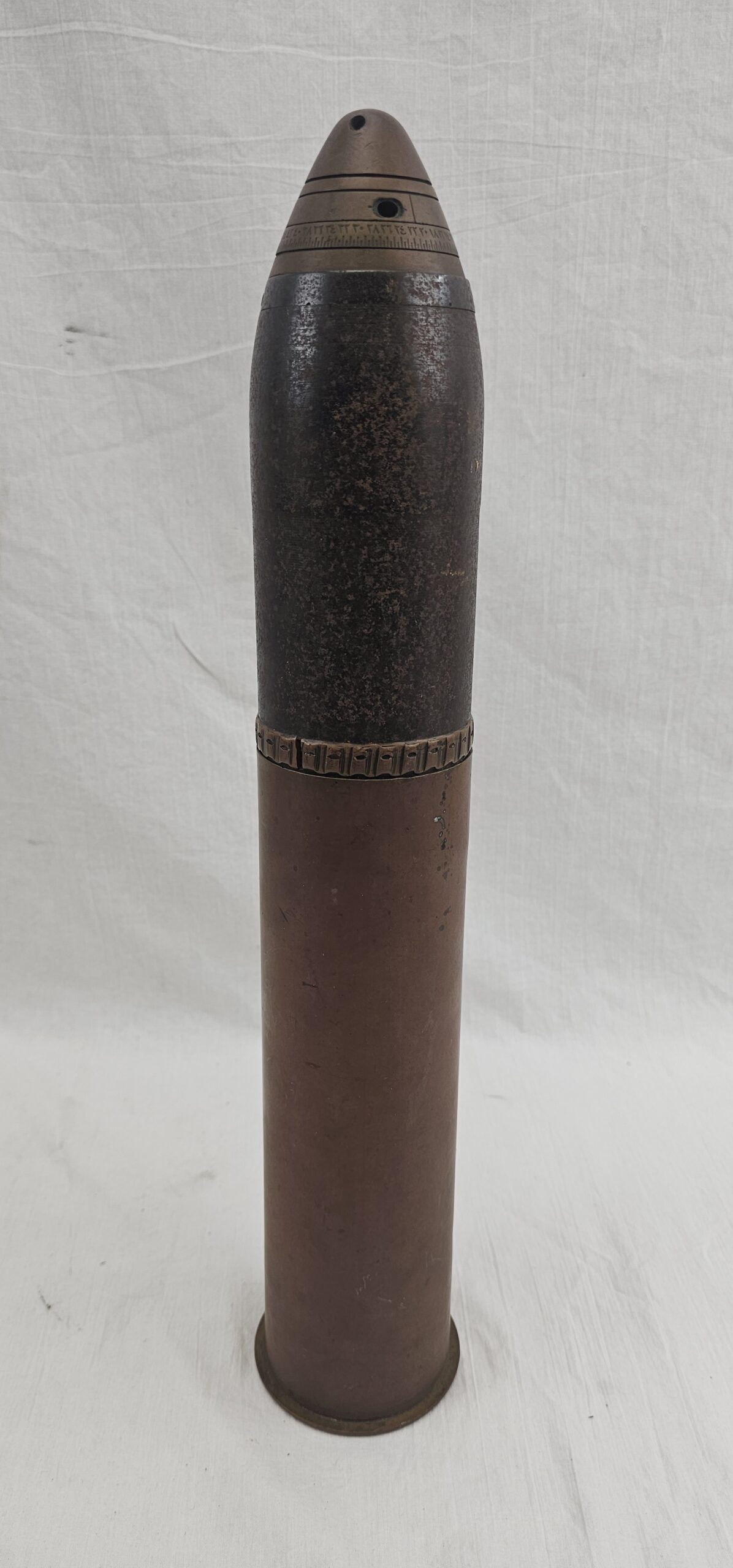
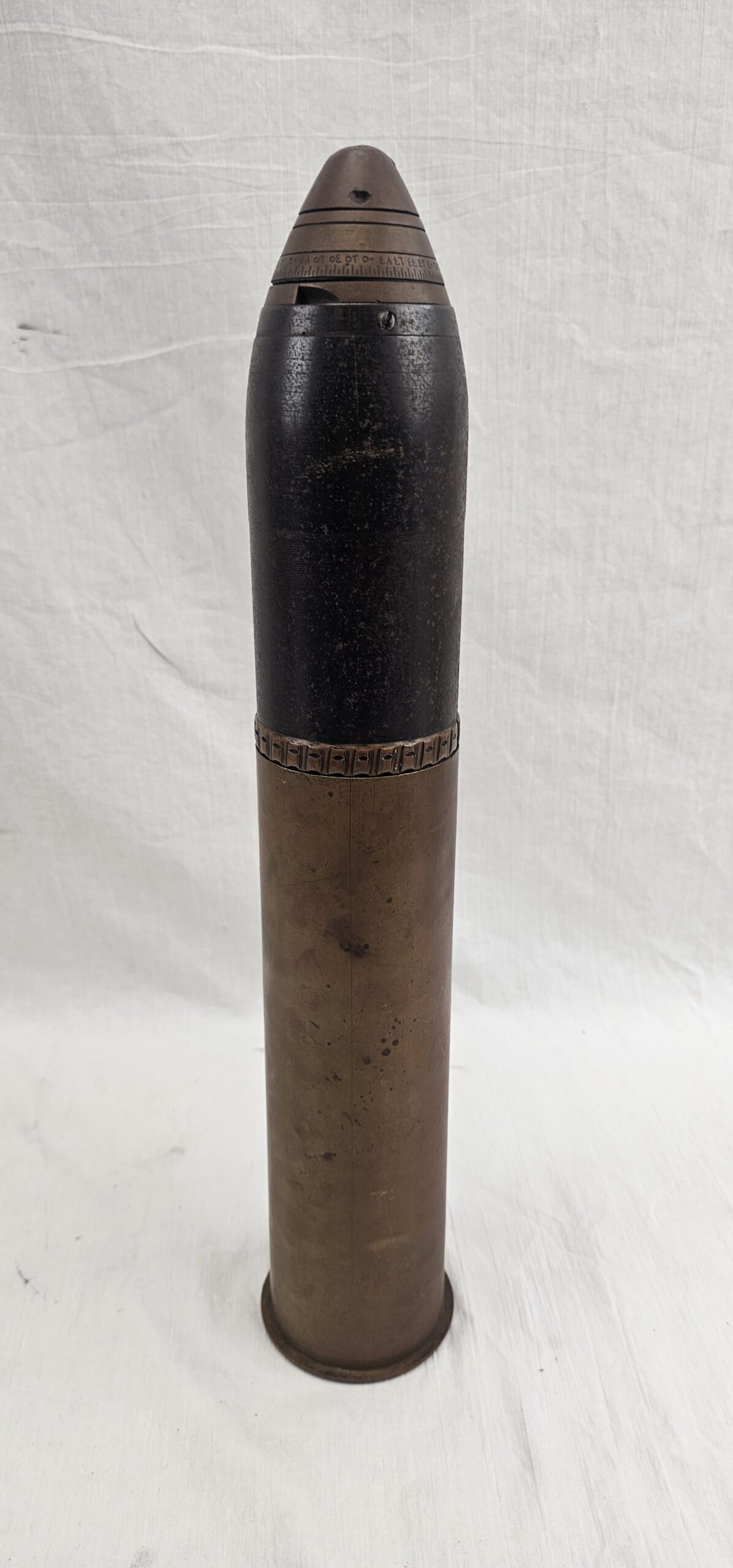
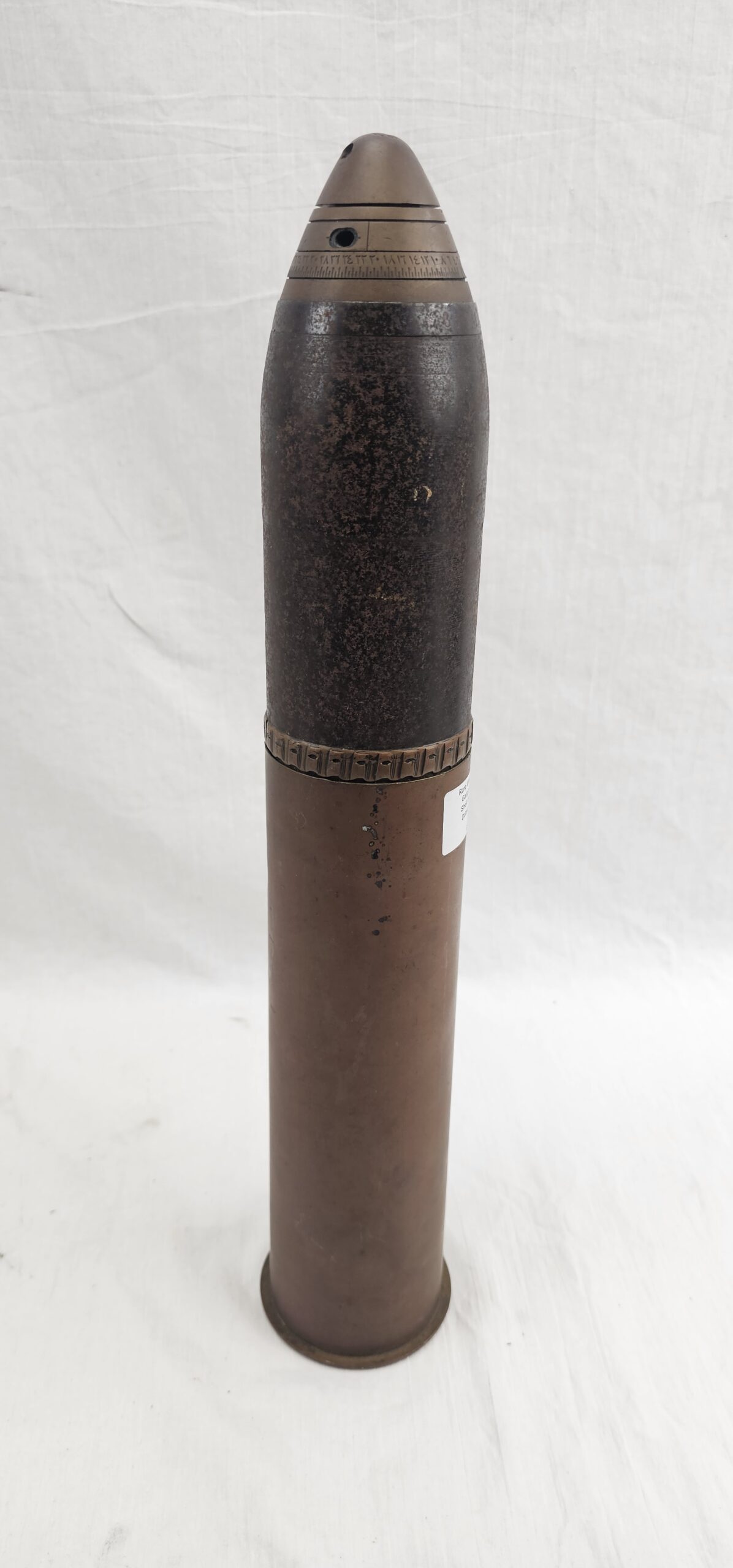
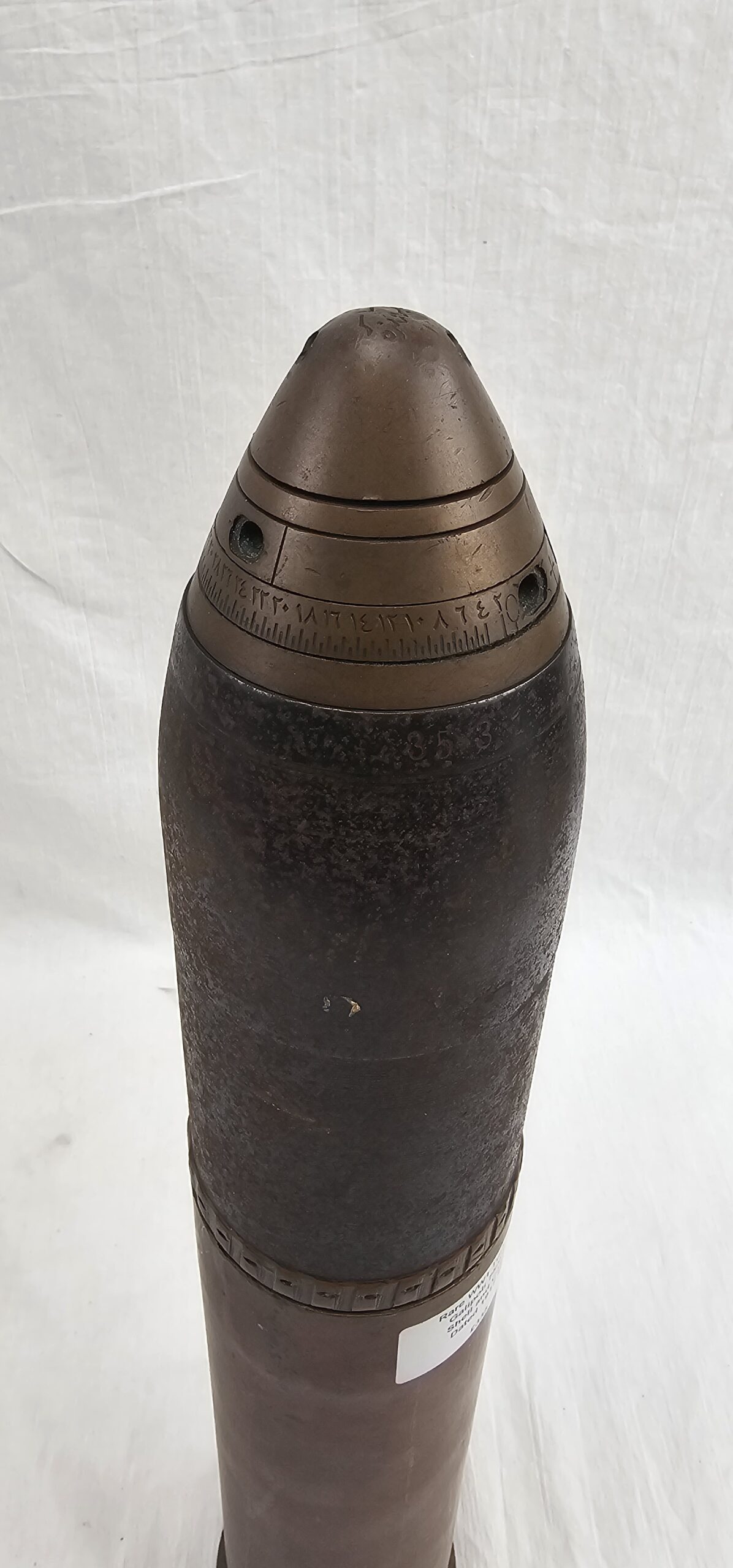
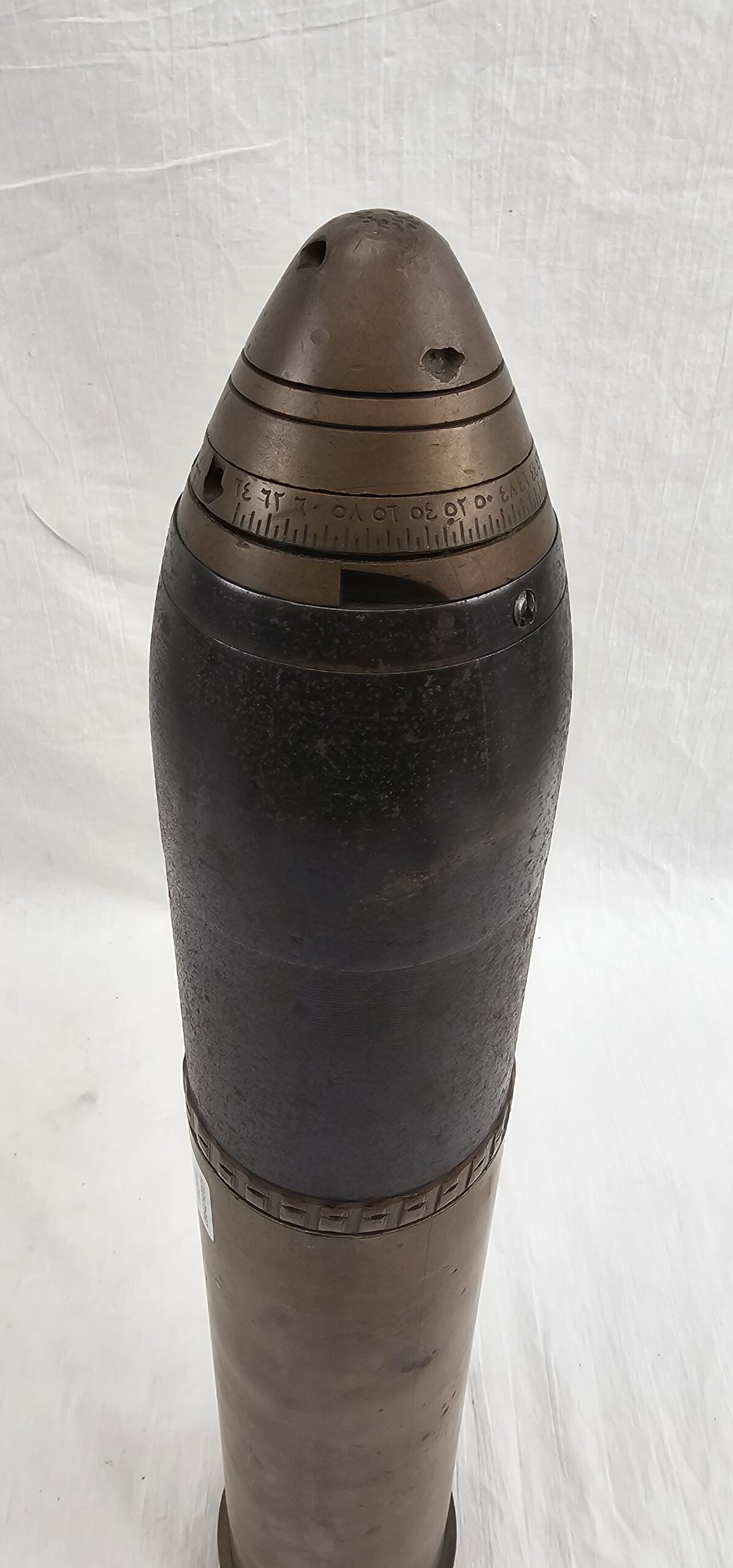
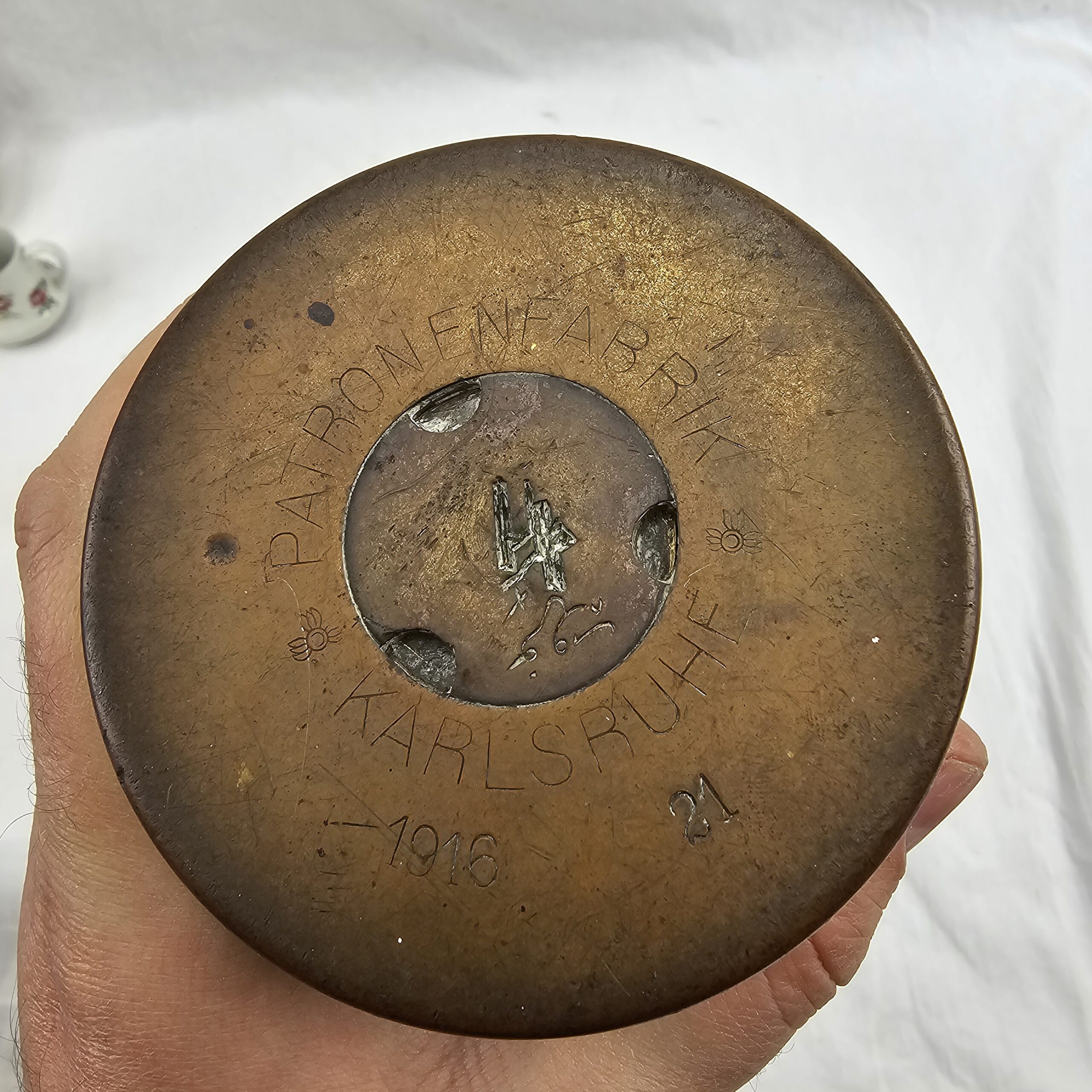
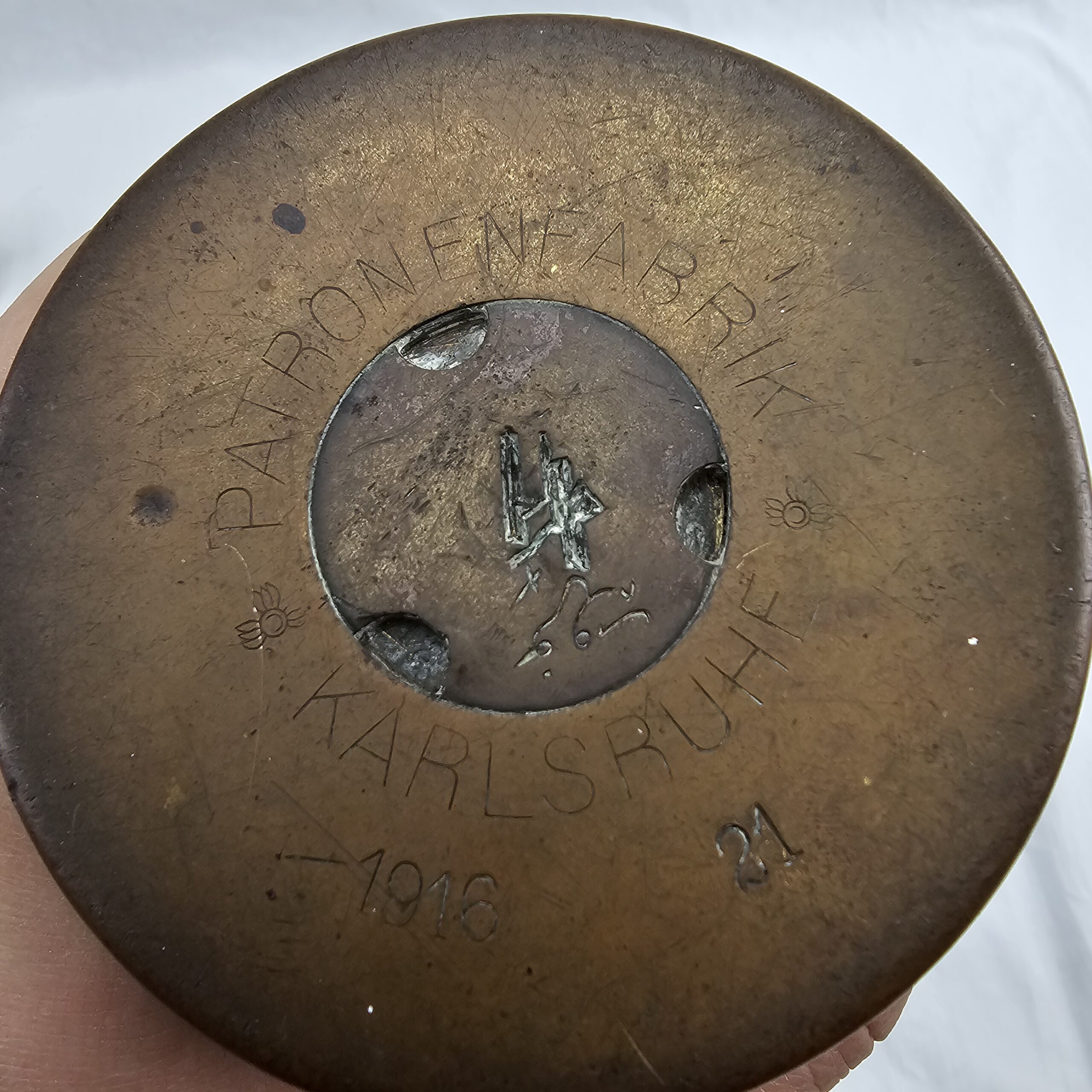
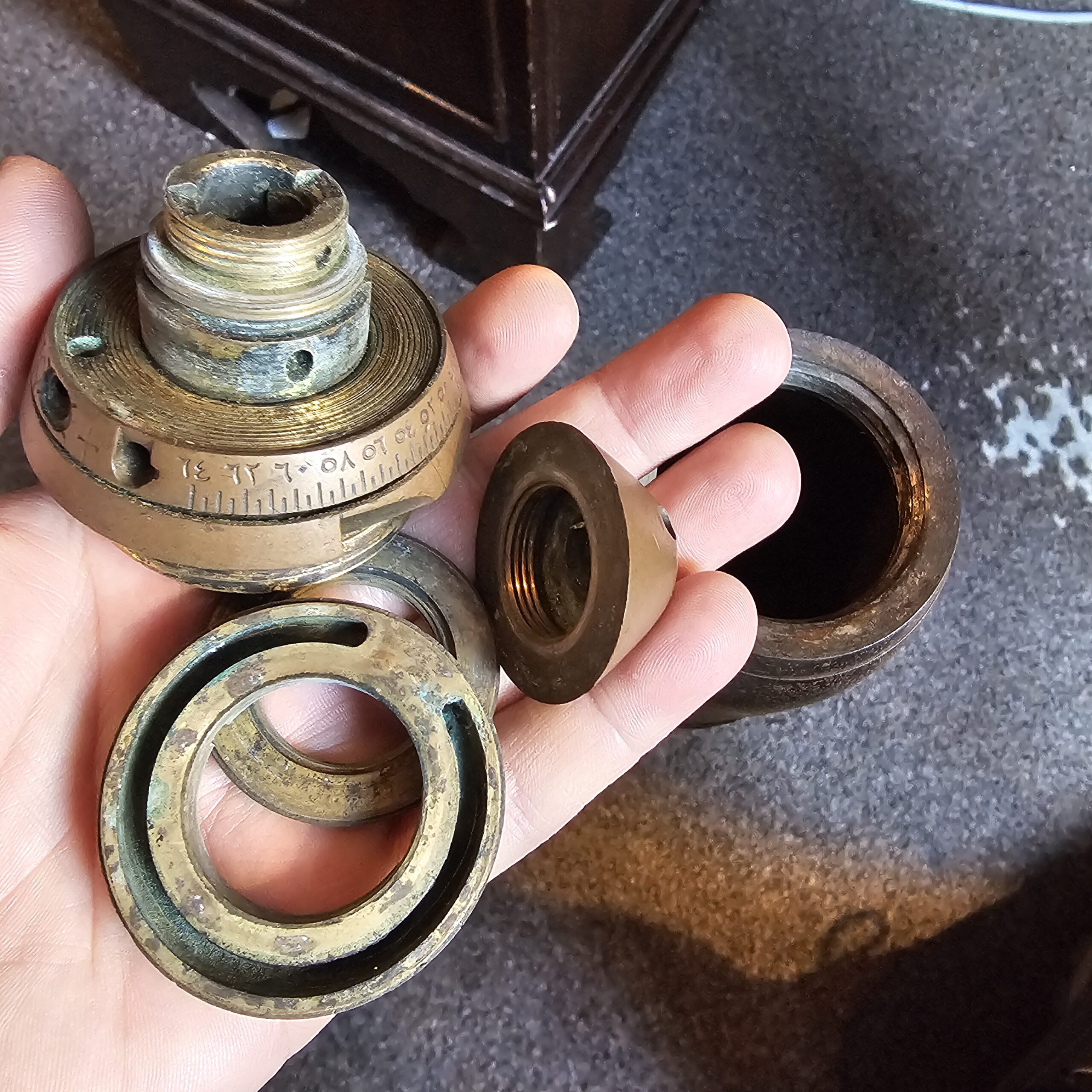
~ Rare WW1 Dated 1916 Turkish Galipoli 75mm Shell and Case ~
During World War I, the Ottoman Empire’s artillery formed a cornerstone of its defensive firepower, particularly at the Dardanelles and Gallipoli fronts. Much of this artillery — including 75 mm field guns and corresponding shells — was of German manufacture, supplied under pre-war and wartime contracts to modernise the Ottoman forces.
The most common guns that fired 75 mm ammunition at Gallipoli were the Krupp Model 1904 (7.5 cm Feldkanone 96/04) — a widely exported German field gun and Krupp 7.7 cm FK 96 & FK 16 (even though calibre was slightly different — the Ottoman army still relied on German artillery logistics).
The 75 mm (7.5 cm) caliber designation in Ottoman usage often refers to these field guns and the munitions manufactured for them. These weapons provided both direct fire against advancing troops and indirect fire over terrain — crucial in the rugged, narrow ridges of the Gallipoli peninsula.
~ The 75 mm (7.5 cm) Shell: Design and Role ~
High-Explosive (HE): Primary combat round, with a bursting charge designed to fragment on detonation.
Shrapnel shells: Contained lead balls to maximise casualties in open terrain (used in direct fire).
Illumination shells: Used for night observation and signalling.
~ Design and construction ~
A steel body containing the explosive filler.
A driving band (soft copper) that engaged the rifling, imparting spin.
A fuse assembly at the nose or base, depending on type.
These shells were loaded into a cartridge case with propellant, and once fired the muzzle velocity and trajectory were determined by the charges and gun elevation.
~ How It Was Used at Gallipoli ~
At Gallipoli, the terrain was steep, rough, and interspersed with ridges and gullies. The 75 mm field guns and their shells were used extensively for:
Direct support to infantry: Engaging Allied troops advancing up slopes or approaching entrenched lines.
Counter-battery fire: Targeting Allied artillery positions where range permitted.
Defensive fire: Breaking up amphibious landing attempts and supporting machine-gun and rifle positions.
Shrapnel use: Particularly effective in flanking fire against exposed troops in the open.
The relatively high mobility of 75 mm field guns also allowed Ottoman batteries to be repositioned quickly to meet local threats. In the constrained battlefield of Gallipoli, this flexibility was a defensive advantage.
~ Performance at Gallipoli ~
Several aspects made the 75 mm shell and its guns effective:
Rate of fire: Typically able to fire 8–12 rounds per minute with trained crews under combat conditions.
Shell lethality: The explosive fragmentation was deadly in exposed attack zones and against troops crossing open ground.
Elevation and range: While not the longest-range artillery on the battlefield, the guns could reach most approach routes used by the Allied forces on the peninsula.
Crew resilience: Ottoman artillery crews, often trained by German instructors, were well disciplined and effective in maintaining fire under pressure.
During the Gallipoli Campaign, the Ottoman artillery — including 75 mm guns — inflicted heavy casualties on Allied infantry, particularly during the initial landings on 25 April 1915 and in the subsequent attempts to break out of the beachheads.